
Acura legend buyer's guide
Acura legend -- the model's own buyer's guide: variants, values and what to check.
Years listed: 1988-1995 · Series: Legend
# Acura Legend — Buying Guide
Overview and history
You are looking at the car that invents a category. When Honda launches Acura in North America in 1986, it is the first Japanese luxury division — ahead of Lexus, ahead of Infiniti — and the Legend is its flagship, sold alongside the smaller Integra. The Legend does not try to out-Mercedes a Mercedes. It tries to make the luxury car reliable, and for a decade it largely succeeds. That is exactly why you need to inspect one carefully today: the engineering is durable enough that a Legend rarely dies outright. Instead it accumulates deferred cooling-system work, tired rubber and failing 1990s electronics until one expensive system — usually the cooling system on a second-generation car — calls the whole account due at once.
The first generation runs from 1986 to 1990. The sedan arrives first, for 1986, and the coupe follows for 1987. Both come out of Honda's joint development work with Rover — the British cars are sold as the Rover 800 series and, in America, as the Sterling 825 and 827 — but do not let the Rover connection mislead you about what you are buying. Under a Legend bonnet you find Honda's C-series V6, Honda electronics and Honda build quality, and it is the Honda side of that partnership that ages well. The first-generation cars are angular, relatively light and surprisingly quick with a manual gearbox: a smooth, high-revving V6 mounted transversely, double-wishbone suspension, four-wheel disc brakes and an interior trimmed to a standard Honda's own cars did not attempt.
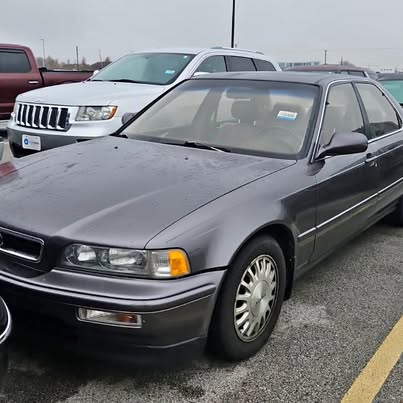
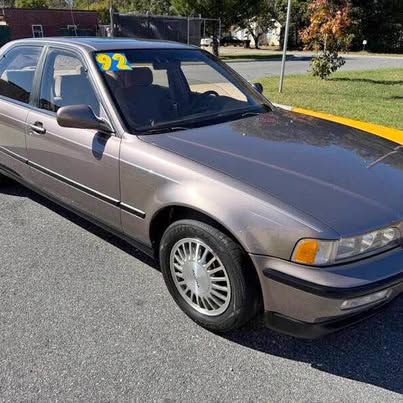
The second generation, sold from 1991 to 1995, is a bigger, heavier and considerably more ambitious car. The wheelbase grows, the styling turns rounded and formal, and the V6 turns ninety degrees: the 3.2-litre C32A sits longitudinally in the nose, still driving the front wheels through a transaxle arrangement with a separate differential. That layout gives the car its long bonnet and some of its service peculiarities, which the inspection section takes up in detail. The coupe is the looker of the whole Legend story, and from 1993 the coupe — and from 1994 the GS sedan — offers the Type II engine and a six-speed manual gearbox, a combination that turns a luxury cruiser into something genuinely quick and collectable.
Know what a Legend is not. It is not a rear-wheel-drive sports sedan, and it never pretends to be: torque steer is mild, the steering is light, and the chassis is tuned for stability rather than rotation. And it is not immune to age because the badge says Honda: it is a low-volume luxury Honda whose trim, electronics and suspension parts were never shared with the Accord in the way sellers sometimes claim. The newest Legend is now three decades old — every hose, plastic radiator tank, capacitor and leather seam on the car in front of you is thirty-plus years into its life, whatever the odometer says. Buy the car on the evidence of its cooling system, its service records and its body — in that order on a second-generation car — and you buy one of the most satisfying modern-classic luxury cars of its era. Buy it on a shiny detail and a low odometer alone, and a neglected one becomes a slow, expensive lesson.
The models
The Legend range is simple to map once you separate the two generations: essentially one car in two body styles with a ladder of trim levels, and the engine follows the year and the trim rather than being a free choice. Learn the ladder and you can decode most adverts before you pick up the phone.
First generation, 1986–90. The sedan launches in base and L trim with the 2.5-litre C25A, and an LS joins the range; for 1988 the sedan moves to the 2.7-litre C27A. The coupe arrives for 1987 in L and LS trim and uses the 2.7 from the start. Trim differences are equipment, not structure: the L brings the luxury basics — power windows and locks, cruise control, air conditioning — while the LS adds leather, a power driver's seat, upgraded audio and, importantly, anti-lock brakes and a driver's airbag as the years progress. A manual gearbox is available across much of the first-generation range, and it transforms the car — the C27A in particular loves revs in a way the four-speed automatic never quite lets it show.
Second generation, 1991–95. The sedan is offered as base (often listed simply as Legend), L and LS, and from 1994 as the GS. The coupe comes in L and LS. All use the 3.2-litre C32A. In standard Type I form it makes its power smoothly and quietly and suits the automatic gearbox most cars carry. The Type II is the special one: introduced on the 1993 coupe LS, then fitted to the 1994–95 GS sedan, it brings a revised intake, higher compression and a higher redline, and it is the only version offered with the six-speed manual. If an advert claims a Type II, verify it — the identity checks in the engines section tell you how, because a badge or a seller's memory proves nothing by itself. The GS sedan is easy to under-read in photos: it looks like any other second-generation sedan, yet it carries the hot engine, the six-speed option, larger brakes and a firmer suspension tune, which is why knowledgeable buyers hunt it.
Two naming traps recur. The first is the Sterling 825/827 (the Rover 800 in Britain): it shares the first-generation platform and, in 827 form, the Honda V6, but panels, trim, electrics and values are a different world — do not let a seller borrow Legend credibility for one. The second is the later Japanese-market Honda Legend, which is the car Americans know as the Acura RL: a fine car, but a different one, and outside this guide.
| Model | Years | Engine | Output | Built | Character |
|---|---|---|---|---|---|
| Legend sedan (base/L) | 1986–87 | C25A 2.5 V6 | 151 hp | Not separately published | The original: light, angular, keen to rev |
| Legend sedan LS | 1986–87 | C25A 2.5 V6 | 151 hp | Not separately published | Added luxury trim and safety equipment |
| Legend sedan | 1988–90 | C27A 2.7 V6 | 161 hp | Not separately published | The mature first-generation sedan |
| Legend coupe L/LS | 1987–90 | C27A 2.7 V6 | 161 hp | Not separately published | The handsome one; manual is the pick |
| Legend sedan (base/L/LS) | 1991–95 | C32A 3.2 V6 Type I | 200 hp | Not separately published | Big, quiet, automatic in most cases |
| Legend coupe L/LS | 1991–92 | C32A 3.2 V6 Type I | 200 hp | Not separately published | Long-bonnet cruiser, five-speed available |
| Legend coupe LS | 1993–95 | C32A 3.2 V6 Type II | 230 hp | Not separately published | Six-speed manual option; the collector coupe |
| Legend GS sedan | 1994–95 | C32A 3.2 V6 Type II | 230 hp | Not separately published | The sleeper: hot engine, four doors |
Read the table with one caution: Acura does not publish clean per-variant production splits that a buyer can rely on, so the built column says so rather than inventing a number. What is genuinely known is the shape of survival. Automatics dominate the survivors because automatics dominate the original sales; manual cars of either generation, and Type II cars above all, are the minority, and that scarcity is what drives the premium the values section discusses.
Engines and gearboxes
The first-generation V6s: C25A and C27A
Every Legend carries a member of Honda's C-series, the company's first production V6 family: a 90-degree, single-overhead-cam, 24-valve V6 with an aluminium block and heads, sequential fuel injection and a distributor-based ignition system. The 1986–87 sedan uses the C25A, a 2,498 cc unit making 151 hp; the C27A that replaces it — and powers the coupe from its 1987 launch — displaces 2,675 cc and makes 161 hp with a broader spread of torque. These are sweet engines. The single-cam valvetrain keeps them mechanically simple by modern standards, the injection is Honda's reliable PGM-FI, and the characteristic failure pattern is not internal wear but the ageing of everything attached to the engine: sensors, seals, hoses and the distributor assembly.
Three mechanical facts govern first-generation ownership. First, the C25A and C27A are interference engines: if the timing belt breaks, pistons meet valves. The belt is therefore a date-and-mileage item, and a car with no belt record gets a belt, water pump, tensioner and idlers in your first budget whether the seller says it was done or not — roughly $900–1,600 at a shop. Second, oil leaks are the norm, not the exception: valve-cover gaskets, cam end plugs, the distributor O-ring and the crank and cam seals all harden with heat cycles, and a dry C-series engine at thirty-five years old has usually been resealed at some point — ask when, and treat fresh sealant smeared around a joint as a question, not an answer. Third, the distributor carries more than the spark: the TDC and crank-angle sensing lives inside it, and heat-aged sensors there cause the classic faults — intermittent no-start when hot, random stalling, crank-sensor codes. A car that starts cold, dies warm and restarts after a cool-down is describing its distributor or its PGM-FI main relay to you; the problem-areas section gives you the test that separates them.
Valve adjustment is a scheduled item on these engines rather than a fit-and-forget hydraulic arrangement, and a top end that ticks loudly when cold usually wants clearances checked before it wants parts. Oil consumption on a high-mileage C27A is most often valve stem seals — a puff of blue smoke on start-up after sitting, with clean compression — rather than rings: seals are a head-on job, rings an engine-out conversation. Compression-test any first-generation car you are serious about; even readings with a smoke puff point to seals, while one low cylinder that rises with a spoonful of oil in the bore points to rings.
The second-generation V6: C32A, Type I and Type II
The C32A displaces 3,193 cc and keeps the family's architecture — 90-degree V6, single overhead cams, 24 valves — but adds hydraulic lash adjusters and sits longitudinally in the second-generation nose. In Type I form it produces 200 hp and a relaxed 210 lb-ft of torque, tuned for the automatic most buyers chose. It is an exceptionally smooth engine and, treated to clean oil and a healthy cooling system, a long-lived one. The Type II, fitted to the 1993–95 coupe LS and the 1994–95 GS sedan, produces 230 hp: the changes are in the breathing and calibration — a larger, revised intake manifold, higher compression and a redline raised to about 6,900 rpm from the Type I's roughly 6,500 — and the character change is real. A Type I is content at 3,000 rpm all day; a Type II wakes up above 4,000 and pulls hard to the redline, which is why the six-speed manual suits it so well.
Now the correction this guide owes you, because the error is everywhere in adverts and forum posts. No American Legend carries the C35A. The 3.5-litre C35A belongs to the successor car, the Acura 3.5RL from 1996, which is a different platform with a different fault pattern. A seller who describes a Legend as a "3.5" is describing a car that does not exist, and what he actually has is either a 3.2 Legend he has not read the paperwork for, or an RL he is marketing under the better-known name. Either way, walk the claim back to the car itself: the engine designation is stamped on the block, the under-bonnet emissions label states the displacement and family, and the VIN plate settles the model year and model. Identity before money, always.
The C32A is also an interference engine, and the timing-belt rule applies with the same force: belt, water pump (which the belt drives), tensioner and idlers as one job, on evidence or not at all. Shop cost is typically $1,000–1,800 depending on how much of the "while you're in there" list — cam and crank seals, drive belts, coolant — you include. Include it; the parts are cheap beside the labour of going back in.
The defining C32A issue is not the belt, though; it is the head gaskets, and it earns its own full treatment in the problem-areas section. Here, note only the shape of it: the 3.2's head-gasket failure — BHG, in the forum shorthand every Legend seller knows — is a cooling-system story before it is an engine story. These engines tolerate a healthy cooling system for very high mileages, but a neglected radiator, a lazy thermostat or a failed fan circuit that lets the temperature climb repeatedly will take a head gasket with it, most often at the rear cylinders. When you assess a second-generation car you are really assessing the history of its temperature gauge.
Oil leaks and smoke follow the first-generation pattern with one addition. Valve stem seals harden and give the same start-up puff; valve-cover and spark-plug-tube seals leak oil into the plug wells, where it cooks, misfires a cylinder under load and gets misdiagnosed as an ignition fault — pull a plug lead or coil boot on inspection and look down the tube before you believe any misfire story. Hydraulic lash adjusters tick when the oil is old, thin or low, and a C32A that ticks for the first minute and then settles is usually asking for an oil change, not a rebuild; one that ticks hot, at one point in the head, after an oil change, wants investigation. Exhaust manifolds crack and tick in a similar register — a tick that follows rpm exactly and fades as the manifold expands with heat is often the manifold, not the valvetrain, and a stethoscope separates the two in minutes.
Gearboxes: automatics, five-speeds and the six-speed
Most Legends you will meet are automatics: a four-speed unit in both generations. It shifts cleanly and lasts well if its fluid has been changed, and suffers quickly if it has not. Use the Honda-specified fluid — originally ATF-Z1, superseded by ATF DW-1 — and be suspicious of any car whose fluid is brown, burnt-smelling or freshly changed the week before sale with no earlier history. A healthy box changes up smoothly at light throttle, kicks down without a flare or a thud, and engages drive and reverse within about a second without a clunk. Delay, flare between gears, or a harsh 1–2 shift on a cold box are negotiation facts, not character. A rebuild is a $2,500–4,500 conversation; a good used box is cheaper but a gamble, so the automatic's behaviour on your test drive carries real money.
The second-generation car's separate differential deserves its own sentence, because owners miss it: the longitudinal layout means the differential has its own fluid, separate from the automatic transmission fluid, and it goes unchanged on cars serviced by people who did not know it existed. Ask for evidence it has been done, listen for a whine that follows road speed rather than engine speed, and put fresh differential fluid on your first-service list regardless.
Manual gearboxes are the enthusiast's route in both generations: a five-speed with the C27A and the Type I C32A, and the six-speed paired with the Type II from 1993. Honda manuals of this period are precise, light and durable; the wear items are the clutch, the clutch hydraulics and, on high-mileage cars, tired synchronisers — second gear is the one to test with a brisk cold change. A clutch is a $900–1,600 job. The six-speed is specific to the Type II cars, so confirm the car actually has it: count the gates. Six-speed swaps into Type I cars exist but are rare; far commoner is the ordinary car advertised with the exciting gearbox it never had. A sloppy, vague change is usually worn linkage bushings rather than the box itself, and that is one of the cheaper fixes on this page.
Whichever gearbox the car has, check the mounts. A collapsed engine or transmission mount presents as a thud on take-up, vibration at idle in drive, and exhaust contact noises over bumps. Mounts are a few hundred dollars in parts and transform how old a car feels; sellers rarely do them, which makes them an honest item in your post-purchase plan rather than a reason to walk away.
Problem areas
Cooling system and the blown head gasket: the second-generation headline
Start here, because on a 1991–95 car this section decides whether you are buying a car or a project with a car attached. The C32A's head-gasket failure — BHG — is the Legend's signature disease, and you need to understand the mechanism to inspect for it, because by the time the failure is obvious the bill has already grown a second act. Note for first-generation cars: the BHG pattern is specifically a C32A reputation, and rusty-brown coolant in either generation signals a neglected system.
The sequence runs like this. The cooling system ages: the radiator's plastic top tank heat-cycles into hairline cracks and weeps, the thermostat begins to open lazily, the electric fans depend on relays, a fan-control unit and sensors that are all thirty years old, and the coolant itself — topped up with tap water and hope — loses its corrosion protection. The engine runs a little hotter than it should, more often than the driver notices, because the gauge sits in the middle of its range across a wide band of actual temperatures. Repeated heat stress works on the head gaskets, and the fire ring eventually breaches — most characteristically at the rear cylinders, numbers 3 and 6, the far end of the cooling circuit. Combustion pressure now leaks into the water jacket under load, and coolant is displaced and pushed out. The gauge begins to climb at idle after a run, or under load on a grade. The driver tops up the coolant. The cycle accelerates, until the engine overheats properly — which can warp a head and turn a gasket job into a machining job.
So the folk claim that "the 3.2 just blows head gaskets" has the causality backwards. The gasket is usually the victim, not the villain, and that distinction is your buying strategy: a Legend with a documented, healthy cooling system is a fundamentally sound engine; a Legend with a gasket replaced but the same tired radiator, thermostat and fans still fitted is a car mid-relapse. Ask not only "has it had head gaskets?" but "what was replaced with them, and what did the cooling system get?" A proper BHG repair is a $2,500–4,500 job at a shop — heads off, gaskets, machining check, timing belt and water pump while access is free, cooling system renewed — and a cheap gasket job that skipped the cause is worse than none.
The tests, in the order you will use them:
The combustion-leak (block) test is the decisive one. A fluid tester drawn over the radiator neck or expansion tank changes colour — blue to yellow — if combustion gases are present in the coolant. It takes five minutes, the kit is inexpensive, and a positive result on a warm engine that has been run under load is as close to proof as used-car buying gets. Run it after the test drive, not before: a marginal gasket may only leak combustion pressure when the engine is hot and working.
The cold-start pressure test catches the same leak from the other side. Squeeze the top radiator hose on the stone-cold engine before start-up: it should be soft. Start the engine and feel the hose over the first minute. A hose that goes drum-hard almost immediately, long before the thermostat could have opened, is being pressurised by combustion, not coolant expansion. And with the engine hot after a drive, watch the expansion tank: a steady stream of bubbles, coolant pushed out of the overflow, or a tank that is full while the radiator is low all point the same way. A single bubble burped after a coolant change is nothing; a continuous champagne fizz is a diagnosis.
The supporting evidence fills in the picture: white, sweet-smelling exhaust vapour that persists on a fully warm engine; coolant loss with no visible external leak; a temperature gauge that creeps up at idle and drops when the car starts moving; heater output that fades at idle (air in the system finds the heater core first); and a misfire on cold start that clears, as coolant that seeped into a cylinder overnight burns off. No single one of these convicts. Two or more, plus a positive block test, and you price the car as a BHG car or you walk.
Beyond the gasket itself, budget the system's components as consumables at this age. Radiators crack at the top tank and the hose necks; a quality replacement is a few hundred dollars and an afternoon. Thermostats must be the correct temperature and fitted the correct way round — a wrong or reversed one causes exactly the slow warm-up and temperature wander owners then blame on the gauge. Fan relays and the fan timer/control unit cause the maddening fault where the car is cool on the road and cooks in traffic: if the temperature only climbs when stationary, suspect airflow before you suspect the gasket. Water pumps weep from the tell-tale hole and take the timing belt with them if ignored, and every rubber coolant hose is a thirty-year-old part. A full cooling-system refresh — radiator, thermostat, hoses, cap, coolant, sensors as needed — is typically $600–1,400 and is the single best money you can spend on a second-generation Legend. Spend it before the gasket makes the decision for you.
Rust and body: the map
The Legend is well protected by the standards of its era, but it is not a galvanised modern shell, and thirty years of salt-belt winters write the usual Honda map on it. Work the map in this order.
Rear wheel arches and quarter panels are the primary site, on both generations. The arch lip traps mud and salt against a folded seam, and rust starts inside the fold and bubbles the paint from beneath. Run your fingers around the inside of the lip: roughness, flaking or a lip that feels thick and crusty under the paint means the seam is going, and visible bubbles on the outer quarter mean it is already through in places you cannot see. The area where the quarter meets the rear bumper hides the worst of it, so crouch and look from behind with a torch.
Sills and jacking points come next. A sill that crunches or flexes when the car is lifted on its own jacking point is structural rust, not cosmetic — the inspection section gives you the jack test. Bubbling along the sill's lower edge, just behind the front wheel where road spray concentrates, is the visible part of the same story.
Sunroof, boot and screen surround. The roof skin around the sunroof aperture rusts where the seal has held water, and blocked sunroof drain tubes — they exit at the sills and behind the rear quarters — dump water into the car instead, wetting carpets, the boot floor and the sill interiors; wet carpets in a Legend are a drainage diagnosis before they are a weather-seal one, so test the drains with a jug of water and watch for four exits. In the boot, water enters past aged tail-lamp gaskets and sits in the spare-wheel well — lift the spare and look; the gasket fix is cheap, the rust it leaves is not. Corrosion also starts under the windscreen seal where a replacement screen was fitted carelessly, and it matters beyond cosmetics because the screen is bonded and structural.
Underneath: subframes, brake and fuel lines, floor seams. Salt-belt cars corrode their steel lines and the rear subframe and mounting areas. Get the car on a lift if you are spending serious money, and poke at underseal that looks fresh, because fresh underseal over rot is the oldest trick in the book and Legends are now old enough to attract it.
Correct rust repair — cut out, weld in, protect — costs the usual $1,000–2,500 per side for arch and sill work done to a standard, and coupe-specific sheet metal is scarcer than sedan. A car with sound arches and sills and tired paint is a better buy than a shiny car with filled arches, every time. Clearcoat peel on horizontal surfaces is endemic to the era, especially on sun-state cars, and a car advertised as original that shows no peel anywhere has usually been painted — ask where and why.
Suspension, steering, brakes and the ABS problem
Both generations ride on double-wishbone front suspension — a large part of why a Legend steers and rides as well as it does — with a multi-link rear on second-generation cars. The design's cost is joint and bushing count. At thirty years the wear list is long but conventional: ball joints, control-arm bushings, anti-roll-bar links, tie-rod ends, rear link bushings, and dampers that are simply done. Learn the vocabulary for the test drive: a clunk over sharp bumps is usually a ball joint or drop link; a car that wanders has play in the steering or tired rear bushings letting the back end steer; creaks at parking speed point to dry ball joints; a low corner points to a sagging or broken spring.
One item is a safety check, not a wear note: lower ball joints on Hondas of this era can separate when badly worn, and a joint with play is a replace-before-driving-home item. Jack the front up, lever the wheel at six and twelve o'clock, and feel for movement; any clunk you can feel as well as hear settles it.
Brakes are discs all round and conventionally serviceable, with two era-specific cautions: seized rear calipers on any car that sits, and — the Legend's real brake-system issue — the anti-lock system.
ABS on these cars — Honda calls the early system ALB — is an early-generation design with a high-pressure modulator, an accumulator and a pump, and it ages in expensive ways. The modulator's internal seals weep brake fluid; the pump runs longer and more often as the accumulator loses its nitrogen charge; wheel-speed sensors fail and their wiring rots at the hubs. The dashboard tells the story: a warning light that stays on, a pump cycling every few seconds at idle, or a pedal that feels odd underfoot. Diagnosis matters because the modulator is the costly part — historically a four-figure item, and increasingly a rebuild-or-used decision — while a wheel-speed sensor is a modest one. Read the fault codes before you price the fault (the system blinks them out through its warning light with the service connector bridged), and never accept "they all do that" for a light that is on. The standard brakes work without the ABS, which is why so many cars are sold with the system abandoned; if that is acceptable to you, price it as a known defect and confirm the base brakes are genuinely strong.
The SRS airbag system ages alongside it. Second-generation cars carry one or two airbags and an SRS control unit full of thirty-year-old capacitors; the common faults are a warning light from a failed seat-belt buckle switch, a clockspring (cable reel) with worn contacts — often announced by a horn or cruise fault sharing the same steering-wheel wiring — or a control unit that has simply aged out. Treat an illuminated SRS light as "the airbags may not deploy," because that is what it means, and treat any car whose SRS light does not illuminate at all during the bulb check as worse, not better: bulbs get removed to hide faults. Do not probe airbag wiring with a test light; the honest advice is professional diagnosis, and the cost — a few hundred for a buckle switch or cable reel, considerably more for a control unit — goes into your negotiation, not your optimism.
Electrics, climate and the luxury layer
The PGM-FI main relay is the famous one, across both generations and indeed across the Honda range. The relay — it powers the fuel pump and the injection system — develops cracked solder joints as it heat-cycles over decades. The symptom is precise: the car starts cold and runs, but after a short stop on a hot day it cranks without starting, because the joints open with heat and the fuel pump never primes; wait twenty minutes and it starts as if nothing happened. Test on inspection: turn the key to on without cranking and listen for the fuel pump's two-second prime, and watch the check-engine light go out with a click. No prime plus no click on a warm car is the relay describing itself. The fix is a new relay or a competent re-solder, in the $60–150 range — cheap, but only if you diagnose it instead of letting a shop chase fuel pumps and ECUs. Carry a spare in the glovebox of any Legend you own.
Climate control. The automatic climate system is robust in its electronics and tired in its consumables: heater control valves leak, blend-door motors strip their gears and click behind the dash, and the blower and its transistor pack fail in stages. The expensive item is the heater core — a dashboard-out job — so treat coolant smell in the cabin, a greasy film on the windscreen and damp front carpets as a core leak until proven otherwise. Air conditioning: compressors and clutches wear, and condensers rot in salt states. On an early R12 car, establish whether it has been converted to R134a, and judge it by how cold it blows on the day — a proper conversion blows properly cold; a gas-and-go conversion does not, and re-doing it right runs into several hundred dollars.
The Bose audio system on higher trims uses a head unit with amplifiers at each speaker, and it is the amplifiers' capacitors that age out: speakers crackle, hiss, drop out or play at a whisper while the head unit tests fine. Budget per-speaker amplifier repair — specialists rebuild them — and do not let a seller sell you a head unit as the cure.
Windows, locks and seats. Window regulators slow and their plastic sliders break, leaving glass that tilts or drops; the master window switch's contacts wear, usually taking the driver's window's auto function first. Door-lock actuators chatter in a rapid machine-gun burst when their internal gears strip — distinctive, common and a moderate fix per door. Power-seat switches gum up and motors tire; test every direction of every seat, because a seat stuck in the wrong position is an everyday misery. The electric aerial mast bends, strips its drive cable and grinds at key-on; a mast is cheap, and one left grinding is a clue about the owner's standards.
Interior, trim and the things you touch
The Legend's interior is its period selling point and, at thirty years, a condition lottery. Leather — standard on LS and GS, common on L — cracks on the driver's bolster and seat base first, dries hard on sun-state cars, and splits along its stitching; a retrim of a front seat in matching leather costs several hundred dollars per seat done well, and a full interior is a major bill, so interior condition is a primary value driver, not a detail. Headlinings sag as the foam backing disintegrates. The dashboard top cracks on sun-baked first-generation cars and around the passenger airbag door on second-generation cars; a cracked dash is a defect you will look at every mile, so decide on the day whether you can live with it, because replacement dashboards in the right colour are breaker-lottery items.
Wood trim — real veneer on higher trims — crazes and lifts at its edges, and the lacquer milks with heat. Switchgear is typically excellent Honda quality and survives; what fails is the layer beneath it, covered above. Carpets hold the evidence of every water leak the car has ever had: lift the mats, press for damp, and smell the car with the doors closed — a musty Legend is a leaking Legend until you prove otherwise, and the sunroof drains and tail-lamp gaskets are where you start proving.
On coupes, check the long doors' seals and check straps, and the boot struts on both body styles — small items, all of them, but a seller's attitude to small items is the most reliable predictor of his attitude to timing belts.
How to inspect one
Work in this order, so the faults that can kill the deal — head gaskets, structure, identity — are settled before you spend emotion on the ones that merely cost money.
- Identity first, before the bonnet opens. Match the VIN on the windscreen plate, the driver's door-jamb label and the engine-bay stamping. Read the build date and the paint and trim codes off the jamb label. If the car claims to be a Type II, plan your verification now: engine designation on the block, the under-bonnet emissions label, and — on a coupe LS or GS — the six-speed gearbox you will count on the drive. A car whose identity does not match its advert is priced as the car it is, not the car it claims to be.
- Cold engine, cold start — insist on it. Arrive before the car has run that day; a warmed-up car hides BHG cold-start symptoms, and rattles and smoke all change character. Feel the top radiator hose for residual heat if you suspect the car was pre-warmed for you.
- The start-up itself. Turn the key to on: check-engine, ABS and SRS lights should all illuminate for the bulb check, the fuel pump should prime for two seconds, and the check-engine light should go out with the relay's click. A missing warning light at bulb check means a removed bulb or a dead circuit — treat an absent SRS or ABS light as a fault, not a fix. Crank: a healthy C-series starts promptly. Note any blue smoke puff (valve stem seals) and any ticking (lash adjusters, exhaust manifold), and how both evolve over the first two minutes.
- Under the bonnet, engine running. Look for the leaks this guide names: valve covers, plug tubes (pull a lead or boot and look), distributor base on a first-generation car, power-steering hose crimps. Read the coolant in the expansion tank — clean and correctly coloured, or brown and neglected? Read the oil on the dipstick and filler cap, remembering that mayonnaise means short trips until it means head gasket. Listen to the ABS pump: occasional cycling is normal on an early system; constant cycling is an accumulator or modulator confession.
- The cooling system, stationary phase. Let the engine idle, air conditioning off, and watch: the gauge should rise to normal and hold; the electric fans should cycle on and off; the heater should blow hot at idle (fading heat suggests air in the system). Squeeze the top hose as it warms — pressure should build gradually with temperature, not slam in within the first minute. Any car whose temperature climbs past normal at idle does not go on a test drive; it goes on your BHG checklist.
- The body walk, in the rust map's order. Rear arch lips with your fingertips, inside and out; sills, especially behind the front wheels; around the sunroof aperture; boot floor and spare-wheel well with the spare lifted; front wing trailing edges; windscreen surround. Then the jack test: lift one front corner on the factory jacking point, watch the sill and listen for crunching. A car that fails the jack test has structural rust whatever its paint says.
- Underneath, if you can. A lift or ramps turn guesses into facts: subframe and mounting-point corrosion, brake and fuel line condition, differential leaks on a second-generation car, CV boots, steering-rack boots wet with fluid, and fresh underseal hiding old sins. On a serious purchase, pay a shop for an hour on the lift — it is the cheapest information in the whole transaction.
- The interior and electrics sweep, systematically. Every window, up and down, twice; sunroof tilt and slide; both power seats in every direction; door locks; mirrors; aerial; every climate function including air conditioning at full cold and heat at full hot; the Bose system at each speaker in turn (fade and balance to isolate them). Press the carpets for damp and smell the cabin. This sweep takes ten minutes and prices the luxury layer of the car.
- The test drive, long enough to get properly hot — at least twenty minutes. You need full operating temperature plus a cool-down and a hot restart, so a five-minute loop is not a test. The automatic should shift smoothly cold and hot, kick down cleanly and engage reverse without delay or thud; a manual should take a brisk cold change into second without baulking. Listen for ball-joint clunks over sharp bumps, bearing hum that follows road speed, differential whine, and ticking that follows rpm. Brake firmly from speed: the car should stop straight, the pedal firm and consistent, and any ABS light behaviour noted. Check the steering centres, the car tracks straight hands-light, and the temperature gauge never moves once warm.
- The hot-phase BHG tests, immediately after the drive. This is the moment the block test tells the truth: run the combustion-leak tester over the filler neck or tank on the hot engine. Watch the expansion tank for a continuous stream of bubbles. Check the exhaust for persistent white, sweet vapour. Confirm the fans are cycling. Then switch off, wait ten minutes for heat soak, and restart: a hot no-start or long crank now points to the main relay or distributor sensors, and you have caught it on the day instead of on your first petrol-station stop as an owner.
- The paperwork cross-examination. Timing belt: dated, mileage-stamped evidence, or it did not happen. Cooling system: radiator, thermostat, hoses, water pump — what and when? Head gaskets on a second-generation car: done, by whom, and what else was renewed at the same time? Differential and transmission fluids, brake fluid. A thick, dated file is worth real money on a Legend; a verbal history is worth none, and you price accordingly.
- The cold re-check and the decision. After the car has sat, look underneath for fresh drips — coolant at the radiator tanks and water pump, oil at the seals, power-steering fluid at the rack — and re-squeeze the top hose: stone cold, it should be soft; pressure retained in a cold system is combustion's fingerprint. Then decide by the hierarchy this guide has built: identity and structure first, head gasket and cooling second, gearbox third, and everything else is a price conversation. A Legend that passes steps 1, 5, 6 and 10 is a car you can buy with confidence and improve as you go.
Values
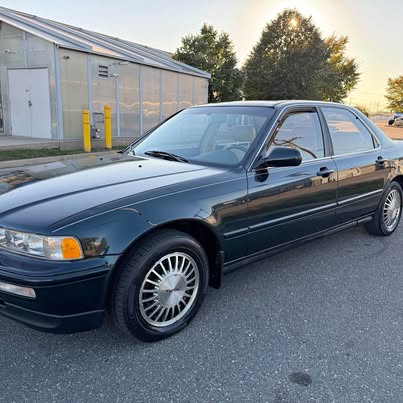
The Legend market divides cleanly, and the dividing line is not mileage — it is evidence. At one end sits the documented car: timing belt on record, cooling system renewed as a system, head gaskets either demonstrably healthy or demonstrably done properly, arches and sills sound, interior cared for. At the other end sits the identical-looking car with a shiny valet, no file and a temperature gauge with a story to tell. The spread between those two cars is wide, because moving a bad Legend to good-Legend condition is dominated by two jobs — a proper head-gasket and cooling-system renewal, and structural rust repair — either of which can consume the entire price difference. When you read the market figures that accompany this guide, read them as the average of those two populations, and understand that almost no individual car is actually worth the average: each car sits near one end or the other, and your inspection tells you which.
Variant premiums follow scarcity and character, in a stable order. The Type II cars sit at the top: the six-speed coupe is the Legend the collecting market has chosen, and the GS sedan — the same mechanical package in the discreet body — follows it, valued by buyers who know what it is and invisible to those who do not, which makes it the connoisseur's route into Type II ownership. Manual gearboxes carry a premium in both generations, coupes carry one over sedans in the first generation especially, and the LS trim's period equipment premium has largely dissolved into a simpler rule: condition and specification together, with a working luxury layer — air conditioning, Bose, seats, sunroof — worth more than the badge that originally bundled it. Colour matters at the margins: dark greens, blacks and deep reds present the car best and are sought after, while tired golds and beiges need condition to carry them. None of these premiums survives a failed block test. A BHG car is a project, priced as a project, whatever its trim plate says.
The asking-versus-achieved gap is widest on undocumented cars, whose sellers ask documented-car money because the adverts all look alike; your inspection list of costed jobs is what closes that gap in negotiation, and it is also what lets you buy the occasionally underpriced good car — a GS, say — fairly and quickly.
Think about the project-versus-driver gap as a cliff, not a slope. A driving, documented Legend is a usable classic from the day it arrives. A project with a head gasket gone, arches through and an interior to retrim is not a cheaper route to the same car; its total cost, honestly added up, usually overtakes the good car while delivering it years later. The rational buys are the two ends done deliberately: the best documented car you can find, at a fair price for its evidence; or a structurally sound project at true project money, bought by someone who wants the work. The middle — the undocumented car at near-driver money on the strength of its shine — is where Legend buyers lose money, and it is the commonest car in the classifieds. Buy the file as much as the car.
Parts and ownership
Owning a Legend means distinguishing three tiers of parts supply, because the tiers behave completely differently. The first tier — service and mechanical consumables — is easy: filters, brake pads and discs, dampers, ball joints, bushings, belts, hoses, thermostats, water pumps, radiators and most engine sensors are available from the usual Honda-capable suppliers at ordinary prices. A Legend serviced on schedule costs no more to run than any quality car of its era, and routine service — oil and filter, coolant, brake fluid, transmission and differential fluids on a second-generation car — is straightforward work for any competent independent shop, ideally one that knows Hondas of the period.
The second tier — model-specific mechanical parts — requires knowledge rather than luck. ABS modulators, Type II-specific engine parts, six-speed gearbox internals, differential components and R12 air-conditioning parts are the territory of specialists, rebuilders and the used-parts network. The Honda and Acura parts catalogues remain your map: many part numbers cross-reference across years and trims in ways a breaker's "fits Legend" listing will not tell you, and the owners' community — the Legend forums have documented these cars forensically for decades — maintains the interchange knowledge, and the BHG lore, that keeps the second tier navigable. Join it before you need it.
The third tier — trim, interior and body-specific parts — is where Legend ownership gets hard, and it shapes buying strategy directly. Coupe glass and seals, correct-colour dashboard tops, uncracked wood trim, seat leather in the right shade, GS-specific pieces and good used panels in your colour are all breaker-lottery items: they exist, they surface irregularly, and they cannot be ordered. This is why interior and body condition are value drivers — you can rebuild a C32A, but you cannot easily buy a mint coupe interior at any price. If you find a parts car in your colour and trim at sensible money, owning it is not eccentricity; for a keeper Legend it is rational insurance.
The ownership rhythm that keeps a Legend cheap is preventive: cooling system renewed as a system, fluids on schedule including the forgotten differential, timing belt on its interval, rust treated at the bubble stage rather than the hole stage. Deferred, each is a bill; done on time, each is a line in a service book the next buyer will pay a premium to read.
Which one to buy
- The all-rounder: a 1991–95 L or LS sedan, automatic, with a full cooling-system history. The Legend as its makers intended — quiet, smooth, complete — and the easiest version to find in documented condition. Buy the file, renew the cooling system if the file is thin, and drive it for a decade.
- The enthusiast's pick: a 1993–95 coupe LS with the Type II engine and the six-speed manual. The collector Legend, and the only one that is also a sports coupe in behaviour. Verify the engine and gearbox identity rigorously, block-test it hot, and expect to compete for good ones.
- The value buy: a 1994–95 GS sedan. Type II power and the six-speed option in the body the market under-reads. The same verification applies, but your money buys more car here than anywhere else in the range — if you can find one, because most sellers who know what a GS is are keeping it.
- The character buy: a first-generation coupe, 1987–90, with the five-speed manual and the C27A. Lighter, sharper and prettier than what followed, with simpler systems and no BHG pattern to fear — but watch the distributor sensors, the timing belt and the arches, and accept that trim parts are the hardest hunt of all.
- The first-generation sedan, 1988–90, is the honest entry point: the mature C27A car, sweet to drive, and the right Legend for a buyer whose budget is real. A manual is worth hunting; an automatic with records is worth more than a manual without them.
- The project to buy — and the one to leave. A structurally sound car with a failed head gasket, bought at project money by a buyer who will renew the whole cooling system with the gaskets, is a legitimate route in. A rusty car with a failed gasket at driver money is neither; leave it.
The overriding rule: on a second-generation Legend you are buying a cooling system with a car attached — block-test every 3.2 hot, buy the documented car over the shiny one, and never pay driver money for a car whose temperature history you cannot prove.
See the 4 legend cars currently listed.
For sale now
 $550
Expand
 $1,300
Expand
What they sell for: legend sale prices.