
AMC Rambler 660 Classic Rebel buyer's guide
AMC Rambler 660 Classic Rebel -- the model's own buyer's guide: variants, values and what to check.
Years listed: 1965-1970 · Series: Rambler
# AMC Rebel (1967–1970): The Buyer's Guide
Overview and history
The Rebel is the car American Motors built when it finally stopped apologising for not being General Motors. From 1967 to 1970 it is AMC's mid-size line — sedan, hardtop, convertible and Cross Country wagon on a 114-inch wheelbase — sold against the Chevelle, the Fairlane and the Coronet, but built the Kenosha way: a deep-drawn unibody, coil springs at all four corners, reclining seats you can fold into a bed, and a range of engines that runs from a taxicab six to a 390-cubic-inch V8 that embarrasses cars costing far more. For 1971 the same basic car is renamed Matador, which is why the Rebel name only runs four model years in this form — and why good ones are scarcer than their Big Three rivals in direct proportion to how few were built.
The name itself is older, and the history matters because sellers trade on it. The first Rambler Rebel, in 1957, is a limited-run hardtop sedan with AMC's 327 V8 and a genuine claim to being one of the fastest American sedans of its year; AMC even announced Bendix Electrojector electronic fuel injection for it, then quietly shipped four-barrel carburettors when the system proved troublesome. About 1,500 were built. The name then sleeps until 1966, when Rebel returns as the sporty hardtop trim of the Rambler Classic, and in 1967 it takes over the whole mid-size line. US-market cars are still badged Rambler Rebel for 1967; from 1968 the Rambler marque name is dropped in the United States and the car is simply the AMC Rebel. If a seller tells you his 1967 is "not a Rambler," he is wrong about his own car — check the badges and the paperwork before you check anything else.
What you are buying, mechanically, is a car from a small manufacturer that engineered carefully and bought in components where it made sense. The V8s are AMC's own second-generation design, introduced for 1966 and thoroughly reworked for 1970. The automatics are Borg-Warner units. The six is AMC's own modern overhead-valve design, the engine that later, as the 258 and the 4.0, becomes famous in Jeeps. Nothing in the car is exotic, and that is the point: a Rebel is maintainable by any competent mechanic with a shop manual, but it is not a Chevrolet, and the parts counter will remind you of that difference every time you visit. Buy the car for what it is — a well-made, characterful mid-size with real pace in V8 form — and buy the best body you can find, because everything else on a Rebel is easier to fix than the shell.
One warning before the detail. The Rebel's four-year run contains one genuine collector car, the 1970 Rebel Machine, and a long tail of honest family cars. The market prices them very differently, and the gap invites cloning: Machine stripes, a hood scoop and a tachometer bolt onto any 1970 hardtop in a weekend. The identity checks in this guide — VIN engine code, the Machine's hardtop-only body, its 390 and its specific equipment — are not pedantry. On this model they are the difference between the real car and a tribute wearing its clothes.
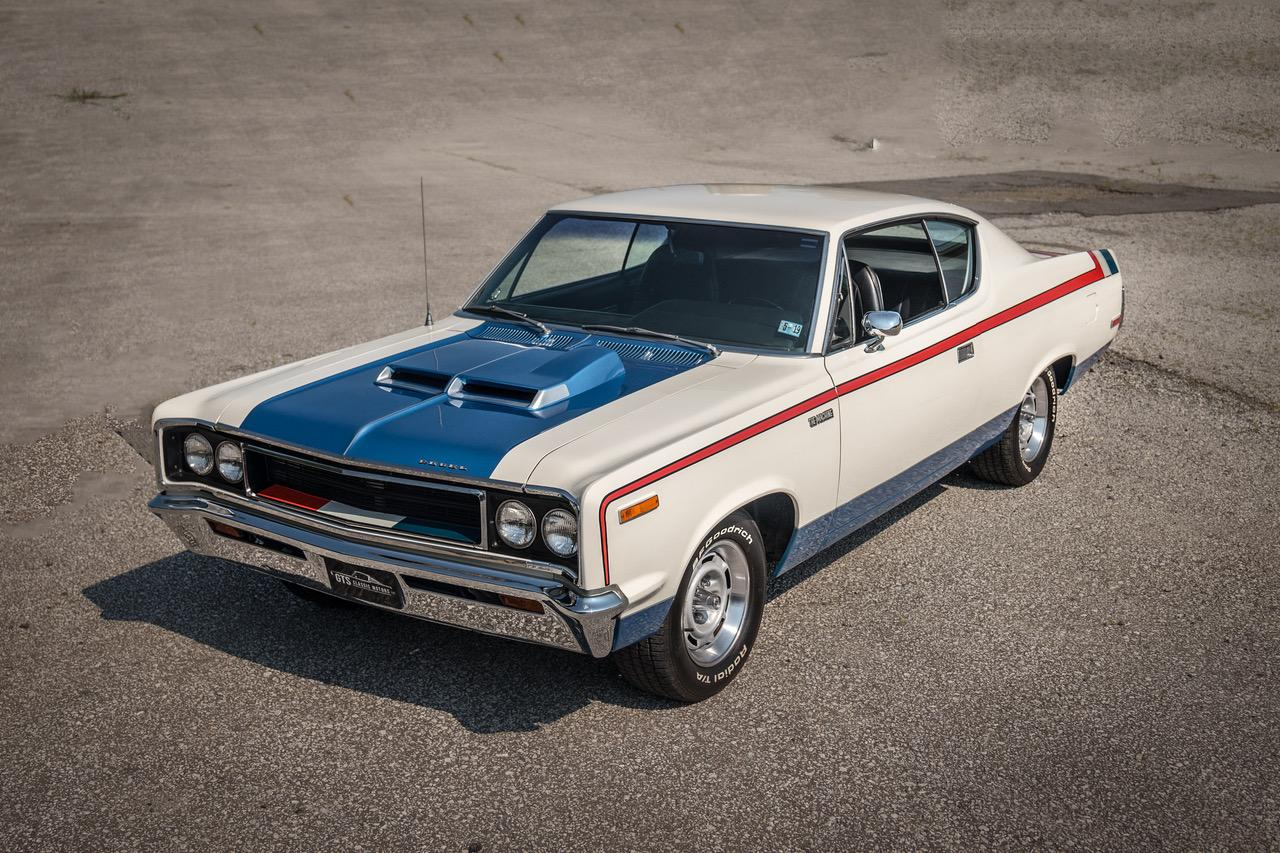
The models
The range is simple once you lay it out by year, because AMC changes the trim names more often than it changes the car. In 1967 the line runs 550 (base), 770 (mid) and SST (top), across a four-door sedan, a two-door sedan, a two-door hardtop, a convertible and the Cross Country station wagon. The convertible is a 1967–68 car only — AMC drops open cars from the range after 1968 — which makes a genuine Rebel convertible a two-year proposition and worth verifying as such. Wagons carry the Cross Country name AMC had used since the 1950s, and they are working cars in period: expect tow wear, roof-rack holes and tired rear springs on any survivor.
For 1968 the sheet metal is cleaned up, the Rambler name disappears from US cars, and the 390 V8 arrives as an option on SST models — the same engine AMC puts in the AMX, and the moment the Rebel becomes a serious muscle car rather than a family car with a big engine. Trims simplify as the decade closes: by 1969 you choose between the base Rebel and the SST, and regional dealer specials appear on the edges of the range — cars like the Rebel Raider sold through New York and New Jersey dealers — which are trim-and-paint exercises on standard mechanicals, interesting but not a separate model to pay a separate model's money for. AMC also experiments with regional wagon editions in this period; treat any special-edition claim the same way: nice if documented, worthless if it is just a story.
The 1970 car is the facelift and the finale. The front and rear are restyled, the front suspension is redesigned around ball joints in place of the old trunnions, the V8 range is reworked (304 and 360 arrive, the 290 and 343 retire, and the 390 gets better-breathing dog-leg-port heads), and at the top sits The Machine: a two-door hardtop only, with the 340-horsepower 390, a functional ram-air hood scoop with a driver-facing tachometer built into its trailing edge, heavy-duty suspension and cooling, and — on the first run of cars — the red, white and blue paint scheme with a reflective stripe. Later Machines come in ordinary colours with a black hood treatment, which is why a Machine in a plain colour is not automatically a fake — but a Machine that is not a 1970 two-door hardtop with a 390 VIN code is automatically not a Machine. Production of The Machine is commonly quoted at 2,326 cars; treat any other Rebel production figure a seller quotes from memory with suspicion, because AMC's records by individual body style are patchy and the honest answer for most variants is that no reliable published figure exists.
| Model | Years | Engine | Output | Built | Character |
|---|---|---|---|---|---|
| Rebel 550 / base sedan & wagon | 1967–1970 | 232 six | 145 hp | Not reliably published | The family car; honest, slow, cheapest to run |
| Rebel 770 | 1967–1968 | 232 six / 290 V8 | 145–225 hp | Not reliably published | Better trim, same bones; the sensible classic |
| Rebel SST hardtop | 1967–1970 | 290 / 343 / 360 / 390 V8 | 200–325 hp | Not reliably published | The sporting flagship before The Machine |
| Rebel SST convertible | 1967–1968 | 290 / 343 V8 | 200–280 hp | Not reliably published | Two years only; rarity from attrition, not glamour |
| Rebel Cross Country wagon | 1967–1970 | 232 six / 290 / 360 V8 | 145–290 hp | Not reliably published | The working Rebel; check for a life of towing |
| Rebel Machine | 1970 | 390 V8 | 340 hp | 2,326 (commonly quoted) | The collector car; verify identity before value |
Two structural points apply to every Rebel and shape everything that follows. First, the car is a true unibody — AMC called it Single Unit construction — so there is no separate chassis to save a rusty car; the sills, floor and front rails are the structure, and their condition is the car's condition. Second, AMC rustproofed more seriously than most of Detroit, with deep-dip priming and galvanised panels in the lower body, which is why a Rebel from a dry state can be astonishingly sound — and why a Rebel from the salt belt, once the protection is breached, rots in the same places as everything else, just starting later. Judge each car, not the brochure.

Engines and gearboxes
The 232 six: the engine that outlives the car
The standard Rebel engine is AMC's 232-cubic-inch (3.8-litre) overhead-valve straight six, rated at 145 horsepower with a one-barrel carburettor and 155 with the optional two-barrel. This is the modern AMC six — seven main bearings, a proper full-pressure oil system, none of the flathead-era compromises of the old Rambler engines — and it is the direct ancestor of the 258 and the Jeep 4.0, which tells you most of what you need to know about its durability. In a Rebel it gives you a car that cruises happily at modern highway speed, returns economy no V8 Rebel approaches, and asks for almost nothing beyond oil, points and plugs.
Specify it correctly when you look at one. One-barrel cars use a Carter RBS carburettor in the early years and a Carter YF later; the two-barrel option uses a Carter BBD. The RBS is the fussy one — a sealed, diaphragm-heavy design that specialists understand and general mechanics misdiagnose — while the YF and BBD are conventional and rebuildable by anyone. A six that idles roughly and stalls at junctions is usually a perished carburettor diaphragm, a vacuum leak at the base gasket, or ignition points closed up, in that order; it is almost never "the engine wearing out," because these bottom ends do not wear out on any schedule a classic-car owner will reach. What does wear: the rocker shaft and rocker arms, which produce the characteristic AMC six top-end tick (audible, annoying, cheap to fix, and not a reason to walk away), valve stem seals, which give you a puff of blue smoke on start-up after the car has sat, and the exhaust manifold, whose mounting faces warp and whose bolts loosen until the car ticks under load like a lifter fault. The distinguishing test for the manifold is simple: the tick changes with engine load and is loudest cold; a rocker tick follows revs regardless of load. A head gasket failure on a 232 is uncommon and usually follows an overheating event rather than causing one — look for the cause (a silted radiator, a collapsed hose, a slipping fan belt driving the water pump) before you blame the gasket.
Buy the six on condition, not mileage, and do not let anyone sell you a six-cylinder car at a V8 price on the promise that "a V8 drops straight in." It does fit — the engine bay takes the V8 and AMC built both on the same line — but the swap done properly also needs the V8's radiator, springs, brakes and rear axle gearing, and the car you end up with is worth less than the honest six you started with.
The small V8s: 290, 304 and 343
AMC's second-generation V8 family is the heart of the Rebel range, and it is one basic architecture in several displacements: a compact, deep-skirt block, wedge heads, hydraulic lifters, and — the design feature that dominates its old age — an aluminium front timing cover that carries the oil pump, the distributor drive and the water pump all in one casting. The 290 (4.8 litres) is the entry V8 for 1967–69, rated at 200 horsepower with a two-barrel carburettor and 225 with the four-barrel Carter AFB. The 343 (5.6 litres) is the same engine with more bore and stroke, at 235 horsepower in two-barrel form and 280 with the four-barrel, and it is the sweet spot of the early range: genuinely quick in a hardtop, unstressed, and common enough that parts and knowledge are easy. For 1970 both are replaced — the 304 (5.0 litres, 210 horsepower, two-barrel only in the Rebel) at the bottom and the 360 above it — in the reworked third-generation form of the family, whose heads carry the distinctive dog-leg exhaust ports that flow measurably better than the earlier rectangular ports.
Drive them before you judge them by the numbers. Period gross ratings flatter all of these engines equally, and the real-world difference between a 290 and a 343 car is smaller than the badge gap suggests, because the Rebel is not heavy and the automatic's gearing does much of the work. What you feel instead is condition: a small V8 with a worn timing cover (see Problem areas) idles with low, flickering oil pressure, and no displacement advantage makes up for it. Conversely a tight 290 two-barrel with its carburettor properly rebuilt is a sweet, torquey thing that suits the car perfectly.
The small V8s share the family service points. The distributor is driven off the camshaft through a gear pair at the front of the engine, and that gear pair is the family's famous trap, covered in Problem areas. The Carter AFB four-barrel on high-output versions is an excellent carburettor that suffers two age faults: the floats absorb fuel and sink, richening the mixture until the car soots its plugs, and the accelerator pump cup hardens, giving a hesitation off idle that owners blame on ignition. Both are a rebuild kit and an afternoon. Two-barrel cars use period Carter or Holley-pattern carburettors depending on year; all of them respond to the same discipline — rebuild with fresh gaskets and a new pump cup, set the float level by the book, and set the choke pull-off properly — rather than to a shiny replacement carburettor of the wrong calibration, which is how a 200-horsepower car becomes a 160-horsepower car with a flat spot.
The big V8s: 360 and 390
The 390 (6.4 litres) arrives in the Rebel for 1968, shared with the AMX and Javelin, rated at 315 horsepower in four-barrel form for 1968–69 and 325 for 1970 with the dog-leg heads. It is a serious engine: forged crankshaft, big valves, and enough torque to make the Rebel's optional Twin-Grip limited-slip axle a necessity rather than a toy. The 360 (5.9 litres) joins for 1970 at 245 horsepower with a two-barrel and 290 with a four-barrel, and in practice it is the connoisseur's choice of the late range — nearly the 390's manners, a noticeably lower price of admission, and none of the Machine premium if you buy it in an SST hardtop.
The Machine's 390 is a distinct specification, not a badge: 340 horsepower, from a specific high-rise intake manifold under the functional scoop, a hotter camshaft, a dedicated exhaust system and the heavy-duty cooling and suspension package. Verify it by the VIN engine code and by the equipment itself — the scoop on a real Machine is ducted to the air cleaner and carries the vacuum-operated flap and the hood tachometer; a fibreglass scoop bonded to a cut standard hood over a round air cleaner is the clone's signature. The 390 in any Rebel also brings the family's weaknesses in their most expensive form, because everything on a 390 — the AFB, the distributor drive, the timing cover — costs the same to fix as on a 290 while the car's value makes you less willing to bodge it. Budget accordingly: a 390 car with low hot oil pressure is a rebuild negotiation, not a driver.
Cooling deserves a sentence of its own across all V8s. The water pump bolts to the aluminium timing cover, and the cover's coolant passages corrode and pit with age and neglected antifreeze; a pump replacement that reveals a pitted cover face is how a cheap job becomes a cover replacement. Cars with factory air conditioning and the heavy-duty cooling package — bigger radiator, fan clutch, shroud — run cool in traffic; a standard-cooling 390 in a southern summer is marginal, and a car that has "always run hot" has usually been cooking its valve stem seals and its automatic transmission fluid for years. Check the radiator for the green-white fur of old leaks, the hoses for softness at the clamps, and the fan clutch for free-wheeling slop when hot.
Gearboxes: Shift-Command, Flash-O-Matic and the T-10
Most Rebels are automatics, and the automatic is a Borg-Warner three-speed, sold as Flash-O-Matic on column-shift cars and Shift-Command on console-shift cars, in lighter form behind the six and a heavier-duty version behind the V8s. It is a conventional torque-converter gearbox with a vacuum modulator and a mechanical kickdown linkage, and its behaviour is dominated by adjustment. The kickdown and throttle linkage on an AMC is not a detail: set wrong, the box shifts early and flares on the change; the linkage also controls part-throttle downshift, so a car that "won't kick down" or "hangs onto second" is usually a linkage and modulator diagnosis, not a rebuild. Fluid should be the period Type A specification (modern Dexron-type fluids are the accepted service fill — ask what is in it and when it was changed), red and sweet-smelling; brown, burnt fluid in a box that still shifts cleanly is a service overdue, while the same fluid in a box that slips on the 2–3 change is a rebuild at $1,800–3,000 through a specialist who knows Borg-Warner iron. Bands are adjustable, the modulator is a cheap screw-in part, and a box that loses drive when cold and recovers as it warms is typically low on fluid from a selector-shaft or pan leak rather than internally dead — top it up before you let anyone quote you a rebuild.
Manual cars are the minority and the enthusiasts' choice. The standard box is a three-speed, column-shifted on sixes and base cars, with overdrive available on six-cylinder cars in the earlier years — a genuinely useful period option that drops cruising revs and is worth checking for function, because the overdrive's electrics (relay, kickdown switch, governor) fail one component at a time and each failure just gives you a plain three-speed until someone diagnoses it. The four-speed is the Borg-Warner T-10, close-ratio behind the big V8s, with linkage by Hurst on the later cars. A T-10 that crunches into second has worn synchromesh, full stop — no oil additive fixes it — and a rebuild runs $1,200–2,000 plus the clutch you should do while it is out. Check any manual car for clutch judder from a stop (oil on the plate from a leaking rear main seal or a worn release bearing), for a noisy first gear (chipped teeth from decades of missed changes), and for the overdrive, where fitted, engaging above roughly 30 mph and dropping out on the kickdown switch. On The Machine the four-speed is standard equipment and the automatic is the option; on everything else the pattern reverses, which is a quick sanity check on a claimed-original car.
The rear axle behind all of this is AMC's Model 20, with the Twin-Grip limited-slip differential as the performance option, and it has one famous weakness that gets its own entry in Problem areas: the two-piece axle shafts and their hub connection. Gearing is tall — these are highway cars — and a car that feels gutless off the line is usually a sick engine or a slipping box, not the axle ratio.
Problem areas
Rust: the map
Everything on a Rebel is repairable except the shell, so learn the shell first. The car is a unibody: the floor, sills, front rails and inner wings are one welded structure, AMC's Single Unit construction, and rust in the load-bearing parts is structural rust, not cosmetic rust. Work the map in this order, because it is the order in which Rebels actually rot.
The front rails and the front crossmember area come first, because they carry the engine and the front suspension and because road salt is thrown straight at them. Surface rust on the rails is normal at this age; flaking, swelling or a screwdriver going through is a car you price as a project or walk away from, because rail repair on a unibody means jigs, alignment checks and money — $2,000 and upward per side done properly, before paint. Second, the sills and the floor pans above them. AMC galvanised the lower panels, so Rebel sills often look sound while the floor edge inside has gone; lift the carpets and the rear seat base, and press the floor along the sill seam and around the seat-belt mounts. The seat-belt anchorages are both a rust trap and a safety item — a belt mount that flexes when you haul on it condemns the floor around it. Third, the cowl and the base of the windscreen: water that gets past the screen seal and the cowl vents runs down inside the pillars and into the front floors, so front floor rust with sound sills usually means the cowl is the source, and the leak will refill the new floor with water until you fix it. A wet front carpet in a car that "hasn't been out in the rain" is the cowl or the screen seal confessing.
Fourth, the trunk floor and the rear quarters. The trunk floor rots from the inside out — condensation and a perished trunk seal wet the mat, and the floor rusts under a mat that looks dry from above, so lift the mat and the spare wheel on every car. The rear quarter panels bubble behind the wheel openings where the inner and outer skins trap mud, and the lower rear valance and the wagon's tailgate and rear floor deserve the same magnet-and-fingertip treatment. On wagons, add the roof: roof-rack mountings leak, and the headlining hides the evidence until the pillars stain. Fifth, the small places that tell you how the car has lived: the battery tray and the inner wing beneath it (acid plus water), the front fender tops along the bolted seam, the door bottoms (blocked drain holes, then the seam swells), and the torque-box areas where the rear suspension picks up. None of those is fatal alone; together they are the biography of a car kept outside in a wet climate, and they predict what the places you cannot see look like.
Convertibles add two items. The top well behind the rear seat collects water by design and drains by holes that block; a well that has held water rusts the rear floor and the seat pan. And a convertible's unibody leans harder on its sills and floor for stiffness, so sill rust that a sedan tolerates makes a ragtop shake and misalign its doors. The test is in the inspection section: doors that open and close cleanly with the car jacked at one corner are telling you the shell is still a structure.
Budget honestly. A pair of floor pans and local sill work, welded and finished underneath, runs $1,500–3,500 at a restoration shop; full sill replacement both sides, $1,500–3,000; rear quarter lower repairs, $800–1,800 a side before paint. None of it is difficult welding — the panels are simple pressings and repair sections exist through AMC specialists — but all of it is cheaper to buy already done, in a sound original car, than to commission. The Rebel's galvanising cuts both ways, incidentally: it delays rust for decades, and it makes amateur welding repairs blister if the coating is not ground back properly, so fresh underseal over new-looking sill work deserves a magnet and a sceptical fingertip, not admiration.
The V8 timing cover, oil pump and distributor gears
This is the AMC V8's defining old-age problem, and it catches buyers because the engine still runs sweetly while it develops. The oil pump lives in the aluminium timing cover at the front of the engine, driven off the distributor shaft, and its gears run against the cover itself. Over decades the gears wear the aluminium, clearances open up, and oil pressure — especially hot, at idle, on thin oil — falls away. The gauge or the warning light tells the truth here: a healthy AMC V8 holds strong pressure hot; a worn-cover engine flickers the light at hot idle, rattles its lifters after a hot restart, and shows pressure that climbs with revs but sags at every stop. The fix is a new or reconditioned cover with new gears ($400–900 in parts, plus labour, and the water pump and timing chain you renew while you are in there), and it is the single most valuable mechanical job you can do to a tired AMC V8 — but confirm the diagnosis first, because a worn-out pressure relief valve spring and a clogged pickup screen imitate it cheaply. The distinguishing test is a mechanical gauge screwed into the oil pressure port, read hot: real numbers, hot idle and at 2,500 rpm, separate a $50 sender fault from a $1,500 cover job.
The timing chain itself is the second item in the same housing: the original cam sprocket carries nylon teeth that harden, crack and shed into the sump, after which the chain jumps and the engine stops or bends nothing (these are non-interference engines in most configurations) but strands you. Any V8 with no record of a chain replacement gets one in your budget — a steel-gear timing set is cheap insurance at $150–300 in parts. Third, the distributor drive gears: the camshaft gear and distributor gear are a matched pair, and the aftermarket's hard distributor gears can machine the cam gear away in a few thousand miles, filling the oil with bronze and steel dust and ending with a distributor that no longer turns. The symptom is ignition timing that wanders and then a sudden no-spark stop. The rule is absolute: replace the gears as a matched set from a reputable AMC supplier, never a single "performance" gear, and if a seller boasts of a new distributor, ask what gear is on it and what the old cam gear looked like. This one myth is worth correcting plainly, because it circulates at every show: the AMC V8 does not have an inherent oiling flaw that dooms it. It has a wear item — the cover — that owners ignore until the bearings suffer. Caught at the flickering-light stage, it is a cover and a chain. Caught after years of low pressure, it is a full rebuild at $4,500–7,500, and the difference between those two cars is exactly what your inspection is for.
Six-cylinder cars dodge all of this — the 232's oil pump and drive arrangement are conventional and long-lived — which is part of why high-mileage sixes so often run better than neglected V8s.
Front suspension, steering and the rear axle
Rebels built through 1969 use AMC's trunnion front suspension, a design the rest of Detroit had abandoned, in which the upper control arm pivots on a threaded trunnion joint instead of a ball joint. Trunnions are durable if they are greased and dreadful if they are not: they need grease at service intervals most owners never kept, and a dry trunnion wears its threads until the wheel gains play you can feel as a wander at speed, a clunk over bumps and uneven front tyre wear. The test is hands-on: with the front of the car supported under the lower arms, rock the wheel at twelve and six o'clock and watch the trunnion for movement, and check whether the grease nipples have seen a gun this decade. A trunnion rebuild with new joints and bushings runs $600–1,200 a side in parts and labour through a specialist, and NOS and reproduction parts exist — but price it into a neglected car. The 1970 redesign to conventional ball joints is one of the late car's real advantages: ball joints are cheaper, familiar to every alignment shop, and diagnosable in minutes. On any Rebel, add the usual: idler arm and tie-rod end play (rock at three and nine o'clock), perished control-arm bushings that let the car dart under braking, and coil springs that sag until the car sits nose-down and the alignment goes out of range — AMC springs are not exotic, but a car sitting visibly low at one corner has a broken or collapsed spring until proven otherwise.
Steering is recirculating-ball, manual or power-assisted, and period-vague even when perfect. Excess play beyond that is the steering box's adjustment and wear, the rag joint, or the trunnion and linkage wear above; isolate it with a helper rocking the wheel while you watch each joint in turn from underneath. Power steering pumps whine when low or aerated; the boxes leak at the pitman shaft seal; both are ordinary repairs. What is not ordinary is a car that pulls steadily under braking — that is a seized caliper, a collapsed flexible hose acting as a one-way valve, or mis-matched rear brakes, and it is a test-drive item, not a negotiation detail.
At the rear, the Model 20 axle's two-piece shafts are the known weakness: each shaft drives its hub through a keyed, tapered connection, and under hard use — big V8, sticky tyres, a Twin-Grip doing its job — the hub can spin on the shaft, leaving you with a revving engine and no drive, sometimes after a warning period of clicking on take-up. Evidence on a car you are inspecting: a hub nut that has been repeatedly re-torqued, witness marks and fretting rust at the hub, or one wheel that rocks against the brake while the other does not. The permanent fix is a one-piece axle conversion ($700–1,200 in parts), which most hard-used 390 cars have already had — ask, and count it a plus. Twin-Grip differentials need their limited-slip additive at fluid changes; a Twin-Grip that chatters and bangs in tight turns is usually just running plain oil, cured by a fluid change with the correct additive, while one that spins a single wheel like an open diff has worn clutches. Gear whine that changes between drive and coast points to ring-and-pinion wear or setup; a steady rumble that follows road speed is wheel bearings. None of it is exotic, all of it is diagnosable on a test drive with the radio off.
Brakes
Standard Rebels stop on drums all round; the desirable option, fitted to many V8 and SST cars, is front disc brakes — Bendix four-piston fixed calipers in the earlier years. Those calipers are excellent brakes and a known maintenance item: four pistons per caliper means four seals to perish and four bores to corrode, and a car that has sat wears pitting in the bores until the pistons seize or weep. A disc car that pulls, drags or shows uneven pad wear needs caliper rebuilds at $150–300 per caliper through a specialist, and pistons and seals are available because the same caliper family serves other classics. Drum cars are simpler and stop adequately when the self-adjusters work and the shoes are arched to the drums; a long pedal on a drum car is usually adjustment and glazed linings, while a long pedal on any car after it has sat is the master cylinder bypassing internally — press the pedal slowly and steadily at rest, and if it sinks to the floor under constant pressure, the master is done regardless of what the pedal feels like on a quick jab. Flexible hoses perish internally and balloon or block; on a car of this age with no hose history, a full set of hoses belongs in your first-year budget for either brake system. The vacuum booster, where fitted, fails as a hiss under the dash and a hard pedal; the dual-circuit master cylinder (standard across the Rebel's run, a genuine AMC safety plus for the era) means a single circuit failure leaves you half your brakes rather than none — test the pedal accordingly and check the warning-light switch wiring while you are there.
Interior, weather gear and trim
AMC interiors are better than the marque's economy image suggests — deep seats, the famous reclining seat backs inherited from Nash, and on wagons and sedans the option of seats that fold into a travelling bed — and they age in predictable places. The vinyl splits along the seat seams and across the driver's bolster first; the dash pad cracks in the sun belt and shrinks at the speaker grille; the headlining sags when its backing foam dies. None of this is structural, but trim is where the Rebel's orphan status bites: there is no full reproduction interior industry as there is for a Chevelle, so a car with a complete, original, uncut interior is worth real money over a car with a torn one, and a car with a good interior in the wrong colour is worth more than either. Upholstery can be made by any good trimmer from the original patterns ($1,500–3,500 for a full retrim in vinyl), and seat covers and carpet sets exist through AMC specialists, but bright trim — the SST's side mouldings, the Machine's badges, the one-year grille and tail pieces — is unobtanium at any price when it is missing. Inventory the brightwork on any car like a parts list, because that is what it is.
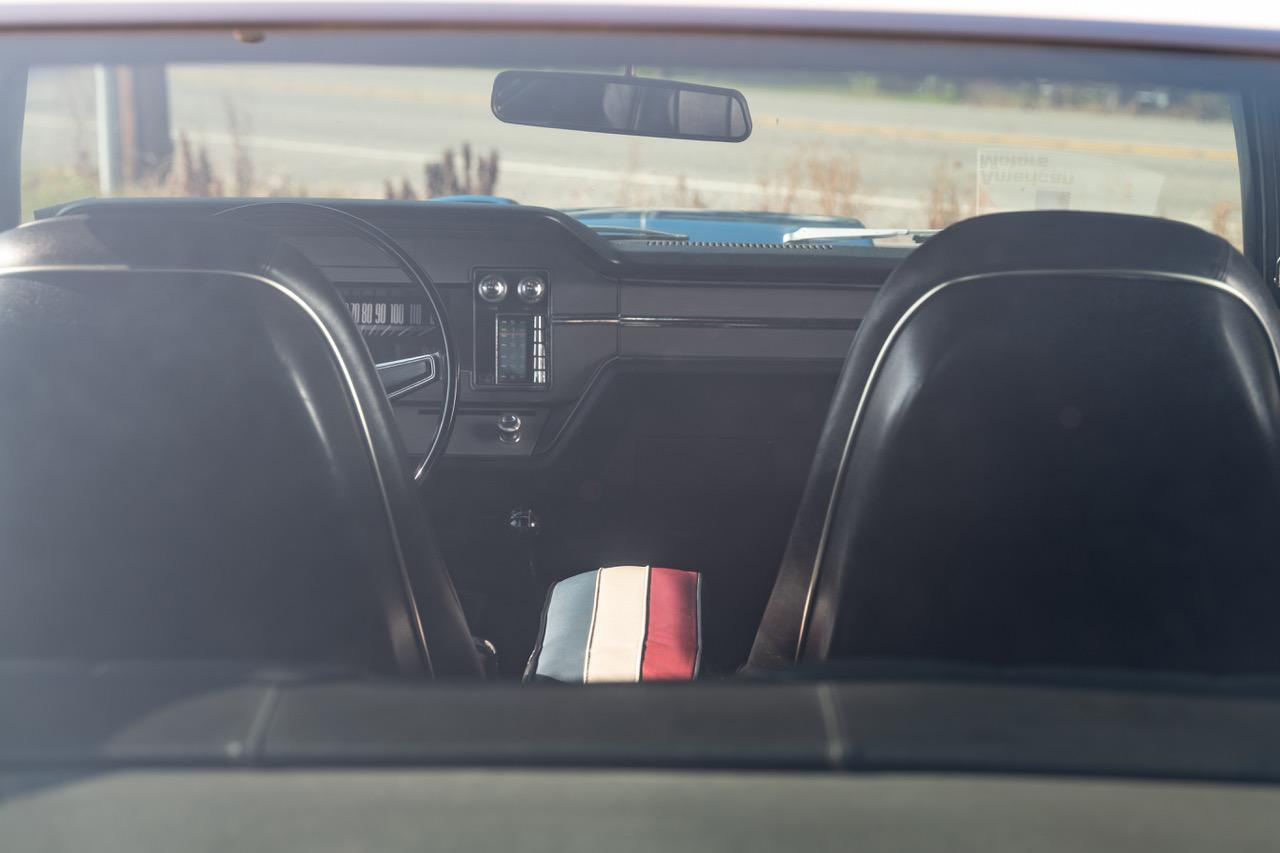
The Weather Eye heating and ventilation system — AMC's long-standing name for it — is effective when its cables and vacuum controls work and baffling when they do not; a car that blows only at the screen or only at full heat has seized cables or perished vacuum hoses, an afternoon of fiddly work rather than a bill. Heater cores leak into the passenger footwell and announce themselves with the sweet smell of coolant and a misting screen; core replacement is a dashboard-out job on air-conditioned cars and a miserable one on all of them, so a bypassed heater core (two hoses joined in the engine bay) is a seller telling you the core leaks, in code. Air conditioning, where fitted, is a conventional compressor system converted or convertible to modern refrigerant; budget for seals, a receiver-drier and a recharge before you budget for cold air. On convertibles, run the top through its full cycle twice: the hydraulic pump and rams leak into the top well, the frame's pivots wear until the top sits crooked, and a new top fitted to a worn frame still leaks at the header rail. A top that needs fabric is a $1,200–2,200 job fitted; a top that needs frame work is a specialist search. Window regulators — manual and electric — wear their rollers and tracks; a window that tips as it rises has a worn regulator, not a "quirk."
Electrics
Rebel electrics are simple, period American practice: points ignition, an alternator, a bulkhead connector carrying the main feeds, and an ammeter in the circuit on many cars. The faults are the faults of age, not design. The bulkhead connector corrodes and heats, giving you intermittent everything; the ammeter's terminals work loose and do the same, occasionally with smoke — any car with a flickering ammeter needle and hot smell under the dash gets its terminals inspected before its next drive, not after. Points ignition is reliable when serviced and is the first suspect, ahead of the carburettor, for every hot-start and misfire complaint: a set of points and a condenser is the cheapest diagnostic tool in this guide. Charging problems split between the alternator, its external regulator on earlier cars, and the ground straps everyone forgets — engine-to-body ground straps rot, and half the "bad alternator" Rebels in the world have a green, frayed strap. The starter on V8 cars suffers heat soak from the exhaust manifold, cranking slowly when hot and perfectly when cold; a heat shield and clean cable connections cure most of it. Wiring that has been "improved" by previous owners is the real enemy: budget your suspicion by the number of crimp connectors and Scotchlocks you find, and treat a car with an unmolested harness as the find it is. Finally, the small things that decide whether a car is finished: the fuel gauge sender (grounds through the tank strap, lies when the strap corrodes), the reversing and brake light switches, and the convertible top and power window feeds, all of which fail at their connectors first. An afternoon with a multimeter and a wiring diagram from the factory shop manual — which you should buy before the car, not after — settles all of them.

How to inspect one
Bring a magnet wrapped in cloth, a torch, a tyre-pressure gauge, a mechanical oil-pressure gauge if the car is a V8, and a friend. Allow two hours. Work in this order, and do not let the seller's warmth rearrange it.
- Identity first. Read the VIN plate (driver's door hinge pillar area on these cars, and the dash plate where fitted) and match it to the title before you look at anything else. Decode the engine digit: on a claimed Machine or 390 car, the VIN must say 390. A "matching-numbers" claim on a Rebel means the engine code matches the car's specification — AMC practice makes concours-style number-matching a weaker concept than on a Corvette, but the VIN engine code is absolute.
- The cold start. Insist the engine is cold when you arrive. A car presented warm is hiding a cold-start, choke or oil-pressure story. From cold, a six should settle to a clean idle within a minute of choke; a V8 should show strong oil pressure immediately and no lifter clatter beyond a few seconds.
- Oil pressure, hot, on a real gauge (V8s). After the test drive, with the engine fully hot, screw in your gauge or watch the car's own at idle and at a fast idle. Flickering at hot idle sends you to the timing-cover diagnosis in Problem areas — and reprices the car.
- The sill and floor test. Carpets up front and rear, torch along the floor edges, the seat-belt mounts, and under the rear seat. Press hard with your thumb along the sill seams. Then jack one front corner (on the subframe, not the sill) and open and close both doors: a sound unibody shrugs; a rotten one changes its door gaps.
- The front rails and cowl. Under the bonnet, inspect the rails, the inner wings, the battery tray, and the cowl seams. Rust here outranks rust anywhere else. Look for the water trail — staining below the cowl and screen corners — that explains wet floors.
- Trunk and quarters. Mat up, spare out, torch into the quarter wells and the trunk floor seams. On wagons, the rear floor, the tailgate seams and the roof above the rack mounts. On convertibles, the top well, drained and dry or wet and rusting.
- Trunnion or ball-joint check. Front end supported under the lower arms: rock each wheel at twelve/six and three/nine, and have your friend watch the trunnions (1967–69), ball joints (1970), tie-rod ends and idler arm. Any visible play has a price; add the prices up before the test drive, not after.
- The distributor-gear question (V8s). Ask directly: has the distributor or its gear been replaced, and with what? Check ignition timing stability with a timing light if you can — a mark that wanders at steady revs is the gear pair wearing, and it moves the car down a price class.
- The test drive, radio off. Twenty minutes minimum, mixed speeds, one full-throttle run if the owner allows. Listen for: axle whine that changes on and off the throttle, Twin-Grip chatter in a tight slow turn (fluid additive first), a hub click on take-up (two-piece axle fretting), gearbox flare on the 2–3 change, kickdown response, and brake pull. Note the temperature gauge's story in traffic.
- Brakes, properly. From 40 mph, brake firmly with a light grip on the wheel: the car tracks straight or it does not. Then the static master-cylinder test — slow, sustained pedal pressure at rest; a sinking pedal is a bypassing master, whatever the road test felt like. Check the flexible hoses' date-by-appearance: cracked, ballooned or unknown means replacement.
- Electrics and weather gear, all of it. Every switch, twice: lights, wipers, heater fan on all speeds and all Weather Eye positions, windows, top on a convertible (full cycle, twice, watching for crooked descent), horn, gauges. A bypassed heater core or a dead fan speed is a fact about the car's maintenance, not just a fault.
- Paperwork and parts inventory. Title matching the VIN, any build or dealer documentation (gold on a Machine), and a walk-round inventory of the bright trim against the car's specification. Missing SST or Machine brightwork is not a detail to "source later" — on this marque, later may not exist. Price the car as it stands, complete or incomplete.
Score the car in the order the money runs: shell, then V8 oil pressure and identity, then suspension wear, then trim completeness. A Rebel that passes 1, 4, 5 and 6 is a car you can improve forever; a Rebel that fails them is a parts car with a title, whatever the paint looks like.
Values
Read the Rebel market as two markets sharing a nameplate, because they behave nothing alike. In the first market sits The Machine, and only The Machine: a small, documented production run, a genuine performance specification, and a collector following that crosses over from the AMX and Javelin world. Real Machines — VIN-verified, correctly equipped — are priced by comparables and by documentation, and the spread within them is driven by the things this guide has flagged: originality of the scoop, tach and stripes, the launch colour scheme against the later plain colours, four-speed against automatic, and paperwork. A cloned or "tribute" hardtop belongs in the second market no matter how good it looks, and the single most valuable skill in Rebel buying is refusing to pay first-market money for a second-market car.
The second market is everything else: sedans, wagons, hardtops and the two-year convertible, priced as what they are — charismatic orphan-brand classics in a segment where the Chevelle and its kin set the ceiling. Within it, condition spread is enormous and is driven almost entirely by the shell and the trim, not by mileage or engine choice. A rust-free, complete, original six-cylinder sedan is worth more, and sells faster, than a V8 car with bubbling quarters and missing brightwork, because the buyer of the V8 car is purchasing the same welding bill with a bigger engine attached. Convertibles carry a premium for their two-year scarcity, SST hardtops for their looks and equipment, wagons a smaller and more volatile one that depends heavily on presentation; the 390 in a non-Machine car earns a real but modest premium over a 360, and a 360 over a 343, in a ladder that flattens quickly once condition enters the argument.
Asking prices and achieved prices part company widest on the cars in between: the presentable V8 hardtop advertised hopefully at muscle-car money because it has a 390, and the project car priced as if the welding were already done. Project Rebels are worth project money — the cost of the shell work in Problem areas is real, the parts hunt is slow, and the finished car's ceiling is set by cars that never needed the work. Use the listings and recorded sales below this guide as your evidence: filter for cars like the one in front of you in body style and verified engine, weight completed sales over optimistic asks, and remember that on a thin market like this one, a single well-documented sale tells you more than five asking prices. Negotiation reality: private sellers of ordinary Rebels expect to move, dealers price the orphan discount in or wait a long time, and the honest six-cylinder car at a fair ask is frequently the best value in the whole segment precisely because the market undervalues the engine this guide recommends on merit.
Parts and ownership
Owning an orphan is a discipline, not a hardship, and the Rebel is one of the easier orphans because AMC's parts situation has structure. Mechanical service parts are broadly available: the 232 six shares its world with decades of Jeep production, so gaskets, bearings, water pumps and ignition parts are ordinary orders; the V8 family is supported by a committed specialist trade that stocks the items that matter — timing covers and oil pump kits, matched distributor and cam gear sets, timing sets, gasket sets, carburettor kits for the Carter AFB — because the same engines power the AMX, Javelin and Jeep ranges. Borg-Warner automatic hard parts and T-10 gearbox parts are shared with other makes and are a transmission shop's routine. Where you will work harder: body panels (repair sections and good used panels through specialists and the club network, not a catalogue), glass for the less common body styles, and trim, as covered above. The rule of Rebel ownership follows from that map — never throw anything away, buy trim when you see it rather than when you need it, and keep a shelf.
The support network is small and good. The AMC clubs and forums carry the accumulated knowledge — which supplier's gears are truly matched, which timing covers are cast well, who rebuilds trunnions and Bendix calipers — and the factory technical service manual, which you should own in print, is written to a standard modern manuals are not. Join the club before you need it; the membership costs less than one wrong part. Running costs otherwise are period-American normal: the six is frugal and gentle on everything, the V8s drink in proportion to your right foot, tyres and brake consumables are standard sizes and prices, and insurance through a classic policy is unremarkable for everything except an agreed-value Machine, where the agreed value should be set from documented comparables and revisited as the market moves.
Ownership rhythm: grease the trunnions on a pre-1970 car at every service; change the automatic's fluid and the Twin-Grip's oil with its additive on schedule; keep antifreeze fresh to protect the aluminium timing cover; exercise a convertible's top and a stored car's brakes rather than letting seals sit. Stored Rebels wake up needing the usual — fuel system cleaned of varnish, carburettor kit, hoses inspected, points dressed — and a car that has sat a decade is a recommissioning, not a purchase-and-drive. None of this is exotic; it is the ordinary care of a well-made car whose maker is gone.
Which one to buy
- The all-rounder: a 1968–69 SST hardtop with the 343 or 390. The best-looking shell, the mature engine range, disc brakes commonly fitted, and none of the Machine premium. Buy on shell and trim completeness.
- The value buy: a clean 232 six sedan or wagon. The market undervalues the six; the engine is the toughest in the range, the running costs are the lowest, and a rust-free example is a better car than a rusty V8 at the same money.
- The collector buy: a VIN-verified 1970 Rebel Machine. The only Rebel whose value is documentation-driven. Pay for paperwork, original scoop and tach equipment, and the correct 390 — and walk away from any car whose story substitutes for its VIN.
- The character buy: a 1967–68 SST convertible. Two years only, the last of the AMC ragtops, and priced by condition and top-well honesty. Budget the top and the shell inspection doubles in importance.
- The driver's buy: a 1970 SST with the 360. The facelift car gets ball-joint front suspension and the dog-leg-head V8 family; the 360 gives you nine-tenths of the 390 experience at a fraction of the admission.
- The project buy: none, unless the shell is sound. A Rebel project with a rotten unibody is a parts car; a mechanically tired car with a sound shell is the only project that makes sense.
The overriding rule: buy the shell and the identity, and let the mechanicals be negotiable — on a Rebel, rust and paperwork are forever, and everything else is a weekend, a parts order, or a known bill.
See the 2 Rambler 660 Classic Rebel cars currently listed.
What they sell for: Rambler 660 Classic Rebel sale prices.