
Austin-Healey Sprite buyer's guide
Austin-Healey Sprite -- the model's own buyer's guide: variants, values and what to check.
Years listed: 1962-1966 · Series: Sprite
Overview and history
The Austin-Healey Sprite is the cheapest honest fun in the classic car world, and it has been since the day it was launched. It is a tiny, simple, open two-seater built from the BMC parts bin — an Austin A35 engine, Morris Minor steering, suspension from components the corporation already made by the hundred thousand — wrapped in a unitary body with almost no equipment at all. There is no wood, no leather as standard, no chrome worth mentioning and, on the first cars, not even a boot lid or exterior door handles. What there is, in abundance, is the thing expensive classics so often dilute: directness. A Sprite weighs around 700 kg, steers with a quick rack, sits you inches off the road, and makes 50 mph feel like an event. Everything in this guide follows from that simplicity. The mechanicals are cheap and tough. The body is the car, and the body rusts.
The Sprite was Donald Healey's idea executed with BMC money. Healey had built the Austin-Healey 100 and 100-Six at Warwick, and by the mid-1950s he could see a gap below them: the small sports cars of the pre-war world had no modern successor, and a generation of young buyers had nothing cheap and sporting to buy. The car his team designed — Gerry Coker did much of the styling — was shown to the press in May 1958, timed around the Monaco Grand Prix, and went on sale that summer at a price low enough to undercut everything sporting in Britain. Production was at the MG factory at Abingdon, which matters to this day, because the Sprite was an MG-built car wearing an Austin-Healey badge from the very start. The twin that followed was not an imitation. It was the same factory reclaiming its own product.
The first car, the Mark I of 1958 to 1961, is the one the world remembers. Its headlamps were meant to retract, but cost killed the mechanism and the lamps were fixed upright on top of the bonnet — hence Frogeye in Britain, Bugeye in America, and the smiling face that made the car famous. The whole front end is one pressing that hinges forward for engine access, and there is no external boot lid: luggage goes in through the cabin. The engine is the 948 cc A-series with twin SU carburettors and 43 hp, the rear suspension is by quarter-elliptic leaf springs with radius arms, and the brakes are drums all round. It was slow even by 1958 standards and it did not matter at all. Nearly 49,000 were built, a huge share exported to the United States, where the Bugeye became the entry drug for a generation of SCCA racers. That racing life is part of what you must check when you buy one: many Sprites have been competed in, modified and repaired cheaply.
In 1961 the Sprite was restyled as the Mark II, and simultaneously MG got its version, the revived Midget name on what was mechanically the same car. This guide covers the Sprite in full and the Midget in proportion, because from 1961 to 1971 the two are one car with two badges, and everything here about structure, engines and inspection applies to both. The Mark II put the headlamps in the wings, gave the car a conventional bonnet and a boot lid, and kept the 948 engine at first; in October 1962 it gained the 1098 engine, front disc brakes and a stronger gearbox. The Mark III of 1964 added wind-up windows, external door handles and semi-elliptic rear springs. The Mark IV of 1966 brought the 1275 engine and a proper folding hood, and ran to 1971, when the Healey agreement ended. The Midget carried on alone — through the 1275 years, then from 1974 with rubber bumpers and a Triumph 1500 engine, to 1979.
So the family tree is simple: one body architecture, four Sprite marks over thirteen years, three A-series engine sizes, and an MG twin that outsold the Sprite in its later years and outlived it by eight. Total Sprite production was about 129,000 cars; Midget production added roughly another 204,000. That shapes the whole ownership proposition: parts are reproduced, the knowledge base is enormous, and almost nothing is unobtainable. The bad news is the mirror image. Because Sprites were cheap, they were bought by people without money, run through winters, parked outside and patched for inspections. Survival was not curated, and the car in front of you has probably had a harder life than a contemporary Jaguar or Healey 3000. Buy the shell. On a Sprite, the entire economics of the car turn on it.
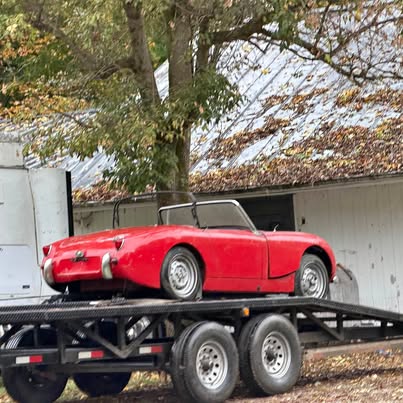
The models
Every Sprite is a two-seat open roadster on the same basic unitary shell, on an 80-inch wheelbase that never changed. The marks differ in body details, engines and rear suspension, and the differences matter to value and to driving more than the modest power figures suggest. Work through the table first, then the notes below it — and note the chassis prefixes, because on Sprites the prefix is a far more reliable witness than the badge, the title or the seller's description.
| Model | Years | Engine | Output | Built | Character |
|---|---|---|---|---|---|
| Sprite Mk I (Frogeye/Bugeye) | 1958–1961 | 948 cc A-series, twin SU H1 | 43 hp | 48,987 | The icon; quarter-elliptic rear, no boot lid, the collector car |
| Sprite Mk II (948) | 1961–1962 | 948 cc A-series, twin SU H1 | 43 hp | about 20,450 | Restyled body, boot lid, still drum brakes and the early gearbox |
| Sprite Mk II (1098) | 1962–1964 | 1098 cc A-series, twin SU HS2 | 56 hp | about 11,215 | Disc front brakes, ribcase gearbox; the sweet early driver |
| Sprite Mk III | 1964–1966 | 1098 cc A-series (10CC), twin SU HS2 | 59 hp | 25,905 | Wind-up windows, semi-elliptic rear springs, civilised cabin |
| Sprite Mk IV | 1966–1971 | 1275 cc A-series, twin SU HS2 | 65 hp | 22,790 | The quickest Sprite; folding hood, the most usable of all |
| MG Midget Mk I–III | 1961–1974 | 948 / 1098 / 1275 A-series | 43–65 hp | about 130,000 | The Sprite's twin from Abingdon; same car, MG grille and trim |
| MG Midget 1500 | 1974–1979 | 1493 cc Triumph, single Stromberg (US) | about 50 hp (US) | 73,899 | Rubber bumpers, raised ride height; a Midget only, no Sprite version |
(Outputs are period gross figures for home-market cars; US-market cars from the late 1960s onward, with emissions equipment, made less. Production figures are the commonly published factory totals; the split of Mark II production between 948 and 1098 cars is approximate in the records.)
The Mark I (AN5, 1958–61). The Frogeye is a distinct car, not merely an early version of the later one. The one-piece front end hinges at the front and lifts entire — superb engine access, and an expensive panel to repair well. The doors have no external handles and no wind-up windows; side screens slot in, the hood erects on a frame you assemble, and luggage goes behind the seats, reached from inside. The quarter-elliptic rear springs, cantilevered from the body with a radius arm below, give the lightest and in some ways the sweetest-handling rear end of any Sprite, and their mountings are a structural inspection point all of their own, covered in Problem areas. Everything about the car is minimal, and the minimalism is the value.
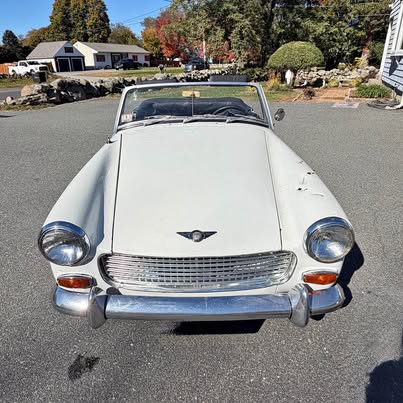
The Mark II (HAN6 948, HAN7 1098, 1961–64). The restyle moved the headlamps into the wings, added a proper grille and a boot lid, and made the car look — deliberately — more like a small conventional sports car and less like a cartoon. The early HAN6 cars are Mark I mechanicals in the new clothes: 948 engine, drum brakes, smoothcase gearbox, quarter-elliptic rear springs. The October 1962 changes made the HAN7 the connoisseur's early Sprite: the 1098 engine with 56 hp, front disc brakes and the stronger ribcase gearbox. If you want the early look with brakes and performance you do not have to apologise for, this is it.
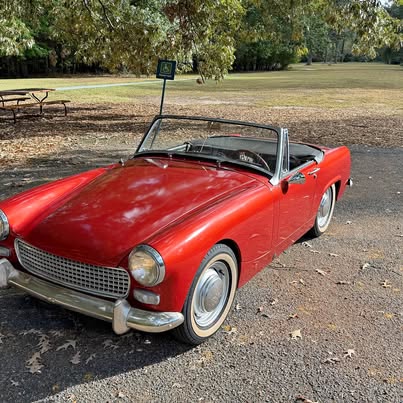
The Mark III (HAN8, 1964–66). The civilising. A deeper, curved windscreen with wind-up windows in doors that now have external handles and quarter-lights, more instrumentation, and — the change you feel — semi-elliptic rear leaf springs replacing the quarter-elliptics. The engine is the revised 1098, the 10CC unit with larger main bearings, making 59 hp. It is also, historically, the least collected of the four marks, which makes it the value buy of the family more often than not.
The Mark IV (HAN9, HAN10, 1966–71). The 1275 engine — 65 hp in Sprite tune — transformed the car's reach: 0 to 60 mph in roughly 13 seconds instead of the high teens, and a top speed in the mid-90s. The hood became a permanently attached folding top, US cars accumulated emissions equipment and side-marker lamps, and the last cars of 1971, after the Healey contract lapsed, were badged Austin Sprite with the Healey name gone. A Mark IV is the Sprite to buy if the car must earn its keep in modern traffic.
The MG Midget, in proportion. From June 1961 the Midget was the same car built on the same line, differing in grille (vertical MG slats against the Sprite's simpler aperture), badging, trim and minor equipment, and sold at a small premium. Mark for mark, everything in this guide's mechanical and structural sections applies unchanged. The Midget matters to a Sprite buyer for three reasons. First, supply: in the later 1960s it outsold the Sprite, so a buyer set on a 1275 car will find more Midgets to choose from, often better kept. Second, value: like-for-like, a Midget usually changes hands a little below the equivalent Sprite, and a Frogeye-look conversion of a Midget is worth Midget money whatever the bonnet says — check the chassis prefix (GAN for Midgets, HAN for Sprites, AN5 for the Mark I). Third, the ending: only the Midget continued past 1971, to the rubber-bumper 1500 of 1974 to 1979 — a bigger, softer car that shares the shell's bones but not the Sprite's character.
Identity, and the traps. Sprite identity lives on the chassis plate, and the prefix decodes the car: AN5 is a Mark I Sprite, HAN6 through HAN10 the later Sprites in sequence, GAN the Midgets. The engine number's prefix decodes the engine family: 9C for the 948, 10CG and 10CC for the two 1098 versions, 12CC and its successors for the 1275. Read both numbers before you discuss price, because the two commonest traps are visible there. The first is the backward conversion: a Mark II Sprite or, more often, a Midget, fitted with a Frogeye bonnet and sold at Frogeye money. The bonnet is one panel and bolts to any of these cars; the AN5 prefix, the quarter-elliptic rear suspension and the absence of a boot-lid aperture are what make a Frogeye, and a converted car has none of them. The second trap is more forgivable: engine swaps. A 1275 in an early car is a common, sensible upgrade; it is not fraud unless the seller prices the car as matching-numbers original. Decide which you are buying — originality or a driver — and pay for that.
Engines and gearboxes
The A-series: one engine, three sizes
Every Sprite engine, and every Midget engine until the Triumph-engined 1500 of 1974, is the BMC A-series: a small cast-iron overhead-valve four, designed for the Austin A30 and launched in 1951, that became one of the most-produced engines in history. In the Sprite it always breathes through twin SU carburettors — single-carburettor and Weber conversions exist, and each tells you something about a previous owner — and it always drives through a four-speed manual gearbox. There was no automatic Sprite. If a listing describes one, it is describing an error or a conversion, and either way it needs explaining before anything else about the car is believed.
The A-series virtues are exactly what a cheap sports car needs. It is light, compact and mechanically simple — pushrods, a three-bearing crankshaft in the smaller sizes, a chain-driven camshaft — and it revs with an eagerness out of all proportion to its power figures. Its weaknesses are consistent across all three sizes: oil leaks from the crankshaft seals and rocker cover, valve-guide wear showing as blue smoke on start-up and the overrun, timing-chain rattle, and cooling that is marginal when the radiator is silted. None is a reason to walk away by itself. All together, on an engine that also blows smoke under load and knocks when hot, they describe a rebuild — budget roughly $2,500 to $5,000 with machining at a generalist shop, more at a marque specialist. Because these engines are plentiful, many cars carry a replacement unit; that is a fact to price, not a scandal.
The 948 (9C engine, 1958–62). The original Sprite engine: 948 cc, 43 hp at 5,200 rpm and about 52 lb ft of torque, fed by twin SU H1 carburettors of 1⅛ inches. It is the sweetest of the three to rev and the slowest in the car, and in a Mark I that is part of the contract — you drive a Frogeye on momentum, braking late and carrying speed, and the 948 rewards it. What to check is specific: the 948's crankshaft and bearings are the least robust of the family under sustained high revs, so an engine with a competition history wants extra scrutiny for bottom-end knocks under load when hot; and the H1 carburettors' parts supply is thinner than for the later HS2, with worn throttle spindles — admitting air and making the idle unsettled — common. A 948 that starts readily, idles evenly once warm, shows no smoke under load and holds oil pressure is a good engine regardless of mileage claims, which on these cars are unverifiable anyway.
The 1098 (10CG and 10CC, 1962–66). The step that made the Sprite a properly rounded car. Capacity rose to 1098 cc by lengthening the stroke, output to 56 hp in the 10CG of the Mark II and 59 hp in the 10CC of the Mark III, and torque improved more than the power figures suggest. The two versions are not interchangeable trivia: the 10CC, from 1964, has larger 2-inch main bearings, a stronger crankshaft arrangement and a better reputation under hard use, and specialists prefer it as a basis for tuning. Carburettors are twin SU HS2s of 1¼ inches, the best-supported SU of all. Check the same A-series points as the 948, plus one specific to the longer-stroke engines: main-bearing rumble on engines that have been revved hard, best heard as a deep note under load at low speed in a high gear. A healthy 1098 is the best-balanced engine in the family — nearly the 1275's real-world pace, with cheaper parts than either of its neighbours.
The 1275 (12CC family, 1966–74). The engine most buyers want, and the one most often misdescribed. The Sprite's 1275 is related to the Mini Cooper S unit but is not that engine: in inline, rear-drive installation it makes 65 hp at 6,000 rpm and about 72 lb ft, on twin SU HS2 carburettors, with an 8.8:1 compression ratio, a milder camshaft and a specification a clear step below the Cooper S's exotic metallurgy. Sellers who describe a Sprite as having a Cooper S engine are almost always wrong, and the engine number prefix settles it — read it. What the 1275 gives the car is reach: stronger acceleration everywhere, a 3.9:1 final drive in place of the 4.22:1 of the smaller engines, and the ability to hold modern road speeds without the engine sounding besieged. Its specific checks: it works its cooling system hardest, so a silted radiator or failing water pump shows here first; parts and rebuild costs are a touch higher than the smaller engines; and US-market cars from 1968 onward carry air pumps, altered carburation and retarded ignition for emissions, which cost power until sorted by someone who knows the system. A desmogged US 1275 is not automatically a bodge — done properly it recovers the home-market character — but ask who did it and what remains of the original equipment.
Carburettors, all engines. Twin SUs are troublesome in one specific way: wear. The throttle spindles wear their bushes, air leaks in past them, and the result is an idle that will not settle and a mixture that will not stay set — the fault behind most claims that SUs are temperamental. The test is physical: feel for play at the throttle spindle ends, and on the drive, note an idle that hangs high or hunts. Rebushed and rebuilt, a pair of HS2s costs roughly $400 to $800 at a specialist; H1s can cost more. The other period faults are cheap ones: dashpot oil empty (the pistons rise too fast and the car stumbles on acceleration — top up the dashpots before condemning anything), perished fuel hoses, and a fuel pump diaphragm tired with age and ethanol. Ethanol fuel also loosens tank sediment and gums jets in cars that sit; a recommissioned car wants the tank, lines and carburettors cleaned end to end.
Cooling and ancillaries. All Sprites use a small radiator and a belt-driven fan — the system is marginal by design and excellent when maintained. Overheating is almost never a design verdict; it is a silted radiator, a collapsed hose, a slipping belt, a thermostat stuck or missing, or timing retarded by a worn distributor, in roughly that order. Test on the drive: temperature should climb to normal and stay there, including at a hot idle after a run. A car that creeps upward at idle but cools at speed has an airflow or radiator problem; one that boils under load is telling you about the head gasket, and that is a different price conversation. Distributors wear in the shaft bushes, scattering the timing; a rebuilt or electronic-conversion distributor is a common, acceptable upgrade.
Gearboxes, clutch and final drive
The gearbox story has two chapters, and the dividing line is October 1962. Before it, all Sprites use the early smoothcase gearbox: a four-speed with synchromesh on the top three gears and none on first, adequate when new and, by now, usually tired — a car that crunches into first on the move is behaving as designed, while one that crunches into second or third, jumps out of gear under load, or whines loudly is describing wear you will pay for. From the 1098 Mark II onward, the ribcase gearbox — its casing ribbed for stiffness — is stronger in its bearings and synchromesh and is the box to have; it too lacks synchromesh on first. Ribcase boxes were retrofitted to many early cars, so a Mark I with a ribbed casing is not a wrong car, it is an upgraded one; price it as a benefit.
Neither box is free: a specialist rebuild of a ribcase runs roughly $1,200 to $2,500 with the box out, and the labour of removing engine and gearbox together — the normal route on a Sprite — adds to any bill, which is why the standing advice is to do clutch, release bearing, rear crankshaft seal and gearbox seals in one visit whenever the unit is out. The clutch is a small coil-spring unit on early cars and a diaphragm unit later, light in action and cheap in parts — a full kit is typically $150 to $300 in parts — and its hydraulic actuation perishes with age and sitting. A clutch that drags (crunching reverse selection is the tell), slips under load in top gear, or has a pedal that feels different every morning is a job to price in, not to discover. Gear selection should be short, springy and precise; a lever that flops means worn selector components or tired mountings, both cheap, both worth distinguishing from internal wear before you negotiate.
At the back, the live axle carries final-drive ratios matched to the engines: 4.22:1 behind the 948 and 1098, 3.9:1 behind the 1275. The differential is quiet when healthy; a whine that rises and falls with road speed, or a clonk on taking up drive, points to worn crown wheel and pinion or worn half-shaft splines. Half-shafts are a known consumable on hard-driven and competition cars — a twisted or broken shaft is a classic Sprite failure — and upgraded shafts are a routine fitment on raced cars. Wire wheels were an option throughout: their splines and the hub splines wear together, and the check is to rock each wheel fore and aft against the brakes and feel for movement and a metallic clack. Worn splines are a safety item, not a cosmetic one — budget roughly $200 to $400 a corner for hubs and wheels in parts if they are gone.
Problem areas
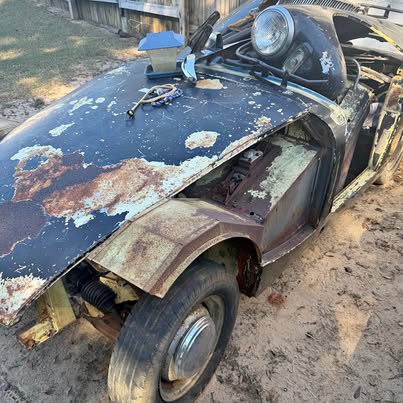
Everything in this section reduces to one fact: a Sprite has no separate chassis. The body is a unitary steel monocoque, and the sills, floors, spring mountings and bulkheads are not panels hung on a structure — they are the structure. A rusty wing is a bill. A rusty spring box is a car whose rear suspension is attached to rust. That is why the inspection that follows spends half its steps on the underside, and why the economics are so stark: mechanical parts are cheap, but skilled welding hours cost the same whether the car is a Sprite or a Ferrari, and a full structural restoration of a cheap Sprite costs several times what the finished car will be worth. There is no dishonour in a patched Sprite — most survivors are patched — but you must know where the patches are, and what remains unpatched, before you pay.
Rust: the map
Work through the shell in the order the water and the stress do.
Sills, inner and outer. The sills run the full length of the cockpit between the wheels and carry the car's bending strength; they are a boxed structure, and they rot from inside the box outward. Bubbling at the bottom edge is the visible fraction. The real check is underneath and at the ends: prod the sill bottoms and the closing panels where the sill meets the arches, feel for filler and for the crunch of laminated rust. Fresh black underseal applied only to the sills of an otherwise scruffy underside is a confession, not a coincidence. Proper sill replacement — cutting out inner and outer, and repairing the floor edge and crossmember ends you will inevitably find — runs roughly $800 to $2,000 a side done well with paint, and it is the single commonest big bill in Sprite ownership. A car with documented, photographed sill work is worth real money over a shinier car with silent sills.
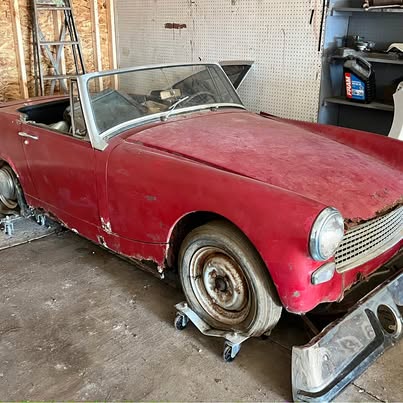
Rear spring mountings: the spring boxes and hangers. This is the Sprite's signature structural failure, and it differs by mark. On the Mark I and the early Mark II cars, the quarter-elliptic rear springs are cantilevered from spring boxes built into the body behind the seats, at the rear bulkhead; the box and surrounding structure take the whole springing load, trap mud and water thrown by the rear wheels, and rot — sometimes to the point where the spring is visibly migrating or the car sits crooked. On the Mark III and Mark IV, conventional semi-elliptic springs hang from a front hanger and a rear shackle; the hangers, shackle mountings and boot floor around them rot from the same cause. Either way, this area is hard to see without a lift or at least a torch and a mirror, which is precisely why it goes unrepaired on cheap cars. Press hard on the structure around every spring mounting. Softness, perforation or amateur plating here is structural welding — roughly $600 to $1,800 a side depending on how far the rot has spread — and extensive rot in a Mark I's spring boxes is one of the few findings that should end a viewing on the spot at any price above parts value.
Floors, footwells and the transmission tunnel. The floor pans rot where water sits: under the carpets in both footwells (fed by leaking windscreen and door seals and, on early cars, by the side-screen apertures), around the seat mountings, and along the joins to the sills and tunnel. Lift every carpet and mat — a seller who will not allow it has answered you — and prod around the seat runners and the pedal area. Surface rust with sound metal is a clean, treat and paint job you can do yourself; perforation is panel work, roughly $500 to $1,200 a side fitted, and floor rot never travels alone: price the sills and crossmember you will find with it. The crossmembers are structural in their own right and rot where they meet the sills.
Front structure: chassis legs, crossmember and inner wings. At the front, two rails run forward from the bulkhead carrying the engine and the front suspension crossmember. They rot at their ends and around the suspension mountings, and accident damage hides here too — these little cars were bumped often, and a rippled or plated rail tells the story. The bonnet on a Mark I is the whole front end, and its condition is a price item by itself: a sound, rust-free Frogeye bonnet is a valuable panel, while a rusty one, perforated along its edges and around the headlamp pods, is specialist panel work at roughly $1,000 to $2,500 to restore properly. On later cars the wings rot at their rear bottoms, around the headlamp bowls and along the top seams.
The rest of the shell. The rear bulkhead, the boot floor (on Mark I cars checkable only from inside, with the spare wheel out), the rear wheel arches, the door bottoms (doors hold water when their drains block), the A-posts, the scuttle and the battery box area, where acid and water combine. None alone condemns a car; all together they describe its life, and the welding adds up in a way sellers rarely total honestly. Learn to read filler with a cloth-wrapped magnet: original panels are thin and ring when tapped; filled panels thud. Ripples in raking light and overspray on rubbers are the standard tells of a cosmetic restoration over an unrepaired shell — the most expensive Sprite of all, because you pay the restored price and then pay the welder as well.
Front suspension, steering and brakes
The front suspension is independent by double wishbones, with the Armstrong lever-arm damper forming the upper link — an elegant period solution that makes the damper a suspension component as well as a shock absorber. The wear points are the kingpin and its bushes, the threaded fulcrum pins, and the dampers themselves. The test is to jack the front up, grasp each wheel top and bottom, and rock: play that moves at the kingpin is kingpin or bush wear; play in all directions includes wheel bearings, replaceable at roughly $50 to $120 a side in parts. A full front-end rebuild with reconditioned swivel axles, bushes and pins is roughly $600 to $1,400 in parts, plus labour, and it transforms a vague car — budget for it on any car that wanders or knocks over bumps, because at this age most need it. Lever dampers leak and lose their action; exchange units run roughly $100 to $200 a corner, and telescopic conversions exist — acceptable, common, and a small originality deduction on a Frogeye only. Never condemn the kingpins before checking they have been greased: the nipples are often ignored for decades, and a dry joint feels like a worn one.
Steering is rack and pinion, Morris-derived, quick and full of feel when right. Wear shows as play at the wheel rim before the road wheels move, clonks from the rack mountings or track-rod ends, and heaviness from seized joints. Exchange racks run roughly $200 to $450, and track-rod ends are consumables. Drive a car with heavy or vague steering carefully on the viewing: this is the car's primary safety system and its primary pleasure, on the same components.
Brakes divide by date. Mark I and 948 Mark II cars have 7-inch drums all round, adequate for the car's weight when freshly serviced, and unforgiving of neglect: oval drums, seized adjusters and perished hoses give a long, pulling pedal. From the 1098 Mark II of October 1962, front discs with a drum rear became standard — a simple system whose calipers seize on cars that sit, whose discs rust and lip, and whose full hydraulic refresh runs roughly $700 to $1,500 in parts and labour. Early cars are single-circuit: one failure, no brakes. Later US-market cars gained dual circuits. Whichever the car has, budget a full fluid and hose renewal on any purchase and treat a claim of recent brake work as a request for the invoice. The handbrake is chronically weak on neglected cars. Cars that have sat need both brake and clutch hydraulics recommissioned, not topped up: modern fluid in an unrebuilt system finds every weak seal in the first month.
Interior, hood and weather equipment
Sprite interiors are simple to the point of austerity — there is nowhere for tiredness to hide. Seats are simple steel frames with foam and vinyl; the foam crumbles, the vinyl splits at the seams and at the driver's outer bolster, and foams and covers are reproduced at roughly $300 to $700 a pair in materials for a home retrim. Carpets are cheap sets, reproduced everywhere. The expensive items are specific to the early cars: Mark I side screens and frames, the early hood frame, original instruments and correct early trim — a Frogeye fitted with a later interior has lost value a knowledgeable buyer will deduct. A working heater matters more than it sounds, because the demister is your only defence against a misted screen in a car with this little weather sealing.
The hood divides by mark as the engines do. Mark I and II cars have a removable top on a separate frame: slow to erect, draughty, and, if the frame or screens are missing, a real cost to replace correctly. Mark IV and later Midget cars have a proper folding hood attached to the body, reproduced at roughly $400 to $900 fitted. On any car, erect the top during the inspection: check the frame for bends, the material for shrinkage (a shrunk top that will not reach its catches is a replacement, not an adjustment), and the rear window for opacity. A car missing its weather equipment is a fair-weather toy at a fair-weather price.
Electrics and instruments
Lucas electrics, a dynamo on early cars (alternators came late, and many cars have been converted), positive earth on the earlier cars and negative earth later — check which a car is before jump-starting it, because conversions are common and not always labelled. The faults are the era's standard set: earth points corroded at the body, bullet connectors green and resistive, and a loom whose insulation is now fifty to sixty-five years old. Dim lights, a slow wiper and a fuel gauge with its own opinions are all earth and connection faults until proved otherwise — cheap in parts, tedious in hours. A full replacement loom is available for every mark at roughly $300 to $600; on a driver, systematic cleaning of earths and connectors cures most of it. A car converted to an alternator and negative earth is easier to live with and worth no less as a driver. Instruments are Smiths, robust and rebuildable. Test everything on the viewing, and read a car where everything works as what it usually is: a car that has been used and maintained.
How to inspect one
Allow an hour and a half, because a Sprite is small but the list is not. Bring a torch, a cloth-wrapped magnet, a small screwdriver for prodding with the seller's permission, and a mirror on a stick if the car cannot be lifted — you will be on the ground, because the underside is where Sprites are priced. If the car passes your inspection, pay for an hour on a lift before money changes hands; the spring mountings and sills repay the fee more reliably on this car than on almost any other classic.
- Start with identity and paperwork. Read the chassis plate and decode the prefix — AN5 for a Mark I, HAN6 to HAN10 for the later Sprites, GAN for a Midget — and match it to the title. Read the engine number and its prefix: 9C is a 948, 10CG or 10CC a 1098, 12CC-family a 1275. A Frogeye price on a car whose prefix is not AN5 ends the negotiation about identity on the spot, whatever the seller calls the car. Ask for the history file: invoices for sill and spring-box work, with photographs, are worth more than any other paper.
- Cold start. Insist the engine is stone cold when you arrive. An A-series in health starts readily on choke, settles as the choke comes off, and shows no blue smoke beyond a puff. Smoke that continues under load is rings and bores; smoke on start-up and the overrun that clears is valve guides and seals; a bottom-end knock when hot and loaded is the expensive sound. Listen for timing-chain rattle at the front of the engine.
- The spring mountings, before anything else underneath. Torch and mirror, or the lift: find the rear spring attachments — the spring boxes at the rear bulkhead on quarter-elliptic cars, the hangers and shackles on semi-elliptic cars — and press and prod the structure around every one of them, as the rust section describes. Perforation or softness here is structural welding and reprices the car immediately. Check the rear bulkhead and boot floor while you are there.
- Sills, floors and crossmembers. Work the full length of both sills with your hands and the magnet, prod the bottoms and the ends where they meet the arches, then lift every carpet and prod the floors around the seat mountings, pedals and sill joins. Check the crossmembers where they meet the sills. Fresh underseal confined to one area is a question the seller must answer with history, not assurance.
- Front structure and, on a Mark I, the bonnet. Check the front chassis legs for rot and ripples, the suspension mountings and the inner wings. On a Frogeye, open the one-piece front end, check its edges and headlamp pods for perforation, and check the fit against the scuttle — a bonnet that sits badly may be a bent bonnet, a bent car, or both. On later cars, check wing bottoms and headlamp bowls.
- Body and gaps. Magnet over the arches, door bottoms, rear quarters and tail panel. Look down each flank in raking light for filler ripples, check door gaps and boot-lid fit, and count the patches you can find. One honest, visible repair is worth more than invisible perfection: you are pricing what you can verify.
- Front suspension and steering. Jack the front and rock each wheel top and bottom for kingpin and bearing play, as in Problem areas — remembering that an ungreased joint feels worn, so note the play and price the rebuild rather than delivering a verdict. Check the lever dampers for leaks, the bushes for perishing, and turn the steering lock to lock feeling for tight spots and clonks. Check wire-wheel splines if fitted by rocking each wheel against the brakes.
- Brakes and hydraulics. Pedal first: firm, high and consistent, not creeping under sustained pressure (master cylinder seals) and not spongy (air or perished hoses). Check for fluid leaks, cracked hoses, lipped discs, and work the handbrake — it should hold the car on a slope. On a single-circuit early car, treat any hydraulic doubt as a full recommissioning bill, because there is no second circuit.
- The test drive. Fifteen minutes minimum, on roads that let you use third and top gear. The engine should pull cleanly without stumbling (check the carburettor dashpot oil before blaming the SUs), the gearbox should select every gear without crunching except first on the move, which has no synchromesh by design, and it should stay in gear under load and on the overrun. Listen for differential whine, feel for clutch slip in top gear up a hill, and brake firmly from speed: the car should stop straight and true. Note the temperature gauge throughout, including at a hot idle afterwards.
- Hood, screens and weather gear. Erect the top completely: frame straight and free, material reaching its catches without a fight, rear window clear, side screens present on early cars, tonneau present and fitting. A car whose top you have not erected is a car with an unpriced bill inside it.
- Electrics and instruments. Work everything: lights, indicators, wipers, horn, heater fan, every gauge. Confirm whether the car is positive or negative earth and dynamo or alternator — conversions are fine, surprises are not. A car where everything works has usually been used; weight that evidence.
- Interior and trim last. Sit in both seats and feel for collapsed foam and broken frames, check the driver's bolster, the carpet's dampness (wet carpets mean leaks mean floors — connect it back to step 4), the correctness of early-car trim, and the presence of the small, expensive-to-hunt items: side screens, hood frame, jack and spare wheel. Price what is missing before you make the offer, not after.
Values
The build below this guide carries the current market numbers — what is listed now, and what has actually been recorded selling — and those figures move. What does not move is the shape of the Sprite market: why two cars that look identical in a thumbnail can be several multiples apart in value, and where an asking price is doing honest work and where it is not.
The first and largest driver is the shell, and it is not close. Because mechanical parts are cheap and welding is not, a Sprite's value tracks the verified condition of its sills, spring mountings and floors more closely than its mileage, engine size or even its mark. A documented, structurally sound car with tired paint is worth more than a gleaming car with silent sills. When you read the listings, translate every asking price into a question: what evidence does this price offer about the structure? Underside photographs, invoices for panel work and a seller who invites a lift inspection support a price. A price supported only by shine should be discounted by the cost of the welding you cannot rule out.
The second driver is the mark, and within it, the Frogeye premium is the market's one piece of real theatre. The Mark I carries a premium because it is the icon — the face, the minimalism, the first of the line — and because its specific panels, above all that one-piece bonnet, are expensive to put right, so good ones are scarcer than production numbers suggest. But the premium attaches to a genuine AN5 car with its quarter-elliptic rear end and correct details, not to a bonnet. Converted Midgets and Mark IIs wearing Frogeye fronts trade, correctly, at their own value, and the gap between a real Frogeye and a lookalike is the largest identity-driven gap in this market. After the Mark I, the order is roughly: the 1275 Mark IV for usability, the disc-braked 1098 Mark II for early charm with real brakes, the Mark III as the perennial value, and the 948 Mark II at the gentle end. The Midget twin sits a step below the equivalent Sprite like-for-like — the rational buyer's route into the same experience for less money.
The third driver is the project-versus-driver gap, which on Sprites is a chasm with a trap in it. A finished car's value has a firm ceiling, and a structural restoration's cost does not, so the arithmetic of a rusty project almost never works: a car bought cheaply needing sills, spring boxes, floors and paint will cost, finished, substantially more than buying the finished car. That is why honest projects are priced as parts and potential, and why a project priced hopefully — at a discount from driver money rather than at project money — is the trap. The exception is the buyer who welds as a hobby and prices their own hours at nothing. Everyone else should buy the best shell they can reach, and let the project discount be the warning it is.
Asking and achieved prices diverge in the usual classic pattern, with a Sprite twist: seasonality and emotion. These are summer cars bought with the heart, advertised optimistically in spring, and recorded sales show the familiar gap between spring asking prices and what cars actually change hands for — widening on over-described cars, narrowing to nothing on honestly described, structurally documented ones. Originality moves money in checkable ways: a correct engine for the chassis supports value; a sensible upgrade — a 1275 in an early car, front discs on a 948 car, an alternator conversion — costs a driver nothing and a Frogeye a little; a colour change costs more than owners expect. Competition history is double-edged: documented period racing history has a story the market rewards; a car merely raced hard for decades has wear it discounts.
Parts and ownership
The Sprite is one of the best-supported small classics in the world: BMC built about 129,000 Sprites and over 200,000 Midgets on the same bones, the cars have been raced continuously since 1958, and the specialist trade — Moss, AH Spares, Ashley Hinton and a long tail of specialists in Britain and the US — has never had a reason to stop making parts.
Easy and cheap: virtually all mechanical consumables. Engine service parts, gaskets and rebuild components for all three A-series sizes; SU service kits and rebuilt exchange units; clutch kits, hydraulics, brake discs, drums, calipers and cylinders; suspension bushes, pins, reconditioned lever dampers and exchange racks; exhausts; cooling components; electrical service items and full replacement looms. Most of it is order-today, fit-this-weekend, at prices closer to a modern hatchback's than to a low-volume classic's. Panels are reproduced too — sills, floors, arches, spring-box repair sections, wings — which is why the cost of structural work is mostly labour.
Harder and dearer: the Mark I's specific equipment. A sound Frogeye bonnet, correct early instruments, side screens and frames, early hood frames and correct early trim are the hunt items, priced by scarcity and chased by the concours end of the market. Good used 1275 engines command a premium over 948s and 1098s because every small-BMC owner wants one. None of this is unobtainable; all of it rewards buying a complete car over a stripped one, because an early car's missing small parts can total more than its engine.
Running costs. A sorted Sprite is genuinely inexpensive to run: fuel consumption in the mid-30s mpg in gentle use, modest classic-scheme insurance, cheap tyres, and servicing any competent owner can do at home — the A-series asks for oil, plugs, points attention and valve clearances, and the suspension asks for grease at its nipples roughly every 1,000 to 3,000 miles, a ritual whose neglect is written through the Problem areas section above. The budget line that catches new owners is recommissioning: a car that has sat for years needs the fuel system cleaned end to end, every hydraulic seal in the brakes and clutch renewed, tyres replaced on age regardless of tread, and all fluids changed — realistically $1,500 to $4,000 in parts and modest labour before the car is trustworthy. The second catch is the first structural surprise: owners who skip the lift inspection meet their sill or spring-box bill in year one, at the $800 to $2,000-a-side scale the rust section quotes.
Buy a car that has been in regular use over one that has been asleep, even at a higher price, and use it regularly yourself: these cars deteriorate standing still and thrive being driven.
Which one to buy
- The icon: a genuine Mark I Frogeye (AN5). Buy it for the face and the minimalism — and only on verified identity and structure, because the premium is real and so is the cost of a bad bonnet or rotten spring boxes.
- The all-rounder: Sprite Mk IV (or a 1275 MG Midget). The 1275 engine, folding hood and semi-elliptic rear end make this the Sprite you can use anywhere, in modern traffic, without apology. If you want one car to drive rather than to curate, this is it — and the identical Midget buys the same car for a little less.
- The value buy: Sprite Mk III. The 59 hp 10CC engine, wind-up windows and the civilised cabin, in the least collected mark of the four. A good Mark III is routinely the most Sprite per unit of money in the family.
- The early charmer: a disc-braked 1098 Mk II (HAN7). Early looks, real brakes, the stronger ribcase gearbox and the sweet 1098 engine. The connoisseur's compromise between Frogeye charm and later usability.
- The starter Sprite: a sound MG Midget, any A-series mark. The same car, parts and fun, at a step below Sprite money — and a better-kept Midget beats a tired Sprite every time.
- The hobby project: a 948 Mk II or a tired Midget — bought at project money. Only if welding is your recreation and the price honestly reflects the sills, spring mountings and floors waiting for you.
And the rule that overrides all of the above: buy the least rusty car you can find, in the mark you can live with. Engines, gearboxes, brakes, hoods and interiors are all fixable at prices you can plan for. A rotten monocoque costs more to put right than the finished car will be worth, and it is the one thing about a Sprite that no money makes original again.
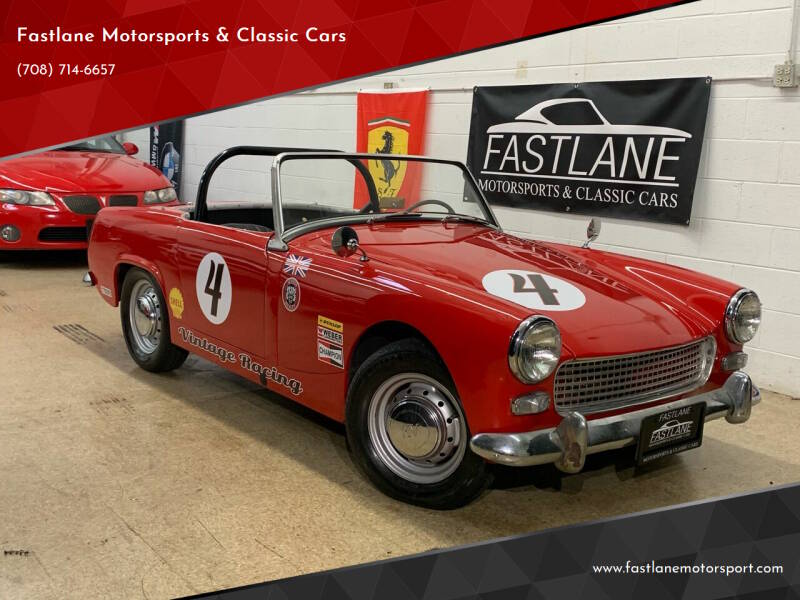
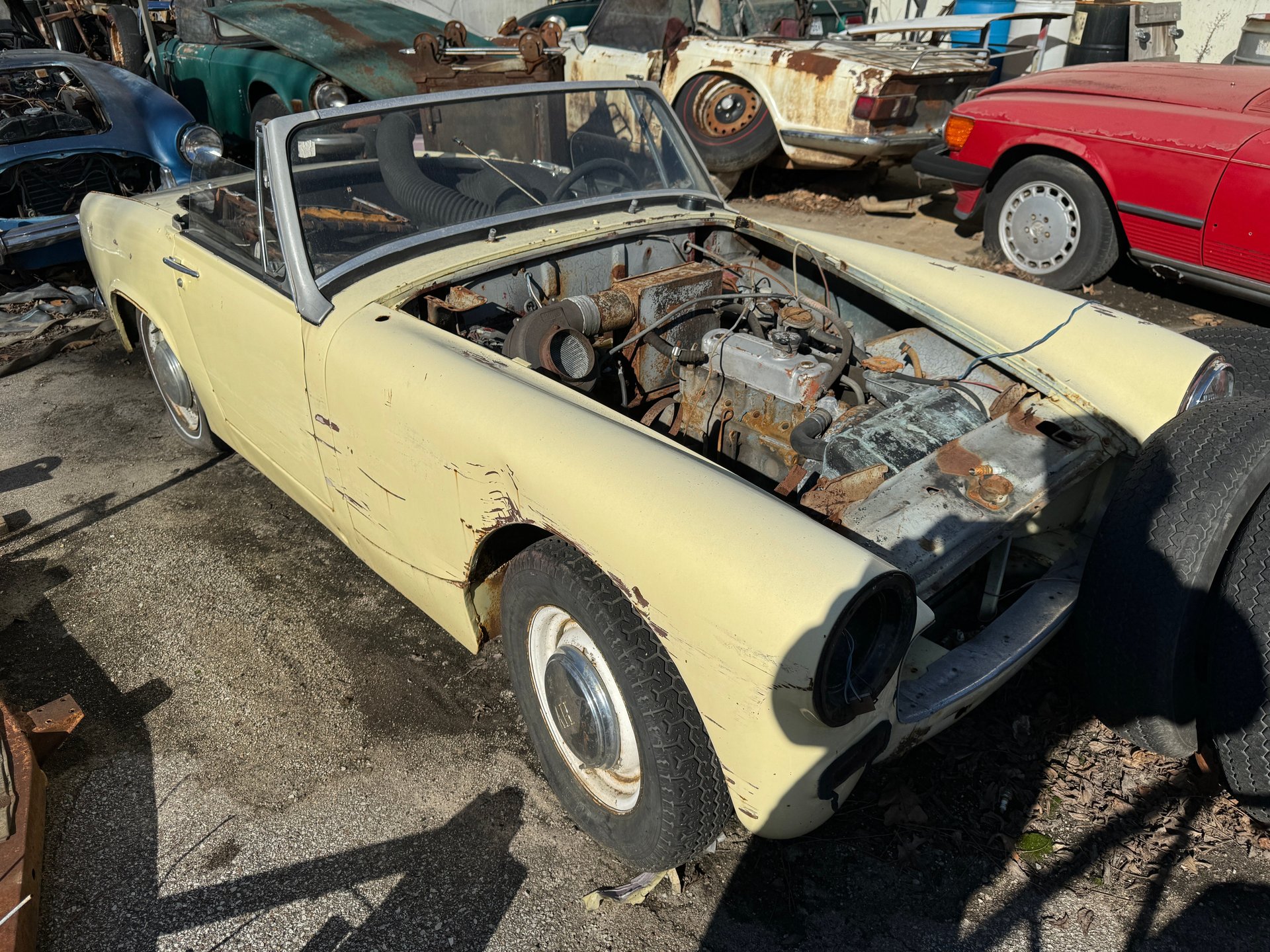
See the 3 Sprite cars currently listed.
For sale now
Expand
Expand
What they sell for: Sprite sale prices.