
Chevrolet C5 buyer's guide
Chevrolet C5 (1997–2004) — Corvette, Corvette Coupe, Corvette Convertible, Z06: what's listed, and what they sell for.
Years: 1997–2004 · Models: Corvette, Corvette Coupe, Corvette Convertible, Z06
Overview and history
The C5 is the Corvette that finally became a complete car. Launched for 1997 after a long, troubled development, the fifth-generation Corvette kept everything that made a Corvette a Corvette — front-mounted pushrod V8, rear-wheel drive, composite body, a price embarrassing European sports cars costing twice as much — and fixed almost everything that made the C4 hard to live with. It is wider, stiffer, roomier, faster and, twenty years on, far easier to own than the car it replaced — the generation experienced owners point first-time buyers at first.
The engineering break with the past is underneath. The C4 had been built around a perimeter frame with a bolted-on structure that flexed and creaked. The C5 introduced a hydroformed steel perimeter frame — rails formed by high-pressure water inside a die, so each rail is a single closed section with no welds along its length. The result is a structure several times stiffer in torsion than the C4, and you feel it within the first mile: no scuttle shake in the convertible, no creaks over driveway aprons. Onto that frame Chevrolet bonded and bolted body panels in sheet-moulded composite, so the C5 does not rust in the way a steel-bodied car rusts — a fact that shapes the whole buying logic in the problem-areas section below. The floor is a sandwich of composite and balsa wood, light and remarkably strong, and the car carries its gearbox at the back, in a transaxle, to put the weight distribution close to 50/50. That rear transaxle matters at inspection: engine, torque tube and gearbox are one connected system, and noises travel along it in ways that fool people used to conventional cars.
The engine was new too. The LS1, a 5.7-litre all-aluminium pushrod V8, replaced the LT1/LT4 line and started an engine family that dominated American performance for two decades. In the C5 it makes 345 hp at launch and 350 hp from 2001, with a flat torque curve, hydraulic lifters that never need adjusting and coil-near-plug ignition with no distributor to wear or drown. It is, by classic-car standards, absurdly durable — 200,000-mile LS1s on their original bottom ends are unremarkable — and it returns highway fuel economy in the high twenties thanks to a very tall sixth gear in the manual cars. That combination, supercar pace with pickup-truck engine manners, is the C5 in one sentence.
Production ran from 1997 to 2004 at Bowling Green, Kentucky, totalling about 248,700 cars. The first year was coupe only; the convertible arrived for 1998, the hardtop for 1999, and the Z06 — the car that turned the C5 into a performance landmark — for 2001. The range closed with the 50th Anniversary cars of 2003 and the Commemorative Editions of 2004. Every C5 is now at least twenty years old, so condition and history matter far more than model year. We track 144 C5s for sale or recently sold, and for 75 we have gone through the sellers' photo sets in detail — that evidence runs through this guide, always with the sample size stated.
What defines today's market is the split between used and preserved cars. Many C5s were garaged weekend toys driven a few thousand miles a year, so low-mileage original cars are unusually common; many others were daily drivers that passed through the cheap years getting old-Chevrolet maintenance. The mechanicals forgive a lot. The electronics, rubber, tops and interiors forgive much less — those, not engine wear, are where your inspection time belongs.
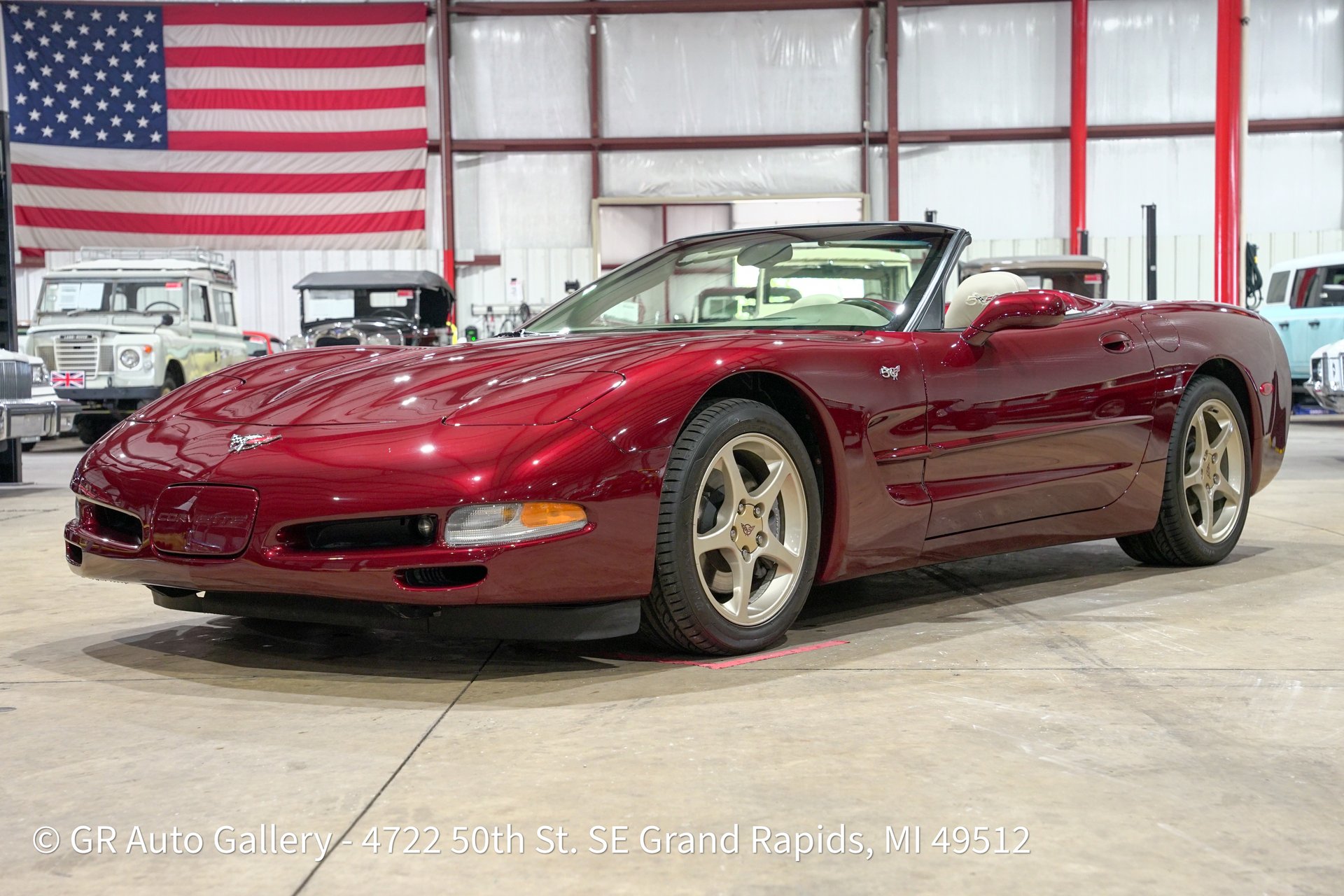

The models
Every C5 is a two-seat, front-engined, rear-drive sports car with a 5.7-litre V8, and the range divides first by body, then by intent. There are three bodies: the targa-roofed coupe, the convertible, and the fixed-roof coupe — called the hardtop, or FRC for Fixed Roof Coupe. There are two engines: the LS1 in everything except the Z06, and the LS6 in the Z06 alone. There are two gearboxes: a six-speed manual and a four-speed automatic, except in the Z06, which is manual only. Learn that grid and you can place any C5 you will ever be offered.
| Model | Years | Engine | Output | Built | Character |
|---|---|---|---|---|---|
| Coupe (targa) | 1997–2004 | 5.7 V8 (LS1) | 345 hp, 350 hp from 2001 | about 124,000 | The default C5; hatch practicality, roof panel out |
| Convertible | 1998–2004 | 5.7 V8 (LS1) | 345 hp, 350 hp from 2001 | about 90,200 | Open car with a proper lined, glass-window top |
| Hardtop (FRC) | 1999–2000 | 5.7 V8 (LS1) | 345 hp | 6,121 | The light, stiff, cheap-when-new enthusiast coupe |
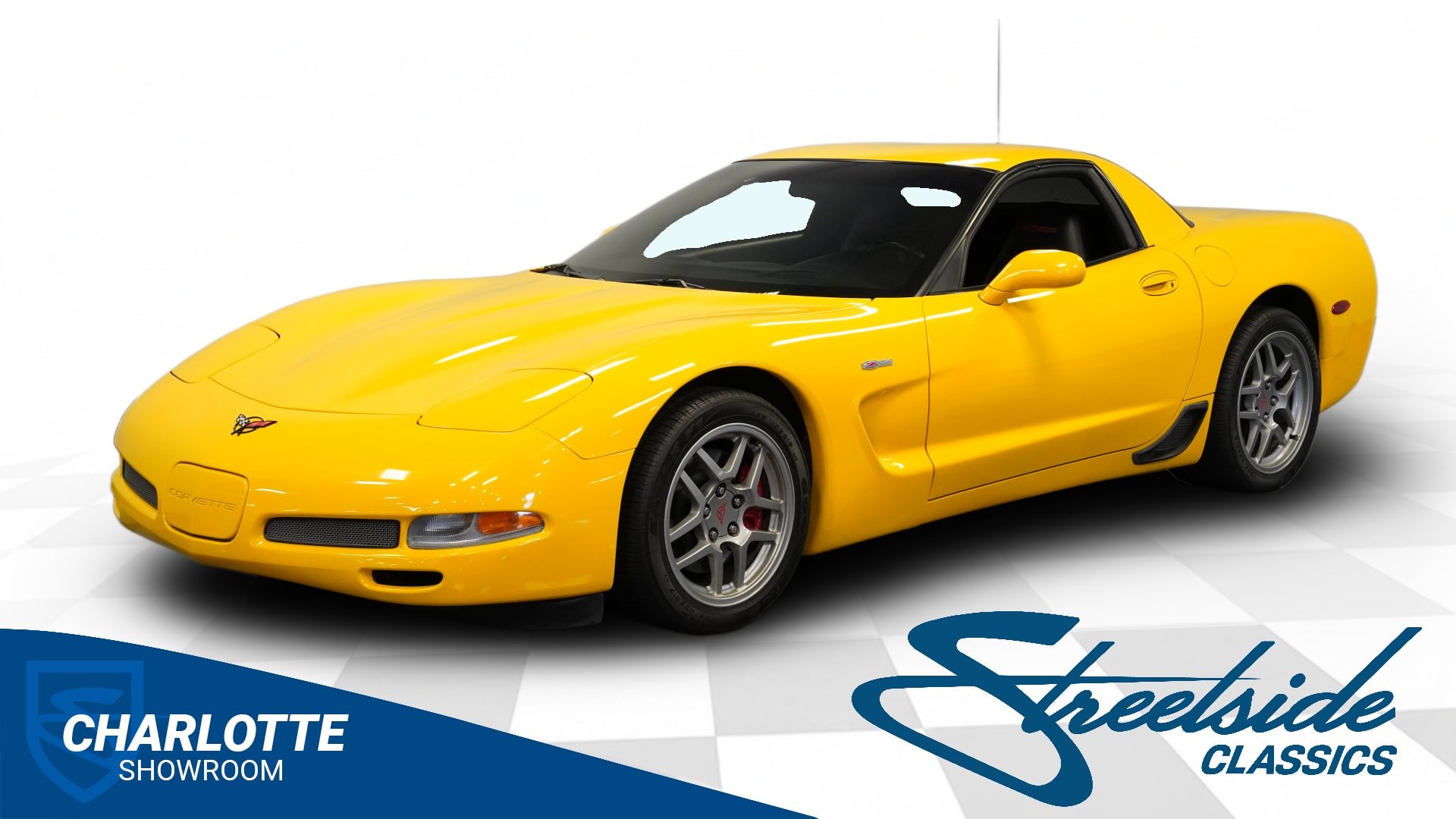
| Z06 | 2001–2004 | 5.7 V8 (LS6) | 385 hp, 405 hp from 2002 | 28,388 | The flagship; manual only, fixed roof, track intent |
| 50th Anniversary | 2003 | 5.7 V8 (LS1) | 350 hp | 11,632 (coupe and convertible) | Anniversary Red, Shale cabin, F55 ride standard |
| Commemorative Edition | 2004 | 5.7 V8 (LS1) or LS6 | 350 hp / 405 hp | about 2,200, plus Z06 Z16 cars | Le Mans Blue tribute; Z06 version has a carbon-fibre hood |
(Outputs are the factory SAE net figures. Production splits are the commonly published Bowling Green totals, rounded where the factory split between coupe sub-variants is not cleanly separated; the year-by-year total of about 248,700 cars is firm.)
The coupe (1997–2004). The launch body and the best-selling C5. One removable roof panel — painted or tinted transparent, some cars carry both — lifts out and clips into the hatch, and the hatch itself swallows luggage in a way no earlier Corvette could. The coupe is the stiffest of the open-roof cars, the quietest on the highway, and the cheapest to insure and feed. The 1997 cars are coupe only and carry first-year specifics covered in the problem areas: an ABS/traction module mounted at the rear rather than the front, and no Active Handling option until part-way through 1998 — parts revised early and now the hardest versions to source.
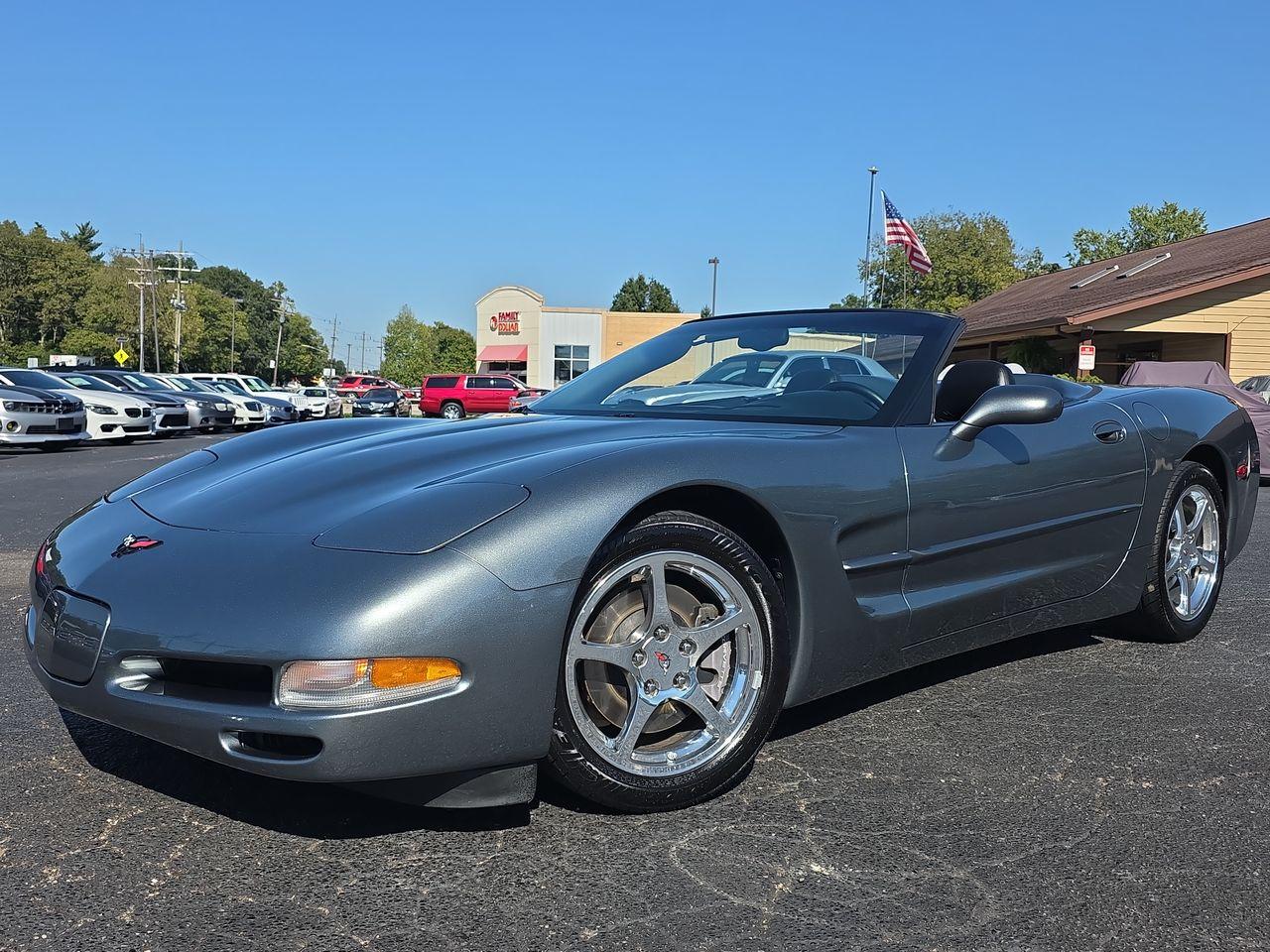
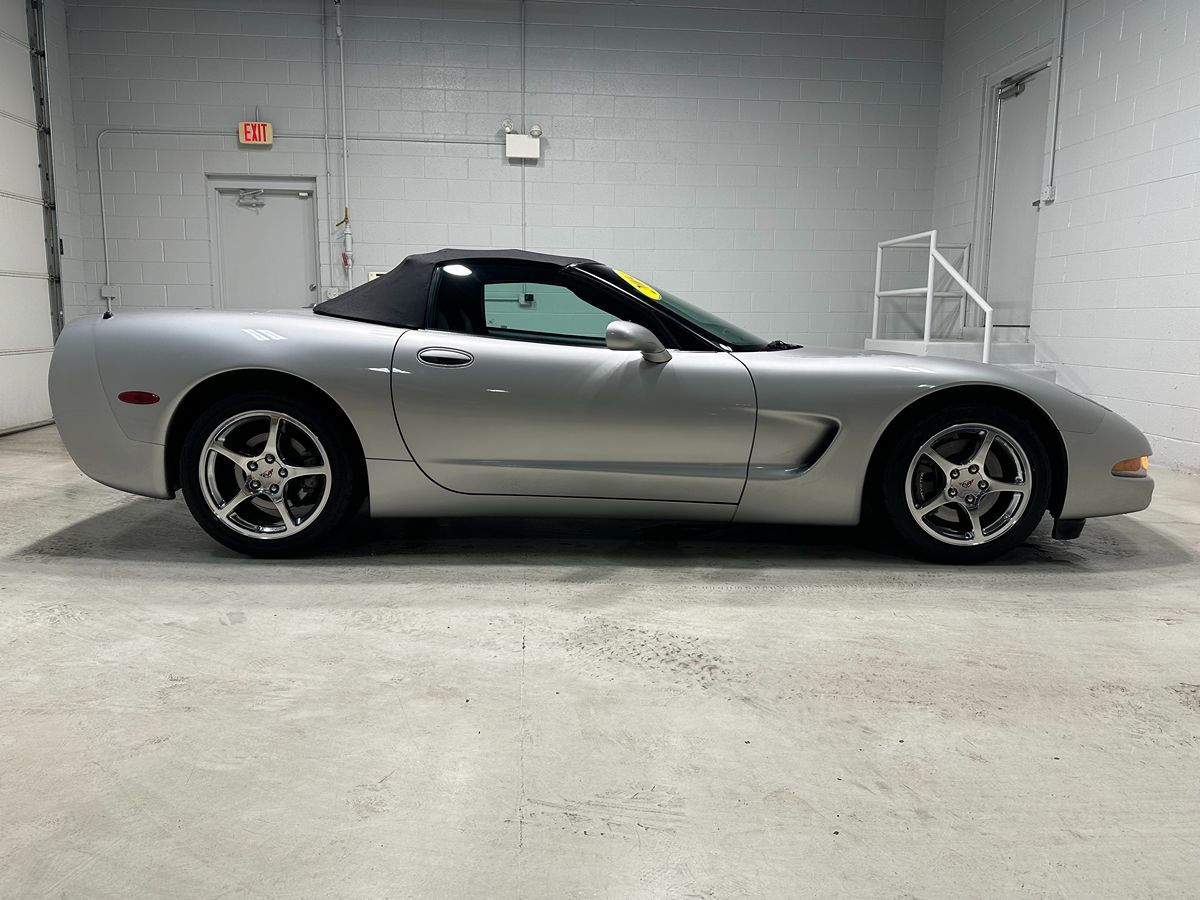
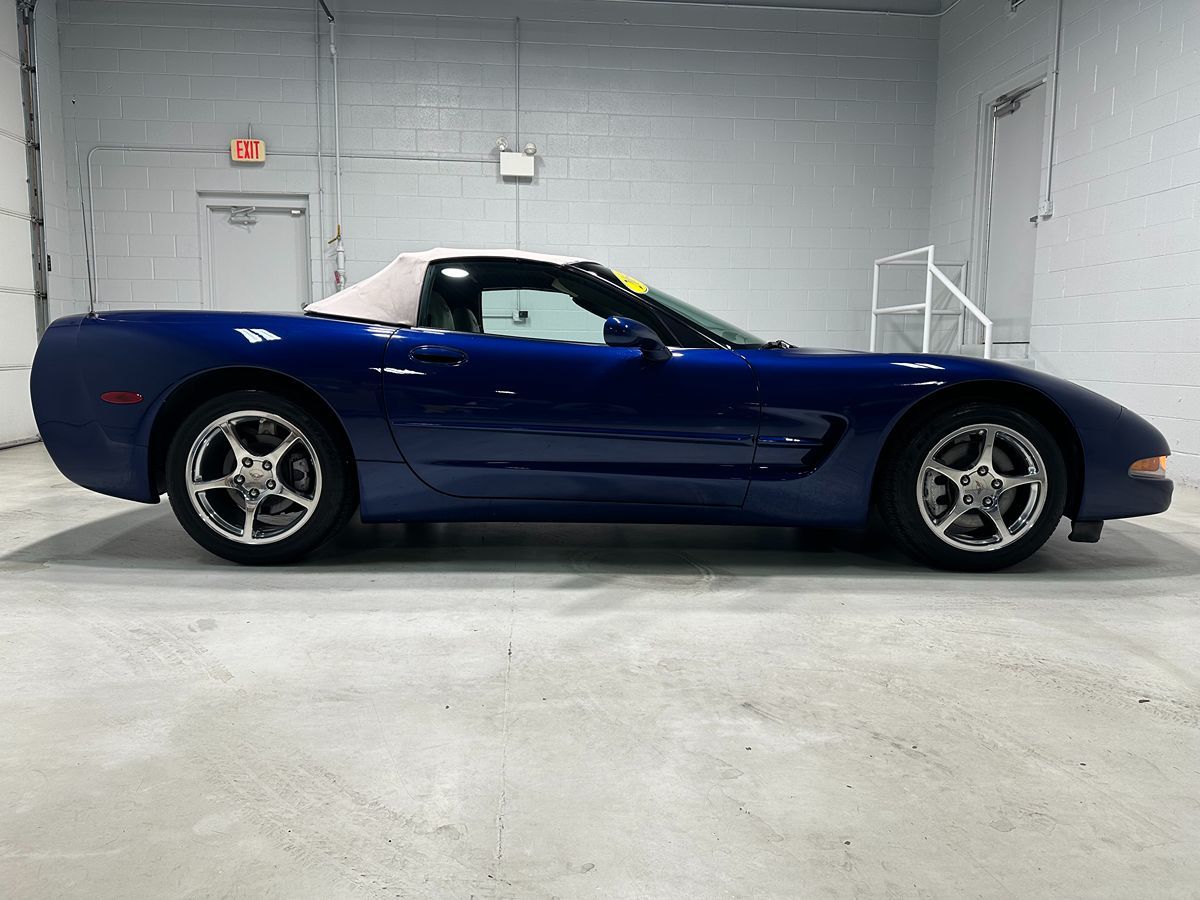
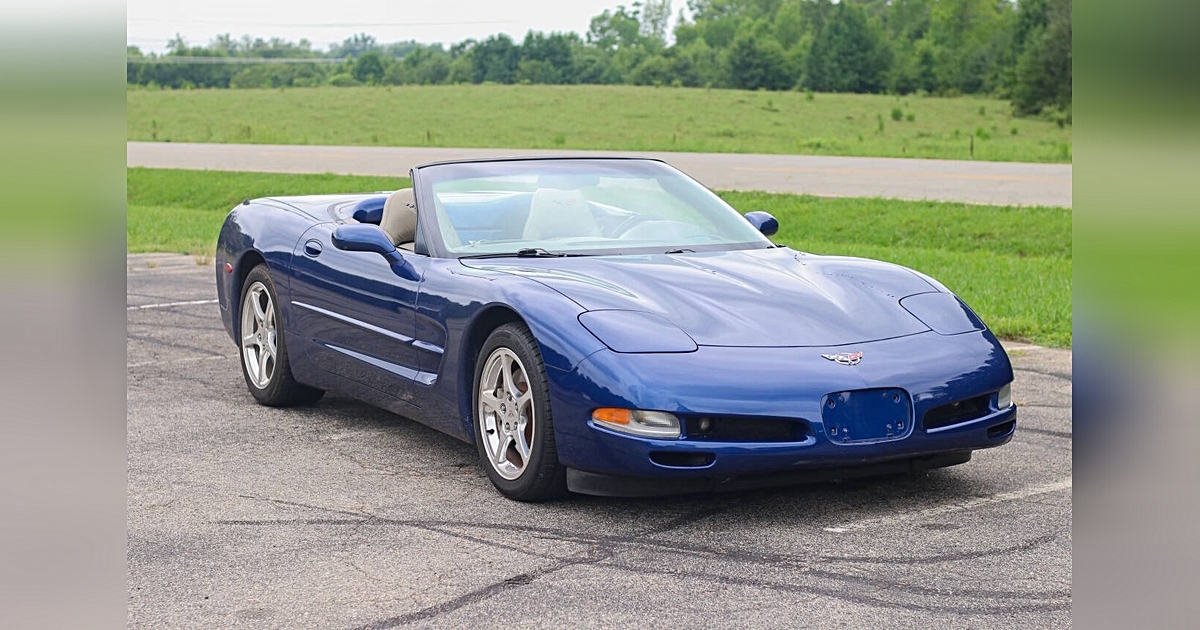
The convertible (1998–2004). The C5 convertible was designed as a convertible from the start, not sawn off a coupe, and it shows: the hydroformed frame means it rides without the shudder that defined earlier open Corvettes. The top is manual on base cars and power-operated as an option and on most later cars, with a heated glass rear window — glass, not plastic, so no yellowed-window problem, but the window bonding and the top fabric itself are now age items on every car. With the top up it is respectably quiet; with it down the boot is small. Our tracked cars skew heavily to black and red, so an unusual factory colour in good order is genuinely scarcer, and easier to sell on.
The hardtop / FRC (1999–2000). Chevrolet's idea was a cheaper, lighter, stiffer Corvette for committed drivers: fixed roof, manual gearbox standard, cloth-friendly specification, less equipment. Buyers mostly walked past it to the coupe, which is why only 6,121 were built across two years — and why the idea was then reborn, with power and intent added, as the Z06 on the same shell. A hardtop is the quiet pick today: the stiffest, lightest LS1 body, usually bought new by an enthusiast. Check any FRC carefully for a Z06 clone conversion — badges, screens in the front brake ducts, and red calipers all bolt on; the VIN and the LS6 engine are what make a Z06, and the eighth character of the VIN tells you the engine, as the inspection section explains.
The Z06 (2001–2004). The name returned from the C2 era and earned its keep. The LS6 gives 385 hp in 2001 and 405 hp from 2002, and the car around it is systematically lightened and sharpened: thinner glass, titanium exhaust, lighter wheels, non-run-flat tyres with a sealant kit, stiffer springs and bars, brake cooling ducts and more aggressive gearbox ratios. Manual only, fixed-roof only, louder and keener, and less forgiving of sloppy maintenance. The 2002-onwards 405 hp cars are the ones the market chases; the 2004 Z06 Commemorative Edition, code Z16, with its carbon-fibre hood, is the collector peak of the range.
The special editions. The 1998 Indy Pace Car replica — Radar Blue, a purple-blue the brief's colour counts still surface in listings as "Purple," with yellow wheels and graphics — is the love-it-or-leave-it car: mechanically a standard convertible, valuable only complete with its graphics and correct wheels intact. The 2003 50th Anniversary package, offered on coupe and convertible, pairs Anniversary Red with a two-tone Shale interior and standard Magnetic Selective Ride Control, and it sold in real numbers, so it is a trim-and-equipment premium, not a rarity premium. The 2004 Commemorative Edition, in Le Mans Blue with silver striping on the Z06, closes the range. Judge all three the same way: the premium lives in completeness and originality, and a special edition missing its special parts is just a used C5 with a story.

Engines and gearboxes
The LS1: the standard engine
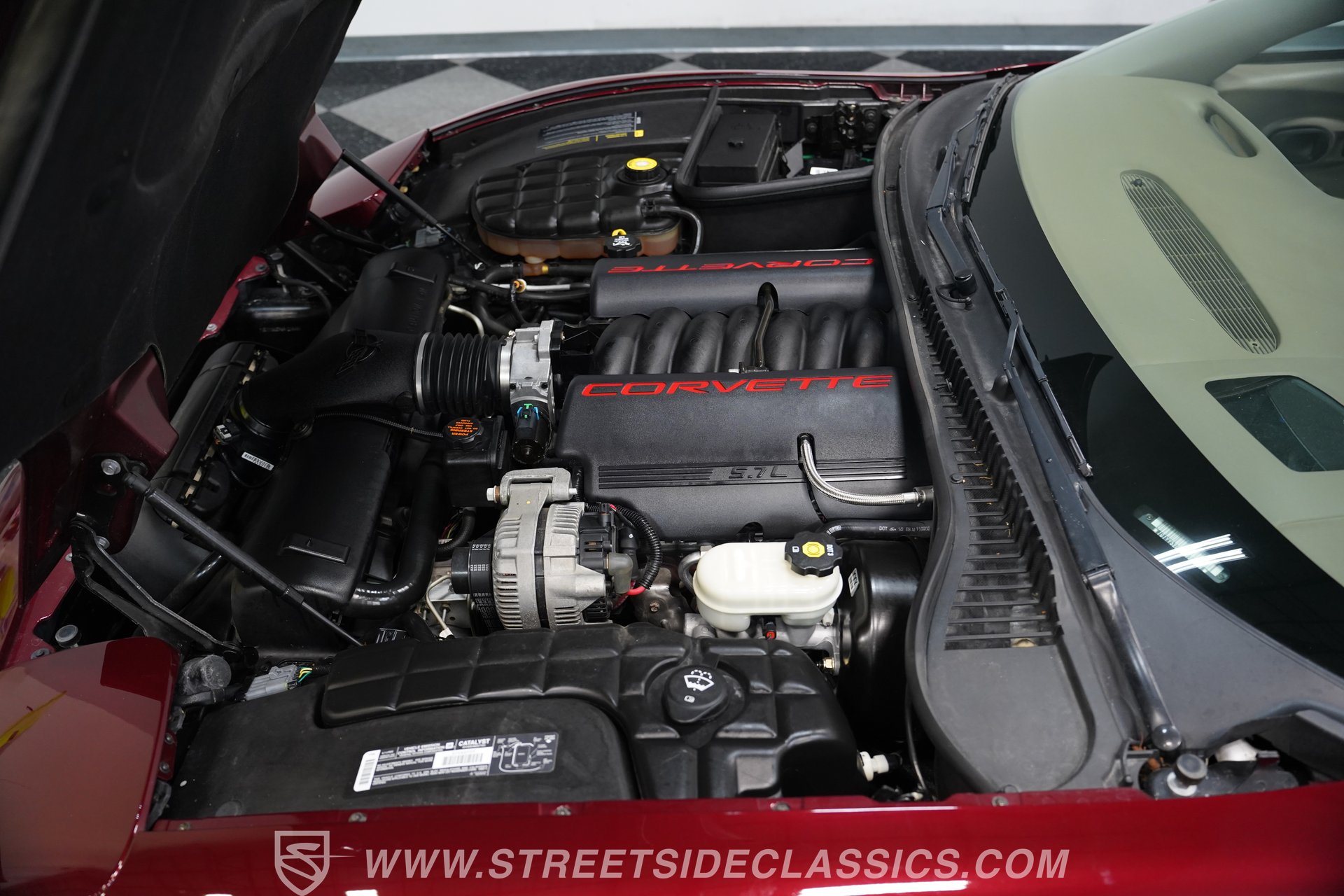
The LS1 is a 5,665 cc pushrod V8 with an aluminium block and heads, hydraulic roller lifters, a composite intake manifold and sequential injection. It makes 345 hp and 350 lb-ft in 1997–2000 form, and 350 hp from 2001, when an LS6-derived intake manifold and freer exhaust manifolds lifted output across the range. The story that matters is that this is a low-stress engine: it cruises under 2,000 rpm, has no cambelts, no valve adjustments and no distributor, and its weaknesses are almost all bolt-on parts around a sound core.
A healthy LS1 starts instantly, idles at about 600 rpm with a faint lope, pulls from 1,500 rpm and revs cleanly to its 6,000 rpm redline. Oil pressure should be strong — roughly 30–40 psi at a hot idle and 50 psi or more at cruise — and temperature should settle and stay settled. Engine management is OBD-II throughout, so insist on reading the codes, and be suspicious of a car cleared that morning: clearing also wipes the readiness monitors that prove it has run clean since.
Three LS1 behaviours frighten first-time buyers. Cold piston slap — a light tapping for the first minute or two, from short-skirt pistons rocking until they expand — is common, was present when new, and on its own is a characteristic, not a rebuild notice. The 2001 oil-consumption issue is real: a run of 2001 cars, manuals driven at high rpm and light load especially, used oil past the rings until Chevrolet revised the ring pack; a thirsty 2001 needs consumption measured and priced, not waved away. Lifter tick after months of standing usually fades in minutes and never returns. What should worry you is different: a knock that deepens under load, smoke under acceleration (rings) rather than a puff at start-up (stem seals, a smaller job), low hot oil pressure, or coolant loss with no visible leak. The bottom end rarely fails; a genuinely hurt engine was usually modified, overheated or run low on oil — all of which leave evidence.
The bolt-on weaknesses are well mapped. The harmonic balancer — the crankshaft pulley at the front of the engine — is the big one: the outer ring is bonded to the hub with rubber, the bond ages, and the ring begins to wobble and walk. A wobbling balancer shreds belts, and a ring that walks backwards machines into the timing cover and steering rack area. Look straight down at the running engine: any visible wobble at the crank pulley is a balancer on its way out, and the fix — pulley off, new balancer, new bolt, often a pinned crank while you are there — runs roughly $600–1,200 at a shop, more if it has already damaged the cover. The oil pressure sender is the other classic: it lives at the back of the engine under the intake manifold, fails with age and heat, and reads either zero or pegged at maximum. The part is cheap; the labour is intake-manifold-off, so budget $350–600 all-in, and treat a pegged gauge as a sender until proven otherwise, not as an engine verdict — but prove it with a mechanical gauge before you pay for the car, because the same symptom with a real cause is an engine. Accessory drive belts, tensioners, water pumps and alternators are ordinary service items at ordinary prices. The air-conditioning compressor and its clutch are less ordinary to reach but still a standard job, roughly $800–1,400 fitted with a recharge.
Cooling matters because the C5 breathes from underneath: the radiator is fed by an air dam under the nose, so a car missing its centre dam will run hot at speed however new its thermostat is, and the radiator and condenser pack with leaves and debris from below, invisibly from above. Overheating on a C5 is debris, a missing dam or tired fans far more often than head gaskets. Budget a radiator clean into any recommissioning, and check the three-piece front spoiler is present — cheap, roughly $100–200 the set, and its absence signals a car run without curiosity.
The LS6: the Z06 engine
The LS6, fitted only to the Z06, is the same 5.7 litres developed in every direction that matters: a stronger block with better bay-to-bay breathing, higher-compression pistons at 10.5:1 against the LS1's 10.1:1, a higher-lift, longer-duration camshaft, stiffer valve springs, larger fuel injectors, a freer intake and exhaust, and a redline raised to 6,500 rpm. Output is 385 hp for 2001 and 405 hp from 2002, when a further camshaft revision, hollow-stem valves with sodium-filled exhaust stems, and the deletion of the underfloor pre-cats did the work. In 2001 only, the LS6 shared the ring-related oil-consumption sensitivity of that year's LS1, and the same measure-and-price advice applies.
Everything said about LS1 health applies, with two additions. First, history matters more: a Z06 with track time is not a bad car, but its clutch, synchros, discs, differential and hubs have lived a different life, and the inspection should go looking for it. Second, valve springs on hard-used early LS6s are a known failure point — a dropped valve is an engine — so a documented spring change on a track-used 2001–2002 car is worth money, and unexplained top-end noise on any LS6 is a walk-away until diagnosed. Check the titanium exhaust from underneath; dented or welded titanium is expensive to put right.

Gearboxes: T56 six-speed manual and 4L60-E automatic
The manual gearbox is the Borg-Warner T56, built by Tremec, a six-speed with a very tall overdrive sixth that is a cruising gear, not a performance gear. The Z06 version, code M12, has shorter, more aggressive ratios in the lower gears than the standard MM6 box, which is part of why a Z06 feels so much keener off the line. The clutch is hydraulic and self-adjusting, worked through a remote shifter — which is why shift quality is good rather than great even when everything is right, and why worn shifter bushes get blamed on gearboxes. Judge the box itself on synchromesh, second and third gears first, on a cold drive: a healthy T56 snicks home with a mechanical firmness; a box that crunches second when cold, baulks at third, or whines in one gear only is pricing a rebuild, roughly $2,500–4,500 depending on parts and whether the clutch is done at the same time, as it should be, because gearbox-out labour on a transaxle car is the expensive part of any of these jobs.
The C5 clutch has its own signature fault, and every manual buyer should test for it deliberately: clutch pedal sticking to the floor, or returning only part-way, after a high-rpm run. The cause is hydraulic — the slave cylinder and its fluid, cooked by exhaust heat and contaminated with clutch dust through the slave's design, compounded on some cars by a weak pressure plate. Fresh fluid, bled properly and often, postpones it for years; the full cure is a gearbox-out slave and clutch job. On the test drive, use full throttle through two gears, then dip the clutch at the next junction and feel where the pedal comes back to. A pedal that stays low has just told you a four-figure job is due. Budget $1,500–2,800 for a clutch with hydraulics at a specialist, and treat a recent, invoiced clutch as one of the most valuable lines in a manual car's history file.
The automatic is the 4L60-E, a four-speed with overdrive, fitted to the majority of coupes and convertibles — in our tracked listings, automatic descriptions outnumber manual ones — and it suits the car better than purists admit: the LS1's torque fills the gaps between ratios, and an automatic C5 is a relaxed, quick, entirely credible grand tourer. It is also, in performance terms, the slower car, and the market prices it that way. A healthy 4L60-E shifts firmly and promptly, holds each gear without flare, and engages drive and reverse without a long pause or a thump. Flare on the 2–3 shift, delayed engagement when cold, or shudder under light load are the wear signs; fluid that is dark and smells burnt confirms them. A rebuild runs roughly $2,200–3,800 fitted. Two specifics: the axle ratio matters — standard cars carry a tall 2.73 gear, performance-axle cars a livelier 3.15, so decode the option codes before comparing two automatics on price; and automatic cars have often lived gentler lives, worth more on a twenty-year-old car than bragging rights.
Between engine and gearbox sits the torque tube, an aluminium housing in the tunnel carrying drive to the rear transaxle. Inside, the shaft runs on bearings through rubber couplers at each end. The rubber ages and cracks, letting the shaft vibrate and rumble — a driveline vibration, or a rattle at idle in neutral that changes as you load the drivetrain. Couplers and bearings are a gearbox-out job, roughly $1,800–3,200 with labour, routinely done with the clutch since the labour overlaps — a clutch invoice listing couplers is gold in a history file. A seller calling a rumble "they all do that" is describing a real, priced job this car needs.
Problem areas
Everything in this section is drawn from the cars themselves and from the faults that twenty years of ownership have mapped in detail. We currently track 144 C5s, and for 75 of them we have gone through the sellers' photo sets in detail. In those 75 photo-checked cars, visible damage was noted in 39 — more than half — leaks in 12, and rust in 12. Read those numbers the right way round. Damage in over half tells you this is now a used-car market, and panel and trim condition must be priced car by car. Rust in only 12 of 75 tells you the composite body works — but that rust sits on the steel underneath, where it matters, so it is no excuse to skip the lift. Smoke in none of the 75 matches the LS reputation: these cars fail electronically and cosmetically long before they fail as engines. Almost everything in this section can be fixed with money and patience. The faults that should change your decision, rather than just your offer, are a damaged frame, a flood or fire history, an electronic fault in a system whose control module is no longer obtainable, and a title that does not match the car.
Body, frame and the underside: what rust means on a fibreglass car
The C5 body does not rust, and sellers will tell you so, repeatedly, as if that ends the conversation. It does not. The body panels are composite, but the frame is hydroformed steel, the cradles that carry the engine and the rear suspension are steel and aluminium, the brake and fuel lines are steel, and every bracket, fastener and heat shield under the car can corrode. The rust in our sample — 12 of 75 cars — is surface corrosion on cradles and fasteners, staining at brackets, and, on northern and coastal cars, heavier corrosion of lines and hardware. Our tracked cars cluster in Florida, Illinois, New Jersey, Georgia, Massachusetts and Missouri, so a meaningful share has lived where roads are salted or air is coastal. Judge the underside like an aircraft inspection: not perforated sills — there are none in the classic sense — but everything bolted to the structure, and crash damage, the real structural killer.
Crash damage hides well under composite panels: a panel can be replaced and painted while the rail or cradle behind it stays bent. The tells are uneven gaps, a headlamp door sitting a fraction off, overspray on weatherstrips, non-factory seam sealer, and a car that will not align to spec. A car that has taken a real hit needs its rails and cradle mounts measured, not admired. A lift inspection is not optional on a cheap C5 — it is the inspection. Frame or cradle work is fabrication-and-jig money, easily $3,000–6,000 and up before paint, the one bill that reliably exceeds what a bargain C5 can ever be worth finished.
The composite panels crack rather than dent. Look for star cracks at the nose and rear quarters, stress cracks at the roof edges, and crazing on sun-lived cars. Clear-coat failure is the true body disease: red and black cars lived outside show chalky, peeling clear coat on the horizontal surfaces first. A full quality repaint is a $6,000–12,000 conversation, which is why original paint carries the value it does. Check the headlamp doors as bodywork too: both should rise together, sit flush, and show no cracked tabs.
Underneath, work through the consumables. The three-piece front air dam scrapes on every driveway; missing sections are normal and cheap, but a dam missing entirely makes the car run hot. The radiator support doubles as the front skid structure and is bent on a remarkable share of cars, pushing the radiator out of position. Lines deserve a torch and fingertip on any salt-belt car. The twin fuel tanks and their crossover are a late-car watch item: 2004 cars and some late 2003s use the revised FFS system, and crossover leaks are a tank-out job turning a fuel smell into a $1,500–2,800 bill. Any C5 smelling of fuel after filling needs that system checked first.
Electrics and electronics: the C5's real problem area
If the C5 has a defining weakness, it is not mechanical at all. It is the electronics — not because they were badly made, but because the car was an early adopter of networked modules, some of those modules are now discontinued, and twenty years of heat cycles, battery neglect and water ingress have done their work. Learn the cast of modules before you view a car, because each one prices differently. The BCM, the body control module, lives in the passenger footwell and runs much of the car's electrical life. The PCM runs the engine. The EBCM, the electronic brake control module, runs the ABS and, where fitted, Active Handling and traction control. The TAC module runs the electronic throttle on drive-by-wire cars. A fault in any of them lights the dashboard like a festival and stores codes in systems that have nothing to do with the root cause, which is why the first diagnostic tool on a C5 is a proper code read of every system, not just the engine.
The EBCM is the headline. On 1997–2000 cars the module is mounted at the rear; from 2001 it moved to the front of the engine bay. The common failure is internal — solder joints and relay contacts for the ABS pump circuit crack with age — and presents as ABS and traction-control warning lamps, codes for the pump motor circuit, and systems that work when cold and fail when hot. On 2001–2004 modules, specialist repair by resoldering is an established fix, roughly $150–400 for the module repair plus removal and refitting. On 1997–2000 modules the position is worse: repair options are narrower and good used modules are scarce and expensive, and this single fact is the strongest argument for preferring a 2001-or-later car if you intend to keep every system working. Test it on the viewing: find a safe, empty stretch and brake hard enough to trigger the ABS. A car whose ABS never intervenes, with lamps lit, is telling you its price.
The steering column lock is the other famous fault. Early C5s lock the steering column electrically when the key is removed, and the lock actuator and its control logic fail in two directions: the column fails to unlock, stranding the car, or the system misreads the lock state and cuts fuel above walking pace because the car believes the column is still locked. Chevrolet recalled and reprogrammed cars more than once, with different fixes for manual and automatic cars, and the aftermarket answer — a column-lock bypass module that satisfies the computer permanently — is cheap and effective, roughly $50–100 for the part. What matters as a buyer is which state the car in front of you is in: ask directly whether the column lock has been bypassed or repaired, test that the column unlocks cleanly, and treat a car that has ever displayed the service-column-lock message and had nothing done as a car with a known stranding fault still fitted. Manual cars are the higher-risk group.
Grounds, battery and water explain most of the rest. The C5 is unusually sensitive to battery condition and earth points: a weak battery or corroded ground produces haunted cars — random warnings, sweeping gauges, modules dropping offline, no-starts that vanish with a new battery. A leaking battery damages wiring beneath its tray, so lift the cover and look. Water is the other saboteur: the BCM shares the passenger footwell with the air-conditioning drain, and when the drain blocks, condensate floods both. Check that carpet for damp on every viewing, without exception. A car with inexplicable electrical faults and a damp footwell does not have five faults; it has one, and it is water.
The smaller faults are a known litany, each cheap alone and diagnostic together. Headlamp doors run through plastic gears that strip, leaving a lamp grinding after switch-off; brass gears are the permanent fix, roughly $100–200 the pair in parts. The dual-zone climate display dims and dies with age; rebuilt units run $150–350. A fuel gauge that drops to empty mid-journey is usually sulphur deposits on the senders confusing the dual-tank system — sometimes cured by quality fuel and cleaner, sometimes a sender job, and on late FFS cars a much bigger one. The steering-wheel position sensor, needed by Active Handling, is discontinued for some years; a car with a steering-sensor code needs the part sourced before you pay, not after. Test every switch, because the seller has not.
Tyre pressure sensors differ by year — 1997–2000 and 2001–2004 sensors are not interchangeable — and dead sensor batteries present as a service-TPM message at roughly $60–120 per wheel fitted. Scroll the driver information centre on the viewing and count them.

Chassis, steering, brakes and the rear transaxle
The C5 uses double wishbones at both ends with transverse composite leaf springs — a signature with one great virtue: the springs essentially do not sag or wear out. What wears is everything around them. Dampers are conventional on most cars and expensive on the clever ones: F45 Real Time Damping cars (1997–2002) use electronic dampers costly to replace like-for-like at roughly $400–700 a corner where obtainable, and commonly deleted for conventional dampers — legitimate if done properly and declared. F55 Magnetic cars (standard on the 50th Anniversary, optional 2003–2004) last better but cost roughly $500–900 a corner when they fail. Bounce each corner, then drive over broken pavement: a C5 should be firm and quiet. Knocks are usually anti-roll bar end links, roughly $150–300 a pair fitted, or ball joints and tie-rod ends. Budget $800–1,600 for a front-end refresh on a tired car, and ask whether clever dampers are original, replaced, or deleted — each answer has a different value.
Steering feel is the chassis weak point even when new — accurate but not rich in feedback — so judge it against that standard. What is not normal is play, a notch at centre, groaning at parking speeds, or fluid on the rack boots. The rack leaks from its seals with age; a rebuilt rack fitted runs roughly $900–1,600. A balancer ring that has walked can damage the rack area — one more reason the wobble check matters.
Brakes are discs all round, strong when maintained, and inexpensive — roughly $500–1,000 for a full set of quality discs and pads fitted. Judge condition, not specification. Cars that sit grow rust-banded discs and sticky calipers; the parking brake, a small drum inside the rear disc hat, is routinely weak and is its own job, not a caliper verdict. Hoses are age items on every car. On every car, repeat the ABS test: pedal feel tells you about hydraulics, intervention tells you about the EBCM, and you need both answers.
At the rear, the transaxle combines gearbox and Getrag differential in one unit; its signature wear item is the differential output seals and left-side cover O-ring, weeping oil onto the cradle. Leaks were noted in 12 of the 75 photo-checked cars — transaxle seals, engine seals and power steering are where most live. A weep is a monitor item; a drip, or a differential run low, is a $600–1,200 reseal. Clutch-pack chatter on tight turns usually responds to fresh fluid with the correct friction modifier, roughly a $150–250 service, before a rebuild. Hard-used manual cars deserve a check for transaxle case cracking from wheel-hop launches — a replacement-unit bill, $3,000 and up, behind a car that still drives.
Interior, roof and trim
The C5 interior was criticised when new for plastics a class below the car's performance, and age has made its wear pattern so consistent that a ten-minute cabin inspection prices the car accurately. Seats first: the driver's outer bolster wears through, leather cracks, foam collapses, and the whole seat develops the famous C5 rock — worn track bushings letting it tip under braking and acceleration. The rock fix is a bushing kit, roughly $50–100 in parts; re-covering and re-foaming a pair of sport seats runs $1,200–2,500. The driver's seat prices the cabin, so sit in it, not the passenger's, and test tracks, memory and lumbar switch by switch.
The coupe's roof panel and the convertible's top are the two big trim systems. On coupes, check both panels if fitted, latches and weatherstrips, and look for delamination on transparent panels, which craze with sun — a replacement is $800–1,200. Roof leaks are adjustment and seal issues, $200–600, and matter because the water ends up in the footwells, with the modules. On convertibles, the fabric top is a $1,200–2,200 replacement when it goes — look for fraying at the folds, a separating window bond and worn straps. Operate a power top through two full cycles; one that needs helping by hand has a bill coming.
The rest of the cabin is a checklist of knowns. The head-up display, optional from 1998, is a delight when it works and a windscreen-out conversation when the projector fails — test it, and note a HUD windscreen is a specific, dearer part. Bose door amplifiers fail individually, leaving one door silent; rebuilt amps run roughly $100–200 a side. Interior plastics crack and go sticky with heat; an unbroken interior in a rare colour is worth real money because you cannot simply order another one. Two working fobs and both keys matter too — replacements and programming add up to a few hundred dollars on early cars.
How to inspect one
Allow at least an hour; bring a torch, a code reader and a magnet wrapped in cloth — not for rust on a composite car, but for filler on repaired panels, where it still works. Insist on a cold engine, and arrange the lift inspection before money changes hands if the car passes you. Order matters: identity and electronics first, because they cannot be fixed with ordinary money, and cosmetics last, because they are what sellers want you to start with.

- Start with the paperwork and the VIN. Match the VIN on the title to the plate at the base of the windscreen and the stickers on the door and panels. Decode it: the eighth character is the engine — G for the LS1, S for the LS6 — and a Z06 claim with a G in the VIN is a hardtop with badges, whatever the seller calls it. Decode the glovebox service-parts label: Z06, Z51, F45 or F55 dampers, the 3.15 performance axle and the anniversary packages are all there in three-character codes. A thick invoice file is worth thousands, because the big jobs — clutch, balancer, module repairs — are invisible once done.
- Cold start and the balancer check. Insist the engine is cold when you arrive. It should start at once, settle to a steady idle, and show no warning lamps that stay lit. Note cold piston slap if present and time how long it lasts — gone within two minutes is the characteristic described in the engines section. Then look down at the front of the engine and watch the crankshaft pulley: any visible wobble is the harmonic balancer failing, and that is a priced job and a negotiation point before the car has moved an inch. Watch for a puff of blue smoke at start-up (stem seals) and listen for lifter tick that does not fade.
- Read every code, in every system. Read not just engine codes but ABS, traction, body and suspension codes if your reader supports them. Stored history codes for the brake module, steering sensor or column lock are the car's real biography. Note every driver-information-centre service message, and scroll the gauges pages for oil pressure, temperature and voltage. A car cleared that morning, readiness monitors incomplete, gets its test drive extended, not shortened.
- The footwell and battery test. Before the drive, check the passenger footwell carpet for damp with the back of your hand, and look under the battery for acid damage and perished vacuum lines. Damp in that footwell is the blocked air-conditioning drain, and it floods the body module that lives there — the water check from the problem areas that explains haunted electrics. A weak battery on a C5 produces the same symptoms as three module failures, so note the battery's age and condition and factor a replacement into any electrical verdict.
- Under the car. On a lift, work front to back: air dam complete, radiator support straight, radiator clear of debris, lines sound, leaks identified by location, differential seals, exhaust condition — titanium on a Z06 — and cradles and rails straight. You are reading for crash evidence and hardware corrosion, not perforated panels. Oil on the rear cradle is the differential seals until proven otherwise; oil at the front is the balancer's neighbourhood until proven otherwise.
- Body, paint and lamps. Walk the car in flat light and look down each flank for wavy reflections that mean repaired composite. Check panel gaps, roof-panel fit, and headlamp doors sitting flush. Work the headlamps up and down twice: both together, no grinding after switch-off — grinding is the stripped gear from the problem areas. Check for clear-coat failure on every horizontal surface and star cracks at the nose and quarters. On a convertible, run the top through two full cycles and inspect the fabric at the folds and the window bond; on a coupe, remove and refit the roof panel yourself and check the weatherstrips and latches.
- Cabin and seats. Sit in the driver's seat and rock fore and aft: movement is the track-bushing wear, and a worn-through bolster is a re-cover bill, not a valet issue. Work every switch and function: climate on all speeds with a readable display, head-up display if fitted, both door speakers, lights, wipers. Test the air conditioning for genuinely cold air; warm air means a bill already scheduled.
- Column lock and starting behaviour. Remove the key, turn the wheel until the column locks if it is going to, then restart the car several times. The column must unlock cleanly every time, with no service-column-lock message. Ask the seller directly what has been done about the column lock — recall work, bypass module, or nothing — and write the answer into your notes, because on a manual car especially, nothing done means a known stranding fault still fitted.
- The test drive: gearbox, clutch and systems. Fifteen minutes minimum, including a highway stretch. In a manual, use full throttle through second and third, then dip the clutch: the pedal must return fully and promptly — the sticking-pedal test from the engines section. Check second-gear synchromesh cold and third at speed. In an automatic, feel for flare on the 2–3 change and shudder at light throttle. Brake firmly from speed: straight, no judder, and then, on a safe empty stretch, brake hard enough to trigger the ABS and feel it intervene — the EBCM test from the problem areas, and the one test sellers least expect you to do. If the car has Active Handling, confirm no warnings appear after a few corners taken with intent.
- Heat, idle and the long sit. Let the car idle five minutes after the drive. Temperature should hold, fans cycle, oil pressure sit in the healthy band, air conditioning stay cold. Recheck the pulley for wobble hot, sniff for fuel at the rear — the crossover check on late cars — and look underneath for fresh drips. More C5 faults appear hot than cold.
- Stance, tyres and alignment feel. Stand back: a C5 sits flat and even, and a corner down means investigation, not a shrug. Check tyre dates as well as tread — aged-out tyres are a full set to budget, and Z06 sizes are not cheap. Mixed brands axle to axle are the previous owner's maintenance philosophy written in rubber. The car should track straight and return to centre cleanly.
- Interior last, history always. Finish with the driver's bolster, the roof or top and the displays, then the paperwork again. Weight a sound, dry interior and a documented history heavily — on a C5 those are what you cannot buy your way back to. A car passing the module, balancer, footwell and lift checks, with invoices for the jobs this guide prices, is the car to stretch for.
Values
The build appends the current market figures — what is listed now and what recorded sales have achieved — directly beneath this guide, refreshed at every build, so this section deliberately carries no listing prices of its own. What it can teach you, durably, is how to read those figures when you get there, because the C5 market is one of the easiest classic markets to misread from headline numbers alone.
Start with the condition spread, which on a C5 is wider than the model spread. The gap between a project-grade car — warnings lit, seat worn, jobs stacked up — and a sorted, documented driver is routinely larger than the gap between a base automatic coupe and a Z06 of the same condition, because the expensive faults are labour-and-module faults, not engine faults. Place any car by its completed-job list first and its badge second, and you will be reading the market the way experienced buyers do.
Asking and achieved prices part company predictably here. Supply is deep, sellers of ordinary cars anchor on the best cars, and recorded sales for standard coupes and convertibles settle below the median ask — while the genuinely scarce cars, the 405 hp Z06s and documented low-mileage manuals in unusual colours, hold close to asking. Our tracked set shows the shape of supply: coupes and convertibles dominate, automatics outnumber manuals, black and red dominate colours, and a single Z06 appears in the current roster against more than a hundred standard cars. Scarcity is real but narrow: the Z06, the manual gearbox, the unusual colour and the documented low-mileage car, in roughly that order.
Variant premiums follow the same logic. The Z06 carries the strongest premium, the 2002–2004 405 hp cars over the 2001. The hardtop FRC is the undervalued car — rarer than the Z06 by a factor of more than four, with most of the character, still priced as a base car. Special editions carry modest, completeness-dependent premiums. Convertibles and coupes track each other closely. The automatic discount is real and persistent — for a buyer who wants an automatic, the market hands you a better-kept car for less money.
The project-versus-driver gap is where C5 buyers lose money. A warning-lit C5 is not a discounted driver; it is an unknown whose floor is set by module and labour faults that cannot be fully priced until the car is apart. Price the driver, subtract every job you can prove, subtract again for the ones you cannot, and walk away if the seller assumes the unprovable jobs do not exist. On an ordinary coupe or convertible there is always another car, and patience is a genuine discount. On a correct Z06 or documented low-mileage manual there is not, and negotiation is about the job list. Buy the job list, not the story.
Parts and ownership
The C5 is one of the best-supported modern classics you can buy, for a simple reason: Chevrolet built about 248,700 of them, the LS engine family went on to power a generation of American performance cars, and the enthusiast and track community around the Corvette is large, technical and commercially attractive to parts makers. Most of what wears out is available new, much of it from multiple suppliers, and the knowledge base — factory service manuals, forum-documented fixes for every fault in this guide, specialist module repairers — is as deep as for any car of its era.
Easy: service items, filters, plugs and coil packs, belts and tensioners, brake discs, pads and hoses, suspension links and joints, wheel bearings, water pumps, alternators, starters, tyres in standard sizes, clutch kits, and the small fixes this guide keeps returning to — brass headlamp gears, seat-track bushings, column-lock bypass modules. Order today, fit this weekend, at prices close to modern-car money. The LS engine's ubiquity means gaskets, senders and sensors are cheap and everywhere, with the single exception noted below.
Harder and dearer: the electronic modules are the frontier. Brake control modules for the early cars, steering-wheel position sensors for some years, ride-control dampers for F45 cars, and certain body-module and instrument-cluster parts are discontinued, repaired-only, or hunted used — and on those items the advice is consistent: repair by a specialist beats a used part of unknown history, and a car with those systems proven working is worth a premium over a car with them unproven. The oil pressure sender is cheap but labour-buried under the intake manifold. Titanium Z06 exhaust parts, HUD windscreens, transparent roof panels, convertible top frames and rare-colour interior trim all sit in the expensive-or-scarce column. A quality repaint starts where it starts on any car — the mantra of this guide is to buy paint, interior and electronics proven, and fix the mechanics, which reverses the instinct most buyers bring from steel-bodied classics.
Running costs. A sorted C5 is a realistic regular-use classic: highway economy in the high twenties for a gently driven manual, insurance in line with other modern classics, servicing any competent LS-experienced independent can handle. The budget line that catches new owners is the first year, when tyres, dampers, fluids, belts and small electronic fixes arrive together. Cars that have sat need the fuel system checked end to end, brakes inspected, air conditioning proven, and all fluids renewed. Buy a car in regular use over one that has been asleep, even at a higher price — a low odometer is only a virtue when the history shows the car was exercised, not embalmed.
Which one to buy
- The all-rounder: coupe, manual, 2001 or later. The 350 hp LS1, the later brake module, the hatch and the removable roof. If you want one C5 to drive everywhere and keep indefinitely, this is it.
- The value buy: hardtop (FRC), 1999–2000. The lightest, stiffest LS1 body, bought new by enthusiasts and still priced as a base car. Only 6,121 exist. Check the early brake module with the care the problem areas describe, and you have the smart money's C5.
- The performance car: Z06, 2002–2004. The 405 hp LS6, the titanium exhaust, the chassis to match. The collector peak is the 2004 Commemorative Z16; the driver's peak is any documented 2002-onwards car, track history and all, priced by its job list.
- The cruiser: convertible, automatic. The gentlest-used cars in the range, the market's automatic discount working in your favour, and a proper glass-window top. Buy on top condition, footwell dryness and history, in that order.
- The character car: 1998 Pace Car or 2003 50th Anniversary. Buy completeness — graphics, wheels, correct interior, working magnetic dampers on the Anniversary — or do not pay the premium at all.
- The first-year car: 1997 coupe. For the buyer who wants the launch car and understands its early-module specifics. Cheapest way into the range, bought with the module checks done, not promised.
And the rule that overrides all of the above: buy the car whose electronics all work, whose balancer does not wobble, and whose footwells are dry — in the specification you can live with. Engines, clutches, brakes and dampers are all fixable at prices you can plan for. A dead early brake module, a flood-damaged body module or a bent frame is the C5 equivalent of the rotten shell on a steel classic — the one thing that can never be made right for sensible money, and the one thing no badge, colour or low odometer reading can compensate for.
Listed now
On Classic Listings today: 116 cars are listed here; 56 for sale and 13 marked sold; average asking price $24,486; asking range $8,000 to $39,995; sold cars average $29,938.
See the 116 C5 cars currently listed.
The market — recorded sales
Recorded-sale figures: 15 recorded sales · median $27,212 · range $14,212 to $174,995 (Nov 2024 – Nov 2026)
Based on 15 recorded sales — too few for a benchmark value.
| Date | Car | Sale price | Source |
|---|---|---|---|
| Nov 19, 2026 | 2004 Corvette | $20,900 | Dealer |
| Nov 19, 2026 | 1998 Corvette | $174,995 | Dealer |
| Nov 19, 2026 | 2001 Corvette Z06 Coupe SOLD | $65,500 | Dealer |
| Nov 19, 2026 | 2003 Corvette 50Th Special Anniv | $59,900 | Dealer |
| Nov 19, 2026 | 2001 Corvette | $46,379 | Dealer |
| Nov 19, 2026 | 2001 Corvette | $46,000 | Dealer |
| Nov 19, 2026 | 1999 Corvette | $23,900 | Dealer |
| Nov 19, 2026 | 1998 Corvette Base | $22,950 | Dealer |
| Nov 19, 2026 | 1999 Corvette | $16,500 | Dealer |
| Nov 17, 2026 | 1998 C5 Corvette Coupe | $15,000 | Cars & Bids |
| Nov 8, 2026 | 2002 Corvette Z06 | $38,212 | Dealer |
| Nov 8, 2026 | 2002 Corvette Z06 | $27,212 | Dealer |
| Nov 8, 2026 | 2002 Corvette Z06 BOLT-ONS AND CAM | $27,212 | Dealer |
| Nov 8, 2026 | 1999 Corvette Hardtop FRC | $25,212 | Dealer |
| Nov 8, 2026 | 1997 Corvette Coupe | $14,212 | Dealer |
Dates are the sale date where the source states one; otherwise the date the sale was recorded here.
For sale now
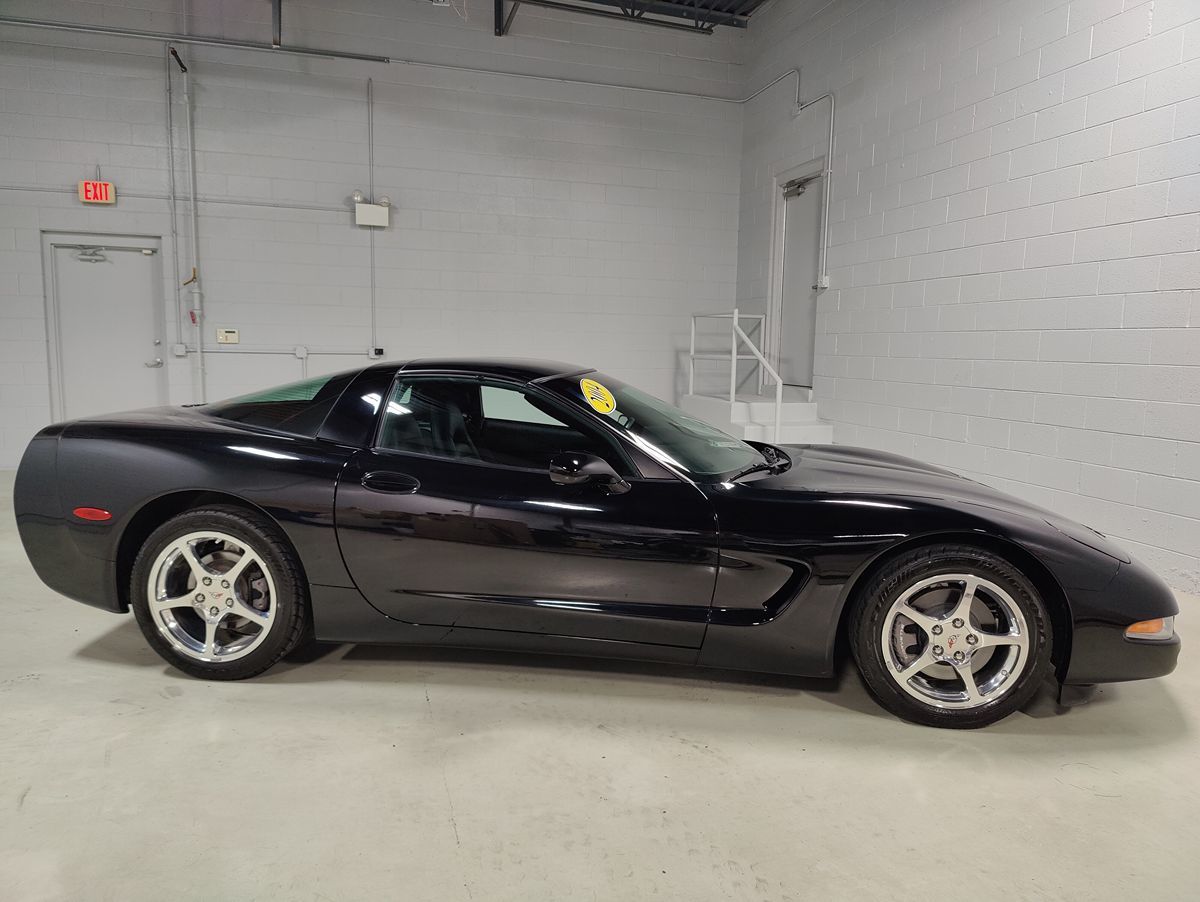 $27,995 · 45% below typical
Expand
 $26,995 · 47% below typical
Expand
 $23,995 · 53% below typical
Expand
 $22,800 · 56% below typical
Expand
 $21,000 · 59% below typical
Expand
 $19,500 · 62% below typical
Expand
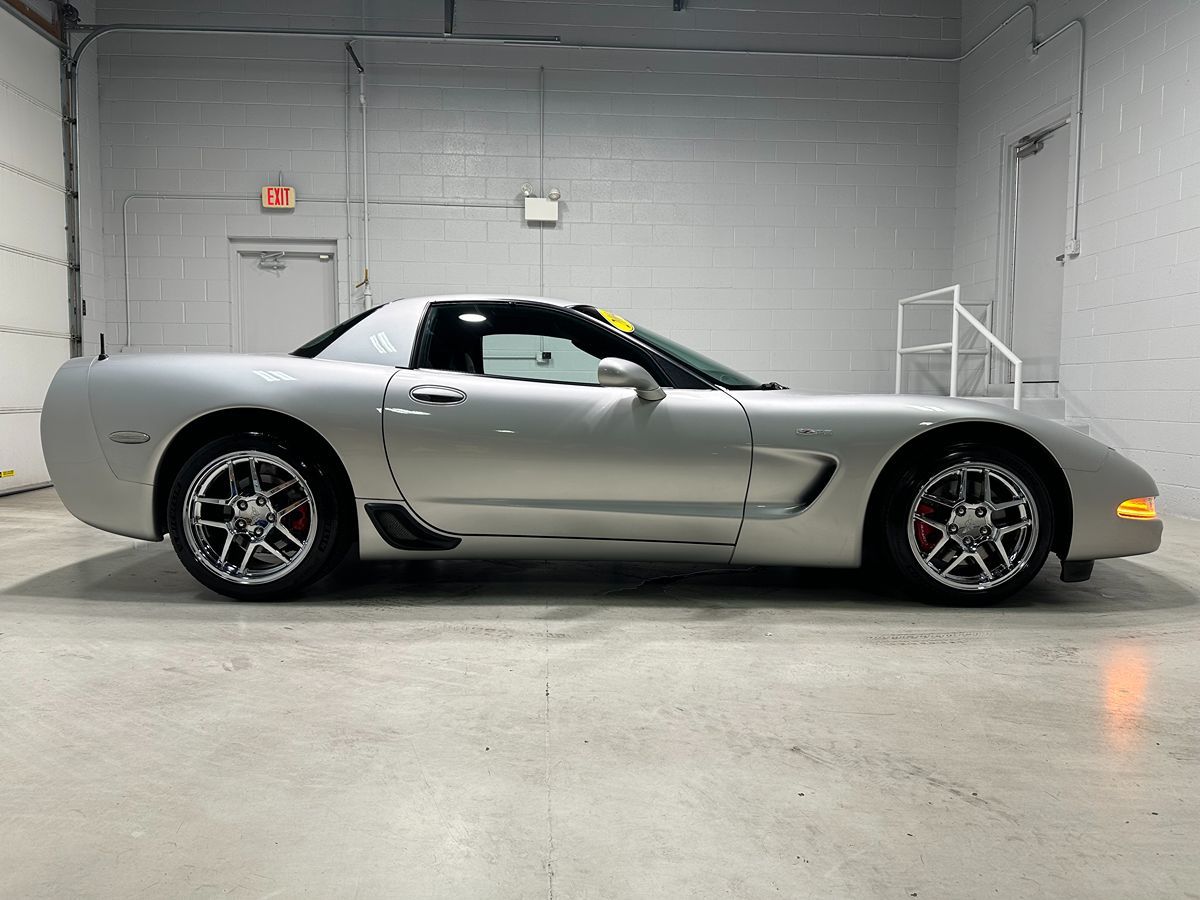 $32,995 · 36% below typical
Expand
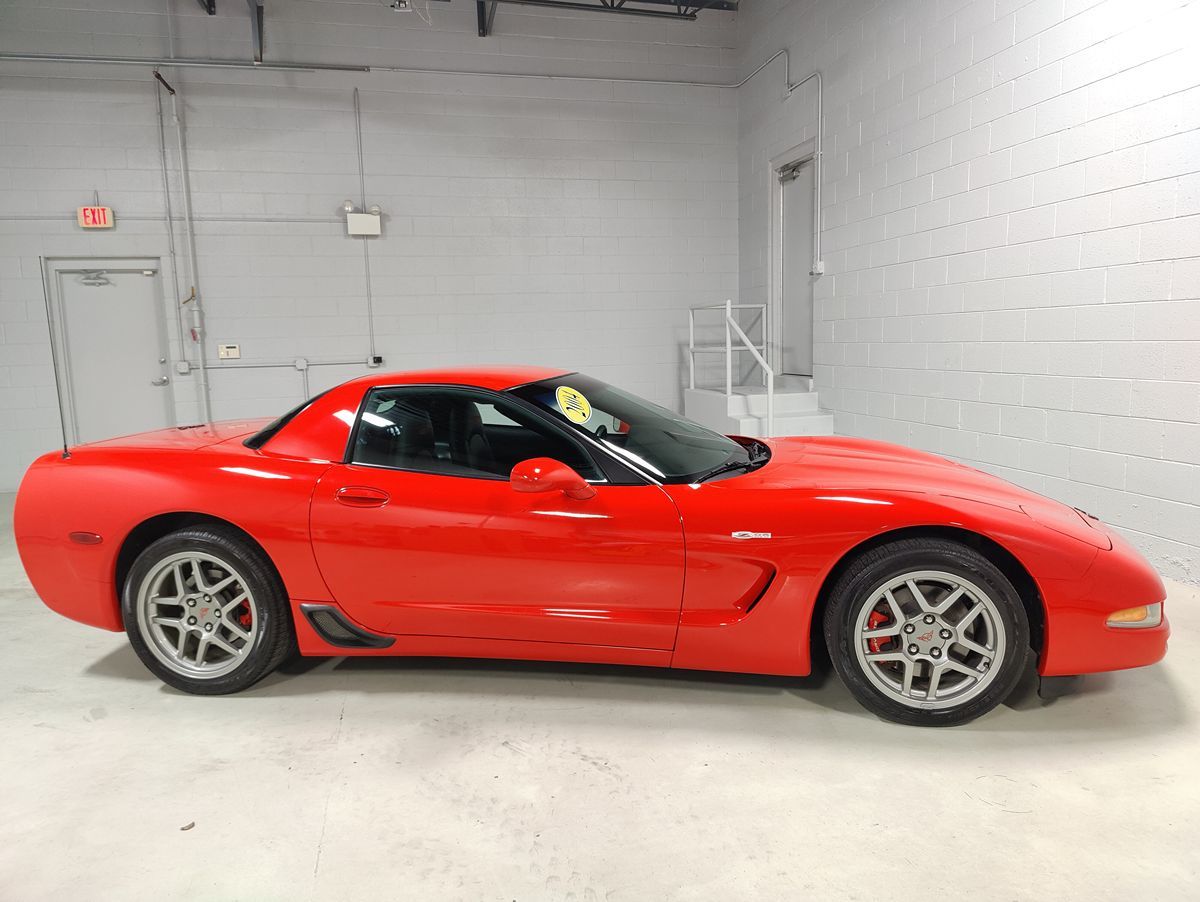 $32,800 · 36% below typical