
Chevrolet Corvair Convertible buyer's guide
Chevrolet Corvair Convertible -- the model's own buyer's guide: variants, values and what to check.
Years listed: 1963-1965 · Series: Corvair
# Chevrolet Corvair Convertible — Buyer's Guide
Overview and history
The Corvair Convertible is the open version of the most radical car General Motors ever sold in volume: a compact with its engine behind the rear axle, cooled by air rather than water, in an era when every other American car put a water-cooled engine in front of the driver. Chevrolet launches the Corvair for 1960 under engineer Ed Cole's direction, answering the Volkswagen Beetle and the Rambler with a design that borrows the Beetle's layout and scales it up to American size, American power and an American flat six. You get a unit-construction body with no separate frame, independent suspension at all four wheels, and an aluminium flat-six driving through a transaxle — a specification closer to a Porsche 356 than to a contemporary Falcon or Valiant.
The convertible arrives for 1962, offered only in the top Monza trim — so every genuine factory convertible starts life as a well-equipped car: bucket seats, full carpeting, bright trim and the higher-output engine options on the order sheet. The open Corvair sells on charm rather than speed. It is light, low and cleanly styled, and because the engine sits behind you and the luggage in front, it feels unlike anything else on an American road, with a flat-six exhaust note that is part Volkswagen, part small aeroplane.
Production divides cleanly into two generations, and you should learn to see the split at a glance. The first-generation cars, 1962 to 1964 in convertible form, wear the original Bill Mitchell styling: a wraparound front panel between paired headlamps, a pronounced crease around the body, and a roofline — on the closed cars — that echoes a jet-age show car. Underneath, these early cars use a swing-axle rear suspension. The second generation, 1965 to 1969, is a complete restyle and a substantial re-engineering: longer, lower, curvier bodywork that many judges rate among the best American designs of the decade, and a fully articulated independent rear suspension derived from the Corvette's, which transforms the handling. Chevrolet drops the Corsa flagship after 1966, the range thins as GM's attention moves to the Camaro, and the last Corvairs — Monza convertibles among them — are built in May 1969. Total Corvair production across all body styles runs to roughly 1.8 million cars; convertibles are a small, desirable fraction of that, and attrition has been unkind to them, because an open unit body that rusts has no frame to save it.
One piece of history follows every Corvair into every conversation, so deal with it now. Ralph Nader's 1965 book Unsafe at Any Speed opens with a chapter attacking the 1960–63 Corvair's swing-axle handling. The criticism applies to specific early cars driven in a specific way — the rear suspension could jack up and tuck a wheel under in extreme cornering, particularly with wrong tyre pressures — and Chevrolet had already redesigned the suspension before the book appeared. A federal safety study published in 1972 concluded that the 1960–63 car's handling was comparable to its contemporaries. The myth to correct, explicitly, is the blanket version: the Corvair is NOT an inherently dangerous car, the 1965-on cars share nothing of the early rear suspension, and even an early car on correct tyre pressures — the factory specifies markedly lower pressure in front than at the rear, a handling requirement, not a suggestion — behaves predictably. What the controversy did do is depress values for decades, which is why a structurally sound convertible remains one of the cheapest ways into a genuinely interesting 1960s American open car today.
You buy a Corvair Convertible with your eyes on structure first, specification second and cosmetics last. The mechanical side is simple and supported by one of the strongest single-model club and parts networks in the hobby. The body side is where cars die.

The models
Every Corvair convertible is a Monza or, for two years, a Corsa. There is no base-model open car, which simplifies your search: trim differences are modest, and the real dividing lines are generation, engine and gearbox. Learn the generations first, because almost every buying decision — handling, parts, rust pattern, value — hangs off which side of the 1965 redesign a car sits.
The 1962 and 1963 convertibles are first-generation Monzas. Styling is the original 1960 shape with bright Monza trim, the interior carries the early dashboard and available bucket seats, and the engine is the 145 cu in flat six in 102 hp form for most cars, with the turbocharged Spyder package as the performance option. The Spyder is not a separate model in these years — it is an option package on the Monza, identified by its turbocharger, a distinctive instrument cluster with a boost gauge and tachometer, and Spyder script. A claimed early Spyder convertible is one of the most faked specifications in the Corvair world, because the badges bolt on; the turbo hardware, the correct engine suffix code and the body-tag accessory codes are what settle it, and you check all three before you pay a Spyder premium.
The 1964 convertible is the transitional car and, for many buyers, the sweet spot of the early body. Displacement rises to 164 cu in, outputs climb, and — the important part — the rear suspension gains a transverse leaf-spring camber compensator that limits the swing axle's jacking tendency. The 1964 Spyder's turbo engine keeps its 150 hp rating on the bigger displacement, with better low-speed manners. Styling changes are minor: revised trim, a cleaner rear panel. If you want the early look with the fewest early-car compromises, this is the year you hunt.
The 1965 redesign creates the second-generation car: entirely new bodywork — Coke-bottle hips, a hardtop-like silhouette with the top up and a strikingly clean deck with it down. The range tops out with the Corsa, replacing the Spyder as the performance flagship: standard engine is the 140 hp four-carburettor six, with the 180 hp turbocharged engine as its top option. The Monza convertible continues beneath it with the 95 and 110 hp engines. Rear suspension is now a proper double-jointed independent layout that keeps the wheels upright through their travel — the handling question that dogged the early cars is simply gone. For 1966 the Corsa returns for its final year; from 1967 the convertible is Monza only, with detail safety changes — dual-circuit brakes, an energy-absorbing steering column — and steadily falling production through 1969.
Trim details worth knowing: the top is manual as standard with a power top optional, and you test whichever is fitted. There is no glass rear window — the top carries a flexible plastic window, a normal replacement item. Air conditioning is available on later Monzas but never with the 140 or turbo engines, and is rare on convertibles. The AM/FM radios, tinted glass and wire wheel covers on restored cars are period options or accessories, not identity markers.
| Model | Years | Engine | Output | Built | Character |
|---|---|---|---|---|---|
| Monza Convertible (early) | 1962–63 | 145 cu in flat-six, twin Rochester | 102 hp | Part of ~1.8m total Corvairs, all styles | The original open Corvair; swing axle, jet-age styling |
| Monza Spyder Convertible | 1962–63 | 145 cu in turbo flat-six, Carter YH | 150 hp | Small fraction of Monza output | First turbocharged production convertible; verify, don't trust badges |
| Monza / Spyder Convertible | 1964 | 164 cu in flat-six / turbo | 110 hp / 150 hp | One-year specification | Early looks, bigger engine, camber compensator fitted |
| Monza Convertible (late) | 1965–69 | 164 cu in flat-six, twin Rochester | 95 or 110 hp | The bulk of surviving late convertibles | The all-rounder: fine handling, simple running gear |
| Corsa Convertible | 1965–66 | 164 cu in four-carb / turbo | 140 hp / 180 hp | Two years only; Corsa dropped after 1966 | The flagship; the collector's Corvair convertible |
Production figures for individual convertible variants are inconsistently published and frequently inflated in advertisements, so treat any precise-sounding build number a seller quotes as a claim to verify against club registries rather than a fact.
Identity checks apply to every variant. Read the VIN on the door hinge pillar and decode the year and series digits first — a title that says 1965 attached to a first-generation body is a misfile, not a rarity. The Fisher body tag, riveted in the engine compartment, carries the build date, style number, paint and trim codes and accessory codes: the style number distinguishes a genuine convertible body from a cut-down coupe, the single most important authenticity check on this model — coupes have been converted, and a real convertible's tag and VIN style digits both say so. A paint or trim mismatch is not a disqualifier — colours change over sixty years — but a tag that disagrees with the seller's "all original" story tells you how to price the rest of the story.

Engines and gearboxes
Every Corvair engine is the same idea at three displacements: an air-cooled, horizontally opposed six with an aluminium crankcase, individual cast-iron cylinders, aluminium heads, overhead valves worked by pushrods, hydraulic lifters — so there is no routine valve-clearance adjustment, a genuine ownership blessing — and a single belt-driven fan blowing cooling air over the cylinders through sheet-steel shrouding. One fan belt does everything: it drives the cooling fan and the generator or alternator, turning through ninety degrees on idler pulleys to reach the horizontal fan. There is no water pump, no radiator, no coolant. Temperature is controlled by thermostat bellows in the lower shrouds, which expand with heat and open damper doors to release cooling air; bellows failed shut mean overheating, doors wired open mean over-cooling and sludge. You inspect an air-management system as much as an engine.
Fuel metering on the standard engines is by one single-barrel Rochester carburettor per bank — Model H on the earliest cars, the improved Model HV thereafter. Two carburettors means synchronisation is a service item, not a setup-and-forget event: the pair must open together and draw equally at idle, or the engine hunts, stalls at junctions and fouls plugs on one bank. The correct tool is a Uni-Syn or equivalent airflow meter; balancing "by ear" is how sellers describe a car that has never been balanced at all.
The 140 and 145 cu in engines, 1960–63
You meet the 145 in every 1962–63 convertible, because the open car does not exist for 1960–61. (The original 140 cu in version powers only closed 1960 cars, but you will encounter its parts — and occasionally a swapped-in early engine — in this market, so know that it exists and that its smaller displacement and early cylinder-head details make it the least desirable core.) The 145 is a stroked development, rated at 80 hp in base tune and 102 hp in the Monza tune you will almost always find in a convertible, the difference coming from compression ratio and tuning rather than any visual drama. It is a sweet, simple engine: modest power, good torque for its size, and a willingness to rev that surprises people expecting a lazy American six.
Its character faults are the family's in their mildest form: pushrod-tube seals weep, carburettors drift out of sync, and the automatic chokes stick and cause hot-start sulking. Power is adequate rather than generous in a convertible, which carries extra structural weight; a healthy 102 hp car cruises comfortably at highway speed but asks you to plan overtakes. Judge any example on smoothness and dryness rather than paper output.
The 164 cu in engines, 1964–69
For 1964 Chevrolet strokes the six again, to 164 cu in, and this is the engine that powers every convertible from 1964 to the end of production. In standard tune it makes 95 hp; the high-output version makes 110 hp with a hotter camshaft and higher compression, and it is the engine most late Monza convertibles carry and the one most buyers should want. It is torquier everywhere than the 145, happier at highway speed, and mechanically the most developed version of the design, with the improved crankshaft and, on most years, a harmonic balancer — whose outer ring can slip or separate with age, a check detailed in the problem areas.
The 140 hp version, standard in the 1965–66 Corsa, deserves its own paragraph because it is a different driving experience and a different maintenance proposition. It breathes through four single-barrel Rochester carburettors — a primary and a secondary on each bank — and wears cylinder heads with larger valves and ports and a freer exhaust. The secondaries open progressively through linkage, and when everything is adjusted the 140 pulls cleanly and hard to speeds the twin-carb engines never reach, with a proper sports-car appetite for revs. When the linkage is worn or the secondary carburettors are gummed from disuse — and secondaries that open rarely gum precisely because they open rarely — the engine stumbles, bogs on transition and earns an unfair reputation. A 140 that hesitates as you roll into the throttle is usually a linkage-and-cleanliness problem measured in hours, not a rebuild. Note for identity: the 140's heads and four-carburettor top end bolt onto any 164, so a "140" is verified by the engine suffix code and the head casting numbers, not by counting carburettors.
The turbocharged engines: Spyder and Corsa Turbo
The Corvair is one of the first two turbocharged production cars in the world — Oldsmobile's Jetfire is the other, launched the same spring of 1962 — and the turbo convertible is the most collectible car in this guide. The installation is elegantly crude: a single TRW turbocharger blows through one Carter Model YH side-draught carburettor, there is no wastegate, and boost is limited by the sizing of the carburettor, the turbo and the exhaust, reaching roughly 10 psi in period tune. The 145 cu in Spyder engine is rated at 150 hp; the 164 cu in version keeps the 150 rating for 1964 and rises to 180 hp in the 1965–66 Corsa.
Drive one before you romanticise it. Boost arrives with old-fashioned lag, the Carter YH is a fussy instrument that wants correct float level and a healthy diaphragm, and the turbo engine runs hotter, works its oil harder and demands premium fuel and mechanical sympathy — an engine shut down hot straight off a hard run cooks the oil sitting in the turbo bearing housing. The failure signatures are specific: blue smoke on start-up, after long idling or under boost points to turbo seal leakage; a turbo making no boost at all usually has a seized rotor or exhaust leaks ahead of the turbine bleeding pressure away. Turbo rebuilds by a specialist run roughly $800–1,800 plus removal and refitting, and correct Carter YH work is a specialist job in itself. You budget for that ecosystem from day one, and you never buy a turbo car whose seller cannot demonstrate boost on a gauge under load.
Gearboxes
Three gearboxes serve the whole range, all of them transaxles mounted with the engine at the rear. The standard manual is a three-speed with synchromesh on the upper gears; it is sturdy, slow-witted and entirely adequate in a 95 hp Monza, and its presence in a Corsa or Spyder would be a specification error worth investigating. The optional four-speed is the gearbox the car wants: closer ratios, a proper floor change and the ability to keep the flat six in its happy band. Early four-speeds are a Warner-derived design; from 1966 the four-speed is the stronger Saginaw unit shared with other GM lines, identifiable and well supported. On any manual car, judge the linkage as carefully as the box: the shift rod runs the length of the car inside a tube, and worn bushings and a sloppy coupler at the transaxle make changes vague and baulky on a gearbox that is itself perfectly healthy. A rebuild of the linkage — bushings, coupler, adjustment — is a $150–400 parts-and-labour proposition that transforms cars sellers describe as "needing a gearbox," so test which problem you actually have by feeling for lost motion at the lever with the engine off.
The two-speed Powerglide automatic is the third option, a Corvair-specific version of Chevrolet's simple, near-bulletproof automatic, with its selector on the dashboard on early cars. It suits the relaxed Monza convertible well and blunts the turbo engine badly — Chevrolet does not offer the Powerglide with the Spyder or turbo packages or with the 140, so an automatic car claiming a high-output engine is a contradiction to resolve before money moves. Powerglide faults are conventional: slipping on take-up, harsh or delayed engagement and fluid leaks from seals that have hardened; the fluid itself, checked at the transaxle dipstick, should be red and sweet-smelling, not brown and burnt. Clutch packs and a rebuild, if ever needed, run roughly $1,200–2,200 at a generalist automatic shop willing to work from the factory manual.
Whichever gearbox a car carries, check the transaxle for oil weeping at the axle seals, listen for whine that rises with road speed, and on a manual car confirm the cable-operated clutch takes up without judder — judder on a Corvair is frequently oil contamination from a leaking seal rather than a worn plate, and the fix differs accordingly.

Problem areas
Rust and structure: the map that decides everything
A Corvair convertible is a unit body with its roof removed, and that sentence contains the whole rust story. On the closed cars the roof panel contributes to shell stiffness; on the convertible, the reinforced rocker panels — the sills — carry far more of the structural load, tying the front and rear of the shell together across the door opening. A convertible with rotten sills is not a car with cosmetic rust. It is a car whose structure is failing, and you can feel it: doors that drop on their latches, a body that shudders over bumps, panel gaps that open and close as the car crosses a driveway apron. Start every inspection underneath, at the sills, with a magnet, a light and permission to tap.
Work the map in this order. The rocker panels themselves rust from the inside out, because the top well and the door openings drain water into them and the factory drain holes block with road dirt; bubbling at the lower rear of the front fender and ahead of the rear wheel is the visible tip of a sill that may be lace inside. Budget $1,000–2,500 per side for proper sill reconstruction in steel, and treat filler-over-rust repairs as a full deduction, because the repair has to be done again properly. The floor pans go next, fed by the same top-well leaks and by wet carpets sitting on sound-deadening that holds moisture against the steel: lift the carpets — a seller who will not let you lift carpets has answered your question — and look hardest under the rear seat and at the front footwells, where the front luggage compartment and cowl leaks add their contribution. Front trunk floor rust matters more than it looks: the front compartment carries the fuel tank beneath its floor on early cars and the steering and suspension mountings are close by, and perforation at the trunk floor edges signals a wet life.
Continue around the shell. Lower door skins bubble from blocked door drains; the front fender bottoms trap mud against the cowl; the windshield frame is both a rust trap and the top's front anchor, so corrosion there distorts the top fit; rear quarters collect spray inside the wheel arches. On second-generation cars add the battery tray area in the engine compartment, and on all cars check the front crossmember mountings for the layered corrosion that turns a repairable car into a parts car. The distinguishing test is the door test plus the jack test: open and close both doors on the car's wheels and again with one front corner lifted at the jacking point — a sound convertible's doors still latch cleanly; a weak shell's bind or refuse. Walk away from structural rust at driver prices: you cannot weld a convertible back to stiffness for less than the premium a sound car commands, and the market always has another Corvair.
The engine: oil leaks, cooling air and the belt
Corvair oil leaks are so universal that the hobby joke — a Corvair that does not leak has no oil in it — has cost more good cars their reputations than any mechanical fault. Understand the main leak and the joke loses its sting. Each pushrod runs inside a tube between the crankcase and the head, sealed with O-rings at both ends. The original O-ring material hardens and shrinks with heat cycles until the tubes weep, then drip, oil onto the exhaust manifolds below — producing the classic Corvair smell, smoke wisps at traffic lights and, because the cabin heater breathes engine-compartment air, oil fumes inside the car. The fix is definitive and cheap in parts: modern Viton O-rings for roughly $30–60 in seals and a day's labour for a first-timer, or $300–600 at a specialist. On inspection, a car dripping from the pushrod tubes is normal and negotiable; what you are checking is that the leak is the tubes — wipe, run, and watch — and not the crankshaft or oil cooler seals, which are bigger jobs. Other regular weep points: valve-cover and oil-pan gaskets, the oil-pressure switch and the crankcase top cover. A freshly pressure-washed engine compartment on a car with no leak history is a yellow flag, not a blessing: someone has hidden your evidence.
The cooling system is air, and its enemies are blockage and neglect. The shrouds and the engine's recesses collect leaves, rodent nests and oily dirt, and a bank cooling through a mat of debris runs hot until a valve seat pays for it. The Corvair's most serious internal failure is the dropped valve seat: the steel inserts are pressed into the aluminium heads, and repeated overheating — or sixty years of heat cycles — can loosen one until it drops, holding a valve open and usually wrecking the piston and head on that cylinder in the same moment. The signature is sudden: an engine that ran yesterday now runs on five cylinders with a clatter, or not at all. Compression testing is your distinguishing tool — a dropped seat shows as near-zero compression on one cylinder with the engine otherwise healthy — and prevention is working thermostat bellows, clean shrouds, lower shroud doors present and never running with a slipping fan belt. A head rebuild with seats properly staked or replaced runs roughly $600–1,200 per head at a machine shop that knows air-cooled work.
The fan belt deserves its own paragraph because it is the car's single point of failure. One belt drives the cooling fan and the generator or alternator, routed through a ninety-degree turn that no other production car asks of a belt. Belts are thrown or shredded for identifiable reasons — a rusty or grooved pulley, a seized or wobbling idler-pulley bearing, wrong tension (the belt should deflect generously; overtightening kills the alternator and fan bearings), misalignment after engine work, or a cheap belt of the wrong profile rolling in its pulleys at high rpm. When the belt goes, you lose cooling and charging together, and the red generator light is your only warning: an engine driven "just a mile home" with no fan can drop a valve seat in that mile. Every Corvair glovebox should hold a spare belt and the two wrenches to fit it — roadside replacement is a fifteen-minute job once practised — and on inspection you check belt condition, pulley surfaces and idler bearing play, and you ask when the belt was last changed. A harmonic balancer whose rubber ring has perished lets the outer ring walk or separate, which shows as a wobbling crank pulley and a front-of-engine vibration; replacement is a bolt-on job at roughly $150–300 for a rebuilt or new balancer.
Fuel system and carburation
Twin Rochester carburettors out of synchronisation are the most common running fault you will meet, and the most misdiagnosed. The symptoms — hunting idle, a stall as you roll to a stop, a flat spot pulling away, plugs sooting on one bank — get blamed on ignition, on "vapour lock" and on the carburettors themselves, when the mechanism is usually simpler: the cross-shaft linkage wears at its pivots and the throttle plates stop moving together, so one bank leads and the other lags, and no idle-mixture adjustment can cure an airflow imbalance. The distinguishing test is the Uni-Syn on both venturis at idle and again at a fast idle: equal draw with a ragged engine points elsewhere; unequal draw is your answer, and the cure is linkage bushings and a methodical balance, $100–300 at a specialist if you do not do it yourself. Individual carburettor faults layer on top: worn throttle shafts leak air and make the idle mixture screws unresponsive; accelerator-pump cups harden and cause the classic stumble on tip-in; choke pull-offs and the automatic choke coils age out. A pair of professionally rebuilt Rochesters runs roughly $400–700 exchanged, and transforms cars.
The 140's secondary carburettors spend their lives closed, varnishing their float bowls and gumming their throttles: a 140 that bogs at the transition wants exercise, fresh fuel and linkage attention before it wants parts. The turbo's Carter YH has its own litany — float level is critical, the metering rod and diaphragm age, and a turbo engine rich and sooty at cruise but lean under boost is describing YH wear, not turbo failure. Fuel hygiene matters everywhere: the tank lives in front, the fuel line runs the length of the car, and sixty years of condensation rust tanks from inside, shedding flakes that block filters and needle valves. A car that starves at sustained speed but recovers after a rest is describing tank debris or a collapsing old rubber line, and the test is fuel pressure and volume at the carburettor inlets, not another filter.
Heat soak completes the fuel picture. The carburettors sit on a hot engine in a closed compartment, and after a hot shutdown fuel percolates and floods the intakes, giving the classic hot-start ritual: crank with the throttle held open, never pump it. Sellers describe this as a fault; on a Corvair it is largely a characteristic, reduced by correct float levels and an electric fuel pump conversion many owners adopt — done with an inertia switch and a regulator set to the Rochesters' modest needs of about 2.5–3.5 psi, a legitimate usability upgrade rather than a demerit.
Suspension, steering and brakes
Early and late cars part company here. On a 1962–63 swing-axle car, the rear wheels change camber dramatically with suspension movement, and the handling depends on correct tyre pressures — low in front, substantially higher at the rear, per the factory placard — and on suspension that is not sagging; worn rear springs and tired dampers exaggerate every swing-axle trait. The 1964 car's transverse camber compensator limits the worst of it; check it is present and its centre mounting sound, because compensators get removed by owners who do not know what they are. On 1965-on cars the double-jointed rear suspension wears like any independent system: trailing-arm bushings perish, half-shaft universal joints develop play you feel as a clunk on take-up, and rear wheel bearings — a press job — rumble and then howl. Front suspension on all years is a conventional coil-spring independent layout; the Corvair-specific checks are the crossmember mountings for rust (see the structure section) and the light, unassisted steering box, which should have no more than modest free play at the rim. Excess play is usually the idler arm and tie-rod ends; play that persists with the linkage disconnected is the box itself.
Brakes are four-wheel drums on every Corvair convertible, with a single-circuit master cylinder before 1967 and a dual-circuit cylinder from 1967 — the dual-master conversion, roughly $250–500 in parts and labour, is the single most worthwhile safety upgrade on an early car, and its presence is a plus, not a correctness deduction. Drum inspection is conventional: pull a front and a rear drum, look for scored surfaces, leaking wheel cylinders (peel back the dust boots; a weep today is a failure this season), perished hoses and a handbrake that holds — it works through cables to the rear drums and seized cables are common. A pedal that sinks at a standstill is master-cylinder bypass; a hard pedal with poor stopping is glazed shoes or contaminated linings, usually axle-seal oil at the rear. Budget $600–1,200 for a full refresh — cylinders, shoes, hoses, hardware, master — on a car that has sat, and assume a car that has sat needs it.
Tyres close the section, because pressure is handling equipment on this car. Original fitment is a 13-inch bias-ply; most survivors run modern radials, which the chassis accepts provided pressures respect the factory's front-rear split — equal pressures all round on an early car undo the engineers' tuning. Check ages by date code, not tread: a convertible covering 2,000 miles a year wears its tyres out by calendar, and ten-year-old rubber on a swing-axle car is a genuine safety item.
The top, interior and trim
The convertible top is a wear item with a structure attached, and you inspect both. The frame's pivots wear and let the top sit crooked; the bows bend when a stiff top is forced; and a frame that does not fold flat or that needs a shoulder to latch at the windshield is telling you about pivot wear or a bent bow, either of which makes a new canvas fit badly. Canvas (or vinyl, on replacements) shrinks, splits at the folds and mildews; the plastic rear window yellows to opacity and cracks in cold weather. A quality replacement top fitted by a trimmer runs roughly $1,200–2,500 including the window, and fitting one to a tired frame doubles the grief — so on inspection, operate the top twice, fully, and watch the frame's symmetry as it folds. The power top, where fitted, adds hydraulic or electromechanical actuation depending on year; slow, groaning operation is low fluid or a tired pump, and a top that drifts down from raised overnight has a leak you will chase. The top well behind the rear seat collects the water the top sheds: its drains block, the well rusts, and the water continues into the rear floor and sills — lift the well liner and look, because this small panel is the headwater of the car's whole rust map. A fitted boot cover present and in good order is a small plus; its absence is a small cost.
Interiors are simple, durable and increasingly expensive to restore correctly. Monza bucket seats split at their seams and the foam collapses on the driver's outer bolster first; correct-grain vinyl and seat kits are reproduced, and a full retrim — seats, door cards, carpets — runs roughly $2,000–4,000 fitted, which is why a sound original interior earns a real premium. Dashboard tops crack in sun states, and early and late dashes differ entirely. Heater operation is a Corvair-specific check: the standard heater routes engine cooling air forward through ducts, so output depends on the lower shrouds and thermostat doors being intact, and — critically — any oil or exhaust smell through the vents at idle means oil is reaching the exhaust or an exhaust leak is feeding the heater airstream. Treat a fume-smelling heater as a defect to diagnose, not a quirk: the usual cause is the pushrod-tube leaks of the engine section, but you confirm it before you buy, because an exhaust leak into the heater is a carbon-monoxide path into the cabin.
Electrics
The electrics are conventional GM of the period, generator-charged to 1964 and alternator-charged from 1965, with the era's faults concentrated by engine-compartment heat. The main harness bakes above the engine until its insulation crisps; look for cracked, taped sections around the coil, resistor wire and starter connections, because intermittent cutting-out is very often a heat-cracked harness rather than the ignition components themselves. The starter lives low at the back and suffers heat soak: a car that cranks slower and slower on a hot restart but spins freely cold is describing starter and cable condition, and the distinguishing test is a voltage-drop check on the main cable under cranking load, not a new battery. The red warning light is your dashboard diagnostic — glowing at idle and extinguishing with revs means brush or belt trouble — and on this car it can also be your only warning that the fan belt, and with it all cooling, has gone. Lighting, switchgear and the power top's circuit are standard period items, all testable in ten minutes with every switch on the car — and you do test every switch, because a seller's "everything works" dissolves fastest here.

How to inspect one
Inspect in this order: identity, structure, engine, drive — the cheap checks that can end the inspection come first, and no mechanical sweetness rescues a rotten shell or a misidentified car. Take a magnet wrapped in cloth, a torch, a tyre-pressure gauge and a friend to work pedals and switches while you watch.
- Verify the identity before you admire the car. Read the VIN on the door hinge pillar and decode the year and series; then find the Fisher body tag in the engine compartment and confirm the style number is a genuine convertible body, the paint and trim codes broadly match the car, and — on a claimed Spyder or Corsa Turbo — that the accessory codes and the engine's stamped suffix agree with the specification being sold. A cut-down coupe or a badged-up Monza ends the inspection here, at whatever price.
- Do the door and jack test from the rust section. Doors open, closed and latched on level ground, then again with one front corner raised at the jacking point. Binding, dropping or a visible change in the door gaps means the sills are weak, and sill weakness on this car is structural — price it as a shell rebuild or walk away.
- Map the rust with the magnet and torch. Sills along their full length, floor pans from underneath, front trunk floor and its edges, lower fenders behind the front wheels, door bottoms, windshield frame, rear wheel arches, top well under its liner, and the front crossmember mountings. Distinguish surface rust and old stone-chip from layered, perforating corrosion; the tap test — a sharp, ringing note versus a dull crunch — settles arguments.
- Lift the carpets and the rear seat. You are looking for the water path: top-well drains, rear floor, front footwells. Damp sound-deadening, tide lines and fresh underseal applied indoors over damp are all evidence. A dry car with old, honest floors beats a shiny car with wet ones every time.
- Start the engine from stone cold, having asked beforehand that it not be warmed up. A cold start exposes choke behaviour, oil smoke from tired turbo seals or valve guides, and lifter clatter that should fade within seconds as the hydraulic lifters fill. An engine presented already warm has had its easiest test removed — note it, and schedule the cold evidence into your price or a second visit.
- Read the oil and look for the leaks. Oil should be a plausible colour and level; mayonnaise under the filler cap on an air-cooled engine means condensation from short runs, not a head gasket — there is no coolant to mix. Engine warm and idling, look underneath: drips from the pushrod tubes are the normal, fixable weep; oil from the crankcase ends or oil cooler is a bigger conversation. Check the fan belt's condition and tension, spin the idler pulley by hand with the engine off and feel for roughness, and confirm the spare belt in the front trunk.
- Test the cooling system's moving parts. Fully warm, confirm the thermostat-controlled damper doors in the lower shrouds have opened — doors wired shut or a failed bellows means overheating in traffic; doors wired open mean an engine that never warms properly. Look for debris, nests and oily matting on the shrouds, and check the perimeter seal between engine and body is intact, because cooling air that recirculates is cooling lost.
- Balance-test the carburettors. At idle, with the Uni-Syn or by the behaviour described in the fuel section, establish whether both banks draw equally, then drive and feel for the tip-in stumble that marks hardened accelerator-pump cups and the transition bog that marks a 140's sticky secondaries. On a turbo car, arrange a run under load long enough to build boost, and watch a gauge if one is fitted — Spyder and Corsa clusters carry one — while listening for exhaust leaks ahead of the turbo.
- Run the compression question if anything smells wrong. A misfire, a dead cylinder or clatter gets a compression test before negotiation, because the dropped valve seat of the engine section announces itself as one cylinder at zero. Even, plausible readings across six cylinders with no oil-fouled plug is the green light; one low cylinder is a head job priced into the deal or a walk-away.
- Drive the gearbox as hard as the owner allows. On a manual, feel for lost motion at the lever with the engine off (linkage) versus crunching and jumping out under load (the box itself); check the clutch for judder that suggests oil contamination. On a Powerglide, note engagement delay, slip on take-off and the fluid's colour and smell at the transaxle dipstick afterwards.
- Brake, steer and check the pressures. From 40 mph, brake firmly in a straight line: pulling points to a seized or contaminated corner, a sinking pedal to the master cylinder, a hard pedal to glazed linings. Feel steering free play at the rim, listen for rear bearing rumble and universal-joint clunk on take-up, and then — before you judge the handling of an early car at all — put your gauge on all four tyres and compare them with the factory's front-rear split. Half the "evil handling" stories in this hobby are a swing-axle car on equal pressures and decade-old rubber.
- Operate everything electrical and the top, twice. Every lamp, the wipers, the blower on all speeds with the heater calling for heat — and your nose working, because fumes through the vents send you back to the pushrod tubes and exhaust manifolds — the horn, the gauges and the warning lights, including the one that doubles as your fan-belt alarm. Raise and lower the top twice, watch the frame fold symmetrically, check the latches' grip, and inspect the well and its drains. Finish by agreeing what the evidence is worth: structure sound and identity right, with the ordinary faults — seals, balance, brakes, belt — priced from this guide's ranges, is a buyable Corvair. Structure wrong is not, at any realistic discount.
Values
Read the Corvair Convertible market as a condition market, not a model-year market. The spread between the best and worst examples of the same year, same engine, same colour is wider than the spread between variants, because the expensive thing on this car — a structurally sound, honestly restored unit body — cannot be judged from a thumbnail and is exactly what separates the cars. The market summary and recorded-sales material published alongside this guide carry the current numbers; what follows is how to interpret them, and it stays true when the numbers move.
Three tiers organise almost everything you will see advertised. At the bottom sit the projects: cars with sill, floor or top-well rust, cars that have sat, cars with engines of unknown health. They are priced attractively and are, with rare exceptions, the most expensive way to own a Corvair, because convertible body restoration consumes money at a rate the finished car's value never repays. In the middle sit the drivers — sound shells, honest older paint, mechanicals in genuine use, interiors presentable rather than perfect — and this is where the market is deepest and most liquid, where asking prices cluster closest to achieved prices, and where a well-bought car can be enjoyed for years and sold without drama. At the top sit the restored and the exceptional-original cars, where the money follows documentation and correctness: the right engine suffix, the right body-tag codes, the rare specification. Notice that the top tier rewards identity as much as shine — a glossy car with the wrong engine and a vague story does not join it, however much was spent.
Variant premiums follow scarcity and theatre. The turbocharged cars — the early Spyder convertible and the Corsa Turbo — carry the strongest premium, and deserve to, being genuinely rare, historically significant and more demanding to keep; the premium is paid for verified cars and evaporates for badged tributes, which trade as the Monzas they are. The 140 hp Corsa sits just behind, the pick of the range for many because it delivers most of the theatre with carburettors a competent owner can maintain at home. Late Monza convertibles with the 110 hp engine and a four-speed are the value centre of the market; the same car with a Powerglide trades a little softer, reflecting taste rather than any defect. Early cars trade below late cars of equivalent condition unless the early car is a Spyder or an exceptional survivor, a pricing pattern driven by the later car's styling and suspension rather than by any real-world failing of a well-kept 1964.
Geography and season move this market more than most. Convertibles sell in spring; a car advertised in October in a northern state meets fewer buyers than the same car in April, and dry-state cars with original floors command their premium honestly, because floors are the currency. Auction results need reading with this guide's identity checks in hand: a headline price achieved by a verified turbo car tells you nothing about an unverified one. Finally, negotiation reality: sellers of driver-quality Corvairs are usually enthusiasts, and the productive negotiation is not a percentage off but a list — the brake refresh, the top, the pushrod seals — priced from real quotations and shared between buyer and seller.
Parts and ownership
Ownership is where the Corvair repays you. The car was built in the millions and adopted early by an organised club culture — the Corvair Society of America and its local chapters — that has kept knowledge, tooling and reproduction parts flowing for six decades. The anchor supplier is Clark's Corvair Parts in Massachusetts, in business since the 1970s, its catalogue covering everything from pushrod-tube Viton seals to complete interiors and top kits; between Clark's, other specialists, the turbo and carburettor rebuilders and a healthy used-parts trade, there is very little on a convertible you cannot buy. The realistic exceptions are convertible-specific body panels and top-frame parts, scarcer than coupe panels and priced accordingly — one more reason the structure-first rule governs buying — and correct dated components for a concours turbo car, where patience rather than money is the constraint.
Running costs are modest by classic-car standards. The engine asks for regular oil changes — a quality oil suited to air-cooled service, changed on time, because the oil is also the coolant's partner and the turbo's lifeline where fitted — valve clearances never need setting thanks to the hydraulic lifters, and points, plugs and filters are ordinary period items at ordinary prices. The Corvair-specific service items are few and learnable: fan-belt inspection with a spare carried always; carburettor balance checked when the idle goes ragged; pushrod-tube seals renewed in Viton once, properly; lower shrouds and thermostat bellows checked each season. Budget a few hundred a year in consumables and small parts in a quiet year, and hold the brake refresh, top replacement and seal jobs from the problem sections as your known one-off costs, each with its range already given there.
The ownership experience has a shape worth knowing. The car is light, low and narrow by modern standards, with a flat floor that makes the cabin feel airier than its dimensions promise, and a rear seat that is a real seat for short journeys. It cruises happily at highway speed in 110 hp or better form, returns fuel economy in the low-to-mid twenties on a run with the carburettors in balance, and draws a crowd that skews knowledgeable — the club network means technical help and a borrowed Uni-Syn are never more than a chapter meeting away. Insurance through the usual classic-car channels is straightforward for agreed-value cover, and the Nader chapter of the car's story is best handled with the facts from the overview: the car was examined by the federal government and cleared, and the late cars never carried the criticised suspension at all.
Store the car dry, because everything in the rust section starts with water sitting where it should drain: top well drains clear, sill drains clear, and a cover that breathes if the car lives outside. Exercise it properly — short trips are the enemy of an air-cooled engine that never warms its oil through, and of a turbo that never spins — and when you lay it up, lay it up with fresh oil, a full tank treated against staleness and the battery tended. Do that, and the Corvair asks less of you than almost any comparably interesting convertible of its decade.
Which one to buy
- The all-rounder: a 1965–66 Monza Convertible, 110 hp, four-speed manual. The late styling, the sorted independent rear suspension, the strongest engine you can maintain with ordinary skills, and the deepest pool of cars and parts. This is the Corvair convertible most buyers should own first.
- The flagship: a 1965–66 Corsa Convertible with the 140 hp four-carburettor engine — or the 180 hp Turbo if your budget and your patience both stretch. Two years only, the best performance in the range and the strongest collector following. Verify the engine suffix and head numbers; the 140 premium is paid for identity, not for a count of carburettors.
- The historian's pick: a verified 1962–63 Monza Spyder Convertible. One of the world's first turbocharged production cars, in its original jet-age body. The verification burden is real — turbo hardware, cluster, suffix code, body tag — and so is the reward: nothing else at the money carries this car's place in engineering history.
- The early-car sweet spot: a 1964 Monza Convertible, 110 hp. The bigger 164 engine and the camber compensator inside the first-generation shape, without the Spyder's specialist overheads. For buyers who simply prefer the early styling, this is the year.
- The value buy: a sound-shell late Monza with the 95 hp engine or a Powerglide. The market discounts specification it should not, and the shell is the value. A dry, straight 95 hp car with a tired interior is a better purchase than a shiny 110 with bubbles in the sills, and it always will be.
- The one to avoid: any convertible, of any year or specification, with structural sill, floor or top-well rust being sold at driver money. The repair arithmetic never closes, the stiffness never fully returns, and the next sound car is already advertised somewhere.
The overriding rule: buy the shell, then the identity, then the engine — in that order, every time. A Corvair Convertible's value, safety and future all live in its unit body; engines can be resealed, balanced and rebuilt in a home garage, but no bargain price has ever made a rotten convertible cheap.
See the 4 Corvair Convertible cars currently listed.
For sale now
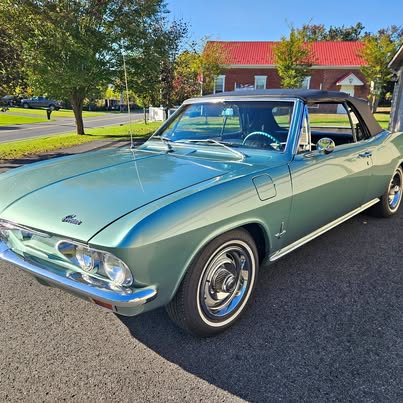 $17,500
Expand
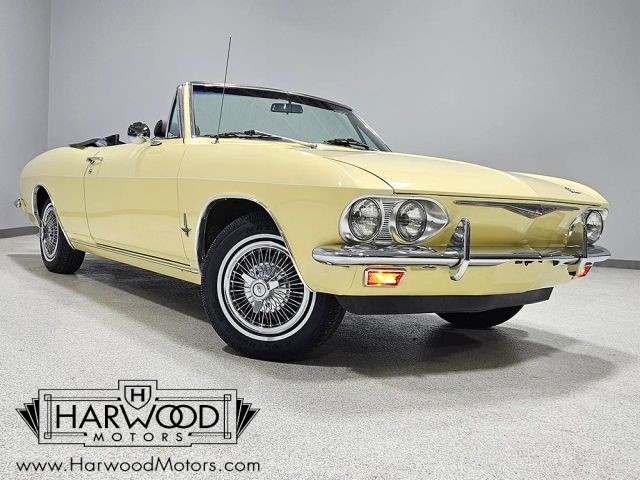 $19,900 · 12% above typical
Expand
What they sell for: Corvair Convertible sale prices.