
Chevrolet Corvette Hatchback buyer's guide
Chevrolet Corvette Hatchback -- the model's own buyer's guide: variants, values and what to check.
Years listed: 1985-1993 · Series: C4
# Chevrolet Corvette Hatchback — Buyer's Guide
Overview and history
The name needs translating first. There is no separate Chevrolet model called the Corvette Hatchback. "Hatchback" is the store's body-style key for the C4 Corvette coupé, the car defined by its one huge lifting glass hatch. Every one of the nine cars behind this guide — six offered for sale and three recorded sold, all dealer cars — is a C4 coupé, spanning 1985 to 1993: a single 1985, two 1988s, a 1989, a 1991, a 1992 and three 1993s. That spread covers the Tuned Port cars, the mature L98 cars and the LT1 cars, and tops out with a genuine 1993 40th Anniversary ZR-1. It does not cover the 1984 launch car, the 1994 to 1996 late cars, the convertible, or the 1996-only LT4 and Grand Sport.
The C4, sold from 1984 to 1996, is the Corvette that stopped being a styled-up sports car and became an engineered one. Chevrolet set out to out-handle European rivals, not just out-drag them: all-independent suspension with transverse composite leaf springs, aluminium control arms, rack-and-pinion steering, four-wheel disc brakes, a forward-hinging clamshell bonnet, and composite body panels over a steel structure. The hatchback coupé is the standard body — a liftback profile with a removable targa roof panel, a wraparound glass hatch and almost no luggage space. You sit low and deep, looking down a very long nose.
Why buy one now? Because the C4 is the last Corvette that still feels mechanical in the old sense — pushrod small-block V8, a proper key, hydraulic steering — while delivering performance that is still real today. An LT1 car reaches 60 mph in the low five-second range and runs to around 160 mph; even the earliest car in this pool, the 230-horsepower 1985, is genuinely quick by its year's standards. The split personality is exploitable: early cars are digital-dash period pieces, the 1991 facelift cars feel more finished, the 1992-on LT1 cars are faster again, and the ZR-1 is a different species sharing a silhouette.
Set expectations on three points. First, this is a 1980s and early-1990s GM product: the engineering underneath is serious, the interior plastics and electronics on top are not always so, and the gap between those statements is where most C4 money goes. Second, the body does not rust as a steel car's body rusts — but the steel underneath it can, and "fibreglass, so no rust" is the most expensive sentence in the C4 classifieds. Third, these cars are now 33 to 41 years old; even the lowest-mileage example needs rubber, fluids and electrical patience.

The models
The C4 range looks simple from a distance — one coupé, one convertible from 1986, one V8 at a time — and gets complicated the moment you read a build sheet. Trim is mostly options rather than named model lines: suspension codes (base FE1, Z51 and later Z07), axle ratios, FX3 adjustable dampers from 1989, sport seats, Bose audio and electronic air conditioning. The two genuine sub-models are the ZR-1 and the anniversary editions, and both appear in this pool. Work through the chronology, because the year tells you the engine, the dashboard, the gearbox choices and most of the faults to expect.
1984 — the launch car (context only; none in this pool). The C4 arrives with the 5.7-litre L83 Cross-Fire V8, about 205 horsepower, a punishing Z51 ride, pure-1984 digital instruments and the Doug Nash 4+3 manual option. Collectible in its own way, but the market and this guide treat 1985-on as the start of the sorted car.
1985 — the first pool year. The L83 is dropped and the L98 Tuned Port engine takes over, gaining roughly 25 horsepower and a great deal of credibility. Suspension rates are softened after complaints about the 1984 car. The 1985 in this pool, a blue car photographed in Minnesota, is the archetype: digital instruments, sawblade-style alloys, crisp first-series styling — the C4 as its designers first intended it, with the early-car electrical workload that comes with it.
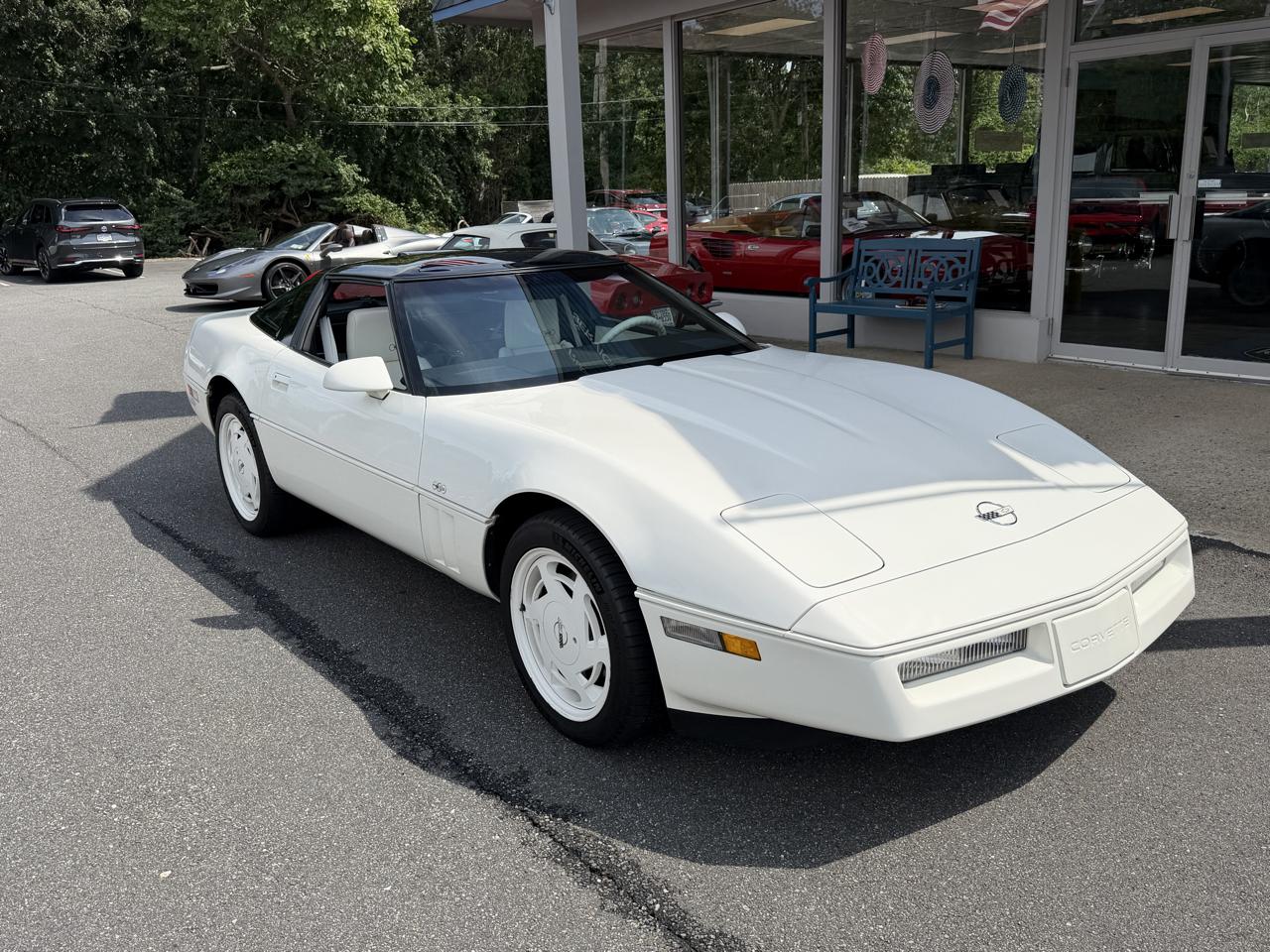
1988 — two cars in this pool, both white. A significant chassis year disguised as a carry-over. Front suspension geometry is revised to near-zero scrub radius, calming tramlining; the parking brake moves from a drum inside the rear disc to a mechanism in the rear calipers; the handbrake lever migrates to the left sill; and 17-inch wheels with 275-section tyres become available. Output is up to about 245 horsepower with freer exhaust and performance axle combinations. The two 1988s behind this guide — one in New York, one in Wisconsin — are the cars most first-time C4 buyers end up in: late enough to be sorted, old enough to need everything in the problem areas below.
1989 — the six-speed arrives. The Doug Nash 4+3 is retired and the ZF S6-40 six-speed replaces it — the biggest drivability upgrade of the early C4 years. FX3 Selective Ride Control joins the options list. The 1989 in this pool sits at the hinge point: L98 engine, early body, modern gearbox.
1990 — ZR-1, and a new cockpit. The interior is redesigned around a wraparound dashboard with analogue dials — the full digital cluster is gone. The ZR-1 launches with the Lotus-designed, 32-valve LT5, wider rear bodywork and a price close to double the standard car's. No 1990 sits in this pool, but sellers of 1989 and 1991 cars borrow its features in both directions.
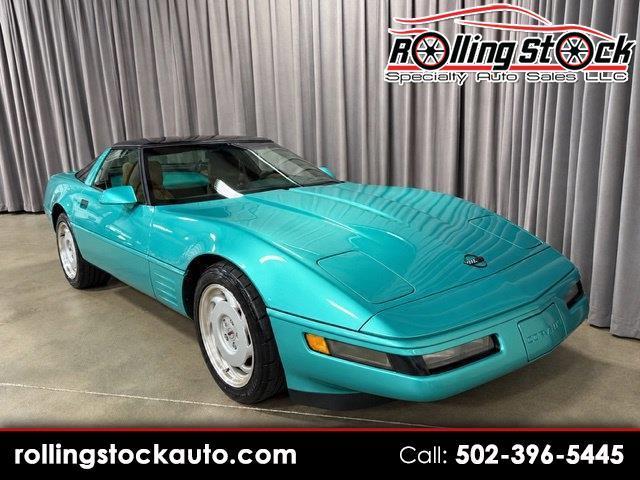
1991 — the facelift, and the green car in this pool. All C4s adopt the ZR-1's smoother styling: a rounded, convex rear fascia with rectangular tail lamps, revised side gills and new wheels. Underneath, the L98 serves its final year. The 1991 in this pool, a green coupé photographed in Kentucky, is the last early-engine car in its most attractive clothes — you get facelift looks without the LT1's Optispark. Judge that trade on evidence, not folklore.
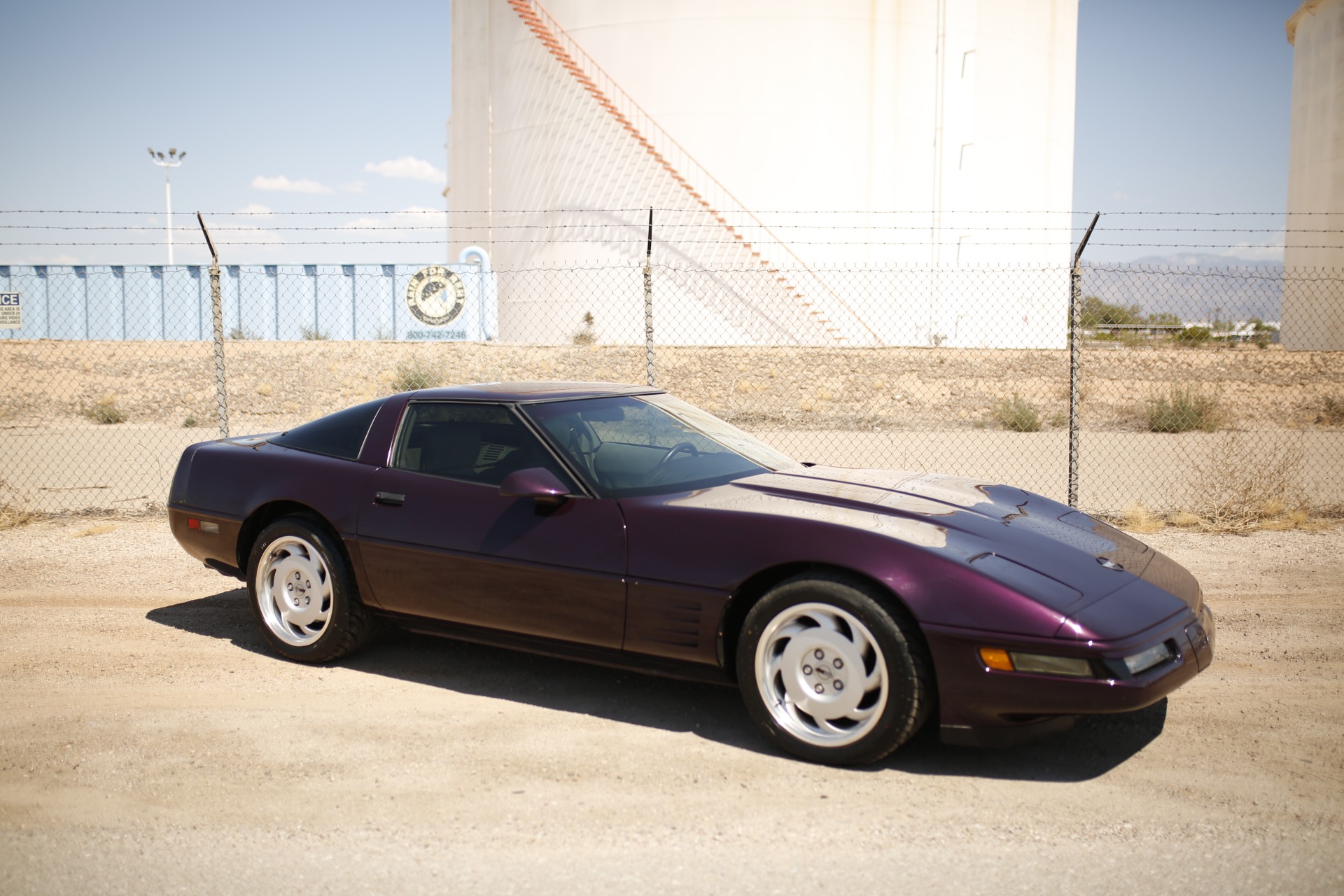
1992 — the LT1, and the Black Rose car in this pool. The second-generation small-block, the 5.7-litre LT1, replaces the L98 with 300 horsepower, reverse-flow cooling and the front-mounted Optispark. Traction control (ASR) becomes standard. The 1992 behind this guide wears Black Rose Metallic, a dark purple-black that reads black in flat light and deep plum in sun — exactly why you assess paint in person and in daylight.
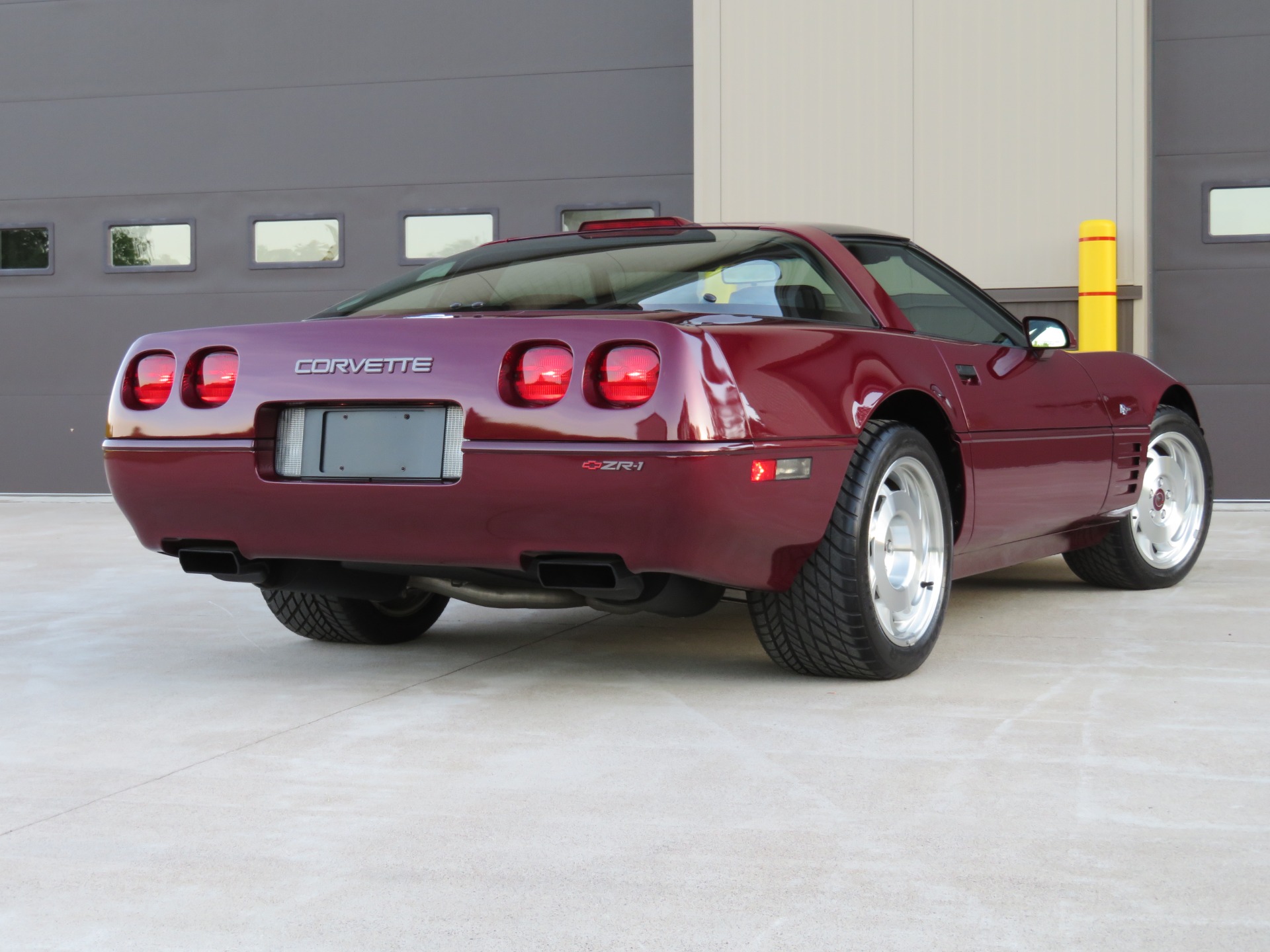
1993 — three cars in this pool, including the ZR-1. The 40th Anniversary year. The Anniversary package — Ruby Red metallic paint, red leather interior, anniversary emblems — is available on the standard car and on the ZR-1, and this pool contains both: a red 1993 standard coupé in Minnesota, a 40th Anniversary coupé in Michigan, and the headline 1993 40th Anniversary ZR-1 in Wisconsin. For 1993 the LT5 is uprated to 405 horsepower. A 1993 ZR-1 is, for most collectors, the specification to have — which is why the identity checks below matter so much on this year.
| Model | Years in pool | Engine | Output | Character |
|---|---|---|---|---|
| Standard coupé, early | 1985–1988 | L98 5.7 TPI | 230–245 hp | Digital dash, sharp styling, the period C4 |
| Standard coupé, facelift | 1989–1991 | L98 5.7 TPI | 240–250 hp | ZF six-speed available; last TPI cars in 1991 dress |
| Standard coupé, LT1 | 1992–1993 | LT1 5.7 Gen II | 300 hp | Faster, smoother; Optispark and reverse-flow cooling to manage |
| ZR-1 | 1993 in pool | LT5 5.7 32-valve | 405 hp (1993) | Wide-body Lotus-engine flagship; verify, never assume |
| 40th Anniversary | 1993 | LT1 or LT5 | As base car | Ruby Red package; a trim premium, not a performance model |
A word on production figures, because sellers quote them loosely. Chevrolet built C4s in the tens of thousands per year in the mid-1980s and in the low twenty-thousands by the early 1990s; the standard coupé is never a rare car, and no standard-car premium should be justified on rarity. The ZR-1 is the exception — total LT5 production across 1990 to 1995 was 6,939 cars, only a few hundred per year by 1993 — and the 40th Anniversary ZR-1 is a small subset of that.
Engines and gearboxes
Three engines cover every car in this pool, dividing cleanly by year: the L98 serves 1985 to 1991, the LT1 serves 1992 and the standard 1993s, and the LT5 serves the 1993 ZR-1 alone. Learn to identify each on sight, because the engine bay — not the badge, not the advert — is where a C4 tells the truth. The gearboxes divide just as cleanly: a four-speed automatic for most buyers, the Doug Nash 4+3 on the earliest cars when new, and the ZF six-speed from 1989.
The L98 Tuned Port Injection V8 (1985–1991)
The L98 is the traditional Chevrolet 350 — 5.7 litres, cast-iron block, pushrods, two valves per cylinder — wearing the most recognisable induction system of the 1980s. Tuned Port Injection uses a central plenum feeding eight long, curved runners, sized to build torque low in the rev range. Output is about 230 horsepower in 1985, rising to around 245 by 1988 to 1991, but the defining figure is 330 to 345 lb-ft of torque, delivered early. An L98 is not a revver — the long runners run out of breath above about 4,500 rpm — it is a surge car: it pulls hard from nothing and cruises at very low revs in overdrive.
Identify it by the plenum and runners: a finned aluminium plenum box, curved runner tubes sweeping down either side, a distributor at the back by the bulkhead. Management matters for diagnosis: the 1985 to 1989 cars use a mass-airflow (MAF) system whose burn-off and power relays are a known failure point; the 1990 and 1991 cars switch to speed-density management. Heads are cast iron on the earliest cars and aluminium from late 1986 on coupés — check the casting before anyone sells you a "rare iron-head" story either way.
Living with an L98 is mostly about age, vacuum and heat. The intake manifold and plenum gaskets age and leak — oil from the rear of the manifold where the distributor passes through, coolant at the manifold faces, vacuum leaks that present as a hunting idle. The throttle body wears at the shaft bushes; the idle air control valve carbons up and sticks. Injectors are conventional port injectors you can test individually: a set that clicks, holds rail pressure and shows even resistance across all eight is a good set, and a single dead or leaking injector causes a misfire and fuel smell owners routinely misdiagnose as an ignition fault. The distributor is accessible and conventional — the L98's great advantage over the LT1. A top-end reseal with gaskets, injector service and ignition consumables typically lands at $600–1,500 at an independent specialist; a full rebuild, rarely needed unless overheated or run dry, is a $4,500–7,500 exercise. Bottom-end checks: healthy oil pressure hot at idle, no bearing rumble cold, no blue smoke on the overrun.
The LT1 Gen II V8 (1992–1993 in this pool)
The LT1 of 1992 is not the LT-1 of 1970 and not the LT1 of the modern C7 era; it is the Generation II small-block, and its two defining ideas are reverse-flow cooling and the Optispark. Output is 300 horsepower and about 340 lb-ft of torque — a real 55-horsepower step over the last L98 — and the character changes with it: the LT1 revs cleanly to its roughly 5,700 rpm redline and makes the 1992-on car measurably faster in every increment.
Reverse-flow cooling sends coolant to the heads first and the block second, the opposite of the traditional small-block. That lets Chevrolet run higher compression on period fuel and keeps the heads, where detonation starts, cooler. It also makes the system intolerant of sloppy bleeding: there are bleed screws on the thermostat housing and throttle body circuit, and a casually topped-up LT1 can carry an air lock that shows as a gauge that climbs, falls and climbs again while the heater blows alternately hot and cold. The water pump is gear-driven from the camshaft drive, not belt-driven, and its weep hole sits directly above the Optispark. Hold that fact; the whole LT1 problem section hangs off it.
The Optispark is a distributor on the front of the engine, driven by the camshaft, combining an optical crank-angle sensor — a slotted disc read by an LED and photodiode — with a conventional high-voltage cap and rotor. When it works, it works very well. Its enemies are moisture, bearing wear and heat, and on the pool's 1992 to 1994 cars it is the early, unvented, spline-drive version, the most vulnerable of the breed. Identification: a smooth, low plenum with short runners, no distributor at the back, the Optispark buried low at the front under the water pump. Plug and lead changes are a knuckle-skinning job — $400–800 in labour terms for leads alone — and a seller who says the car "just had plugs and wires" should show the invoice.
The LT5 and the ZR-1 (1993 in this pool)
The ZR-1 is not a trim level or a badge, and the LT5 is not a tuned small-block. It is a clean-sheet, all-aluminium 5.7-litre V8 with four overhead camshafts and 32 valves, primary and secondary intake ports per cylinder, secondary injectors, and a vacuum-operated secondary throttle system governed by the power key on the console. At "normal" the engine runs on its primaries with restricted output; at "full" you get the whole engine: 375 horsepower for 1990 to 1992, and 405 horsepower for 1993 to 1995, the rating that applies to the pool car. Designed with Lotus and assembled by Mercury Marine in Stillwater, Oklahoma, it revs to 7,000 rpm and its durability reputation is deserved: high-mileage LT5s kept in coolant and oil are not a gamble in the way a neglected LT1 can be.
Identification is absolute, because ZR-1 money is roughly double standard-car money. One: the engine. An LT5 fills the bay — wide cam covers, a large plenum, no pushrod architecture. If you see an L98 or LT1, it is not a ZR-1, whatever the paperwork says. Two: the rear bodywork, wider by about three inches over 11-inch rear wheels with 315-section tyres, with unique fascia, wings and doors, and the high-mounted stop lamp on the roof rather than in the rear fascia. Three: the VIN — the eighth character is a J for the LT5, against Y for standard cars — plus the ZR-1 option code on the option label. Four: the power key and the higher tachometer redline. Five: the wheels, 17 by 9.5 inches front and 17 by 11 rear, and the tyre sizes on the sidewalls, which no badge can fake.
The converse traps matter too. A standard car with ZR-1 badges or wide aftermarket wheels is a standard car with decorations; price it as one. A 40th Anniversary standard car in Ruby Red is a desirable LT1 — it is not "the anniversary ZR-1," and the pool contains both so you can compare descriptions side by side. And a genuine ZR-1 whose secondaries never open — vacuum pump failed, reservoir leaking, actuator seized — makes standard-car power at ZR-1 money until fixed. The secondary vacuum pump should cycle audibly with ignition on and engine off; silence, or constant running, is a finding. Secondary recommissioning is usually hoses, pump and actuators — budget $500–1,500 — but plenum-off work is specialist territory, typically $1,200–2,500.
Grand Sport claims, dealt with once and for all: the Grand Sport is a 1996-only model, with the 330-horsepower LT4 engine, Admiral Blue paint with a white stripe, and its own VIN sequence. No car in this pool's 1985 to 1993 span can be a Grand Sport, and no LT4 belongs in any of them from the factory. A 1992 or 1993 car described as one has been modified or misdescribed — price what is physically in front of you and walk away from the description.
Gearboxes: automatic, Doug Nash 4+3, and the ZF six-speed
Most C4s you will ever look at, and most of this pool, are automatics: the Turbo-Hydramatic 700R4, renamed 4L60 in its final hydraulic years, a four-speed automatic with lock-up converter and tall overdrive top. It is strong, with one lethal sensitivity — the throttle-valve (TV) cable, which controls line pressure in proportion to throttle opening, not merely kickdown. A cable stretched, misadjusted or disconnected leaves the box running low pressure under load and burns its clutch packs, particularly the fragile 3-4 pack, in a short distance while feeling almost normal on a gentle drive. Confirm the cable is present and correctly set, watch for firm shifts without flare on the 2-3 and 3-4 changes, and pull the dipstick: red, nearly odourless fluid is health; dark, burnt-smelling fluid is a rebuild, typically $1,800–3,200 fitted with a converter.
The manual option on the 1984 to 1988 cars — the 1985 and the two 1988s in this pool, when new — is the Doug Nash 4+3: a Borg-Warner Super T-10 four-speed with a two-speed overdrive unit on the back, engaged automatically or by a switch, available in second, third and fourth. Driven as a four-speed with an overdrive top it is serviceable; the overdrive unit, controlled by the computer with inputs that feel arbitrary until you learn them, is the weak element, and its own filter and fluid are service items most cars never received. Expect a 4+3 on an early manual car unless it has been converted; an advert describing a 1985 or 1988 car as a "six-speed manual" is wrong for a factory car, and the discrepancy needs establishing before money moves. In this pool the manual listings are six-speed cars, from 1989 onwards; the early pool cars sit with the automatics.
From 1989 the manual is the ZF S6-40 six-speed, built in Germany — strong, precise, genuinely enjoyable. Three facts define it. First, the CAGS skip-shift forces a first-to-fourth change under light throttle at low speed; it is working as designed, and most cars have had it defeated with an inexpensive harness modification — ask, rather than discovering it. Second, the ZF uses a dual-mass flywheel and pull-type clutch. A cheaper single-mass conversion gains a pronounced gear rattle at idle — a characteristic, not a death rattle — but a worn original dual-mass flywheel that clunks on take-up is a real bill: clutch and flywheel together typically run $1,500–2,800 fitted, so check flywheel availability before you commit. Third, listen for whine in fifth and sixth and a graunch into second when cold that does not improve as the oil warms. Correct oil, changed on schedule, is the whole maintenance story — and most cars have never had it changed.
Which gearbox should you buy? The automatic suits the L98's torque and is right for a cruising car; the ZF transforms any C4 into a sports car and earns its premium; the 4+3 is for the buyer who specifically wants an early car. Do not pay a ZF premium for a 4+3 car.
Problem areas
Read this section as a map of where C4 money actually goes. The bottom ends rarely trouble anyone; the structure does not dissolve like a steel contemporary; the gearbox cores are strong. What fails, expensively and repeatedly, is everything around that core: an ignition system mounted under a water pump, a cooling system that traps air and debris, 1980s electronics ageing in a hot cockpit, rubber suspension and sealing parts at the end of their third decade, and composite panels whose paint tells the truth about the car's life. The site's own photo-note evidence fits: of the seven cars behind this guide whose photographs were examined in detail, rust was noted in one and visible damage in one — a small sample, honestly stated, and a reminder that the expensive findings only appear in person.
Ignition, cooling and the front of the LT1: Optispark country
Start with the LT1 cars — the pool's 1992 and 1993s — because one assembly dominates their ownership: the Optispark, the water pump above it, and the cooling system around both. The failure mechanism is a chain. The cam-driven water pump's shaft seal wears; coolant weeps from the pump's drain hole; the hole is positioned so the coolant drips directly onto the Optispark beneath it; coolant, moisture and bearing wear then attack the Optispark's optical disc and high-voltage cap from inside. Add the early unvented housing fitted to 1992 to 1994 cars, which traps ozone and moisture instead of purging them as the later vented design does, and you have the most famous failure pattern of the generation.
The symptoms progress in a recognisable order. Early: an intermittent misfire under load, particularly hot; a long crank when hot; an occasional stall at idle that restarts immediately. Middle: hard starting, backfiring through the intake, fault codes for the high- and low-resolution optical signals. Late: a no-start with fuel pressure and injector pulse present but spark absent or chaotic. Three other faults imitate the early stages: a failing ignition control module (heat-sensitive, its heat-sink paste now three decades old), a failing coil, and a fuel pump that falls away under load. The distinguishing tests are in section five: fuel pressure under load, a spark test during the fault, and the optical signal codes. A seller's "it needs an Optispark" is a hypothesis, not a diagnosis — and "the Optispark was done" needs an invoice showing pump and seals changed at the same time, because an Optispark changed under a still-weeping pump is a job bought twice.
Cooling faults compound everything above. The reverse-flow system must be bled at its screws after any opening; an air-locked LT1 overheats at idle and cools at speed, baffling owners who replace thermostats at random. The radiator sits low behind the condenser, and the car inhales debris into the space between them, where it mats against the radiator face invisibly from above. A C4 hot in traffic and normal on the highway is, until proven otherwise, a blocked radiator face and tired fans, not a head-gasket failure: look underneath with a torch, check both fans, check the low-coolant sensor and cap, before anyone sells you engine work. Head gaskets are not a noted LT1 weakness; overheating one repeatedly because the radiator was full of leaves is how owners manufacture it. On L98 cars the layout is conventional, but the same debris trap and thirty-year-old hoses apply, and rear intake-manifold leaks are routinely misreported as "head-gasket sweat" — it is the manifold reseal from the engines section, a weekend job, not an engine-out conversation.
Fuel delivery imitates ignition so well it deserves its own paragraph. The in-tank pump, its strainer sock and the short hose inside the tank all age; a pump that delivers pressure at key-on and fades after twenty minutes produces exactly the hot misfire and stall pattern blamed on the Optispark. The fuel-pressure test — gauge on the rail, pressure watched while the fault is provoked — is the only honest separator.
Electrics, instruments and the digital cockpit
The C4 spans the worst and the best of period GM electronics, and the year decides your workload. The 1984 to 1989 cars — the pool's 1985, 1988s and 1989 — carry the full digital cluster: liquid-crystal displays driven by boards in a hot, vibrating cockpit. Treat its failures as scheduled maintenance. The internal power supply fails and displays go dark or intermittent; solder joints crack and readouts drop in and out with temperature; backlight bulbs fail one by one; the auto-dimming photosensor ages. Specialists refurbish these clusters routinely, typically for $350–700 depending on whether the LCD panels have survived — but a car with a dead cluster is a car whose true mileage you cannot read at the moment of purchase, and that fact, not the rebuild bill, is the negotiating point. The odometer lives in that cluster; if it does not light, the mileage is unverified, and you price the car as such.
The 1990-on cars, including the pool's 1991, 1992 and 1993s, use the redesigned cockpit with analogue dials and a smaller digital display, which ages far better. Their known instrument fault is a tachometer that reads high or wanders — irritating rather than serious — plus the same bulb, ground and connector ageing as any period car. On all C4s, work through the electrical checks with the engine running and every load on: headlamps, fans, air conditioning, windows, seats, hatch release, cruise control and every warning lamp. You are loading a thirty-year-old ground network and watching for flickers, slow motors and dimming that betray resistance. The ground points — engine-to-chassis straps, battery cable ends hidden under insulation, junctions behind the dash — corrode invisibly, and half of all mystery C4 electrical faults are a ground that looks fine and is not.
Three named systems deserve specific tests. VATS reads a resistor pellet in the ignition key; when the pellet, key contacts or column wiring wear, the car refuses to crank and imposes a wait of several minutes. A car that intermittently will not crank, security lamp lit, no starter click, usually needs a correctly-coded key or column wiring — budget $150–450 — not a starter motor, and a seller's bypass module has changed the car's security in a way you should price. The Bose systems use an amplifier at each speaker; they fail with age and produce crackling, popping on switch-on, or one dead corner at a time. Rebuilding the set typically runs $300–600. And the electronic air-conditioning programmer and its vacuum lines produce vent faults owners misdiagnose as a dead compressor: clutch, relay and vacuum supply are tested in minutes, in that order, before any refrigerant conversation. Early cars use R12, later pool cars sit around the R134a changeover — establish what is in the car and whether it blows cold in traffic.
On the ZR-1, add the LT5-specific electrics: the secondary throttle vacuum pump and reservoir, the full-power key switch, and the additional injector drivers. A ZR-1 whose secondaries never engage is electrically and pneumatically unwell, not "a lazy one."
Fibreglass, paint, weatherstrips and the steel underneath
Say it precisely: a C4 does not have a hand-laid fibreglass body in the C3 sense. Its panels are fibreglass and sheet moulding compound — factory-pressed composite — bolted and bonded to a steel structure, and they do not rust. They do everything else. Panels craze and star-crack under impact and clumsy jacking; paint, now resprayed on most cars at least in part, blisters where preparation trapped moisture; the clamshell bonnet and doors are the panels whose alignment tells you whether the car has been hit, because composite does not bend and stay bent like steel — it cracks, is repaired with filler and mesh, and the repair shows as a local wave, a texture change and a panel edge that no longer matches its neighbour. Original paint in a period colour — early blue, white, green on the 1991, Black Rose Metallic on the 1992, anniversary red metallic on the ZR-1 — is worth more than a fresh respray of unknown depth, and a colour change is a significant value event: repainting composite properly is a $6,000–12,000 job done well and an endless blister farm done cheaply.
Underneath the composite sits steel, and steel is where the rust section of a C4 guide belongs. Inspect, lifted if you possibly can: frame rails and crossmembers, particularly where road salt lives — and this pool is a northern pool, with cars in Wisconsin, Minnesota, Michigan and New York, so assume salt exposure until history proves otherwise; the battery tray and structure beneath it, attacked by battery acid; the windscreen frame, where rust starts under seals and announces itself late as a leak and a musty car; floor edges and seat-belt anchorages. Surface rust on arms and fasteners is normal. Perforation in rails, windscreen frame or anchorages is structural and expensive — windscreen-frame repair with glass out is a $1,500–3,500 job before paint — and, on a standard car, a reason to buy a different car. Rust noted in one of the seven photo-examined cars behind this guide is the right incidence to hold in your head: not common enough to assume, common enough that you never skip the lift.
Weatherstripping is the C4's signature ownership bill and its most underestimated one. The car seals a targa panel, two doors with frameless glass, and a huge hatch, all with rubber now at least three decades old, and all of it perishes: it hardens, shrinks, splits at the corners and lets water into footwells, luggage bay and door innards, where it attacks window motors, seat runners and carpet underlay. A complete quality weatherstrip kit for a coupé typically costs $600–1,100 in parts, and fitting it properly is a full day of careful work or $500–900 in labour, because seals fitted in a hurry leak worse than the ones they replaced. Test with a hose, look for water tracks in the luggage bay and damp under the carpets, and treat a documented full seal kit as a genuine four-figure credit. The targa panel comes in painted composite and transparent acrylic; acrylic panels craze and crack, and a cracked panel is a replacement at $700–1,400 rather than a repair.
Suspension, steering, brakes and the running gear
The chassis hardware is aluminium, composite and clever, and its wear items are rubber, joints and bearings — all now old. The transverse composite leaf springs do not sag like steel, but they delaminate and splinter where the protective covering has been damaged and grit has entered the fibres; a damaged spring, or a car sitting low or uneven at one corner, needs a spring, typically $400–800 in parts plus alignment. The rubber bushings throughout perish and crack, and their failure presents not as a knock but as vagueness: a car that wanders under power, changes line over bumps and wears rear tyres unevenly is asking for bushings and a four-wheel alignment, an $800–1,800 programme, after which it drives like a much younger vehicle. Do not let a seller sell you that vagueness as "they all do that." They did not, when the bushings were new.
U-joints are the consumable driveline joint: two on the propeller shaft and two on each half-shaft, six in total, and the half-shaft joints work hard because the half-shafts are also suspension links. A click on take-up, a vibration that arrives with torque rather than road speed, or a clunk selecting drive or reverse points at joints; typically $500–1,000 renews the full set with the car apart once. The wheel bearings are sealed hub assemblies: play at the wheel or a rumble that changes with cornering load points at a hub, $250–500 a side fitted. The steering rack has one period fault — morning sickness, stiffness and notchiness from cold that eases as the fluid warms, caused by wear in the pinion valve seals. A rack stiff only when cold is living with it; a rack that leaks or is stiff all the time needs exchange or rebuild, $600–1,200 fitted.
Brakes: standard cars carry 12-inch front discs; the J55 package, standard on the ZR-1 and optional elsewhere, carries 13-inch fronts with twin-piston calipers — read the option label before you pay a J55 premium. A staying-on ABS lamp is most often a wheel-speed sensor or its wiring at the hub, where the connectors live exactly where road salt wants them. The handbrake works through the rear calipers on 1988-on cars and seizes if unused; earlier cars use small drums inside the rear discs. Tyres: most pool-era cars run 275/40 ZR17 at both ends; the ZR-1 runs 275 fronts and 315/35 ZR17 rears. Any car on tyres older than about seven years — read the sidewall date code — has spent grip and braking regardless of tread depth. A quality set is $900–1,500 on a standard car and more, with fewer choices, on a ZR-1.
Interior wear finishes the survey. Leather sports seats split at the driver's bolster, standard seats' foam collapses, and electric seat tracks and lumbar pumps fail in ways that are all repairable: a retrim in correct leather is $1,500–3,000 for the pair. Carpets fade — red interiors fastest, which matters on a Ruby Red anniversary car — and door panels crack at their tops. None of this stops a car being bought; all of it prices a car.
How to inspect one
Inspect a C4 in a fixed order — cold, outside, underneath, inside, running, driving — and do not let the seller's running order rearrange yours. You need a torch, a tyre gauge, a fuel pressure gauge or a specialist who has one for any LT1 you are serious about, the option-code list for the year, and daylight. A lift transforms the inspection; if you cannot have one, get the car over a pit or onto ramps for steps 4 and 9. Work the steps in sequence, because each sets up the next.
- Start with identity. Read the VIN plate and the option label, and check the engine code character: Y for a standard L98 or LT1 car, J if the car claims to be a ZR-1. On a ZR-1 claim, also confirm the LT5 under the clamshell, the wide rear bodywork, the 315-section rear tyres and the power key. On a 40th Anniversary claim, confirm the option code and the Ruby Red paint and red interior, not just a badge. Any mismatch ends the inspection at the advertised price.
- Cold-start the car yourself, from fully cold. Listen for bearing rumble and lifter clatter that does not fade, and watch the exhaust: a puff of blue that clears is valve-stem seals; continuous blue smoke is wear; white vapour that smells sweet and does not clear is coolant, and on an LT1 that finding is serious. A seller who has warmed the car up has taken this step away from you — note it.
- Read the body in daylight, panel by panel. Look along each flank at a shallow angle for waves and texture changes that betray composite repair, check shut-lines for even gaps, look for star-cracking around the hatch hinges, door edges and wheel arches, and compare paint across every panel — Black Rose and the anniversary red metallic change character with the light and must be judged outdoors. Damage was noted in one of the seven photo-examined cars behind this guide; photographs alone will not tell you whether this car is that kind of car.
- Get underneath and inspect the steel, not the fibreglass. Frame rails, crossmembers, battery tray, floor edges, seat-belt anchorages, windscreen frame corners. Surface rust on arms and fasteners is expected; perforation in rails, tray or anchorages is a walk-away on a standard car, per the rust map in the problem areas. While you are there, check the radiator's lower face and the gap between condenser and radiator for matted debris.
- Identify the engine by architecture, not badges. L98: plenum, long curved runners, distributor at the rear. LT1: low plenum, no rear distributor, Optispark low at the front under the water pump. LT5: wide cam covers, bay-filling plenum. Then look for the evidence: on an LT1, coolant staining below the water pump; on an L98, oil at the rear of the intake manifold and perished vacuum hoses; on all cars, bodged wiring and missing fixings.
- Test the cooling system as a system. From cold, watch the gauge: a steady climb to a stable reading is health; a gauge that climbs, drops and climbs again on an LT1 suggests the air lock from the problem areas. Confirm both fans cut in, check coolant level and condition, squeeze the main hoses (crunchy or rock-hard hoses are end-of-life), and inspect clamps and radiator end tanks for weep marks. Hot, switched off, watch for after-boil and leaks for two minutes.
- Do ignition and fuel tests in the right order on any car that misfires. Fuel pressure first: gauge on the rail, at key-on, idle and under load, plus leak-down after switch-off. Spark second: a tester on a lead while the fault is present, not after a cool-down. Only then discuss components — Optispark, module, coil, leads — in the order the tests indict them. On an L98 add injector operation and the MAF relays; on an LT1 with optical-signal codes, price the full pump-and-distributor job, not the part alone.
- Switch on every electrical load, together. Headlamps up and down twice (listen for gear chatter), fans, air conditioning blowing cold in traffic conditions, windows, seats, hatch release, cruise control, every cluster function and warning lamp. On a digital-dash car, confirm the odometer reads a number you can record; on a ZR-1, turn the power key and confirm the full-power lamp and, on the drive, that the secondaries engage. A VATS no-crank is information: time the wait, watch the security lamp, price the key and column work.
- Work the suspension and driveline on the lift and on the road. Rock each wheel for hub and joint play, inspect the composite springs for fibre damage and the bushings for cracking, and examine all six U-joints for play and rust dust at the seals. On the road: gentle take-up for clicks and clunks, a steady cruise for torque-related vibration, a lift-off and reapply in a high gear for driveline slack. Note steering from cold for rack morning sickness, and check the handbrake holds on a real slope.
- Drive the gearbox as the gearbox it is. Automatic: confirm the TV cable is connected first, then assess shift timing and firmness through all four gears, watch for flare on the 2-3 and 3-4 changes, test kickdown and lock-up, and check the fluid's colour and smell afterwards. ZF manual: note the CAGS skip-shift under light throttle (normal), listen for flywheel clunk on take-up and shutdown and whine in fifth and sixth. Doug Nash 4+3: confirm the overdrive engages in second, third and fourth, by switch and automatically.
- Assess the seals, roof and interior as a water story. Hose the car, or inspect it wet: targa front corners, door glass tops, hatch seal, then footwells, luggage bay and under the carpets for damp. Operate the hatch struts, examine the targa panel for edge cracks and crazing if acrylic, and work the seats through their travel and lumbar functions. Price a perished seal set and a cracked roof panel into the car now, using the problem-area figures.
- Close with paperwork and tyre date codes. History that names the big C4 jobs — Optispark and pump together on an LT1, weatherstrips, U-joints, dash rebuild on an early car, ZF clutch and flywheel on a manual — is worth more than a folder of oil-change stamps. Confirm tyre age from the sidewall codes on all four, confirm the spare and tools are present, and confirm title, VIN and option label describe the same car. Then talk money — with the next section's framework, not the seller's.

Values
The first thing to understand about C4 values is that condition spreads them wider than specification does. Two 1993 coupés, same colour, same gearbox, can sit a very long way apart in worth because one carries documented answers to the expensive questions in this guide and the other carries the questions themselves. Learn to value the answers. A car with a recent, invoiced ignition and cooling programme, sound weatherstrips, fresh tyres, a rebuilt digital cluster where applicable and a gearbox that behaves exactly as it should is not the same commodity as a shiny car with none of that history — and the gap between them is routinely larger than the gap between model years. Place the car in front of you within the market spread by its evidence, not by its paint.
Within the standard cars, the hierarchy is gentle. The LT1 cars stand above the L98 cars because they are faster and feel more modern, and facelift L98 cars stand above early cars on styling and interior — but a superb 1988 will, and should, out-value a tired 1992. Manuals carry a premium over automatics, strongest on ZF cars, because they are rarer and more sought after; it evaporates if the clutch, flywheel or gearbox needs work. Colour moves standard cars more than options do: strong period colours and the Black Rose-type metallics find buyers quickly, white and the common reds are the liquid mainstream, and a colour-changed car is discounted as a car whose paint history is unknown.
Two premiums need handling with care, because both appear in this pool. The 40th Anniversary package earns a genuine but modest premium on a standard car — a desirable trim and colour combination, not a performance model or a separate type. Pay for it as trim and resist any attempt to price it as rarity. The ZR-1 premium is of a different order and entirely justified when the car is genuine and complete: the LT5, the wide bodywork and the low production support a valuation in a different bracket from any standard coupé. But that premium attaches to verified identity, a working secondary system, correct wheels and tyres, and documented specialist history. An unverified ZR-1 claim earns no premium until verified, and a genuine car with needs earns its premium minus the cost of those needs.
The project-to-driver gap on a C4 is unusually honest, because the costs that create it are unusually predictable. A cheap C4 is cheap for itemisable reasons: tyres, seals, ignition work, bushings, interior, paint. Add those items at the rates given in this guide and the cheap car, finished, usually costs close to what the good car cost — with the difference that you have spent the interval doing the work instead of driving. Asking-versus-achieved follows the same logic: dealer asking figures, and every car in the pool behind this guide is a dealer car, are set against the best comparable the seller can point to, while achieved figures follow the evidence on the specific car. Negotiation is an itemised conversation, not a ritual discount. Finally, mileage: very low mileage flatters value only when recommissioning has been done — a car that has sat for a decade needs the same rubber, seals, fluids and patience as a driven car, plus the faults standing creates.
Parts and ownership
Own a C4 in the knowledge that its parts situation is two situations wearing one badge. The mechanical core — small-block service parts, gearbox and brake consumables, suspension joints, filters, belts, hoses, L98 ignition consumables — is as well supplied as any classic in the world and mostly inexpensive. Around it sits the C4-specific layer — trim, weatherstrips, interior plastics, electronic modules, dash clusters, LT5 and ZF parts — served by a mature specialist network (the long-established Corvette parts houses carry weatherstrip kits, interior trim and suspension packages for every C4 year) but at low-volume prices, with some items moving in and out of availability. The rule: anything rubber, plastic or electronic specific to this generation, buy when you find a good one.
Budget the ownership year honestly. Routine servicing is ordinary money: oil and filter, coolant on schedule (bled correctly on an LT1), brake fluid, gearbox oil in a ZF car most owners forget, and air-conditioning service where healthy — a few hundred dollars a year in consumables doing some work yourself, more like $600–1,000 a year at a specialist with an annual inspection built in. The age-related programme sits on top: in your first two years with an average car, expect some selection of a weatherstrip renewal at $600–1,100 in parts plus fitting, a tyre set at $900–1,500, U-joints at $500–1,000, bushings and alignment at $800–1,800, a digital-dash rebuild at $350–700 on an early car, Bose amplifier rebuilds at $300–600, and, on an LT1 with no recent history, the combined Optispark and water-pump job at $900–1,800. None of those figures is a reason not to buy the car. All of them together are the reason to buy the car whose previous owner has already paid some of them.
The specialist-only list is short. LT5 work — plenum-off service, secondary-system diagnosis, anything internal — belongs with the few shops that know the engine; LT5 parts run through dedicated specialists and the ZR-1 owner community, sourced deliberately, not overnight. ZF rebuilds and dual-mass flywheels are a similar specialist conversation; confirm flywheel availability before buying a manual car needing a clutch. Optispark quality is a minefield: quality remanufactured and later vented units sit alongside cheap copies that fail early, and the labour to reach the part costs more than the spread between a good unit and a bad one — buy the good one. For everything else the used-parts supply is deep: C4s were built in large numbers, and breakers hold everything from hatch glass to seat tracks.
Which one to buy
- The all-rounder: a 1992–1993 LT1 coupé, automatic. The fastest standard car in the pool's span and the most modern to drive. Buy it with the Optispark, water pump and cooling work documented, or price that programme into the offer on the day.
- The value buy: a 1988–1991 L98 automatic in honest condition. The mature early car — sorted chassis from 1988, facelift looks if you take the 1991 — for the least money in the range, with the most forgiving engine in the guide and no Optispark in its future. On a digital-dash example, make the seller demonstrate the cluster and odometer before anything else.
- The driver's pick: a 1989–1993 manual car with the ZF six-speed. The gearbox transforms the car and its premium is earned. Checks: CAGS behaving as designed, flywheel take-up clean, no fifth and sixth gear whine, clutch history in writing. An L98 manual is the connoisseur's version; an LT1 manual is the fast one.
- The period piece: the 1985 L98. The first year of the engine that saved the C4, in the sharpest styling and the most digital cockpit. Buy it because you want 1985, accept the early-car electronics workload as part of the charm, and never pay mature-car money for launch-era needs.
- The collector: the 1993 40th Anniversary ZR-1 — verified. The pool's headline car: 405-horsepower LT5, anniversary package, wide body. Every word of that must be proven by VIN, engine, bodywork and option label before the premium is discussed, and the secondary system must demonstrably work.
- The one to walk away from: any car whose identity, mileage or cooling behaviour cannot be established. A dead cluster hiding the mileage, a badge claiming a model the VIN denies, an LT1 whose temperature gauge will not settle — each is the seller transferring an unknown to you at a known price.
The overriding rule: buy the car with the most documented answers — ignition and cooling on an LT1, cluster and mileage on an early car, identity on a ZR-1 — because on a C4, condition and evidence are worth more than year, colour or badge, every single time.
See the 7 Corvette Hatchback cars currently listed.
For sale now
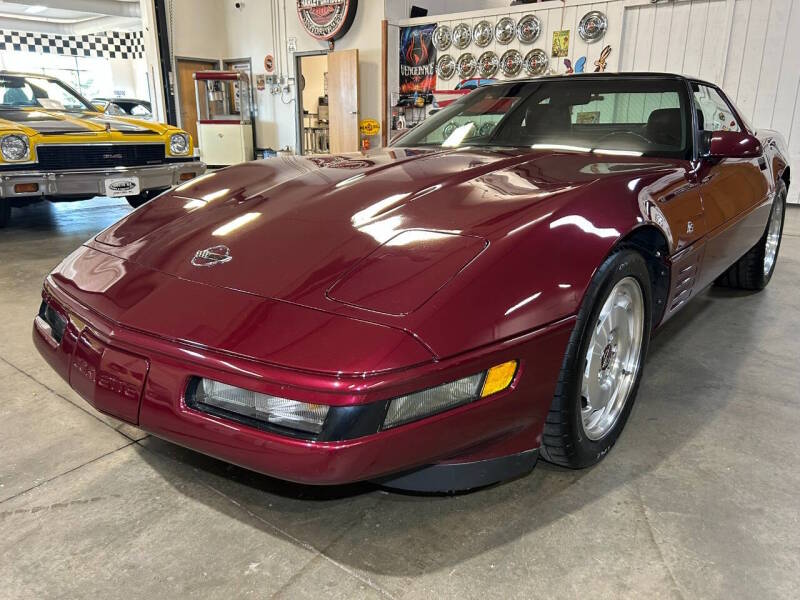 $19,900 · 39% below typical
Expand
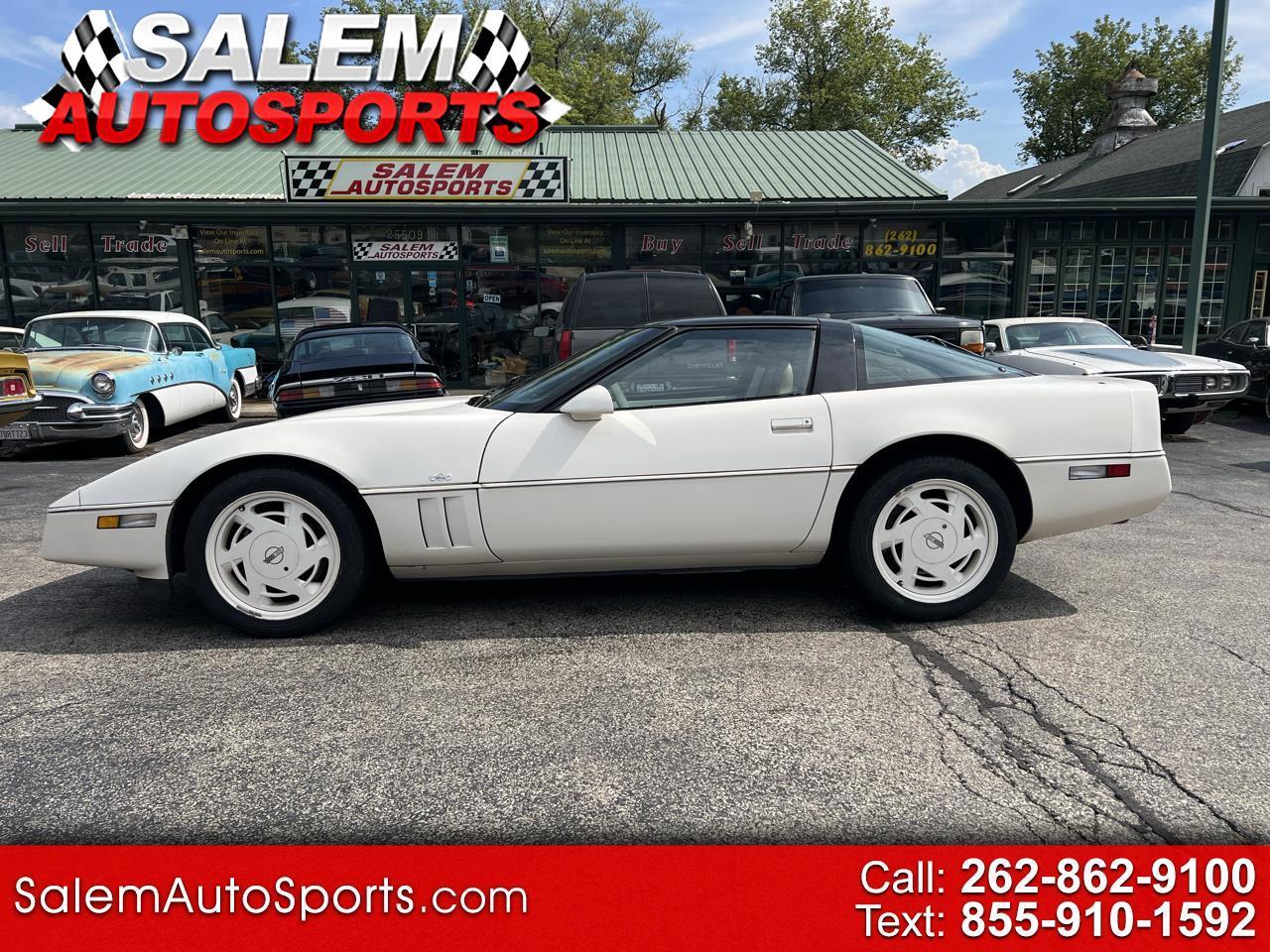 $10,995 · 67% below typical
Expand
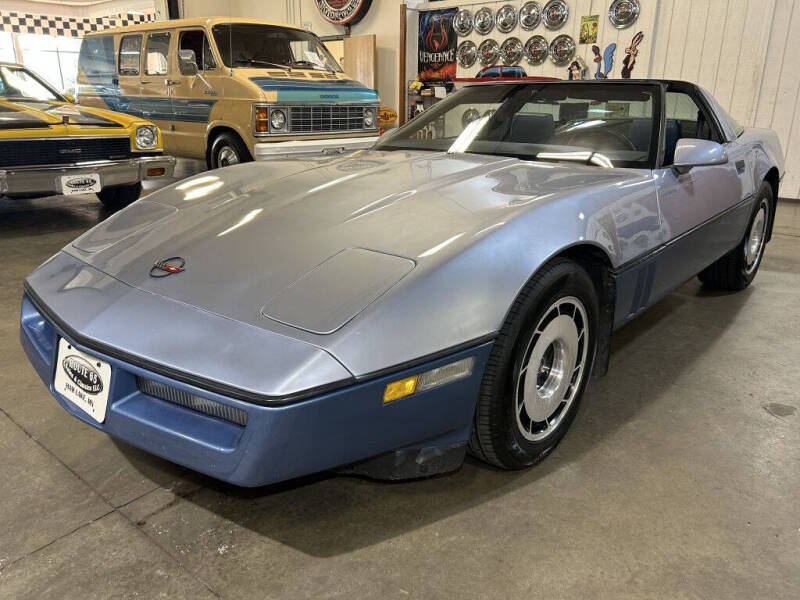 $8,990 · 73% below typical
Expand
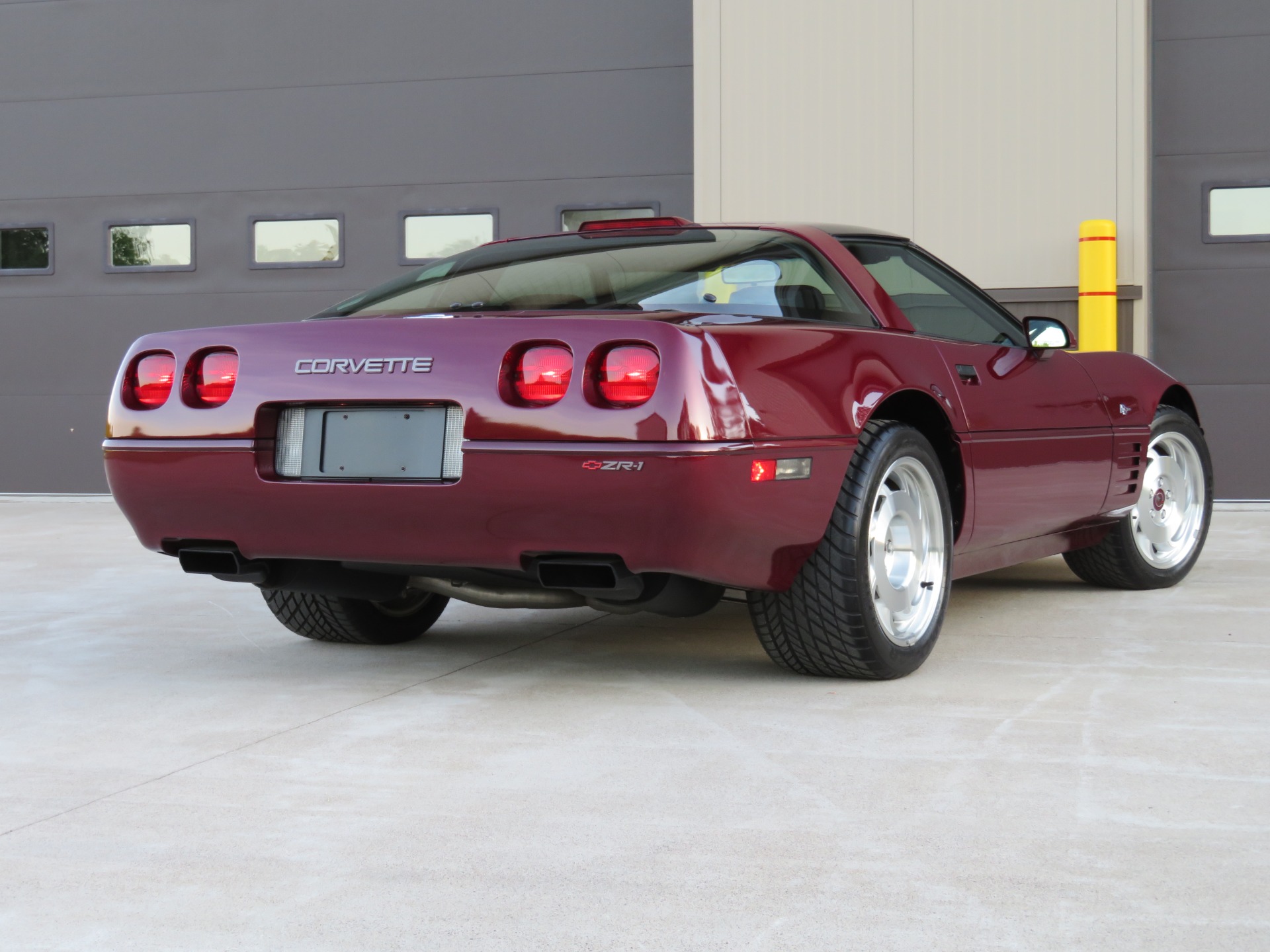 $75,000 · 128% above typical
Expand
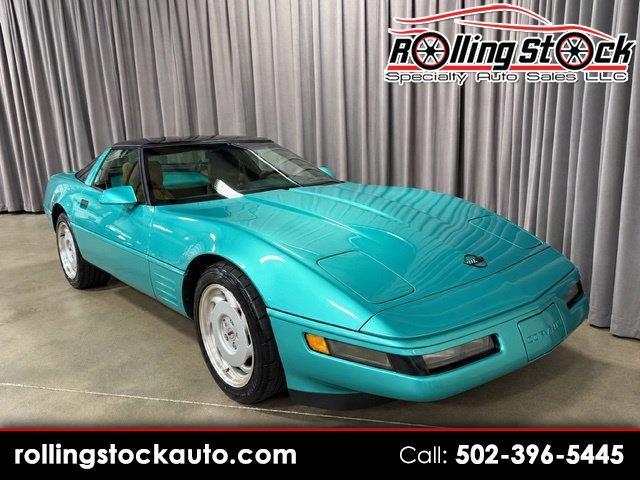 $20,900 · 36% below typical
Expand
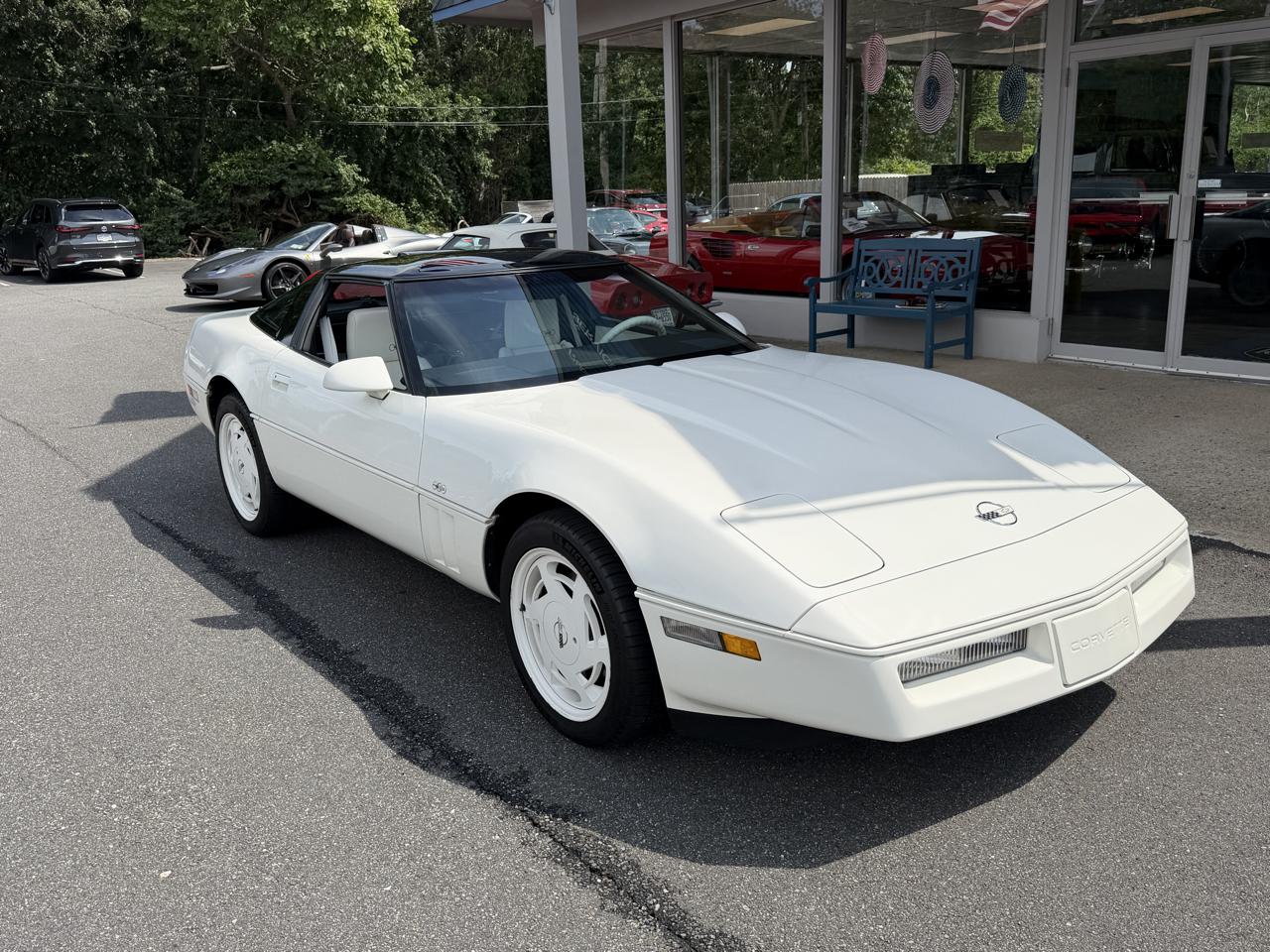 $29,900 · 9% below typical
Expand
What they sell for: Corvette Hatchback sale prices.