
Chevrolet SSR buyer's guide
Chevrolet SSR (2003–2006) — SSR: what's listed, and what they sell for.
Years: 2003–2006 · Models: SSR
Overview and history
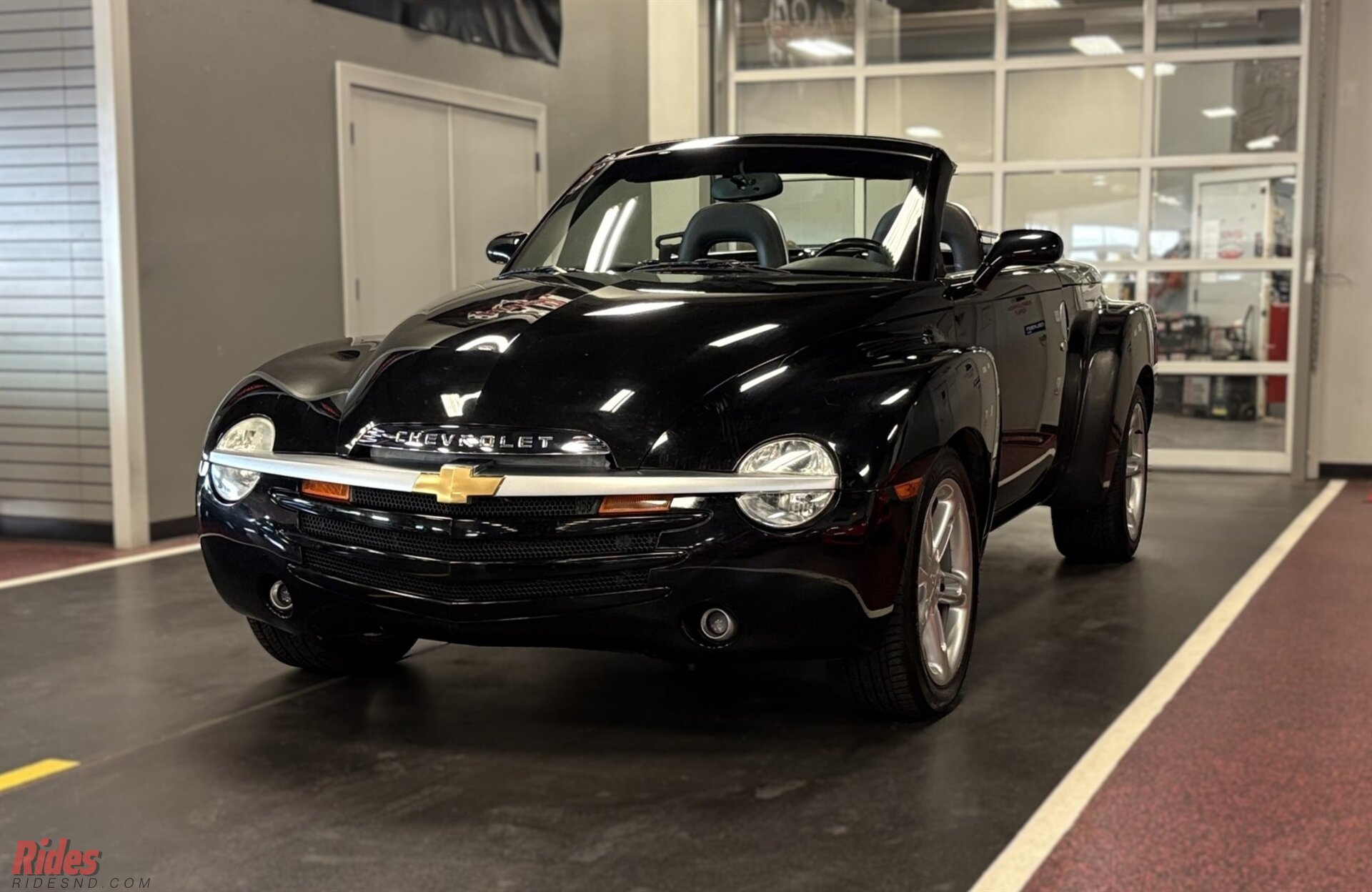
The Chevrolet SSR is the strangest production vehicle General Motors built in the 2000s, and it knows it. The name stands for Super Sport Roadster, and the thing itself is a two-seat, rear-wheel-drive pickup truck with a power-retractable steel hardtop, retro styling lifted from Chevrolet's 1947–1953 Advance Design trucks, a Corvette-family V8 under the hood, and a carpeted, lockable cargo bed that is more trunk than truck bed. It is not really a work truck, not really a sports car, and not really a convertible in the soft-top sense. It is all three ideas folded into one low-volume halo vehicle — and that is exactly why you are probably looking at one.
The SSR began as a concept shown at the Detroit auto show in 2000, where the reaction was strong enough that GM committed to production with unusual speed and unusual fidelity to the show car. Production cars reached dealers for the 2003 model year, built at GM's Lansing Craft Centre in Michigan — the same low-volume plant that had built the Buick Reatta and the GM EV1, and a plant set up for exactly this kind of short-run, labour-intensive vehicle. Production ended in March 2006, when the Lansing Craft Centre closed; the last 2006 cars carry Final Production Run badging, and the SSR was never replaced. Total production across the four model years was about 24,100 cars — a small number, spread thin, which matters to everything else in this guide.
Under the show-car body sits thoroughly conventional GM hardware, and that is the SSR's saving grace as a used buy. The chassis is the GMT368 platform, derived from the GMT360 architecture under the Chevrolet TrailBlazer — specifically the long-wheelbase TrailBlazer EXT's hydroformed frame rails, shortened and adapted. The engines are truck-and-Corvette V8s: a 5.3-litre all-aluminium LM4 for 2003–2004, and the 6.0-litre LS2 for 2005–2006. The automatic gearboxes are the familiar GM four-speeds, the 4L60-E and then the stronger 4L65-E, and from 2005 a Tremec T-56 six-speed manual was offered for the first time. Almost everything mechanical on an SSR has a high-volume cousin. Almost everything to do with the body, the roof and the trim does not. Hold that thought — it structures the whole ownership proposition.
The commercial story explains the two-tier market you will meet as a buyer. The SSR launched expensive, sold slowly, and was widely criticised in 2003–2004 for being heavy — around 4,700 pounds — and underpowered relative to its looks: 300 horsepower moving that much retro sheetmetal made for a cruiser, not the hot rod the styling promised. GM answered in 2005 with the LS2 and the manual gearbox, which transformed the car, but by then the programme's fate was largely set. The result, twenty years on, is a model line that splits cleanly in two: the early 5.3-litre automatic cars, which are cruisers bought on style, and the 2005–2006 LS2 cars, which are genuinely quick and the ones enthusiasts chase. This guide covers the whole line, and the split between those two halves is its main thread.
We currently track 34 SSRs for sale or recently sold on Classic Listings — 18 for sale and 16 sold — and for 9 of them we have gone through the sellers' photo sets in detail. The pattern in that sample matches the wider ownership picture: no rust flagged in any of the 9 photo-checked cars, no smoke and no leaks noted, with damage-related items — the dings, marks and wear of twenty-year-old specialty vehicles — mentioned in 5 of the 9. The SSR's enemies are not corrosion and worn-out engines, as they are on so many classics. They are the roof mechanism, heat, ageing electrics, and the cost of parts that were only ever made for 24,000 cars.
The models
There is only one SSR body, one wheelbase and one basic specification — a two-seat roadster pickup with a power-retractable hardtop — so "the models" in SSR terms means the model years, and the differences between them are larger than the identical styling suggests. The badge never changed, the production badging barely changed, and a 2003 and a 2006 look near-identical parked side by side. Underneath, they are meaningfully different cars. Learn the year splits and you know the line.
| Model | Years | Engine | Output | Built | Character |
|---|---|---|---|---|---|
| SSR 5.3 | 2003–2004 | 5.3 V8 (LM4), automatic only | 300 hp | about 14,100 | The cruiser; style over speed, the value end |
| SSR 6.0 automatic | 2005–2006 | 6.0 V8 (LS2), 4L65-E automatic | 390–400 hp | most of about 10,000 | The transformed car; effortless pace |
| SSR 6.0 manual | 2005–2006 | 6.0 V8 (LS2), Tremec T-56 6-speed | 390–400 hp | a small minority | The enthusiast's SSR; rare and chased |
| SSR Final Production Run | 2006 | 6.0 V8 (LS2), either gearbox | 390–400 hp | the last few hundred | Badged last-run cars; collector premium |
(Production figures are the commonly published model-year totals — roughly 3,400 cars for 2003, 10,700 for 2004, 7,300 for 2005 and 2,800 for 2006, about 24,100 in all — rounded because sources differ slightly on pilot and pre-production cars. Outputs are GM's period SAE net ratings: the LS2 was rated 390 hp for 2005 and up to 400 hp for 2006.)
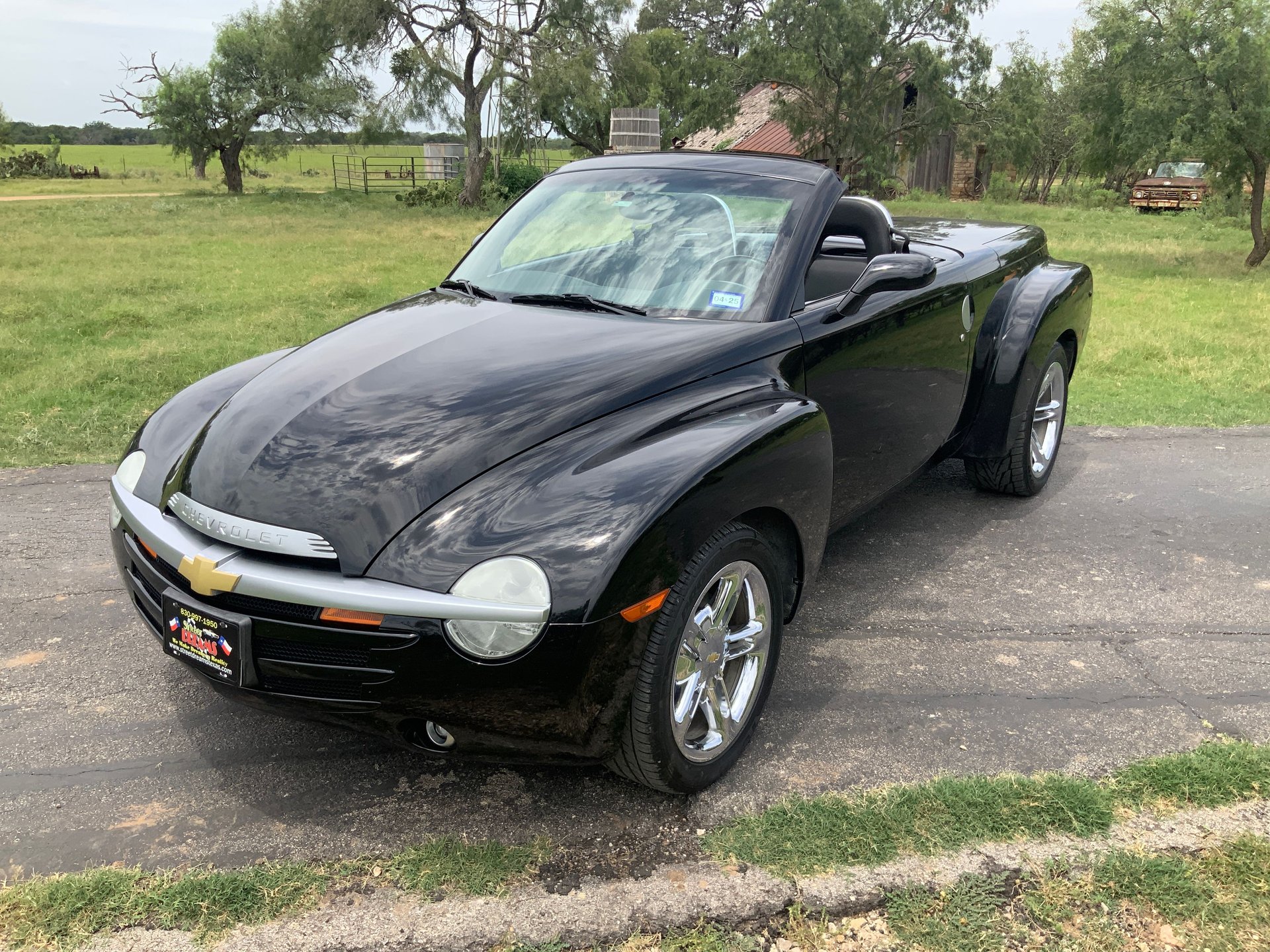
The 2003–2004 cars: the 5.3 LM4. Every early SSR has the same drivetrain: the all-aluminium 5.3-litre LM4 V8, 300 hp and 331 lb-ft of torque, driving through the 4L60-E four-speed automatic. There was no manual option and no engine option. These are pleasant, torquey, unstressed cruisers that are slower than they look — the weight sees to that — and they are the cars the market prices as style purchases. Within the two years, 2004 is mildly preferable: the first-year cars had the usual first-year niggles worked through in production, and 2004 added the Ultra Violet paint that has become one of the signature colours. The first 25 production cars for 2003 were Signature Series vehicles with special badging and documentation; they surface rarely and belong to the collector conversation, not the driver one. Of the cars in our own listings, the colour spread tells the early-car story plainly: black is the commonest colour we track, followed by Slingshot Yellow and the reds — these were bought as statement cars, in statement colours.

The 2005–2006 cars: the LS2 transformation. For 2005 GM replaced the LM4 with the 6.0-litre LS2 from the C6 Corvette programme — 390 hp and 405 lb-ft, rising to a headline 400 hp for 2006 — and simultaneously offered the Tremec T-56 six-speed manual as an option, with a strengthened 4L65-E replacing the 4L60-E behind the automatic. This is the single biggest dividing line in the SSR world. The LS2 cars are not marginally quicker; they are a different driving experience, with the performance the styling always promised, better gearing choices, and the specification most buyers actually want. The market knows it, and prices them accordingly. If your budget stretches to either half of the line, drive both before deciding the early car is "enough" — many buyers who settled for a 5.3 spend their ownership wishing they had not.
The manual cars. The T-56 six-speed was available only in 2005–2006 and only behind the LS2, and take-up was low — most SSRs were bought as cruisers by buyers who wanted an automatic. In our own listings, of the cars whose transmission is recorded, only two are listed as six-speed manuals against a long list of automatics, which matches the wider picture: manuals are a small minority of production and a large majority of want-lists. That imbalance is why manual cars carry a premium and sell quickly. It is also why you should verify a manual car carefully: the premium rides on the gearbox being factory, so check the option codes and paperwork rather than trusting the shifter.
The Final Production Run cars. When GM confirmed the Lansing Craft Centre would close, the final 2006 cars built in February and March 2006 were badged as the Final Production Run, with a badge on the interior waterfall panel between the seats. These are ordinary 2006 LS2 cars mechanically — the badge is the entire difference — but the SSR market is a collector market, and last-of-the-line documentation is exactly what it pays for. A Final Production Run car with its paperwork in order carries a premium over an identical early-2006 car; a car claimed to be one without the badge and build documentation is just a 2006 car. Verify by build date and VIN sequence, not by the seller's description.
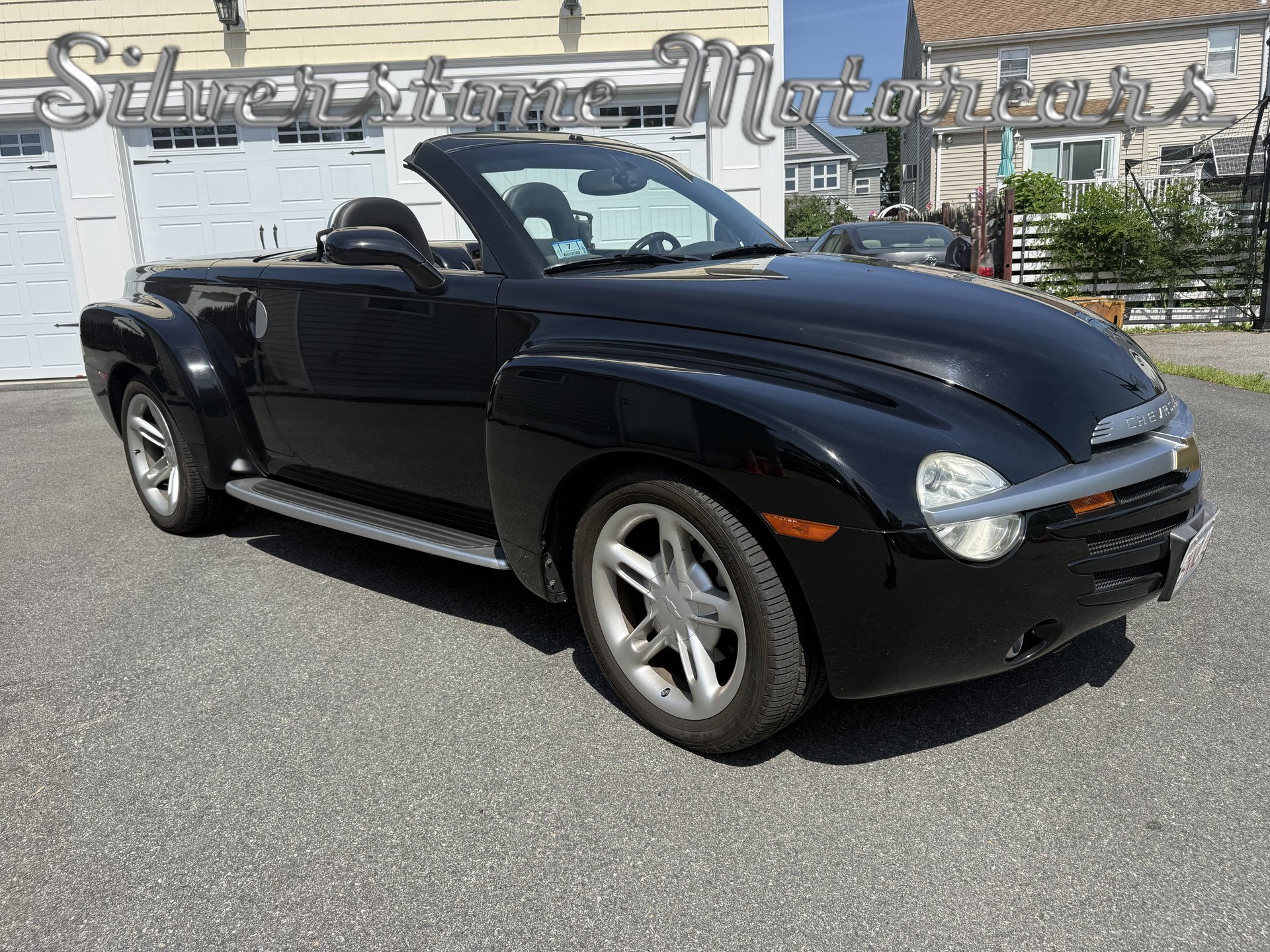
Colours and trim. The launch palette was deliberately loud: Slingshot Yellow, Redline Red and Smokin' Asphalt (black) over a black interior, with Ricochet Silver added and Ultra Violet for 2004, Aqua Blur in the middle years, Pacific Blue for 2006, and factory two-tone combinations offered on late cars. Colour matters to value in this market more than in most: the bright launch colours and Ultra Violet are the desirable ones, silver is the hardest to sell on, and a colour change on an SSR — expensive to do properly over those huge fenders — should always be priced as a deduction, never a feature. Interiors are almost universally black leather; wear on the driver's bolster is the norm and is covered below.

Engines and gearboxes
The 5.3-litre LM4 (2003–2004)
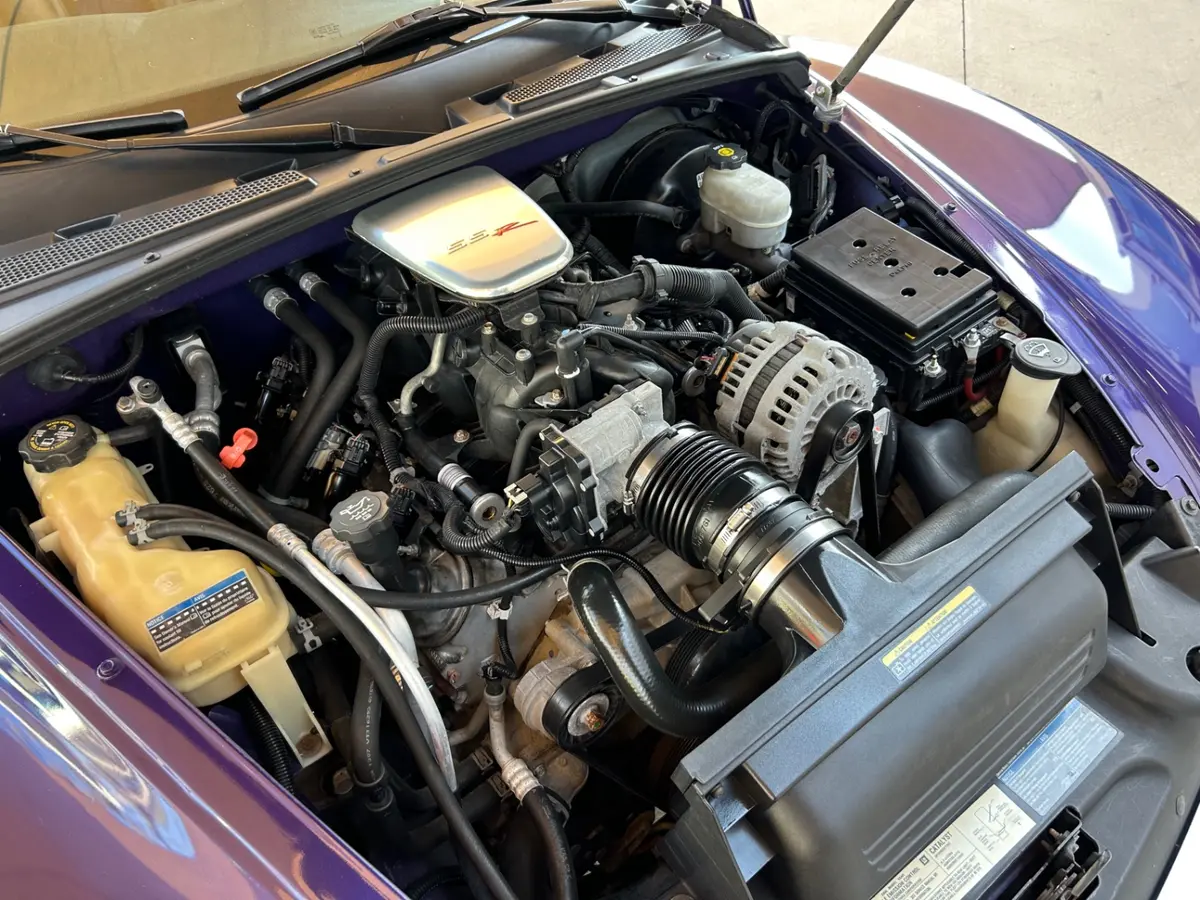
The early SSR's engine is the Vortec 5300 in its LM4 form: a 5.3-litre, all-aluminium version of GM's Gen III small-block, built for the SSR and its GMT360 platform mates. It makes 300 hp and 331 lb-ft of torque, figures that read well until you remember the SSR weighs about 4,700 pounds. The aluminium block and heads are the LM4's distinguishing feature — most 5.3 truck engines are iron-block — and it shares its architecture, accessories and service parts with the enormous Gen III ecosystem, which makes it one of the cheapest V8s in the classic market to keep alive.
As an ownership proposition the LM4 is close to ideal: hydraulic lifters, a single cam in the block, coil-near-plug ignition, sequential electronic fuel injection and no exotic service procedures. A healthy one starts instantly, idles at a low burble, pulls without hesitation and shows no smoke. The known Gen III behaviours apply: piston slap on a cold start that fades as the engine warms is common across the family and, in its mild form, is a noise rather than a death sentence; a cold-start tick that takes minutes to fade is more likely a lifter bleeding down or an exhaust manifold leak at a broken bolt — the manifold bolts on Gen III engines shear at the head, usually at the rear cylinders, and the resulting tick-tick-tick that seals up as the manifold expands is one of the most recognisable sounds in GM ownership. Neither is a walk-away on its own. What should stop you is smoke under load (rings or valve seals on a neglected engine), a coolant level that drops with no external leak, or oil pressure that sags at a hot idle — the gauge should hold steady pressure hot, and flickering low pressure at idle on a hot engine is a bottom-end conversation.
The LM4's real weakness in the SSR is not the engine but what surrounds it, and specifically cooling — covered in full in the problem areas, because the early electric cooling fan setup is marginal for a heavy vehicle with a small grille opening, and an early car that runs hot in traffic is showing you a known defect, not bad luck. Fuel economy is what 4,700 pounds and 5.3 litres suggest: expect mid-teens in mixed use, and budget for premium habits rather than premium fuel — the LM4 runs happily on regular.
The 6.0-litre LS2 (2005–2006)
The LS2 is a Gen IV 6.0-litre, also all-aluminium, and in the Corvette world it needs no introduction: 390 hp and 405 lb-ft for 2005, with 2006 cars rated up to 400 hp. In the SSR it finally gives the performance the body advertises — the car is still heavy, but now it has the torque to feel effortless rather than adequate, and the LS2's flat, wide torque curve suits the SSR's cruiser-with-muscle character perfectly. It is the engine the car should always have had, and the market's preference for LS2 cars is rational, not fashion.
Mechanically the LS2 is as robust as the LM4 and shares most of its service logic: pushrods, hydraulic lifters, coil-near-plug ignition, drive-by-wire throttle. The same checks apply — cold-start noises judged by whether they fade, exhaust manifold bolts inspected at the rear of each head, oil pressure steady when hot, no coolant loss. The LS2's higher output and the SSR's weight mean the cooling system works harder, which is why the LS2 cars have their own heat-related electrical trap: the underhood fuse box on 2005–2006 cars can develop a heat-sensitive internal break that stalls the engine or prevents a hot restart, then heals as it cools. It is detailed in the problem areas because it is the single most misdiagnosed fault on late SSRs — owners have replaced fuel pumps, crank sensors and ignition switches chasing a fault that lives in the fuse box. If you are buying an LS2 car, a documented fuse-box repair or replacement is a genuine selling point, and its absence is a question to ask, not a reason to walk.
Servicing either engine is mainstream GM work: any competent independent who knows LS-family engines can maintain an SSR, parts are cheap and everywhere, and the engine bay — despite the low retro hood — is reasonably accessible. Budget-wise, a full major service with fluids, plugs and filters is ordinary truck money, roughly $400–800 at an independent, and there is no SSR-specific engine job that should frighten you except the ones caused by neglect: a cooked engine from repeated overheating is the expensive scenario, which is why the cooling checks in the inspection carry so much weight on this model.
Gearboxes: 4L60-E, 4L65-E and the Tremec T-56
Every 2003–2004 SSR uses GM's 4L60-E four-speed automatic, the most common automatic gearbox in America, and every automatic LS2 car uses its strengthened sibling, the 4L65-E, with uprated internals to handle the LS2's torque. Both are electronically controlled, both are well understood by every transmission shop in the country, and both behave the same way when healthy: clean, firm shifts, no flare between gears, no long delay engaging drive or reverse, and no hunting at a steady cruise. The SSR's weight and the V8s' torque mean these gearboxes work for a living, and the fluid tells you how the work has gone: pull the dipstick and look for fluid that is still red and smells neutral. Dark, burnt-smelling fluid on a car with no record of a transmission service means the box has been running hot and old — a rebuild on a 4L60-E/4L65-E is a known quantity at roughly $2,500–4,000 fitted at a specialist, which is real money but not catastrophic, and a documented fluid-and-filter history is worth paying for. A box that shifts well on the test drive but has burnt fluid is a negotiation, not necessarily a rejection; a box that flares on the 2–3 shift or shudders on lock-up is a rebuild priced into the offer, today.
The Tremec T-56 six-speed manual, offered for 2005–2006 only, transforms the car's character a second time: the ratios suit the LS2, the shift is the familiar T-56 weighty mechanical action, and the car finally drives like the hot rod it resembles. Judge it the way you judge any T-56: synchromesh that stays clean on fast shifts into second and third, no whine in gear under load, a clutch bite point that is neither at the floor nor the very top of travel, and no judder pulling away. Clutch replacement is ordinary LS-car work — roughly $1,200–2,000 fitted — and the gearbox itself is strong; abuse shows as synchro wear, not breakage. Because manual cars are rare and carry a premium, verify originality: the gearbox a car left the factory with is in its option codes, and a converted car — it has been done — is worth automatic money whatever the seller asks.

Problem areas
Everything in this section follows one organising fact: the SSR is two vehicles sharing a badge. The mechanical half — engine, gearbox, chassis, brakes — is high-volume GM hardware with high-volume GM reliability and prices. The bespoke half — the retractable hardtop, its control module and hydraulics, the tonneau and cargo systems, the body panels and trim — was made for about 24,000 cars, much of it is discontinued, and it is where ownership money and ownership misery concentrate. Our own photo evidence points the same way: in the 9 SSRs we photo-checked in detail, none showed rust, smoke or leaks, while damage-related items appeared in 5 of the 9 — the profile of a mechanically sound vehicle whose risks are specific, not general. Work through the bespoke half first, in this order.
The retractable hardtop: module, hydraulics and microswitches
The roof is the SSR's defining feature and its defining risk. The system is a power-retractable steel hardtop: release the header latches, and the two-piece roof folds and stacks vertically into a compartment between the cabin and the cargo bed, under a hard tonneau panel that powers open and closed as part of the sequence. There is no manual fallback worth the name — when the system works, it is a ninety-second piece of theatre; when it does not, you have a car whose roof is stuck wherever it stopped, and the diagnostic path runs through components that are no longer on every shelf.
The brain of the system is the roof door module — the RDM — which sequences the whole operation from the inputs of a set of microswitches and position sensors that report the state of the latches, the tonneau, the roof panels and the storage compartment lid. Most roof faults are not hydraulic failures or motor failures; they are information failures. A microswitch that has drifted out of adjustment, a position sensor giving an implausible reading, or corroded contacts in a connector tells the module the roof is in a state it cannot safely proceed from, and the module does the only sensible thing: it stops the sequence, usually with a warning message in the driver information centre. The classic presentations are a roof that starts its cycle and stops partway, a tonneau that opens but a roof that will not move, a cycle that completes but leaves a warning chiming because one switch never reported the final position, and — the one that catches buyers out at viewings — a roof that works perfectly twice and then refuses on the third cycle as a marginal switch warms or a connector frets. This is why the inspection has you cycle the roof repeatedly, not once.
The hydraulic side of the system — the pump, lines and the rams and struts that move the panels and lids — ages the way all hydraulics age: seals harden, struts lose pressure, and connections weep. A roof that moves slowly, strains audibly, or settles unevenly is showing you tired hydraulics, and fluid evidence gathers where you would expect: dampness around the pump and line unions in the roof compartment, and hydraulic fluid staining in the storage well. The tonneau and cargo-lid struts are the consumable end of the same story: the gas struts that support the rear tonneau cover and the cargo lid lose their charge with age, so lids that will not stay up, or that slam rather than lower, are struts at $40–120 a pair in parts — trivial money, but a reliable tell that the car has been maintained by reaction rather than on schedule. Price the roof system in tiers. Switch adjustment, connector cleaning and calibration by someone who knows the system: roughly $300–800. Hydraulic strut or ram work: $500–1,500 depending on how much of the system is tired. A failed roof door module is the serious case: the module is discontinued, good used and rebuilt units are the supply, and module replacement plus the diagnostic time to prove it was the module runs roughly $800–2,000 all-in — when you can find the part. A car with a roof fault the seller describes as "probably just a switch" is a car priced as if the switch story is true and the module story is false; your offer should assume you will find out which at your expense.
Water is the roof system's second enemy. The seals around the roof panels, the header and the tonneau perish and shrink, and leaks present as wet carpets, dampness in the roof storage compartment, and water marks on the headlining panels. Water in the storage compartment is doubly bad news because the compartment is where the mechanism lives: corrosion on switchgear and connectors in a damp well is the seed of the information failures described above. Check the compartment dry, check it after the roof has been cycled, and treat any car that smells of mildew with the roof up as a car whose seals — and possibly whose switchgear — need money. Seal replacement ranges from a few hundred dollars for individual seals to $1,000-plus for a thorough re-seal with the adjustment time the system demands afterwards.
Cooling and heat: the early fan, and LS2 fuse-box stalls
The SSR's retro nose has a small grille opening, the engine bay is tightly packaged, and the car is heavy — a combination that makes cooling the mechanical system's weak point, and GM's early solution was not quite up to it. The 2003–2004 cars' electric cooling fan setup is widely regarded in the ownership community as inadequate for the job: in slow traffic on a hot day, an early car can run its temperature gauge up beyond where it should sit, and sustained overheating on an aluminium engine is how head gaskets and warped heads happen. Many early cars have been fitted with uprated fan solutions over the years — higher-capacity fans and revised control strategies are a well-trodden path in the SSR world — so the buying question is not whether the factory setup was marginal (it was) but what the car in front of you has now and how it behaves. A test drive that includes ten minutes of slow traffic or a long idle with the air conditioning on is not optional on an early car: the temperature should stabilise and stay stabilised. A car that creeps upward at idle and only recovers on the move has a cooling bill in its near future — fan work, a radiator that is internally furred, or both — at roughly $600–1,500 to put right properly, and any car with a history of repeated overheating should be priced as an engine risk, not a cooling job.
Heat causes the late cars' signature fault in a different place. On 2005–2006 LS2 cars, the underhood fuse box can develop an internal conductor break that opens as the box gets hot: the engine stalls or cranks without starting when hot, then — maddeningly — restarts and runs perfectly once everything cools, leaving no fault code that points at the box. Owners have replaced fuel pumps, crankshaft sensors, ignition switches and engine control modules chasing this fault, because every one of those produces the same hot no-start presentation. The distinguishing test is thermal: a car that fails hot and recovers cold, repeatedly and predictably, with fuel and spark both absent or erratic, is a fuse-box suspect before it is anything else, and a knowledgeable shop can prove it by heating and cooling the box. Repaired and replacement boxes are an established cottage industry in the SSR community; budget roughly $400–900 for the box work itself, and treat a documented repair as a genuine asset on a late car — it removes the model's most notorious breakdown from your future. Conversely, an LS2 car with an unexplained "sometimes won't restart when hot, the seller's mechanic couldn't find it" story is showing you this fault with its hand up.
The ignition switch belongs in this section because its symptoms impersonate everything else. The SSR's ignition switch — the electrical switch behind the lock cylinder — wears and develops high-resistance contacts, and because so much of the car's electrical system routes through it, the failure presents as a scatter of unrelated gremlins: intermittent no-crank, warning lights appearing and vanishing, accessories dropping out, gauges misbehaving. The switch itself is inexpensive GM hardware and the replacement is well documented; the expensive version of this fault is the diagnostic wandering it causes when nobody suspects a $50 switch. On a viewing, an SSR whose electrics behave oddly in several unrelated ways at once is more likely to need an ignition switch than five separate repairs — but "more likely" is doing work in that sentence, and the price should reflect the proving, not the hope.
Electrics, instruments and the ABS module
Beyond the ignition switch, the SSR's electrics follow the standard pattern of twenty-year-old GM: the failures are at connections, grounds and solder joints, not in the middle of harnesses. The instrument cluster uses the stepper-motor gauges fitted across GM's range in this period, and they fail the way all of them fail — a speedometer or fuel gauge that sticks, sweeps erratically, or parks at a random reading is a stepper motor at the end of its life, not a sender fault. Cluster repair by a specialist who replaces all the stepper motors and backlight bulbs in one pass runs roughly $200–450, and it is a one-time fix: a cluster with one dead motor has five more the same age.
The ABS module — the electronic brake control module — is the other solder-joint story. The module's internal solder joints crack with heat cycles and vibration, producing intermittent ABS and brake warning lights, often heat-related, often absent on a cold morning viewing and present by the end of a test drive. Module rebuild services resolder and reseal these units for roughly $150–350 plus removal time, which makes it an annoyance rather than a catastrophe — but it is exactly the kind of fault that disappears when a car is presented cold, so the hot end of your test drive is when to look at the warning lights, and a car whose ABS light "sometimes comes on" is a car with this bill attached. Power window regulators, door lock actuators and the various body-control functions fail at ordinary GM rates and ordinary GM prices; the SSR-specific electrical risk remains the roof module and its switchgear, covered above, and the correct hierarchy on any electrical diagnosis is: grounds first, ignition switch second, the specific module third.
Grounds deserve their own sentence because the SSR's ground points corrode in the usual GM places and produce the usual impossible symptom lists. A car with several small electrical faults that share no system is a grounds car until proven otherwise, and an hour with a wire brush and a wiring diagram is the cheapest repair in this entire guide.
Body, chassis and interior
Structurally, the SSR is a TrailBlazer underneath, and it behaves like one: the hydroformed frame rails are stout, and serious structural corrosion is rare on cars that have lived as the fair-weather toys most SSRs are. Our photo sample supports the point — no rust was flagged in any of the 9 cars we examined in detail. That does not exempt you from looking: check the frame rails and crossmembers for scale and perforation on any car from the salt belt, the lower edges of the huge front fenders and the door bottoms for bubbling, and the cargo bed floor and roof storage compartment for the water damage described above. The SSR's body risks are more often cosmetic and financial than structural. The body panels are SSR-only, the front fenders are enormous single pressings, and panel supply is thin and getting thinner: a parking-speed front corner that would be a $1,500 repair on a TrailBlazer can be a parts hunt and a $4,000–7,000 repair on an SSR once a fender, a headlamp and the paint blending over those curves are priced in. Damage mentions in 5 of the 9 cars we photo-checked are the statistical shadow of this: small damage is common on twenty-year-old cars, and on this one small damage is disproportionately expensive. Panel gaps and paint match deserve more of your time than they would on a mainstream car — mismatched paint on one fender of a "never damaged" car is a story that needs paperwork.
The chassis hardware is GMT360 fare: independent front suspension, a live rear axle, disc brakes all round. Wear items — ball joints, bushings, dampers, brake components — are available and priced like the truck parts they are, and a full brake refresh with discs, pads and hoses is mainstream money, roughly $700–1,400 fitted. Listen for the standard tells: knocks over bumps from worn links and bushings, a steering wheel that sits off-centre from tired alignment, and uneven tyre wear that records the same story. The tyres themselves deserve a line: the SSR runs staggered fitments, 255/45 R19 front and 295/40 R20 rear, the rears are not cheap and the choice in the correct sizes is narrower than it once was — a set of quality tyres is roughly $1,200–1,800, and a car on old, mismatched or wrong-sized rubber is telling you both about its budget needs and its previous owner's standards. Check the date codes, not just the tread: low-mileage SSRs routinely sit on tyres that are a decade old and hard as hockey pucks, which also explains half the "these cars handle badly" stories you will read.
Inside, the cabin is compact, trimmed in black leather with satin-chrome retro detailing, and dominated by the waterfall console between the seats. Wear concentrates where it always does: the driver's seat bolster cracks and wears through, the steering wheel rim and the driver's door pull take the daily contact, and the satin trim scratches. Seat retrimming in matching leather is roughly $800–1,500 a seat at a good trimmer, and SSR-specific interior trim pieces are, like the body panels, limited-supply items — a broken interior door handle or a damaged console piece is a used-parts search, not a dealer order. The air conditioning is conventional GM and should blow properly cold; a weak system is usually a compressor or a leak at mainstream prices, but test it on the viewing because on this car the test drive is also your cooling-system test, and the two together tell you most of what the engine bay knows. Finally, the cargo system: the hard tonneau cover over the bed is powered as part of the roof sequence on most cars and its struts and latches are part of the roof inspection, the bed itself is carpeted and shallow — a styled trunk, not a load bed — and the optional cargo accessories (saddle bags, nets, the wood-slat bed trim) are the kind of small originality details this collector market notices. A car with its cargo accessories intact and its tonneau working smoothly has usually been owned by someone who cared about the details, which on an SSR is the single best predictor of everything else.
How to inspect one
Allow at least an hour, insist the car is cold when you arrive, and plan the viewing so the roof cycles and the hot-running checks happen in the right order. The SSR's expensive faults are state-dependent — they appear hot, or on the third roof cycle, or after ten minutes in traffic — so a polite fifteen-minute look at a warmed-up car is precisely the inspection this model defeats.
- Paperwork and identity first. Match the VIN on the title to the plate at the base of the windshield and the door-jamb label. Decode the model year from the VIN and check it against the seller's description — the year decides the engine (LM4 for 2003–2004, LS2 for 2005–2006), and a car described loosely as "the 6.0" should have the build paperwork to prove it. On a manual car, check the option codes for the factory six-speed; on a claimed Final Production Run car, look for the waterfall badge and build documentation. A thick history file matters more on an SSR than on most cars, because the roof and fuse-box repairs you most want done are invisible without invoices.
- Cycle the roof — repeatedly. With the engine running and the car exactly as the manual specifies, run the roof through at least three full down-and-up cycles. Watch for hesitation, uneven movement, warning messages in the driver information centre, and any cycle that stops partway. The microswitch and module faults in the problem areas hide on the first cycle and show on the third. While the roof is down, inspect the storage compartment: dry, clean and free of hydraulic dampness is the standard. Dampness, fluid staining or corrosion on the mechanism re-prices the car.
- Cold start. Start the cold engine yourself. It should fire immediately and settle to a clean idle. Listen for the Gen III tells: piston slap that fades as it warms is acceptable, a tick that persists is a lifter or a broken exhaust manifold bolt, and smoke at start-up that continues under load is neither. Watch the gauges sweep — a needle that sticks or parks oddly is a stepper motor announcing itself.
- The tonneau and cargo lid. Open and close the rear tonneau and the cargo lid. They should power or lift smoothly and stay up unassisted; a lid that droops or slams has tired gas struts, cheap in themselves but a reliable maintenance-culture tell. Check the carpeted bed for water staining and the lid seals for perishing.
- Cooling, in traffic. Drive the car long enough to include ten minutes of slow traffic or a sustained idle with the air conditioning running. The temperature gauge should stabilise and stay put. Creep at idle on a 2003–2004 car is the early cooling-fan inadequacy from the problem areas making itself known — price the uprated fan work in, and walk away from any car whose seller waves away a genuinely overheating engine.
- The hot restart test (2005–2006 cars). At the end of the drive, with everything fully hot, switch off, wait five minutes, and restart. Then do it again. A hot no-start or stall that recovers as the car cools is the LS2 fuse-box fault until proven otherwise; a car that has had the box repaired should have the invoice, and a car that fails this test has a known bill attached, sized in the problem areas.
- Gearbox behaviour. On an automatic, shifts should be firm and clean with no flare on the 2–3 change and no long delay into reverse; check the fluid afterwards — red and neutral-smelling is right, dark and burnt is a rebuild conversation. On a manual, make several quick shifts into second and third, feel for synchro baulking, and judge the clutch bite and any judder pulling away. Remember that on an SSR the gearbox is half the car's market identity: test it like it matters, because it does.
- Warning lights, hot. At the end of the test drive, not the beginning, scan the dash: ABS and brake warnings that appear hot point at the brake control module's solder joints; a scatter of unrelated electrical oddities points at grounds or the ignition switch. Work every electrical item — windows, locks, mirrors, seat, lights, washers, horn, radio — and note anything dead for the negotiation list.
- Underneath. Get the car on a lift if it passes everything else. Check the frame rails and crossmembers for scale, the exhaust for the manifold leaks you listened for at step 3, the rear axle for pinion weep, and the brake pipes and hoses for age. Perforation in a frame rail is the one structural finding that should end the purchase; everything else under an SSR is priced, mainstream hardware.
- Body and paint, slowly. Walk the car in good light looking down each flank: those huge fenders show ripples and paint mismatch mercilessly. Check panel gaps, look for overspray on seals and trim, feel the lower fender edges and door bottoms for filler and bubbling, and inspect the roof panels' seals for the perishing that lets water into the mechanism. On this model a single replaced fender is a four-figure story — ask for it.
- Tyres and stance. Check the sizes are the correct staggered fitment (255/45 R19 front, 295/40 R20 rear), read the date codes on all four tyres, and look for uneven wear recording alignment or bushing wear. Stand back: the car should sit level and even. Old tyres on a low-mileage car are a near-certainty in this market — budget for a set rather than discovering it at the first wet corner.
- Interior and details last. Sit in both seats, feel for bolster collapse under the leather, check the waterfall console and Final Production Run badge if claimed, test the air conditioning for genuinely cold output, and inventory the small things: cargo accessories, both keys and fobs, the owner's manual, the wind deflector if fitted. On an SSR the details are not garnish — in a collector market they are part of what you are buying, and a car complete in the small things has usually been kept complete in the large ones too.
Values
The SSR market is a collector market wearing a used-truck disguise, and the first thing to understand is that the model badge explains less of a car's value than its year, gearbox and documentation do. The build appends the current listings and recorded-sales figures beneath this guide, refreshed at every build — read those numbers with the framework below in mind, because on a low-volume car like this one, a raw median conceals more than it reveals. We track 34 SSRs, 18 of them currently for sale, and at that sample size one exceptional car — or one desperate seller — moves the headline figures noticeably. Treat any single number as a weather report, not a climate.
The condition and specification spread is the widest fact in this market. The line splits into two halves that barely compete with each other: the 2003–2004 LM4 automatics, bought on style, and the 2005–2006 LS2 cars, bought on style plus performance. Within the LS2 half, the manual gearbox splits the market again — manual cars are a small minority of production and the majority of serious want-lists, and they carry a premium that has held through every wobble in the model's values. Final Production Run badging adds a further collector premium on 2006 cars, provided — and only provided — the badge and build documentation are genuine. Colour works the same way: Slingshot Yellow, the bright reds, Ultra Violet and the late two-tones are what the market pictures when it pictures an SSR, and an off-colour or colour-changed car needs a price that compensates.
Against that, the deductions are just as systematic. A roof fault is the largest single value item on the car: a car whose roof does not complete repeated cycles is not worth "a bit less," it is worth the cost of the worst plausible diagnosis less, because the buyer is purchasing an unknown that ranges from a switch adjustment to a discontinued module. An LS2 car with an undocumented hot-restart history carries the same discount logic. High mileage matters less than on most collector cars — the drivetrains are truck-tough — but accident damage matters more, because SSR-only panels make repairs expensive and sometimes slow, and a repaired car should show invoices proving the panels were genuinely replaced rather than filled. Storage is the quiet variable: these are fair-weather toys, most have low miles, and a low-mileage car that has sat for years needs tyres, seals, fluids and hydraulic attention that a regularly used car does not. Asking prices and achieved prices part company on SSRs in a predictable way. Sellers of halo cars price the dream — the concept-car story, the low miles, the badge — while buyers price the roof cycle, the gearbox and the paperwork. Auction results for good LS2 and manual cars are the market's honest core; dealer asking prices for early automatic cars are its optimistic fringe. The negotiation reality follows: on a well-documented LS2 or manual car in a launch colour, expect to pay close to the money for the right car, because the next buyer is standing behind you. On an early car with an unproven roof, an undocumented history or an unfashionable colour, the leverage is yours — there is always another 2003–2004 automatic, and the seller of one with faults knows it. Buy the specification and the documentation; the discount for everything else should be taken in the price, not discovered in your first year.
Parts and ownership
SSR ownership divides exactly where this guide has divided all along: the GM parts bin is deep and cheap, and the SSR-only shelf is shallow and getting shallower.
Easy: everything the SSR shares with the GMT360 trucks and the LS engine family. Service items, filters, plugs, coils, sensors, water pumps, alternators, brake discs and pads, suspension wear parts, 4L60-E and 4L65-E rebuild parts, T-56 service parts, tyres in the correct staggered sizes (a narrowing choice, but available), and the ignition switch and cluster stepper-motor repairs that the wider GM community has turned into routine services. Any competent independent who works on LS-powered GM vehicles can maintain the mechanical half of an SSR, and should — this is not a car that needs a marque specialist for its engine and chassis.
Harder and dearer: everything made only for the SSR. The roof door module is discontinued and supplied by the used and rebuilt market; roof hydraulic components, microswitches and seals come from a small specialist ecosystem that has grown up around the model — the SSR's enthusiast community is unusually strong and unusually technical, and its forums and dedicated suppliers are a genuine ownership asset you should factor in, because for this car the community effectively is the parts department. Body panels, headlamps, interior trim and the satin-chrome cabin pieces are limited-supply items priced by scarcity. None of this makes the car unownable; it makes the inspection the whole game, because the parts you cannot easily buy are precisely the parts the inspection exists to test.
Running costs. A sorted SSR is a realistic regular-use classic: fuel consumption in the mid-teens, insurance in line with other low-volume modern classics, and routine servicing at ordinary GM prices — a major service at roughly $400–800, a set of tyres at $1,200–1,800, a brake refresh at $700–1,400. The budget line that catches new owners is the first year: catching up a car that has been maintained by reaction — roof struts and seals, a cooling-fan upgrade on an early car, the fuse-box repair on a late one, tyres by date rather than tread, every fluid changed — honestly runs $2,500–6,000 before you improve anything, and a car bought cheaply with a roof fault can add the module hunt on top. The ownership rhythm that suits an SSR is exercise: cycle the roof regularly even in winter, keep the car on a battery tender if it sits, and treat the enthusiast community's accumulated fixes — fan upgrades, fuse-box repairs, roof switch knowledge — as part of the car's service literature. Cars that are used gently and often are the reliable ones; garage ornaments with seized roof switchgear and decade-old tyres are the expensive ones, whatever the odometer says.
Which one to buy
- The all-rounder: a 2005–2006 LS2 automatic. The transformed car with the easy gearbox — Corvette-family pace, the stronger 4L65-E, and the widest choice on the market. Get the fuse-box history in writing and this is the SSR most buyers should own.
- The enthusiast's car: a 2005–2006 LS2 with the Tremec T-56 manual. The rarest mainstream specification and the one the market chases hardest. Verify the factory option codes, pay the premium for a documented car, and buy the first genuinely good one you find — they do not queue up.
- The value buy: a 2004 LM4 car. The second year of the early cars, with the first-year niggles behind it and Ultra Violet on the colour chart. It is a cruiser, so buy it as one: the money you save against an LS2 car is real, and spent on the cooling upgrade and a roof service it makes a thoroughly sorted SSR.
- The collector car: a 2006 Final Production Run. Mechanically a late LS2 car, plus the badge and the build documentation that this market pays for. The paperwork is the asset — a claimed FPR car without it is a 2006 car at a 2006 price.
- The style buy: a 2003 car in Slingshot Yellow or Redline Red. The launch year in a launch colour, bought with open eyes: cheapest entry, automatic only, and worth it if the roof cycles cleanly, the cooling behaves in traffic and the tyres are in date.
And the rule that overrides all of the above: buy the roof, the gearbox and the paperwork — in that order. Cycle the top until it bores you, confirm the gearbox is the one the car was born with, and make the history file prove the roof, cooling and fuse-box work. Engines and chassis on an SSR are truck parts and can always be fixed at truck prices; a dead roof module, a misdescribed specification or a missing history cannot be fixed at any price you would want to pay.
Listed now
On Classic Listings today: 20 cars are listed here; 6 for sale and 2 marked sold; average asking price $28,575; asking range $24,950 to $29,900; sold cars average $37,450.
See the 20 SSR cars currently listed.
The market — recorded sales
Recorded-sale figures: 3 recorded sales · median $49,900 · range $25,000 to $64,995 (Nov 2024 – Nov 2026)
Based on 3 recorded sales — too few for a benchmark value.
| Date | Car | Sale price | Source |
|---|---|---|---|
| Nov 19, 2026 | 2004 Ssr | $64,995 | Dealer |
| Nov 19, 2026 | 2005 SSR | $49,900 | Dealer |
| Nov 19, 2026 | 2005 SSR | $25,000 | Dealer |
Dates are the sale date where the source states one; otherwise the date the sale was recorded here.
For sale now
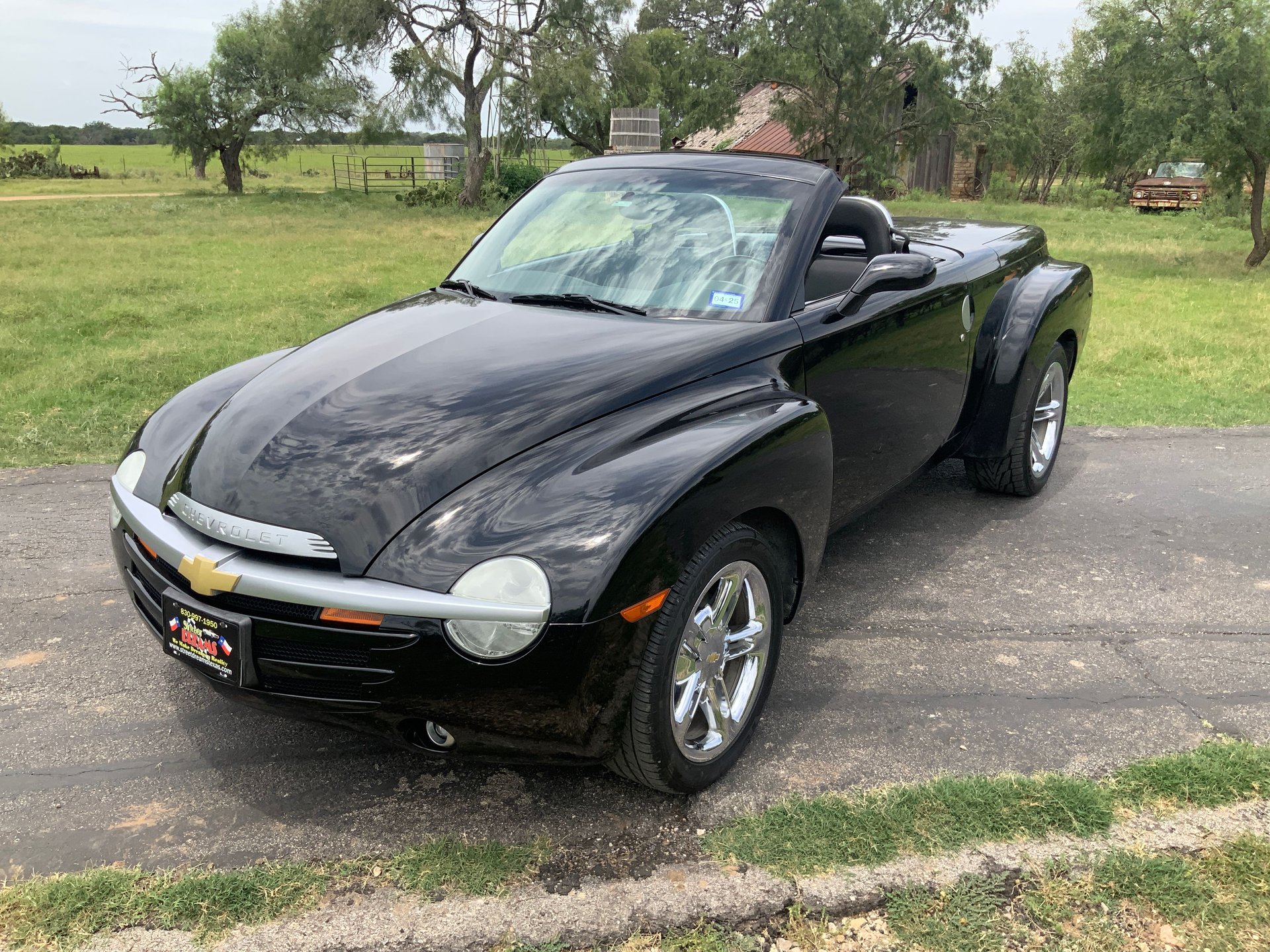 $24,950 · 19% below typical
Expand
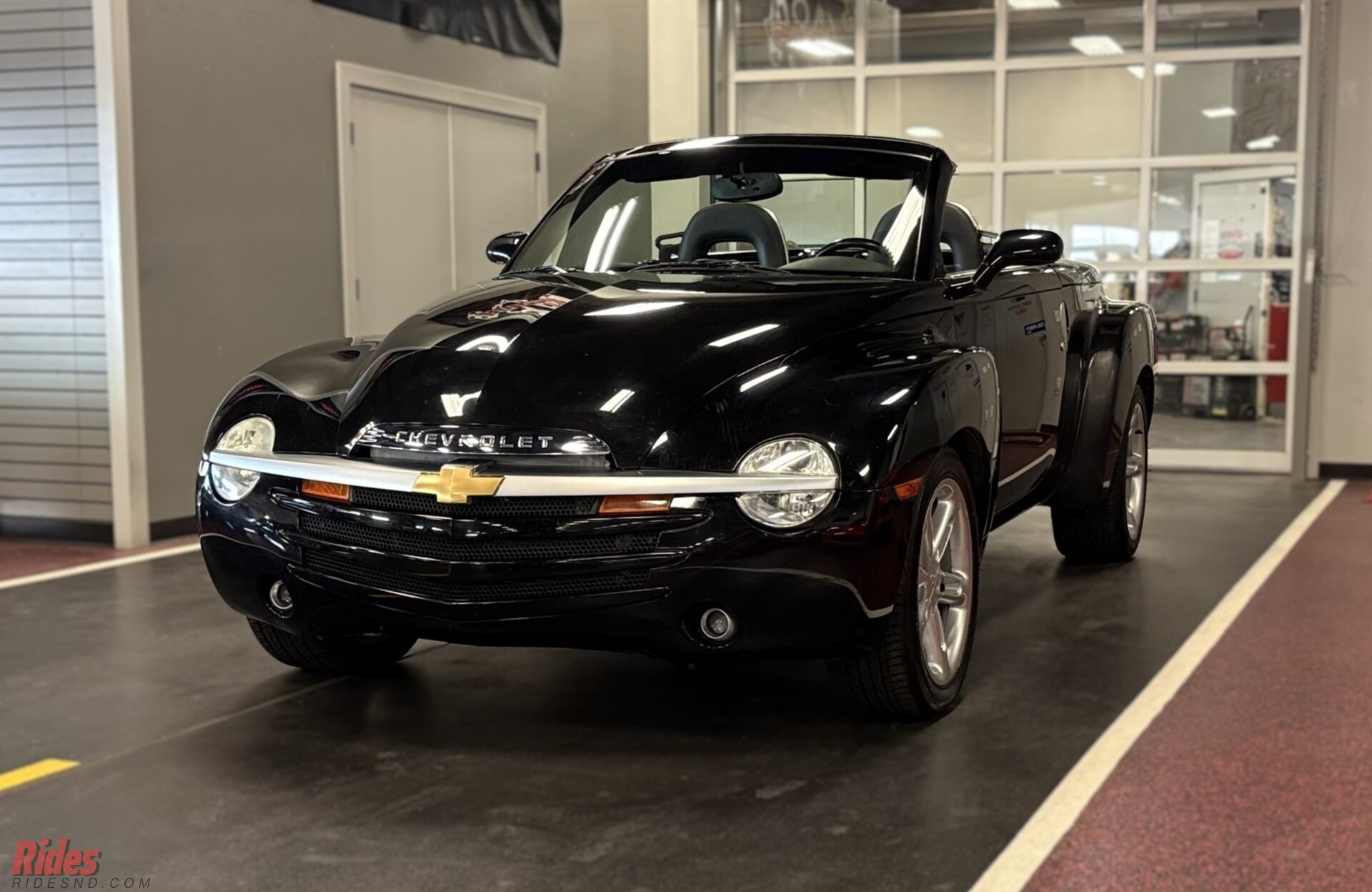 $26,900 · 13% below typical
Expand
 $29,900 · 3% below typical
Expand
 $29,900 · 3% below typical
Expand
 $29,900 · 3% below typical
Expand
 $29,900 · 3% below typical