
Chevrolet Tahoe buyer's guide
Chevrolet Tahoe -- the model's own buyer's guide: variants, values and what to check.
Years listed: 1994-2001 · Series: C/K Trucks
Overview and history
The GMT400 Tahoe is the truck that turned the full-size SUV from a niche off-roader into the default American family vehicle — and it did it with pickup-truck hardware. Chevrolet's big Blazer had moved onto the GMT400 platform for 1992, and for the 1995 model year the two-door was renamed Tahoe and joined by a four-door on a longer wheelbase. That four-door is the important car. It gave families Suburban presence without Suburban length, it rode on the same ladder frame, axles and V8 as the C/K pickups that were everywhere, and it could tow a boat, seat six and be serviced by any shop in America. Within a few years the Tahoe, its GMC Yukon twin and their Ford Expedition rival had defined the segment, and the type has never gone away.
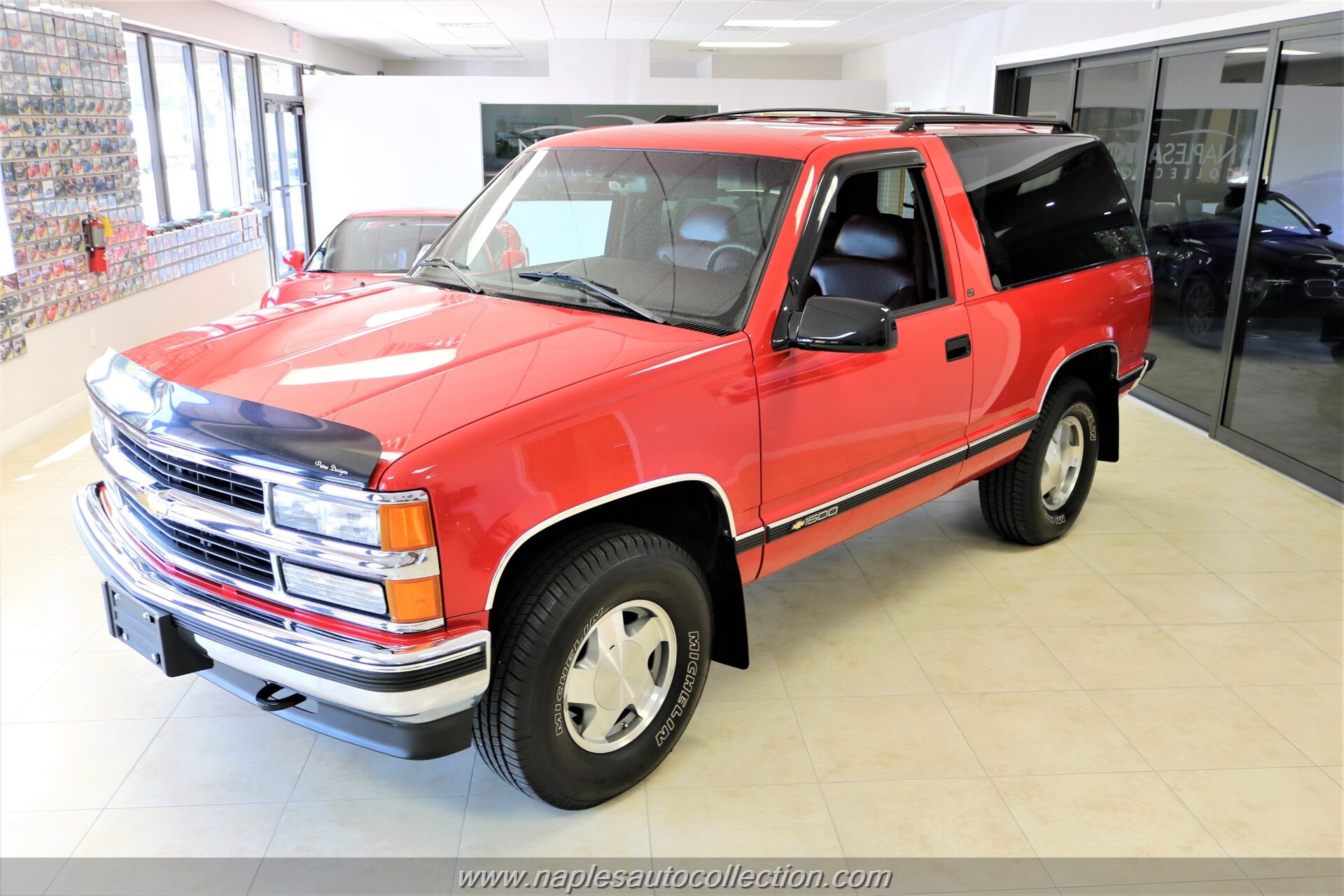
The shape of the range is simple. Everything sits on a body-on-frame chassis with independent front suspension on four-wheel-drive cars (torsion bars, with a live axle on leaf springs at the back), two-wheel-drive cars use coils at the front. The two-door rides on the short 111.5-inch wheelbase and keeps the old Blazer character: a short, tall, genuinely handy truck that feels like a pickup with a roof. The four-door stretches to 117.5 inches, adds a proper rear seat with proper doors, and became the volume seller and the template for everything that followed. Production of the GMT400 Tahoe ran from the 1995 to the 1999 model years, with two four-door specials — the Z71 and the Limited — carried over into 2000 on the old platform even as the redesigned GMT800 Tahoe arrived. Our own listings reflect that arc exactly: the cars we track run from 1996 to 2001, cluster heavily on 1999, and include both the last GMT400 cars and the first of their successors. This guide concentrates on the GMT400 cars, because they are the ones now bought as classics; where a 2000–01 GMT800 car differs in a way that matters to a buyer, it is flagged.
Why buy one now? Because the GMT400 Tahoe has crossed the line from old truck to period object. The square styling, the simple small-block V8, the column shifter and the sheer mechanical honesty of the thing are exactly what the modern, turbocharged, screen-filled SUV is not. Two-doors in particular have become collectible in the way short-wheelbase trucks always eventually do. But be clear-eyed about what you are buying: these were working vehicles, most were used hard, many were modified, and they are now a quarter-century old. The mechanicals are tough and cheap to fix. The frame and body, in salt country, are not immortal. Buy on structure and originality, and the Tahoe is one of the easiest classics in this guide series to own. Buy on shiny paint alone and it will teach you the same lesson every old truck teaches.
The models
Every GMT400 Tahoe is a full-size, body-on-frame SUV in one of two body styles, with trim climbing from base through LS to LT, and with two- or four-wheel drive. Badges were kept deliberately simple, and the glovebox RPO sticker — the white label of three-character codes inside the glovebox door — tells you more about any individual car than its badges do. Learn to read it before you buy: it lists the engine, axle ratio, locking differential, suspension and paint the truck actually left the factory with.
| Model | Years | Engine | Output | Character |
|---|---|---|---|---|
| Tahoe two-door | 1995–1999 | 5.7 V8, TBI then Vortec | 200–255 hp | The short-wheelbase original; the collector's pick |
| Tahoe four-door LS | 1995–1999 (2000 specials) | 5.7 Vortec V8 | 255 hp | The volume family car; cloth trim, honest spec |
| Tahoe four-door LT | 1995–1999 (2000 specials) | 5.7 Vortec V8 | 255 hp | Leather, power seats, the plush one |
| Tahoe two-door diesel | 1995–1999 | 6.5 V8 turbo diesel | 180 hp | The rare one; torque, economy, specialist habits |
| Tahoe Z71 (four-door) | to 2000 | 5.7 Vortec V8 | 255 hp | Off-road package; skid plates, uprated shocks |
| Tahoe Limited (four-door) | 2000 only | 5.7 Vortec V8 | 255 hp | Two-wheel drive, black, lowered; the street special |
Chevrolet does not publish tidy per-variant production splits for these trucks the way European makers do, and any source that gives you a suspiciously precise build figure for, say, a 1997 LT should be treated with suspicion. What is certain is that four-doors vastly outnumber two-doors in survival, and diesels were a small minority from new.
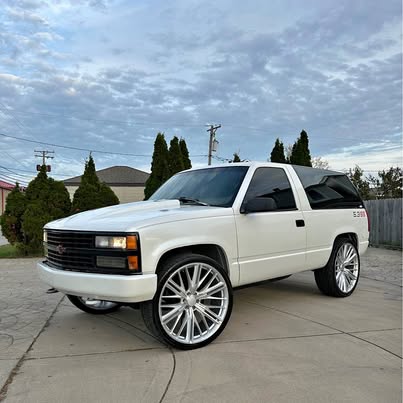
The two-door (1995–99). The direct descendant of the K5 Blazer in spirit, though not in construction — the roof is fixed steel, nothing unbolts. It seats five at a pinch, carries less than the four-door, rides more choppily and is worse at almost every measurable family task. It is also the one everybody wants now. Short, square and increasingly rare unmodified, it is the Tahoe that has become a classic rather than a used truck. Sport trim, with its body-colour grille and trim, is the best-looking of them.
The four-door LS and LT (1995–99). The mainstream car. The LS is the sensible specification — cloth seats, air conditioning, cruise, most of what you need — and the LT adds leather seating, power adjustment, upgraded trim and often the full toy box including rear air conditioning. Rear doors open onto either a tailgate or split barn doors depending on how the truck was ordered; barn doors are handy in tight parking but block the rear view with their centre pillar, and each style has its partisans. Both were sold in two- and four-wheel drive, and four-wheel drive dominates in northern states while clean two-wheel-drive cars cluster in the South.
The diesel two-door (1995–99). A genuine rarity: the 6.5-litre Detroit Diesel turbo V8, offered only in the two-door (and its Yukon twin), aimed at buyers who towed and counted fuel. It is covered in the engine section below. Treat it as a separate model with a separate rulebook, not as a Tahoe with a different engine note.
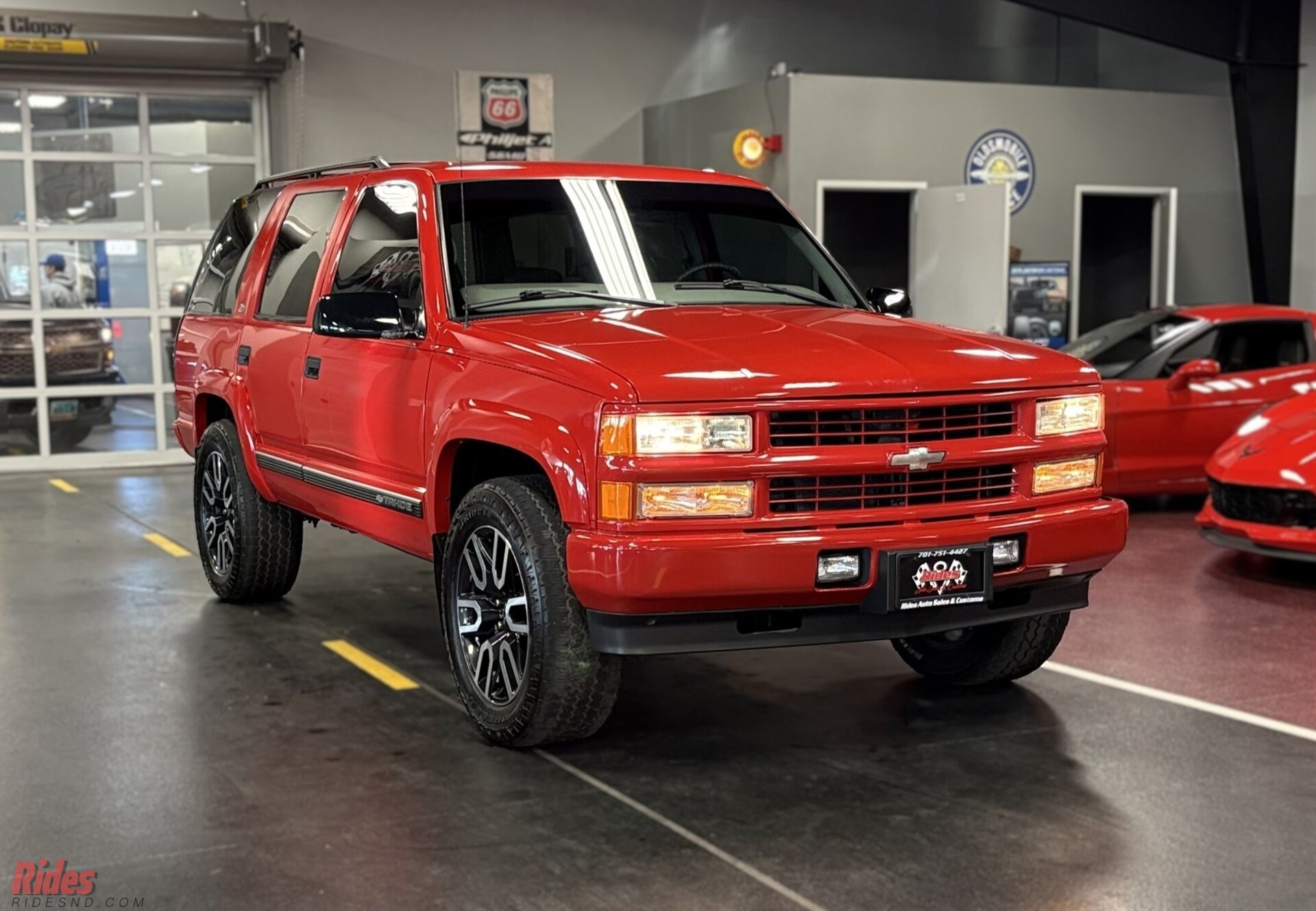
The 2000 specials: Z71 and Limited. When the GMT800 Tahoe replaced the range for 2000, Chevrolet kept the old four-door shell in production for two farewell editions. The Z71 packaged the off-road hardware — skid plates, uprated shock absorbers, locking rear differential and distinctive trim — into the old body for one last year. The Limited went the other way entirely: two-wheel drive only, lowered, monochromatic black paint, fog lamps and a street stance, developed from a police-package concept. Both are one-year cars, both are sought after, and both are faked — the RPO sticker and the VIN, not the badges and bumpers, settle what a car really is.
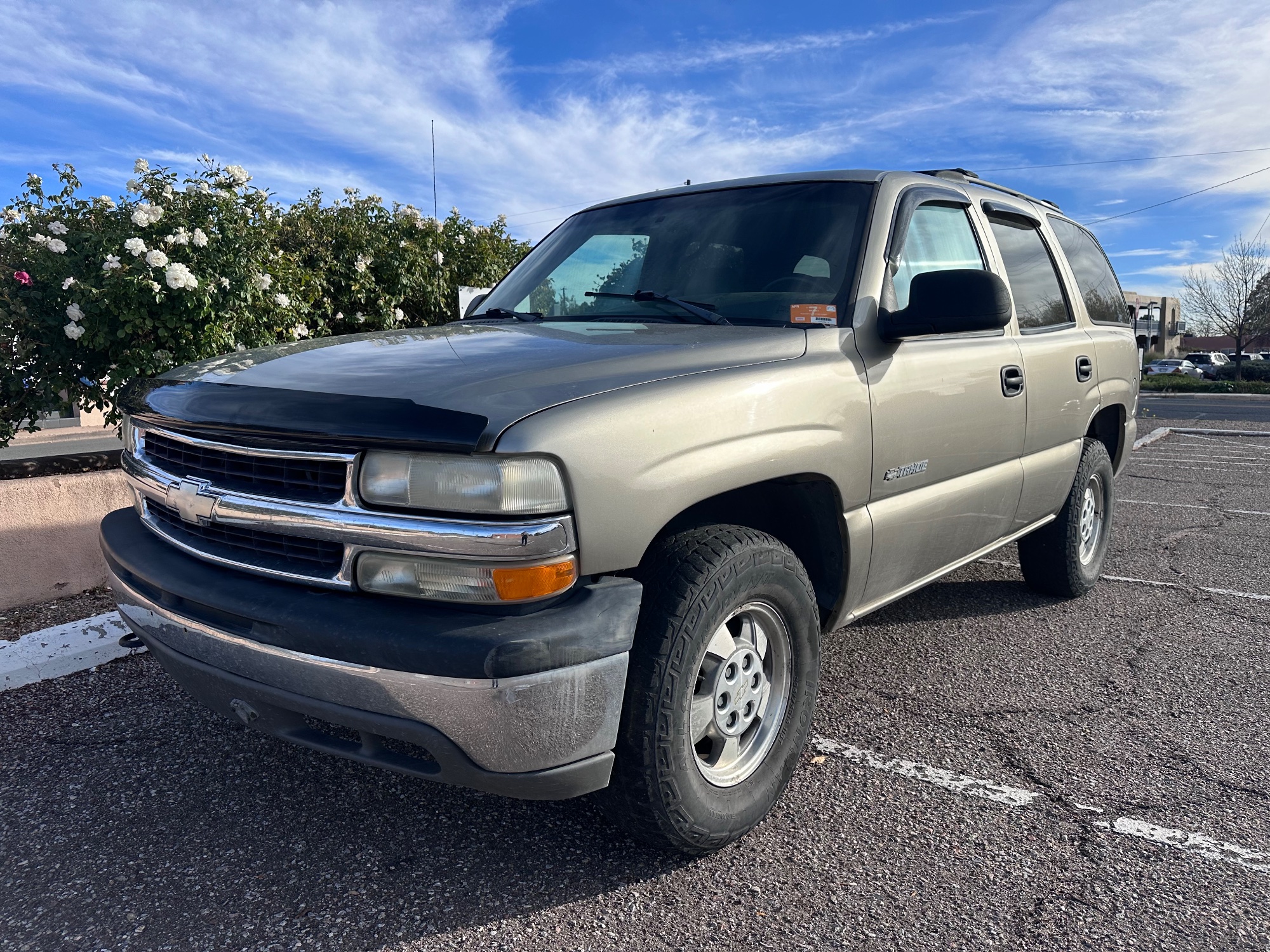
The successor in the room. A 2000 or 2001 Tahoe in a listing is usually a GMT800 — a different truck with the LS-family 4.8- and 5.3-litre V8s, a new body and a new interior. They are good trucks and often better value as daily drivers, but they are not the subject of this guide, and their values, parts and faults should not be read across to a GMT400 car in either direction.

Engines and gearboxes
The 1995 car: throttle-body 5.7 (L05)
Only the first-year Tahoe uses the older fuel system, and it is worth understanding because 1995 cars are the cheapest in the range and the system is not a defect. The L05 5.7-litre (350 cubic inch) small-block is fed by throttle-body injection: two injectors in a unit that looks like a carburettor, spraying onto the throttle plates at low pressure, roughly 9–13 psi. Output is a modest 200 hp, and the engine is tuned for torque and tolerance of abuse rather than performance. It is also the simplest engine in this guide to keep alive. There are no poppet injectors to stick, no high-pressure pump to fail, and almost every sensor on it costs pocket money. Its vices are age vices: a worn distributor gear or tired ignition module gives a hot no-start or a stumble under load; the throttle-body base gasket and the injector O-rings perish and leak air or fuel; and the engine's flat-tappet-era architecture wants its oil changed on time. One 1995-only trap: the year sits between diagnostic eras, so some scan tools argue with it — a flashing-code check and basic multimeter work often get you further than a frustrated afternoon with the wrong scanner. Buy a 1995 on condition exactly as you would a later car, but do not pay Vortec money for it, because the market does not.
The Vortec 5700 (L31), 1996–2000
From 1996 the Tahoe got the engine that defines it: the Vortec 5700, RPO L31, still a cast-iron 5.7-litre pushrod V8 in the small-block line that runs back to 1955, but with new Vortec cylinder heads (the name comes from the swirl-inducing intake port design, borrowed from the V6 programme), a higher compression ratio and a completely different induction system. Output rose to 255 hp and 330 lb-ft of torque, and the character changed with it: a Vortec Tahoe is genuinely brisk for its size, pulls hard from low revs and cruises at modern traffic speeds without effort. It is one of the great truck engines — durable bottom end, cheap parts, knowledge in every workshop in the country.
The fuel system is the part you must understand. The L31 uses Central Sequential Fuel Injection: a central injector body inside the upper intake plenum meters fuel through individual poppet nozzles, one per cylinder, which open on fuel pressure alone. The system runs at high pressure for a petrol engine — roughly 60–66 psi at the test port with the pump running — and it is unforgiving of a weak pump or tired poppets. The fuel pressure regulator lives inside the plenum under the upper intake, so when it leaks it leaks invisibly, washing fuel into the intake and giving a rich, lumpy hot idle and hard hot starting with no external drip to find. Sticking poppet nozzles give a single-cylinder misfire, a rough idle and a flashing check-engine light under load; the honest long-term cure, widely fitted, is the factory-style upgrade that replaces the poppets with genuine individual electronic injectors on the same central body. A healthy L31 starts instantly, idles at a smooth lope and shows no misfire counts on a scan tool. Budget-wise, the poppet system is a known quantity, not a reason to walk away — but a car with an undiagnosed misfire is a car whose price should assume the full injection service described in the problem areas.
Ignition is by a distributor at the back of the engine, retained to drive the oil pump and carry the cam position sensor. The distributor cap on a Vortec is a flat, crab-style design whose internal passages are prone to crossfire when they age or get damp, and the rotor burns at its tip; cap and rotor are service items, cheap and easy, and a surprising share of Vortec driveability complaints end there. The distributor's cam retard offset must be set with a scan tool (target zero degrees, within a couple either way) after any distributor work — a truck that has had its distributor stabbed in by eye will often run acceptably yet set a correlation code and lose its best manners, which is why a scan belongs in any inspection.
Two more L31 signatures. The lower intake manifold gaskets are the engine's famous weakness, dealt with at length in the problem areas: assume any car without an invoice for the job will need it. And the oil cooler lines fitted to many four-wheel-drive cars weep at their crimped hose joints — untidy, worth fixing, and a useful tell that the rest of the engine bay has been left alone.
The 6.5 turbo diesel (L65) in the two-door
The diesel is a different ownership proposition. The 6.5-litre V8, RPO L65 in turbocharged Tahoe form at 180 hp and about 360 lb-ft, is a Detroit Diesel design built by GM: indirect injection, a Stanadyne DS4 electronically controlled rotary pump, and a reputation that is half earned and half slander. It is not powerful, it is not quiet, and it will tow and cruise with a thrift no petrol Tahoe approaches. Its famous failure is not mechanical but electronic and thermal: the pump-mounted driver (the PMD, also called the FSD) — the small black electronic module bolted to the side of the injection pump — cooks in engine-bay heat until the engine stalls when hot, restarts when cool, and eventually refuses altogether. The test is the pattern itself, and the cure is a replacement module on a remote mount with a heat sink, relocated out of the worst of the heat; a diesel that has already had this done, with the paperwork, is worth more than one that has not. Harmonic balancer and crank pulley rubber deteriorate with age and, ignored, can take the crankshaft with them — inspect both, and treat any diesel without evidence of their renewal as needing them. Glow plugs and their controller govern cold starting; a diesel that needs ether to start on a mild morning is telling you the glow system, not the engine, wants money first. Injection pumps and injectors are specialist, costlier work than anything on the petrol engines, and the pool of shops fluent in the DS4 shrinks every year. Buy the diesel because you want the diesel, with your eyes open — it is the rarest Tahoe and the one with the most devoted following.
Gearboxes and the four-wheel-drive system
Nearly every Tahoe ever built carries the same gearbox: the 4L60E, GM's electronically controlled four-speed automatic with a lock-up torque converter. It is a development of the old 700R4, it suits the truck's lazy torque perfectly, and in unmodified, un-abused service it is a long-lived unit — 150,000 miles and more is normal. The exceptions, and the inspection tests for them, are in the problem areas; the headline is that a 4L60E rebuild is a known, moderate cost at any transmission shop in America, which takes the terror out of the purchase. A five-speed manual was catalogued on early two-doors but is vanishingly rare in practice; if you find one, judge it on clutch and synchromesh and accept that you are buying an outlier.
Four-wheel-drive cars divide by transfer case, and the case defines the manners. Early trucks use the New Process NP241 with a floor lever — simple, part-time only, and the enthusiast's favourite because there is almost nothing in it to fail beyond a chain and a switch. From the mid-nineties the push-button NP243 spread through the range, shifting electrically between two-high, four-high and four-low. From 1998 the NP246 AutoTrac added an AUTO mode that engages the front axle when the rear wheels slip — genuinely useful on winter roads, and more complex, with a clutch pack and control module to age. Whatever the case, the front axle engages through an actuator on the front differential: early trucks use a thermal actuator that is slow when cold and a classic cause of a truck that will not engage four-wheel drive on the first frosty morning, while later trucks use a faster electric actuator. On the test drive you must engage every mode and confirm the front axle actually pulls — lights on the buttons are a claim, not a proof. At the rear, many trucks carry the G80 automatic locking differential, a mechanical governor-lock unit (check the glovebox sticker for code G80, and for the axle ratio: GU6 is 3.42, GT4 is 3.73). The G80 locks solidly at low speed when one wheel spins and is excellent in snow and mud; it is not a limited-slip, it does nothing at speed, and it resents abuse — repeated full-throttle engagement can break it expensively, which is why a clunking, banging rear axle on a test drive is a priced repair, not a character trait.
Problem areas
Everything mechanical on a Tahoe is fixable at prices a working person can plan for — that is the platform's great virtue. What decides whether a given truck is a bargain or a bonfire is structure, and after that, a short list of known systems that fail in known ways with known tests. Our own listings tell the structural story plainly: of the 8 Tahoes in our store whose sellers' photo sets we have examined in detail, rust is noted in the photos of 5, and visible damage of some kind in 6. That is a small sample, and it is a seller-photo sample at that — the undersides are exactly what listing photographs show least — so read it as a floor, not a ceiling, and examine any truck as if it were one of the five.
Rust and the frame: the map
A GMT400 Tahoe rusts from the bottom up and the inside out, and the rust that matters most is in the frame, because the body sits on it and everything hangs from it. Work in this order.
The frame itself. Get the truck on a lift or get yourself properly underneath with a light and a screwdriver. The rear third of the frame is the worst area: the rails around the rear spring hangers and shackles, the crossmembers, and the section over the rear axle collect road salt and mud and perforate from inside the C-channel, so metal that looks sound can be tissue-thin — prod it, and tap along the rails listening for the note to change from a ring to a thud. Spring hangers themselves rust and tear away from the rail. Frame repair is fabrication: plating and sectioning by a welder who knows frames, priced per car, and a badly perforated frame is the one finding that should end a purchase outright, because the repair bill climbs past the truck's value faster than any other on this page.
Rocker panels and the lower body. The rockers under the doors rust from trapped moisture and stone-chip damage, four-doors at the rear door openings especially; check the inner rocker from underneath, not just the painted outer face. Rear wheel-arch lips bubble from the inside as the seam between inner and outer arch holds mud; press along the lip and look for paint blisters in a line following the arch. Door bottoms hold water when their drain holes block — run a fingertip along every door's lower edge and feel for roughness under the paint. On two-doors, the tailgate's bottom edge and the panel below it are a signature rot spot, and barn doors on four-doors rust at their lower edges and hinges.
Floors, mounts and lines. Body mounts perish and their brackets rust, giving a truck that sits subtly crooked or knocks over bumps; the rubber is replaceable, the brackets are a fabrication conversation. Lift the cargo-area carpet and check the rear floor, and check the front footwells where air-conditioning condensate and leaking heater cores wet the carpet from above. Then follow the steel brake and fuel lines along the frame rail: in salt states these corrode until they weep and then burst, usually under braking pressure, and a full line set in modern copper-nickel is the standard cure. A truck with one crusty line has five more. Budget a complete set, parts and labour, in the region of $600–1,200, and treat fresh, shiny new lines as the good news they are.
The cosmetic layer. Clearcoat failure — the milky, peeling lacquer of nineties GM paint — is cosmetic, common and honest; it does not hide rust and it does not repair cheaply either, since the only real cure is paint. Judge it as a price item, not a condition verdict. What should worry you is the reverse combination: fresh, glossy paint over bubbling arches and plated rockers on a truck with no underside photographs. Paint is the cheapest way to make a rusty Tahoe look like a good one for exactly as long as it takes to sell it.

The Vortec intake and fuel system
Lower intake manifold gaskets are the L31's defining repair. The factory gaskets use a plastic carrier with moulded sealing beads, and they fail — helped, the trade believes, by the long-life coolant of the period and by twenty-five years of heat cycles — by cracking and extruding at the corners, most often at the front and rear of the manifold. The mechanism decides the symptom: an external failure leaks coolant down the front or back of the block, leaving crusty orange or green tracks and a slowly falling coolant level; an internal failure leaks coolant into the lifter valley and the oil, or lets the engine draw coolant into a cylinder, giving white exhaust vapour, a mysteriously thirsty cooling system and, left alone, bearing damage from diluted oil. The distinguishing test is a cooling-system pressure test on a cold engine with the spark plugs out and a careful look at the manifold corners with a mirror — not a guess from the coolant level alone, because water pumps and radiators leak too. The repair is a top-of-engine job: manifold off, updated metal-carrier gaskets in, coolant changed. At a shop, expect roughly $700–1,300 all-in. A car with the invoice for this job, done with the updated gaskets, has had the single biggest Vortec bill already paid; a car losing coolant with no invoice is carrying it for you.
The fuel pump is the second signature. The in-tank electric pump must deliver roughly 60–66 psi to feed the poppet injectors, far more than older systems, and a tired pump that still runs will often make enough pressure to idle yet fall short under load or on a hot restart — giving long cranking, a lean surge, or a truck that dies and restarts after a rest. Pumps also fail dead, and the wiring connector at the tank is a known weak point that overheats and melts, so a no-run diagnosis starts with pressure and voltage, not with a new pump on hope. The distinguishing test is a fuel pressure gauge on the test port: key-on pressure, pressure at idle, and whether it holds after shutdown. Low pressure that bleeds off instantly points to the pump's check valve or the in-plenum regulator; pressure low under load points to the pump or a clogged filter. Replacement means dropping the tank or lifting the bed on pickups — on a Tahoe, the tank comes down — and a quality pump module fitted at a shop runs roughly $500–900. While the tank is down, the fuel level sender should be renewed with it; a gauge that reads empty at a quarter tank is this truck's other party trick, and the sender is only accessible with the tank out.
Poppet injectors and the regulator, covered mechanically in the engine section, present as misfire codes, a rough idle that no plug change cures, and fuel smell on a hot restart. The test that separates them from ignition faults is a balance or misfire-count check per cylinder plus the fuel pressure behaviour above; the cure ranges from a professional cleaning (a holding measure) to the updated true-injector conversion at roughly $600–1,100 fitted. Do not let a seller's new plugs, wires and coil — the cheap parts cannon — convince you a misfire has been addressed.
The 4L60E automatic and the driveline
A healthy 4L60E shifts almost invisibly at light throttle, firmly under load, engages drive and reverse promptly, and locks its converter at cruise without shudder. The failures announce themselves clearly once you know the grammar. Loss of reverse together with second and fourth gears is the classic broken reaction sun shell — a stamped steel part whose splined hub tears away; the truck drives in first and third and feels merely odd until you need to back up. Slipping or flaring on the 2–3 shift, or a third gear that fades under load, is the 3–4 clutch pack, the box's hardest-worked wear item. A converter that shudders at light-throttle cruise or sets a slip code points to the lock-up clutch and its control valve wear in the valve body. Harsh 1–2 shifts with a code stored are often electrical — a solenoid, a sensor or the notorious internal harness — and much cheaper than the mechanical failures they imitate, which is why a proper scan and a fluid inspection come before any rebuild quote. Fluid tells its own story: bright red and sweet is maintained; brown is old; black and burnt-smelling is a box that has been slipping and overheating, whatever the seller says about a recent change.
The test drive that separates them is in the inspection section. A full professional rebuild of a 4L60E, with a new converter, typically runs $2,200–3,800 fitted depending on region and specification — real money, but a known number, and a truck priced with the rebuild honestly deducted is a safer buy than one with a vague shudder and a hopeful seller. Around the gearbox: transfer-case chains stretch and slap on high-mileage part-time cases, front differential actuator failure leaves you in two-wheel drive (test every mode, every time), universal joints dry out and chirp, and the G80 locker, if fitted, should engage with a single firm clunk at low speed and then stay silent — repeated banging or a howl on turns means it has been abused or is worn, and a rear axle rebuild with a new locker unit runs roughly $900–1,600.
Steering, suspension and brakes
The GMT400 front end is a wear-and-tear catalogue, and a truck that wanders, knocks and wears its front tyres unevenly is usually asking for several items at once rather than one big one. The idler arm is the famous wear point on these trucks, with the pitman arm, centre link and tie-rod ends behind it; play at the steering wheel with the engine running and an assistant rocking the wheel is found joint by joint from underneath, never guessed from the driver's seat. A full front-end refresh — idler, pitman, tie rods, ball joints and an alignment — runs roughly $900–1,800 at a shop and transforms a sloppy truck, so price it in rather than fearing it. Ball joints on four-wheel-drive trucks work hard, and a separated joint is a wheel-off event: any truck with unknown front-end history gets its joints checked on a lift with a bar, not by optimism. Torsion bars sag with age and lifts; a nose-down stance that will not trim back to level on the adjusters means tired bars or tired mounts. Steering boxes develop play at centre that adjustment only partly cures, and the flexible rag joint in the column perishes. From 1997, electronically variable orifice steering adds a speed-sensitive assist system whose failing steering-wheel position sensor gives a disconcerting twitch or catch in the wheel mid-corner — unnerving, well documented, and a sensor, not a steering box.
Brakes are front disc and rear drum, adequate when maintained and woeful when not. The pedal feel on these trucks is soft by modern standards even when right; what is not right is a pedal that sinks, a pull under braking, or a rear end that locks early on wet roads. Front calipers seize, rear wheel cylinders weep into the drums, and the rubber hoses are now old enough to be a renewal item on any keeper. The anti-lock system has a period quirk: rust building up under the front wheel-speed sensors lifts them and increases their air gap, causing unwanted low-speed ABS activation — the pedal buzzes and the truck sails on for a few extra feet at walking pace, usually in a parking lot, which is alarming out of proportion to the modest cost of cleaning the mounting faces or renewing the hub assemblies. Budget a full brake refresh — discs, pads, drums or shoes as needed, hoses and fluid — at roughly $700–1,400, and remember the steel-line warning from the rust section: on a salt-belt truck the lines, not the pads, are the brake system's real age limit.

Cooling, electrics and the cabin
Cooling. Beyond the intake gaskets, the system is conventional and its enemies are age: radiators silt and their plastic tanks crack at the neck, water pumps weep from the tell-tale hole and then take the fan clutch's temper with them, and heater cores leak into the passenger footwell — a sweet smell, a misting windscreen and damp carpet on the right side. A truck that runs hot in traffic but cool on the road is usually fan clutch or radiator; a truck that uses coolant with no puddle is the intake-gasket test above. Any overheating episode on an iron-head small-block is survivable more often than not, but a seller's casual "it got hot once" deserves a compression and cooling-system pressure test before money moves.
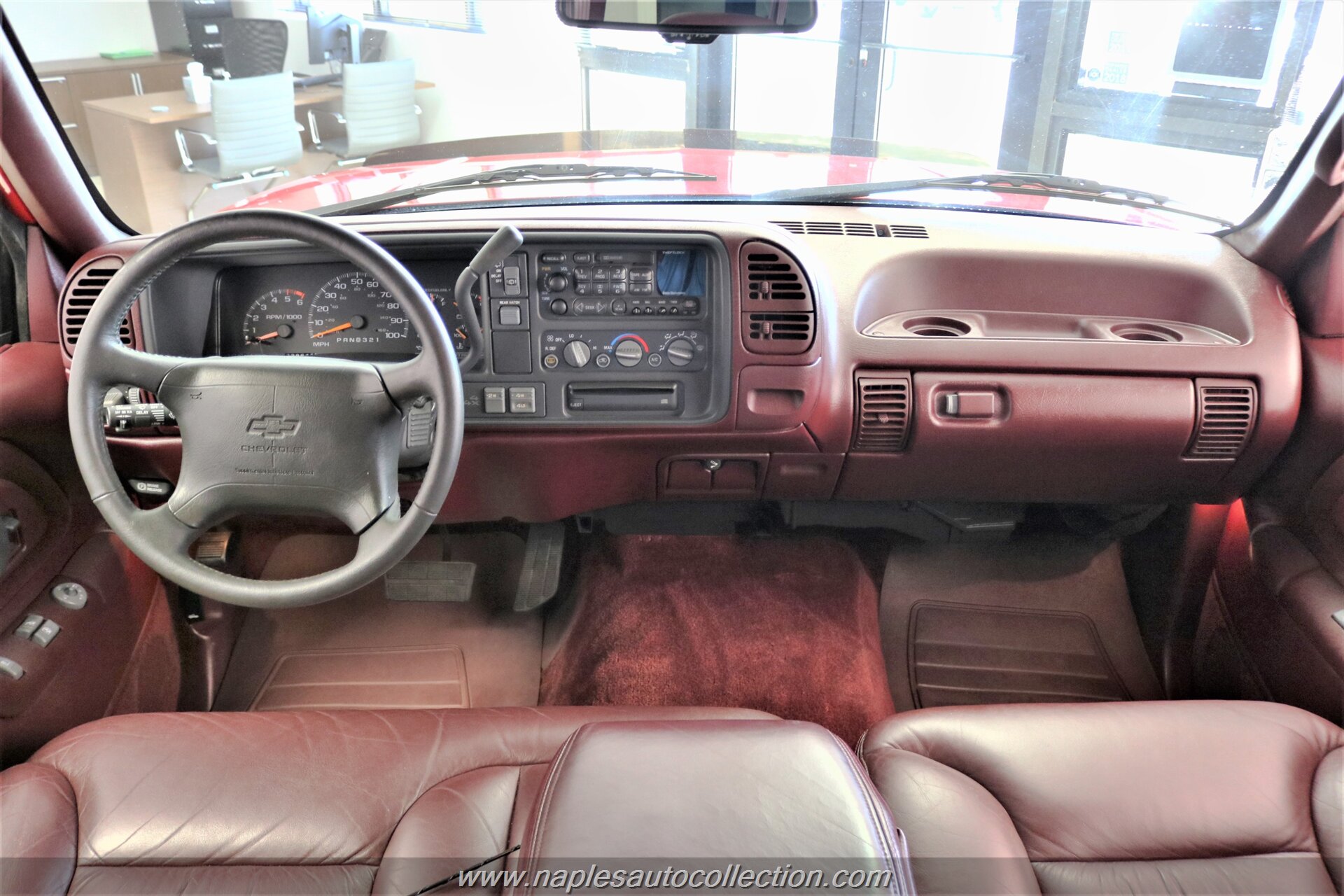
Electrics and the famous small failures. The GMT400's wiper motor pulse board cracks its solder joints and produces phantom wipes, wipers that park mid-screen or refuse to run — a cheap board or a re-solder, and so common it is almost a rite of passage. The multi-function switch in the column ages into intermittent indicators and cruise faults. Interior door handles snap their cast arms — you will likely do one side during ownership; exterior handles and tailgate hardware follow. Window regulators slow and die, power seat tracks wear, and the dash top cracks in sun states into the familiar map of fissures; a crack-free dash on a southern truck is a genuine value point, and a dash cover is a question, not an answer. From 1998, the Passlock anti-theft system can immobilise a truck whose ignition lock cylinder has worn — the security light flashes, the engine starts and dies, and the fix is the lock cylinder and a relearn procedure rather than anything exotic. Alternators and starters are consumables at this age and priced like it.
Heating and air conditioning. The air conditioning compressor of the period is prone to leaking at its case seals and at the shaft, and a system that needs a recharge every summer has a leak, not a personality; a compressor, drier and recharge runs roughly $700–1,200 done properly. Blend-door actuators click, stick and strand the temperature at full hot or full cold. Rear air conditioning on four-doors adds lines running the length of the truck — check them where they pass the rear wheel for corrosion — and a second evaporator to leak. Test heat and cold on every viewing, in every mode, front and rear: HVAC repairs on these trucks are rarely ruinous, but they are dashboard-deep often enough that you want the seller's truck, not your wallet, to fund them.
How to inspect one
Allow an hour and a half, bring a torch, a tyre-pressure gauge, a magnet in a cloth and a code reader if you have one — and if the truck passes you, pay for a lift inspection before money changes hands. On a body-on-frame truck the underside is half the car, and it is the half the photographs leave out.
- Paperwork and identity first. Match the VIN on the title to the plate at the base of the windscreen and the door-jamb sticker. Then open the glovebox and read the RPO sticker: confirm the engine code (L31 for the Vortec, L05 for the 1995 throttle-body car, L65 for the diesel), the G80 locking differential if claimed, and the axle ratio. A Z71 or Limited is what its codes say it is, not what its bumpers say.
- Cold start. Insist the engine is stone cold when you arrive. A Vortec should fire instantly and settle to a smooth idle; watch for blue smoke on start-up (valve seals), listen for lifter tick that does not fade, and note long cranking — the first whisper of the fuel-pump and pressure test in the problem areas.
- Under the bonnet. Check the coolant level and colour in the reservoir, then look with a mirror at the front and rear corners of the intake manifold for the crusty tracks of the intake-gasket leak. Smell the oil on the dipstick for fuel, check it for milkiness, and look at the oil-cooler lines and the power-steering hoses for weeps. A pressure test of the cooling system, cold, settles the gasket question properly.
- Fuel pressure on a Vortec. If the truck has any misfire, hot-start or surge complaint, put a gauge on the test port before negotiating anything else: you want roughly 60–66 psi key-on, holding after shutdown. Low or bleeding pressure is the pump, the filter or the in-plenum regulator — all priced in the problem areas, none guessable from the driver's seat.
- The underside and the frame. Torch and screwdriver along both frame rails, hardest at the rear spring hangers, shackles and crossmembers; prod for perforation and listen for the ring turning to a thud. Follow the steel brake and fuel lines the length of the rail. Perforation in the frame is the walk-away finding; crusty lines are a budgeted repair. Check the body mounts and the inner rockers while you are under there.
- Body and arches. Run the magnet along the rear arch lips, rocker panels and lower doors. Press the arch lips for filler and bubbling, feel every door bottom for roughness, and on a two-door lift and drop the tailgate, checking its bottom edge. Sight down both flanks for ripples and mismatched panel gaps — especially around a non-standard grille, as the head-on photograph in the problem areas shows.
- Front end on a bar. With the front raised, rock each wheel top-to-bottom and side-to-side, then have an assistant rock the steering wheel while you watch the idler arm, pitman arm and tie rods from below. Price the refresh as a set, not a single joint — on these trucks the wear is never in just one place.
- The four-wheel-drive proof. Engage every mode the truck offers — buttons or lever, high and low range — and then drive on gravel or wet grass and make the front axle demonstrably pull. A lit button is a claim; a thermal actuator that never engages on a cold morning is the failure you are testing for. Listen for transfer-case chain slap on lift-off and for a G80 locker that bangs repeatedly instead of clunking once.
- The gearbox drive. Fifteen minutes minimum, from cold. Note the 1–2 and 2–3 shifts, feel for flare or slip under load, test reverse promptly and decisively (the sun-shell test from the problem areas), and hold a light-throttle cruise to feel converter lock-up for shudder. Check the fluid afterwards: colour and smell are evidence.
- Brakes, honestly. Brake firmly from speed in a straight line, then crawl to a stop and feel for the low-speed ABS buzz that betrays rust under the front sensors. Look for weeping rear wheel cylinders and perished hoses, and remember the pedal is soft by period standards even on a good truck — sinking, pulling and grabbing are the faults, not softness alone.
- Heat, cold and the small electrics. Run the heater and the air conditioning in every mode, front and rear where fitted. Work every window, the wipers on every speed including the wash-wipe (the pulse-board test), the locks, seats and lights. Try both interior door handles gently but firmly. Each dead item is small; the list is the negotiation.
- Stance and the second look. Stand back on level ground. The truck should sit level side to side, nose neither dragging nor jacked. Take the straight side photograph, as in the problem areas, and compare arch heights. Then decide with the rule from the last section in mind: structure first, specification second, shine last.
Values
The build's market block beneath this guide carries the current numbers — what is listed now, and what recorded sales have achieved — and that is where figures belong, because this market moves and a printed price in a guide goes stale. What does not go stale is how to read those numbers, and the Tahoe market rewards readers.
Start with the condition spread, which is wider here than on almost any European classic in this programme. The bottom of the market is the worn-out work truck: high miles, salt-state frame, tired interior, sold as transport. The top is the preserved two-door or the one-year special with low miles, original paint and a dry underside. Between those poles the price is set less by mileage than by three things you can verify: the frame, the originality, and the paperwork. A higher-mileage truck with a clean frame, its RPO codes matching its specification and a folder of invoices for the intake gaskets, fuel pump and front end will — and should — out-earn a lower-mileage truck with shiny paint and no underside. Read every asking price as a claim about those three things, and check them in that order.
Variant premiums are real and rational. The two-door carries a premium over an equivalent four-door because it is the collectible shape and the supply of unmodified ones shrinks every year; within two-doors, Sport trim and strong original colours do best. The 2000 Limited and Z71 carry one-year-only premiums, which is precisely why they are faked, and why the premium belongs only to a truck whose codes prove it. The diesel two-door is a niche inside a niche: its buyers are few, devoted and willing to pay for a good one, but the wider market discounts what it does not understand, so a diesel can sit unsold at a fair price for a long time. Four-door LS and LT trucks are the value end of the classic market — the most truck for the money — because family-car supply is plentiful; the LT's leather and toys add a little, condition adds a lot.
Two cautions on how these trucks are sold. First, the asking-versus-achieved gap: dealer asking prices for presentable GMT400s are optimistic as a matter of habit, and the auction results in the recorded-sales block — where clean, low-mileage two-doors have set the ceiling in public — are the honest benchmark for what the best trucks actually achieve. Ordinary trucks change hands well below the most visible asking prices. Second, modifications cut both ways and usually downwards: lifts, big wheels and aftermarket grilles narrow the buyer pool to people who wanted exactly that truck, while a stock truck on its factory wheels appeals to everyone. The exception is documented, reversible improvement — the updated intake gaskets, the injector conversion, new brake lines — which supports value because it removes a known bill. Finally, the project-versus-driver gap: a non-running or frame-suspect Tahoe is worth a small fraction of a driving one, not a modest discount from it, because the two big repairs — frame work and a gearbox rebuild — are each large enough to swallow the difference. Buy the driver, or buy the project at project money with the frame verdict already in hand.
Parts and ownership
The GMT400 Tahoe sits on one of the best-supported platforms in the American market. Chevrolet built these trucks and their C/K pickup siblings in the millions, the mechanicals are shared across a decade of pickups, Suburbans and Yukons, and the aftermarket treats the GMT400 as a core product line rather than a classic-car niche. Almost nothing on the truck is unobtainable, and very little of it is expensive.
Easy and cheap: every service item, filters, belts and hoses; ignition parts including the Vortec cap and rotor; brake discs, pads, drums, calipers and hoses; ball joints, tie rods, idler and pitman arms; water pumps, alternators, starters; radiators; fuel pumps and senders; wiper pulse boards; interior and exterior door handles; weatherstrips and window regulators. Order today, fit this weekend, at prices that will make a European-classic owner wince with envy. Steel brake and fuel line sets in copper-nickel are a catalogue item.
Wear items with a known price: the intake-gasket job (roughly $700–1,300 fitted), the poppet-to-true-injector conversion ($600–1,100), a 4L60E rebuild ($2,200–3,800), a full front-end refresh ($900–1,800) and an air-conditioning compressor job ($700–1,200). None of these is a surprise; all of them are in this guide precisely so you can ask for the invoice or deduct the cost.
Harder and dearer: diesel-specific parts — the DS4 injection pump and its driver module are specialist items, and 6.5 expertise is thinning; crack-free dashboard tops in the right colour; good original tailgates and barn doors; Limited- and Z71-specific trim; and any panel or frame work, which is labour rather than parts. A quality repaint costs what a quality repaint always costs, which is why original paint, even faded, carries value.
Running costs. A sorted Tahoe is a realistic daily classic: fuel consumption in the low-to-mid teens per gallon is the honest expectation for the petrol V8 (the diesel does meaningfully better), insurance is ordinary, and any competent independent shop can maintain it — the knowledge base is enormous and free. The budget line that catches new owners is, as ever, the first year: catching up deferred maintenance on a running truck — fluids everywhere including transfer case and both differentials, brake hoses, front-end wear, the wiper board, a set of tyres if the date codes are old — honestly runs $1,500–3,500 before you improve anything. Recommissioning a truck that has sat for years costs more and starts with the fuel system, tank to injectors. Buy a truck in regular use over a sleeping one, even at a higher price, and keep the small jobs small by doing them on time: on a Tahoe, neglect compounds, but maintenance is cheap.
Which one to buy
- The collector buy: the two-door. The short-wheelbase truck, ideally a Sport, in a strong original colour, unmodified, with a dry frame. This is where the market's affection and the premium both live, and supply of honest ones only shrinks.
- The all-rounder: a 1996–99 four-door LT. Vortec power, leather, room for five and their luggage, tow capability and the full parts book. The best Tahoe to actually use, and the deepest pool to buy from.
- The value buy: a four-door LS from a dry state. Same engine and gearbox as the LT without the toys to fail, priced as a used truck rather than a classic. A clean southern LS is the most capability per unit of money in this entire guide.
- The character buy: the 2000 Limited. One year, black, lowered, two-wheel drive — the street Tahoe. Buy only on RPO-code proof, and expect to explain it at every fuel stop.
- The specialist buy: the diesel two-door. For the buyer who tows, travels far and likes their classics with a learning curve. Buy the one whose pump driver has already been relocated, with the balancer renewed and the paperwork to prove both.
- The winter buy: a Z71 or any NP246 AutoTrac four-wheel-drive four-door. The AUTO mode earns its keep on patchy winter roads in a way part-time systems cannot.
And the rule that overrides all of the above: buy the frame, then the paperwork, then the specification — in that order. Every engine, gearbox and front end in this guide can be rebuilt at a price you can write down in advance. A perforated frame and a fabricated history cannot be un-bought, and no badge, colour or set of wheels has ever made a rusty Tahoe into a good one.
See the 9 Tahoe cars currently listed.
For sale now
 $4,995 · 66% below typical
Expand
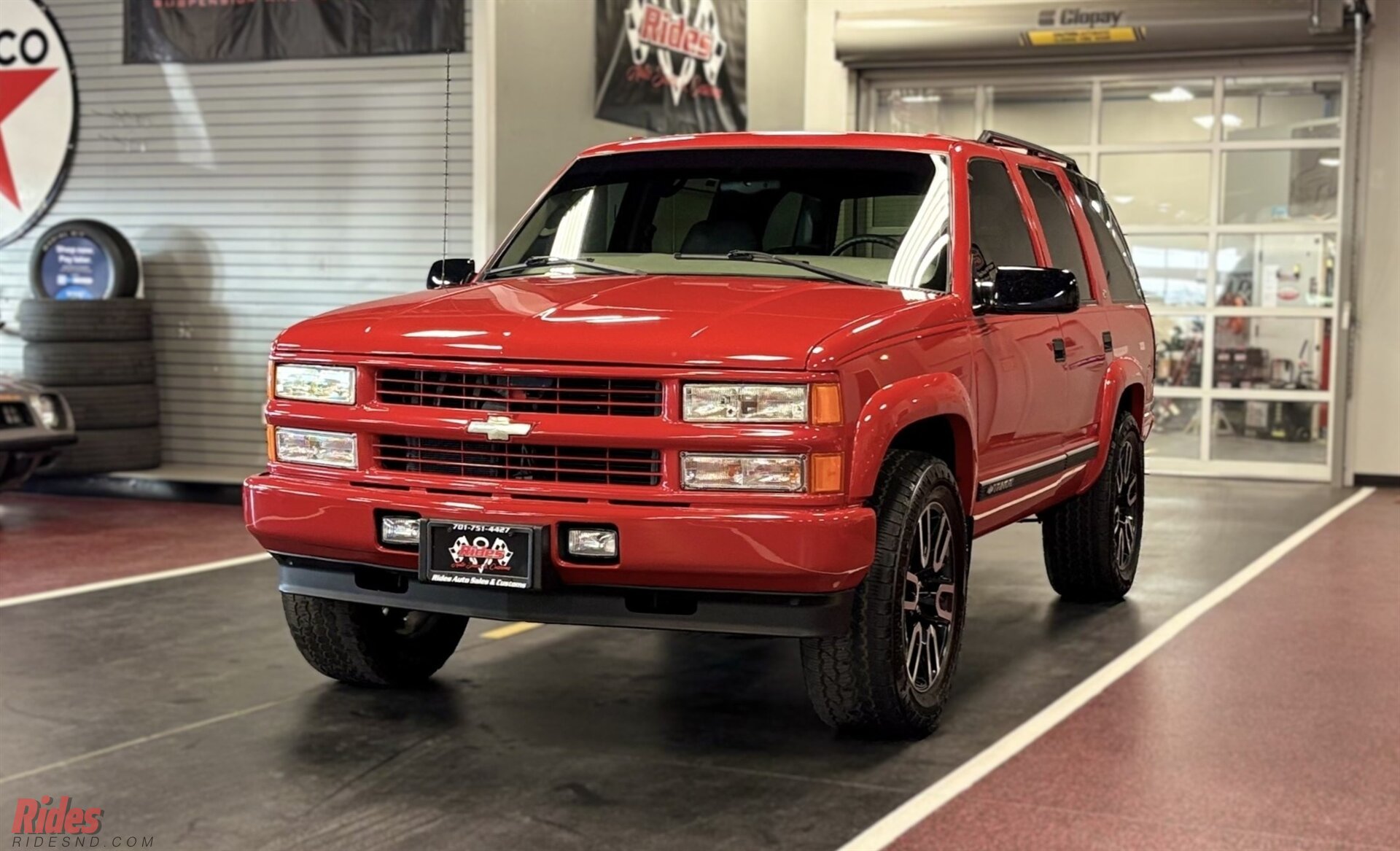 $16,900 · 14% above typical
Expand
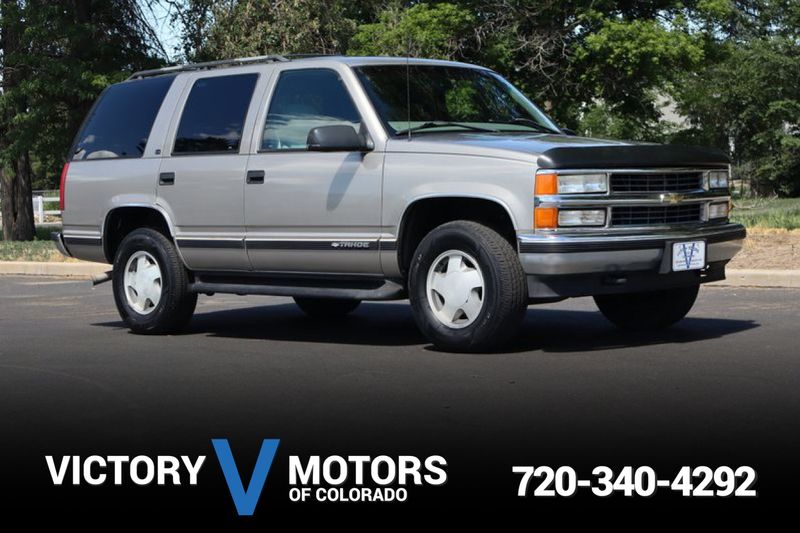 $18,999 · 28% above typical
Expand
 $20,900 · 41% above typical
Expand
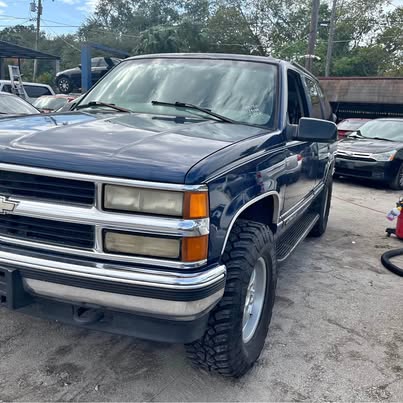 $2,450
Expand
 $13,500
Expand
What they sell for: Tahoe sale prices.