
Chevrolet VEGA buyer's guide
Chevrolet VEGA -- the model's own buyer's guide: variants, values and what to check.
Years listed: 1973-1975 · Series: Vega
# Chevrolet Vega — Shopping Guide
Overview and history
The Chevrolet Vega is the most instructive car you can buy from 1970s America, because almost everything about it is two things at once. It is a clean, handsome, genuinely modern subcompact — overhead-cam engine, hatchback body, crisp styling for its class — and it is the car whose rushed development, cost-cut aluminium engine and inadequate rust protection did General Motors lasting reputational damage. Both stories are true, both are visible in any car you inspect today, and your job as a buyer is to work out which story the specific car in front of you has been living for the last fifty years.
The Vega, developed under the code XP-887 and built on GM's H-body platform, goes on sale on 10 September 1970 as a 1971 model. It is GM's answer to the imported subcompacts — Volkswagen, Datsun, Toyota — and to Ford's Pinto, launched at almost the same moment. Chevrolet builds it mainly at Lordstown, Ohio, on a 97.0-inch wheelbase, as a unibody two-door in four forms: a notchback sedan with a conventional boot, a hatchback coupé, a Kammback wagon and a panel delivery. It wins Motor Trend's Car of the Year award for 1971, sells in huge numbers — 277,705 cars in its first model year, peaking above 450,000 in 1974 — and totals, on the commonly quoted tally, 2,006,661 cars including 3,508 Cosworths by the time production ends after 1977. This is not a rare car that failed to sell. It is a mass-market car that sold enormously and then, in service, failed too many of the people who bought it.
Understand the two root causes and you understand every inspection that follows. The first is the engine. The Vega's 2300 is an all-new 140-cubic-inch overhead-cam four whose die-cast aluminium block, made from Reynolds A-390 alloy, has no iron cylinder liners at all. The bores are etched so that hard silicon crystals stand proud of the softer aluminium and form the running surface for the pistons. In a cool, well-maintained engine that system works, and works for a long time — the myth that every Vega block simply wore out on schedule is wrong, and this guide corrects it below. The problem is the margin around it: a cast-iron cylinder head expanding at a different rate from the aluminium block, siamesed bores with no coolant passage between them, a small radiator and, on early cars, no coolant recovery tank. Let the level fall, let the car overheat once, seriously, and the chain runs head gasket, warped surfaces, coolant in the bores, broken-down silicon, scuffed pistons and an engine that burns oil as if it were fuel.
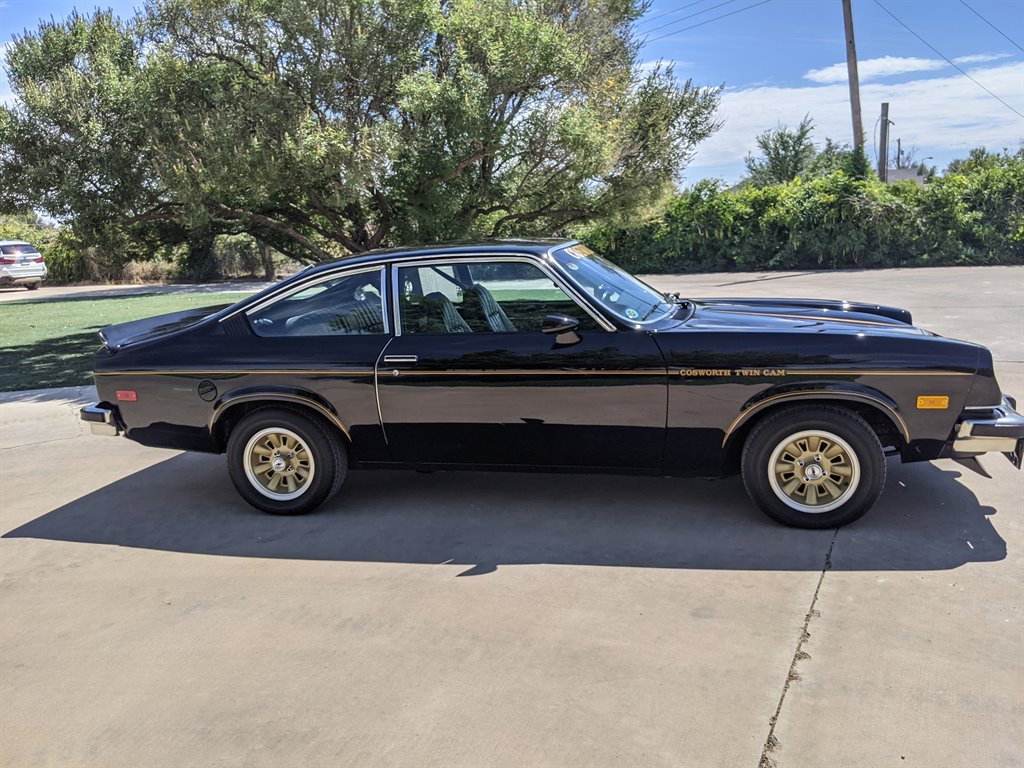
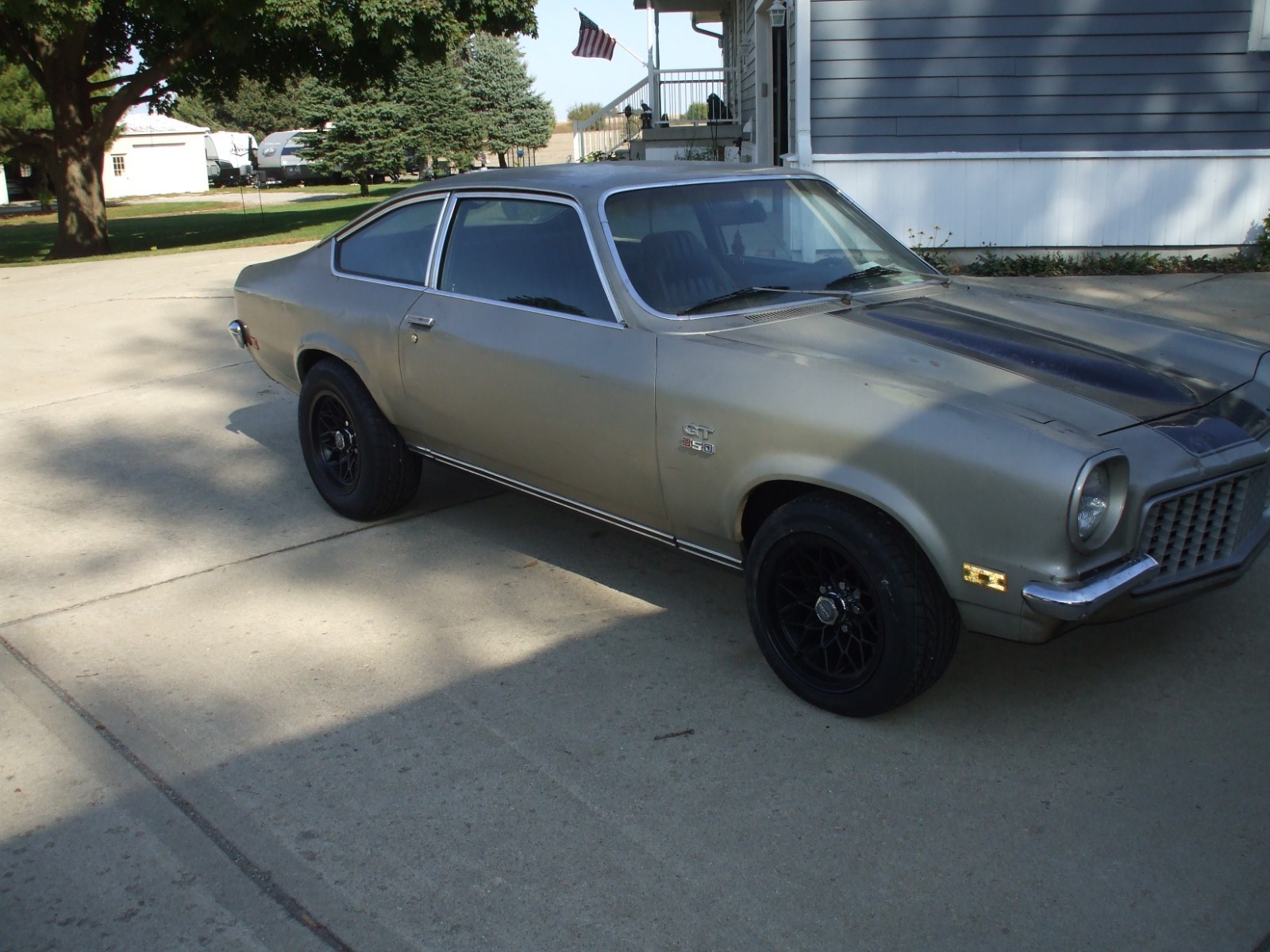
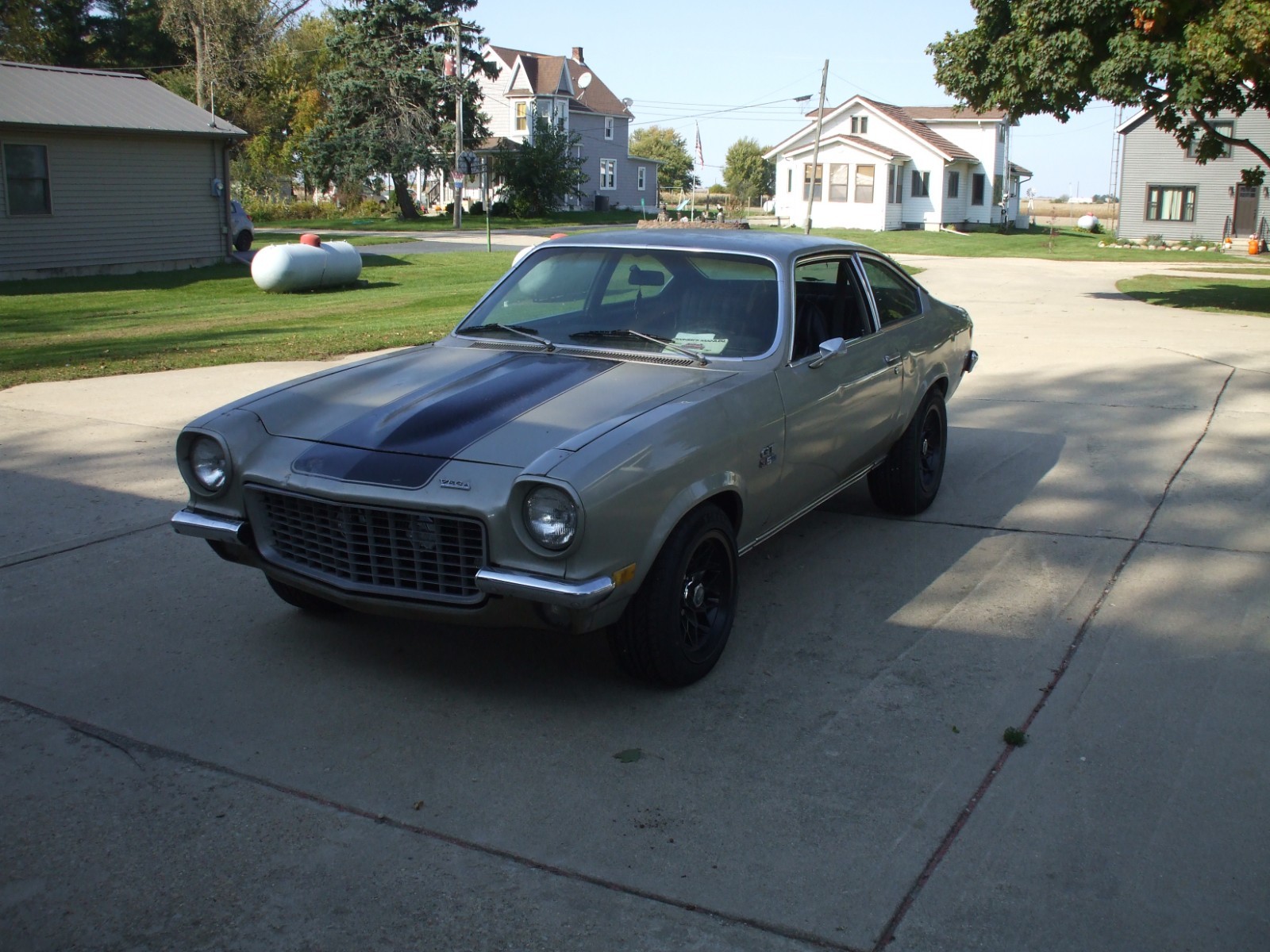
Be honest about the pool this guide is written from, because it is small and it is not typical show-field stock. Classic Listings holds four Vega records as we write: two from 1973 and two from 1975, three offered for sale and one recorded sold, in silver (two cars), black and red, from Pennsylvania, Texas and Illinois. Of the three cars whose photographs we can actually view, one is a black 1975 Cosworth Twin Cam hatchback in Texas — the photographs show the gold Cosworth lettering, gold wheels and rear spoiler plainly, although the record itself files the car simply as a Vega — and the two silver 1973 cars are both heavily modified, as their figures below show and their captions explain. There is no standard, unmodified, four-cylinder driver in the viewable pool at all. That is the modern Vega market in miniature: original survivors are scarce precisely because the cars rusted, overheated and were used up, while the cars that were kept were often kept because somebody had built something faster out of them. Our own photo-note evidence is thinner still — only two of the four cars have been photo-examined for this brief, and those notes record no mentions of rust, smoke, leaks or damage.
The models
Every Vega is a front-engined, rear-wheel-drive, two-door H-body with a 97.0-inch wheelbase, a live rear axle on coil springs and the 140-cubic-inch four as standard. The range divides three ways at once — by body style, by trim and engine tune, and by model year — and you need all three divisions in your head at once, because a 1976 Kammback GT and a 1971 notchback are the same model in name and very different cars to own. The model years matter more than the badges: Chevrolet changes something material almost every year, usually in response to a problem the previous year's owners had already discovered.
| Model | Years | Engine | Output | Built | Character |
|---|---|---|---|---|---|
| Notchback sedan (renamed Coupé for 1977) | 1971–1977 | 140 cu in SOHC, 1-barrel or L11 2-barrel | 90–110 hp gross (1971); 72–85 hp net (1972 on) | 58,804 in 1971; full-run splits vary by source | The cheapest Vega new; the only one with a separate boot, and more rear headroom |
| Hatchback coupé | 1971–1977 | 140 cu in SOHC, 1-barrel or L11 2-barrel | As notchback | 168,308 in 1971; nearly half of all Vegas | The volume car and the best-looking; fold-down rear seat, huge glass hatch |
| Kammback wagon | 1971–1977 | 140 cu in SOHC, 1-barrel or L11 2-barrel | As notchback | 42,793 in 1971 | The practical Vega; liftgate, low load floor, Estate woodgrain option |
| Panel Express / panel delivery | 1971–1975 | 140 cu in SOHC | As notchback | 7,800 in 1971; discontinued after 1975 | The commercial Vega; wagon shell with steel panels in place of rear glass |
| Vega GT (package on hatchback, later Kammback) | 1971–1977 | L11 140 cu in 2-barrel as standard | 110 hp gross (1971); 85 hp net (1972 on) | A package, not a separate model line | F41 handling suspension, full instruments, wider wheels, blacked-out trim |
| Millionth Vega GT edition | 1973 | L11 140 cu in 2-barrel | 85 hp net | 6,500 | Orange GT hatchbacks marking the millionth car, built May 1973 |
| Cosworth Vega | 1975–1976 | 122 cu in (2.0-litre) Cosworth DOHC 16-valve, Bendix EFI | 110 hp net | 3,508 | The limited, hand-finished performance car; black only in 1975, colours for 1976 |
(Outputs mix two rating systems because Chevrolet did: 1971 figures are SAE gross and from 1972 the industry uses SAE net, which is why the same engine appears to lose power overnight — the measurement changes, not the engine. Production figures are given only where genuinely documented; full-run body-style splits differ between published tallies.)
The hatchback coupé. The car most people picture, accounting for nearly half of all production. The lower roofline, the big lifting rear glass and the fold-down rear seat make it both the prettiest and the most useful two-door in the range. It carries the GT package from the start, hosts the Millionth Vega edition in 1973, and is the only body offered as a Cosworth. Its weaknesses are written into the design: the hatch aperture is a large hole in the shell's stiffness, the hatch itself is heavy glass and steel that sags on tired hinges and leaks past perished seals into the rear floor, and the sloping rear quarters trap water exactly where you cannot see it. Every figure car in our pool is a hatchback, which reflects the market: this is the body that survives, gets modified and gets sold.
The Kammback wagon and Panel Express. The wagon keeps the hatchback's front and adds a chopped, vertical tail — the Kammback name is GM's for the cut-off aerodynamic tail — with a swing-up liftgate, a low liftover and a genuinely useful load bay with the rear seat down. The Estate version adds simulated woodgrain sides for buyers who wanted a miniature full-size wagon. The Panel Express is the same shell with steel panels instead of rear side glass, an enclosed underfloor storage area and a single low-back driver's seat as standard: a delivery vehicle, built in small numbers and dropped after 1975. Wagons rust hardest at the tailgate aperture, the rear floor and the quarters behind the rear wheels, and good wagon-specific trim is now scarce. A solid Kammback is a charming, usable classic; a rusty one is a parts car with a roof.
The GT package. GT is a package, not a model, and on most years it is worth having: the L11 two-barrel engine as standard, the F41 handling suspension with heavier springs and dampers and front and rear anti-roll bars, six-inch-wide wheels with wider tyres, full instrumentation instead of warning lights, a sports steering wheel and blacked-out trim. It is available on the hatchback from launch and extends to the Kammback from 1973. It is also the most-cloned Vega variant after the Cosworth, because everything in the package bolts on. A GT badge, GT stripes and a GT steering wheel prove nothing; the build codes, the two-barrel engine, the F41 hardware underneath and the instrument cluster together are the evidence, and even then a GT is a nicer Vega, not a rare one — do not pay a rarity premium for it.

Engines and gearboxes
The 2300: the standard 140, in one-barrel and L11 two-barrel form
Every standard Vega, in every body and every year, uses the same basic engine, and you should learn it properly because its strengths and its one catastrophic weakness decide most purchases. It is a 140-cubic-inch (2,287 cc) inline four, bore 3.50 inches by stroke 3.625 inches — undersquare, long-stroke, tuned for low-speed torque rather than revs — with five main bearings, a single overhead camshaft driven by a reinforced belt, and a compression ratio of 8.0:1, lowered late in development so the engine can run on the unleaded fuel GM knew was coming. The block is die-cast aluminium, Reynolds A-390 alloy with about 17 per cent silicon. There are no cylinder liners. After machining, the bores are etched so the aluminium between the silicon crystals is removed by a fraction, leaving the hard silicon as the surface the piston rings run on. The pistons themselves are coated to run compatibly against that surface.
In base form the engine breathes through a single-barrel carburettor and is rated at 90 hp gross for 1971 and 72 hp net for 1972 onward. The optional engine, RPO L11, adds a progressive two-barrel carburettor — Rochester units early, Holley-built two-barrels on later cars — a slightly hotter camshaft profile and is rated at 110 hp gross for 1971 and 85 hp net for 1972. In the real car the difference is not the headline number. The two-barrel car pulls cleaner from low revs, holds a motorway cruise without living on full throttle, and is the engine the GT package is built around. Neither version is fast by modern standards; both are adequate in a car that weighs roughly a ton, provided the engine is healthy. A healthy one is the qualification that matters, and health on this engine has a specific meaning: it has never been seriously overheated, its bores are unscuffed, its head gasket seals, and its oil consumption is modest and stable rather than climbing. One service item governs all of them: the camshaft drive belt is a replacement item, not a lifetime fitment, so a car with no belt history gets a belt, tension check and water-pump inspection budgeted immediately, typically $250–$600 in parts and labour.
Oil consumption deserves its own paragraph because it is the Vega engine's reputation in one symptom, and because it has more than one cause with very different prices. Worn or hardened valve-stem seals and worn valve guides pass oil down the stems, worst on the overrun and after a hot soak, and produce a puff of blue smoke on start-up and on reopening the throttle after deceleration. That is a head-off, or in some cases in-situ seal, repair — budget $600–$1,500 depending on whether the guides themselves need work. Bore scuffing is the other cause, and it is terminal in economic terms: oil consumption that is heavy under load, smoke that follows throttle rather than overrun, low and uneven compression, and blow-by that overwhelms the PCV system. That engine needs a rebuild with the block properly dealt with — and here is the practical trap. A linerless A-390 block cannot simply be bored oversize like an iron block by any machine shop with a hone. Correct work means boring and fitting iron sleeves, or specialist preparation of the silicon bore by a shop that understands the alloy and the etching process. Sleeving is a proven repair that produces a durable engine, but budget $2,500–$5,000 for a proper rebuild with machining, pistons, bearings and head work, before removal and refitting labour.
The cooling system is part of the engine section deliberately, because on this car it is not an accessory. Early cars have a small-capacity system — about six quarts in early specification — a modest radiator, and no overflow recovery tank, so every small weep or boil-over permanently lowers the level until the next owner tops it up, or does not. Later cars add recovery and capacity improvements, and many early cars have been retrofitted. What you want to see on any car is a radiator whose core is clean and unfurred, a correct pressure cap that actually holds pressure, hoses that are supple rather than crunchy, a fan and shroud complete, a thermostat of the correct rating, and coolant that looks like coolant rather than rusty water. A pressure test of the system, held for several minutes cold, and a combustion-gas test of the coolant — the chemical fluid test that changes colour in the presence of exhaust gas — are the two cheapest, most decisive tests in this entire guide. Together they separate a car that needs hoses from a car that needs an engine. Budget $300–$800 to recommission a neglected but sound cooling system with radiator recore or replacement, pump, thermostat, cap and hoses; treat that as routine purchase work, not as a defect negotiation, unless the tests show gas in the coolant or oil in the water, at which point you are in head-gasket and possible block territory at $900–$2,000 for the gasket and head work alone, with the bore question still open underneath it.
The Dura-Built 140: the 1976–77 engine
For 1976 Chevrolet renames and substantially reworks the standard engine as the Dura-Built 140, and if you want a standard Vega to use rather than to curate, this is the engine to look for. The block gains revised, larger cooling passages. The cylinder head is a new design. The water pump is redesigned. Valve-stem seals are improved, with Chevrolet claiming oil consumption cut by about half. Hydraulic valve lifters replace the mechanical lifters, ending the periodic clearance adjustment and quietening the top end.
The Cosworth twin-cam: a different engine altogether
The Cosworth Vega engine is the reason this model guide cannot treat the Vega as one car. Cosworth Engineering in England designs an all-aluminium, double-overhead-camshaft, sixteen-valve cylinder head for a destroked version of the Vega block: displacement falls to 1,994 cc, about 122 cubic inches, through a shorter stroke, and the engine gains forged pistons, a stainless-steel exhaust header and Bendix electronic fuel injection — the first electronic injection fitted to a Chevrolet passenger car. Output is 110 hp net at 5,600 rpm, with the engine willing to rev to around 7,000 rpm in a way no standard 140 ever is. On paper 110 hp sounds like the L11's gross figure and nothing special. In the car it is a different kind of power entirely: smoother, higher-revving, and delivered with a chassis — heavier-duty suspension, a close-ratio manual gearbox, quick steering by Vega standards — that is set up to use it. Total production is 3,508 cars across 1975 and 1976.
Owning one is a specialist commitment, and you should price that honestly before you fall for the black and gold. The Bendix system is early electronic injection: an analogue control unit, a throttle-body and port hardware unlike anything else in the Chevrolet range, sensors and wiring that are now fifty years old, and diagnostics that depend on the H-body and Cosworth community's accumulated knowledge rather than on any modern scan tool. Faults present as rich or lean running, hot-start problems, hunting and misfires that mimic ignition trouble, and the distinguishing discipline is the same as on any early injection car: verify fuel pressure and delivery, verify ignition independently, check grounds and connectors before condemning the control unit, and never let anyone sell you a replacement computer as a first guess. Budget $800–$2,500 to recommission a Cosworth fuel and ignition system that has sat — pump, filter, injectors serviced or replaced, lines, sensors tested, wiring repaired — and accept that some parts searches will take weeks and community help rather than a catalogue click. Mechanical engine work is similarly specialist: a twin-cam head, its shim-and-bucket valve adjustment, its cam drive and its forged bottom end belong in the hands of a shop that has seen one before, and a full rebuild is a $6,000–$12,000 conversation depending on parts and damage. None of that should put you off — it should put you off buying a non-running Cosworth cheaply on the assumption that it will be cheap to wake up.
Identity is the Cosworth's first inspection, ahead of condition. A genuine car is a 1975 or 1976 hatchback with the twin-cam engine — cam covers that say what they are, injection hardware, stainless header — Cosworth-specific instrumentation and trim, gold-accented wheels, and codes and numbers that agree with each other. The engine number matters doubly here because Cosworth identity was tied to the engine in period presentation, including the car's dash plaque treatment. A standard hatchback with stripes, gold wheels and lettering is a tribute, worth standard-hatchback money plus or minus the quality of its cosmetics. A Cosworth with a standard 140 engine fitted — it happens, when a twin-cam fails and a cheap engine is to hand — is a standard car carrying an expensive car's paperwork problem. Either way, the engine in the bay, not the script on the wing, settles it.
Gearboxes: Opel and Saginaw manuals, Torque-Drive, Powerglide, Turbo Hydra-Matic and the Cosworth boxes
The manual Vega starts life with Opel-built three- and four-speed gearboxes for 1971–72, replaced by American-built Saginaw three- and four-speed manuals from 1973 — a change worth knowing when you order parts, because "four-speed Vega" describes two different suppliers' boxes depending on year. The three-speed is the base box and is perfectly serviceable; the four-speed is the one to have in a standard car, with ratios that let the 140 work without either screaming on the motorway or falling off the camshaft — such as it is — between gears. For 1976 a five-speed overdrive manual, a Borg-Warner design, joins the range as an option and becomes the desirable box in a late standard car and in the Cosworth, where it is paired with performance axle ratios. All the manual boxes are conventional, durable units whose faults at this age are wear faults: tired synchromesh, most often on second gear, that baulks or crunches on a fast downchange but behaves when the change is made deliberately; worn linkage bushes that make a sound box feel vague and make gear selection a lottery; a clutch whose cable, release bearing and friction plate are consumables with a $500–$1,100 replacement cost fitted. Test synchromesh cold, because a box that crunches only for the first five minutes is telling you about oil and wear that a warm test drive will forgive. Check the oil level and look at what comes out if the seller permits a drain: grey, metallic oil is a rebuild conversation at $900–$2,000 depending on box and parts.
The automatics chart the decade. At launch Chevrolet offers the Torque-Drive, a two-speed semi-automatic derived from the Powerglide that you shift manually but without a clutch pedal, and the conventional two-speed Powerglide itself. From 1973 the three-speed Turbo Hydra-Matic replaces the Powerglide, and that is the automatic to live with: an extra ratio transforms the standard engine's motorway manners and the unit is one of the most familiar automatics in America, with parts and rebuild knowledge everywhere at $1,200–$2,500 for a rebuild if it comes to that. A Torque-Drive car is a period curiosity — interesting, original, and not the car to choose if you simply want an automatic Vega to drive. Whatever the automatic, judge it on fluid colour and smell, on prompt, clean engagement of drive and reverse from cold, and on changes that happen without flare or thump. The Cosworth is manual-only — a close-ratio four-speed as standard, with the five-speed and a shorter final drive the enthusiast specification for 1976 — and on a Cosworth you verify the box and axle are the performance units claimed, because a standard wide-ratio box or tall economy axle blunts the car exactly where it should feel special.

Problem areas
Rust: the map, and why early cars rot from the inside out
Rust is not one of the Vega's problems. It is the problem, the one that ends more cars than the engine ever did, and the one that decides whether any other money you spend on a car is well spent. Start with the mechanism, because it explains the map. The bodies are dipped in an electrophoretic primer process that is advanced for its time, but on early production the dip traps air in enclosed and semi-enclosed areas, and trapped air means no coating. The cowl area at the base of the windscreen is the documented worst case: uncoated steel, a design that collects water and leaves at exactly that point, and road salt doing the rest. Period reports of windscreens losing their secure mounting because the surrounding structure had rotted are extreme cases of a real pattern, not folklore. Add front wings fitted without effective inner liners on early cars, so the rear of the front wheel throws water and salt directly onto the wing's inner structure and the A-pillar and sill area behind it, and you have a car that rots from inside panels outward.
Work the map in this order, because it is roughly the order of structural consequence. First, the cowl and the base of the windscreen: look from outside for bubbling at the screen corners and along the cowl panel, then from inside, under the dash and in the front footwells, for water staining, perforation and previous patching. A rotted cowl leaks water into the car, rots the floors from above, and is miserable, expensive fabrication to repair properly — $1,500–$4,000 at a fabricator depending on how far it has gone — because it is a complex, multi-layer pressing, not a flat panel. Second, the front wings, inner wings and the structure behind them: open the bonnet and look at the inner wing tops, the seams and the battery area, then get the car in the air or at least get a torch and a mirror behind the front wheels. Third, the sills and the jacking points: these carry the car, and the test is physical — a car whose sills will not take the car's weight at the jacking points without crunching or deforming has failed its most important test, whatever the outer sill covers look like. New outer sills welded over rotten inners are the commonest cosmetic fraud on this model, and the giveaway is a sill that looks crisp in profile but sounds hollow and feels soft at its ends and underneath. Fourth, the floors, front and rear footwells and the boot or hatch floor, including the spare-wheel well: lift the carpets — a seller who will not let you lift carpets on a Vega is answering your question — and look for plates riveted or screwed over holes, underseal laid thick over rust, and water lines showing where water sits. Fifth, the rear quarters, wheel-arch lips and the area behind the rear wheels, plus, on hatchbacks and wagons, the tailgate aperture, its hinges and the floor beneath the hatch seal. Sixth, the doors' bottoms and the bonnet and hatch skins themselves: cosmetic by comparison, but useful evidence, because a car with rotten door bottoms has lived wet and its hidden areas deserve double scrutiny. Grade what you find honestly: surface rust on sound metal is maintenance, localised perforation in a simple panel is a $500–$2,500 repair per area, and structural rot in cowl, sills or spring seats is a $5,000–$15,000 restoration programme that exceeds the finished value of every standard variant — so a rusty car bought at a solid car's price is the classic Vega mistake.
The engine in service: overheating, head gaskets, oil and the recalls behind them
Head-gasket failure on this engine presents in all the classic ways and one Vega-specific one. Classic: mayonnaise emulsion under the oil filler cap (distinguish a little condensation on a car used for short trips from heavy emulsion on a fully warm engine), bubbles rising in the radiator or expansion tank with the cap off and the engine running, a cylinder that is steam-cleaned compared with its neighbours when the plugs are out, coolant loss with no external leak, and a misfire from cold that clears as the engine warms and the leak seals with expansion. Vega-specific: because the block is aluminium and the bores are linerless, a gasket failure that lets coolant into a cylinder is not just a gasket job — coolant strips the lubrication and attacks the bore surface, so a head-gasket repair that does not include a bore inspection is a gamble, and a car with a documented recent gasket change needs a compression test and an oil-consumption history before you credit it as fixed. Ask the direct question — "has it ever overheated, and what was done?" — and weight a documented, invoiced answer (head skimmed and crack-tested, bores inspected, cooling system renewed) far above a verbal "they all do that, it's fine."
The early cars carry a recall history you should know about, not to frighten you off them but to verify the work was done. Early production is recalled in large numbers across several campaigns — by some period accounts a majority of early cars are recalled for something — including a throttle-linkage fault in which a bracket associated with the idle-stop solenoid can work loose and jam the throttle open, carburettor-related fire risks associated with backfiring, and, most seriously, a rear-axle fault in which axle shafts can work loose. On a 1971–72 car, ask what recall work is documented, inspect the throttle linkage physically for security and correct return-spring action, and have the rear axle checked for shaft retention and end-float by someone who knows what they are looking at. A fifty-year-old car will rarely have complete recall paperwork; what you are really testing is whether the car's mechanical condition is consistent with a life of being looked after.
Suspension, steering, brakes and the rear axle
The Vega's chassis is conventional and, when new, well regarded: independent front suspension by coil springs and unequal-length arms, a live rear axle on coil springs, front disc brakes and rear drums, and recirculating-ball steering, manual as standard with power assistance optional. Nothing here is exotic, and almost everything that goes wrong is age, wear and corrosion rather than design — with two design-flavoured exceptions. The first is alignment hardware that seizes: period mechanics already complained that corroded adjustment fittings could need cutting off before an alignment could be performed, and fifty years on you should assume that any Vega that has not had recent suspension work will need bushes, joints and fasteners freed or replaced before it can be aligned properly, at $400–$1,200 for a front-end refresh of bushes, ball joints and track-rod ends plus alignment. The second is that the structure the suspension bolts to is the same rust-prone shell covered above: spring seats, mounting points and the rear axle's locating areas must be inspected as structure, not assumed sound because the car sits level.
Front-end wear presents as play you can feel and hear: rock the steering wheel with the car stationary and watch for lost motion before the road wheels move, bounce each front corner and look for a car that keeps bouncing on dead dampers, and listen on the test drive for knocks over sharp bumps that indicate ball-joint or bush wear. A Vega should steer lightly and precisely by period standards, especially a manual-steering car on correct narrow tyres; heavy, vague steering on wide modern tyres is often tyre choice rather than fault, but wandering under braking is never tyre choice — it is bushes, joints, a sticking caliper or alignment, in some combination. Rear-axle faults present as whine that changes with throttle, clonks on taking up drive from worn universal joints or axle wear, and oil leaks from the pinion seal and axle ends. On a modified car, interrogate the axle's identity directly: the standard axle is adequate for a standard engine and marginal for a V8, and a swap that kept it is a swap with a known weak point still fitted. Brakes are front disc and rear drum: judge them on a firm, non-sinking pedal, straight stopping, a handbrake that holds on a slope, and fluid that is not black, and budget $500–$1,500 for a full hydraulic recommission — calipers, cylinders, hoses and lines — on any car that has sat.
Electrics, interior and trim — and the modified-car problem
Electrics on an early Vega are simple: a Delco alternator system, conventional instruments or warning lights depending on trim, and wiring that is now fifty years old in an engine bay that has been hot for most of it. The faults are the era's faults — corroded grounds producing dim lights and lying gauges, a voltage regulator or alternator that undercharges, a starter that clicks when hot, brittle insulation on engine-bay looms — and the diagnostic discipline is to fix grounds and connections before replacing components. From 1975, High Energy Ignition removes points troubles and is a net gain in reliability; its module and pickup are the new failure points, presenting as sudden cutting out when hot that restarts when cool. Intermittent faults that vanish when the car cools are heat-soaked electronics or a failing coil until proved otherwise, on HEI and points cars alike. Test every electrical consumer on inspection, including the heater fan on all speeds, the rear-window demister where fitted, all lights and the horn, because each dead item is either a fuse, a ground or a negotiation point, and you want to know which before money moves.
Interior and trim decide how liveable a car is and are, on this model, a growing cost centre. The vinyls split along seat seams and across the top of the rear seat where the sun lands through that big hatch glass; headlinings sag; door cards warp; dashboards crack; and the carpets tell the water story of the whole car — lift them, as the rust section insists, and read the floors underneath. Mechanical interior items matter too: window regulators that drop glass, hatch struts that no longer hold the heavy hatch (a hatch that falls on you during inspection is both a defect and a warning about the owner's maintenance standards), seat runners seized, and heater controls with broken cables that leave you choosing between full heat and none. None of it is unavailable in absolute terms — the H-body community, used parts and reproduction seat covers and carpets cover the common needs — but a full interior retrim in correct-style materials runs $1,500–$4,000, and rare body-style-specific trim, wagon and panel parts above all, can take a season to find. A complete, shabby interior is a better purchase than an incomplete, smart one, because shabby can be cleaned and incomplete must be hunted.
Finally, the modified-car problem, which on this model is not a footnote but a category. Our own pool makes the point: both viewable standard cars are modified, one of them radically. V8 swaps range from careful, engineered conversions — correct engine mounts, uprated front springs for the weight, a cooling system sized for the engine, brakes and a rear axle to match, tidy wiring, a bonnet that closes on a sensibly sized air cleaner — to the opposite, an engine lowered onto standard everything with the cooling, braking and axle questions left for the next owner. Judge a swap as engineering, not as a badge of honour: drive it long enough to watch the temperature in traffic, brake it hard from speed twice, look underneath at mounts, crossmember work and exhaust clearance, and check the paperwork position — title, VIN and, where your state requires it, emissions legality — because a V8 Vega that cannot be legally registered in your state is a garden ornament with a soundtrack. Drag-built cars add their own audit: tubbed or cut arches, narrowed axles, roll cages welded to what structure, fuel cells and their venting, and the simple question of whether a car built for a quarter-mile can be a road car at all without being unbuilt first. There is nothing wrong with buying any of these cars. There is a great deal wrong with buying one at an original car's price, or without understanding which of its systems the build finished and which it left for you.
How to inspect one
- Prove the identity before the condition. Read the VIN plate at the base of the windscreen and the cowl trim tag, and decode the body style — the body codes distinguish notchback, hatchback and wagon — the model year and the original engine. Compare them with the title, the badges and the car in front of you.
- Walk the shell in daylight and sight down both flanks. Look for ripples over the arches, uneven door and hatch gaps, paint that changes shade panel to panel, and filler found by the magnet and the knuckle test. This is the overview pass from the rust section: you are deciding whether the detailed rust inspection below is a formality or a negotiation.
- Do the cowl, screen and sill tests. Inspect the windscreen base and cowl from outside and from under the dash, look for water staining in the front footwells, and test the sills physically at the jacking points — a sill that crunches, flexes or will not take the jack has failed the car's most important structural test, the same principle as the sill-jack test in the rust section. Check the front inner wings, seams and battery area with the bonnet up, and the structure behind the front wheels with torch and mirror.
- Lift the carpets and open everything. Front and rear footwells, boot or hatch floor, spare-wheel well, and under the rear seat if it lifts. Look for riveted plates, fibreglass, thick fresh underseal and water lines.
- Read the cooling system cold, before starting. Cap off (cold engine only): level, colour, oil contamination, rust. Squeeze the hoses, check the cap's seal and rating, look at the radiator core and for baked-on coolant stains, and note bodges — wrong caps, amateur overflow bottles, sealant everywhere.
- Cold-start it yourself and listen. A correct car starts promptly on the choke, settles to a fast idle, and comes off the choke cleanly as it warms. Listen for top-end rattle that does not fade, bottom-end knock under light load, and exhaust blowing at the manifold.
- Test-drive it long enough to get it properly hot — at least twenty minutes, including traffic and a faster road. Watch the temperature gauge in traffic and verify it with the infrared thermometer on the thermostat housing at the end. A Vega that cannot sit in traffic without the needle climbing has a cooling or gasket fault, whatever the seller says about the gauge.
- Work the gearbox and clutch or the automatic properly. On a manual, make deliberate and then brisk changes, up and down, cold and warm: second-gear synchromesh, linkage vagueness and clutch judder or slip under load in a high gear are your findings. On an automatic, check engagement of drive and reverse from cold, change quality under light and full throttle, and afterwards look at and smell the fluid.
- Steer, ride and brake it. Steering play at the wheel, knocks over bumps, bouncing on dead dampers, wandering or pulling under braking, a sinking brake pedal held under pressure, and a handbrake test on a slope — the full chassis pass from Problem areas. Check tyre date codes while you are down there, and look at the spring seats and mounting points as structure.
- Run the compression and coolant-gas tests, or pay a shop to. On a standard 140 you want even compressions across all four cylinders, with any low cylinder investigated by a wet test — oil down the bore distinguishes rings and bores from valves and gasket. Uneven compression plus gas in the coolant plus oil consumption is the full Vega failure chain in one car, and that car is priced as an engine rebuild or not bought.
- Audit the electrics, the interior and the completeness. Every light, the horn, wipers, heater fan on all speeds, demister, gauges and warning lights. Then completeness: trim, glass, seat condition, headlining, door cards, spare wheel and tools, and on a wagon or panel car the rare body-specific parts.
- Read the paperwork as evidence, not as decoration. Title matching the VIN, invoices for engine work that specify whether a block was sleeved, dated timing-belt and cooling-system work, recall documentation on an early car, and, on a modified car, build invoices that show whether cooling, brakes and axle were uprated with the engine. Then make the decision the whole inspection has been building towards: you are buying a shell grade and an engine thermal history, with everything else negotiable.
Values
The Vega market is a condition market before it is a variant market, and learning to read it means learning to grade shells and engines rather than memorising asking prices. The build's market block beneath this guide carries the current listing and recorded-sale figures for the cars on this site; what follows is how to interpret any figures you meet, here or anywhere else, for this model.
Start with the spread, because on a Vega it is enormous and it is rational. At one end sits the project: a complete car with structural rust, an engine of unknown thermal history or a swap of unknown quality, whose price is really the price of its parts, its title and its potential. At the other sits the genuinely sorted car — solid original or properly repaired structure, a healthy or properly rebuilt engine with the paperwork to prove it, correct trim, everything working — whose price reflects how few Vegas survive in that state, because the model's failure modes destroyed cars at a rate most contemporaries never approached. Between them sits the large middle of presentable drivers with localised rust repairs, tired engines that still run acceptably, and cosmetic enthusiasm standing in for structural evidence. The middle is where the money is lost, because a middle car priced near a sorted car leaves you paying sorted money and then paying again to sort it. Grade the shell and the engine separately, in writing, before you let a single asking price anchor you.
Asking prices and achieved prices diverge on this model in a specific way. Sellers of standard cars frequently ask on nostalgia and on what they have spent; buyers pay on structure and originality, and the gap closes, when it closes, at the buyer's number. Auction results for the best Cosworths and the finest survivors set the headlines, and those headlines then float the asking prices of ordinary cars that share nothing with them but a badge. Use recorded sales of the same variant, in the same condition grade, as your evidence, and treat a long-listed car as information: a Vega that sits unsold for months at a price is the market grading it for you. Our own pool, at four cars, is far too small to constitute a market — two modified 1973 hatchbacks and a Cosworth among them — so read the wider recorded sales in the block below rather than generalising from what happens to be listed this week.
Variant premiums are real but narrow. The Cosworth stands alone at the top, its premium driven by genuine rarity, the twin-cam engine and verifiable identity — and it collapses, correctly, when the identity or the engine does not check out, because a Cosworth without its engine is a hatchback with a story. The GT package earns a modest premium when it is genuine and complete, and none when it is badges. The Dura-Built late cars earn a quiet premium among buyers who intend to drive their cars, and it is one of the few premiums in this market paid for engineering rather than image. Body style moves prices less than condition does, with hatchbacks the easiest to sell, wagons charming a smaller audience more deeply, notchbacks the value entry, and panel deliveries a curiosity whose rarity exceeds its demand. Modified cars obey a different market entirely: a well-engineered V8 car is valued as a special, on the quality and documentation of its build, and an unfinished or one-dimensional drag build is valued as a project whatever its performance claims.
The project-versus-driver gap is the final lesson, and it is a gap you should compute rather than feel. Take a project car and add, honestly, the structural work from the rust section, the engine work its tests imply, the brake and suspension recommissioning, tyres, and the interior items it lacks. On a Vega that sum routinely exceeds the price of the sorted driver you thought was expensive — which is the entire economics of this model in one sentence. The exception is the buyer who welds and builds for pleasure, for whom the project's labour is the hobby rather than a cost.
Parts and ownership
Owning a Vega is easier than its reputation suggests and harder than its mechanical simplicity promises, and the difference is which parts you need. Mechanical service parts for the standard 140 are broadly available: filters, ignition consumables, gaskets, water pumps, clutch kits, brake components, suspension bushes and joints and carburettor kits are obtainable through the normal American classic channels and the H-body specialists, at ordinary prices, because the car was built in the millions and shares its architecture with the Pontiac Astre and the wider H-body family — Monza, Sunbird, Skyhawk and Starfire — whose interchange knowledge the community has documented in depth. A routine service is a $150–$350 parts-and-fluids exercise you can do on a driveway, and the standard engine's belt-driven camshaft, carburettor and (on early cars) points ignition are all within a competent home mechanic's reach with a factory-style manual, which you should buy before you buy parts.
Engine-internal work is where availability turns specialist. Sleeving a linerless block, correctly preparing a silicon bore, and finding quality pistons and bearings for a 140 rebuild are jobs for the small number of machine shops that know the engine, and the Cosworth narrows the field further: twin-cam head work, injection components and Cosworth-specific engine parts are community-and-patience items, sourced through owners' groups, used stocks and occasional reproductions, with lead times measured in weeks. Body and trim are the other slow lane. Mechanical panels and repair sections exist for the common rust areas, but wagon and panel-delivery-specific parts, good used glass, hatch hardware, correct seat materials and unbroken dashboard and door trim are hunted rather than ordered, and a car missing them should be priced as if the hunt were yours — because it will be. Cosworth-specific trim, wheels and instrumentation sit in the same category, with the added risk that standard parts have already been substituted.
Which one to buy
- The all-rounder: a 1976–77 hatchback or Kammback with the Dura-Built 140 and a four- or five-speed manual. The best-cooled, best-sealed, least rust-prone standard Vega, in the bodies that are easiest to live with and easiest to sell. This is the Vega to buy if you want to drive a Vega.
- The value buy: a solid notchback Coupé, any year, bought on shell condition. The least fashionable body, the lowest prices, the same engine and the same fun — provided the boot floor, quarters and cowl pass the rust inspection that decides every Vega.
- The enthusiast's car: a genuine GT hatchback with its L11 engine and F41 suspension verified. Not rare, not an investment, just the nicest standard Vega to drive, with full instruments and a chassis that flatters the engine. Pay for the hardware, not the stripes.
- The collector car: a verified 1975–76 Cosworth Vega, black for 1975, with its twin-cam engine, injection and numbers intact. The only Vega with genuine rarity and engineering significance. Buy the identity first, the condition second, and budget for specialist ownership from day one.
- The practical classic: a Kammback wagon, Estate or plain, with a dry, solid tailgate aperture and rear floor. A genuinely useful small wagon with period charm in spades — and the body style where completeness of trim matters most, because wagon parts are the hardest to replace.
- The special: a well-engineered V8 or drag-built car, bought as a special. Worth it when the build is finished and documented — cooling, brakes, axle and structure all addressed — and priced on the build's quality. Our pool's modified 1973 cars live in this category, and they are judged by its rules, not by originality.
- The one to avoid, at any price that pretends otherwise: a cosmetically smart car with a rotten cowl and sills under filler and fresh underseal, or a standard car whose engine shows the full overheating chain. Both are restorations wearing a driver's clothes.
The overriding rule: on a Chevrolet Vega, buy the shell and the engine's thermal history, and let everything else be negotiable — a solid, honestly repaired body wrapped around an engine that has never cooked is worth more than any badge, any variant and any fresh paint, and a car that fails on structure or on bores is not cheap at any price that does not admit it.
See the 3 VEGA cars currently listed.
For sale now
 $15,000 · 38% below typical
Expand
What they sell for: VEGA sale prices.