
Chrysler Cordoba Ls buyer's guide
Chrysler Cordoba Ls -- the model's own buyer's guide: variants, values and what to check.
Years listed: 1980-1980 · Series: Cordoba
Overview and history
You are looking at the car that saves Chrysler in the middle of the 1970s, and then quietly becomes a different, smaller car wearing the same name. The Cordoba is a personal-luxury coupe, launched for 1975 to fight the Chevrolet Monte Carlo, Pontiac Grand Prix, Ford Elite and Mercury Cougar on their own ground: a long bonnet, a short deck, opera windows, a padded roof, deep-pile seats and just enough chrome to catch the showroom lights. It works — buyers who have never considered a Chrysler walk in for the Cordoba. If you are standing in front of one now, understand which of the two Cordobas you are actually looking at, because they share a name, a badge script and almost nothing else underneath.
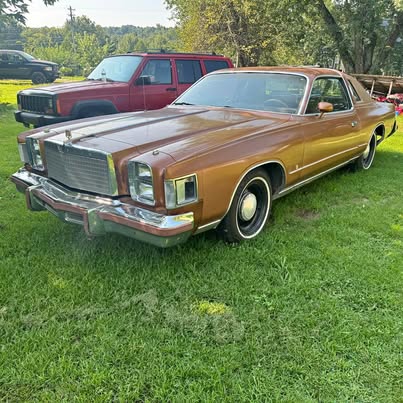
The first car, built for 1975 to 1979, sits on Chrysler's B-body platform: a big, rear-wheel-drive unit body on a 115-inch wheelbase, with longitudinal torsion bars at the front and leaf springs at the back, and a choice of V8 engines only — the 318 and 360 small-blocks and the 400 big-block. This is the Cordoba of the Ricardo Montalbán television advertisements, sold on "soft Corinthian leather." It drives like the last of the big Chrysler coupes: soft, quiet, heavy and entirely unbothered by your hurry.
The second car, built for 1980 to 1983, sits on the J-body platform shared with the Dodge Mirada. It is smaller in every dimension, on a 112.7-inch wheelbase, with transverse torsion bars at the front — a completely different suspension layout — and a slant-six as its base engine alongside the 318 V8. The styling sharpens into the angular, crosshair-grille look of Chrysler's early-1980s range. It is a lighter, tidier car to drive, but it arrives just as the personal-luxury market, fuel prices and Chrysler's own near-bankruptcy turn against it, and sales fall away until the name ends after 1983 with no direct replacement.
Correct the founding myth before it costs you money. There is no such thing as "Corinthian leather" as a grade, a tannery or a place. The phrase is an advertising invention, coined to sound rich in a thirty-second television spot, and Montalbán himself later acknowledges the wording is made up. What you are actually touching is ordinary automotive leather of its period — decent quality, in a loose, pleated, buttoned style — and its value today depends entirely on its condition, not on the name. A seller who prices a car up for its "rare Corinthian leather" is pricing up a slogan. Price the hide you can see and touch.
A second myth follows from the first. The Cordoba is not a performance car in any factory form: every engine in the range is tuned for quiet torque against emissions-era gearing, not for speed. The one partial exception, the limited Cordoba '300' of 1979 with the stronger E58 360, is covered in the models section — and even that car is a brisk cruiser, not a muscle car.
Scope this guide honestly. It covers the full 1975 to 1983 run, because you will meet any of those years in the wild. The site's own pool at the time of writing is a small snapshot, not a census: eight cars spanning 1975 to 1982, weighted to the B-body years, with none from 1977, 1979, 1981 or 1983. In the wider fleet, B-body cars survive in far greater numbers because far more were built, and J-body cars — especially the six-cylinder ones — are the scarcer sight today.
What decides a Cordoba's worth now is not rarity, engine or trim. It is rust in the structure, the state of the spark control system, and whether the interior — the entire point of the car — is still intact. Read the problem areas before you fall for the leather.

The models
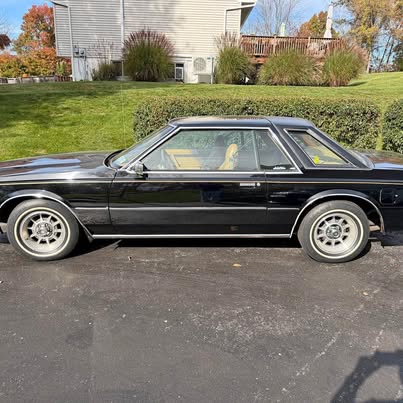
The range divides cleanly into two generations, and the generation matters more than the trim level, the engine or the year. Learn the visual split first, because sellers routinely describe a J-body car in B-body language. A 1975 to 1979 car has round or stacked-rectangular lamps set into a tall, formal, heavily chromed nose, a very long bonnet, and — on most cars — a padded landau roof with small opera windows in the thick rear pillar. A 1980 to 1983 car is visibly smaller and more angular, with single rectangular headlamps flanking a four-part crosshair grille and a body-colour front valance instead of a chrome bumper face. If you remember nothing else, remember this: no B-body car has a slant-six, and no J-body car has a 360 or a 400.
| Model | Years | Engine | Output | Built | Character |
|---|---|---|---|---|---|
| Cordoba (B-body) | 1975–1979 | 318 cu in (5.2) LA V8, 2-barrel | Around 150 hp net at launch, falling through the decade | The volume engine of the first generation | The standard car: smooth, soft and adequate; the one you will meet most often |
| Cordoba (B-body) | 1975–1979 | 360 cu in (5.9) LA V8, 2- or 4-barrel | Roughly 155–175 hp net in ordinary tune | A common option, especially in later B-body years | More torque everywhere; the better tow-and-cruise engine, thirstier for it |
| Cordoba '300' (B-body) | 1979 only | 360 cu in E58 V8, 4-barrel | Around 195 hp net | A limited special edition; a small minority of 1979 production | The collector's B-body: firmer suspension, unique trim, the only factory Cordoba with real pace |
| Cordoba (B-body) | 1975–1978 | 400 cu in (6.6) B-series big-block V8, 4-barrel | Roughly 185–190 hp net in early form, less later | The minority choice; dropped before the B-body's final year | The torque car: effortless and very thirsty, with big-block weight over the front wheels |
| Cordoba (J-body) | 1980–1983 | 225 cu in (3.7) Slant Six, 1- or 2-barrel | Around 90 hp net | The base J-body engine; a substantial share of a shrinking total | The economy car: near-indestructible, slow in a heavy coupe, and now the rarest survivor |
| Cordoba (J-body) | 1980–1983 | 318 cu in (5.2) LA V8, 2-barrel | Around 130–140 hp net | The majority of J-body production | The J-body to buy: enough performance, the full parts network, no big-block or Lean Burn surprises beyond the usual |
| Cordoba LS (J-body) | 1980–1983 | 225 Slant Six or 318 V8; 360 V8 in 1980 only | As per engine | The sporting trim line of the second generation | Tighter suspension tune, different grille and trim; the 1980-only 360 LS is the J-body rarity |
A note on the output and built columns, because this guide does not invent figures. Period outputs are SAE net figures that move by year, state specification and carburettor fitment, so the figures above are honest ranges, not a promise about the car in front of you; the under-bonnet emissions label settles what a given car left the factory with. Production splits by engine and trim are not published in a clean, verifiable form worth quoting precisely; what is reliable is the ordering in the table, and that is what you shop by.
Within the B-body years, trim is a story of roofs and seats rather than badges. The standard car comes with a cloth-and-vinyl interior and a plain or lightly padded roof. The cars most sellers advertise carry the landau roof — padded vinyl over the rear half of the roof, with opera windows — and, from 1978, the even more formal Crown roof treatment. An optional T-bar roof, with removable glass panels, exists on late B-body cars and on J-body cars, and it transforms the inspection: every seal, drain and latch becomes a condition item. Sunroofs are rare on both generations.
The 1979 Cordoba '300' is the one B-body car routinely misidentified in both directions. It is a genuine limited edition, built for one year, finished in white with red trim, carrying the E58 high-output 360, a firmer suspension and unique badging. Sellers badge ordinary white 1979 cars up; buyers dismiss real ones as tributes. The identity check is mechanical, not visual: the E58 engine and its specification on the car's documentation and under-bonnet labels. A '300' claim that rests only on paint and badges is a claim you pay nothing extra for.
The J-body range is simpler. The base Cordoba and the LS sit on the same shell; the LS adds the crosshair grille treatment you see in the photographs here, sportier trim and a firmer suspension tune. For 1980 only, before emissions and fuel-economy pressure close the option down, you can order the 360 small-block in a J-body car, and an LS 360 is the quickest factory Cordoba of the second generation. From 1981 the choice narrows to the slant-six and the 318.
Engines and gearboxes
Four engine families cover the whole Cordoba story: the LA small-block V8 in 318 and 360 forms, the B-series 400 big-block, and the 225 slant-six that arrives with the J-body. All four are long-lived designs with deep parts support, and none is fragile in the way the electronics bolted to them can be. That distinction — tough iron, troubled control systems — is the most useful idea you can carry into a viewing. An engine that cranks, holds oil pressure and does not smoke is very probably a good engine. A car that stalls, pings, hunts or refuses to restart hot is very probably suffering from the spark and fuel controls described below, not from worn-out iron.
The LA small-blocks: 318 and 360
The 318 cubic inch (5.2-litre) LA V8 is the Cordoba's default engine in both generations, and it earns the place. It is a cast-iron small-block with a hydraulic flat-tappet camshaft, a two-barrel Carter BBD carburettor in most applications — later and J-body cars also use Holley two-barrels — and a reputation, built over decades in cars, trucks and boats, for running indefinitely on ordinary maintenance. In the Cordoba it makes its period net output in the region of 150 horsepower at launch, declining as emissions tuning tightens, and about 130 to 140 horsepower in the J-body cars. It does not feel fast in a B-body. It feels unstrained, which is what the car is for.
The 360 (5.9-litre) is the same architecture with a longer stroke and larger bore, and the difference you feel is torque rather than revs. In ordinary two-barrel and four-barrel forms it is the better engine for a B-body car that will carry passengers, luggage or a trailer, and in four-barrel Carter Thermo-Quad form — and above all in the E58 specification of the 1979 '300', with its stronger camshaft and freer breathing — it gives the big coupe genuine, relaxed pace. The 360's known appetite is fuel and, in Thermo-Quad form, the carburettor itself, covered below. Mechanically it shares the 318's virtues and its short fault list.
That fault list, for both LA engines, is specific and short. The timing chain stretches with mileage and, on later engines, drives through a camshaft sprocket whose nylon teeth shed with age and heat; the symptom is a wandering timing mark under a timing light and a rattle from the front cover at idle, and the cure is a chain and sprocket set at $250–$500 fitted — cheap insurance you should budget on any car without proof of the job. Valve stem seals harden and give you the classic puff of blue smoke on start-up after sitting, which clears within seconds; that is a seals job at $300–$700, not bore wear — continuous smoke under load is bore wear, and the difference is the whole diagnosis. The rear main and intake end seals weep oil with age. None of this is exotic, and any competent general shop knows these engines by heart.
Identify what you are looking at before you discuss price, because 318 and 360 engines are visually near-identical and swaps are common. The engine number is stamped on a machined pad on the left front of the block, just below the cylinder head, and the displacement is also cast into the side of the block. A torch, a rag and two minutes settle it. The fifth character of the VIN and the under-bonnet labels tell you what the car was built with; the pad tells you what it has now. A car sold as a 360 that carries a 318 pad is a 318, whatever the air cleaner lid says — lids swap in seconds, and the big round air cleaner is the first thing a seller changes.
The 400 big-block, and the Thermo-Quad question
The 400 cubic inch (6.6-litre) B-series engine, offered in the B-body car from 1975 to 1978, is the last of Chrysler's big-blocks in a passenger coupe and the largest engine ever fitted to a Cordoba. It is a low-deck big-block with a four-barrel carburettor, making roughly 185 to 190 net horsepower in its early form and less as the decade tightens, but with the broad, silent torque that makes a heavy car feel weightless away from a junction. It is also, in most surviving cars, a Lean Burn engine — see the problem areas — and it drinks fuel at a rate that shocks even buyers prepared for a big-block. Choose it for character and torque, with your eyes open.
The 400, and the four-barrel 360s, bring you to the Carter Thermo-Quad, the carburettor that generates more Cordoba folklore than any other component. It is a large four-barrel with a phenolic resin — in plain terms, plastic — main body centre section, designed to insulate the fuel bowl from engine heat. The ageing behaviour is the problem: the bowl and its well plugs weep fuel as the material and seals age, the centre section can warp, and fuel drains back after a hot shutdown, giving you the signature complaint — a car that starts instantly cold, then cranks and cranks after a twenty-minute hot stop. The cure follows from the mechanism: a rebuild with attention to the well plugs and float levels, typically $350–$700 from a carburettor specialist, transforms the car, while the choke adjustment everyone reaches for first does nothing for a leaking well. A Thermo-Quad properly rebuilt by someone who knows the type is a good carburettor; one "cleaned" three times by people who do not is a recurring bill.
The slant-six and the late 318: the J-body engines
The 225 cubic inch (3.7-litre) slant-six, standard in the J-body car, is the engine Chrysler builds its durability legend on: a cast-iron six, canted over at thirty degrees — hence the name — with a one-barrel or two-barrel carburettor and around 90 net horsepower. In a Cordoba it is honestly underpowered for motorway merging with a full load. What it gives you in return is an engine that tolerates neglect better than almost anything else in this guide, and the simplest under-bonnet layout you will ever work on. Its characteristic faults are age faults: a worn timing chain, hardened valve seals, an exhaust manifold that cracks or warps and ticks when cold, and carburettor wear on the one-barrel cars. Buy it for what it is — a gentle cruiser — and not as a V8 substitute. The J-body 318 is the same LA small-block as the B-body car in later, cleaner-running form; everything said above about chains, seals and identification applies unchanged, and in the lighter shell it feels livelier than the same engine in a B-body.
Gearboxes: TorqueFlite, and only TorqueFlite
Every Cordoba ever built drives through a Chrysler TorqueFlite three-speed automatic. There is no factory manual gearbox in any year, on any engine — a car presented with one has been converted, and you should value it as a conversion, with all the questions about clutch linkage, pedal box and workmanship that a conversion raises. The TorqueFlite itself is one of the strongest automatics of its era, and it comes in two families you should distinguish. The A727, fitted behind the 360 and 400 and some 318s, is the heavy-duty unit, identifiable by its deeper, differently shaped sump pan. The A904 and its derivatives, fitted behind the slant-six and most later 318s, is the lighter unit doing the same job in a smaller case. From 1978, lock-up torque converters appear across the range, adding a clutch inside the converter that engages at cruising speed for economy.
TorqueFlite failure, when it comes, announces itself honestly. The box that slips on the 2–3 change, flares between ratios, or takes seconds to engage Drive or Reverse from cold is telling you about worn clutch packs or low line pressure, and no fluid change resurrects it: a full rebuild runs $1,800–$3,200 at a transmission shop, which is why the road test in the inspection section spends so long on the gearbox. The lock-up converter adds one specific symptom — a shudder or judder at steady cruising speed as the lock-up clutch engages and releases — which is frequently misdiagnosed as an engine misfire. The distinguishing test is simple: at the speed where the shudder occurs, rest your left foot lightly on the brake pedal, just enough to light the brake lamps without braking. That action commands the lock-up to release. If the shudder vanishes instantly, it is the converter clutch, not the engine. Budget $600–$1,200 for converter replacement if the box is otherwise healthy, and treat a seller's "it just needs a tune-up" accordingly.
Fluid tells you the rest. TorqueFlite fluid should be red and smell of almost nothing; dark, burnt-smelling fluid means the box has been hot, and black fluid with debris in the pan means the rebuild conversation is already open. Finally, the kickdown linkage: on carburetted cars the throttle-to-gearbox linkage controls both kickdown and, critically, line pressure. A car whose linkage has been disconnected or improvised can destroy its clutch packs in a few hundred miles while shifting beautifully on your test drive. Check it is present, connected and moving through its full travel, as the inspection section directs.

Problem areas
A Cordoba's problems divide into four groups, and they do not carry equal weight. Rust in the structure ends cars. The Lean Burn spark control system makes good cars run badly and is the most misdiagnosed system on the model. Suspension and steering wear makes them vague, which you can fix with money and ordinary parts. Interior decay removes the reason the car exists, and is the hardest to reverse because so much of what decays is unique to the model. Work through them in that order, and never let a beautiful interior talk you out of what the sills are telling you.
Rust: the map
Start where the B-body always starts: the front torsion bar crossmember. On the 1975 to 1979 car the longitudinal torsion bars that carry the front suspension anchor at their rear ends in a crossmember under the front floor, and that crossmember lives exactly where road water, mud and salt collect and stay. When it corrodes, the anchorages soften, the front ride height drops and wanders, and in the advanced state the bar pulls through — at which point you do not have a repair, you have a structural rebuild. Get the car on a lift or get yourself on the ground with a torch and a screwdriver, and probe the crossmember around both anchorages, the floor pans above it, and the frame rails where they sweep up over the rear axle. Surface scale is normal at this age. A screwdriver that sinks, flakes that lift in sheets, or fresh underseal applied over soft metal — the oldest trick in this market — ends the negotiation until the seller prices the car as a welding project. Crossmember and floor work by a fabricator runs $1,500–$3,500 depending on how far the rot has travelled, and it always travels further than the first look suggests.
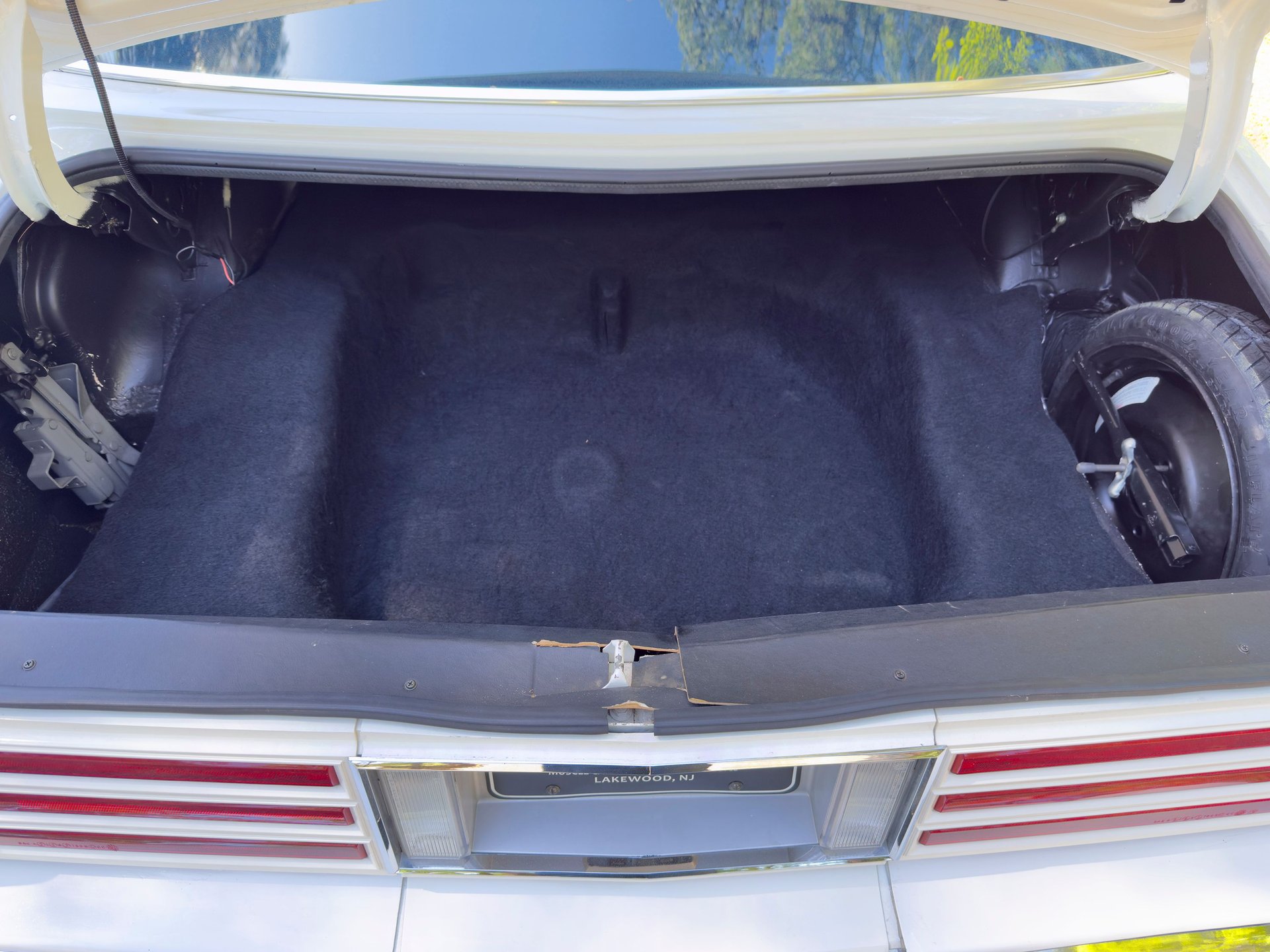
The rest of the B-body map is conventional. The rear leaf spring hangers and the rails around them rot from the inside out. The boot floor rusts where water enters past the rear lamp and boot lid seals and sits under the mat — lift the mat on every car, without exception, and check the spare wheel well and the drop-offs behind the rear wheels. The lower rear quarters bubble behind the wheels, the front wings rust behind the wheels, and the sills rust worst at the jacking points: a car that sags or creaks when you jack it at a sill is telling you the sill is a shape, not a structure.
The vinyl roof is the B-body's and the J-body's shared trap, and it deserves its own warning. A landau or Crown roof is padded vinyl laid over the steel roof skin, and with age the vinyl shrinks, splits at its seams and lifts at its edges — most critically around the opera windows and along the drip rails. Water then sits between vinyl and steel, invisible, and rusts the roof from the outside in while the car still presents a tidy top at kerbside distance. Press the padding with your fingertips all around the opera windows, the rear window frame and the base of the rear pillars. Firm resistance is steel. A crunchy, crackling or springy feel is rust scale under vinyl, and repairing it properly means stripping the roof, welding, and re-trimming — $1,200–$2,500 done well — which is why a split, lifted vinyl roof is a price argument, not a cosmetic footnote. The same water path rusts the panel below the rear window and drops water into the boot, connecting this fault to the boot floor above.
The J-body car rusts in different places, following its different front suspension: corrosion attacks the front subframe, its mounting points and the floor structure around them, with lower wings, door bottoms and rear quarters following the usual pattern. It is younger and generally less salt-aged than the B-body fleet, but its smaller production run means repair panels are harder to find. On both generations, check the base of the windscreen pillars and the scuttle: water entering there soaks the front carpets and rusts the floor from the top down while the underside still looks sound. Wet carpet in a dry week is a leak with a history — find the history before you buy the car.
Lean Burn and the electrics: the system that defines the model
From 1976, and comprehensively from 1977, Chrysler fits its Electronic Spark Control system — universally known by its marketing name, Lean Burn — to Cordoba engines, and by the J-body years its descendants control spark, and on the latest cars mixture as well, on effectively every car you will view. Understand it, because more Cordobas are sold cheap for Lean Burn faults, and more buyers are sold expensive engine work for Lean Burn faults, than for any other single cause.
The system's job is emissions-era economy. A computer — Chrysler calls it the Spark Control Computer — sits in a housing mounted on the air cleaner, directly above the hot engine, and varies ignition timing continuously using signals from sensors that include a throttle position switch, a coolant temperature sensor, a vacuum transducer and, on later systems, carburettor switches and an oxygen sensor. In place of the conventional distributor vacuum advance, the computer decides the advance. When the system is healthy, the car runs cleanly and economically. The failure modes follow directly from the architecture.
First, the computer lives in the worst environment on the car: heat cycles, vibration and moisture, on top of the engine, with its multi-pin connector exposed to all three. Solder joints crack, connectors corrode and fret, and the failure is characteristically intermittent — the car runs perfectly for an hour, then cuts out, refuses to restart, hunts, pings under load or loses advance and feels strangled, then behaves again when it cools. Second, the vacuum transducer and its hoses perish and leak, and the computer, fed a false load signal, sets timing that is wrong in a way no amount of carburettor adjustment corrects. Third, the sensors themselves drift or fail, and a failed coolant sensor can lock the system into a cold-running strategy on a hot engine.
The tests that distinguish causes are what save you money, so learn them in order. When a car misbehaves, wiggle the computer connector gently with the engine idling: a stumble or cut that follows the wiggle is a connector or computer fault, full stop, and no carburettor part will fix it. Check every vacuum hose to the transducer for splits and softness, and replace suspect hose before condemning anything electronic — a $10 hose has cured more Lean Burn cars than any computer. Put a timing light on the engine and watch the mark as you raise the revs slowly: advance that jumps, freezes or disappears is the system confessing. And check the basics the system depends on — charging voltage, engine earth straps, distributor condition — because a tired alternator feeding low, noisy voltage makes a healthy computer behave like a dead one.
Your options, once diagnosed, are three, and you should decide which you are buying before you buy the car. Repair the system in kind — good used and new-old-stock computers and sensors exist, and a specialist diagnosis runs $150–$350. Carry a spare computer, as many long-term owners do. Or do what a large share of the surviving fleet has already had done: convert to Chrysler's conventional electronic ignition with a vacuum-advance distributor and the standard control module, a well-documented conversion at $400–$900 that removes Lean Burn entirely. None of these is the wrong answer. The wrong answer is paying a premium for an "all-original" car whose originality consists of a dying computer, or paying for an engine rebuild on a car whose only fault is spark control. A converted car is not a ruined car, but it should be priced and described as converted.
The rest of the electrics are period Chrysler, a short, known list. The bulkhead connector, where the harness passes through the firewall, corrodes and heats with age: flickering lights, a hot smell at the bulkhead or intermittent total electrical failure point there. The instrument voltage limiter fails and sends the fuel and temperature gauges reading high together — both gauges lying in the same direction at the same time is the limiter, not two senders. Power window and seat motors fail with age, and air conditioning is an R12-era system: assume any non-working system needs $500–$1,500 of diagnosis and conversion work, and treat working cold air as a genuine selling point. Beyond the Thermo-Quad, the two-barrel carburettors suffer worn throttle shafts, failed choke pull-offs and dried-out accelerator pumps — the last producing a flat spot on tip-in that everyone blames on ignition. The distinguishing test: watch down the carburettor throat, engine off, while an assistant opens the throttle. A healthy pump gives two strong, immediate streams; a dribble means the pump, not the distributor, is your flat spot.
Suspension, steering and brakes
The B-body front end is a torsion bar design of great strength and one expensive habit: it wears its ball joints, idler arm and pitman arm into a vagueness owners accept as character until an alignment shop shows them the play. The test is physical. With the front raised and the suspension unloaded correctly — torsion bar cars must be lifted by the frame, not the lower arms, or the test lies to you — rock each front wheel and feel for movement, then have an assistant turn the steering gently while you watch the linkage for lost motion. Budget $800–$1,800 for a full front-end refresh at a shop, and do the crossmember rust check at the same visit, because the two jobs share the same real estate. Ride height is adjustable on the torsion bar anchor bolts, and a B-body sitting nose-low with the adjusters at their limit is telling you about tired bars or a soft crossmember, not about an adjustment it needs.
The J-body replaces all of this with its transverse torsion bar layout, the bars running across the car inside a front subframe that sits on rubber isolator mounts. Those isolators are the J-body's signature wear item: they perish, compress and crack, giving clunks over bumps, a front end that feels detached on turn-in, and alignment that will not stay set. Replacing the set is a subframe-down job at $600–$1,200, and it transforms a tired car. The bars themselves also sag with age, so a J-body sitting low at the front needs both conversations held together.
At the back, both generations use leaf springs and a live axle — Chrysler's 8¼-inch unit in most cars, the stronger 9¼-inch behind some big-block applications. Leaf springs flatten until the car sits tail-low and bottoms over dips; replacement springs run $400–$900 fitted. Axle faults are limited to bearing noise — a whine that changes with throttle load is the pinion bearing or gear set, a constant rumble is a wheel bearing — and a weeping pinion seal. Steering is a recirculating-ball power box, with play that adjusts to a point and then doesn't; a car with an inch of free play at the rim after adjustment needs box work, $400–$800 exchanged. Brakes are front discs and rear drums throughout, with two age traps: seized rear wheel cylinders that pull the car sideways under braking, and rubber flex hoses that collapse internally and hold a caliper on — the wheel that runs hot and smells of pad after a gentle drive is the one to investigate.
Interior and trim: the point of the car, and its weakest survivor
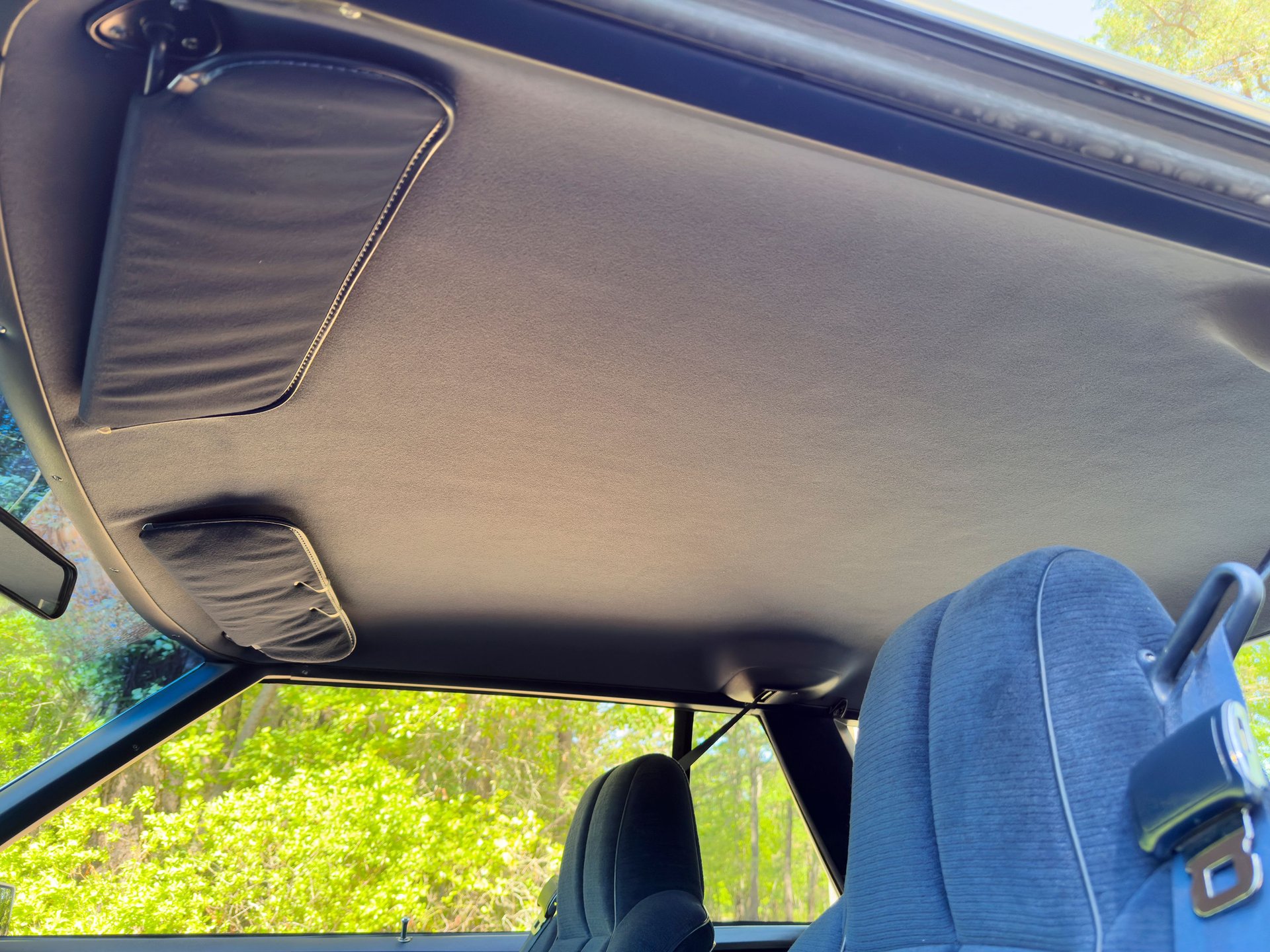
You buy a Cordoba for its cabin, so inspect the cabin like a structure. The loose-pillow leather seats fail in a set sequence: the hide dries, the coating crazes, the pleats split along their stitching, and the foam beneath collapses until you are sitting in the shape of the previous owner. A driver's bolster split open with foam showing is the normal state of an unrestored car, not an exception. Re-trimming a pair properly, in leather with new foam, is $1,500–$3,000 at a trimmer, because the pleated, buttoned pattern is labour — and that figure is the honest centre of most Cordoba price negotiations. Vinyl interiors age far better, and the myth that leather is automatically the better buy dies the moment you compare a split leather seat with a sound vinyl one.
The dash top cracks in the sun, splitting along the speaker grille and defroster outlets; a dash cap covers it for $150–$300 in parts, a proper re-trim costs several times that. The headlining sags as its foam backing turns to dust — on a T-bar car, look for water staining at the corners, which tells you the drains are blocked and the roof has been filling the headlining and footwells. Carpets fade and rot from beneath on a leaking car, and door cards warp where window seal leaks wet them. Almost none of this is reproduced in quantity: you are shopping the surviving stock of trim, not a catalogue, and a complete, sound, original interior is worth more on these cars than any engine option.
Exterior trim is the same story in chrome and plastic. The B-body's brightwork pits, peels and goes missing, and the Cordoba script badges and J-body LS emblems are exactly the parts that vanish. The J-body's body-colour valances crack and craze, its crosshair grille breaks at the centre, and both generations' plastic bumper filler panels crumble until they crack at a touch; fibreglass replacements are a known, budgetable job at $200–$500 a set painted. Walk the whole car with a trim inventory in your head before you agree a price, because the mechanical car is the easy half of a Cordoba restoration and the trim is the hard half. The T-bar roof and opera windows, the two signature features, are condition items rather than ornaments: T-bar seals take a set and leak on the first wet drive, silicone sealant around the panel edges means an owner has been fighting the leak rather than fixing it, and opera windows leak into the rear quarters, feeding the rust described above. On any car with either feature, pour water over the roof during your inspection — the inspection section makes it a formal step — and watch from inside.
How to inspect one
Inspect a Cordoba in this order: identity, structure, the cold start, the controls that make it run, and only then the road. The faults that end deals — a wrong engine, a rotten crossmember, a dying Lean Burn computer — are all detectable before the car moves, and a warm, freshly driven car hides every one of them. Insist on a cold start from overnight, and treat a seller who has "just warmed it up for you" as having answered your first question.
- Start with identity, on paper and on the car. Read the VIN plate at the base of the windscreen and the certification label on the driver's door, and check they agree with the title. Decode the engine character of the VIN and compare it with the number stamped on the pad at the left front of the block on a V8 — the test from the engines section that separates a real 360 or 400 from a 318 with a different air cleaner lid. On a claimed 1979 '300', require the E58 specification to appear in the car's documentation. A car whose numbers do not agree is priced as the car it provably is.
- Read the fender tag and the under-bonnet labels. Chrysler's option tag, on the inner wing, and the emissions label together tell you the original engine, axle, paint, trim and roof. Photograph both. A colour change revealed by the tag reframes the price discussion — and the emissions label is your first evidence of whether the Lean Burn equipment belongs to this car at all.
- Do the roof before the body. Press the vinyl roof padding around the opera windows, rear window and pillar bases, feeling for the crunch of rust under vinyl from the rust section. Check for splits, lifted seams and silicone. Then work the panels below — sills, door bottoms, lower wings and quarters — with a magnet in a cloth for filler.
- Get underneath, or walk away from the structural judgement. You need eyes on the torsion bar crossmember anchorages on a B-body car, or the front subframe and its isolator mounts on a J-body, plus the floor pans, spring hangers and rails over the rear axle. Probe with a screwdriver where you are allowed to. Fresh underseal over the crossmember area, applied recently and locally, is a finding in itself — ask why it is there.
- Open the boot and lift everything. Mat up, spare out if you can. Look at the floor, the well and the drop-offs for water rust, smell for the mustiness that means the car lives wet, and check the jack is present. Then read the engine bay as a document: original air cleaner and spark computer present, or a conversion; vacuum hoses supple or perished; wiring original or re-made with crimp connectors and hope.
- Cold-start it yourself, bonnet up, standing outside. A healthy LA V8 or slant-six fires within a few seconds of cranking on the choke and settles to a fast idle. Watch for the blue puff that means valve stem seals — acceptable, budgeted — against continuous blue smoke under load later, which means bore and ring wear and is not. Listen for timing chain rattle and for exhaust ticks from a cracked manifold on the six.
- Test the Lean Burn system while you have the chance. With the engine warm and idling, gently wiggle the spark computer's connector: any stumble or cut condemns the connector or computer, per the problem areas. Watch the timing mark under a light as revs rise — it should move smoothly. After the road test, switch off, wait ten minutes, and restart: the Thermo-Quad hot crank and the Lean Burn hot refusal both appear in exactly this window, which is why the test is here and not at the start.
- Work every electrical item, in a set order. Windows, seats, locks, lamps, wipers, heater and air conditioning through every speed, radio, and the gauges — remembering that fuel and temperature gauges lying together indict the instrument voltage limiter rather than the senders. Check the bulkhead area for heat smell or flicker as loads come on.
- Check the kickdown linkage before the road test. Under the bonnet, confirm the throttle-to-gearbox linkage is present, connected and moving fully as an assistant works the throttle. On a car where it is disconnected or improvised, the TorqueFlite's line pressure has been wrong for an unknown mileage, and you price the gearbox as an unknown even if it shifts sweetly in step 10.
- Road-test for the gearbox first, the engine second. From cold, note the engagement of Drive and Reverse — a delay of more than a second or two, or a thump, is wear announcing itself. Drive gently until warm, then use full throttle once: the changes should be firm, prompt and flare-free, with a kickdown that actually arrives. At a steady cruise, perform the lock-up test from the engines section and feel whether any shudder is the converter clutch releasing. A TorqueFlite that passes all of this, on red, sweet-smelling fluid, is one you can trust.
- Test the chassis at the speeds that expose it. Feel for steering free play, wander that makes you steer constantly, and clunks over broken surfaces — front-end wear on a B-body, isolator failure on a J-body. Brake firmly from speed, hands light on the wheel: a pull is a seized caliper, a collapsing hose or a rear cylinder. Note the ride height as you walk back to the car: nose-low or tail-low is a spring or torsion bar conversation from the problem areas, already priced there.
- Pour water over the roof, then re-inspect the interior. With the seller's agreement — and a refusal is information — run water over the T-bar panels, opera windows and rear window, then sit inside and look for ingress at the headlining corners, pillars and footwells. Grade the cabin against the photographs in this guide: seat hide or vinyl, foam shape, dash top, headlining, door cards. The interior grade you settle now is the number the negotiation hangs on, because it is the one thing on the car you cannot simply order.
Values
The build beneath this guide carries the live market — the cars listed now and the recorded sales — and that block, refreshed at every build, is where the numbers live. What this section gives you is how to read those numbers like a buyer who knows the model, because Cordoba values are driven by a smaller set of factors, in a stricter order, than almost any other car in this programme.
Condition spread is everything, and it is wider than the listings suggest. The gap between a project Cordoba and a genuinely sorted one is not a percentage of the car's value — it is a multiple of it, because the work that separates them is the expensive kind: structural welding at the crossmember or subframe, a re-trim of pleated leather seats, a vinyl roof remade over repaired steel. Two cars with the same year, engine and mileage can sit at opposite ends of the market for entirely rational reasons, and the cheaper car is very often the more expensive ownership. Compare a listing against recorded sales of the same structural and interior grade, or you are comparing paint.
Generation and engine move the money in a predictable order. The B-body cars carry the market — they are the Cordoba of memory — and within them the 400 big-block cars and above all a verified 1979 '300' command the premiums, the '300' premium being the one most often claimed and least often proven, which is why the identity checks in this guide exist. The 318 B-body in sound order is the value centre of the whole model. J-body cars sit below comparable B-body cars, reflecting smaller demand rather than smaller merit, with the LS trim and the 1980-only 360 pulling small premiums and the slant-six cars the cheapest route into the model — a pricing fact that has nothing to do with the six's durability, which is the best in the guide.
Asking prices and achieved prices part company in a specific way on this model. Sellers price the story — the leather slogan, the television advertisements — and buyers pay for structure, interior and a car that runs cleanly on its original or properly converted ignition. Cars that sit unsold are almost always priced on the story with a project-grade cabin or an undiagnosed running fault. Use that in negotiation, with evidence: the costed list from your inspection — crossmember work, a seat re-trim, a Lean Burn diagnosis — is a stronger argument than any opinion about what the model is "worth".
The project car tempts on this model, and it is usually a trap. A complete, rusty, non-running Cordoba looks cheap against a sorted driver until you price the welding, the trim and the roof as this guide costs them, at which point the driver is the bargain. Buy a project only if it is a genuinely rare variant — a proven '300', a 1980 LS 360 — whose value survives the work, or its interior and trim are so good that they carry the restoration. Everything else, buy the best driver you can find.
Parts and ownership
Owning a Cordoba is an exercise in two different parts worlds, and knowing which world each component lives in is the whole skill. The mechanical world is generous. The LA small-blocks, the 400, the slant-six and the TorqueFlite are among the best-supported American drivetrains of their era: engine internals, gaskets, timing sets, water pumps, carburettor kits, ignition parts, brake components, steering joints and suspension bushes are all in current production or deep stock, from the big American mail-order houses and the Mopar specialists, at prices that make European classics of the same age look punitive. A Cordoba's engine, gearbox, brakes and axles will never strand a restoration for want of parts.
The model-specific world is the opposite. Body panels are not reproduced in any depth for either generation, and the J-body — built in far smaller numbers — is the thinner of the two. Rust repair therefore means fabrication or donor panels, which is why the rust sections of this guide are written as walk-away tests rather than repair invitations. Trim is scarcer still: grilles, lamp bezels, badges and scripts, opera window surrounds and interior plastics all trade in the used and new-old-stock market, through swap meets and the marque clubs. Inventory a car's trim as carefully as its structure — a mechanically identical car with complete trim is worth meaningfully more, because you may never find the missing pieces at any price.
Lean Burn components sit between the two worlds: computers, transducers and sensors are no longer in ordinary production, good used and new-old-stock units circulate, and the conventional-ignition conversion exists precisely because the supply is finite. If you intend to keep a car on its original system, buy a known-good spare computer when one appears — rather than when yours fails.
Running costs are period-American and predictable. Fuel consumption is heavy: the big-block B-body is the thirstiest car in this guide by a wide margin, the 360 follows it, the 318 is the reasonable V8, and the slant-six J-body is the only Cordoba you could call economical, in period terms. Tyres are in common sizes, classic insurance is straightforward, and servicing is within the ability of any general shop. The single discipline that matters is the one this guide repeats: keep the vacuum hoses, connectors and earths of the spark control system in good order, and the car repays you. These are cars that reward regular use and punish storage — seals dry, carburettors gum and vinyl roofs age fastest on cars that sit outside under a damp-trapping cover — so use yours monthly, and join the Chrysler and Mopar clubs, whose members carry the model's knowledge, trim market and specialists.
Which one to buy
- The all-rounder: a 1975–1977 B-body 318 or 360 with a sound crossmember and a tidy interior. The Cordoba as intended, from the years before Lean Burn is universal, with the deepest parts support and the broadest choice of cars. Buy the structure and the cabin; the engine looks after itself.
- The enthusiast's B-body: a verified 1979 Cordoba '300'. The E58 360, the firmer chassis and the one-year identity make it the collectable first-generation car — but only with the documentation and engine evidence from the inspection section. An unproven '300' is a 1979 Cordoba at a premium.
- The torque buy: a 1975–1976 400 car. The earliest big-block cars give you the full silent-torque experience that defines the model at its most luxurious. Go in expecting the fuel bills, and insist on the boot floor and spring hangers being as good as the bonnet is long.
- The value buy: a J-body 318, base or LS, from any year 1980–1983. Smaller, tidier, cheaper than any comparable B-body and just as well supported mechanically, with the 318 doing its best work in the lighter shell. Spend your suspicion on the subframe isolators, and you get the most Cordoba per unit of money in the guide.
- The rarity buy: a 1980 Cordoba LS with the 360. One year only, the quickest J-body, and scarce because few were ordered and fewer survive. Verify the engine on the block pad — a 360 claim on a J-body is worth money, which is exactly why it gets made about 318 cars.
- The honest buy: a slant-six J-body with a superb interior. The slowest Cordoba and the toughest, priced as the least desirable — which means the best cabins at the lowest prices hide here. For gentle cruising, it is the rational purchase in the range.
The overriding rule: buy the structure and the interior, and let the engine be the last thing you judge — the iron almost never fails you, but rust in the crossmember, a roof rotting under its vinyl, and a split loose-pillow cabin are the three bills that decide whether you bought a car or a project, and no engine option or advertising slogan has ever paid one of them for you.
See the 1 Cordoba Ls cars currently listed.
What they sell for: Cordoba Ls sale prices.