
Dodge Viper Gen 3 buyer's guide
Dodge Viper Gen 3 (2003–2006) — Viper: what's listed, and what they sell for.
Years: 2003–2006 · Models: Viper
Overview and history
The third-generation Dodge Viper, sold as the Viper SRT-10 from 2003 to 2006, is the point where the original Viper idea was sharpened rather than softened. The first car, launched in 1992, was a deliberate provocation: a huge V10, a manual gearbox, rear-wheel drive, almost no driver aids. The second generation civilised that formula a little and added a coupe. The third, developed under DaimlerChrysler by the newly formed Street and Racing Technology division — SRT — rebuilt it properly: a stiffer chassis, styling cut with a ruler instead of a French curve, brakes that finally matched the performance, and an engine grown from 8.0 to 8.3 litres. What did not change was the contract with the driver. There is no automatic option, no traction control, no stability control and no attempt to make the car flattering. ABS is the only electronic safety net. Everything else is throttle judgement, tyre and your own restraint.
That matters more to a buyer now than any specification figure. A Gen 3 is not difficult because it is badly engineered — by Viper standards it is the most completely engineered of the early cars. It is difficult because 500 horsepower and a very large amount of torque arrive through the rear wheels of a short-wheelbase car with enormous rear tyres and no electronic layer between a mistake and its consequences. In period that was the selling point; twenty years on it is why so many cars carry accident history, why title status matters as much as mileage, and why the inspection below spends as much time on tyres, alignment and frame evidence as on the engine. The V10 is one of the toughest parts of the car; what ends ownerships early is heat, neglect, old rubber and bent metal under unbent-looking panels.
The Gen 3 was announced by the SRT-10 concept at the 2001 Detroit show and reached production for the 2003 model year, built at Conner Avenue Assembly in Detroit, where Vipers had been hand-assembled since the mid-1990s. The styling, credited to Osamu Shikado, replaced the Gen 2 car's curves with folded, angular surfacing: a long bonnet with louvred vents, creased wings, deep exhaust-carrying sills and a truncated tail. The steel spaceframe was extensively revised, suspension remained double wishbones at both ends, and the body panels remained composite — which is why panel fit, stress cracking and hidden frame damage, covered below, are Viper-specific inspection skills rather than generic used-car checks.
Production ran from 2003 through 2006, before the fourth-generation car arrived for 2008. The range is simple: a roadster for all four years, a coupe for the final year only, a handful of factory editions, and one engine in two states of tune, always with a six-speed manual — no trim labyrinths, no optional gearboxes, no air suspension. Comparing two cars, what matters is condition, history, originality, title status and modification: by whom, how well, and whether the standard parts come with it.
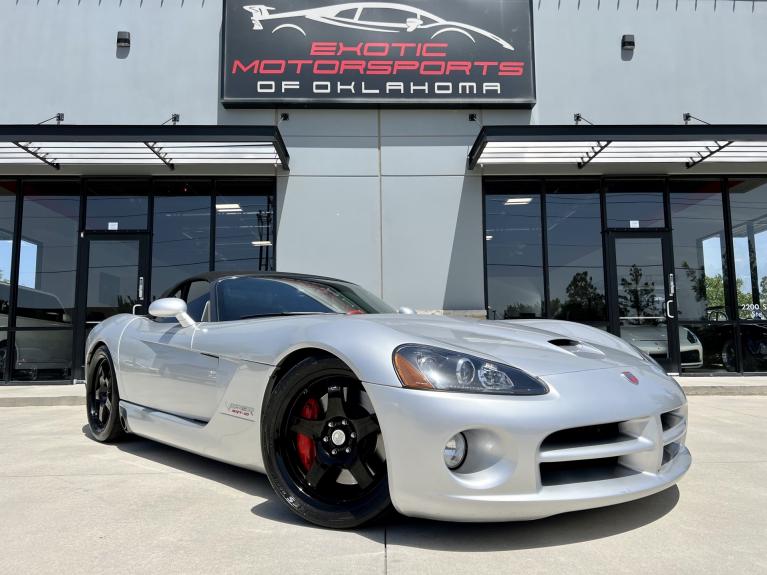
On this site the Gen 3 pool is small, and should be read honestly as a small sample: six cars recorded in total at the time of writing, two listed for sale and four recorded as sold, all dealer cars, spanning 2004 and 2005. A pool that size shows availability patterns — these cars surface through specialist and dealer channels, not private classifieds — but cannot describe the whole market; the market block beneath this guide, computed from the store's own listings and recorded sales, is where current numbers live. Where this guide cites the site's own photo examination, it does so from a sample of three photo-checked cars, and says so each time.
Who should buy one? Someone who wants an analogue, physical, slightly intimidating sports car and will use it as one rather than as daily transport. The cabin is cramped and hot, the sills are wide and hot, the top is a fair-weather device, and ground clearance makes car parks an exercise in planning. None of that is a defect; it is the car. Buyers who accept those terms tend to keep Gen 3s a long time, helped by a strong owner community and a deep bench of specialists. Buyers who wanted a Corvette with more drama usually discover, expensively, that the Viper is not that. Read the rest of this guide with that distinction in mind.

The models
The Gen 3 range divides first by body — roadster or coupe — and then by the special editions, which are trim, paint and interior packages on the same mechanical car, not separate models in any engineering sense. Every Gen 3 uses the 8.3-litre V10, the Tremec T56 six-speed manual, rear-wheel drive and double-wishbone suspension, in a composite body over a steel structure. There are no weak versions to avoid. What changes between cars is roof, model year, edition identity and — most of all — what has happened to the individual car since it left Conner Avenue.
| Model | Years | Engine | Output | Built | Character |
|---|---|---|---|---|---|
| Viper SRT-10 Roadster | 2003–2006 | 8.3-litre V10 | 500 hp, later 510 hp | Series production, all four years | The core Gen 3: open car, manual top, the full experience including the heat and noise |
| Viper SRT-10 Coupe | 2006 | 8.3-litre V10 | 510 hp | Final year only | The roadster's mechanical package under a fixed double-bubble roof; stiffer in feel, more usable in weather, the rarest regular body style |
| Mamba Edition | 2004 | 8.3-litre V10 | 500 hp | Limited run of 200 | Black-and-red interior treatment and edition detailing on the roadster; an identity premium, not a performance one |
| Commemorative Edition | 2005 | 8.3-litre V10 | 510 hp | 100 cars, individually numbered | White with blue stripes echoing the earlier GTS-R racers; the most collectable of the roadster editions |
| Copperhead Edition | 2005 | 8.3-litre V10 | 510 hp | Limited run | Copperhead Orange paint with a matched interior treatment; bought on colour and rarity |
Production figures for individual years and editions were never published by Dodge with the consistency collectors would like, so the table gives firm numbers only where they are genuinely firm — the Commemorative Edition's 100 numbered cars, one of which, number 26, appears in this site's own listings. Treat precise build figures quoted for an ordinary roadster with scepticism unless documented; the registry community tracks cars by VIN, and a car's own paperwork outranks a forum number.
The roadster, 2003–2006
The roadster is the Gen 3 in its purest and commonest form, and for most buyers the car to shop for simply because it is the one you can actually find and compare. The top is a manually operated folding soft top — no power mechanism to fail — but it is best understood as emergency weather protection: it seals indifferently, is noisy at speed, and a car that has lived outside under it will show it in the seals, rear window and trim. Check the fabric for shrinkage and seam splits, the rear window for cracking, and the seals for perishing; a replacement top is a specialist trim job. Top down, the car is magnificent and very loud; top up, it is a place you endure on the way to somewhere better. A roadster living in a dry garage and coming out on dry days is a happy car; one asked to commute through a wet winter will punish its owner and itself.
Model-year differences are modest: 2003 cars carry the 500 hp tune, later cars 510 hp — a change you will not feel in isolation, but which matters to collectors and asking prices. Buy on condition rather than chasing a year, but check very early cars especially carefully for the cooling and heat behaviours in the problem areas, where twenty years of heat cycles have had longest to work.
The coupe, 2006
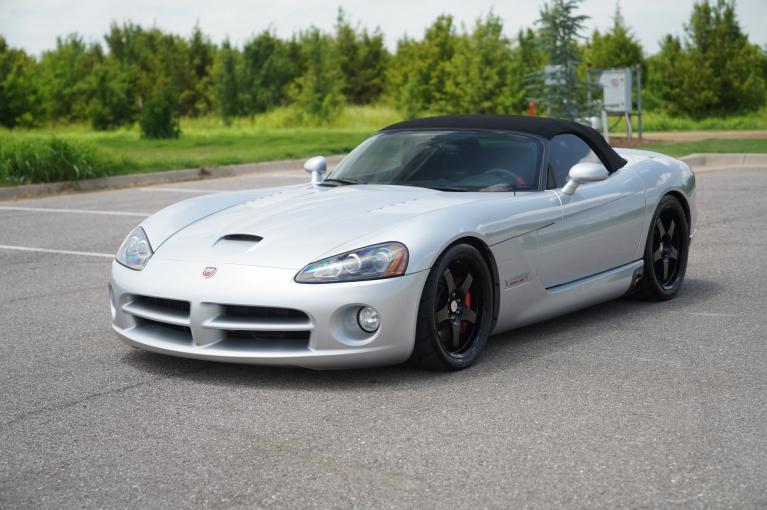
Dodge put the production coupe on sale for 2006, the generation's final year. The roof is a fixed double-bubble design — two raised pods over the seats, a signature reaching back to the Gen 2 GTS — and the tail carries a ducktail spoiler. Mechanically it is the roadster's package with the 510 hp tune; the coupe feels marginally more rigid, is quieter and drier inside, and is the Gen 3 to choose for a mixed climate or track work, where organisers often treat a fixed roof more favourably than an open car without a cage. Built for one year only, it is scarcer than the roadster, which explains its place at the top of the Gen 3 market. Scarcity is not immunity: a crashed or modified coupe is still a crashed or modified car, and it needs every check in this guide.
The special editions
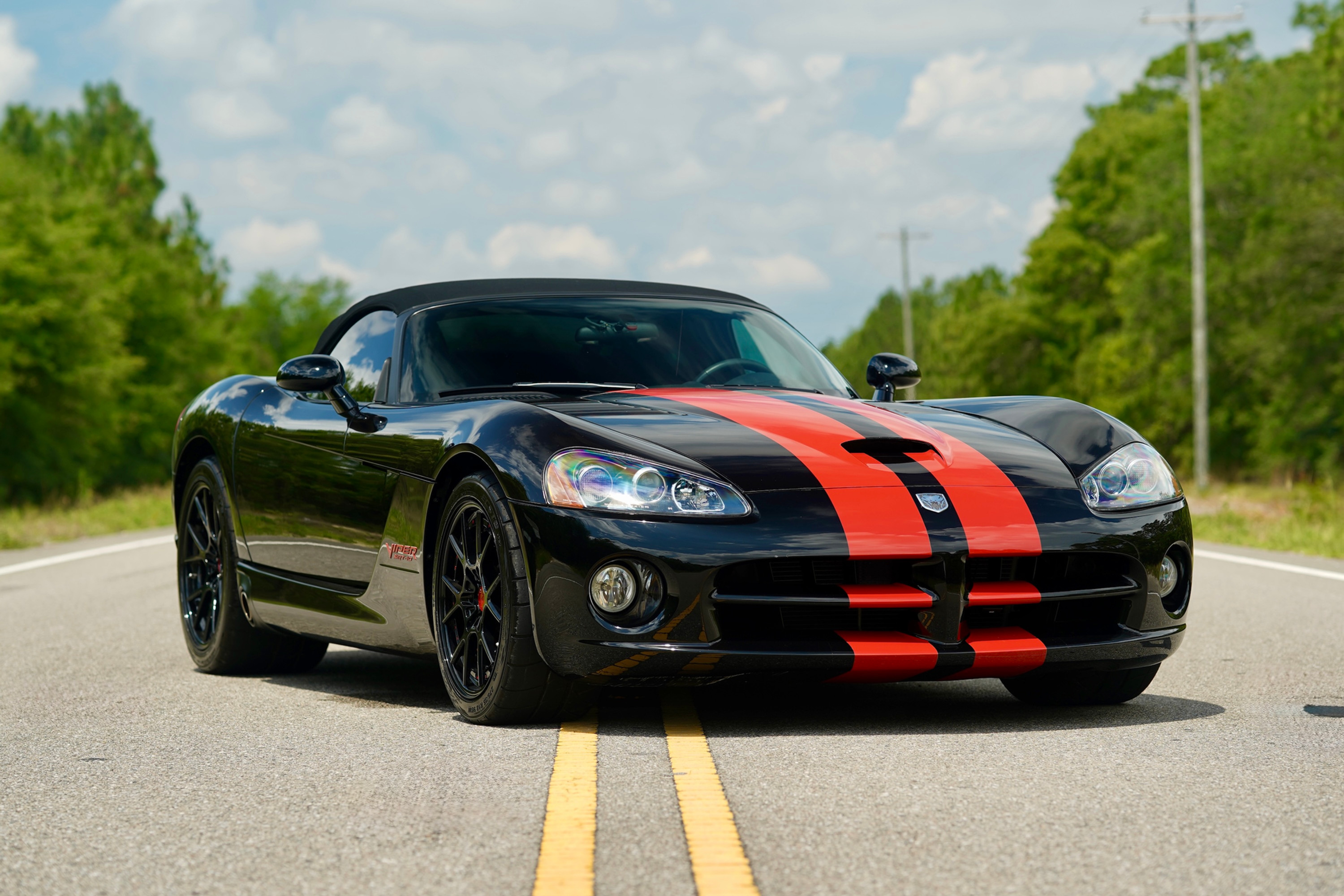
The Mamba Edition (2004, a run of 200 cars) is an interior and detailing package: black paintwork with a red-and-black interior treatment. The Commemorative Edition of 2005, limited to 100 numbered cars, wears white paint with blue stripes in reference to the late-1990s Viper GTS-R racers, with matching interior accents. The Copperhead Edition, also 2005, is defined by Copperhead Orange paint and a coordinated interior. Small dealer- and club-associated editions exist too; for all of them, identity is a paperwork claim before it is a paint claim.
That rule deserves emphasis, because editions are where Gen 3 buyers overpay. Stripes can be added to any white roadster; interior trim can be swapped. What makes a Commemorative Edition one is its VIN, build documentation and number within the run — verifiable through the paperwork and the registry community — not the colour scheme in a photograph. Pay an edition premium only for a car whose identity checks out on paper; the premium buys collectability, not speed, because underneath an edition is the same V10, gearbox and chassis as every other Gen 3. A standard car in honest, documented condition beats a dubious edition at the same money, every time.

Engines and gearboxes
The 8.3-litre V10: architecture
Every Gen 3 Viper uses the same engine in essence: an 8.3-litre — 505 cubic inch — naturally aspirated V10 with aluminium block and heads, a pushrod valvetrain with two valves per cylinder, and sequential electronic fuel injection. The design descends from the original Viper V10, derived from Chrysler's LA-series V8 architecture, but by the third generation it was a mature unit with a durability reputation that surprises people who judge it by the car's image. It is a torque-first engine: peak power arrives at about 5,600 rpm, the redline sits around 6,000 rpm, and the useful work is done below 5,000 rpm, where the torque curve is less a curve than a shelf. In the launch tune it produces 500 hp and 525 lb-ft of torque; in the later tune, 510 hp and 535 lb-ft. Neither figure leaves the car feeling underpowered in any circumstance this side of a runway.
The details a buyer should know are these. The valvetrain is hydraulic-lifter pushrod gear — no overhead cams, no variable timing on the Gen 3 (that arrived with the Gen 4), no timing belt. The engine is not dry-sumped: a wet sump with a baffled pan is adequate for road use and ordinary track days, but sustained high-load track work on sticky tyres deserves a specialist conversation about oil control before, not after, a problem. Ignition is coil-based, fuelling is port injection, and the Chrysler PCM also runs the cooling fans — which is why heat and electrical faults so often present as engine faults, and why the problem areas treat cooling and electrics as engine systems, not accessories.
Servicing the V10 is conceptually simple and physically awkward: the engine fills the bay, rear plugs are tight to reach, and simple jobs take longer than on a V8 muscle car. Oil capacity is large — around ten quarts with a filter — and the regime that matters is frequent changes with quality synthetic of the specified grade, because the engine's real enemies are heat and neglect, not mileage: a well-kept V10 at 60,000 miles with full records is safer than a neglected one at 25,000. There is no cambelt interval and no routine valve-clearance adjustment, and the bottom end is rarely why a Gen 3 is for sale. Budget instead for the ancillaries living in the heat around it, covered in the problem areas.
The two tunes: 500 and 510 horsepower
The difference between the launch 500 hp tune of 2003–2004 and the 510 hp tune of the later cars, including all coupes, is calibration and detail, not a different engine. You cannot feel ten horsepower in a car with this much torque, and no buyer should pay a large premium for the later tune on performance grounds; where it matters is identity — the VIN and build sheet say what the car left the factory as. Beware instead the aftermarket's contribution: cold-air intakes, headers, cat-delete exhausts, ECU flashes and, at the serious end, Paxton supercharger kits and twin-turbo conversions taking output far beyond what street tyres can use. A mildly modified car with quality parts and documentation can be a fine purchase. An undocumented forced-induction car is different: the standard internals, cooling, clutch and differential were specified for factory output, and a boosted car whose supporting work cannot be evidenced has lived an undocumented life in its most expensive components. Price it as a risk, or walk away — and if you buy a modified car, make sure the standard parts are included.
One myth is worth correcting plainly: the Gen 3 has neither the Gen 4's variable valve timing nor cylinder deactivation, and no Gen 3 left the factory with an automatic gearbox in any market — a car described that way is misdescribed.
Gearboxes: the Tremec T56 six-speed manual
The only gearbox is the Tremec T56 six-speed manual — the same basic family used by the period Corvette and Mustang Cobra, in Viper specification. It is a strong, heavy, mechanical gearbox with a long, deliberate shift, and a healthy T56 feels notchy and weighty rather than slick. Learn that baseline before judging a car: buyers from lighter machinery routinely condemn healthy Viper gearboxes and, worse, excuse sick ones as character.
The known behaviours divide into three groups. First, the factory skip-shift system: under light throttle at low speed in first, a solenoid blocks the shift to second and directs you to fourth, an emissions-era device that is universally disliked and frequently disabled with an inexpensive eliminator plug. Its presence or absence says nothing about condition — but a car that grinds into second at light throttle may simply be fighting the solenoid, so test the 1–2 shift at varied throttle openings before condemning the synchro. Second, synchro wear, most often on second and third, showing as a crunch on fast shifts that disappears when the shift is made slowly; correct gearbox oil sometimes improves a marginal box, but a genuinely worn synchro is a rebuild, typically $2,500–4,500 including removal and refitting, plus a clutch while the box is out. Third, the clutch and its hydraulics: a single-plate unit sized for the torque, heavy in operation, its life dependent almost entirely on the driver. Slip under load in a high gear, a high vague bite point or judder on take-up mean a clutch at the end of its life, typically $1,200–2,200 fitted. The hydraulic release suffers from heat — the slave cylinder and line live close to the exhaust, and unchanged fluid boils its moisture into vapour in traffic, leaving a long pedal or a dragging clutch. Fresh fluid is cheap; do that first before condemning hardware.
Behind the gearbox sits a Dana limited-slip differential. It is strong but not silent: a whine on light throttle at cruise that changes with load points to gear or bearing wear, and clunks on take-up to worn mounts, U-joint or half-shaft play. Work typically runs from a few hundred dollars for mounts and joints to $1,500–2,500 for a diff rebuild. Change the diff oil on any car you buy unless records prove it recent; it is the cheapest insurance on the car after engine oil.
Problem areas
A Gen 3 Viper's problems are unusually well mapped: the car is mechanically simple, the production run was short, the owner community is organised, and the same failures have had twenty years to repeat themselves. The pattern to grasp is that one master variable — heat — drives much of the car's ageing: the V10 generates a great deal of it, the exhaust runs inside the sills beside the occupants, the bay is tightly packed, and the cooling system has limited margin in slow traffic. Cars from hot climates, traffic or power modifications without cooling work show heat damage across several systems at once. Read the systems together: a car with a blistered sill, tired fan relays, perished power-steering hoses and a long clutch pedal is telling one story about its whole life, not four separate coincidences.
It is equally important to say what rarely goes wrong. The V10's core is durable, the gearbox is a proven unit, the structure does not rust in the classic-car sense, and there is no air suspension, active damping, turbocharging or dual-clutch gearbox waiting to present a five-figure bill. The site's own photo examination points the same way: of the three Gen 3 cars photo-checked for this site, none carried rust or smoke mentions, while one carried a leak mention and one a damage mention — a tiny sample, but consistent with specialist experience that leaks and damage history, not corrosion or terminal engine wear, are where Gen 3 due diligence earns its keep.
Cooling, heat and the engine bay
The cooling system is the Gen 3's most consequential weakness, and the one to test hardest. It is a conventional pressurised circuit — water pump, aluminium radiator, electric fans, thermostat, hoses — asked to cool 8.3 litres in a bay with limited airflow. In moving air it copes; in stationary traffic on a hot day, a system at anything less than full health loses the argument: the gauge climbs, the fans run continuously, the air conditioning fades and, if the driver persists, the car overheats. Radiators silt internally and corrode at the end tanks — one that looks fine externally can be half-blocked, and replacement typically runs $600–1,200 fitted. Fan motors tire and fan relays fail intermittently, producing the classic symptom of a car fine on the move that cooks only in traffic. Test exactly that condition: after the road test, idle the car hot for ten minutes with the air conditioning on. A healthy car stabilises; a car whose temperature creeps at idle has a cooling fault, whatever the seller says about the weather.
Thermostats stick, water pumps weep from the tell-tale hole before they fail, and hoses perish from the inside out — squeeze every hose you can reach; one that feels crunchy, or soft and swollen near its clamps, is done. The power steering system belongs here too, because its pump and hoses live in the same heat: perished high-pressure hoses weep and then burst, pumps whine when low or worn, and a rack leaking at its seals is a $700–1,400 job. Power steering fluid on the undertray is one of the commonest leak findings on these cars — consistent with the leak mention in the site's small photo-checked sample — and matters beyond the mess, because fluid on hot exhaust components is a fire risk on any car, and a particular one on this car.
Under-bonnet heat also cooks the supporting cast. Wiring and connector plastics embrittle; the alternator is a routine replacement item, typically $400–800 fitted; starter motors suffer heat soak and present as a car that cranks slowly when hot but starts happily cold — the distinguishing test is precisely that hot/cold contrast, so insist on a hot restart, not just the staged cold start. Engine and gearbox mounts age in the heat too, showing as a thump on throttle application and vague shift quality. Individually none of these jobs is ruinous; together, on a car needing all of them, they separate a fair price from an overpriced one — which is why the inspection section treats a hot, idling, restarted engine as non-negotiable.
The sills deserve a paragraph of their own, because no other common car routes its exhaust this way: each sill carries the exhaust and its catalytic converter inside the bodywork, exiting ahead of the rear wheel. The sills get genuinely hot — hot enough to burn an unwary calf, which every Viper owner learns once — and paint and composite around the outlet blister and discolour with age, while aftermarket exhaust changes alter the heat load depending on shielding. Inspect both sills for blistering, cracking and previous paint repairs, and check the shielding is present. Deleted catalysts raise emissions-compliance questions that depend on your state; establish what is fitted before you buy, not at your first inspection appointment.
Engine mechanicals, oiling and fuelling
Core engine failures are uncommon, but the ones that occur follow recognisable patterns. Oil consumption should be modest; an engine that uses oil noticeably, smokes on start-up after standing, or smokes on the overrun points at valve stem seals or bore wear, and the distinguishing tests are compression and leak-down checks — budget a few hundred dollars for a specialist to perform them on any car whose behaviour raises the question, and treat a seller who refuses a leak-down test as an answer in itself. Blue smoke under hard acceleration suggests rings; smoke at start-up that clears suggests seals; either, on a low-mileage car, suggests long standing, which hardens seals and gums rings. Garage queens are not automatically the best Gen 3s: seals, hoses and tyres age by calendar, not odometer, and a car that has covered 2,000 miles in a decade has usually done them in short, infrequent runs — the hardest kind.
Oil pressure and oil condition are your windows into the bottom end. The gauge should show strong pressure hot at cruising rpm and healthy pressure at hot idle; a flickering oil light at hot idle needs investigation before purchase. Check the oil: a fuel smell suggests rich running or short trips; mayonnaise under the filler cap suggests condensation or, worst case, coolant crossing into the oil — and coolant loss plus mayonnaise plus a pressurised system is a head-gasket conversation. Head gaskets are not a routine Gen 3 failure, but overheating events are how they happen, which is why a documented overheating history devalues a car beyond the cost of the radiator that caused it. A specialist top-end refresh typically runs $1,500–3,000; a full rebuild, rarely needed, is a $10,000-plus undertaking to buy into only knowingly, at a price that already reflects it.
Fuelling and engine-management faults present as rough idle, hesitation, misfires and warning lights. Causes are usually mundane: tired plugs at the back of the engine that a lazy service skipped, failing coils or leads, perished vacuum hoses, idle-control issues, or oxygen and crank/cam sensors at the end of their lives. A misfire under load that disappears at cruise is classically ignition; poor idle with clean pulling is usually air or idle control; both together means read the fault codes before anyone guesses. Insist on a code read in any pre-purchase inspection, and be wary of freshly cleared codes — the readiness monitors will show incomplete, and a cleared car is one whose seller did not want you to see something. Parts are individually reasonable, but diagnosis at a non-specialist garage burns hours; this car rewards a Viper-literate inspector.
Transmission, clutch and driveline
The T56's failure modes were introduced above; here is how to weigh them. Synchro wear on second and third is the headline: test both gears with unhurried and with quick shifts, hot and cold. A box that shifts cleanly warm but baulks second cold may simply need its oil changed — old or incorrect fluid is a common, cheap culprit, so a fluid change belongs in the first month of ownership regardless. A box that crunches second at all temperatures, or jumps out of gear on the overrun, needs the $2,500–4,500 specialist rebuild quoted earlier, and that figure should come straight off your offer. The skip-shift system complicates diagnosis, as noted: confirm whether an eliminator is fitted before judging the low-speed 1–2 shift.
Clutch life is the other major driveline variable, measurable only by behaviour: bite-point height, slip under full throttle in a high gear from low rpm (the definitive test — a clutch that holds there holds anywhere), judder on take-up, and pedal feel after a hot run. A dragging clutch from heat-degraded slave-cylinder fluid mimics synchro failure; the distinguishing test is whether engagement improves after pumping the pedal or after the car cools, in which case fluid and hydraulics — a few hundred dollars — precede any gearbox verdict. Read noises systematically: whine following road speed points to differential or wheel bearings, whine following engine speed to the gearbox, a clunk on take-up to mounts, U-joints or half-shaft play. The differential is strong, but a drag-launched car shows it in the diff, half-shafts and rear tyres simultaneously — look for that trio together.
Suspension, steering, brakes and tyres
The Gen 3's suspension — double wishbones, coil-over dampers, anti-roll bars, power-assisted rack-and-pinion steering — determines the car's character more than any other system, because the Viper's reputation for wayward handling is, on a twenty-year-old car, usually a maintenance report rather than a design verdict. Worn dampers, perished bushings, tired ball joints and poor alignment turn a precise if demanding car into a genuinely unpleasant one: tramlining, darting under braking, wandering on cambers. Budget for most Gen 3s now needing suspension refreshing in whole or part. Dampers that weep or let the car bounce twice after a firm push are done; quality replacements, fitted, typically run $1,200–2,500. A full re-bush plus labour and the alignment that must follow typically runs $1,000–2,000. Ball joints and track-rod ends are ordinary wear items at ordinary prices — the Viper tax is in labour and alignment, not exotic parts.
Alignment deserves its own warning. These cars are sensitive to geometry, and a proper four-wheel alignment by someone who knows Vipers — correct ride height and pressures, settings recorded — is the single most effective handling improvement most Gen 3s can receive, typically for $150–300. Ask for the printout; its presence signals a literate owner, and its absence, on a car that handles oddly, tells you where to start. Steering faults are usually hydraulic (pump, hoses, rack seals, as covered above) rather than mechanical, plus play in the column or rack mounts that shows as a dead zone at straight-ahead. Test for it at parking speed and at cruise.
Brakes on the Gen 3 are, at last for a Viper, properly sized: large ventilated discs, multi-piston Brembo-supplied calipers and ABS. Their problems are age and use, not design: discs that lip and corrode on standing cars, caliper pistons that seize after inactivity, and fluid that should be changed on a two-year cycle regardless of mileage. A seized caliper shows as a hot wheel, uneven pad wear or a pull under braking; a caliper rebuild or replacement typically runs $300–700 per corner fitted, discs and pads $600–1,200 an axle. Test the separate parking-brake caliper on a slope; a parking brake that does not hold fails inspections in many states. Judder at speed is as often tyre or alignment as disc run-out — diagnose before buying parts.
Tyres, finally, are a safety system on this car, not a consumable to economise on. The fitment is enormous — 275-section fronts and 335-section rears, 18-inch, in factory specification — and the rear tyres alone manage 535 lb-ft with no traction control. The governing rule is age: a tyre more than six or seven years old is unfit for a Viper regardless of tread, because the compound hardens and grip falls away suddenly, characteristically at the rear. Read the four-digit date codes on all four tyres, and price a full set into any car whose tyres are old, mismatched or budget-brand; a correct, quality set typically runs $1,200–2,000 fitted. Mismatched brands front-to-rear, or cheap tyres on the rear only, are among the strongest walk-away signals in this guide: the previous owner economised on the one component that keeps this specific car out of the scenery.

Body, structure and the convertible top
The Gen 3's body is composite panels over a steel spaceframe, and that construction defines its body inspection. The panels do not rust — the site's photo-checked sample, small as it is, recorded no rust mentions across its three cars, which matches the construction — but composites have their own failure language: stress cracks radiating from mounting points, star cracks from impacts, gel-coat crazing, paint blistering from heat (the sills, above) and from poor repairs, and distortion on badly repaired parts. Run your hand along panels as well as looking at them; filler and ripples announce themselves to a palm before an eye. Panel gaps are your second language: factory fit on a hand-built composite car was never Germanic, but it was consistent, and a gap that changes width along its length, or a bonnet or door sitting proud on one corner, evidences a panel that has been off, repaired or replaced — which asks what happened underneath it.
What is underneath is the point. The steel structure can bend in an impact the composite panels survive cosmetically, and Vipers have been crashed at a rate far above ordinary cars, so accident history is the central body question on any Gen 3. The site's photo sample recorded a damage mention in one of its three checked cars; a tiny sample, but directionally honest. Check title status first and treat a salvage or rebuilt title as a permanent, price-defining fact. Then inspect like a sceptic: non-factory welds, disturbed seam sealer, overspray on rubbers and fasteners, replaced panels, and chassis-rail straightness from underneath on a lift — where frame repairs, exhaust bodges, diff leaks and suspension damage all become visible at once. Professional composite repair is a specialist skill, budget $800–2,000 for a properly repaired major panel, and a repaired-frame Viper is worth materially less than an unrepaired one even when the repair is good, because the next buyer will reason exactly as you are reasoning now.
The details age predictably. Headlamp lenses cloud and yellow — price a cloudy pair as a job, not a shrug. Door hinges and strikers wear, letting doors drop; check shut lines and closing effort. Weather seals perish, and on the roadster the result is wind noise and water in cabin and boot; a hose test during inspection is legitimate and revealing. Add the top's frame and latches to the checklist, and check carpets for the damp of a car that has leaked for years. The coupe substitutes a fixed roof and hatch: check struts, seals and the double-bubble panel for composite cracking, and remember coupe trim and glass are scarcer than roadster parts. Scrapes underneath the front fascia are normal — clearance is minimal — but cracks, repairs and a distorted undertray mean a car grounded hard or hit, and should prompt the lift inspection to look harder at everything behind it.
Electrics, interior and trim
The Gen 3's electrics are early-2000s Chrysler: fundamentally simple, increasingly age-sensitive. The battery lives at the rear, awkward enough that batteries stay in service too long; a weak battery produces the usual carnival of warning lights and reluctant starting, so load-test it and check charging voltage. A parasitic drain flattening the battery within a week is a common complaint, usually a module not sleeping, an aftermarket alarm or audio installation, or a light staying on. Aftermarket electronics are a theme — two decades of alarms, trackers and stereos of wildly varying quality — and the wiring behind the dash of a multiply-owned Viper deserves a look. Original, unmolested wiring is a genuine selling point; price in an auto-electrician's time when you do not find it, typically $300–900 depending on how deep the archaeology goes.
The instrument cluster, HVAC and switchgear are durable but not immortal. Air conditioning blowing warm is usually refrigerant loss through aged seals or a debris-damaged condenser — and on a car whose cabin heat-soaks from its own sills, air conditioning is usability, not luxury, in a southern summer; budget $400–1,000 for diagnosis, seals and a regas, more if the compressor has gone. Window regulators fail with age; seat bolsters wear, particularly the driver's outer bolster over the wide sill — retrimming typically runs $500–1,200, and edition-specific trim is harder to match. Interior plastics mark, crack and go sticky with heat and sunlight. None of this is structural, but a shabby interior on a low-mileage car is evidence about how the car was kept — and on a Viper, how the car was kept is the whole question.
How to inspect one
Inspect a Gen 3 Viper in this order, and do not let a seller rearrange it: the cheap, decisive checks — identity, title, tyres, cold behaviour — come first, and the hot-idle cooling test happens while the car is already hot from the road test. Arrange lift time at a specialist for any car that survives the first pass. A seller who will not allow a lift inspection or a leak-down test has given you the result of both.
- Identity and title first. Before the car moves, match the VIN on the windscreen plate, the door label and the title documents, and confirm the title is clean — not salvage, rebuilt or branded in any state. Check edition identity on paper for any Mamba, Commemorative or Copperhead car. A discrepancy here ends the inspection, because everything else you learn is about a car you may not be able to own cleanly.
- The paper history. Read the records for pattern, not volume: regular oil changes, coolant and brake-fluid changes, and evidence of the ancillary work the heat section predicts — alternator, water pump, hoses, power-steering components. Look for alignment printouts and tyre invoices. Gaps of years in a low-mileage car's history mean standing time, which means perished seals, hoses and tyres regardless of the odometer.
- Tyre date codes and condition. Read the four-digit date stamp on all four tyres before anything else mechanical. Tyres older than six or seven years, mismatched brands, or budget tyres on the rear are a pricing fact and, on the rear of this car, a safety fact. Wear concentrated on the inner shoulders points to alignment, which points to the suspension section.
- Cold start, from genuinely cold. The engine should be stone cold when you arrive — a pre-warmed car is a concealed car. It should start promptly, settle to a steady idle, and show no blue smoke (the seal and ring tests from the engine section), no persistent valvetrain rattle, and strong oil pressure as it warms. Listen at the rear for exhaust leaks at the sill outlets.
- The sill and panel walk-round. With the car cold, examine both sills for heat blistering, cracking and paint repair around the exhaust outlets, then work around every composite panel with eye and palm: stress cracks at fasteners, star cracks, filler ripples, and gaps that change width. Check the front fascia and undertray for grounding damage, the headlamp lenses for clouding, and both doors for drop on their hinges.
- Under the bonnet, cold. Coolant level and condition — clean, not rusty or oily. Oil for level, fuel smell and mayonnaise. Every hose squeezed for crunch or swelling. Power-steering reservoir level, and the bay beneath it for fluid. Belt condition, battery date, and the wiring's general archaeology: factory tidy, or evidence of the aftermarket additions the electrics section warns about.
- The road test: gearbox and clutch. Work the T56 fully: slow and fast shifts into second and third, cold then warm, separating synchro crunch from skip-shift behaviour at light throttle. Test the clutch for slip under full throttle in a high gear from low rpm, note the bite point, feel for judder. Note diff whine on a light cruising throttle, clunks on take-up, and any vibration band.
- The road test: chassis and brakes. Judge tramlining, wander, darting under braking and the dead zone at straight-ahead against the suspension section's baseline — a tired car feels wayward for fixable reasons. Brake firmly from speed more than once: straight, without judder, pedal firm. Find a slope and test the parking brake.
- The hot tests: idle, restart and pedal. Leave the car idling hot for ten minutes with the air conditioning running: temperature stabilised, both fans cycling, air conditioning cold. Switch off, wait two minutes, restart — the hot-restart test that exposes a heat-soaked starter. Work the clutch pedal repeatedly while hot; a lengthening pedal or a clutch beginning to drag is the hydraulic heat fault from the driveline section announcing itself.
- On the lift. Now the structural pass: chassis rails for straightness and repair, non-factory welds and disturbed sealer, the underside of the sills and their heat shielding, the exhaust actually fitted (catalysts present or deleted), the differential and half-shafts for leaks and play, suspension components for damage and perished bushings, brake discs and calipers corner by corner, and every fluid leak traced to its source rather than its drip point.
- Codes, electrics and cabin. Read the fault codes and check readiness monitors for a freshly cleared car. Load-test the battery, confirm charging voltage, then work everything: windows, HVAC in all modes, lights, wipers, instruments, fobs. Hose-test the roadster's top and seals if the seller permits, and inspect carpets and boot for damp from long-term leaks.
- The second cold look, and the numbers. Walk around the car once more in different light, re-check the panels you flagged, and only then do the arithmetic: the asking figure, minus the tyres if aged, minus the cooling, suspension or clutch work you have actually identified, against the market evidence in the block beneath this guide. If the arithmetic only works by assuming the faults away, the car is the wrong car — the Gen 3 market always contains another one, and patience is the cheapest option on this entire list.

Values
The Gen 3 occupies a distinct place in the Viper market, and understanding it will help you more than any single figure. The first-generation cars trade on raw icon status; the Gen 2, especially the GTS coupe, on the shape a generation grew up with; the Gen 4 on being the most powerful of the analogue cars; the Gen 5 on being the last and most finished. The Gen 3 sits in the middle, and for years was the value entry point into V10 ownership — the most modern of the early cars, with the biggest engine of the pre-2008 cars, proper brakes and ABS, for less than a good GTS. That position has been firming as the market matures and the Gen 3's angular styling ages into its own identity. Read the recorded-sales evidence in the market block beneath this guide for current numbers; what follows is how to interpret them, which changes far more slowly than the numbers themselves.
The condition spread is wide, and driven by different things than on most classics. Mileage matters less than expected, and not in the assumed direction: the lowest-mileage cars carry standing-time penalties — perished rubber, hardened seals, aged tyres, silted cooling — and a delivery-mileage car needing recommissioning is not automatically worth more, as a usable proposition, than a well-maintained car with double the miles and continuous records. Title status matters enormously: a rebuilt or salvage title divides value from a clean-title car by a margin no repair quality closes, because the buyer pool is permanently smaller. Documented, professionally repaired accident history on a clean title sits between the two; undocumented history is a gamble. Modification cuts mostly downwards: quality, documented, reversible modifications with standard parts included hold value best, while forced induction and undocumented work narrow the buyer pool to a fraction, and originality is increasingly what the strongest buyers pay for.
Within the range, the coupe carries a premium over the roadster because it was built for one year only and is the more usable car, and the numbered Commemorative Edition carries the strongest premium among the roadster editions because its identity is verifiable and its run genuinely small. The Mamba and Copperhead sit between, bought on colour, interior and rarity rather than any mechanical difference — there is none. None of these premiums survives a condition deficit: a standard roadster with clean title, full records, fresh tyres and a healthy cooling system is worth more to any informed buyer than a tired coupe or a dubious edition, and the market block's recorded sales show that pattern if you read them by condition rather than by headline.
The project-versus-driver gap is best understood as a list, not a percentage. A cosmetically tired but straight, clean-title car needing tyres, a cooling refresh, bushes and dampers, a clutch and detailing is a known quantity, priced as a discount roughly matching that work with a margin for trouble. A car with structural questions, a branded title or an undocumented forced-induction past is priced in a different market by different buyers, and that gap is not negotiable away by optimism. Negotiation reality: low-volume cars sold by specialists, general dealers and private owners show a wide asking-to-achieved spread. Specialists price close to the market on proven cars; private sellers flex further once needs are itemised from an inspection. Your strongest negotiating document is the lift inspection and the tyre date codes. Bring evidence, be specific, and be willing to leave: with a small national pool — this site's own store recorded six Gen 3 cars in total at the time of writing, two for sale and four sold — the right car is worth waiting for, and the wrong one worth avoiding at almost any discount.
Parts and ownership
Gen 3 ownership is supported better than the car's low production numbers suggest: it shares its era and service logic with mainstream Chrysler products, a dedicated Viper parts and specialist trade grew up around the model, and the owner community has documented nearly every job the car will ever need. Some trim and body items are now discontinued or scarce, but mechanical service parts — filters, plugs, coils, sensors, brake and suspension components, clutch parts, water pumps, alternators — remain obtainable through Mopar channels, Viper specialists and quality aftermarket manufacturers. The parts that require patience are unique to the car: composite body panels, coupe-specific trim and glass, edition-specific interior pieces, top components and undamaged sills. Price a car carrying damaged examples of those with the search in mind, and join the owner community early — the fastest route to hoarded and reproduced parts that never reach open sale.
Running costs follow the shape set out in the problem areas, priced like a specialist performance car rather than a supercar: an oil service typically runs $200–350 at a specialist, brake discs and pads $600–1,200 an axle, a clutch $1,200–2,200 fitted, and the correct tyres $1,200–2,000 a set — rear-size availability comes and goes, so buy a set when your size is in stock rather than when the old tyres finally frighten you. The periodic items — coolant, brake fluid on a two-year cycle, gearbox and differential oils, belts and hoses — are individually modest, a few hundred dollars a year averaged out, and are precisely the items whose neglect produces the expensive failures. Insurance requires an agreed-value conversation: market value and composite repair costs are poorly served by a standard policy's book value. Fuel consumption is what 8.3 litres implies — low-to-mid teens per gallon in mixed use, worse in town — on premium fuel.
The ownership experience divides into the car and the community. The car asks for a garage, a battery conditioner for standing periods, a warm-up driven with mechanical sympathy — full throttle on a cold V10 is abuse on any engine, worse on a big one — and a standing rule that a newly bought example's first jobs are tyres, alignment, fluids and cooling health, in that order, before any thought of power. The community — the Viper Club of America, regional chapters, specialists and a deep forum archive — is a genuine asset whose collective knowledge, from fan-relay diagnosis to alignment settings, exceeds anything a generalist garage offers. Track use deserves one honest sentence: the Gen 3 is capable on track, consumes tyres, pads and fluid in proportion to its weight and power, and its wet-sump oiling and cooling margins deserve respect on long, hot sessions; prepare a regular track car with a specialist's advice from the start.
Which one to buy
- The all-rounder: the standard SRT-10 roadster, 2004–2006, clean title and full history. The largest choice, the full Gen 3 experience and the simplest ownership. Buy the best-documented example rather than the lowest-mileage one, and spend your first budget on tyres, alignment, fluids and cooling.
- The value buy: a higher-mileage roadster with records. Mileage frightens the market more than it frightens the V10. A car with honest miles, continuous maintenance, fresh rubber and a healthy cooling system is routinely the smartest purchase in the range — provided the title is clean and the lift inspection agrees with the paperwork.
- The collector buy: the 2005 Commemorative Edition, identity verified. One hundred numbered cars and the strongest edition story — but only with VIN, build documentation and numbering confirmed on paper before any premium changes hands. A striped white roadster without paperwork is a standard car wearing a costume.
- The one to use all year: the 2006 coupe. The fixed roof, the later tune and the one-year production run make it the most usable and the scarcest regular Gen 3. It is the right answer for a mixed climate or regular track days, and the wrong answer only if open-air driving is the point of the purchase.
- The character buy: the Copperhead or Mamba Edition. Bought on colour and interior, enjoyed for their rarity in a line-up of standard cars, and valued by exactly the same inspection as every other Gen 3 — the edition adds identity, never condition.
- The brave buy: a modified car, documented or not at all. Quality forced-induction cars exist and can be thrilling value, but only where the build, supporting work and tuner are all evidenced and the standard parts come with the car. An undocumented modified Viper is not a bargain; it is someone else's experiment, sold when the results came in.
The overriding rule: buy the title, the structure and the history before you buy the car — a clean-title, straight, documented Gen 3 with fresh tyres and a healthy cooling system is the right car in any colour, any edition and at almost any mileage, and no edition badge, stripe package or low odometer ever compensates for a branded title, a bent structure or a past nobody can document.
Listed now
On Classic Listings today: 5 cars are listed here; 1 for sale and 3 marked sold; average asking price $54,900; asking range $54,900 to $54,900; sold cars average $64,983.
See the 5 Viper Gen 3 cars currently listed.
The market — recorded sales
Recorded-sale figures: 3 recorded sales · median $62,000 · range $59,950 to $72,998 (Nov 2024 – Nov 2026)
Based on 3 recorded sales — too few for a benchmark value.
| Date | Car | Sale price | Source |
|---|---|---|---|
| Nov 19, 2026 | 2004 Viper | $59,950 | Dealer |
| Nov 8, 2026 | 2005 Viper SRT10 * COMMEMORATIVE EDITION #26/100 | $72,998 | Dealer |
| Nov 8, 2026 | 2005 Viper 2dr Convertible SRT10 | $62,000 | Dealer |
Dates are the sale date where the source states one; otherwise the date the sale was recorded here.
For sale now
 $54,900 · 6% below typical