
Duesenberg Model A buyer's guide
Duesenberg Model A (1921–1927) — Model A: what's listed, and what they sell for.
Years: 1921–1927 · Models: Model A
# Duesenberg Model A (1921–1927): Buyer's Guide
Overview and history
You are not looking at a smaller Model J. Get this straight before you look at a single panel gap: the Model A belongs to a different company, era and philosophy from the famous J. The Model J is an E. L. Cord product, launched at the end of 1928 and designed to be the biggest, fastest, most expensive motor car in America. The Model A is the Duesenberg brothers' own car, built while Fred and August still owned their company — smaller, lighter, subtler and, in the ways that matter to an engineer, arguably the more radical of the two. Not every Duesenberg is a Model J, and anyone who sells you this car on Model J glamour, or prices it by Model J logic, is either confused or hoping you are.
Fred and August Duesenberg arrive at this car with a racing reputation already made. Through the 1910s their engines power winners on American ovals and board tracks, and their four-cylinder walking-beam racing engines — so called because long rocking beams, rather than a camshaft in the head, work the valves — establish them as the most inventive engine men in American racing. In 1920 they set up in Indianapolis to build a production car under their own name. The car they show in late 1920 is the machine you are buying today: officially sold simply as the Duesenberg, or the Duesenberg Straight Eight. The "Model A" label is retrospective — it only becomes necessary once the Model J exists and the two cars need telling apart.
What Fred puts into production is, for 1921, an astonishing specification. The engine is a straight eight of 260 cubic inches with a single overhead camshaft — the first straight-eight offered in an American production car, at a moment when most luxury rivals still build sixes and even the overhead camshaft itself is racing exotica. The brakes are Lockheed hydraulics, operating on all four wheels: the first production car in the world so equipped, years before hydraulic braking becomes normal practice, when most cars brake on the rear wheels only, by rods and cables. It is a racing engineer's idea of a road car, built slowly, by hand, to a standard the balance sheet never quite supports.
Deliveries do not begin until December 1921, more than a year after the debut. The prototype uses a version of the brothers' walking-beam valve gear; Fred, a perfectionist in the most expensive sense, decides the production car must have the overhead-camshaft head his competition engines have proved, and the redesign costs time the young company does not have. Production settles at roughly a car a day against projections many times that figure. Fewer than 150 cars exist by the end of 1922. The company goes into receivership in January 1924, is reorganised in February 1925 as the Duesenberg Motor Company, and is bought by E. L. Cord in October 1926 — Cord wants the brothers' engineering talent and the name, not this car, and Model A production ends. A short-lived derivative, the Model X of 1926–27, bridges the gap to the Model J, and it gets its own discussion in the models section below because confusing an X with an A is one of the expensive mistakes in this market.
The racing lineage is not decoration. In 1921 Jimmy Murphy wins the French Grand Prix in a Duesenberg — the first American car, with an American driver, to win a European Grand Prix — using a 183-cubic-inch straight eight closely related in concept to the production engine. Duesenberg then wins the Indianapolis 500 in 1924, 1925 and again in 1927. When you buy a Model A you buy the road car from the one American firm whose racing and production departments are, effectively, the same people.
Total production is small and the surviving population smaller. The honest figure is on the order of 600 cars — published totals range from roughly 500 to about 670, and anyone quoting an exact figure to the last digit is pretending to a precision the records do not support. Of those, only a few dozen are believed to survive in recognisable form. There is no anonymous market in Model As, no row of near-identical cars to choose between, and no sense in which you can "just find another one" if a car's history does not check out. Each surviving car is individually known — to the Auburn Cord Duesenberg Club, to the marque historians, and to the small circle of specialists who work on them. You buy into that scrutiny whether you like it or not, so use it: at this level, provenance and originality verification are not the paperwork that follows the purchase. They are the purchase.
The models
There is one Model A, mechanically, and a bewildering variety of Model As visually, and holding those two facts together is the key to the whole model range. Duesenberg builds one chassis and one engine in Indianapolis. What the customer sees — touring car, roadster, sedan, town car — is decided by the body, and bodies come from outside coachbuilders or from the firm's favoured local supplier. So when you shop, you are really shopping in two dimensions at once: the chassis, which is common to all of them, and the coachwork, which is individual to each car and carries much of its character, its value and its risk.
The chassis comes in two wheelbases. The standard car rides on 134 inches; a long chassis of 141 inches exists for seven-passenger bodies. The difference matters when you stand in front of a car: the long-wheelbase seven-passenger touring is a genuinely large motor car, formal in proportion, while the standard chassis under a roadster body is comparatively taut. Wheelbase is also an identity check — measurable with a tape in two minutes, and it must agree with the paperwork.
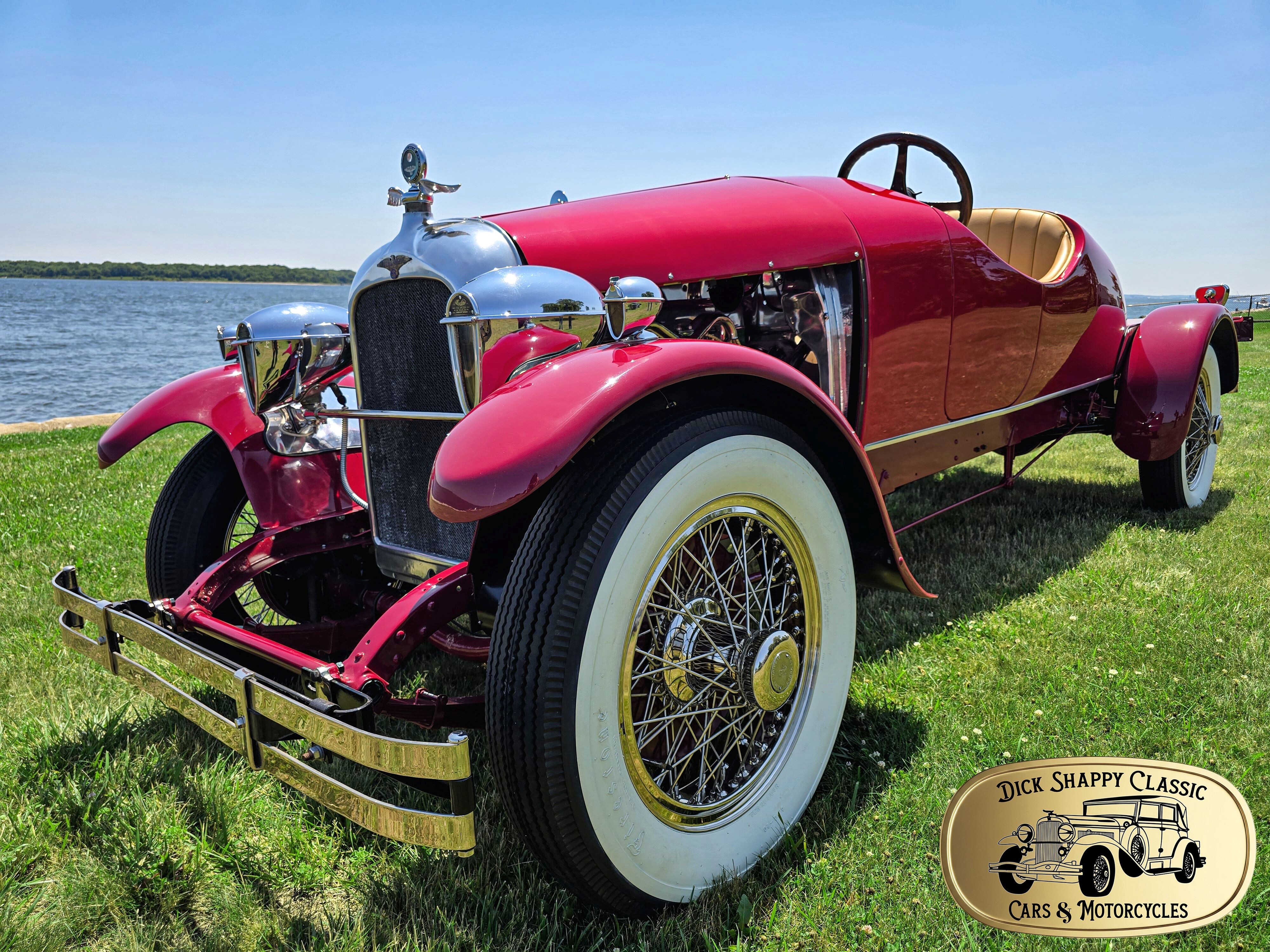
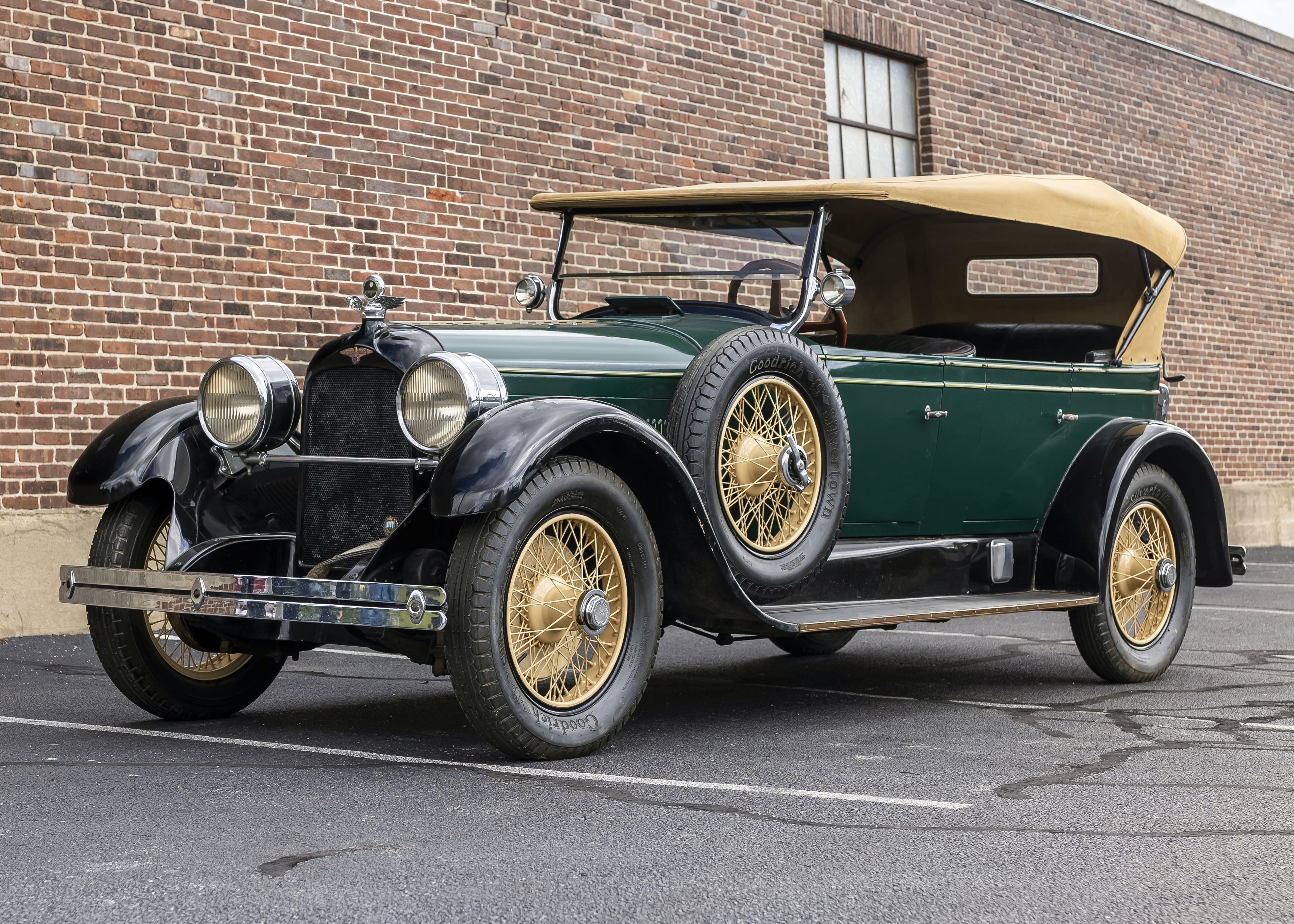
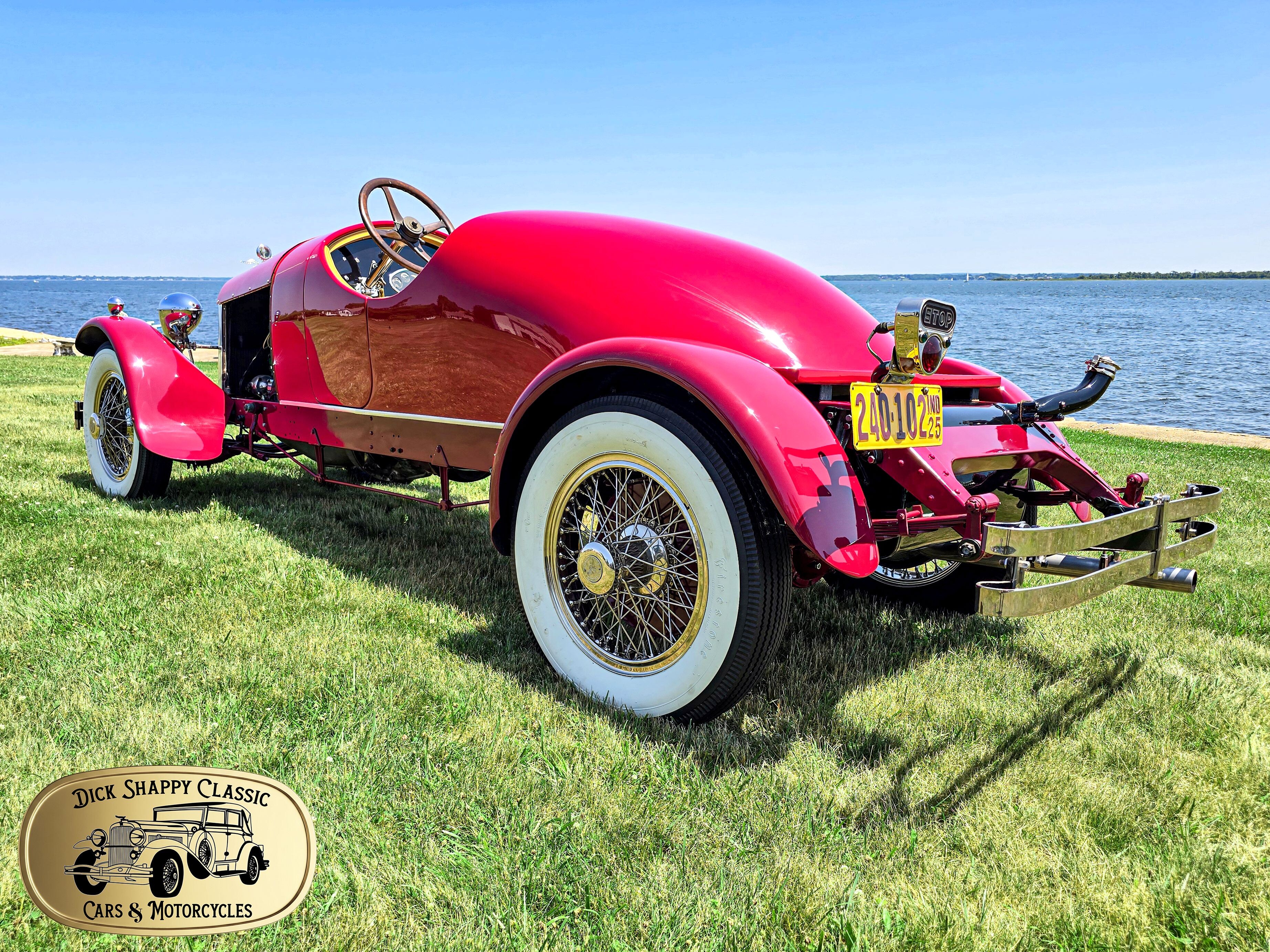
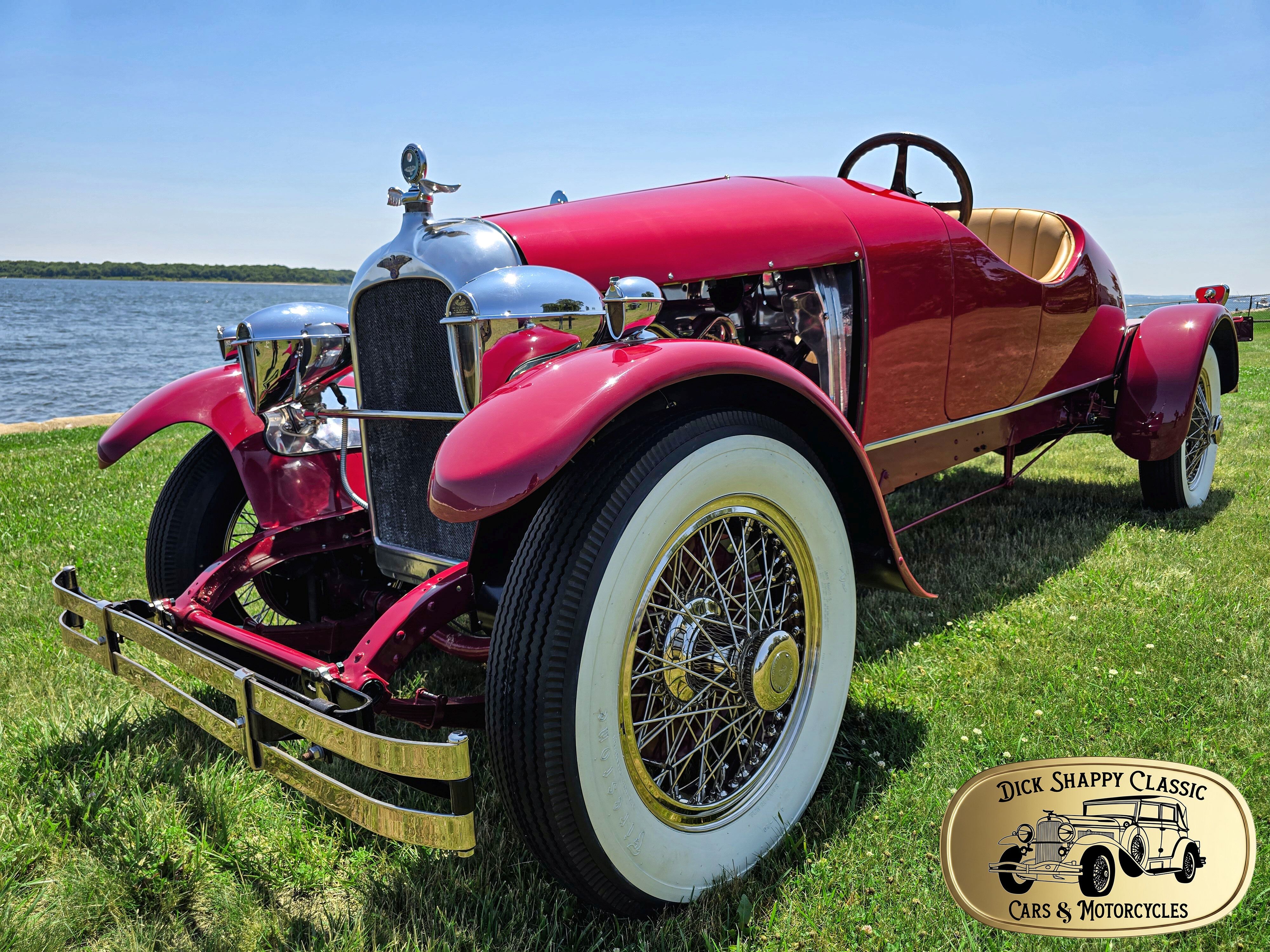
Most Model A bodies are built by Millspaugh & Irish of Indianapolis, the coachbuilder closest to the factory, and the touring body — five-passenger on the standard chassis, seven-passenger on the long one — is the most common form the car takes. Early tourings come from both Millspaugh & Irish and Rubay of Cleveland; historian Fred Roe puts the early touring bodies at roughly 75 cars. Late Millspaugh & Irish tourings carry a cleaner body with a double-beaded beltline moulding — a small detail that helps date a body and, more usefully, spot one that does not match the chassis year it sits on. Alongside the tourings, the catalogue and the coachbuilders offer phaetons (including dual-cowl phaetons, where rear passengers get their own cowl and windscreen), roadsters, sedans, coupés and formal town cars, plus individual commissions. Brunn of Buffalo builds the boattail roadster in this guide's photographs; Fleetwood, Locke, McFarlan and others all clothe Duesenberg chassis in period.
That variety has a dark side you must price in. Open sporting bodies are worth more than closed formal ones, so over the decades Model A chassis have been rebodied — sometimes in period, sometimes much later, sometimes in the style of a body the chassis never carried. A roadster body on a Model A chassis may be a glorious, honestly described later creation, or it may be presented as something it is not. The chassis is the car, legally and historically; the body is a chapter in its life. Your job, covered in the inspection section, is to establish which chapter you are paying for.
The Model X needs its own paragraph because it sits so close to the A and is so often blurred into it. Built in the old company's last months and into 1927, after Cord's takeover, the X is a larger, developed derivative: 135-inch wheelbase, tubular cross-members, a hypoid rear axle, front springs relocated over the front axle, 21-inch Buffalo wire wheels and cast-alloy running boards. Its overhead-cam eight makes 100 bhp — published sources disagree on its displacement, some quoting the A's 260 cubic inches with a revised, non-crossflow head, others 322 cubic inches — but marque authority Randy Ema's figure of just 13 Model Xs built, with only four known to survive, is the number the market works to. Few X components interchange with A components, despite the family resemblance. If a car is offered as an X, every X-specific feature has to be present and verified, because the rarity premium is enormous and the temptation it creates is obvious.
| Model | Years | Engine | Output | Built | Character |
|---|---|---|---|---|---|
| Model A, standard chassis (134 in) — touring, phaeton, roadster | 1921–1926 | 260 cu in single-overhead-cam straight eight | 88 bhp | Part of the c. 600 Model A total; no trustworthy split by body survives | The Model A as most buyers meet it: open five-passenger coachwork, Millspaugh & Irish above all |
| Model A, long chassis (141 in) — seven-passenger touring, sedan, town car | 1921–1926 | 260 cu in single-overhead-cam straight eight | 88 bhp | No separate figure survives | The formal car: bigger, heavier, chauffeur-era proportions, closed and seven-seat bodies |
| Model A, individual coachwork (e.g. Brunn boattail roadster) | 1921–1926 | 260 cu in single-overhead-cam straight eight | 88 bhp | Individual commissions within the c. 600 total | One-off character; value lives in the coachbuilder's name and the body's documented originality to the chassis |
| Model X | 1926–1927 | Single-overhead-cam straight eight; 260 or 322 cu in depending on source | 100 bhp | 13 | The bridge to the Model J: larger, developed, almost nothing interchanges with the A; four known survivors |
Read that table as the guide's first lesson in Duesenberg honesty. The total is an order of magnitude, not a census: roughly 600 cars, with serious sources ranging from about 500 to about 670. Production by body style was never published in a form that survives intact. Where a figure does not exist, the table says so rather than inventing one. Apply the same standard to any seller's claims.
Engines and gearboxes
The 260-cubic-inch overhead-cam straight eight
The engine is the reason this car exists, so learn its architecture. It is a straight eight of 260 cubic inches (about 4.3 litres), built long and narrow in the racing manner: a small bore of 2⅞ inches against a long stroke of 5 inches. That long stroke defines the character — not a lazy, low-speed slogger of the kind most American luxury makers build in 1921, but a comparatively small-displacement eight designed to rev, with 88 bhp at 3,600 rpm and strong torque of around 170 lb-ft at 1,500 rpm. Compression is a modest 5:1, dictated by period fuel, and one reason the engine tolerates modern petrol's octane while remaining sensitive to mixture and cooling instead.
The block is cast iron with a detachable cast-iron head, carried on an aluminium crankcase and sump — expensive, weight-conscious construction for 1921. The crankshaft runs in just three main bearings: period racing practice, and it has a direct consequence for you — bearing condition and oil pressure are not background details on this engine, they are the whole game, as the problem areas develop. The connecting rods are tubular, another racing touch. The combustion chambers are hemispherical, with angled valves and crossflow porting — inlet on one side, exhaust on the other — when most production engines breathe through siamesed ports in a flat head.
On top sits the signature feature: a single overhead camshaft, driven by a vertical shaft and bevel gears, opening two valves per cylinder through rocker arms. Understand what this replaces, because sellers and even some writers get it wrong. The brothers' earlier racing fours and the Model A prototype use walking-beam valve gear — horizontal valves worked by long rocking beams from a camshaft low in the engine. It is ingenious, it wins races, and it is not what a production Model A has: Fred abandons it because the overhead camshaft gives shorter, stiffer actuation, a cleaner chamber and higher usable engine speed. If you are shown a "Model A engine" with walking-beam gear, you are looking at a racing or prototype engine, or a Rochester-Duesenberg proprietary engine of the kind supplied to other makers — fascinating, but not this car, and not worth this car's money in this car's engine bay. The bevel-gear cam drive matters practically too: it needs correct meshing and backlash, wears in ways that show first as valve-timing scatter and top-end noise, and setting one up is specialist work.
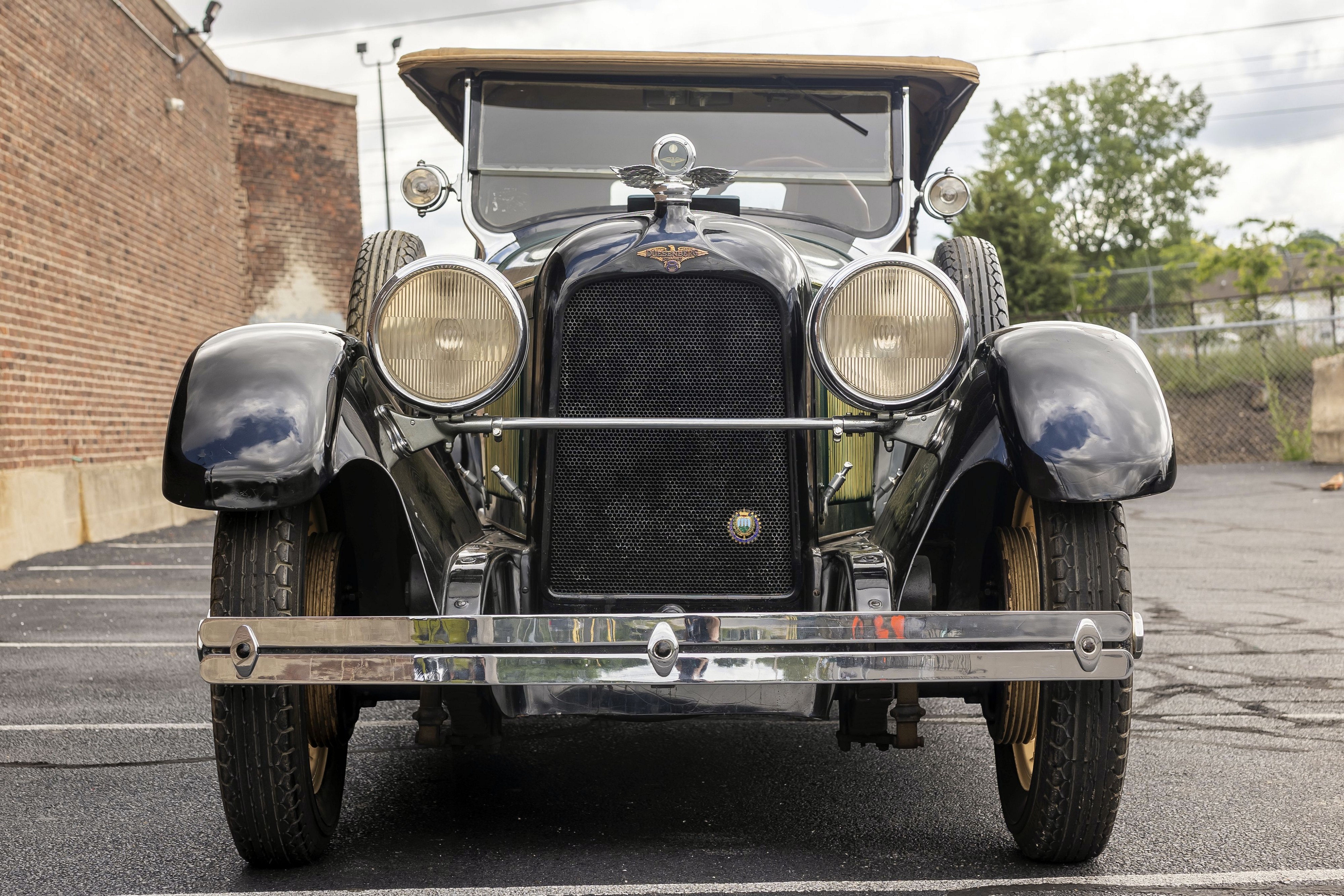
The breathing arrangement is pure Duesenberg theatre and worth recognising on sight. A single updraft carburettor — a Schebler instrument is the period fitment you will most often encounter — sits low, on the exhaust side of the engine, so the incoming charge picks up heat on its way; the mixture then passes through the cylinder head itself to a gracefully curved inlet manifold on the other side, the famous ram's-horn manifold. The pre-heating is deliberate: fuel quality in the early 1920s is poor and vaporisation is a real problem, and a warm charge is Fred's answer. The cost, a century later, is that the system is tied to the head casting, so cracks or corrosion in that passage are head-off problems, not bolt-on fixes. Ignition is by Delco coil and distributor, conventional even then — of everything under the bonnet, it is what a competent generalist understands fastest.
Lubrication is by a proper high-pressure system — remarkable when many engines still rely on splash and hope — feeding the main bearings, camshaft and valve gear. The camshaft lives at the top of a tall engine, at the far end of the oil's journey: the component that defines this engine is the one most dependent on oil arriving promptly, at pressure, on every cold start of its life.
A full, correct rebuild of this engine is a major undertaking and you should budget in that spirit. There are no exchange units and no catalogue internals; bearings are poured Babbitt, machined and fitted by hand, pistons are made to order, and the cam drive has to be set up by someone who has done it before. Realistic specialist quotes for a complete engine rebuild, with the head work and cam drive included, run from about $45,000 to $90,000 depending on what the strip-down finds, and a car priced as though its tired engine were a minor detail is mispriced by roughly that amount. Conversely, an engine with a documented recent rebuild by a recognised Duesenberg specialist is one of the strongest assets a Model A can carry.
Carburation, ignition and cooling
The ancillaries are simpler than the engine they serve, and most running problems trace back to them. The single updraft carburettor feeds eight cylinders through that long, heated path, and its condition governs starting, idling and pick-up out of all proportion to its size. Worn throttle spindles, a fuel-logged float sitting low, and jets that generations of owners have "cleaned" with wire until their calibration is anyone's guess are the usual findings. A carburettor rebuild by a specialist who knows the type runs roughly $1,500 to $3,500; a car that starts reluctantly, hunts at idle and pulls cleanly at speed is usually telling you about this end of the system, not about valve timing.
The Delco ignition wants points, condenser, rotor and cap inspected as consumables, the advance mechanism freed and lubricated, and plug leads renewed in correct style rather than modern suppressed cable, which can behave oddly with the original coil. Misfires under load that vanish at a cruise are ignition until proved otherwise; misfires that arrive with heat and stay point at the coil.
Cooling is by a large radiator and water pump, generously sized because the engine is expected to work hard. Its enemies a century on are internal: silt and scale in the block and head waterways, a radiator core flowing through a fraction of its tubes, hoses and gaskets past their life. A car that runs warm in traffic but cools on the open road points at airflow and marginal core capacity; a car that heats under sustained load points at circulation — or at a head-gasket or head-casting problem you need to know about before money changes hands. Temperature behaviour on a long test drive is diagnostic evidence, not small talk.
Gearbox, torque tube and chassis
Behind the engine sits a three-speed manual gearbox with no synchromesh, driving through a torque tube to a live rear axle. Three speeds sounds sparse until you remember the torque curve: with maximum pull at 1,500 rpm, top gear covers a wide range and period drivers treat the box as an occasional instrument. What it demands is technique — every change a double-declutch, judged on engine speed. A seller who crashes the gears is showing you his unfamiliarity; a box that will not engage cleanly even in skilled hands, jumps out under load, or whines in one ratio only is showing you worn dogs, bearings or selector geometry. Gearbox work is machining and fitting, not parts swapping: budget roughly $8,000 to $20,000 for a proper specialist rebuild if the strip-down finds real wear, and treat a quiet, clean-shifting box as a genuine plus point.
The chassis itself is deliberately conventional — a pressed-steel ladder frame with channel-section side members and tubular cross-members, a tubular beam axle at the front and the live axle at the rear, both on semi-elliptic leaf springs, with Watson Stabilator friction dampers. Centre-lock wire wheels carry tall, narrow tyres. The conventionality is a virtue: the chassis is repairable by any firm that works on pre-war cars, and its enemies are the universal ones — rust in the channel sections, hidden accident damage, tired springs and worn shackles — covered, with their tests, in the problem areas. Steering is by a period worm gear, heavy at parking speeds; play at the rim beyond a modest amount is wear in the box, the drag link or the kingpins, each at a different price.
One chassis point belongs here because it defines the driving experience and surprises every newcomer: the brakes. The Lockheed hydraulic system operates internal-expanding drums at all four wheels, the front drums a full 16 inches in diameter and finned to shed heat. In 1921 this is science fiction; today it means the Model A stops with a confidence no rod-braked contemporary can match, provided — and the proviso is the entire subject of the first problem-areas subsection — the hydraulics have been maintained as a system rather than topped up and forgotten.
Problem areas
The hydraulic brakes: a production first that maintenance forgot
Start here, because the brakes are this car's greatest innovation and its most neglected system. The Lockheed layout is the ancestor of every hydraulic system you have used: master cylinder at the pedal, fluid in pipes, a wheel cylinder at each corner expanding shoes inside a drum. The original fluid is not what you think: a glycerine-and-water mixture, chosen for the seals of the day. A century of changing hands means any given car may hold residues of several fluids, seals of several ages, and corrosion from decades sitting still. Assume nothing. Ask what fluid the car runs now, when the system was last rebuilt as a whole rather than patched at one corner, and who did it.
The failure mechanisms are specific. Water-bearing fluid, and plain age, corrode master and wheel cylinder bores from inside; a pitted bore lets the seal pass fluid under pressure, presenting as a pedal that sinks slowly at a standstill — hold firm pressure for a full minute and a healthy system does not creep. Seals harden with age and incompatible fluid; a car treated to a fluid its seals dislike can weep at every joint while still stopping after a fashion, and the cure is complete seal renewal in the correct material, not a tightening tour of the unions. Steel pipes corrode outside along the chassis and inside where moisture has sat; a pipe that fails under panic pressure does so without warning, so a proper recommissioning replaces pipework wholesale. Drums are the least of it — the big finned fronts wear slowly — but shoes need correct relining and arcing to the drum, and a car that pulls under braking is reporting unequal friction or hydraulics side to side, not an alignment fault.
The economics are favourable by Duesenberg standards, which is why there is no excuse for a bad system. Sleeving master and wheel cylinders in brass or stainless — the permanent cure for pitted bores — plus new seals, pipework, relined shoes and a fluid change typically runs from about $6,000 to $12,000 at a pre-war specialist. Treat a Model A with a spongy, sinking or pulling pedal not as a negotiating point but as a measurement of its previous maintenance standard — one that also tells you how the engine has probably been treated.
Engine oiling, the cam drive and valve gear
The engine's risks concentrate where its design is most distinctive: at the top, and at the bearings. The camshaft and rockers are the last components the oil reaches on a cold start. Worn rocker faces and cam lobes show first as a top end that will not stay quiet — clearances that close up again within a few hundred miles of adjustment are not an adjustment problem, they are a wear problem, and the wear metal goes into the oil and through the bearings. Ask when clearances were last set, by whom, and whether they held. A valve-gear strip and rebuild, with lobes and rocker surfaces restored by welding and regrinding or by specialist manufacture, runs roughly $10,000 to $25,000 depending on how much has to be remade, and it is skilled, slow work with a short list of people qualified to do it.
The cam drive — vertical shaft and bevel gears — adds a failure mode most engines lack. Worn or badly meshed bevel gears introduce timing scatter: valve timing wanders, and the engine develops an idle unevenness and a reluctance to pull cleanly that owners chase through carburettor and ignition for years. The test is comparative: if mixture and sparks are demonstrably right and the engine still will not settle, have a specialist check the drive's backlash and mesh before anyone sells you a third carburettor rebuild.
Oil pressure governs the bottom end. The crankshaft runs in three main bearings of poured Babbitt, dependent on pressure-fed oil arriving without interruption. Low hot oil pressure at running speed, with correct oil and a known-good gauge, means bearing clearance until proved otherwise — and on a three-bearing crank there is no redundancy. Knocking under load that fades as you lift off is the classic bearing signature; a start-up rumble that takes a second too long to be replaced by pressure reports drain-down, a tired pump or pickup trouble. No such diagnosis is complete without a strip, which is why documented engine history is worth more than any roadside impression. A bottom-end rebuild sits inside the full-rebuild figures quoted earlier, and partial work — one bearing, in situ, by a generalist — is how good engines get ruined cheaply.
Two further engine points belong in every notebook. First, the heated inlet path makes the head casting a mixture component as well as a structure: corrosion or cracking there can admit coolant to the inlet tract or exhaust gas to the water jacket, presenting as unexplained coolant loss, a sweet smell at the exhaust, or cooling-system pressurisation a gasket theory does not explain. A pressure test and a combustion-gas test in the header tank separate gasket from casting — insist on both on any car that uses water. Second, the aluminium crankcase and sump are century-old castings: porosity weeps, hairlines around bosses and old welds are normal in moderation, serious near bearing housings or the cam-drive tower. Oil leaks are rarely dangerous in themselves; what they mark is the information.
Chassis, axles, steering and springs
The chassis fails in ordinary pre-war ways, and the tests are ordinary too — which makes skipping them inexcusable. The frame's channel sections trap water at their lower flanges and cross-member junctions; rust works outward from inside the channel, so a frame sound in shiny paint can be thin where it matters. The test is physical: hammer and strong light along the lower flanges, spring hangers and outriggers, listening for the change from ring to thud. For accident damage, sight along both rails for ripples, compare spring-hanger positions side to side, and measure wheelbase on both sides — the figures must match each other and the 134- or 141-inch chassis the paperwork claims.
Springs sag and leaves crack, usually the main leaf at the eye; a car sitting low or lopsided at one corner is telling you which. Shackle pins wear oval, adding a wander owners blame on the steering. The Watson Stabilator friction dampers need their friction discs clean, correctly tensioned and evenly matched side to side; a car that pitches and floats has usually lost damper function entirely, while one that crashes over ridges may have dampers seized solid — both are cheap in parts and fiddly in labour, roughly $1,500 to $4,000 to strip, re-disc and set up all four. Kingpins and their bushes wear and produce the classic shimmy and vague straight-ahead feel; the test is to jack the front axle, grip the wheel top and bottom, and rock — movement there is kingpin or hub bearing, and rocking side to side at the rim separates steering joints from both. A steering box with excessive backlash can sometimes be adjusted, but a box worn in the straight-ahead position only — the classic pattern, because that is where it lives — needs a rebuild, and worm-and-nut steering components are made, not bought: budget $4,000 to $9,000 for specialist steering work if play cannot be adjusted out.
The rear axle and torque tube are robust, with wear showing as a clonk on taking up drive — pinion and crown-wheel backlash, worn universal or torque-tube bearings — and as oil on the brake backplates when axle seals fail, which then becomes a brake problem as well as an axle one. Wire wheels deserve a subsection of your attention on any car: centre-lock wheels must run true, with no loose or broken spokes, and the hub splines or tapers must be unworn, because a wheel that frets on its mounting wears both itself and the hub, and replacement hubs for a Duesenberg are a manufacture-to-order conversation. Spin each wheel on the jack and watch the rim against a fixed point; a wobble you can see is a wheel that needs a specialist rebuild, roughly $1,200 to $2,500 per wheel depending on rim and spoke condition.
Coachwork: wood, metal and a century of taste
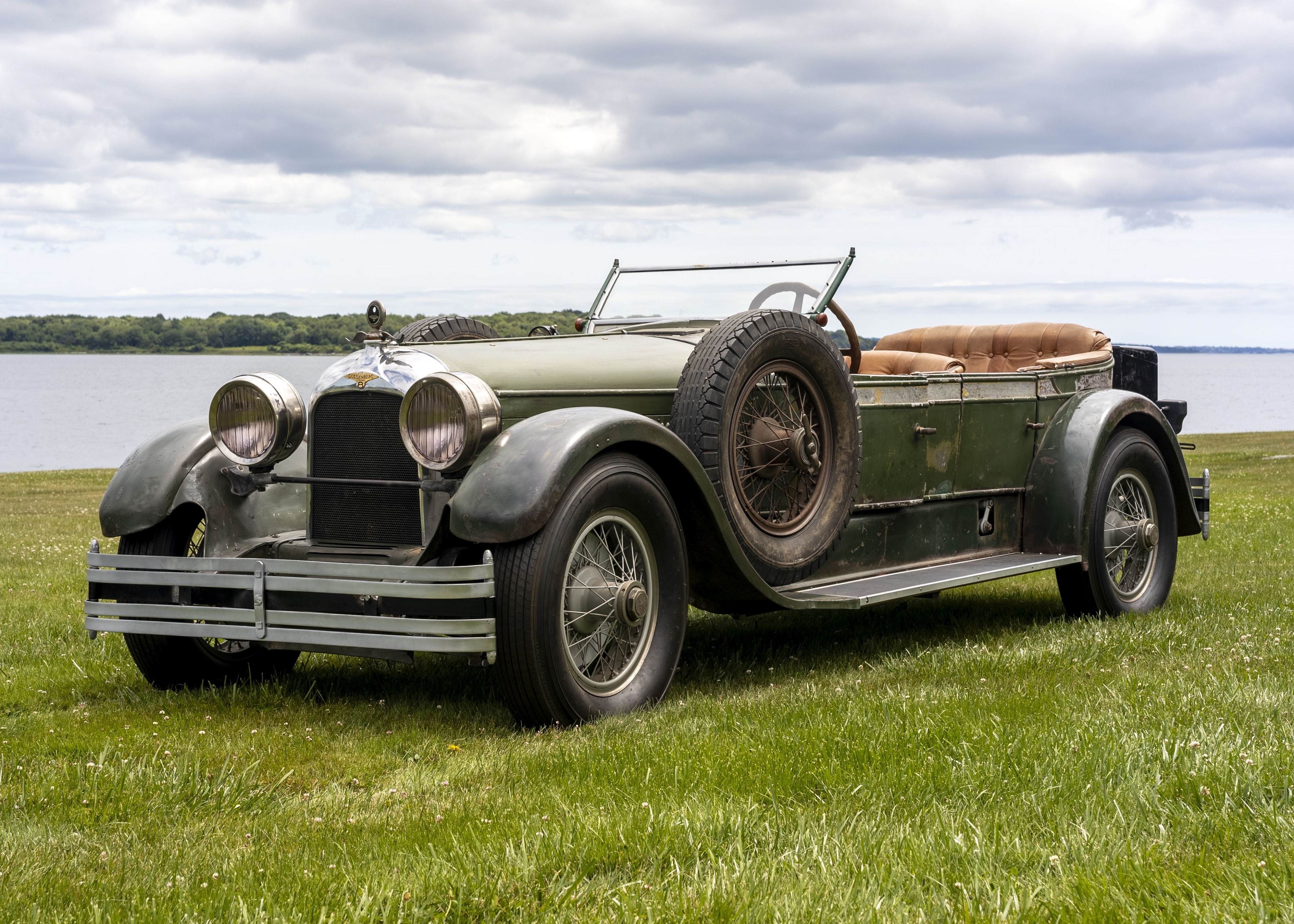
Almost every Model A body is a wood-framed structure — ash framing skinned in steel or aluminium — and wood is where these bodies die. The framing rots from the bottom up and from the inside out: sill members at the base of the body, the lower door pillars, the framing around the floor and the bases of the cowl and rear quarters, wherever water sits after running off the skin. The skin hides it. A body can present beautifully in fresh paint while its sills are compost, and the paint is often the reason — a cosmetic restoration over rotten framing is the single most common expensive deception, honest or otherwise, in the pre-war market. The tests are in the inspection section, but the principle belongs here: doors that drop as they open, door shuts that have been planed or packed to fit, a body that creaks and works over rough ground, and softness under a magnet-and-fingernail survey of the lower panels are all structure talking, and a structural re-wood of a touring body is a coachbuilder's season of work at $30,000 to $75,000 depending on how much framing and skin is involved. Closed bodies add roof and pillar framing to the same list, and leather or fabric roof coverings on formal bodies conceal their own timber and rot.
Panel metal has its own ledger. Aluminium skins corrode where they meet steel fasteners; steel skins rust at their folded lower edges; most bodies carry some filler — the question is how much, and over what. Original coachwork by a named builder has value in itself, which is why the rebody question returns here as a condition issue: a body "in the style of" a famous coachbuilder describes a copy, not the builder's work. Read auction and dealer language with that precision, because the market writes it with that precision.
Trim and equipment complete the picture. Interiors on open tourers suffer sun and weather; a retrim in correct materials is $15,000 to $35,000 depending on body style and hide quality, and instruments — including the Jones tachometer installation many cars carry on the cowl — are restorable by a handful of specialists rather than replaceable. Side screens, tops and their irons are part of an open car's completeness: a touring missing its top irons and side screens is missing parts that must be made, and "made" is the operative word everywhere on this car.
The parts desert, stated plainly
There is no reproduction parts industry for the Duesenberg Model A; let that sink in before you fall for a car. For a Model T or a 1960s Mercedes a catalogue exists; for this car, the supply chain is the ACD Club's network, specialists' shelves of new-old-stock and salvaged parts, the drawings held by the ACD Museum in Auburn, Indiana, and the machine shop. Internals are made or re-poured to order, brake cylinders sleeved, gaskets cut, trim fabricated. Almost everything is obtainable — at the speed of craftsmanship, at prices set by hours, not parts bins. Two consequences follow. Completeness is worth more here than on almost any other car: a car missing its carburettor, distributor, instruments or top irons carries a hidden bill and delay no discount captures until the parts are sourced. And a car accompanied by spares — long-term owners accumulate them — is worth a measurable premium; inventory any spares package as carefully as the car.
How to inspect one
Inspect in this order: identity and history first, because on a Model A they decide what the metal is worth, and the expensive mechanical judgements last.
- Establish the identity before you touch anything. Read the chassis number stamped on the frame and the engine number on the engine, photograph both, and compare them character by character with the title and every document the seller produces. Bonhams' catalogue for a 1924 roadster lists chassis 1003 with engine 1392, which teaches the essential lesson: chassis and engine numbers on a Model A are not the same number, and "matching numbers" in the modern sense is the wrong test. The right test is whether the pairing is the one factory records and marque historians recognise for that chassis. If the numbers are ground, restamped or "to be found later," stop — everything else you inspect is a car you cannot identify.
- Work the provenance file like an auditor. You want a chain of ownership as continuous as the car's age allows: period photographs, old registrations, restoration invoices naming the chassis number, club correspondence, previous auction catalogues. Gaps are normal on a century-old car; contradictions are not. A car that was a sedan in a 1960s photograph and is a roadster today has been rebodied — acceptable if disclosed and priced, a walk-away if denied.
- Put the Model X question to bed. If the car is offered as a Model X, verify the X's distinguishing features one by one — the 135-inch wheelbase, the hypoid rear axle, the relocated front springs, the 21-inch Buffalo wheels, the cast-alloy running boards — and take the answer to a marque authority before proceeding, because only 13 exist and the claim is therefore extraordinary. If the car is offered as a Model A, this same step protects you in reverse: X features on an "A" mean a car assembled from parts of both, which needs explaining in writing.
- Measure the chassis. Tape the wheelbase on both sides and check the figures agree with each other and with the claimed 134- or 141-inch chassis. Sight along both frame rails, tap-test the lower flanges, spring hangers and outriggers with a small hammer as the chassis section describes, and look for ripples, plates and fresh underseal applied exactly where questions would be asked.
- Interrogate the body structure, not the paint. Open and close every door slowly, watching for drop at the latch — the wood-framing test from the coachwork section. Probe, with permission, at sill bottoms, pillar bases and floor edges; run a magnet in a cloth along the lower panels to map filler; check door shuts are even rather than planed to fit a sagging body. On an open car, erect the top and fit the side screens if they exist — missing irons are a completeness bill.
- Cold-start the engine yourself, from stone cold. Insist the car is cold when you arrive; a warmed-up Duesenberg is a seller's favour you did not ask for. Watch starting behaviour, listen for the interval before oil pressure registers, and note start-up rumble or top-end clatter and how long each lasts — the oiling section explains what each sound is reporting. A healthy car settles to an even, mechanically busy idle; hunting and lumpiness start your carburation and ignition checklist, not your excuses.
- Read the gauges and the fluids like instruments. Hot oil pressure at running speed is the single most informative number on the car; be suspicious of a gauge that cannot be verified. Check oil for emulsion and coolant for oil or combustion gas — the head-passage problem announces itself in exactly these places — and run both cooling tests on any car that uses water.
- Test the brakes as a system. Before driving, hold hard pedal pressure for a full minute: creep means fluid is passing a seal somewhere, full stop. On the road, brake firmly from speed in a straight line, hands light on the wheel — pull means unequal braking, and a spongy first application that firms on the second means air or compliance in a system that should have neither. Ask, in terms, what fluid the system contains and when it was last rebuilt whole; vague answers price the full brake recommissioning into your offer.
- Drive it long enough to get everything hot. Twenty minutes is a look; an hour is an inspection. Use the full rev range, listen for bearing knock under load that fades on the overrun, watch temperature behaviour against the cooling section's two patterns, and work every gear with proper double-declutching — noting clean engagement, ratios held under load, and any single-gear whine. Judge steering play at the rim, then separate box, linkage and kingpin wear with the jack tests from the chassis section.
- Get it on a lift and read the underside. You are looking for the sum of the previous steps: axle oil reaching the brake backplates, damper condition, spring leaves cracked at the eyes, exhaust and torque-tube condition, the state of brake pipes along the frame, and the underside of the body framing where rot starts. Photograph everything; on a car at this level, your inspection photographs become part of its file.
- Audit completeness against the parts desert. List what the car should have and check it physically: correct carburettor and distributor, instruments complete and original, spare wheel and carrier, top irons and side screens on open cars, tools and handbook if claimed, and any spares package itemised and present. Every missing item is a manufacturing project, not an order form — price it that way.
- Take the file to the marque before you take the car home. Have a recognised Duesenberg specialist, or the ACD Club's marque experts, review the numbers, the file and your notes — ideally with a hands-on inspection of their own. On almost any other classic this is prudence; on a Model A, where a few dozen cars carry the whole market, it is simply how the car is bought.
Values
The Model A market is thin, expert-led and individual; the first skill in reading it is accepting there is no rate for the car as there is for a mass-produced classic. A few dozen survivors, a handful of transactions in any period, and a buyer pool of committed marque collectors means each sale is a negotiation about one specific car — its chassis, its body, its history file — not a reading of a price curve. The market block beneath this guide gives you the landscape; what follows is how to walk it.
Condition spread is wide, driven less by cosmetics than by the two currencies this market trades in: originality and documentation. At one end sits the car with a continuous, evidenced history, its chassis and engine pairing confirmed, its body original to the chassis or honestly accounted for, its mechanical work documented by recognised specialists. At the other sits the car with a broken file, an unexplained body, questionable numbers and an engine of unknown internal state. Between those poles the gap is not a percentage adjustment — it is the difference between a car the marque community will vouch for and a car it will discuss. The community is small and its memory long; reputation attaches to individual chassis and follows them between owners, which is why the inspection section spends so long on identity.
Variant premiums follow coachwork and rarity, in that order. Open bodies — roadsters, phaetons and sporting tourings — command the strongest interest, because the Model A is bought to be driven and shown, and a distinguished coachbuilder's name, genuinely documented, adds its own premium. Closed formal cars and seven-passenger bodies are the connoisseur's end: slower to sell, and often the most original cars of all precisely because nobody has coveted them into a rebody. The Model X is a market of its own — with a production run you can count on two hands and only a few survivors, an X changes hands by private negotiation among a tiny circle, and using Model A values to reason about one, or the reverse, misleads in both directions.
The project-versus-driver calculation has a shape peculiar to this car. On a common classic, a project is a discount bridged by predictable restoration costs. On a Model A, the restoration itself is the risk: engine and coachwork work is measured in specialist seasons, parts must be made or found, and the finished car's value depends on the quality and documentation of work by people the market recognises. A project with a superb file and complete, original components can be a rational purchase for a patient buyer, while a shiny, recently cosmeticised car with structural or identity questions can be the most expensive option on the page. Asking prices are opening positions in a market where achieved prices are the only real evidence, and sellers of the best cars are rarely in a hurry. Negotiation is courteous, evidence-based and slow: you justify your number with the file, the inspection and the costed list of what the car needs.
Eligibility matters too. The Model A is recognised by the Classic Car Club of America as a Full Classic, opening that club's shows, judging and tours, and the Auburn Cord Duesenberg community is active and knowledgeable. Cars with the history to win at that level sit at the top of the market for a reason. You are buying a car's standing in a small, exacting world — and standing, once lost, is the one component no machine shop can remake.
Parts and ownership
Ownership is a relationship with a small network, and joining it is the first act of ownership — before you need it. The Auburn Cord Duesenberg Club is the centre of gravity: its members hold the knowledge of which cars survive, what was done to them, and who can do what. The ACD Museum in Auburn, Indiana, holds factory-derived records and drawings that matter when a component must be remade to original specification. Around them sits a short list of specialists — engine men who pour Babbitt and set up bevel-gear cam drives, brake men who sleeve cylinders as routine, coachbuilders fluent in ash framing, trimmers, instrument restorers. Your car's file should record who has done what; add your work in the same detail, because the next buyer pays for that continuity exactly as you did.
Running costs divide into the predictable and the event-driven. Predictable: the car wants regular, knowledgeable maintenance — valve clearances checked and recorded so that a closing trend is caught early (a few hundred dollars in specialist time at each check if you are not equipped to do it yourself), oil of correct grade changed on time rather than mileage, the brake fluid renewed on a schedule suited to whatever modern fluid-and-seal combination the car now runs, friction dampers serviced, kingpins and chassis points lubricated, and the cooling system kept clean. None of this is exotic, but all of it assumes a mechanic who understands that the car is a 1921 racing engineer's product, not a generic pre-war tourer. Event-driven costs are the ones this guide has priced as it went: brake system recommissioning in the $6,000 to $12,000 range, steering rebuilds at $4,000 to $9,000, wheel rebuilds at $1,200 to $2,500 a corner, a retrim at $15,000 to $35,000, structural body wood at $30,000 to $75,000, and engine work that runs from five figures for valve gear to the full-rebuild range quoted earlier. Storage matters as much as spending: a dry, stable environment, regular exercise rather than long sleep, and a trickle of preventative attention will keep a Model A ready in a way that a decade of neglect undoes expensively.
Consumables are the pleasant surprise. Tyres in the tall period sizes come from the classic-tyre trade; plugs, points and condensers for the Delco system are obtainable; oils are modern and better than the factory knew. Fuel is straightforward — the low compression ratio is tolerant. What you cannot buy is time: a component sent for manufacture, or a specialist's waiting list, sets your calendar, so plan work across winters and keep the car whole for the driving season.
Driving the car is the point of all of it. The overhead-cam eight pulls from low speeds with a flexibility that makes the gearbox an occasional tool, the hydraulic brakes stop with a confidence that startles drivers of other 1920s machinery, and the chassis covers distance at a gait that explains why these cars were bought by people who drove. Learn the double-declutch until it is reflex, plan braking with the respect drums deserve on long descents, and keep the engine in its happy band rather than lugging the long stroke at low revs. Owners tour these cars and show them at the highest level. A Model A that is used stays sorted; the cars that deteriorate are the ones that sit.
Which one to buy
- The all-rounder: a late-production standard-chassis touring by Millspaugh & Irish. The most complete expression of the car as its makers intended — open five-passenger coachwork on the 134-inch chassis, the body style with the deepest knowledge base and the easiest life on tour. Buy the best-documented example you can find and you own the reference Model A.
- The showpiece: a documented Brunn boattail roadster, like the 1925 car photographed for this guide. The most glamorous Model A you can buy — provided the file proves the body belongs to the chassis. The glamour is the value, so the proof is the purchase.
- The purist's car: an early touring with Rubay or early Millspaugh & Irish coachwork. Closest to the 1920 debut and the racing department's original intent. You accept earlier production details and a thinner survival rate in exchange for the car's founding form.
- The grand tourer: a long-chassis seven-passenger car or a closed sedan. The 141-inch formal cars are the overlooked end — often the most original survivors, with room for the whole family on an ACD tour. You trade open-car glamour for originality, and many experienced buyers call that the smart trade.
- The unicorn: a Model X. Thirteen built, a handful surviving, a separate market and a separate league of commitment. If one is genuinely offered to you, the inspection becomes a marque-level investigation and the specialists in this guide stop being advisors and become your team. Do not buy one on Model A reasoning.
- The project: a complete, documented car needing mechanical or structural work. Rational only when the history file is strong, the components are all present, and you have priced the specialist work in this guide into the deal with your eyes open. A project with missing parts or a broken file is not a cheaper Model A; it is a longer one.
The overriding rule: buy the car whose numbers, body and history file survive expert scrutiny — on a Model A, provenance is not a premium added to the car's value, it is the substance of it, and a lesser car with a proven file is worth more than a prettier car with a story.
Listed now
On Classic Listings today: 3 cars are listed here; 3 for sale and 0 marked sold; average asking price $483,333; asking range $375,000 to $650,000.
See the 3 Model A cars currently listed.
The market — recorded sales
No dated sales recorded for this series yet — as sales are recorded, they will appear here with their dates and prices.
For sale now
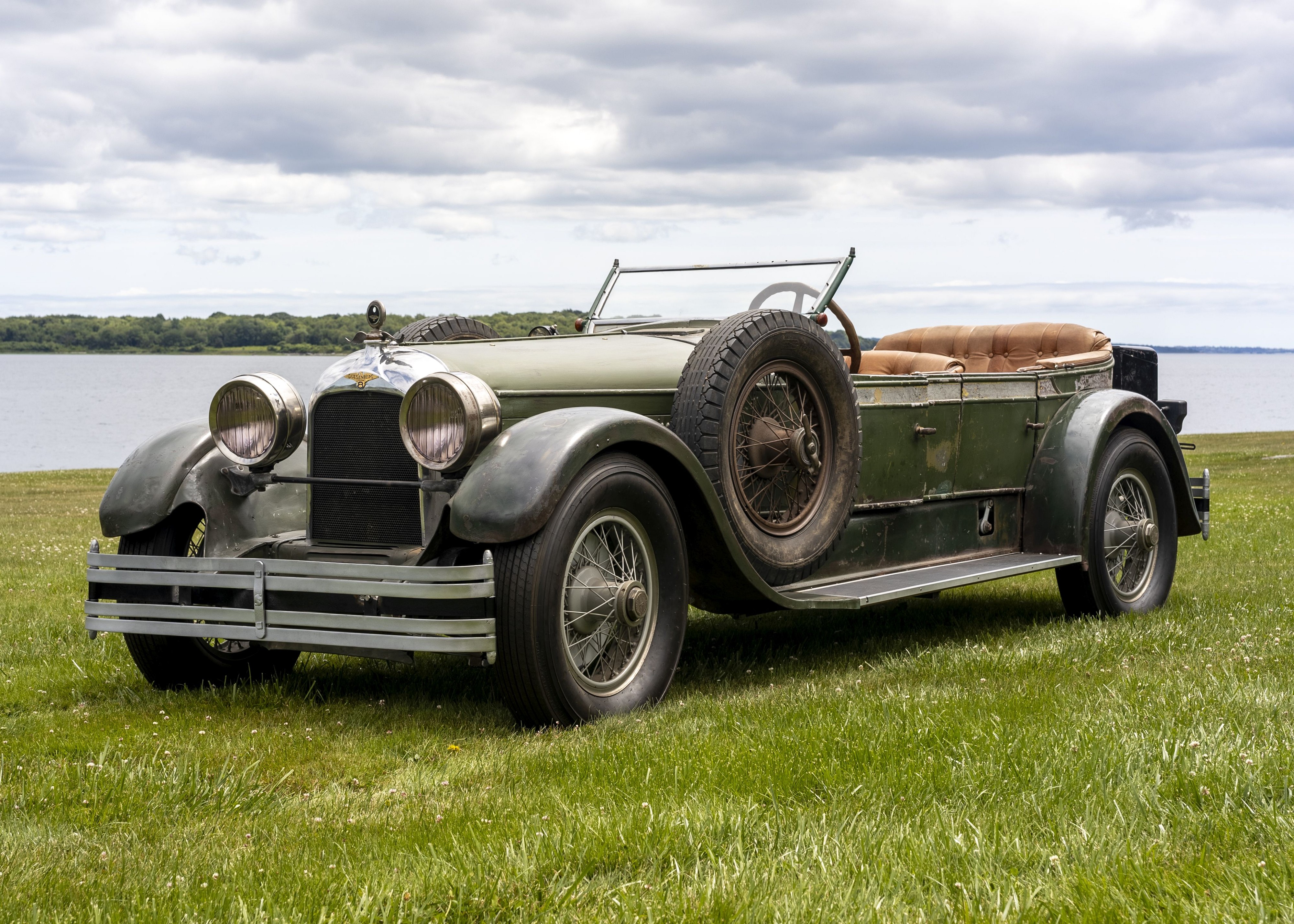 $425,000 · 447% above typical
Expand
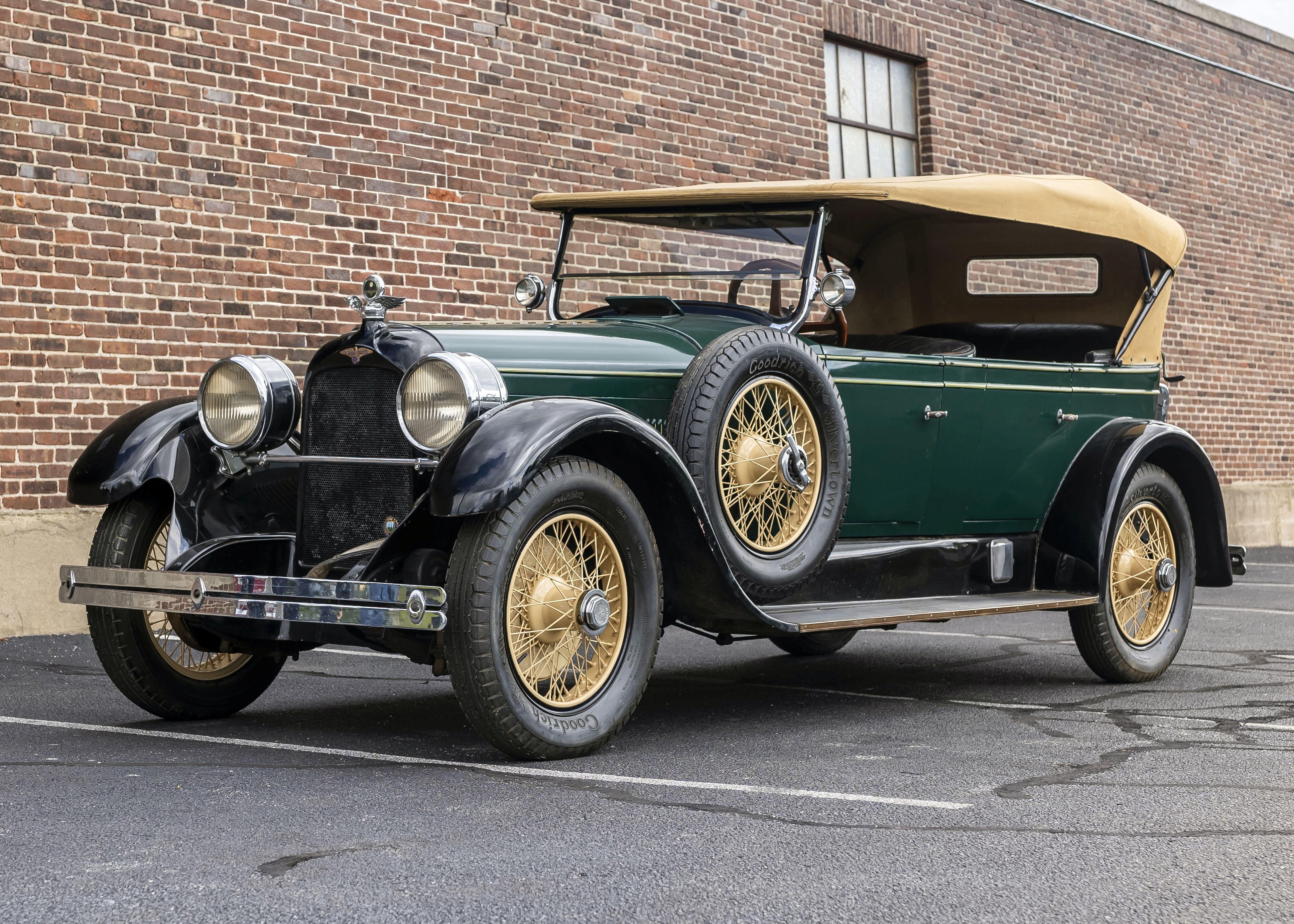 $375,000 · 383% above typical
Expand
 $650,000 · 737% above typical