
Fiat 124 Spider buyer's guide
Fiat 124 Spider -- the model's own buyer's guide: variants, values and what to check.
Years listed: 1980-1982 · Series: 124 Spider
Overview and history
The Fiat Spider 2000 is the last, largest-engined and most developed version of the 124 Spider, the small Italian roadster Pininfarina styled, Fiat built from 1966, and America adopted as its own. If you are looking at one today — the cars in our listings are all 1979 to 1981 cars, in blue, green, white and silver, spread from Georgia to Florida to Texas — you are looking at the end of a nineteen-year run, not the beginning of one. Almost everything a Spider 2000 does well, and almost everything that goes wrong with it, follows from a design that was modern in 1966, was progressively strangled by American emissions rules in the 1970s, and was then rescued twice: once by fuel injection, and once by Pininfarina itself, which took over production when Fiat walked away.
The 124 Spider was launched at the Turin show in November 1966, on a shortened 124 saloon floorpan. The saloon was conventional — except for its engine. Aurelio Lampredi, the former Ferrari engineer Fiat hired to design its future power units, had given the 124 family a belt-driven twin-overhead-camshaft four at a time when rival family cars ran pushrod engines. In the Spider that engine started at 1,438 cc and grew steadily: 1,592 cc, then 1,608 cc, then 1,756 cc, and finally, for 1979, the 1,995 cc version that gives the Spider 2000 its name. The body, drawn at Pininfarina under Tom Tjaarda, barely changed, because it did not need to: long bonnet, low clean waistline, short tail, a soft top that disappears under a flush panel, and proportions that still look right fifty years later.
Underneath, the Spider was always more serious than its price suggested: double-wishbone front suspension, a live rear axle located by coils, trailing links and a Panhard rod so well that it rides and steers far better than its leaf-sprung British rivals, disc brakes all round — exotic in 1966 — and a five-speed gearbox when five speeds were a luxury. Rack-and-pinion steering was never fitted; the Spider kept a steering box throughout, and its condition decides how the car feels.
America took roughly three quarters of all the Spiders built — about 170,000 cars across the 1966 to 1985 run — and shaped the car's later life more than Italy did. Federal impact bumpers arrived for 1975, growing into the large black overriders every Spider 2000 wears. Emissions equipment multiplied — air pumps, exhaust gas recirculation, catalytic converters, retarded ignition, ever leaner carburation — making the late 1970s carburettor cars the slowest and most temperamental of the family despite the biggest engine. The fresh start came for 1981, when Bosch injection gave back the driveability and performance the smog equipment had taken.
The second rescue was corporate. Fiat withdrew from America after 1982, and most manufacturers would have killed a sixteen-year-old roadster. Pininfarina — which had always built the bodies under contract — instead took over the whole car for 1983, selling it in America as the Pininfarina Spider, and ran it to mid-1985. So the Spider 2000 sits at a hinge: Fiat-badged cars are 1979 to 1982, Pininfarina-badged cars 1983 to 1985, and mechanically they are brothers. This guide covers the Fiat-badged car in depth and the Pininfarina continuation wherever the checks are shared — nearly everywhere.
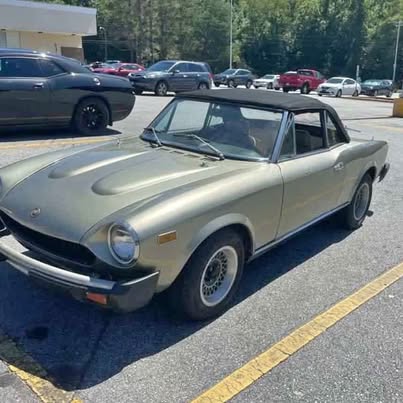
What decides value in a Spider 2000 is not rarity. These were volume cars, cheap for most of their lives and often maintained accordingly, and the survivors split starkly. A dry-state car that stayed in use — unrusted shell, healthy injected engine or sorted carburettor, a history file — is one of the most enjoyable and least expensive classic roadsters you can own. A rusted, parked-for-a-decade car with a cracked dashboard, a perished top and three owners' worth of electrical improvisation is a restoration whose costs will exceed the good car's price within a year. The two photograph almost identically. This guide is aimed at telling them apart before money changes hands, in the order that matters: shell first, identity second, fuel system third, cosmetics last.
The models
The Spider 2000 name covers a short, well-defined run inside a long family, and sellers routinely blur the boundaries — sometimes innocently, sometimes because an earlier or later identity sounds more valuable. Learn the family first, then the 2000 itself. Every 124 Spider is a two-seat convertible with a manual soft top; there was no factory coupé Spider (the 124 coupé is a separate, closed car), and the only hardtop was an accessory. A listing describing a fixed roof as original equipment is showing you an accessory hardtop, a mistake, or a different car.
| Model | Years | Engine | Output | Built | Character |
|---|---|---|---|---|---|
| 124 Spider 1400 and 1600 | 1966–1973 | 1,438 cc, then 1,592 and 1,608 cc Lampredi twin-cam | about 90–110 hp | the early bulk of production | The pure early cars: chrome bumpers, lightest, most collectible |
| 124 Spider 1800 | 1974–1978 | 1,756 cc Lampredi twin-cam | about 93–118 hp depending on market and year | a large share of 1970s production | The emissions-era car in America; the 2000's direct parent |
| Spider 2000, carburettor | 1979–1980 | 1,995 cc Lampredi twin-cam, single Weber carburettor in the US | about 86 hp US; about 105 hp Europe | two model years only in the US | Big engine, smog tuning; the cheapest way in, the most sorting to do |
| Spider 2000, fuel injected | 1981–1982 | 1,995 cc Lampredi twin-cam, Bosch L-Jetronic | about 102 hp US | two model years as a Fiat | The pick of the Fiat-badged cars: driveability transformed |
| Spider 2000 Turbo | 1981–1982 | 1,995 cc Lampredi twin-cam, turbocharged conversion for the US | about 120 hp | roughly 700 cars | Rare, fast, complicated; verify everything twice |
| Pininfarina Spider | 1983–1985 | 1,995 cc Lampredi twin-cam, Bosch L-Jetronic | about 102 hp US | the final three years of the line | The continuation car: same bones, tidier trim, Pininfarina badges |
| Spider 2000 Volumex | 1983–1985 | 1,995 cc Lampredi twin-cam, Roots supercharger, Europe only | about 135 hp | small numbers, Europe only | The fastest production Spider; an import-only car in the US |
Outputs are period figures, quoted honestly rather than precisely: American cars were rated net with emissions equipment fitted, European cars on more generous standards, and Fiat's published numbers moved by a few horsepower between markets. Treat a seller quoting a US carburettor car at European power as a seller who has not read his own documentation. Fiat never published clean production figures by year and trim, so the table gives exact numbers only where the record is solid — the Turbo's low hundreds, the roughly 170,000 total — and describes the rest as the evidence supports. Be suspicious of any listing claiming a precise build count for an ordinary 1980 Spider 2000; that number does not exist in verifiable form.
The carburettor Spider 2000, 1979–1980. Fiat took the Lampredi four to 1,995 cc for 1979 — bore 84 mm, stroke 90 mm — and renamed the American car Spider 2000. In Europe the same engine, free of the worst emissions hardware, made around 105 hp. In America it arrived with a single two-barrel Weber, a catalytic converter and conservative timing, and made about 86 hp: torquier than the 1800 it replaced and pleasant once sorted, but the slowest-feeling Spider 2000, with a fuel system now over forty years old. These cars dominate the affordable end of our listings — two of our five current cars are 1979s. Buy one for its shell, and budget to sort the fuel system rather than blaming the design.
The injected Spider 2000, 1981–1982. The single most important change in the car's life. Bosch L-Jetronic, standard on US cars from 1981, raised output to about 102 hp, but the numbers undersell it: the injected car starts instantly hot or cold, idles cleanly, pulls without flat spots, returns better economy and passes emissions tests without the carburettor cars' seasonal ritual. If you intend to drive regularly — and you should, because these cars deteriorate when parked — the injected car is worth a clear premium and is this guide's default buy. Our listings include two 1981 cars; a first-time buyer should start there.
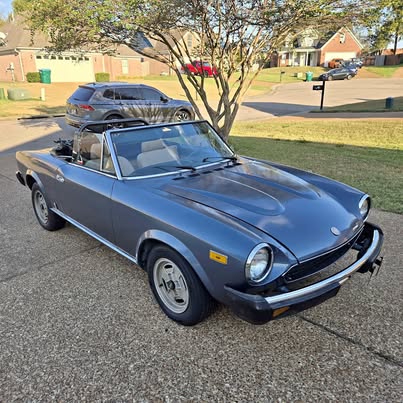
The Turbo, 1981–1982. Fiat North America commissioned Legend Industries to turbocharge a small run of injected cars — about 120 hp, roughly 700 built, the quickest Spider officially sold in America. Today it is a specialist buy: conversion parts were never as well supported as the standard car, and a badged Turbo needs its hardware, engine number and paperwork examined line by line. A genuine, complete, running Turbo is a find; a tired one is a standard Spider 2000 carrying a turbo-shaped bill.
The Pininfarina cars, 1983–1985. When Fiat left America, Pininfarina continued the car under its own name: mechanically an injected Spider 2000 with revised trim and Pininfarina badging. In Europe it also built the supercharged Volumex — Roots blower, about 135 hp — never officially sold in the US, so any American Volumex is a later import and should be documented as one. The Pininfarina cars close the story in mid-1985.
Trim, equipment and the automatic question. Spider 2000s were sold in essentially one well-equipped American specification, with air conditioning, leather and alloys as the main options. Equipment matters less than condition, with one exception that dominates our listings: the gearbox. The standard car has a five-speed manual; the three-speed automatic was a minority choice when new. Our current pool inverts that history — four of the five cars listed are automatics, one a manual — which tells you how Marketplace listings skew, not how Fiat built the cars. Buy an automatic because you want one, at a price reflecting its narrower market — never by accident, and never at manual money.
Identity: what settles what a car is. The chassis number is stamped on the bulkhead and repeated on the maker's plate; the engine number is on the block. If the numbers say the car carries a 1,756 or smaller engine, it is an earlier car rebadged or a 2000 that lost its engine to a swap — not worth Spider 2000 money until documented. A car sold as a 1981 must have injection hardware under the bonnet, not a carburettor conversion, and a 1983 or later car should carry Pininfarina, not Fiat, badging. None of this requires expertise — just reading what is stamped there before you fall for the paint.
Engines and gearboxes
The Lampredi twin-cam: the 1,995 cc engine in depth
Every Spider 2000 runs the same basic engine, and it is a great one — arguably the best mass-produced four-cylinder of its generation. Lampredi designed it as a clean-sheet twin-cam: cast-iron block, aluminium head with hemispherical chambers, two overhead camshafts driven by a toothed rubber belt — a Lampredi innovation when twin-cams meant chains or gears — bucket tappets with shim adjustment, and a five-bearing crankshaft. In 1,995 cc form it is 84 mm bore by 90 mm stroke: a long-stroke, undersquare engine that makes its power with torque rather than revs, redlining around 6,000 rpm and pulling strongly from 2,500 rpm. Compression is modest — around 8.0:1 to 8.5:1 on US emissions-era cars, higher in Europe — so it tolerates modern regular fuel without complaint.
A healthy 2000 settles to a slightly busy idle — a Lampredi is never sewing-machine smooth, and a faint mechanical rustle from the top end is normal — and pulls in a single clean sweep, with a hardening exhaust note past 4,000 rpm. Oil pressure sits strong at cruising speed and holds a healthy figure at hot idle; the gauge is a real instrument, so watch it. Valve clearances are shim-set and hold for long intervals — check every 15,000 to 20,000 miles — and a loudly clattering top end is usually one or two clearances opened by a worn shim or cam lobe, diagnosable with feeler gauges in an hour.
The belt is the engine's one scheduled act of faith. It drives both camshafts and the auxiliary shaft and must be replaced on time and age — every 30,000 to 40,000 miles or five years, sooner if the history is unknown. The engine in standard tune is generally regarded as non-interference in most configurations, but a snapped belt still strands you and always costs more than the belt. A change is a few hundred dollars at a general shop, more with water pump and tensioner, which is the correct way. Ask the belt's age on any car you view; "changed recently" with no receipt means price in changing it immediately.
Real failures are uncommon and traceable to neglect. The head gasket can fail with age and overheating — coolant loss, mayonnaise under the filler cap, a system pressurising hard from cold — at roughly $900 to $1,600 including a head skim. Oil leaks are endemic and mostly harmless: cam boxes, cam cover and front crank seal all weep, and a light misting is cosmetic while a drip that marks the ground is a seal list, not a rebuild. Worn valve guides puff blue smoke on start-up and the overrun — tolerable for years, fixable with a head refresh at roughly $1,200 to $2,200. Bottom ends are strong; low hot oil pressure, a deep knock or glitter in the oil mark the rare genuinely tired unit, and a full rebuild runs roughly $4,500 to $7,500. That spread is why a documented engine beats a shiny one.
Two myths to correct. The twin-cam is not fragile: it powered Fiat and Lancia saloons and rally cars for three decades and fails mainly through skipped belts and oil changes. And the US carburettor car is not slow because the engine is weak — its emissions tuning was designed to pass a test, not please a driver, as the injected car proves with the same block, head and crank.
The carburettor cars, 1979–1980: Weber, vacuum lines and heat
US carburettor Spider 2000s run a single Weber two-barrel downdraught — the 34 ADFA family — with an automatic choke, a thicket of vacuum hoses serving the emissions devices, an air pump and a catalytic converter. European cars used different carburation and made more power, which is why European figures mislead American buyers. The system works when every element is healthy, and produces a familiar litany now that every element is forty years old: hard starting, a choke that sticks on or never comes on, a flat spot pulling away, an idle that hunts or dies at junctions, and fuel smells from perished hoses and a tired accelerator-pump diaphragm.
Diagnose in the right order. First, vacuum leaks: hoses, manifold and base gaskets and the servo hose crack with heat and age, leaning the idle in a way no mixture adjustment cures; carburettor cleaner sprayed around joints at idle finds a leak by the change in note — outdoors, away from the exhaust manifold. Second, fuel delivery: the pump must deliver a steady roughly 2.5 to 3.5 psi; too little starves the car at speed, too much — usually a wrong replacement pump — floods it and gets blamed on the carburettor. Third, the carburettor itself: worn throttle spindles, a perished accelerator-pump diaphragm, varnished jets. A professional Weber rebuild runs roughly $350 to $700, and a properly jetted unit transforms a car owners had written off as temperamental.
Heat is the carburettor car's other enemy: after a hot soak, fuel in the float chamber percolates and floods the engine, so a hot restart needs a wide-open throttle and patience. Insulating spacers, correct float levels and a clean filter mitigate it; they do not make it an injected car. Accept that bargain knowingly and the carburettor car is charming and simple.
Bosch L-Jetronic injection, 1981 onward: the car transformed
From 1981, US Spider 2000s carry Bosch L-Jetronic injection, and it is the system to have. L-Jetronic measures intake air with a spring-loaded flap in an air-flow meter, reads temperature, throttle position and engine speed, and fires the injectors in groups through an electronic control unit, with a cold-start injector for winter starts, an auxiliary air valve raising the cold idle, and a lambda sensor and catalyst keeping the mixture honest. It is 1970s technology — analogue, robust, repairable with a multimeter and a manual — and almost every fault it develops is a sensor, a connector or an air leak rather than the control unit itself.
Learn the short fault list; it covers nearly every bad-running injected Spider you will view. First and biggest, unmetered air: the rubber intake trunking between the air-flow meter and throttle body splits with age, and the engine draws air the meter never measured — bad idle, hesitation, stalling — while sellers replace expensive parts chasing it. Squeeze that trunking to open cracks invisible at rest; a replacement hose runs roughly $60 to $150. Second, the coolant temperature sensor: when it drifts, the car runs rich and fouls plugs; it is inexpensive and testable with a resistance check. Third, fuel pressure: roughly 36 to 43 psi at the rail with the regulator's vacuum hose connected, higher disconnected; a weak pump, clogged filter or failed regulator gives hesitation and long cranking, and a gauge settles it in minutes before anyone sells you an ECU. Fourth, grounds and connectors: cleaning them cures a remarkable share of "intermittent" faults for the price of contact cleaner and an hour.
Cold-start faults branch separately: long cold cranking with instant warm starts points to the cold-start injector, thermo-time switch or a pump losing its prime; no idle until warm points to a stuck auxiliary air valve. None is a large bill, and a full professional sort of a neglected system — hoses, filter, sensor, injector cleaning — typically lands between $600 and $1,400, after which the car usually behaves for years. Injectors can be cleaned and flow-tested as a set for roughly $150 to $300. The conclusion is firm: on an injected car, bad running is a negotiating point with a bounded cost. On a car whose injection was ripped out for a carburettor "because injection is trouble," walk carefully — that conversion removes the car's best feature and signals an owner who fixed symptoms instead of causes.
The Turbo conversion and the Volumex
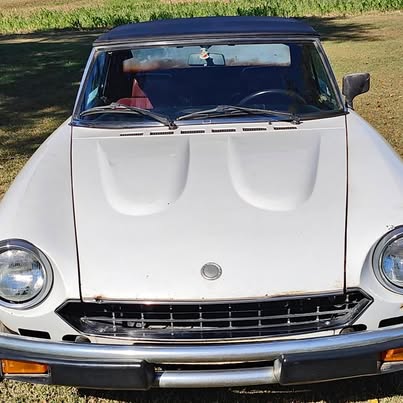
Two boosted versions bookend the story, and both need scepticism as much as enthusiasm. The US Turbo is a Legend Industries conversion, not a Turin-line car: an injected engine plus a turbocharger with modest boost, about 120 hp. The checks are those of any early turbo conversion, doubled: shaft play and oil seals (blue smoke on boost and the overrun), oil lines, heat damage to nearby hoses and wiring, detonation damage, and above all completeness, because conversion parts are the hardest Spider parts to source. Price a Turbo as a standard injected car plus a premium only when it runs cleanly on boost with paperwork. The European Volumex — Roots supercharger, about 135 hp, no lag — is the more elegant solution; in America each one is a private import, so add import paperwork, emissions status and blower health to the standard checks. Do not let either car's rarity rush you past the shell: a rusty Turbo is still a rusty Spider.
Gearboxes, clutch and driveline
The standard gearbox is Fiat's own five-speed manual — synchromesh on all gears, a linkage that places the lever where your hand falls, and a fifth that drops cruising revs to a relaxed level. It is one of the best gearboxes in any affordable classic, with one characteristic wear point: second-gear synchromesh. Test with a brisk change into second with the oil cold, repeated fully warm, plus a third-to-second downchange. A faint graunch stone cold that vanishes warm is wear to note and price; a crunch at all temperatures means a rebuild, roughly $1,800 to $3,200 at a specialist, the rings cheap and the labour the bill. A whine in the indirect gears that disappears in fourth, the direct gear, points at the layshaft bearings; seal weeps are a matter of course.
The clutch is hydraulic, conventional and long-lived. Judder on take-up usually means oil contamination from a rear crank or input seal; the wear test is hard acceleration in fourth from low revs, watching whether revs rise faster than road speed. A clutch runs roughly $700 to $1,200 fitted, with seals and release bearing done in the same labour.
The automatic — a minority choice when new, but fitted to most cars in our current listings — is a three-speed unit from General Motors' French automatic plant: tough, smooth, no electronics. Check fluid that is red and sweet-smelling rather than brown and burnt, prompt engagement into drive and reverse, clean upchanges and a working kickdown; a fluid and filter service is roughly $200 to $350. It saps some performance and all of the gearbox charm, and the market prices it accordingly. What it must never be is a surprise: confirm listing, lever and car agree on which gearbox is fitted.
Behind either gearbox, the propshaft's centre bearing and rubber mounting perish and give a rumble in the 40 to 60 mph band and a clunk on take-up; parts run roughly $100 to $250, and the fault is routinely misdiagnosed as a differential failure. The axle itself is strong; it whines when worn or low on oil, so change its oil on any car new to you. A limited-slip differential was never standard on the ordinary Spider 2000, so pay no premium for one without evidence: jack up the rear, turn a wheel, and watch what the other wheel does.
Problem areas
Problem areas divide into one that can end the car, several that can empty your wallet in instalments, and a long tail of age-related faults that are cheap individually and endless collectively on a neglected car. Take them in that order. The most important sentence in this guide is this: on a Spider 2000, the shell is the car. Engines are rebuilt on benches every week and every electrical fault has a known cure; a structurally rusted convertible shell is repaired on a jig, panel by panel, at body-shop rates, and on a car of this value the arithmetic fails fast. So the rust map comes first and longest — and it should come first in your viewing too.
Rust: the map
The 124 Spider is a unitary convertible: no separate chassis, no roof to stiffen it, so the sills, floor, tunnel and bulkheads do all the structural work between the suspensions. Fiat's 1970s rustproofing was typical of the era, which is to say optimistic. Rust starts inside closed sections and under underseal and shows outside late — a car can present shiny paint and clean arches while its sills are paper. Inspect from the structure outward, and treat a seller who will not let you look underneath, lift carpets and open everything as having told you the result already.
Start with the sills — the rocker panels between the wheels, three-layer structures on this car: an outer sill you can see, a strengthening membrane, and an inner sill meeting the floor. That sandwich is the backbone of a convertible shell. Press firmly along the outer sill, especially at its ends; bubbling paint, filler that sounds dull under a knuckle, and any give at all mean it is rotting from inside. Then get underneath — on a lift if the seller allows, on ramps or with a torch if not — and examine the inner sills and jacking points. The classic test is the jack test: raise the car at one sill point with the doors closed and watch the gaps and try the door. A sound shell lifts true; a weak shell twists and the door may bind. Do not perform this aggressively on a car you do not own — ask the seller to jack it — but a car that cannot be jacked at its own points without distress has finished sills, whatever the paint says. Proper replacement of all three layers runs roughly $1,200 to $2,800 per side, and it is structural work, not cosmetic work.
Next, the floors. Lift the carpets and inspect the pans, especially the front footwells where water from a leaking top or blocked scuttle drain sits under the carpet, and the areas around the seat mountings and belt anchorages, which are safety structure. Surface rust that brushes off is an afternoon's work; holes, lace-like thinning or plates pop-riveted over rot are a welding programme. A pan runs roughly $600 to $1,400 a side fitted, but floors rarely rot alone: floor and sill rust are the same story in two places, and a car needing both needs a body budget, not a panel budget.
Work the rest of the map systematically. The front crossmember and chassis legs around the suspension mountings carry real loads; corrosion there is structural and expensive. Inner front wings trap mud. The scuttle and windscreen surround rot where water sits under the seal, and a frame repair is fiddly, skilled work. Rear arches bubble at the lip and sill join; the boot floor rots around the spare-wheel well and tank, fed by a leaking boot seal. Doors rust along their bottoms from blocked drain holes — clearing them is a two-minute job; swollen, blistered bottoms are a reskin conversation at several hundred dollars a door. Rust at the bonnet and boot-lid edges is an honesty gauge: a car rusting in the easy places has not been cherished, whatever the story says.
Distinguish three grades of car, because the market muddles them deliberately. A genuinely solid car — dry-state history, original sills with factory spot-welds visible, clean floors — is the car to pay up for. A car with honest, localised rust previously repaired in welded steel, with receipts and photographs, is a good buy at the right price; a restorer who photographed the work is a restorer who did the work. The dangerous car wears fresh underseal and fresh sill paint with no history: new coating over closed sections is the oldest concealment in the trade, and a cloth-wrapped magnet along the sills finds filler where its pull weakens. Fresh underseal is not proof of rot — it is a reason to inspect twice as carefully and pay half as trustingly.
Suspension, steering and brakes
The running gear is conventional, durable and cheap to renew: there is no excuse for a Spider to drive badly, and when one does it is telling you about maintenance, not design. The wear points up front are the ball joints — especially the loaded lowers — the wishbone bushes and the track-rod ends. Jack the front up and rock each wheel both ways; play you can feel is play you will pay to remove. A full front-end refresh with joints, bushes and alignment runs roughly $700 to $1,400 and transforms a wandering car. Dampers are inexpensive and routinely dead on cars that sat; a Spider that floats and dives is on its originals until proven otherwise.
Steering is by a recirculating-ball box, not a rack, and it decides first impressions. A good box steers with a little free play at the straight-ahead and pleasing weight beyond it. A worn box gives a vague car needing constant correction — and the box's adjustment screw is the most abused control on the car: owners tighten it to remove play that actually lived in the linkage, producing steering notchy at centre, loose elsewhere, and accelerated wear inside. Test on the move: straight tracking hands-light, self-centring, no notchiness lock to lock. A rebuilt box is roughly $600 to $1,100 fitted; linkage joints and an idler are far cheaper, so diagnose before pricing the car down for "a steering box" that turns out to be two track-rod ends.
At the rear, the axle's link bushes perish and crack, letting the axle steer itself slightly — the car feels unsettled changing lanes and squirms under power; renew them as a set, roughly $300 to $700 fitted.
Brakes are discs all round with a servo, and good when maintained. The failure modes are age: flexible hoses perish internally and act as one-way valves, holding a brake on — a wheel running hot after a drive is the tell; calipers seize, especially rears on cars that sat. A full overhaul with rebuilt calipers, hoses, pads and fluid runs roughly $600 to $1,200; discs are cheap. The handbrake is weak when neglected and matters where states test it. Hard lines corrode along the floor and axle — a bounded job, but price it. A pedal that sinks slowly under sustained pressure means a master-cylinder or leakage fault to fix before the car is driven anywhere.
Cooling, electrics and the age-related rest
The cooling system is conventional — pressurised, belt-driven pump, electric fan — and its components are now old: radiators silt up, water pumps rumble and weep, thermostats stick, heater valves seize. On a test drive the gauge should climb to the middle, sit there in traffic with the fan cutting in and out, and never creep upward on the highway. Hot at speed means radiator or circulation; hot only in traffic means fan or airflow; hoses pressurised hard minutes after a cold start mean combustion gas in the coolant. A radiator runs roughly $350 to $700, a water pump roughly $250 to $500 fitted. Neither is a reason to reject a car; both are reasons to reject the seller's claim that it "just needs a top-up."
Electrics are the Spider's period weakness and its most misdiagnosed system. The fusebox and its bullet fuses corrode, the earth points were marginal when new, and forty years of owners have added alarms and stereos with twist-and-tape joints. The symptoms are predictable: dim lights, gauges that lie, wipers with one speed, a starter that clicks on hot days. Work the system as a system: clean the fusebox contacts and fit fresh fuses, remake the main earths — battery to body, engine to body — and test charging at roughly 13.8 to 14.4 volts running; a tired alternator undercharges the battery and then imitates ten other faults. Most gremlins die at the earths and fusebox, for tens of dollars and a Saturday morning. The expensive version is a loom cut about by three stereo installers: look under the dash, and if you see a bird's nest of non-original wire, price in an auto-electrician's day at roughly $400 to $800, or walk. A worn ignition switch can cut the car out over bumps, misdiagnosed as fuel starvation for months. What you are assessing is the car's electrical biography — original and tidy, or modified and mysterious. Original wins, because its faults are findable.
The top, interior and trim
The soft top is a proper, well-engineered hood: a frame that folds in one motion, latches at the header, and stows under a flush cover. Raise and lower it fully during any inspection — a top the seller demonstrates only halfway has a secret. Vinyl (most cars) and canvas both perish at the folds, split at the seams and go opaque at the rear window. A quality replacement, fitted, runs roughly $900 to $1,800; a top alone is not a deal-breaker, but one that has leaked for years is a floor and interior story, so pair its condition with the carpets and floors beneath it. Check the frame for bent bows, the latches for positive locking, and the well behind the seats for standing water — the top drains through channels that block, and the water goes into the car, not out of it.
The interior is handsome — wood-effect dash, a full set of Veglia gauges — and it ages in the sun. The dashboard top cracks, almost without exception; fixes range from a dash cap at roughly $150 to $300 to a full replacement or recovering at several times that. Seats split at the seams and the foam collapses; retrimming a pair in vinyl runs roughly $800 to $1,500, more in leather. Carpets come as sets and are cheap relative to their effect. Door cards warp when their backing boards get wet — which returns you, again, to water leaks. None of it is hard to source, but add a sun-baked interior up item by item: cracked dash, split seats, tired carpets and a perished top together carry several thousand dollars of work, and sellers who call that "patina" should be charged accordingly — downward.
Trim and brightwork are mostly reproduced or stocked: badges, lamps, bumpers, rubbers, glass. The popular conversion to earlier slim chrome bumpers is cosmetic; do not pay a premium for it as originality, or for "original chrome bumpers" on a 1979 car that never had them. The rule here reverses the rust section: everything can be bought, so none of it should frighten you — but all of it must be counted, because five "small" cosmetic jobs add up to the price difference between a project and a good car.
How to inspect one
Inspect in this order: deal-killers first, re-pricing items later. Take a torch, a cloth-wrapped magnet, a friend to work pedals and lights while you watch, and a blanket for the ground work. Allow an hour; a seller who will not allow an hour has inspected the car for you.
- Paperwork and identity first. Read the title, the chassis number on the bulkhead and the maker's plate, and confirm they agree with each other and with the car: a Spider 2000, 1979 to 1982 with Fiat badges, 1983 to 1985 with Pininfarina badges, and the 1,995 cc engine by its number. A mismatch ends the inspection or re-prices the car as the car it actually is.
- The sill and structure test. Press along both outer sills, run the cloth-wrapped magnet along sills and arch lips, and have the car raised — on a lift, or jacked at a sill point by the seller — while you watch the door gaps and try a door. Any twist, bind or change in the gaps is the shell confessing. Inspect the inner sills, jacking points, front crossmember and suspension mountings from underneath.
- Floors, boot and water. Lift the carpets and inspect the front footwells, seat mountings and belt anchorages. Open the boot, lift the board and spare, and inspect the well and the floor around the tank. Damp, staining, plates over rot — each moves the car from buy to bargain-hard or walk.
- Panel and paint honesty. Walk the car in flat light, looking down each flank for ripples and filler, and compare paint shade panel to panel. Bubbling at arch lips, sill ends, door bottoms and the windscreen surround marks the rust map; fresh underseal or fresh sill paint with no receipts means inspect those areas twice.
- Cold start, from cold. Insist the engine is stone cold when you arrive — a warmed-up car is a hidden fault. An injected car should fire at once and settle to a clean idle; a carburettor car should start on the choke and come off it progressively. Watch the exhaust: blue smoke suggests valve guides, persistent white vapour coolant, black soot rich running. Any rattle on this belt engine is likely a tensioner or loose accessory — and still needs a name before you buy.
- Oil, coolant and the gauges. Check oil level and colour, look under the filler cap for mayonnaise emulsion, and check the coolant for oil film. On the drive, watch the oil-pressure gauge: strong at cruise, healthy at hot idle. A hot idle figure collapsing toward zero earns a mechanical-gauge test before any money moves.
- The fuel system, by type. On an injected car, squeeze the intake trunking for splits, check vacuum and breather hoses, and note hesitation, hunting idle or a rich smell against the L-Jetronic fault list — all bounded costs, all negotiating points. On a carburettor car, look for fuel smells, perished lines and a working choke, and feel for the flat spot pulling away. On either, ask the cam belt's age and treat "unknown" as "due now," priced accordingly.
- The gearbox test. Manual: brisk second-gear changes cold and warm, a third-to-second downchange under load, and the fourth-gear clutch slip test. Automatic: fluid colour and smell, prompt engagement into drive and reverse, clean changes, working kickdown. Propshaft clunks and 40 to 60 mph vibration point at the centre bearing, not automatically at the axle.
- Steering, suspension and brakes on the road. The car should track straight hands-light, centre itself after turns, and show no notchiness lock to lock. Push each corner down: one bounce and settle means living dampers. Brake firmly from speed — straight stop, firm pedal, no pull — then feel each wheel for the heat that betrays a dragging caliper.
- Electrics, all of them, one by one. Lights, indicators, wipers, heater fan, gauges, horn, hazards. Note every failure, then look at the fusebox and under the dash: tidy and original with a few dead items is a Saturday's cleaning; a cut-about loom is a professional's day rate. If you carry a meter, check for 13.8 to 14.4 volts at the battery with the engine running.
- The top, up and down, yourself. Raise and lower it fully. Check the frame, the latches' grip, the fabric at the folds, the rear window's clarity, and the well behind the seats for water. Sit inside with the top up and look for daylight at the header rail and windows — that is where the rain gets in.
- The history file, last and calmly. Receipts for the belt, clutch, brake and suspension work, body repairs with photographs, and evidence of regular use beat any verbal history. Recent long storage is a cost, not a virtue: budget for tyres by date code, all fluids, brake hoses and a fuel-system clean on any car that sat. Then add up everything you found, in writing, before discussing price — the car you inspected is the car you are pricing, not the car in the listing.
Values
The build beneath this guide carries the live numbers — current listings and recorded sales — and those figures move, so this section teaches you how to read them rather than quoting figures that would date. Read this market as a wide condition spread with a thin middle, because that is what a volume-built, rust-prone, forty-year-old roadster always produces.
At the bottom sit the project cars: non-runners, long-stored cars, cars with structural rust, cars whose photographs flatter a shell the sill test would condemn. They are priced as if the engine were the problem when the shell is the problem, and the gap between a project and a sound driver is far larger than asking prices suggest — because the work separating them is welding, paint and trim, the three most expensive kinds of work there are. A project only makes sense at a price assuming you will spend the driver premium on top of it. If you cannot weld, the project is not the cheap route into this car; it is the expensive route with the payments spread out.
Sound drivers — solid shells, injected or properly sorted carburettor engines, honest interiors, working tops — are the market's centre of gravity and its best value, because the Spider 2000 was never a blue-chip collectible and driver money buys a great deal of car. Above them sit the premium cars: low-mileage, documented, original or beautifully restored examples, genuine Turbos with paperwork, the best Pininfarina cars — their premiums paid for provenance and completeness rather than performance, since all Spider 2000s perform within a narrow band. Condition and documentation move value more than model year: a superb 1979 carburettor car is worth more than a tired 1981 injected car, even though the injected car is the better buy at equal condition.
Variant premiums are modest and specific. Fuel injection earns a real premium at equal condition, because it is the difference between a car you use weekly and a car you manage. The manual earns a premium over the automatic, because the enthusiast market wants three pedals — our current listings, dominated by automatics, are a reminder that supply and demand are different things, and an automatic listed at manual money will usually sit. Colour matters mildly: period blues, greens and reds present the car best; silver and white show condition most honestly. Originality premiums attach to unmodified cars with emissions equipment and injection intact; a documented, reversible improvement is no sin, but an undocumented conversion is a discount.
Asking and achieved prices part company predictably. Sellers price from the best photograph and the fondest memory; buyers, correctly, price from the sills. Expect the negotiation to turn on inspection findings, which is why the inspection section is written as a priced list: a due cam belt, a tired clutch, a perished top — each is a number, and numbers negotiate better than opinions. Cars priced from recorded-sales evidence sell; cars priced from nostalgia wait. Use the recorded sales beneath this guide as your anchor, condition as your adjustment, and the cost of the faults you found as your arithmetic.
Finally, hold the economics in view: a Spider 2000's values move slowly and its real return is use. Buy the best shell you can find at an evidence-based price, maintain it properly, and it will roughly hold its value through years of open-top motoring. Buy a cheap shell and the market will not rescue you — the next buyer will do the sill test you skipped, and price accordingly.
Parts and ownership
Ownership is where the Spider 2000 quietly wins its class. Built in volume and adopted by a mature specialist trade — above all in the United States, its biggest market — it is supported by catalogues covering sills, floors and arches; trim and carpet sets; tops in vinyl and canvas; brake, suspension and steering components; Lampredi engine internals; Bosch injection parts and exchange units; and the small trim that on rarer cars would be unobtainable at any price. European specialists cover European carburation and Volumex parts. "You can't get parts for those," still heard from general garages, is a myth left over from Fiat's 1980s departure from America.
Running costs follow the classic-car pattern with unusually few traps. Consumables are cheap and shared with other Fiats. The scheduled items that matter: the cam belt every 30,000 to 40,000 miles or five years, with tensioner and water pump; oil and filter every 3,000 to 5,000 miles; valve clearances every 15,000 to 20,000 miles; gearbox and axle oil on purchase, then on a multi-year cycle; brake fluid and coolant every two years. Tyres are a common, modest size — replace by date code as much as tread, because a ten-year-old tyre with full tread is a liability in the rain. Budget the low hundreds of dollars a year for consumables on a sorted car, plus a contingency for one age-related component a year, and the car will not surprise you. The expensive ownership stories are all deferred maintenance arriving at once.
The car rewards use and punishes storage. Driven weekly, an injected Spider 2000 is close to a modern car in its manners and returns economy in the mid-to-high twenties on a run. Parked for months, it grows the classic storage faults: flat-spotted tyres, stale fuel varnishing a carburettor or gumming injectors, seized calipers, a flat battery. If it must sit, sit it properly — fresh fuel with stabiliser, a battery maintainer, a monthly full warm-through. Better still, drive it: these cars were built to be the second car that got used, not the treasure that got looked at.
Support is deep. Factory and aftermarket manuals cover every system here including L-Jetronic fault-finding, and owner clubs and online communities are large, active and practical: the same faults recur and the cures are documented. A competent general mechanic can do most work; the jobs that justify a Fiat or Bosch specialist are injection diagnosis when the simple checks fail, steering-box assessment, and structural welding, where a restorer who knows where these shells hide rust finds in an hour what a general welder finds in a week. Insurance is conventional agreed-value classic business. Registration is straightforward except where emissions testing applies to cars of this age — and there the injected car, catalyst and lambda system intact, is dramatically easier to keep legal than a carburettor car whose smog equipment was removed.
Which one to buy
- The all-rounder: a 1981 or 1982 fuel-injected Fiat Spider 2000, manual gearbox, solid documented shell. The default recommendation: the torquiest engine with the fuel system that makes it behave every day, the gearbox the car was designed around, the deepest support. Pay for the shell and the history file; forgive tired cosmetics.
- The continuation car: a 1983 to 1985 Pininfarina Spider. Mechanically the injected 2000 with later trim, and often the best-kept cars of all. Buy on the same checks; do not pay a large premium for the badge, and do pay for a genuinely superior shell.
- The value buy: a 1979 or 1980 carburettor car with a rust-free shell. The cheapest entry, and a good one if — and only if — the structure is sound and you budget honestly to rebuild the Weber, renew the vacuum plumbing and live with period hot-start manners. The saving over the injected car must survive that budget, or it was never a saving.
- The relaxed cruiser: an automatic Spider 2000, bought deliberately. Smooth, robust and underpriced by a market fixated on manuals — our current listings are mostly automatics, so choice is good. Buy it because your driving suits it, at automatic money, with the fluid and kickdown checks done. At the right price it is the bargain of the range; at manual money it is a resale problem.
- The specialist car: a genuine Turbo, or a documented Volumex import. Real pace, real rarity, real homework: hardware verified, paperwork complete, boost behaviour clean on a long test drive. Only for a buyer who wants the complication and has priced the parts scarcity. A tired example is a standard car with expensive jewellery — price it as one.
- The car to walk away from: any Spider 2000 with structural sill or floor rust and no repair documentation. Not a variant but a verdict, and it outranks every other line here. Fresh underseal, fresh sill paint and a firm "it's solid" are not documentation.
The overriding rule: buy the shell, then the fuel system, then the gearbox, then the colour — in that order, every time. A Spider 2000 with a sound shell and a scruffy interior is a good car having a bad decade; a shiny one with rotten sills is a bad car having a good photograph. If the car in front of you fails the sill test, the correct next step is not a lower offer. It is the next car.
See the 6 124 Spider cars currently listed.
For sale now
Expand
What they sell for: 124 Spider sale prices.