
GMC Yukon buyer's guide
GMC Yukon -- the model's own buyer's guide: variants, values and what to check.
Years listed: 1992-1999 · Series: C/K Trucks
# GMC Yukon (GMT400, 1992–1999) — Buyer's Guide
Overview and history
You are not buying a crossover with a truck badge. The GMC Yukon built from 1992 to 1999 — the GMT400 Yukon — is a full-size, body-on-frame sport utility built directly from General Motors' full-size pickup architecture, with a separate ladder frame, a live rear axle on leaf springs, independent front suspension, and a choice of two-door and four-door bodies over the same mechanical core. If you understand that sentence, you understand most of what is good and most of what goes wrong with these trucks. They tow, they haul, they idle through traffic with the air conditioning on full, and they rust, leak, and wear out front-end parts in exactly the places a hard-used pickup of the same years rusts, leaks, and wears. There is no mystery engineering here, and that is the appeal.
The Yukon name arrives for 1992 as GMC's version of the new short-wheelbase full-size SUV. Chevrolet sells essentially the same truck as the Blazer for 1992 to 1994 and then as the Tahoe from 1995. GMC had sold the full-size Jimmy on the older square-body platform before this; the Yukon replaces it on the GMT400 platform that had already been in production as the C/K pickup since 1988. That four-year head start matters to you as a buyer. By the time the first Yukon is built, the frame, the front suspension, the small-block V8s, and the basic electrical architecture are already proven in hundreds of thousands of pickups. The Yukon is not an experiment. It is a pickup with a wagon body, a shorter wheelbase, and a higher level of trim ambition.
Two mechanical eras divide the run, and you must learn to tell them apart before you value any individual truck. From 1992 to 1995 the standard gasoline engine is the 5.7-litre small-block V8 with throttle-body injection — TBI — a simple, low-pressure, immensely durable system that makes modest power and almost never strands you. From 1996 to 1999 the standard gasoline engine is the Vortec 5700, also 5.7 litres and also a pushrod small-block, but with revised cylinder heads, sequential central-port injection, and a substantial step up in power, torque delivery, and cold-start behaviour — along with a new set of characteristic faults around intake-manifold gaskets and injection components that the TBI cars simply do not have. A 6.5-litre turbo-diesel V8 is offered in the two-door in the mid-1990s and is rare in Yukons compared with Suburbans and pickups; treat any diesel Yukon as a specialist purchase, not a default. The final year in this guide, 1999, also brings the Yukon Denali as a luxury trim derivative — but read the identity warnings in the models section before you pay a Denali premium for a GMT400 truck, because the Denali story that dominates later Yukons belongs mostly to the next generation, the GMT800 from 2000.
The counterweight is age. Even the newest truck in this guide is more than a quarter-century old. Every rubber hose, every plastic cooling-system component, every ball joint, and every inch of brake line has either been replaced already or is due. You do not buy a GMT400 Yukon on mileage alone, and you do not buy one on paint alone. You buy it on frame and body condition, on evidence that the cooling system and front end have been maintained, and on whether the four-wheel-drive system actually works on the day you test it — not on the seller's assurance that it worked last winter. The rest of this guide gives you the detail to make those judgements yourself.
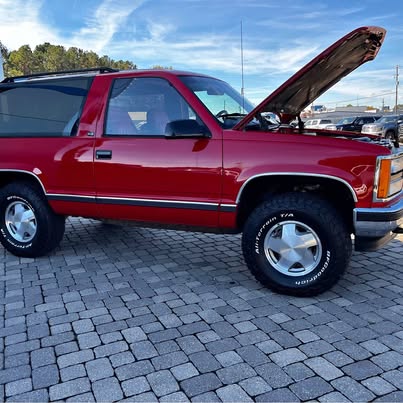
The models
The GMT400 Yukon range is simpler than a modern trim walk, but the combinations multiply quickly once you cross body style, drive, engine era, and trim. Start with the body, because it determines wheelbase, rear-seat access, cargo shape, and — increasingly — collectability.
The two-door, sold from 1992 through 1999, is the original. It seats five in most configurations, with a front bench or buckets and a folding rear bench. Rear access is by tilting the front seats, which is charming for a weekend truck and tiresome for child seats. The cargo area behind the rear seat is short and tall. Two rear-end treatments exist across the run: a liftgate with a flip-up glass, and side-hinged barn doors — properly called panel doors in GMC literature — that open from the centre. Neither is inherently better; condition decides. Barn doors suit loading with a trailer hitched and give you a clear view of hinge wear and lower-edge rust. A liftgate suits rain and gives you struts and a large single panel to check for rust along its lower seam and for a working rear wiper and defroster where fitted.
The four-door, sold from 1995 through 1999, adds a longer wheelbase, conventional rear doors, and a genuinely usable rear seat. It is the family and tow vehicle of the range and the one most buyers should start from if the truck must do daily work. Four-doors were built in far greater numbers in the second half of the run, so your choice of colours, trims, and condition grades is wider, and prices — in qualitative terms covered in the Values section — reflect condition far more than rarity. Do not let a seller tell you a common four-door SLT is rare because it has a particular paint-and-trim combination unless paperwork proves a genuinely unusual factory order; these were volume trucks.
Then there is the Denali question, and it needs a direct answer. GMC introduces the Yukon Denali for 1999 on this platform as a luxury package with distinctive grille and trim, a higher standard specification, and the 5.7 Vortec V8. Genuine 1999 Denalis exist and carry Denali identification in the VIN decoding and build documentation, plus the specific exterior and interior fittings. The myth to correct is the reverse inference: a 1996 or 1997 Yukon with Denali badges, a Denali grille, or Denali wheels is NOT a Denali, whatever the advert says, because the trim did not exist in those years on this truck. Sellers also transfer the later GMT800 Denali's reputation — including its standard all-wheel drive and larger engine associations — backwards onto GMT400 cars that never had them. If you are asked to pay for a Denali, demand the build sheet or a VIN decode that shows it, check the door-jamb label and glovebox service-parts identification label for the relevant codes, and value the truck as a standard Yukon until the paperwork settles it.
The Tahoe twin trap is the mirror image. A GMC Yukon and a Chevrolet Tahoe (or 1992–94 Blazer) of the same year, body, and drive are mechanically the same truck under the skin, differing in grille, badges, trim details, standard equipment, and original dealer network. That sameness is useful: mechanical advice, parts, and fault diagnosis cross over completely. It is also a trap for identity fraud at the margins — rebadged trucks, swapped grilles, and titles that describe one marque while the VIN decodes as the other. The VIN settles identity, always. The first characters encode the manufacturer and model line; the glovebox SPID label lists the factory options; the engine number and the emissions label under the hood confirm the engine family. If the VIN says Chevrolet, the truck is a Chevrolet with GMC jewellery, and you should price and insure it as what it is. Neither marque is inherently worth a large premium over the other in equivalent condition — GMC's slightly upmarket positioning when new does not survive thirty years of differing maintenance.
| Model | Years | Engine | Output | Built | Character |
|---|---|---|---|---|---|
| Yukon 2-door 2WD | 1992–1999 | 5.7 TBI, then Vortec 5700 | Modest (TBI) to strong (Vortec) | Smaller share of run | Lightest, simplest Yukon; weekend and fair-weather truck |
| Yukon 2-door 4WD | 1992–1999 | 5.7 TBI / Vortec; rare 6.5 diesel in mid-1990s | As above; diesel torquey, specialist | Core early production | The collectable shape; test 4WD engagement and rockers first |
| Yukon 4-door 2WD | 1995–1999 | 5.7 TBI (1995), then Vortec 5700 | As above | Volume from 1995 | Family hauler without transfer-case risk |
| Yukon 4-door 4WD | 1995–1999 | Vortec 5700 in most later cars | Strong for the class | Largest later share | The all-purpose Yukon; front-end and intake-gasket checks decide value |
| Yukon Denali 4-door | 1999 | Vortec 5700 | As Vortec standard | One year on GMT400 | Luxury trim; verify by VIN/build sheet, never by badges alone |
Engines deserve their own section, but note the year split here because sellers blur it. A 1995 Yukon still has the TBI engine; a 1996 has the Vortec. That single model-year step is the largest mechanical change in the GMT400 Yukon's life — more important than any trim change — and it should be the first fact you establish about any truck you view. Open the hood. The TBI car shows a round air cleaner over a throttle body that looks like a carburettor with two injectors. The Vortec car shows a plastic engine cover lettered Vortec, a different intake, and a mass-airflow sensor in the intake tract. Do not take the seller's word for which engine a 1995/1996 crossover-advertised truck has; model years get mistyped in adverts constantly, and the VIN's engine character and the under-hood hardware settle it in seconds.
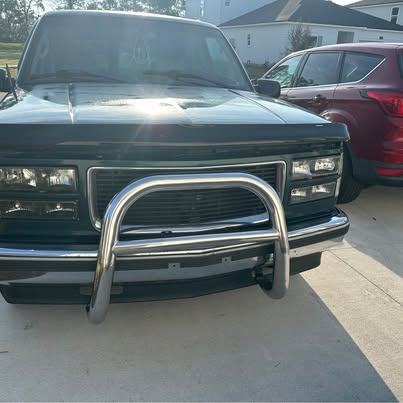
Engines and gearboxes
The 5.7-litre TBI V8 (1992–1995): simple, soft, and hard to kill
The early Yukon's engine is the Chevrolet small-block 350 — 5.7 litres, cast-iron block and heads, pushrods, a single camshaft in the block, and throttle-body injection in place of a carburettor. Two injectors sit in a throttle body mounted where a carburettor would be, spraying fuel into the intake manifold at low pressure. There is no mass-airflow sensor, no sequential injection, no coil pack — a conventional distributor at the back of the engine handles ignition, driven from the camshaft, with electronic control of timing advance.
Understand what this system does well. It starts in extreme cold, it tolerates stale fuel and indifferent maintenance better than any later system in this guide, and every component is cheap and available: injectors, the fuel-pressure regulator built into the throttle body, the idle air control valve, the throttle position sensor, the coolant temperature sensor that the computer relies on for cold enrichment. Diagnosis uses a paper clip in the diagnostic connector on early cars and a basic scan tool on later ones. A competent independent shop has seen hundreds of these.
The characteristic TBI faults are age faults, not design scandals. The throttle-body base gasket leaks vacuum and causes a high or hunting idle that owners misdiagnose as an electronic failure; spraying carburettor cleaner carefully around the base with the engine idling, and listening for a rev change, finds it. The fuel pump in the tank weakens with age and ethanol exposure, giving long cranking when hot or a loss of power under load; a fuel-pressure gauge at the throttle-body feed settles it, because low pressure under load is a pump or filter problem, not an injector problem. The distributor's ignition module and pickup coil fail with heat and age, typically as a sudden cut-out when hot that restarts when cool — carry that symptom in your head on the test drive. Exhaust manifolds crack and their rear bolts snap, giving a ticking on cold start that quietens as the manifold expands; not fatal, but manifold work on a rusty truck escalates. None of these faults requires an engine rebuild. Budget for them as recommissioning, and distrust any TBI truck presented as needing nothing: at this age, needing nothing means the seller has not looked.
The Vortec 5700 (1996–1999): the engine most buyers want, with two known bills
For 1996 General Motors revises the small-block into the Vortec 5700. The block architecture is familiar; the cylinder heads are new, with revised ports and combustion chambers that give the engine its Vortec name and most of its power gain, and the fuelling changes completely. In place of the throttle body sits Central Port Injection in 1996 form, evolving into Central Sequential Fuel Injection: a central injector assembly feeding individual poppet valves at each port through plastic lines inside the intake manifold. A mass-airflow sensor meters incoming air, a crankshaft position sensor joins the distributor, and the engine management becomes recognisably modern, with full OBD-II diagnostics from 1996.
On the road the difference is not subtle. The Vortec starts cleaner, idles smoother, pulls harder through the middle of the rev range, and tows with less downshifting drama. If you drive a TBI and a Vortec back to back, you will prefer the Vortec, and the market knows it. This is the engine in the later four-doors that most family and tow buyers should target.
Now the two known bills, because every Vortec buyer must price them. First, intake-manifold gaskets. The Vortec's intake gaskets in factory form use plastic carriers with rubber sealing beads, and they fail — coolant leaks externally at the front corners of the manifold, or internally into the valley and the oil. The mechanism is heat cycling and gasket material degradation, aggravated by the extended-life coolant chemistry of the period when coolant changes were neglected. Symptoms range from a slow coolant loss with no puddle, to overheating, to milky residue under the oil filler cap that owners panic over as a head-gasket failure. Often it is the intake gaskets, not the head gaskets. A proper fix uses updated gaskets with metal carriers, careful cleaning, correct torque sequence, and a cooling-system flush. Cost at an independent shop typically runs in the $600–1,200 range depending on region and what else is replaced while the manifold is off; doing it yourself is a full day's careful work. Any Vortec with unexplained coolant loss and no documented intake-gasket job should be priced as if the job is due, because it is.
Second, the injection spider. The central injector assembly and its poppet valves live inside the manifold, bathed in heat, and with age and poor fuel they stick, leak, or deliver unevenly, causing misfires, hard starting after a hot soak, a rich fuel smell, and diagnostic codes that tempt owners into replacing spark plugs, wires, and the distributor cap repeatedly without effect. The distinguishing test is fuel pressure and leak-down: a system that loses pressure rapidly after the pump stops, with no external leak, points inside the manifold. The updated replacement assembly converts the poppets to true individual injectors at the ports and is the correct long-term fix; budget roughly $800–1,500 fitted, parts and labour, varying by shop. Do not let a seller dismiss a Vortec misfire as needing a tune-up until leak-down has been checked — tune-up parts are cheap precisely because they are the wrong fix for a spider fault, and sellers know which bill they would rather you imagined.
The rest of the Vortec is small-block durable. The distributor still wears its drive gear and its cap suffers carbon tracking in damp climates; the EGR valve carbons and sticks, setting codes and causing a rough idle; the fuel pump remains an in-tank age item, now running at higher pressure, so a weak pump shows as a lean stumble under load. Water pumps, alternators, starters, and air-conditioning compressors are shared truck fare: available, understood, and priced like pickup parts, not exotic parts. A Vortec with documented intake gaskets, a documented spider replacement, and regular coolant changes is the sweet spot of this entire guide — the strong engine with its two design bills already paid by someone else.
The 6.5-litre turbo-diesel (two-door, mid-1990s): torque with a specialist tax
The 6.5 is an indirect-injection, turbocharged diesel V8 developed from GM's earlier 6.2, offered in the two-door Yukon for a brief mid-1990s window. It promises diesel torque and better highway economy than the gasoline 5.7, and in period it attracted tow and rural buyers. Today it attracts a narrower set: diesel enthusiasts who already know the engine's ecosystem.
Know its signature fault before anything else. The electronic injection pump's driver module — the pump-mounted driver, or PMD — overheats in its factory location on the side of the pump in the valley of the engine, and fails as intermittent stalling, no-starts when hot, and cut-outs that leave no useful code. The established fix is relocating the module on an extension harness to a cooler location with a heat sink. A diesel Yukon that stalls when hot and restarts when cool has this fault until proven otherwise. Beyond the PMD, the 6.5 shares diesel realities: glow-plug system health decides cold starts, the turbo and its wastegate control need checking, harmonic balancers age and, if ignored, threaten the crankshaft, and cooling capacity is marginal when towing in heat with a neglected radiator. Parts and knowledge exist — the engine served in pickups, Suburbans, and military Humvees — but your local gasoline-truck shop may not be the right shop. Only buy the diesel if you specifically want it, the PMD relocation is documented, and the price reflects its smaller resale pool. Never buy it as a cheap way into a Yukon.
Gearboxes and transfer cases: the 4L60-E, the rare manual, and how drive reaches the wheels
Almost every GMT400 Yukon you will view has the 4L60-E four-speed automatic: four forward gears with a lock-up torque converter, electronically controlled shifts, and a long service history in GM cars and trucks. Early TBI-era trucks at the very start of the run may carry the hydraulically related predecessor naming, but the buying advice is identical: this is a known, rebuildable, widely understood automatic whose health is judged by fluid, shift quality, and temperature history.
A healthy 4L60-E shifts firmly but without a bang, does not flare — revs rising without drive — on the 2–3 shift, locks its converter at steady highway cruise without shuddering, and does not delay engagement when you select Drive or Reverse from cold. Fluid should be red to dark red and should not smell burnt; black fluid with a burnt smell in a truck that also slips is a rebuild conversation, not a fluid-change conversation. A fluid and filter change on a neglected but still-shifting box is sensible maintenance, roughly $200–400 at a shop; a full rebuild typically runs $2,000–3,500 depending on region and specification, which is real money but not truck-ending money, and rebuilt units and competent rebuilders exist in every state. The killer is heat: towing in overdrive with a heavy trailer, a blocked cooler, or a failed lock-up cooks these boxes. An auxiliary transmission cooler is a sign of a thoughtful tow owner; a seller who towed heavy without one and never changed the fluid is handing you his deferred bill.
Four-wheel-drive Yukons use a part-time transfer case, chain-driven, in two control forms. Earlier and basic trucks use a floor-mounted lever; later and higher-trim trucks use push-button Insta-Trac controls on the dashboard. Both drive the same basic hardware: low range for serious work, high range for roads, and a front axle that must engage when the case does. The lever system fails mechanically and visibly — linkage wear, a case that will not hold low range. The push-button system fails electrically and confusingly — encoder motors that lose position, dash switches that crack their solder joints, and the thermal front-axle actuator covered in the Problem areas section. On any 4WD truck, test all modes on a surface where you can feel engagement, as the inspection section details. A transfer case that has run low on fluid whines and wears its chain, which then slaps under load; fluid is cheap, chains are not.

Problem areas
Rust: rocker panels, rear quarters, frame, and the barn-door and tailgate traps
Rust is the first problem area because it is the one that ends GMT400 Yukons. The mechanicals can almost always be fixed with money and catalogue parts; a frame and body that have dissolved through a decade of salted winters cannot be fixed economically unless the truck is rare enough and your welding is free. Learn the map, in the order salt and mud attack it.
Start at the rocker panels — the sills below the doors. They are boxed sections that trap moisture from inside, rust from the inside out, and present as bubbling at the lower edge, softness when you press firmly with a thumb, and, in advanced cases, holes visible from underneath and jacking points that crush rather than lift. On four-doors, check the full length, including the section between the doors and the dogleg where the rocker meets the rear wheel arch — that junction holds mud thrown by the front wheels and rots early. On two-doors, the shorter rocker still rots, and the area immediately ahead of the rear wheel is the classic first hole. Surface bubbles are never just surface on a rocker: the metal is thin, the cavity is closed, and what you see is the outside of an inside problem. Budget welding at roughly $800–2,000 per side for proper cut-out-and-replace work with inner repairs, more if the cab mounts and floor edges are involved, and walk away from any truck where the rockers, cab mounts, and frame are all soft together — that is a parts truck wearing a price tag.
Move rearward to the rear quarters. The lower quarter behind the rear wheel, the wheel-arch lip itself, and the inner arch where it meets the cargo floor collect everything the rear tyre throws. Run your hand inside the arch lip: you should feel clean folded metal, not flakes and scabs. Check the bottom of the quarter where it wraps under — a favourite place for a cosmetic outer repair over a rotten inner. On trucks with fender flares or wide trim, assume the trim hides the arch edge and price accordingly unless the seller removes it, which he will not. Replacement quarter and arch repair panels exist and are affordable; the labour to fit them properly, blend paint, and seal the cavity is the real cost, typically $1,000–2,500 per side painted at a body shop.
Then get underneath, with a torch, on every truck — no exceptions for clean paint. The frame on a GMT400 is strong but not immortal. Check the rear half first: the sections over and behind the rear axle, the spring hangers and shackles, the fuel-tank straps and the crossmembers around the tank, and the hitch mounting area if a tow hitch is fitted. Surface scale is normal on a northern truck and is not a failure; flaking, holed, or thinned metal at hangers and crossmembers is. Check the brake lines along the frame rail — steel lines corrode, often worst above the fuel tank and along the driver's-side rail, and a line that weeps or is heavily scabbed is a safety repair, not a negotiation detail: a full line set fitted runs roughly $600–1,200. Fuel lines and the top of the fuel tank, hidden from view, rot where road dirt sits; a fuel smell at the rear with no visible drip points there. Cab and body mounts whose rubber has collapsed or whose bolts and cups have rusted through give a truck a visible lean and a groan over bumps, and mount replacement on a rusty truck breaks bolts and adds hours. The honest summary: a southern or garaged truck with a clean frame is worth a substantial premium over a prettier-painted northern truck with a scabby underside, and the premium is rational, because you can repaint a hood in a weekend and you cannot un-rust a frame.
Cooling, intake gaskets, and the Vortec systems that punish neglect
The second system is heat and sealing, concentrated on Vortec cars but not exclusive to them. The GMT400 cooling system is conventional: belt-driven water pump, large radiator, viscous fan clutch on most trucks, thermostat, and a pressurised expansion system. Its enemies are age and deferred coolant changes.
On Vortec trucks the intake-gasket failure described in the Engines section is the headline, and here is how it presents as a problem area in a truck you are viewing. The coolant level sits low in the reservoir with no external drip the seller can show you. There is a sweet coolant smell after a run. The heater output fades at idle because air is entering the system. The oil on the dipstick looks clean — internal intake leaks often contaminate slowly — but under the filler cap there is mayonnaise-like emulsion on a truck that does short trips, which alone proves nothing, combined with coolant loss proves a great deal. Pressure-testing the cooling system cold, and watching for a drop with a drip at the manifold corners or a dry exterior and falling level, distinguishes an external gasket leak from an internal one. Never accept overheating on a test drive as a thermostat quirk. Overheating on a Vortec can be a fan clutch that no longer locks, a radiator silted internally, a water pump with an eroded impeller, a stuck thermostat, low coolant from the intake leak, or — expensively — a head gasket damaged by a previous overheat. Each cause has a different price. The fan clutch test is simple: a hot engine switched off should bring the fan to a stop quickly with resistance when spun by hand, not freewheel silently; a radiator's cold spots, found by hand or an infrared thermometer across its face, show blocked cores.
TBI cars escape the intake-gasket and spider problems but share everything else in this subsection, plus their own vacuum-leak and sensor-age issues already covered. On any truck, inspect every coolant hose by squeezing: a hose that is rock-hard, mushy, or oil-swollen is due, and a full hose set with a thermostat and fresh coolant is cheap insurance in the $250–500 range fitted. The myth to correct here is that Dex-Cool-era coolant itself destroys these engines. Neglected coolant of any type, run for a decade past its change interval and mixed with whatever was on the shelf, destroys gaskets and clogs cores. Maintained coolant, of the correct type, changed on schedule, does not. Blame the maintenance history in front of you, not the colour of the fluid alone.
Four-wheel drive, front suspension, and steering: the working end
The third system is the front end of 4WD trucks and the engagement hardware that makes it work — the area where a test drive on a dry dealer lot tells you the least and a proper test tells you everything.
The classic GMT400 4WD fault is the front-axle actuator. In its original form it is a thermal actuator: an electrically heated element expands gas to push a plunger that engages the front axle when you select four-wheel drive. When cold, engagement can take many seconds; when aged, it takes forever or never happens, leaving you with a transfer case in 4WD, a dashboard light that may or may not be telling the truth, and front wheels that are not driving. The symptom is unmistakable once you test for it: on a loose or slippery surface, the rear wheels spin and the fronts do not pull. The established upgrade is the later electric motor-driven actuator with its wiring update, a fix in the $200–450 range fitted, and many trucks have already had it. Ask, and then test anyway. Push-button systems add the transfer-case encoder motor, whose internal position sensor wears and gives flashing dash lights, service-4WD warnings, and a case stuck in one range; lever systems add simple linkage wear. Vacuum-related engagement components and switches on the transfer case also age. None of this is exotic, all of it is diagnosable, and a seller who will not let you engage 4WD on a suitable surface is telling you the answer.
The independent front suspension — torsion bars on 4WD trucks, coil springs on most 2WD — wears its ball joints, tie-rod ends, idler arm, and pitman arm in predictable sequence. The idler and pitman are GMT400 consumables: play in them gives steering wander, a dead zone at the straight-ahead, and tyre wear on the inner edges that sellers blame on alignment. Alignment does not fix worn parts; it only measures them. Jack the front end safely, support it properly, and check ball joints for play with a pry bar and a helper watching the joint — upper and lower joints wear differently and upper joints on a torsion-bar truck are loaded in a way that hides play unless the suspension is supported correctly, so have a shop do this check on a lift if you are unsure. A full front-end refresh — ball joints, tie rods, idler and pitman, alignment — typically runs $1,200–2,500 fitted and transforms a wandering truck; individual items are less. Torsion-bar trucks that sit nose-low or uneven have sagging bars or a previous owner who cranked the adjusters to fit larger tyres, which also accelerates CV and ball-joint wear. Look at tyre size against the door label: oversize tyres on stock gearing explain sluggish performance, speedometer error, and extra transmission heat, and they are a modification to price, not a bonus to pay for blindly.
CV boots on the front half-shafts split with age and steering lock; a clicking on full lock under power is a worn outer CV joint, and grease sprayed inside the front wheel confirms the boot went first. Front differential pinion seals weep, wheel bearings hum and change tone when you weave gently at speed, and brake rotors warp or — more often — the sliding caliper pins seize, giving uneven pad wear and a pull under braking that owners misdiagnose as alignment. The steering box itself wears at the sector shaft, adding play that adjustment can reduce but not cure if the box is truly worn; a rebuilt box is available and moderately priced. Power-steering pumps whine when low or aerated, and the high-pressure hose weeps at its crimps. None of these faults is a reason to reject a truck outright. All of them together, on a truck priced as sorted, are a reason to renegotiate or walk.
Interior, electrics, and body hardware: where daily life shows
The fourth system is the one you touch every mile. GMT400 interiors are spacious, upright, and built from plastics and fabrics that were durable in 1995 and are brittle, faded, and worn now in direct proportion to sun and use.
Leather SLT seats crack on the driver's bolster first — the outer bolster where the driver slides in — then split along the stitching. Replacement covers and foam exist, and a single-seat retrim runs roughly $400–900 depending on material match; a full leather interior retrim is several times that. Cloth seats wear thinner but split less dramatically, and their foam collapses on the driver's base, giving a sitting-in-a-hole feeling that a foam base fixes. Power-seat tracks wear their plastic drives and motors, giving a seat that moves fore-aft on one side only and twists as it travels; manual seats avoid the fault entirely. Check every power function on both front seats, because a seller will have set his seat where he likes it and may genuinely not know the passenger track is dead.
Electrics are truck-simple but age in specific places. The HVAC control head and its vacuum or electronic actuators give blend-door faults: air stuck on defrost, or temperature that will not change, often from a failed actuator motor whose plastic gear has stripped — a fiddly, inexpensive part in an expensive-to-reach place. Blower motors wear their brushes and squeal on lower speeds; the blower resistor fails and leaves you with only high speed, a cheap and satisfying fix. Instrument clusters develop stepper and solder faults in later cars and loose connections in earlier ones; a fuel gauge that lies is usually the in-tank sender, replaced with the pump as a module or separately depending on year, and budgeting a pump-and-sender together when the tank is down is wise. Window switches, mirror switches, and the tailgate or barn-door release and wiper systems all respond to testing — so test them all, systematically, and write down what fails. A list of six small electrical faults is a negotiation document; the same list discovered after purchase is just a bill, typically $100–400 per item fitted if you are paying a shop, far less if you do your own work with a manual and a multimeter.

How to inspect one
Inspect in this order, cold truck first, and do not let the seller warm it up before you arrive — a warm engine hides cold-start smoke, diesel glow-plug faults, TBI fast-idle problems, and transmission engagement delays. Bring a torch, a magnet wrapped in cloth for body filler checks, a tyre tread gauge, and a friend to watch exhaust and wheels while you operate controls.
- Paperwork and identity first. Match the VIN on the dashboard plate and driver's door label to the title. Decode the year and engine characters, open the glovebox and photograph the service-parts label with its option codes, and confirm the truck is the marque, body, and engine the advert claims — the Tahoe-twin and Denali-badge traps from the models section are settled here, in two minutes, for free. Check the title brand: clean, salvage, and rebuilt titles change value and insurability completely.
- Cold walk-around for rust, before you drive anywhere. Crouch at each rocker and press firmly along its length, run your hand inside every wheel-arch lip, look at door bottoms, rear quarters, and the rear closure edges. Use the magnet on quarters and rockers — it falls off filler. Any softness here outranks every other finding; refer back to the rust map in Problem areas and price welding honestly or walk away.
- Underneath with the torch. Frame rails, spring hangers, crossmembers, brake lines along the driver's rail, fuel-tank straps, body mounts. You are distinguishing surface scale from structural flaking. Photograph the worst area — if you cannot bring yourself to show the photo to a welder for a quote, you already know the answer.
- Cold start, standing at the exhaust. Start it yourself. Watch for blue smoke that clears (valve stem seals), blue smoke that persists under load later (rings), white sweet-smelling vapour that does not clear (coolant), and listen for exhaust-manifold ticking, lifter noise that should fade within seconds, and accessory bearing whine. Note cranking time: long cranking hot or cold points to fuel pressure on both TBI and Vortec cars.
- Engine bay, engine running. On a Vortec, look and sniff at the intake-manifold front corners for coolant residue and check the reservoir level against its marks. On a TBI, look at the throttle-body base for the vacuum-leak signs described earlier. Squeeze the main hoses, check the fan clutch resistance on a hot engine later, and read every fluid: engine oil level and colour, transmission fluid on its dipstick where fitted, coolant colour and contamination, brake fluid level, power-steering fluid.
- Every electrical item, systematically. All windows up and down, both power seats in every direction, mirrors, locks, blower on every speed, air conditioning cold, heater fully hot, rear defroster, wipers and washers front and rear where fitted, every light including reverse and licence-plate lights, horn, radio, and the 4WD dash indicators. Write failures down as you go — the list is your negotiation, per the interior and electrics section above.
- Front-end and steering check. With the truck safely supported or on a pre-purchase lift — pay for a lift inspection if the price justifies it, and at this model's values it usually does — check ball joints, tie-rod ends, idler and pitman play, CV boots, wheel bearings, and brake pad and disc condition. On the ground, rock the steering wheel with the engine running: a wide dead zone at centre is worn linkage or box, not character.
- The four-wheel-drive test, on a loose surface. Find gravel, dirt, or wet grass with the seller's permission. Engage 4WD high from a stop and drive slowly: you should feel the front axle pull and the steering weight change, and on a tight slow turn the driveline should bind slightly, proving the fronts are driving — the actuator test from Problem areas in practice. Engage low range and confirm it holds under load. Disengage and confirm it releases. A truck you cannot test this way is a 2WD truck for pricing purposes until proven otherwise.
- Road test, at least twenty minutes, mixed roads. Include a cold-to-warm warm-up, stop-start traffic, a highway stretch, and a rough surface. Judge the automatic by the 4L60-E rules: no flare on the 2–3 shift, no converter shudder at cruise, prompt engagement of Drive and Reverse at the end of the test when hot. Listen for rear-axle howl on drive versus coast, wheel-bearing hum that changes when you weave, and brake pull or hop.
- Towing and load questions, verified where you can. If you will tow, check the hitch rating and mounting for rust and cracks, the trailer wiring with a tester or a trailer, and the presence of a transmission cooler. Ask what the truck has towed and look for the evidence — a worn hitch receiver and a transmission service record tell a more consistent story than an answer alone.
- Post-drive leak and temperature check. Park over clean ground, let it idle, and look underneath after five minutes: engine oil at the rear main or front cover, transmission fluid at the pan and cooler lines, coolant at the manifold, water pump weep hole, and radiator corners, fuel at the rear. Check the temperature gauge sits stable and the electric or viscous fan behaves. Re-check the coolant reservoir level against your step-5 reading.
- The second cold look, and the decision rule. Walk the body again in different light for paint mismatch that signals accident repair, check panel gaps, and look inside the cargo area floor corners one last time. Then apply the rule that governs this model: frame, rockers, and quarters first; engine era and its two Vortec bills second; 4WD function third; cosmetics last. A mechanically scruffy truck on a solid body is a project with a future. A shiny truck on a rotten frame is not a project at all.

Values
There are no prices in this section by design — the live market figures for Yukons listed and sold through this site sit in the computed market block that follows this guide and updates as cars come and go. What follows teaches you how to read those figures and judge any individual asking price you meet elsewhere, because with GMT400 Yukons the spread between the cheapest and the dearest truck is driven less by year or trim than by three things you can now assess yourself: body and frame condition, engine era with its known bills paid or unpaid, and documented maintenance.
Condition dominates. A solid-frame, rust-free southern truck with honest paint and a worn driver's seat is worth more — and will cost you less over three years — than a salt-belt truck with fresh paint over repaired rockers and no underside photographs. When you compare listings in the market block, weight underside and rocker evidence above mileage, and weight mileage above colour or wheel choice. Low mileage on a truck that has sat is not the same as low wear: sitting perishes hoses, seals, tyres, and fuel systems, and a regularly used truck at higher mileage with a thick service file is often the better buy at the same money. The market, on the evidence of how these trucks actually change hands, rewards documented use over claimed storage.
Engine era creates the second tier. Vortec four-doors in strong condition anchor the top of the mainstream market because they are the most usable trucks, with a premium that grows when intake gaskets and the injection assembly are documented as done. TBI trucks trade at a discount that reflects performance, not durability — which is exactly why a solid TBI two-door can be the value entry to the model if you accept its pace. Two-doors as a group carry an enthusiast premium over equivalent four-doors that has strengthened as the supply of clean short bodies shrinks; within two-doors, originality matters, and heavy modifications narrow the buyer pool even when they cost the previous owner dearly. Diesels sit in their own small market: strong examples find committed buyers, average examples wait, because the pool of people willing to maintain a 6.5 is small and knowledgeable. Denali badging without documentation adds nothing in a careful sale, and you should let an uninformed seller keep his premium for a less careful buyer.
Parts and ownership
Owning a GMT400 Yukon is one of the easier classic-truck propositions in North America, because the platform's pickup siblings were built in enormous numbers and the aftermarket never stopped serving them. Mechanical parts — engine internals, gaskets, water pumps, alternators, starters, suspension joints, brake components, transmission rebuild kits — are available from national chains, specialist truck suppliers, and salvage, usually within a day or two and at pickup prices rather than collector prices. The Vortec-specific items you care most about, updated intake gaskets and the revised injection assembly, are standard catalogue parts. The 4L60-E can be rebuilt by any competent transmission shop in the country. This depth of supply is a genuine ownership advantage over rarer SUVs of the same age, and it is a reason the model suits an owner who does some of his own work: a workshop manual, a basic diagnostic tool for OBD-II Vortec cars, and ordinary hand tools cover most jobs in this guide.
Body and trim are the tightening side of the supply picture. Rust-repair panels for rockers, cab corners in pickup terms, wheel arches, and lower quarters are reproduced and affordable. Good used doors, liftgates, and barn doors exist but are regional — a rust-free closure in a dry state is worth transporting. Interior plastics, dash pads, door panels in specific colours, and SLT leather in unworn condition are the hardest items to source well; when you view a truck, price its interior as a fixed asset you cannot easily improve, unlike its ball joints. Glass, seals, weatherstripping, and lamp units remain available. Badges and trim specific to GMC rather than Chevrolet are scarcer than the shared hardware, which is another reason a rebadged truck should never command GMC money without GMC identity underneath.
Servicing rhythm is simple and rewards consistency. Engine oil and filter at sensible intervals for age and use, coolant changed on schedule rather than on failure, transmission fluid and filter treated as a service item rather than a lifetime fill, transfer-case and differential oils changed when you buy the truck so you know their age, brake fluid renewed, and chassis lubrication points greased where fittings exist. Front-end alignment after any joint replacement. An annual underside wash and inspection in salt states, with cavity protection renewed on rockers and quarters, is the single highest-value ownership habit for this model — it directly defends the asset that decides the truck's value. Keep every receipt in a file. On this model the file is not sentiment; as the Values section explains, documented maintenance is a measurable part of what the next buyer pays for.
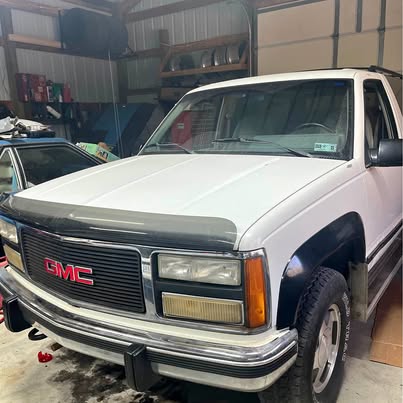
Which one to buy
Buy by use case first and body style second, and let condition overrule both whenever the evidence demands it.
- The all-rounder: a 1996–1999 four-door 4WD with the Vortec 5700, documented intake-gasket replacement, and a solid frame. It does family work, towing, and winter duty without compromise, and its known bills are either paid or priceable.
- The value buy: a solid TBI two-door or four-door, 1992–1995, bought on body condition at TBI money. You accept modest performance and gain the simplest, most forgiving engine in the range and the cheapest entry to a rust-free shell.
- The enthusiast pick: an original two-door 4WD, TBI or Vortec, in a period colour with its factory specification intact. Buy the most original truck you can find; modifications subtract from this market even when they add to the driving.
- The tow and family workhorse: a four-door Vortec with a transmission cooler, documented transmission servicing, and a sound hitch and rear frame. Judge it by its cooling and transmission history, not its leather.
- The fair-weather simple life: a rear-wheel-drive Yukon, either body, if you live where snow is rare. You give up nothing you use and delete the entire transfer-case and actuator fault list from your ownership.
- The specialist only: a 6.5 diesel two-door with the pump-driver relocation already done and a seller who can talk diesel maintenance fluently. If either condition fails, buy a gasoline truck instead.
- The luxury trim, with proof: a genuine 1999 Denali verified by VIN and build documentation, bought at a modest premium over an equivalent SLT — never a badge-engineered earlier truck at any premium.
The overriding rule: buy the frame and the rockers, then the engine's paperwork — a rust-free GMT400 Yukon with a scruffy interior is a bargain at fair money, and a rotten one is expensive at any price, because everything else on this truck can be bought from a catalogue and rust cannot.
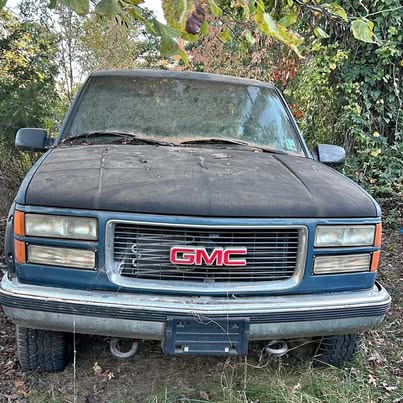
See the 6 Yukon cars currently listed.
For sale now
 $1
Expand
 Current bid $25,000
Expand
 Current bid $13,000
Expand
What they sell for: Yukon sale prices.