
Honda Pilot buyer's guide
Honda Pilot -- the model's own buyer's guide: variants, values and what to check.
Years listed: 2004-2004 · Series: Pilot
# Honda Pilot — Buying Guide
Overview and history
The Honda Pilot is the car Honda built when it finally admitted that American families wanted a Honda the size of a small house. Launched for the 2003 model year, it was Honda's first large crossover: a unibody, three-row, eight-seat SUV built on the same basic architecture as the Acura MDX and the Honda Odyssey minivan, powered by a single 3.5-litre V6, driving the front wheels until the rear axle was needed. It was not a truck, it made no pretence of being a truck, and that honesty is exactly why it sold. Buyers who had outgrown an Accord or a CR-V but could not face a body-on-frame Ford Explorer or a minivan's sliding doors got car-like steering, a flat-folding third row, and Honda resale values in one tall, square box.
The first generation, sold from 2003 to 2008 and built at Honda's plant in Alliston, Ontario (production later also came from Lincoln, Alabama), is the Pilot you will meet most often in the cheap-car market now, and it is the Pilot this site's own pool reflects: every Pilot currently recorded here is a 2003 or 2004 car, all automatic, all in the EX or EX-L trim that most first owners chose. That concentration is not an accident. The early cars were bought in huge numbers by suburban families, run for fifteen to twenty years as the main family wagon, and are now being sold on by second, third and fourth owners at the age where condition — not model year, not mileage alone — is everything.
Understand what the Pilot is and is not before you look at one. It is a front-wheel-drive-based crossover with a clever part-time four-wheel-drive system called VTM-4, not a permanent four-wheel-drive off-roader. It will tow a modest trailer — Honda rated four-wheel-drive cars at 4,500 lb for boats and 3,500 lb for other trailers, and only with the optional towing package — cross a muddy field, and get eight people to a holiday house in the snow. It will not do low-range rock work, and a seller who describes one as a "proper 4x4 truck" is telling you something about the seller. It is also a heavy car, around two tonnes, with a timing-belt V6 that is an interference design: the maintenance you can prove matters more on this car than on almost any other Honda.
The generations that followed matter to you mainly as context and as alternatives. The second-generation Pilot (2009–2015) kept the same formula in a squarer, chunkier body, added Honda's Variable Cylinder Management in a more aggressive form, and grew the same reputation for durability shadowed by the same transmission and cylinder-management questions. The third generation (2016–2022) went sleeker, added direct injection and a nine-speed automatic on upper trims, and traded some of the old car's simplicity for electronics. The fourth generation, from 2023, returned to a boxier shape and a ten-speed automatic. All of them share the first car's essential character: a big, practical, front-drive-biased family hauler whose engine will outlast almost everything attached to it if — and only if — the timing belt, the transmission fluid and the rear subframe have been looked after.
As a used buy today, the early Pilot sits in a particular and useful niche. It is too old and too thirsty to interest the nearly-new family buyer, too practical and too well made to be scrap, and cheap enough that the difference between a good one and a bad one is not the purchase price but the next two years of repair bills. A sorted 2003–2008 Pilot is one of the most useful vehicles you can own for the money: eight seats, a load bay that swallows furniture, and mechanicals any competent independent shop already knows. A neglected one is a transmission rebuild, a rusted rear subframe and a timing belt waiting to happen, all wearing the same grey paint. This guide exists to help you tell those two cars apart while you are standing in front of one, keys in the seller's hand, with about forty minutes to decide.
The models
A Pilot badge covers four generations, two drive layouts in later years, and — within the first generation you are most likely buying — a short, honest trim ladder. Buy by generation first, then by trim, then by year, and always by condition last and loudest. The first generation is a single formula repeated for six years: one engine, one gearbox, front-wheel drive or VTM-4 four-wheel drive, and three trim levels. The later generations widen the range considerably, and the table below keeps the whole family straight.
| Model | Years | Engine | Output | Built | Character |
|---|---|---|---|---|---|
| Pilot (first generation) | 2003–2008 | 3.5 V6 (J35A4, then J35A6/A9) | 240 hp, then 255 hp | — | The original; eight seats, VTM-4, the gearbox and the belt are the story |
| Pilot (second generation) | 2009–2015 | 3.5 V6 (J35Z4, VCM) | 250 hp | — | Squarer and roomier; cylinder management joins the checklist |
| Pilot (third generation) | 2016–2022 | 3.5 V6 (J35Y6, direct injection) | 280 hp | — | Sleeker, nine-speed on upper trims, more electronics to verify |
| Pilot (fourth generation) | 2023–present | 3.5 V6 (J35Y8) | 285 hp | — | Boxier again, ten-speed auto, TrailSport off-road trim |
(Production figures are deliberately not printed in the Built column: Honda does not publish clean per-generation build counts a buyer can verify, so judge the car in front of you, not a number nobody can stand over. Outputs are the period factory ratings as sold in North America.)
The first generation, year by year. The 2003 launch car has the 240 hp J35A4 engine, a five-speed automatic and VTM-4 four-wheel drive as an option alongside front-wheel drive; most were sold as four-wheel drive. The 2004 car is mechanically a close carry-over — which means it shares both the launch car's virtues and its two known exposures, the early five-speed automatic and the first design of radiator transmission-cooler fittings, both covered in the problem-areas section. For 2005 the engine was revised (the J35A6, rated at 255 hp), the drive-by-wire throttle arrived, and the automatic was strengthened; a 2005-onwards car is the first generation's hinge point, the one most specialists steer buyers towards. The 2006 refresh brought revised styling, standard side curtain airbags, and — significantly — a front-wheel-drive version with Variable Cylinder Management, while four-wheel-drive cars kept the simpler engine. The 2007–2008 cars are the run-out: the most developed form of the original, with the fewest early-production surprises, and usually the most expensive first-generation cars for exactly that reason.
LX, EX and EX-L. The LX is the base car: steel wheels on early examples, cloth seats, air conditioning, cruise control and the same engine and gearbox as everything else — mechanically there is no penalty for buying one, and a tidy LX beats a tired EX-L every day of the week. The EX adds alloy wheels, roof rails, a power driver's seat, automatic climate control and better audio; it is the volume trim and the one all four cars in this site's own pool wear in some form. The EX-L adds leather upholstery (the "w/ Leather" in listing titles), heated front seats and a sunroof on later cars, with factory navigation or a rear DVD entertainment system as the headline options. The trap is familiar: leather seat covers and a sunroof get described loosely in adverts, and "EX-L" appears in titles for cars that are plain EXs. Check for the heated-seat switches and the leather's perforated centre panels, and decode the VIN — trim claims in a listing title are advertising, not evidence.
Two-wheel drive versus VTM-4. Front-wheel-drive Pilots exist in every generation and dominate in southern markets; they are simpler, slightly lighter on fuel, and have no rear differential or transfer assembly to maintain. The VTM-4 car is worth more in snow country and worth more at resale almost everywhere, but only if the system works — the rear differential takes its own special fluid (Honda VTM-4 fluid, not ordinary ATF or gear oil), and a car whose rear diff has run on the wrong fluid or no fluid changes can groan, bind and wear its clutch packs. The VTM-4 Lock button on the dash locks the rear clutch packs at low speed; it should engage with a light on the dash and release as speed rises. A seller who cannot tell you which drive layout the car has is a seller whose maintenance claims need paper proof.
The later generations in brief. The 2009 car is bigger in every direction, keeps a 3.5 V6 and a five-speed automatic, and makes Variable Cylinder Management standard — which moves the oil-consumption and spark-plug-fouling checks in the problem section from optional to mandatory. The 2016 third-generation car adds direct injection, a standard six-speed automatic or a ZF-supplied nine-speed on Touring and Elite trims, and Honda Sensing safety electronics on many cars; the nine-speed's service history matters as much as the early five-speed's does. The 2023 fourth-generation car returns to a single V6 with a Honda-built ten-speed automatic and adds the TrailSport, with skid plates and all-terrain tyres, as the one genuinely distinct variant. None of these later cars changes the first-generation buying logic: paperwork first, transmission second, structure third, shine last.
Engines and gearboxes
The J35 in the first-generation car: 240 hp, then 255 hp
Every first-generation Pilot carries a version of Honda's J35: a 3,471 cc, 60-degree V6 with a single overhead camshaft per bank, four valves per cylinder, VTEC variable valve timing and lift on the intake side, and electronic port fuel injection. The block is aluminium with cast-iron liners; the engine sits transversely, drives through the automatic only — there was never a manual Pilot — and breathes through a drive-by-cable throttle on the earliest cars and drive-by-wire later. It is, by the standards of big family SUVs of its era, a refined and willing engine: it revs cleanly to its redline, makes its best power high in the range, and sounds like a Honda rather than a truck. The 2003–2004 J35A4 is rated at 240 hp at 5,400 rpm with 242 lb-ft of torque at 4,500 rpm. The revised engine fitted from 2005, the J35A6 in four-wheel-drive cars, is rated at 255 hp. The difference is real but small in daily use; do not pay a large premium for the later tune, and do not let a seller of a 2003 car quote you the 255 hp figure — the rating belongs to the later engine, and the car's own documentation settles which one it has.
The defining service fact of this engine is the timing belt. The J35 is an interference engine: if the belt breaks or jumps far enough, pistons meet valves and a cheap SUV becomes an engine rebuild. Honda's interval is 105,000 miles or seven years, whichever comes first, under normal conditions — sooner in severe service. At this age, every first-generation Pilot you look at should have had the belt done at least once, and a 2003–2004 car on its original belt is not a bargain at any price until the belt, the tensioner, the idlers and the water pump (which the belt drives, and which is sensibly renewed while everything is apart) have been replaced. A proper belt job at an independent Honda specialist runs roughly $800–$1,400 including the pump and coolant; a dealer quote can run higher. The paperwork test is absolute: an invoice with a date, a mileage and the parts listed. "The previous owner did it" is not evidence, a sticker under the bonnet with no date is not evidence, and a seller who says "these have chains" is simply wrong — walk away from the car or price in the full job on day one.
Day to day, the J35 asks for ordinary care and punishes only neglect. Valve clearances are mechanically adjusted and drift tight on the exhaust side over high mileages; a car that has never had them checked can idle roughly, flash a misfire code, and in the worst case burn an exhaust valve — a top-end repair in the $1,200–$2,500 range. Listen for a sewing-machine tick that is louder than the injectors, and ask directly when the clearances were last done; on a 150,000-mile car with no record, budget for the job (typically $400–$700 with gaskets). Spark plugs are long-life iridium items on a roughly 105,000-mile schedule; coil-on-plug ignition means a failed coil gives you one dead cylinder and a flashing check-engine light, and a single coil is a $60–$150 part you can fit yourself — but a misfire that moves between cylinders, or arrives with oil-fouled plugs, points deeper, at the EGR and cylinder-management issues covered in the problem section. Oil consumption on the non-VCM first-generation engines is usually modest; a car using a quart every 1,000 miles needs investigation, not reassurance.
Cylinder management, direct injection and the later engines
The second-generation Pilot (2009–2015) uses the J35Z4, a 250 hp development of the same engine with Honda's Variable Cylinder Management (VCM) in its more assertive form: under light load the engine shuts down the entire rear bank — cylinders 4, 5 and 6 — and can also run on four cylinders, switching between three, four and six. The fuel saving is real. So is the side effect that defines these cars as used buys: the deactivated cylinders' rings can allow oil past, plugs foul (cylinder 3 especially in the documented pattern), and the active engine mounts that mask the vibration of three-cylinder running wear out. Honda settled a class action over 2009–2013 VCM oil consumption and extended warranty cover on affected cars; that cover is long expired now, so the check is yours to make: pull the plugs or read the history for plug replacements at short intervals, check the oil level and its colour, and treat a car with a VCM-related misfire history as a car to price very carefully. Many owners fit a VCM defeat device (a plug-in "muzzler" that fools the temperature sensor and keeps all six cylinders firing); a car wearing one is not automatically a bad car — it may be a well-informed owner's car — but ask why it was fitted.
The third-generation J35Y6 (2016–2022) adds direct injection and a higher compression ratio for 280 hp, keeps VCM, and adds an idle-stop system on many trims. Direct injection brings its own used-car checks: intake-valve carbon build-up over high mileage (the fuel no longer washes the valves), a high-pressure fuel pump driven off the camshaft, and injectors that are a dealer-level cost when they fail — Honda extended warranty cover on some 2016–2017 injectors after emissions-related failures, so check a car's history against its VIN. The fourth-generation engine (from 2023) is a new J35 variant with dual overhead camshafts — a genuine redesign, and the first Pilot engine without the long-serving single-cam layout — rated at 285 hp and paired exclusively with the ten-speed automatic. Its timing belt remains a belt: the interference-engine rule and the 105,000-mile discipline carry over.
Across all generations the supporting cast repeats: an alternator that works hard and typically lasts 120,000–180,000 miles ($350–$650 fitted), a starter motor that gives warning with slow, lazy cranking before it quits ($300–$550 fitted), a power-steering pump whose inlet O-ring hardens and sucks air, producing a cold-start whine and foamy fluid — a part that costs a few dollars and is misdiagnosed as a failed pump or rack every week — and air-conditioning compressors whose clutch relay sticks, either killing the cooling or running the battery flat overnight. None of these is a reason to reject a car. All of them are reasons to test everything, twice, on the viewing.
Gearboxes: the five-speed automatic is the whole ballgame
The first-generation Pilot's five-speed automatic is a Honda-built unit, and Honda's automatics of this era are unlike anyone else's: instead of planetary gearsets, they are built like automated manual gearboxes inside, with individual clutch packs engaging each ratio. When they are healthy they shift crisply and last. When they are neglected they fail in a specific, documented pattern, and the 2003–2004 cars — the exact cars in this site's pool — sit in the most exposed years. The mechanism is heat and debris: the clutch packs wear, the wear material circulates, the internal filter (which cannot be changed without splitting the gearbox) gradually restricts, fluid pressure and cooling suffer, and the box begins to flare between gears, shudder, delay engaging Drive or Reverse, or flash the D light on the dash. Honda's contemporary fix programme on this gearbox family included an oil-jet kit to improve lubrication of the second-gear area on early cars and, in some cases, replacement gearboxes. By now, the only question that matters on any individual car is not what Honda did in 2004 but how this box behaves today and what its fluid looks like.
Test it properly. From cold, the box should engage Drive and Reverse within about a second, without a clunk. Accelerating gently, the 1–2 and 2–3 changes should be clean, with no flare (revs rising between gears) and no shudder at light throttle around 30–45 mph, where the torque-converter lock-up clutch engages — a rumble-strip shudder there is the classic early warning. Drive it for at least twenty minutes; many sick boxes behave when cold and flare when hot. Check the fluid on the dipstick (this generation has one): healthy Honda ATF is red and smells neutral; brown, black or burnt-smelling fluid on a box that also shifts badly is a rebuild conversation — $2,800–$4,500 at a specialist — and should end the viewing unless the price already reflects it. Fluid changes on these boxes are drain-and-fill (about a third of the fluid each time, so specialists repeat the process three times); Honda fluid or a quality ATF rated for Honda applications only, on a roughly 30,000-mile rhythm. A car with invoices showing that rhythm is worth real money over an identical car without them.
The radiator connection is part of the gearbox story on the early cars. The automatic's fluid is cooled by a heat exchanger inside the radiator, connected by fittings that corrode on 2003–2005-era Honda and Acura V6 cars. When a fitting lets go or the exchanger leaks internally, coolant and ATF mix — the infamous pink "strawberry milkshake" on the dipstick or in the coolant reservoir — and the gearbox is destroyed from inside in short order. Inspect both fluids on every viewing: ATF in the coolant, or coolant in the ATF, is an absolute walk-away unless you are buying a parts car. Many informed owners replace the radiator preventatively at this age ($300–$600 fitted); a recent radiator on an early car is a good sign, not a suspicious one.
Later gearboxes change the questions, not the principle. The second-generation car keeps a five-speed automatic of the improved design; the third generation uses a six-speed Honda automatic on lower trims and a ZF nine-speed on upper trims, the nine-speed needing its own correct fluid and software updates and rewarding a documented service history; the fourth generation's Honda ten-speed is smooth and, so far, well regarded. In every generation the rule is identical: the gearbox's past is the car's value, and twenty minutes of varied driving tells you more than any seller's description.
Problem areas
Rust and structure: the rear subframe mounts decide the car's fate
The Pilot's body is not a rust bucket in the classic sense — the visible panels, doors and tailgate usually present well into old age, and cosmetic rust is mostly confined to stone-chipped wheel-arch lips, the tailgate's lower seam and around the windscreen pillars on neglected cars. The structural story is underneath, at the back, and it is the single most important check on a first-generation car from the salt belt. The rear subframe — the cradle that carries the rear suspension and differential — bolts to the body at mounting points that trap moisture and road salt. On 2003–2008 cars (the same design family as the contemporary MDX and the first Ridgeline) those body mounting areas can corrode from the inside out until the metal around the mounting bolts thins, cracks and, in documented cases, lets the subframe pull away from the body. A car at that stage is not a repair project; the fix involves cutting out and fabricating structural metal around the mounts, and on a car of this value it is almost never economic. This is the Pilot equivalent of the Mercedes sill test: it settles the car.
So get underneath, or get the car on a lift before money changes hands — a driveway viewing with a torch and a mirror is the minimum. Work from the rear wheels forward: the subframe itself (surface rust is normal; flaking, holed or paper-thin sections are not), the four mounting points where it meets the body, the floor pan above and around them, the rear wheel wells and inner arches, and the spare-wheel well in the boot floor, which collects water when the tailgate seal leaks and rusts from inside. Poke with a screwdriver handle, not a blade — you are testing soundness, not making holes — and treat fresh underseal or black paint applied only around the rear subframe as a question that needs an answer. The pool for this guide spans Oregon, Ohio, Michigan and Georgia; the Michigan and Ohio cars have lived exactly the winters that do this damage, and a southern or Pacific-Northwest car with a clean underside is worth a genuine premium over a salt-belt car with a shiny top. Also check the front subframe and the radiator support panel, which rust more conventionally, and the brake and fuel lines along the floor, which corrode in the same conditions and cost $400–$900 to replace properly in sections.
Two smaller structural points. The tailgate struts weaken and the gate drops on your head — a $40 pair of struts, but test it. And the rear wiper, rear washer and the third-row seatbelts all live in the tailgate area that sees the water; make sure they work, because fixing water-damaged electrics in the gate is fiddly rather than cheap.
Drivetrain: VTM-4, transfer and the fluids nobody changed
On four-wheel-drive cars the VTM-4 system is mostly invisible in normal driving: the car runs as a front-wheel-drive until sensors detect slip or hard acceleration, when electromagnetic clutch packs in the rear differential engage to send torque rearward. The system is reliable when serviced and misunderstood when not. Its rear differential uses a dedicated Honda VTM-4 fluid — not ATF, not hypoid gear oil — on a change schedule of roughly every 30,000 miles after an early first change. A neglected unit announces itself with a groaning or chattering from the rear on tight, slow turns (the clutch packs binding and releasing), a VTM-4 warning light, or a shudder under acceleration that owners misdiagnose as the gearbox. The test is easy: full-lock circles in a car park, slowly, in both directions, windows down. Silence is health; rhythmic groaning is a fluid change at best ($120–$200 with the correct fluid) and worn clutch packs at worst. The VTM-4 Lock button should light its indicator and hold the rear axle locked at car-park speeds; if the light flashes or the system disengages immediately, budget for diagnosis.
The propeller shaft's centre bearing and universal joints wear over high mileages and produce a vibration or drone at 40–60 mph that changes with throttle; a replacement shaft or bearing repair runs $300–$800. Front CV joints click on full lock when their boots have split and the grease has escaped — check the boots on any car, because a joint is $250–$450 a side fitted while a boot caught early is a fraction of that. Wheel bearings on these heavy cars are a wear item past 150,000 miles: a hum that rises with speed and changes note when you weave gently between lanes (loading and unloading each side) is the classic tell, at $250–$450 per corner fitted. None of this is exotic. All of it is the kind of $300-here, $400-there spending that separates a cheap Pilot from an expensive one over your first year.
Suspension, steering and brakes
The first-generation car rides on MacPherson struts at the front and a multi-link independent rear suspension — a sophisticated layout for its class and era, and the reason a good Pilot drives with a composure no contemporary Explorer could match. By now, the wear list is standard but comprehensive. Front struts and rear dampers tire past 100,000–120,000 miles, showing as a floaty, under-damped ride and nose-dive under braking; a full set fitted runs $800–$1,600 depending on quality. Lower control-arm compliance bushings at the front crack and split, giving a clunk over sharp bumps and vague on-centre steering; arms or bushings are $300–$600 a side fitted. Anti-roll-bar links knock over broken surfaces (cheap: $100–$200 a pair fitted), and track-rod ends and ball joints wear in the usual way — jack the front up, rock the wheel at 12-and-6 and 9-and-3, and feel for play before you drive, then confirm on the road.
The steering is hydraulic, and its characteristic fault is the cold whine described in the engine section: air drawn past the hardened pump inlet O-ring. The distinguishing test is the reservoir — foamy, aerated fluid on a cold start with a whining pump is the O-ring until proven otherwise, a few dollars for the part; a pump that whines with clean, still fluid and heavy steering at parking speeds is a pump ($350–$600 fitted), and a rack that leaks from its boots or knocks over bumps is a $700–$1,200 conversation. Budget owners sometimes top up with stop-leak; stained, swollen hoses and a suspiciously clean reservoir cap are the tells.
Brakes are conventional discs all round on a two-tonne car, and they work hard. Warped front rotors give a steering-wheel judder under motorway braking — $250–$450 for discs and pads fitted — and rear calipers seize on cars that sit, dragging a pad and cooking a wheel bearing if ignored. The parking brake is a drum inside the rear disc hat and is often out of adjustment or rusted solid on automatic cars whose owners never use it; test it on a slope. Brake fluid should be changed every three years; black fluid in the reservoir tells you about the previous owner's whole maintenance philosophy in one glance.
Engine ancillaries, EGR and emissions
The J35's supporting systems generate the check-engine lights you will meet on viewings, and most have known, bounded causes. The EGR system clogs its passages in the intake manifold with carbon over high mileage, producing a stumble or surge at light throttle, a P0401 (insufficient flow) code, and sometimes a hesitation that sellers blame on the gearbox. Cleaning the passages is labour more than parts — $250–$500 at a shop — and the test is behavioural: a car that surges gently at a steady 35–45 mph cruise with a clean-shifting gearbox is showing you EGR, not transmission trouble. Catalytic converters fail with age and with oil consumption upstream of them; a P0420/P0430 code on a car that also uses oil is a car burning its way towards a $600–$1,500 converter bill, and in states with emissions testing it cannot be waved through. Oxygen sensors are wear items and cheap by comparison ($150–$300 fitted each).
The EVAP system throws its own codes for a loose or failed fuel cap (free to check, always check first), a failed vent or purge solenoid, or a cracked charcoal canister — the last often on cars that have been habitually overfilled at the pump. Air conditioning deserves a full test on every viewing, in both front and rear zones where fitted: compressors fail, but so do the $20 clutch relays, and a system that cools at speed but not at idle is pointing at the condenser fans or a weak compressor — drive it, park it, and let it idle with the air conditioning on full while you watch the temperature gauge and feel the vents. Engine mounts, including the vacuum- or electronically-controlled front mount on many cars, collapse with age and give a thump on take-up and vibration at idle in Drive; a full set is $500–$1,000 fitted, and a car that idles glass-smooth in gear has usually had them done. Radiators crack their plastic tanks with heat cycles, quite apart from the transmission-cooler fitting issue — look for coolant staining and a sweet smell at the front of the car, and treat a recent radiator as a plus.
Interior, electrics and the family-car audit
A Pilot's cabin was built for family war, and it shows its service honestly. The leather on EX-L cars cracks and splits on the driver's seat bolster and the front armrests; cloth LX and EX seats wear better and hide it better. Neither matters mechanically, but both price the car, and a seller asking top money for a car with a split driver's seat is misreading his own market. The third row must fold and rise on its straps, the second row must slide and tumble for access, and every seatbelt must latch and retract — you are buying eight seats, so audit eight seats. Rear-seat DVD screens and headphones (where fitted) are obsolete technology that adds nothing now; do not pay for them, but do check the factory navigation on EX-L cars works, because a dead unit is a hole in the dash you will look at every day.
Electrically, the pattern faults are door-lock actuators that buzz or give up one door at a time ($100–$250 per door fitted), window regulators that slow and jam, an ignition switch electrical contact that wears and can cause stalling or no-crank episodes on high-mileage cars, and blower motors and their resistors that take the heater fan speeds away one by one. The instrument cluster's D light matters beyond illumination: a flashing D while driving is the gearbox reporting a fault code, and a car presented with the bulb conveniently dead deserves suspicion. Check every warning light comes on with the ignition and goes out after start — a missing check-engine bulb is the oldest trick in the book, and on a Pilot, with its gearbox and EGR code history, it is a trick played for a reason. Finally, water: blocked sunroof drains (EX-L) wet the headlining and A-pillars, a leaking windscreen bond wets the front footwells, and the spare-wheel well collects the tailgate's leaks. Lift the carpets' edges, press the footwells, and smell the car with the doors closed before you drive it. A musty Pilot is a leaking Pilot, and the leak is always easier to find before you own it.
How to inspect one
Inspect a Pilot in this order: paperwork, structure, fluids, gearbox, then everything else. The order is deliberate — the checks that can kill the deal come first, while you still have the energy and the seller still has the patience. Allow forty minutes, bring a torch, a magnet, a tyre-pressure gauge and a code reader if you have one, and insist on starting the car cold: a warmed-up Pilot presented "ready for you" has had its cold-start behaviour — the steering whine, the lazy starter, the gearbox's first engagement — edited out.
- Paperwork before paintwork. Read the title, the VIN on the dash plate and door sticker (they must match), and the service history in that order. You are hunting for three documents above all: a timing-belt invoice with date and mileage inside the 105,000-mile/seven-year window, evidence of automatic-transmission fluid changes, and — on four-wheel-drive cars — VTM-4 rear-differential fluid changes. Decode the VIN's tenth character for the model year and never rely on the listing title: this site's own pool shows how loosely titles are written, with the same car described as "EX", "EX Sport Utility 4D" and "EX L 4dr SUV w/ Leather" across listings.
- The cold start. Start it from stone cold, bonnet open, and listen. Note the power-steering whine (the O-ring test from the problem section), any timing-belt-area chirp, lifter-like ticking that should fade in seconds, and how the starter sounds. Watch the dash: every warning light on, then off — including the D indicator and the check-engine light.
- The two-fluids check. Pull the transmission dipstick and look at the coolant reservoir before you drive anywhere. You are checking for the fatal cross-contamination from the radiator cooler fault: pink, milky ATF or an oily film in the coolant ends the inspection on an early car. Then grade the ATF itself — red and sweet is health, brown and burnt is a negotiation or a farewell.
- Underneath: the subframe verdict. Torch in hand, go to the rear subframe mounts first, exactly as the rust section describes, then the floor, inner arches, spare-wheel well, brake lines and front subframe. On a salt-belt car this step, not the test drive, decides whether there is a deal at all.
- The gearbox drive. Drive at least twenty minutes and through every condition: gentle pull-away, full-throttle merge, steady 30–45 mph cruise for the lock-up shudder, and repeated Drive–Reverse engagements when warm. Note any flare, delay, shudder or flashing D. A box that is perfect for five minutes and flares at twenty has told you the truth at twenty.
- The VTM-4 test. In an empty car park, full-lock circles both ways, slowly, windows down, listening for rear-end groaning or chatter; then press the VTM-4 Lock button at walking pace and confirm the light and the locked, scrabbling feel on a loose surface. Front-wheel-drive cars skip this step — confirm which car you actually have from the dash button's presence or absence.
- Straight-line and braking tests. On a quiet, flat road, check it tracks straight hands-light, brakes straight without judder (warped rotors) or pull (seized caliper), and hums evenly — then weave gently to load each wheel bearing in turn. Find a slope and test the parking brake properly.
- Suspension by ear. Broken surfaces at 20–30 mph: knocks are links and bushes, a floaty wallow is dampers, a clunk on take-up is engine mounts. At the kerb, bounce each corner; more than one free bounce means tired dampers.
- The eight-seat audit. Fold, tumble and raise every seat; latch every belt; sit in the third row yourself. Check the tailgate struts hold the gate fully open, and look in the spare-wheel well for water while you are back there.
- Electrics, all of them. Every window, lock, mirror, seat motor, blower speed, the air conditioning front and rear at idle for five full minutes, heated seats on EX-L, lights, wipers including the rear, and the horn. Test the air conditioning the way the problem section prescribes — at idle, not just on the move.
- Read the codes. Plug in a reader, or have the seller's mechanic do it, and look for stored as well as live codes: EGR (P0401), catalyst (P0420/P0430), misfires (P0300–P0306) and any transmission codes are each a priced item, not a shrug. A recently cleared car with all readiness monitors incomplete has been prepared for you in the wrong way.
- Price the findings, then decide. Add up what you have found in real money — belt job if unproven, gearbox symptoms at rebuild value, subframe rust as a walk-away, and the $200–$500 items as a list — and compare the total against the next-best car, not against the asking price. The Pilot market rewards patience: these were sold in family-car volumes, and another one is always coming.
Values
The Pilot market is a condition market wearing a mileage market's clothes, and the build's figures below this guide — the live listings and recorded sales for this model — only make sense once you understand what moves them. Two 2004 EX-Ls with identical mileage can sit a very long way apart in value, and the gap is almost never paint or leather. It is the three-document story from the inspection section: a timing belt inside its window, a gearbox with fluid history that still shifts cleanly hot, and a rear subframe with sound mounts. A car with all three is the top of the market whatever its odometer says. A car with none of them is a parts donor with a title, whatever its odometer says. Read every asking price through that filter first.
Asking prices and achieved prices part company predictably on these cars. Private sellers price from what they paid, what they have spent, and what the family thinks the car is worth; buyers price from the inspection findings. The result is that tidy, documented cars sell close to their ask and quickly, while undocumented cars sit, get reduced in steps, and eventually sell for what a dealer offered in part-exchange. When you are comparing the recorded sales beneath this guide against live asks, weight the achieved figures heavily and treat a long-listed ask as an opinion, not a data point. Season matters too: four-wheel-drive cars firm up noticeably in autumn in snow-belt states and soften in spring, while front-wheel-drive cars in the South trade in a flatter, year-round market.
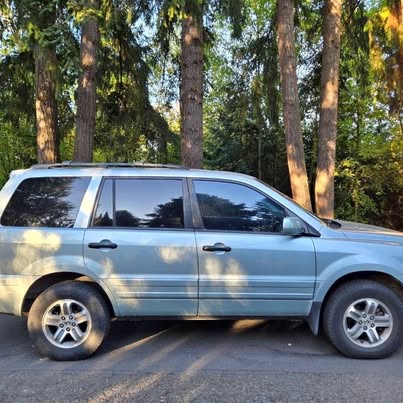
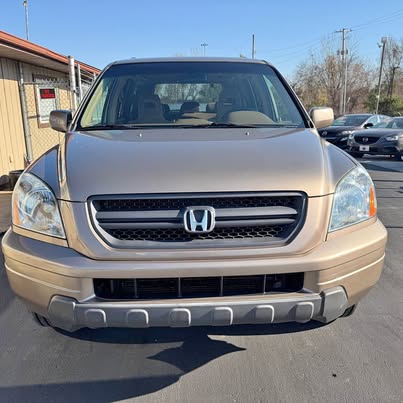
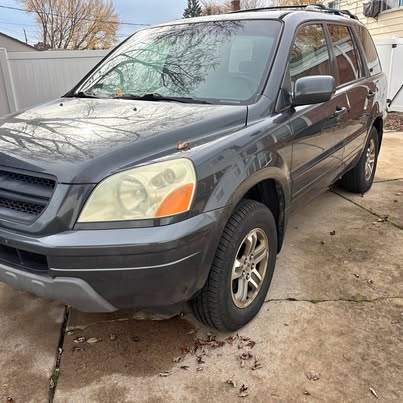
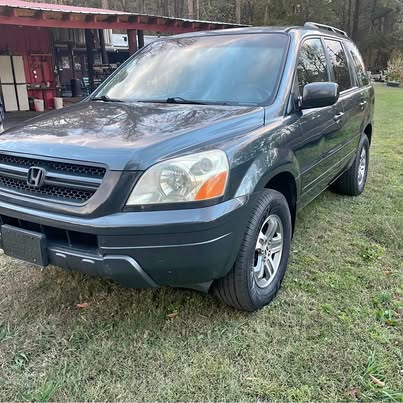
Variant premiums are modest and rational. Four-wheel drive earns its premium in the North and means little in Florida or Arizona. The EX-L's leather and heated seats add a little; navigation and rear DVD add nothing at this age and should never be paid for. The 2005–2008 cars carry a small but real premium over 2003–2004 cars for the revised engine and gearbox, and within any year, a one- or two-owner car with a stamped book beats a lower-mileage car with no history at all. Colour is a minor factor — the greys, silvers and whites that dominate the pool (two of this site's four recorded cars are grey) sell easiest, while gold and pale blue are slightly slower to move and slightly softer when they do.
The project-versus-driver gap is where Pilots are won and lost. A running, driving car with a slipping gearbox is not worth "a good car minus a bit": it is worth a good car minus a full rebuild, minus the risk that the belt is also due and the subframe is also thin, because those three neglects travel together — the owner who skipped fluid changes skipped everything. Conversely, a scruffy car with perfect paperwork is routinely underpriced by sellers who think buyers pay for shine. They do not, on a Pilot. Buy the documents, detail the car yourself, and let someone else pay the shine premium on a car with no belt invoice.
Parts and ownership
Running a Pilot is an exercise in pleasant normality. Honda built the car in family-car volumes, the J35 engine family powered half the company's range for two decades, and the parts pipeline reflects it: service items, brakes, suspension components, radiators, alternators and starters are available everywhere, from Honda dealers, every major motor factor and a deep bench of quality aftermarket suppliers, at prices that undercut most European rivals of the same size. The handful of Pilot-specific parts that matter — the VTM-4 rear differential fluid (buy the genuine Honda fluid; there is no correct substitute), transmission fluid of the correct Honda specification, and trim and interior pieces unique to the model — are all still obtainable, with used trim plentiful from breakers because so many cars were built. Body panels are large and shipping them costs more than the panel; buy used body parts locally where you can.
Servicing follows Honda's schedules of the era: oil and filter roughly every 7,500 miles in normal use (many owners run 5,000 on an old car, which does no harm), transmission drain-and-fill around every 30,000 miles, VTM-4 fluid on its own roughly 30,000-mile rhythm, brake fluid every three years, coolant on the long-life schedule after the first change, and the timing-belt event at 105,000 miles or seven years that dominates the budget — plan on roughly $800–$1,400 at an independent for belt, tensioner, idlers, water pump and coolant, and treat any quote far below that as a belt-only job missing the parts that actually fail. Valve clearances belong on the same long-interval list. A realistic annual running budget for a sorted first-generation car, excluding fuel and insurance, is a few hundred dollars in routine servicing plus a rolling allowance for the wear items this guide lists — a bearing here, a pair of struts there — rather than any single catastrophic line, provided the gearbox and subframe were sound when you bought it.
Fuel economy is the ownership cost you cannot fix: expect mid-to-high teens in town and low twenties on a motorway run from the early cars, a little better from the cylinder-management cars driven gently. Tyres are a sensible size and sensibly priced, though a two-tonne car wears them; rotate them, because the front-drive bias eats front tyres and uneven wear front-to-rear upsets the VTM-4 system, which wants matched rolling circumferences. Insurance is unremarkable, security is a non-issue at this age, and any competent independent garage can look after the car — though a Honda specialist earns his fee on gearbox diagnosis and VTM-4 questions, where generic advice ("they all shudder a bit") can cost you a transmission. Join the owners' forums before you buy, not after: the Pilot community has documented every fault in this guide, usually with photographs and part numbers, and a seller's car often has its own history waiting to be found there.
Which one to buy
- The all-rounder: a 2005–2008 EX with VTM-4 and a stamped history. The revised engine and strengthened gearbox, the volume trim with everything you need and nothing obsolete to pay for, and — in the right car — the three documents that decide value. This is the Pilot to recommend to a friend.
- The value buy: a 2003–2004 EX or EX-L with paperwork. The earliest cars are the cheapest way into the model, and a documented one — belt done, fluid changes on record, radiator renewed, subframe clean — gives you ninety per cent of the later car for noticeably less. Without the paperwork it is not the value buy; it is the gamble.
- The southern buy: a front-wheel-drive car from a dry state. If you do not need four-wheel drive, a rust-free southern or western FWD car trades simplicity and a clean underside against a smaller resale audience. For a keeper, that trade is often the smartest money in the whole market.
- The family flagship: a second-generation EX-L (2009–2015). More room, more safety kit, the same essential formula — bought only after the VCM checks: oil level, plug history and a long, varied test drive. A clean one is the most car this guide's subject ever became for the money.
- The modern buy: a third-generation car with the six-speed automatic. Direct injection and 280 hp with the simpler of the two gearboxes; on nine-speed cars, demand the fluid and software history as you would on a 2003 car's five-speed.
- The one to walk away from: any first-generation car with rusted rear subframe mounts, milky transmission fluid, or a flashing D light the seller calls "just a sensor". Each of those is the car telling you its price is wrong, in writing.
The overriding rule: buy the documents, the gearbox and the subframe — in that order — and let the paint, the leather and the options look after themselves. A Pilot with a belt invoice, clean red transmission fluid and sound rear mounts is a good car at almost any mileage; a Pilot without them is an expensive one at almost any price.
See the 1 Pilot cars currently listed.
What they sell for: Pilot sale prices.