
Hudson Essex buyer's guide
Hudson Essex (1928–1932) — Essex: what's listed, and what they sell for.
Years: 1928–1932 · Models: Essex
# Hudson Essex — Buying Guide
Overview and history
You are not looking at a rare coachbuilt special. You are looking at one of the cars that taught America to buy a closed car — and that is exactly why you need to inspect it harder, not softer. Essex was Hudson Motor Car Company's low-priced companion marque, launched for 1919 from Detroit, and its first job was to put Hudson engineering under buyers who could not stretch to a Hudson. The early Essex Four did that with a lively inlet-over-exhaust four and, crucially, with closed coachwork at a price where rivals still sold you an open tourer and a set of side curtains. By the early 1920s the Essex Coach — a two-door closed sedan — was among the cheapest closed cars in America, and it changed what an ordinary buyer expected a cheap car to be.
In 1924 Essex switched from four cylinders to six, and the character of the car changes with it. The first Essex Six was small by American standards — about 130 cubic inches — smooth and willing but, by period accounts and by Hudson's own rapid enlargements, underpowered for the closed bodies it now carried. Hudson enlarged it in steps: to roughly 144 cubic inches, then for 1927, under the Super Six name Essex borrowed from Hudson's own flagship, to 153 cubic inches, and then to the 160–161-cubic-inch engine that powers the cars you are most likely to meet — the 1928–1932 Super Six and Challenger models that make up this guide's core. Four-wheel Bendix mechanical brakes arrived for 1928, which matters more to your safety on a modern road than any horsepower figure on this page.
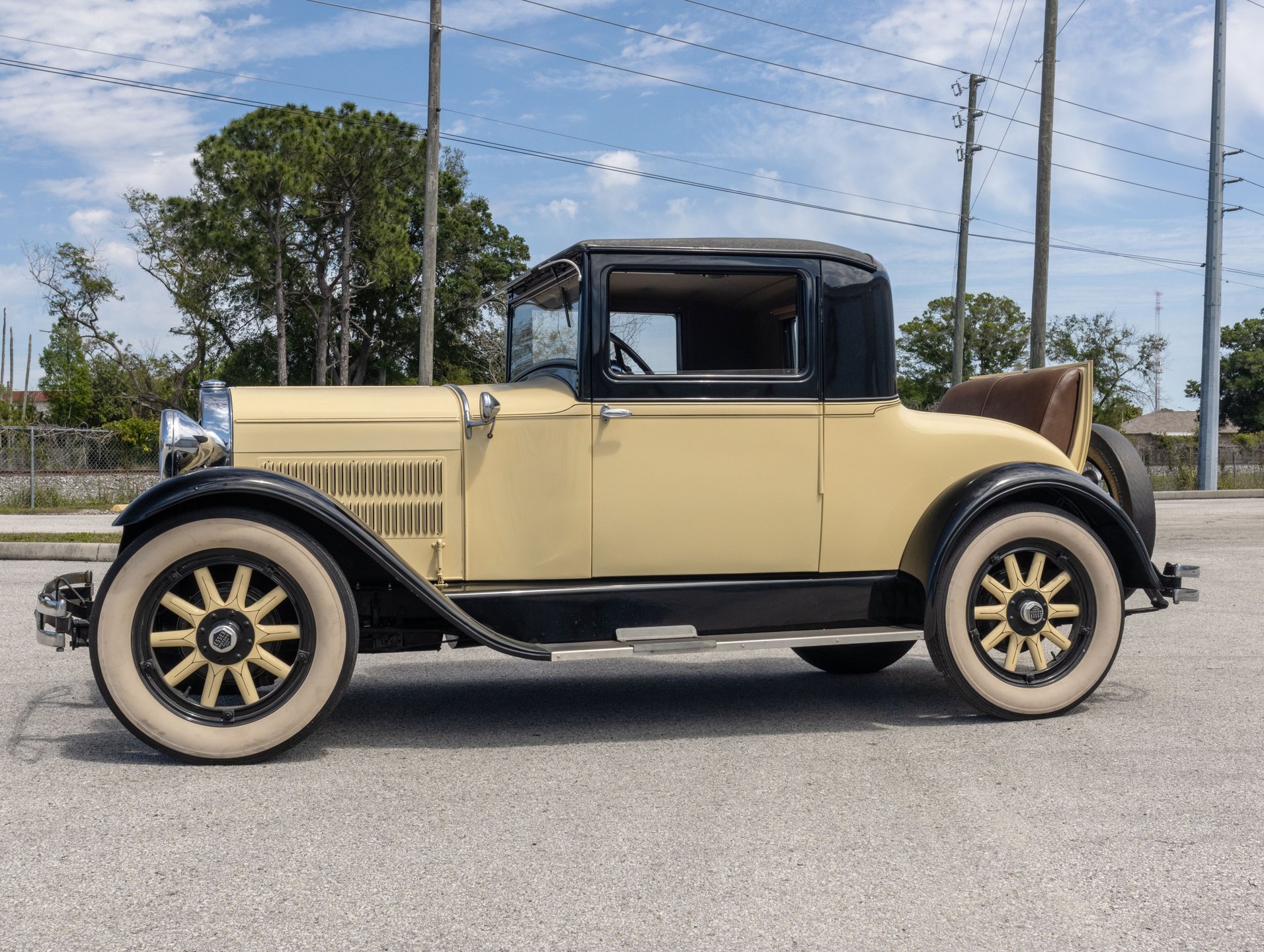
For 1929 Hudson marketed the car as "Essex the Challenger," a direct answer to Chevrolet's new six: more power — 55 horsepower from the 161-cubic-inch L-head — a larger, chrome-trimmed radiator shell, and a week of dealer-run public "challenges" to prove the point. The Challenger name ran into 1930, the wheelbase grew from 110½ inches to 113 inches, output rose again to around 60 horsepower, and for 1932 the six grew once more, to 193 cubic inches and about 70 horsepower. Midway through 1932 that same basic car, on a shorter 106-inch chassis, was relaunched as the Essex Terraplane — and for 1933 the Essex name itself was dropped in favour of Terraplane. So every Essex you inspect sits in a fourteen-year run, 1919–1932, but the cars that survive in usable numbers, and the only cars in this site's own pool — three sold cars, all coupes in the records, from 1928 to 1930 — are the late sixes. Buy one for what it is: a sturdily built, simple, low-revving six in a wood-framed body, from a maker whose owners' club support is genuinely good — not for speed, and not for rarity it does not have.
The models
Essex badging confuses buyers because Hudson reused its own best name. "Super Six" on an Essex does not mean the big Hudson Super Six — it means the senior Essex six, and from 1927 onward almost every Essex is a Super Six of some description. Learn the sequence by engine size and wheelbase, not by badge, because sellers routinely get both the year and the name wrong — this site's own pool files a 1928 car as a "Challenger," a name Hudson did not use until 1929.
The Four (1919–1923) is where the marque starts: a 180-cubic-inch inlet-over-exhaust four of about 55 horsepower, on a short chassis, sold as tourer, roadster, sedan and the famous Coach. Fours are historically important and pleasant, but they are a different purchase — slower, rarer in parts support for engine-specific items, and valued by a thinner market. The first Six (1924–1926) introduces the L-head six at about 130 cubic inches, enlarged to about 144 cubic inches during 1924; period reaction was that the car had smoothness without the pull its closed bodies needed, and Hudson's own fix was displacement. The Super Six (1927–1928) takes the engine to 153 cubic inches (2¾ × 4¼-inch bore and stroke), keeps the 110½-inch wheelbase, and gains four-wheel Bendix mechanical brakes for 1928 — the single most important year break in this guide. A 1927 car stops on its rear wheels only; a 1928 stops on all four, mechanically, and that difference follows you into every inspection and every drive.
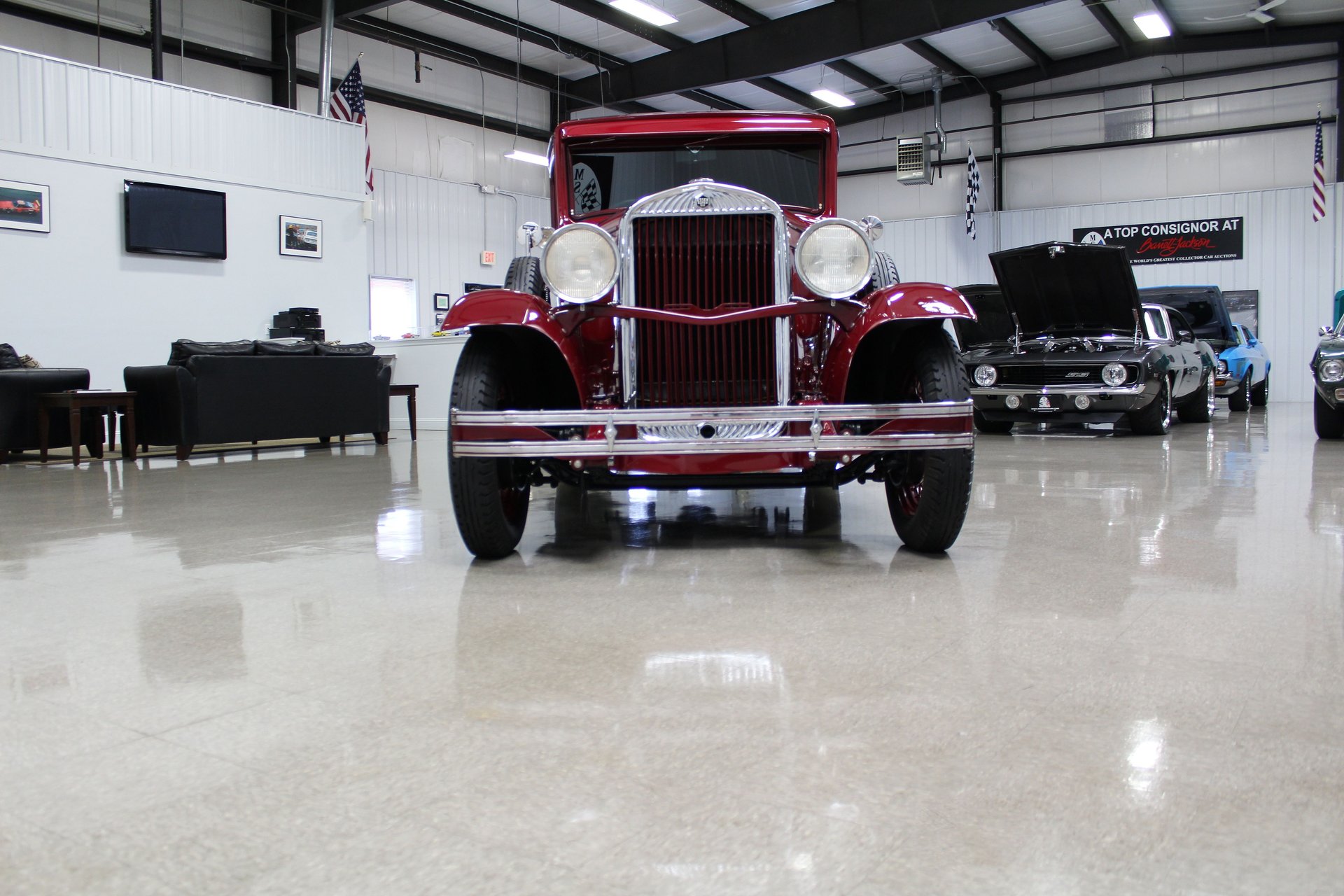
The Challenger (1929–1930) is the car most buyers actually want. The engine grows to 160.4 cubic inches (2¾ × 4½ inches) and a factory-rated 55 horsepower for 1929, with period advertising claiming about 60 horsepower for the improved 1930 car on the lengthened 113-inch wheelbase. Bodies proliferate — coach, sedan, coupe, roadster, tourer and the rare Biddle & Smart-bodied boattail Speedabout — and the styling gains the taller chrome radiator shell and broad beltline moulding you see in the photographs here. The final cars (1931–1932) continue the 161-inch engine for 1931, then step to the 193-cubic-inch, roughly 70-horsepower six for 1932, with the mid-year Terraplane offshoot previewing where Hudson's volume future lay. Production figures for individual Essex body styles are not reliably published in a form you should trust at a kerbside — Hudson reported by series and year, coachbuilders like Biddle & Smart built in small batches, and any seller quoting you an exact "one of X built" figure for an ordinary coupe or sedan is inventing it. The honest exception is the Speedabout, a genuinely low-production specialty model; everything else was built to sell in the hundreds of thousands across the run, and survival — not production — is what makes a good one scarce now.
| model | years | engine | output | built | character |
|---|---|---|---|---|---|
| Essex Four | 1919–1923 | 180 cu in ioe four | ~55 hp | Large numbers; exact body splits not reliably published | The pioneer: cheap closed coachwork, brisk for its class, now a specialist buy |
| Essex Six | 1924–1926 | 130, then ~144 cu in L-head six | Not reliably published as a single figure | Large numbers | Smooth but underpowered for closed bodies; the learning years |
| Essex Super Six | 1927–1928 | 153 cu in L-head six | Rated 18.2 hp (tax rating); actual output not consistently published | Large numbers | The mature formula; 1928 gains four-wheel Bendix brakes — buy the brake year |
| Essex the Challenger / Challenger | 1929–1930 | 160–161 cu in L-head six | 55 hp (1929); ~60 hp claimed 1930 | Large numbers; Speedabout genuinely low-production | The sweet spot: strongest of the small sixes, best styling, widest body choice |
| Essex Super Six (final) | 1931–1932 | 161 cu in, then 193 cu in L-head six | ~70 hp (1932, standard head) | Falling Depression volumes | The most capable Essex and the bridge to the Terraplane |
Two identity traps close this section. First, right-hand-drive Essexes were built in quantity for export markets — Britain, Australia, New Zealand, South Africa — and an RHD car in America is an import-back or an export survivor, not a curiosity Hudson built for fun; check its paperwork story accordingly, and note that this site's own 1930 pool car is labelled RHD while its photographs plainly show a left-hand-drive sedan, which tells you to trust photographs and plates over listing text every time. Second, engines swap freely within the family: a 153, a 161 and a 193 look alike at a glance. The engine number, stamped on the left side of the block, and the car serial plate on the dash under the bonnet are what settle what you are actually buying.
Engines and gearboxes
The Four and the first Six: what you are unlikely to buy, and why it still matters
Every Essex engine you will meet is a Hudson design built in Detroit, and the family logic is consistent: conservative, low-stressed, and intended to run on the poor fuel of the day. The original Four is an inlet-over-exhaust design — overhead inlet valves, side exhaust valves — of 180 cubic inches, and its roughly 55 horsepower was strong for a cheap car in 1919. Its relevance to you is mostly negative: if a seller presents a Four as a Six-era car, or prices a Four like a Challenger, the taxonomy in the previous section is your correction. Four-specific engine parts are the hardest in the Essex world to source, and the car's performance — adequate in period, leisurely now — narrows its use to tours and shows.
The 1924 Six that replaced it is the opposite lesson. It is a straightforward L-head (side-valve, flathead) six, valves in the block beside the cylinders, one casting doing simple work. At about 130 cubic inches it was simply too small for a closed sedan full of passengers, and the mid-1924 enlargement to about 144 cubic inches did not cure the complaint. When you road-test any early Six, judge it against that history: a healthy early Six still feels breathless on a grade, and that is character, not necessarily a defect. A sick one — down on compression, retarded, or starved by a worn carburettor — feels breathless everywhere, including on the flat at 30 mph, and that distinction is the whole test.
The Super Six and Challenger six: the 153 and the 161
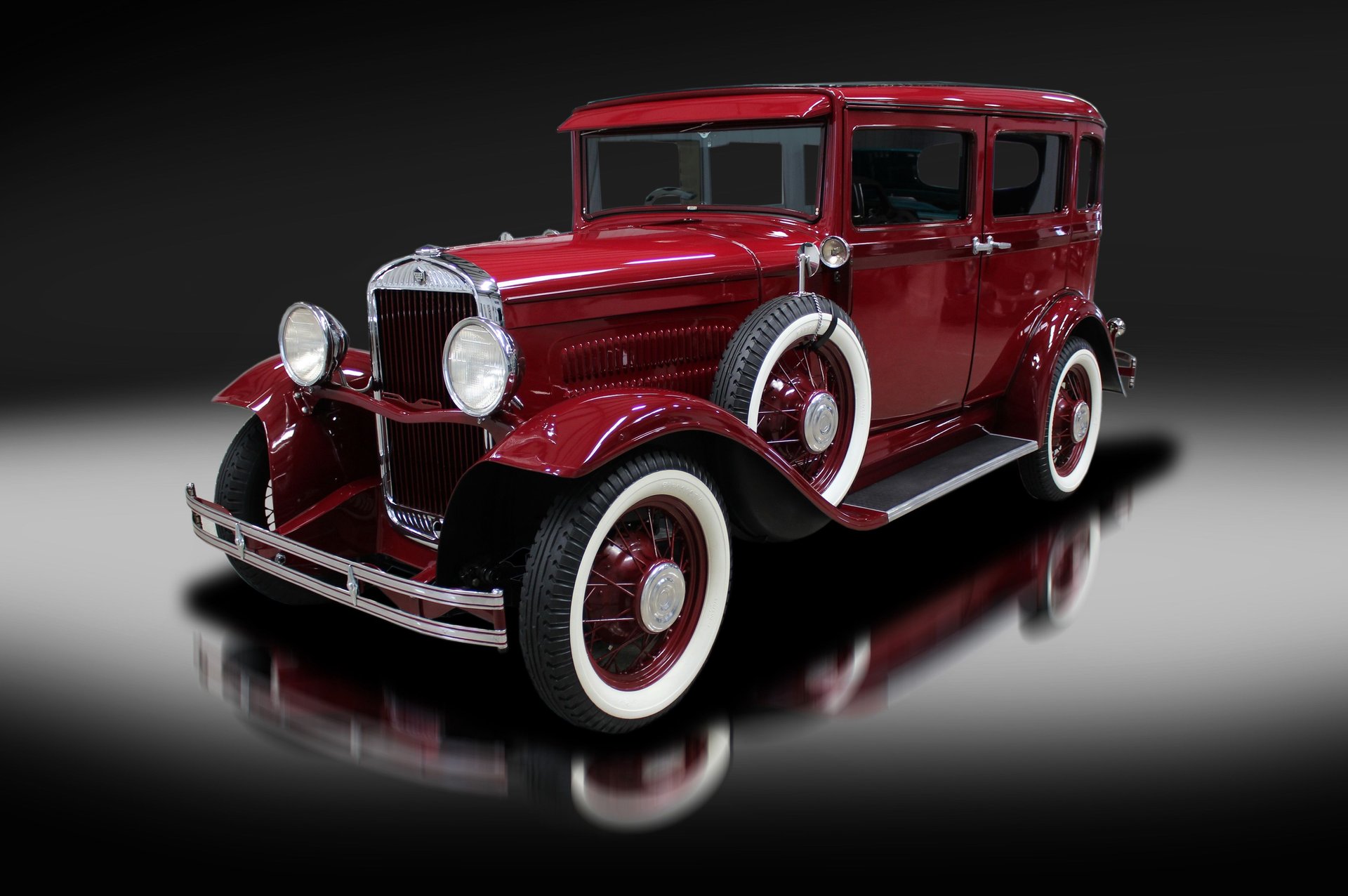
The engine you want, and the engine in every car pictured here, is the developed L-head six: 153 cubic inches for 1927–1928 (bore 2¾ inches, stroke 4¼ inches) and 160.4 cubic inches for the 1929 Challenger onward (stroke lengthened to 4½ inches), firing order 1-5-3-6-2-4, detachable cylinder head, cast-iron block, four-point engine mounting on the 1929 specification. For 1932 the same architecture grows to 193 cubic inches (bore 2-15/16 inches, stroke 4¾ inches), with factory figures of 70 horsepower at 3,200 rpm on the standard "power dome" head and a higher-compression option quoted at 76 horsepower. Treat the period tax ratings you will see in old literature — 18.15 or 18.2 "horsepower" for the small sixes, 20.7 for the 193 — as fiscal formulae based on bore alone. They are not power figures, and a seller brandishing them as such is reading the wrong line of the specification sheet.
Mechanically, understand what an L-head asks of you. The valves sit in the block, operated directly by tappets from a chain-driven camshaft — Hudson's specification calls the drive an adjustable silent chain — and valve clearances are set with the engine in a defined state, by hand, with feeler gauges. There are no hydraulic lifters to hide neglect. An Essex that ticks loudly when warm is telling you clearances have opened, a tappet face or cam lobe is worn, or oil is not reaching where it should; an Essex that is suspiciously silent and down on power may have clearances set to nothing, which holds valves off their seats, burns them, and drops compression. Either way, the test is the same and it is cheap: a compression test on all six cylinders, plugs out, throttle open, engine warm. You want evenness more than a heroic number — six readings within about ten percent of each other on an engine of this age and compression (roughly 5.5:1 on the 1932 standard head, lower on earlier cars) is a healthy sign; one cylinder thirty percent down is a valve, a ring, or a head gasket until proven otherwise, and the wet test — a spoonful of oil in the low cylinder, retest — separates rings (reading rises) from valves (reading stays down).
Fuel arrives from a rear tank through period hardware you must identify on the individual car, because ninety years of ownership means many cars no longer wear what the factory fitted: updraft or downdraft single carburettors from the period suppliers, vacuum-tank or later electric fuel delivery on cars that have been "improved." Do not let a seller's word "original" substitute for your eyes. What matters functionally is threefold: the carburettor's throttle shaft is not worn sloppy in its body (worn shafts admit air, lean the idle, and make a car that will not settle), the float and needle actually shut off (a car that smells of fuel after standing has a flooding fault, a fire risk, and usually a contaminated oil supply to match), and the intake is not drawing air at a cracked manifold flange — the classic cause of the lean spit-back through the carburettor that owners blame on ignition timing. Ignition is coil-and-points with a distributor, manual and automatic advance arrangements varying by year; the diagnostic order is always points condition and gap, condenser, coil, then timing — in that order, because a pitted set of points imitates every other ignition fault ever described.
One more running check separates a sorted car from a tired one, and it costs nothing: oil pressure and charging behaviour together, watched over the same twenty-minute drive your inspection ends with. Note the oil gauge's reading at a hot idle and at 40 mph before you set off on any negotiation — you are not judging the numbers against a modern car's, you are establishing the baseline this engine gives you, so that a reading that sags as the engine heats, accompanied by a deepening bearing rumble, is recognised for what it is: clearance, in the bearings, bought with wear. An engine that holds its hot readings steady, starts hot without complaint after a five-minute heat soak at a fuel stop, and shows no blue haze in your mirror on the overrun is an engine whose previous owner spent money in the right order. That order — compression first, cooling second, ignition third, cosmetics last — is also the order in which you should spend yours.
Cooling on these cars is marginal by modern habit, not by period design: a large radiator, a low-pressure (effectively unpressurised on early cars) system, and circulation sized for 40-mph roads. The failure mechanism you will actually meet is silt. Decades of hard water and stop-leak leave the block's water jacket and the radiator core carrying a fraction of their designed flow, so the car runs at a normal temperature on the flat and boils on the first long grade. The distinguishing test is not the temperature gauge — many cars have none you can trust — it is history plus behaviour: ask when the radiator was last recored or rodded out and when the block was last flushed with the core plugs out, then drive the car long enough, up a real hill, to learn whether the seller's answer was true. A professional radiator recore runs roughly $600–1,200 depending on core size and local labour; a full engine rebuild on a worn-out small six — rebore, pistons, bearings, valve work — is a $5,000–9,000 conversation at a shop that knows pre-war engines, which is why the compression test outranks everything else in this section.
Gearboxes, clutch and drive
The gearbox is a three-speed sliding-mesh manual — the only transmission in this site's pool records, listed as "3 Speed Manual" — with no synchromesh to protect you. First and second are straight-cut in behaviour and in sound; you double-declutch on downchanges or you crunch, and a crunch on a test drive may be your technique rather than the car's fault. Learn the distinction: a box that whines steadily in one gear under load has wear in that gear pair or its bearings; a box that jumps out of gear on the overrun has worn engagement dogs, a bent fork, or tired detents, and that is a gearbox-out repair, not an adjustment. Top gear is direct, and the car's comfortable cruising speed is set by the rear-axle ratio and the engine's willingness to rev, which on a 161-cubic-inch car means a realistic 45–55 mph cruise whatever the period advertising claimed about 70 mph maximums.
The clutch is a single dry plate in most applications you will meet, operated mechanically, and its two classic failures are opposites: slip under load in top gear (worn lining, oil contamination from a leaking rear main, or a linkage with no free play holding it partly released) and drag at standstill (warped plate, contaminated lining, or linkage with too much free play), which makes first and reverse grind no matter how patient you are. Test both deliberately: free play at the pedal first, then a top-gear pull from low speed on a grade for slip, then a patient ten-second wait with the clutch down before selecting reverse for drag. Behind the box, an open propeller shaft drives a semi-floating rear axle — confirmed in period specification for the Challenger — on semi-elliptic leaf springs front and rear. Axle whine that rises and falls with road speed, backlash you can feel as a clunk taking up drive, and oil weeping from the pinion seal or the hub ends are your three axle findings; none is fatal alone, all are bargaining facts, and a full axle rebuild by a specialist is a $1,500–3,000 job once bearings, seals and setting-up labour are counted. The Speedabout's special gearing and overdrive, offered on that rare Biddle & Smart model, is the exception that proves the rule: if a seller claims overdrive on an ordinary coupe or sedan, ask to see it, because it was not ordinary equipment.

Problem areas
Body, wood framing and rust: the structure is partly timber
Start here, because on an Essex the body is the car. Period closed bodies are composite construction: steel (and on some specialty bodies, aluminium) panels over a hardwood frame, on a separate steel chassis. That gives you two independent structural problems to inspect, and confusing them is the beginner's expensive mistake. A car can have shiny, rust-free panels nailed to rotten wood, and it will drive like a wardrobe — doors that drop on their hinges, a roof that drums, gaps that open and close as the car crosses a driveway. Equally, a car can have sound wood and perforated lower panels, which is a welding bill, not a structural death sentence.
Test the wood the way a coachbuilder would. Open each door and lift it gently at the handle: movement at the hinge pillar beyond a fraction means the pillar wood or its screws have failed, not that the hinge needs oil. Close the door and read the gaps — even all round is the goal; a gap that tapers, wide at the top and pinched at the sill, is the body settling. Push hard on the door pillars, the cant rails above the doors, and the timber around the windscreen frame, with a fingertip and then, with the seller's permission, a light probe in inconspicuous spots: sound hardwood resists, rotten wood feels like cork and smells of damp. Look inside the boot or rumble-seat well, under the floor mats, and behind the seat trim, because water enters at the roof and the windscreen and finishes its work at the floor and the sills where you cannot see it from outside. A specialist wood repair — one pillar, one sill section, properly spliced in ash — is skilled work at roughly $800–2,000 per major member fitted; a full re-wooding of a closed body is a restoration-defining five-figure job, and it is the single strongest reason to buy the best body you can find rather than the cheapest car.
Rust in the steel follows water and mud, in a predictable map. Work it in order: the bottoms of the doors and the lower edges of the coupe rear quarters; the running boards and their brackets, which trap mud against the sill beneath; the front wings where the sidemount well (if fitted) holds water; the rear wings at their lowest trailing edges; the valance panels and the bottom of the radiator shell; and the boot or rumble-seat floor, which rusts from the inside as leaking seals wet it from above. On the separate chassis, surface rust is normal and honest; what you are hunting is thinning and perforation at the spring hangers, the crossmembers under the body mounts, and anywhere a previous repair has plated over a hole without cutting the rot out — press suspect areas firmly, and treat any panel that flexes like a biscuit tin as a hole wearing paint. Magnet-and-filler tricks apply to pre-war steel exactly as they do to later cars: carry a weak magnet wrapped in cloth, and where it will not hold on a panel that should be steel, you have found filler; your job is then to decide whether it hides a dent (acceptable) or a rust-through (a welding bill of roughly $500–1,500 per properly cut-out and let-in section, before paint).
The roof deserves its own paragraph because closed Essexes carry a fabric or composition roof insert over much of the top, and it is a wear item pretending to be a structure. Cracks, lifting edges and perished sealing around the insert let water into the roof timbers and the headlining, and the first evidence is usually a stained headliner and a musty car, months before the wood itself fails. Price a replacement insert and reseal as a few hundred dollars in materials and a full day of careful labour — or $800–1,500 professionally — and treat an active roof leak on an otherwise dry-stored car as a "fix this week" item, not a character trait.
Brakes, steering and running gear: mechanical systems, honestly assessed
From 1928, the Essex stops with Bendix mechanical brakes on all four wheels: rods and cables from the pedal to expanding shoes inside drums, with no hydraulic assistance and no servo. Understand the mechanism and you understand both its virtue — it cannot lose all braking to one fluid leak — and its vice: braking effort is the sum of every adjustment in the linkage. Worn clevis pins, stretched cables, rods flexing in worn guides and shoes adjusted unevenly side-to-side all subtract from the pedal and add to the pull. The characteristic sick Essex brake does not feel weak in the way a modern driver expects; it feels vague for the first half of the pedal, then snatches one wheel — usually a front — and steers the car toward a ditch under hard braking. On the test drive, on a quiet, straight road, brake firmly from 30 mph with a light grip on the wheel: the car should track straight and the pedal should be firm and repeatable. Then check the handbrake, which on a mechanical system is a genuine secondary brake and should hold the car on a grade unaided. Budget honestly: a full mechanical brake overhaul — shoes relined, drums skimmed or replaced, linkage rebushed and correctly equalised — is roughly $1,200–2,500 at a pre-war specialist, and it is the best money you will spend on the car. A pre-1928 car with rear-wheel brakes only is not defective, but it is a materially less safe car in modern traffic, and you should buy one only with your eyes open and your following distances long.
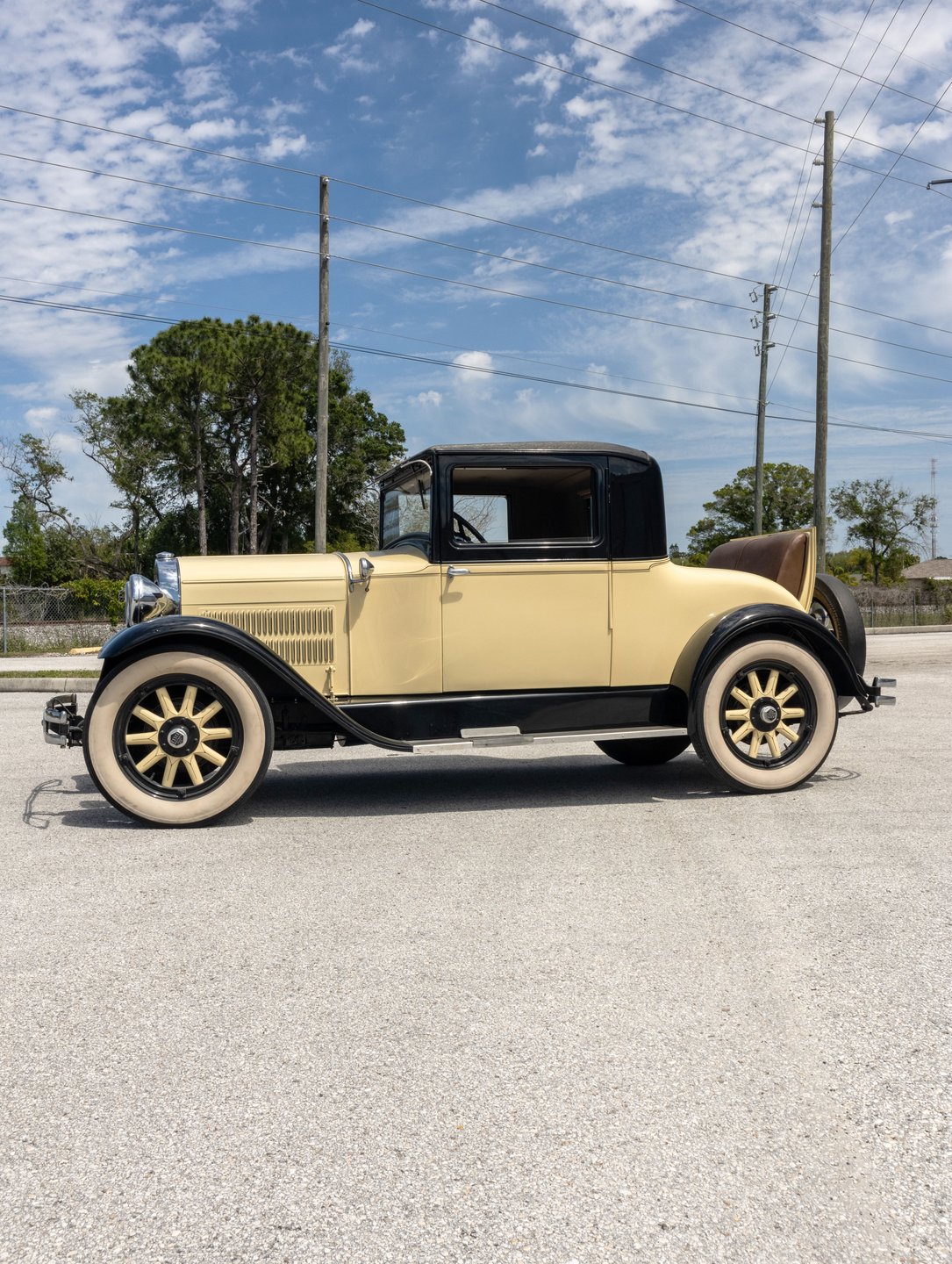
Steering is a worm-type box driving a solid front axle on semi-elliptic springs, with kingpins at the axle ends. Wear accumulates in four places and each has its own test. Free play at the wheel rim beyond roughly two inches, engine off and wheels straight, is box or linkage wear until proven otherwise — have an assistant rock the wheel while you watch each joint in turn, because the joint that moves late is the worn one. Kingpin wear shows with the front of the car jacked up: grasp the wheel top and bottom and rock; clunking movement is kingpin and bush wear (a $600–1,200 axle-out job with reaming and fitting), while side-to-side movement at three and nine o'clock points to wheel bearings or tie-rod ends. Shimmy at a particular road speed — classically in the 25–35 mph band — is the system complaining as a whole: some combination of kingpin wear, loose spring U-bolts, worn shackles, tired lever-arm or friction shock absorbers where fitted, and out-of-round or out-of-balance wheels, and the cure is to work through the list rather than to fit a steering damper and call it solved. Leaf springs sag and crack leaves at the centre bolt; a car that sits visibly low or lopsided, or whose spring leaves are splayed and rusty between the laminations, needs spring work at roughly $400–900 per pair rebuilt. Wheels matter more than buyers expect: the wood-spoke artillery wheels on the Florida coupes pictured here must be checked spoke by spoke — tap each spoke and listen for the dull note of a loose or split one, check the hub for movement, and understand that a loose wood wheel is a specialist rebuild ($500–1,000 per wheel is not unusual), while the wire wheels on the red sedan need the same spoke discipline in steel: broken spokes, cracked rims and loose nipples are all reject-or-renegotiate findings, not detailing notes.
Engine, cooling and fuel system faults in depth
Return to the L-head six with a stethoscope mindset: most Essex engine complaints reduce to compression, mixture, spark or oil, and each has a test that isolates it. Hard starting when hot, with easy cold starting, points first to fuel vaporising in a heat-soaked carburettor or fuel line routed too close to the exhaust, and to a weak condenser that fails as it warms; hard starting when cold, with good hot behaviour, points to choke function, low cranking speed from a tired six-volt battery or high-resistance cables, and valves held off their seats. A misfire under load that disappears at cruise is ignition breaking down — plugs, leads, coil, condenser — while a misfire at idle that smooths as revs rise is mixture or a single cylinder's compression, and the plug-reading test separates them: pull all six plugs after a run, lay them in cylinder order, and read them like a report. One black, wet plug among five biscuit-brown ones is that cylinder's valve, ring or plug lead. All six sooty is a rich carburettor or a choked air cleaner. All six white and blistered is a lean mixture or chronically retarded-and-overheated running, and on an L-head you then check the exhaust manifold and its gaskets, because a warped manifold that will not seal leans individual cylinders and burns exhaust valves in slow motion.
Oil deserves plain words. These engines run low oil pressure by modern standards, splash and low-pressure feed doing work that a modern pump does at several times the reading, so judge pressure against the car's own gauge behaviour and the factory literature, not against modern instinct — but judge oil consumption and smoke without mercy. Blue smoke on start-up that clears is valve-guide and stem wear letting oil down overnight. Blue smoke under load is rings and bores. A continuous haze on the overrun, throttle closed down a hill, is guides again. Each has a different invoice: a decoke-and-valve job with the head off, guides attended to and clearances set is roughly $1,200–2,500 in specialist hands; a rebore with pistons and bearings is the $5,000–9,000 rebuild already quoted, and the compression-plus-plug evidence from your inspection is what tells you which conversation you are in. White metal (babbitt) bearings in engines of this era, where present and worn, knock under load in a way that no adjustment cures; a deep, load-dependent knock that worsens hot is a walk-away finding on a car priced as a driver, because the cure is the full rebuild plus bearing work by a shrinking number of specialists.
The cooling system's second failure, after silt, is the water pump and its gland, where fitted: a weep from the pump that becomes a drip that becomes an overheated engine twenty miles from home. Check for play in the pump shaft, staining down the front of the block, and a fan belt that is either cracked with age or tensioned like a banjo string against worn bearings. Head-gasket failure on an L-head announces itself classically — bubbles in the radiator header with the cap off and the engine warm, mayonnaise emulsion under the oil filler, a cylinder that steam-cleans its plug — and the flat head design makes the job itself straightforward (a gasket set and a day's labour, $400–800 professionally, including a head skim check) provided the cause, usually overheating from silt, is cured at the same time. Fitting a new gasket to a silted block buys you one summer.
Electrics, trim and the things that stop a car being usable
The electrical system is six-volt, positive-earth on period Hudson practice — verify on the individual car before you connect anything, because a polarity mistake with a modern battery charger or a jump pack is an expensive education. Six volts is not a defect; it is a system that punishes resistance. Every volt dropped across a corroded earth strap or a green bullet connector is a sixth of your supply, which is why the classic Essex electrical symptom — a starter that cranks as if the battery were flat, with a battery that tests good — is so often cured not with a starter rebuild ($300–600) but with cables: clean, heavy-gauge battery leads, a sound engine-to-chassis earth strap, and bright, tight terminals. Test by cranking while a helper watches the headlamps: lamps that die to a glimmer during cranking mean the starter is taking everything through a high-resistance path; lamps that stay respectable while the starter barely turns mean the starter itself or a mechanically tight engine. Charging is by a three-brush or regulator-controlled generator depending on year and subsequent history; a car that discharges at idle with lamps on, in period fashion, is behaving normally — a car that discharges at cruising speed has a generator, regulator or drive fault, and you should see an ammeter that lives on the positive side of zero at 40 mph. Lighting is by modern standards dim, reflectors tarnish and period bulbs vary; for night touring, sympathetic upgrades inside the original housings are a safety discussion to have with the club, not a concours crime.
Trim and interior decide whether you enjoy the car, and they hide the wood evidence you need. Mohair and cloth upholstery perish at the seams and at the sun-struck tops of seats; leather on open and specialty bodies cracks where it flexes. Lift, do not just look: seat springs collapse on the driver's side, floorboards rot under sound-looking mats, and the headlining tells the roof-leak story from the previous section in brown tide marks. Instruments are simple and repairable by specialists; a dead gauge is a $150–400 repair per unit, but a full set of dead gauges is a car whose electrics have been neglected as a system. Brightwork — the chrome radiator shell, lamp rims, bumpers and handles that give the Challenger its face — pits from the steel outward, and rechroming a shell and its associated trim is a $1,500–3,500 commitment depending on size and pitting; a car with excellent original or older-restoration chrome is worth measurably more than an identical car with dull, peeling brightwork, because you cannot detail your way out of pitting. Finally, glass: flat glass is cheap and cuttable, which is good news, but delaminating safety glass with milky edges in a closed car signals age and water, and the windscreen frame's timber beneath it goes back on your wood checklist.
Do not overlook the underside's quiet items, because they are the ones that strand you. The fuel tank and its outlet collect rust scale that sheds in flakes, blocks the outlet or the carburettor's inlet filter, and produces the infuriating fault of a car that runs perfectly for ten minutes and starves — distinguishable from vapour lock because it happens cold, on a schedule set by the debris, and curable only by removing and cleaning or sealing the tank ($300–700 professionally) rather than by blowing lines backwards and calling it fixed. Exhaust systems rot from the inside at the manifold joint and the muffler's lower seam; a blowing manifold gasket ticks like a tappet when cold and seals as it warms, which is your distinguishing test, while a holed muffler on a low-revving six is a drone you will hear in your teeth on a tour. And check the starting handle, jack and wheel brace are actually in the car: on a wood- or wire-wheeled Essex, a puncture without the correct brace and a jack that fits the axle is not an inconvenience, it is a recovery truck.
One myth needs correcting before the inspection section, because it distorts prices: there is no such thing as a "matching-numbers" Essex in the modern muscle-car sense, and no premium should be paid for the phrase. What exists is a car serial, an engine number, and period-correct specification — engine size for the year, correct carburettor and distributor type, correct wheels and body. Verify those, pay for condition, and let the phrase go.

How to inspect one
Inspect in this order, cold car first, and do not let the seller warm it up "to help you" before you arrive — a warm engine hides starting faults, tappet noise and low oil pressure, and conceals them deliberately or not.
- Paperwork and identity first. Find the car serial plate on the dash under the bonnet and the engine number stamped on the left side of the block, and check both against the title and against each other for year sense: a Challenger name on a car with 1928 serials, or a 153-cubic-inch engine in a car sold as a 1932, is the taxonomy trap from the models section, caught in two minutes. Confirm left- or right-hand drive with your own eyes, whatever the advert says.
- Cold start, bonnet open, standing beside the engine. Watch for choke behaviour, cranking speed on the six-volt starter, blue smoke on start-up (guides) versus smoke that persists (rings), and tappet noise that should quieten as oil circulates. Smell the exhaust and the fuel system: raw fuel after standing means a flooding carburettor, from the problem areas section.
- Compression test, warm, all plugs out. Even readings within about ten percent pass; one low cylinder gets the wet test — oil in, retest — to separate rings from valves before you negotiate. Read the six plugs in cylinder order while they are out; their colours are the mixture and oil report described in the problem areas.
- Oil and water, honestly. Dip the oil for level, smell (fuel dilution from a flooding carburettor) and emulsion. Open the radiator cap cold and look for silt, oil film and rust; ask when the system was last flushed or recored, and note the answer for the hill on the test drive to verify.
- The wood test. Lift each door at its handle, read the shut gaps, press the pillars, cant rails and windscreen frame, and look inside the rumble-seat or boot well and under the floor mats. Cork-soft timber anywhere structural reprices the car as a body restoration, per the body section's figures.
- The rust map. Doors' bottoms, coupe rear quarters, running boards and brackets, wing edges and sidemount well, radiator shell bottom, boot floor, then the chassis at spring hangers and body mounts. Weak magnet in cloth on suspect panels; firm thumb pressure on suspect chassis sections.
- Roof and glass. Cracks or lifting at the roof insert's edges, tide marks on the headlining, delamination at the glass edges. An active roof leak found here goes on the fix-immediately list, because it is quietly rotting step 5's timber.
- Front axle and steering, jacked up. Rock each front wheel at twelve-and-six for kingpins, at three-and-nine for bearings and linkage, while an assistant rocks the steering so you can watch which joint moves late. Tap every wheel spoke — wood or wire — and spin each wheel for truth.
- Springs and stance. Sight the car from front and rear for lopsidedness, look for cracked or splayed spring leaves and loose U-bolts, and bounce each corner: friction or lever-arm dampers where fitted should resist, not rattle.
- The brake test on the road. From 30 mph on a straight, quiet road, brake firmly with a light grip: straight tracking, a firm repeatable pedal, no snatch. Then the handbrake alone on a grade. Any pull or vagueness is the mechanical-linkage overhaul from the brakes section, priced into your offer.
- Gearbox and clutch on the road. Top-gear pull from low speed for clutch slip; a patient ten seconds, clutch down, before reverse for drag; listen in each gear for whine, and feel on the overrun for jumping out of gear. Double-declutch your downchanges before blaming the box for a crunch.
- The hill and the cruise. Drive long enough — twenty minutes minimum — to climb a real grade at working temperature and cruise at 45–50 mph. Boiling or distress on the hill convicts the silted cooling system; axle whine, shimmy in the 25–35 mph band, and wandering steering all declare themselves here if they exist. Finish by checking for fresh leaks where you park, and by re-reading the temperature and oil behaviour hot.
Values
Read the Essex market as a condition market, not a rarity market, and the numbers the build appends below this guide will make sense. Hudson built these cars in large numbers and a good many survive, so scarcity does not rescue a bad car: the spread between the best and the worst Essex of the same year and body is driven almost entirely by the three bills this guide has priced for you — body wood, mechanical brakes and running gear, and engine work — and a car that needs all three is worth its parts-and-pattern value no matter how shiny its paint photographs. Conversely, the premium cars are the ones with documented, verifiable answers: sound original or properly restored timber, a recored radiator, even compression figures you are shown rather than promised, and brightwork that does not need a four-figure rechroming commitment. Asking prices in this corner of the pre-war market are routinely optimistic, because sellers price from what they spent; achieved prices follow condition evidence, and the gap between asking and achieved is widest on cosmetically restored cars with undocumented structure — the exact profile your inspection is designed to expose. Body style moves value more than year does: coupes, roadsters and the rare Speedabout carry a clear premium over coaches and sedans of identical mechanical condition, because demand for open and sporting bodies outruns supply while family sedans remain the plentiful, honest entry point. The project-versus-driver gap is correspondingly brutal: a non-running Essex is not "a driver minus a battery," it is a car whose wood, brakes and engine are all unverified at once, and the market prices that triple uncertainty accordingly — which is why a driving, stopping, cooling car with shabby paint is almost always the better buy against a gleaming non-runner at the same money. Right-hand-drive cars price to their own logic: a genuine export survivor with a coherent story is interesting, a mislabelled or re-imported car with muddled paperwork is simply harder to sell on, and your exit matters — buy the car you can resell to the next enthusiast without a fifteen-minute explanation.
Parts and ownership
Ownership is the pleasant surprise in this guide. Hudson-Essex support runs through one of the strongest marque clubs in the pre-war world — the Hudson-Essex-Terraplane Club and its regional chapters — and the club is not a social extra, it is your parts department, your technical library and your diagnostic helpline in one. Factory literature, including Hudson's own mechanical specification sheets and owners' manuals, survives and circulates; the specification figures quoted in this guide come from exactly that material, and you should own the sheets for your car's year before you own a second set of plugs. Consumables are straightforward: plugs, points, condensers, belts, hoses, brake lining material, and six-volt batteries and bulbs are all obtainable through pre-war suppliers, and flat glass, trim materials and mohair are generic period supplies rather than Essex-specific rarities. Mechanical parts for the L-head sixes — gaskets, bearings, pistons, valves and guides, water-pump and carburettor kits — are supported by the specialist trade that serves Hudson generally, with the 161-cubic-inch Challenger-era engine the best served of the Essex sixes simply because so many were built; Four-specific and earliest-Six engine parts are the thin end, as the models section warned. Body and brightwork are where patience lives: wood framing is made by coachbuilding specialists to order, not bought off a shelf, and rechroming is a queue at a good plater, not a parcel in the post. Running costs between repairs are genuinely low — fuel consumption in the high-teens to low-twenties per gallon in touring use, tyres that last for years at pre-war mileages (but age out: check date codes and sidewall cracking, and budget for a set on any car whose tyres are a decade old), and insurance and club-event costs in line with any modest pre-war car. Drive the car regularly, and drive it far enough: short runs that never fully warm the oil, the exhaust or the charging system are how these cars die in careful ownership, filling the sump with condensation, rotting the exhaust from inside and leaving the battery perpetually half-charged. A monthly run of twenty miles or more, with the brakes used firmly and the gearbox worked through its range, is maintenance, not indulgence — and it is also how you catch the weeping pump gland, the softening spoke and the brake that has begun to pull while they are still cheap. Keep a running log of fuel, oil use and every adjustment; on a car with no service computer and no warning lights, that notebook is the diagnostic history the next section of this guide assumes you have.
Store the car dry above all: a dehumidified or at least ventilated dry garage is not fussiness with a timber-framed body, it is the difference between a car that holds its structure and one that quietly does not.
Which one to buy
- The all-rounder: a 1929–1930 Challenger coupe — the 161-cubic-inch engine, four-wheel Bendix brakes, the best styling of the run, and the body style the market wants when you sell. Buy the best-documented wood and brightwork you can find.
- The value buy: a 1928 Super Six sedan or coach — the brake year without the Challenger premium; the same inspection discipline applies, and a sound sedan is the cheapest honest seat in Essex motoring.
- The most capable: a 1932 Super Six with the 193-cubic-inch engine — real extra performance and the bridge to the Terraplane, bought on condition evidence exactly as above.
- The historian's buy: an Essex Four — the car that made closed coachwork cheap, bought knowingly for its significance, its thinner engine-parts support and its leisurely pace.
- The specialist prize: a Biddle & Smart Speedabout — genuinely scarce and genuinely desirable; verify the coachbuilder's tag and the special gearing in person, because ordinary cars acquire Speedabout stories the way they acquire "matching numbers."
- Avoid, at any shine level: a car with soft structural timber, a jumping-out gearbox, or a hot knock under load — each is a four- or five-figure cure wearing a driver's price tag.
The overriding rule: on an Essex, buy structure and evidence — sound timber, even compression, straight mechanical brakes — and let paint, whitewalls and badges be the bonus, because everything cosmetic on these cars is cheaper to fix than everything structural, and it is not close.
Listed now
No Hudson Essex cars are listed on Classic Listings yet — the collection is being gathered, and market figures will appear here as cars arrive.
The market — recorded sales
No dated sales recorded for this series yet — as sales are recorded, they will appear here with their dates and prices.