
Isuzu Rodeo buyer's guide
Isuzu Rodeo (1991–2001) — Rodeo: what's listed, and what they sell for.
Years: 1991–2001 · Models: Rodeo
Overview and history
The Isuzu Rodeo is the truck that carried Isuzu through the 1990s SUV boom — a body-on-frame, rear-drive-based mid-size wagon built not in Japan but in Lafayette, Indiana, at the Subaru-Isuzu Automotive plant, alongside the Subaru Legacy. Isuzu had designed the vehicle in Japan as the MU (the short three-door) and Wizard (the five-door wagon), and for the United States the five-door became the Rodeo, on sale from the 1991 model year. It was the right vehicle at exactly the right moment: a proper ladder-frame truck with a low-range transfer case, sized and priced under the Ford Explorer that was busy inventing the family SUV market.
Two generations cover the whole run. The first (1991–1997) is the upright, squared-off truck, sold as a three-door and a five-door, with Isuzu's own fours and sixes plus, briefly, a bought-in GM V6. From 1994 Honda sold a badge-engineered twin, the Honda Passport — same truck, same Lafayette line, different badges and grille — because Honda had no SUV of its own and needed one in a hurry. The second generation (1998–2004) is a full redesign: rounder, roomier, coil springs at the rear in place of leaves, a double-overhead-cam version of the 3.2 V6, and a much more car-like cabin. The Passport followed it for 1998–2002. The two-door Amigo, renamed Rodeo Sport for 2001–2003, is the same truck shortened, with a soft-top rear section, and belongs in this guide too — mechanically it is a Rodeo with less roof.
The Rodeo also carried a second life above its station. Isuzu's truck was sold in other markets as the Wizard and MU, and the platform's bones were sturdy enough that the second-generation truck was still being built under licence overseas years after Lafayette stopped. At home, the Rodeo's real significance is what it says about its era: it was one of the last SUVs designed as a truck first and a family car second — a separate frame, a live axle, a low range and a spare wheel you could reach, in a market that was about to trade all of that for unibody crossovers. That is precisely why it reads as a classic now rather than merely an old car, and why the survivors with sound frames have stopped getting cheaper.
The end came quietly. Isuzu's US range withered after 2004, the Rodeo was dropped, and Isuzu withdrew from the American passenger-vehicle market entirely a few years later. That orphan status defines the Rodeo as a classic purchase today: the trucks are tough, simple and cheap, but there is no dealer network behind them, and the newest example is now over twenty years old. What kills them is not the mechanicals — it is frame rust, automatic-gearbox neglect and, on the second-generation V6, an appetite for oil that owners who never check the dipstick discover the hard way.
The cars in our own pool tell that story plainly. We currently track 16 Rodeos, all of them second-generation trucks from 1998 to 2004, all of them sourced from Facebook Marketplace, and 15 of the 16 are automatics. They cluster in the Southeast — Virginia, Georgia, Florida and their neighbours — which matters, because a Rodeo that has lived its life below the salt line is a fundamentally different purchase from one that has spent twenty winters in Ohio. First-generation trucks and Passports barely appear in the pool at all now, not because they were rare but because most of them have already been used up.
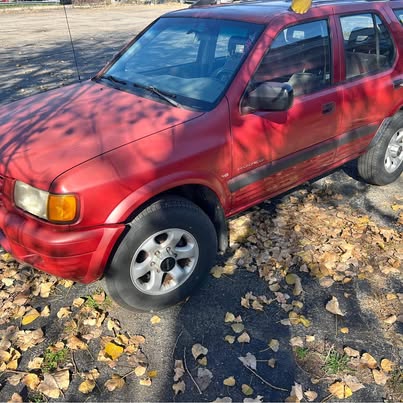
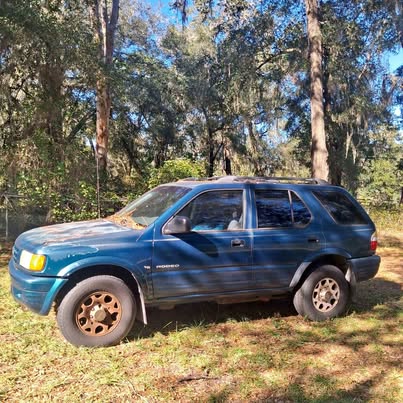
The models
Every Rodeo is a ladder-frame SUV with rear-wheel drive or part-time/on-demand four-wheel drive, a live rear axle and a longitudinally mounted engine. The range divides cleanly into the two generations, and within each generation the badge on the tailgate tells you the trim, not the engine — you have to open the bonnet or decode the VIN to know which motor a given truck actually carries, because Isuzu sold the same trim with two or three different engines across the years.
| Model | Years | Engine | Output | Built | Character |
|---|---|---|---|---|---|
| Rodeo (first gen) | 1991–1992 | 2.3 four (4ZD1) / 2.6 four (4ZE1) / 3.1 V6 (GM LG6) | 96–120 hp | — | The original; three-door or five-door, leaf-sprung rear |
| Rodeo (first gen) | 1993–1997 | 2.6 four (4ZE1) / 3.2 V6 (6VD1, SOHC) | 120 / 175 hp | — | The 3.2 transforms it; the one to have of the early trucks |
| Honda Passport (first gen) | 1994–1997 | 2.6 four / 3.2 V6 (6VD1, SOHC) | 120 / 175 hp | — | The identical twin; Honda badges, Isuzu everything else |
| Rodeo S (second gen) | 1998–2004 | 2.2 four (X22SE) / 3.2 V6 (6VD1, DOHC) | 130 / 205 hp | — | The base truck; the four is slow, the V6 is the real one |
| Rodeo LS / LSE (second gen) | 1998–2004 | 3.2 V6 (6VD1, DOHC) | 205 hp | — | The volume seller; LS is trim, LSE adds leather and luxury kit |
| Rodeo (second gen) | 2004 | 3.5 V6 (6VE1, direct injection) | 250 hp | — | One year only; the fastest and rarest Rodeo of all |
| Honda Passport (second gen) | 1998–2002 | 3.2 V6 (6VD1, DOHC) | 205 hp | — | The twin again; EX trim roughly equals Rodeo LS |
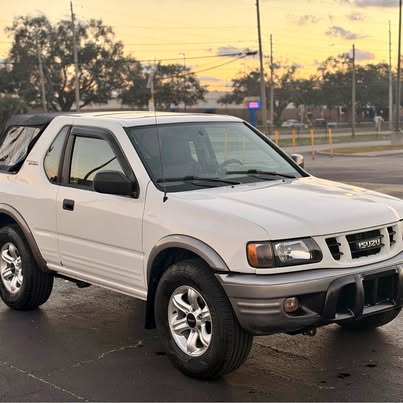
| Rodeo Sport | 2001–2003 | 2.2 four (X22SE) / 3.2 V6 (6VD1, DOHC) | 130 / 205 hp | — | The renamed Amigo; two doors, soft or hard rear top |
(Isuzu never published a clean US production split by Rodeo variant, so the Built column is honestly blank rather than filled with invented figures. Outputs are the period US SAE net ratings.)
The first generation (1991–1997). The early trucks came as a three-door (dropped after the first few years as buyers chose the wagon) and a five-door, in S and LS trim. The base engine was Isuzu's elderly 2.3-litre four, soon joined by the 2.6 and, for 1991–92 only, a GM-built 3.1 V6 bought in while Isuzu's own six was readied. The car to have is the 1993-on truck with the 3.2 SOHC V6: 175 hp, real overtaking ability, and the engine this guide spends most of its time on. Four-wheel drive was a proper part-time system with a low range and, on early cars, manually locking front hubs you had to get out and turn.
The Passport (1994–2002). Honda's version differs in grille, badges, trim fabrics and little else. Everything in this guide — engines, gearbox, frame rust, the recall in the problem section — applies to the Passport word for word, because underneath it is not a Honda at all. Buyers who insist on the Isuzu badge and buyers who insist on the Honda badge both pay for the privilege in a thinner market; the sensible money buys whichever truck has the better frame.
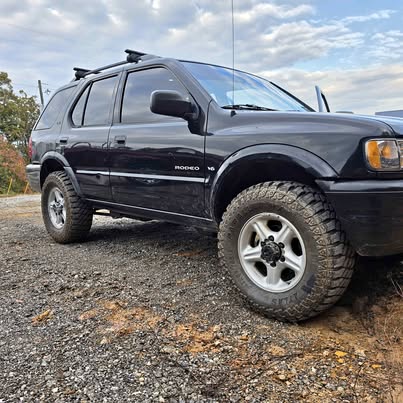
The second generation (1998–2004). The redesign kept the frame and the drivetrain layout but changed almost everything you touch: a roomier body, a coil-sprung five-link rear axle in place of the first car's leaf springs, torsion-bar independent front suspension, and the DOHC 205 hp version of the 3.2. Trim ran S, LS and (from 2000) the leather-trimmed LSE, plus a short-run Ironman special edition in 2001. The 2.2 four was the price-leader engine and is best avoided — see the engines section. For the final year, 2004, the 3.2 was joined and effectively superseded by the 3.5-litre direct-injection V6 with 250 hp, an engine shared with the Isuzu Axiom and fitted to the Rodeo for one year only.
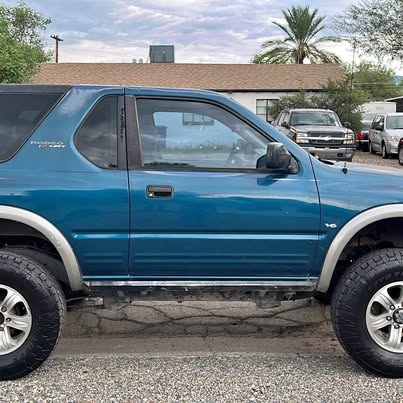
The Rodeo Sport (2001–2003). The Amigo had been Isuzu's two-door soft-top since 1989; for 2001 it was renamed Rodeo Sport to tie it to the wagon. It rides a shorter wheelbase, carries the same engines and gearboxes, and comes with a folding soft top over the rear or a removable hardtop. It is the most collectible of the family now precisely because it was a toy when new and most were used like one.
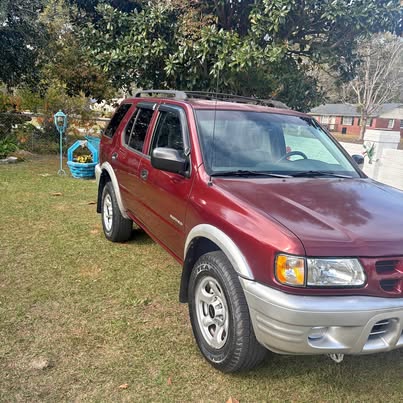
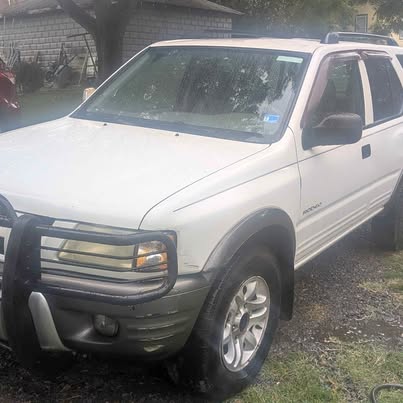
Engines and gearboxes
The fours: 4ZD1, 4ZE1 and X22SE
Three different four-cylinder engines served in the Rodeo, and none of them is the reason to buy one — but two of the three are perfectly serviceable if the truck around them is right.
The 2.3 (4ZD1) in the earliest trucks is Isuzu's old pickup four: single overhead cam, modest output, unburstable if the oil has been changed, and slow enough to make a loaded Rodeo hard work on a grade. The 2.6 (4ZE1) that replaced it as the volume four is the better engine — more torque, fuel injection, and a long service record in Isuzu pickups — with one well-earned warning. The 4ZE1 runs a timing belt, and its aluminium cylinder head does not forgive overheating: a truck that has been run hot can crack the head or blow the gasket, and the crack typically hides between the valves where a compression test alone will not find it. The distinguishing test is a cooling-system pressure test plus a chemical block test for combustion gas in the coolant, done cold and then again hot. A 2.6 that uses coolant, pressurises its top hose within a minute of a cold start, or shows mayonnaise under the oil cap is priced as a head job — realistically $1,200–2,000 with machining — whatever the seller says about thermostats.
The second generation's four is a different engine entirely: the 2.2 (X22SE), a GM-family twin-cam 16-valve unit making about 130 hp. On paper it matches the old 2.6's job; on the road, in a truck of this weight, it is perpetually busy, and with the automatic it is genuinely slow. Its failure pattern is conventional for the family — timing-belt neglect, head-gasket seepage with age, coil-pack and crank-sensor faults presenting as intermittent stalling — and parts are cheap because the basic engine served in volume GM products. The honest verdict: a four-cylinder second-generation Rodeo is a price play only. The V6 costs little more to buy, little more to run, and is a far better truck.
The V6s: GM 3.1, 6VD1 3.2 and 6VE1 3.5
The GM 3.1 (LG6) fitted for 1991–92 is a pushrod iron V6 bought from General Motors, making about 120 hp. It is a known quantity from a million GM cars of the era, with that family's known weakness: the lower intake-manifold gaskets weep coolant externally and then internally, and a truck that is losing coolant with no visible drip is usually losing it there. Parts are the cheapest of any Rodeo engine and every parts store in America stocks them. It was a stopgap, it feels like one, and the trucks are now rare — buy one for curiosity value, not as the smart Rodeo.
The engine that matters is Isuzu's own 3.2 V6, the 6VD1 — a 24-valve, belt-driven-cam, all-alloy 60-degree V6 built in two distinct forms. The first (1993–1997, and in the first Passport) is a single-overhead-cam-per-bank design making 175 hp. The second (1998 on, both Rodeo and Passport) is a double-overhead-cam redesign making 205 hp, and it is the engine in every truck in our current pool. Both are fundamentally strong: the bottom ends rarely give trouble, they do not have a head-gasket reputation when kept cool, and a maintained 6VD1 will run well past 200,000 miles. What they demand is a timing belt on schedule — the belt also drives the water pump area, so the sensible job is belt, tensioner, idlers and pump together, $700–1,200 at an independent — and on the DOHC engine they demand something else, covered at length in the problem section: oil. The 1998–2002 DOHC 3.2 has a documented appetite for oil caused by carbon-stuck piston rings, and an owner who runs it dry will kill an otherwise indestructible engine. The dipstick is not a formality on this engine; it is the inspection.
The DOHC 3.2's supporting cast gives the usual twenty-year-old-engine list. The EGR passages in the intake manifold coke up and set an insufficient-flow code with a lumpy idle — a clean-out, not a rebuild, $300–600 in labour. Spark-plug tube seals harden and let oil pool in the plug wells, which eventually misfires a cylinder and cooks a coil pack; the fix is valve-cover gaskets and tube seals, $250–450. The intake-manifold gaskets themselves can leak vacuum and lean the idle. None of it is fatal, all of it is diagnosable with a vacuum gauge and a code reader, and a truck whose seller has kept on top of it is worth visibly more than one whose engine bay is a museum of deferred jobs.
The 3.5 (6VE1), fitted to the Rodeo for 2004 only, is the 6VD1's enlarged direct-injection development: fuel injected straight into the cylinders at high pressure from a cam-driven pump, 250 hp, and a claim at launch to be the most powerful V6 in its class. It pulls noticeably harder than the 3.2 and is the enthusiast's Rodeo engine. The cautions are scarcity and specificity — one model year in this truck (the Axiom carried it 2002–2004), direct-injection components that no generalist stocks, and high-pressure fuel parts that must be treated with respect and bought by part number. If you buy one, buy it for the engine and accept that you are your own parts department.
Gearboxes and four-wheel drive
Almost every Rodeo you will meet — 15 of the 16 in our pool — carries the 4L30-E four-speed automatic, a GM Hydra-Matic design built in Strasbourg, France, and shared with the BMW 3 Series of the period, the Cadillac Catera and the Passport. It is a smooth, electronically controlled box with a lock-up torque converter, and its reputation problem is not design but maintenance: many were treated as sealed for life, and twenty-year-old fluid plus a towing history is what kills them. A healthy 4L30-E shifts cleanly, kicks down without a flare, and engages reverse promptly. The classic early warnings are a delayed or harsh engagement into drive or reverse when cold, a flare on the 2–3 change, and the transmission warning lamp — which on these trucks is often triggered by the range/mode switch on the side of the box getting wet or worn, a $150–300 part that mimics a dying gearbox. Test for that before pricing a rebuild: a truck that intermittently starts in a high gear or shows the wrong gear on the dash, but shifts perfectly once moving, usually wants the switch, not a $2,200–3,500 rebuild. Fluid that is brown and burnt-smelling on the dipstick, though, is the box telling the truth — budget accordingly.
The five-speed manual is rare, tough and worth seeking out if you like them: it removes the 4L30-E question entirely and suits the first-generation trucks particularly well. Judge it on second-gear synchromesh, clutch take-up height and release-bearing noise.
Four-wheel drive came in two flavours. The standard system is part-time: a transfer case with high range, low range (about 2.5:1) and a front axle that disconnects when disengaged. First-generation cars use a lever and, on early ones, manual hubs; second-generation cars engage from a dash switch, with vacuum-operated actuators doing the work — and vacuum is the weak point. Perished vacuum hoses and a sticky front-axle actuator give the classic flashing 4WD lamp and a front axle that never actually engages, usually discovered by the previous owner on the one day they needed it. The test is simple and non-negotiable: on loose ground, engage 4WD and confirm the front wheels genuinely pull. LS-trim second-generation cars could instead carry BorgWarner's Torque-On-Demand (TOD) system, which normally runs rear-drive and feeds the front axle automatically through an electronically controlled clutch pack when the rears slip, with a proper low range for real work. TOD is excellent when it works and orphaned when it does not — the control unit and clutch pack are Rodeo-specific, diagnosis needs the wiring diagram and patience, and a TOD truck with a flashing lamp and a binding, crow-hopping feel in tight turns is describing transfer-case clutch trouble, not a sensor. Both systems use ordinary gear oil and ATF respectively and suffer mainly from never having had either changed.
Problem areas
Everything in this section applies to the Passport exactly as to the Rodeo, because it is the same truck. The Rodeo's problems divide into one that can end the truck, a handful that can end the engine or gearbox, and a long tail of twenty-year-old-vehicle wear. Take them in that order and you will not go far wrong.
Frame rust — and the recall that proves the point
The Rodeo is body-on-frame, and the frame is the truck. Surface rust on a frame is cosmetic; the Rodeo's problem is that in salt country the second-generation frame rots structurally, in specific places, from the inside of the box sections outward — and Isuzu itself conceded the point. In 2010 Isuzu recalled the 1998–2002 Rodeo, Rodeo Sport and Passport (along with the related Amigo) in the salt-belt states for corrosion of the frame in the area of the rear suspension mounts: the brackets that locate the rear axle's links could corrode to the point of separation, at which the axle is no longer properly attached to the truck. The remedy ladder ran from cleaning and anti-corrosion treatment on sound frames, through a fitted reinforcement bracket on marginal ones, to Isuzu buying the truck back where the frame was perforated near the mounts. That recall is the single most useful document in Rodeo buying: it names the exact area to inspect, it was applied to exactly the trucks in today's cheap market, and a seller who can show the recall was done — or whose truck lived outside the salt states entirely — holds a genuinely better vehicle.
You can check a truck's recall status before you travel: the VIN, run through the federal recall database or an Isuzu commercial dealer, will show whether the frame campaign is recorded as completed — though treat "completed" as the start of the conversation rather than the end, because the recall's first step was an inspection, and a truck inspected as sound in 2011 has had another decade and a half to rust since. The treatment and bracket stages of the remedy also leave evidence you can find underneath: fresh coating concentrated around the rear link brackets, or the reinforcement bracket itself, bolted at the mount. Neither substitutes for prodding the metal as it sits today.
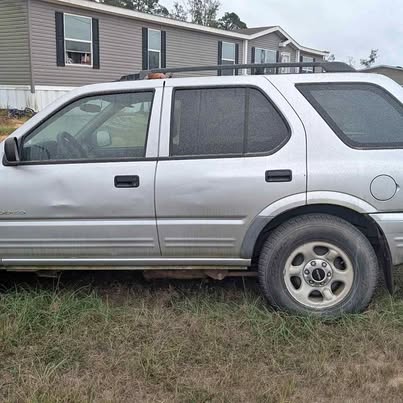
Inspect like this. The critical zone is the rear frame from just ahead of the rear axle back: the lower-link and trailing-arm mounting brackets, the spring seats, and the frame rails where the crossmembers meet them. Get under with a torch and a screwdriver and prod — sound frame steel rings and resists; rotten steel is layered, flaky and gives under pressure, and it often hides under factory undercoat that looks intact from a standing squat. Work forward from there: the fuel-tank straps and the frame around the tank, the middle crossmembers, the front frame horns and the steering-box mounting area, and the body mounts, whose rubber perishes and whose bolts seize into rusted captive nuts. First-generation frames rust too — they were never recalled, but they are ten years older, so the same prodding applies with lower expectations. A frame with perforation at the suspension mounts is not a negotiation; it is a parts truck. Isolated rot in a crossmember or a body-mount outrigger can be cut out and plated by a competent welder, $600–1,500 per area done properly, but mount-area rot is fabrication against a jig, and the money stops making sense against the value of the finished truck. This is why geography is destiny with these vehicles: our pool sits overwhelmingly in Virginia, Georgia, Florida, the Carolinas and Louisiana, and a lifelong Southern truck is the default buy. A cheap Rodeo advertised in the snow belt needs its recall history and its rear brackets verified before anything else about it is discussed.
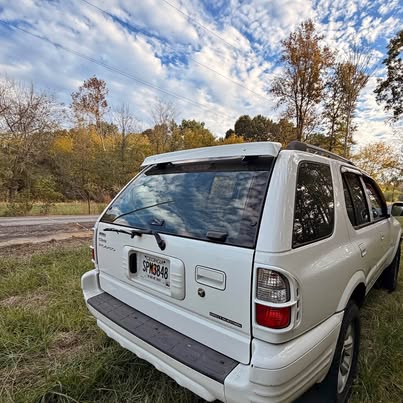
The body above the frame is much less of a worry. Rodeo panels rust in the ordinary places — the bottoms of the doors, the rear wheel arches, the tailgate around its window seal, and the rocker panels under the LS cladding — but it is panel rust, priced in hundreds, not thousands. The tailgate deserves a specific look: the glass and its seal, the spare-wheel carrier hinge on trucks that carry the wheel there, and the lower edge where water sits. A tailgate that has rotted is a used-panel hunt, not a welding epic.
The 3.2 V6 and its oil
The 1998–2002 DOHC 6VD1 has one fault that dominates all discussion of the engine: it burns oil, and it burns it by design flaw rather than by wear. Carbon builds in the piston ring lands, the rings stick in their grooves, and the oil-control rings stop controlling oil. Consumption on an affected engine runs to a quart in a few hundred miles in bad cases, with the exhaust showing it under hard acceleration long before it shows at idle. Isuzu revised the pistons and rings during production and dealt with many engines under warranty, which means the fleet is mixed: some 3.2s use almost no oil at 180,000 miles, and some have drunk a quart a week since they were five years old. There is no badge or date that settles which one you are looking at. Only evidence settles it.
So gather evidence. Start with the dipstick: an engine presented for sale with the oil at the full mark and clean has an owner who tops up; an engine a quart and a half down with black oil has an owner who does not, and on this engine that distinction is the whole ballgame, because the failures come not from the burning but from the running-dry that follows — spun bearings and scored cams on an engine whose bottom end would otherwise outlast the truck. Ask directly how much it uses and watch whether the answer is a number or a shrug. On the test drive, have a helper follow, or use a trailing downhill stretch: coast down in gear, then accelerate hard — a blue cloud on the throttle is ring/bore oil; a puff on start-up after sitting is valve seals, a much cheaper conversation ($600–1,000) than rings. A compression test will not reliably catch stuck oil rings — compression rings can seal while oil rings do not — so the consumption history and the smoke test are the real instruments. A PCV valve that has never been changed makes consumption worse and costs almost nothing; change it on any 3.2 you buy, and treat a truck whose consumption is documented and modest as a manageable quirk — many owners simply check the oil at every fuel stop and drive on for years. An engine already knocking, or with oil pressure that fades hot at idle, is past quirks: that is a replacement-engine conversation, $2,500–4,500 fitted for a used unit of unknown appetite, which usually ends the negotiation on a truck at this value.
The cooling system deserves its own paragraph on both 3.2s, because heat is the accelerant for everything else this engine does. The radiator is adequately sized but is now twenty-plus years old, and the classic failure is a plastic end-tank that lets go without warning, followed — if the driver presses on — by the overheating event that warps heads and finishes head gaskets on an engine that does not otherwise have a gasket problem. A radiator is a cheap part; treat a seeping tank seam, a fan clutch that freewheels when hot, or a temperature gauge that has started to live above its old mark as a stop-and-fix, not a monitor-and-see. Thermostats stick, heater cores clog and weep onto the passenger carpet, and the temperature sender is known to lie optimistically — if the gauge's story and the heater's story disagree, believe the heater. A truck that has genuinely never been overheated is worth a measurable premium, and the evidence is in the coolant's colour, the radiator's date and the seller's account of why either was changed.
Beyond the oil, the 3.2's ledger is ordinary. EGR passages coke and set a code with a rough idle (a manifold-off clean, $300–600). Plug-well seals leak oil onto the plugs and misfire a cylinder. Valve-cover gaskets weep onto the exhaust and smell worse than they are. The timing belt is a service item whose neglect is a gamble — the 6VD1 is generally regarded as a non-interference design, so a failed belt usually means a tow and a belt job rather than a wrecked head, but "usually" is doing real work in that sentence and the belt, tensioner and water pump together at $700–1,200 are cheap insurance. The SOHC first-generation 3.2 shares the belt discipline without the oil appetite, and the 2.6 four's head, covered in the engines section, is the other top-end to interrogate on early trucks.
Suspension, steering, brakes and the running gear
The chassis hardware is conventional truck fare and mostly durable. The front suspension — double wishbones working torsion bars on the second generation — wears its ball joints and tie-rod ends on schedule, and a truck that has run oversize tyres (a great many have) wears them faster; rocking the front wheels at 12-and-6 and 3-and-9 with the truck jacked separates ball-joint play from wheel-bearing play, and either is a few hundred dollars, not a crisis. The steering box and idler arm develop slop that shows as a dead zone at straight-ahead; adjustment takes some of it, a worn box is a used-part swap. The first-generation rear leaf springs sag and occasionally crack a leaf; the second generation's coil-sprung five-link axle is better in every way but its links are the ones whose frame brackets the recall covers — the two facts belong in the same inspection.
Brakes are discs at the front and, depending on year and trim, discs or drums at the rear, with ABS on later and higher-trim trucks. The system is simple and parts are cheap; what you will actually find is age — seized rear calipers where discs are fitted, perished flex hoses, a master cylinder weeping into the booster, and handbrakes that have not held properly in a decade. A full hydraulic refresh — calipers, hoses, master, fluid — runs $600–1,200 in parts and labour and transforms how the truck feels. The live rear axle is strong; listen for a whine that rises with road speed (pinion bearings or worn gears, usually from oil that was never changed) and check the pinion seal and axle seals for leaks. A limited-slip differential was available and is worth having off-road; it wants its specific friction-modified oil, and a chattering tight turn on tarmac is usually just the wrong oil in it.
Electrics, interior and the Rodeo Sport's roof
Electrical faults on the Rodeo are the ordinary harvest of age rather than a design scandal, with one signature item: the fuel-level sender. Erratic gauges — reading full for a hundred miles then dropping to empty, or stranding a driver who trusted the needle — are common enough that the sender is a known replacement part, accessed by dropping the tank, $300–500 fitted. Treat any seller's "it has half a tank" accordingly and judge range by the trip meter until you know the car. Window regulators and switches fail one door at a time; the rear wiper gives up; alternators and starters are ordinary parts-store items shared with the wider Isuzu range. On TOD trucks, add the transfer-case electrics from the gearbox section: a flashing 4WD lamp is an actuator or vacuum problem until proven otherwise, and the proof is the loose-surface engagement test, not a code reader.
Inside, the Rodeo wears its years honestly. The cloth and the LSE's leather are both durable; the failures are the headlining letting go in the heat (a re-trim is $300–600), sun-cracked dash tops on Southern trucks that lived outdoors, seat foam collapsing on the driver's outer bolster, and air-conditioning that has leaked its charge away — a compressor clutch or a condenser is $400–900, and a system that blows cold on a twenty-year-old truck is a genuine selling point worth paying for. Switchgear is robust and the cabin's plastics survive better than most of the Rodeo's Japanese contemporaries.
The Rodeo Sport adds one system no wagon has: the roof. The soft top's fabric, zips and plastic windows are all consumables at this age — a replacement top is a few hundred dollars in parts and an afternoon of swearing — and a hardtop's seals perish and leak. Either way, water gets in, so on any Sport lift the rear carpets and look for the tide marks and floor rust that wagon buyers check in the spare-wheel well. A Sport whose floor is dry and whose top works is rarer than its production numbers suggest.
How to inspect one
Allow an hour, bring a torch, a screwdriver for prodding and a code reader if you have one. The Rodeo inspection is won or lost underneath, so arrange to see the truck somewhere you can get under it — and if you get serious, a lift inspection before money changes hands is money well spent on this particular vehicle.
- Paperwork and identity first. Match the VIN on the title to the plate at the base of the windshield and the sticker on the driver's door jamb. Decode the VIN far enough to confirm the engine the truck was built with, because badges do not tell you — S, LS and LSE are trim, and the same trim carried different engines in different years. Ask about the frame recall on any 1998–2002 truck: paperwork, a dealer record, or at minimum a geography that kept it out of the salt states.
- Cold start. Insist the engine is cold. A healthy 6VD1 starts at once and settles to a quiet idle. Watch the exhaust on the first start of the day: a blue puff that clears is valve seals; smoke that persists is the ring problem from the problem section, arriving early.
- The dipstick, twice over. Check the engine oil level and colour before the drive and again after it. On a 3.2 this is the single most informative thirty seconds of the inspection: low and black means an owner who never checks, on the one engine where that habit kills. Ask the seller directly how much oil it uses between changes, and treat a shrug as an answer.
- Underneath: the recall zone. Torch and screwdriver along the rear frame — the rear suspension link brackets, spring seats and the rails around them — and prod hard. Perforation or flaking in the mount area ends the inspection: walk away, whatever the rest of the truck looks like. Then work forward through the crossmembers, tank straps, body mounts and front frame horns, grading what you find as surface, scale or holes.
- Body and tailgate. Check door bottoms, rear arches and the rockers — remembering that LS cladding hides the rockers, so feel along their lower edge. Open the tailgate, check its lower edge and glass seal, lift the spare and look in the well for water and rust. On a Rodeo Sport, work the top through its full fold and inspect the rear floor for tide marks.
- The 4WD test. On gravel or grass, engage four-wheel drive — lever or switch — and confirm the front axle genuinely pulls, then select low range and confirm it engages and pulls harder. A flashing lamp that never settles, or a truck that stays rear-drive, is the vacuum actuator or, on a TOD truck, the transfer-case clutch: price it as a fault to fix, not a quirk to live with.
- The test drive. Fifteen minutes, including a hill and a stretch at highway speed. The automatic should engage drive and reverse promptly when cold, shift without flares, and kick down cleanly; a delayed cold engagement or a 2–3 flare is the 4L30-E asking for money. Note any intermittent high-gear start or wrong dash gear indication — that is the cheap range switch mimicking the expensive gearbox, and the distinction is worth thousands.
- Smoke and consumption evidence. On the drive, use a long downhill coast in gear followed by hard acceleration: blue smoke on the throttle is oil past the rings. Afterwards, check for coolant loss symptoms on a four-cylinder — a top hose already hard within a minute of a cold restart, or bubbles in the coolant, points at the 4ZE1's head, and the block test settles it.
- Steering, suspension and brakes. Rock the jacked front wheels at 12-and-6 and 3-and-9 for ball-joint and bearing play. On the road, feel for a dead zone at straight-ahead (box and idler wear), listen for rear-axle whine that tracks road speed, and brake firmly from speed: it should stop straight, without a long pedal or a pull. Ask when the brakes were last touched; on these trucks the answer is usually a date with a different decade.
- Electrics and the fuel gauge. Work everything: windows, locks, wipers front and rear, lights, and the air conditioning — cold air is worth real money. Then interrogate the fuel gauge against the trip meter and the seller's story; an erratic gauge is the known sender fault, priced as a tank-down job.
- Heat and idle. Let it idle hot for ten minutes. Watch the temperature gauge stay put, the oil pressure stay honest, and the idle stay clean — a lumpy hot idle on a 3.2 with a fault lamp is usually the coked EGR from the problem section, which is a clean-out, but confirm with the code reader rather than taking it on faith.
- Interior and history last. Sit in the driver's seat and feel for the collapsed bolster; look up at the headlining; smell for the damp that means leaks. Then weigh the history file: on a truck this age, receipts for a timing belt, a gearbox service and recall work are worth more than any single feature, and a seller who has them has usually done the invisible jobs too.
Values
The build's market block beneath this guide carries the live numbers from our own listings — what is for sale now and what has actually sold — and the Rodeo's values only make sense read against condition, because the spread between the worst and the best truck wearing the same badge is wider than the spread between badges. Learn to read the market in layers rather than in averages.
The bottom layer is the project tier: trucks with a failed automatic, an oil-drinking 3.2 that has been run dry, or — the terminal diagnosis — perforation in the rear frame's suspension-mount area. These are parts vehicles whatever the advertisement says, and their price is the value of their engine, panels and trim to the trucks above them. Above that sits the honest-driver tier, where most of the market trades: a sound-framed, working truck with dead clearcoat, a tired interior and a list of small jobs, priced by how many of those jobs are mechanical and how many are cosmetic. The top layer is thin and real: low-mileage, Southern, garaged trucks — disproportionately LSEs and late cars — that present like five-year-old vehicles, and Rodeo Sports with dry floors and working tops, which have a following of their own.
Three premiums and discounts are durable enough to plan around. First, geography: a lifelong Southern frame is worth a clear premium over an identical Northern truck, because it removes the one fault that cannot be fixed economically — and a Northern truck with documented recall treatment has earned back only part of that gap. Second, the badge: the Honda Passport is the same truck from the same factory, and it historically traded at a small discount to the Isuzu simply because buyers search for the badge they remember; that gap has narrowed as the trucks have become enthusiasts' purchases, but it has not vanished, and a Passport is still the value route into an identical vehicle. Third, the engine: the one-year 3.5 direct-injection car carries a rarity premium that is genuine but modest — it is the connoisseur's Rodeo, not a blue-chip collectible — while four-cylinder second-generation trucks are discounted for good reason and stay discounted.
Asking prices on the marketplaces where these trucks now mostly trade are opening positions, not results. Sellers anchor on the best truck they have seen advertised; the achieved figure follows the frame, the oil consumption evidence and the gearbox's cold behaviour, in that order — which is why the inspection sequence in this guide is also the negotiation sequence. A documented timing belt, a serviced automatic and recall paperwork are the three papers that move a truck up a tier; their absence moves it down, whether or not the seller agrees.
Parts and ownership
Isuzu sold its last new passenger vehicle in the United States in 2009 and the dealer network went with it, so Rodeo ownership is an exercise in the aftermarket — a better-supported one than the orphan badge suggests, because the truck was built in Indiana in volume, shares hardware with the Passport and the wider GM world, and lived a long first life as family transport, which filled the salvage yards with donors.
Easy: service items, filters, belts, brake discs, pads, calipers and hoses, ball joints and steering wear parts, shocks, alternators, starters, water pumps, radiators and the 4L30-E's service parts — the gearbox was shared with BMW and Cadillac, so transmission specialists know it and its hard parts still circulate. The GM 3.1 in the earliest trucks is the cheapest engine of all to feed. Order today, fit this weekend, at prices no worse than any other twenty-year-old truck.
Harder and dearer: anything specific to the 3.5's direct injection (the high-pressure pump and injectors are buy-by-part-number parts), TOD transfer-case internals and control units, Rodeo Sport soft tops and hardtop seals (available, but from a small aftermarket), LSE-specific trim, and good rust-free body panels in the salt states — which is why Southern donor trucks get bought whole. Isuzu's commercial-truck dealers can still source some genuine parts by VIN and are worth trying before the used market. Honda dealers are a legitimate cross-reference for Passport-shared part numbers.
Running costs. A sorted Rodeo is a cheap truck to run: fuel economy in the mid-to-high teens, insurance priced as an old SUV rather than a classic, and servicing any competent independent can handle — there is nothing on the truck that needs a mainframe. The budget line that catches new owners is the same as on any vehicle of the era: the first year of catching up. A realistic recommissioning allowance for a typical marketplace truck — timing belt service, gearbox fluid and filter, brake hydraulics, tyres, the PCV valve and a deep clean of everything the previous owner deferred — runs to a few thousand dollars before you improve anything, and the frame inspection may add welding. Buy the best-framed truck you can find and the arithmetic works; buy the cheapest truck you can find and it does not, because on a Rodeo the cheap trucks are cheap for structural reasons.
Which one to buy
- The all-rounder: a 1998–2002 Rodeo LS with the 3.2 V6. The best-supported version of the best generation, with the coil-sprung rear axle, the strong DOHC engine and the deepest pool of parts and knowledge — provided its oil consumption is documented and modest, and its frame passes the prod test in the recall zone.
- The value buy: the Honda Passport. The identical truck from the identical factory, historically discounted for its badge. Everything in this guide applies; only the grille is different, and the saving is real.
- The connoisseur's car: the 2004 Rodeo with the 3.5 direct-injection V6. One year only, 250 hp, the most interesting engine Isuzu ever put in the truck. Buy it knowing the DI parts hunt is part of the hobby.
- The fun one: the Rodeo Sport. The soft-top two-door is the most characterful Rodeo and the one with a genuine following. Buy on floor dryness and top condition as much as on the mechanicals.
- The old-school buy: a 1993–1997 first-generation truck with the SOHC 3.2. Simpler, leaf-sprung, no oil-consumption saga, and increasingly scarce in sound order — the early truck is the one that feels most like a classic and least like a used car.
- The one to avoid: any four-cylinder automatic second-generation truck with a rusty frame and a slipping 4L30-E is not a bargain at any price — it is three of the truck's four big bills arriving in the same vehicle.
And the rule that overrides all of the above: buy the frame, then the oil history, then everything else. Engines can be swapped, gearboxes rebuilt and tops replaced at prices you can plan for. A Rodeo whose rear suspension mounts are dissolving has already made its decision — and no badge, trim level or one-year engine makes it worth arguing with.
Listed now
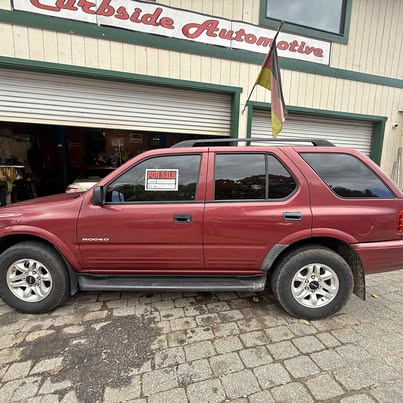
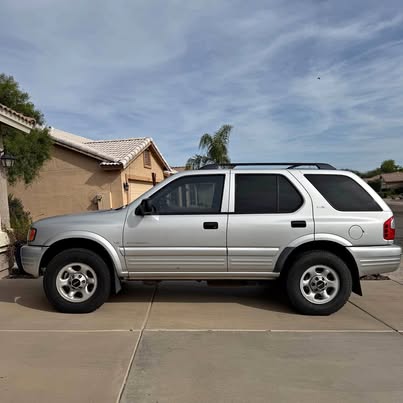
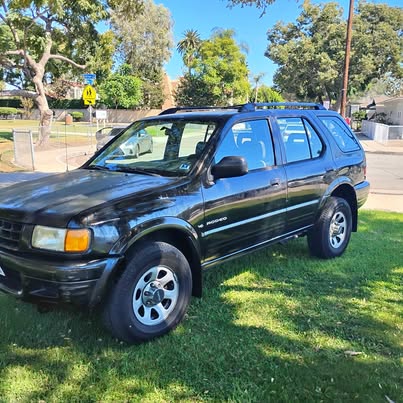
On Classic Listings today: 5 cars are listed here; 4 for sale and 1 marked sold; average asking price $1,867; asking range $1,750 to $2,000; sold cars average $4,111.
See the 5 Rodeo cars currently listed.
The market — recorded sales
Recorded-sale figures: 1 recorded sale · median $4,111 · range $4,111 to $4,111 (Dec 2023 – Dec 2025)
Based on 1 recorded sales — too few for a benchmark value.
| Date | Car | Sale price | Source |
|---|---|---|---|
| Dec 18, 2025 | 2001 Rodeo | $4,111 | Cars & Bids |
Dates are the sale date where the source states one; otherwise the date the sale was recorded here.
For sale now
 $2,000
Expand
 $4,200
Expand
 $1,850
Expand
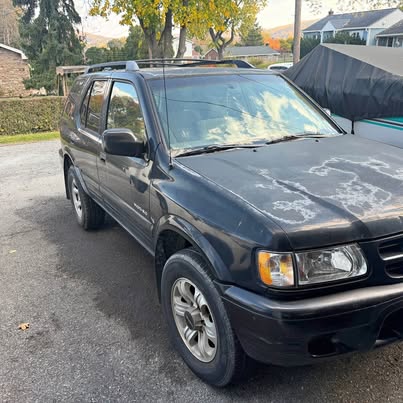 $1,750