
Jaguar XK8 Convertible buyer's guide
Jaguar XK8 Convertible -- the model's own buyer's guide: variants, values and what to check.
Years listed: 1997-2003 · Series: XK8
Overview and history
The XK8 is a single model with a single job: to be Jaguar's grand touring coupe and convertible, the car that took over from the XJS in 1996 and carried the line until the aluminium XK replaced it a decade later. It was unveiled at the Geneva motor show in March 1996, and North American cars are 1997 to 2006 model years. Just over 90,000 examples of the X100 generation were built in total, XK8 and supercharged XKR together, and the XK8 is the large majority of them. This guide is about the XK8 itself — the naturally aspirated car. The XKR is a different model with its own guide, and it appears here only where you need to tell the two apart, because sellers, adverts and even bonnets confuse them.
The shape explains the car. The long bonnet, the oval grille that quotes the 1961 E-type, the fast roofline on the coupe and the low, clean deck on the convertible were a deliberate return to the classic Jaguar GT after twenty-one years of the XJS drifting ever further from that brief. Underneath, the platform — codenamed X100 — is an honest development of the XJS floorpan rather than a clean sheet, with double-wishbone suspension at both ends. What was entirely new was the engine: the AJ-V8, an all-alloy, quad-cam 4.0-litre V8, only the fourth all-new engine in Jaguar's history and the unit that defines everything about owning one of these cars, good and bad.
Three facts frame every XK8 purchase. First, every car is an automatic and rear-wheel drive; there is no manual XK8 from the factory, whatever an advert claims. Second, the model's life falls into three mechanical phases — the original AJ26 engine cars to 1999, the revised AJ27 cars from the 2000 model year, and the 4.2-litre cars from 2003 — and the phase matters more than the mileage, because each phase carries different known faults. Third, these were expensive cars that were usually maintained properly while they were worth real money, and then, as prices fell, were very often run by later owners on a budget the car does not tolerate. The XK8 does not have many faults, but the ones it has are specific, well documented and expensive, and deferred maintenance is the thread that connects nearly every bad one.
That is also the good news. Because the fault list is short and the tests for each fault are known, an XK8 is one of the most buyable modern classics there is: you can walk up to any example with this guide and convert its risks into a short list of yes-or-no questions and priced jobs. A sorted XK8 — engine questions answered, gearbox serviced, structure sound — is a smooth, fast, comfortable GT that feels a class above its current market position. An unsorted one is the same beautiful car with a queue of four-figure bills standing in front of it. The whole purpose of the pages that follow is to tell those two cars apart before you pay for either.
The models
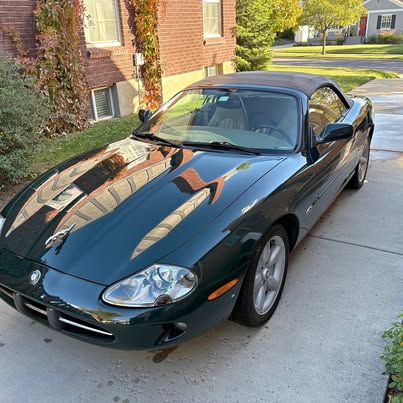
There is only one XK8, but it was built in two body styles across three mechanical phases, and the combination of body and phase is the specification that prices a car — not the trim badges, which changed little and mean less. The table below is the whole range. The supercharged XKR is included in one row because you will meet it constantly while shopping: it is the car the XK8 is confused with, in both directions.
| Model | Years | Engine | Output | Built | Character |
|---|---|---|---|---|---|
| XK8 Coupe 4.0 | 1997–2002 | 4.0 V8 (AJ26/AJ27) | 290 hp | — | The original; stiffest shell, the minority body style in the US |
| XK8 Convertible 4.0 | 1997–2002 | 4.0 V8 (AJ26/AJ27) | 290 hp | — | The volume car; a hydraulic top joins the checklist |
| XK8 Coupe 4.2 | 2003–2006 | 4.2 V8 (AJ34 generation) | 294 hp | — | The developed car; six-speed auto, steel liners from new |
| XK8 Convertible 4.2 | 2003–2006 | 4.2 V8 (AJ34 generation) | 294 hp | — | The easiest XK8 to own; buy purely on condition |
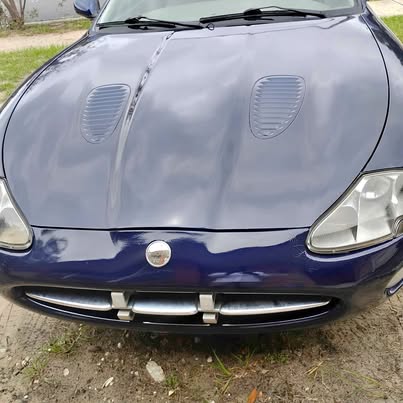
| XKR (for identification) | 1998–2006 | 4.0 / 4.2 V8 supercharged | 370 / 400 hp | — | Louvred bonnet, mesh grille; a different model, covered separately |
(Jaguar published a combined X100 production total of just over 90,000 cars but no reliable split by variant that we can stand behind, so the built column is deliberately left blank rather than filled with invented figures. Years are North American model years; outputs are period factory figures.)
Coupe or convertible. In the American market the convertible is the car you will actually find: it heavily outsold the coupe, and the choice of colours, mileages and conditions among convertibles is far wider. The coupe fights back on merit. Its fixed roof makes the shell noticeably stiffer, and you feel the difference over broken pavement, where an open car shudders faintly through the windscreen frame no matter how good its sills are. The coupe is also quieter, warmer, more secure, and immune to the entire convertible-top section of the problem areas. The convertible's answer is the obvious one — top down, it is the full classic-GT experience with modern manners — and its costs are equally obvious: a hydraulic mechanism to maintain, a fabric roof with a finite life, and a structure that depends entirely on its sills and floors because there is no roof sharing the work. Neither body style carries a meaningful premium over the other. Buy the one you will use, and judge it by the rules for that body in the inspection section.
Phase one: the AJ26 cars, 1997–99. The original specification: cable throttle, the earliest engine management, and the two questions that hang over the early XK8 — Nikasil cylinder bores on the earliest engines and plastic-bodied timing-chain tensioners. Neither is an automatic rejection, as the problem areas explain in full, but both must be answered with evidence rather than assurances. A phase-one car with a documented steel-liner engine and documented metal tensioners has had its two scariest jobs paid for by somebody else.
Phase two: the AJ27 cars, 2000–02. The mid-life revision added variable valve timing on the inlet camshafts, an electronic throttle body and revised management. Power is unchanged on paper, but the car is more flexible and better mannered in real driving. Steel cylinder liners became standard during 2000, so the Nikasil question narrows to the earliest phase-two builds — the engine number settles it, as the engines section explains. The plastic tensioners, however, run through the whole 4.0 production, so the tensioner paperwork matters just as much on a 2002 car as on a 1997.
Phase three: the 4.2 cars, 2003–06. The final development is the ownership shortcut. The engine grew to 4.2 litres with steel liners and the later metal tensioners fitted from the factory, and the five-speed automatic gave way to a six-speed that suits the engine better. The styling was lightly revised — deeper bumpers and sill covers and new wheel designs on the last cars — and Jaguar closed the run with special editions, including the Victory Edition for the United States. A good 4.2 answers most of this guide's engine section by design. What it does not answer is neglect: a 4.2 with no service history is still a twenty-year-old Jaguar that somebody stopped spending money on.
Identifying an XK8 — and not an XKR. Stand in front of the car. An XK8 has a smooth bonnet and a grille of vertical bars. An XKR has louvres pressed into the bonnet, a mesh grille, larger wheels and brakes, and on the coupe a small rear spoiler. These panels swap more easily than engines do, so a louvred bonnet on a car sold as an XK8 is a question, not a detail: either the bonnet has been replaced (ask why — the answer is often accident history), or the car is a misdescribed XKR, or the advert was written by someone who never looked at the car. The engine bay settles it in seconds: on an XKR the supercharger sits in the vee under a cover that says so; on an XK8 you see a plain intake. Check before you price, because the two models live in different value classes in both directions.
Engines and gearboxes
The 4.0 AJ-V8: AJ26 and AJ27
The AJ-V8 is a 90-degree, all-alloy V8 with four overhead camshafts, four valves per cylinder and electronic fuel injection, slightly oversquare in its dimensions and happier to rev than the lazy-cruiser stereotype suggests. In both its 4.0 forms it makes 290 hp, pulls the coupe to 60 mph in the mid-six-second range, and runs to a limited 155 mph. In character it is the best thing about the car: nearly silent at cruise, smooth at idle, and with a hard, cultured edge at the top of the rev range that reminds you Jaguar built racing engines for fifty years before it built this one.
The AJ26, fitted to the 1997–99 cars, is the original: cable-operated throttle, the first generation of engine management, and — on its earliest production — cylinder bores coated in Nikasil rather than fitted with steel liners. The AJ27, from the 2000 model year, is the same engine developed: variable valve timing on the inlet camshafts, a drive-by-wire electronic throttle, a revised intake system and new management. The paper output did not move, but the AJ27 is the more flexible engine at low speed, the more economical at cruise, and the better behaved from cold. Both versions share the architecture that matters to a buyer: chain-driven camshafts with hydraulic tensioners whose original bodies are plastic, a plastic thermostat housing, an early water pump with a plastic impeller, and coil-on-plug ignition. Those four supporting details — bores, tensioners, housing, pump — are the entire engine story of the 4.0 XK8, and the problem areas take each one in turn.
Two identity details are worth learning here because they price cars. The engine number on an AJ-V8 opens with its own build date: the first six digits are the date in year-month-day form, so a number beginning 000818 was built on 18 August 2000. That matters because engines built from that date carry steel cylinder liners from the factory — the number is the quickest Nikasil verdict there is, quicker than any seller's memory. And the number itself is the check against swaps: it should be consistent with the car's build date on the door label. An engine significantly younger than the car usually means a warranty replacement (good news, if documented) and an engine older than the car means a used swap (a question that needs an answer).
In service, a healthy 4.0 starts instantly hot or cold, idles without a tremor, and uses modest oil between changes. The supporting faults are small and legible: ignition coils fail one at a time and produce a clean single-cylinder misfire; the AJ27's electronic throttle body wears its internal contacts and can drop the car into a restricted-performance limp mode, often improved by cleaning and properly cured by replacement or rebuild; the crankcase breather clogs with age and pressurises the engine into weeping oil past seals that then get blamed for the leak; engine mounts sag and let the engine rock on take-up. None of these is a reason to reject a car. They are the small print that separates a maintained engine from a merely running one, and each has a price you can put in the offer.
The 4.2: the AJ34 generation
For the 2003 model year the engine grew to 4.2 litres by a longer stroke, and the change that matters is not the modest rise to 294 hp. The 4.2 was built with steel cylinder liners as standard and with the revised metal-bodied timing-chain tensioners that specialists retrofit to the 4.0s — which is to say, the two structural questions of the early engine were answered at the factory. Torque is broader rather than peakier, and on the road the 4.2 feels stronger everywhere in the range rather than faster at the top of it, helped considerably by its six-speed gearbox keeping it in that range.
What remains on a 4.2 is ordinary ageing on a fundamentally tough engine: coils, the plastic thermostat housing (still plastic, still a service item), hoses, mounts, sensors and the breather. Budget for the cooling-system plastics exactly as you would on a 4.0. But the catastrophic-bill profile is different: there is no bore question to test for and no tensioner job to schedule, and that is why the late cars command their premium and why this guide's advice tilts toward them for buyers who would rather spend on fuel and tyres than on pre-emptive engine work. The premium buys margin, not immunity — a neglected 4.2 still overheats, still clogs its breather, still eats its coils — so the service history matters on a late car exactly as much as on an early one.
Gearboxes: ZF five-speed, ZF six-speed, and the sealed-for-life myth
No XK8 left Coventry with a manual gearbox. A handful of aftermarket conversions exist worldwide; treat one as a modification to be valued, insured and judged as such, never as factory originality. Every 4.0 car uses the ZF 5HP24 five-speed automatic, worked through Jaguar's J-gate selector, whose left-hand gate lets you hold the lower ratios manually. Every 4.2 uses the ZF 6HP26 six-speed — the first Jaguar application of one of the best automatics of its era, with quicker shifts, a wider spread of ratios and better economy. For identification completeness: the supercharged 4.0 XKR used a Mercedes-Benz five-speed because the ZF box was not rated for its torque, so a Mercedes reference on an invoice belongs to an XKR's history, not an XK8's. No XK8 has that box, and paperwork suggesting otherwise means the paperwork belongs to a different car.
The most expensive sentence in XK8 ownership is "sealed for life". Both ZF gearboxes were sold with no scheduled fluid change, on the logic that the fluid would last the life of the car — where "life" meant the warranty horizon, not thirty years and six owners. In reality the fluid degrades and the filter loads up, and by 80,000 to 120,000 miles an unserviced 5HP24 is living on borrowed time. The symptoms arrive in a recognisable order: a shudder from the torque-converter lock-up clutch at light throttle around town speeds; shifts that flare or hesitate; a reluctance to engage reverse when hot; and eventually a box that defaults to a single limp gear and a dashboard message. The 6HP26 follows the same ageing story and adds one signature fault of its own — the electrical connector sleeve through the casing, the mechatronic sleeve, weeps fluid; the part is cheap and the access is fiddly.
The economics follow directly. A fluid and filter service on either box runs roughly $400–800 at a specialist, and on a newly bought car with no record of one it is the best money in this entire guide. A full rebuild runs roughly $3,000–5,000. So a documented gearbox service in the history file is worth real money in the price, and an undocumented box should be priced as a service at best and a rebuild at worst, depending on how it behaves on the drive described in the inspection section. Judge it like this: from cold, Drive and Reverse engage promptly and without a thump; light-throttle shifts are nearly imperceptible; full-throttle shifts are firm, with a clean kickdown; and at a steady 35–45 mph on a light throttle there is no vibration like a rumble strip coming and going with tiny throttle changes — that shudder is the converter clutch announcing the fluid's age, not an engine misfire, and confusing the two has sold a lot of unnecessary ignition coils.
Problem areas
The XK8's problem areas are few, specific and heavily concentrated: two engine questions that apply to the 4.0 cars, one cooling system that applies to every car, a steel structure that rusts in known places, and a tail of suspension, top and electrical ageing that is common to every twenty-year-old luxury car. Work through them in the order given — engine first because it carries the largest single bills, structure second because it decides whether a cheap car is actually cheap, and the rest as priced deductions. Almost nothing here is mysterious, and that is the point: every fault below has a test that distinguishes it from its lookalikes, and a known cost when it fails the test.
The engine: Nikasil bores, plastic tensioners and the cooling system
Nikasil bores (earliest cars only). The bores of the earliest AJ-V8s are not lined with steel. They are coated with Nikasil, a nickel-silicon-carbide layer applied directly to the alloy block. As a running surface it is superb — hard, low-friction and durable — with one chemical weakness: sulphur. The high-sulphur petrol sold in some markets in the late 1990s attacks the coating, the surface breaks down, and the piston rings lose their seal against it. The damage is chemical rather than mechanical, which is why it struck by region and fuel supply rather than by mileage, and why plenty of Nikasil engines that lived on low-sulphur fuel are healthy today at high mileages.
The symptoms build in a specific order, and the order is the diagnosis. Oil consumption climbs first, because the rings no longer scrape the bore clean. Then comes blow-by: crankcase pressure you can feel puffing rhythmically from the open oil filler cap at a warm idle, carrying oil mist with it. Then starting suffers, because cranking compression is exactly what worn bores have lost — a worn Nikasil engine is characteristically reluctant on a cold morning and needs extended cranking. Finally the car simply feels flat, because it is down on compression across all eight cylinders at once.
Before condemning an engine, separate the lookalikes, because two cheap faults imitate pieces of that picture. Oil consumption alone can be valve-stem seals or a clogged crankcase breather — and the breather on these engines does clog, pressurising the crankcase and pushing oil past seals in a way that mimics blow-by. The filler-cap test separates them: cap off at a warm idle, palm held loosely over the neck. A healthy engine shows gentle vacuum or neutral pressure. A breather problem puffs steadily and evenly. Worn bores puff in pulses timed to the engine's firing, with visible mist. The clincher is a compression or leak-down test, which any seller of an early car should accept as the price of a serious offer. Then apply the engine-number check from the engines section: a number beginning on or after 000818 — 18 August 2000 — means a steel-liner engine from the factory, and the whole question closes. Jaguar also replaced many affected engines under warranty with steel-liner units, so an early car can sit in any of three categories — original Nikasil engine, documented replacement, or later steel-liner production — and each prices differently. Category one is not an automatic walk-away, but it requires the compression test, and a car that fails it needs an engine: a replacement-engine job fitted runs well into five figures, beyond the value of most early cars. A cheap test standing in front of an unaffordable repair is the whole Nikasil story.
Timing-chain tensioners (every 4.0 car). The camshafts are chain-driven, and the chains are held in tension by hydraulic tensioners whose original bodies are plastic — most critically the secondary tensioners, which tension the short chains driving the exhaust camshafts. The plastic ages in hot oil, the body cracks, tension is lost, and the chain begins to rattle and whip against its guides. Left alone, the chain jumps a tooth or more, the valve timing goes with it, and the pistons meet the valves in an engine built with no clearance for that meeting. The end is not subtle. The beginning is: a brief rattle from the front of the engine on a cold start, lasting a second or two while oil pressure builds, is the classic first symptom — and owners learn to ignore it precisely because it stops. Do not ignore it, and do not let a seller demonstrate how cleanly a rattling car revs. On a 4.0, a cold-start rattle is tensioners until proven otherwise.
The fix is settled practice: the later metal-bodied tensioners, fitted with new chains, guides and seals as a package while the front of the engine is apart. The parts are moderate and the labour is the bill; the full front-end overhaul — tensioners, chains, guides, water pump and thermostat housing done together, as they should be — typically runs $2,000–3,500 at an independent specialist. Read the history file accordingly. An invoice for that package closes this section for that car. No invoice means the job is a scheduled expense you price into the offer on any 4.0, and a car that already rattles moves it from scheduled to urgent. The 4.2 engines carry the revised tensioners from new, which is the single largest mechanical reason the late cars are easier to own.
The cooling system: the alloy engine's one vulnerability. An all-alloy engine tolerates neglect in many forms, but it does not tolerate overheating: one serious overheat can warp cylinder heads and convert a sound engine into a rebuild. The XK8's cooling system has two known weak points, both plastic, both cheap, and both capable of causing exactly that overheat. The thermostat housing is a plastic casting that warps and cracks with heat cycles; it weeps coolant first and leaks properly later, and aluminium replacement housings exist and are the correct permanent fix. The early water pump carries a plastic impeller that can loosen on its shaft or break up, at which point circulation collapses while the temperature gauge is still reporting old news. Around those two, add a radiator core that is now decades old, an expansion tank that crazes and weeps, and hoses at the end of their design life. The rule writes itself: unless the invoices show the work done, budget to refresh the cooling system's plastic and rubber as one package on any XK8 you buy; treat any coolant loss as a stop-and-fix fault, never a top-up habit; and on the test drive, watch the temperature gauge the way you would on no other car. A past overheat often confesses in the paperwork before it confesses anywhere else — head-gasket invoices, a radiator changed at suspiciously low mileage, a replacement engine — so read the history file with this paragraph in mind.
Rust and structure: the steel car underneath
The X100 is a steel car — the aluminium bodywork belongs to its replacement — and it rusts the way a steel car of its era rusts: thoroughly if it has lived outside in a wet or salted climate, remarkably little if it has been garaged in a dry one. Climate history is therefore your first piece of rust evidence. The same model year can be a sound car from the dry Southwest and a structural project from the salt belt, and the underside, not the paintwork, tells you which one you are looking at.
Work the map in this order. The front and rear subframes head the list, because they are structural, because they trap road dirt against their upper faces where a casual glance from ground level never reaches, and because heavy subframe corrosion is a replacement job in four figures once labour is counted. The sills come next, and on a convertible they matter double, because the sill is doing structural work the absent roof would otherwise share: check the full length, the jacking points, and both ends where the sills run into the wheel arches. The floor pans follow — they wet from leaking screens and, on convertibles, from tired top and window seals, and the sound-deadening hides the early stages, so lift the carpets and look rather than trusting a dry top surface. Then the wheel arches and the lower edges of the front wings, the door bottoms, the boot floor around the spare wheel and the battery tray that lives back there, and the windscreen surround, where rust starts invisibly under the seal and announces itself as bubbling paint at the edge of the glass.
Two reading skills matter as much as the map. The first is underseal: factory coating after twenty-five years looks honestly patchy — thin at edges, chipped where stones hit, dirty in a way that matches the rest of the underside. A uniform coat of fresh black blown over everything the week before a sale, seams and brake pipes included, is a cover-up until the seller proves otherwise, because nobody re-underseals a sound underside as a favour to the next owner. The second is the distinction between cosmetic and structural: a bubbling arch is a priced repair you can see; perforated subframes, sills and floors are a welding programme that runs from about $1,500 for localised work to well past the value of a cheap car for a full one. The XK8's saving grace is that its rust is honest — it starts in the places listed and progresses visibly — so a lift, a torch and a screwdriver find it. On any car over modest money, pay for that lift inspection; the inspection section sequences it.
Suspension, steering, brakes and wheels
The XK8's chassis does not break; it accumulates. A dozen rubber bushes, ball joints and mounts all age together until a car that should feel taut, silent and expensive feels loose, knocky and vague, and the cure is a refresh rather than a repair. The specific items: front lower wishbone bushes, whose wear you feel as a knock over sharp bumps and imprecision under braking; front subframe V-mounts, the rubber mounts locating the subframe, which delaminate with age and produce a general front-end looseness that is routinely misdiagnosed as steering wear; and rear A-frame and hub bushes, which let the rear wheels steer slightly under power, felt as a car that needs small corrections to run straight. Dampers fade with mileage, and cars fitted with the optional CATS adaptive damping use electronically controlled units that cost substantially more per corner than standard dampers — so a CATS warning or four tired adaptive dampers is a bill to identify before purchase, not after. A full bush-and-mount refresh with standard dampers runs roughly $1,500–3,000 fitted, transforms the car, and its absence is the main reason a tired XK8 drives like a boat.
The steering is power-assisted rack and pinion and generally reliable; judge it on play at the wheel, leaks from rack and pump, and whether the car tracks straight with your hands off on a level road. Brakes are discs all round with inexpensive parts, and the costs here are neglect costs — seized calipers, scored discs and perished hoses on cars that have sat. Wheels and tyres deserve a deliberate minute, because the sizes are not cheap and the staggered fitments on later cars cannot be rotated front to back: budget for proper tyres if the car wears old, mixed or budget rubber, and check that the spare and jack are present. Finally, wheel bearings: a drone that changes pitch as you weave gently at speed is a bearing, and the rear bearings are a press job rather than a driveway one.
The convertible top, the interior and the electrics
The top. The convertible's roof is power-operated and hydraulic-electric: a pump drives hydraulic rams that work the frame, with latches at the windscreen header. Its enemies are age and disuse. Rams weep fluid past their seals — look for dampness and staining around the rams behind the rear seats and in the wells at the sides of the boot, and for a top that moves slowly, unevenly, or only with a helping hand. Hoses perish. The pump itself is durable but expensive if a leak has run it dry. Operate the top through at least two full cycles on any viewing: it should rise and fall evenly, latch without persuasion, and stow flat under its cover. A quality replacement hood, fitted, runs roughly $1,500–2,500, so judge the fabric in the same look — fading, shrinkage at the edges, a cloudy or cracked rear window, and the condition of the headlining. Window behaviour belongs to the top system on these cars: the door glass drops slightly as you open the door and rises as it closes, to clear the seals, a function run by microswitches in the door latch. A window that does not drop matters beyond convenience, because a glass that cannot drop eventually tears at the top's seal every time the door is forced shut.
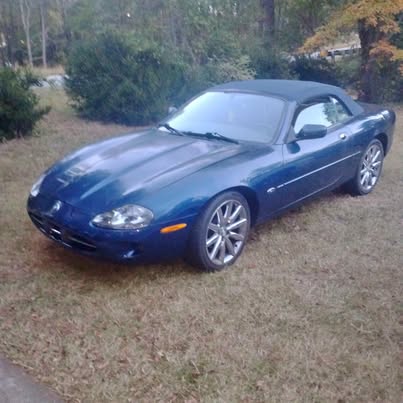
The interior. The cabin is leather and wood veneer over 1990s plastics, and it ages in a known order. The driver's seat bolster wears first — sit in the driver's seat, because the passenger side will lie to you about the car's life. The veneer lacquer lifts and cracks, worst where sun comes through the windscreen; refinishing a full set is specialist work at roughly $1,000–2,500 depending on scope. Coupe headlinings sag when their foam backing fails, a trim job in the hundreds. Seat memory modules fail and take the seat's powered movement with them, and the telescoping steering column's motors are a known small failure. None of this is structural, all of it is visible within five minutes, and a cared-for cabin is the best single proxy for how the whole car has been treated: owners who condition leather tend to be the owners who serviced the gearbox.
The electrics. The system is sound in design and intolerant of exactly one thing: a weak battery. These cars draw current at rest, sit for weeks in many owners' hands, and answer low voltage with a carnival of unrelated warning lights and faults that vanish the moment a healthy, fully charged battery is fitted. Rule one of XK8 electrics is therefore to test the battery and charging before diagnosing anything else. Beyond that, the honest list is short: the door-latch microswitches already covered; ABS and traction-control warnings most often traced to wheel-speed sensors or to dry solder joints inside the ABS module, a known repair rather than a replacement; failing instrument and switch backlighting; key fobs that lose synchronisation; and the occasional central-locking sulk. A car on which everything works — every window, the top, the seats, the mirrors, the cruise control, air conditioning that blows cold at idle in traffic and not just at speed — has been used and maintained, and on an XK8 that evidence is worth more than a low odometer reading.
How to inspect one
Allow ninety minutes, bring a torch and a cloth-wrapped magnet, and arrange the viewing so the engine is stone cold when you arrive — half the tests below depend on it. If the car passes your inspection, pay for a lift inspection before money changes hands; on a steel car with structural subframes, it is the best money in the whole purchase.
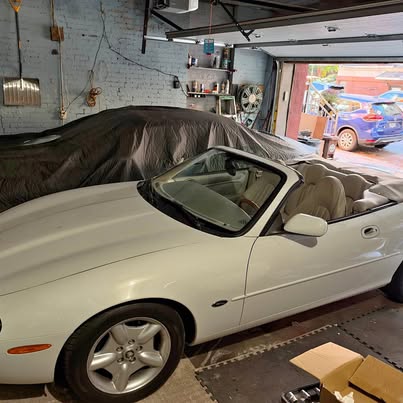
- Start with identity and paperwork. Match the VIN on the title to the plate at the base of the windscreen and the door label. Read the car before you read the file: smooth bonnet and bar grille for an XK8, louvres and mesh for an XKR, per the models section. Then the history file — you are looking for four specific documents: a timing-chain tensioner invoice on any 4.0, evidence of the engine's liner status on an early car, a gearbox fluid service at any point, and cooling-system work. Each one present is money; each one absent is a priced deduction.
- Cold start, bonnet up, ears first. A healthy AJ-V8 starts at once and settles to an even idle. Listen at the front of the engine for the two-second rattle that means tensioners. Watch the exhaust: blue smoke at start-up that clears is valve-stem seals; smoke that persists is a deeper conversation. Any car that was "warmed up for you" has had this test taken away from you — note it and price accordingly.
- The Nikasil tests, on any car that could have the early engine. Check the engine number first: a build date on or after 18 August 2000 (a number opening 000818 or later) means steel liners and you are done. On an earlier engine, run the filler-cap test from the problem areas — pulses with oil mist at a warm idle are blow-by — ask about oil consumption directly, and make a compression or leak-down test a condition of the deal.
- Cooling system, cold. Level in the expansion tank, condition of the tank itself, weep stains around the plastic thermostat housing, hose squeeze along every hose you can reach, and any sign of coolant crust at the water pump. Then file the evidence for step 9: this system gets watched on the drive.
- Underneath. Torch along both subframes, top faces included as far as you can see, then the sills full length, the jacking points, and the floor edges. Read the underseal as the problem areas teach — patchy and honest is factory, a fresh uniform black coat over everything is a question. Perforation in a subframe or sill is structural money; decide here whether the car continues.
- Boot and floors. Lift the spare wheel and check the boot floor and the battery tray area for rust and water staining. Inside, lift the carpets in both front footwells: damp, staining or surface rust means water has been getting in, and on a convertible check behind the rear seats for the damp staining that betrays weeping top rams.
- Body and gaps. Magnet over the arches, sill ends and lower doors — filler announces itself. Check door bottoms, the windscreen surround for bubbling at the seal's edge, and panel gaps for accident history. On a convertible, grade the hood fabric, rear window and headlining now, while the replacement cost from the problem areas is fresh in your mind.
- The top, twice through. On a convertible, run two full cycles. Even movement, no helping hands, clean latching, glass dropping and rising correctly at both doors. Slow, uneven or assisted movement is a hydraulic bill negotiating its size.
- The test drive. Twenty minutes minimum, including a stretch at speed. Watch the temperature gauge throughout — it should climb to normal and stay there without wandering. Feel the gearbox against the engines section's standard: prompt engagement, near-invisible light-throttle shifts, firm full-throttle shifts, and the steady 35–45 mph light-throttle hold that exposes converter-clutch shudder. Use the J-gate's manual side and confirm the box holds the gear you choose.
- Chassis on the move. Knock over sharp bumps means bushes; looseness under braking points at the front end; a car that needs correcting in a straight line points at the rear. Weave gently at speed for the pitch-changing drone of a wheel bearing. Brake hard from speed: straight stop, no judder, no pull.
- Electrics and cabin, everything on. Air conditioning cold at idle, every window, both seats through their full travel and memory, mirrors, cruise control, lights, washers. Note every warning lamp that stays lit — then remember rule one from the problem areas and ask when the battery was last replaced before believing any of them. Sit in the driver's seat and judge the bolster and the veneer from there.
- Stance and the walk-away sum. Stand back and look: level, even, no corner sitting down. Then add it up honestly — tensioners if undocumented, gearbox service if unrecorded, cooling package if untouched, plus whatever steps 5 to 11 found — and compare the total against the price of the next phase up. That arithmetic, not the asking price, is the XK8 decision.
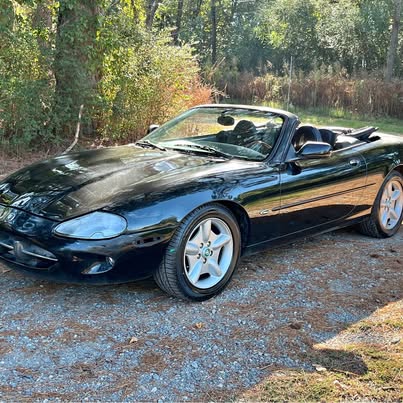
Values
The XK8 market is a condition market wearing a model badge, and the figures in the market block beneath this guide will make more sense read that way. The spread between the cheapest and dearest XK8 on offer at any moment is enormous, and almost none of it is explained by model year or mileage. It is explained by the answers to this guide's questions. A car with its tensioners done, its liners verified, its gearbox serviced and its subframes sound sits in a different value class from an identical-looking car with none of those answers — and the two are parked side by side in the same listings, at asking prices that often fail to reflect the difference. That gap between appearance and evidence is where XK8 value is won and lost.
Phase sets the broad bands. The 4.2 cars carry a premium over the 4.0s, and they earn it in avoided work rather than in performance: you are buying out of the tensioner job and the bore question, and the market prices that peace of mind rationally. Within the 4.0s, paperwork is the premium — a documented front-end overhaul and a verified steel-liner engine move an early car most of the way toward 4.2 money, while an undocumented early car trades at a discount that roughly equals the cost of the jobs it is missing, when the seller understands the model, and at a much smaller discount when they do not. Coupe and convertible sit close together; the convertible's wider supply balances the coupe's rarity, and neither body style rescues a bad car or sinks a good one.
Asking prices and achieved prices part company on this model more than most. Sellers anchor on what the car cost new, on the best example they have seen advertised, or on what they have spent; buyers who know the fault list anchor on the priced jobs still outstanding. The result is long listing times for optimistic cars and quick sales for honestly priced ones, and it means the recorded-sales evidence in the market block is the better guide to what a car is worth than the asking figures beside it. Negotiation reality follows from the inspection: a seller can argue with an opinion, but a tensioner invoice that does not exist, a compression test that was refused, or a converter shudder the seller felt with you in the passenger seat are facts, and facts are what move an XK8's price.
The project-versus-driver gap is the last thing to understand. A non-running or long-stored XK8 is not a cheap route to a good one, because the recommissioning list — fuel system, brakes, cooling plastics, tyres, top hydraulics, every fluid including the gearbox — consumes the apparent saving before the engine questions are even opened, and a project with a failed Nikasil engine or perforated subframes is worth its parts and its interior, not a discount from driver money. The honest summary of the whole market is the same as for the car itself: there is no cheap XK8, only an XK8 whose bills you have counted and one whose bills you have not.
Parts and ownership
The XK8 is one of the better-supported modern Jaguars to keep. It sold in real numbers, it shares its engine family and many components with the XJ saloon of the same years, and it sits in the sweet spot where the factory, the specialists and the breakers all still pay attention to it. Ownership divides cleanly into what is easy, what is dear, and what the running budget actually looks like.
Easy: service items, filters, plugs, ignition coils, brake discs, pads and hoses, water pumps and thermostat housings (fit the aluminium housing and close that file), hoses and belts, suspension bushes and mounts, standard dampers, tyres in the common sizes, and most trim clips and seals. Order today, fit this week, at prices that will not frighten anyone used to modern German cars.
Harder and dearer: the timing-chain package on a 4.0 (a labour bill more than a parts bill, as the problem areas price it), CATS adaptive dampers, convertible-top rams, pumps and hoses, a quality replacement hood fitted properly, veneer refinishing, seat memory modules, a gearbox rebuild, subframes in sound condition, and a replacement engine — the one part whose cost can exceed the car, which is why the compression test in the inspection section carries the weight it does. A quality repaint costs more than most XK8s are worth, which is why faded or damaged paint on an otherwise sound car is a negotiation, and on an unsound one is irrelevant.
Running costs. A sorted XK8 is a realistic regular-use car: fuel consumption in the high teens to low twenties per gallon depending on use, servicing that any good independent Jaguar specialist can handle, and insurance in line with other cars of its value and performance. The budget line that catches new owners is the first year. Catching up deferred maintenance on a running car — gearbox service, cooling package, fluids, bushes, tyres, the small electrical list — honestly consumes a four-figure sum before you improve anything, and recommissioning a car that has sat for years costs more again, because storage ages every rubber and seal in this guide whether the wheels turn or not. Buy a car in regular use over a sleeping car at the same price, keep the battery healthy or on a maintainer if the car sits between uses, and the XK8 repays you with the thing it was built for: long, quiet, fast miles in a car that still turns heads at the fuel station.
Which one to buy
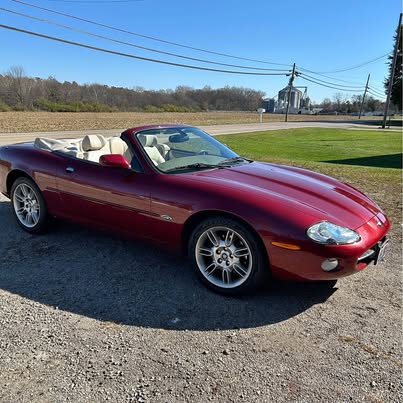
- The all-rounder: XK8 Convertible 4.2 (2003–06). The developed engine with no bore or tensioner questions, the six-speed gearbox, and the body style the American market is full of. If you want one XK8 to drive and enjoy with the least pre-emptive spending, this is it.
- The purist's car: XK8 Coupe 4.2. The stiffest shell and the cleanest roofline with the late mechanical package. Coupes are the minority in US listings, so a good one is worth travelling for — and worth checking twice as carefully underneath, because scarcity tempts buyers to forgive structure.
- The value buy: a documented 4.0 (2000–02 AJ27). The mid-phase cars are the market's sweet spot when the file is right: steel liners verified by engine number, metal tensioners invoiced, gearbox serviced. That paperwork converts the cheapest phase into the smartest purchase — and without it, the same car is the value trap.
- The brave buy: an early AJ26 car (1997–99). The original specification, cable throttle and all, at the bottom of the market. Buyable exactly one way: compression test passed, tensioner status known, priced with every undocumented job counted as outstanding. Bought any other way it is a lottery ticket with a V8 attached.
- The project: a parts-or-fix car. Only as a parts source or a long-term hobby with your own labour, never as cheap transport. The parts-and-ownership section explains why the recommissioning arithmetic defeats the discount.
- Not this guide's car: the XKR. If your heart says supercharger, buy one deliberately, at XKR money, with XKR checks — louvred bonnet, mesh grille, supercharger in the vee, and its own guide. What you should never do is pay XKR money for an XK8, or XK8 money for a misdescribed XKR, because a bonnet swap made you skip step 1.
And the rule that overrides all of the above: buy the car whose engine questions are answered and whose underside is sound, in the phase and body style you can live with. Tensioners can be fitted, gearboxes serviced, hoods replaced and veneer refinished, all at prices you can plan for. A failed engine and a rotten structure are the two bills that exceed the car — and both announce themselves to the tests in this guide before you pay, if you run them.
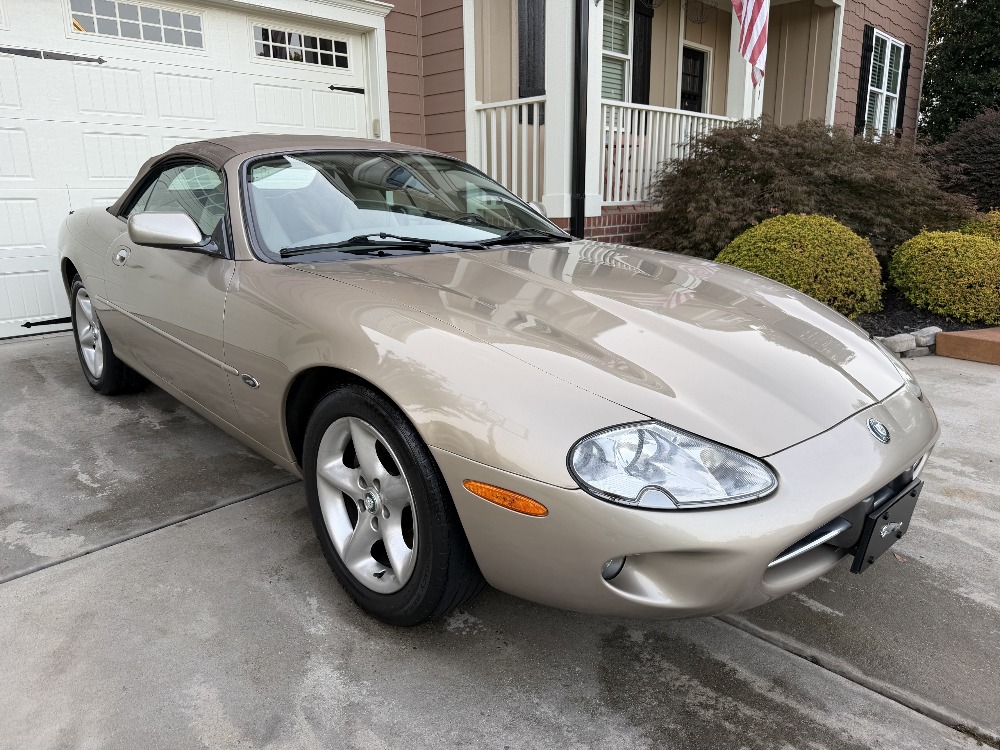
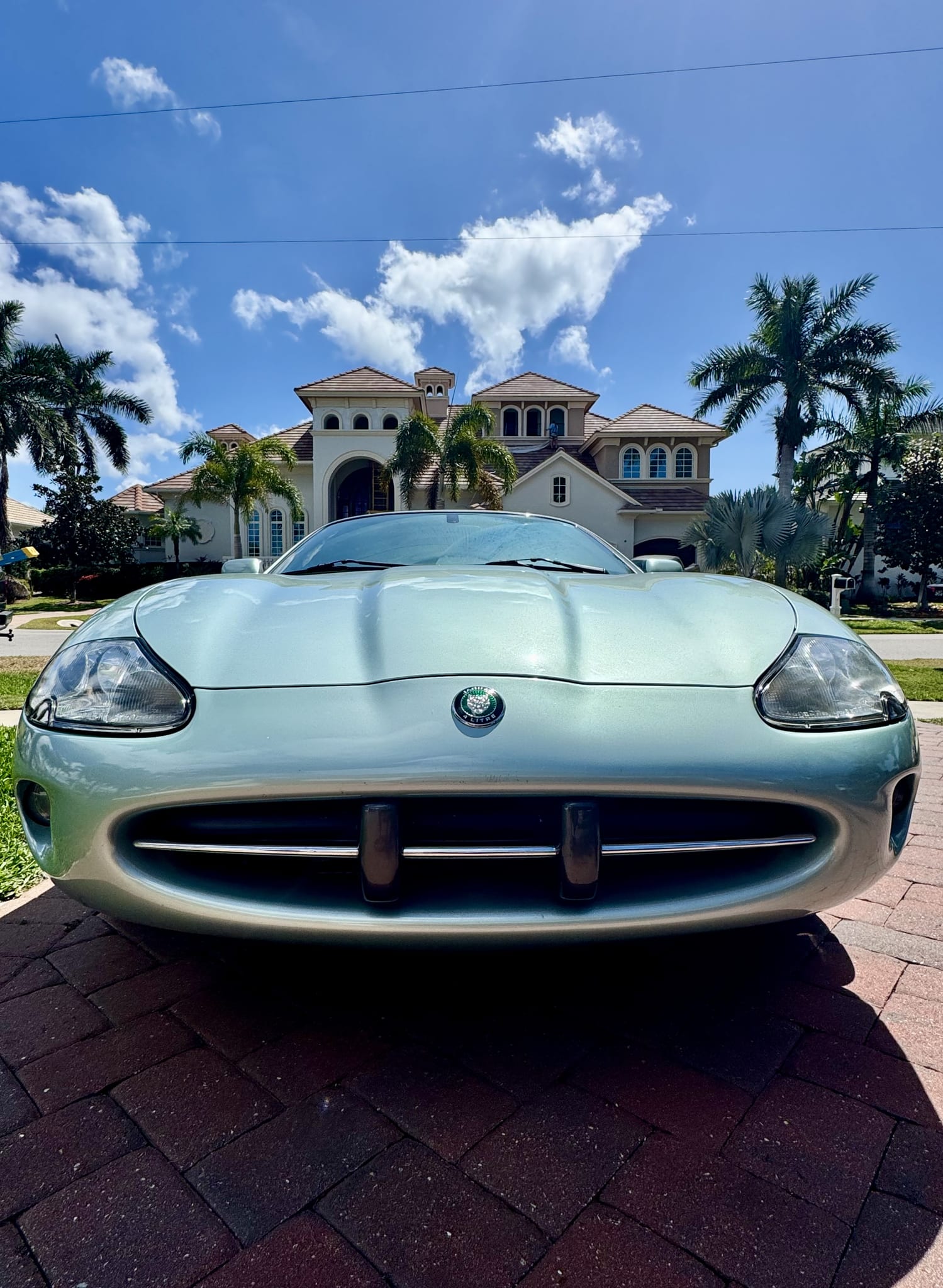
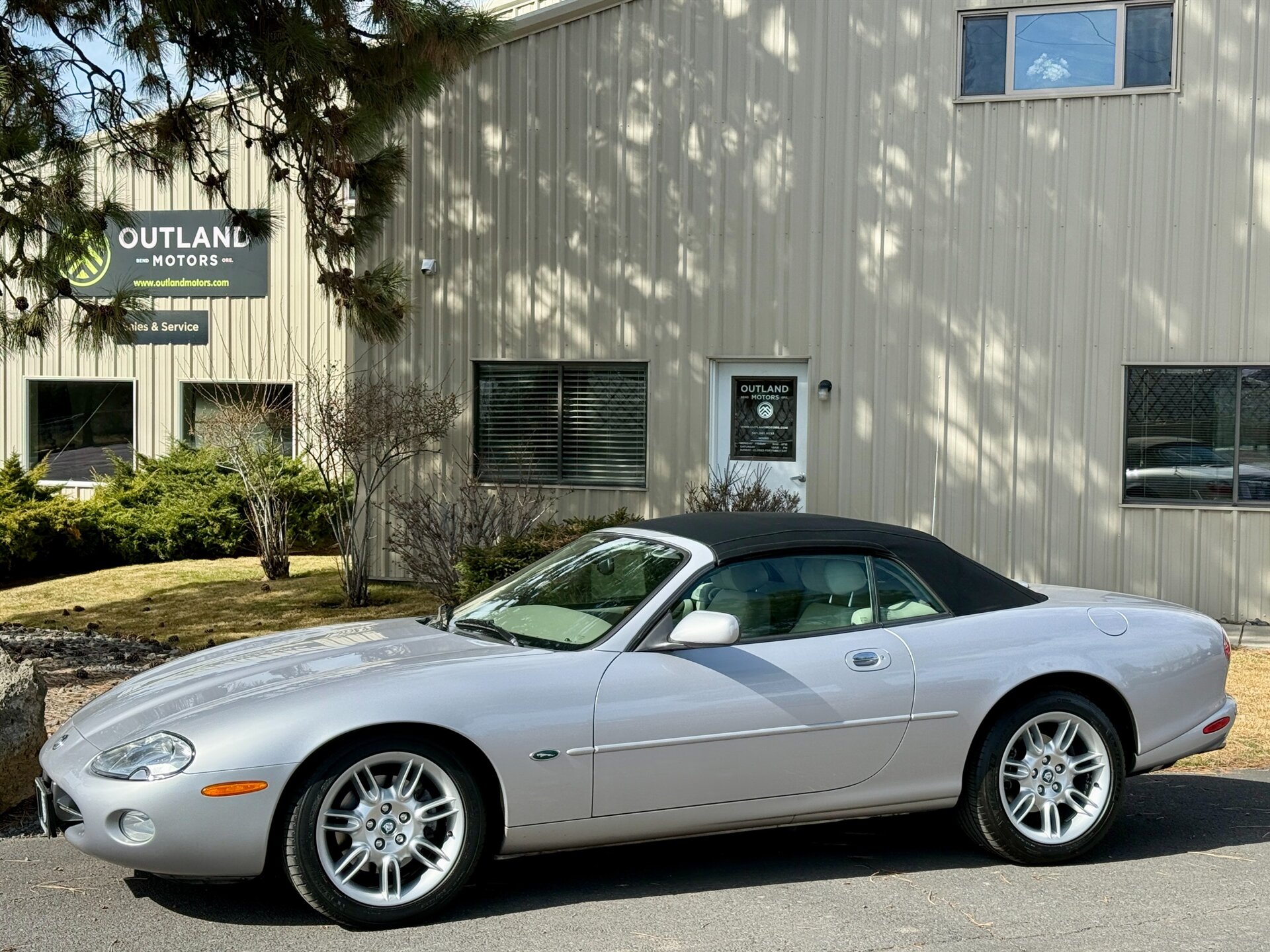
See the 25 XK8 Convertible cars currently listed.
For sale now
Expand
 Current bid $3,000
Expand
 $14,590
Expand

Expand
What they sell for: XK8 Convertible sale prices.