
Kaiser Henry J Vagabond 2 door buyer's guide
Kaiser Henry J Vagabond 2 door -- the model's own buyer's guide: variants, values and what to check.
Years listed: 1951-1952 · Series: Kaiser
# Kaiser Henry J — Buyer's Guide
Overview and history
You are looking at the car Henry J. Kaiser thought would do for the 1950s what the Model T had done for the 1910s: put a brand-new automobile within reach of a family that had never bought one. Kaiser was the industrialist who had built Liberty ships faster than anyone thought possible during the war, then moved into cars in 1946 as half of Kaiser-Frazer. The big Kaisers and Frazers sold respectably but never threatened the Big Three, and Kaiser believed the missing rung was at the bottom — a genuinely cheap, genuinely economical small car, designed down to a price from a clean sheet rather than stripped down from something bigger.
The Henry J, named for Kaiser himself and built at Willow Run, Michigan, was announced for the 1951 model year after production began in the summer of 1950. It is a compact two-door sedan on a 100-inch wheelbase and a separate full frame, about 174.5 inches long in its first form. Everything about it is an exercise in deletion. Early cars have no opening boot lid at all — you reach the luggage space by folding the rear seat forward. There is no glovebox, no passenger's sun visor, no armrests, and the rear side windows do not open. What you get instead is modern, rounded styling with little fins over the rear wings, a choice of two Willys-supplied flathead engines, and period advertising that promised fuel economy around 30 mpg at a time when a full-size Chevrolet was a thirstier, heavier thing.
The first year was the peak: over 80,000 Henry Js were built for 1951, split roughly evenly between the four and the six. Then the arithmetic that had created the car turned against it. A basic Chevrolet cost little more, carried more, and came with a boot lid; the secondhand market offered bigger cars for Henry J money; and Kaiser-Frazer's dealer network was thin. Sales fell to under 24,000 for 1952 — a figure muddied by thousands of unsold 1951 cars re-serialised and sold as 1952 Vagabonds — then to roughly 17,500 facelifted cars for 1953, and finally to barely over a thousand 1954 cars before production stopped. A rebadged version sold through Sears as the Allstate in 1952 and 1953, and Mitsubishi built the car under licence in Japan, but neither changed the story.
Why buy one now? Because the Henry J is honest, mechanically simple to a degree almost no other post-war American car matches, and historically important as America's first serious post-war compact. Its engines are Jeep engines with a Jeep-sized parts and knowledge base behind them. And because so many Henry Js were later cut into drag-racing gassers, a stock, unmodified survivor is now the rare thing. In the site's own pool at the time of writing there are just five cars recorded, spanning 1951 to 1953 — two of them visibly modified — which tells you both how thin the market is and why you should buy on condition and originality rather than on choice. One caution from that same pool: in the single car whose photographs we have examined in detail for this guide — a sample of one, so treat it as an anecdote, not a statistic — both rust and existing damage were noted. On a car built this lightly, that is the inspection priority, and this guide is organised around it.

The models
The Henry J range is simple in outline — one body, two engines, rising trim — and complicated in one specific place, the 1952 model year, where unsold 1951 cars were reborn with new names. Learn the sequence and you can date and place any car you are shown; get it wrong and you can pay Corsair de Luxe money for a re-serialised leftover.
Every Henry J is a two-door sedan with fixed rear side windows; there was never a four-door, convertible, wagon or factory hardtop. The body sits on a separate frame — not a unitary car — which matters when you assess rust: a Henry J can have a rotten body on a sound frame or, less commonly, the reverse.
1951: Henry J and Henry J Deluxe. The launch cars. The standard car carries the 134 cu in Willys four; the Deluxe carries the 161 cu in Willys six and slightly better trim. Early production has no opening boot lid; an opening lid arrived during the year as part of an optional Accessory Group with other dress-up items, so a 1951 car with a boot lid is not automatically wrong — but a 1951 car should be checked for whether the lid is a factory fitting or a later conversion. The plainest early fours are the purest expression of the idea and the sparsest cars you will ever sit in: no glovebox, minimal instrumentation, painted rather than plated brightwork in places.
1952: Vagabond, then Corsair. The first 1952 cars, sold from December 1951, are Vagabonds: leftover 1951 cars, mostly fitted with the optional opening boot lid, uprated trim and a continental spare wheel mounted outside on the rear, which freed the space the spare otherwise occupied behind the seat. Roughly 7,000 were shifted this way. The genuine second-series 1952 cars, announced in February 1952, brought a restyled full-width grille, new tail-lamps mounted high in the fins, an opening glovebox at last, and revisions to the shocks, steering and clutch linkage. The six returned as the Corsair; the four continued with plainer trim. A Vagabond is therefore a 1951 car wearing 1952 papers — perfectly legitimate, but it should be priced as what it is, and its specification (early suspension and steering details included) is 1951 specification.
1953–1954: Corsair and Corsair de Luxe. The facelift cars. The four is now the Corsair, the six the Corsair de Luxe, with a rocket-shaped bonnet ornament, fuller chrome wheel covers, a wraparound rear bumper and a longer tail treatment that stretches overall length to about 181.6 inches for the Corsair and 184.6 for the de Luxe. These are the most developed and most usable Henry Js: the boot lid is standard practice by now, the interior is less austere, and the detail revisions of 1952 are all in place. The 1954 cars are mechanically and visually near-identical leftovers of the 1953 design, built in tiny numbers — about 1,119 — which makes them rare without making them different.
The Allstate (1952–1953). Sears, Roebuck sold a rebadged Henry J through its stores as the Allstate, with its own grille, bonnet ornament, hubcaps, badges and interior trim, and Allstate-branded tyres and battery. Only about 2,363 were sold. An Allstate is a Henry J in every mechanical respect and is covered by everything in this guide; its premium, if any, is for the badges and the story, and a car missing its Allstate-specific trim is missing the point of it, because those parts are far harder to find than Henry J parts.
| model | years | engine | output | built | character |
|---|---|---|---|---|---|
| Henry J (four) | 1951 | Willys L134 134.2 cu in flathead four | 68 hp | ~38,500 | The pure economy car; sparsest trim, no boot lid on early cars |
| Henry J Deluxe (six) | 1951 | Willys L161 161 cu in flathead six | 80 hp | ~43,400 | The six outsold the four in year one; the one most buyers actually wanted |
| Henry J Vagabond | 1952 | Willys L134 four (mostly) | 68 hp | ~7,000 re-serialised 1951 cars | Leftover 1951 stock with boot lid, uprated trim and continental spare |
| Henry J Corsair | 1952–1954 | Willys L134 four | 68 hp | 1952 ~7,600 incl. sixes; 1953 9,333; 1954 ~800 | The developed four: glovebox, new grille and lamps, better detailing |
| Henry J Corsair de Luxe | 1952–1954 | Willys L161 six | 80 hp | 1953 8,172; 1954 ~325 | The flagship: six-cylinder smoothness and the fullest trim Kaiser offered |
| Allstate | 1952–1953 | Willys four or six | 68/80 hp | ~2,363 | Sears' rebadged twin; identical mechanics, unique trim and badges |
Production figures for the Henry J vary between sources, chiefly over how the re-serialised 1951 cars sold as 1952 Vagabonds are counted; the figures above are the commonly quoted ones and are given as approximations for that reason. Treat any seller who quotes you an exact, to-the-unit production figure for a 1952 car with polite scepticism.
Two identity points before we leave the models. First, the wing script: on facelift cars, 'Corsair' means the car was built as a four, 'Corsair de Luxe' means it was built as a six. Scripts can be swapped, so the script is a claim to be verified against the engine in front of you, not proof. Second, the modified cars: the Henry J's light weight and cheapness made it a favourite gasser donor in the 1960s, and the trade in V8-swapped, straight-axle cars continues today. A swapped car is a hot rod, not a Henry J in the collector sense — price it, insure it and inspect it as one, starting with the quality of the conversion rather than the originality of anything.

Engines and gearboxes
Both Henry J engines are bought-in Willys flatheads — side-valve engines with all their valves in the block beside the cylinders. That single fact explains most of what follows: they are simple, slow-revving, tolerant of abuse and poor fuel, easy to work on with hand tools, and supported by the enormous Jeep aftermarket. It also defines their weaknesses, which are the classic flathead weaknesses — heat concentrated in the block around the exhaust valves, breathing limited by the valve layout, and a cooling system that must be kept honest because the engine has little thermal margin in traffic.
The Willys L134 four — the 'Go-Devil'
The 134.2 cu in (2.2-litre) L134 is the engine that powered the wartime Jeep, and in the Henry J it wears its highest standard tune: a 7.0:1 compression ratio, an uprated induction system and a Carter YF single-barrel carburettor, giving 68 hp at 4,000 rpm and about 109 lb-ft of torque at 2,000 rpm. Bore and stroke are 3.125 by 4.375 inches — a long-stroke engine that does its work low down and is done by about 4,000 rpm. Do not expect it to rev; expect it to pull from walking pace in top gear and to feel unstressed at 45–50 mph, which is the speed the whole car was designed around.
Mechanically, the L134 is a three-main-bearing iron block and head with the valves in the block, adjusted at the tappets — there are no hydraulic lifters and no rocker cover to lift, because there are no overhead valves to cover. Valve clearances are set with the engine in the car, working through the side covers, and they drift with wear; a four that ticks lightly is normal, a four that is silent may have clearances closed up to nothing, which burns exhaust valves. Ignition is by a conventional distributor with contact-breaker points, driven from the camshaft, and the whole electrical system is 6-volt — starting, charging and lighting all assume clean, heavy cables and good earths, a theme that returns in the problem areas.
The Carter YF deserves its own paragraph because half the running faults you will meet live in it. It is a simple single-barrel downdraught carburettor with a metering rod linked to the throttle, a leather-cup accelerator pump and a manual or automatic choke depending on fitting. Its known habits: the accelerator-pump cup dries and shrinks on a car that sits, giving a hesitation on tip-in that owners blame on ignition; the metering rod and jet wear together and richen the mixture gradually, sooting plugs and washing oil from the bores; and the float needle wears and lets the level creep up, giving hot-start flooding that presents as a car that starts beautifully cold and refuses when warm. All three are cheap to fix with a rebuild kit — budget $150–$400 for a professional rebuild, less for parts alone — and none of them justifies the engine swaps sellers sometimes claim were 'necessary'.
In service, the four asks for valve-clearance checks roughly every 10,000 miles, oil changes far more often than modern habit suggests (there is no full-flow oil filter as standard on many fittings — a bypass filter at best — so 2,000-mile oil is cheap insurance), and a cooling system kept flushed and correctly filled, because a silted side-valve block overheats at parade speed. A healthy L134 returns the 25–30 mpg the period advertising promised and will run, in Jeep tradition, in a state of tune that would stop a more highly strung engine entirely.
The Willys L161 six — the 'Lightning'
The 161 cu in (2.6-litre) L161 is the six-cylinder version of the same idea: an iron flathead with valves in the block, a Carter YF single-barrel carburettor, and 80 hp. It shares its bore dimension philosophy with the four — small bores, a 3.5-inch stroke — and its entire service routine: tappet adjustment through the side covers, points ignition, 6-volt electrics, modest oil capacity and no tolerance for a neglected cooling system.
What the extra money bought in period, and what it buys you now, is refinement and margin. Twelve extra horsepower sounds trivial; in a car weighing around 2,350 lb it is the difference between an engine working at its limit on a long grade and an engine with something in reserve, and the six delivers its torque more smoothly, with less of the four's characteristic thrum through the body at cruising speed. The six was the better seller in 1951 for exactly this reason, and period road tests treated the six as the real car and the four as the price leader. Fuel economy drops by a few mpg; everything else about ownership is the same, including parts support — the L161 lived on in Willys wagons and Jeepsters, so gaskets, bearings, water pumps and carburettor kits are all obtainable through the Willys/Kaiser-Willys trade.
The six has one specific check the four shares in milder form: because both engines carry their exhaust valves in the block immediately beside the bores, sustained overheating cracks blocks in the web between valve seat and cylinder. On the six there is simply more of that web to inspect and more length of block to warp. When you inspect any Henry J engine that has been apart, look for evidence the head has been skimmed repeatedly (a thin head, short head bolts bottoming) and ask whether the block was crack-tested; a dye or magnetic-particle test on a stripped block is a $100–$250 job and is the only honest answer. A seller who tells you a flathead 'just needs the head gasket' may be right — but the gasket is also what fails when the block has cracked or the head has warped, and the test that distinguishes them is strip and measure, not optimism.
Do not confuse the L161 with two other engines you will hear about. The larger Kaisers used a 226 cu in Continental-designed flathead six, often called the Supersonic — a different, bigger engine that was never fitted to the Henry J at the factory, whatever a seller's grandfather is said to have ordered. And Willys also built F-head 'Hurricane' versions of these engines, with overhead inlet valves under a tall rocker cover; those went into Jeeps and Willys cars, not into the Henry J. A Henry J with an F-head, or with a rocker cover at all, has had an engine change. That is not necessarily a bad car — but it is a changed car, and the data plate, not the story, is what settles what it started as.
Gearboxes: three speeds, a column lever, and optional overdrive
There is exactly one factory gearbox family: a three-speed manual with synchromesh on second and top, shifted by a column lever, driving a live rear axle. There was no factory automatic in a Henry J — none, in any year, at any price. This matters commercially, because listings (including, at the time of writing, the records behind this guide's own pool, which describe three of five cars as automatic) use the word loosely. A Henry J advertised as automatic is either a mis-described manual or a car that has received a later engine-and-gearbox transplant, most often a small-block V8 with a two- or three-speed automatic, in the gasser tradition. Walk up to the car and count the pedals and look at the lever before you believe anything else in the advertisement; what you find reclassifies the car completely.
The standard three-speed is a light, simple box whose weaknesses are wear, not design. Synchromesh on second wears first — the classic test is a brisk change down from top to second at 25 mph, which should engage quietly; a crunch means worn synchro rings or, often, a dragging clutch making the synchro do work it should not have to. Listen for a rumble in neutral with the clutch up that disappears with the clutch down (input bearing or layshaft wear) and for whine in first and second that quiets in top, which is the signature of layshaft wear, since top gear is direct drive and unloads the layshaft. The column linkage wears at its bushes and gives a vague, stirring-porridge change long before the box itself is worn; linkage bushes are cheap and transform the car, so distinguish linkage slop (lever moves, nothing happens crisply) from internal wear (lever is precise, box still crunches).
The optional overdrive — a Borg-Warner-type planetary unit bolted behind the main box, engaging electrically above roughly 25–30 mph — is the single most desirable option on a Henry J, because it drops cruising revs by around 30 per cent and turns a 50 mph car into a relaxed 60 mph car. It is also the option most likely not to work. The system depends on a solenoid, a governor switch driven from the speedometer drive, a relay, a kickdown switch under the accelerator and a lockout cable or lever; any one failure disables it, and the usual presentation is a car whose seller says the overdrive 'worked last year'. Diagnosis is electrical and methodical — solenoid click on engagement, governor continuity at speed — and parts, while shared with a generation of American cars that used the same overdrive family, require a specialist rather than a general shop. Budget $300–$800 to recommission a dead overdrive depending on whether the fault is the solenoid and wiring or internal. A car with a working overdrive, demonstrated on your test drive rather than asserted in the advertisement, earns a genuine premium.
Clutch and axle complete the drivetrain. The clutch is a conventional single dry plate with mechanical linkage on early cars — check for judder on take-up (oil contamination from a leaking rear main seal, or a warped plate), for slip on a top-gear hill test, and for a biting point at the very top of pedal travel, which means adjustment or plate life is nearly gone. The rear axle is a Salisbury-type live axle on semi-elliptic leaf springs; listen for a hum that changes on and off the throttle (crown wheel and pinion wear or bearing preload lost) and check the pinion seal and half-shaft seals for leaks. None of this is exotic, all of it is repairable with ordinary engineering-shop help, and a full drivetrain refresh — clutch, gearbox bearings and seals, axle seals and bearings — is a $1,500–$3,000 programme at a general classic shop, not the open-ended commitment a more complex car would demand.

Problem areas
The Henry J's problem areas divide by its construction: a lightly built steel body on a separate frame, two elderly flathead engines with Jeep genes, and running gear that was ordinary American practice in 1951. Nothing here is unfixable. What ends projects is the discovery, after purchase, that a cheap car needs the same welding hours and rechroming bill as an expensive one. Read this section as a map of where to spend your inspection time.
Rust: the map
Start underneath, always, because the Henry J's body was built down to a price in thin steel with minimal rust protection, and seventy years of American winters have done the arithmetic. The separate frame is your friend: surface rust on the frame is normal and treatable, and even a poor body sits on a structure you can assess separately. What you are hunting is perforation in the body itself and rot in the frame's spring hangers, crossmembers and body-mount points.
Work the map in this order. Sills and rocker panels first: they carry the door apertures' stiffness, they trap mud thrown up by the front wheels, and they rot from the inside out, so a sill that looks sound but sounds dull and soft under a thumb-press or a light tap with a screwdriver handle is a sill full of filler or rust scale. Floor pans next, front footwells worst, because the flat floors hold water under carpets and mats and the earliest cars had little sealing; lift the mats — a seller who will not let you lift the mats has answered the question. The boot floor and the area behind the rear seat: on cars without a boot lid, water that gets in stays in, leaking past the rear window seal and the lid-less rear panel joints; on Vagabond and later cars, check the boot floor around the spare-wheel area and the continental spare's mounting holes. Rear wheel arches and the lower rear wings, where the little fins create a ledge that holds dirt against the panel. Door bottoms and the lower front wings behind the wheels. The scuttle and windscreen surround, where water sits in the screen rubber and rots the flange — look for bubbling at the screen corners and for water staining on the inside of the bulkhead. Finally the frame: the rear spring hanger areas, the crossmember under the rear seat, and any point where a body mount has been crushing a rotten outrigger for decades.
The honest scale of the problem: a Henry J needing sills, floor sections and arch repairs both sides is a $2,500–$6,000 welding and panel programme at a restoration shop before paint, and a full professional repaint on top is $5,000–$10,000 — sums that can exceed the finished value of a four-cylinder car. That is why the rule in the last section of this guide exists. Patch panels for Henry Js are not a catalogue item in the way Mustang or Tri-Five Chevy panels are; Kaiser-Frazer club sources and fabricators supply some pieces, but much sill and floor work is folded and welded from flat sheet by hand, which is skilled time. A car with a genuinely sound, original underside is worth a substantial premium over a shinier car that needs the underside doing, and the premium is rational, not sentimental.
Two traps specific to this model. First, filler over the rear arches changes the shape of the little fins — run your hand over both sides and compare; the fin profile should be crisp and symmetrical. Second, on early cars without a boot lid, check the rear seat back and its folding mechanism: if the seat back has been forced or its hinges torn, someone has been loading the boot hard through the cabin for years, and the boot floor will show it.
Engines: flathead failure modes, with mechanisms
Both engines fail in the ways flatheads fail, and the mechanisms matter because the symptoms overlap.
Overheating is the master fault. A side-valve engine passes its exhaust gas through ports cast in the block, so the block itself is heated by the exhaust in a way an overhead-valve engine's is not; add a small radiator, a simple fixed fan and seventy years of silt, and the margin is thin. The causes, in the order to test them: a radiator core blocked internally (feel for cold patches across the core on a fully warm engine — a uniform gradient is healthy, cold islands are blockages); a thermostat stuck or missing (a missing thermostat makes warm-up slow and, counter-intuitively, can worsen overheating at speed by letting coolant circulate too fast to shed heat in the core); a slipping or perished water-pump bearing and impeller (check for play and for weeping at the pump nose); retarded ignition timing, which moves combustion heat into the exhaust ports and the block; and a blown head gasket or cracked block, which pressurises the cooling system — test by watching for a stream of bubbles in the header tank with the engine warm and running, and by checking for coolant that smells of exhaust. A professional radiator recore is $400–$800; a water pump is a modest parts cost through the Willys trade; the expensive outcomes are the cracked block ($1,500–$3,500 for a replacement engine programme or specialist repair) and the warped head, so the cooling tests in the inspection section are not optional.
Cracking between valve seat and bore deserves its own lines because it is the L134's signature structural weakness, inherited by the L161. The web of iron between an exhaust valve seat and the cylinder bore is thin and heat-cycled every time the engine runs; after an overheating episode it can crack, giving a slow coolant loss, a misfire that no tune-up cures, steam-cleaned spark plugs on the affected cylinder, or coolant in the oil. It does not always show on a cold inspection. The distinguishing tests are a cooling-system pressure test held for fifteen minutes, a compression test followed by a leak-down test localising the loss, and, on a car with the head already off, crack detection on the block deck. If you are buying a non-runner 'with a blown head gasket', price it as a car that may need a block.
Burnt exhaust valves and lost compression come from the tappet clearances closing up. Because the valves live in the block, few owners ever adjust them; as seats wear, clearances shrink, the exhaust valve stops seating fully, hot gas leaks past it, and the valve burns. Symptoms are a rhythmic chuff or a dead cylinder with good spark and fuel. A compression test settles it — expect roughly even readings across cylinders; one low cylinder that improves little with oil down the bore points to valves rather than rings. A valve job on a flathead is bench work on a stripped engine top — budget $800–$1,800 at a machine shop including guides and seats as needed — and fitting hardened exhaust seat inserts is the durable fix if the car will run on modern unleaded fuel regularly, although these low-compression engines are, in truth, among the least troubled by unleaded of any classic engine: their valve gear was designed for far worse fuel than today's.
Oil pressure and bearings. These are low-pressure oiling systems by modern standards, and a hot idle flicker on the gauge or warning light is common on a worn engine. What matters is pressure at cruising speed and the sound: a deep knock under load that fades when you lift off is a big-end; a rumble at start-up that fills in as pressure rises is main-bearing wear. Budget $2,000–$4,000 for a full professional rebuild of either engine with machining, less if you do the strip and assembly yourself, and take comfort that bearings, pistons, rings and gaskets for both engines are production items in the Jeep world rather than unobtainium.
Carburation and hot starting. Carter YF faults were detailed in the engines section: dried accelerator-pump cup (hesitation), worn metering rod (rich running, sooty plugs, rising fuel consumption), worn float needle (flooding, hot-start refusal, fuel smell after a hot stop). Add vapour lock: the mechanical fuel pump and fuel lines live in a hot engine bay, modern fuel vaporises more readily than 1951 fuel, and a car that dies in traffic on a hot day and restarts after twenty minutes' cooling is showing you the classic pattern. The fixes are routing and insulation of the fuel line, a healthy pump, and sometimes an auxiliary electric pump used only for priming — a common, acceptable modification if it is neatly done and disclosed. Distinguish vapour lock from a failing coil, the other great hot-failure impersonator: a coil breaking down hot gives a sudden electrical cut and no spark during the failure, so carry a spare plug on the test drive and check for spark while the fault is present.
Chassis, steering, brakes and suspension
The front suspension is independent, by coil springs and wishbones, with kingpins rather than ball joints; the rear is a live axle on semi-elliptic leaf springs; steering is a conventional box and linkage; brakes are hydraulic drums all round on a single-circuit master cylinder. Every element is simple, and every element wears in ways that are cheap individually and dispiriting in aggregate.
Kingpins and front suspension. Worn kingpins and their bushes give play you can feel by jacking a front wheel and rocking it at top and bottom; distinguish kingpin play (movement at the stub axle relative to the upright) from wheel-bearing play (the whole hub moves, and adjustment may cure it) and from worn track-rod ends (rock the wheel side to side instead). A kingpin set is inexpensive in parts but the bushes must be reamed to fit — a machine-shop job; budget $400–$900 a side done professionally. Grease neglect is the usual cause: these front ends have grease nipples that want attention every 1,000–3,000 miles, and a car whose nipples are painted over or dry has been run dry.
Steering. Play at the wheel comes from the box (adjustable, within limits, at the sector adjustment), from the linkage joints, and from a worn idler. Excessive box adjustment to mask wear gives a tight spot at straight-ahead and a car that will not self-centre — wind the wheel lock to lock on the test drive and feel for a notch at centre. A box rebuild is a specialist $300–$700 job.
Brakes. Small drums, a single hydraulic circuit and, on many cars, decades-old flexible hoses and wheel cylinders. Pulling to one side is usually a seized or leaking wheel cylinder or contaminated linings; a pedal that creeps down at a standstill is master-cylinder seals passing internally; a hard pedal with poor stopping is glazed linings or a maladjusted set. Because the circuit is single, a burst hose or failed cylinder means no brakes at all, so a full hydraulic overhaul — master and wheel cylinders, hoses, fluid, linings inspected — is the first safety spend on any newly bought car: $600–$1,200 in parts and labour at a general shop. Check the handbrake holds on a slope; its linkage and rear cables seize with disuse.
Rear axle and springs. Axle hum on drive and coast, pinion and half-shaft seal leaks, and sagging rear springs are the usual findings. Settled springs make the car sit tail-down and change the propshaft angle, setting up a vibration owners chase through the gearbox. Re-tempered springs are a spring-smith job, $300–$700 a pair fitted. Check hangers and shackle bushes underneath — they are also on the rust map, and a hanger tearing out of a rotten frame rail converts a cheap car into a fabrication project.
Tyres and wheels. Original fitment is a tall, narrow crossply on 15-inch steel wheels. Many cars now run radials, which improve grip but increase parking-speed steering effort and make worn steering feel worse; either is acceptable if the tyres are matched and in date. Check the age codes: a car on fifteen-year-old tyres that 'have plenty of tread' has barely been used, which should prompt questions about everything rubber — hoses, seals, the Carter YF's pump cup.
Interior, trim, electrics and the details that strand you
The interior was austere when new — vinyl and cloth over simple seats, painted metal, minimal instruments — which is good news: there is little wrong that a trimmer cannot remake. The problems are scarcity, not complexity. Seat frames and the folding rear seat mechanism on early cars wear and tear their mountings; door cards warp from water past perished window seals; headlinings sag. Budget $1,500–$3,500 for a full professional retrim in correct-style materials, and check the items a trimmer cannot invent are present: correct instruments and switchgear, wing and boot scripts, Allstate trim on an Allstate, the continental carrier on a Vagabond. Glass is mostly flat and can be cut; protect the curved screens, and source a replacement before assuming a cracked one is easily solved.
Electrics are 6-volt, and 6-volt systems are unforgiving of resistance: every connection carries twice the current of a 12-volt equivalent for the same work, so corroded earths, undersized replacement cables and dirty switch contacts show up as dim lights, slow cranking and a starter that sounds lazy even with a good battery. Test cranking speed and light brightness, check the dynamo charges (ammeter showing a charge after start that settles as the battery recovers), and inspect the wiring loom for the usual seventy years of additions — Scotch-lock connectors and mystery wires are a quality signal about the whole car. A 12-volt conversion is common and, done properly with alternator, bulbs, gauges addressed and starter considered, makes the car easier to live with; done badly it is a tangle. Neither is automatically right or wrong — but a converted car should be documented, and an original 6-volt car with everything working is the more collectible specification. Vacuum-operated wipers, where fitted, slow to a stop when you accelerate — that is their design, not a fault; a conversion to electric wipers is another common, acceptable modification if neatly done.
The boot-lid question belongs here because it is the most common misdescription you will meet. An early 1951 car without an opening lid is correct and should not be 'fixed' by a buyer who wants originality; a 1951 car with a lid may be a factory Accessory Group car or a later conversion, distinguishable by the quality and consistency of the hinges, latch and pressing work; a Vagabond should have the lid and usually the continental spare; a 1953–54 car should have a lid, full stop. What is never correct is a seller describing the absence of a lid on a late car as an economy feature — by then the lid was part of the car.
Finally, modifications. V8 swaps, straight front axles in the gasser style, later seats, aftermarket wheels (the black 1951 car in the pool wears modern alloy wheels, and the black 1953 de Luxe shows multiple exhaust tailpipes that no flathead six ever needed) — these are a parallel hobby, and a well-built one can be a fine thing. But every modification moves the car out of this guide's pricing logic, adds an inspection burden (engine mounts, cooling for an engine the radiator never anticipated, brake adequacy for the new performance, the quality of chassis cutting and welding), and narrows the next buyer pool. Inspect a modified car as a special: on a ramp, with a sceptical eye on fabrication quality, and with no premium paid for 'rarity'.

How to inspect one
Inspect in this order: identity before condition, structure before cosmetics, cold engine before warm. Take a torch, a magnet wrapped in cloth, a compression tester if the seller allows, and a friend to work pedals and lights while you watch.
- Settle the identity first. Find the serial plate and the body plate on the firewall (fitted to 1951-on cars) and check the numbers against the title and against each other. Confirm the year the plates describe is the year the car is sold as — remember that a Vagabond is legitimately a re-serialised 1951 car, so on a 1952 Vagabond the question is not 'is this really a 1951 car?' but 'is it honestly described and priced as one?'
- Read the scripts and count the cylinders. 'Corsair' should mean a four, 'Corsair de Luxe' a six. Then open the bonnet and count: a flathead four or six, both valves-in-block with no rocker cover. An overhead-valve engine, an F-head with a rocker cover, or a V8 reclassifies the car as modified — restart your valuation from there.
- Count the pedals and find the gear lever. No Henry J left the factory with an automatic. Three pedals and a column lever is correct; two pedals means a transplant, whatever the advertisement said. Check the overdrive lockout control and wiring if overdrive is claimed — you will verify it works at step 10.
- Do the rust map, underneath first. Torch along the sills, floor edges, rear arches, boot floor, spring hangers and body mounts, in the order given in the problem areas section. Press suspect sills; sweep the cloth-wrapped magnet over arches, sill bottoms and door bottoms — where it will not hold, there is filler. Bubbling at the windscreen corners sends you inside to check the bulkhead for water staining.
- Check the boot arrangement against the year. No lid on an early 1951 car is correct; a lid on a 1951 car should look factory-fitted; a Vagabond should have lid and continental spare; a 1953–54 car must have a lid. Work the folding rear seat on a lid-less car and check its hinges and the boot floor behind it.
- Cold start, from outside the car. Insist the engine is cold when you arrive. Watch for blue smoke on start-up (valve guides and rings on a flathead — some puff after standing is common; a continuous haze is not), listen for start-up rumble that fades as oil pressure builds, and note how readily the 6-volt starter turns the engine. Slow cranking with a charged battery means cables, earths or starter — all diagnosable, all negotiable.
- Cooling system, while it warms. Feel the radiator core for cold patches as the thermostat opens, watch the header tank for a bubble stream, check the hoses for perishing and the water pump for play and weeping. A car that runs hot at idle in the yard will run hotter in traffic — see the overheating mechanism in the problem areas.
- Compression and oil, if the seller permits. Even, balanced compression readings are what you want; one low cylinder that barely responds to oil down the bore points at valves or the block web crack described earlier, not rings. Check the oil for coolant emulsion and the coolant for oil, and look at the oil's level and age — fresh oil in a car for sale tells you nothing, old oil tells you a lot.
- Carburation test on the road. From a warm idle, open the throttle briskly: a stumble that recovers is the Carter YF's accelerator pump. Cruise at a steady 40 mph and note surging (metering-rod wear or a weak fuel supply), then switch off hot, wait five minutes and restart: a hot refusal with a strong fuel smell is float-needle flooding or vapour lock, not 'character'.
- Gearbox, clutch and overdrive. Change down from top to second at about 25 mph — quiet is healthy, a crunch is synchro or clutch drag. Feel for linkage vagueness versus internal noise using the distinctions in the engines and gearboxes section. Test the clutch for judder and for slip under load in top on a hill. If overdrive is fitted, accelerate through 30 mph and lift off slightly: you should feel and hear it engage; lift fully and press the accelerator to the floor to check kickdown disengages it. 'It worked last year' scores zero.
- Brakes, steering and suspension in one drive. Brake firmly from 40 mph: straight and true, or pulling (a cylinder or contaminated linings)? Hold the pedal hard at a standstill for thirty seconds — creep means master-cylinder seals. Wind the steering lock to lock for a tight notch at centre, rock each front wheel later for kingpin play if you can jack the car, and listen over bumps for the knocks of worn shackle and linkage bushes. Note whether the car sits level or sags at the rear.
- Paperwork and parts presence, last. Match the title to the plates from step 1. Inventory the scarce items: scripts and badges, continental carrier on a Vagabond, Allstate trim on an Allstate, correct instruments, spare wheel and tools. Ask what club the seller belongs to and where the car has been serviced — on a car this rare, the Kaiser-Frazer Owners Club network is the supply chain, and a seller inside it is worth money.
A car that passes steps 4, 6, 7 and 10 with clean results is a buyable Henry J even if its paint is tired. A car that fails step 4 expensively is a parts-and-patience proposition even if its paint is new — the welding bill does not care how shiny the top is.
Values
The Henry J market is thin, and thin markets reward readers who understand what the numbers on this page — the listings and recorded sales appended below this guide — are actually measuring. With only a handful of cars offered at any time, a single gasser conversion or a single exceptional survivor can drag an average around by the collar. Read individual cars, not averages: the spread between the best and the worst Henry J is driven almost entirely by structure and originality, not by year or trim, because the welding and trimming bills are the same for every variant while the finished values are not.
Condition spreads wider here than on a mainstream classic. A project car — complete but rotten, or sound but dismantled — is worth a small fraction of a driving car, because the buyer of the project is purchasing a full programme of welding, paint and trim work at retail rates to arrive where the driving car already is. The project-versus-driver gap is therefore the defining feature of this market: it is almost always cheaper to buy the best Henry J you can find than to make a poor one good, and the gap only closes for buyers who weld and paint themselves, for whom a project can be rational. Between drivers, the premiums that hold up are: the six over the four, modestly, for usability; a working, demonstrated overdrive; a genuinely original, unrestored car with a sound underside, which the market increasingly recognises as unrepeatable; the Allstate, for its badges and rarity, provided its unique trim is complete; and documented club history. Premiums that do not hold up are fresh paint over unexamined structure, 'rare year' claims for 1954 (rare, but identical to 1953), and any price built on the word 'automatic' — which, as this guide has explained, describes a transplant, and a transplant is valued as a hot rod, on build quality, not as a collector Henry J.
Asking and achieved prices diverge in a thin market because sellers anchor on the best car they have seen advertised and buyers on the last auction result they remember. Expect negotiation, expect cars to sit, and use the recorded sales appended below as your evidence base rather than any single asking price — a car advertised for six months at a figure is telling you the figure is wrong. Finally, buy paperwork and provenance as part of the value: in a market this small, a car with known history, club records and a title matching its plates is simply easier to sell on, and liquidity is part of what you are buying.
Parts and ownership
Ownership is easier than the car's rarity suggests, because the Henry J borrows its heart from the Jeep world. Engine consumables and hard parts for the L134 and L161 — gaskets, bearings, pistons, rings, water pumps, Carter YF carburettor kits, ignition points, condensers and coils — are available through the Willys and Kaiser-Willys specialists who serve the enormous Jeep aftermarket, and most arrive in days at ordinary prices. Gearbox, clutch and axle parts are standard American components of the period; a competent general machine shop can make or adapt what is not on a shelf. The Kaiser-Frazer Owners Club International is the centre of gravity for the model-specific world: its registry, its technical knowledge, its classifieds and its members' hoards are where Henry J-specific items surface, and joining it is the first ownership step, before you need anything.
What is scarce is Henry J-only sheet metal, glass and trim. There is no reproduction panel industry for this car; sills, floors and arches are fabricated, bright trim and scripts are found secondhand or rechromed ($150–$400 per bumper is a realistic rechroming range, with small pieces priced by the batch), and Allstate-specific badges and trim are scarcer still. Interior materials are generic period vinyl and cloth, so a retrim is a labour cost, not a parts hunt. Electrically, budget for the 6-volt realities: heavy cables, a good battery, clean earths, and a dynamo and regulator in health; LED bulb conversions and discreet electronic ignition are common, reversible kindnesses.
Running one is undemanding. Fuel consumption in the high twenties is realistic for a four in gentle use, a little less for a six; both engines run happily on modern unleaded given their low compression. Oil changes every 2,000 miles, chassis greasing every 1,000–3,000, coolant fresh, tappets every 10,000 — the whole schedule fits on an index card and within a home mechanic's Saturday. Insurance and registration are ordinary classic-car matters; the one administrative point worth care is title accuracy on Vagabonds and transplants, where the paper year and specification may legitimately differ from the car's origin or current form — make sure what you own is what the document says before you spend money on it.
Which one to buy
- The all-rounder: a 1953 Corsair de Luxe six with overdrive. The most developed body and trim, the smoother engine, and — if the overdrive demonstrably works — gearing that makes modern traffic speeds relaxed rather than heroic.
- The purist's car: an early 1951 four, without a boot lid. The Henry J exactly as Kaiser conceived it: sparsest, lightest, most historically honest. Buy it for what it is, and do not 'improve' the lid onto it.
- The value buy: a sound 1951 Deluxe six. First-year six-cylinder usability without the facelift cars' following; the same inspection rules apply, and sound structure matters more than the year on the title.
- The conversation piece: a Vagabond or an Allstate. The Vagabond's continental spare and reborn-1951 story, or the Sears car's unique trim, give you the rarest badges in the range — but only buy either with its model-specific trim complete, because completing it afterwards is a treasure hunt.
- The project for the right hands: a complete, rotten four-cylinder car, bought at project money. Rational only if you weld yourself; at retail labour rates the same car is a financial trap wearing a cute body.
- The one to walk away from: any car — at any shine level — whose sills, floors and spring hangers fail the inspection, and any 'automatic' car sold as factory-original. The first is a fabrication bill; the second is a misdescription that tells you what else in the story to disbelieve.
The overriding rule: buy structure and originality, in that order — a dull-painted Henry J with a sound underside and its factory flathead is worth more than a gleaming car that needs welding or hides a transplant, because on this model the expensive things are the body and the truth, and both are settled by the inspection, not the paint.
See the 3 Henry J Vagabond 2 door cars currently listed.
For sale now
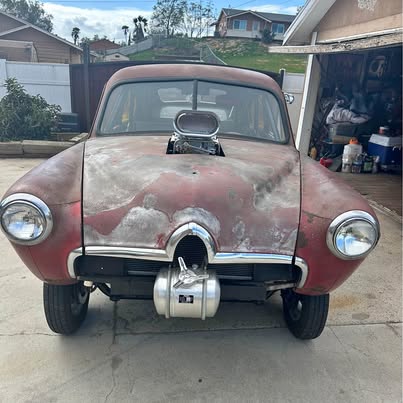 $25,000
Expand
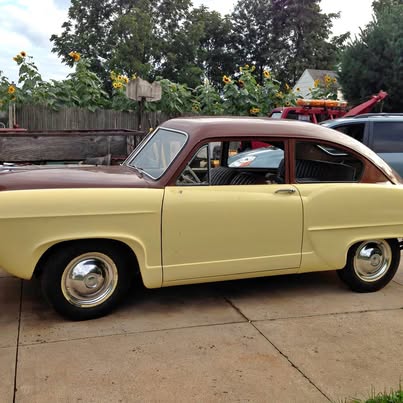 $10,000
Expand
What they sell for: Henry J Vagabond 2 door sale prices.