
Land Rover Range Rover buyer's guide
Land Rover Range Rover -- the model's own buyer's guide: variants, values and what to check.
Years listed: 1991-2004 · Series: Range Rover Classic
Overview and history
The Range Rover is the car that invented the luxury 4x4, and it did so almost by accident. When Land Rover's engineers began work in the mid-1960s on what they called the 100-inch Station Wagon, the brief was not luxury at all: it was a more comfortable, more roadable Land Rover for buyers who found the leaf-sprung utility vehicle too crude but still needed genuine cross-country ability. Rover's car division had the crucial ingredient already on the shelf — the light-alloy 3.5-litre V8 bought from Buick — and chief engineer Charles Spencer "Spen" King, working with Gordon Bashford, wrapped it in a chassis that broke with Land Rover tradition in almost every respect: long-travel coil springs instead of leaves, disc brakes on all four wheels, and permanent four-wheel drive instead of a part-time system you engaged with a lever and a prayer.
Prototypes ran under the name Velar, a Rover cover name borrowed from Italian, so the programme stayed invisible. When the production car was launched in June 1970 it was a two-door with a split tailgate, vinyl seats you could hose out, a dashboard of moulded plastic, and no carpets worth the name — yet it could cruise at 90 mph, tow 3.5 tons, and climb things that embarrassed dedicated off-roaders. The press understood immediately. So did the market: the Range Rover became a fashion object, a farm tool, a police car, a royal runabout and a Paris-Dakar winner (the first event, in 1979, and again in 1981) all at once, and Land Rover spent the next twenty-six years gently civilising it without ever redesigning it. That is the first thing to grasp as a buyer: the car the brief behind this guide calls the Range Rover Classic was never replaced during its life, only developed. A 1970 car and a 1996 car share a silhouette, a wheelbase concept and an engine family, but almost every component between them changed at least once.
The development arc runs in clear phases. The 1970s cars are two-doors, manual, carburettor-fed and spartan; power steering and an overdrive arrived as options, and trim crept upward through the decade. The four-door body arrived in 1981 — Swiss coachbuilder Monteverdi had been converting two-doors for years, proving the demand — and an automatic gearbox followed in 1982, first a Chrysler three-speed, then the far better ZF four-speed from 1985. Fuel injection replaced carburettors in the mid-1980s, which is also when the car finally went on official sale in North America: the US launch came in March 1987, badged simply Range Rover, with the upmarket County trim following. Diesel arrived for Europe in 1986 with an Italian VM turbo unit, replaced by Land Rover's own 200Tdi in 1990 and the refined 300Tdi in 1994. The last big steps were the long-wheelbase LWB of 1992, stretched eight inches for rear legroom, and the 1994 "soft dash" facelift, which brought a car-like dashboard and airbags for the final two years.
Production ended in February 1996, after roughly 317,600 cars, with the P38a second-generation car already on sale alongside it. The Classic's afterlife has been remarkable: the two-door became a design icon (an early car was exhibited at the Louvre as industrial art while still in production), values for early cars climbed first, and the late soft-dash and LWB cars followed as buyers discovered they are the most usable. What you are buying, in any year, is the same bargain: unmatched visibility and presence, a V8 soundtrack, real off-road geometry — and a vehicle built by 1970s British Leyland methods that will punish neglect harder than almost anything else in this guide series. Buy condition, not year. That rule recurs throughout what follows.
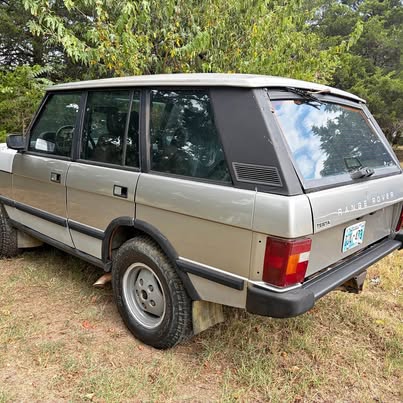
Look at this car before you read another word, because it teaches the Classic's proportions better than any description. The wheelbase is 100 inches on the standard car, the overhangs are short, the glasshouse is tall and nearly vertical, and the waistline — the famous "floating roof" line, with black pillars — sits low relative to the glass. On any car you inspect, sight down this flank: the aluminium door skins ripple easily and show every parking dent, but the line from front wing to rear quarter should be straight and unbroken. A visible sag or a door that sits proud at one corner is telling you about the steel structure underneath, which is where these cars live or die.
The models
The Classic range looks bewildering from the classifieds because Land Rover changed badges, trims and markets constantly while changing the car itself slowly. Cut through it with three axes: body (two-door or four-door, standard or long wheelbase), engine (3.5, 3.9 or 4.2 petrol; VM or Tdi diesel) and trim (base, Vogue, County in the US, and a long tail of special editions). Everything else is detail.
The two-door (1970–1994, though scarce after the mid-1980s outside a few markets) is the original: lighter, stiffer, with the big single doors and the cleanest lines. Early cars — the so-called Suffix A, B and C cars of 1970–73 — are the collectors' prize, with their thin bumpers, exposed hinges, two-spoke wheel and vertical-slat grille. The four-door (1981–1996) is the practical Classic and the one almost all buyers actually want; the structure gained a B-post and the rear doors that transformed family usability. The LWB (1992–1996, sold as County LWB in the US) stretches the wheelbase to 108 inches, all of it in the rear doors, which are visibly longer — compare photographs and you cannot unsee it. It also brought electronic air suspension as standard in most markets, which matters greatly to your running costs, as the problem-areas section explains.
Trim is where sellers inflate. Vogue, introduced in 1981, was the luxury badge in Britain and Europe: wood, leather or velour, air conditioning, electric windows, alloy wheels as the years passed. In North America the cars arrived highly specified from the start; County, from 1989, was the plusher US trim with leather and wood, and names like County SE and County LSE (the LSE being the LWB) followed. Great Divide, Hunter, Sherwood and a dozen dealer specials are trim-and-sticker exercises on standard mechanicals — buy them on condition, never on the badge premium. The one special edition with genuine substance is the CSK of 1991: a two-door named for Charles Spencer King, black with silver coachlines, a tuned 3.9, anti-roll bars and only 200 built, each with a numbered plaque. Verify the plaque and the paperwork before paying CSK money; ordinary two-doors have been dressed up before.
Diesel Classics were never officially sold in North America, so a diesel car in the US is a private import — check its papers and its title status with extra care, and expect the 25-year-rule paperwork to be part of the car's file. European buyers, by contrast, will find diesels common and petrol cars thirstier than their budgets expect.
| Model | Years | Engine | Output | Built | Character |
|---|---|---|---|---|---|
| Two-door 3.5 | 1970–1994 | 3.5 V8 carburettor | about 135 hp | not separately recorded | The original; purest, lightest, most collectible in early form |
| Four-door 3.5 | 1981–1989 | 3.5 V8 carb, later injection | 135–165 hp | not separately recorded | The 1980s family Classic; injection cars the sweet spot |
| Vogue / County 3.9 | 1989–1996 | 3.9 V8 injection | about 182 hp | not separately recorded | The mainstream late car; hot-wire injection, viscous transfer |
| County LWB / LSE 4.2 | 1992–1996 | 4.2 V8 injection | about 200 hp | not separately recorded | Limo rear legroom, air suspension, the luxury flagship |
| Turbo D / VM diesel | 1986–1989 | 2.4, then 2.5 VM turbo diesel | 106–119 hp | not separately recorded | European workhorse; adequate, agricultural, rare in the US |
| 200Tdi / 300Tdi | 1990–1996 | 2.5 Land Rover turbo diesel | about 111 hp | not separately recorded | The economical, durable choice; the overland favourite |
| CSK | 1991 only | 3.9 V8 injection, tuned | about 185 hp | 200 | Numbered two-door special; the blue-chip Classic |
Total production across all variants was roughly 317,600 cars between 1970 and 1996; Land Rover did not publish clean per-variant splits, and any seller quoting you an exact build figure for an ordinary variant is inventing it.
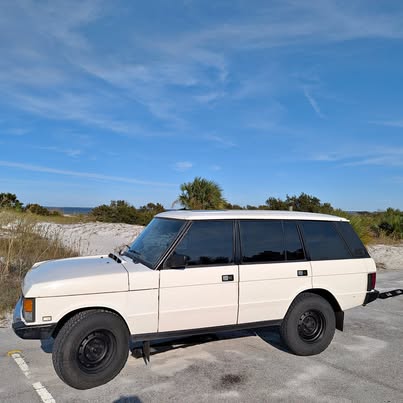
The LWB is the easiest Classic variant to identify and the easiest to misjudge. The extra eight inches went entirely into the rear door and rear legroom, so the rear door's trailing edge sits much closer to the rear wheel arch than on a standard car — use that gap, visible in this photograph, as your identity check, because badges swap in minutes. Inside, the LWB gives genuine limousine legroom, and most carry air suspension and the 4.2 engine. The trap is assuming it is simply a better Classic: it is heavier, the air system adds a whole failure catalogue, and the longer rear doors and their unique glass and seals are harder to source. Buy it for the space, with your eyes open.
Reading a car's identity deserves a paragraph of its own, because Classics are frequently misdescribed. The VIN plate sits on the bulkhead (and, on later cars, at the base of the windscreen); the chassis number is also stamped into the chassis itself, on the right-hand front outrigger area, and on an old car it may need wire-brushing to read — do it, and match it against the title. Engine numbers are stamped on a pad on the block beside the dipstick tube on the V8; a 3.9's number prefix differs from a 3.5's, and this is how you catch the common trap of a car advertised as a 3.9 that still carries its original 3.5, or a 3.5 wearing 3.9 badges after a cheap engine swap. Sellers also describe every late car as a Vogue or a County; trim is upholstery and wood, and it is worth almost nothing next to structure and mechanical health. Price the car in front of you, not the badge on its tailgate.
Engines and gearboxes
The Rover V8: 3.5, 3.9 and 4.2
Every petrol Classic carries a descendant of the all-aluminium V8 Rover bought from Buick in the 1960s — the ex-Buick 215 — and understanding this engine is understanding the car. It is a pushrod V8 with a cast-iron camshaft in the valley, hydraulic tappets, and heads and block in aluminium with pressed-in cast-iron liners. In Range Rover tune the 3,528 cc original ran a low 8.13:1 compression, twin Zenith-Stromberg 175 CD carburettors (SU HS6s appear on some markets and years), and produced about 135 hp with 205 lb ft of torque — modest figures chosen deliberately, because the engine was tuned for low-speed torque and for poor fuel in distant places. It is a sweet, lazy, unstressed unit that will run for 200,000 miles if the oil is changed and it is never overheated, and will punish one serious overheating episode for the rest of its life. Remember that sentence; half the problem-areas section hangs on it.
Carburettor cars (1970 to the mid-1980s, depending on market) are simple and fixable at the roadside, but by now the Strombergs' diaphragms, needles and throttle spindles are worn, and a pair properly rebuilt transforms a car that "they all run like that" into one that starts on the button. Electronic ignition replaced points early in production; the Lucas distributor and its amplifier module are the whole ignition system, and a spare amplifier in the glovebox is the veteran owner's trick.
Injection arrived in stages. The first injected cars (1985–86 in Europe, and the specification for the 1987 US launch) used Lucas 4CU "flapper" injection, so called because incoming air lifts a flap in the airflow meter. It works well when the flap's potentiometer tracks are unworn and the coolant-temperature sensor and extra-air valve are honest; it gives about 165 hp and noticeably sharper response than the carburettors. From 1989 the 3.9 (3,947 cc — the bore grew, the stroke stayed) brought Lucas 14CUX "hot-wire" injection, named for its heated-wire mass airflow sensor. The 14CUX is the best of the systems: more powerful (about 182 hp), self-tuning within limits, and fitted with a diagnostic capability a specialist can interrogate. Its known actors are the stepper motor that controls idle air, the throttle potentiometer, and the vehicle-speed sensor whose failure makes the idle hunt at junctions. The 4.2 (4,278 cc, a longer stroke, fitted to the LWB from 1992) makes about 200 hp and the fattest torque curve of the family, and it is the engine that finally gives the heavy car effortless pace — at the cost of the greatest thirst and, in neglected examples, the greatest exposure to the liner and head-gasket troubles described later.
Two warnings apply across all three capacities. First, the V8's cooling system has no margin: the radiator, viscous fan coupling, thermostat and every hose must be right, because the aluminium block and heads distort and the liners can move when the temperature needle spends time in the red. Second, these engines wear their camshafts and tappets steadily from about 100,000 miles; a top-end rattle that fades as oil pressure builds, and a car that feels flat above 3,500 rpm, are usually telling you the cam is tired — a replacement cam-and-followers job is a known, budgetable event, not a catastrophe.
The diesels: VM, 200Tdi and 300Tdi
Land Rover resisted a diesel Range Rover for sixteen years, then bought one in. The VM Motori HR492 2.4-litre turbo diesel of 1986 (about 106 hp) was a modular Italian design with individual cylinder heads — one per cylinder — which made head work cheap in theory and head-gasket sealing temperamental in practice. The 2.5 HR588 version from 1989 (about 119 hp) was better, and a good VM car is a pleasant, torquey thing, but the design's party trick is overheating sensitivity equal to the V8's, and parts support is now specialist-only. Drive one if you find one; buy a Tdi instead.
The 200Tdi of 1990 was Land Rover's own direct-injection 2.5 (2,495 cc, about 111 hp, 195 lb ft), developed from the old 2.5 turbodiesel with an intercooler and a Bosch VE rotary injection pump. It transformed the diesel Classic: 30 mpg is genuinely achievable, the timing belt is its one scheduled vulnerability (change it on purchase unless the invoice is in the file — a snapped belt bends pushrods and breaks rockers, mercifully cheaper than a petrol engine's disaster but still a four-figure day), and the engine itself is famously long-lived. The 300Tdi of 1994 is a thorough refinement of the same architecture — same capacity and output, quieter, cleaner, with a serpentine belt drive and detail changes throughout — and it powered the last two years of production, including the soft-dash cars. Neither Tdi was sold new in North America. Both are simple enough for a competent home mechanic, and both make the Classic a genuinely economical daily classic — at the price of refinement: a Tdi at idle shakes the mirrors, and no diesel Classic will ever sound like the V8.
Gearboxes and transfer boxes
The original gearbox is the LT95: a four-speed manual with the transfer box built into the same casing, a vacuum-operated centre differential lock, and ratios chosen for work. It is strong, notchy and agricultural, and its integrated design means a transfer problem is a gearbox-out problem. A Fairey overdrive was a popular period option. From 1983 the manual became the LT77 five-speed with a separate LT230 transfer box — a major serviceability improvement, because the LT230 is one of the best transfer boxes ever fitted to a production 4x4: two-speed, lockable centre differential, and nearly indestructible if its oil is changed. The LT77 itself is the weak link in the pair: its mainshaft splines wear where they drive the transfer input gear, a wear pattern that announces itself as a clonk on take-up of drive and ends, if ignored, with total loss of drive. Later LT77S and the R380 five-speed (fitted from 1994, mainly with the 300Tdi and the last V8s) improved matters; the R380 is the manual box to have.
Automatics outsell manuals in the late cars and dominate North American supply entirely. The first, from 1982, was Chrysler's A727 TorqueFlite three-speed — tough, simple, and geared so the car feels busy at motorway speed. From 1985 the ZF 4HP22 four-speed took over and stayed to the end of production, with the beefier 4HP24 behind some 4.2s. The ZF is smooth, well-matched to the V8's torque, and durable if its fluid is changed; neglected fluid kills it expensively, so the service record matters more than the mileage. All automatics drive through the LT230 until 1988. From 1989, most models swapped the LT230 for a Borg Warner chain-driven transfer box with a viscous coupling that locks the centre differential automatically as slip develops. It is seamless and excellent on wet roads — and the viscous unit seizes with age, usually locked, which winds up the transmission, scrubs tyres and strains CV joints until something complains. The test is in the inspection section. A seized viscous coupling is a known-cost fix; a car driven for years with one is a driveline full of stored damage.
Underneath everything, the layout never changed: beam axles front and rear on coil springs, a Boge self-levelling unit in the rear suspension of standard-wheelbase cars (a gas strut that pumps itself up with suspension movement and keeps the laden car level), disc brakes all round, and from 1993 the option — standard on LWB — of electronic air suspension, EAS, with air springs at each corner, a compressor under the floor, and selectable heights including a motorway-lowering mode. Air cars ride beautifully and kneel for loading; they also add the single largest system-specific repair exposure on any Classic, priced in the next section.
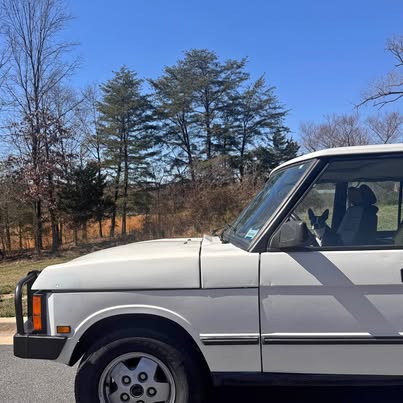
Learn this engine bay, because you will judge every petrol car by it. The big aluminium plenum on top is the 14CUX hot-wire system's intake; on the earlier flapper cars a bulky airflow meter sits in the intake trunking instead, and that difference alone dates an engine. What you are looking for here is not cleanliness — a pressure-washed bay on an old V8 usually means someone is hiding leaks — but honesty: original hose clips rather than a rainbow of replacements, an unmolested wiring loom, a radiator whose core is bright rather than furred and green-stained, and coolant that is coloured coolant rather than rusty water. Check the coolant level in the expansion tank and squeeze the top hose: on a car that has overheated, the hoses are often either brand new (someone has been chasing the problem) or crunchy with age (nobody has). Either story needs the seller to explain it.
One more identity trap belongs in this section because it is mechanical, not cosmetic: engine swaps are common and not always declared. The 3.5, 3.9 and 4.2 are externally near-identical, a Discovery or Defender engine drops straight in, and the later serpentine-front-end engines from the P38 era look different but also fit with work. A swap is not automatically a bad thing — a fresh, documented 4.6 short engine is an upgrade many owners choose deliberately — but an undocumented swap destroys the car's originality value and can import unknown wear. The engine number by the dipstick, the front-end drive layout (vee-belt cars are pre-1994 in original form; serpentine with a single belt is 1994-on or a later engine), and the injection hardware together tell you what is actually under the bonnet. Establish it before you value the car, because the seller's description of the engine is the single least reliable sentence in any Classic advertisement.
Problem areas
Rust: the steel skeleton under the aluminium skin
The Classic's body is the great trap for buyers raised on ordinary steel cars. The outer panels you can see — wings, door skins, bonnet, lower tailgate — are aluminium alloy (Birmabright), and they do not rust in the familiar way. Underneath them, the body is a welded steel skeleton and the floor structure is steel, and that steel rusts exactly as enthusiastically as any 1970s British car, in places the shiny aluminium conceals until the damage is structural. You are not inspecting paintwork on a Classic. You are inspecting a hidden steel frame wearing an aluminium overcoat.
Start at the back. The rear crossmember — the steel member that closes the chassis and carries the rear body mounts — rots from inside, as do the chassis outriggers and the rear spring seats. Get under the car with a torch and a screwdriver and prod: surface scale is normal, flakes and holes are a welding bill. The chassis itself is a strong box-section ladder and usually survives better than a Land Rover's, but the rear third, which lives in the spray of the rear wheels, is the exception. Budget $800–2,000 for crossmember and outrigger welding done properly; a car needing chassis work at both ends is a restoration project whatever the asking price implies.
The body skeleton's signature failures are the sills, the rear wheelarch and door-shut area, the floor edges, and the inner front wings. The sills are structural box sections disguised by aluminium tread plates; lift the plates if the seller allows, and in any case do the sill-jack test described in the inspection section — a sill that crunches or lets the jack sink is a $1,000–2,500-per-side repair to do right. The rear arches rot where the door shut meets the arch, hidden behind the door seal; open both rear doors and look at the arch lip and the C-post base. Floors go at their edges and around the seat and seatbelt mounts — lift the carpets, which on a Classic takes two minutes and tells the truth. The inner wings and the headlamp boxes rot at the front, and the bulkhead's feet and the A-post bases follow. None of this is exotic; all of it is welding, and welding is the currency of Classic ownership.
Two aluminium-specific problems complete the picture. The upper tailgate — the framed glass section you lift at every supermarket — is a steel frame under trim, and it rusts from the bottom corners until the frame swells, cracks the paint and finally crumbles; a good used upper tailgate is genuinely scarce, and a new frame is a several-hundred-dollar part before fitting and paint, so examine it first, not last. And where aluminium panels meet steel structure, galvanic corrosion sets in: paint bubbles along the bottom edges of doors and at panel fixings, with white powdery corrosion underneath. It is cosmetic long before it is structural, but stripping and repainting aluminium properly is specialist work, and a car bubbling at every seam will eat a paint budget whole.
The V8's failure modes: heat, liners and top ends
The petrol V8 fails in a small number of well-understood ways, and nearly all of them trace back to heat. The classic sequence: the radiator silts up or the viscous fan coupling goes lazy, the engine runs hot in traffic, the head gaskets begin to weep, and the owner tops up coolant for a season. Aluminium heads on an aluminium block with iron liners expand together, but the pressed-in liners can sink or shift microscopically in an overheated block — the "slipped liner" — after which combustion gas pressurises the cooling system, coolant disappears without a visible leak, and the engine ticks or knocks lightly at idle as the liner moves. The 3.9 and 4.2 blocks, with their larger bores and thinner material between liner and water jacket, are more prone than the 3.5, and the later blocks also crack behind the liners in the worst cases. The diagnostic chain is cheap and definitive: a cold-start check for a pressurised top hose within a minute of starting (gas, not heat, is pressurising it), a "sniff" test of the expansion tank for combustion gas, and a coolant history from the seller. A block with a slipped liner is an engine-out, four-figure-to-five-figure decision — a top-hat liner rebuild is the permanent fix and costs accordingly, typically $4,000–7,000 fitted by a specialist. Walk away from a pressurising car unless the price assumes a dead engine.
Below that headline act, the V8's ordinary wear is honest and budgetable. Camshaft and tappet wear from 100,000 miles flattens performance and adds top-end clatter; a cam kit with followers, timing chain and gaskets runs $600–1,200 in parts, plus a day's labour. The valley gasket (the composite gasket sealing the inlet manifold to the valley) leaks oil and coolant at the ends and mimics worse faults. Rocker shafts wear and tick. Oil leaks from the front and rear crank seals and the rocker covers are universal — judge them by rate, not presence. The Lucas ignition amplifier fails with heat and age and stops the car dead without warning; it is a $50–100 part and the failure is so characteristic — engine cuts when hot, restarts when cool — that you should test for it on the test drive rather than discover it on the motorway. On the injection side, the flapper system's airflow-meter tracks wear into hesitation and rich running, while the 14CUX's stepper motor gums up into a wandering idle and its throttle potentiometer wears into a flat spot at cruise; both are hundred-dollar parts, and both are routinely misdiagnosed as "needs an ECU." The ECU is almost never the problem. On any injected car, a specialist with the right diagnostic lead settles arguments in minutes — pay for that hour before purchase, not after.
Suspension, steering and brakes: coils, air and swivels
The coil-sprung chassis is durable, but its wearing parts are specific. Front swivel balls — the chromed spheres the front hubs pivot on — pit and rust when their seals fail, then leak their oil or grease and wear the swivel bearings into a steering shimmy and vague straight-line feel; rechromed or new swivels with seals are a $500–1,000 job per side at a specialist. Wheel bearings, radius-arm and trailing-arm bushes, and the rear A-frame ball joint all wear on schedule; a Classic that wanders and clunks is usually a bush bill, not a bent chassis, and a full re-bush transforms the car for $800–1,500 fitted. The Boge self-levelling strut on standard cars eventually fails and lets the rear sag under load; replacements are scarce and expensive, and many cars have been converted to heavier rear springs — a legitimate fix that slightly stiffens the unladen ride, so ask which you are looking at.
Air suspension (EAS) cars need their own interrogation. The system is sound in design and was reliable when new; at twenty-five-plus years old, the rubber air springs perish and crack at their folds, the compressor wears its piston seal until it runs constantly and still cannot keep up, the valve block's O-rings leak internally, and height sensors seize or lie. The signature is a car that sinks overnight — one corner first, usually — and takes minutes to rise, with the compressor audibly labouring. A full refresh (four air springs, compressor rebuild, valve-block reseal) is $1,500–3,000 in parts and labour and restores one of the car's best features; a car "converted to coils" has had the problem deleted instead, which is acceptable if the work included the warning-light fix and decent springs, and a negotiating point either way. Never buy an EAS car whose seller says it "just needs a bag" — that sentence has consumed more money than any other in the Classic vocabulary.
Steering is by power-assisted box, not rack, and the box leaks from its seals and wears into free play at the straight-ahead; adjustment takes out some of it, a reconditioned box ($600–1,000 fitted) is the cure for the rest. The steering damper and the drag-link and track-rod ends are cheap and commonly tired. Brakes are discs all round and strong when maintained; the enemy is seized caliper pistons from standing, and from 1990 the Wabco ABS adds an accumulator that loses its nitrogen charge with age — the test is simple: with the engine off, pump the pedal and count the applications before it goes hard; a healthy accumulator gives you twenty or more, a dying one three or four, and the part is a few hundred dollars. Rear-wheel traction control on the last cars works through that same ABS and is only as good as it.
Driveline wear, electrics and the interior
The drivetrain's wear items were flagged in the engines section and are priced here: LT77 mainshaft spline wear (clonk on drive take-up, $1,500–2,500 to rebuild properly before it strands you), a seized viscous coupling on 1989-on cars (tyres scrubbing in tight turns, a transmission that feels wound up; the coupling itself is a few hundred dollars, the damage from ignoring it is not), and automatic gearboxes whose fluid history is unknown (a ZF rebuild is $2,500–4,000 — the single best reason to pay for a pre-purchase inspection with a fluid check). Differentials are strong; a whining diff at cruise is usually a pinion bearing and a $600–1,000 rebuild. CV joints click on full lock when worn, and propshaft universal joints are greaseable service items whose neglect writes cheques.
Electrics are Lucas-era British: individually simple, collectively exasperating. The pattern faults are earths, not components — corroded ground points make gauges lie, lamps glow dimly and windows slow to a crawl, and a day spent cleaning earths cures "electrical problems" that have defeated previous owners. Electric window regulators strip their teeth, seat switches (especially the Mercedes-pattern switches on late cars) crumble, and the memory-seat ECU under the driver's seat of top-spec late cars leaks its backup battery onto its own circuit board, killing seat and mirror memory and sometimes the seat entirely — check that both front seats adjust in every direction, because an ECU is scarce and a repair is specialist work. The heater and air conditioning deserve a test on every car: heater blower motors fail and are a dashboard-out job on later cars (a full day of labour for a cheap motor — the classic Classic sting), and air-con condensers and compressors on US cars will mostly need recommissioning money.
The interior itself wears better than its reputation: leather cracks on the driver's bolster, headlinings sag universally (a retrim is $400–800 and every specialist has done a hundred), wood veneer lacquer lifts on the dash and door cappings, and the soft-dash cars' dashboards crack in sunbelt heat. Carpets hide the floor, so you lift them for the rust check anyway; while they are up, feel for damp — sunroof drains and windscreen seals leak into the footwells and feed the floor rot from inside.
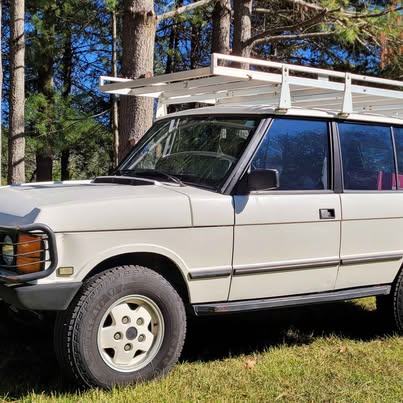
The last Classics, like this 1995 LWB, are the most civilised and the most complex: soft dashboard with airbags, air suspension, memory seats, traction control — every system this section has priced is present on one car. When you look at a final-year car, budget your inspection time accordingly: an hour is not enough. Work the checklist in the next section in order, test every electrical load you can find, and photograph the rear arches and tailgate frame for later study. The reward for the diligence is real — a sorted soft-dash LWB is the finest-riding Classic of all — but "sorted" is a claim the car must prove, system by system, not a word in an advertisement.
How to inspect one
Inspect a Classic in this order: cold engine, structure first, systems second, cosmetics last. Insist the engine is stone cold when you arrive — a seller who has warmed the car up is hiding starting, smoke or idle faults, and the single most valuable test on a V8 (the cold cooling-system check) is impossible on a warm engine.
- Start with the paperwork and the numbers. Match the VIN plate on the bulkhead to the title, then find the chassis stamp on the front outrigger and match that too. Read the V8's engine number on the pad by the dipstick and confirm the capacity matches the badge — the 3.5-sold-as-3.9 trap from the models section is settled here, in two minutes, for free.
- Before starting, open the bonnet and squeeze the top radiator hose. It should be soft. Now start the engine and squeeze again after thirty seconds: if the hose is already hard, combustion gas is pressurising the system — the slipped-liner and head-gasket test from the problem-areas section, done with one hand. Walk away or price the car as needing an engine.
- Watch the cold start itself. A V8 should fire cleanly, idle slightly fast, then settle. Blue smoke that clears in seconds is valve-stem seals (budgetable); smoke that persists is rings or turbo seals on a diesel. On a Tdi, listen for the timing belt's history instead — no invoice, no deal until the price reflects a belt change.
- Let it idle and walk the body. Sight down both flanks for the straight waistline, check panel gaps, then open every door and study the rear arches and C-post bases with the doors open, where the rust hides behind the seals.
- Do the sill test. Jack each side on the sill jacking point, as you would to change a wheel — or ask the seller to. A sound sill takes the car's weight silently. Crunching, cracking or the jack head sinking means the structural sill is rotten, and you now know the car needs welding before it needs anything else.
- Get underneath with a torch. Rear crossmember, outriggers, spring seats, floor edges, chassis rear third: prod with a screwdriver. Scale is fine, holes are money. Note oil leaks by location — front and rear of the gearbox, swivel housings, diff pinions — and price them as a list, not as a surprise.
- Check the upper tailgate frame corner by corner, the lower tailgate's edge, and the aluminium panels' lower seams for the white, bubbling galvanic corrosion. Price the tailgate honestly; good ones are scarce.
- Drive it, at least twenty minutes, including a motorway stretch and a car park. Note the temperature gauge's behaviour in traffic (it should rise to normal and stop), any top-end rattle as the engine warms, and whether the car feels flat above 3,500 rpm — the tired-cam signature.
- On the drive, test the transfer system. On an LT230 car, select low range and engage the diff lock on a loose surface; both should engage cleanly. On a viscous-coupling car, finish with tight full-lock circles in the car park: hopping, scrubbing or tyre chirp on tarmac means the viscous unit has seized, exactly as the problem section describes.
- Test the suspension you are buying. Coil cars: bounce each corner and look for a level stance and a working Boge leveller under load. Air cars: leave the car at standard height during the drive, then select access height and off-road height and time the changes; a healthy system moves promptly and evenly, and the compressor should not run continuously.
- Work every electrical load: windows, seats in all directions (memory-seat ECU check), mirrors, sunroof, heater blower on all speeds, air conditioning, heated screens, all lamps. Then switch off and pump the brake pedal to count the ABS accumulator's reserve — twenty-plus pumps is healthy, under five is a bill.
- Finish back at the engine, hot. Idle quality now (a hunting 14CUX idle points to the stepper motor or speed sensor, both cheap), oil filler cap off for mayonnaise emulsion (head-gasket evidence) and excessive chuffing (blow-by), and a last squeeze of the top hose. Then read the service history against everything you found: the best Classics have invoices that match the car.
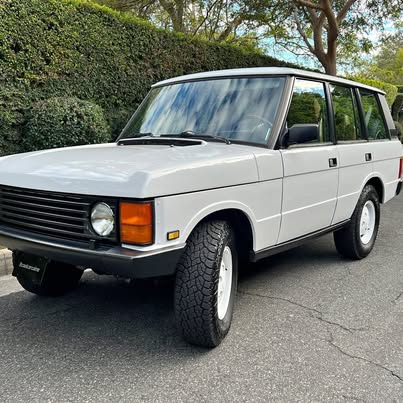
Use a late-1980s car like this one to practise your variant recognition before you spend money. By 1989 the four-door wears the horizontal-slat grille and exposed door hinges have long gone, but the car may carry either the flapper injection system or, in the last of the 3.5s and the first 3.9s, the hot-wire setup — the engine-bay check in step 12 of the inspection is where you confirm which, because the two systems have different fault lists and different parts. Cars of this era are the value heartland of the Classic market: new enough to have the ZF automatic and proper trim, old enough to be priced by condition rather than fashion. That makes your inspection discipline worth more, not less — the spread between a sorted 1989 car and a tired one is the whole price of the car.
Values
The build's market block beneath this guide carries the live numbers — what is listed now and what recorded sales have achieved — and this section's job is to teach you how to read them, because the Classic market punishes naive comparisons more than most. The first lesson is that "Range Rover Classic" is not one market but at least four, stacked on top of each other. Early two-doors sell as design objects and collector cars, priced on originality and provenance. Mainstream four-door V8s sell as usable classics, priced overwhelmingly on structural condition and service history. LWB and soft-dash cars sell as luxury classics, priced on whether their complex systems all work. Diesels sell to a smaller, knowledgeable pool that pays for economy and durability and forgives cosmetic wear. Comparing an asking price from one of those pools against a sale from another tells you nothing.
Within any pool, the condition spread is enormous — wider than for almost any contemporary 4x4 — because the repair costs in the problem-areas section are so large relative to the car's price. A structurally sound, mechanically sorted four-door is not worth twenty percent more than a rotten one; it is worth several times more, because the rotten car's welding, engine and suspension bills can exceed the purchase price of the good car before it turns a wheel. This is why the market's centre of gravity sits where it does: the middle of the price distribution is crowded with cars that look shiny in photographs and are priced as if their hidden steel were sound, and the recorded sales show the truth — achieved prices for honestly described, inspected cars hold up, while the shiny question marks cycle through auctions and classifieds repeatedly, each time a little cheaper. Repeated listings of the same car are data: a Classic that has "sold" three times in a year has failed three inspections.
Premiums attach to specific, verifiable things: the CSK's numbered plaque and paperwork; genuine low mileage with invoices that corroborate it; the 4.2 LWB in full working order; two-doors with their original engine and trim; and any car with a documented top-hat liner rebuild or a recent specialist engine build, because that paperwork retires the model's biggest financial risk. Discounts attach just as specifically: a coil-converted air car without documentation, a diesel conversion (petrol car, diesel engine, murky title), US cars with European-market parts swapped in, and anything with a salvage or reconstructed title, which follows the car forever. The project-versus-driver gap is the widest in the classic 4x4 world: a non-running project Classic is worth its parts and its structure, and no more, because every system on the car will need money in sequence — engine, then welding, then suspension, then electrics — and the sequence always costs more than the finished car costs to buy outright.
Negotiation reality: private sellers of Classics are usually enthusiasts who have spent real money and know the car's faults better than the advertisement admits; the productive question is not "what will you take" but "what does it need next," asked after your inspection, with your list in hand. Dealer cars carry a premium that is worth paying only when it buys a warranty with actual coverage of the cooling system and transfer box. And whatever you buy, hold back a first-year reserve — the honest rule of the marque is that any newly bought Classic reveals one more system in its first season, and the owners who enjoy these cars are the ones who budgeted for that discovery in advance.
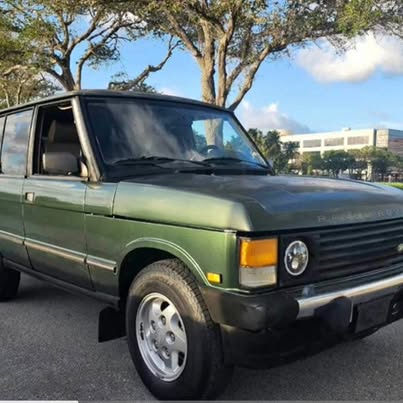
Final-year cars like this green 1995 command their premium for usability — soft dash, airbags, the best trim — and the photograph shows what to verify before paying it: panel fit and an unbroken waistline on a car whose value now depends on originality. On any 1995, confirm the soft-dash car still has its original dashboard un-cracked (sunbelt cars suffer), its air suspension working rather than deleted, and its engine the correct 3.9 or 4.2 for the badge. A final-year car with its systems intact is the easiest Classic to sell on; the same car with three systems bypassed is a parts-priced car wearing a premium badge, and the gap between those two outcomes is exactly what your inspection is for.
Parts and ownership
The Classic's parts situation is better than its age suggests, with one sharp edge. Mechanically, the car shares its engine with a generation of Rovers, Morgans, TVRs and kit cars, its transfer box with Defenders and Discoverys, and its axles and brakes with the wider Land Rover family — so service parts, suspension components, brake hardware and engine internals are available from multiple specialists on both sides of the Atlantic, usually off the shelf and usually at prices that undercut modern-car equivalents. Filters, belts, hoses, water pumps, ignition parts and ZF service kits are commodity items. A well-stocked independent specialist network exists in every market where the cars sold in numbers, and their accumulated knowledge — which fault means which fifty-dollar part — is the real infrastructure of ownership. Join the owners' clubs and forums early; the diagnostic folklore for the 14CUX system alone will repay the membership in your first year.
The sharp edge is body and trim. Structural repair panels — sills, arches, floor sections, crossmembers — are reproduced and available, because the rust is universal enough to support a market. But upper tailgate frames, LWB-specific door glass and seals, soft-dash dashboard mouldings, memory-seat ECUs, Boge levelling units and the nicer wood and leather trim pieces are scarce, expensive or both, and some are effectively unobtainium new, sourced only from breaker cars. This shapes buying strategy directly: a mechanically tired car with a perfect body and interior is a better purchase than the reverse, because engines can be rebuilt from catalogues and interiors cannot.
Running costs are dominated by fuel and by the discipline of small jobs done on time. A petrol Classic returns fuel economy in the low-to-mid teens in US driving, single figures around town if the tune is off; a Tdi doubles that. Servicing is old-fashioned: engine oil and filter every 6,000 miles or annually, gearbox and transfer oils on schedule (the LT230's oil is the cheapest insurance on the car), swivel housings and propshaft joints greased and checked, coolant replaced every two years with the correct specification, and brake fluid likewise. Tyres matter more than owners expect: the viscous coupling demands matched tyres of equal wear, rotated regularly, because mismatched rolling radii wind the coupling up exactly as a seizure does. Insurance on agreed-value classic policies is reasonable for garaged cars; security is worth attention, as Classics are stolen for parts and for export in some markets — a visible immobiliser and a tracker are money well spent on a good car. Finally, store it dry if you possibly can: a Classic that winters in a damp barn is rusting in the sills while it sleeps, and the single cheapest ownership decision is the garage.
Which one to buy
- The all-rounder: a 1993–95 County or Vogue 3.9, standard wheelbase. Hot-wire injection, the ZF automatic, ABS, the best trim, and — on coil-sprung cars — the simplest suspension to keep. This is the Classic to buy if you want one car to use.
- The value buy: a 1987–89 injected 3.5 four-door. The US-launch-era cars and their European equivalents carry the least fashion premium, share most of the late car's virtues, and reward a condition-led search.
- The collector buy: an early two-door, Suffix A–C, with its original engine. Buy originality and paperwork above cosmetic shine; these are the blue-chip Classics and the market knows it.
- The luxury buy: a 1994–95 County LWB with working air suspension. The finest-riding, roomiest Classic — bought only after the EAS, seat ECU and cooling system have each passed their tests in the inspection section.
- The economist buy: a 300Tdi, manual or automatic. Double the fuel economy, the toughest engine in the range, and honest working-class manners — a private import in the US, so the title paperwork is part of the deal.
- The brave buy: a CSK or a project car. The CSK only with its plaque and provenance verified; a project only if the structure is sound and your price assumes an engine — projects with rotten sills are not brave, just expensive.
The overriding rule: buy the structure and the cooling system, and let everything else follow — a Classic with a sound steel skeleton and an honest engine is a car you can improve forever, while a shiny car with rotten sills or a pressurising V8 is a liability at any price.
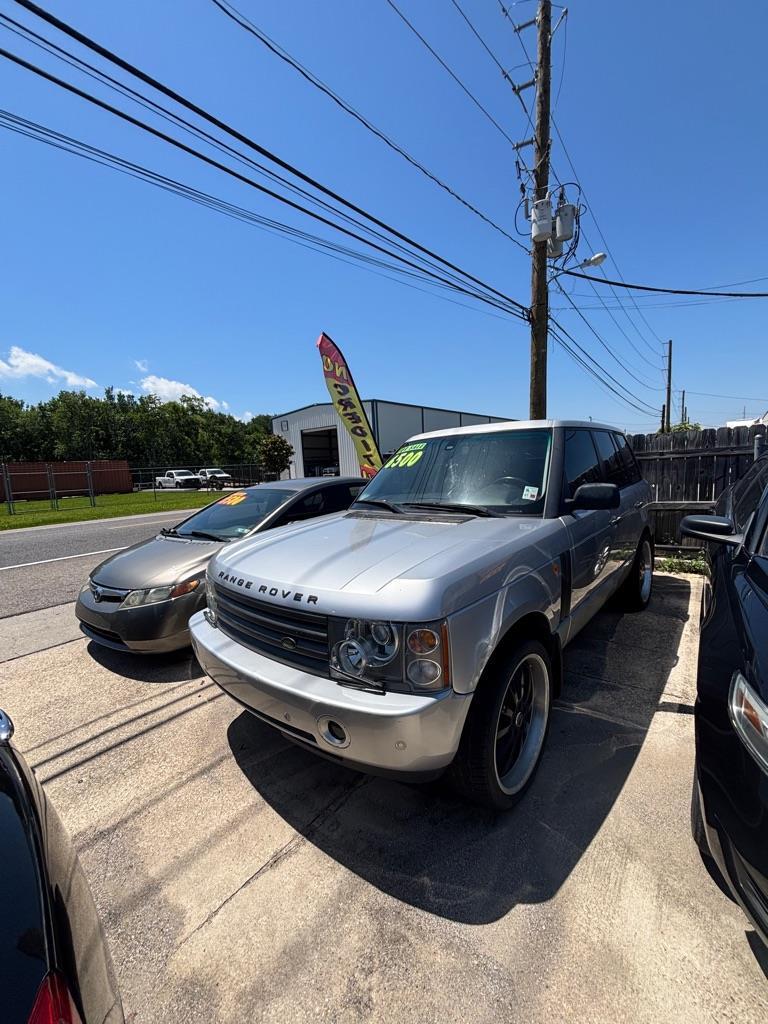
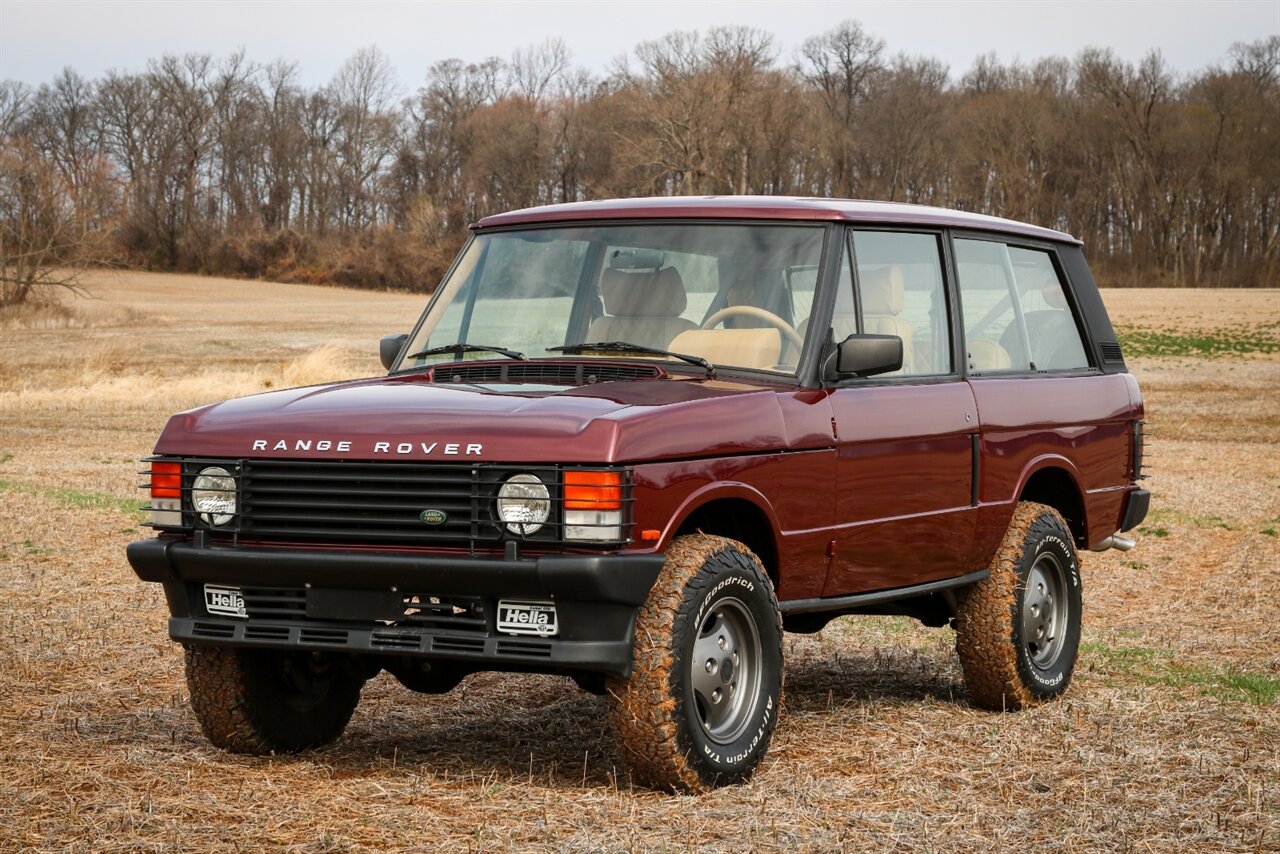
See the 3 Range Rover cars currently listed.
For sale now
Expand
Expand
What they sell for: Range Rover sale prices.