
Mazda MPV buyer's guide
Mazda MPV -- the model's own buyer's guide: variants, values and what to check.
Years listed: 1998-1998 · Series: MPV
# Mazda MPV — Buying Guide
Overview and history
The Mazda MPV is two quite different vehicles wearing one badge, and the first job in buying one is knowing which of the two you are standing in front of. The original MPV, sold in North America from the 1989 to the 1998 model years, is a rear-wheel-drive van built on car hardware related to the Mazda 929 luxury sedan. The second MPV, sold from 2000 to 2006, is a front-wheel-drive unibody minivan in the modern mould, smaller than the Honda Odyssey and Toyota Sienna it competed against, and deliberately more car-like to drive than either. They share a name, a three-row brief and almost nothing else — not an engine, not a gearbox, not a driven axle. Parts, problems and prices do not cross over, so everything in this guide is split by generation, and you should split your search the same way.
The first-generation car arrived when the minivan market was still young and still arguing about what a minivan should be. Chrysler's front-wheel-drive boxes had defined the segment, but Mazda went its own way: a front engine driving the rear wheels, a proper bonnet you could see over, and — most unusually — a conventionally hinged rear side door on the kerb side instead of a sliding door. That made it feel like a tall estate car rather than a van, which was exactly the point. It also made it a genuinely different ownership proposition. With the optional V6 and available four-wheel drive, the early MPV was closer in spirit to a rugged family wagon than to a school-run shuttle, and Mazda leaned into that later with All-Sport trim that dressed it as a proto-SUV. If you want one today, you are buying it as an interesting survivor, not as an appliance: numbers were never huge, attrition has been heavy, and a good one is now a find.
The second-generation car, launched for 2000, conceded every argument the market had settled. Front-wheel drive freed a flat floor. Sliding doors arrived on both sides, with power operation on upper trims. The third-row seat folds down into a well in the floor — Mazda's answer to Honda's Magic Seat — so the van converts from seven seats to a flat load deck without you having to carry a heavy bench seat into the garage. The second-row captain's chairs come out, and one can slide sideways to close the gap between them or open an aisle to the back. What Mazda kept was the size discipline: the LW-generation MPV is noticeably shorter and narrower than an Odyssey or Sienna, which is precisely why some buyers still seek it out. It fits a normal garage, parks like a large car, and drives with a lightness the bigger vans never had.
Both generations were always niche sellers next to the Chrysler, Honda and Toyota mainstream, and that shapes your search today. The pool of cars on this site is small and spans both generations — a 1993 first-generation car at one end, 2003 and 2005 second-generation cars at the other — and all four are automatics, which reflects the market: the manual gearbox on the early car is a rarity you will almost never be offered. You are not choosing from dozens of near-identical examples. You are waiting for the right survivor, checking it hard, and moving quickly when it appears.

Why buy one at all? Because the MPV, in either form, gives you seven-seat practicality without the bulk and complexity of the vans that replaced this class, at the bottom of the market where condition varies enormously and knowledge is worth more than money. The second-generation car in particular is one of the last simple minivans: a naturally aspirated V6, a conventional automatic, no hybrid system, no turbocharger, no direct injection. Everything on it can be understood, tested at the kerbside, and fixed by a competent independent shop. That is the buyer this guide is written for.
The models
Start with the split that decides everything else. The first-generation MPV — the LV chassis, 1989 to 1998 — is a rear-wheel-drive vehicle with a longitudinal engine, a separate identity from the car that replaced it. The second-generation MPV — the LW chassis, 2000 to 2006 — is front-wheel drive with a transverse V6. There is no 1999 MPV in North America and no 1999-model overlap to confuse you: if the seller's car is a 1999, it is either a misdated 1998, a misdated 2000, or not a North American MPV at all. Check the VIN plate in the windscreen base and the build sticker on the driver's door jamb before you believe any year a listing gives you — the door sticker carries the build month and year, and on a model with a gap year in the middle of its life, that sticker settles arguments.
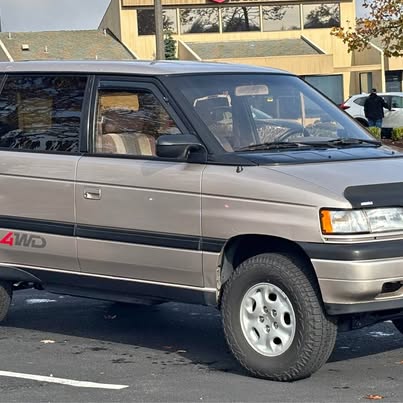
Within the first generation, the range is simple. The base car carries the 2.6-litre G6 four-cylinder; the upgrade, and the one most buyers wanted then and now, is the 3.0-litre JE V6. Trim designations run through DX and LX, with leather-trimmed and better-equipped variants at the top of the range, and four-wheel drive was offered as an option with both a push-button system and, on later cars, a full-time arrangement with a lockable centre differential — read the dashboard switches and the transfer hardware underneath rather than trusting a badge, because sellers routinely describe any tall MPV as all-wheel drive. A mid-life facelift for 1996 softened the styling, revised the interior and added safety equipment; post-facelift cars are the easier first-generation ownership proposition simply because they are younger and better protected. Late in the run, Mazda sold the All-Sport package, which added body cladding, alloy wheels and a more outdoorsy specification — mechanically it is the same van, so buy an All-Sport on condition, not on the story.
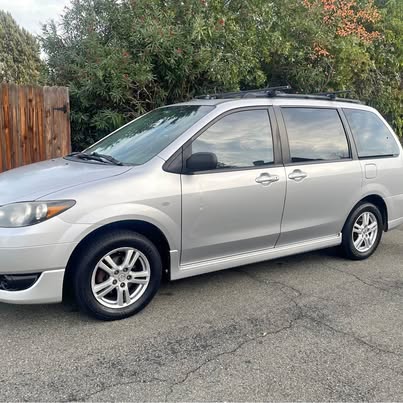
The second generation reorganises the range around trim and one important engine change. At launch, for 2000 and 2001, every North American MPV carries the 2.5-litre V6 and comes as the DX, the LX or the leather-trimmed ES. For 2002 the 3.0-litre V6 replaces the 2.5 across the range, the automatic gains a fifth ratio, and the car takes a step forward in performance that you can feel in the first thirty seconds of a test drive — the 2002-onwards car is the one most guides, and this one, steer you toward. A value-priced LX-SV joined the range in the middle years, essentially an LX with popular equipment bundled. For 2004 the LW received its facelift: revised front and rear styling, new wheel designs and interior tweaks, running through to the final 2006 cars. Power sliding doors are an ES feature and an option further down the range in later years; check for them by the switches on the dashboard and the key fob, and test them repeatedly, because they are a known cost centre covered in the problem areas below.
Seating is the second generation's party piece and you should physically work it during any viewing. The third row folds backwards into a deep well in the load floor — pull the strap, feel whether the mechanism moves freely or fights you, and check the well itself for the water damage described later in this guide. With the seat up, the well is your hidden storage; with it down, the floor is flat. The second-row chairs lift out entirely once you release their floor catches, and the right-hand chair can also slide sideways. A car whose seats jam, whose catches are bent, or whose third row will not fold has usually been used hard as a load carrier — which is honest work, but it tells you how the rest of the van has been treated.
| Model | Years | Engine | Output | Built | Character |
|---|---|---|---|---|---|
| MPV (LV) 2.6 | 1989–1998 | 2.6-litre G6 inline-four | ~121 hp | Not reliably published | The simple one: adequate, unhurried, the manual-gearbox rarity |
| MPV (LV) 3.0 V6 | 1989–1998 | 3.0-litre JE V6 | ~150 hp | Not reliably published | The first-gen to have: smooth, torquey, 4WD available |
| MPV (LW) DX/LX/ES 2.5 | 2000–2001 | 2.5-litre Duratec V6 | ~170 hp | Not reliably published | Launch car: willing but works hard; four-speed auto |
| MPV (LW) DX/LX/ES 3.0 | 2002–2006 | 3.0-litre Duratec V6 | ~200 hp | Not reliably published | The sweet spot: five-speed auto, real pace, facelift from 2004 |
A note on that "built" column, because it matters for how you read any MPV advert: Mazda never made the MPV in Chrysler volumes, and trustworthy North American production totals by variant are not published in a form we are willing to print. Any seller quoting you an exact production figure or a "one of only" claim for a trim variant is repeating something they cannot prove. Rarity claims on an MPV are a sales device. Condition is the only scarcity that counts.
Engines and gearboxes
The first-generation engines: G6 four and JE V6
The 2.6-litre G6 is a single-overhead-camshaft inline-four from Mazda's G engine family, an engine with commercial-vehicle roots that also served in the B2600 pickup. That ancestry tells you its character: it is understressed, tolerant of neglect by the standards of the day, and tuned for low-speed pulling rather than pace. In a vehicle the size of the MPV it is adequate rather than ample — fine around town and at a cruise, vocal and busy on long grades, and always one gear-change away from feeling its size. Its virtues for you now are simplicity and space: the engine bay is not crowded, the ancillaries are accessible, and there is little on it that a generalist mechanic has not seen before. Its vice is age. Every G6 you meet is at least a quarter-century old, so judge it as an individual old engine — oil consumption, cooling-system health and the state of its hoses and seals — rather than by any reputation for durability earned in 1995.
The 3.0-litre JE is the first-generation engine to buy. It is an all-Mazda design, a 60-degree V6 with single overhead camshafts and three valves per cylinder — 18 valves in total — that also powered versions of the 929 and, in different form, the contemporary Ford Probe's Mazda-built cousin engines' rivals. Three valves per cylinder sounds like a compromise and in output terms it is, but it gives the JE a broad, quiet spread of torque that suits the MPV perfectly. It is a belt-driven engine: the camshafts are turned by a timing belt, and that single fact is the most important line in any first-generation car's history file. A belt with no documented change on a car this age is not a detail to negotiate over later — it is a job you price into the offer on the day, at roughly $600–1,100 for a belt, tensioners and water pump done together by an independent shop. The JE's other signature is valvetrain noise from its hydraulic lash adjusters, covered as a diagnosis exercise in the problem areas: a light tick that fades as the oil warms is characteristic, a heavy clatter that does not fade is not.
Both first-generation engines predate modern diagnostics. There is no coil-on-plug ignition, no drive-by-wire throttle, and fault-finding is done with a vacuum gauge, a timing light and experience rather than a scanner. That cuts both ways. Nothing on them is expensive in the way modern parts are expensive, but the pool of mechanics who enjoy working on them shrinks every year, and some trim and engine-bay plastics are simply no longer available new.
The second-generation engines: the Duratec V6s
The LW car is powered entirely by Ford's Duratec V6 family — Mazda and Ford were alliance partners, and the MPV's engines are the same basic architecture you will find in a Ford Taurus, Mercury Sable or Ford Escape of the period. That is good news for parts supply and for mechanic familiarity, and it means the engines' strengths and weaknesses are thoroughly documented across a huge installed base.
The launch engine, in 2000 and 2001 cars, is the 2.5-litre Duratec: an all-alloy, double-overhead-camshaft, 24-valve V6 of about 170 hp. It is a sweet engine in a Ford Contour; in the MPV it is asked to move a seven-seat van and it answers by working hard. Expect higher cruising revs, more downshifts on grades, and an engine that feels happiest when it is being revved — which most family owners did not do, so many 2.5s have lived gentle lives. The 2.5 uses a two-stage intake system with manifold runner control to broaden its torque, and the runner-control linkage and its actuator are age-related failure points: a 2.5 that feels flat low down and surges as the revs rise is telling you where to look. Idle quality is governed by an idle air control valve that gums up with age and produces the classic hunting or stalling-at-junctions behaviour; cleaning or replacing it is a $150–350 job and should be your first move, not your last.
From 2002 the 3.0-litre Duratec replaces it, and this is the engine the LW should have had from the start: about 200 hp, with the extra half-litre delivering the low- and mid-range torque the 2.5 lacked. The 3.0 keeps the alloy block and heads, 24 valves and chain drive for the camshafts — there is no timing belt on either Duratec, which removes the first generation's biggest scheduled expense entirely. What the 3.0 adds is coil-on-plug ignition, one coil per cylinder, and that is its most common kerbside fault: coils fail with heat and age, most often on the rear bank, where they sit under the intake manifold and cook. A misfire under load on a 3.0 is a coil until proven otherwise, and because the rear bank's coils and plugs require the upper intake manifold to come off for access, the sensible job is all three rear coils and all six plugs at once — budget $400–800 at an independent shop, and treat a seller's "it just needs a tune-up" accordingly. The PCV system also deserves a named mention: the PCV valve sits at the back of the engine and its rubber elbow collapses and splits with age, producing lean running, a rough idle and fault codes that send the unwary shopping for oxygen sensors. The elbow costs very little; finding it is the skill.
Cooling on both Duratecs is by electric fans under electronic control, and the fan control module is a known weak point — a car whose fans do not run, or run only at one speed, will overheat in traffic while cruising happily at speed, a pattern described in detail in the problem areas. The alternator on the 3.0 sits low on the engine, is exposed to road splash and heat, and is labour-intensive to replace for the same intake-access reasons as the rear coils; a charging-system warning or a battery that keeps going flat on a 3.0 should be priced as an alternator job at $500–900 until a test proves it is only the battery.
Gearboxes
Almost every MPV you will ever be offered is an automatic — all four cars in this site's current pool are — so the gearboxes that matter are the automatics, but the first generation did offer a five-speed manual behind the four-cylinder engine. If you find one, it transforms the 2.6's character and removes the early car's weakest component from the equation; it is also so rare that you should verify the car is a factory manual from the VIN and pedal box rather than a conversion.
The first-generation automatic is a four-speed unit that was unremarkable when new and is now the single most life-limiting component on an LV car. It tolerates its life if the fluid has been changed, and most have not had it changed. Judgement is by behaviour, detailed in the inspection section: slow engagement of drive or reverse from cold, flaring between ratios, or dark, burnt-smelling fluid on the dipstick all mark a gearbox living on borrowed time, and a rebuild at $2,200–3,500 against the value of a first-generation MPV is a decision, not a repair.
Servicing discipline differs by generation and is worth stating plainly. On the Duratecs, spark plugs are long-life items, but "long-life" on a twenty-year-old van means they were often never changed at all — a 3.0 still wearing its original rear-bank plugs will show it as the load misfire described below, and plug condition is therefore diagnostic evidence, not just maintenance. Engine oil on both Duratecs should be a quality 5W-20 or 5W-30 changed on time rather than on the most optimistic interval in the handbook; these engines sludge their PCV systems and intake tracts when oil service is stretched, and several of their signature faults — the collapsed PCV elbow excepted, which is rubber ageing — arrive earlier on neglected oil. The JE V6 asks for the opposite discipline: ordinary plugs and leads are cheap and accessible, but the timing belt is the scheduled item that defines the engine's life, and the correct interval thinking is by age as much as by miles — a belt that has done few miles in fifteen years is an old belt, and rubber does not care about the odometer.
The 2000–2001 LW uses a four-speed automatic; from 2002 the 3.0 cars use a five-speed automatic, a Jatco-built unit (the JF506E family, Mazda designation JA5A-EL) shared with other manufacturers. The five-speed is the better gearbox to drive and the more complex one to own. Its characteristic faults are shift quality rather than total failure: harsh or delayed engagement, a flare or thump on the 2–3 change, and hesitation selecting reverse, often traceable to its solenoid pack and valve body rather than to worn clutches, and often made worse by old fluid. A fluid and filter service at $200–400 is the correct first step on any five-speed that shifts badly; a gearbox that still misbehaves on fresh fluid needs a specialist's diagnosis before you buy, because solenoid and valve-body work runs $600–1,400 and a full rebuild $2,800–4,200. Neither Duratec gearbox offers a conventional dipstick routine as simple as the old car's — check what access the specific year gives you before you promise yourself a kerbside fluid check, and use shift behaviour on a long test drive as your primary evidence.
Problem areas
Rust and bodywork: two different maps
The two generations rust in different places and for different reasons, so learn the map for the car in front of you. The first-generation LV is a body-on-chassis-era design in spirit — a unitary body with substantial subframe structures — and at thirty-plus years old its enemy is straightforward age corrosion. Work the lower body methodically: the sills along both sides, the bottoms of the front wings behind the wheels, the rear wheel-arch lips, the tailgate or rear door apertures, and the floor edges where they meet the sills. Then go underneath. The rear suspension mounting areas, the subframe itself and the chassis legs around the front crossmember are the structural points that decide whether an LV is a car or a parts source. Surface bubbling on an arch is a cosmetic negotiation; a subframe that flakes in sheets under a screwdriver is a walk-away, because welding structural rot on a vehicle of this value runs past $1,500 a side quickly and the work never ends at the first hole you found. Cars from the northern states and anywhere salted carry the risk; the beige 1993 car in this site's pool is a Pacific Northwest car, which is the gentlest climate a first-generation MPV can have lived in, and even that buys you nothing without an underside inspection.
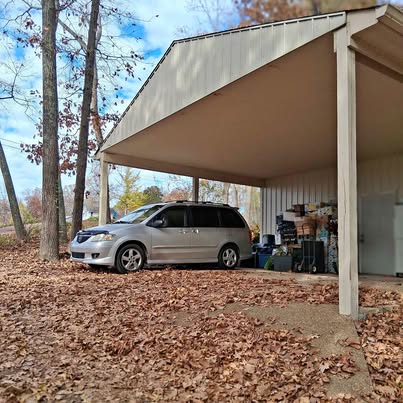
The LW car is a decade younger and better protected, and its rust is more localised — which makes it easier to check and easier to miss if you do not know the spots. The rear wheel arches are the classic LW failure, bubbling from the inside of the lip outward, often worst just ahead of the rear wheel where road spray concentrates. The sliding-door lower tracks and the door bottoms themselves trap water and grit; open both sliders fully and look along the track and the lower door edge, not just at the pretty side of the panel. The tailgate around the number-plate lamps and handle, the front subframe and its mounting points, and the spare-wheel well and third-row seat well in the floor all deserve a hand and a torch. A damp or stained seat well is doubly informative: it means water is getting in, usually past tailgate or rear lamp seals, and standing water in that well is also what rots the floor from inside. Press the well's floor with your thumb; softness there is structural, not cosmetic. Subframe corrosion on salt-belt LW cars can be severe while the body above looks presentable — this is the generation where a clean top and a rotten bottom is a real pattern, so the underside check is not optional on either car.
Paint on both generations is now old enough that clearcoat failure — peeling, milky lacquer on horizontal panels — is common and purely cosmetic. Do not let a seller discount hard for it and do not pay a premium for its absence; mechanical and structural condition decide an MPV's worth. What you should hunt for is evidence of accident repair: inconsistent panel gaps around the sliding doors, overspray on door rubbers, and sliders that sit proud or recessed at their rear edge. A sliding door that has been bent or badly rehung never seals or latches quite right again.
Engines: what actually fails
On the first-generation JE V6, learn to read the tick. The JE's hydraulic lash adjusters are fed by oil galleries that sludge if oil changes have been stretched, and a starved adjuster ticks — loudly at cold start, easing as pressure builds and the oil thins. The diagnostic distinction is time and temperature: a tick that fades within a minute or two of a cold start, on an engine with old oil of unknown grade, usually responds to an oil change with the correct grade and a quality filter, and owners have lived with it for years. A tick that is present hot, at all speeds, and loud enough to hear in the cabin is a worn or collapsed adjuster — or, worse, low oil pressure from a tired engine — and adjuster replacement is a top-end strip at $800–1,600 in labour terms. Never accept "they all do that" without the fade test: start the car stone cold, stand at the front wing, and listen for five full minutes. The same cold start tells you about the timing belt's tensioner and idlers — a rhythmic chirp or rumble from the belt covers on a car with no belt history is the belt job announcing itself. The G6 four's issues are simpler: oil leaks from aged cam and crank seals, cooling systems furred from years of tap water, and carburettor-era habits from mechanics who should know better — it is fuel-injected, and running faults are usually ignition components, vacuum leaks from perished hoses, or a tired fuel pump, all cheap in parts and findable by a methodical shop.
On the Duratec cars, the failure list is modern and specific. Coil-on-plug failure on the 3.0 has been covered in the engines section; its kerbside signature is a misfire that arrives under load — pulling away, climbing, overtaking — with a flashing or steady check-engine light, on an engine that idles almost cleanly. Insist on a drive that includes a hill or a firm acceleration run, because a gentle circuit of the block will not provoke it. The 2.5's idle air control valve produces the opposite presentation: an engine that hunts at idle, stalls when you select drive with the air conditioning on, or hangs at high revs after a start. The collapsed PCV elbow on the 3.0 gives lean fault codes and a lumpy idle that mimics an intake leak; a smoke test or a hand run along the hose at the back of the manifold finds it. Plastic coolant components — thermostat housing and coolant outlet castings in plastic on these engines — weep and then crack with age and heat cycles; look for pink or green crystalline crust around every coolant joint, and treat any sign of the temperature gauge having lived above normal as a serious warning, because a Duratec that has been properly overheated can warp heads, and head work at $1,800–3,000 ends the economic argument for the car. The fan control module failure completes the cooling picture: fans that never run, or that run at full speed constantly, or an engine that is cool at 50 mph and climbing at every traffic light. That pattern — speed-dependent temperature — is the module or fan circuit until proven otherwise, and it is a far cheaper fix than the head gasket sellers will fear you suspect.
Exhaust manifolds with integral catalytic converters on the Duratecs crack and their converters degrade, lighting the check-engine light with catalyst-efficiency codes; replacement manifolds are available but the job is $700–1,500 a side in parts and labour, and on the rear bank access is miserable. A car with a catalyst code is not automatically a reject — but it is a priced-in repair, not a mystery to inherit.
Gearboxes, steering and running gear
Gearbox judgement is behavioural. For the four-speeds, first generation and early LW alike: engage drive and reverse from cold and count the delay. A healthy box engages in about a second; a two- or three-second pause, especially into reverse on a cold morning, is wear announcing itself. On the road, watch for flare — revs rising between ratios — and for a torque-converter shudder at light throttle around 40–50 mph, a vibration through the seat that vanishes if you lift off or accelerate. Shudder alone can be old fluid; flare plus delay plus burnt fluid is a rebuild conversation at the prices given in the engines section. The five-speed Jatco in the 3.0 cars fails differently: its solenoid pack and valve body produce harsh, late or inconsistent shifts on a gearbox whose fluid may look clean. Drive it long enough to get it fully hot — twenty minutes minimum — because several of its bad habits only appear at temperature, and cycle it through kickdown, manual holding of gears if the selector allows, and a reverse engagement on a slope. Any five-speed that bangs into reverse hot is a car to price as if the gearbox work is already scheduled.
Steering and suspension on both generations is conventional car hardware — struts at the front of the LW, and nothing on either van that a generalist shop will find exotic — so judge it by outcomes rather than by layout. Worn front strut mounts clunk over sharp bumps, tired dampers let the van float and patter through a series of small ridges, and worn drop links rattle on broken surfaces at walking pace. Power steering on high-mileage Duratecs whines from a pump starved by a leaking rack or a perished reservoir hose; check the fluid level and colour and look for wetness at the rack boots. CV joints on the front-wheel-drive LW click on full lock when worn — test in a car park, both directions, windows down. Wheel bearings drone with speed and change note as you load them in gentle bends. None of these is individually fatal; together they are how a cheap MPV becomes an expensive one, $300–600 at a time.
Brakes deserve a specific LW note: the van is heavy, often driven loaded, and front discs and pads are consumables that sellers defer. A pedal that pulses under moderate braking is warped front discs; a long pedal is fluid that has never been changed. Budget $350–600 for a front axle brake refresh and check the parking brake holds on a slope — on a van you may load with seven people, that is a safety item, not a detail.
Sliding doors, seats and the interior
The LW's doors and seats are its reason to exist, and its most common source of bills. Manual sliding doors should glide and latch with one firm pull. Resistance, graunching or a door that drops as it opens means worn rollers and a contaminated or corroded track — rollers are cheap parts, tracks are a cleaning and lubrication job, and a door that has been forced for years may have bent its centre hinge, which is not cheap. Power doors add motors, cables and control logic: run each door through at least three full open-close cycles from the dash switch, the pillar switch and the fob. A door that reverses mid-travel, stops on its obstruction sensor with nothing in the way, or needs a helping hand has a cable or motor fault, and a dealer-level repair can reach $600–1,200 a side; independent specialists do better, but price the fault in. The classic cheap cause is a door that has been used manually against its motor for years, stretching the cable — ask the owner how they open the doors and watch them do it.
Inside, work every seat mechanism as described in the models section, then look at what the seats tell you. The third-row well is the interior's damp gauge: lift the seat, look and smell. The second-row captain's chairs' release levers and floor catches bend under ham-fisted use; a chair that rocks in its mounts is a safety issue, not a rattle. Headlining on both generations sags with age as the foam backing fails — cosmetic, annoying, $300–600 to retrim properly. Air conditioning on a van this size is a system, not a feature: the LW has front and rear climate functions on upper trims, and a system that cools at the front but not the rear, or that cycles its compressor rapidly, is low on refrigerant or has a failing rear expansion component. A full air-con diagnosis and regas is $150–400; a compressor is $700–1,200 fitted. On the LV, assume the air conditioning needs money unless the seller can show a recent invoice, and check what refrigerant conversion, if any, has been done on early cars.
Electrics are mostly honest on both generations: window regulators slow and fail, central locking actuators die one door at a time, and the LW's instrument cluster and body electrics occasionally produce phantom warnings from tired grounds and a weak battery. The rule is to test everything, twice, including the rear wiper, the heated rear window and every interior light — on a van, the small electrical jobs are numerous enough to matter in aggregate even though none is large alone.
Four-wheel drive, wheels and tyres
If your first-generation car is a four-wheel-drive example, it carries hardware the two-wheel-drive van does not: a transfer arrangement and a rear drive line that need their own fluids and their own inspection. Test the system as the seller describes it — engage it by whatever switch or lever the car actually has, drive slowly on a loose or wet surface, and listen for binding, clunking or a driveline shudder on gentle turns, which on a part-time system driven on tarmac can be normal wind-up, and on any system can be a worn joint or a mismatched set of tyres. Mismatched tyres are the quiet killer of old four-wheel-drive systems: different rolling circumferences front to rear force the driveline to fight itself. Check that all four tyres match in size, make and approximate wear, on any 4WD car and frankly on any MPV — a van wearing four odd tyres is telling you how its maintenance budget was allocated. On the LW, the same tyre check doubles as an alignment report: front tyres worn on their inner edges point to tired struts and shifted alignment on a heavy front-wheel-drive nose, and a spare that is flat, missing or a different size tells you the load floor and well have not been looked into for years — which loops you back to the rust check in that well.
The myth to retire
Two myths follow these cars. The first is that the second-generation MPV is "really a Ford" and shares the Ford Windstar's problems: it does not. The engines are Ford-built Duratecs, but the platform, body, doors and electronics are Mazda's, and the Windstar's notorious transmission and head-gasket history does not transfer. Judge the MPV on its own record — which is exactly what this guide gives you. The second myth is that the first-generation car is a truck in disguise and therefore indestructible. It is car-based, it is now very old, and its automatic gearbox and timing belt are on the same replacement economics as any other old vehicle. Tough is not the same as immortal, and no MPV of either generation forgives an overheating event.
How to inspect one
Work in this order. It is arranged so the cheap, decisive checks come first and the car is fully hot by the time you judge the gearbox — the order matters, because several MPV faults only appear in a specific state: cold, hot, or under load.
- Identity before condition. Read the VIN at the base of the windscreen and the build sticker on the driver's door jamb, and make them agree with the paperwork and the claimed year. Remember the gap: there is no North American 1999 MPV, so a "1999" is a misdated car until the sticker proves otherwise. On a first-generation car, confirm the engine matches the claim — V6 or four — by looking at it, not by the badge.
- The cold start, from outside. Have the engine started stone cold while you stand at the front. On a JE V6, run the lash-adjuster fade test from the problem areas: a tick that fades in a couple of minutes is a characteristic; one that persists hot is a bill. On any engine, watch for blue smoke (oil), listen for belt-area chirps and rumbling, and note how fast it settles to a clean idle.
- Under the bonnet, engine running. Look for crystalline coolant crust at every hose joint and around the thermostat housing, perished vacuum hoses, and oil weeping from cam covers. On a 3.0 Duratec, find the PCV hose at the back of the manifold and check the elbow for collapse or splits — the lean-code culprit. Check the coolant level in the reservoir and the oil's condition on the dipstick: mayonnaise under the filler cap on a car that does short trips can be condensation, but combined with coolant loss it is a head-gasket conversation.
- The cooling fans. Let the car idle until it is fully warm and confirm the electric fans cut in and out. Fans that never run, or an engine that only stays cool on the move, point at the fan control module — the speed-dependent overheating pattern from the problem areas. Never buy a Duratec whose temperature behaviour you have not watched at a standstill for ten minutes.
- The underside and the rust map. With the car on the ground, work the generation's rust map from the problem areas: LV sills, subframe, suspension mounts and floor edges; LW rear arch lips, sliding-door tracks and door bottoms, front subframe, and the floor of the third-row seat well, pressed with your thumb. A screwdriver is for the seller's car only with permission — your thumb and a torch settle most of it.
- Doors, all of them, repeatedly. Open and close both sliding doors on an LW at least three times each, from every switch and the fob if they are powered. Resistance, dropping, graunching or mid-travel reversal is the roller, track, cable or motor story from the problem areas, priced accordingly. On an LV, check the hinged rear door's hinges and check-strap for sag and tearing.
- Seats and the well. Fold the LW's third row into its well and back up, twice. Remove and refit one second-row chair. Everything should move with firm, mechanical certainty; bent catches and rocking chairs are safety items. Inspect the empty well for water staining and smell — the interior's damp gauge.
- Gearbox, part one: static. From cold, engage drive, then reverse, counting the delay each time. About a second is health; two or three seconds, especially into reverse, is wear. Check the fluid if the year gives you a dipstick: pink and sweet is serviceable, brown and burnt is evidence.
- The road test, in three parts. First, a car park: full-lock circles both ways, windows down, listening for CV-joint clicking on the LW. Second, town driving: idle quality at junctions (the 2.5's idle air valve shows itself here), light-throttle behaviour at 40–50 mph for converter shudder, and a moderate stop to feel for brake pedal pulse. Third, a load run: a hill or a firm acceleration to provoke the 3.0's coil misfire, and twenty minutes total so the five-speed Jatco is fully hot before you judge its shifts and its reverse engagement.
- Electrics and air conditioning, everything twice. Every window, lock, mirror, light, the rear wiper and heated screen. Then the air conditioning, front and rear on an LW, on full cold for five minutes: weak rear cooling or rapid compressor cycling is a priced repair, not a regas promise.
- Paperwork and history. You are looking for three documents above all: a timing-belt invoice on a first-generation car, transmission fluid services on any automatic, and coil/plug or cooling-system work on a 3.0. A thick file of small invoices is the best sign a cheap MPV can show you; a car with no history is priced as if every scheduled job is due, because it is.
- The overnight question. Ask yourself which of the faults you found are consumables you would replace on any old van — brakes, dampers, tyres — and which are the car's defining systems: gearbox behaviour, structural rust, overheating history, sliding-door mechanics. Buy a car whose faults are all in the first list. The second list is where cheap MPVs stop being cheap.
Values
The MPV market is thin, and thin markets reward readers over guessers. The computed figures appended to this guide — what is listed now, and what has actually been recorded as sold — are the numbers to work from; this section is about how to interpret them, because with a pool this small, a single unusual car can drag an average a long way from the truth.
Understand the condition spread first, because on the MPV it is almost the whole story. These were family workhorses, and most were used until something expensive failed, then sold. That produces a market with a hard floor of tired, fault-carrying cars and a thin upper layer of genuinely maintained ones, with surprisingly little in between. The gap between a neglected example and a cared-for one is not a small percentage — it is routinely the difference between a van that needs its gearbox, coils, brakes and door cables attended to in the first year, and one that needs none of them. Price the faults you found on inspection, using the job costs in this guide, and subtract them from the asking price of the car in front of you. That arithmetic, not the headline comparison with other adverts, is what an MPV is worth.
Asking prices and achieved prices diverge in a predictable direction. Sellers of the best cars — low-mileage 3.0 ES models with history — often ask with real optimism, because they know how few good ones remain, and those cars can sit. Sellers of tired cars ask as if the faults were not there, and those cars sit too. The cars that actually sell are priced by owners who have understood which of the two groups they are in. When you compare a listing against the recorded sales in the market block, compare like with like: generation, engine, and evidence of maintenance, before mileage. A higher-mileage 2002-onwards 3.0 with a service file is worth more, and will sell for more, than a lower-mileage 2000 2.5 with none — the market has learned the difference between the launch engine and the later car, and it prices it.
Variant premiums are modest and specific. The 3.0-litre LW carries a premium over the 2.5 that is justified and durable. The ES trim's leather and power doors add a little, but only when the doors demonstrably work — a broken power door converts the premium into a discount. First-generation four-wheel-drive cars attract interest out of proportion to their numbers because they are curiosities, and a rust-free LV of any specification now earns a survivor's premium that would have been unthinkable a decade ago; but it is a premium paid by a handful of enthusiasts, so it is real only when two of them want the same car. Colour, by contrast, moves nothing: the pool on this site runs blue, grey, silver and beige, and no buyer has ever paid extra for any of them.
The project-versus-driver gap is where the money is made and lost. A project MPV — running, but carrying a gearbox fault, structural rust or an overheating history — is worth only a fraction of a sorted driver, and the fraction is smaller than sellers believe, because the defining repairs on these vans cost a large share of the finished car's value. Do the subtraction honestly before you buy the cheap one: if the repairs total more than the price difference to the best car you can find, the cheap car is the expensive one. In a thin market, patience is a pricing tool. Good MPVs surface irregularly; the correct strategy is to know your numbers, inspect hard, and be ready to move the day the right car appears.
Parts and ownership
Ownership economics are the MPV's quiet strength, provided you buy the right generation for your temperament. The second-generation car draws on the Ford Duratec parts universe, and that changes everything about running one: coils, plugs, alternators, water pumps, sensors, brake components and suspension wear parts are stocked by every general parts factor, priced for a Taurus rather than for an orphan, and familiar to any competent independent shop. Routine servicing is ordinary work — oil, filters, plugs on a long interval, coolant and brake fluid on age — and the chain-driven engines remove the timing-belt line from your budget entirely. The ownership costs that do arrive are the ones this guide has named: a set of rear-bank coils and plugs, an alternator, a fan module, door rollers or a power-door cable, a solenoid-related gearbox repair. Each is a known quantity with a known price range, and none requires a marque specialist. Budget a realistic annual sum for age-related repairs on top of servicing — these are twenty-year-old vans — and the LW will not surprise you.
Mazda-specific and body-specific parts are the other side of the ledger. Sliding-door hardware, seat catches and mechanisms, interior trim, switchgear, glass and body panels come from Mazda's pipeline or from breakers, and availability thins every year. The practical answer is the breaker network and the enthusiast community: MPVs are broken regularly, door motors, chairs, trim and panels circulate, and a wanted advert in the right forum finds things a parts counter cannot. If you buy an LW, identify your nearest breaker with MPV stock before you need it. Glass and door seals deserve a specific warning: a windscreen is obtainable, but tired door and tailgate seals are how water reaches the seat well and the tracks, so renewing seals is preventative maintenance, not cosmetics.
The first-generation car is a different ownership contract. Its mechanical parts are older Mazda and increasingly sourced through classic channels, obsolete-stock dealers and breakers; its trim is effectively unobtainable new. None of that makes an LV unownable — the engines are simple, the running gear is robust, and a good independent with classic experience can maintain one indefinitely — but it does mean you buy the best, most complete car you can find, because the missing piece of trim or the one-year-only component may take months to source. An LV is a hobbyist's van now. Run one with that expectation and it is charming; run one expecting LW-style parts-counter convenience and it will frustrate you.
Day to day, both cars ask the same disciplines: keep the cooling system honest, change the automatic's fluid on a schedule the original manufacturer was too optimistic about — every 30,000 miles or so is cheap insurance on any of these gearboxes — lubricate the LW's door tracks, and fix water leaks the week you find them. The MPV rewards the owner who treats small jobs as urgent and punishes, slowly and then suddenly, the one who defers them.
Which one to buy
- The all-rounder: a 2002–2003 LX 3.0. The later engine and five-speed automatic, before the facelift added nothing you need, at the trim level that gives you the folding third row and removable chairs without paying for leather and power doors you then have to maintain. This is the MPV for a family that wants the thing to simply work.
- The best-equipped: a 2004–2006 ES 3.0. The facelift car with leather and power sliding doors — but only after you have run those doors through repeated cycles and watched them behave, because on this variant the doors are the purchase.
- The value buy: a well-kept 2000–2001 LX 2.5. The launch engine is the market's discount, and a gentle-life 2.5 with its idle valve sorted and a fluid-changed gearbox is most of the van for noticeably less commitment. Buy it for town and family duty, not for mountain holidays with seven aboard.
- The character pick: a first-generation 3.0 V6, ideally four-wheel drive. Rear-wheel drive, a hinged rear door, a proper bonnet — the van the segment might have become. Buy the most rust-free, most complete example you can find, with a timing-belt invoice in the file, and accept that you are now a hobbyist.
- The one to avoid: any MPV, of either generation, with a speed-dependent overheating history, a gearbox that delays or flares hot, or structural rust in the subframe and seat well — whatever the price, and however good the story.
The overriding rule: on an MPV, you are buying condition and evidence, not specification — a maintained car with a file of invoices beats a fancier trim with none, every time, because every defining repair on these vans costs a large share of what the whole vehicle is worth.
See the 1 MPV cars currently listed.
What they sell for: MPV sale prices.