
Mercedes-Benz S-Class buyer's guide
Mercedes-Benz S-Class -- the model's own buyer's guide: variants, values and what to check.
Years listed: 1982-1993 · Series: W116
Overview and history
The 300SD is the car that proved a diesel could be a luxury flagship. When it appeared for the 1978 model year, it was the first production passenger car in the world sold with a turbocharged diesel engine — and Mercedes-Benz did not put that engine in a taxi or an economy special. It put it in the S-Class, the most expensive sedan in the range, at a price that assumed the buyer could have afforded the V8 instead.
The logic was American. The energy crisis, rising fuel prices and the new Corporate Average Fuel Economy rules were squeezing big luxury cars, and Mercedes' answer was to give its flagship the economy of the five-cylinder diesel from the 300D with a turbocharger on top to restore the performance. The result kept most of the S-Class experience — the silence at speed, the seats, the structure, the long-distance calm — while using fuel at a rate the petrol cars could not approach: on the highway a 300SD cruises in the mid-twenties mpg.
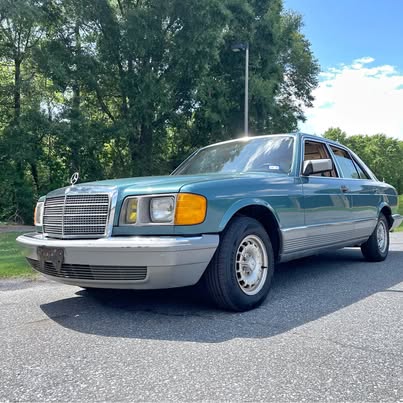
There are two generations, and they are different cars under the same badge. The first 300SD, built for 1978 to 1980, wears the W116 body — the original S-Class, all chrome bumpers and upright formality. The second, built for 1981 to 1985, wears the sleeker W126 body and is the car most buyers will actually find: roomier, quieter, better protected against rust and built in far greater numbers. Both were made for North America. The 300SD was never officially sold in Europe, so every genuine car is a US- or Canadian-market car, with the bumpers, lamps and emissions equipment that implies.
One scope warning belongs here, because it affects real listings — including ours. The badge ended in 1985. For 1986 and 1987 the diesel S-Class became the 300SDL: a long-wheelbase car with a completely different engine, a six-cylinder OM603 in place of the five-cylinder OM617. Sellers advertise 1986 cars as 300SDs constantly, out of habit or because the listing form offers no SDL option, and two of the seven cars in our current pool are 1986 cars badged in their listings as 300SDs. Treat any "1986 300SD" as a 300SDL until the car itself proves otherwise — the checks are in the models section below, and the SDL gets its own coverage in this guide wherever it differs, because you will meet it on the way to a 300SD.
The ownership story since is the familiar one. These were expensive cars, maintained by the book for their first decade, then cheap cars, run on a budget through their second and third. The diesel's reputation for immortality hurt as much as it helped: an OM617 tolerates neglect longer than almost any engine ever fitted to a luxury car, so neglect is exactly what many of them got — valve adjustments skipped, vacuum leaks left to multiply, climate servos left to crack. The engine usually survives anyway. What decides whether a 300SD is a bargain or a trap today is rarely the engine. It is rust on a W116, deferred vacuum and climate work on both generations, and how much of the car's considerable complexity still functions. A sorted 300SD is not a compromised classic: it is quiet at 70 mph, economical, mechanically simple in its core systems, and supported by one of the deepest parts networks in the classic world. The job of this guide is to show you where the money hides.
The models
Every 300SD is a four-door, five-seat, rear-wheel-drive automatic sedan with a 3.0-litre turbodiesel. There are no coupes, no factory manuals and no naturally aspirated version — if a car is described as any of those, the description is wrong. What changes across the run is the body generation, the state of tune, and, at the very end, the badge and the engine.
| Model | Years | Engine | Output | Built | Character |
|---|---|---|---|---|---|
| 300SD (W116) | 1978–1980 | 3.0 five-cyl turbodiesel (OM617.950) | 110 hp, rising to about 120 hp | 28,634 | The original; chrome, formality, the collector's car |
| 300SD (W126) | 1981–1985 | 3.0 five-cyl turbodiesel (OM617.951) | 125 hp | 78,725 | The core of the market; the one to buy and use |
| 300SDL (W126) | 1986–1987 | 3.0 six-cyl turbodiesel (OM603.961) | 148 hp | 13,830 | Not a 300SD — the long-wheelbase successor; see below |
(Outputs are US-market SAE net figures. The W116 figure rose part-way through the run as the engine was revised; judge any 1978–79 car on how it drives, not on a quoted number.)
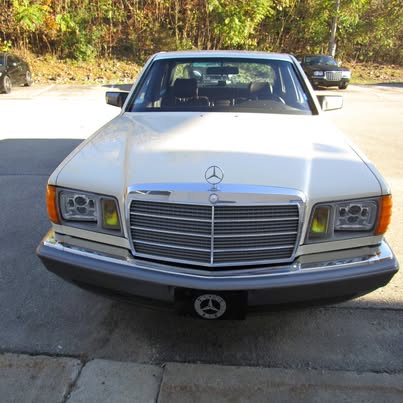
The W116 car (1978–80). The first 300SD sits in the body of the original S-Class: tall, formal, chrome-bumpered, with ribbed tail lamps and a cabin trimmed like a smaller 450SEL, which in mechanical terms is close to what it is. It was a landmark car — the turbodiesel flagship was a gamble, and it worked — and it is by far the rarer of the two generations. Rarity cuts both ways: W116-specific trim and interior pieces are harder to find than W126 parts, and the W116 body rusts with an enthusiasm the later car mostly controls. Buy a W116 because you want that car, with your eyes open about the body.
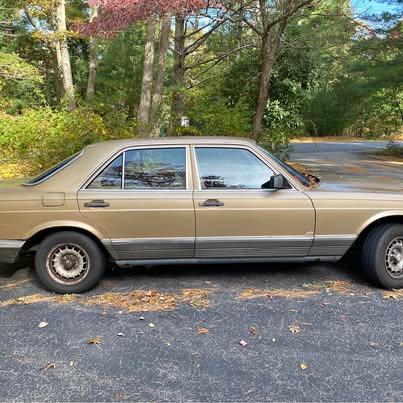
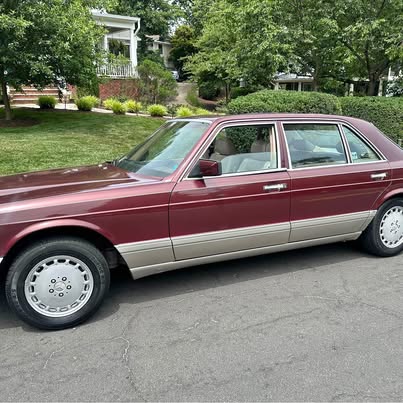
The W126 car (1981–85). This is the default 300SD. Bruno Sacco's W126 body is bigger inside, quieter, aerodynamically cleaner and far better rustproofed, and the engine gained a little power and a lot of refinement. Production ran at more than double the W116's rate, so the choice is wider and prices, condition for condition, are usually lower. Within the run, the changes that matter are small but real. The 1981 cars are the simplest; from 1982 the diesel gained a tachometer in place of the oversized clock, a quick model-year tell in interior photos. California-market cars carry extra emissions equipment, and the 1985 California version carries the trap oxidizer discussed in the problem areas — a soot filter in the exhaust that caused enough heat-related trouble to be recalled and replaced under a factory campaign. A federal 1985 car does not have it. Which version a car is will be on its emissions label, and it matters.
The 300SDL trap (1986–87). The SDL is a fine car and a different one. It is built on the long-wheelbase W126 shell — 140 mm (about 5.5 inches) more wheelbase than a 300SD, all of it in the rear doors — and its OM603 is a six, with an alloy cylinder head and hydraulic tappets, where the 300SD's OM617 is an all-iron five with screw-adjustable valves. The SDL is quicker, quieter and roomier. It also has one famous weakness the five does not: the early OM603 head casting, identified by a 14 in the casting number, can crack if the engine is overheated. None of this makes the SDL a car to avoid; it makes it a car to buy as itself, at its own price, with its own checks. Do not pay 300SD money for one under the impression it is the iron-head five, and do not walk away from a good SDL because a listing called it by the wrong name. Identify it properly: a 1986–87 build date, the long rear door, six intake runners under the bonnet instead of five, and SDL badging — accepting that badges are the least reliable witness of the four. The VIN settles everything.
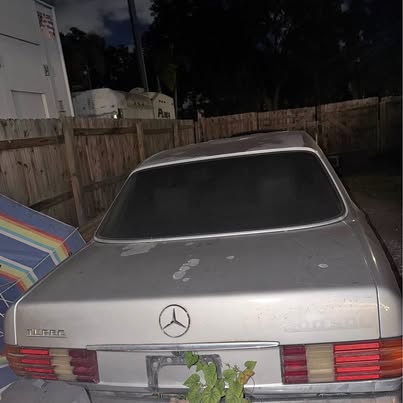
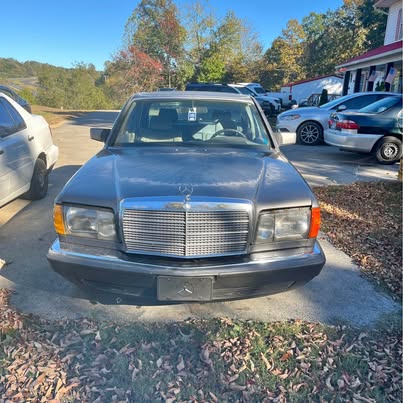
What our pool shows. We currently track seven 300SDs for sale, all W126 cars, all automatics, spanning the 1982 to 1986 model years in the listings — the two 1986 cars being the SDL question above, in silver and grey. No W116 car is in the pool as we write, which matches the wider market: the first-generation car is the exception, and if you want one you will wait longer and travel further.
Engines and gearboxes
The OM617 five-cylinder: one engine, two tunes
Both generations of 300SD use the same fundamental engine, and understanding it is understanding the car. The OM617 is a five-cylinder diesel of just under three litres, with a cast-iron block and head, a single overhead camshaft, two valves per cylinder and indirect injection: fuel is injected into a prechamber in the head rather than directly into the cylinder, which is why these engines run more softly than a modern direct-injection diesel and why they need their glow plugs and their compression to start cleanly. There are no electronics in the fuel system at all. A Bosch PES five-plunger inline pump meters the fuel mechanically; a governor inside the pump controls speed; and the engine is stopped not by cutting a spark — there is no spark — but by a vacuum capsule on the back of the pump pulling the rack to zero. Remember that last fact. Half the running faults on a 300SD are vacuum faults wearing engine costumes.
The turbocharger is a Garrett unit, exhaust-driven, with a wastegate and no intercooler. Boost is modest — roughly 0.7 to 0.9 bar on a healthy car — and it is matched to fuel by the ALDA, the boost-pressure compensator on top of the injection pump: an aneroid capsule fed with boost pressure through a small hose from the intake manifold, via a switchover valve on the bulkhead that vents the line if boost runs away. Under boost, the ALDA lets the pump deliver more fuel. When the pressure signal never arrives — a split hose, a failed switchover valve, or the banjo bolt at the manifold clogged solid with soot, which is the classic — the pump stays on its off-boost fuel setting and the car is transformed from stately to genuinely slow, with no smoke, no noise and no other symptom. A 300SD that feels like it is towing something is usually not worn out. It is an ALDA that cannot hear the turbo.
The W116 car uses the OM617.950, rated at 110 hp in its first form and about 120 hp after a revision part-way through the run, with torque in the region of 170 lb-ft. The W126 car uses the OM617.951 at 125 hp and a similar torque figure delivered a little more usefully. Neither number makes a fast car. A healthy W126 reaches 60 mph in roughly thirteen to fifteen seconds and cruises at 75 mph all day; a healthy W116 is a couple of seconds slower to 60. Those figures are diagnostic tools, not trivia: if the car you are testing needs twenty seconds and a following wind, something specific is wrong, and the something is almost always in the cheap half of the engine — filters, valves, boost signal, linkage — rather than the expensive half.
Valve adjustment is the service that defines these engines. The OM617 has no hydraulic tappets. Clearances are set with feeler gauges and locknuts on the rocker gear, using a pair of slim bent spanners, at an interval of around every 15,000 miles. Owners of "immortal" diesels skip it for a decade. The exhaust valves in particular tighten as the seats wear, and a tight exhaust valve makes cold starting hard, lowers cranking compression on that cylinder, and roughens the idle. The trap is that all three read exactly like a worn-out engine, and sellers — honest ones included — will tell you the engine is tired when what it needs is an afternoon with the feeler gauges. Never accept a low compression reading on an OM617 until you know the clearances were checked first. Conversely, documented valve services in the file mean an owner who understood the engine, and that file is worth money.
Starting, and the glow system. An indirect-injection diesel starts by compressing air until it is hot enough to ignite the fuel, helped by a glow plug in each prechamber. Early cars used heavy loop-style plugs wired in series — one plug failing took the whole string down — while later cars, including all W126s, use pencil plugs in parallel under an electronic relay, where one dead plug leaves the engine starting on four cylinders with a thump and a cloud. The dashboard glow light is a liar on every version: it goes out when the relay's timer says so, not when the plugs have done their work, and a healthy car starts noticeably better if you wait five to ten seconds after the light dies before cranking. A car that starts roughly, shakes for twenty seconds and then settles almost certainly has one or two dead pencil plugs — a multimeter test (a good plug reads around an ohm) and a bill in the low hundreds, not an engine rebuild. When plugs are changed, the carbon around the plug hole in the prechamber should be reamed out with the proper tool; a plug snapped in a carboned hole turns a cheap job into a head-off job.
Compression and honest wear. When the valves are right, the filters fresh and the glow system working, a remaining hard-start or low-power complaint earns a compression test, done through the glow plug holes with a diesel-rated gauge. A healthy OM617 shows readings roughly in the 320 to 400 psi range, and evenness matters more than the absolute number: five cylinders within about 10 percent of each other is a sound engine even at the lower end, while one cylinder far below its neighbours is a valve, a ring or a head gasket asking a question. The roadside blow-by check is the oil filler cap test — engine idling, cap resting loose on the filler neck. A gentle tremble is normal; a cap that dances off is real blow-by, and the most honest wear gauge you get without tools. Smoke tells its own story: black under load is over-fuelling or under-boosting (air filter, ALDA, injectors), blue is oil (valve seals if it smokes at start-up and clears; rings if it smokes under way), and white smoke smelling of unburnt fuel on a cold engine is glow plugs or compression, while white smoke that smells sweet on a warm engine is coolant and bad news.
The supporting cast. Four systems around the engine cause a disproportionate share of breakdowns. The engine oil cooler lines, crimped hoses running from the filter housing to a small radiator, weep with age and can fail outright; an engine that loses its oil at speed loses everything, so damp, cracked or original lines are a replace-before-you-drive item, in the low hundreds fitted. The turbocharger is long-lived, but its oil drain seals leak, and a turbo with shaft play you can feel, or a car that smokes blue under boost, means a rebuild or exchange unit in the $600–1,500 range. Injectors are simple Bosch pintle units; tired nozzles give a nailing knock at idle, smoke and poor economy, and a set of rebuilt injectors is one of the best-value refreshes on the car. And the fuel supply on a diesel that has sat is a system, not a part: a primary and a secondary filter under the bonnet, a strainer screen inside the tank, and — on cars stored with old fuel — the black fungal growth that lives in diesel tanks and clogs the screen a few miles after every filter change. A car that starves, surges or dies after ten minutes and then restarts is telling you about its tank, not its pump.
The OM603 in the 300SDL: the boundary engine
Because you will meet it in 1986 listings, the six deserves its own short brief. The OM603.961 is a three-litre straight six, again indirect-injection and turbocharged, but built the modern way: an alloy cylinder head on an iron block, hydraulic tappets that never need adjustment, and a serpentine accessory belt. It makes 148 hp, is noticeably smoother and quieter than the five, and pulls the long-wheelbase SDL along with real ease. Its one structural weakness is the original cylinder head casting — the number 14 appears in the casting number on the head — which is prone to cracking, typically after an overheating episode, letting combustion pressure into the cooling system. Symptoms are a cooling system that pressurises hard from cold and coolant that disappears without a visible leak. Later castings (17 and above) are far stronger, and many SDLs already carry one. The 1986–87 US cars also left the factory with a trap oxidizer in the exhaust, whose heat soak sat uncomfortably close to that alloy head; a factory campaign replaced traps with oxidation catalysts and renewed damaged turbos, so paperwork showing the campaign done is a genuine plus, and an original trap still in place is a reason to budget. None of this belongs in a 300SD's problem list, and that is exactly the point: the two engines fail differently, are priced differently, and must be inspected differently.
Gearboxes
Every 300SD left the factory with a Mercedes four-speed automatic — there was no manual option on the US diesel flagship — and every car in our current pool is an automatic, as every car you find will be. The W116 uses the earlier generation of Mercedes' own four-speed box; the W126 uses the 722.3-series, a strong automatic that suits the diesel's torque well. Two behaviours are design, not faults. First, the car pulls away in second gear in normal driving; first engages only from a full-throttle start, on kickdown, or with the selector pulled back — a second-gear start is correct, exactly as it was when the car was new. Second, shift quality is set by engine vacuum: a modulator valve on the side of the gearbox reads vacuum through a line from the engine's vacuum system, and soft, flaring shifts or brutal, thumping shifts are very often a vacuum supply problem — a cracked line, a leaking modulator diaphragm, a misadjusted modulator — rather than a worn gearbox. Shift timing is set by the control pressure (Bowden) cable from the throttle linkage; a slack or misadjusted cable gives early, stacked shifts or late, hanging ones, and ten minutes of adjustment transforms cars described for years as having a lazy gearbox.
Real gearbox faults exist and should be priced as such. Flaring on the 2–3 change under load, a long delay engaging reverse when hot, or forward drive that disappears entirely — the early 722.3 has a known wear point in its B2 piston and seal, which can rob the box of forward gears — all point to a rebuild, roughly $2,500–4,500 at a Mercedes specialist. Fluid tells the truth cheaply: it should be red and smell of almost nothing, and dark, burnt-smelling fluid in a box that shifts badly is a negotiation, not a surprise. A box that shifts firmly and on time, with clean fluid and no leaks, is one of the lowest-risk parts of the car — these automatics routinely outlive the engines in front of them when their fluid has been changed.
Problem areas
A 300SD concentrates its problems in predictable places, and the order matters. Rust decides whether a W116 is worth saving at all. The vacuum system decides whether a W126 feels like a Mercedes or a collection of unrelated malfunctions. The climate system decides whether either car is pleasant in August. Everything else is ordinary old-car work on an extraordinarily well-built base.
Rust: the map
The two generations differ sharply here, and the difference should drive your budget before you have opened a door.
The W116 rusts structurally, and everywhere. It was built before modern rustproofing, and forty-five years of North American winters have found every weakness. Work in this order. Sills and jacking points first: the sills are structural, fill with mud thrown up by the front wheels, and rot from inside — test them with the car's own sill jack, lifting each corner on its socket; a sill that creaks, flexes or will not take the weight has failed the only test that matters, and sill replacement is $1,000–2,500 a side welded and painted. Front wings behind the wheels and at the headlamp bowls, where mud packs against single-skin metal. The bulkhead and heater-box area, the W116's signature rot: water collects around the heater plenum and firewall, the metal goes where you cannot see it until the carpets come up and the dash comes out, and bulkhead repair is fabrication work priced by the hour, not by the panel. Floor pans, fed by leaking windscreen seals. The boot floor and spare wheel well, fed by the rear window seal. Rear arches, door bottoms, and the battery tray, which rots under the battery and takes the inner wing with it. A W116 with a genuinely sound bulkhead and sills is a rare and valuable thing; a shiny one with filler in the arches and fresh underseal underneath is the most expensive cheap car you will ever buy.
The W126 is far better, not immune. Mercedes protected this shell properly, and sound W126s are common in dry states. But the water paths are known, and they are specific. The rear window seal leaks with age, and the water runs down inside the parcel shelf and into the boot, rusting the boot floor corners and the well and, worse, the shelf panel itself under the trim where nobody looks — lift the boot mat, lift the spare, and press a thumb into the shelf from below. Sunroof drains are the second path: the front drain hoses run down the A-pillars and can perish or part company, delivering roof water into the front footwells; wet front carpets in a W126 are a drain hose until proven otherwise. The battery tray rots as it does on every Mercedes of the period, and on the W126 it sits above structure you care about, so lift the battery or at least rock it and torch the tray edges. Jacking points and sill ends, front wing bottoms behind the wheels, and door bottoms with blocked drain slots round out the list. The underside test is the same as on any car in this programme: factory underseal looks honestly patchy after forty years, while a uniform fresh coat of black blown over seams, pipes and jacking points the week before sale is a cover-up until the seller proves otherwise. On a W126, localised rust is a price discussion. Rust in the rear shelf, the sills and the floors together is a shell that has turned — price the car as a parts donor with a good engine, because that is what it is.
The vacuum system: the car's second wiring loom
No system on a 300SD causes more misdiagnosis than this one. A diesel makes no throttle vacuum, so Mercedes fitted an engine-driven vacuum pump, and the vacuum it makes runs the car: the brake servo, the injection pump's shut-off capsule, the central locking, the climate flaps, the gearbox modulator. The pump feeds a main line with branches, check valves and a reservoir, and every branch is joined by small rubber connectors that harden, split and fall off with age and heat. The result is that a 300SD with vacuum leaks does not have one fault. It has a personality disorder.
Learn the symptom map, because it is diagnostic gold. The engine will not switch off with the key, or stops only after a long delay: vacuum is not reaching the shut-off capsule on the pump — a perished line, a failed capsule diaphragm, or a leak elsewhere stealing the supply. (There is a manual STOP lever on the pump linkage under the bonnet for this emergency, and a seller demonstrating it cheerfully is demonstrating a fault.) The central locking is slow, works on some doors, or works only with the engine running: leaks in the door actuators or reservoir circuit. The gearbox shifts harshly or flares: the modulator branch is leaking or the modulator has failed. The climate flaps will not move, or the system defaults to defrost: the climate branch or its reservoir is down. The brake pedal is hard on the first application after starting: the servo is not getting its supply — pump, main line or check valve — and this one is a safety item, not a quirk.
The pump itself wears: its seals age, output falls, and every vacuum consumer gets lazy at once, worst at idle when pump speed is lowest. A vacuum gauge on the main line settles it — a healthy system pulls strongly and holds vacuum with the engine off; a system that bleeds down in seconds has leaks to find, one branch at a time, by pinching lines off in sequence. The parts are mostly cheap — metres of rubber connector, plastic tees, actuator diaphragms, a rebuilt pump in the $200–400 range if it comes to that — but the labour is in the finding, and a car whose vacuum system has been sorted methodically is worth a real premium over one where "the locks don't work and it won't shut off, probably something simple". Budget a full day of diagnosis and small parts for a vacuum-neglected car, and treat a car where everything vacuum-operated works — locks snap, engine stops dead on the key, shifts are smooth, flaps obey — as a car maintained by an adult.
Climate control: two systems, both famous
Air conditioning was effectively standard on the US 300SD, and the heating and ventilation are automatic — so the buyer inherits one of two systems, each with its own well-earned reputation.
The W116 uses the servo system — the late-seventies automatic climate control built around a servo unit under the bonnet, a device derived from a Chrysler design, metering coolant flow and driving the flaps in response to a wheel on the dash. When it works it works well. Its failure mode is age: the servo's plastic and rubber internals crack and leak coolant, the amplifier drifts, and the system defaults to full heat, no heat, or a servo that chatters and hunts. A leaking servo shows as coolant loss and staining at the unit on the inner wing. Rebuilt servos, aluminium-bodied replacements and modern digital conversion kits all exist, from about $400 for a conversion kit to well over $1,000 for a fully sorted servo system fitted — but go in knowing that a W116 with dead climate control is a car with a project already scheduled, and that "the air just needs a charge" on a servo car has never once been the whole story.
The W126 uses the pushbutton system: a dash unit of buttons, an electronic control unit behind it, vacuum pods driving the flaps, and for the heater a monovalve — an electrically pulsed valve on the bulkhead metering hot coolant into the heater core. The failure list is known and mostly affordable. The pushbutton unit fails on solder joints and internal contacts, giving dead buttons or heat that comes and goes over bumps; rebuilt and exchange units are a few hundred dollars. The monovalve diaphragm tears, and the classic symptom is heat that fades at highway speed and returns in town; the repair kit is cheap and the job is an hour. The vacuum pods behind the dash split their diaphragms and the flaps stop obeying — dash-out labour makes a $30 pod a several-hundred-dollar job, which is why flap function should be tested button by button on the viewing. The in-car temperature sensor relies on a tiny aspirator fan drawing cabin air past it; when it fails, the system hunts and overshoots. And the air conditioning, on either generation, will by now be running R134a after a conversion or still carrying R12: ask which, ask for the paperwork, and price a system that blows warm as a compressor, seals and labour conversation in the $800–2,000 range, not as a can of gas. Test the climate on every viewing, in every mode, whatever the weather. On these cars it is a four-figure system wearing a dashboard's clothing.
Suspension, steering and brakes
The chassis hardware is conventional Mercedes and mostly long-lived, which makes its neglect easy to spot. The front suspension is double-wishbone with coil springs; the rear is the semi-trailing-arm independent layout. Wear concentrates in the rubber: front lower ball joints and control-arm bushes, the steering idler arm bush (a classic cause of vague, wandering steering, and an inexpensive part), tie-rod and drag-link ends, and the rear subframe mounts, whose collapse lets the back of the car steer itself gently over bumps. A car that wanders, knocks over broken surfaces or wears its front tyres on one edge is asking for a front-end refresh in the $800–2,000 range — and an alignment afterwards, on a car whose caster and camber adjustment a generic shop may not know how to use.
Self-levelling rear suspension was offered on the W126 and fitted to some cars: if the car carries hydraulic hardware in the engine bay and struts rather than plain dampers at the rear, price it as the hydro-pneumatic system it is — spheres and struts are dearer than springs and dampers, and a car sitting low at the rear with the system deflated is not a cheap fix. Most 300SDs are on conventional springs and dampers, and a conventional car low at the back usually just needs springs. Steering is recirculating-ball with power assistance: a little free play at the straight-ahead is characteristic; a lot is the idler bush, the linkage or the box adjustment, in rising order of cost. Brakes are discs all round with a vacuum servo — the same vacuum system, so a hard pedal is a vacuum diagnosis first. Standing cars grow rust bands on the discs and seize their calipers; a full hydraulic refresh with hoses is $800–1,800 at a shop, simply the price of recommissioning any example that has sat.
Interior, trim and electrics
The cabins are durable in the way of the period: MB-Tex vinyl that outlasts everything, leather that cracks in the sun, and seat pads and springs that give up before either covering does. The driver's seat is the tell — sit in it, because a broken spring box and crumbled pad make it sit like a hammock while the passenger seat still feels fine, and a seat rebuild is $300–600 a seat before any covering work. W116 dashboards crack, the blue ones worst of all, and a crack-free dash is a selling point because good replacements are scarce. W126 wood is zebrano on the diesel cars; it crazes and lifts at the edges, and a professional refinish of the set runs $1,000–2,500. Window regulators wear and slow; the sunroof — fitted to most US cars — jams on dried grease and broken lifting arms, and a roof stuck open or leaking is a headlining-out job, so cycle it on the viewing and check its drains as the rust section described. The VDO odometer's plastic gears crumble on both generations, which means a stopped odometer is common and cheap to fix — and that the mileage on any 300SD is a claim, not a fact. Buy the condition and the paperwork, never the number.
Electrics otherwise are simple and repairable. The glow relay and its strip fuse — an 80-amp fuse that cracks invisibly and mimics a dead relay — cause most no-glow complaints. Cruise control fails on its amplifier and actuator, a specialist-repair item rather than a fortune. The tachometer on W126 diesels takes its signal from a sensor and amplifier arrangement whose failure can also upset the air conditioning compressor's engagement on later cars, so a dead tach and dead air-con together are one fault, not two. Alternator brushes, starters and window switches are ordinary parts at ordinary prices. A car where every electrical item works has simply been looked after — and on a 300SD that correlation is the most reliable buying signal there is.
How to inspect one
Allow an hour and a half, bring a torch, a cloth-wrapped magnet and a friend to work the pedals and buttons while you watch. Insist the engine is stone cold when you arrive — on a diesel, a pre-warmed engine is a seller hiding the only start that matters. If the car passes you, a lift inspection before money changes hands is money well spent, and on a W116 it is not optional.
- Paperwork and identity first. Match the VIN on the title to the plate and the stamping on the car. Read the model year off the car, not the listing: a car built for 1986 is a 300SDL whatever the advertisement calls it, with the long rear door and six-cylinder engine to prove it. Ask for the service file and read it for the diesel specifics — valve adjustments, glow plugs, vacuum work, climate repairs — because that file, or its absence, prices the next three steps.
- The cold start. Glow light on, wait five to ten seconds after it goes out, then crank. A healthy OM617 fires within a few revolutions, thumps unevenly for seconds at most, and settles. Long cranking, a cylinder missing for half a minute, or a white cloud smelling of raw fuel points at glow plugs, tight valves or compression — in that order of cost, and step 3 helps you sort them.
- The filler cap and the dipstick. At idle, rest the oil filler cap loose on its neck: a tremble is fine, a dance is blow-by. Check the oil level and state, smell the oil for fuel (pump or injector dilution), and ask when the valves were last adjusted. Do not let anyone quote you a compression figure, good or bad, unless the clearances were set first — the engines section explains why that number lies otherwise.
- The vacuum examination. This is the 300SD's signature test, so do it completely. Lock and unlock the doors and time them. Switch the engine off: it should stop dead on the key, not sigh to a halt or run on. Press the brake pedal first thing after starting and feel for servo assistance. Every lazy or failed item maps to the vacuum section — one fault is a hose, four faults is a system, and you price them differently.
- The boost test on the road. You cannot judge this engine standing still. Find a hill or a highway on-ramp and use full throttle: a healthy W126 car reaches 60 mph in roughly thirteen to fifteen seconds and pulls with a clear surge as the boost arrives. A car that is smooth, silent and desperately slow has the ALDA story from the engines section written on it — check the little pressure hose and its banjo fitting at the manifold when you stop, and look for the cheap causes (clogged fuel filters, a filthy air filter, a throttle linkage that never reaches its stop) before you let the seller blame the turbo.
- Gearbox behaviour. From rest, note the correct second-gear pull-away — that is design, not slip. Changes should be firm and on time; flaring, hanging or thumping sends you back to the vacuum modulator and the control-pressure cable before it sends you to a rebuild quote. Engage reverse hot and cold: a long delay is a price reduction. Check the fluid — red and clean-smelling, or dark and burnt.
- Climate, every button. Run the system through every mode on the pushbuttons (or every position of the wheel on a W116), heat and cold, and feel for air moving to the vents the mode promises. Test the monovalve symptom on the W126: heat that survives at idle but fades at speed. On a W116, check the servo on the inner wing for coolant staining. Whatever does not work gets priced from the climate section, not waved away as a recharge.
- Underneath and the jack test. On the lift or on your back with the torch: sills, jacking points, floor seams, front wing bottoms, and on the W126 the boot floor corners and rear shelf from below; on the W116 add the bulkhead and heater-box area and treat what you find there as the price of the car. If the seller allows it, lift each corner on the factory sill jack — a sound sill takes the weight silently. Read the underseal as you go: patchy and honest, or fresh and hiding something.
- Boot, battery and water paths. Lift the spare wheel and the boot mat: water lines, rust in the well corners, a damp smell. Check the rear window seal above them. Lift or rock the battery and torch the tray and the metal below it. Inside, press the carpets in all four footwells — wet fronts on a W126 mean sunroof drains or a screen seal.
- Suspension and steering on the move. Drive over broken surfaces and listen for knocks; on a straight road, feel for wander and for the rear steering itself over bumps, which is subframe mounts. Rock each front wheel for bearing and ball-joint play with the car jacked. Check the stance from twenty paces: level is right, a sagging rear on a conventionally sprung car is springs, and a self-levelling car sitting down at the back is a hydraulic bill, not a spring.
- Interior and electrics, last but weighted. Sit in the driver's seat and feel for the hammock of a broken spring box. Work every window, the sunroof (fully, both ways), the cruise control on the drive, the tachometer, the blower on all speeds. Note the odometer — then set it aside and judge the car in front of you, because the VDO gears fail and the number proves nothing either way.
- The mounts test. At a hot idle in gear, feel the shake through the wheel and mirrors, then raise the revs slightly: a car that smooths out completely with revs but rattles at idle is describing collapsed engine mounts, a few hundred dollars, while a car that shakes, smokes and misses at every speed is describing the engine. Know which conversation you are in before you make an offer.
Values
The market block beneath this guide carries our current listings and recorded sales, refreshed as the data changes, so this section does something more durable: it teaches you how to read the 300SD market those numbers describe — a market where the spread between the cheapest and dearest car is explained almost entirely by generation, rust, and how much of the vacuum and climate complexity still works.
Start with the shape of the market. The W126 car is the volume market: built in the greatest numbers, the most often listed, and the car against which everything else is priced. The W116 is the thin market — fewer cars, fewer sales, wider gaps between asking and achieved prices, and a premium paid for the early car's looks, rarity and landmark status rather than for any superiority as a machine. In fact the premium flows against the engineering: the later car is better protected, roomier and cheaper to keep, and the W116 buyer pays extra for the harder ownership proposition. That is a perfectly good reason to buy one. Just buy it knowingly, and know that in a thin market a single exceptional sale tells you nothing about the value of the honest driver in front of you.
Condition drives the rest, and on this model condition has a specific meaning. The market pays for, in order: a shell with its rust questions answered (a W126 with a dry boot, sound sills and a solid battery tray; a W116 with a proven bulkhead), a vacuum system that works end to end, climate control that heats and cools on command, and a service file showing the diesel rituals — valve adjustments, filters, glow plugs — actually performed. It discounts, heavily and correctly, for the opposite list, because the discounts are where the labour lives. A cosmetically lovely car that will not shut off on the key, blows only defrost and has wet carpets is three systems deep in deferred work, and the market prices it as a project even when the paint photographs like a flagship.
The project-to-driver gap is correspondingly wide. A running W126 with needs is the cheapest seat in S-Class ownership, but the honest arithmetic of bringing one up — climate sorted, vacuum sorted, mounts, brakes, the recommissioning list from the ownership section — closes much of the gap to a car that was never let go, and the sorted car still has the better shell and the better file. The persistent bargain is the well-kept, unglamorous car: a federal (non-California) W126 in a quiet colour with a thick file. The persistent trap is the reverse — fresh paint over an unexamined shell, priced off the exceptional sales. On the SDL question, price the car as what it is: a good 1986 SDL is worth SDL money, neither the discount a confused listing suggests nor the 300SD money a hopeful seller asks, and its value hinges on the head casting and trap campaign paperwork in a way no 300SD's ever will.
Negotiation here is unusually evidence-based, because the faults are unusually testable. The filler-cap test, the vacuum examination, the climate run-through and the sill-jack test convert directly into numbers on a workshop estimate, and sellers who know these cars expect exactly that conversation. Asking prices assume a car that works; your job is to establish, system by system, how much of the car in front of you actually does.
Parts and ownership
The 300SD sits in one of the best parts positions of any classic car. Mercedes built the W126 in enormous numbers, the diesel shares its body, suspension, brakes and most trim with the petrol cars, and the OM617 was fitted across the range — saloons, estates and the G-Wagen — so both the factory's Classic programme and a deep bench of specialists and breakers support it. The W116 is a step behind, as the older and rarer car, but still far better supported than most 1970s machinery.
Easy and cheap: service items (the OM617 wants its oil and both fuel filters changed on schedule, and rewards it), glow plugs and relays, brake discs, pads, calipers and hoses, suspension bushes and ball joints, steering linkage parts, mounts, vacuum connectors and actuators, monovalve repair kits, blower motors, water pumps, alternators and starters, exhaust systems, and glass rubbers and seals. Most of it is order-today, fit-this-weekend, at prices close to modern-car money.
Harder and dearer: injection pump rebuilds (a specialist job; a documented rebuilt pump is worth a premium, and a pump fault should be proven before it is paid for, because the ALDA, the filters and the tank screen imitate it so well), turbochargers (exchange units are reasonably priced as turbos go), the W116 climate servo, W126 pushbutton units (exchange and rebuilt units exist), self-levelling components on the few cars so equipped, crack-free W116 dashboards, good wood sets, seat spring boxes, and W116-specific brightwork. For the SDL, the OM603 cylinder head is the big-ticket item: a later-casting head is the fix, and the supply of good used ones is finite.
Running costs and the ownership rhythm. A sorted 300SD is a realistic regular-use classic, even a daily. Fuel economy in the mid-twenties mpg on a run is the point of the car; insurance is ordinary classic money; and any competent Mercedes independent can maintain one, though a diesel-literate one will save you the cost of other people's learning curves. The rhythm is the diesel ritual: oil and filters on schedule, valve clearances every 15,000 miles or so, vacuum connectors renewed whenever you find a hard one rather than when they fail. Budget honestly for the first year of a car that has been let go: catching up deferred maintenance on a running car — mounts, brakes, filters, glow plugs, vacuum sorting, the small leaks — runs into the low thousands before you improve anything, and recommissioning a car that has sat for years costs more, because a sitting diesel grows its own list: a tank to clean and a screen to renew, fuel lines and filters throughout, every brake component inspected, tyres aged out regardless of tread, seals dried and weeping at every joint. Buy a car in regular use over a sleeping car at the same money, every time. The one that is driven is the one whose faults you can see.
Which one to buy
- The all-rounder: a 1982–85 W126 300SD, federal specification. The mature five-cylinder car with the tachometer, the best parts support in the model, no trap oxidizer, and the deepest market to buy from and sell into. If you want one 300SD to drive anywhere, this is it.
- The value buy: a well-kept 1981 W126. Mechanically the same car in its simplest form, missing only the tachometer, and often priced under its later sisters for no reason that matters on the road — provided the file shows the valve services were done.
- The character car: a W116 300SD. The original turbodiesel flagship, chrome and formality. Buy the very best shell you can find — bulkhead, sills, boot floor proven, not promised — and accept the servo climate system as part of the admission price.
- The roomy one: a 300SDL, bought as an SDL. If your search surfaces a 1986–87 car — and it will — judge it on its own merits: later head casting or campaign paperwork, silent hydraulic tappets, rear legroom for real adults. A good SDL is a better car than a tired 300SD. It is just not a 300SD, and should not be priced as one in either direction.
- The one to walk away from: any car whose rust you have not seen the end of. Fresh underseal over unexamined sills, a W116 bulkhead you were not allowed to inspect, a W126 with wet carpets and a rusty boot shelf — the engine will forgive almost anything. The shell will not.
And the rule that overrides all of the above: buy the car whose systems work — vacuum, climate, glow, gearbox — on a shell you have personally verified, and let the badge, the year and the odometer argue among themselves. On a 300SD the mechanical core is the toughest part of the car and the complexity around it is where the money hides; a working, honest car in a dull colour will make you happier than a shining one that will not switch off.
See the 10 S-Class cars currently listed.
For sale now
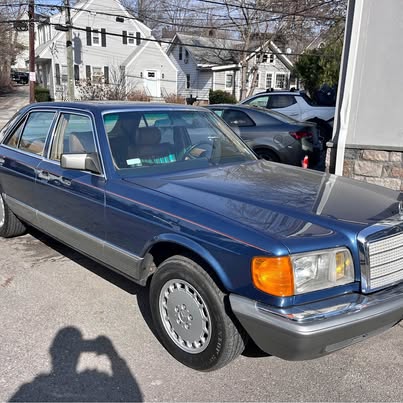 $25,000
Expand
What they sell for: S-Class sale prices.