
Mercedes-Benz S-Class buyer's guide
Mercedes-Benz S-Class -- the model's own buyer's guide: variants, values and what to check.
Years listed: 1988-1990 · Series: W109
Overview and history
The 300SEL is two different cars wearing one badge, and the first job of this guide is to keep them apart — because almost everything about buying, running and valuing one depends on which car you are actually looking at.
The original 300SEL is the W109 of 1965–72: the long-wheelbase, air-suspended flagship of the W108/W109 sedan range, built in small numbers alongside the steel-sprung W108 covered in our W108 guide. Where a W108 rides on coil springs, a W109 rides on air. Where a W108 cabin is handsome, a W109 cabin is opulent — more chrome, more wood, more leather, and rear doors lengthened by 100 mm (about 4 inches) so the extra room is all in the back seat, where the owner was expected to sit. It began with a 3.0-litre six, passed through 2.8-litre six and 3.5- and 4.5-litre V8 forms, and peaked in the 300SEL 6.3, the car that put the 6.3-litre M100 V8 from the 600 limousine into a sedan shell and quietly invented the modern super-saloon.
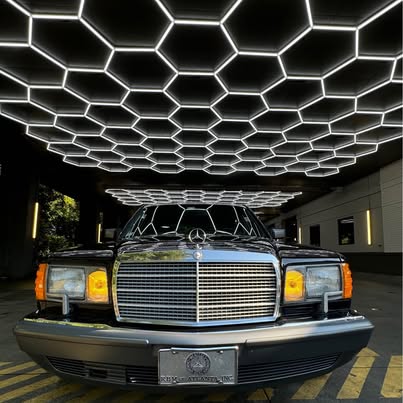
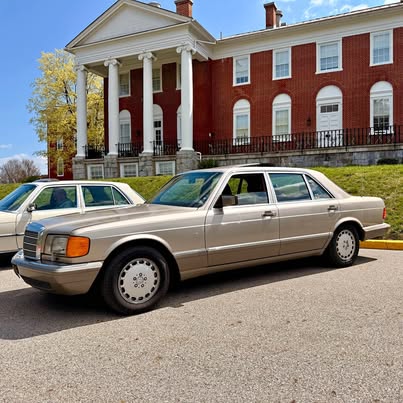
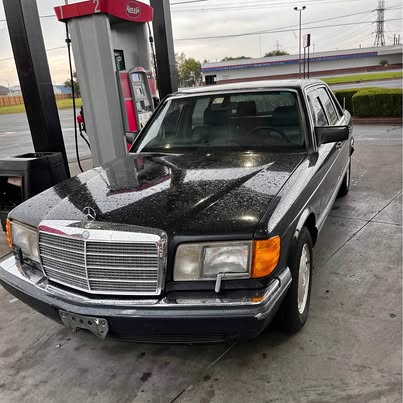
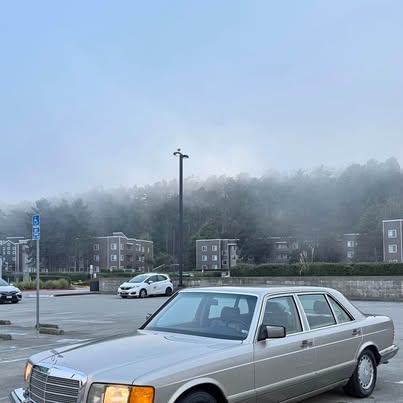
The second 300SEL is the W126 of the late 1980s: a long-wheelbase W126 S-Class powered by the 3.0-litre M103 six. It is a fine car — smooth, durable, steel-sprung, and far cheaper to run than any W109 — but it shares nothing with the earlier car except the badge, the long rear doors and the idea behind both: a six-cylinder S-Class with room in the back.
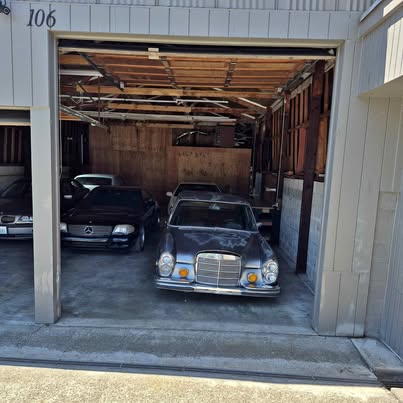
Scoping, stated plainly, because the listings will not do it for you: in our current pool of five 300SELs, four of the five are W126 cars (three from 1990 and one from 1988) and only one of the five is a W109, a 1972 car. All five in that sample are automatics, and all five came through Facebook Marketplace sellers. That sample tells you what the badge usually means in today's classifieds, not what it means to collectors. When an enthusiast says "300SEL" with reverence, they mean the W109 — and usually the 6.3. When a listing offers a 300SEL cheaply as a usable modern classic, it is almost always a W126. Neither car is a misprint; they are simply different purchases. This guide treats the W109 as its main subject — it is the rarer, more complex and more valuable car, and the one where a buying mistake costs the most — while giving the W126 the full, honest treatment its numbers in the pool deserve.
Two pieces of badge blur to clear away at the start. First, there was never a W116 300SEL: the 1970s S-Class (1972–80) sold as the 280SE, 350SE, 450SE and 450SEL, plus the US-market 300SD turbodiesel — so a "W116 300SEL" is a confused listing, not a rare variant. Second, the W126 diesels are badged 300SD and 300SDL, not 300SEL; the W126 300SEL is a petrol six. A "300SEL diesel" is a diesel car wearing the wrong badge, a petrol car described wrongly, or an engine swap — each needs settling from the papers and engine number before anything else matters. The W108 280SEL causes the third confusion: it is a long-wheelbase W108 on steel springs, not a W109, however similar it looks. The chassis number settles all of this in seconds — a W109's begins 109, a W108's begins 108 — and step 1 of the inspection shows you where to read it.
The W109's history is short because Mercedes never intended it to be a volume car. The air-suspension line descended from the W112 300SE fintail, and when the new Bracq-styled body arrived in 1965 the flagship kept its air springs, its extra length and its separate chassis code. It was then progressively re-engined: the old alloy six gave way to the 2.8 for North America, the 6.3 arrived in 1968 as an engineering statement that became a legend, and the new small V8s — 3.5, then the US-market 4.5 — carried the car to 1972. Total W109 production was in the low twenty-thousands against roughly 360,000 W108s, and that rarity cuts both ways: everything unique to a W109 — air-suspension parts, trim, brightwork — is correspondingly harder to find than the W108 equivalent.
The W126 300SEL needs less romance and more respect. By 1988 the W126 was a mature, thoroughly developed car, and the 3.0-litre six in long-wheelbase form was its sensible flagship for buyers who did not need a V8. These cars were built and survive in far larger numbers than any W109 — which is why they dominate our pool sample of five. Buy one with your eyes open and it is one of the cheapest ways into a proper S-Class; buy one thinking it is a cut-price 6.3 and you will be disappointed by everything except the running costs.
Everything that follows is organised around that split: both cars tabled in the models section, the W109 engines treated in depth with the M103 separately, the problem areas spending most of their length on the air suspension — the system that makes or breaks a W109 purchase — and a checklist that gives you the tests, in order, that tell a sorted car from a sinking one.
The models
Every 300SEL is a four-door, long-wheelbase sedan, an automatic in almost all cases — all five cars in our pool sample are automatics, which matches how these cars were sold new. What changes across the badge's life is everything else: suspension, engine, trim and era.
| Model | Years | Engine | Output | Built | Character |
|---|---|---|---|---|---|
| 300SEL (W109) | 1965–1967 | 3.0 six (M189), injection | 170 hp | 2,519 | The original flagship six; alloy engine, rarest six |
| 300SEL 2.8 (W109) | 1968–1970 | 2.8 six (M130), injection | about 170 hp (US rating) | 6,052 | The North American six; the gentlest W109 to run |
| 300SEL 6.3 (W109) | 1968–1972 | 6.3 V8 (M100), injection | 250 hp | 6,526 | The legend; 600 power in a sedan, 600 running costs |
| 300SEL 3.5 (W109) | 1970–1972 | 3.5 V8 (M116), injection | about 200 hp | 9,583 | The sweet spot; the most numerous W109 |
| 300SEL 4.5 (W109) | 1971–1972 | 4.5 V8 (M117), injection | 195 hp net | 2,553 | US-market torque; rarer than its W108 sister |
| 300SEL (W126) | 1988–1991 (US) | 3.0 six (M103), injection | 177 hp net | Built in large numbers | The modern classic; steel springs, sensible costs |
(Outputs are period figures: DIN for European cars, net for US-market cars. The US-market 300SE/300SEL arrived for 1988, which is why the cars in our pool sample of five cluster in 1988–90.)
The W109 sixes. The first 300SEL carried the M189 alloy-block 3.0-litre six from the 300 line — the same basic engine as the W108 300SE's, in a longer, plusher, air-suspended shell. It is a charismatic car and a specialist one: engine parts are scarce, and only 2,519 were built. The 2.8 that replaced it for North America is the pragmatic six-cylinder W109: the iron-block M130 is the engine the W108 guide covers in depth, parts are comparatively easy, and the car asks nothing exotic of its owner beyond the air suspension every W109 shares. If you want the W109 experience at the lowest mechanical risk, the 2.8 is where to look, and its lack of collector glamour is your friend at purchase time.
The 6.3. One model gets its own paragraph in any company, and it is this one. Erich Waxenberger's project put the M100 V8 from the 600 into the W109 shell, and the result was, for a time, the fastest four-door car in the world: 250 hp, roughly 500 Nm of torque, a top speed around 137 mph and acceleration that embarrassed contemporary sports cars, delivered in near-silence from a car with air suspension, air conditioning and room for five. Nothing about it is a trim package: the engine, its cooling, its strengthened transmission and much of its running gear are specific to the model, the chassis code is its own (109.018), and the running costs belong to the 600's world, not the W108's. Treat any 6.3 as a small-production exotic that happens to have four doors, because that is what it is.
The small V8s: 3.5 and 4.5. The 300SEL 3.5 is the most numerous W109 and, for most buyers, the best one: the high-compression M116 V8 revs eagerly, the car is quick by any era's standards, and it carries none of the 6.3's exotic-parts exposure. The 4.5 is the same idea tuned for America — longer stroke, lower compression, torque from idle, a three-speed torque-converter automatic in place of the four-speed fluid-coupling box — and it is rarer in W109 form (2,553 built) than as a W108 280SE 4.5. The W108 guide's warning applies with extra force here, because the premium rides on the badge: verify the engine number, not the boot lid. A 3.5's begins 116.980; a US 4.5's begins 117.98. A "3.5" carrying a 117 engine is a 4.5 or a swap, whatever the seller calls it.
The trim difference — what makes a W109 a W109 inside. The W109 carries substantially more exterior brightwork — broader chrome, including chrome window frames where the W108 uses plainer finishes — and inside it upgrades almost every surface: leather was far more common (though MB-Tex exists on W109s too, so do not authenticate a car by its seats alone), the wood is richer and more extensive, with burled walnut veneer on the dashboard and door cappings, and the rear compartment gets the fittings of a car meant to be ridden in — reading lights, deeper padding, and on many cars a rear bench shaped for two in comfort rather than three in a row. The practical consequence is cost, not snobbery: every one of those surfaces is a W109-specific part, thinner on the ground than the W108 equivalent and priced accordingly. A W109 with a tired interior is a more expensive problem than a W108 with a tired interior, in exactly the way a W109 with tired air suspension is a more expensive problem than a W108 with tired springs. Judge the cabin as carefully as the suspension.
The W126 300SEL (1988–91, US). The later car is simpler to describe because it is simpler to own: the long-wheelbase W126 body, the M103 six with Bosch KE-Jetronic (CIS-E) injection, a four-speed torque-converter automatic, steel coil springs, and the full W126 package — anti-lock brakes, a driver's airbag on US cars, and the build quality that made the model's reputation. Its short-wheelbase sister is the 300SE; the SEL's extra length is, again, all in the rear doors. For buyers whose driving is modern traffic and long distances it is arguably the most usable car in this guide — but it belongs to a different market, parts world and price conversation from the W109, and the two should never be valued against each other.
Engines and gearboxes
The W109 sixes: M189 and M130
The M189 in the first 300SELs is an alloy-block, overhead-cam 3.0-litre six developed from the 300 "Adenauer" engine, with Bosch mechanical fuel injection, and it makes its 170 hp with a smoothness the iron-block sixes never quite match. It is also the engine in this guide with the thinnest parts support. Anything M189-specific — and a great deal is specific, from the alloy block's hardware to the injection calibration — is specialist territory, sourced through the small network that also serves the 300SL and Adenauer worlds, at prices that reflect that company. A healthy M189 starts readily, idles silkily and pulls without hesitation; a sick one should be priced as a specialist rebuild, never as a tune-up. Do not buy an M189 car with engine trouble on the promise that it is "basically the same as a 280SE engine." It is not, and the W108 guide's M130 coverage does not transfer to it.
The M130 in the 300SEL 2.8 is the opposite case: it is the 280SE's engine, and everything in the W108 guide's injection section applies word for word. The Bosch six-plunger mechanical injection pump meters fuel against a three-dimensional space cam; when right, these cars start instantly hot or cold. The wear that matters is plunger wear, announcing itself as fuel dilution — petrol passing the plungers into the oil. On pumps with their own oil reservoir, check the pump's own dipstick: the level rises between services and the oil reeks of fuel. On engine-oil-fed pumps the same leak shows on the engine dipstick as a level that creeps up instead of down, in oil that feels thin and smells of petrol. A rising "oil" level is the tell, far more reliable than how the car happens to run on the day. A pump rebuild from one of the handful of US specialists runs roughly $2,000–3,500, so documented pump work is worth a premium. Two cheaper causes of a rich-running injected six catch buyers out, exactly as on the W108: the pump's wax-element thermostat fails and holds cold enrichment on when warm, and a stuck-open engine thermostat does the same, because an engine that never reaches temperature is one the pump correctly believes is still cold. Read the temperature gauge's story before condemning the pump.
The small V8s: M116 3.5 and M117 4.5
The 3.5 and 4.5 in the W109 are the same engines as in the W108 V8s — alloy heads on an iron block, overhead cams, Bosch D-Jetronic electronic injection — and the W108 guide's D-Jetronic fault-finding transfers whole: fuel pressure first (about 2 bar, 28–30 psi, at the rail, before any "electronic" diagnosis), then the manifold pressure sensor, which must hold vacuum from a hand pump or its perforated diaphragm will richen the mixture exactly where you want power, then the trigger points in the base of the distributor, whose fibre rubbing blocks wear and whose contacts foul with oil creeping up the shaft — presenting as a cold misfire that clears as the engine warms, which owners call character and specialists recognise as a service item. The wax-type auxiliary air valve sticks and gives a high hot idle no adjustment cures. Blue smoke on the overrun is valve stem seals, a known and fixable job; smoke under load is rings, an engine-out conversation on any of these engines.
What differs in the W109 is context, not hardware. The 3.5 here is the flagship application — high-compression (9.5:1), premium fuel, revs eagerly — and the 4.5 is the US answer, 8.0:1 compression and a fat, lazy torque curve. On any of these V8s the plastic timing-chain guides and tensioner are a service item around 100,000 miles, and a skipped one can turn a good engine into scrap; ask for the invoice, or price the job in. In a W109 you are also listening for the air compressor the engine drives (see the problem areas): a sweet engine bay with a noisy, tired compressor is a car whose flagship system is already spending your money.
The 6.3: M100
The M100 is a 6,332 cc overhead-cam V8 derived directly from the 600 limousine's engine, adapted for the sedan with a conventional wet sump in place of the 600's dry-sump system, Bosch mechanical fuel injection, and an output of 250 hp with roughly 500 Nm (369 lb-ft) of torque delivered low and flat. In period it made the 300SEL 6.3 the fastest production four-door in the world — top speed around 137 mph, 0–60 mph in the mid-six-second range — without raising its voice, which remains the car's defining trick: a correct 6.3 feels effortless at every speed, not merely fast at one.
Understand what the engine asks of you before you fall for what it gives. The M100 shares its world with the 600: injection equipment, internal parts and ancillaries are low-production, specialist-serviced and priced accordingly. The mechanical injection pump's overhaul belongs with the very small number of shops that do them, at a cost in the several-thousand-dollar range; engine internals, when needed at all, are hunted rather than ordered. The engine itself is fundamentally strong — it is not highly stressed for its size, and a maintained M100 covers large mileages — but "fundamentally strong" describes a maintained engine. Oil leaks, perished rubber, tired injection calibration and deferred cooling-system work are the normal findings on cars that have sat, and on a 6.3 every ordinary job carries an exotic multiplier: more hours to reach things, dearer parts, fewer people willing to do the work. Budget a 6.3's running costs against a contemporary exotic, not against a 280SE, and the car will never shock you. Budget it the other way round and it will, repeatedly.
Identity is part of the engine check, because the 6.3 premium is the largest in this guide and the engine is the car. A genuine car's chassis number begins 109.018 and its engine number 100.98. A 6.3 badge on a car whose numbers say otherwise is a tribute, priced as one however well it has been done. The data card settles any argument; get it, or the numbers photographed, before you travel.
The W126 six: M103
The M103 is a 2,962 cc overhead-cam six with Bosch KE-Jetronic (CIS-E) — continuous injection with electronic trim, quite different from both the W109's mechanical pump and the V8s' D-Jetronic. In US specification it makes 177 hp, pulls the long-wheelbase car along with genuine ease, and has one of the best durability reputations of any Mercedes engine: bottom ends are exceptionally long-lived, and the failures that arrive are known, bounded and affordable by S-Class standards. The classic items are oil leaks from the head gasket's oil gallery at the rear of the head (a weep down the side of the block is the tell), valve stem seals hardening with age and giving a puff of blue smoke on start-up after sitting, and idle and starting faults that trace to the KE-Jetronic's supporting cast — idle control valve, electro-hydraulic actuator, tired ignition components, vacuum leaks — rather than to the fuel distributor itself, which is robust and should be the last thing condemned, not the first. A distributor replaced "to see if it helps" is a previous owner's expensive guess, not a repair; documented diagnosis is worth more than a pile of new parts. Timing is by chain, and a start-up rattle that persists is a tensioner-and-guides conversation. None of it approaches W109 money: the M103 is the engine for the buyer who wants to drive the car every week.
Gearboxes
Almost every 300SEL you will meet is an automatic, and there are three distinct boxes to know. The W109 sixes and the 3.5 use Mercedes' own four-speed automatic with a fluid coupling (K4A 025 in early cars, the smoother K4C 025 later; the 3.5 and the 6.3 use strengthened versions). These boxes pull away in second gear by design — first comes only on full throttle or kickdown — so a second-gear start is correct behaviour, not slip. Changes should be firm and clean; flaring between gears, or a long delay engaging reverse, means a rebuild at roughly $3,000–5,500 at a specialist. The W109 4.5, like its W108 sister, is different: a three-speed with a proper torque converter (W3A 040), strong, simple and perfectly suited to the engine's torque. The W126 car uses the 722.3 four-speed torque-converter automatic, one of the most durable automatics Mercedes ever built; it too starts in second on US cars, shifts should be positive rather than silky, and the common faults are external — vacuum modulator and kickdown issues, leaks, neglected fluid changes — rather than internal failure. A 722.3 that flares or delays reverse is still a rebuild conversation, but specialists and good used units are far easier to find than for the W109 boxes.
Manual W109s exist in tiny numbers and are curiosities rather than a market; judge one as the W108 guide directs — synchromesh (second gear goes first) and clutch judder. On automatics, the selector position is furniture, not specification: the same boxes were sold with column and floor change, so never read the gearbox type off the shifter. The data card carries it.
Problem areas
Everything in this section is drawn from the cars themselves and from what specialists who keep W109s alive spend their days fixing. On a W108, rust is the whole game. On a W109, rust is half the game — the other half is the air suspension, and it is the half most buyers examine least because it is the half they understand least. Read in that order: air first, then the shell it is bolted to.
The air suspension: how it works, and how it fails
A W109 has no road springs at all. Each wheel is carried on a rubber air bellows whose pressure is supplied by an engine-driven compressor, stored in a reservoir tank, and metered by height-control valves — one at the front, one at the rear — each linked mechanically to its axle so that when the body sinks relative to the wheels, the valve admits air and lifts it, and when the body rises, the valve exhausts air and settles it. The driver gets a cabin control to raise the car for rough ground and to lock the suspension for jacking or transport. The system is entirely mechanical and pneumatic — no electronics anywhere — and when it is right it produces the W109's signature: a level car at any load, and a ride that glides where a W108's merely composes itself.
Every component in that chain is now at least fifty years old, made substantially of rubber, and the failure modes follow from that fact.
The bellows. The four air springs are rubber, they flex on every bump, and they perish — cracking in the folds where the rubber rolls over itself, worst where road grit works into the pleats. A perished bellows leaks, slowly at first: the car sinks at one corner overnight, then over a weekend, then during a long lunch. Replacement bellows are a few hundred dollars each before labour; a full set fitted, with the system checked over, is realistically a $1,500–3,000 conversation. What matters for buying is whether the seller's story matches the car's stance in the morning — which is why the inspection insists on seeing the car after it has sat, not after it has been run up for your arrival.
The height-control valves. These are the brains of the system and its most underestimated cost. Each is a precision pneumatic device, and after fifty years their internal seals harden and leak — internally, so the car behaves as if a bellows is leaking when the bellows are sound, or hunts for its level in small corrections, or holds one corner wrong. Valves are rebuilt by specialists rather than replaced from a shelf; budget roughly $400–800 per valve for a proper overhaul, plus removal and refitting, and a car can need both. The diagnostic trap is parts-swapping in the wrong order: bellows replaced because the car sank, when the sink was a valve passing air. A specialist leak-down test — isolating each circuit and watching which one loses pressure — settles the cause before money is spent, and a seller who can show that test has maintained the car the way it needs.
The compressor and the reservoir. The engine-driven compressor supplies the whole system, and a leaking system makes it work constantly, which wears it — so compressor wear is usually a symptom of neglect elsewhere, not the original sin. A tired compressor is slow to raise the car, noisy, or both; overhaul is specialist work, realistically $800–1,500. The steel reservoir tank corrodes, and the air lines and fittings corrode and chafe with it. None of these parts is individually ruinous; their cost is in the finding. Tracing a pneumatic leak is soapy-water-and-patience work, billed by the hour.
The economics, stated whole. A W109 whose air system has been maintained costs its owner periodic attention and the odd component. A W109 whose system has been ignored typically needs the recommissioning all at once: bellows, at least one valve, compressor attention, lines and seals, and the labour to find and prove every leak. That bill, done properly by a specialist, runs roughly $3,000–8,000 on a six or a small V8, and a 6.3 sits at the top of that range and beyond. This is the single largest predictable cost in W109 ownership, it is entirely testable before purchase, and it is why two apparently identical cars can honestly differ by that much money. Cars "converted to coil springs" exist too — kits and improvisations both — and a conversion is a fork in the road, not a footnote: it removes the car's defining system, its ride and a substantial part of its value, and reversing it means buying back everything that was thrown away. Price a converted car as a different, lesser model, and never pay air-suspension money for one.
The sinking-car test, in one paragraph. A sound system holds the car at level for days. A car down on its stops when you arrive, which rises when started, has a leak the seller has learned to live with — the compressor is masking it, at the compressor's expense. A car that rises unevenly, sits level but wrong, or keeps correcting itself at idle has valve trouble. A car that will not rise at all has a compressor, reservoir or major-line failure — or no air in the system at all, which on a car sold as a runner is a walk-away-grade finding until explained. All of this is visible before the test drive, for free, which is why step 2 of the inspection is simply: look at the car before anyone starts it.
Rust: the W109 map
The shell is the W108's shell, lengthened, and the W108 guide's rust map applies — sills, floor pans, trunk floor and spare wheel well, frame rails, crossmembers and spring perches (on a W109, read: bellows mountings and their structure), door bottoms, battery tray, headlamp bowls, wing bottoms and windshield surround. Work through that map in the W108 guide in full; what follows is only what the W109 changes.
Three differences matter. First, the stakes at the mountings: the air bellows and height-valve linkages attach to structure that must be sound, and corrosion around the rear bellows seats and the front subframe is both a structural finding and an air-system finding — the repair is fabrication, priced per car, and it quickly exceeds the value of a cheap example. Second, the trim hides more: the W109's extra brightwork traps water against the metal it decorates, and the lower edges of the longer rear doors carry the same blocked-drain rot as any W108 door, over a larger and rarer panel — a W109 rear door is not a W108 rear door, and neither is its chrome. Third, the sill-jack test still rules: the factory jack plugs into a socket in each sill, and a sound sill takes the car's weight cleanly and silently, while a rotten one creaks, flexes or starts to fold. A seller who won't let you do it has answered the question. Budget the welding as the W108 guide prices it — a sill cut out, welded and painted at roughly $1,000–2,500 per side — and treat fresh, uniform underseal as a cover-up until the seller proves otherwise.
Floors deserve their W109 sentence too: the water paths are the same (windshield and rear window seals, heater box), the carpets are plusher and hide more, and a damp W109 cabin attacks leather and wood that a W108 cabin would forgive. Lift all four carpets, lift the spare wheel, prod the well corners. A rusted-out trunk floor is a panel replacement and paint at $800–2,000 done properly; staining is a clean-out, treat and seal job you can do yourself — but on a W109, staining is also a prompt to check what the damp has done to the trim above it.
Steering, brakes and the running gear under the air
Beneath the bellows, a W109's chassis is the W108's: double-wishbone front suspension built around kingpins, maintained with a grease gun through three nipples per side plus the control-arm pivots, wanting attention roughly every 3,000 miles. The W108 guide's kingpin discipline transfers whole — never condemn a kingpin dry, because old grease hardens in the passages and a joint that rocks like a worn one can come back into specification once lubricated; grease it (warm the joint if the gun won't push grease through), then rock the top of each front wheel and judge the play. A specialist kingpin rebuild is roughly $800–1,500 a side. Front subframe mounts perish and make the front end feel loose; the kit is about $200 and a fitted set runs $600–1,100. At the rear, the swing axle is managed by the air system rather than by the W108's hydropneumatic compensating spring — there is no compensator to convert or blame — so read rear stance through the air-system tests above: stance faults on a W109 are pneumatic until proved mechanical.
Brakes are discs all round, as on the W108, and the parts are cheap; what is not cheap is undoing twenty years of sitting — seized calipers, perished hoses, a tired master cylinder, $800–2,000 for a full hydraulic refresh with labour — and on a 6.3 the same refresh is priced in the 6.3's world. Judge the discs, not just the pedal: a car that has stood wears a rust band and a lip on every disc, and the handbrake is a separate drum inside the rear disc hat, so a handbrake that barely holds is its own small job, not a caliper verdict. On the W126, brakes are conventional modern practice — discs, anti-lock, wear sensors on US cars — and the findings are those on any well-built 1980s car: hoses, calipers sticky from standing, fluid nobody has changed.
Interior, wood and chrome: the W109 surcharge
The W108 guide's interior section — horsehair pads that crumble to greenish dust, the driver's seat judged first, the heater blower buried behind the dashboard in a 10–20 hour, $1,500–3,500 job on a part costing about $350 — applies to the W109 unchanged, and you should test the blower on every viewing, in any weather. What the W109 adds is the surcharge on every surface. The burled walnut set is larger and the window-frame pieces crack first; professional refinishing of the full set is $1,500–3,500, and a reveneer — veneer lifted, bubbled or sanded through — is priced very differently from a refinish, so read the finish before you price the job. Leather, far commoner here than on a W108, cracks with age and sun and re-trims into five figures professionally; MB-Tex, where fitted, is nearly immortal. The brightwork bill is the quiet one: a W109 carries substantially more chrome than a W108, it pits, and re-plating a full set is a serious bill piece by piece — count the pitted pieces on the viewing and price them then. Buy the cabin with the car, because you cannot economically recreate it later: the W108's rule, with the numbers turned up.
Electrics, and the W126's own list
Fifty-year-old W109 wiring fails at its connections, not in the middle of wires: dim lights, intermittent accessories and a wandering fuel gauge are almost always earth (ground) points — cheap to fix, tedious to find. The bigger-ticket electrical items are the D-Jetronic components on the small V8s and the window motors and switches; note that the air suspension itself has no electrics to fail — its faults are pneumatic and mechanical, diagnosable with patience rather than unobtainable control units. A car where everything electrical works — windows, blower on all speeds, washers, clock, radio — has usually been used and maintained, which is the best sign there is.
The W126 300SEL's problem list is shorter and cheaper, and mostly about age rather than design. The M103 items from the engines section (head-gasket oil weep, stem seals, KE-Jetronic supporting cast). Climate-control faults, which on US cars usually trace to the control unit and its solder joints, vacuum pods behind the dashboard, or a tired compressor — budget hundreds, not thousands, unless the dashboard has to come out. Idle faults that are vacuum leaks wearing disguises. Rear self-levelling, where fitted, is hydraulic, with an accumulator that fails with age and announces itself as a hard, bouncy rear ride — a bounded job, not a W109-scale one. Rust starts in the familiar places, reduced by better protection: jacking points, wheel arches, the trunk and around the rear window — inspect properly, but expect less of it than on any W109. And the W126's deferred-maintenance trap is a car that has sat: fuel-system varnish, brake hydraulics, air-conditioning seals and every rubber hose, all wanting renewal together. A W126 recommissioned from a decade asleep is a project wearing a modern suit.
How to inspect one
Allow at least an hour, bring a torch, a magnet wrapped in cloth and a screwdriver for prodding (with the seller's permission). Arrange the viewing for a car that has sat overnight, and resist any offer to "warm it up for you" — on a W109, the cold, sat car is the honest car. If it passes you, pay for a lift inspection before money changes hands; on either car it is money well spent, and on a W109 it is the best $150 you will ever spend.
- Start with the paperwork — and settle which car this is. Match the VIN on the title to the plate and the stamping on the car. A W109's chassis number begins 109 — and the digits after it name the model: 109.015 for the 3.0 six, 109.016 for the 2.8, 109.018 for the 6.3, with the 3.5 and 4.5 carrying their own 109.05-series codes. A number beginning 108 means the car is a W108, whatever the boot lid says — most often a 280SEL, a good car that is not this car. A W126 car carries the later WDB-prefixed VIN, and US 300SELs are 1988 and later. Check the engine number against the badge (116.980 for a 3.5, 117.98 for a US 4.5, 100.98 for a 6.3). Ask for the data card and the invoices; on a W109, air-suspension invoices are worth as much as engine invoices.
- Look at the car before anyone starts it. This is the W109's defining test, from the problem areas: a sound air system holds the car level for days. Down on its stops means a leak the compressor has been masking. One corner down means start your bellows-and-valve questions at that corner. Level but wrong — one corner high, or the car correcting itself later at idle — means valve trouble. Photograph what you see; a seller's "it always does that" is a price negotiation, not an explanation. On a W126, use the same minute the ordinary way: level on its springs, or sagging where a spring or the optional rear self-levelling has given up.
- Cold start, then watch it rise. A W109 should rise to level evenly and settle without hunting. Listen: a compressor labouring long and loud is compensating for leaks. An injected engine, six or V8, should start at once and settle; watch for blue smoke (valve stem seals or worse) and, on a small V8, listen for timing-chain rattle. A 6.3 should feel and sound effortless even cold — strain or drama in an M100 is a finding, not a warm-up phase.
- The dipstick test. On an injected W109 six, smell the engine oil for petrol and read the level, not just the smell: fuel in the oil means injection-pump plunger wear, and dilution raises the level — oil above the mark, thin and petrol-smelling, is a $2,000-plus conversation. On pumps with their own reservoir, pull the pump's dipstick too and apply the same test. On a W126, swap this step for the M103 checks: oil weep down the rear of the block, and the history's story on oil consumption.
- Under the car. Torch along both sills, prod the jacking points, check the floor seams, the front frame rails and crossmember, and — W109 specifically — the structure around the bellows mountings and the air lines' runs: perished lines, chafed pipes and a corroded reservoir tank all live down here, and none shows from above. Perforation in rails, sills or mounting structure is structural. Read the underseal as you go: patchy and honest is factory; a fresh uniform black coat is a question, not an answer. If the seller allows it, the sill-jack test from the rust section settles the sills in five minutes. This step decides whether you continue at all.
- Trunk and floors. Lift the spare wheel and the mat: water staining, rust in the well corners, a damp smell. Check the rear window seal while you are there. Then lift all four carpets inside and look for water tracks from the windshield base and heater box. On a W109, weigh damp double: it is rust starting below and leather and wood deteriorating above.
- Body, gaps and brightwork. Run the magnet over the sills, arches and lower doors — filler announces itself. Check door bottoms for bubbling and confirm the drain slots are clear, remembering the W109's rear doors are longer and rarer. Lift the battery out, or at minimum rock it and inspect the tray edges and firewall below with a torch: the tray rots from the top down, invisibly, with the battery in place. Count the pitted chrome pieces and price them now.
- Kingpins and steering (W109); front end (W126). Rock each front wheel top-to-bottom for play — but on a W109 treat dry play as a question, not a verdict: grease the kingpins first (three nipples per side plus the pivots), then judge. Price a rebuild in at $800–1,500 a side if play survives greasing. On the drive, the steering should be light, accurate and knock-free.
- The test drive. Fifteen minutes minimum, including a freeway stretch, and on a W109 include a stop: park, switch off, and watch whether the car holds its level while you walk around it. The automatic should pull away in second (normal, on both generations), change firmly, and engage reverse without a long pause or a thump. A six should pull cleanly without hesitation; a 3.5 should rev eagerly; a 4.5 should pull from idle; a 6.3 should do all of it without apparent effort. Brake hard from speed: straight, no judder.
- Heat, idle and electrics. Let it idle hot. Check oil pressure and temperature stability — and on an injected six, remember that an engine that never reaches temperature will run rich for an innocent reason (the pump believes it is still cold), so read the gauge before pricing the pump. Run the heater and blower on every speed, whatever the weather: a dead blower is a dashboard-out, four-figure job. Work every window, the washers, lights, horn and radio.
- Ride and stance, again, at the end. Stand back from the warm, driven car and repeat step 2's judgement. A W109 that rose evenly, drove level, parked level and is still level has passed the test that prices it. One that has sunk, hunted or listed during your visit has told you its first bill; size it with the ranges in the problem areas and negotiate with those numbers on the table, or walk away.
- Interior last. Sit in every seat and feel for collapsed pads; look underneath for the green dust of dead horsehair. Check the window-frame wood as closely as the dash, and read the finish — milky, crazed lacquer is a refinish; lifted or bubbled veneer is a reveneer. A sound, original interior is the hardest thing to recreate on either car, so weight it heavily — on the W109, almost as heavily as the air.
Values
The figures that matter for this badge are computed from this site's own listings and recorded sales, and they sit below this guide — the listed-now summary and the market block are refreshed every time the site rebuilds, so use them rather than any number quoted elsewhere. What follows is how to read them, and for the 300SEL that reading starts with a warning: the badge covers two unrelated cars, and any figure that mixes them is meaningless. Before you read a single number, split the market by chassis — 109 or 126 — using the year as your first filter (nothing after 1972 is a W109) and the chassis number as the proof.
Within the W109, there are effectively three markets. The 6.3 is a collector car priced against other low-production exotics: originality — engine number, data card, specification, air suspension still fitted and working — moves its price as much as condition, and a converted, wrong-engined or rusty 6.3 is worth a fraction of a correct car. The 3.5 and 4.5 sit a clear step below, priced as flagship classics where the condition spread does most of the work, the 3.5 carrying the collector premium and the 4.5 the torque-and-usability following. The sixes are the market's soft underbelly: the 2.8 is overlooked relative to its rarity and virtues, and the M189 car is priced by the small circle who understand it, which keeps it gentler than its 2,519 production run would suggest.
The W126 300SEL is a different conversation: a usable modern classic priced against other W126s, where the V8 cars carry the glamour and the six is the value end of a well-understood range. Read its figures against 300SEs and the wider W126 market, never against a W109's.
Two cautions apply across the badge. These are asking prices, not achieved prices — sellers of flagship classics routinely ask more than the market pays, and the auction record is the corrective wherever a model trades regularly. And the samples are small: our own current pool holds just five cars, four of them W126s, so treat any single listing as an anecdote, not a data point, and read the range rather than the median wherever the market block gives you both.
Read any individual car against the condition spread, not the headline. On a W109 the spread is driven by two ledgers, not one: the shell, and the air system, whose recommissioning range is set out in the problem areas. A car priced mid-band with a sound shell, a level stance after a week parked, and invoices for both is almost always better value than the cheapest example of a dearer model. There is no such thing as a cheap 300SEL that stays cheap — on the W109 the sentence is about air and rust, on the W126 about deferred maintenance, but on both it is true.
Parts and ownership
A 300SEL's ownership story is two stories, settled by the chassis number, not the badge.
The W109. Start from the W108's position — one of the best-supported Mercedes of its era, a helpful factory Classic Center, deep specialist trade — and subtract everything the W109 made unique. Shared mechanicals (the M130, M116 and M117 engines' service items, brakes, kingpin kits, glass rubbers and most seals) are easy: order today, fit this weekend, at prices close to modern-car money. W109-specific parts are the other world: air bellows are available and reasonably priced as components, but height-control valves and the compressor are rebuild-and-return specialist work rather than shelf items; burled walnut sets, chrome window frames and the extra brightwork are hunted used or refinished, not ordered; M189 parts are scarce and dear; and M100 parts for the 6.3 belong to the 600's ecosystem, with its prices and its short list of suppliers. The heater blower remains the emblematic job — a part costing about $350 behind a dashboard that takes 10–20 hours to remove. A quality repaint starts around $10,000, which is why this guide's mantra, inherited from the W108's and doubled, is: buy the body, the interior and the air, and fix the mechanics.
Running a W109. A sorted car is a realistic regular-use classic — but "sorted" must include the air system holding level for a week, not merely an engine that starts. Fuel consumption is in the mid-teens mpg for the sixes and small V8s and worse for the 6.3, which should surprise nobody. Servicing needs a specialist who knows pneumatic Mercedes, and finding that person is part of buying the car: a thick file from a known W109 hand is a feature worth paying for. The budget line that catches new owners is the first year — catching up deferred maintenance on a running car honestly costs $2,000–5,000 before you improve anything, and if the air system is part of the catch-up, add the problem areas' ranges on top. A sat 6.3 should be budgeted as an exotic recommissioning, full stop.
The W126. Ownership here is the modern-classic routine at its most benign: M103 service parts are plentiful and cheap, the 722.3 automatic is supported everywhere Mercedes of the era are serviced, and the W126's specialist network is the largest of any car in this guide. The known costs are the known items — head-gasket weep, stem seals, climate-control diagnosis, suspension rubber with age — each bounded in the hundreds-to-low-thousands rather than open-ended. A W126 in regular use asks for regular servicing and rewards it with the durability the model was famous for new.
Which one to buy
- The all-rounder: 300SEL 3.5 (W109). The most numerous W109, the eager V8, the full flagship experience, none of the 6.3's exotic exposure. Verify the engine number (116.980) and the stance after a night parked, and this is the W109 to drive and enjoy.
- The legend: 300SEL 6.3 (W109). Buy it for what it is — a small-production exotic with four doors — with a 600-scale budget for its care, a data card and matching 100.98 engine number verified before travel, and the air system proven, not promised. A correct, sorted 6.3 is one of the great cars of its century; a cheap one is one of the great bills.
- The value W109: 300SEL 2.8. The gentlest route into the flagship: the best-supported W109 engine, the same cabin and ride, and a market that underprices it because the glamour sits elsewhere. Its one non-negotiable is every W109's — the air.
- The connoisseur's car: 300SEL 3.0 (W109). The alloy M189, 2,519 built, the original flagship in its purest form. Parts patience is part of the purchase; a good one is a bargain only a small circle understands, which is why it stays one.
- The cruiser: 300SEL 4.5 (W109). Torque, the simple three-speed torque-converter box, and rarity (2,553 built) at less than 3.5 money. For American driving — distance, air conditioning, ease — it is the pick of the W109 V8s to live with.
- The modern classic: 300SEL (W126). A different car and an honest one: the M103 six, steel springs, W126 build quality, and running costs a W109 owner can only envy. Buy the best-maintained example you can find and drive it constantly.
And the rule that overrides all of the above: buy the least rusty car you can find — and, on a W109, the one whose air suspension holds it level after a week parked. Engines, gearboxes, brakes and blower motors are all fixable at prices you can plan for. A rotten shell costs more to put right than the finished car will be worth, and a discarded air system costs the car's identity to restore — the two things about a 300SEL that can never be made original again.
See the 3 S-Class cars currently listed.
For sale now
$11,500Expand
What they sell for: S-Class sale prices.