
Mercedes-Benz 450SLC buyer's guide
Mercedes-Benz 450SLC -- the model's own buyer's guide: variants, values and what to check.
Years listed: 1974-1977 · Series: C107
Overview and history
The 450SLC is the fixed-roof half of the R107/C107 family — the car Mercedes-Benz built when it decided the SL roadster's mechanical package deserved a proper four-seat coupé on top of it. The roadster (chassis code R107) was launched in 1971; the coupé, coded C107 and badged SLC, followed at the Paris show in October 1971 and reached buyers in 1972. Where the SL is a two-seater with a token space behind the seats, the SLC stretches the wheelbase by 360 mm — about 14 inches, all of it in the middle of the car — to make room for a genuine rear bench and a long, formal roofline. Underneath, the floorpan derives from the W114 coupé line, and the running gear is the SL's: double-wishbone front suspension on a separate subframe, semi-trailing-arm rear suspension, disc brakes all round and recirculating-ball power steering.
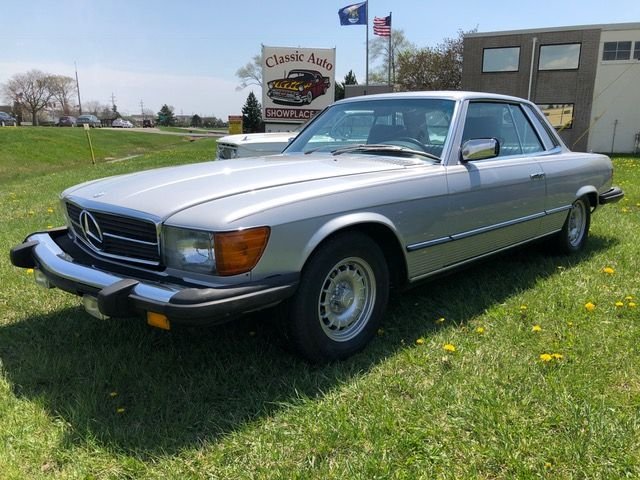
The styling, led by Friedrich Geiger's studio, is the SLC's whole argument. The roof runs back in one unbroken sweep to a wide C-pillar, and set into the rear side glass is the detail everyone remembers: a louvred panel, slatted like a venetian blind, that lets the long glasshouse taper visually without leaving a blind, slab-sided pillar. It is a styling device, not a vent — and it is unique to this car. No other Mercedes before or since has worn it. The result is a coupé that looks lower, longer and more expensive than the sedan range it overlapped, and which today reads as one of the most distinctive silhouettes of the 1970s.
The 450SLC itself arrived for 1973 in North America (1972 in Europe), powered by the 4.5-litre M117 V8, and it became the volume SLC by a wide margin — roughly half of all SLC production. Around it sat a family this guide covers in proportion: the 350SLC that launched the line, the six-cylinder 280SLC sold in Europe, the 450SLC 5.0 built to homologate a rally car, and the 380SLC and 500SLC that closed production in 1981. Total C107 production was about 62,900 cars over a full decade — a long run, but a fraction of the roadster's numbers, which is why good coupés are now the scarcer find.
North America was a core market. We currently track just six 450SLCs on Classic Listings, all of them US cars offered through Facebook Marketplace, spanning 1973 to 1979 and spread from Florida to Washington state — a small sample that nonetheless matches the wider market's shape: automatic V8 coupés, in period colours, at the affordable end of the classic Mercedes world. That affordability is the trap and the opportunity in one. These were costly, complicated cars when new, values fell hard in the 1990s and 2000s, and many were run on a budget or parked. The mechanical package is fundamentally tough — the M117 V8 is one of the great long-life engines — so the difference between a good SLC and a money pit is rust, deferred maintenance and tired fuel injection, in that order. Buy the shell and the history; the rest is fixable at prices you can plan for.
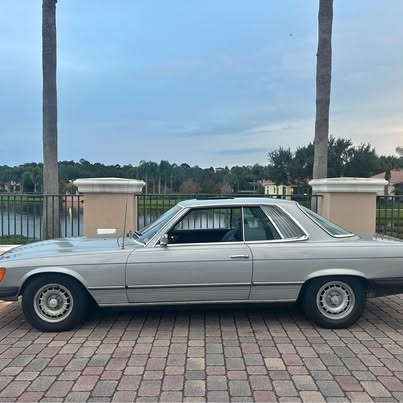
The models
Every SLC is a two-door, four-seat fixed-head coupé on the C107 chassis. The badge tells you the engine; the market tells you the rest. European cars were offered with manual gearboxes and leaner trim; US cars came loaded, automatic and, from 1974, wearing the big federal bumpers. The range opened with a 3.5 V8, gained the 4.5 as its core model, added a six for Europe, detoured into rallying with a 5.0-litre homologation special, and finished with the lighter alloy-engined 380 and 500.
| Model | Years | Engine | Output | Built | Character |
|---|---|---|---|---|---|
| 280SLC | 1974–1981 | 2.8 six (M110), injection | 177–185 hp | about 10,700 | Europe-only; the light, revvy one, manuals exist |
| 350SLC | 1971–1980 | 3.5 V8 (M116), D-Jetronic | 200 hp | about 13,900 | The launch car; sweet high-revving V8 |
| 450SLC | 1972–1980 | 4.5 V8 (M117), D-Jet then K-Jetronic | 225 hp (Euro); about 180–190 hp (US) | about 31,700 | The core of the market; torque, not revs |
| 450SLC 5.0 | 1978–1980 | 5.0 V8 (M117), alloy block, K-Jetronic | 240 hp | about 1,600 | The rally homologation special |
| 380SLC | 1980–1981 | 3.8 V8 (M116), alloy block, K-Jetronic | 218 hp (Euro); 155 hp (US) | about 3,800 | The final US coupé; one model year only in America |
| 500SLC | 1980–1981 | 5.0 V8 (M117), alloy block, K-Jetronic | 240 hp | about 1,300 | Europe-only flagship; the rarest regular model |
(Outputs are period DIN figures for European cars; US figures are SAE net and fell as emissions equipment tightened through the 1970s. Treat any single horsepower claim on a US car with suspicion until you know its model year and market — the same badge spans meaningfully different states of tune.)
The 450SLC (1972–80) is the car this guide is about and the one you will actually find. In European form the M117 made 225 hp and the car was a genuine 130 mph autobahn coupé. US cars, sold from the 1973 to the 1980 model years, traded top-end power for torque and emissions compliance: lower compression, exhaust gas recirculation, air injection, and from the middle of the decade catalytic converters and the fuel-system change from D-Jetronic to K-Jetronic described below. None of that spoils the car. A US 450SLC is a relaxed, torquey grand tourer that will cruise all day at modern highway speeds — just do not pay European-spec money for one, and do not believe a seller who quotes 225 hp for a federal car.
The 350SLC (1971–80) launched the line and is the connoisseur's quiet pick: the smaller M116 V8 revs more eagerly than the 4.5 and the early cars are the purest in trim and detailing. One identity trap matters here. The first US-market coupés, sold for 1972, were badged 350SLC but carried the 4.5-litre engine — Mercedes fitted the bigger engine for America while keeping the European badge for a season, exactly as it did with the 350SL roadster. So a US "350SLC" may be a 4.5 from the factory, and that is correct, not a swap. The engine number settles it: a 3.5's begins 116.982, a 4.5's 117.982. Check the number, not the boot lid, before you price any early car.
The 280SLC (1974–81) put the twin-cam M110 six into the coupé for Europe and other non-US markets. It is lighter over the front wheels, sweeter-handling, and the only SLC commonly found with a manual gearbox — four speeds, with a five-speed option later. America never got it officially, so US examples are grey imports: check federalisation work, lighting and title history carefully, and value the car as the curiosity it is rather than as a cheap 450.
The 450SLC 5.0 (1978–80) exists because Mercedes wanted to go rallying. To homologate the car for the World Rally Championship, the factory built a 5.0-litre version with an all-alloy version of the M117, aluminium bonnet and boot lid panels, a small rubber rear spoiler and wider wheels. The works team then campaigned SLCs with real success in long-distance African events — the big coupés famously swept the first four places at the 1979 Bandama Rally in the Ivory Coast, with Björn Waldegård and Hannu Mikkola among the drivers, and won there again in 1980. These are big, heavy rally cars that won on strength and torque rather than agility, and the road cars are the most collectible SLCs of all. They are also the most faked: badges and a spoiler are cheap, so a claimed 5.0 needs its engine number (117.960) and build documentation checked before a premium changes hands. Its successor, the 500SLC (1980–81), carried the same alloy 5.0 in slightly smaller displacement and cleaner production form, Europe only.
The 380SLC (1980–81) closed the US line, replacing the 450 for a single model year. Its alloy-block 3.8 V8 saved weight and the car is usefully economical by V8 standards, but US output dropped to 155 hp and — critically — US 380 engines of this era left the factory with a single-row timing chain, a known weak point covered in the problem section. A documented conversion to the later double-row chain transforms the risk; an undocumented car must be priced as if the job is still owed.
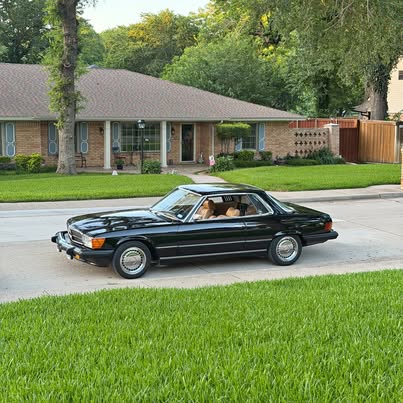
Engines and gearboxes
The M117 4.5: the engine you are probably buying
The 450SLC's engine is the M117 — an iron-block, alloy-head V8 with a single overhead camshaft per bank, chain drive, and a 4,520 cc displacement arrived at with a long stroke. It is not a highly stressed engine. Even the 225 hp European version makes its power without trying, and the US versions make less power with even less stress, which is precisely why so many survive. A healthy M117 starts instantly, idles with a soft, even lope, pulls from 1,500 rpm without complaint and shows strong oil pressure — the gauge high at speed, dropping at a hot idle, which is normal. It should run for 200,000 miles and beyond on oil changes alone. What kills these engines is almost never the engine: it is the timing-chain guides, the fuel system bolted to it, and neglect, in roughly that order.
Timing chain and guides — the one scheduled job that is not optional. The chain runs over plastic guide rails, and the plastic hardens and embrittles with heat and age. A rail breaks, the chain goes slack or jumps a tooth, and on this interference engine the valves meet the pistons. The parts are cheap; the engine rebuild is not. Treat chain, rails, tensioner and the camshaft oil-feed fittings as a service package due roughly every 100,000 miles or whenever the history is unknown — a specialist job in the region of $1,500–3,000 with the chain rolled in, more if the front cover comes off. The test on a viewing is your ear at a cold start: a brief rattle for a second while the tensioner fills is common; a rattle that persists, or a slapping noise from the front of the engine at a hot idle, means the package is overdue. On any car without an invoice for this work, price it in. This applies to every V8 in this guide, and doubly to the US 380 below.
Fuel injection, first act: D-Jetronic (to about 1975). Early 450SLCs use Bosch D-Jetronic, the fully electronic system Mercedes fitted across its range at the start of the 1970s. An ECU meters fuel against manifold pressure and engine speed, and a set of trigger points in the base of the distributor times the injector groups. It is reliable, and its failure points are mechanical, not electronic. The trigger points switch tiny currents, so the contacts rarely burn; what wears is the fibre rubbing blocks that ride the distributor cam, which closes the points up and scrambles the timing of injection, while oil creeping up the distributor shaft fouls the contacts. The classic presentation is a cold misfire or stagger that clears as the engine warms — a distributor-out clean and a points check is the cure, not an ECU. Next, the manifold pressure sensor: its diaphragm eventually perforates, the mixture goes rich under load, and fuel consumption and soot give it away. The sensor must hold vacuum from a hand pump — a two-minute test, so do it before anyone sells you electronics. And before all of it, fuel pressure: the system wants about 2 bar, 28–30 psi, at the rail, and a tired pump or clogged filter moving the pressure off spec mimics almost every electronic fault on the car.
Fuel injection, second act: K-Jetronic (from about 1976). Later cars — all the 380s, 500s and 5.0s, and US 450s from the middle of the decade — use Bosch K-Jetronic, also called CIS: a continuous, mechanical injection system in which an airflow plate meters fuel through a distributor, with no ECU involved in the basic system. It is robust and it hates sitting. The failure list is a liturgy every Mercedes specialist knows. The warm-up regulator (control-pressure regulator) drifts or its internal heater fails, giving rich cold running or lean hot running. The fuel accumulator loses its diaphragm, rest pressure bleeds away overnight, and the car cranks forever on a hot restart as the fuel in the lines vaporises — long hot cranking on a K-Jet car is the accumulator or the pump check valve until proved otherwise. The fuel distributor itself, with its fine internal clearances, gums up on stale fuel and delivers unevenly cylinder to cylinder; a professional rebuild runs roughly $600–1,200, and the handful of specialists who do it properly are worth seeking out. Idle speed is set by an auxiliary air valve that sticks with age, and on the later lambda-equipped US cars an oxygen sensor and frequency valve trim the mixture — a dead sensor leaves the car running acceptably but rich and thirsty. Budget $800–2,000 to sort a neglected K-Jet system properly, and treat documented recent fuel-system work as a genuine selling point.
Cooling, exhausts and the US emissions hardware. The cooling system is conventional and adequate when maintained — viscous fan clutch, a large radiator and a pressurised system — but it is fifty years old, and the failure pattern is neglect rather than design: radiators silt up, fan clutches freewheel when they should drive, thermostat housings corrode, and the heater valve and its vacuum lines join in. A car that creeps up in traffic but cools at speed usually wants a fan clutch or a radiator, in that order of price; a car that overheats everywhere wants a proper diagnosis before it wants a head gasket verdict. US cars add period emissions hardware to the inspection list. Mid-1970s federal cars used thermal reactors in place of conventional exhaust manifolds, and reactors run extremely hot, crack with age, cook the wiring and gaskets around them and are expensive and unpleasant to replace — many cars have been converted to conventional manifolds, which is a practical improvement and an originality deduction, and either way you should know which you are buying. Exhaust gas recirculation valves stick, air-injection pumps seize or growl (and are often found disconnected), and from the late 1970s catalytic converters age out and are replaced, removed or left to strangle the exhaust depending on the state the car lives in. None of this is a reason to reject a US car — the great majority of the market is US cars — but the hardware's state is part of the price, and a car that must pass a smog inspection where you live needs the equipment present and working, which is a very different bill from a car that merely runs well.
Oil leaks and smoke. Cam cover gaskets weep, the front crank seal mists, and the oil pan gasket seeps — untidy, cheap, normal. Smoke tells the real story. Blue smoke on the overrun and at start-up after sitting is valve stem seals, a known job, doable in place, roughly $800–1,500 at a specialist. Smoke under load is rings or bore wear, and that is an engine-out conversation on a car where the economics rarely support it. Coolant discipline matters too: the alloy heads on an iron block punish overheating, so a car with a history of running hot, a silted radiator or a bodged fan clutch is a car whose head gaskets you are buying on trust.
The other engines: M116 3.5 and 3.8, M110 six, the alloy 5.0
The M116 3.5 in the 350SLC is the M117's smaller sibling — same architecture, shorter stroke, happier at revs, 200 hp in European tune with D-Jetronic throughout its life. Everything said above about chains, guides and trigger points applies unchanged. The M116 3.8 in the 380SLC is a different casting: an all-alloy block, K-Jetronic, and a useful weight saving over the nose. Its specific trap is the one already flagged: US-market 380s of 1981–83 were built with a single-row timing chain that stretches and can fail well inside the mileage the double-row chain shrugs off. The factory answer, and the standard specialist fix, is conversion to the double-row chain with its sprockets — a job in the region of $2,000–3,500. Ask for the invoice. If there is none, assume single-row and price accordingly.
The M110 six in the 280SLC is a twin-cam, chain-driven engine from the sedan range, injected in the SLC, making 177–185 hp depending on year and market. It is a sweet, durable engine whose overheads are valve-clearance adjustment (shims, on a schedule), a thirst for oil past the valve guides at high mileage, and the same K-Jetronic service list as the V8s on later cars. A six-cylinder car is noticeably lighter to steer and to stop, and it is the only SLC where the manual gearbox below is a realistic find.
The alloy 5.0 (450SLC 5.0 and 500SLC) is an M117 reworked in aluminium — block, heads, and a 240 hp output with K-Jetronic. Mechanically it asks the same chain-and-guides discipline as the iron engines, with one addition: alloy blocks are less forgiving of overheating and of ham-fisted thread repairs, so evidence of careful cooling-system maintenance matters even more. Parts specific to the 5.0 are scarcer and dearer than 450 parts, which is part of the ownership bargain.
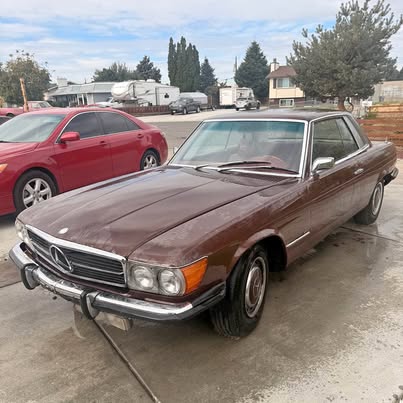
Gearboxes
Almost every SLC you will meet is an automatic, and there are two. The 350SLC and 450SLC use Mercedes' three-speed automatic with a proper torque converter (the W3A 040 family) — a strong, simple box that suits the V8's torque exactly. It pulls away in first, changes should be firm and clean, and the two faults that matter are flaring on the change (worn friction material, a rebuild at roughly $3,000–5,500) and a long, thumping engagement of reverse (the same conversation, sooner). A box that is merely slow when stone cold but behaves warm usually wants fluid, a filter and a modulator adjustment — modulator vacuum problems also cause harsh or late changes, and the vacuum line and diaphragm are cheap checks before anyone condemns the box. The 380SLC and 500SLC moved to the four-speed 722.3 automatic (W4A 040), which adds an overdrive cruising gear and the same judging rules: clean changes, no flare, prompt reverse.
Manuals are the European story. The 350SLC could be ordered with a four-speed manual, the 280SLC with four or five speeds, and these cars are delightful — but rare, and as the cheaper cars when new they are often the most worn today. Judge a manual on second-gear synchromesh (it goes first), clutch judder from rest, and a whine in the intermediate gears. A 450SLC with a manual gearbox is a conversion until the data card proves otherwise — the 4.5 was an automatic-only model — so price it as a modified car, however well it drives. On all cars, check the flexible coupling and centre bearing in the propshaft for perishing and play; a driveline shunt on take-up is usually there, not in the axle, and it is a few hundred dollars rather than a rebuild.
Problem areas
The SLC shares its structure and most of its weaknesses with the R107 roadster, then adds a fixed roof's worth of its own. The mechanicals are the strong suit: engines, gearboxes and suspension are durable, well understood and fixable at predictable prices. The shell is the risk. These cars were rustproofed to early-1970s standards, which is to say lightly, and fifty years of water following the same paths has done the rest. Work through this section in order, because the order is the order of financial pain.
Rust: the map
Rust on a C107 follows the water, and the water has had half a century. Assume a forensic examination and be pleasantly surprised by the car that passes.
The bulkhead and blower box — the SLC and SL's signature failure. At the front of the cabin, behind the dashboard, sits the heater blower's plenum chamber, fed by the vents at the base of the windscreen. Leaves and dirt collect in it, the drain tubes block, and water sits against the bulkhead metal until it perforates — into the footwells, behind the dash, in the one place you cannot see without a torch and trim removal. A rotted bulkhead is dashboard-out, engine-bay-side fabrication work, and it is the single most expensive rust repair on this family of cars: priced per car, routinely into four figures of labour before paint, and beyond the value of a cheap example. The tells are wet front carpets, a musty smell that never leaves, rust staining at the footwell sides, and water dripping onto your feet in rain. Any car with wet front carpets needs the bulkhead proved sound — not assumed sound — before it is worth project money.
Sills and jacking points. As on every Mercedes of the era, the sills are structural, trap mud thrown up by the front wheels, and rot from the inside out. Press hard along the full length, prod the jacking points, and be suspicious of fresh underseal or shiny new sill covers. The definitive test uses the car's own jack: the factory jack plugs into a socket in each sill, and a sound sill takes the car's weight at each socket cleanly and silently, while a rotten one creaks, flexes or starts to fold. A seller who will not allow the test has answered it. Cutting out, welding and painting a sill runs roughly $1,000–2,500 per side, and sills rarely rot alone.
Floors, front and rear. Water arrives from the bulkhead ahead, from the windscreen seal above, and — SLC-specific — from the rear side windows and roof drains behind. Lift every carpet. The front footwells tell the bulkhead's story; the rear footwells and the panel under the rear seat tell the coupé's own story, because water that gets past the rear quarter windows and sunroof drains runs down inside the rear quarters and collects low. Surface rust is treatable; perforation is panel work at $500–1,500 a side fitted, and floor rust anywhere is a marker for the whole shell.
Front wings, inner wings and headlamp bowls. The tops of the front wings rust along the seam where wing meets inner wing, fed by mud packed behind the wheelarch liners that were never fitted; the bottoms rust behind the front wheels; and the headlamp bowls trap water and rot through into the engine bay. Wing replacement panels exist, but a car needing both wings, both sills and a bulkhead is a restoration, not a driver — add the panels up honestly before you fall for the paint.
The coupé roof: gutters, pillars and the famous louvres. Here the SLC parts company with the roadster. The roof's drip rails and the windscreen and rear-window surrounds hold water against the pillars; check the base of the A-pillars and the rear window's lower corners with particular care, because rear-window seal failure sends water into the boot and onto the rear parcel shelf panel, which rusts from underneath where nobody looks. The louvred rear quarter windows are the car's signature and a genuine weak point: the plastic louvre panel fades, crazes and cracks with sun, its seals perish, and water that passes them runs down inside the rear quarter — emerging as rust at the bottom of the quarter panel, in the boot side wells, and at the rear footwells. Budget for resealing as routine maintenance, check the louvre panels themselves for cracks (good used ones are hunted, reproductions variable), and treat rust at the base of the C-pillar as structural until a specialist says otherwise, because that pillar carries the roof.
Sunroof cars. A large proportion of SLCs carry a steel sunroof. Its four drains — down the A-pillars and C-pillars — block with age, and a blocked rear drain delivers water exactly where the rear quarters and boot floor least need it. Test by pouring water into the open roof's channels and watching for four clean exits under the car; a drain that does not run is a hose and compressed-air job now or a welding job later. Check the roof panel's own edges and the aperture lip for rust while it is open.
Boot floor and spare wheel well. The rear window seal and boot seal leak, and the water collects under the spare wheel and in the side wells — the same wells fed by the quarter windows and sunroof drains. Lift the wheel and the mat on every viewing. Staining is a clean, treat and reseal job; a perforated boot floor is a panel and paint at roughly $800–2,000 done properly.
Rear wheel arches, the fuel tank and the small traps. The rear arches rust at the lip where the outer skin meets the inner tub, fed from inside by the same quarter-panel water described above — run a fingertip around the inside of each arch lip and feel for bubbling or a doubled, swollen edge. The fuel tank sits behind the rear seat bulkhead, and its filler neck and the boot-floor grommet around it perish; a fuel smell in the boot is usually the neck seal or a vent hose rather than the tank itself, but a tank that has rusted from the inside — common on cars that sat with old fuel — sheds debris that clogs filters and mimics injection faults, so a car with a history of fuel starvation needs its tank inspected, not just its pump replaced. The smaller traps round out the picture: door bottoms (the drain slots block and the doors hold water — feel along the bottom edge of each door for bubbling), the battery tray and the firewall below it (acid damage hides under the battery, so lift it or at least rock it and inspect the tray edges), the spare-wheel well corners, and the jacking-point covers that go missing and leave the sockets open to the weather. No single one of these kills a car. Together they are the car's autobiography, and they are how you tell a garaged car from a merely painted one.
Underside structure. On a lift, work through the front subframe and its mounting points, the chassis legs, the rear subframe mounts and the spring seats. Perforation in any of it is fabrication work priced per car. Read the underseal as evidence while you are there: factory coating after fifty years is patchy, chipped and honestly dirty; a uniform coat of fresh black stone-chip blown over everything the week before a sale — seams, jacking points, brake pipes and all — is a cover-up until the seller proves otherwise.
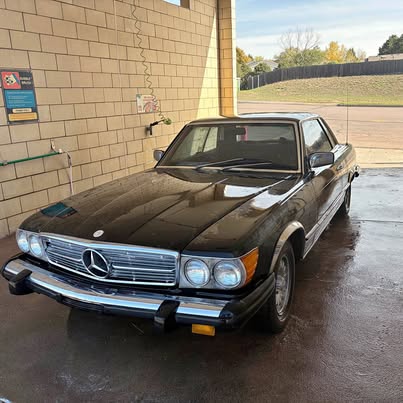
Suspension, steering and brakes
The front suspension is a double-wishbone layout carried on a subframe, with coil springs, an anti-roll bar and recirculating-ball power steering. It is strong and its wear items are conventional: ball joints, track-rod and drag-link joints, idler bush, subframe mounts and the rubber couplings in the steering. Play shows as vagueness on centre and a knock over bumps; a full front-end refresh with quality parts runs roughly $1,500–3,000 fitted, and transforms the car. The steering box itself wears and can be adjusted within limits — a box at the end of its adjustment, wandering at highway speed, is a rebuild or exchange unit, so test adjustment claims on a straight, fast road.
At the rear, semi-trailing arms with coil springs replaced the old swing axle, and behaviour is far better than the earlier cars' — but the rubber is fifty years old. Rear subframe mounts and trailing-arm bushes perish, giving a loose, steering-from-the-rear feel and uneven tyre wear; the differential mount cracks and lets the axle thump on take-up. None of this is exotic, all of it is labour, and a car that has had its bushes done drives like a different vehicle from one that has not. Springs sag with age, usually unevenly; judge stance from a distance, as step 11 of the inspection describes, and remember that a tail-down SLC with worn mounts is a suspension bill, not a mystery.
Brakes are discs all round with a dual-circuit system and vacuum servo — modern in layout, and the parts are cheap. The cost is in undoing decades of sitting: seized calipers, perished flexible hoses, a tired master cylinder and discs with a rust band and a lip are the standard recommissioning list, at roughly $800–2,000 for a full hydraulic refresh with labour. The handbrake is a separate drum inside the rear disc hat, so a handbrake that barely holds is its own small job, not a caliper verdict. Late cars offered optional ABS — rare on an SLC, a plus if it works, and a system to have checked by a specialist if it does not.
Interior and trim
The SLC cabin is a genuinely pleasant place — deep seats, a full rear bench usable by adults on real journeys, and trim quality a class above most 1970s coupés. It is also where deferred maintenance hides in plain sight.
Seats and pads. Most US cars wear MB-Tex vinyl, which is nearly immortal; leather was the expensive option and cracks with age and sun. Under either covering the pads are rubberised coconut fibre, and they crumble — greenish dust under the seats and a sitting position like a hammock are the tells. The driver's cushion goes first. Re-padding a front seat runs roughly $300–600; a professional leather retrim runs into five figures, so a good original interior is worth real money and should be weighted accordingly.
Wood, dash and the louvre-era details. Dashboard wood — walnut on early cars, zebrano-style veneers later — cracks and lifts, lacquer first, then veneer; professional refinishing of a full set is $1,500–3,500. The padded dashboard top itself splits in the sun, and a crack-free dash top is now a genuinely scarce part. Check the rear parcel shelf and the trim panels under the quarter windows for water staining: in an SLC, interior water damage at the back is a leak report, not a cosmetic footnote, and it points straight back at the quarter-window seals and sunroof drains in the rust section.
The heater and air conditioning. Test both on every viewing, whatever the weather. US cars from the late 1970s use an automatic climate system built around a vacuum-operated servo unit (the Chrysler-derived ACC II system), and the servo is the notorious part: it sticks, leaks vacuum, and delivers heat at random or not at all. Rebuilt and upgraded servos exist, and a car with documented climate work is worth a premium; a car with dead climate is a car with a four-figure conversation scheduled. Earlier cars use manual controls and a conventional valve — simpler and cheaper to keep. The blower motor itself lives behind the dashboard, so a silent blower is never just a fuse until you have proved it.
Vacuum systems. Central locking on these cars is vacuum-operated from an engine-driven supply with a reservoir, and the door and boot actuators perish. Locking that works on some doors, or works only with the engine running, is perished diaphragms and split lines — tedious, cheap in parts, and an excellent tell for how the car has been maintained. Headlamp and seat-back vacuum releases (the front seat backs lock by vacuum on the coupé, releasing when a door opens) fail the same way. None of it stops you driving; all of it prices the car.
Electrics
Fifty-year-old Mercedes electrics fail at the connections, not in the middle of the wires. The fusebox uses the old ceramic torpedo fuses, whose ends corrode invisibly and produce intermittent faults that come and go with temperature — cleaning and replacing the full set of fuses is the first hour of ownership on any SLC, and it cures a surprising share of electrical gremlins. Earth points corrode the same way: dim lights, a wandering fuel gauge and lazy accessories are earth faults until proved otherwise. The bigger-ticket items are the K-Jetronic ancillaries already covered, electric window motors and switches (the rear quarter windows on the SLC are fixed — one less thing), the climate servo, and the cruise control amplifier on later US cars, which fails with age and is rebuildable. A car where everything electrical works — windows, blower on all speeds, washers, clock, locking, lights — has usually been used and maintained, which remains the best sign there is.
How to inspect one
Allow at least an hour, bring a torch, a magnet wrapped in cloth and a small screwdriver for prodding, with the seller's permission. If the car passes you, pay for a lift inspection before money changes hands — on an SLC it is the best money in the whole purchase.
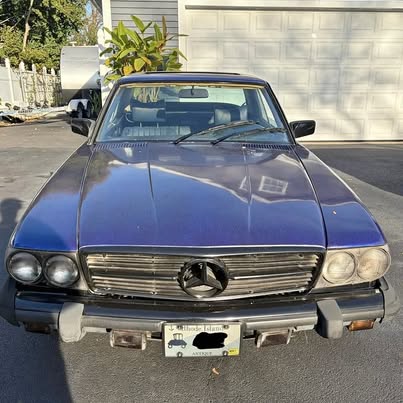
- Start with the paperwork and the numbers. Match the VIN on the title to the chassis stamping and the plates on the car. Check the engine number against the badge: a 3.5 begins 116.982, a 4.5 is 117.982, a claimed 5.0 must be 117.960. Remember the early US trap — a 1972 car badged 350SLC with a 117 engine is factory-correct. Ask for the data card and the history file; invoices for timing-chain work and fuel-system work are worth real money and their absence is a price argument.
- Cold start. Insist the engine is cold when you arrive. It should start at once, hot-start problems being a K-Jetronic accumulator tell you want to catch later in the drive. Listen at the front of the engine for chain rattle that outlasts the first second, and watch the exhaust: blue smoke at start-up points to valve stem seals, smoke under load later is worse news.
- The sill-jack test. From the rust section: take the car's weight on the factory jack at each sill socket in turn. Clean, silent lifting is a pass; creaking, flexing or a seller who refuses is the answer. This five-minute test settles the single most common structural question on the car.
- Footwells and bulkhead. Lift the front carpets. Look for water tracks, staining and perforation at the footwell sides, and feel for damp. Wet front carpets mean the bulkhead and blower box from the rust section need proving sound with a torch and trim removal — not assuming.
- The coupé water circuit. Lift the rear carpets and the boot mat, take the spare wheel out, and check the boot side wells. Run a fingertip along the rear window rubber and the seals of the louvred quarter windows, and inspect the louvre panels themselves for cracks and crazing. If the car has a sunroof, open it, check the aperture lip, and pour water into the channels: four drains should run clean under the car.
- Body and gaps. Run the magnet over the sills, arches, lower doors and the bottoms of the front wings. Check door bottoms for bubbling, the battery tray for acid damage, and the C-pillar bases for the bubbling that matters most on this body. Count pitted chrome and price it — a full brightwork set is a serious bill.
- Under the car. Torch along the subframes and their mounts, the chassis legs and the spring seats. Read the underseal: patchy and honest is factory; a fresh uniform black coat over everything is a question, not an answer. Perforation in the structure ends the inspection until it is priced as fabrication work.
- Front end and steering. Rock each front wheel for play in ball joints and bearings, then judge the steering on the drive: it should be accurate on centre, free of knocks, and no worse at speed than in the parking lot. Vagueness plus a knock is a front-end refresh priced into the offer.
- The test drive. Fifteen minutes minimum, including a freeway stretch. The automatic should change firmly and cleanly, with prompt, unthumped reverse engagement. The engine should pull from low revs without hesitation — a flat spot on a K-Jet car is fuel pressure, warm-up regulator or accumulator until proved otherwise. Brake hard from speed: straight, no judder, no pulling.
- Hot restart and idle. At the end of the drive, switch off, wait five minutes, and restart. Long cranking on a hot K-Jetronic car is the accumulator or pump check valve — a known, priced job, and a clean negotiating point. Let it idle hot and watch temperature stability and oil pressure behaviour.
- Heat, air and electrics, whatever the season. Run the heater and the air conditioning through every setting; on a late US car with the servo climate system, cycle it from full cold to full heat and back and listen for the servo working. Work every window, the washers, lights, horn, central locking and radio. A dead blower or a random climate system is dashboard-and-servo money, so find it now.
- Stance and interior last. Stand back: the car should sit level, arch heights even. Sit in every seat, feel for collapsed pads, look under the front seats for the green dust of dead padding, and check the rear trim panels for the water staining that reports a leak. A sound, original interior is the hardest thing about an SLC to recreate, so weight it heavily.
Values
The SLC market is best understood as two markets wearing one badge. At the top sit the exceptional cars — the alloy-engined 5.0 and 500, low-mileage 450s with full histories, European cars in rare specifications — which attract marque collectors and sell on condition and documentation. Below them sits the great mass of the market: US 450SLCs that have been used, parked, revived and used again, where the spread between the cheapest honest car and the dearest ordinary one is driven almost entirely by the three things this guide keeps returning to — shell condition, chain-and-guides history, and fuel-system health. Our own current listings illustrate the shape rather than the scale: a handful of US cars, all automatics, all from private Marketplace sellers, spanning the 1973 to 1979 model years. Treat any single listing, ours included, as one data point, and read the computed market block beneath this guide for the current figures.
Within that shape, several durable rules hold. First, condition outweighs specification everywhere except at the very top: a rust-free, documented 450 with the chain done is worth more than a scruffy 5.0-badged car with no paperwork, and it is not close. Second, asking prices and achieved prices part company on these cars more than on most Mercedes of the era, because sellers price the silhouette and buyers price the bulkhead — cars that are genuinely sorted sell, and cars priced on hope sit. Auction results, where the bidding is public and the cars are photographed underneath, are the honest cross-check. Third, the project-versus-driver gap is wide and rational: a running, driving car with needs is separated from a sorted one by roughly the cost of the deferred work described in this guide, and a non-running car carries the recommissioning bill on top, so the cheap car at the bottom of the listings is almost never the cheap car to own. Fourth, originality premiums are real but narrow — they attach to the 5.0 and 500, to manual European cars, and to unrepeatable original interiors — while colour changes, engine swaps and missing federal equipment on grey imports all subtract.
Negotiate from the inspection, not from the badge. A car with no chain invoice, a tired K-Jet system and damp footwells has a quantifiable list of jobs attached to it, and pricing those jobs into your offer is not rudeness, it is arithmetic. The seller who has done the work will have the invoices and will already be priced accordingly.
Parts and ownership
The SLC is one of the better-supported Mercedes of its era, for a simple reason: it shares its mechanical package with the R107 roadster, which Mercedes built in far larger numbers and for far longer, and the specialist trade follows the roadster. The Mercedes-Benz Classic Center supplies a wide range of parts, the used market is deep, and almost everything mechanical is shared. What is not shared is the coupé's body and trim — and that asymmetry defines ownership: mechanical parts are easy, SLC-specific panels and trim are the hunt.
Easy: service items, filters, plugs and ignition parts, brake discs, pads, calipers and hydraulics, suspension wear parts and bushes, steering joints, water pumps, exhaust systems in standard form, windscreen and window rubbers, and the full K-Jetronic and D-Jetronic service inventory through the Bosch classic network and the Mercedes specialists. Order today, fit this weekend, at prices close to modern-car money.
Harder and dearer: the louvred rear quarter window panels and their seals (good used ones are hunted; reproductions vary in quality), coupé rear quarters and roof-related panels, a crack-free dashboard top, rear parcel-shelf and quarter trim in the right colours, the climate servo for late US cars (rebuilt and upgraded units exist and are the sensible buy), 5.0-specific engine parts, and good chrome. A quality repaint starts in five figures — which is why this guide's mantra is to buy the body and interior and fix the mechanics.
Running costs. A sorted SLC is a realistic regular-use classic: fuel consumption in the mid-to-high teens mpg in US tune, servicing any good independent Mercedes specialist can handle, and insurance in line with other cars of the value. The budget line that catches new owners is the first year. Catching up deferred maintenance on a running car honestly costs $2,000–5,000 before you improve anything; recommissioning a car that has sat for years runs $4,000–8,000 at a shop, because a sleeping K-Jetronic system needs cleaning end to end, the brakes need everything, and every rubber seal in the car has taken a set. Add the timing-chain package to any car without an invoice for it. Buy a car in regular use over one that has been asleep, even at a higher price — on this model more than most, use is maintenance.
Which one to buy
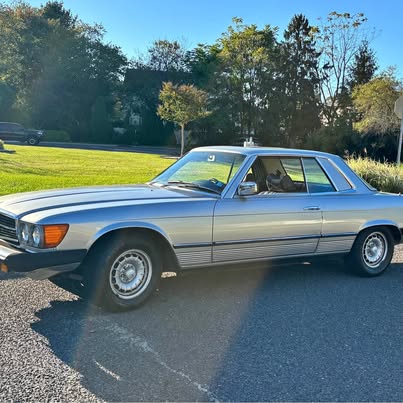
- The all-rounder: 450SLC. The core car — torquey, comfortable, the deepest market to buy from and sell into, and the best parts support in the range. A rust-free US car with the chain done and the fuel system sorted is the SLC most buyers should own.
- The value buy: 380SLC with the double-row chain conversion documented. One US model year, often overlooked next to the 450, lighter and more economical — but only a value if the chain invoice exists. Without it, the conversion is your first bill.
- The connoisseur's car: 350SLC. The launch model with the revvy 3.5, at its best in early, lightly trimmed form. Verify the engine number before pricing — a US car badged 350SLC may be a factory 4.5, which is correct and worth knowing either way.
- The driver's car: 280SLC manual. Europe-only and grey-import in America, with title and federalisation homework attached — but the lightest, sweetest-handling SLC, and the only one that changes its own gears the way you tell it to.
- The collector car: 450SLC 5.0 or 500SLC. The rally-bred alloy-engined cars, the rarest and most valuable SLCs, priced like it when right. Verify originality ruthlessly — engine number 117.960 on a 5.0, build documentation, correct aluminium panels — because a badged-up 450 is worth a fraction of the real car.
- The project to avoid: any SLC, of any variant, with wet front carpets and unproven bulkhead metal, bought at driver money. The bulkhead is the one repair on this car that reliably exceeds the value of the car it is attached to.
And the rule that overrides all of the above: buy the least rusty car you can find, in the specification you can live with. Engines, chains, fuel distributors, climate servos and blower motors are all fixable at prices you can plan for. A rotten shell costs more to put right than the finished car will be worth — and on a C107, the shell is the car.
See the 4 450SLC cars currently listed.
For sale now
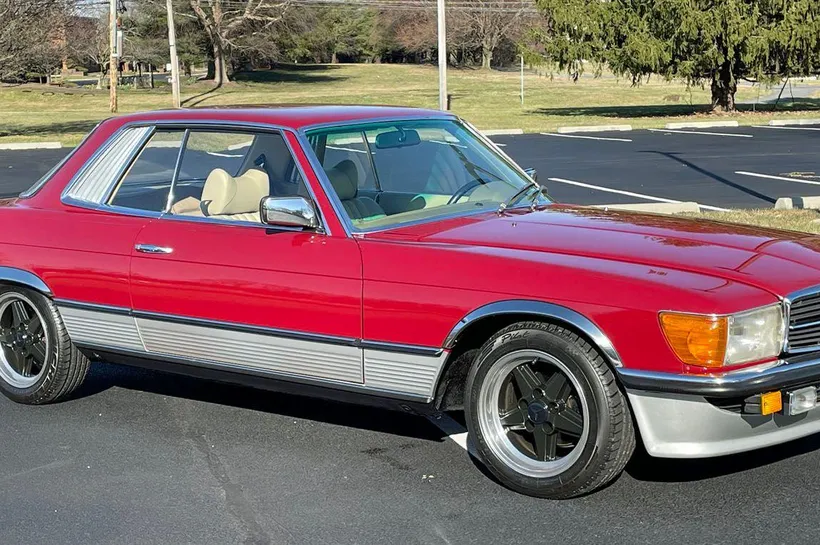 $29,500
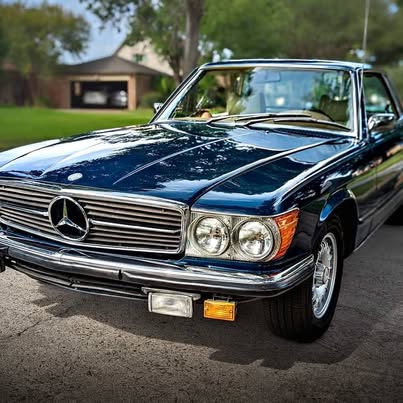 $4,850
Expand
Expand
What they sell for: 450SLC sale prices.