
Mercedes-Benz W140 buyer's guide
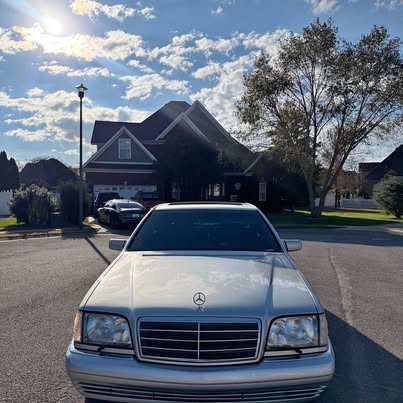
Mercedes-Benz W140 (1992–1999) — 300SE, 400SE, 500SE, 600SE, 300SD, 400SEL, 500SEL, 600SEL, S320, S350, S420, S500, S600, S-Class, CL500, CL600, CL-Class: what's listed, and what they sell for.
Years: 1992–1999 · Models: 300SE, 400SE, 500SE, 600SE, 300SD, 400SEL, 500SEL, 600SEL, S320, S350, S420, S500, S600, S-Class, CL500, CL600, CL-Class
Overview and history
The W140 is the S-Class Mercedes built the way Mercedes used to build cars before the accountants won: over-engineered, over-weight, over-budget, and — thirty years on — over-delivering for the buyer who finds a good one. Development began in 1981 under chief engineer Wolfgang Peter, with styling by Olivier Boulay's team under Bruno Sacco, and the car was shown at Geneva in March 1991, reaching American showrooms for the 1992 model year. It was meant to be ready sooner, but BMW's E32 750iL V12 forced a late, expensive response: Mercedes developed its own six-litre V12, the M120, and the delay and the engineering bill — development costs are widely reported to have run past a billion dollars — made the W140 a symbol of the old Mercedes method. The company spent what the engineers asked for, charged the customer accordingly, and expected the car to last indefinitely.
You feel that intent in the details no rival bothered with. The side glass is double-glazed — two panes with an air gap, for silence and insulation — and it is heavy enough that the window regulators work for a living. The doors and boot lid pull themselves the last few millimetres onto their seals with a pneumatic soft-close system, so you never slam anything. Early cars carry little retractable guide rods at the rear corners that pop up to show you where the tail ends when reversing; later cars replaced them with Parktronic ultrasonic sensors. There is a CAN-bus network linking the control units, vacuum-operated everything from the headlamp washers' logic to the central locking, and a boot big enough to embarrass a modern SUV. The car weighs between roughly 4,600 and 5,300 pounds depending on engine and wheelbase, and it rides like the mass is a feature, which at autobahn speed it is.
Production ran from 1991 to 1998 and totalled about 432,700 cars, sedans plus the C140 coupes — a shorter run and a smaller number than the W126 it replaced, because the W140 was more expensive, arrived into a recession, and was politically unfashionable in a way its predecessor never had to be. It also had a public-relations burden no engineering could fix: a W140 S-Class is the car Princess Diana died in, and for a few years that shadow sat over the whole series. Time has been kinder. The W140 is now widely regarded as the last S-Class built to a standard rather than a price, and the market has started to sort the survivors accordingly.
Sorting is the operative word. This was a six-figure car new, maintained by first owners under warranty and by second owners on schedule, and then — as values fell through the 2000s — bought cheap by people who could afford the purchase and not the upkeep. A W140 does not usually die of rust or worn-out mechanicals; it dies of deferred electronic and pneumatic repairs, each individually affordable-ish, collectively fatal. The cheap W140 is therefore the most dangerous kind: a car whose engine and gearbox are fundamentally sound, wearing twenty small faults that each need a specialist's hour to diagnose. Buy the car with the thick file of invoices, not the car with the shiny paint. Everything in this guide flows from that single rule.
Two structural facts organise the range. First, the 1994 model year brought the new nomenclature: the 300SE became the S320, the 400SEL the S420, the 500SEL the S500, and the 600SEL the S600 — same cars, tidier badges, with detail changes underneath. Second, a mid-cycle facelift for the 1996 model year brought clearer lamp lenses, revised bumpers and side trim, standard side airbags progressively, xenon headlamps on the options list and later standard on V12s, the five-speed electronic 722.6 automatic replacing the old hydraulic four-speed, and ESP stability control — pioneered on the S600 in 1995 — spreading through the range. The short-wheelbase cars carry the V140's SE badge; the long-wheelbase SEL adds its extra inches entirely to the rear door and rear legroom, and in America the long car is the common one.
The car's legacy cuts both ways for a buyer today. The W140's cost overruns helped trigger the boardroom reckoning that produced the cheaper-built W220 successor, which is why the W140 feels a generation tougher than the car that replaced it — and why it has aged into a reputation its successor has not. Mercedes itself treats the W140 as a landmark, supports it through its Classic programme, and the specialist trade has organised around the car accordingly: rebuilt throttle actuators, exchange pneumatic pumps, aluminium oiler tubes and harness remanufacture all exist because the demand does. You are not buying an orphan. You are buying the last flagship of the era when the engineering department, not the spreadsheet, had the final word — with the maintenance ledger that philosophy implies.
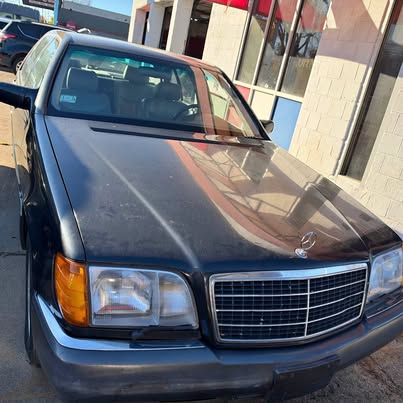
The models
American buyers got a deliberately simple ladder: one six, two V8s, one V12, and a diesel that came and went. European markets added a 2.8-litre S280 and short-wheelbase V8 and V12 SE cars that were never officially sold in the US, though a handful have arrived since as grey imports — check any oddball against its data card before paying a rarity premium for what may be a badge.
| Model | Years (US) | Engine | Output | Built | Character |
|---|---|---|---|---|---|
| 300SE / S320 | 1992–99* | M104 3.2-litre straight six | 228 hp | — | The thinking buyer's car: lightest nose, sweetest balance, cheapest to run |
| 300SD / S350 Turbodiesel | 1992–95 | OM603 3.5-litre diesel six | 148 hp | — | Frugal, stately, and carrying the rod-bender engine — buy only with proof of engine work |
| 400SE / 400SEL / S420 | 1992–99* | M119 4.2-litre V8 | 275 hp | — | The overlooked V8: nearly the 500's character without its premium |
| 500SE / 500SEL / S500 | 1992–99* | M119 5.0-litre V8 | 322 hp (315 later) | — | The definitive W140 for most buyers: pace, presence, sane running costs |
| 600SEL / S600 | 1992–99* | M120 6.0-litre V12 | 402 hp | — | The flagship: two of everything under the bonnet and bills to match |
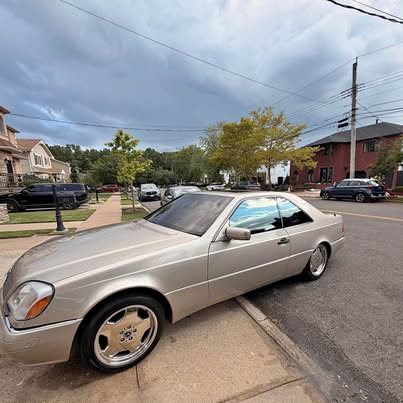
| 500SEC / S500 Coupe / CL500 | 1993–99* | M119 5.0-litre V8 | 322 hp (315 later) | — | The C140 coupe: pillarless, rarer, coupe-specific trim costs |
| 600SEC / S600 Coupe / CL600 | 1993–99* | M120 6.0-litre V12 | 402 hp | — | The rarest regular-production W140 and the collector's target |
*US sedan sales ended with the 1999 model year for some designations on paper, but the W140 you will actually shop is a 1992–1998 car; coupes were renamed CL500 and CL600 for 1997. Worldwide production of all W140 and C140 variants totalled roughly 432,700 cars, of which the coupes account for only about 26,000 — which is why good coupes have firmed up first.
The six-cylinder car is better than its reputation. The M104 is a refined, free-revving engine and the 300SE/S320 is several hundred pounds lighter over the front axle than a V12, so it steers with an ease the big cars cannot match. What it cannot do is waft at 80 mph in the same silence, because it works harder and the shorter final drive keeps it busier. The diesel is a special case discussed in the problem section: the OM603 3.5 has a known, expensive internal weakness, and the market prices S350s accordingly — a cheap one is usually cheap for the documented reason.
Between the V8s, the 500 is the headline and the 420 is the arbitrage. The M119 in 5.0 form gives the car genuine pace — 0–60 mph in the mid-six-second range — and the long-wheelbase 500SEL/S500 is the configuration most people picture when they picture a W140. The 4.2 gives up surprisingly little in real driving, shares almost every strength and weakness of its bigger brother, and trades at a discount simply because the badge reads smaller. The V12 is a different ownership proposition entirely: the smoothest engine Mercedes had ever made to that point, near-silent, and installed with a full supporting cast of doubled systems. Buy it for what it is, with your eyes open about what it costs.
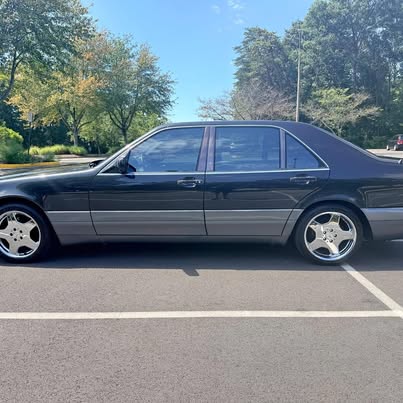
Wheelbase deserves a sentence of its own. The long-wheelbase SEL/S-class L cars are about five inches longer, all of it behind the B-pillar, and they dominate US supply because American buyers ordered rear legroom. Short-wheelbase V8s exist (the 400SE and 500SE of 1992–93, then the S500 sedan was long-wheelbase only in the US after the rename) and feel marginally keener to drive. Coupes ride a shorter wheelbase still, lose the B-pillar entirely, and gain the W140's most elegant profile at the cost of coupe-only glass, trim and seat-belt-presenter hardware.
Engines and gearboxes
The sixes: M104 petrol and OM603 diesel
The M104.990 in the 300SE/S320 is a 3.2-litre, 24-valve straight six with Bosch LH-Jetronic injection on the earliest cars and HFM sequential injection from 1993, making 228 hp. It is the last of the classic Mercedes straight sixes and it behaves like it: smooth to the redline, tolerant of mileage, and simple by W140 standards. Its known vices are an external head-gasket oil leak at the right-rear corner of the head — weeping onto the exhaust side, smelling of hot oil, and progressing slowly rather than catastrophically — and, on cars in the biodegradable-harness window described below, the same crumbling insulation as every other 1992–95 W140. Valve-stem seals harden with age and give a puff of blue smoke on start-up after sitting; oil consumption of a quart every 1,000–1,500 miles on a high-mile six is age, not emergency.
Two buying subtleties attach to the six. First, the European S280's 2.8-litre version (193 hp) was never sold new in America, so a car badged 300SE with a 2.8 under the bonnet is a grey import or an engine swap — the engine number and data card settle which, and the price should follow the answer. Second, the six is the only W140 engine whose character improves with revs, which means it is the one most likely to have been driven hard by an enthusiast owner; that is no sin in an M104, but it makes the gearbox's service history matter more, not less, on a six-cylinder car.
The diesels need one more distinction drawn. The 3.0-litre OM603 in the earlier W126 300SDL is a fundamentally sound engine with a good longevity record. It is specifically the bored-out 3.5 version in the W140 that bends rods. Sellers of S350s occasionally blur that line — "the OM603 is a million-mile engine" — and they are quoting the reputation of the wrong displacement. The 3.5's larger pistons and the loads they impose are the whole story, and the inspection section's oil-consumption question is aimed at exactly this engine.
The OM603.971 diesel in the 300SD (1992–93) and S350 Turbodiesel (1994–95) is a 3.5-litre turbocharged six making 148 hp, and it carries the single worst reputation of any engine in this guide. The 3.5 version of the OM603 — enlarged from the sound 3.0 — is the famous "rod bender": connecting rods bend subtly in service, the piston runs cocked, the bore wears oval, and the engine begins consuming oil at a rate no top-up regime can hide, progressing to low compression and a rebuild. Not every engine did it, and many survivors have already been rebuilt or fitted with the updated rods, which is precisely the point: the paperwork decides what an S350 is worth. A car with a documented engine rebuild or a Mercedes replacement engine is a usable, economical curiosity. A car with no engine history and a taste for oil is a five-figure liability wearing a three-figure price tag.
The V8s: M119 in 4.2 and 5.0
The M119 is a 32-valve, quad-cam all-alloy V8, fitted as the M119.972 4.2 (275 hp) in the 400SE/SEL and S420 and the M119.970 5.0 (322 hp in early US form, 315 hp from 1994) in the 500 cars. It is one of the great Mercedes engines: understressed, silky, and good for 250,000 miles with oil changes. Early cars use LH-Jetronic injection with a hot-film air-mass sensor; the system is robust and well understood by specialists.
Its service items are specific. The timing chain is long and runs over plastic guide rails that age-harden; listen for a second or two of rattle at cold start that should vanish as the oil-pressure tensioner fills — persistent rattle means guides and tensioner, a $1,500–2,500 job done properly with rails. The camshaft oil-supply tubes across the heads are plastic on later cars and their end plugs pop out, starving the lifters and producing a top-end tick that sellers will call "just a lifter": the fix is a set of tubes or the aluminium aftermarket equivalents, a few hundred dollars in parts, and the tick is your negotiating lever, not a death sentence. Hydraulic lifters themselves are durable. Engine mounts are fluid-filled, collapse with age, and transmit a vibration at idle that disappears off-idle — budget $400–800 fitted for the pair and enjoy the transformation. The M119 also suffers the standard Mercedes oil leaks of the era: cam covers, front crank seal, and the oil filter housing, all seepage rather than drama.
The V12: M120
The M120.980 is a 6.0-litre, 48-valve V12 making 402 hp in US trim, built by joining two M104 sixes on a common crankcase in concept and engineered with a thoroughness that still impresses: two engine control units, two throttle actuators, two air-mass meters, two distributors on early cars — one complete management system per bank. It is turbine-smooth, nearly silent at cruise, and makes the 5,300-pound S600 feel under-geared rather than under-powered. It is also, in every meaningful sense, two engines to service in an engine bay with no spare room.
V12 ownership math is therefore different. Access is the cost driver: jobs that are an hour on a six are three on the twelve because components come out in sequence. The M120's own failure list is mercifully short — it does not bend rods or eat head gaskets as a habit — but it sits squarely in the wiring-harness years, it has two electronic throttle actuators to rebuild instead of one, its ignition and injection parts count is doubled, and its appetite for fuel (expect low-to-mid teens in town, high teens on a run) is part of the purchase price. The right S600 is a maintained car from an enthusiast; the wrong one is a deferred-maintenance sink that happens to have twelve cylinders.
Diagnosis on the M120 has one elegant property worth knowing: because each bank runs its own management, a fault that affects one bank only — one rough bank, one dead throttle response on one side — points at that bank's ECU, actuator or air-mass meter, and parts can be swapped side to side to prove the culprit before money is spent. A specialist who knows this saves you the parts cannon. The early cars' twin distributors wear caps and rotors like any distributor system and are often overlooked precisely because the engine otherwise feels so modern; a V12 with a light-load misfire that no one can find usually wants ignition consumables and a careful look at the harness, in that order.
Gearboxes: 722.3, 722.5 and 722.6
All US W140s are automatic. Early cars use the hydraulic four-speed 722.3 (with the 722.5 five-speed on some six-cylinder applications), a tough, well-known box whose habits include a firm 1–2 shift and whose age faults are a delayed or flaring engagement of reverse — worn reverse-piston seals, a rebuild-level fix at $2,500–4,000 if it progresses — and modulator and governor issues that a specialist diagnoses quickly. From the 1996 model year the electronic five-speed 722.6 took over across the range. It is smoother, better spaced, and brings winter mode and adaptive shift logic, but early 722.6s have their own list: a weak early sprag and bearing design on the first production, electrical conductor-plate failures that drop the box into limp mode, and a leaking 13-pin pilot bushing that wicks ATF up the harness toward the control unit — check the connector for oil at every service. Mercedes originally sold the 722.6 as sealed for life; the survivors prove otherwise. Fluid and filter changes every 40,000–60,000 miles are the cheapest insurance on either box, and a car with documented gearbox fluid services is worth more than one without. On a test drive, both boxes should engage drive and reverse promptly when cold, shift without flare, and kick down cleanly; anything else is a price conversation.
Problem areas
The W140's problems are famous, specific, and — this is the part the pub version misses — almost all diagnosable before you buy, with tests a careful buyer can run in a seller's driveway. Work through them system by system. A car that passes these checks is not a gamble; a car that fails several is not a bargain at any price, because the faults queue up at specialist labour rates.
The wiring harness: the 1992–95 tax
Mercedes' engine wiring harnesses from roughly the 1992 to 1995 model years used insulation that was designed to biodegrade — and does, inside the loom, on the car, whether the car is used or not. The insulation crumbles off the conductors, wires short against each other, and the symptoms impersonate everything else: phantom misfires, erratic idle, throttle actuators condemned in error, warning lights with no fault behind them, in the worst cases melted looms and dead control units. Every W140 engine variant of those years is affected — the main engine harness, the throttle-actuator wiring inside the ETA itself, and the lower harness to the starter and alternator.
The check takes two minutes and no tools. Find an exposed section of harness — around the injectors, or where the loom crosses the top of the engine — and flex the insulation gently between finger and thumb, or peel back a taped section where a previous repair allows it. Supple insulation is fine; insulation that cracks, flakes or powders is a harness at end of life. Then look for the harness tag: Mercedes replacement harnesses carry a build-date label, and a car with a documented harness replacement (the part alone runs $800–1,500, plus fitting) has had its biggest single liability retired. The throttle actuator on 1992–95 cars contains the same wire and fails the same way internally; a rebuilt ETA from a known rebuilder runs roughly $500–800 exchange and transforms a car with hunting idle and ASR/limp-home faults. Budget the harness into any 1992–95 car that cannot prove it has been done, and never let a seller attribute obvious harness symptoms to "a sensor" without a price cut to match.
Air conditioning: the evaporator
The W140's signature big bill. The air-conditioning evaporator core sits deep inside the dashboard, and on early cars the original cores corrode and leak refrigerant. The part is a few hundred dollars; the job is removing the entire dashboard and heater box, which is 20-plus hours of labour in the book and commonly quoted $3,000–5,000 all-in at a specialist. Symptoms of a leaking evaporator are a system that was "just regassed" for the sale and fades again over weeks, oily residue at the condensate drains, and cold air that is cold only on the passenger side as charge falls. The test is simple: the air conditioning must blow genuinely cold at idle, at the centre vents, after ten minutes of running — not cool, cold — and the seller's explanation for anything less must be priced as an evaporator until proven otherwise. Cars that have had the evaporator done (again: paperwork) are worth a premium, because it is the one job every W140 of the early years eventually wants.
The rest of the climate system is cheaper but busier. The blower motor regulator fails and gives you a fan that works on some speeds or surges; the mono-valve/duo-valve and auxiliary pump govern heat to each side and fail into heat stuck on or off; the vacuum pods that move the distribution flaps perish and produce clicks, wrong-vent air and demisting that never quite clears the screen. Each is a $150–600 fix. The facelift cars' digital climate panel is more reliable than the early push-button unit, whose solder joints crack and whose buttons wear through.
Pneumatics: soft-close and central locking
Two vacuum/pressure systems define W140 ownership. The closing-assist (soft-close) system uses an electric pneumatic pump in the boot to pull the doors and boot lid onto their latches. When a door's latch mechanism or a line leaks, the pump runs on and on trying to finish the job, overheats, and eventually fails or is disconnected by a tired owner. The test: close each door gently to the first latch and watch it pull itself shut with a soft whirr that stops within a few seconds. A pump that runs for ten seconds or more per door, or a door that must be slammed, means the system needs work — pump rebuilds and latch repairs run $300–900 depending on how many corners are tired. The central-locking PSE pump under the rear seat runs the locks, the boot release, the fuel flap and the lumbar supports; it fails by running long and then not at all, and it also drives the retractable reversing rods on early cars. A rebuilt PSE unit is a few hundred dollars; the diagnostic value is that slow locks, lazy lumbar bladders and a boot that will not pop are one fault, not three.
Suspension, steering and the cost of weight
The W140 rides on conventional steel springs at the front with a multi-link rear, and most US cars add hydraulic self-levelling (SLS) at the rear; the V12 and optioned cars add ADS adaptive damping. The system components are Mercedes-standard and long-lived, but the car's mass works the wear parts hard. Front lower control-arm bushings tear and give a clunk over sharp bumps and a vagueness on turn-in; upper arms and ball joints wear; the car eats front tyres on the inner shoulders when the alignment drifts with bushing wear. A full front-end refresh with quality parts is $1,200–2,500 and makes the car feel ten years younger — factor it into any car over 120,000 miles without one in the file. SLS accumulators (the nitrogen spheres) harden with age and announce themselves as a rear ride that has turned harsh and bouncy over small bumps; spheres are $150–250 each plus fluid, and the levelling valve and struts leak eventually. ADS cars add electronic dampers at several hundred dollars a corner — test ADS by cycling the comfort/sport switch and feeling for a real change, and by checking for weeping damper bodies.
The steering box is recirculating-ball, adjustable, and usually innocent: play at the wheel is more often a worn drag link, tie-rod ends or idler bush. Rear subframe mounts and the multi-link arms' bushings age into a rear end that steers itself gently over lane changes and expansion joints. None of this is exotic; all of it is labour, and a car that has had it done drives like the brochure promised.
Engines, revisited as liabilities
Beyond the family notes above: the M104 six leaks oil from the head gasket's right-rear corner and from the front timing cover's U-seal, both slow, both normal, neither a reason to walk away if priced in. The M119's plastic cam-oiler tubes and timing-chain guides are its two scheduled dramas. The M120 doubles the throttle-actuator and harness exposure and adds the cost of access to everything. The OM603 3.5's rod-bending is the one engine fault in this guide that should end a purchase outright when the history is unknown and oil consumption is present: check the dipstick, ask directly how much oil the car uses between changes, and treat "none" from a seller who also has no records as an answer of the other kind.
Cooling deserves its own paragraph because big Mercedes engines punish neglect. The viscous fan clutch weakens with age and the car creeps hot in traffic; radiators silt; the electric auxiliary fans and their relays fail silently until a traffic jam on a hot day. The temperature gauge should sit just above the middle mark and stay there at idle with the air conditioning on. A car that runs hot is telling you about a $300 clutch or a $900 radiator — or about a head gasket. Do not buy the mystery.
Gearboxes and driveline, in service
The gearboxes earn their own problem heading because their faults are the ones most often misdiagnosed by generalist shops. On the hydraulic 722.3 four-speed, shift quality is set by vacuum to the modulator and by the Bowden cable from the throttle linkage: a car that shifts brutally hard at light throttle usually has a perished vacuum line or a failed modulator diaphragm (tens of dollars), while a car whose shifts flare — revs rising between gears — is showing genuine internal wear and a rebuild conversation. Confusing the two costs owners gearboxes they did not need, and costs buyers cars they should have bought. The delayed reverse engagement described in the engines section is the 722.3's one true wear signature; a second or two of delay when cold that improves warm is seals ageing, and it can stay stable for years, which is a negotiation point rather than a walk-away.
The 722.6 five-speed fails electronically more often than mechanically. The conductor plate inside the box carries the speed sensors and solenoid contacts; when it cracks or its sensors drift, the box drops into limp mode — stuck in second gear — and stores codes that a Mercedes-capable scanner (the factory Star system or equivalent) reads properly while generic code readers guess. Conductor plates are a few hundred dollars fitted with a fluid service, which is the correct first response to most 722.6 misbehaviour, ahead of any talk of rebuilds. The pilot-bushing leak matters beyond the drip: ATF wicks along the harness and can reach the gearbox control unit in the engine bay, so a wet connector found early is a cheap save. The centre support bearing and flex discs (Guibo couplings) on the propshaft wear across all variants and announce themselves as a driveline thump on take-up and a vibration around 40–50 mph; they are ordinary parts at ordinary prices, and a car that has had them done drives noticeably tighter for it.
Facelift-era systems: ESP, xenons and the rest
The later cars trade the early cars' harness risk for a layer of first-generation electronics that is now ageing on its own schedule. ESP and ASR faults most often trace to wheel-speed sensors, the brake-light switch (a cheap part that sits upstream of half the warning lamps on the dash) and ageing yaw and lateral-acceleration sensors on ESP cars; the discipline is the same as everywhere on this car — codes read on proper equipment before parts are ordered. Xenon headlamps on facelift cars are excellent when working; failed igniters and ballasts are replaceable individually, and cloudy polycarbonate lenses polish back. The rain sensor, Parktronic sensors (individual failed sensors click — or rather, stop clicking — and can be identified by ear with the system active), and the pneumatic multi-contour seats all fail one corner at a time and are priced accordingly. None of it is ruinous; all of it rewards the buyer who tests every system on the viewing rather than discovering the list on the drive home.
Body, glass and rust
The W140 was galvanised and sealed to a standard that still shows: structural rust is rare compared with earlier Mercedes. Rare is not never. Check the jacking points and sill ends, the bottoms of the doors where the seals trap grit, the rear wheel-arch lips, the boot floor around the battery and the closing-assist pump, the front subframe and its mounts, and the panel below the rear window. Cars from salted-road states deserve a lift inspection; a W140 that has lived in California or the dry South-West is worth travelling for, because the body's condition is the one thing money cannot retrospectively buy. The double-glazed side windows can delaminate at the edges — a milky bloom creeping in from the perimeter of the pane — which is cosmetic but expensive to cure properly, so price it. The power soft-close boot lid, the sunroof (which should tilt and slide silently), and every window regulator (the rears are cable-driven and the cables fray) all need cycling twice on inspection.
Interior and electrics
The cabin is built like a bank vault and trimmed in materials that mostly survive — the leather is thick, the wood is real veneer on aluminium, and the switches have a machined feel. The failures are specific: the headlining sags eventually, especially on sunroof cars ($400–900 to retrim properly); the driver's seat bolster wears; the memory-seat and mirror logic runs through control units that fail into seats that move in one direction only; the Bose amplifier in early cars fails channel by channel; the instrument cluster's needles and illumination age, and the outside-temperature and gear displays fade. Rear headrests drop electrically or pneumatically depending on year — test them. The orthopaedic lumbar bladders leak with the PSE system. None of these is structural; together they are the difference between a car that feels like an S-Class and a car that feels like a project, and they are cheap to check and expensive to chase one by one. Test everything, write down what fails, and make the list part of the negotiation.
One myth deserves correcting here, because it sends buyers chasing the wrong fault: a W140 whose doors have lost their soft-close has not usually suffered four failed latches. The closing-assist pump times out and disables a corner after repeated failed attempts, and a pump that has been run to death by one leaking latch presents as a whole dead system. The repair sequence is latch or line first, pump second, and the reset procedure in the workshop literature third — owners who replace the pump first buy the same failure twice. The same logic applies to the central locking: the PSE pump is the last suspect, after the lines and actuators it serves have been proven tight with a hand vacuum pump.
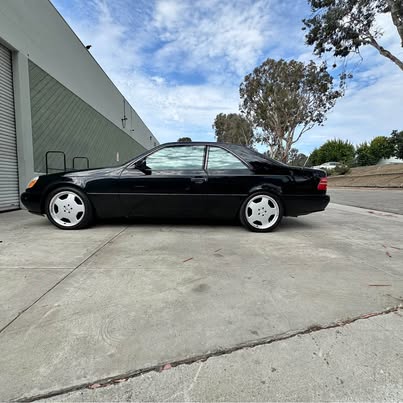
How to inspect one
Inspect a W140 in this order: paperwork first, cold systems second, driving last. The car's faults hide in its file and its first five minutes from cold, not in its motorway manners, which flatter almost everything.
- Read the file before the car. Look specifically for four invoices: engine wiring harness replacement, air-conditioning evaporator replacement, gearbox fluid services, and front-suspension work. Each one present retires a known liability; each one absent on a 1992–95 car goes on your budget list. A data card decode (from the VIN) confirms the model, engine and options the car was born with — the badge alone does not, as the models section warns.
- Cold start, bonnet up. The engine should start instantly and settle to a smooth idle. On an M119, two seconds of chain rattle is the tensioner filling; rattle that persists is guides. On an M104, look at the right-rear of the head for the signature oil weep. On any 1992–95 car, flex the harness insulation at the injectors — cracking or flaking retires the car to the harness-budget price, whatever the seller says.
- The oil questions. Dipstick level and colour, filler-cap underside (mayonnaise means short trips or worse), and for the OM603 diesel one direct question: how much oil does it use? A diesel seller who cannot answer is an answer. Walk away from an S350 that drinks oil with no engine history — the rod-bender section explains why this is the guide's one absolute.
- Air conditioning, full test. From cold, set maximum cold and fan. Within minutes the centre vents must blow genuinely cold, and stay cold at idle for ten minutes. Weak, one-sided or fading cold on an early car is priced as an evaporator — a $3,000–5,000 dashboard-out job — until a specialist's leak test says otherwise. Cycle heat to both sides as well; the duo-valve faults hide there.
- Soft-close and locking, door by door. Close each door to the first latch and time the pneumatic pump: a few seconds of whirr per door is health; ten-plus seconds, or a pump that never quite stops, is a closing-assist system needing $300–900 of work. Lock and unlock everything twice, pop the boot from the switch, and on a pre-facelift car select reverse and confirm both guide rods rise.
- Every window, twice, plus the sunroof. Double glazing makes the regulators work hard; a slow or graunching window is a regulator on its way. Check each pane's edges for the milky delamination bloom. The sunroof must tilt and slide without protest.
- Suspension on the move and at rest. Car level at rest — a sagging rear on an SLS car means spheres, struts or the levelling valve. Over sharp bumps listen for the front-end clunk of torn lower-arm bushings; over lane changes feel for rear steer from tired subframe mounts. On ADS cars, cycle the damper switch and insist on feeling the difference.
- Gearbox, cold and hot. Both the 722.3/722.5 and the 722.6 must engage drive and reverse promptly from cold. Delayed reverse on the four-speed is the classic worn-seal warning. On the road: no flaring between gears, clean kickdown, and on a 722.6 car no limp-mode second-gear starts — and check its electrical connector for wicked-up ATF if you get lift access.
- Steering and brakes. Centre play beyond an inch at the rim wants a cause — drag link and idler before box. The brakes are strong and the pedal should be high and firm; a long pedal on a car this heavy is not character. ABS lamp on with ignition, out after start, and on ASR cars the same for the traction lamp — lamps that never light at all have been known to be removed rather than repaired.
- Temperature discipline. After the drive, idle for five minutes with the air conditioning on. The gauge sits just over mid-scale and does not climb. Creep means fan clutch, radiator or worse, in ascending order of price — and you do not buy the mystery version.
- The cabin sweep. Memory seats both sides, mirrors, rear headrest drop, lumbar bladders, Bose sound from every speaker, cluster displays, boot soft-close, spare wheel and tool kit present. Write down every failure. On a W140 the list is the negotiation: fifteen small faults at specialist rates is a four-figure argument.
- Underside on a lift, if the price justifies it. Sills and jacking points, subframe mounts, SLS strut weepage, gearbox and engine oil leaks mapped rather than noted, exhaust condition. A dry, straight underside on a documented car is the W140 to buy; it is also, not coincidentally, the one that costs the most to purchase and the least to own.
Values
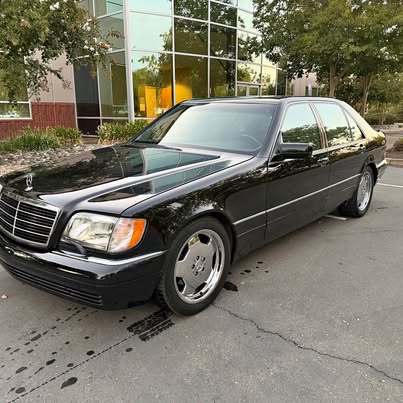
The build's market block beneath this guide carries the live numbers — what is listed now and what recorded sales have achieved — and the honest way to use it is to read the spread, not the median. The W140 market is not one market; it is three stacked on top of each other. At the bottom are the deferred-maintenance cars, and they are cheap for arithmetic reasons: add a harness, an evaporator risk, a front-end refresh and fifteen small faults to any headline price and you have spent the difference to a good car before your first service. In the middle are honest drivers — documented, everything working, miles in the 120,000–180,000 range — which are the value in the series precisely because the top of the market does not want their mileage. At the top sit the low-mileage, fully documented, late-model cars, and coupes and V12s in that condition have separated from the rest of the range entirely.
What moves a car between those tiers is not mileage alone. It is the four invoices from step 1 of the inspection: harness done, evaporator done, gearbox serviced, front end refreshed. A 150,000-mile car with all four is worth more, and will cost you less, than an 80,000-mile car with none — the low-mileage car has simply not yet presented its bills. Facelift cars (1996-on) carry a quiet premium for their non-biodegrading wiring and the 722.6 gearbox. The S600 premium is real but conditional: it attaches to documented cars and evaporates on neglected ones, because the V12's deferred-maintenance bill is the largest in the range. The S350 diesel trades at a discount that is entirely about the engine's reputation; a documented-rebuild car bought at the discount is the closest thing the W140 market has to a free lunch. S420s trade below equivalent S500s for no mechanical reason — the arbitrage noted in the models section is visible in the recorded sales as much as in the listings.
Asking prices and achieved prices part company most widely at the top, where optimistic sellers price a good car as a great one. Recorded sales are the discipline: compare like with like — same engine, same era, same invoice file — and remember that in this series the seller's paperwork is a physical part of the car. A project car (straight body, dead systems) and a driver differ by roughly the cost of the systems, not by a percentage of the asking price, and the project only makes sense bought at project money with the work priced before you commit. Buy the best-documented car you can reach; in W140s, the expensive car is almost always the cheap one.
Parts and ownership
Ownership is a specialist relationship, not a parts problem. The W140 was built in serious numbers, shares its engines and gearboxes with the R129 SL, W124 and W210, and is supported by the Mercedes-Benz Classic Center, a deep dealer parts pipeline for service items, and an aftermarket that covers everything from oiler tubes to rebuilt throttle actuators and PSE pumps. Mechanical parts — suspension arms, bushings, mounts, brakes, cooling components — are available off the shelf at prices that would surprise a modern-S-Class owner. The friction is in the model-specific and electronic layers: control units are increasingly exchange-or-repair items, coupe glass and trim are scarce and priced like it, soft-close latches and pneumatic components reward a specialist who stocks rebuilt units, and interior trim in the less common colours is a breaker's-yard search. None of this stops a car being used daily; all of it argues for buying the complete car rather than the cheap incomplete one.
Running costs follow the pattern set in the problem section: fuel in the low-to-mid teens around town for the V8s (worse for the V12, better for the six, best for the diesel), tyres in sizes that are common but not cheap on a car this heavy, and an annual service that is ordinary money at an independent Mercedes specialist — the single best investment in W140 ownership is finding that specialist before you buy, ideally the one who already knows the car you are looking at. Insurance is unremarkable, registration likewise, and the cars tolerate regular use far better than they tolerate sitting: seals, pneumatics and air conditioning all stay healthier on a car driven weekly. Budget honestly for one meaningful bill a year on a sorted car and two on an unsorted one, keep the reserve, and the W140 is what its engineers intended — a car that asks for money in exchange for being the best-built saloon of its decade.
Storage and dormancy deserve a warning of their own, because so many W140s now live as second or third cars. A W140 parked for months wakes up with flat-spotted tyres, tired SLS accumulators, a closing-assist pump working against stiffened seals, and — on harness-era cars — insulation that has continued to crumble in the dark, because the biodegradation is chemical, not mileage-based. If you buy a car that has sat, your first service is a recommissioning, not an oil change: fluids including gearbox and SLS hydraulic oil, a harness inspection, every pneumatic function cycled a dozen times, and a long hot run to find the leaks that only appear at full temperature. Sellers describe long storage as preservation; on this model it is closer to deferred diagnosis.
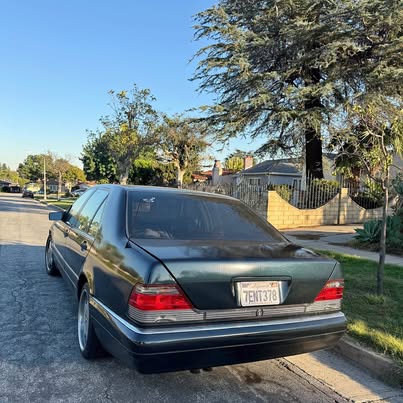
Which one to buy
- The all-rounder: a facelift S500 (1996–98). The 5.0 M119, the 722.6 gearbox, wiring outside the biodegradable years, full equipment — the definitive W140 experience with the shortest liability list. Buy the best-documented one you can find.
- The value buy: an S420. Same engine architecture, same cabin, same presence, persistently discounted for its badge. A documented S420 at S500-minus money is the smartest purchase in the series.
- The connoisseur's car: the S600. Nothing else at the money rides or sounds like it, and good ones are genuinely scarce. Buy only with a full file and a reserve fund; the doubled systems are a feature you pay for twice.
- The driver's pick: a 300SE/S320. The lightest nose and the sweetest steering, the lowest running costs, and an engine that loves revs. Accept the busier motorway manner as the price of the balance.
- The coupe: a CL500/S500 Coupe. Pillarless elegance, real rarity, and a firming market. Pay up for glass, seals and trim condition — coupe-specific parts are where the money goes.
- The calculated gamble: an S350 Turbodiesel with a documented engine rebuild. Bought at the rod-bender discount with the rod-bender already fixed, it is economical, durable and interesting. Without the paperwork, it is not a gamble; it is a donation.
- The one to avoid: any 1992–95 car with no harness invoice and weak air conditioning, at any price that assumes either works. Those two jobs define the model's economics, and together they exceed the value of a rough car.
The overriding rule: buy the invoice file, not the car. A W140's condition is its paperwork — harness, evaporator, gearbox services, suspension — and the car with the thickest file is the cheapest W140 you will ever own, whatever its odometer says.
Listed now
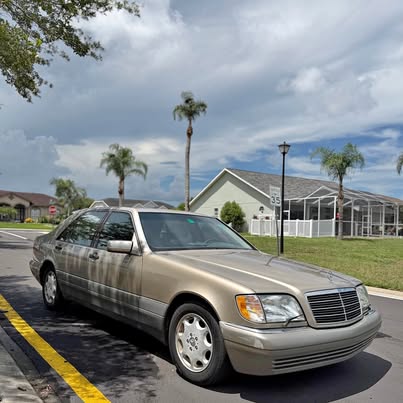
On Classic Listings today: 72 cars are listed here; 2 for sale and 63 marked sold; average asking price $6,200; asking range $5,500 to $6,900; sold cars average $10,504.
See the 72 W140 cars currently listed.
The market — recorded sales
W140 Classic Listings Index: $8,703 — based on 16 recorded sales, Nov 2024 – Nov 2026.
Change vs the prior 24 months: -11% (n=17 then, n=16 now).
Recorded sales: 16 · Total recorded sale value: $161,928 · Lowest sale: $3,000 · Top sale: $24,000 · Most recent sale: $5,555 (Nov 5, 2026)
| Date | Car | Sale price | Source |
|---|---|---|---|
| Nov 5, 2026 | 1999 S-Class | $5,555 | Cars & Bids |
| Oct 15, 2026 | 1993 S-Class | $10,000 | Cars & Bids |
| Oct 14, 2026 | 1996 S-Class | $3,000 | Cars & Bids |
| Aug 24, 2026 | 1998 S-Class | $16,000 | Cars & Bids |
| Aug 3, 2026 | 1994 S-Class | $3,700 | Cars & Bids |
| Jul 14, 2026 | 1992 S-Class | $10,600 | Cars & Bids |
| May 15, 2026 | 1994 S-Class | $17,888 | Cars & Bids |
| Apr 8, 2026 | 1993 S-Class | $8,606 | Cars & Bids |
| Apr 3, 2026 | 1996 S-Class | $5,450 | Cars & Bids |
| Mar 16, 2026 | 1998 S-Class | $7,300 | Cars & Bids |
| Oct 31, 2025 | 1998 S-Class | $8,800 | Cars & Bids |
| Oct 3, 2025 | 1995 S-Class Coupe | $24,000 | Cars & Bids |
| Oct 3, 2025 | 1997 S-Class | $4,800 | Cars & Bids |
| Aug 18, 2025 | 1992 S-Class | $16,500 | Cars & Bids |
| Aug 12, 2025 | 1999 S-Class | $15,500 | Cars & Bids |
| Jan 22, 2025 | 1997 S-Class | $4,229 | Cars & Bids |
Dates are the sale date where the source states one; otherwise the date the sale was recorded here.
For sale now
 $5,500
Expand
 $6,900