
MG MGA buyer's guide
MG MGA -- the model's own buyer's guide: variants, values and what to check.
Years listed: 1957-1959 · Series: MGA
Overview and history
The MGA is the car that dragged MG, in one model change, from the upright pre-war world of the T-series into the modern streamlined era — and it did it without losing the things that made an MG an MG. It replaced the TF Midget in the autumn of 1955, shown first at the Frankfurt motor show that September, and it stayed in production until 1962, by which time 101,081 had been built. That total made it by far the most successful MG yet, and the great majority were exported — above all to the United States, which is why the American market is deep in these cars and why most of the cars you will look at are left-hand drive.
The shape came from MG's own competition department rather than a styling studio. Its ancestor was EX175, the streamlined car Syd Enever's team built on a TD chassis for George Phillips to race at Le Mans in 1951, and the production body kept that car's full-width envelope, low nose and flowing wings almost intact. Underneath, the MGA sat on a new, stiff box-section chassis frame, wider and stronger than the TD's, with the body mounted separately on top — a traditional separate-chassis car in a thoroughly modern skin. The engine was not an MG unit at all but BMC's B-series four, shared with the Magnette saloon, and the steering was by rack and pinion, sharp and direct in a way no earlier MG had managed.
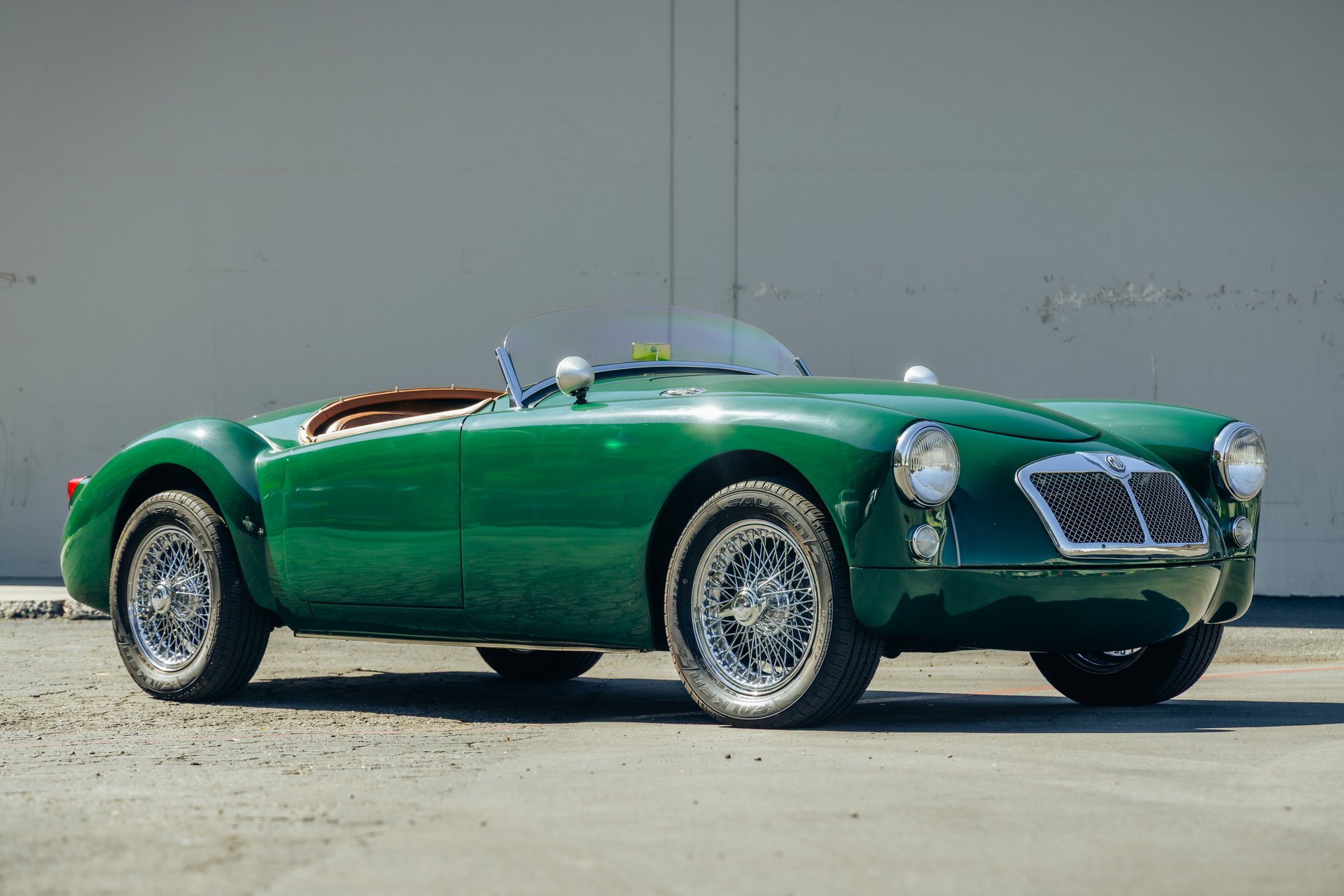
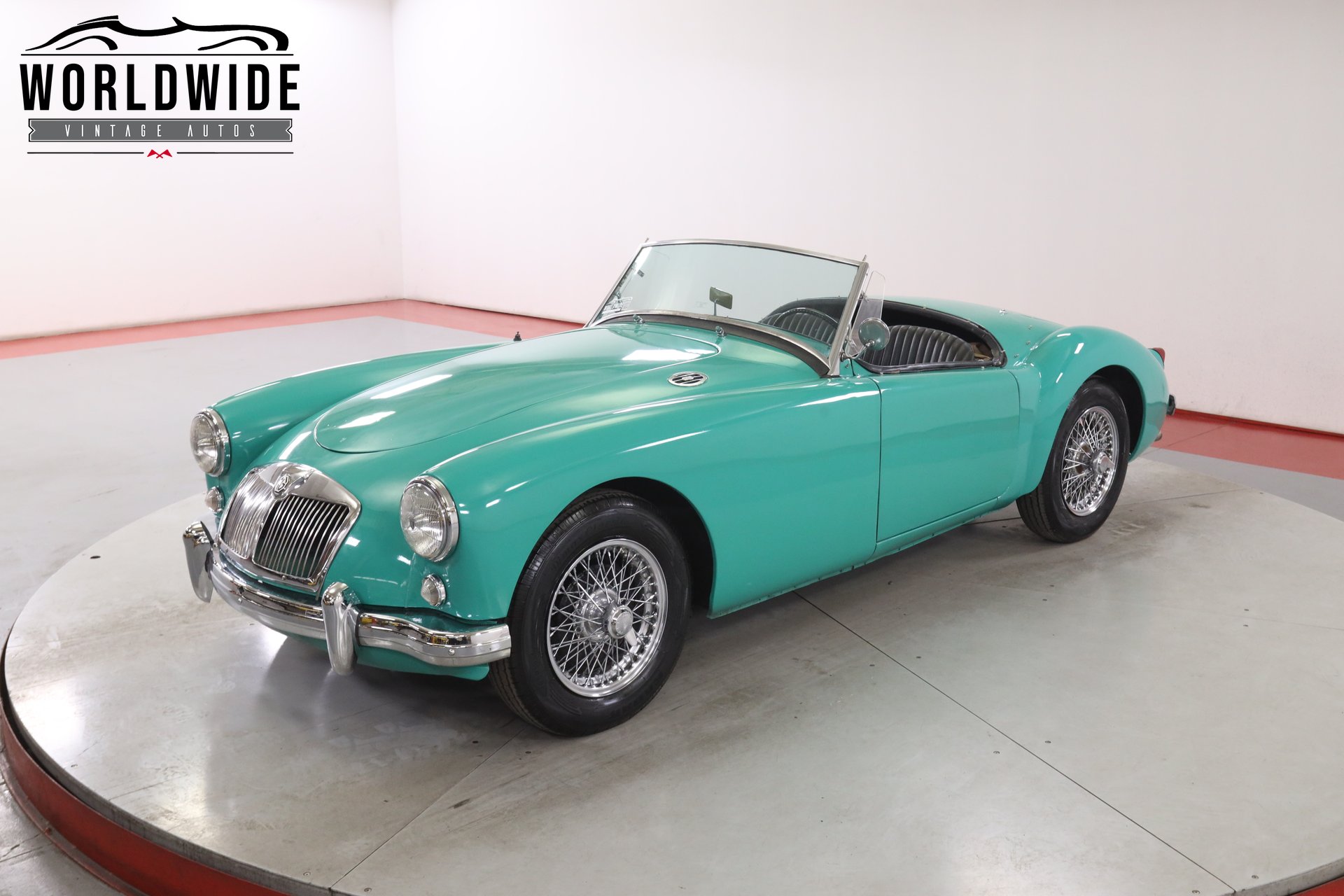
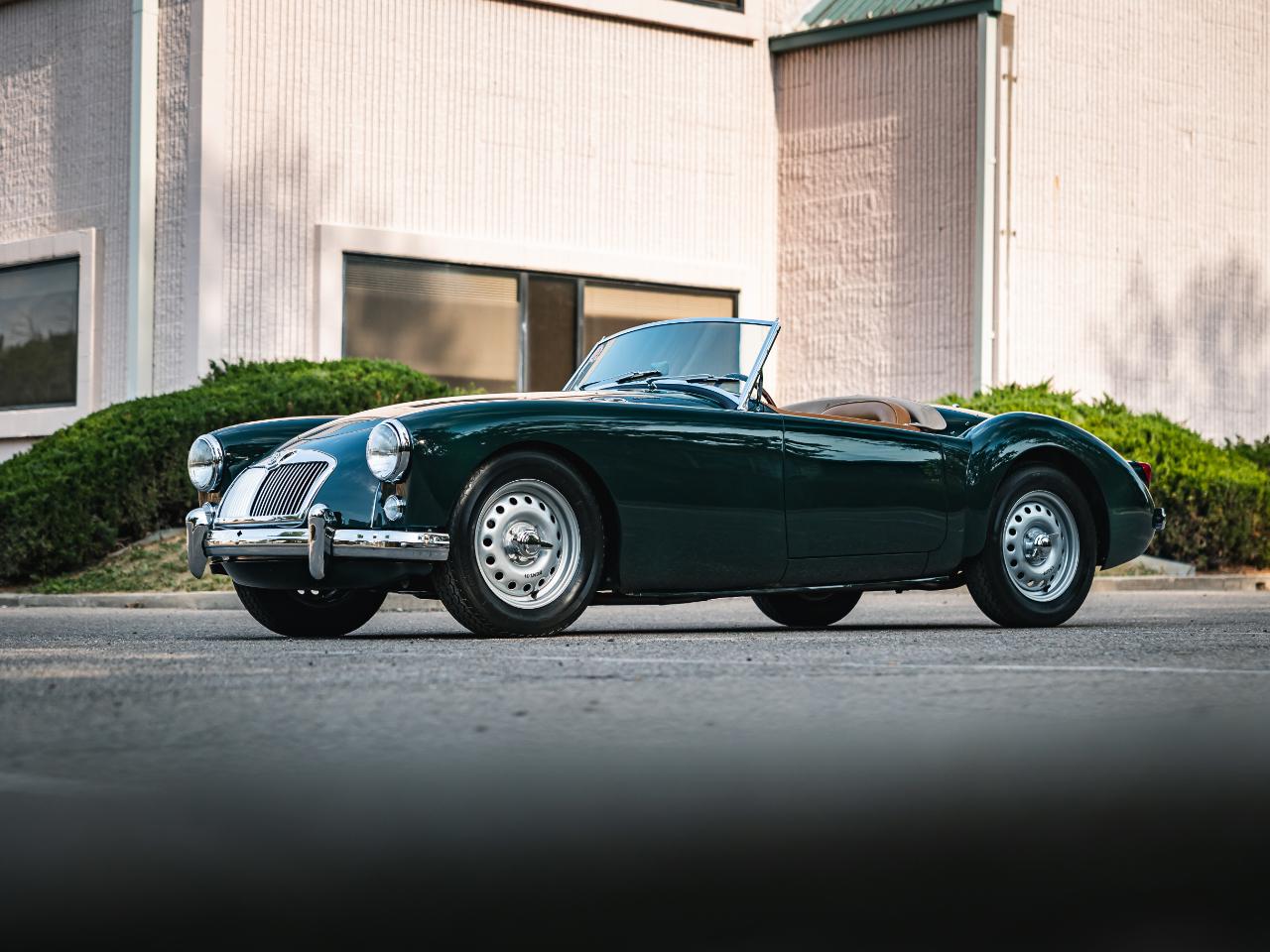
That combination made the MGA the default British sports car of the late 1950s. It was not the fastest car of its day, and was never meant to be. It was the affordable, handsome, fixable one, and that is exactly the proposition it still offers. The four cars we currently track illustrate the spread: a 1956 1500, two 1960 cars and a 1961 car, spanning the pushrod range from first year to nearly last.
The model's history falls into four chapters. The 1500 (1955–59) is the original, drum-braked and pure of line. The Twin Cam (1958–60) is the exotic: a double-overhead-cam engine, disc brakes on all four wheels and a reputation, earned the hard way, for expense. The 1600 (1959–60) is the sensible evolution — more power and front disc brakes — and the 1600 Mark II (1961–62) is the final, most powerful pushrod version. From late 1956 there was also a coupé alongside the roadster: a fixed-head car with a curved windscreen, wind-up windows and exterior door handles, aimed at buyers who wanted weather protection the roadster's sidescreens never provided.
Sixty-odd years on, the buying question is almost never which MGA is fastest. It is which MGA has a sound frame and a sound body, because the MGA's steel body and separate chassis can both rot, in different places and at different speeds, while its mechanicals are among the simplest and best supported of any 1950s sports car. Buy the structure, and everything else on an MGA can be fixed at prices you can plan for. Buy a rotten one, and you have bought two restorations — a chassis and a body — wearing one set of number plates.
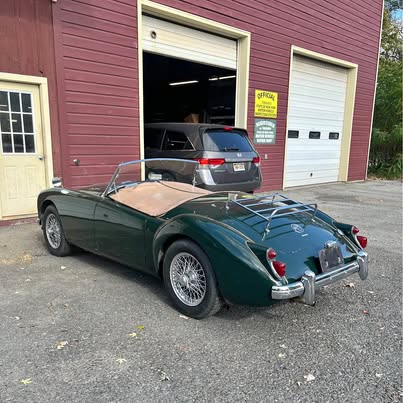
The models
Every MGA is a two-seater on the same basic chassis and the same body shell; what changes across the range is the engine, the brakes and the detailing. Two body styles were offered: the open roadster, with a folding soft top and detachable sidescreens, and from late 1956 the coupé, a fixed steel roof with wind-up windows, proper exterior door handles and a curved, three-piece-style wrap of glass that made it a genuinely different car to live with — quieter, drier and heavier. Roadsters outnumber coupés by roughly five to one, and the coupé's extra weather equipment is paid for in extra rust traps around the roof, screen and door frames.
| Model | Years | Engine | Output | Built | Character |
|---|---|---|---|---|---|
| 1500 roadster | 1955–1959 | 1489 cc B-series, twin SU H4 | 68 hp, later 72 hp | part of about 59,000 1500s | The original; drums all round, purest lines |
| 1500 coupé | 1956–1959 | 1489 cc B-series, twin SU H4 | 68 hp, later 72 hp | included above | The all-weather 1500; rarer, more trim |
| Twin Cam roadster and coupé | 1958–1960 | 1588 cc DOHC, twin SU H6 | 108 hp, later 100 hp | 2,111 | The exotic; all-disc brakes, specialist money |
| 1600 roadster and coupé | 1959–1960 | 1588 cc B-series, twin SU H4 | 80 hp | about 31,500 | Front discs, more torque; the sensible classic |
| 1600 DeLuxe | 1960–1962 | 1588/1622 cc B-series | 80/90 hp | about 400 | Twin Cam chassis and brakes, pushrod engine |
| 1600 Mark II roadster and coupé | 1961–1962 | 1622 cc B-series, twin SU H4 | 90 hp | about 8,200 | The last and quickest pushrod car |
(Production figures are the commonly published factory totals; the four pushrod and Twin Cam runs together account for the 101,081 cars built. Outputs are period gross figures. The DeLuxe total is an estimate — the cars were built to use up Twin Cam chassis after Twin Cam production ended, and records are less tidy than for the standard models.)
The 1500 (1955–59). The launch model, and the one most buyers picture. The 1489 cc B-series gave 68 hp at first, raised to 72 hp during 1956; there is no external difference worth paying for, so buy on condition. Brakes are Lockheed drums all round — adequate when maintained, the first thing to budget for if not. Steel disc wheels were standard, with centre-lock wires the popular option then and now. The 1500's charm is its purity — just the original shape. Its weakness is that it is the oldest MGA, so it has had the longest to rust and the most owners to defer it.
The Twin Cam (1958–60). MG's bid for genuine performance, and the most specialised production MG of its era. The engine is a double-overhead-cam conversion of the B-series block with an aluminium crossflow-style head, displacing the same 1588 cc as the later pushrod 1600 but producing 108 hp in its original high-compression form. Around the engine, MG specified the car properly: Dunlop disc brakes on all four wheels, Dunlop centre-lock disc wheels with peg drive, and a specification that owed more to the competition department than to the Magnette. It is a wonderful car when it is right and a financially serious one when it is not — the engine section below gives it the space it needs, because verifying a Twin Cam, and understanding what its engine has survived, is a discipline of its own. Only 2,111 were built, roadsters and coupés together, before warranty costs and a reputation for piston trouble killed it.
The 1600 (1959–60). The pushrod car grown up. The bore went out to give 1588 cc and 80 hp, and — the change you feel first — Lockheed disc brakes arrived at the front, with drums retained at the rear. There are small external tells: 1600 badges on the front wings and boot lid, and revised tail lamps. This is the MGA most experienced buyers recommend: meaningfully quicker and better braked than a 1500, with none of the Twin Cam's financial exposure, and built late enough that survival rates are better.
The 1600 DeLuxe (1960–62). When Twin Cam production stopped, MG had chassis, all-disc brake setups and centre-lock wheels left over, and sold them with the standard pushrod engines as the DeLuxe. About 400 were built across the 1600 and Mark II periods. A genuine DeLuxe is a quietly desirable car — Twin Cam brakes and wheels without the Twin Cam engine — but the specification is also easy to imitate, so a claimed DeLuxe needs its chassis number checked against the records before any premium changes hands.
The 1600 Mark II (1961–62). The final development: the engine bored out again to 1622 cc and 90 hp, a taller rear-axle ratio for more relaxed cruising, a recessed front grille with vertical slats set back into the aperture, and horizontal tail lamps moved up onto the rear wings. The Mark II is the most usable MGA of all on modern roads — the strongest pushrod engine and gearing that lets it hold motorway speeds without strain — and for years it was overlooked next to the purer early cars, which is a buyer's opportunity rather than a criticism.
Roadster or coupé? The roadster is the default: lighter, simpler, and the open car the shape was drawn as. The coupé adds real all-weather usability and trim a step above the roadster's, paid for in extra weight, extra rust territory around the roof and screen pillars, and headlining and window-mechanism costs. Coupés are rarer and were once notably cheaper; the gap has narrowed as buyers have recognised the better tourer. Judge each on the structure first — but do not dismiss a good coupé because the market once did.
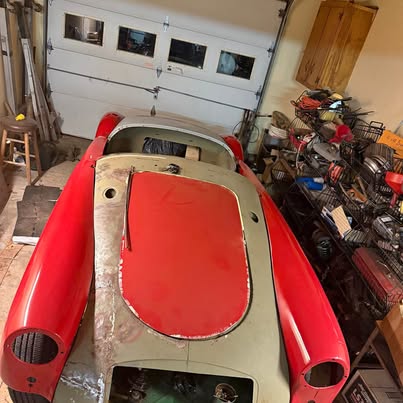
Engines and gearboxes
The pushrod B-series: 1489, 1588 and 1622 cc
Three capacities, one engine. The B-series is a cast-iron, overhead-valve four with a three-bearing crankshaft in its MGA forms, fed by twin SU H4 semi-downdraught carburettors, and it is one of the most thoroughly understood engines in the classic world — it powered everything from the Morris Oxford to the MGB that followed, in capacities up to 1800 cc. In the MGA it appears as the 1489 cc unit of the 1500 (68 hp, raised to 72 hp during 1956), the 1588 cc of the 1600 (80 hp), and the 1622 cc of the Mark II (90 hp). Each step up is a bore increase, and each is worth having: the bigger engines do not just make more power, they make it lower down, and the 1622 in particular pulls the MGA's tall gearing with an ease the 1489 never quite manages.
A healthy B-series tells you so in the first minute. It should start readily with a little choke, idle evenly at around 800–900 rpm, pull cleanly, and show oil pressure of roughly 50–70 psi at running speed, falling to perhaps 20–25 psi at a hot idle — lower figures on a high-mileage engine are a wear conversation, but a gauge that flickers at idle is a tired bottom end. Blue smoke on start-up that clears is valve stem seals and guides; under sustained load it is rings and bores; a puff on the overrun is the classic worn-guide signature. None is fatal — a full professional B-series rebuild is roughly $5,000–9,000 — but each is a price chip, and a car that smokes, rattles and leaks simultaneously has an engine that has simply been used up.
The known weaknesses are specific and testable. Timing chain rattle at idle points to a worn chain and tensioner — a modest job with the engine in place. Head gaskets fail between cylinders or into a waterway; the tests are mayonnaise under the filler cap, bubbles in the header tank, one spark plug conspicuously steam-cleaned beside the other three. Oil leaks are a way of life — crank seals, tappet chest covers, rocker cover — and a dry B-series usually means a recently rebuilt one. Read leaks as maintenance evidence: a light mist is normal, a puddle is a car nobody has serviced.
The SUs attract more wrong diagnoses than any other component on the car. The twin H4s wear at the throttle spindles, where air leaks past the butterfly shafts and makes the idle hunt and the mixture impossible to set evenly; the test is to spray a little carburettor cleaner around the spindle ends at idle and listen for the revs changing. Worn jets and needles give rich running that no adjustment cures. But before condemning carburettors, check the boring things: float levels, a sticking float needle flooding one carb (fuel smell, wet plugs on two cylinders), perished fuel hose, and the points and condenser in the Lucas distributor — more "carburettor problems" on B-series cars are ignition problems in disguise than the other way round. A proper SU rebuild with new spindles bushed into the bodies runs roughly $600–1,200 for the pair; a tune by someone who actually knows SUs is the cheapest performance upgrade the car offers.
Cooling is adequate but not generous, and it punishes neglect fastest. A car that has sat for years will have a silted block and a furred radiator core. A healthy MGA runs at around 190°F (about 88°C) and holds it in traffic; one that climbs in traffic and recovers at speed has a radiator or airflow problem, while one that overheats under load is telling you about the head gasket or a collapsing bottom hose. Many cars carry an electric fan conversion — a sensible, reversible modification that says the previous owner used the car in the real world. Budget $800–1,500 for a recore and full cooling refresh if the car runs hot, and never buy a car that boils on the test drive on the promise that it just needs a thermostat.
Identity. Engine numbers are stamped on a plate or boss on the block, and the prefixes are your first check that the engine matches the badge: 1500 engines are in the 15-series (early cars carry BP15-prefixed numbers), 1600 pushrod engines are 16GA, and the 1622 Mark II engine is 16GC. A 1600-badged car with a 15-series engine is a 1500 engine in a later shell — worth materially less, whatever the seller calls it — and because B-series engines swap so easily between BMC models, assume nothing until you have read the number yourself.
The Twin Cam: 1588 cc of ambition
The Twin Cam engine shares its block and its 1588 cc capacity with the pushrod 1600 and almost nothing else that matters. On top sits an aluminium cylinder head with twin overhead camshafts driven by chain, hemispherical combustion chambers, and valves operated through bucket tappets with shim adjustment. It breathes through twin SU H6 carburettors — the bigger 1¾-inch instruments — and in launch form, with a 9.9:1 compression ratio, it produced 108 hp at 6,700 rpm, revved eagerly, and turned the MGA into a genuine 110 mph car. It is a charismatic engine: cammy, mechanical, eager in a way no pushrod B-series ever is.
It also earned its reputation honestly. The failure mode that killed the model was burnt and holed pistons, and the mechanism is worth understanding because it decides what you check today. The hemispherical chamber and high compression made the engine acutely sensitive to detonation; carbon build-up in the chambers raised the effective compression further as miles accumulated; and the fuels of the day — and the ignition timing owners and dealers applied — pushed it over the edge into pre-ignition, which melted piston crowns, typically on the cylinders furthest into the airflow pattern the engine least liked. MG's responses came in stages: revised pistons, altered tuning guidance, and finally a reduction of the compression ratio to 8.3:1, which brought output down to about 100 hp and made the engine markedly less highly strung. A low-compression Twin Cam is not a lesser car in any way that matters on the road — it is the factory's own fix, applied — but the market still talks up the high-compression cars, so establish which engine you are looking at before discussing money.
Verifying a Twin Cam is a discipline in three parts. First, identity: a genuine Twin Cam has its own chassis-number series and engine numbers, the car sits on the Dunlop disc-braked chassis with centre-lock peg-drive wheels, and the model has an active register culture — the Twin Cam community has recorded surviving cars for decades, and a car unknown to the registers with a story that does not check out should be priced as a question mark. Conversions and recreations exist, built from pushrod cars and Twin Cam engines in both directions, because the engine alone carries much of the value. Second, specification: the DOHC head is unmistakable — a wide alloy cam cover arrangement nothing like the pushrod car's pressed rocker cover — but check for the supporting cast too: the H6 carburettors, the correct exhaust manifold, the all-round Dunlop discs. Third, health: you are buying an engine whose rebuild, done by one of the handful of genuine specialists, is a $15,000–30,000 conversation, so a compression test, a leak-down test and a long, hot test drive are not optional extras on a Twin Cam viewing — they are the viewing. Listen for timing-chain noise from the front of the head, watch the oil pressure as the engine reaches full temperature, check the coolant for combustion gas, and ask directly when the engine was last apart, who did the work, and which pistons and compression ratio it runs now. A Twin Cam with a documented specialist rebuild on the lower compression ratio, running cleanly, is the one to buy; a Twin Cam with a smoky, rattly engine and no paperwork is a five-figure liability wearing a desirable badge.
Ownership reality, briefly: valve clearances are set by shims, the engine wants high-octane fuel and an owner who listens to it, oil consumption is higher than a pushrod owner would accept, and head parts are priced like the low-volume components they are. None of this should put off the right buyer. All of it should put off a buyer who wanted a cheap MGA and found a Twin Cam-shaped one.
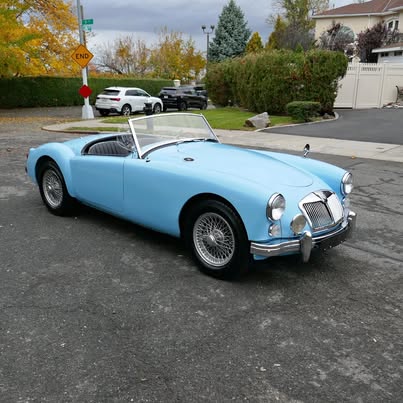
Gearboxes and the rear axle
All MGAs use a four-speed manual gearbox of BMC design, with synchromesh on second, third and fourth — there is no synchromesh on first, and there never was, so a crunch engaging first at a standstill on a car whose clutch is dragging is a clutch adjustment conversation, while a crunch selecting first on the move is simply the gearbox being used as it was never intended to be. No overdrive was offered on the MGA from the factory — that arrived with the MGB — so cruising revs are what the axle ratio gives you: the 1500 and 1600 run a 4.3:1 rear axle, the Twin Cam a taller specification suited to its revs, and the Mark II a 4.1:1 that is a large part of its relaxed motorway manners. Five-speed conversions using modern gearboxes exist and are popular with owners who tour; on a viewing they are a plus for usability and a minus for originality, and the price conversation should acknowledge both.
Gearbox health shows in three tests. Second-gear synchromesh goes first — a baulk or crunch on a brisk change into second, up or down, means worn synchromesh and a gearbox-out rebuild at roughly $1,500–3,000. Jumping out of gear, usually third or fourth on the overrun, points to worn selector forks, detents or bearings — the same rebuild. Noise in the indirect gears that disappears in fourth (direct drive) is bearing and laygear wear. Check the clutch as a system too: a high bite point and slip under load is a worn plate, judder is oil contamination or a tired cover, and a dragging clutch that makes first and reverse hard to engage will masquerade as gearbox failure to anyone who does not check the cheap hydraulics first. An engine-out clutch job is roughly $800–1,500 in labour terms — a negotiation, not a walk-away.
The rear axle is BMC's sturdy banjo-type live axle on semi-elliptic leaf springs. Its wear items are whine from the crown wheel and pinion (under load, quiet on the overrun — live with it or budget for a rebuild), leaks from the pinion and hub seals, and worn half-shaft splines on wire-wheel cars, announced by a clonk on taking up drive. All of it is fixable with shelf parts, and a silent, dry axle is one of the reliable signs of a maintained car.
Problem areas
The MGA divides its problems cleanly in two, and the division is the single most useful thing to understand before you look at one. The mechanical problems are BMC problems — shared with a dozen other cars, understood by every classic specialist, and fixable with parts that arrive in the post. The structural problems are MGA problems, and they are the ones that decide value: a separate steel chassis frame that rusts in its own places, a steel-and-aluminium body that rusts in different ones, and wooden floorboards that rot quietly underneath the carpets. A car can need an engine rebuild and still be a good buy. A car that needs a frame and a body is a parts car with ambitions. Work through this section in that order — frame, body, then everything else.
Rust: the frame
The chassis is a box-section ladder frame, and it rusts from the inside out wherever mud and water sit against it. The places that matter, in the order to check them:
The side members and outriggers. The main rails run the length of the car, with outriggers reaching out to carry the body. The rails collect road dirt through their drain and access holes and rot internally, so a frame that looks sound in shiny black paint can be paper-thin — prod with a screwdriver, tap with a small hammer and listen for the note changing from a ring to a thud, and be deeply suspicious of fresh underseal or fresh paint on a frame nobody claims to have restored. The outriggers and the body mounting points are the common failures: they sit in the spray zone behind the front wheels and ahead of the rear ones, and a collapsed outrigger lets the body drop and the door gaps wander, which is why wandering door gaps on an MGA are a frame symptom before they are a body symptom.
The front crossmember and suspension mountings. The front suspension bolts to the frame at the front, and corrosion around the spring and damper mountings is structural in the most literal sense — this is the metal the front wheels hang from. Perforation here is fabrication work, and it is the area sellers' photographs most reliably avoid.
The rear of the frame. The rear spring hangers and the frame rails around the rear axle traps mud thrown up by the wheels; check the spring mounting eyes and the rail sections above and behind the axle. A frame that has rusted through at a spring hanger is not a patch-and-drive car.
The battery area. The MGA carries its batteries — originally twin six-volt units — in carriers behind the seats, low in the frame, and decades of acid and neglect rot the carriers and the frame around them. It is hidden by the trim panel behind the seats, which is exactly why you lift the panel and look.
Frame repair is the defining cost of MGA restoration. A frame that needs outriggers, rail sections and spring hangers is a body-off job: budget roughly $3,000–7,000 for frame welding and refinishing once the body is off, and understand that the body coming off is itself the start of the body bill below. This is why the mantra of this guide is to buy the frame first. A sound, original, honestly dirty frame under a scruffy car is worth more than a gleaming frame-shaped repair under a shiny one — and a genuinely rust-free frame, verified with your own hammer, is the rarest and most valuable thing an MGA can offer.
Rust: the body, the sills and the wood
The body is a steel structure with aluminium skin panels where it matters most: the doors, bonnet and boot lid are aluminium and do not rust, which fools buyers into thinking an MGA with clean doors is a clean car. It is not. The corrosion lives in the steel around them.
Sills. The sill panels below the doors are structural to the body's stiffness and sit directly in the spray from the front wheels. They rot from the inside, bubble at the bottom edge and behind the front wheel, and are routinely covered by fresh paint or filler for sale. Press hard along the full length of both sills, get underneath and look at the inner face, and treat any sill that flexes, flakes or shows fresh filler as a welding bill: cutting out and replacing sills properly, with the inner structure made good, runs roughly $1,500–4,000 a side once paint is included, and sills rarely rot alone.
Door shuts and the A- and B-posts. The shut pillars carry the door hinges and latches, and rust here is the expensive kind: it distorts the door fit, and repairing it means unpicking the wing and sill joints around it. Open and close every door slowly, watch the gaps as the door swings, lift the door at its rear edge to feel for hinge wear — then separate the two diagnoses: play in the hinge is cheap; a door that fits badly because the pillar has moved is not. Rust bubbling at the base of the windscreen pillars on a coupé, or around the scuttle on a roadster, is the same warning in a different place.
Front wings. The bottom of the front wing behind the wheel is the classic MGA rot spot — a mud trap between wing and inner structure — followed by the wing top along the beading line and the headlamp area. Front wings are available as repair panels and full wings, but fitting and painting one properly is a $1,000–2,500 conversation per side by the time it matches.
Rear wings and doglegs. The section of the rear wing ahead of the rear wheel — the dogleg — traps mud against the sill end and the inner arch, and the rear wheelarch lips themselves rust where the double-skinned edges hold water. Run a fingertip around every arch lip and feel for filler and flaking under the paint.
Boot floor and rear valance. The boot (trunk) floor rusts from water entering past the boot lid seal and the rear lamps; lift the spare wheel and the boards and look at the floor and the rear crossmember area. On coupés add the roof gutters, the screen surrounds and the rear quarter pillars: a coupé roof that has rusted at its edges is a genuinely difficult repair, and bubbling at the base of a coupé's rear screen should be priced with respect.
The wooden floors. Unique to the MGA among mainstream sports cars: the floorboards are plywood — cheap, light and, after sixty years, frequently rotten, delaminated or replaced with whatever board a previous owner had to hand. Lift the carpets on every car: sound boards are flat, dry and firmly screwed; rotten ones flex underfoot and smell of damp. New boards are one of the cheapest jobs on the car — a few hundred dollars in materials — but rotten floors are a marker: the car has been wet inside for a long time, and the sills and frame beneath deserve an even harder look. Check the panel behind the seats too, and the battery carriers it hides, which connects this check back to the frame section above.
The honest summary: panels, sills and repair sections for the MGA are all available, and the body is well understood by restorers. What is not available is a shortcut. A body that needs sills, shut pillars, wing bottoms and floors is a body-off restoration, and the welding and paint for that work, done properly, runs well into five figures — more than the difference between a project car and a good one. That arithmetic, not any mechanical horror, is what prices MGAs.
Suspension, steering and brakes
The front suspension is independent, by coil springs and wishbones, with Armstrong lever-arm dampers that double as the upper suspension link. Lever-arm dampers leak and lose their damping gradually, so the car bounces and wallows rather than announcing a failure; push down hard on each front wing — more than one and a half bounces means tired dampers, and reconditioned units are moderate-cost exchange items. Wishbone bushes perish and kingpin-and-trunnion joints wear if their grease has been neglected. An MGA that wanders, wears its front tyres unevenly or feels nervous at speed is usually asking for bushes, dampers and alignment — roughly $800–2,000 as a package — rather than hiding anything sinister.
The steering is rack and pinion, and should be light, direct and free of play. Play is usually track-rod ends, rack mountings or the column's flexible coupling rather than the rack itself; a genuinely worn rack knocks over rough surfaces and leaks from its gaiters. All the wear parts are available and cheap.
At the rear, leaf springs sag with age — measure ride height side to side — and broken leaves hide inside the spring pack, so look for a leaf that does not follow the curve of its neighbours. A car sitting down at one rear corner is describing a spring, not a mystery.
Brakes divide by model. The 1500's Lockheed drums all round are honest brakes when the shoes, cylinders and adjustment are right, and vague, pulling brakes when any of them is not — budget $600–1,200 for a full drum-brake overhaul with cylinders, shoes and hoses. The 1600 and Mark II add Lockheed front discs, a straightforward and effective system whose enemies are seized caliper pistons and corroded discs on cars that have sat. The Twin Cam and DeLuxe use Dunlop discs all round — better brakes, dearer parts, and a system to have assessed by someone who knows it, because Dunlop caliper work is specialist-priced. On every model, perished flexible hoses and a tired master cylinder are the standing recommissioning list, and any car that has been off the road for years needs the whole hydraulic system gone through before it needs anything else: budget $800–2,000 for a full hydraulic refresh on a disc-braked car, more if calipers need rebuilding.
Interior, hood and weather equipment
The MGA's cabin is simple, and its costs are mostly about water. The roadster's weather equipment is period-basic: a folding hood (soft top) that is quick to raise, detachable sidescreens with sliding Perspex panels, and a tonneau cover on many cars. A hood frame that is bent or seized, a hood covering that has shrunk or split at the seams, and sidescreens with cracked panels and perished seals are the standard findings; a new hood fitted runs roughly $800–1,500, and sidescreens are available but add up. Test the weather equipment as equipment: put the hood up, fit the sidescreens, and look at the gaps — an MGA was never waterproof in the modern sense, but it should be weatherproof enough that the interior is not permanently damp, because permanently damp is what rots the floorboards in the body section above.
The coupé swaps those problems for its own: wind-up window mechanisms that wear and drop, door seals and screen rubbers that perish and leak onto the floors, and a headlining that sags or stains when the screen seals have been leaking — staining at the edges of a coupé headlining is a leak report, so read it as one and go looking for the screen surround rust it implies.
Seats are simple frames whose padding collapses with age; a driver's seat you can feel the frame through is a retrim conversation — re-covering a pair properly runs roughly $1,500–3,000 depending on material — while the rest of the trim is all reproduced and comparatively cheap. Instruments are Smiths, and the important check is the combined gauge: oil pressure and a capillary water-temperature gauge in one unit, and a dead temperature capillary is a gauge-out repair. Check that every gauge reads plausibly on the test drive, that the heater — an option when new, so some cars never had one — actually blows warm, and that the wipers work, because the small jobs are the ones that fill the first winter of ownership.
Electrics
The MGA is electrically simple — a Lucas system, originally positive earth, with a dynamo (generator) rather than an alternator on standard cars. The failure pattern is the classic one: the wiring itself rarely fails, but earth connections corrode, bullet connectors green up, and fifty-year-old switches and the fuse box (just two fuses protect much of the car) give intermittent faults that masquerade as component failures. Dim headlamps, a fuel gauge that wanders, indicators that change speed with engine revs — all are earth and connection symptoms first, and cheap to fix with time and a wiring diagram.
The bigger checks are three. Charging: a car that will not hold charge may need dynamo or control-box work (a few hundred dollars), and many cars have been converted to an alternator and negative earth — a practical upgrade, and no black mark on a driver-quality car. The starter should turn a B-series briskly; a sluggish one with a good battery is usually the engine-to-chassis earth strap, the cheapest fix on the car. Conversion confusion: converted cars sometimes keep components mismatched to their new polarity, so if the rev counter reads nonsense or the fuel gauge lies creatively, establish what polarity the car actually is — battery connections and labels under the bonnet tell you in one minute — before buying parts.
How to inspect one
Allow a full hour, bring a torch, a small magnet, a screwdriver for prodding (with the seller's permission), a tyre-pressure gauge and overalls or a mat for getting underneath. An MGA sits low; if the car survives your first pass, a lift inspection before money changes hands is worth more on this model than on almost any other, because so much of the value is in a frame you cannot properly see at kerbside.
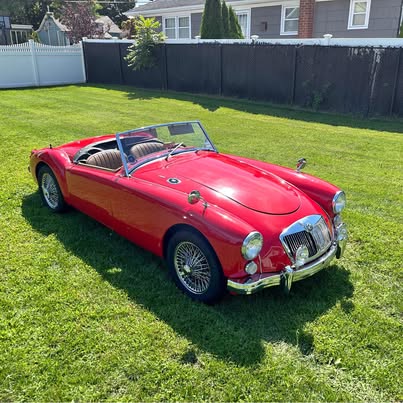
- Start with identity and paperwork. Read the chassis plate (on the bulkhead in the engine bay) and the engine number, and match both to the title or registration. Use the prefixes from the engine section: a 1600 should carry a 16GA engine, a Mark II a 16GC. On a Twin Cam, stop and do the full verification — chassis series, engine number, register check — before anything else, because identity is most of that car's value. On a claimed DeLuxe, the same discipline applies at a smaller scale.
- Cold start. Insist the engine is cold when you arrive. A pushrod car should start with a little choke, settle to an even idle and show no blue smoke beyond a start-up puff. Note the oil pressure as it warms and the temperature as it stabilises. On a Twin Cam, this step carries the whole viewing: listen for chain noise, watch for smoke, and plan to keep the engine running until it is fully hot.
- The frame, from underneath. Torch and screwdriver along both main rails, the outriggers, the front crossmember and suspension mountings, the rear spring hangers and the battery carriers behind the seats. Prod and tap; you are listening for thin metal and looking for perforation, patches and suspiciously fresh coating. Perforation in a spring hanger, a suspension mounting or a main rail is structural — this step decides whether the viewing continues at all.
- Sills and shut pillars. Press hard along both sills, look at their inner faces from underneath, then open each door and study the shut: gaps even, door swinging true, no lift-and-drop at the hinges. Bubbling at the base of the pillars, filler in the sill, or a door that fits badly because the structure has moved — all are body-off arithmetic, priced in the problem areas section.
- Wings, arches and boot floor. Fingertip around every wheelarch lip, magnet along the front wing bottoms behind the wheels and the rear doglegs ahead of them, then lift the spare wheel and boards in the boot and inspect the floor. Remember the doors, bonnet and boot lid are aluminium: judge the steel around them, not them.
- Floors and interior water. Lift the carpets and press the plywood floorboards — flat, dry and firm is right; flexing, delamination or a damp smell means the car has lived wet, and steps 3 and 4 deserve a second, harder look. On a coupé, check the headlining edges for the staining that reports a leaking screen.
- Engine health checks. With the engine hot: look for head-gasket signs (bubbles in the header tank, emulsion under the filler cap, one steam-cleaned plug), listen for timing-chain rattle, check for the SU spindle-wear test from the engine section, and read the leaks as a maintenance diary. On any car, a compression test the seller resists is an answer in itself; on a Twin Cam, compression and leak-down tests are mandatory, not negotiable.
- Cooling under load. On the test drive, watch the temperature gauge in traffic after the run, not just at speed. A car that climbs steadily at idle and recovers on the move has a radiator or fan problem; one that boils has ended the negotiation until it is fixed and re-demonstrated.
- Gearbox and clutch on the move. Work up and down through the gears briskly: second-gear synchromesh is the wear item, jumping out of third or fourth on the overrun is the rebuild item, and first gear has no synchromesh — judge it only at a standstill, with the clutch fully down. Feel the clutch bite point, and test for slip by loading the engine in top gear at low speed.
- Steering, suspension and stance. Stand back and check the car sits level, then drive it over a rough surface: knocks are bushes, damper mountings or kingpin wear; wander and uneven tyre wear are the geometry conversation. Bounce each front corner — a car that keeps bouncing has the tired lever-arm dampers described in the problem areas. The steering should be light and precise; play is usually cheap joints, not the rack.
- Brakes, matched to the model. Drums on a 1500 should pull the car up straight with a firm, high pedal; front discs on a 1600 or Mark II should feel strong and progressive; the Twin Cam's all-round discs should feel like a modern system. Any pull to one side, a sinking pedal, or a handbrake that barely holds is a hydraulic overhaul to price in — and on a car that has sat unused, assume the full refresh is needed whatever the pedal feels like at walking pace.
- Weather equipment and electrics last. Put the roadster's hood up and fit the sidescreens; on a coupé, run the windows up and down and check the seals. Work every light, the indicators, wipers, horn, heater and every gauge, and establish the car's polarity and charging behaviour. None of this prices the car like the frame does — but a car where everything works has usually been used and maintained, which is the best single predictor of what your first year of ownership will cost.
Values
The build below this guide carries the current numbers — the cars listed now and the recorded sales — and those figures move, so this section teaches you how to read them rather than repeating them. The MGA market has a shape that rewards buyers who understand it, because the spread between the cheapest and the dearest MGA is driven less by model badges than by one thing: how much structural work the car in front of you needs.
Start with the condition spread, which on an MGA is wider than on most classics of its price class. At the bottom sit project cars — complete but rotten, or sound but dismantled — and their prices are really the price of a frame, a body and an identity, because everything structural is still to pay for. The honest middle of the market is the driver-quality car: sound frame, presentable body, mechanicals in use, cosmetics that show their age. At the top are the restored cars, and here the MGA market has a ceiling worth understanding — a full, professional, body-off restoration of an MGA costs more than a finished pushrod car typically sells for, which is why the best-value purchase in the whole range is so often someone else's completed restoration, bought for a fraction of its build cost. When you read a high asking price, ask what documentation stands behind it; when you read a low one, ask which of the structural jobs in this guide has not been done.
Within that spread, the variants rank predictably. The Twin Cam stands apart: genuine cars, verified as the engine section describes, carry a large premium over every pushrod model, coupés and roadsters both, and within Twin Cams a documented engine rebuild by a known specialist is worth real money while an unknown engine is a discount waiting to be argued. The Mark II has been climbing as buyers recognise it as the most usable pushrod car; the 1600 sits as the market's centre of gravity; the 1500 trades on purity and age, with early cars and good colours finding buyers readily. Coupés, long the discount body style, have narrowed the gap considerably — a good coupé now finds money that reflects its rarity and its touring ability rather than the old assumption that only roadsters count. DeLuxe cars attract a modest premium when, and only when, the specification is documented.
Two reading skills matter more than any figure. The first is the asking-versus-achieved gap: MGAs are often advertised optimistically by sellers who have added up their restoration invoices, and the recorded sales beneath this guide — auction results especially — are the corrective, showing what buyers actually paid for comparable cars. Compare like with like: a restored 1600's sale tells you little about a project 1500, and the project-versus-driver gap here is routinely larger than the entire price of the project car, because the structural work is where the money goes. The second skill is pricing the specific car: take the driver-quality benchmark, then subtract the jobs your inspection actually found — sills by the side, a hydraulic refresh, a clutch, a hood — using this guide's cost ranges. Sellers rarely do this subtraction for you. Buyers who do it, calmly and in writing, buy MGAs well.
Parts and ownership
The MGA is one of the best-supported British sports cars of its era, for a simple reason: over 100,000 were built, the B-series engine and BMC running gear were shared across a whole family of cars, and the model has had an organised club and specialist trade around it for decades. In the United States the supply runs through the big British-car specialists — Moss Motors above all — with the North American MGA Register (NAMGAR) as the model's dedicated club and knowledge base, and in Britain the MG Car Club and a deep bench of MGA-specific specialists cover everything from panels to Twin Cam engines.
Easy: engine service parts and gaskets, SU rebuild kits, ignition parts, clutch components, brake shoes, pads, cylinders and hoses for the pushrod cars, suspension bushes and reconditioned dampers, steering joints, exhausts, floorboard sets, hood coverings, sidescreens, trim and carpets, and virtually every rubber seal on the car. Order today, fit this weekend, at prices that will make owners of rarer classics wince.
Harder and dearer: body panels are available — wings, sills, repair sections — but fitting and painting them is the cost, not the panel. Frame sections and repair work are fabrication jobs. Dunlop brake components for the Twin Cam and DeLuxe are specialist items. Twin Cam engine parts — head components, pistons, cam drive parts — exist through a small number of specialists and are priced accordingly; a Twin Cam owner should know their engine specialist before they need one. Coupé-specific trim, window mechanisms and headlining materials are thinner on the ground than roadster parts. Good original chrome and straight, un-damaged aluminium panels (doors, bonnets, boot lids that have never been filled or torn at the hinges) are worth keeping and repairing rather than replacing.
Running costs. A sorted pushrod MGA is a genuinely usable classic: fuel consumption in the mid-to-high twenties per gallon in touring use, simple servicing any classic-literate mechanic can do — oil, points, plugs, valve clearances with a feeler gauge, grease points attended to — and insurance in line with other cars of its value. The budget line that catches new owners is the same as on every car in this programme: the first year. Catching up deferred maintenance on a running car — hydraulics, hoses, a cooling refresh, perished bushes and seals — honestly runs $2,000–4,000 before you improve anything, and recommissioning a car that has sat for years runs more, because the fuel system, brakes and tyres all come due at once. The Twin Cam multiplies the specialist lines of that budget without changing its shape. Buy a car in regular use over a car that has been asleep, keep it in regular use, and an MGA will repay you by being one of the cheapest routes into 1950s sports-car ownership that there is.
Which one to buy
- The all-rounder: 1600 roadster. Front discs, the 1588 engine, the deepest market to buy from, and none of the Twin Cam's exposure. If you want one MGA to drive, tour and enjoy, this is it.
- The purist's car: 1500 roadster. The original shape and the simplest specification, drum brakes and all. Buy the best-framed early car you can find and enjoy the purity — just budget honestly for the brake overhaul most of them need.
- The value buy: 1600 coupé. Rarer than the roadster, better equipped, genuinely all-weather, and still priced below its merits when the structure is sound. Check the roof and screen pillars twice as hard as you would a roadster's scuttle.
- The driver's pick: 1600 Mark II. The strongest pushrod engine and the tallest gearing make it the best MGA on modern roads. The recessed grille divides opinion; the way it cruises should not.
- The specialist's car: Twin Cam. A real performance MG and a genuine piece of competition-department history — for a buyer who has done the verification in this guide, budgeted for the engine honestly, and wants exactly that. A documented low-compression rebuild is the one to chase.
- The quiet bargain: 1600 DeLuxe. Twin Cam brakes and wheels with a pushrod engine's running costs, in tiny numbers. Worth a premium only with the paperwork that proves it is one.
And the rule that overrides all of the above: buy the soundest frame and body you can find, in the specification you can live with. Engines, gearboxes, brakes and dampers on an MGA are all fixable at prices you can plan for. A rotten frame and a rotten body are two restorations, not one — and they are the one thing about an MGA that no amount of money makes original again.
See the 4 MGA cars currently listed.
For sale now
 $37,500
Expand
Expand
 $85,000
Expand
What they sell for: MGA sale prices.