
Mitsubishi 3000GT buyer's guide
Mitsubishi 3000GT -- the model's own buyer's guide: variants, values and what to check.
Years listed: 1992-1999 · Series: 3000GT
Overview and history
The Mitsubishi 3000GT is the most ambitious car Mitsubishi ever sold in America — a transverse-engined, technology-dense grand tourer that tried to out-engineer the Nissan 300ZX, the Toyota Supra, the Mazda RX-7 and the Chevrolet Corvette all at once, and did it with systems none of them offered together: all-wheel drive, four-wheel steering, electronically controlled suspension, active aerodynamics and, in the VR-4, twin turbochargers driving all of it. In Japan the same car was sold as the GTO — a name Mitsubishi could not use in the United States, which is why the American car is a 3000GT. Dodge sold a badge-engineered twin, the Stealth, built on the same line, and this guide covers it in proportion: mechanically it is the same car wearing different panels, and everything mechanical in these pages applies to both.
The car was developed in the late 1980s, when Japanese manufacturers were spending bubble-economy money on flagship coupes, and it shows in the specification. Mitsubishi's HSR-II concept of 1989 previewed the shape and much of the technology. Production cars reached America for 1991 in three grades that stayed for the whole run: the base car with a single-cam V6, the SL with a twin-cam naturally aspirated V6, and the VR-4 with the twin-turbo engine, all-wheel drive and the full catalogue of active systems. A retractable-hardtop Spyder, converted by ASC, joined for 1995 and 1996 only.
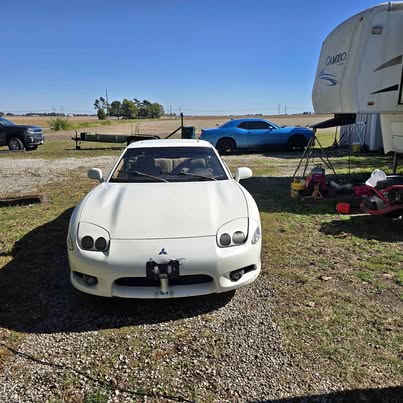
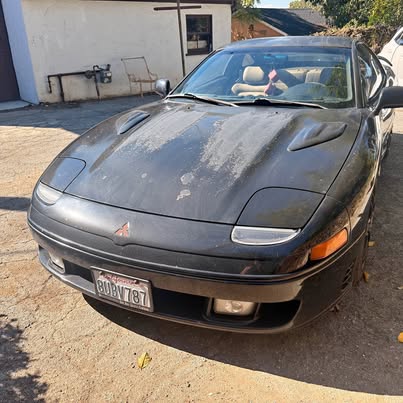
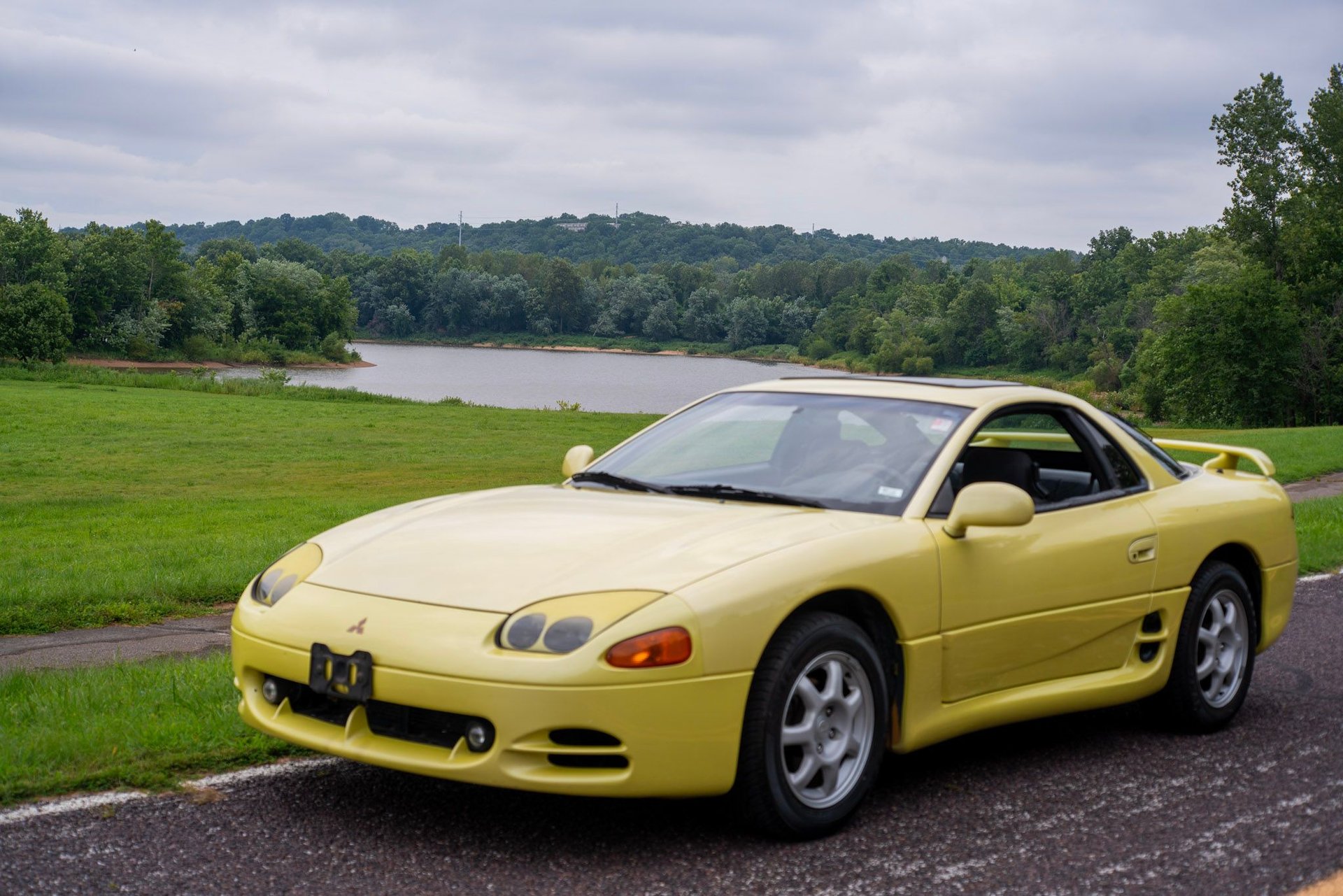
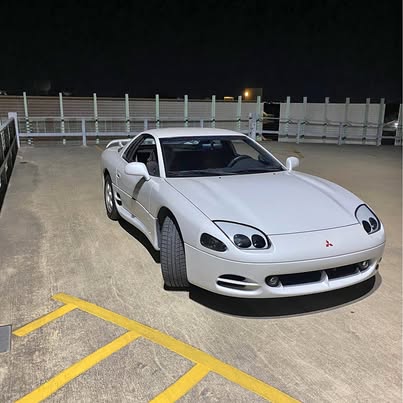
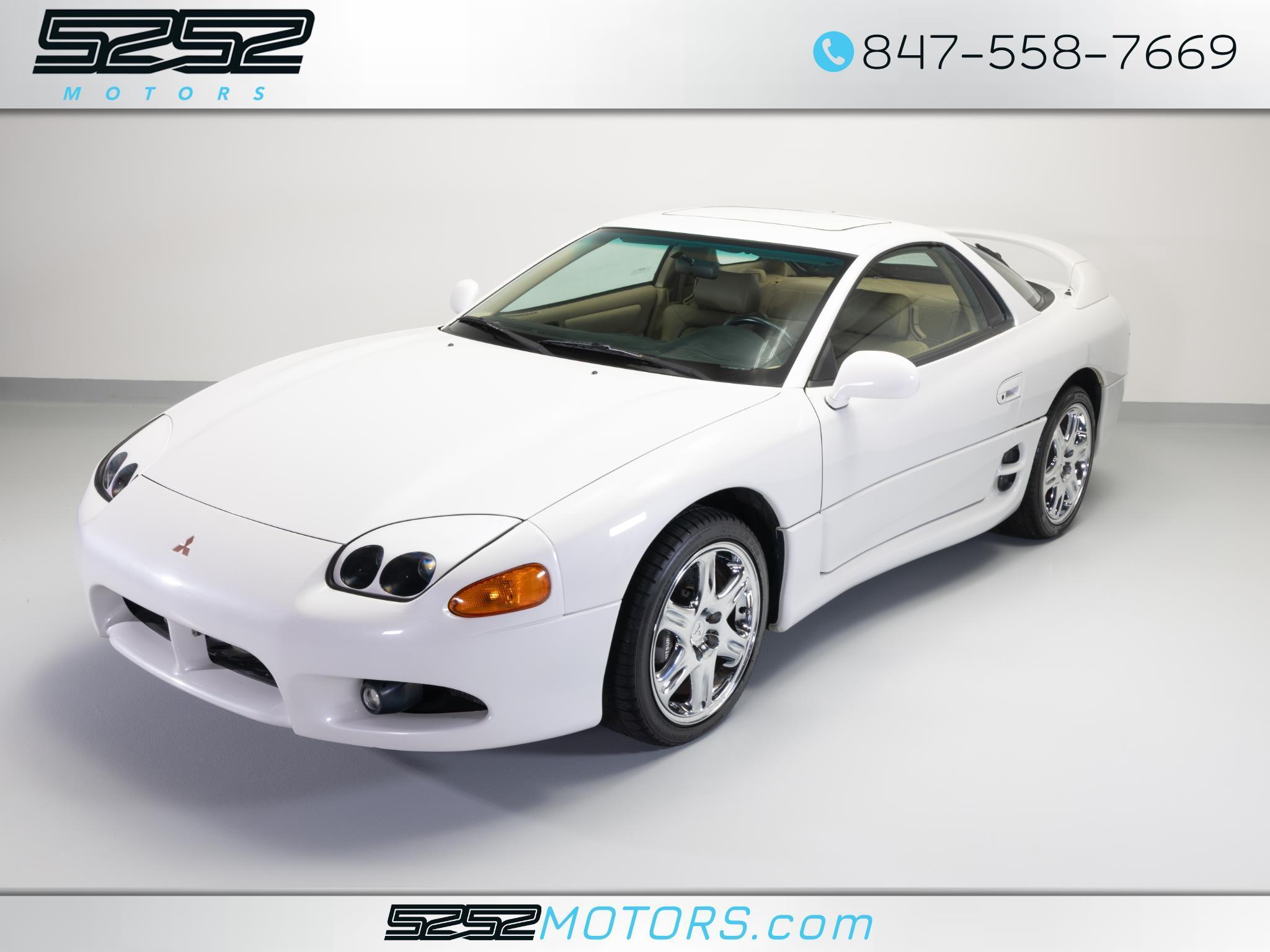
The styling divides the run into three acts. The first-generation cars, 1991 to 1993, have pop-up headlamps, a movable front air dam and rear spoiler on the VR-4, and the fullest technology list. The second generation, 1994 to 1996, replaced the pop-ups with fixed projector lamps behind a smoother nose, tidied the sides, and on the VR-4 brought a six-speed gearbox and a power increase. The third generation, 1997 to 1999, is mostly a styling and trim evolution — a revised front bumper, a tall hoop rear spoiler on most cars, and, for the final-year 1999 VR-4 only, the large fixed wing enthusiasts call the Combat wing. The Dodge Stealth ran only from 1991 to 1996; when Dodge left, Mitsubishi carried on alone for three more years.
These were heavy cars — a VR-4 weighs roughly 3,750 pounds, several hundred more than a contemporary Supra Turbo — bought as technology statements as much as sports cars. That history defines today's market: expensive new, depreciated hard through the 2000s, they spent a decade as cheap horsepower, which is exactly the decade in which most were modified, under-maintained or both. The survivors divide sharply between a minority of cherished, documented cars and a long tail of projects wearing deferred timing-belt services and budget tuning. Almost everything that decides whether a 3000GT is a good buy is knowable before money changes hands, and this guide is organised around finding it out.
A note on the cars you will actually see for sale. The eight cars this site currently tracks span the full run, 1991 to 1999, and the mix is typical: base and SL front-wheel-drive cars make up most of what surfaces, manual gearboxes outnumber automatics five to three in that small group, and the twin-turbo VR-4s — two of the eight — are the minority that draws most of the attention. Every one of those eight arrived via Facebook Marketplace, which is where the affordable end of this market now lives.
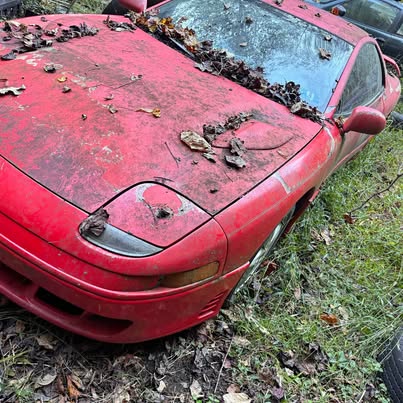
The models
Every 3000GT is a two-plus-two hatchback coupe on the same basic shell, except the Spyder, which trades the hatch for a powered retractable hardtop. The badge on the tail tells you the engine and the driven wheels, and the driven wheels matter more than the power figure: the base and SL cars are front-wheel drive, the VR-4 is all-wheel drive, and they are different cars to own, to maintain and to price. The Dodge Stealth mirrors the ladder — base, ES, R/T and R/T Turbo — with the R/T Turbo matching the VR-4 mechanically.
| Model | Years | Engine | Output | Built | Character |
|---|---|---|---|---|---|
| 3000GT base | 1991–1999 | 3.0 V6 SOHC 12v (6G72) | 161 hp | The volume seller, with the SL | The simple car; front-drive, cheapest to run |
| 3000GT SL | 1991–1999 | 3.0 V6 DOHC 24v (6G72) | 222 hp, 218 hp from 1997 | The other half of volume production | The sweet-spot tourer; twin-cam response, no turbos |
| 3000GT VR-4, first generation | 1991–1993 | 3.0 V6 DOHC twin-turbo (6G72) | 300 hp | A minority of production | The full technology car; five-speed, active aero, 4WS |
| 3000GT VR-4, second and third generation | 1994–1999 | 3.0 V6 DOHC twin-turbo (6G72) | 320 hp | A minority of production | Six-speed, fixed lamps; the 1999 car is the collector pick |
| 3000GT Spyder SL | 1995–1996 | 3.0 V6 DOHC 24v (6G72) | 222 hp | Hundreds, not thousands | Retractable hardtop; rare, heavy, roof-specific parts |
| 3000GT Spyder VR-4 | 1995–1996 | 3.0 V6 DOHC twin-turbo (6G72) | 320 hp | Hundreds, not thousands | The rarest regular-production variant; top money when right |
| Dodge Stealth R/T Turbo | 1991–1996 | 3.0 V6 DOHC twin-turbo (6G72) | 300 hp, 320 hp from 1994 | Sold alongside the Mitsubishi to 1996 | Same mechanicals, Dodge panels; no active aero |
(Outputs are the period SAE net figures Mitsubishi published for US cars. Production was never published model-by-model in a form worth inventing precision around, so the Built column describes each variant's share honestly rather than quoting numbers that do not survive scrutiny. In round terms the front-drive cars were the bulk of a US run that lasted nine model years, and the VR-4 was always the low-volume flagship.)
The base car. The base 3000GT uses the single-cam, two-valve-per-cylinder 6G72: 161 hp, a five-speed manual or four-speed automatic, front-wheel drive, and none of the active systems. It looks almost identical to its expensive sisters — the point when new, and a trap now, because base cars have been dressed in SL and VR-4 trim for thirty years. Check the engine, not the badges: a single-cam car has plainer cam covers and no turbo plumbing, and the VIN settles any argument. As a buy it is a stylish, comfortable cruiser with the lowest running costs in the range, priced accordingly.
The SL. The SL adds the engine the car deserved from the start: the 24-valve twin-cam 6G72 in naturally aspirated form, 222 hp in the early cars and a nominal 218 hp in the last years after an emissions-era recalibration you will never feel from the seat. The SL also brought the plusher trim, leather availability and, on many cars, the electronically controlled suspension. It is still front-wheel drive, and with a manual gearbox it is a genuinely enjoyable grand tourer — strong from 4,000 rpm, happy on a freeway, and free of turbo and all-wheel-drive maintenance. Most experienced owners will tell you the SL is the rational 3000GT, and the market prices it in the middle for exactly that reason.
The VR-4. The VR-4 is why this guide is long. Take the twin-cam engine, add two TD04 turbochargers with intercoolers, and drive all four wheels through a Getrag transaxle and transfer case, with four-wheel steering, electronically controlled dampers, active aerodynamics and an active exhaust valve on the early cars. First-generation cars make 300 hp with five gears; from 1994 the car makes 320 hp and gains a sixth. Nothing else at its price in 1991 combined all of that, and nothing about it is simple to keep working now. Buy one with your eyes open and a maintenance budget set aside, and it is one of the great technology bargains of its era. Buy the cheapest one you can find, and it will educate you.
The Spyder. For 1995 and 1996, ASC in California converted coupes into retractable hardtops — the first such car sold in America in decades, years before Mercedes made the idea fashionable. The conversion added roughly 300 pounds of structure and machinery, and Spyders carry their own hydraulics, tonneau, rear bodywork and trim that no coupe part substitutes for. Production was in the hundreds per variant, and the Spyder VR-4 is the rarest and most valuable regular-production car in this guide. A single roof fault can strand the car mid-cycle, so the roof gets its own checks in the inspection.
The Dodge Stealth. Dodge's version wears its own nose, tail and side cladding — look for the fixed rear spoiler shaped like a shallow banana rather than the Mitsubishi's movable blade — and the R/T Turbo matches the VR-4's engine, all-wheel drive, four-wheel steering and ECS, but never had active aerodynamics. Mechanically, buy and maintain a Stealth exactly as you would a 3000GT; visually, never assume a Mitsubishi panel or lamp fits it, and Stealth trim has its own scarcity.
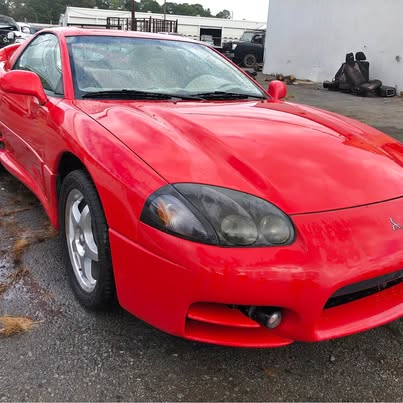
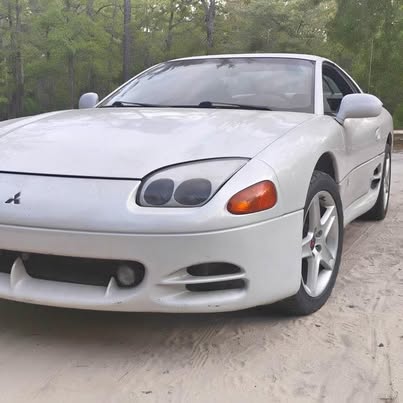
Engines and gearboxes
The 6G72 in single-cam and twin-cam naturally aspirated form
All 3000GTs use versions of one engine: Mitsubishi's 6G72, a 2,972 cc iron-block, alloy-head V6 mounted transversely in the nose. It is a fundamentally strong engine with one absolute discipline — its timing belt — and one famous noise, and understanding both will save you more money than any other knowledge in this guide.
The single-cam engine (base cars) is the 12-valve version, with one camshaft per bank, making 161 hp. It is the simplest engine Mitsubishi put in anything in this period, it shares its architecture with engines fitted to minivans and Monteros in enormous numbers, and it is correspondingly cheap to keep. It is not fast by modern standards, but it is smooth, torquey enough at road speeds and very long-lived if the belt services have been done. Judge it exactly as you would any healthy V6: instant cold start, even idle, no smoke, no rattles that persist past the first seconds.
The twin-cam engine (SL, and the basis of the VR-4) is the 24-valve version, with four camshafts, hydraulic lash adjusters and a two-stage intake character that comes alive above about 4,000 rpm. In naturally aspirated form it makes 222 hp in the 1991 to 1996 cars and a nominal 218 hp thereafter. It is the same basic bottom end as the single-cam engine with far more going on up top, and it rewards revs in a way the single-cam car never attempts. On the road a good SL pulls cleanly and eagerly to its redline; a flat, breathless one is usually suffering from a neglected service, a tired fuel pump or a timing belt fitted a tooth out by the last budget mechanic — all diagnosable, none ignorable.
The timing belt discipline applies to every 6G72 in this guide, without exception. These are interference engines: if the belt fails or jumps far enough, pistons meet valves and the repair becomes a cylinder-head rebuild or an engine replacement. Mitsubishi's service interval is 60,000 miles, and time matters as much as mileage — a belt that is fifteen years old on a low-mileage car is a failed belt that has not happened yet. The correct service replaces the belt together with the water pump (which the belt drives, and which cannot be reached without repeating the whole job), the tensioner and idler pulleys and the hydraulic tensioner itself. Done properly at an independent specialist the full job runs roughly $900 to $1,600 depending on market and variant; the twin-turbo car sits at the top of that range because more has to come off to reach it. The buying rule is absolute: a car with a documented belt, pump and tensioner service inside the interval is worth a premium, and a car with no belt history needs the job priced into the offer and done immediately, before the drive home becomes a gamble. Do not accept "the belt looked fine" from anyone. Belts on this engine are not judged by looking.
The famous noise is lifter tick. The twin-cam engine's hydraulic lash adjusters have small oil feed orifices, and with age, dirty oil or long standing they bleed down and tick — a light, rhythmic tapping from the top of the engine, worst at a cold start. Mitsubishi enlarged the adjuster oil bore on the very late cars, and the late-style adjusters (often called 99 lifters, after the year they became standard) are the accepted cure when fitted as a full set. Learn to separate the harmless version from the expensive one. Tick that appears cold and fades within a minute or two as oil pressure builds is the classic adjuster complaint: annoying, common, and fixable at the next top-end service. Tick that never fades, a heavier knock from low in the engine that rises with revs, or any noise accompanied by low oil pressure on the gauge is a different conversation — that is bottom-end wear, and on a turbo car it ends the negotiation until an oil-pressure test and a specialist have spoken. Fresh oil of the correct grade genuinely helps marginal adjusters, which is why a seller's recent oil change can flatter a car on viewing day; ask when it was done.
Service access shapes every bill. The engine sits sideways in a crowded bay, and the rear bank hides under the intake plenum. Front-bank spark plugs take minutes; the rear bank requires the plenum off, which is why rear plugs are so often ancient on cheap cars and why a plenum-off service is a useful history question. Specialists do these jobs routinely, but labour times — and therefore bills — run longer than the same job on a longitudinal car.
The twin-turbo VR-4 engine
The VR-4's engine is the twin-cam 6G72 with two TD04 turbochargers, one per bank, breathing through twin intercoolers, with lower compression and the fuelling and ignition control to suit. First-generation cars are rated at 300 hp with a five-speed gearbox; from 1994 the rating rises to 320 hp alongside the six-speed. The turbos are small and spool early, so a healthy VR-4 does not feel like an old-fashioned turbo car — it pulls hard and evenly from low revs, with none of the sudden step a big single turbo delivers. A car that feels flat until high revs, surges under load, or makes power in steps is telling you about tired turbos, boost leaks in thirty-year-old intercooler hoses, or a boost-control system someone has been into. All three are common.
Two production changes matter when you judge a turbo engine. Early cars, broadly 1991 and into 1992, use a two-bolt main bearing cap arrangement and a cast crankshaft; later cars use a four-bolt block with a forged crank. The four-bolt engine is the stronger unit and the one to prefer for a car you intend to drive hard or tune, and the early cast-crank cars have a reputation for spun rod bearings when oil changes slip or boost has been raised carelessly. Neither engine is fragile in stock form with clean oil — but the turbo engine lives and dies by oil discipline in a way the naturally aspirated cars do not, because the turbos share the engine's oil and cook it if the car is switched off hot after hard use. Ask about oil-change intervals with the same seriousness you ask about the timing belt, and be suspicious of any turbo car whose oil is black, low or overdue on the day you view it.
The tuning trap deserves its own warning, because more VR-4s have been hurt by their owners than by their design. The factory management meters air with a mass airflow sensor ahead of the turbos and expects the air it has measured to stay in the system. The classic budget modifications — a boost controller wound up without supporting fuelling, a blow-off valve vented to atmosphere so metered air escapes and the car runs rich and stalls at junctions — each make the car worse in a specific, diagnosable way. A modified car is not automatically a bad car: the late 1998 and 1999 computers can be reprogrammed, and a properly built car with supporting parts and paperwork is a legitimate buy. But an undocumented modified car is someone else's experiment, inherited. Look for a stock airbox and pipework, factory boost-control plumbing, and no cut wires or orphaned connectors: originality under the bonnet is the best predictor of a VR-4 that will behave.
Gearboxes and the all-wheel-drive driveline
Front-drive cars use a five-speed manual or a four-speed automatic, both Mitsubishi units and both conventional to judge. The manual should engage every gear cleanly, with synchromesh that survives a brisk second-to-third change. The automatic (the F4A33 family) should shift without flaring and engage drive and reverse promptly; its characteristic wear item is the end clutch, whose failure shows as slipping at sustained speed in top gear on a long drive rather than in a seller's driveway. Automatic cars also carry a separate transmission computer, and the computers of this era share a component weakness — a misbehaving automatic is sometimes an electronic fault wearing a mechanical costume, as the electrics section explains. A fluid-and-filter service is cheap insurance on any automatic you buy, and dark, burnt-smelling fluid is a negotiation point, not a detail.
The VR-4 driveline is a different order of commitment. Power goes through a Getrag transaxle — the W5MG1 five-speed in 1991 to 1993 cars, the W6MG1 six-speed from 1994 — then through a transfer case to a rear differential with a viscous coupling managing the split. Three facts define ownership. First, Getrag supplied these gearboxes to Mitsubishi as sealed units and Mitsubishi never sold internal parts through normal channels, so for years a worn VR-4 gearbox meant hunting a used one; specialist suppliers have since developed synchro and component support, but a gearbox rebuild remains a specialist job, realistically $2,500 to $4,500 depending on what is found inside, and a clutch replacement on the all-wheel-drive car runs roughly $1,200 to $2,000 fitted because the transfer case comes off with the gearbox. Second, the wear pattern is predictable: second and third gear synchros go first, announcing themselves as a crunch on fast changes that a gentle change hides — so change gear briskly on the test drive, exactly as the inspection describes. Third, the transfer case is the driveline's known weak point, serious enough that it was the subject of a factory safety recall: its seals can leak its small oil charge away, and a dry transfer case can seize, which at speed can lock the driveline. The check is simple and non-negotiable — the transfer case oil level and seals are inspected on any VR-4 you are serious about, and a reseal with fresh oil is a few hundred dollars of prevention against a failure with no safe version.
Smaller driveline items complete the picture: output-shaft splines between gearbox and transfer case wear and develop play, propshaft joints age like any other car's, and the viscous coupling is durable but intolerant of mismatched tyres — a VR-4 on four matching tyres of the same size and similar tread depth is quietly telling you its owner understood the car. Budget for four tyres as a set on any car that arrives on a mixed set, and count it in the offer.
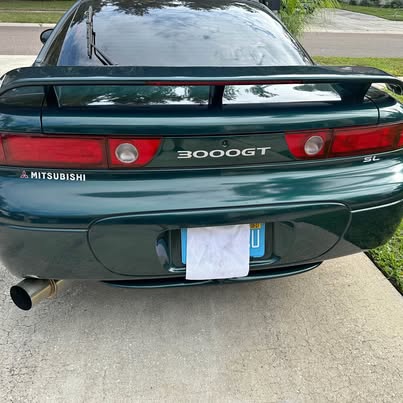
Problem areas
Everything in this section is drawn from what actually goes wrong on these cars, in roughly the order it should worry you. The problems are unusually well mapped — an active, technical owner community has documented them for thirty years — and unusually concentrated: a handful of systems account for nearly all the money. Almost every serious fault announces itself to a buyer who knows the test. The cheapest cars are cheap precisely because several of these faults have arrived at once.
Engine mechanicals: belts, oil and the cost of neglect
Start where the engines section left off, because the problem-areas version of the timing belt is stark: on an interference engine, belt neglect is not a maintenance saving, it is a deferred engine rebuild. The failure is rarely the belt snapping cleanly; more often the hydraulic tensioner weakens or the water pump bearing drags, the belt jumps teeth, and the engine bends valves the next time it turns. The symptom history to listen for in a seller's story is a car that "just stopped" or "lost power and would not restart" at any point in its past — if a 3000GT has ever had unexplained top-end work, ask who did it and what was found, because a head rebuilt after a belt failure is only as good as the shop that did it. When you view a car, you cannot see the belt's condition without dismantling, which is why this guide treats paperwork, not appearance, as the belt test.
Oil is the second discipline, and the turbo car enforces it hardest. The bottom-end failure pattern — spun rod bearings, most often on the early two-bolt, cast-crank engines — follows a recognisable script: oil changes stretched, oil run low, boost raised, bearings starved. A healthy 6G72 shows strong oil pressure and a quiet bottom end at a hot idle; a car whose oil-pressure gauge sits worryingly low when hot, whose engine knocks lightly under load from low in the block, or whose oil comes out thin, fuel-smelling or glittering on the dipstick wipe has bottom-end wear that no additive will reverse. An engine-out rebuild on a twin-cam car, done properly, is a $4,000 to $7,000 conversation depending on variant and market, which is why the hot-idle oil-pressure check in the inspection is a gate, not a formality. On naturally aspirated cars the same neglect shows more gently — lifter tick that never clears, oil consumption past tired valve stem seals (a puff of blue smoke at start-up after standing, or on the overrun after a long downhill, is the classic tell) — and stem seals are a manageable job, roughly $800 to $1,500 depending on access and who does it, rather than a rebuild. Smoke under sustained load is rings, and that is rebuild territory on any variant.
Cooling deserves respect rather than fear. The system is conventional, and its failure mode is age: radiators silt and crack at plastic end tanks, fan motors and relays tire, hoses perish at the back of the bay where nobody looks. What makes it critical is consequence — an overheated twin-cam engine warps heads in a bay where head work is already labour-heavy. A car that holds a steady gauge reading in traffic, with both fans cycling and no coolant-loss history, has passed; a car with a story about "a hose last summer" deserves a pressure test and a look at the oil filler's underside for emulsion.
The capacitor problem: engine, transmission and climate computers
If the timing belt is this car's most dangerous mechanical fault, its most characteristic fault is electronic, and it affects cars that have never been abused. The engine computer, the automatic transmission computer, the suspension computer and the digital climate-control display were all built in the era when a generation of electrolytic capacitors aged badly, leaked their electrolyte onto the circuit board, and corroded the traces beneath them. The result is a family of faults that look mechanical, electrical and haunted in turn: engines that cut out, idle erratically or refuse to start intermittently; automatics that shift as if possessed; climate displays that fade, streak or die outright, often starting as a display that works cold and fails warm.
The mechanism matters because it dictates the cure. A leaking capacitor does not just stop working; its electrolyte eats the board, so simply swapping in another thirty-year-old computer moves the problem rather than solving it — the replacement carries the same aged components. The correct repair is a rebuild of the car's own unit: capacitors replaced and board damage repaired by one of the specialists who do this work routinely, typically $200 to $450 per unit depending on damage, after which the unit is usually more reliable than it has been in decades. Budget the engine computer rebuild into any early car with no record of it having been done, treat a seller's "it has an electrical gremlin" as a sentence that probably ends in this paragraph, and test the climate display on every viewing — it is the cheapest capacitor check there is, because a bright, complete display that stays bright when warm is evidence someone has already been through this, and a fading one is a dated receipt for work still to do. The same era-related caution applies to the rest of the electrics, though the wiring itself is well made: alternators tire, starter motors hide expensively at the back of the engine, and the pop-up headlamp mechanisms on first-generation cars wear their linkages and motors — test both lamps through several cycles, because one lazy lamp is a negotiation point and a pair of them is a parts hunt.
The active systems: ECS, active aero, four-wheel steering and the active exhaust
The VR-4's technology stack was its glory in 1991 and is its maintenance map now. Judge each system separately, because they fail separately, cost separately, and matter differently.
Electronically controlled suspension (ECS) adjusts damper firmness between Tour and Sport modes, using actuators on top of each strut. The system fails at the top of the struts: the actuator caps and their wiring corrode, the connectors at the front strut towers are a known trouble spot, and the suspension computer itself is one of the capacitor-era units described above. The dashboard telltale tells the story — a flashing ECS light, or a car locked in one mode, means the system has a fault stored. Many cars have been converted to conventional non-ECS struts, which is a legitimate, honest solution that drives perfectly well; what you are pricing is the difference between a car whose ECS works (increasingly rare, and valued by the people who care), a car honestly converted, and a car with a dead system nobody mentions. Ask which of the three you are looking at, and check the strut tops for the actuator caps that mark an ECS car.
Active aerodynamics were fitted to Mitsubishi VR-4s from 1991 to 1996: a front air dam that deploys at speed and a rear spoiler that changes angle, driven by electric motors under computer control. The motors, linkages and limit switches live in the weather at both ends of the car, and three decades on, fully working active aero is the exception. The system fails safe and silent — most owners never know whether theirs works — and many cars have had it disabled, disconnected or deleted during bumper and spoiler work. It does not affect whether the car drives well; it affects originality and the price a knowledgeable buyer will pay. Test it if you can (the system self-tests and can be operated at standstill with the right procedure), but file it under character rather than condition: a VR-4 with dead active aero and a perfect maintenance file beats a working-aero car with no belt history every time.
Four-wheel steering on the VR-4 is a hydraulic system, not an electronic one: at road speeds the rear wheels steer a small amount in the same direction as the fronts, fed by a pump driven from the rear differential and sharing the power-steering fluid circuit. Its failure modes are hydraulic — leaks from the rear pump, its lines and the rear steering rack, announced by fluid loss, a dropping reservoir and damp components at the rear. Because the system only acts at speed, a failed system is not obvious on a driveway; the inspection is underneath, looking for leaks along the lines that run the length of the car. A dry system with correct fluid level is what you want; a system that has run dry can take the rear pump with it, and rear-steer components are among the scarcer VR-4 parts. The Dodge Stealth R/T Turbo carries the same system; the front-drive cars never had it.
The active exhaust, fitted to early VR-4s, switches a valve in the rear silencer between quiet and free-flowing paths. The valve lives in the exhaust stream, corrodes and seizes — usually quietly, in whichever position it last moved to. It is the least consequential system on the car: a seized valve costs noise character, not function. Note it, do not pay for it, and spend the attention it saves you on the transfer case instead.
Body, rust, the Spyder roof and the cabin
The 3000GT is not a rust-prone car in the way a 1970s classic is — the shells were well protected by the standards of 1991 — but it is now a thirty-year-old car, and rust follows the familiar map of water, salt and trapped mud. The places to work through are the rear wheel arches and the sills ahead of them, the rear subframe and its mounting areas on all-wheel-drive cars, the floor edges where road salt lives, the spare-wheel well and hatch surround where water collects past tired seals, and around the sunroof aperture and drains on cars so equipped. Surface bubbling at an arch lip is a paint-and-metal repair priced like any modern car's; perforation in a subframe mounting or sill is structural work and re-prices the car. Cars from salted-road states deserve the full torch-and-screwdriver treatment underneath, and the underside check matters doubly on a VR-4 because the same lift visit covers the transfer case, the four-wheel-steering lines and the rear differential. Accident history matters as much as corrosion on a car this stiff and this panel-dependent: check the hatch and door shut lines, look for overspray and mismatched paint texture between panels, and remember that Stealth and Mitsubishi panels do not interchange, so a Stealth wearing a Mitsubishi nose (or the reverse) is wearing its history on its face.
The Spyder roof is a mechanism, and mechanisms are judged by cycling them. The ASC conversion's powered hardtop depends on its hydraulic and electric actuators, its tonneau and latches, and a set of seals and trim pieces unique to the conversion. A roof that cycles smoothly, latches evenly and seals without wind roar is the product of an owner who exercised and maintained it; a roof that hesitates, strains, stops mid-cycle or has been "left up for years" is a specialist diagnosis before it is a purchase, because Spyder-specific parts are the scarcest in this entire guide and some are effectively unobtainable except from broken cars. Never buy a Spyder with the roof untested on the promise that it worked last season. The coupe's hatch is simpler but not free of issues: struts tire, the seal leaks into the well, and the large rear glass makes the hatch heavy and alignment-sensitive after any rear-end repair.
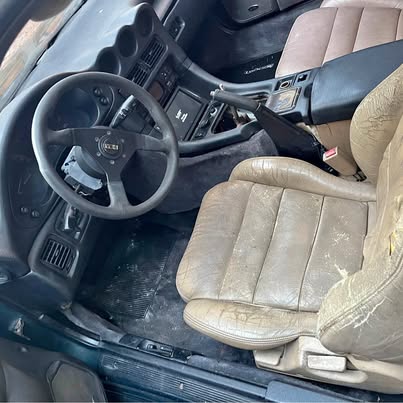
Inside, the cabin is durable and dates honestly. Leather cracks and wears through at the driver's entry bolster first, and the foam beneath collapses with age, so sit in the driver's seat and judge support, not just covering. Work everything electrical on a viewing — windows, mirrors, locks, aerial, cruise, air conditioning — because on this car a list of small electrical deaths is rarely a list of small causes; it is one neglected car announcing itself. Air conditioning that does not blow cold is a diagnosis, not a regas assumption, and a proper repair runs roughly $600 to $1,400 depending on what has actually failed. Finally, tyres and brakes judge the last owner cheaply: matching, evenly worn tyres and brakes that pull up straight describe a maintained car, while a VR-4 on mismatched budget tyres is telling you its transfer case and viscous coupling have been living dangerously as well.
How to inspect one
Allow at least an hour, bring a torch, and arrange the viewing so the engine is cold when you arrive — half the tests below only mean anything on a cold car. If the car passes you, pay for a lift inspection before money changes hands; on a VR-4 it is the only way to see the transfer case, rear-steer lines and subframe in one visit.
- Start with the paperwork and the identity. Match the VIN on the title to the plate on the dashboard and the stampings on the car, and confirm the variant from the car itself rather than the badges: single-cam or twin-cam engine, turbo plumbing or its absence, a transfer case underneath or front-drive simplicity. Base cars have worn VR-4 badges before. Then read the history file for the two dates that price this model — the last timing belt, water pump and tensioner service, and the last oil services — and treat a thick, dated file as worth real money.
- Cold start. From cold, the engine should start promptly and settle to an even idle. Listen in the first minute: lifter tick that fades as oil pressure builds is the known adjuster behaviour from the engines section; tick that never fades, or any knock from low in the block, is a stop-and-investigate. Watch the exhaust — a puff of blue at start-up points to valve stem seals, continuous smoke is a different and larger conversation.
- The climate display and electrics sweep. Turn everything on before you drive anywhere. The digital climate display should be bright and complete and should stay that way as the cabin warms — fading or missing segments are the capacitor problem introducing itself. Work the windows, mirrors, locks, lights, wipers, aerial and, on a first-generation car, cycle the pop-up lamps several times. On an ECS car, switch between Tour and Sport and watch for a flashing suspension warning.
- Under the bonnet. Look for stock intake and boost plumbing on a turbo car, uncut wiring, and honest fluid levels. Pull the dipstick: oil at the right level, of reasonable colour, with no fuel smell, no emulsion and no glitter wiped between your fingers. Check the coolant the same way, and look down the back of the bay at the hoses and the rear-bank areas sellers' photographs never show.
- The underside. On the lift or with the car safely raised and a torch, work the rust map from the problem areas: sills, rear arches, floor edges, spare-wheel well from below, and on a VR-4 the rear subframe and mountings. Prod suspect areas with a screwdriver, with the seller's permission. Surface rust is a price discussion; perforation at a mounting point is a walk-away or a re-price as a project.
- The VR-4 driveline check. On an all-wheel-drive car, stay underneath: the transfer case should be dry at its seals with its oil level verified, not assumed. Look along the four-wheel-steering lines for leaks and dampness, check the rear differential and its steering pump, and look at the propshaft joints. Then stand back and read the tyres — four matching tyres of the same size and similar wear, or a question about how the car has been run.
- Gearbox, tested properly. Drive the manual as the seller does not expect: brisk changes into second and third, up and down, cold and warm. Synchro crunch that a gentle change hides is the Getrag wear pattern from the driveline section, and it is a rebuild priced into the offer. On an automatic, demand a drive long enough for the end-clutch behaviour to show — slipping or confusion at sustained speed in top gear — and note any shifting oddity that smells electronic rather than mechanical.
- The test drive, turbo cars included. Fifteen minutes minimum, with a freeway stretch. A healthy VR-4 pulls evenly and hard from low revs; flat spots, surging, steps in the power or smoke under load each point at the turbo, boost-control and fuelling checks in the engines section. The front-drive cars should pull cleanly to the redline in the lower gears — breathlessness up top is a service and timing question, not character.
- Heat, idle and oil pressure. End the drive by letting the car idle hot in traffic conditions. The temperature gauge should sit steady with the fans cycling, and the oil pressure at a hot idle is the bottom-end verdict from the problem areas: strong and steady is a pass, a gauge sagging alongside any low-end noise ends the viewing until a mechanical gauge has been fitted and read by someone who knows the engine.
- Brakes, steering and stance. Brake firmly from speed: straight, quiet, no judder through the pedal or wheel. The steering should be accurate without knocks over broken surfaces, and the car should sit level — a corner down is a spring or strut question, and on an ECS car a further reason to establish whether the system works or has been converted. Look down each flank for ripples and panel fit that suggest repaired accident damage.
- The Spyder roof cycle, if it is a Spyder. Operate the roof through at least two full cycles, up and down, watching for hesitation, strain, uneven movement or latches that need help, exactly as the roof section describes. Then check the seals, the tonneau fit and the boot area for water staining. A roof you have not watched complete a cycle is a roof you have not inspected, whatever the seller says about last season.
- Interior and history, last. Sit in the driver's seat and judge the foam as well as the leather, work the air conditioning and confirm it blows genuinely cold rather than cool-ish, and smell for the damp that betrays hatch and sunroof leaks. Finish by re-reading the history against what the car has just told you: the best 3000GTs are the ones where the file and the car agree, and any gap between the two is where your offer should make its adjustment.
Values
The figures that matter for this car are computed from this site's own listings and recorded sales, and they sit below this guide — the listed-now summary and the market block are refreshed every time the site rebuilds, so use them rather than any number quoted in an advert or a forum thread. What follows is how to read them, because the 3000GT market punishes headline reading more than most.
This is really three markets wearing one badge, and they barely overlap. The front-drive base and SL cars are the volume market: plentiful, bought as stylish coupes and priced almost entirely on condition, history and the timing-belt question. The VR-4 is a separate, thinner market with its own logic, where generation, gearbox, originality under the bonnet and evidence of driveline health move the price further than mileage does. The Spyder sits apart again — rarity-priced in both forms, with the VR-4 Spyder at the top of the whole range — and the Dodge Stealth trades in the Mitsubishi's slipstream, its turbo cars following VR-4 logic with a discount for the badge and a premium when the Dodge-specific trim is complete and correct.
Within any one variant, the condition spread is the story. The gap between a project and a sorted driver is wider here than on simpler cars of the era, because the deferred-maintenance list is longer: a car needing a belt service, a computer rebuild, tyres and driveline attention is not slightly cheaper than a sorted car, it is a different purchase altogether, and the asking prices at the bottom of the market are usually just the entry fee. Read the bottom of the range as projects priced honestly and the middle as where value actually lives — a front-drive car with a thick file and recent belt work, or a VR-4 with documented driveline and computer attention, is almost always cheaper to own than the cheapest example of the same variant, even at a meaningfully higher purchase price.
Two cautions apply to every figure the market block shows. These are asking prices, not achieved prices, and sellers of technology-era Japanese coupes are prone to pricing the car they remember from the poster rather than the car on their driveway; where auction results exist for the variant, they are the corrective, and they usually sit below optimistic asking levels. And the sample sizes here are small — this site currently tracks single figures of cars, spanning 1991 to 1999 — so a single exceptional or desperate listing moves a median violently. Weight the range and the individual car's evidence over any single headline number, and let the inspection, not the spreadsheet, have the last word on what a specific car is worth.
Premiums here are rational once you know the car. Documented belt and water-pump work inside the interval earns one, because every buyer needs it done. An unmodified engine bay earns one on a VR-4, because so few survive. The final-year 1999 VR-4 earns one for rarity and poster value together, and a working Spyder roof, cycled in front of you, earns one because the alternative is an open-ended specialist bill. Discounts are equally rational: no belt history, a fading climate display, mismatched tyres on an all-wheel-drive car and a gearbox that crunches when hurried are each a priced repair wearing the clothes of a negotiating point — negotiate them as numbers you have already read in this guide, not as vague condition.
Parts and ownership
The 3000GT is better supported than its technology suggests, for one structural reason: the 6G72 engine family powered a generation of Mitsubishis and Dodges in large numbers, so the mechanical core of the car draws on a deep pool of service parts and knowledge, while the model's own enthusiast community — clubs, forums and specialist suppliers who have catalogued these cars for decades — covers much of the rest. The Dodge Stealth twin helps as well as hinders: mechanical parts interchange freely, which doubles the donor pool, while body and trim parts emphatically do not.
Easy: engine service items, filters, belts and hoses, brake discs, pads and hydraulics, suspension wear parts for non-ECS cars, exhaust sections in standard form, tyres in the factory sizes, and the service consumables the 6G72 shares with the wider Mitsubishi range. The capacitor rebuilds the electrics section describes are a solved problem — specialists turn the units around by post — and timing-belt kits with pump and tensioners are a routine order. A competent independent who knows Japanese cars of the era can service a front-drive 3000GT without drama, and the SL in particular is a realistic regular-use classic on a normal maintenance budget.
Harder and dearer: VR-4 driveline internals, where Getrag gearbox work is specialist-only and transfer-case and rear-steer components come from a finite pool of new-old-stock and refurbished units; ECS struts and actuators, which is why honest conversions to conventional struts exist; active-aero motors and linkages; Spyder roof hydraulics, seals and trim, the scarcest parts on any variant; Stealth-specific lamps, panels and trim; and crack-free interior plastics and good leather in the right colours. None of this is unobtainable, but all of it rewards buying the car that does not need it. A quality repaint on a car this size, with its hatch, cladding and trim removed properly, is a serious four-figure commitment in any market — which is why the standing advice of this guide is to buy the body, the history and the driveline, and fix the service items.
Running costs. Fuel consumption reflects the era and the weight: front-drive cars are moderate drinkers, the VR-4 driven as its performance invites is not, and turbo cars want premium fuel. The budget line that catches new owners is the first year: catching up a running car honestly means the belt service if due, fluids throughout including the transfer case on a VR-4, tyres as a matched set where needed, and the small electrical revivals every thirty-year-old car queues up — allow a realistic contingency, and double it for a VR-4 over a front-drive car. Cars that have sat need the fuel system cleaned end to end and every brake component inspected before the first enthusiastic drive. Buy a car in regular use over one that has been asleep, even at a higher price: on this model, regular use is what keeps the active systems, the roof and the hydraulics alive.
Which one to buy
- The all-rounder: 3000GT SL manual. The twin-cam engine, front-wheel-drive simplicity, the best balance of pace, running costs and availability in the range. If you want one 3000GT to drive and enjoy without a driveline budget, this is it.
- The value buy: base 3000GT manual. The same looks and cabin with the simplest engine Mitsubishi made in the period and the lowest bills in this guide. Buy it as the cruiser it is, verify it is not a dressed-up disappointment at inspection, and enjoy the cheapest seat in the shape.
- The flagship: VR-4, 1994 onwards. Six gears, the full power rating and fixed headlamps, with the four-bolt engine underneath. Buy the maintenance file first and the car second — a documented VR-4 is the great technology bargain of its era, and an undocumented one is a tuition invoice.
- The collector car: 1999 VR-4. One year only for the tall Combat wing and the final specification of everything. Originality is the whole value here, so verify the unmodified engine bay and the paperwork ruthlessly.
- The launch car: 1991 to 1993 VR-4. Pop-up lamps, active aero and the complete original technology list, for the buyer who wants the concept car Mitsubishi actually shipped. Budget the computer rebuilds as a certainty rather than a risk.
- The open car: Spyder, SL or VR-4. The retractable hardtop is the rarest way into this shape and the Spyder VR-4 is the range's ceiling. Only buy one whose roof you have watched cycle twice.
- The insider buy: Dodge Stealth R/T Turbo. VR-4 mechanicals, four-wheel steering and turbo pace in the twin nobody badges as the flagship. The Dodge panels and trim are its own scarcity — buy the most complete one, not the cheapest one.
And the rule that overrides all of the above: buy the car with the documented timing-belt service and the history file that agrees with the car in front of you. Engines, gearboxes, computers and dampers are all fixable at prices you can plan for. An interference engine one belt-snap from a rebuild, bought blind on a seller's assurance, is the one mistake the model never forgives — and the easiest in this guide to avoid.
See the 15 3000GT cars currently listed.
For sale now
 $10,900
Expand
 $21,000
Expand
 $1,234
Expand
Expand
What they sell for: 3000GT sale prices.