
Plymouth Fury Convertible buyer's guide
Plymouth Fury Convertible -- the model's own buyer's guide: variants, values and what to check.
Years listed: 1962-1965 · Series: Fury
# Plymouth Fury Convertible — Buyer's Guide
Overview and history
The Plymouth Fury convertible is the open version of Plymouth's flagship — a big, comfortable, torsion-bar-riding American convertible that spent its best years as the value alternative to a full-size Ford or Chevrolet ragtop. If you want a genuinely usable 1960s American convertible with a big V8, a power top and room for four adults, without the premium attached to a Galaxie 500 XL or an Impala SS convertible, the Fury convertible is one of the best buys in the field. But it is a unibody car built by a company then going through a design and engineering convulsion, so judge the car you buy on its structure and its paperwork, not on how good it looks with the top down.
The Fury name started as a limited-production car. Between 1956 and 1958 the Fury was a high-performance Belvedere hardtop — gold anodised trim, a special dual-four-barrel V8, and a waiting list, not a full range. There was no Fury convertible in those years; the ragtop story begins in 1959, when Plymouth made Fury a full series at the top of the line and put the convertible in the new Sport Fury sub-series. The 1959 Sport Fury convertible is therefore the first Fury ragtop, a big finned Virgil Exner car with a 318 or a 361, and it set the pattern for the next decade: the Fury convertible is the top-trim car, the one with the buckets, the console and the biggest engines. The 1960 cars introduced unibody construction — the decision everything about this car's rust behaviour and structure descends from — and the 1960–61 convertibles are rare, finned Exner cars few buyers will ever see offered.
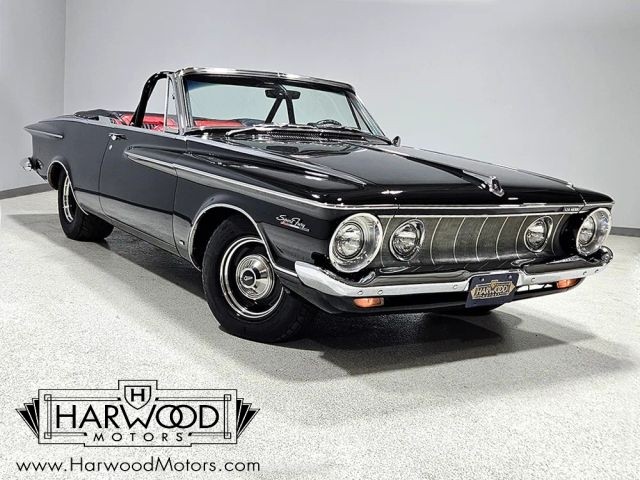
Then came the convulsion. For 1962 Plymouth, acting on a garbled report that General Motors was about to downsize its full-size cars, shrank the Fury to the new intermediate B-body platform, on a 116-inch wheelbase. GM did not downsize, the full-size Plymouth was suddenly a mid-size car at full-size money, and sales fell off a cliff. Exner's 1962 styling did not help: even loyal Plymouth people struggle to defend that face. What the downsizing did was give the Fury convertible a lighter, stiffer, better-handling body and, from 1963, a much cleaner Elwood Engel restyle that turned the car from an embarrassment into something genuinely handsome. The 1963 and 1964 convertibles are the sweet spot of the downsized years, and they are what this guide's listing pool mostly shows: of the six Fury convertibles on the site, three are 1963 cars, one is a 1962, one is a 1965 and one is a 1966.
The 1962–64 years are also the years of the Max Wedge. Plymouth's 413 and 426 big-block drag programme made the Fury the car to beat on the strips, and the halo still colours the market: you will see 1962–64 Furys described as "Max Wedge" and "Hemi" cars that never were. The performance story is real; the convertible part of it is mostly fantasy, and the identity checks in this guide exist to separate the two.
For 1965 Plymouth put the Fury back where it belonged: a full-size car again, on the new C-body platform with a 119-inch wheelbase, stacked headlights and a much bigger, more comfortable body. The Fury I, II and III and the Sport Fury were now a proper full-size range, and the convertible — in the Fury III line, with the Sport Fury convertible alongside it for 1965 — was a large, quiet, long-legged car in the true American sense. The 1966 cars, including the yellow Fury III in this guide's pool, are essentially the same car with detail changes, and the C-body ragtop ran on through 1970, when the Fury convertible died with the rest of the big American convertibles.
What the Fury convertible offers, in either family, is the same set of virtues. Torsion-bar front suspension gives a ride that is controlled rather than wallowy. The big B- and RB-block V8s are famously durable, the TorqueFlite is one of the best automatics ever built, and the cars are simple enough for an owner with ordinary tools to keep going indefinitely. A Fury convertible with a tired top and a solid body is a project; one with a good top and a rusted body is a parts car.
The models
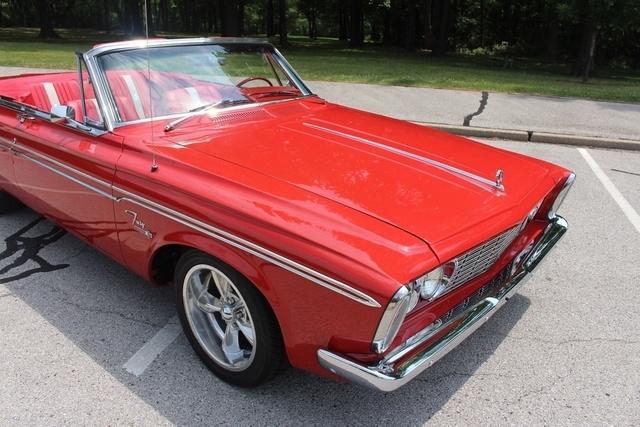
The Fury convertible was never a standalone model. It was always a body style inside a trim line, and which trim line carried it changed three times in twelve years. That matters when you are buying, because the trim decides what interior, engine and options a car could have had from the factory, and because the market pays a real premium for the top-trim Sport Fury cars over a plain Fury convertible of the same year.
| Model | Years | Engine | Output | Built | Character |
|---|---|---|---|---|---|
| Sport Fury convertible | 1959 | 318 V8 or 361 V8 | 260–305 hp | Low volume | The first Fury ragtop; finned Exner flagship with the top trim and the biggest engines |
| Fury convertible | 1960–61 | Slant Six, 318 V8, 361 V8, 383 V8 | 145–330 hp | Low volume | Unibody from 1960; full-size; the 1960 is heavily finned, the 1961 famously plain |
| Fury / Sport Fury convertible | 1962–64 | Slant Six, 318, 361, 383, 413, 426 Wedge | 145–365 hp | Low volume; a few thousand a year at most | Downsized B-body; Sport Fury adds buckets, console and the 383 or larger as standard or easy options |
| Fury III / Sport Fury convertible | 1965 | Slant Six, 318, 361, 383, 413, 426 Wedge | 145–365 hp | Low volume | C-body full-size return; the last year of the Sport Fury convertible |
| Fury III convertible | 1966–70 | Slant Six, 318, 361, 383, 440 | 145–365 hp | Low volume | Big C-body ragtop; the 440 joins in 1966; convertible ends after 1970 |
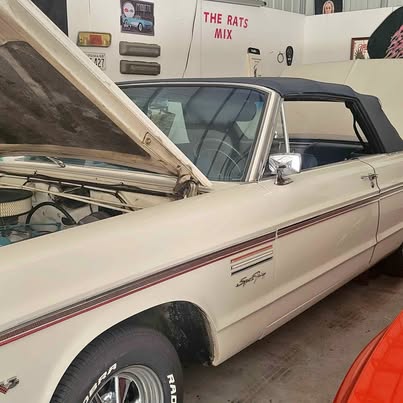
The 1959 Sport Fury convertible is a rare and expensive car today, and the 1960–61 cars are rare too — convertibles were a small minority of Fury output in every year, and the early cars have had sixty-plus years to disappear. In the earlier family the plain Fury convertible is the honest, unadorned car: bench seat, column shift, the Slant Six or the 318 as the usual engines, a durable cloth-and-vinyl interior. The Sport Fury is the car Plymouth actually wanted to sell you: bucket seats and a centre console as standard, a floor shifter for the TorqueFlite, extra brightwork and badging, and the 383 as the natural engine choice — though you could order a Sport Fury with a smaller engine, so never assume the engine in the car is the one it was born with just because the badge says Sport Fury. The Sport Fury script on the front fender, and the small engine-callout badge below it on many cars, are the visible tells: check in photographs that they are present, original and consistent with the car's year. A 1963 Sport Fury with a plain Fury's interior and no script is either a clone or a car that has been through a rough restoration, and the price should reflect it.

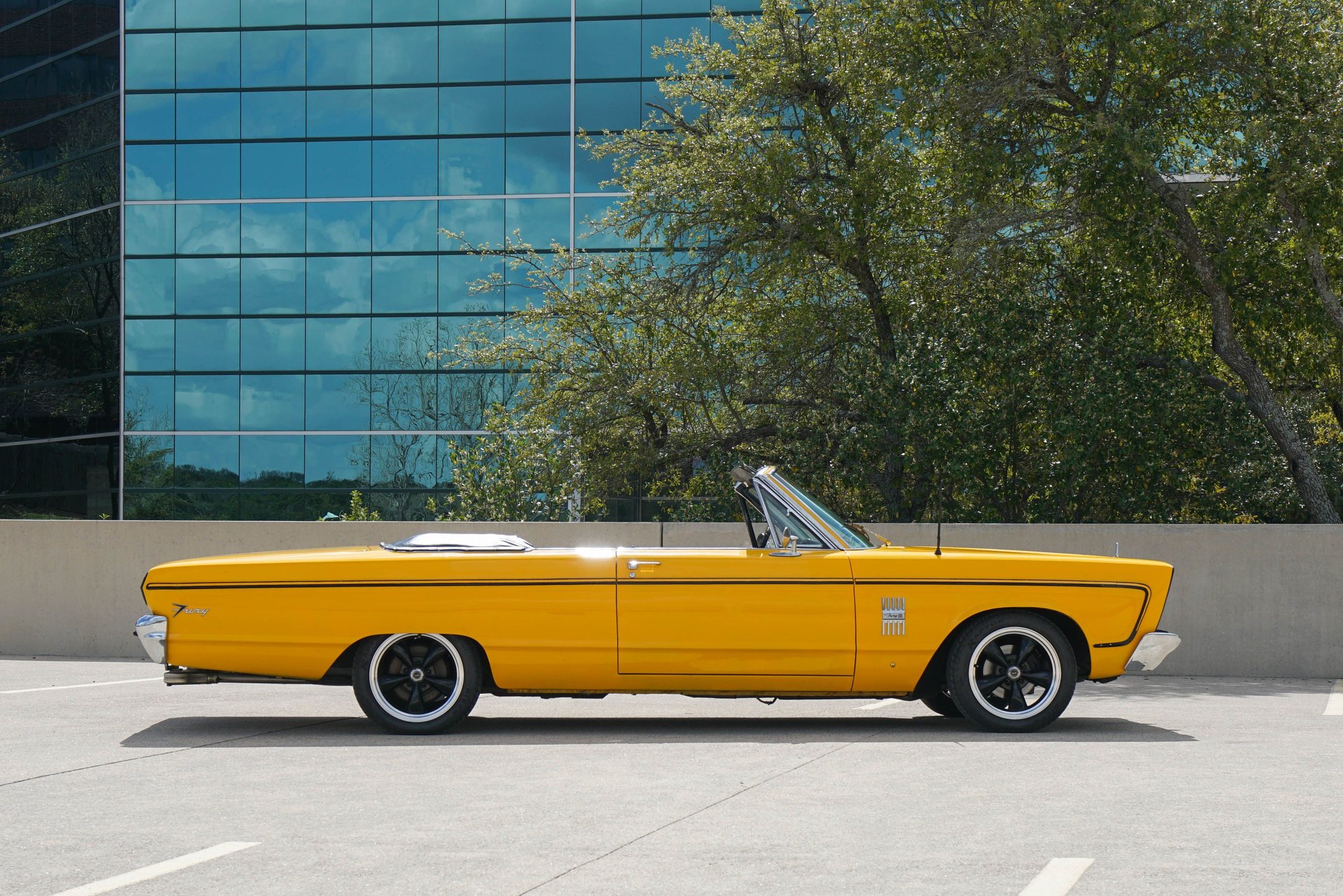
In the 1965–66 family the ladder changes. Fury I is the fleet-and-price car, Fury II the volume car, Fury III the well-equipped car, and Sport Fury — for 1965 only — the top car with buckets, console and its own badging. The convertible lived in the Fury III line for both years and in the Sport Fury line for 1965. From 1966 the Sport Fury convertible is gone and the Fury III convertible is the only ragtop in the range, which is why the yellow 1966 car in this guide's pool wears a Fury III badge on its front fender. That badge is itself a dating tool: if a seller presents a 1966 car as a "Sport Fury convertible", the car is either a 1965 or it has been re-badged, and the fender tag and VIN will settle it in minutes.
The wheelbase tells the two families apart at a glance even in a photograph. The 1962–64 car sits on 116 inches and looks compact and taut; the 1965–66 car sits on 119 inches and looks long and low, with a much longer rear deck and the stacked-headlight C-body front. The C-body cars are also heavier, quieter and roomier — a real advantage with four aboard. Neither family is objectively the better buy, but you should not pay C-body money for a B-body car or the other way round.
One more distinction trips up new buyers. The Fury was a full-size car from 1959 to 1961, a mid-size car from 1962 to 1964, and a full-size car again from 1965 — so a "Fury convertible" is three different cars sharing a name, and the parts, engines, suspension and rust map change with the platform. A 1963 part will not fit a 1965 car in almost any system that matters. When a seller or a parts catalogue says "Fury", the year is the first thing you need and the platform is the second.
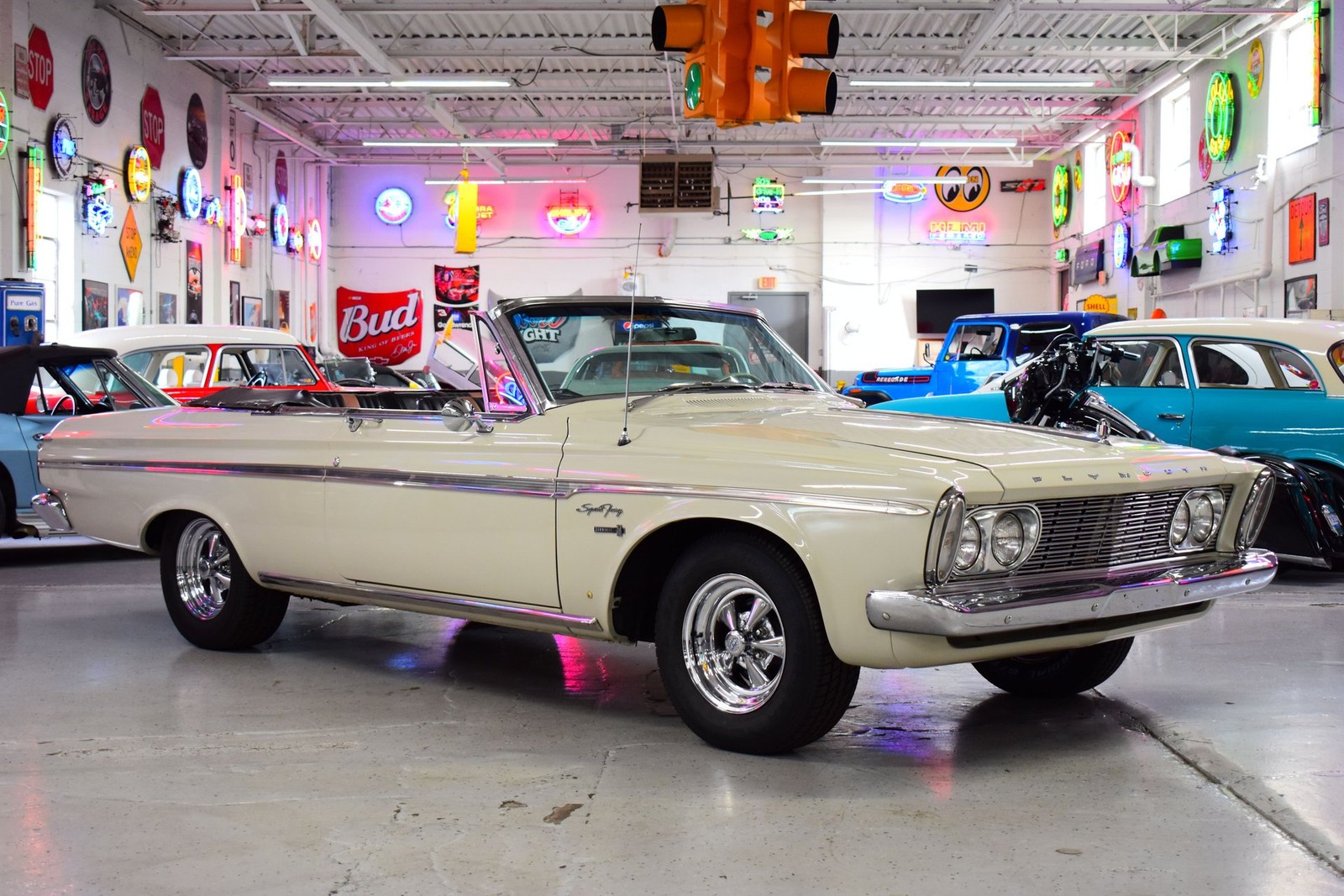
Production was low in every year and the convertibles were the rarest body style in the range. Plymouth built Furys by the hundreds of thousands; the convertibles were counted in the low thousands in a good year and in the hundreds in a bad one. The listing pool behind this guide illustrates the point: six cars, spread across five states, four years and three sources — and, tellingly, two of the six listings appear to be the same physical 1963 white Sport Fury convertible offered through two different channels. When the population is this small, duplicates are easy to mistake for choice.
Engines and gearboxes
The Fury convertible was offered with everything from a slant six to a 426 Wedge, and the engine is the second-biggest value driver in the car after the trim line. All of the engines are durable, well understood and well supported. But Chrysler's engine numbering is easy to get wrong, the blocks look alike at a glance, and a car advertised as a 426 or a 440 may be a 383 with a set of valve covers. Learn the families, learn where the numbers are, and check them on every car.
The Slant Six (225)
The 225-cubic-inch RG-block Slant Six was the base engine in the Fury for most of the 1960s, and in a convertible it makes a slow but charming car. It makes about 145 horsepower in period gross rating, it is inclined 30 degrees to the passenger side (which is why the engine sits at that odd angle in the bay), and it is one of the most durable engines Chrysler ever built. The block is deep-skirted, the bearings are generously sized, and the motor will run for a very long time on indifferent maintenance. The one-barrel carburettor and points ignition are simple, and the whole engine can be serviced by anyone who has ever held a spanner.
The Slant Six's weaknesses are known and specific. The exhaust manifold cracks, usually at the junction with the head where the heat riser lives, and a cracked manifold ticks loudly when cold and quiets as it warms — a tick a seller will describe as a lifter. The heat riser valve seizes, which either starves the carburettor of heat in winter (icing, stalling) or cooks it in summer. The intake and exhaust manifolds are bolted together as a pair, and removing them together is the only sane way to service either. In a convertible the six is the engine you accept rather than choose: fine around town, underpowered on a highway with the top down and four aboard, and priced accordingly.
The 318: Poly first, LA later
Two different engines wear the 318 badge in the Fury's life, and confusing them is the commonest mechanical mistake in the range. The engine in the cars this guide mostly covers — 1962 to 1966 — is the A-engine 318, the "Poly", so called for its polyspherical combustion chambers. It has wide, scalloped valve covers visibly broader than the later engine's, and a reputation for smoothness and durability. In two-barrel form it makes about 230 horsepower; the four-barrel version makes about 260. The Poly is smooth, quiet, torquey in the mid-range where a big convertible actually lives, and very long-lived.
Its problem is not reliability but identity and parts. The Poly shares almost nothing with the LA 318 that replaced it from 1967 — different heads, intakes, valve covers, water pump arrangement and exhaust manifolds. Poly-specific parts are reproduced in much smaller numbers than LA parts, and a Poly that needs a head or an intake manifold is a harder, more expensive job than the same repair on an LA. Confirm a 1962–66 car is a Poly by the valve covers: wide, scalloped along the lower edge, bolts around the perimeter. If a 1963 Fury has narrow LA-style covers, the engine has been swapped, and the car should be priced as a swapped car, however good the swap is.
The LA 318 that replaced the Poly from 1967 — lighter, narrower, far better supported — powered the C-body convertibles to 1970 and is the sensible default in those cars; a Poly in a 1968 car means an engine change.
The B engines: 361 and 383
The B-series big blocks are the natural engines for a Fury convertible. The B block is the low-deck big block — shorter deck than the RB, lighter — and in the Fury it appears as the 361 and the 383. The 361 makes about 265 horsepower with a two-barrel and was the standard big block in the early-1960s Fury; a fine engine the market ignores because the 383 exists. The 383 came in two-barrel form at about 270 horsepower in the mid-1960s cars and in four-barrel form at 325 to 335 horsepower depending on year and specification, and the four-barrel 383 — the Golden Commando in the early years — is the engine that makes a Fury convertible feel like the car its looks promise.
The 383's mechanical character is well documented. The block is strong, the crank is forged steel in the performance versions, and the bottom end is rarely the problem. What gives trouble is the top end and the ancillaries: the Carter AFB carburettor (see the problem areas section), the exhaust manifolds, which crack at the rear of the driver's side on cars run hot, and the cooling system, marginal when new and marginal now on any car still running its original radiator core. The distributor sits at the front of the engine on B and RB engines — the opposite of a Chevrolet — which makes timing work easy, but the distributor drive and intermediate shaft are wear items: a worn shaft or bushing gives a wandering dwell and a misfire no amount of carburettor tuning will cure, a classic Fury fault that is routinely misdiagnosed.
The RB engines: 413, 426 Wedge and 440
The RB is the raised-deck big block, and in the Fury convertible it appears as the 413 (to 1965), the 426 Wedge (1964–65 in the big cars) and the 440 (from 1966). These engines carry the premiums, and this is where identity checking matters most, because a 383 and a 413 look very similar to a casual observer and the value difference between a genuine 440 car and a 383 wearing 440 valve covers is large.
The 413 is the oldest of the three: about 340 horsepower in single-four-barrel form, about 360 in dual-quad form, and a smooth, torquey, long-lived engine that suits the big convertible well. The 426 Wedge is the street version of the racing engine, a 426-cubic-inch RB with wedge chambers making about 365 horsepower in single-four-barrel street form. The 440, introduced for 1966, is the final development: 4.32-inch bore, 3.75-inch stroke, about 365 horsepower in the standard four-barrel Fury version, and a mountain of torque from idle. In a 1966 Fury III convertible the 440 turns a big, comfortable car into a genuinely fast one, and on a car like the yellow 1966 in this guide's pool the engine code on the fender tag is worth real money.
Now the traps, because this is where buyers get hurt. The Max Wedge was a drag-racing package — 413 in 1962, 426 in 1963 and 1964 — with cross-ram or inline dual four-barrels, special exhaust manifolds, and outputs quoted at 410 to 425 horsepower. Max Wedge cars were built overwhelmingly on the light two-door sedan and hardtop bodies, for racing. A Max Wedge convertible is so unlikely that any Fury convertible presented as one should be treated as a conversion until the fender tag, build records and engine numbers prove otherwise; the cross-ram intake and cast-iron headers are reproduced, which makes the conversion easy to do and hard to spot. The second trap is the Hemi: it arrived as a race engine in 1964 and a street engine in 1966, offered in the intermediate cars — Belvedere, Satellite, Coronet, Charger — and never in the Fury, in any body style, in any year. A Fury convertible with a Hemi is a swapped car: possibly a wonderful one, but not a factory car, and not to be priced as one.
Engine identification on a B or RB is done from the stamped pad. On the big blocks the pad is on the top front of the block, a flat machined surface beside the distributor, stamped with the displacement and build information. A 383 pad reads differently from a 413 or 440 pad, and the stamp is the most reliable evidence you have. On the Slant Six the pad is on the right side of the block near the front; on the Poly it is at the front of the block. If the pad is blank, machined smooth or stamped with numbers that do not match the claimed engine, price the car as what the pad says it is.
Gearboxes: pushbutton TorqueFlite, lever TorqueFlite, and the manuals
The TorqueFlite is the gearbox most Fury convertibles carry, and it is one of the great transmissions. The A-727, used behind the V8s, is a three-speed automatic whose reputation for durability is entirely earned: a healthy 727 in a Fury will outlast two engines. The A-904, used behind the Slant Six, is the lighter unit and is adequate rather than great.
The Fury-specific point is the control. From 1962 to 1964 the TorqueFlite was operated by pushbuttons on the dashboard — to the left of the steering column on standard cars, and in the console on Sport Fury floor-shift cars from 1963. Pushbutton control works through a single cable to the transmission, with a separate cable for park, and the whole system depends on cable adjustment. A stretched, kinked or misadjusted cable gives a car that selects the wrong gear, hunts between ranges, or refuses to start because the neutral safety switch is not being told the truth. None of this is expensive, and all of it is routinely misdiagnosed as a failing transmission: if a 1962–64 car "needs a transmission", check the cable and the button mechanism first. The pushbutton 727 also uses a sprag-and-cable park arrangement rather than the later pawl, and forcing it damages it. From 1965 the Fury uses a lever and the familiar later 727 — the easiest TorqueFlites to live with, and the cheapest to have rebuilt.
The manuals are the rarity. A column-shifted three-speed was the base transmission and almost nobody ordered it in a convertible. The four-speed is the prize: Chrysler's A-833 arrived for 1964, available in the Sport Fury with a Hurst shifter, and a four-speed Fury convertible — particularly a 1964 Sport Fury with a 383 or a 426 Wedge — is among the most desirable and rarest combinations in the range. One of the six cars in this guide's pool is listed with a four-speed manual — a genuinely unusual specification, and exactly the kind of car where the fender tag and gearbox casting numbers must agree before you pay the premium. Check the tunnel for a welded-in hump or a cut floor: a converted automatic usually shows its history there.

Problem areas
Rust: the map
The Fury convertible is a unibody car, and that one fact governs its survival. On a convertible the problem is worse than on a hardtop, because the roof — the panel that ties the two sides of a unibody together and resists twisting — is a piece of canvas. A Fury convertible must be inspected as a structure first and a car second.
Start at the front, with the item that ends more Fury purchases than any other: the torsion bar crossmember. The torsion bars anchor at their rear ends in sockets in a crossmember roughly under the front seats. It is structural, boxed, traps mud and water, and rusts from the inside. When the sockets corrode, the anchor loses its grip, the front of the car drops, and the repair is a major structural welding job, not a patch. Get under the car with a torch and look at the crossmember, the sockets and the rails running forward to the front stub.
The front stub frame — the rails carrying the engine, K-member and front suspension — rusts at the rear of the rails and around the K-member mounts. The floor pans rust from the inside, fed by water that gets in from above and sits under the carpet. Lift the carpets. On a convertible, add the top well: the recess behind the rear seat where the folded top lives is a bathtub with two small drain tubes, and when the drains block the well fills, rusting the well floor, the rear seat pan and the tops of the rear wheel arches from the inside. A rusted top well is the signature convertible Fury rust spot, invisible with the top up and the boot cover on, and the first place to look on any car.
The rear quarters rust at the arch lip and, more seriously, at the lower rear quarter behind the wheel, where quarter, trunk floor extension and valance meet in a mud trap. The trunk floor rusts over the fuel tank and at the rear valance. The rocker panels are structural on this car and doubled in section on the convertible; rust there is structural rust. On the 1965–66 cars add the area around the stacked headlights and the big flat rear quarters, which hold water against the inner structure; on the 1962–64 cars add the cowl sides and the base of the windshield pillars, where Exner-era sealing was optimistic.
The windshield header deserves its own sentence. The top latches to it, it is a boxed section that takes the latch loads and the weather, water gets in past the seal, and it rusts from inside where you cannot see it until the trim comes off. A header that flexes when you pull on a latch, or that bubbles at the windshield corners, is a serious repair — structural and cosmetic at once, and it has to be right for the top to seal. Budget accordingly: sills, a floor section and a top well repaired properly by a shop that knows unibodies are each four-figure jobs at current labour rates, and a crossmember replacement turns a cheap car into an expensive one.
The convertible top and the structure around it
The top is the other half of the purchase, and it is where the costs concentrate. The mechanism is a scissor frame with, on most cars, power operation: an electric motor behind the rear seat drives a hydraulic pump, and two hydraulic cylinders do the lifting, using automatic transmission fluid. It fails predictably. The cylinders leak at their seals, putting fluid into the rear quarters and onto the trim. The hoses go brittle and split. The header latches wear and lose adjustment, so the top either will not pull down onto the seal or pulls down crooked and leaks at one corner. The frame pivots wear oval, making the top fold asymmetrically and eventually tear the canvas at the fold points. Test the top through at least three full cycles, watching from outside for a pause, a sag to one side, or a cylinder that arrives after its partner.
The canvas itself is a wear item. A quality replacement top, fitted properly with pads, straps, a new rear window and new seals, is a substantial four-figure expense, and a cheap top fitted badly is worse than an old top fitted well because it will not seal and will not fold. Check the weatherstrips all round: header seal, side rail seals, quarter window seals. Reproduction weatherstrip exists but is not comprehensive, and a full set of good seals is neither cheap nor quick to fit.
Scuttle shake is the structural symptom to feel for on the test drive. A unibody convertible flexes, and a healthy Fury flexes a little; a car whose sills and cowl have lost their strength flexes a lot — a shudder through the steering column and seat over a rough surface, the windshield frame visibly moving against the cowl. Shake that comes with door gaps opening and closing as you drive, or doors that will not latch cleanly on a slope, is a structure problem pointing back to the sills and crossmember. Park diagonally on a kerb or ramp, then open and close both doors: on a sound car they close as they do on the flat; on a tired car they do not.
Suspension, steering and brakes
The front suspension is Chrysler's torsion-bar layout: longitudinal torsion bars, upper and lower control arms, ball joints, and an anti-roll bar on the V8 cars. It is a good design with a long service life, and its wear items are conventional — ball joints, control arm bushings, tie rod ends, idler and pitman arms. The torsion bars rarely break, but their rear sockets corrode (see the rust section), their adjusters seize, and the ride height they set is the first thing to check: a Fury that sits nose-down or lists has a suspension problem, a bent bar, a broken anchor, or has been lowered by unwinding the adjusters, which ruins the geometry and the ride.
Steering is by recirculating ball box, manual or power assisted. Chrysler power steering of this era is famously light and famously vague, and some of that is how the car was built; but excessive free play at the wheel is usually wear, and the commonest single cause is the steering coupler — the flexible coupling between column and box, whose shoes and rubber element wear and tear. A torn coupler is a safety item, not a cosmetic one: in the limit it is the connection between you and the front wheels. Check it directly.
At the rear, a live axle on leaf springs: usually the strong 8¾-inch unit with a drop-out carrier, Sure-Grip limited-slip optional and desirable. Sagging rear springs are age, not a fault to hide with air shocks.
Brakes are where a Fury convertible most needs a modern eye. All of these cars have drums at all four corners and, through 1966, a single-circuit hydraulic system: one failed hose or wheel cylinder takes away all of your braking. Front discs were not a normal Fury convertible fitment in these years. Two jobs are close to mandatory on a car you intend to drive: a dual-circuit master cylinder conversion, well documented and using later Chrysler parts, and renewal of every hose, wheel cylinder and line, because sixty-year-old hydraulics are a liability, not a maintenance item. Budget for it, and treat a seller who says the brakes are "fine, just need bleeding" as a seller whose car needs a brake overhaul.
Driveshaft: cars through the mid-1960s use a ball-and-trunnion front universal joint in a housing with a rubber boot, rather than the later cross-and-roller joint. The boot tears, the grease leaves, the joint wears, and the symptom is a vibration and a clunk on take-up that owners chase through the axle and gearbox before they find it. Conversion parts exist, and the item is worth knowing about because it is so often misdiagnosed.
Engines and transmission in service
Beyond the identity questions covered in the engines section, the in-service faults are familiar Chrysler ones. The Carter AFB four-barrel, fitted to most V8 Fury convertibles, suffers from age in specific ways: the throttle shafts wear in the base plate and admit air, giving an idle that will not settle; the choke pull-off diaphragm fails, giving a rich, stumbling cold start; and the floats and needle valves of a car that has sat in storage give flooding and a fuel smell owners blame on the fuel pump. A mechanical pump should deliver roughly 5 to 7 psi at the carburettor inlet; much more overwhelms the needle valve and floods the engine, and variable-quality replacement pumps are a common cause of flooding on a freshly recommissioned car.
The ignition is points and condenser on all of these cars as built, with a ballast resistor in the circuit on the later cars. A failed ballast resistor gives the classic Chrysler symptom — the engine starts on the key's start position and dies the instant you release it — and every Fury owner should carry a spare, because it costs very little and strands you completely. Overheating on the big blocks is almost always a radiator core that has lost capacity, a missing fan shroud, or a viscous fan clutch that no longer couples; the engines themselves are not prone to it. Oil consumption on a high-mileage 383 or 440 is usually valve stem seals, changeable in the car, before it is rings.
The TorqueFlite's in-service faults are few: a slipping or flaring shift on a 727 is usually low fluid, a misadjusted kickdown linkage or band adjustment rather than a dying box, and the kickdown linkage matters more than owners realise — a slack throttle-pressure linkage makes the box shift early and slip under load, and will burn a transmission that was otherwise healthy. Check that the linkage is present, connected and moving through its full travel. The A-833 wears its linkage bushings and its second-gear synchro; a car that crunches into second cold and behaves warm is telling you the truth about its synchro wear.
Electrics, interior and trim
Chrysler electrics of this period have one famous fault and a lot of ordinary ones. The famous one is the bulkhead connector — the multi-pin plug where the engine harness passes through the firewall — combined with the ammeter circuit, which routes the car's full charging current through the bulkhead and the dashboard ammeter. The connections corrode, resistance rises, heat builds, and the connector and wiring melt. It is the commonest cause of electrical fire and of intermittent total electrical failure on a 1960s Mopar. On any Fury you inspect, pull the connector apart, look for green corrosion and melted plastic, and check the ammeter terminals behind the dash for heat damage. A neat, documented ammeter bypass is a plus; a melted connector is a negotiation point and a job to do before the car is driven anywhere.
The ordinary electrical faults are ordinary: regulators fail, the cluster voltage limiter fails and takes all the gauges wrong together (that symptom is the limiter, not four senders), and grounds — starting with the engine-to-body strap — cause half the weird faults on a unibody car of this age.
Interior and trim is where the costs hide after the body and the top. The Sport Fury's buckets and console are the desirable interior, and seat foams, vinyl and console trim are reproduced to a degree — but the diecast brightwork is the problem. Plymouth used a lot of it: grille pieces, taillight housings, side spears, badges and scripts, console trim. Diecast pits with age, pitting cannot be polished out, and re-chroming pitted diecast is expensive because the pits must be filled and the piece re-shaped by hand before plating. NOS and good used diecast is scarce and priced accordingly. Separate the stainless (cheap to make good) from the diecast (expensive) and from the plastic (often unobtainable), and price the car on the diecast. A car with a complete, original interior is worth more than a shiny exterior over a tired cabin, because the cabin is the harder half to put right.
How to inspect one
Work in this order. It is arranged so that the checks that kill a purchase come first, before you have spent an hour falling for the car.
- Paperwork and identity first. Read the VIN plate — on the 1962–65 cars it is riveted to the driver's door hinge pillar; on later cars it moves to the dashboard. Then read the fender tag under the bonnet and decode the model, body, engine and trim codes. Then clean and read the engine's stamped pad. If the three do not agree with each other and with the car in front of you, re-price the car as what the numbers say it is. A "Sport Fury 426" with a Fury fender tag and a 383 pad is a 383 Fury, priced as one or not bought.
- The torsion bar crossmember. Torch on the crossmember under the front seats and the torsion bar anchor sockets. Perforation here is the most expensive structural finding on the car. This test settles the front structure, and it comes before everything cosmetic.
- Sills, floors and the top well. Look at the sills for filler and bubbling; lift the carpets for the floor pans; then put the top down, remove the boot cover and look into the top well and at the rear seat pan. The well test from the rust section settles the rear structure. Check the drain tubes are present and clear.
- The flex test. Park diagonally across a kerb or ramp and open and close both doors. Doors that bind or will not latch on the twist mean the structure is tired. Then drive over a rough surface and feel for scuttle shake through the column — some is normal, a lot is a finding.
- The windshield header. With the top up, work both header latches, pull on them, and look for movement, bubbling at the windshield corners and water staining on the header trim. Flex here is structural and expensive.
- Three full top cycles. Raise and lower the top three times, standing outside, watching for asymmetry, pauses and leaks. Then look in the rear quarters and under the rear seat for hydraulic fluid, and at the pump and hoses behind the seat. A top that will not complete three even cycles needs money.
- Engine identity and health. Confirm Poly or LA by the valve covers on a 318 car; confirm displacement from the pad on a big block. Cold start from stone cold: listen for the Slant Six manifold tick, watch for blue smoke on start-up (valve stem seals) versus smoke under load (rings), and check oil pressure and temperature as it warms.
- Cooling. With the engine hot, look for a missing fan shroud, a slipping viscous clutch (the fan should resist being spun by hand when hot), perished hoses and a radiator core that is scaled or weeping at the seams.
- Transmission behaviour. On a pushbutton car, select every range twice and confirm the box does what the buttons say; use the park lever and confirm it holds. On any TorqueFlite, check the kickdown linkage is connected and moving, then road-test for flare on the 2–3 shift and for early, soft shifts under load. On an A-833 car, check second gear cold and look at the tunnel for a conversion.
- Steering and suspension. Measure front ride height on both sides on flat ground; unequal heights are a finding. Check the steering coupler visually for tearing, then ball joints, idler arm and tie rods for play. A car lowered on its torsion bars will show it here.
- Brakes, honestly. Assume the hydraulics need renewal unless there are receipts. Check whether the car still has its single master cylinder, look at every flexible hose, and test the booster for hiss and a sinking pedal. Price the dual-circuit conversion into the purchase.
- Electrics at the bulkhead. Pull the bulkhead connector; look for melted plastic and green pins, and check the ammeter terminals. Then run everything: lights, wipers, heater fan, gauges together (all wrong at once means the cluster limiter), and the top circuit.
- Trim audit, diecast separated from stainless. List the pitted diecast — grille, taillight housings, scripts, console trim — and price it separately from the stainless, which polishes. Then the interior: seat foam, door panel tops, dash pad, wheel rim.
- The road test, top down and top up. Top down for wind noise, shake and the structure working; top up for leaks, drumming and whether the side glass seals. Listen for the ball-and-trunnion clunk on take-up on the earlier cars, for axle whine, and for the exhaust manifold crack that ticks under load.
Values
The market block beneath this guide carries the current listings and the recorded sales for the Fury convertible, and it is refreshed as the market moves. What follows is how to read it, because this is a thin market and thin markets mislead the unwary.
The first thing to understand is how few cars there are. Where six cars constitute the visible supply, a single exceptional car — a documented big-block Sport Fury with a four-speed, or a concours restoration — will pull any average figure upward out of proportion to its relevance to the car you are looking at, and a single tired project will pull it down just as far. Read the individual listings, not the summary statistic. A 1963 Sport Fury and a 1965 Fury III are both "Fury convertibles" and they are not the same market.
The spread within the model is driven by four things, in this order. First, structure: a rust-free or properly repaired unibody is worth a large multiple of a car that needs a crossmember, sills and a top well, because the welding is expensive and invisible when done, so the market cannot reward it fully. Second, trim and engine together: a Sport Fury with a 383 or an RB engine is a different car in the market from a Fury with a 318, and the four-speed multiplies the big-block cars again. Third, the top and the interior, both expensive to put right and neither fully supported by reproduction parts. Fourth, documentation — a matching fender tag, a legible engine pad, build records — because in a market full of re-badged and re-engined cars, provable originality is the scarcest commodity of all.
Asking and achieved prices are not the same here: the buyer pool is small and knowledgeable, cars priced on hope sit, and cars priced on structure and paperwork sell. Expect informed negotiation.
The project-versus-driver gap is the other thing to read carefully. Because the structural repairs are expensive and the trim is scarce, a project Fury convertible is worth far less, relative to a finished car, than a project Mustang or Camaro — the arithmetic of restoring one does not close unless you do the welding yourself or the car is a rare specification. The premium cars are the documented Sport Fury big-blocks, the four-speed cars, and the best of the 1966 C-body cars with the 440. The value cars are the honest 318 and 383 drivers with good bodies and tired cosmetics — which is where most satisfied Fury convertible owners actually live.
Parts and ownership
Ownership of a Fury convertible splits cleanly in two: the mechanical car, which is easy, and the convertible body, which is where your time and money will go.
Mechanical parts support is strong. The engines are mainstream Chrysler units with a deep aftermarket: gaskets, bearings, pistons, cams, timing sets, water pumps, carburettor kits and ignition parts are all available off the shelf, and the big-block performance aftermarket means a 383 or a 440 can be rebuilt to any specification. The Poly 318 is the exception — its heads, intakes and valve covers are Poly-only and reproduced in smaller numbers, so a Poly owner should buy spares when they appear rather than when they are needed. Suspension wear items — ball joints, bushings, tie rod ends, idler arms — are reproduced and inexpensive, and the 8¾ axle has excellent support including Sure-Grip parts and many ratios.
Body and trim is the harder half. Common rust repair panels — floor sections, trunk floors, lower quarters — are available for the more popular years, but convertible-specific panels and the top well are much thinner on the ground, and for some years you will be fabricating. Weatherstrip is reproduced for the main seals but not comprehensively, and the side-rail and quarter window seals that make a top actually watertight can require hunting. Top canvas, pads and rear windows are available from the major convertible top suppliers in the correct grains, and hydraulic cylinders and pumps can be rebuilt by specialists. Diecast trim is the scarcity: scripts, badges, grille and taillight diecast are largely a used-and-NOS market, and re-plating pitted diecast is specialist work at specialist prices.
Running the car is straightforward. These are simple, robust machines that tolerate regular use well and deteriorate when stored damp — which, for a convertible with a top well that collects water, means storage matters more than mileage. Keep the drains clear, keep the car dry, exercise the top regularly so the hydraulic seals stay wet and the pivots stay free, and inspect the front suspension on a schedule rather than waiting for play. The engines were built for leaded fuel, but in practice they cover large mileages on modern unleaded without valve-seat recession becoming a problem in normal use; hardened seats are a job to fold into a head rebuild, not a reason to park the car.
Expect the costs to concentrate in three places: the top (canvas, seals, hydraulics), the structure (keeping ahead of rust in a unibody that traps water), and the trim (diecast and convertible-specific pieces). Budget for those, keep the mechanicals serviced, and the car will be a reliable, comfortable, genuinely usable classic.
Which one to buy
- The all-rounder: a 1963 or 1964 Sport Fury convertible with the 383. The clean Engel styling, the lighter B-body, the bucket-and-console interior, the revvy four-barrel 383 and the best parts support of any Fury convertible.
- The value buy: a 1962 Fury or Sport Fury convertible with a sound body. The 1962's styling keeps prices down while the car underneath is mechanically the same as a 1963. If you like the face — and some people genuinely do — it is the cheapest way into a good B-body ragtop. Judge it entirely on the crossmember, the sills and the top well.
- The tourer: a 1965 or 1966 Fury III convertible with the 383 or 440. Bigger, quieter, more comfortable, with the stacked-headlight C-body presence and, in the 440 car, real performance. The pick if the car will cover distance with people aboard.
- The connoisseur's car: a 1964 Sport Fury convertible with the A-833 four-speed. The rarest desirable specification in the range and the most engaging to drive. Buy only with the fender tag, the engine pad and the gearbox numbers all agreeing.
- The honest driver: a 318 Poly car, Fury or Sport Fury, with a good body and a tired interior. Smooth, durable, underpriced because the engine is unfashionable, and a better car to own than a rusty big-block. The Poly's parts scarcity is a reason to keep spares, not a reason to walk away.
- The one to avoid: any Fury convertible, of any year, that needs a torsion bar crossmember, both sills and a top well — unless it is priced as a parts car. The specification does not save it. A Max Wedge story does not save it. Structure is the car.
The overriding rule: buy the body, then the paperwork, then the specification — in that order. A Fury convertible's value lives in its unibody and its fender tag, and no engine, badge or story compensates for a rotten crossmember or numbers that do not agree.
See the 3 Fury Convertible cars currently listed.
For sale now
 $39,995 · 29% below typical
Expand
 $119,900 · 114% above typical
Expand
What they sell for: Fury Convertible sale prices.