
Plymouth GTX Hardtop buyer's guide
Plymouth GTX Hardtop -- the model's own buyer's guide: variants, values and what to check.
Years listed: 1967-1970 · Series: B-Body
# Plymouth GTX Hardtop — Buying Guide
Overview and history
The Plymouth GTX Hardtop is the car Plymouth built when it decided a muscle car did not have to shout and rattle your fillings loose to be fast. Launched for 1967 as the Belvedere GTX, it sits at the top of Plymouth's intermediate B-Body range, above the Belvedere II and the Satellite, and it comes as standard with the engine the cheaper cars have to beg for: the 440-cubic-inch Super Commando V8. The only engine above it is the 426 Hemi. There is no small-block or six-cylinder GTX, and no four-door.
The GTX is what period advertising called the gentleman's muscle car, and the phrase is accurate. You get bucket seats, a console on most cars, heavier torsion bars and leaf springs and uprated brakes, where a Road Runner — which arrives in 1968, deliberately cheaper — gives you a bench seat and as little trim as Plymouth can get away with. Fifty-odd years later that better finish is exactly what costs you money to put right: a GTX with tired trim has lost the thing that made it a GTX.
The hardtop is the core of the range in every year. A convertible is offered for 1967–69, but the hardtop outsells it heavily, survives in far greater numbers, and is the stiffer, drier car. For 1970 and the final, fuselage-styled 1971 the GTX is a hardtop only — the car this guide covers throughout, because it is the car you are overwhelmingly likely to be standing in front of.
The shape changes once, decisively. The 1967 car is the last of the crisp, squared-off mid-sixties B-Bodies: stacked headlamps, flat sides, a formal roofline. For 1968 the range is restyled with the rounded Coke-bottle flanks that define the era, though the wheelbase stays at 116 inches and the structure is a development of the same unibody. The 1969 car is a facelift of the 1968. The 1970 car gets a loop bumper wrapping around the grille and a power-bulge bonnet. The 1971 car is a different shell again — wider, rounder — and the rarest of the five years.
On Classic Listings the pool is small and spans the story: four cars, one each from 1967, 1968, 1969 and 1970, three automatics and one four-speed, in blue (two cars) and gold (one, one colour unrecorded). That is honest to the market: you will wait and travel for a GTX, and the car you travel for will usually be a 440 automatic, because that is what most buyers ordered new. Treat scarcity as a reason to inspect harder, not to forgive faults.
One warning before anything else, because it governs everything that follows. The GTX is one of the most cloned American cars of its era. Its cheaper sisters — Satellite, Belvedere, Sport Satellite — share the shell, glass and most running gear, and the value gap between a real RS-code GTX and a Satellite wearing GTX badges pays for the badge swap many times over. You do not buy a GTX on its badges or its seller's story. You buy it on its VIN, fender tag and, where it survives, broadcast sheet — which is why the identity checks come first in the inspection section.

The models
A GTX is defined by three things that never change: B-Body unibody, standard 440 power, and premium trim. Everything else moves by year, and the years do not interchange as freely as sellers imply — panels, glass, trim and grilles are largely year-specific. A car wearing the wrong year's grille is not necessarily a fake, but it is a car that has been apart, and you should price the work of putting it right.
1967 — Belvedere GTX. The first year, and the only year carrying the Belvedere name in its badging. Hardtop and convertible, on the squared 1966–67 shell. Standard engine is the 440 Super Commando at 375 hp gross; the 426 Hemi at 425 hp gross is the sole option, and it is expensive — it adds a substantial fraction to the car's price, which is why genuine 1967 Hemi GTXs are few. Trim is the richest of any year relative to its stablemates, with a distinctive grille and taillamp treatment and red-stripe tyres as the period look. If you want the sixties car rather than the sixties-into-seventies car, this is it.
1968 — the restyle. The new rounded shell arrives, shared with the new Road Runner, and the GTX sits above it as the trimmed, better-equipped car. Hardtop and convertible again. The 440 remains standard, now through a Carter AVS, and the Hemi remains the option. Detail tells: round side markers, a blacked grille with a central GTX emblem, decorative twin bonnet scoops and a full-width taillamp panel. This is the year most people picture when they picture a GTX, and supply is correspondingly the best of the five years.
1969 — the facelift. The 1968 shell with a revised grille and taillamps and rectangular side markers. Mechanically a continuation: 440 standard, Hemi optional. The functional Air Grabber bonnet becomes available in this period and, where genuinely fitted and complete, it is desirable; where the ducting, vacuum canister and cable are missing, you are buying a hole in a bonnet and a parts hunt. Six-Barrel power does not come to the GTX this year — the 1969½ three-carburettor package is a Road Runner and Super Bee story, in the lift-off-hood A12 cars — so a 1969 GTX presented as an original Six-Barrel car needs documentary proof, not enthusiasm.
1970 — the loop bumper. Hardtop only. The front end is redesigned around a chrome loop framing the grille and headlamps in a single oval, and the bonnet gains a power bulge. The engine range reaches its widest: 440 four-barrel standard, 440 Six-Barrel — three Holley two-barrels, 390 hp gross — as the middle option, and the 426 Hemi at the top. The Air Grabber, now a prominent pop-up scoop in the bulge, is the option everyone wants to see and the first thing to check for completeness. Production falls sharply across the whole muscle market — insurance surcharges and a cooling economy are biting — so a 1970 is scarcer than a 1968 or 1969 in any specification.
1971 — the fuselage car. A new, wider, rounded shell, hardtop only. The 440 four-barrel is still standard — the last year any GTX is — with the Six-Barrel and Hemi still listed in tiny numbers. Net ratings are beginning to replace gross ratings this year, so published 1971 figures are not directly comparable with 1967–70 gross figures; do not let a seller use that confusion in either direction. The GTX name survives afterwards only as a Road Runner package, and the rare 1971 is a car to buy because you want that shell, not as a speculation.
| model | years | engine | output | built | character |
|---|---|---|---|---|---|
| GTX Hardtop 440 | 1967 | 440 Super Commando, Carter 4-bbl | 375 hp gross | c. 11,000+ hardtops within c. 12,500 total | First-year car; squared shell, richest early trim |
| GTX Hardtop Hemi | 1967 | 426 Hemi, 2× Carter AFB 4-bbl | 425 hp gross | A few hundred only | The expensive option nobody ordered; verify everything, twice |
| GTX Hardtop 440 | 1968–1969 | 440 Super Commando, Carter AVS 4-bbl | 375 hp gross | c. 18,900 (1968) and c. 15,600 (1969) total, hardtop the majority | The definitive Coke-bottle GTX; best supply and parts |
| GTX Hardtop Hemi | 1968–1969 | 426 Hemi, 2× Carter AFB 4-bbl | 425 hp gross | Low hundreds per year | Same warning as 1967, with a cheaper shell to clone it into |
| GTX Hardtop 440 / Six-Barrel | 1970 | 440 4-bbl / 440 Six-Barrel, 3× Holley 2-bbl | 375 / 390 hp gross | c. 7,700 GTX total, all hardtop | Loop-bumper face, widest engine choice, Air Grabber year |
| GTX Hardtop Hemi | 1970 | 426 Hemi, 2× Carter AFB 4-bbl | 425 hp gross | Under 100 hardtops commonly cited | The peak-price GTX; paperwork is half the car |
| GTX Hardtop 440 / Six-Barrel / Hemi | 1971 | 440 4-bbl / 440 Six-Barrel / 426 Hemi | 370 hp gross (440, as published) | c. 2,900 total | Fuselage shell, final year, rarest |
Production figures in the table are commonly published model-year totals, given as approximations — Chrysler's records are incomplete by engine split, and a seller quoting an exact figure for a specific combination should be able to show the source. The shape of the story is not approximate: the 440 car is the normal GTX, the Hemi is always rare, and volume collapses after 1969.
Two specification points catch buyers out. First, brakes: front discs are an option through most of the run, not standard, and many GTXs left the factory stopping a 3,800-pound car on four drums. A drum car is not wrong — it is original — but drive it as one. Second, axles: the 8¾-inch axle is standard behind the 440 automatic; the stronger Dana 60 comes with the four-speed, with Hemi cars and in performance packages. Ratios run from about 3.23:1 to 4.10:1. The axle and ratio should match the fender tag; a Dana 60 under an automatic 440 car is not a bonus until you know why it is there.

Engines and gearboxes
Every GTX engine is a big-block from one of two families: the RB wedge and the 426 Hemi, which shares the RB's basic dimensions but almost nothing above the block. There are no other factory engines — a GTX with a 383 or a small-block is a swap or a car that was never a GTX, and the VIN, not debate, distinguishes the two.
The 440 Super Commando — the standard engine
The 440 is an RB wedge: 4.32-inch bore, 3.75-inch stroke, 440 cubic inches (7.2 litres), a single Carter four-barrel — AFB on the 1967 car, AVS on later cars — hydraulic lifters, and a rating of 375 hp gross with 480 lb-ft of torque. Gross figures are measured without accessories, exhaust or air cleaner, in the period manner; the number that matters is the torque, which arrives low and stays. A healthy 440 pulls cleanly from 1,500 rpm and cruises at highway speed without strain on a 3.23 axle. If the car feels breathless or flat, something is wrong — timing, carburetion or compression — because flat is not in this engine's character.
Internally, the year matters to the restorer more than to the driver. The 1967 440 uses the better-flowing 915 casting heads; 1968 onward brings the 906 head for the rest of the run. All are cast-iron and rebuildable almost indefinitely — the RB block is one of the strongest production V8 castings of the era. Do not pay a premium for internal specifications you cannot see. Pay for an engine that starts cleanly from cold, idles at a steady 750–850 rpm in gear, shows strong, even oil pressure, and does not breathe heavily from the oil filler.
The single four-barrel car has one characteristic fault pattern, and it is fuelling, not strength. The Carter AFB and AVS are simple, rebuildable carburettors, but they sit on a hot cast-iron manifold, and modern ethanol-blended fuel percolates in the bowls after a hot shutdown. The result is the classic hot-restart complaint: perfect cold starting, perfect running, then long cranking after a ten-minute fuel stop before it catches with a puff of rich smoke. Sellers will blame the starter or battery. Usually it needs the fuel to stay liquid — an insulating spacer, correct fuel-line routing, and a carburettor rebuilt with ethanol-compatible parts. Budget $300–700 for a proper rebuild and set-up, and treat a car with an unbranded modern carburettor and an electric pump lashed on to mask the problem as a car whose real fault is still undiagnosed.
Ignition follows the same pattern. Early cars run single-point distributors; Chrysler electronic ignition appears as an option and then as common fitment, and many cars now wear a later conversion. Done well, that is a benefit; done with a butchered harness and a worn distributor shaft, it is a misfire waiting for a damp morning. Wiggle the shaft for side play and check the vacuum advance can holds vacuum from a hand pump — a seized advance mechanism or a perforated can causes the part-throttle flat spot everyone blames on the carburettor.
The 426 Hemi — the option that defines the top of the market
The street 426 Hemi is a different engine wearing a related block: hemispherical chambers, huge inclined valves on two rocker shafts per head, twin Carter AFB four-barrels, a forged crank, cross-bolted main caps and a rating of 425 hp gross and 490 lb-ft that everyone agrees was conservative. It is also physically enormous — the widest engine in any intermediate car of the era — and fills the bay as a wedge never does. You can identify it at ten paces by the width of the valve covers and the plug leads disappearing into their centres, because the plugs sit in tubes in the middle of the chamber.
That identification ease is exactly the problem. Complete Hemi engines — original, crate and reproduction-block — have been installed in wedge cars for forty years. A Hemi under the bonnet proves the car has a Hemi today; it proves nothing about what it left the factory with. For a car sold as a factory Hemi GTX you need the chain unbroken: correct VIN engine letter, correct fender-tag code, a numbers-consistent engine with casting dates preceding the build date, and ideally the broadcast sheet. A missing link does not make the car worthless, but it makes it a Hemi-powered GTX at that price, not a factory Hemi car at a factory Hemi price — the largest single price gap in this guide's subject.
Living with a street Hemi is a matter of heat, valve gear and patience. Top-end clatter that does not settle as the engine warms is not character, it is wear or maladjustment, and Hemi valvetrain work is specialist work — budget $2,500–5,000 for a top-end refresh with the heads off. The twin carburettors must be synchronised and the linkage must open both fully; a Hemi running on one carburettor because the linkage is bent is a common find and a transformed car once set right. The plug tubes seal with O-rings that weep with age, putting oil down the tubes where it shows as a misfire before a leak. Pull a plug lead and look into the tube: oil standing there is a seal job, not a rebuild.
Cooling is the Hemi's other tax. There is little air space in the bay, the radiator is the largest that fits rather than the largest the engine wants, and a car that creeps upward in temperature in traffic is telling you the system has no margin left. A repeatedly overheated Hemi has head-gasket and seat problems in its future. Watch the gauge on the test drive rather than the road.

The 440 Six-Barrel — three carburettors, one temperament
For 1970 and 1971 the GTX offers the 440 Six-Barrel (Six Pack in Dodge language), rated at 390 hp gross. Three Holley two-barrels sit on an aluminium intake: a centre carburettor that does all the ordinary driving, and front and rear outboards opened by vacuum signal as demand rises. Set up correctly the system is superb — docile on the centre carburettor, then genuinely violent when the outboards open. Set up incorrectly, which is most cars you will meet, it is a bog, a surge, a fuel smell and a seller explaining that they all do that. They do not.
Diagnose a Six-Barrel by stages. First, the centre carburettor alone: the car should start, idle and cruise like a good four-barrel car; any fault here is a centre-carburettor or ignition fault, not a Six-Barrel mystery. Second, the transition: the outboards should arrive as a surge, not a hole; a hole followed by a surge is diaphragm, linkage or throttle-shaft trouble. Third, the return: lifting off should bring a clean fall to idle, not a hanging idle from outboard plates held open by worn shafts, weak springs or varnish. Rebuilding three Holleys properly, with new diaphragms and on-car synchronisation, is $800–1,500 at a specialist and transforms the car. Budget for it on any car without a recent invoice from a name you recognise, and check the carburettors are the correct list-number Holleys.
The Air Grabber is part of the induction system: a scoop rising from the bonnet bulge on a vacuum-and-cable arrangement, feeding outside air through ducting to a sealed air cleaner. Completeness is everything — scoop, duct, air-cleaner base and lid, canister, hoses, cable and lever. Assembling a working system from pieces is a $1,500–3,000 exercise, so price a car with a dead or partial Air Grabber as a car without one.
Gearboxes and axles
Two gearboxes, both strong enough that condition matters more than choice. The TorqueFlite 727 automatic is the standard, majority fitment — three speeds, nearly unbreakable in street service, with shifts that should be firm and free of flare. A 727 that delays engagement from cold, flares between second and third, or produces dark, burnt-smelling fluid is asking for a rebuild: $1,800–3,200 fitted. Check the kickdown linkage — it is mechanical, and if the rod is disconnected or misadjusted the gearbox runs at wrong line pressure and wears itself out while feeling merely lazy. Many lazy TorqueFlites are a linkage adjustment, not a rebuild; many rebuilt ones were killed by the linkage nobody adjusted.
The A833 four-speed is the keen driver's car and the minority choice — one of the four pool cars is a four-speed, which over-represents it against period production. It is a heavy, strong gearbox with a long, deliberate throw through a Hurst shifter — a pistol-grip handle on 1970–71 cars, correct for those years and wrong, however desirable, on an earlier car sold as untouched. Faults are honest: worn synchromesh that crunches on fast changes but not slow ones, a whine in first and second that fades in direct-drive fourth (liveable if stable), and shifter bushings so worn that selection becomes guesswork — a $150 parts fix that makes the car feel rebuilt. The clutch is a mechanical linkage; heavy is normal, judder is not. Judder is oil on the plate, a tired pressure plate or a flywheel needing facing, and a clutch replacement is $900–1,600 in parts and labour.
Behind either gearbox, look at the axle the car actually has. The 8¾-inch unit has a drop-out centre section; the Dana 60 has a huge centre casting with a bolted rear cover and is unmistakable. Four-speed and Hemi cars should have the Dana; automatic 440 cars the 8¾, unless a performance package is documented. Faults are shared: pinion-seal weep, bearing rumble that changes with road speed but not throttle, and a clunk on taking up drive that is usually worn universal joints ($40–80 each) before it is a worn crown wheel and pinion. A whine on coast that vanishes on drive points at pinion bearings; a full axle rebuild runs $1,200–2,200.
Problem areas
A GTX does not usually die of its engine: the wedge and the Hemi are strong, rebuildable units, and the gearboxes are stronger still. It dies of its shell, its paperwork, or a restoration whose cost was discovered one panel at a time. Work in that order — body first, identity always, mechanicals last — because a mechanically tired GTX with a sound shell and clean paperwork is a project with a known price, while a shiny GTX with a rotten crossmember is a liability wearing good paint. In the site's own photo-checked evidence the sample is very small — one car examined, with rust noted on that one car — so treat it as a reminder rather than a statistic: B-Body rust is the default condition to disprove, panel by panel, on every car.
Rust: the map
The B-Body is a unibody: there is no separate frame to save the car when the shell goes. The floor, front rails, torsion-bar crossmember and rear rails are the structure — all steel, all fifty-plus years old, all painted in an era when rustproofing meant primer and optimism. Learn the map in the order the water travels.
Start underneath, at the front, with the torsion-bar crossmember. The bars anchor into this member, which runs across the car under the front seats and collects dirt and moisture inside its section. When it rots, the anchor sockets tear out — first as a car that will not hold its ride height or alignment, finally as structural failure. Prod it where the bars enter, and walk away from a car where it is plated, patched or soft, unless the price is a shell price. Correct repair means replacing the member with the car jigged and supported: $2,000–4,000, and it is structural welding, not cosmetic welding.
The front rails and inner wings carry the engine on the K-member and take every stone the front tyres throw. Rot starts at the rail ends, K-member mounts and inner wing seams, hidden under underseal that holds moisture against the steel. A K-member welded to the rails is evidence of a car kept going rather than restored. Front floors follow: the driver's footwell goes first, and a damp carpet, a fibreglassed floor or a pan that rings dull under a knuckle needs cutting out. Reproduction pans are available — $1,200–2,500 a side fitted — but a rotten floor is a symptom: find the water's route in, or you will weld the same floor twice.
The cowl is the water's route in on many cars. Leaves pack the plenum, drains block, and water sits against seams never sealed for a half-century of service. Visible evidence: bubbling at the lower windscreen corners, a stained headlining edge, water on the front carpets after rain. Invisible evidence: a rotted cowl side and hinge pillar. Open both doors fully and check the A-post and shut faces for filler and for the factory spot-weld dimples, whose absence means a panel has been replaced or skimmed. Doors rot at the bottom rear corner and along the lower skin seam — feel for the crisp folded edge; a soft or filled edge is a repair in the car's future at $800–1,500 a door.
Rearward, the classic failures are the wheelhouses, lower rear quarters, trunk floor and rear valance. The quarters rot from the inside out: the trunk-side drop-offs channel water and mud behind the wheel opening, and the first sign is a paint blister low behind the rear wheel that returns within a year of every repaint because the steel behind it is lace. Open the trunk, lift the mat and look into the quarter wells — you want factory steel, factory seams and daylight nowhere. The trunk floor rots above the fuel tank and around the spare-wheel well, and a floor replaced in flat sheet without the factory pressings dates and devalues the car even if sound. Prod the rear rails around the spring hangers, where dirt packs and the rail takes suspension load. A rail soft at a hanger is a walk-away-or-shell-price finding: $2,500–5,000 for rail and hanger work with the axle out.
The roof is the hardtop's special tax. A hardtop has no B-post, a wide rear window, and a drip rail channelling water down the C-pillar. Vinyl-roof cars — common on the GTX, and correct for its pitch — hide the worst of it: moisture under vinyl rots the roof skin and C-pillar bases invisibly until the vinyl bubbles. Press along the vinyl at the C-pillar and rear window; crunching or softness means steel work under a covering that will not survive removal, so price roof repair and a new vinyl top together, $2,000–3,500 done properly. On painted-roof cars check the drip rails for filler and the rear window channel — window leaks fill the trunk and footwells, and a musty rear seat is often a window channel, not a door seal.
Finally, the brightwork traps water too. Rocker mouldings hide rocker rot along their whole length, and the trim is clipped through panels that rot around every fixing. A magnet wrapped in cloth, run along rockers, lower wings, door bottoms and quarter bottoms, tells you where steel has become filler. Filler in a door skin is a cosmetic negotiation; filler in a rocker, rail or crossmember is a structural one.
Identity, clones and paperwork
The second problem area is not a part of the car; it is the car's claim to be a car. A genuine GTX hardtop carries a VIN beginning RS23 — R for the performance B-Body line, S for the GTX's special price class, 23 for the two-door hardtop — followed by the engine letter, year digit, plant letter and sequence number. A Satellite hardtop is RP23, a Belvedere lower still, and no badge, bonnet or engine changes that prefix. Read the plate yourself: on the dashboard, visible through the windscreen, on 1968-onward cars, and on the driver's door hinge pillar on the 1967 car. Photograph it. If the plate is missing, replaced, re-riveted with non-factory rivets, or does not match the title, resolve that before you discuss price — a VIN problem is a legal problem, not a negotiation point.
The fender tag — the stamped plate on the driver's inner front wing — carries the build codes: engine, gearbox, axle, paint, trim, build date and options. Read the engine code and compare it with the VIN's engine letter and the engine in the car. On a Hemi car that agreement is the beginning of verification, not the end: the engine's stamped numbers and casting dates, the hidden sequence numbers on the radiator support and trunk lip on later production, and the broadcast sheet — usually tucked in the rear seat springs, sometimes above the fuel tank — complete the chain. A car whose sheet matches its VIN and tag is a documented car, worth more for a reason unrelated to romance: the sheet is hard to fake convincingly, because it was never meant to be kept.
Correct the common myths, because sellers trade on them. A Hemi air cleaner does not make a Hemi car. A Dana 60 does not make a Hemi car. GTX badges and a GTX grille make a Satellite into a Satellite with GTX parts. Conversely, a genuine RS23 car that has lost its original engine is still a genuine GTX, and that honest car, priced as a non-matching-numbers GTX, is a better buy than a dressed Satellite priced as the real thing. Numbers-matching matters most, in order, to Hemi cars, Six-Barrel cars, four-speed cars and 440 automatics; the market's premium follows the same order, and so should your scepticism.
Colour changes are the softer version of the same issue. The tag codes factory paint and trim. A colour change done well on a sound car is a taste question; one the tag contradicts and the seller does not mention is a diligence question that should make you check everything else twice. Listing data is a starting point, never evidence. The tag is evidence.
Suspension, steering and brakes
The front suspension is Chrysler's torsion-bar system, adjustable for ride height and durable, with wear points that decide whether a GTX drives like a GTX or like a boat. Ball joints show as play with the wheel jacked and rocked at twelve and six o'clock; budget $600–1,100 for a refresh of joints, bushes and tie-rod ends with an alignment. Torsion bars rarely fail, but their adjusters seize, and a car sitting nose-down or uneven has usually been wound up to mask tired bars or a sagging rear — measure ride height at both rockers. Idler and pitman arm wear gives straight-ahead play no alignment will cure; with an assistant rocking the wheel, find the joint that moves before the road wheel does.
The steering box is a recirculating-ball unit, power-assisted on most GTXs. A little free play at centre is period normal; a quarter-turn of nothing is wear, in the box or in the column coupling, which perishes and is a $60 part that transforms the car. Steering pumps whine when low, when aerated and when dying, in that order of cost; check fluid before condemning the pump. At the rear, leaf springs sag, bushes perish and shock absorbers leak. Violent axle tramp on a hard launch in a car that otherwise drives normally is usually bushes and springs, not axle internals.
Brakes divide the range. Drum cars stop adequately once, from moderate speed, if everything is in adjustment — and fade thereafter, because four drums on a heavy, fast car are a 1967 answer to a problem the car itself creates. Check for a hard, high pedal (good), a pedal that sinks at a standstill (master-cylinder seals bypassing — $200–450), a pull under braking (seized wheel cylinder, contaminated shoes, collapsed hose), and a handbrake that actually holds — rear drum handbrakes here are frequently decorative. Disc cars suffer seized calipers from standing, scored rotors and mismatched master cylinders from home conversions. A conversion done with a complete kit, the right master cylinder and a proportioning valve is a genuine improvement; done with junkyard parts and the drum master cylinder retained, it is a long pedal and a liability. Either way, budget a full overhaul — $800–1,800 for drums, $1,200–2,500 for discs rebuilt properly — on any car without recent invoices.
Interior, trim and electrics
The GTX's premium trim is its glory and its invoice. Seat foam collapses on the driver's bolster, vinyl splits in heat, console brightwork cracks, door cards warp where sun reaches them, headlinings sag — none of it structural, all of it expensive in aggregate, because the GTX uses model-specific patterns the cheaper cars do not share. A complete, correct retrim is $4,000–8,000 with foams, covers, door cards, carpet and headlining, and more if the console and dash pad need restoration rather than cleaning. Price a tired interior as that bill discounted by what is salvageable. The dash pad cracks from the speaker grille outward in sun states, and sun damage follows the car's life, not its current postcode, so check the pad, rear seat top and package tray on every car.
Specific traps: both clusters suffer the same Chrysler disease — a gauge voltage limiter that fails and sends fuel and temperature gauges reading high or dead together. If both are wrong in the same direction, suspect the limiter ($30–60) before either sender. Ammeters carry full charging current through the bulkhead connector, the multi-pin plug where the harness passes through the firewall, and that connector is the most common source of B-Body electrical fires and total failures. Look at it from the engine side: melted plastic, green corrosion and bypass wires around the plug all mean the charging circuit needs a proper repair, not another bypass. A car with a hot, discoloured connector and no history is a fire risk you price accordingly. Wipers, blower and lights are simple circuits — earths first, switches second, motors last.
Air conditioning is desirable in southern use, but a factory system with a dead compressor, perished hoses and a missing condenser is a $1,500–3,000 recommissioning, not a regas. Power windows fail on motors and on wiring broken in the door hinge gaiter. None of these options adds value broken; all add value working, with invoices.
Cooling, exhaust and the standing-still diseases
Cars that have stood — and most GTXs have stood for years at a time — share diseases unrelated to mileage. Fuel varnishes the tank, sender, lines and carburettor; a car running on a remote fuel can because its tank is full of rust flakes needs a $600–1,200 fuel-system recommissioning before it is a driver. Brake fluid absorbs water and rots cylinders from inside. Tyres age out regardless of tread: read the sidewall date code and treat any tyre over eight years old as a replacement at $800–1,400 a set, however new it looks. Exhausts rot at the mufflers and manifold joints; the cast-iron manifolds crack, and a ticking that fades as the engine warms is a manifold crack or gasket until proven otherwise.
Cooling ties the mechanical story together. The radiator, pump, thermostat, fan and shroud are a system sized with little margin on the 440 and less on the Hemi. A car correct at a cruise but climbing in traffic has a fan or airflow fault; a car that climbs everywhere has a core, pump or head-gasket fault. The distinguishing tests — a block test for combustion gas in the coolant, plus a pressure test held for fifteen minutes — cost almost nothing and separate a $400 radiator recore from a $3,500 top-end rebuild. Do both on any car whose temperature behaviour the seller describes with the word "normally".
How to inspect one
Inspect in this order. Identity before beauty, structure before cosmetics, cold engine before warm engine. Take a torch, a magnet wrapped in cloth, a screwdriver for prodding suspect steel (ask first; prod underside and seams, not paint), a block-test kit for a Hemi or Six-Barrel car, and a friend to work the steering and pedals while you watch underneath. Allow two hours — a seller who will not is telling you something the car would have taken longer to say.
- Start with the paperwork, standing away from the car. Read the VIN plate yourself and confirm the RS23 prefix and the correct engine letter for the engine the car is sold as having. Compare it with the title and the fender tag's codes. Ask for the broadcast sheet, prior titles and invoices, and note which actually exist rather than which are described. This identity check comes first because a failure here ends the inspection at the best possible price — free.
- Walk the outside slowly, in daylight, with the car dry. A wet car and a showroom car under strip lights hide the same things. Sight down each flank for ripples, check panel gaps and colour match in natural light, and run the magnet along rockers, lower wings, door bottoms and rear quarters, noting every panel where it will not hold.
- Do the roof and glass circuit. Press along the C-pillars and around the rear window, especially on a vinyl-roof car, feeling for the crunch of rust under the covering. Check the lower windscreen corners for bubbling and the drip rails for filler. Wind the windows fully down and up; frameless door glass must meet its seals, and a window that drops crooked is a regulator and a future leak.
- Go underneath, front first. Work the torsion-bar crossmember where the bars enter, the front rails, K-member mounts and front floor edges — the structural map from the rust section, in its order — prodding suspect steel. Then move rearward: floors, seat-belt mounts, trunk floor from below, rear rails at the spring hangers, fuel tank straps and seams. Surface rust on heavy pressings is normal; scale, holes and plating at the named structural points are price-changing or walk-away findings.
- Open the trunk and lift everything. Mat out, spare out, side trim pulled back if permitted. Look into both quarter wells for factory seams and sound steel, check the floor pressings are factory pressings rather than flat sheet, and look for tide marks showing the trunk has held water. A dry, original trunk is one of the best signs on the car, because it is the hardest area to restore convincingly.
- Inspect the interior as a bill, not as an ambience. Sit in every seat, feel the driver's bolster foam, work every switch, gauge, light, the heater and wipers, and check the dash pad and package tray for sun damage. Lift the front carpet edges and look at the floor beneath — damp, rust staining or fresh underseal inside are all findings. Look under the dash for added wires and twist-and-tape joins.
- Cold engine, bonnet up, before anyone starts it. A warmed-up car presented for a cold inspection has had its most honest ten minutes taken from you. Check oil, coolant (never open a hot system), brake, power-steering and automatic-transmission fluids. If the car is sold as numbers-matching, find and photograph the engine's stamped numbers and casting dates. On a Hemi, pull a plug lead and look down the tube for standing oil.
- Start it from cold and say nothing for two minutes. Watch the exhaust: a puff of blue that clears is valve-stem seals; continuous blue smoke is rings or bores; white vapour that does not clear and smells sweet is coolant. Listen for lifter clatter that should fade as oil pressure builds, and for knocks that do not. A 440 should settle to a steady, lumpy-but-regular idle, not hunt.
- Do the cooling and charging tests while it warms. Feel the top hose come up to temperature as the thermostat opens and watch that the gauge stabilises. If temperature behaviour worries you, do the block test and pressure-test now, while the car is in front of you — the tests that separate a radiator bill from a head bill. Check the alternator charges, and that nothing at the bulkhead connector is warm to the touch after ten minutes' running.
- Drive it for at least twenty minutes, including traffic, a highway stretch and a full-throttle run where safe and legal. The automatic should engage promptly, shift firmly and kick down on demand; the manual should select every gear cleanly, hot and cold, with no crunch on a brisk third-to-second change. Drive a Six-Barrel car through its transition, feeling for the hole-then-surge that betrays the outboards. Watch a Hemi for temperature creep in traffic. Brake firmly from speed, hands light: the car should stop straight, without pull, fade or a sinking pedal. Coast at 40 mph on a trailing throttle and listen to the axle.
- Drive it back and inspect it hot, immediately. Hot restart first: switch off, wait five minutes, restart — the percolation crank from the engines section shows itself now or not at all. Then underneath again for the leaks that only appear hot and under pressure: rear main seal, gearbox seals, pinion seal, steering hoses, water-pump weep hole. Smell the automatic's fluid again and check for bubbles in the coolant at idle.
- Price the car from your notes, not from the seller's description. List, in order: identity gaps, structural rust, mechanical work with the cost ranges from the problem-areas section, interior work, and consumables including tyre ages. A car clean in the first two categories and long in the last three is a negotiable car. A car with findings in the first two is a different car from the one advertised, and should be priced — or left — as that different car.
Values
The GTX market rewards three things, in this order: proof, specification and condition — and punishes the absence of each in the same order. Read listings and recorded sales through those filters, and the spread that looks baffling from outside becomes legible.
Proof comes first because the clone problem is real. A documented RS-code car with a matching tag, a broadcast sheet and a continuous paper trail sits in a different market from an identical-looking car with badges and a story, even when the second car is prettier. Compare like with like: a documented and an undocumented car are not two prices for one car, they are prices for two different assets, and the undocumented car is not a bargain merely because it is cheaper. The same logic applies with even more force at the top of the range. A factory Hemi car carries a large premium over a 440 car, and a Hemi-powered car without factory paperwork carries only a fraction of it, because what the premium buys is not the engine — engines can be bought — it is the factory's decision, in period, to put that engine in that shell.
Specification is the second filter. Within the 440 cars, the four-speed carries a premium over the automatic because fewer were ordered and more drivers want them now; factory air conditioning, front discs and a desirable period colour with matching tag codes all add their increment. The Six-Barrel sits above the four-barrel 440 on specification and scarcity together. None of these increments is fixed, and all shrink when condition falls: a tired four-speed car does not outvalue a superb automatic merely because of its gearbox, however often that argument is made.
Condition is where the spread opens widest, because the expensive work is bodywork and trim rather than mechanics. A sound, documented driver and a restored show car can be separated by a multiple, not a percentage, and the project car is separated from the driver by a gap smaller than the cost of crossing it — the oldest trap in the market. A project GTX needs the same panels, welding, trim and chrome as a Hemi car, at the same labour rates, before it needs anything enjoyable. Price a project by adding the restoration bill to the asking price and comparing the total with a finished car; where the total exceeds the finished car, as it usually does, the project is only rational if the work itself is the hobby or the specification is rare enough to save at a loss.
Asking prices and achieved prices are different data. GTXs are thinly traded, dealer-heavy at the top and auction-sensitive, so one strong auction result for an exceptional car will be quoted as the value of every car for a year afterwards. Read recorded sales rather than advertisements where you can, weight the most recent and most comparable — same year, same engine, same documentation class — and treat a car advertised unsold through several seasons as a car whose price the market has already reviewed. The best cars, correctly priced, sell without drama; the overpriced cars sit, and a car that has sat is negotiable in a way a fresh car is not, provided the reason it sat is price rather than a fault your inspection just found.
Parts and ownership
Owning a GTX is easier than owning most European classics of the age and harder than owning a small-block Chevrolet, for one reason: Chrysler built fewer cars, the aftermarket followed the larger Chevrolet and Ford volumes first, and the GTX's premium trim was never shared with high-volume models. Mechanical parts are the good news. The RB family is supported by a deep performance aftermarket — gaskets, bearings, pistons, camshafts and ignition are all off the shelf — and the 727 and A833 are rebuilt routinely by specialists. Carburettor kits for the Carter AFB and AVS and the Holley two-barrels are available, as are the Six-Barrel diaphragms and linkage parts. Suspension, steering and brake service parts are reproduced and stocked. A GTX need never sit idle for want of a mechanical part.
Body and trim are the discipline. Major panels are reproduced for the 1968–70 shell in particular, of variable fit that rewards a body shop with B-Body experience; the 1967 and 1971 shells are thinner territory, relying more on donor panels and fabrication. Glass, weatherstrips and seals are available. The hard items are the year-specific ones: grilles, taillamp panels, GTX emblems, console and interior trim in the correct grain, Air Grabber ducting, and brightwork. Before you buy a car missing any of those, find the part — actually find it, listed, priced and available — and add it to the purchase price. Good used trim is a swap-meet and owners'-club economy, and joining it is part of owning the car.
Running costs are period-American: fuel in the low teens per gallon in mixed use and single figures when the outboard carburettors are earning their keep, agreed-value insurance that will require the documentation this guide keeps insisting on, and dry storage — a GTX kept outside in a wet climate is being returned to the rust map one season at a time. Maintenance is simple and cheap in parts: oil and filter every 3,000 miles or annually, coolant and brake fluid changed on time, and the chassis inspected each spring with the crossmember and rails looked at while you are under there. Find your specialists before you need them — an engine shop that knows RB and Hemi engines, a transmission shop that knows the 727's kickdown, a body shop that has jigged a B-Body — because the expensive mistakes are almost all made by generalists meeting the car for the first time with your money.

Which one to buy
- The all-rounder: a 1968 or 1969 440 automatic hardtop, documented, sound in the shell. The definitive shape, the best parts supply, the strongest resale, and a combination that asks nothing of you but fuel and attention. Supply is deep enough that you can afford to wait for a good one.
- The driver's pick: a 440 four-speed car, any year, with the Dana 60 the specification promises. Scarcer, more involving, and worth its premium when gearbox, clutch and shifter have been kept right. Buy condition, not the gearbox alone.
- The first-year car: a 1967 440 hardtop. For the buyer who prefers the squared sixties shell and richer early trim, accepting thinner reproduction-panel support as the price. Inspect the door-pillar VIN plate with particular care; the 1967 identity hardware differs from later cars.
- The late-model statement: a 1970 Six-Barrel hardtop with a complete, working Air Grabber. The widest specification and the most dramatic face. Budget the carburettor set-up into the purchase and verify the Air Grabber piece by piece.
- The specialist's car: a documented factory 426 Hemi hardtop, any year. Buy it only with the full identity chain verified by an independent marque specialist before money moves, and insure and store it as the asset it is. A Hemi car without the chain belongs in a different price conversation.
- The brave restoration: a 1971 hardtop. The rarest shell and the end of the line. Buy it because the fuselage shape is the one you want, eyes open about panel supply and a market that values it below earlier cars it is scarcer than.
The overriding rule: buy the shell and the paperwork, let the engine be third. A sound, documented 440 car is a better GTX than a rotten or undocumented Hemi car at any price, because steel and proof are the two things no later owner can bolt on.

See the 2 GTX Hardtop cars currently listed.
For sale now
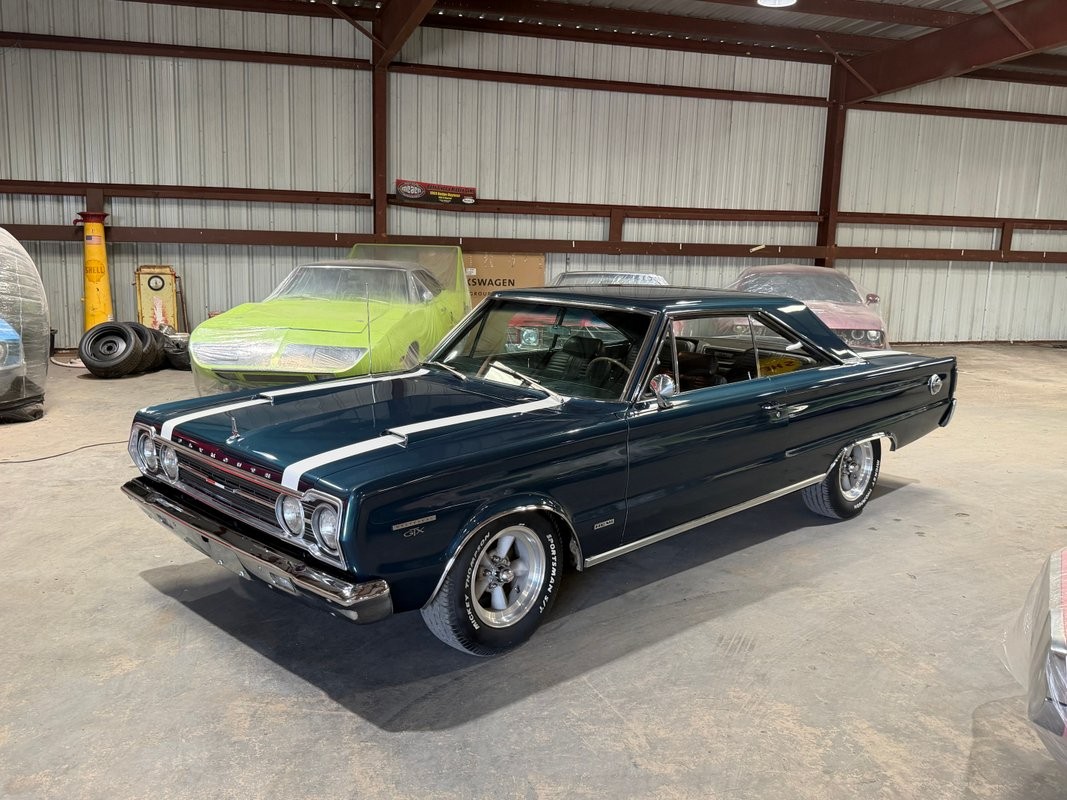 $77,000 · 16% below typical
Expand
What they sell for: GTX Hardtop sale prices.