
Pontiac GTO Revival buyer's guide
Pontiac GTO Revival (2004–2006) — GTO: what's listed, and what they sell for.
Years: 2004–2006 · Models: GTO
Overview and history
The GTO Revival of 2004 to 2006 is the simplest performance-car proposition Pontiac ever sold, and the most misunderstood. There is no range to decode, no trim-level forest, no weak base model hiding under the badge. Every car is a two-door coupe built in Australia by Holden, powered by a Corvette-family V8, driving the rear wheels through a six-speed manual or a four-speed automatic. If you want a modern GTO, this is the entire menu. What changes from year to year is how much power you get, how the car stops, and how honestly it wears the name — differences that make the year on the title your first buying decision.
The origin story explains both the car's strengths and its one persistent criticism. The coupe underneath is the Holden Monaro, a two-door derivative of Holden's Commodore sedan, engineered in Australia for Australian conditions. When GM's North American leadership — Bob Lutz most vocally — looked for a fast way to give Pontiac a halo car, the Monaro was already built, already V8-powered, and already sorted. GM federalised it: left-hand drive, US safety and emissions compliance, Pontiac badging, a relocated fuel tank. Production stayed at Holden's Elizabeth plant in South Australia, and every Revival GTO crossed the Pacific by ship. That is why the car feels as it does — solid, long-legged, slightly heavy, a grand tourer — and why parts supply, covered later, has an Australian accent you must plan around.
Period reviewers struggled with that identity. The original GTO of 1964 had invented the muscle-car formula, and the name carried an expectation of visual drama the Revival never tried to meet. The 2004 car arrived with a smooth, almost anonymous shape, no bonnet scoops, and a single-side exhaust outlet, and was promptly called bland by people who then drove it and went quiet, because underneath sat a 350-horsepower LS1, a proper independent rear suspension, and a cabin trimmed better than anything else Pontiac sold at the time. Judged as a styling exercise, the Revival disappoints. Judged as a machine — how you should judge a twenty-year-old car you are about to maintain — it is one of the most honest performance bargains of its era: Corvette mechanicals, room for four adults, and none of the fragility that usually comes with that performance at this age.
The three model years form a clear arc. The 2004 launch car is the purest Monaro translation, LS1-powered and visually the quietest. For 2005 Pontiac answered the critics and the stopwatch at once: the LS2 with a full 400 horsepower, bonnet scoops, a split dual exhaust, larger front brakes, and a strengthened automatic option. The 2006 car carried the formula over with detail changes, and then production ended — not because the car failed mechanically, but because the Monaro line itself was ending. Pontiac itself would be gone within four years. The Revival stands alone: three years, one body, two engines, no successor.
That brevity is good news for a buyer. Production was modest — roughly forty thousand cars across three years, 2004 the most numerous — and attrition has been steady, because a cheap, powerful, rear-drive coupe attracts exactly the owners most likely to modify it, track it, or crash it. Unmodified, documented cars are a shrinking subset, and the gap between a clean original and a tired, tuned example is now the whole story of this market. The mechanicals forgive a great deal. What does not forgive is neglect of the suspension bushes, the differential, and the Australia-specific electrical and trim parts that cannot be sourced from a generic GM counter.
A note on the evidence base. Classic Listings' current pool for this series is small — six cars in total at the time of writing, five offered for sale and one recorded sold, spanning the 2004 and 2005 model years — so nothing here pretends that pool proves a market pattern. Where this guide talks about how these cars age, it draws on the documented behaviour of the Monaro/GTO platform and the LS powertrain across two decades of ownership, which is deep and consistent. Read the pool as a snapshot of availability, not a census.

The models
There is exactly one model in the taxonomy — the GTO coupe — and one body style across all three years. No convertible was built, no four-door was sold under this name in the United States, and no lesser V6 version exists. That simplicity is deceptive, because within the single nameplate sit two engines, two gearboxes, a meaningful brake upgrade, a cosmetic package that is widely faked, and three model years whose desirability does not track their ages as you might expect. Learn the year-by-year specification and you can read any advert in seconds.
| Model | Years | Engine | Output | Built | Character |
|---|---|---|---|---|---|
| GTO (LS1) | 2004 | 5.7-litre LS1 V8 | 350 hp, 365 lb-ft | approx. 15,700 | The quiet original — smooth bonnet, single-side exhaust, smaller front brakes |
| GTO (LS2) | 2005 | 6.0-litre LS2 V8 | 400 hp, 400 lb-ft | approx. 11,100 | The correction — scooped bonnet, split dual exhaust, bigger brakes, stronger automatic |
| GTO (LS2) | 2006 | 6.0-litre LS2 V8 | 400 hp, 400 lb-ft | approx. 13,900 | The final car — detail trim changes, smoked tail lamps, the last of the line |
Production figures are given as approximations because published totals vary slightly by source and by whether pilot and export-allocation cars are counted; treat any seller quoting a build figure to the last digit with suspicion unless he produces documentation. Outputs, by contrast, are factory ratings and are not negotiable in an advert: a 2004 car makes 350 horsepower, a 2005 or 2006 car makes 400, and any claim of a factory figure in between is a claim about a modified car.
The 2004 car: LS1, smooth bonnet, single voice
The launch car is identifiable at a glance once you know the tells. The bonnet is smooth, with no scoops. At the rear, both exhaust pipes exit together on the left side of the valance, a Monaro inheritance that American buyers found odd on a car called GTO. The front brakes run 296 mm discs with twin-piston PBR calipers — adequate for road use, marginal for repeated hard stops. Inside, the cabin is the Monaro's, which is to say genuinely good: deeply bolstered leather seats with GTO embroidery, a clear Holden-designed instrument cluster with a configurable digital display, dual-zone climate control, and a Blaupunkt stereo with an in-dash six-disc changer. Rear-seat access is slow — the power front seats travel at a pace owners joke about — but once back there, two adults fit, which no Mustang of the period could honestly claim.
Mechanically the 2004 is the LS1 car, and that defines its value position. It is not slow — 350 horsepower in a coupe of this weight is properly quick — but it gives away fifty horsepower and a useful slice of torque to the later cars, and the market prices that gap permanently. Buy a 2004 because the individual car is excellent, not because the year is collectible. A stock 2004 is also easier to find than a stock 2006, because at launch the aftermarket catalogue of tunes and kits that later cars attracted did not yet exist — though you still verify rather than assume.
The 2005 car: the LS2 correction
For 2005 Pontiac changed nearly everything the launch car was criticised for. The LS2 arrived with 400 horsepower and 400 lb-ft of torque, the bonnet gained scoops (they are largely cosmetic, which matters when you assess a seller's claims about ram-air power), and the exhaust split into a true dual exit, one pipe each side, with a deeper and more even note. The front brakes grew to 320 mm discs with larger calipers — look for the red-painted calipers carrying the GTO script on many cars — and the automatic option was upgraded from the 4L60-E to the stronger 4L65-E to live behind the extra torque. A drive-by-wire throttle replaced the cable arrangement of the LS1 car, changing both the pedal feel and the diagnostic picture.
The 2005 is the sweet spot of the range for most buyers, and the models section of any honest guide should say so plainly. You get the full-power engine, the brake upgrade, and the visual identity the name always needed, in the year that tends to be priced a step below the final-year cars without giving anything away mechanically. The traps are cosmetic: because the scooped bonnet and split exhaust define the later look, some 2004 cars have been retrofitted with later panels and exhausts. A scooped bonnet on a 2004 is not a crime — it is a common and reversible owner preference — but it must be priced as a modification, not presented as originality, and the VIN and engine settle what the car actually is regardless of what the bonnet says.
The 2006 car: last of the line
The final year changed the least and is bought for exactly that reason. Specification carries over from 2005 — LS2, big brakes, split exhaust — with detail revisions: darkened tail-lamp lenses, illuminated steering-wheel controls, a faster front-seat motor, and trim and colour shuffles. Collectors pay a small premium for final-year status, and some 2006 cars are the best-preserved of the breed, bought late by older owners as the last chance at a new GTO. But there is no mechanical argument for a large premium over an equal-condition 2005. Buy the better car and let the year be a tiebreaker, never the reason.
Options, packages and the fakes among them
The options list was short, which makes verification simple. The significant choices were the gearbox, the wheel size — 17-inch standard, 18-inch optional from 2005 with summer tyres — and the Sport Appearance Package, which added a deeper front fascia, side skirts, a rear fascia with rectangular exhaust outlets, and a pedestal spoiler in place of the standard lip. Genuine package cars exist and are desirable. So do many ordinary cars wearing package panels bought later — fine as a modification, worthless as a provenance claim. The paperwork settles it: the window sticker or build documentation lists the package; the panels alone prove nothing.
Colour matters to this market. The launch palette included Cosmos Purple and Barbados Blue alongside the expected reds, black, silver and yellow; later years rotated in shades such as Brazen Orange and Spice Red. Launch colours dropped early now draw the eye and, in a genuinely original purple 2004, can carry a real premium. A colour change carries none: a resprayed car in a fashionable shade is worth less than an honest car in an unfashionable one, because the paint code on the identification plates does not lie and the next buyer will check it too.
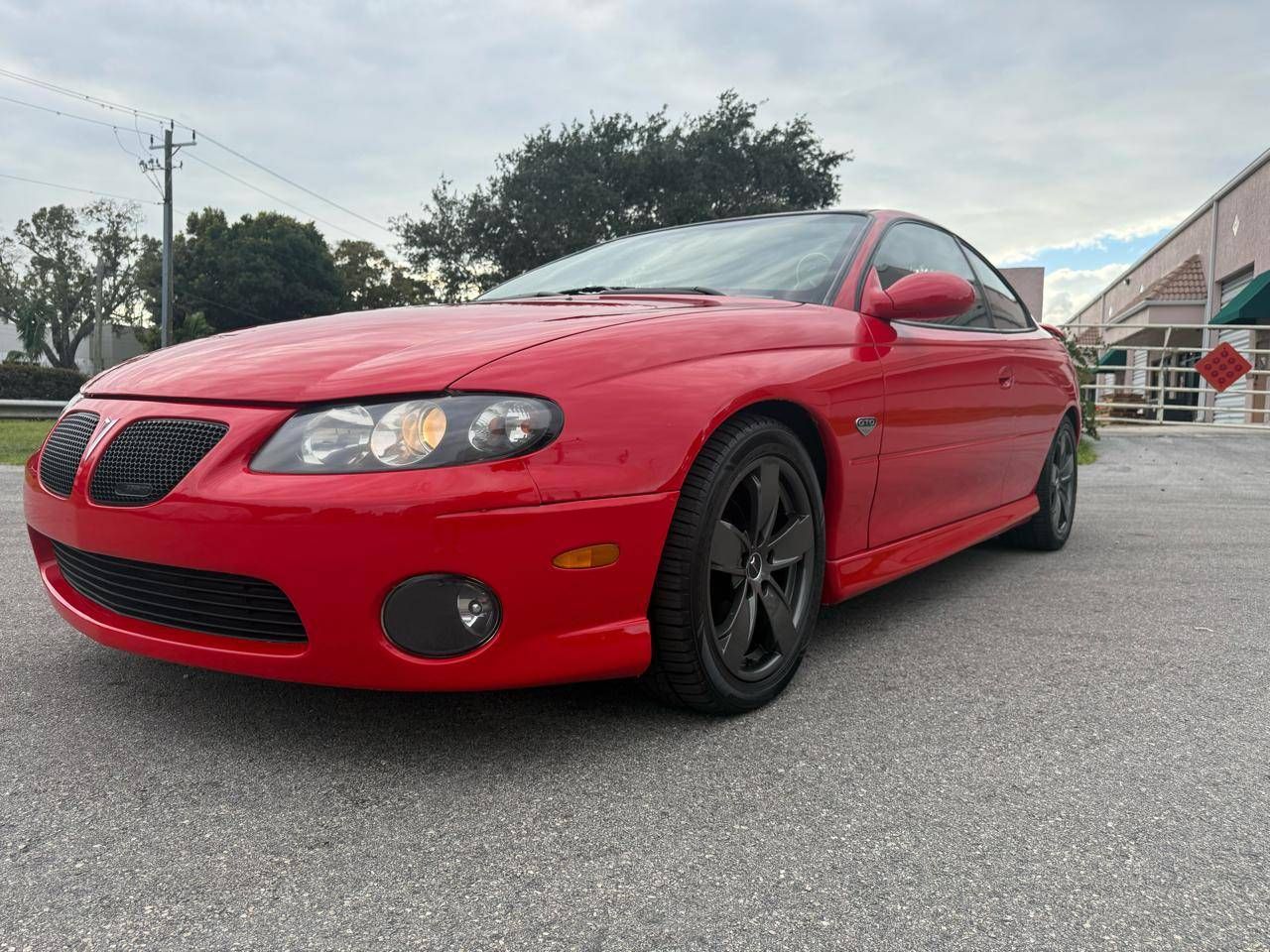
Finally, the identity check that governs everything else in this guide. The VIN is the car's passport: the opening characters identify a Holden-built car (the World Manufacturer Identifier begins 6G2), the tenth character encodes the model year, and the engine character distinguishes the LS1 year from the LS2 years. A car whose paperwork year and VIN year disagree is not a bargain with a clerical quirk; walk away until the discrepancy is explained in documents, because every value judgement here hangs on which engine the factory installed. Likewise the block's casting and code stamps: an LS2 car with an LS1 under the bonnet — it happens, after an engine failure repaired cheaply — is a different, cheaper car from the one advertised, discoverable in five minutes with a torch. Sellers of misdescribed cars rely on buyers who check the paint first and the numbers last.
Engines and gearboxes
Both engines belong to GM's Gen III/IV small-block family — all-aluminium block and heads, pushrod-operated overhead valves, two valves per cylinder, sequential electronic fuel injection — and both share the architecture that made the LS the defining performance engine of its generation. That shared DNA is the Revival's greatest ownership asset: the failure modes are few, well documented, and mostly cheap, and the knowledge base of every LS specialist in the country applies to your Pontiac. The differences between the two engines are nevertheless real, and they shape what you check, what you pay, and what you can expect.
The LS1 5.7 (2004)
The LS1 displaces 5,665 cc from a 99 mm bore and 92 mm stroke, runs a 10.1:1 compression ratio, and produces its rated 350 hp at 5,200 rpm and 365 lb-ft at 4,000 rpm in GTO tune — a slightly softer state of tune than the contemporary Corvette's, achieved through the intake and exhaust rather than internal differences. It breathes through a cable-operated throttle body and the LS1 intake manifold, whose long runners favour mid-range torque over top-end power; the later LS6 manifold, a common and worthwhile retrofit, is externally near-identical, so establish which manifold a car carries by part number if the seller claims the upgrade. Ignition is coil-near-plug, one coil per cylinder mounted on the rocker covers, with no distributor and no plug leads longer than a hand's span. The engine management is GM's PCM with full OBD-II diagnostics, which means a twenty-dollar code reader and a laptop give you more information about this engine than a workshop manual gives you about most classics.
In service the LS1's character is defined by what does not go wrong. The bottom end — a six-bolt-main cast crankshaft with cross-bolted caps, powdered-metal connecting rods, hypereutectic pistons — is understressed at this output and routinely covers mileages that would retire most performance engines, provided the oil was changed. The known weaknesses are specific and diagnosable. Piston slap on cold start, a light metallic rattle for the first minute or two that fades as the pistons expand, was a factory characteristic of many early LS engines caused by short piston skirts and generous cold clearances; it is noisy rather than destructive, but you must distinguish it from rod knock, which does not fade with temperature and deepens under load — slap fades, knock stays, and the distinction is worth the price of the car. The hydraulic roller lifters can develop a tick from a collapsed or dirt-sensitive lifter, most noticeable at hot idle; a tick that follows one cylinder and persists at temperature is a lifter job, typically $800–1,800 at a specialist including gaskets, while a tick that vanishes with fresh oil and a filter was varnish, not metal. The rear main seal and the rear cover gasket weep with age, misting the back of the sump and the bellhousing; budget $600–1,200 if it progresses to drips, because the gearbox comes out to reach it. The oil pressure sender, screwed into the valley at the back of the engine, fails electrically and sends the gauge to zero or full scale on an engine making perfectly good pressure — verify with a mechanical gauge before accepting either a seller's panic or a seller's reassurance, a $40 test that settles a four-figure argument.
Two LS1 systems deserve their own warning. The PCV system is marginal: heavy oil consumption with clean compression figures is usually the PCV valve and valley-cover baffle, not rings — parts are tens of dollars, and the diagnosis saves an engine-out quote. And the knock sensors live under the intake manifold, where the rear sensor's seal admits water that corrodes the sensor and harness; a stored knock-sensor code is a manifold-off job, $400–900 with sensors, harness and seals, common enough that you should ask directly whether it has been done.
The LS2 6.0 (2005–2006)
The LS2 is a Gen IV development: 5,967 cc from a 101.6 mm bore with the same 92 mm stroke, 10.9:1 compression, rated at 400 hp at 6,000 rpm and 400 lb-ft at 4,400 rpm. The gains are not a tune. The larger bore unshrouds the valves, the cylinder heads flow better, the camshaft is more assertive, the intake manifold is a larger 90 mm-throttle design, and the engine management moved to the E40 ECM with electronic throttle control — there is no throttle cable on an LS2 GTO, and the pedal is a sensor, which is why LS2 throttle faults present as reduced-power warnings rather than a sticky cable. The knock sensors moved to the sides of the block, out of the valley, eliminating the LS1's corrosion trap. The sump, the front cover, and the camshaft position sensor arrangement all differ from the LS1, which matters when ordering parts: "LS" is not a sufficient description at the counter, and the year and engine code are the order.
The LS2 comes with one characteristic to learn and one habit to check. The characteristic is a light valvetrain sewing-machine noise at idle, normal for the type; the habit is oil level. LS2s driven hard can use oil at a rate that surprises owners raised on the LS1, through PCV draw at sustained high rpm and ring behaviour under load. Check the level every fuel stop on a new purchase until you know your engine's appetite — an LS2 presented a quart low with no explanation is telling you how it was kept. Budget-wise the LS2 shares the LS1's lifter and rear-seal picture, adds throttle-body and pedal-sensor replacements at $250–600 when the electronic throttle misbehaves, and otherwise asks for oil, filters, coolant, plugs at long intervals, and the accessory belt and idlers, a $150–350 job sellers defer until the cold-start chirp becomes your problem.
Both engines share the ancillaries that actually strand people. The water pump weeps from its tell-tale hole before it fails — a $350–700 fitted job, and any coolant crust at the pump or thermostat housing on a viewing is a negotiating fact, not a detail. The alternator, power-steering pump and air-conditioning compressor are conventional GM items, though the GTO's condenser and lines are model-specific and a full air-conditioning revival on a neglected car can reach $900–1,600. Platinum spark plugs carry a nominal 100,000-mile life, so many cars are still on their second set at twenty years old; a fresh set and leads at $120–300 in parts transforms a surprising number of "mystery" misfires. Coil packs fail individually with a single-cylinder misfire code — $60–120 per coil — and multiple random misfire codes usually mean plugs, leads or low fuel pressure, not eight dead coils.
Fuel delivery is an in-tank electric pump in a returnless system, regulated at the tank, delivering roughly 58 psi at the rail. A pump that whines loudly through the rear seat, or pressure that sags under load, precedes a failure that leaves you stationary; replacement is a tank-out job, $700–1,400 fitted, because the tank sits behind the rear seat bulkhead in the boot — a relocation for US crash standards that turned the Monaro's luggage space into a shallow well and the pump into a workshop job.

Gearboxes
The manual gearbox is the Tremec T56 six-speed, in the M12 ratio set used by the contemporary Corvette Z06: a short first gear, closely stacked intermediates, and two overdrives, with sixth a deep cruising ratio that has the LS turning barely 1,700 rpm at highway speed. It is a strong, notchy, mechanical box that dislikes being rushed when cold and rewards deliberate shifts. The clutch is a conventional single-plate hydraulic unit with a concentric slave cylinder inside the bellhousing — which means a slave-cylinder failure is a gearbox-out job, $900–1,600 with the clutch replaced while access is paid for, and any seller's receipt for a clutch that does not mention the slave cylinder should prompt the question of whether the old slave is still in there waiting for you. Clutch life is entirely owner-dependent: 40,000 miles of city abuse or 120,000 of highway use are both on record for this unit, so judge the bite point, the pedal effort, and any judder on take-up in the individual car, not the odometer.
T56 faults are specific. Worn synchromesh on second and third shows as a crunch on fast shifts that disappears when the shift is slowed — test it both ways, because a box that only crunches when hurried is worn, not broken, and the rebuild at $1,500–2,800 is a negotiation figure rather than a walk-away. The skip-shift solenoid, GM's fuel-economy device that forces a first-to-fourth shift at light throttle, irritates every owner and is defeated by most of them with a cheap eliminator; its presence or absence tells you about the previous owner's engagement, nothing about the car's health. Gear oil is ATF-spec in this box, and a car with no record of a change is overdue by two decades — $100–200 at a specialist, and fresh fluid measurably improves a baulky cold shift, so do not condemn a gearbox before the fluid is changed and the test repeated.
The automatic is a four-speed: the 4L60-E behind the LS1, upgraded to the 4L65-E for the LS2 years with strengthened internals to handle 400 lb-ft. Both are well understood by every transmission shop in America, and both fail the same documented ways when neglected: the 3–4 clutch pack wears first, presenting as flare or slip on upshifts under load; the torque-converter clutch shudders at light-throttle cruise; and heat kills the rest. Fluid condition is your primary evidence — bright red and sweet-smelling is health, brown and burnt is a rebuild in waiting at $2,200–3,800 — and a service with filter at $200–350 is the cheapest insurance in this guide. On the test drive the car should shift cleanly, kick down without a pause-and-thump, and hold fourth with the converter locked without the rev counter hunting. Any of those wrong is money off or a walk away.
Whichever gearbox a car carries, behind it sits the same two-piece propshaft with a rubber centre bearing and coupling discs, running to a Dana-built limited-slip rear axle. The shaft and diff have their own problem-areas section, because on this platform they age faster than the gearboxes they connect — and a seller who spent money on the engine and nothing on the driveline has left you the bill that matters.
Problem areas
The Revival GTO does not have an engine problem or a gearbox problem. It has a twenty-year-old rubber, wiring and trim problem, concentrated in exactly the places where a low-volume Australian car diverges from a mainstream GM product. Work through this section system by system and you will know where the money goes on these cars — and, just as usefully, where it does not. Nothing here is exotic. Almost everything here is age, heat and deferred maintenance, made more expensive only when a previous owner ignored the early symptom and sold you the late one.
Front suspension, steering and the strut-rub fault
The front suspension is a MacPherson strut layout with a radius rod locating each lower arm, and its bushes and top mounts are the single most common source of expense on a neglected GTO. Start with the fault this platform is known for: strut rub. The front strut top mounts use a rubber bush with a bearing, and as the rubber collapses with age the strut leans inward at the top, reducing the already tight clearance between the inside shoulder of the front tyre and the strut body. The evidence is physical and unambiguous — a polished rub mark on the strut and a worn inner shoulder on the front tyre, often accompanied by a car that has eaten a set of fronts in a few thousand miles. The fix is new top mounts and bearings, correct alignment with attention to the factory camber settings, and frequently a pair of tyres: $150–300 for mounts and bearings in parts, $600–1,100 fitted with alignment and before tyres. A car showing fresh front tyres and shiny struts has not been fixed; it has been disguised. Check the strut bodies themselves before you check the tyres the seller fitted last month.
The radius rod bushes — the large liquid-filled bushes where the radius rods meet the subframe — split and leak with age, and the rack bushes soften, producing the classic presentation: vague on-centre feel, a clunk over sharp bumps and under low-speed braking, and wander under braking as the geometry shifts. Polyurethane replacements sharpen the car noticeably, at $120–250 for the bush sets and $400–800 fitted for a front-end refresh. Test on broken pavement, radio off, hands light: knocks through the floor are bushes; knocks through the wheel with play at straight-ahead are the rack or its inner tie rods. The rack itself is Holden-specific — seal leaks or a worn pinion mean a specialist rebuild at $700–1,400 exchanged, and a heavy fluid habit with wet rack boots is a firm deduction, not a quirk.
At the rear, the semi-trailing-arm suspension sags: the springs settle, negative camber increases, and the inner edges of the rear tyres wear — the front's story, told more slowly. Worn dampers compound it. Quality dampers and springs, or a respected coilover kit, run $800–2,000 fitted, and a car sitting level with even wear across all four treads has usually had this money spent. Ask for the receipt; it tells you when, and with what.
Rear axle, differential and driveshaft
The limited-slip differential — a Dana-built, cone-type unit — whines. Some whine on a light throttle at highway speed is a platform characteristic; the judgement call is progression and volume. A faint, steady note present for years is liveable. A whine that rises and falls loudly with throttle at 45–65 mph, a clunk on taking up drive, or metallic glitter in the oil is a rebuild: $900–1,800 for bearings, seals and a limited-slip refresh, more if the ring and pinion are scored. The slip cones wear until the unit behaves like an open diff — test it with a firm launch on a loose or wet surface; one wheel spinning alone means the slip has gone, even if the diff is quiet. Fresh oil with the correct limited-slip additive is $80–150 and the first step in assessing any noisy unit, because additive-depleted oil makes a healthy diff chatter on tight turns, a symptom sellers mistake — or present — as terminal.
The two-piece propshaft ages at its rubber: the centre support bearing's rubber mount tears, and the flexible coupling discs at each end crack. The symptom is a vibration under load in the 30–50 mph range and a soft thump on take-up, often misdiagnosed as the differential. Get the car on a lift and look — cracked couplings and a sagging centre bearing are visible in seconds. Parts are $150–400, fitting $300–600, and the distinction matters because it is a third of the cost of the diff rebuild the vibration gets blamed on. Half-shaft CV joints are durable but their boots split; a clicking on lock or grease flung around the rear subframe is a boot or joint, $250–550 per side fitted.
Engine ancillaries, cooling and fuel
Beyond the engines section's internal items, three under-bonnet systems generate most of the breakdown calls. The cooling system runs an aluminium radiator with plastic end tanks that embrittle with heat cycles; seepage at the tank seams, a sweet smell after a run, or crusty deposits at the top hose joint mean the radiator is at end of life — $350–750 fitted with coolant — and an owner who has been topping up rather than replacing has been running the engine hotter than the gauge admits. Electric fans are controlled through the engine management and relays; a car that creeps up in traffic but cools on the move has a fan or relay fault, diagnosable in minutes and cheap in parts, while a car that overheats everywhere has a water pump, thermostat or head-gasket conversation you do not want to buy into untested.
The fuel system carries a specific, serious warning. On LS1 cars the protective fuel-rail covers can chafe the nylon fuel line where it passes beneath them, and this was the subject of a safety recall — a chafed line can leak fuel onto a hot engine. On any 2004 car, lift the covers or have them lifted, inspect the line for witness marks, and verify the recall work was performed; the inspection costs nothing and the failure mode is fire. More generally, fuel smell in the cabin or boot on any year points to the tank-top sender seals or the filler and vent hoses, awkward to reach because of the tank's position and therefore deferred — $300–700 to put right properly. Treat any fuel smell as a fix-before-drive item, priced into the deal or fixed by the seller, never as a charm point.
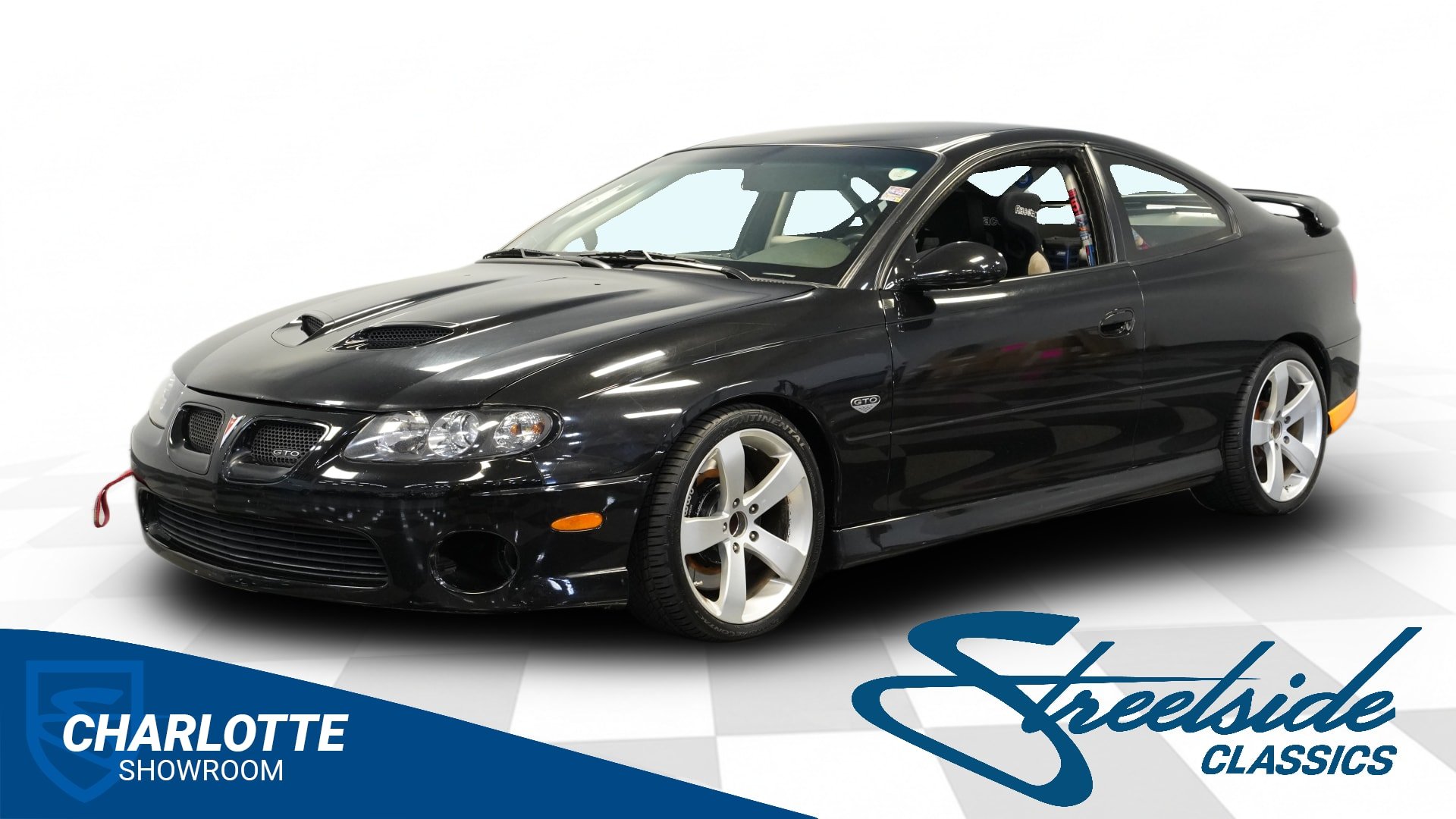
Exhausts rot from the inside and are model-specific in routing, particularly the 2004's single-side exit. Aftermarket systems are plentiful and often an improvement, but a droning, poorly hung system on cut original pipes has lost originality you cannot restore cheaply; a quality cat-back is $700–1,500 fitted, and catalytic converters — check they are present, because deleted cats are an emissions failure and a legal problem in many states — are $400–900 a side.
Electrics and body control
The body control module sits behind the glovebox — and its wiring harness can chafe against the glovebox support bracket, wearing through insulation until random faults appear: locking with a mind of its own, windows and lights misbehaving, intermittent no-start, warning lights without causes. This is a documented fault with a documented cure: drop the glovebox, inspect the harness where it crosses the bracket, repair worn wires and re-insulate. The inspection is free and the repair $150–500, but only if caught before a short damages the module; a BCM replacement involves security programming and can reach $600–1,200 with keys and labour. On any car with unexplained gremlins, this harness is the first place to look.
Door lock actuators fail one at a time — $120–280 per door fitted. The cluster's digital display can lose segments, and the ignition switch's electrical portion wears until the car intermittently refuses to crank, a $150–350 job that mimics far worse faults. The key deserves attention: remote head and key are a matched security item, replacements require programming, and a car supplied with one tired key carries a $200–450 future expense the seller should share. Count the keys, test both remotes, and test the spare in the ignition.
Air conditioning faults beyond the compressor are usually the condenser, holed by road debris, or tired seals in a system that has not been run — compressors seize from disuse as surely as from wear, so a car whose air conditioning "just needs a re-gas" needs a leak test before that phrase is believed. Diagnosis and re-gas is $150–300; a condenser $350–650 fitted.
Body, rust and interior trim
Rust is not this platform's headline weakness — the shells were well protected and most US cars have lived in kinder climates than a European coupe of the same age — but "not a weakness" is not "immune," and the places to check are specific. Water collects around the boot seal and under the boot carpet where the relocated tank rearranged the drainage; lift the carpet and spare-well cover and look for tide marks. The rear arch lips and lower quarters trap dirt behind the liners, and the screen apertures bubble where seals trap moisture. Underneath, surface rust on subframes and arms is cosmetic; perforation in floor or sills is not, and a northern car driven through fifteen salted winters can have it — get underneath any car with a northern history. Structural repair runs $800–2,500 per affected area welded and painted properly, and a car needing it in several places is a parts car wearing a driver's price.
The interior wears in patterns. The driver's outer seat bolster cracks and wears through the colour, and the seat stitching can split along the seams where sun and tension work together — re-trimming a seat section in matching leather is $400–900, and good used seats are scarce because every other owner wants them too. The headlining can sag as its foam backing fails, a $300–600 re-trim. The steering-wheel leather polishes and thins at the top, and the gear knob and gaiter on manual cars wear honestly with mileage — use them as mileage witnesses, because a low-mileage car with a bald wheel rim and a shiny knob is telling a story its odometer may not support. Window regulators slow and fail, $200–450 a side fitted, and door seals are Holden-specific and increasingly a specialist-order item, a theme the parts section develops.
Paint, finally, is a known soft spot: the factory clear coat on some colours, reds and blacks especially, can fail with peeling and hazing on horizontal surfaces, and no polish restores failed clear — a respray of the affected panels at $1,500–4,000 is the only cure, which is why the black car figured earlier deserves the slow read it was given. Panel damage is the other body cost: fascias, bonnets and lamps are model-specific, insurance write-offs for cosmetic damage are a real phenomenon on these cars, and a title brand on a cheap car must be priced as permanent, because it is.
How to inspect one
Inspect a Revival GTO in this order and you will spend your attention where the money is. The car rewards method: its serious faults are all findable in under an hour, and its healthy systems are so robust that a car passing these checks is very unlikely to ambush you later.
- Numbers before paint. Verify the VIN on the plate, the dash tag and the title all agree, that the tenth character matches the claimed model year, and that the engine is the one the year demands — LS1 for a 2004 car, LS2 thereafter. The identity traps from the models section — retrofitted bonnets, swapped engines, package panels without paperwork — are all settled here, in the first five minutes, before emotion gets a vote.
- Cold start, bonnet up, radio off. Insist the engine is cold. Listen for the LS1's piston slap and judge whether it fades as the engine warms — fading is characteristic, persisting is not. Note lifter tick, belt chirp from tired idlers, and any exhaust tick from a cracked manifold. Watch the oil pressure gauge behave and file any flicker for the mechanical-gauge test described in the engines section.
- Under the bonnet, work the checklist. Coolant colour and level, crust at the radiator end tanks and pump, oil filler cap for mayonnaise emulsion, power-steering fluid level and colour. On a 2004 car, have the fuel-rail covers lifted and inspect the fuel line for the chafing described in the problem areas — this is the one check on the list that is about fire, not money.
- The strut-rub test. Turn the steering to full lock each way and inspect the front strut bodies for a polished rub mark and the inner shoulders of the front tyres for uneven wear. Fresh front tyres on a car with shiny struts means the symptom was hidden, not cured — price the top mounts, bearings and alignment from the suspension section and assume the tyres will need doing again once the geometry is right.
- Underneath, on a lift if at all possible. Look at the radius rod and rack bushes, the propshaft centre bearing and coupling discs for the cracking described in the driveline section, the diff for leaks, the half-shaft boots, the sump and bellhousing for the rear-main weep, and the floor, sills and subframes for the rust picture. Half of this guide's expensive items are visible in one slow walk under a raised car.
- Electrics, all of them, one at a time. Both keys and remotes, every window, both door locks, mirrors, seat motors, climate control hot and cold, stereo, every cluster warning light with the ignition cycle. Random, unrelated gremlins point behind the glovebox to the BCM harness in the problem areas; a single dead item is usually just that item.
- The road test: gearbox first. Manual: shift second and third briskly and slowly, feel the clutch bite point and take-up judder, and note whether a crunch that appears on fast shifts vanishes on slow ones — the synchromesh judgement from the gearboxes section. Automatic: light-throttle shifts clean, kickdown without a thump, converter locked and steady at cruise, and afterwards, the fluid — colour and smell — as the verdict on everything you just felt.
- The road test: chassis and diff. On broken pavement, listen for bush knocks through the floor. At highway speed on a light throttle, judge the diff whine by the progression test from the driveline section, then find a safe loose or wet patch and launch firmly once: both rear wheels working means the limited slip lives; one spinning means it does not. Brake firmly from speed twice — pedal feel, straight tracking, and on a 2004, how quickly confidence fades.
- Heat and idle. After the drive, let the car idle for five minutes. Watch the temperature gauge hold, the fans cycle, and listen again for the hot lifter tick that a cold engine hides. Smell for fuel around the boot and cabin and for coolant at the front. A car that is only healthy while moving is not healthy.
- Interior forensics. Driver's bolster wear, seat-seam stitching, headlining, steering-wheel rim and gear knob — read them against the claimed mileage as the trim section directs. Check the boot under the carpet and in the spare well for the water marks that betray seal leaks, and remember the tank lives there: a shallow boot is correct, a damp one is not.
- Paperwork as a component. Service history with believable oil-change intervals, receipts for the known items — strut mounts, bushes, diff oil, clutch and slave cylinder, radiator — and recall evidence for the fuel line on a 2004. A thick file on this platform is not a warning sign; it is the mark of an owner who read the same fault list you just did.
- The scan. Finish with an OBD-II scan of the engine and, where the tool allows, the body systems. Stored knock-sensor codes on an LS1, throttle codes on an LS2, and a history of cleared misfires all reprice the car — and a seller who clears codes the morning of a viewing has told you the most important thing on this list.
Values
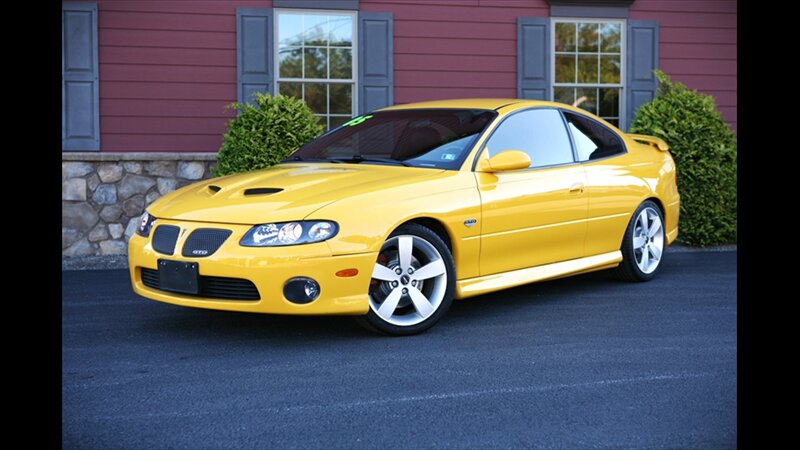
The Revival GTO market is a condition market wearing a year market's clothes, and the Values section of this guide exists to teach you to read it that way — the live listings and recorded sales appended to this page by the build carry the current figures, and they will move; what follows is the structure underneath them, which does not.
The first structural fact is the year spread. The LS2 cars sit above the LS1 car as a class, because fifty horsepower, the brake upgrade and the split exhaust are permanent, verifiable differences that no amount of condition in a 2004 fully erases — a superb 2004 can overtake a tired 2005, but it is overtaking, against the gradient. Within the LS2 years, the final-year premium is real but modest and mostly sentimental; it evaporates the moment the 2006 car in question needs the suspension, diff or clutch work that a sorted 2005 has already had done. Read any individual car's price as year first, then gearbox, then condition — but weight condition so heavily that it routinely reverses the other two, because on a twenty-year-old platform with known rubber-and-wiring appetites, the difference between a car with the big jobs done and a car with them all pending is larger than the difference between any two model years.
The gearbox spread is the second fact, and it is widening. Manual cars command a clear and growing premium over automatics in equivalent condition, driven by simple arithmetic: manuals were the minority of production, they are the version the enthusiast market wants, and they cannot be created from automatics at any sensible cost. Automatic cars are not undesirable — the 4L65-E behind the LS2 is a good gearbox and the automatic suits the car's grand-touring character — but they are the value entry point to the platform, and a buyer who genuinely prefers an automatic is one of the few people in this market still being offered a discount for his own taste. Take it knowingly: the same discount will be there when you sell.
Condition spreads follow a recognisable shape. At the bottom sit the projects — high miles, deferred bushes and diff, tired interiors, modifications of unknown quality — which look cheap and are not, because the known jobs, done together, consume the entire gap to a good car and return a car that is still not original. In the middle sit the honest drivers, maintained but used, where most sensible buying happens. At the top sit the low-mileage, unmodified, documented cars, where the premium is paid for originality and paper, and should be proven item by item: original panels, original engine, both keys, the window sticker, a gapless service file. The project-to-driver gap here is unusually honest — the jobs are known and finite — so a project bought at a true project price can be rational. What never is: the middle-priced car with project needs, the market's most common trap, priced on its photographs.
Premiums attach to specifics — rare launch colours in original paint, documented Sport Appearance Package cars, one-owner cars with complete paperwork — and deductions attach just as specifically: a branded title, a colour change, a deleted emissions system, an engine swap, heavy modification without the original parts included. Modified cars are a thinner sub-market of their own; if you buy one, buy the build's documentation with the same rigour as the car.
Negotiation on this platform is evidence-based, which suits a prepared buyer: the inspection in this guide produces a costed list on almost any car, and sellers who know the platform expect that list to be the conversation. The asking-versus-achieved gap is widest on overpriced automatic 2004 cars advertised on hope, and narrowest on fairly priced manual LS2 cars, which sell to a queue. Patience is a strategy at the bottom of the market and a liability at the top — the good manual cars do not wait while you think. Finally, remember the pool you are fishing in: as the overview noted, the current Classic Listings pool is six cars, five for sale and one sold. That is one marketplace's snapshot, not the market; use the recorded sales appended below, the wider market, and your inspection list. The car in front of you is the data point that matters.
Parts and ownership
Owning a Revival GTO divides into two supply worlds, and your life will be easy or frustrating in proportion to how well you understand the border between them. On one side sits everything LS: engine internals, gaskets, sensors, ignition, most cooling components, T56 clutch and gearbox internals, and the automatic transmissions entire. This world is American, deep and fast — prices kept honest by Corvette and Camaro volume. A water pump, lifters, a clutch kit: shop them like Camaro parts, because they are. Routine servicing here is cheap by performance-car standards — oil and filter $80–140 in parts, plugs and leads $120–300, brake pads $80–200 an axle — and any competent LS specialist can do the work.
On the other side sits everything Holden: body panels and lamps, glass, trim, seat components, door and window hardware, the steering rack, the BCM and its modules, keys and remotes, and the model's specific exhaust and driveline hardware. This world is thinner. Pontiac's dealer network is gone, the GM pipeline for a discontinued Australian import has been drying up for years, and supply now runs through US specialists importing Holden parts, Australian suppliers shipping internationally, breakers, and owners' clubs whose classifieds function as a shadow parts network. None of this makes the car unownable — the community is active and the Australian Monaro and Commodore parc is large — but it changes the discipline: a broken headlamp or a split seat seam is a sourcing project of days to weeks rather than a phone call, at prices that reflect freight and scarcity. A headlamp unit can run $300–700 sourced used or imported; a BCM with programming, as noted, $600–1,200; a quality set of the model's specific bushes and mounts bought as a kit, $300–700 before fitting.
The ownership strategy follows directly. Buy the car whose Holden parts are intact — trim, glass, lamps, interior — and accept wear in the LS parts, which you can replace. When a Holden-specific part fails, buy the best available example rather than the cheapest; where a known wear item is offered at a fair price, owners commonly buy the spare as well. Join the community early: the forums and owners' groups carry the interchange knowledge — which Commodore parts cross over, which Australian suppliers ship reliably — that turns a three-week hunt into a link. And keep the identity documents and both keys safe and complete, because security components are the sharpest edge of the supply problem.
Running costs beyond parts are proportionate to a heavy, powerful coupe. Fuel consumption is honest V8 consumption — gentle highway work returns figures in the mid-twenties per gallon thanks to that deep sixth gear, while town and enthusiasm pull it into the teens — and the LS2's appetite for premium fuel should be assumed. Tyres are a real budget line, hard on fronts when the suspension is tired and on rears whenever the driver is: a quality set runs $700–1,300 fitted, more in the 18-inch fitment. Insurance is generally favourable — the car reads to insurers as an ageing Pontiac coupe rather than an exotic — though agreed-value cover requires the documentation this guide keeps insisting on. Budget for the platform's known refresh — bushes, mounts, dampers, fluids everywhere, diff oil with the correct additive — as a $1,500–3,500 programme over your first period of ownership on any car arriving without receipts for it. That is the ownership bargain: a known, finite list, priced in advance, on a car whose expensive heart is its most durable part.
Which one to buy
- The all-rounder: a 2005 LS2 with the six-speed manual. The full-power engine, the big brakes, the split exhaust and the visual identity, in the year that escapes the final-year premium. In documented, unmodified condition this is the Revival GTO to own for a decade.
- The value buy: a 2005 or 2006 LS2 with the automatic. The same engine and brakes with the gearbox discount applied. If you want the car as a fast, comfortable grand tourer rather than an investment, this is the most performance per unit of money on the platform.
- The enthusiast's project: a straight, honest 2004 LS1 manual with tired suspension and a thick fault list. Bought at a true project price — never at driver money — the known jobs are finite, the LS1 is unburstable, and the finished car is the cheapest route into a sorted manual GTO.
- The collector's pick: a low-mileage 2006 manual in a rare colour, original paint, full paperwork, both keys. You are buying originality and scarcity, so verify both ruthlessly — paint code, VIN, engine identity, package documentation — and walk if any leg of that stool is missing.
- The one to avoid: any year, any gearbox, at mid-market money with a branded title, a colour change, or an undocumented engine swap. Each of those defects is permanent, each is priced as temporary by the sellers who hold such cars, and the platform is common enough that a clean alternative always exists.
The overriding rule: buy the individual car's condition, identity and paperwork, never its year, colour or advert — on this platform the difference between the best and worst example of the same model year is worth more than the difference between the model years themselves, and every dollar spent verifying that before purchase returns several after it.
Listed now
On Classic Listings today: 2 cars are listed here; 2 for sale and 0 marked sold; average asking price $26,950; asking range $24,900 to $29,000.
See the 2 GTO Revival cars currently listed.
The market — recorded sales
No dated sales recorded for this series yet — as sales are recorded, they will appear here with their dates and prices.
For sale now
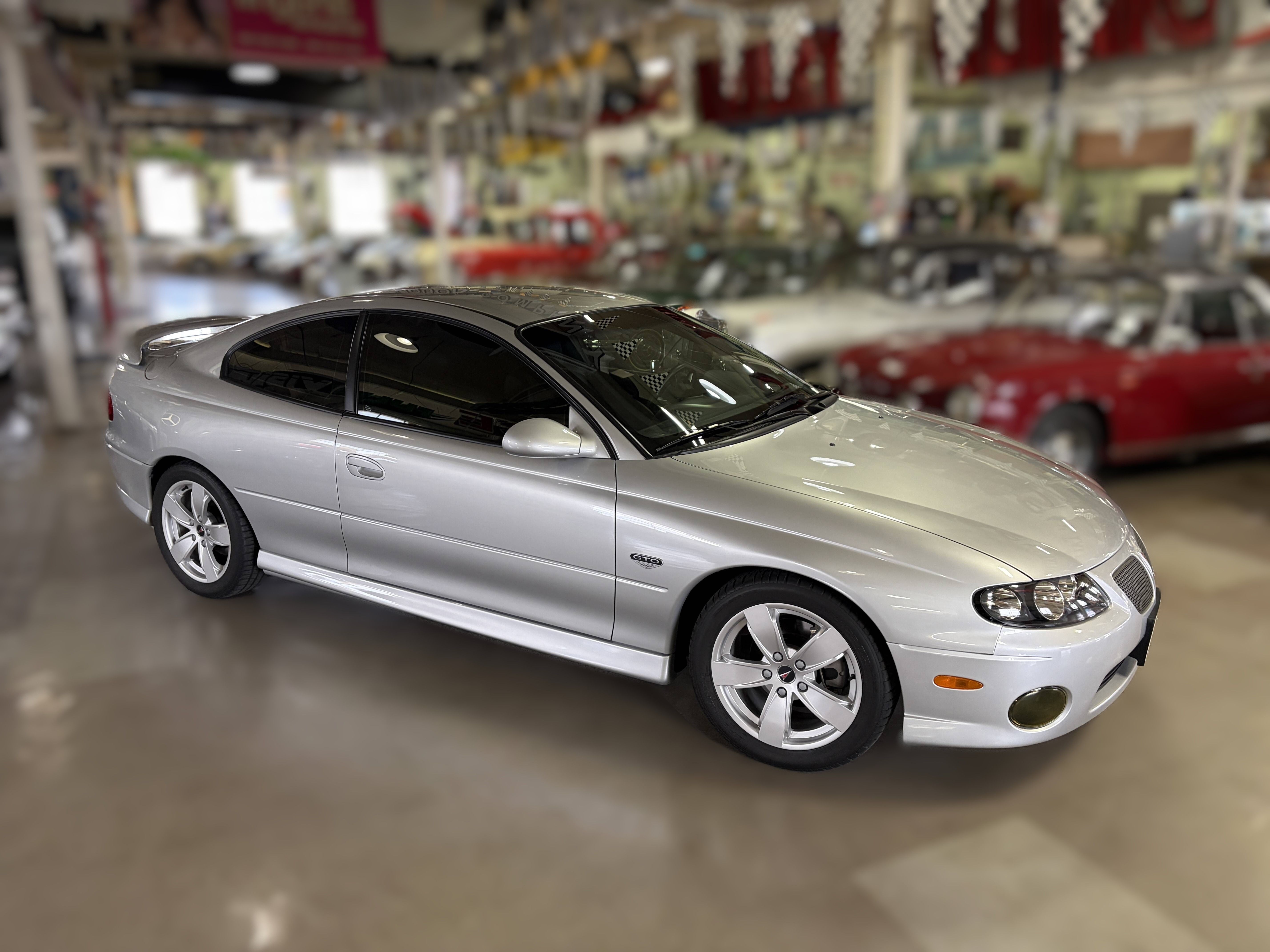 $29,000 · 58% below typical
Expand
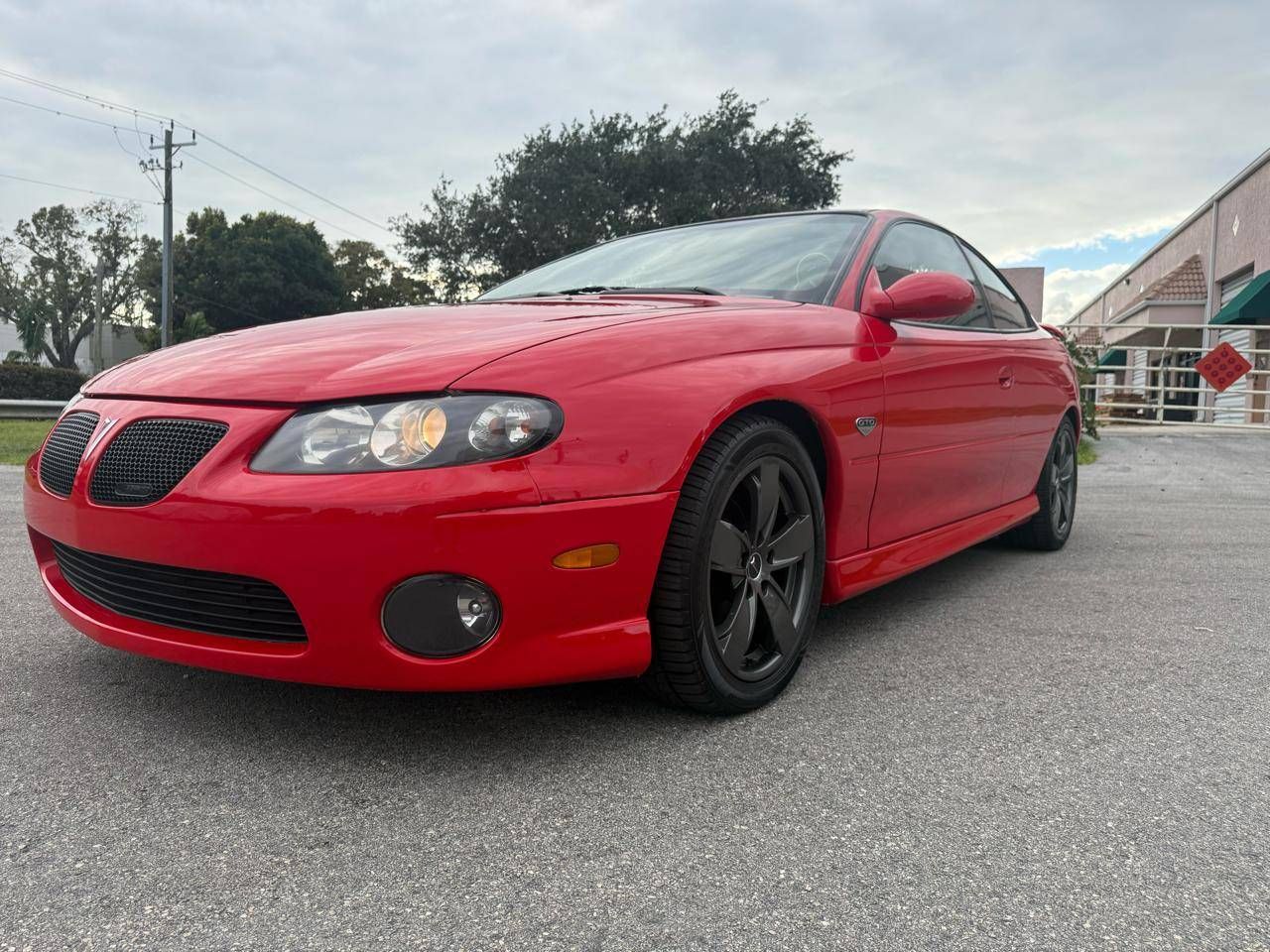 $24,900 · 64% below typical