
Pontiac LeMans Convertible buyer's guide
Pontiac LeMans Convertible -- the model's own buyer's guide: variants, values and what to check.
Years listed: 1964-1971 · Series: GTO
# Pontiac LeMans Convertible — Buying Guide
Overview and history
You are not really shopping for a car. You are shopping for a position in an argument that has been running since 1964, because every LeMans convertible you look at lives in the shadow of the GTO — and a good number of the cars advertised as LeMans convertibles are wearing GTO badges, GTO hoods or GTO stripes that Pontiac never fitted to them. Understand that one fact before you look at anything else and the rest of this guide falls into place: the LeMans convertible is a genuinely desirable car in its own right, it is mechanically one of the best-supported American classics you can own, and it is also the single most common raw material for the GTO clone, the tribute car and the optimistic listing description. Buy the car that is actually in front of you, verified as that car, and you will be happy. Buy the badges and you will not.
The bones are GM's A-body, the intermediate platform Pontiac called Tempest and LeMans from 1964 onward. The first-generation cars of 1964–67 are the compact, upright ones: a 115-inch wheelbase, a full perimeter frame, coil springs at all four corners, and styling that goes from the clean stacked-headlamp 1964–65 cars to the Coke-bottle 1966–67 cars with their louvered taillights. The second generation of 1968–72 stretches the same architecture under longer, rounder bodywork — hidden wipers, a more integrated nose, and from 1970 a LeMans line that absorbs more of the range as the Tempest name fades. The convertible sits at the top of the body-style list in every one of those years: the most expensive Tempest-family body you can buy new, the one most likely to be ordered with buckets, a console and a V8, and — this matters to you now — the one whose structure depends most on parts a hardtop does not have. A convertible A-body has no roof to stiffen it, so the frame is a heavier, boxed version of the coupe frame and the rocker panels carry real structural load. When those pieces rot, the car does not just look tired. It folds, measurably, and you can test for it with nothing more than a door and your own hands.
The engine choice defines the car's character more than the year does. At one end you have the overhead-cam six — Pontiac's own OHC-6, one of the most technically interesting American engines of the decade, especially in Sprint form with its four-barrel Quadrajet and split exhaust manifold. In the middle you have the small Pontiac V8s, the 326 and later the 350: effortless torque, a proper V8 soundtrack and none of the GTO's market heat. At the top, a LeMans can be ordered with the same 389 and 400 hardware that powers the GTO — which is precisely why the identity question never goes away. A 400-powered LeMans convertible is a wonderful car. It is still not a GTO, and the price must never pretend otherwise.
This guide covers the A-body LeMans and Tempest convertibles of 1964–71 — the years the cars on this site span — including the Tempest and Tempest Custom convertibles that sit directly beneath the LeMans and share everything except trim, because you will meet them in the same searches wearing the same clothes. It does not cover the later cars that reuse the LeMans name; those are different machines entirely. Read the identity material twice. On this model, paperwork is not admin. Paperwork is the car.
The models
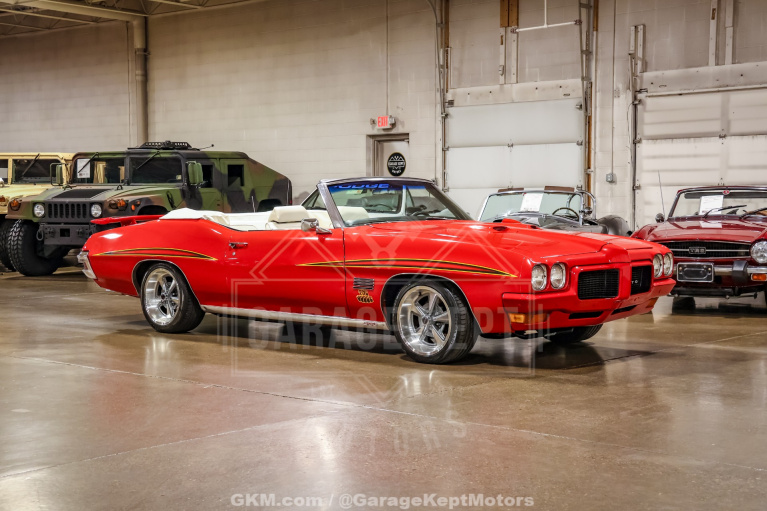
The range is simpler than the badge chaos suggests. In every year from 1964 to 1971 there is a ladder: Tempest at the bottom, Tempest Custom in the middle for most of the run, LeMans at the top — and the convertible body is offered on most rungs of that ladder, which is why "Tempest convertible" and "LeMans convertible" are near-identical cars separated by trim and standard equipment. From 1970 the ladder is relabelled: LeMans becomes the volume line and LeMans Sport the top trim, carrying the convertible through 1971 and into 1972. The GTO sits alongside all of this — an option package on the LeMans in 1964–65, a separate series from 1966 to 1971 — sharing the shell, frame, suspension and most of the parts catalogue. That sharing is the car's greatest strength as an ownership proposition and its greatest weakness as a purchase, because everything that makes a GTO bolts onto a LeMans in a weekend.
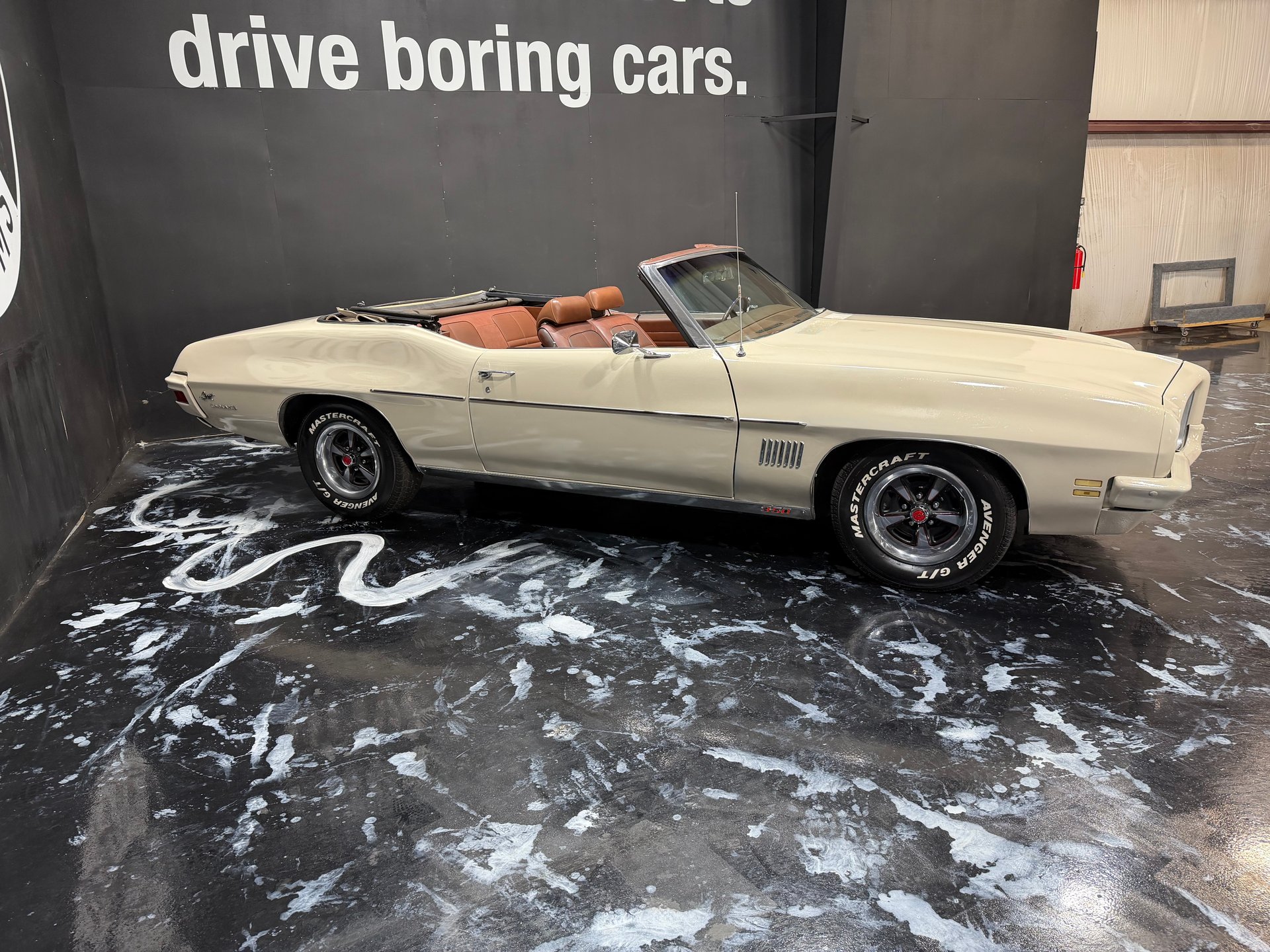
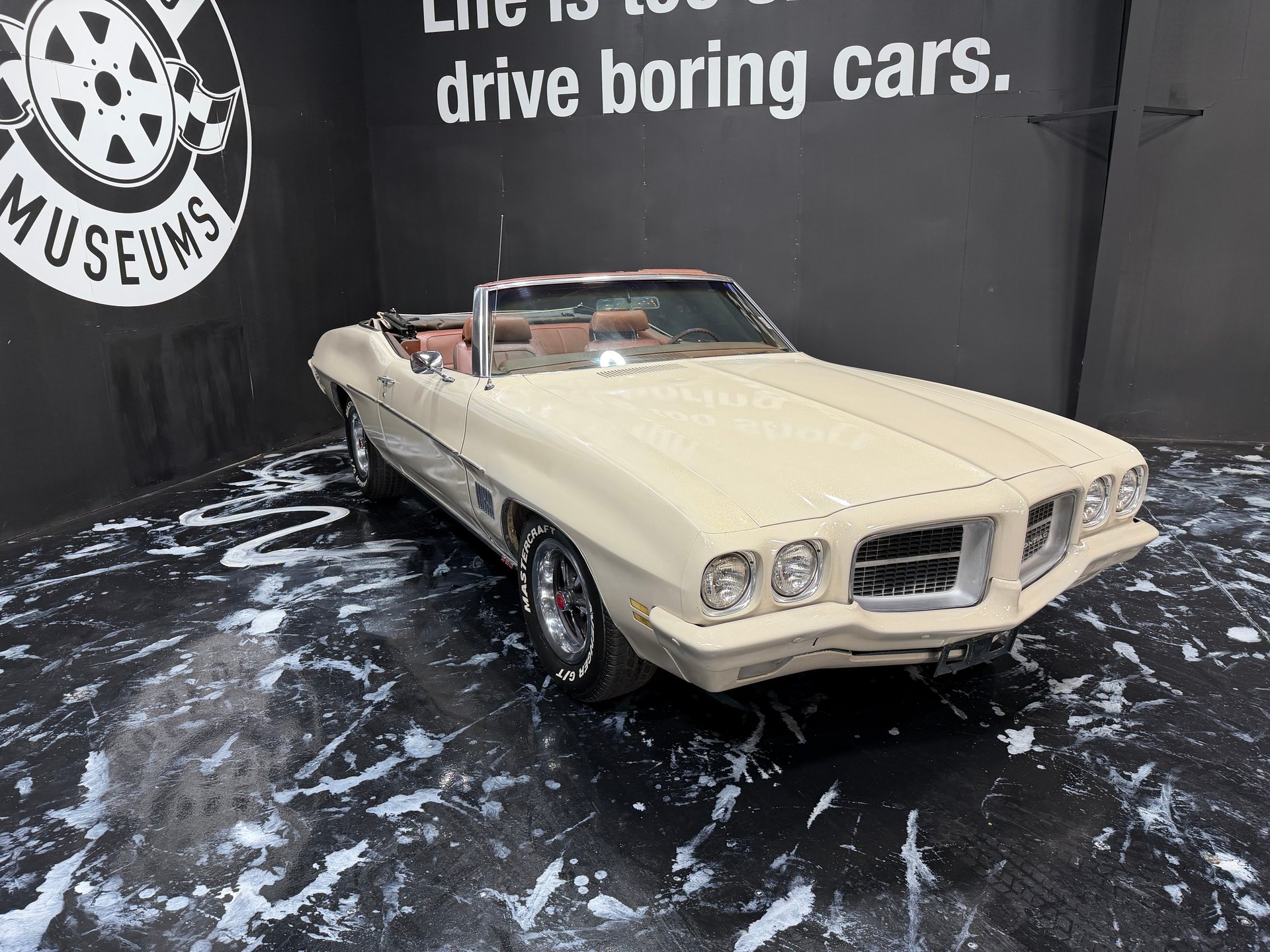
The generations divide cleanly. The 1964–65 convertibles are the lightest and simplest: stacked headlamps, flat sides, a top that folds into a shallow well, and an interior you can restore from catalogues almost entirely. The 1966–67 cars are the stylist's favourites — longer rear decks, the famous louvered taillight panel on the '66 — and the first years the Sprint six gives the range a sporting option that is not a V8. The 1968–69 cars are bigger in every direction, with ventless side glass and wipers hidden under the hood's trailing edge; the 1970–71 LeMans Sport convertible is a genuinely plush machine, often found with air conditioning, power windows and the 350 or 400 V8. None of these is the "wrong" one; the Which one to buy section at the end makes the picks.
Two structural facts apply to every variant. First, the convertible is always the heaviest body on the lightest structure: the boxed frame and reinforced rockers are not optional extras, they are the car, and a convertible with coupe-grade rot in those areas is a parts car wearing a good car's price. Second, the top mechanism changes ownership more than any engine does. Base Tempest convertibles can carry a manual top; most LeMans convertibles have the power top, an electro-hydraulic system that is simple, strong and — when neglected — capable of filling the rear quarters with hydraulic fluid and rainwater in roughly equal measure. Budget for the top as a system: fabric, pads, rear window, frame pivots, pump, cylinders, hoses and switches.
| Model | Years | Engine | Output | Built | Character |
|---|---|---|---|---|---|
| Tempest / Tempest Custom Convertible | 1964–69 | 215/230 OHC-6, 326/350 V8 | 165–285 hp | Volume seller | The honest base car; plainer trim, same bones, often the best value in the range |
| LeMans Convertible (first generation) | 1964–67 | OHC-6 Sprint, 326 V8, 389 V8 (1964–65 option availability varies) | 165–285 hp | Volume seller | Buckets-and-console flagship of the early range; the GTO's sibling and clone donor |
| LeMans Sprint Convertible | 1966–69 | 230 OHC-6 Sprint, Quadrajet 4-barrel | 207–215 hp (1966–67), ~175 hp (1968) | Low thousands | The thinker's car: revs, handles, sounds like nothing else American; parts hunt is part of the deal |
| LeMans Convertible (second generation) | 1968–69 | OHC-6, 350 V8, 400 V8 | 140–330 hp | Volume seller | Bigger, softer, better trimmed; 350 two-barrel cars are the common find |
| LeMans / LeMans Sport Convertible | 1970–71 | 350 V8, 400 V8, 455 V8 (1970–71 availability by year) | 255–330 hp | Volume seller | The plush end of the line; Sport trim, Endura-style noses on some, heavy options lists |
| GTO Convertible (the comparison — and the trap) | 1964–71 | 389/400/455 V8 | 325–360 hp | 6,644 convertibles in 1964 alone; a separate series 1966–71 | Not a LeMans. If the car in front of you wears these badges, the VIN and PHS paperwork decide what it is — see Problem areas |
A word on the figures in that table, because this model attracts invented numbers. The outputs are Pontiac's period SAE gross ratings, and they flatter every engine here by modern standards — a 285 hp 326 is a strong, torquey road engine, not a modern 285 hp. Where a seller quotes a production figure to justify a price — "one of 212 built" — ask for the source. Pontiac Historical Services can document how a specific car was built; nobody can document most combination-rarity claims, and you should pay for none of them.
Engines and gearboxes
Three engine families power these cars, and they could not be more different in character, failure modes or cost when they go wrong. Learn to tell them apart on sight before you visit a car, because sellers confuse them constantly — sometimes innocently, sometimes not. The Pontiac V8s all look alike from across the engine bay (one block architecture spans 326 to 455 cubic inches), the OHC-6 looks like nothing else in the range, and the difference between a 326 car and a 400 car is the difference between a cruiser and a muscle car wearing the same suit.
The overhead-cam six and the Sprint
Pontiac's OHC-6 is the engine that makes engineers smile and parts managers sigh. Introduced for 1966 at 230 cubic inches — replacing the earlier 215-cube version used in 1964–65, itself derived from Chevrolet six architecture but with a Pontiac-designed overhead-cam head — it is the first American production engine with a belt-driven overhead camshaft: a fibreglass-reinforced neoprene belt drives a single cam in an aluminium housing on top of an iron head, a generation ahead of anything else in the GM catalogue. In standard form with a single-barrel carburettor it makes a modest 140–165 hp depending on year. The Sprint is the one you want: a Rochester Quadrajet four-barrel, a split exhaust manifold that behaves like a header, a hotter cam and higher compression, giving 207 hp in 1966, 215 hp in 1967 and around 175 hp in the detuned 1968 form. A Sprint convertible with the four-speed is a genuinely sporting car — it revs where the V8s will not, weighs far less over the front wheels, and makes a hard-edged mechanical noise no V8 in the range can imitate.
The failure modes are specific. The cam drive belt is a service item, not a lifetime component: any belt of unknown age on a car you have just bought gets replaced as a matter of course, a job in the $300–600 range at a shop that knows the engine, because a stripped belt stops the cam and the engine instantly — the saving grace is that clearances make it a non-catastrophe in most cases, but you will be walking home. The cam housing leaks oil from its gasket faces, and the leak runs down the head and gets misdiagnosed as a head-gasket failure; clean the engine, run it, and watch where fresh oil actually starts. The Sprint's split exhaust manifold cracks with heat cycling, announcing itself as a ticking that fades as the engine warms and the crack closes. The lash adjusters gum up with old oil, giving a top-end rattle that fresh oil and a proper run sometimes cure and sometimes do not. The honest warning is about parts: belts, gaskets and ignition pieces are available, but camshafts, cam housings and Sprint-specific exhaust and induction hardware are a used-parts hunt. A Sprint is a wonderful car for an owner who enjoys the chase. It is the wrong car if you want every part on a shelf.
The Pontiac V8s: 326, 350, 389, 400 and 455
The Pontiac V8 is one basic architecture — a compact, deep-skirt iron block with the distributor at the back, the water pump mounted in the timing cover, and displacements grown by bore and stroke from a common crankcase. The 326 (actually 336 cubic inches in its first 1963 form, a true 326 thereafter) is the LeMans staple for 1964–67: 250 hp with the two-barrel, 285 hp with the four-barrel, and in practice a sweet, understressed engine that suits the convertible perfectly. The 350 that replaces it for 1968 is a bored-out development (actually 354 cubic inches) making 265 hp as a two-barrel and up to 320 hp in the four-barrel HO form; the two-barrel 350 is what most second-generation LeMans convertibles actually have, whatever the listing implies. The 389 belongs properly to the GTO years 1964–66 — 325 hp with a four-barrel, 348–360 hp with Tri-Power — but it appears in LeMans engine bays constantly, both as period swaps and as the heart of clone cars, because it bolts straight in. The 400 that follows it for 1967 is the same story one step on: in a LeMans it is a legitimate order-sheet engine in later years (a 1970 LeMans can carry a 400 rated at 265 hp as a two-barrel or 330 hp as a four-barrel), and in GTO tune it makes 335–350 hp. The 455 appears at the very end of this guide's period in LeMans and GTO alike. Because every one of these engines shares the same external dimensions, the engine in the car tells you nothing by looking — you read the stamped code on the pad at the front of the block, on the passenger side just below the cylinder head, and the casting date at the back of the block by the distributor, and those two stamps are the engine's identity. A seller who will not let you read them is telling you something.
Mechanically these are tough, simple engines with a short list of characteristic faults. The rear main seal is a rope seal on most of the run and it weeps with age — a damp sump and a spotted driveway are normal on an unrestored car; a steady drip that worsens hot is a seal that wants replacing, a transmission-out job in the $800–1,500 range, and a negotiating point rather than a walk-away. The water pump lives inside the timing cover and works through divider plates whose clearance to the impeller decides whether the engine cools properly: a Pontiac that runs hot at idle but cools at speed very often has worn plates or wrong impeller clearance rather than a bad radiator, and the fix is cheap parts and careful setting-up inside a $400–800 pump-and-plates job. The nylon-toothed cam sprocket fitted to many of these engines sheds its teeth with age; the debris goes into the sump, the timing goes slack, and the cure is a timing-chain set, $500–900 fitted. If the history does not document a chain, assume it needs one and listen for the slapping rattle at idle from the front cover. Rochester carburettors divide by type: the two-barrel 2GC mostly wants a rebuild kit ($350–600 fitted and set up), while the Quadrajet fitted from 1967 has a famous self-inflicted wound — the pressed-in well plugs under the fuel bowl leak fuel into the manifold, giving you a hot-start problem and a rich, stumbling idle that gets blamed on everything else first; the plugs are sealed with epoxy at rebuild and the problem ends. Heat soak, drifting points and exhaust manifold bolts that seize and snap in the head complete the usual list. None of it is exotic.
One myth needs killing here because it costs buyers money: a LeMans with a 389 or a 400 is not "basically a GTO." The GTO is a series with its own VIN identity and its own market, and the engine is the easiest part of it to copy — the same architecture — which is why the engine proves nothing. The paperwork in the Problem areas section proves everything.
Gearboxes, axle and brakes
The standard gearbox is a three-speed manual, column-shifted on plain cars and floor-shifted on sportier ones; Pontiac's heavy-duty three-speed is a Ford-built unit, stronger than the standard Saginaw box — a fact that surprises people at rebuild time. The gearbox you actually want is the Muncie four-speed — M20 wide-ratio for most cars, M21 close-ratio behind the hotter engines — identified by its aluminium case and side cover, usually with a factory Hurst shifter. Muncie faults are the classic ones: synchronisers that crunch into second, a whine in first and third that points at the cluster gear, and sloppy linkage that is usually the shifter and its bushings rather than the box. A rebuild runs $1,200–2,000; a crunch into second on a fast shift is your test-drive tell. The automatics divide by era. The Super Turbine 300 — ST-300 — is the two-speed fitted to most automatic cars through the sixties, and it is not a Powerglide despite what sellers tell you: it is a Buick-designed two-speed with a variable-pitch torque converter on many applications, which is why the car surges oddly at part throttle if the switch-pitch solenoid or its wiring fails. It is a lazy, adequate box that suits a 326 cruiser and strangles a 400. The Turbo Hydra-Matic 350 arrives in 1969 and transforms the small-engine cars; the TH400 sits behind GTOs and the biggest engines. Both Turbo boxes are strong and cheap to rebuild ($1,500–2,500) — a slipping TH350 is a service conversation before it is a rebuild conversation.
The rear axle is the GM 8.2-inch 10-bolt in BOP (Buick-Olds-Pontiac) form, which matters when you order parts because it is not the Chevrolet 8.2 and does not share its internals. The Safe-T-Track limited-slip is the desirable option; test it by jacking one rear wheel with the transmission in neutral — a limited-slip resists turning the free wheel hard, an open axle spins it freely — and listen for the howl that means pinion bearings, a $700–1,200 rebuild. Drum brakes, 9.5-inch at all four corners, are standard on everything here and are adequate when maintained and terrifying when not: single-circuit on the earliest cars, dual-circuit from 1967, with front discs an option from 1967 onward that transforms the car and is worth real money in a purchase. Budget $600–1,000 to go through a neglected drum system properly, because on a fifty-year-old convertible the brakes you inherit are the brakes a previous owner deferred.

Problem areas
Everything that kills these cars does so in a predictable order: water gets in, structure goes, identity gets fuzzy, and only then does the mechanical wear matter — because the mechanical wear is cheap and the other three are not. Work through this section in that order. The market's own evidence agrees: in the photo notes for the LeMans convertibles listed on this site, rust is mentioned in 3 of the 6 cars photo-checked — half the sample, on cars being offered for sale by dealers. Assume the car in front of you has rust somewhere until you have personally proved otherwise in the places below.
Rust: the map, and the convertible difference
An A-body rusts from the inside out and from the bottom up, and the convertible adds its own private water supply. Start where the convertible differs from the coupe. The top well — the trough behind the rear seat where the folded top lives — collects every drop that gets past the rear curtain and quarter windows, and it is supposed to drain through hoses at each side. The hoses perish, block or fall off, and then the well fills and spills into the trunk and rear footwells. A car that smells of mildew with the top up is telling you this has already happened; lift the rear seat base (it pulls up and out) and look at the floor and the well with a torch before you look at anything shiny. The trunk floor rots from that same water, working outward from the spare-wheel well to the seams over the frame rails, hiding under the mat and the spare — move both. The floor pans go at the lowest points under the front footwells, where a leaking windshield or cowl seam drips onto carpet that never dries. Prod with a blunt screwdriver, not your thumb: original pans ring, rotten pans crunch, and the difference is a $1,500–3,000-per-side professional repair once you count the braces and mounts that share the metal.
The rocker panels are the structural heart of the convertible and the single most important rust check on the car. Because there is no roof, the boxed rockers and the boxed frame carry the bending loads between the axles, and a convertible with perforated rockers literally sags — the door gaps close at the top rear, the doors drop on their latches, and the body develops a visible banana over the wheels. Test it directly: open a door fully and lift it at the rear edge. A sound car barely moves. A car whose rockers or hinge pillar are gone lets the door rise an inch and clunks. Then close the door and read the gaps: even gaps on a convertible are a genuinely good sign, tapered gaps are a structural confession. Frame rust concentrates where the convertible frame's boxing traps mud — the rear kick-up over the axle, the rear crossmember, and the sections alongside the fuel tank — and at the front where the rails curve under the firewall. You need the car on a lift for this, and you should not buy any convertible A-body you have not seen from underneath. A holed frame section is weldable by a specialist ($1,000–2,500 per section, properly done with the body supported), but two or more holed sections plus rockers plus floors is a restoration, not a purchase, and the price must say so.
The cosmetic rust matters because of what it hides. Rear quarters blister behind the wheel openings where the inner and outer skins trap road spray; the lower front fenders rot behind the wheels where the drain blocks; the cowl and windshield frame — the convertible's unique pressed header and pillars — rust around the top latches and under the stainless trim, and a windshield frame repair on a convertible is fabrication, not panel-swapping, at $1,500–3,500. Doors go along the bottom seam, and the battery tray and core support dissolve quietly. None of these alone is a reason to reject a car. All of them together, priced as if they were nothing, are.
The convertible top: frame, hydraulics and weather sealing
The power top on these cars is an electro-hydraulic scissor frame, and it fails as a system in ways that masquerade as single faults. The pump sits behind the rear seat, driven by an electric motor, and pushes automatic transmission fluid through rubber hoses to a hydraulic cylinder on each side of the frame. The cylinders raise and lower the frame; a pair of latches at the windshield header, manual on all these cars, finish the job. Cycle any power top at least three times when you inspect a car, and watch the two sides against each other: a top that rises crooked has one cylinder bypassing internally or one hose collapsing, and it will twist the frame if you keep using it. A pump that runs but moves nothing is out of fluid — which means the fluid went somewhere, usually a cylinder seal or a hose, and the evidence is an oily film inside the quarter trim or a stained top well. A pump that groans and slows at the same point in every cycle is meeting mechanical resistance: a bent frame member or a seized pivot, not an electrical fault. New cylinders, hoses and a rebuilt pump total $600–1,200 in parts; a complete hydraulic overhaul fitted runs $1,200–2,000. The reservoir takes ATF, and a seller who has been topping it up with brake fluid has quietly destroyed every seal in the system — ask what is in it, and smell the filler if you doubt the answer.
The frame itself bends. These tops get forced — a latch left closed on one side while the switch is held, a frame raised against a garage door — and a bent main bow or side rail makes the top sit crooked, whistle at speed and refuse to seal no matter what weatherstrip you fit. Sight along the header bow and compare the two side rails; asymmetry you can see is a frame-straightening job ($800–1,800 at a top specialist) or a used frame. On the fabric, check the rear window — plastic windows yellow and crack, glass windows delaminate at the edges — and the pads that keep the frame from wearing through the top from inside. A quality top fitted with pads and a new well liner runs $1,800–3,500, and it is the most common big bill in the first year of ownership, so a car with a genuinely new, correctly fitted top has real money already spent. Weather sealing is a relative term: these cars keep out rain at rest when top, windows and seals are adjusted together, and they drip at the header corners in a storm no matter what you do. What is not acceptable is water arriving through the quarter windows because the frame sits low on one side — an adjustment and fabric problem with real costs, which shows up as the trunk and well rust in the section above. The systems on this car are one system. Price them together.

Identity: GTO clones, tribute cars and the PHS test
This is the problem area that costs buyers the most money on this model, so it gets its own subsection and your full attention. The facts are simple. In 1964 and 1965 the GTO is an option package on the LeMans, so the VIN alone cannot prove or disprove a GTO from those two years — the cars share series numbers. From 1966 to 1971 the GTO is its own series, and its VIN begins with 242, while a LeMans VIN begins with the LeMans series digits (237 in the mid-sixties, 235 or 237 later depending on year and trim) and a Tempest begins lower still. That single fact ends most arguments: a 1966–71 car wearing GTO badges whose VIN does not start 242 is a LeMans, full stop, whatever has been bolted to it. For 1964–65 cars, and for confirming the specification of any car, the answer is Pontiac Historical Services — PHS — which holds the factory billing records and will supply, for a fee, the documentation of how the car carrying that VIN was actually built and invoiced: model, engine, options, colours. A PHS packet is the closest thing this hobby has to a birth certificate, and on a car being sold at GTO money it is not optional. A seller of a genuine 1964–65 GTO almost always has it already, because every previous buyer asked.
The cowl data plate — the Fisher Body plate riveted to the firewall — is your second witness. It encodes the year, the series and body style (the style number ends in 67 on a convertible; the series digits must agree with the VIN), the plant, the trim code and the paint codes for body and, on convertibles, top. A plate whose paint code says blue under a red car is a repaint — normal. A plate whose style number says hardtop on a convertible, or whose series says Tempest under LeMans badges, is a car with a story you have not been told. Check that the plate's rivets look undisturbed and that the VIN plate matches the title exactly, digit for digit. Engine identity is the third witness and the weakest, because engines swap in an afternoon: the stamped code on the front pad tells you what the block was built as, the casting date whether it can belong to the car, and on 1968-and-later cars a partial VIN stamped on the block ties it to the chassis or exposes it as a transplant. A "numbers-matching" claim means that partial VIN matches — ask to see it, with a torch and a rag to clean the pad.
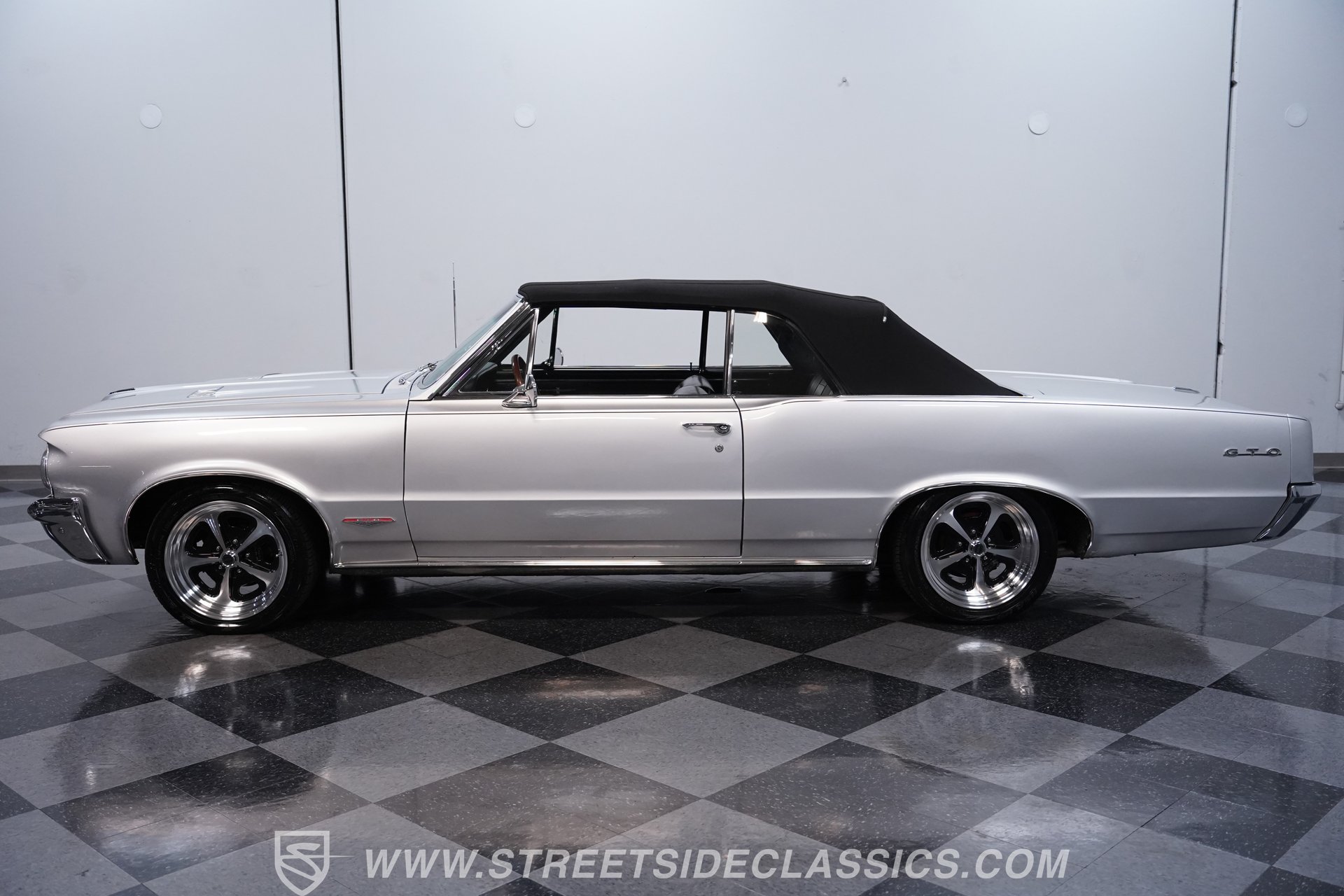
Grade what you find honestly, because the market does. A documented genuine GTO is worth GTO money. A LeMans badged, hooded and striped as a GTO — a clone or tribute — is worth LeMans money plus whatever the cosmetic work is worth to you personally, and not a cent of premium beyond that; the honest tribute in this guide's photographs, sold openly as a tribute, is exactly how such a car should change hands. The trap cars are the ones in between: the "GTO" with a LeMans VIN priced halfway, the 1964–65 car with a confident story and no PHS packet, the LeMans whose price quietly assumes you will not check. Check. It takes an afternoon and it is the cheapest money in this entire purchase.
Suspension, steering and the running gear
The A-body chassis is conventional — unequal-length arms and coils at the front, a four-link coil-sprung live axle at the back — with one convertible-specific twist: the open car flexes more, works its body mounts harder, and develops creaks and shudders a coupe with the same worn parts does not. Front suspension wear is the usual story: upper ball joints and control-arm bushings first, then idler arm and tie-rod ends, each adding vagueness until the car wanders and chews its front tyres' inner edges. A full front-end rebuild runs $900–1,600 fitted and aligned — not expensive, but cumulative, and a car that needs all of it plus brakes plus a top is a budget, not a bargain. The Saginaw steering box leaks from the pitman seal and wears its adjustment out; a quarter-turn of free play at the rim is tired, half a turn is a rebuild at $400–700. At the rear, the four-link's rubber bushings fail and let the axle steer the car under power — a subtle rear-end wiggle as you get on and off the throttle is bushings, $400–800 fitted, before it is anything more sinister.
Brakes deserve a hard look, because so many of these cars sit. A car that has stood with old fluid has corroded wheel cylinders and a master cylinder that bypasses internally: the pedal feels fine at the kerb and sinks slowly at a long traffic light. That sink is the test — hold firm pressure for thirty seconds and any fall condemns the master cylinder. Rubber hoses swell internally and act as one-way valves, giving you a dragging brake and a wheel that runs hot; touch each front hub after the test drive and compare. Pulling under braking is a hose, a seized cylinder or contaminated linings, in that order, and on a single-circuit 1964–66 car any of these is a safety item, not a diary note. And read the tyre date codes: any tyre is scrap at ten years old, whatever its tread. Sellers forget you can.
Interior, trim and electrics
The interior is where deferred maintenance hides in plain sight. The Morrokide vinyl trim is durable and almost everything soft is reproduced — seat covers, door panels, carpets, dash pads — so a tired interior is a known cost ($2,500–5,000 for a full quality retrim in materials and labour) rather than a mystery. What is not reproduced so easily is the convertible-specific hardware: the top well liner, the rear seat with its narrower cushion (the top mechanism steals the width), the quarter trim panels with their cylinder covers, and the parade boot and its snaps. Check those pieces specifically; a car can wear brand-new front seat covers over a rotten well liner and missing quarter panels, and the missing pieces are the expensive ones to source. Seat frames crack at the hinge on bucket cars and the foam collapses on the driver's side first — sit in both front seats and compare. A hacked radio opening and a bird's-nest of added wiring behind the dash are a warning about the electrics generally.
Electrically these are simple cars whose enemies are corrosion and previous owners. The fusible links and the bulkhead connector at the firewall corrode and give you intermittent everything; the top's power feed runs through a circuit breaker that weakens with age, giving you a top that stops halfway and resumes after a pause — a symptom owners misdiagnose as a dying pump motor for years. Power windows use motors that slow as their grease hardens; a window that needs a helping hand is a motor-and-regulator afternoon, $250–450 a door, and four slow windows on a LeMans Sport is a real line in the budget. Heater cores leak into the passenger footwell and get bypassed rather than replaced because the job is awkward — check that both hoses actually connect to the core at the firewall, because a bypassed core is a $600–1,000 dash-out job you have just inherited. Air conditioning is the factory Harrison system: budget for a full recommission with seals, drier and a charge ($800–1,500) on any car where it "just needs gas," because it never just needs gas.

How to inspect one
Inspect in this order and do not let the seller rearrange it. The sequence is built so the cheap, decisive checks — identity, structure, the top — come before the test drive flatters you into forgiving them.
- Paperwork before paintwork. Ask for the title, the PHS packet if one exists, and any build or restoration documentation, and compare the title VIN against the car before you look at anything else. No PHS on a car priced as anything special means you order it yourself or price the car as undocumented. Either is fine. Guessing is not.
- Decode the VIN and the cowl plate. VIN first three digits: 242 on a 1966–71 car means GTO series; anything else is not a GTO, whatever the badges say. Then the Fisher plate on the firewall: style number ending in 67 for the convertible, series digits agreeing with the VIN, paint and trim codes noted against the car's current colours. Photograph both plates.
- Read the engine. Clean the stamped pad at the front of the block, passenger side, and record the code; find the casting date at the rear by the distributor. On a six, confirm it is the OHC engine and, for a Sprint, that the Quadrajet, split exhaust manifold and Sprint air cleaner are actually present — a standard six in Sprint clothing is a known trick. On a 1968-or-later car sold as numbers-matching, find the partial VIN on the block and match it.
- Cold start, from outside the car. Have the engine started stone cold while you stand at the rear: blue smoke on start-up that clears is valve seals; smoke that persists under load is rings. Then stand at the front and listen for timing-chain slap, lifter rattle on the six, and the ticking of a cracked Sprint manifold. Watch the oil pressure gauge behaviour and the charging light.
- The door-lift and gap test. Open each door fully, lift at the rear edge, feel for rise and clunk; close it and read the gaps for taper. This is the rocker-and-structure test from the rust section, and on a convertible it outranks every other body check. A car that fails it needs structural money, and no shine elsewhere changes that.
- Cycle the top three times. Full down, full up, latches done and undone by you. Watch for crooked travel, pauses (weak circuit breaker or binding frame), groaning at one point (bent frame), and fluid smell or dampness around the rear quarters. Time it and compare sides. Then look in the top well and under the rear seat for water, oil and rust, in that order.
- Underneath, on a lift. Floors, rockers from below, frame kick-up and rear crossmember, body mounts, trunk floor over the rails, fuel and brake lines. Poke the pans with a blunt tool. A seller who refuses a lift inspection has answered the question the lift would have asked.
- The thirty-second brake test. Engine running, hold firm pedal pressure for thirty seconds. Any sink condemns the master cylinder. Then check each brake hose visually for cracking and each front drum or disc for scoring, and look behind the wheels for the dampness of a weeping cylinder.
- Test drive: the cowl-shake route. Find broken pavement. A sound convertible shudders slightly and recovers; a structurally tired one shakes the windshield frame visibly and rattles the doors in their apertures. Note steering free play at centre, brake pull, axle howl on the overrun, the rear-end wiggle of dead axle bushings as you lift off, and on an automatic, the ST-300's odd surge or a TH350's flare between gears. On a Sprint, use the revs — it should pull cleanly to the top of its range without the flat spot of a sick Quadrajet.
- Electrics sweep, everything on. Top switch, windows, lights, wipers, heater fan on all speeds, gauges, horn, radio. Confirm the heater hoses reach the core at the firewall — a looped hose means a bypassed, leaking core. Slow windows and a pausing top go on the list with prices attached, not as charms of old age.
- Water honesty check. You will rarely be allowed to hose a car down, so read the evidence instead: waterline stains in the trunk, tide marks on the well liner, silt in the spare-wheel well, musty carpet, fresh undercoating exactly where the trunk floor meets the rails. Convertible water history is written inside the car. Learn to read it there.
- The clone audit, last and calmly. List every GTO cue on the car — badges, hood, stripes, splitters, interior emblems — and set it against what the VIN and PHS say the car is. Then price what the documents prove, not what the cues suggest. If the documents prove GTO and the price is GTO, proceed happily. If they prove LeMans, you are buying a LeMans, and a good LeMans at a LeMans price is one of the better purchases in this whole market.
Values
The market block beneath this guide carries the live numbers — what is listed now and what recorded sales have achieved — and this section teaches you how to read them for this particular model, because a LeMans convertible's price is a judgement about three separate things that sellers like to blur together: which car it verifiably is, which engine verifiably powers it, and how much of the convertible-specific work is already done.
Identity is the biggest single lever, and it is not close. The spread between a documented genuine GTO convertible and a LeMans convertible in identical condition is the widest identity gap in the whole A-body market, and it pulls LeMans prices in both directions: honest LeMans cars get dragged upward by sellers pricing the silhouette, and correctly priced cars sit unsold next to clones priced as bargains against real GTOs. When you read the recorded sales, sort them in your head by verified identity before you compare anything else — a sale price achieved by a documented car tells you nothing about an undocumented one, and the asking prices of tribute cars tell you nothing at all except what their sellers hope. Within genuine LeMans money, documentation still pays: a car with its PHS packet, its original engine verified by the block stamp, and its colours as the data plate records them sells faster and stronger than the same car as a story, because the next buyer will run the same checks you are running now.
Engine is the second lever. The V8 cars carry the market, the 400-powered cars sit at the top of the LeMans range, and the small-V8 cruisers — the 326 and the two-barrel 350 — form the broad, liquid middle where most cars change hands. The Sprint six is the interesting exception: it has a devoted following that pays a real premium for a genuine, complete Sprint convertible, and it has an equally real discount waiting for a Sprint missing its Quadrajet, its manifold or its correct details, because those parts are hunts, not orders. Treat any six-cylinder car priced as if rarity alone were value with suspicion, and any complete Sprint priced as a base car as an opportunity.
Condition is the third lever, and on a convertible it is dominated by work you cannot see in photographs. The market consistently under-prices the cost of a top system, structural welding and a retrim, and over-prices fresh paint. Read the spread between project and driver accordingly: a mechanically sound, structurally honest car with a tired top and interior is usually the rational buy, because those are catalogue-and-specialist jobs with knowable costs, while a gleaming car with tapered door gaps is a restoration wearing a driver's price. Asking prices in this market run ahead of achieved prices by a margin that widens with every GTO badge a LeMans wears; the recorded sales below are the ground truth, and your negotiation should start from the comparable documented car, not from the seller's comparable imagined one.
Parts and ownership
Ownership is where the LeMans convertible quietly beats almost everything else in its class, because it sits at the centre of the best-supported ecosystem in the American classic world. The A-body is served by a deep bench of specialists — Ames Performance Engineering and Performance Years for Pontiac-correct parts, OPGI, YearOne and Classic Industries for the shared GM catalogue — and between them you can buy floor pans, quarter panels, trunk floors, weatherstrip kits, upholstery in the correct Morrokide patterns, top fabric and pads, suspension and brake components, and most brightwork, off the shelf. The Pontiac V8 is equally well served: rebuild kits, timing sets, water pumps with the correct divider plates and carburettor rebuild services are all catalogue items, and any competent machine shop in America has bored a Pontiac block before. The Turbo Hydra-Matic gearboxes are universal; the Muncie has its own specialist trade; even the ST-300, the orphan of the range, is rebuildable by any shop that handles period GM automatics, though its hard parts take longer to source than a TH350's.
The gaps in the net are specific. The OHC-6 is the thin ice: service items, gaskets and the cam belt are obtainable, but Sprint induction and exhaust hardware, cam components and cam housings are a used-parts market of swap meets and marque forums, and a Sprint purchase should include a hard look at what spares come with the car. Convertible-specific sheet metal beyond the standard panels — the top well, the header and windshield frame pressings, the structural braces — is not reproduced comprehensively, so a structurally rusty convertible cannot be fixed from a catalogue the way a rusty coupe largely can; this is the mechanical reason the inspection section weights structure so heavily. Top hydraulics, by contrast, are a solved problem: Hydro-E-Lectric and similar specialists supply pumps, cylinders and hoses outright. One-year-only trim — 1964 grilles, 1966 taillight louvres — is reproduced patchily, so brightwork condition belongs in your purchase maths.
Running one is straightforward. The V8 cars want regular oil changes, a cooling system kept in genuine health (divider-plate clearances set at any pump change) and the timing chain treated as the consumable it is. The six wants its belt inspected and its cam housing watched for weepage. All of them want to be driven: top hydraulics stay healthy in use and seize in storage, brakes corrode standing still, and the best maintenance decision you can make is a dry garage and a monthly run long enough to cycle the top twice. Join the marque world — the Pontiac-Oakland Club and the GTO Association both give you the parts leads, the PHS literacy and the honest price sense no guide can fully hand you.
Which one to buy
- The all-rounder: a 1968–69 LeMans convertible with the 350 V8 and automatic. The best-supported, best-trimmed, easiest-living car in the guide's range, with dual-circuit brakes, endless parts and a price that stays LeMans-shaped. Buy the most structurally honest one you can find and spend the change on the top.
- The driver's pick: a 1966–67 LeMans Sprint convertible with the four-speed. The most interesting driving experience Pontiac sells in this body — revs, balance and rarity — provided the Sprint hardware is complete and verified. Budget for the parts hunt as part of the hobby, because it is.
- The value buy: a Tempest Custom or plain Tempest convertible, 1964–67, with the 326. Same frame, same top, same view over the hood as the LeMans, plainer trim and a meaningfully lower price. If you want the experience rather than the badge, this is the smartest money in the whole family.
- The cruiser: a 1970–71 LeMans Sport convertible with the 400 and air conditioning. The plush end of the line — heavy, smooth, well-equipped and still priced as a LeMans. Verify the engine by its stamp, and confirm the air conditioning is complete rather than "needing gas."
- The honest tribute: a GTO-dressed LeMans, bought as a LeMans. If you love the look, a well-executed tribute at a LeMans price — like the silver 1964 car in this guide, sold openly as a tribute — is a legitimate, enjoyable purchase. The moment the price starts climbing toward GTO money on the strength of badges, walk away and let the documents cool off.
- The one to avoid: any convertible, any year, with tapered door gaps and a fresh underside coating. Structure is the one thing on this car that money fixes slowly and badly. There is always another LeMans convertible; there is no cheap way back from a folded one.
The overriding rule: buy the documents first, the structure second, the engine third and the badges never. A PHS-verified, structurally sound LeMans convertible with its own name on the quarters is worth more — to own, to drive and to sell — than any story ever told about one.
See the 8 LeMans Convertible cars currently listed.
For sale now
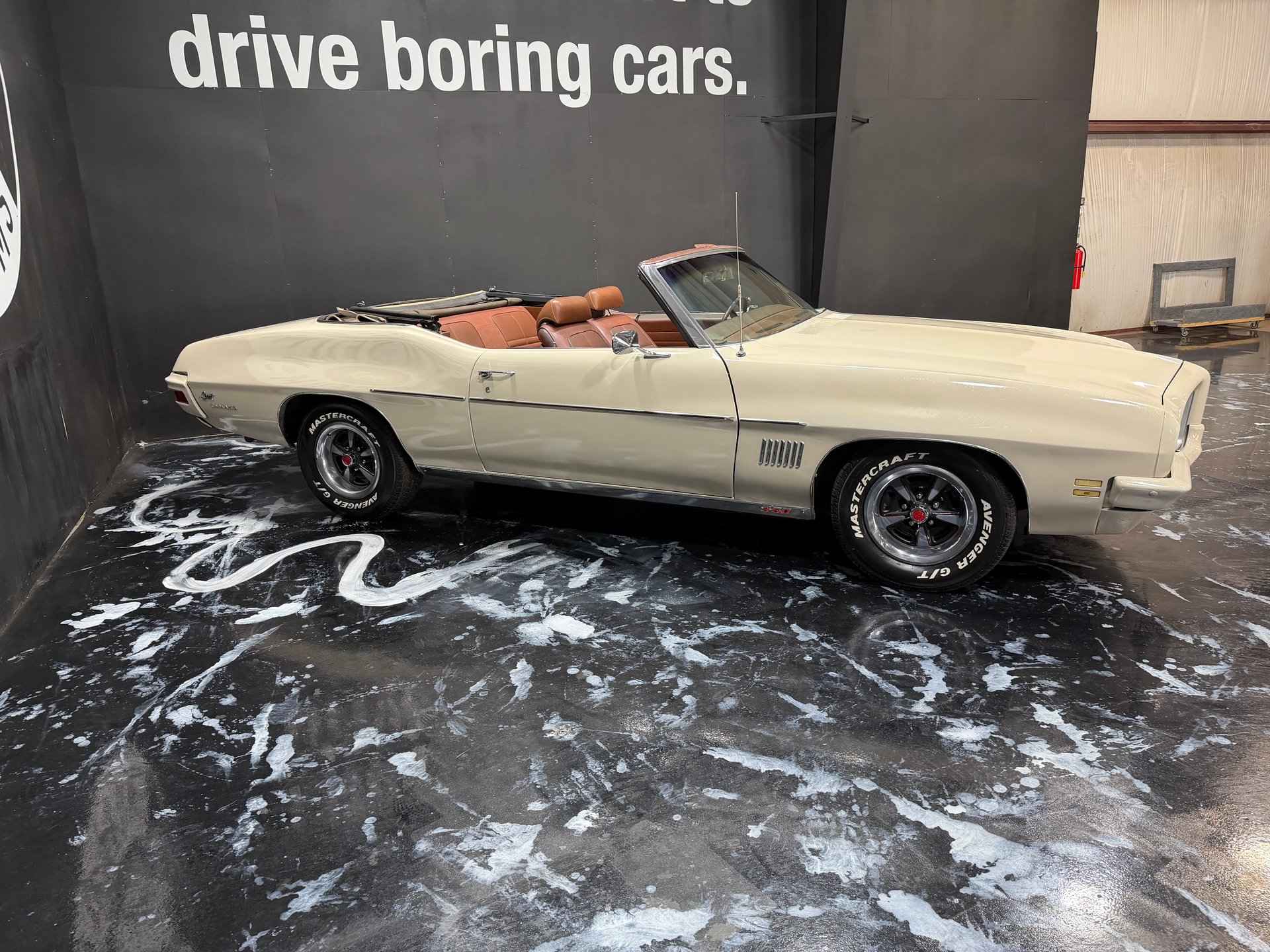 $24,995 · 38% below typical
Expand
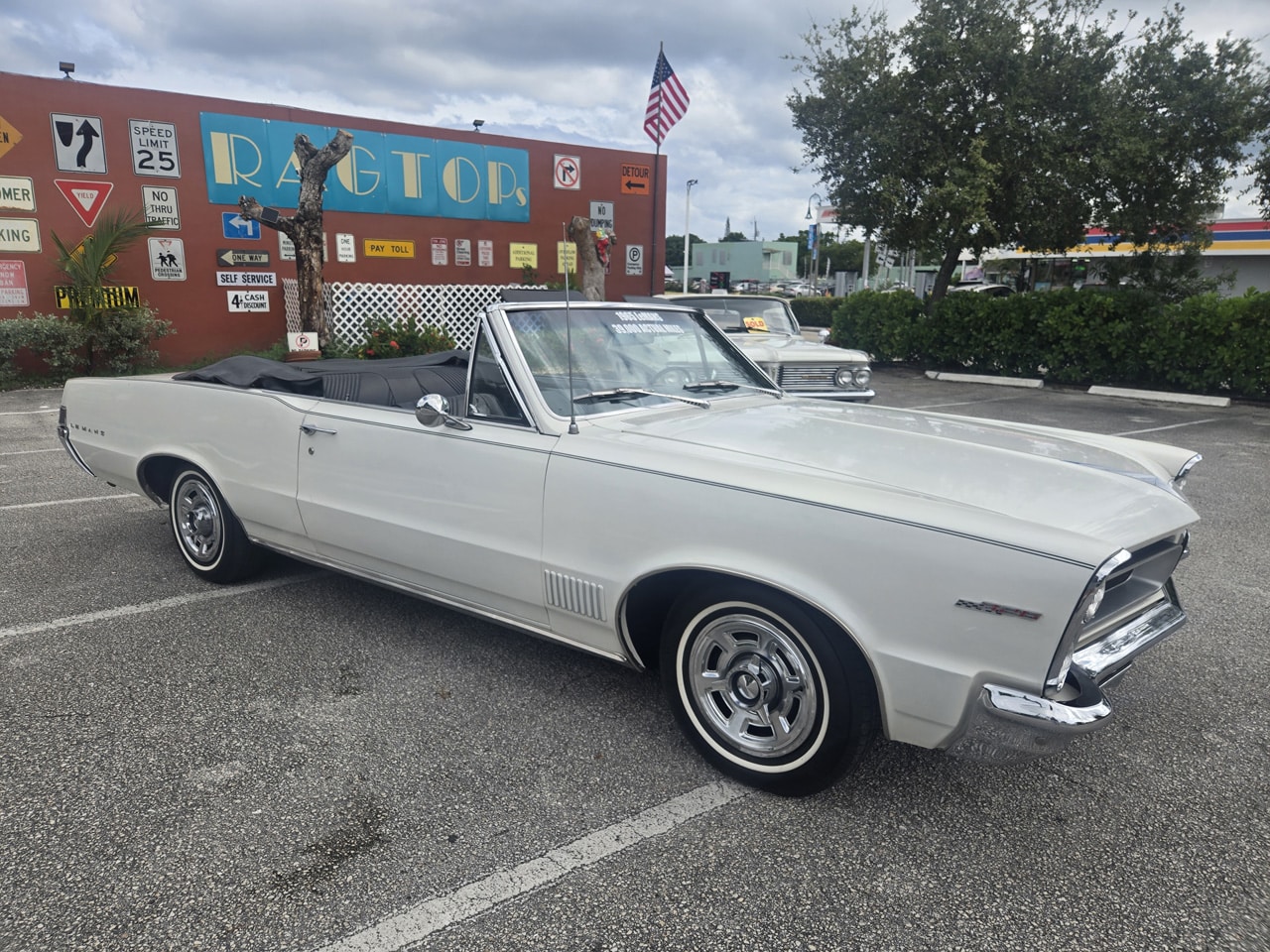 $32,800 · 19% below typical
Expand
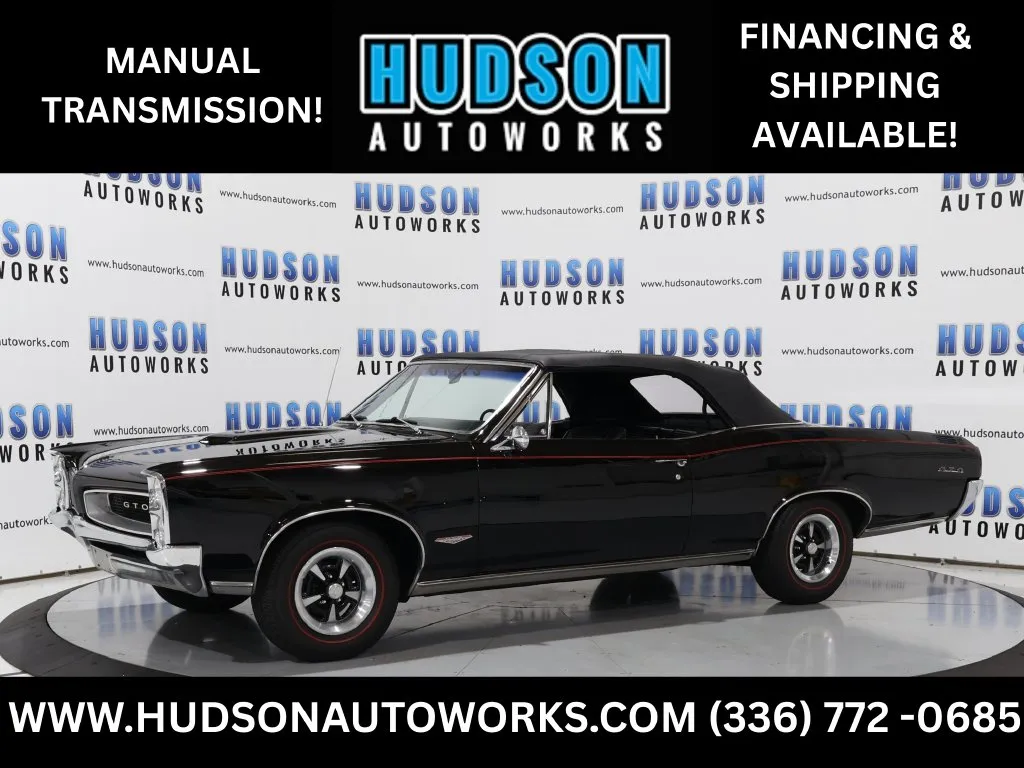 $51,693 · 28% above typical
Expand
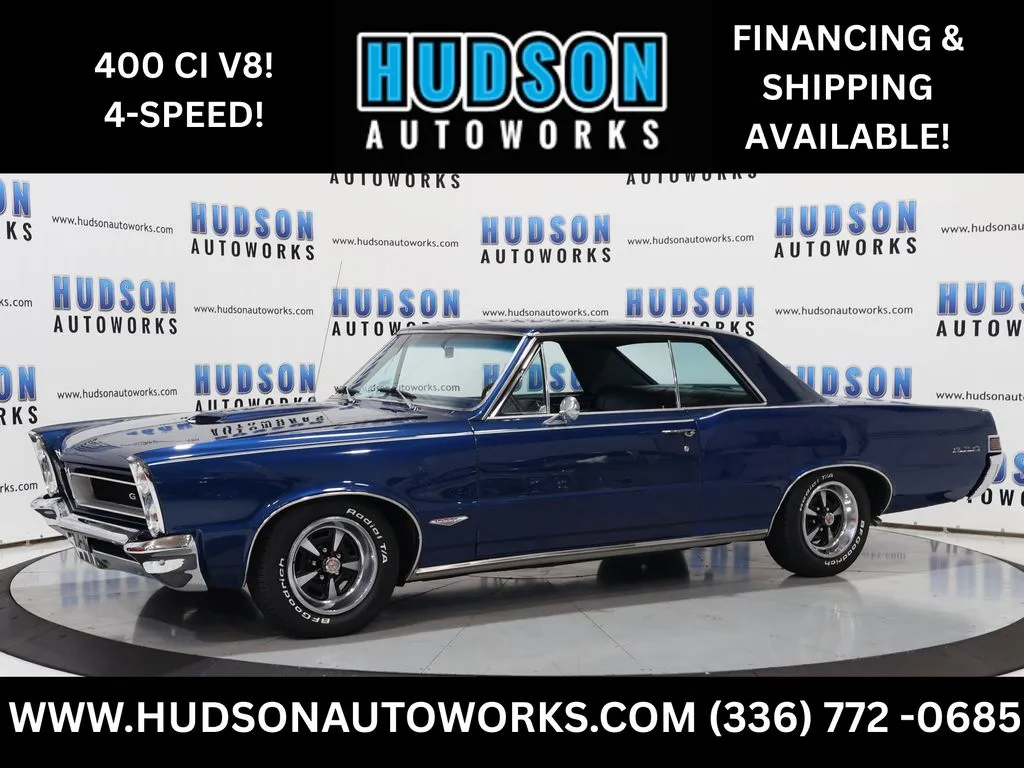 $39,693 · In line with typical
Expand
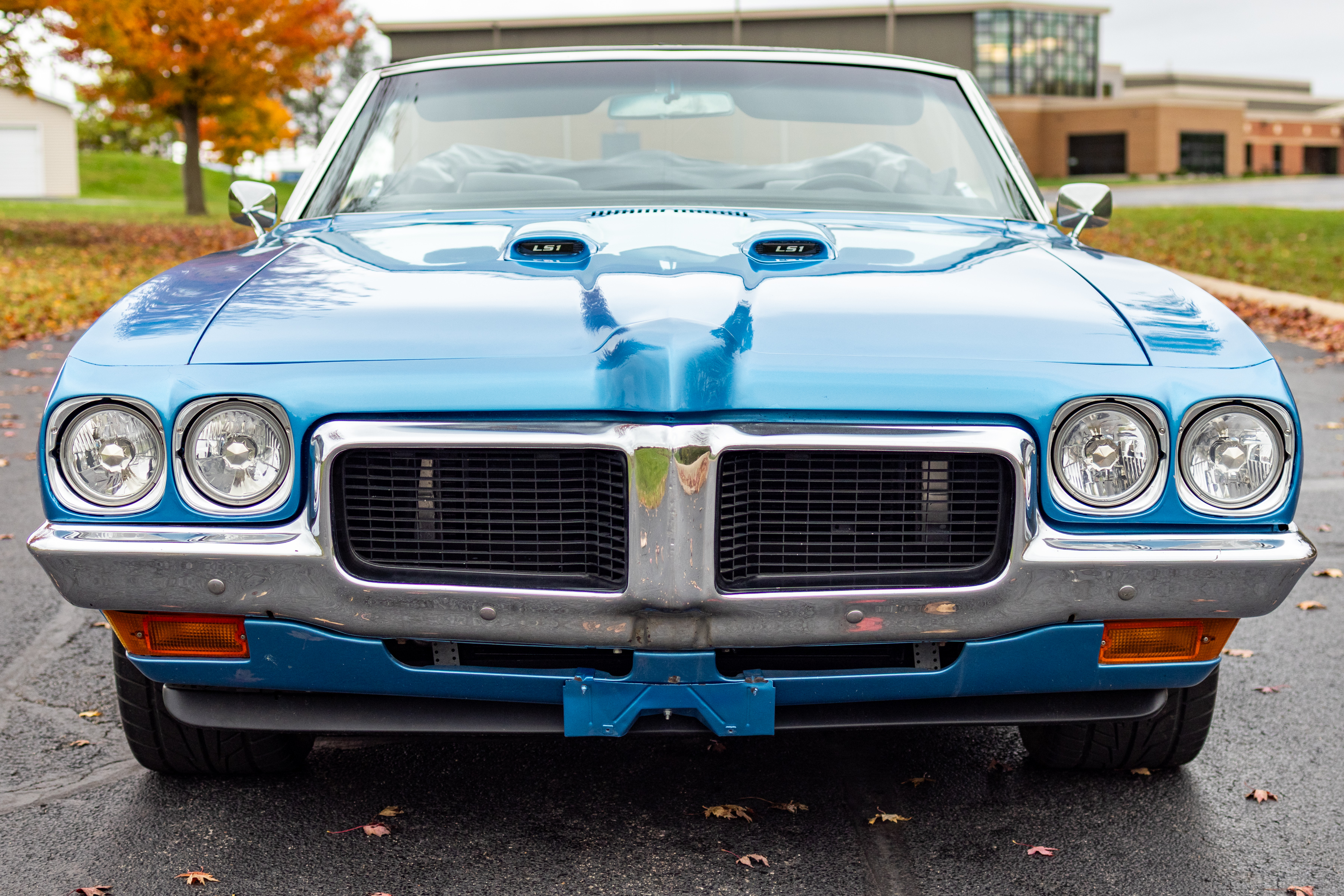 Current bid $2,500
Expand
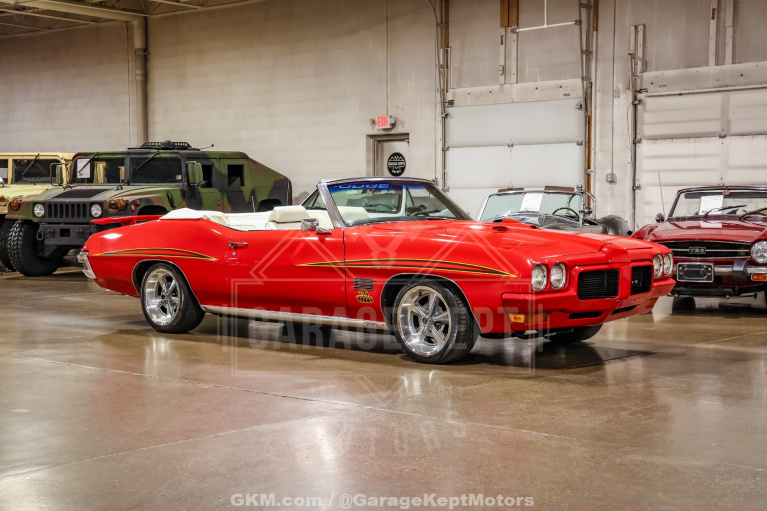 $84,900 · 111% above typical
Expand
What they sell for: LeMans Convertible sale prices.