
Porsche 993 911 Coupe buyer's guide
Porsche 993 911 Coupe -- the model's own buyer's guide: variants, values and what to check.
Years listed: 1996-2012 · Series: 993
# Porsche 911 Carrera 4S (993 and 996) — Buyer's Guide
Overview and history
The Carrera 4S is the wide-body, all-wheel-drive Carrera that borrows its stance from the Turbo and its engine from the ordinary Carrera. That sentence describes two different cars, and you need to know which one you are standing in front of before anything else in this guide makes sense. Porsche first used the recipe on the 993 generation, built for the 1996 to 1998 model years: the Turbo's wide rear body shell, Turbo brakes and lowered suspension, all-wheel drive, and the naturally aspirated 3.6-litre air-cooled flat six. Porsche then used the same recipe again on the facelifted 996 generation, built from 2002 to 2005: Turbo-width body, Turbo brakes and suspension, all-wheel drive, and the naturally aspirated 3.6-litre water-cooled flat six. The name, the silhouette and the idea carry over. Almost nothing mechanical does.
The 993 car arrives at the end of a line. It is the last all-wheel-drive 911 with an air-cooled engine, and it is built in small numbers — 6,948 coupes in total — at a moment when Porsche is still a low-volume company finishing cars largely by hand. The 996 car arrives from a different Porsche: a higher-volume, water-cooled, parts-sharing company, and the 4S is built in far greater numbers as a regular catalogue model, coupe first and then cabriolet. Both are genuine factory wide-body cars, not conversions, and both are defined by the same deliberate omission: there is no turbocharger. The wide arches promise Turbo performance the engine never attempts to deliver, and the cars are better understood — and better bought — once you accept them as fast, planted, all-weather Carreras rather than cut-price Turbos.
On this site the pool behind this guide is small and it shows both generations side by side: five recorded cars, three of them 993s from 1997 and 1998 and two of them 996s from 2003, with four offered for sale and one recorded as sold, spread across Ohio, New York, Connecticut and Iowa. That mix is exactly the trap this guide exists to disarm. A 1997 car and a 2003 car can share a name, a badge and a listing category while sharing almost no parts, no failure modes and no market logic. Read the sections that follow with your car's generation fixed in mind, because the inspection that saves you on one generation barely scratches the other.
What both generations share is the driving proposition. The all-wheel-drive system is strongly rear-biased, so the car steers and balances like a 911 should, but it puts power down out of wet junctions and on cold, greasy roads in a way a rear-drive Carrera cannot match. Neither car is the sharpest 911 of its generation, but as a road car to use in all seasons, the 4S formula is one of the most complete Porsche has built.

The models
Porsche builds the 993 Carrera 4S for the 1996, 1997 and 1998 model years, and only ever as a coupe with a six-speed manual gearbox. There is no factory 993 4S cabriolet, no Targa and no Tiptronic version: on the 993, Tiptronic is reserved for the rear-wheel-drive cars, so an advertised 993 Carrera 4S with an automatic gearbox is an identity problem to solve before it is anything else. Every 993 4S uses the Varioram version of the 3.6-litre M64 engine; the earlier 272 hp non-Varioram engine is never fitted to this model, which removes one whole branch of 993 shopping from your search. The car sits lower than a standard Carrera, rides on 18-inch wheels in the Turbo style, and stops with the Turbo's brakes — four-piston calipers in red over large cross-drilled discs. Full leather trim is standard, which is why most 993 4S cabins feel a grade richer than a contemporary Carrera's.
The standard 993 4S keeps the ordinary Carrera's electrically extending rear spoiler, which rises at speed and drops back flush at walking pace. The fixed Turbo rear wing is not part of the package. What many buyers actually want, and what the two 1997 Ohio cars in this site's pool both claim, is the factory Aerokit: front and rear spoilers that give the car the full Turbo silhouette. Aerokit parts are also sold over the counter and fitted to hundreds of cars after delivery, so the claim is worth money only when it is documented. The proof lives on the option sticker under the front luggage-compartment lid and duplicated in the service book: look for the Aerokit codes, XAA for the aerokit package and XD1 and XD2 for the Aerokit front and rear spoilers, and match them against the car's build record. Genuine Porsche Aerokit panels in fibreglass with correct part numbers support the story; thin aftermarket copies with no markings end it.
The 996 Carrera 4S belongs only to the facelifted second phase of the 996, launched for 2002. There is no early, narrow-headlamp-era 4S. The coupe runs from 2002 to 2005 and the cabriolet joins it from 2003 to 2005, both with a choice of six-speed manual or five-speed Tiptronic S automatic. The body is the Turbo shell again, roughly 60 mm wider across the rear than a standard Carrera, but the detailing differs from the Turbo in ways that let you identify a real car at a glance: the 4S has no air-intake scoops cut into its rear wings, it keeps a retractable rear spoiler instead of the Turbo's fixed wing, and it carries a full-width red reflector strip between the rear lamps that no other 996.2 Carrera has. That reflector strip, the wide steel rear quarters and the Turbo front bumper are the car's identity. Underneath, it uses Turbo suspension and Turbo brakes, with ceramic composite brakes — yellow calipers — as a rare and expensive option to identify early, because replacement ceramic discs cost a fortune as a parts job and change what a worn brake set does to a car's value.
Two siblings cause most of the confusion in classified adverts. The Carrera S — 2S in 993 shorthand — is the rear-wheel-drive wide-body car: same shell, same looks, no front drive. The narrow-body Carrera 4 is the all-wheel-drive car without the wide shell. A seller who calls a car a 4S owes you the wide steel body, the all-wheel drive and the paperwork to match, and the sections below show you how to check all three.
| Model | Years | Engine | Output | Built | Character |
|---|---|---|---|---|---|
| 993 Carrera 4S coupe | 1996–1998 | 3.6-litre M64 air-cooled flat six, Varioram | 285 PS (282 hp US) | 6,948 | The original: manual only, Turbo body and brakes, air-cooled |
| 993 Carrera 4S with X51 power kit | 1996–1998 | 3.8-litre M64 air-cooled flat six | 300 PS | Small number of the 6,948 | Rare factory power kit car; value rests entirely on documentation |
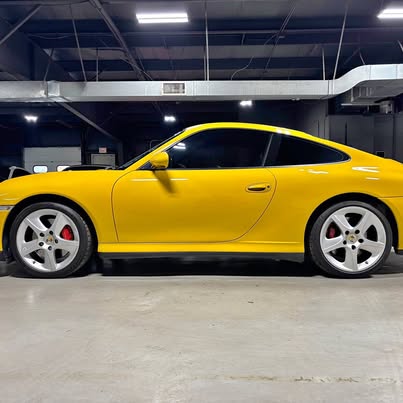
| 996 Carrera 4S coupe | 2002–2005 | 3.6-litre M96 water-cooled flat six | 320 PS (315 hp) | Built in far larger numbers than the 993 | Facelift wide-body car, manual or Tiptronic S |
| 996 Carrera 4S cabriolet | 2003–2005 | 3.6-litre M96 water-cooled flat six | 320 PS (315 hp) | Built in far larger numbers than the 993 | Open version; check drains, hood and rear-seat-area water history |
Engines and gearboxes
The 993 M64: the last air-cooled flat six
The M64 in the Carrera 4S is a 3,598 cc air-cooled flat six with a dry sump, Bosch Motronic engine management, twin-plug cylinder heads and hydraulic tappets, so there is no valve-clearance adjustment in the service schedule. Because every 4S is a Varioram car, you always get the later induction system: a variable-length intake manifold whose resonance flaps and changeover runners keep the torque curve full in the middle of the rev range instead of trading everything for top-end power. Output is 285 PS in European trim, rated 282 hp in the United States, with the engine pulling cleanly from low revs and doing its best work between 4,000 rpm and the red line. It is a strong, mature engine — the final development of a line Porsche had been refining for three decades — and in a well-kept car it feels tight, dry and eager in a way no water-cooled 911 quite repeats.
Understand how it cools and lubricates itself and most of its behaviour stops being mysterious. There is no radiator: engine oil is the main cooling medium as well as the lubricant, circulated in large volume through a thermostat to a cooler in the front of the car. That is why the oil level is read on the dash gauge and the dipstick only with the engine warm, idling and on level ground, and why a seller who checks it cold and panics about an empty reading is telling you about himself, not the car. It is also why short journeys are hard on these engines — the full oil volume takes many miles to reach working temperature, and a car used for repeated five-mile trips lives its life with cold, fuel-diluted oil.
Drive one properly and note three things. First, the soundtrack: a healthy M64 is busy but even, with a light tappet murmur that settles as the hydraulic lifters fill. Second, the oil pressure: strong under load, stable at a hot idle, roughly a bar per thousand revs as a working rule once warm. Third, the Varioram changeover: delivery should stay seamless, with no flat spot or flap rattle as the intake changes configuration. A car that stumbles there usually has a vacuum or flap-actuation fault, not internal wear — the vacuum reservoir and small rubber distribution pieces age and collapse, and the fix is a cheap parts job once diagnosed properly.
The rare exception is the X51 factory power kit, the Werksleistungssteigerung: a 3.8-litre conversion with larger pistons and cylinders and revised camshafts, rated at 300 PS. X51 cars exist in the 4S range and they are the most valuable variant of the model, but the kit is internal and invisible, so the option sticker, the build sheet and the engine number are the whole argument. Never pay an X51 premium on a seller's word.
The 996 M96: water cooling changes everything
The 996 4S uses the M96 flat six in its 3,596 cc form: water-cooled, four valves per cylinder, VarioCam variable valve timing, and rated at 320 PS (315 hp) with 273 lb-ft of torque. It is a thoroughly modern engine next to the M64 — quieter at idle, cleaner, stronger everywhere and far less characterful in sound until you fit a sports exhaust. It revs to around 7,000 rpm, pulls hard from 4,000 rpm, and in ordinary use gives almost nothing away to the Turbo in the first two gears. It is also an engine with two specific, well-documented internal weaknesses — the intermediate shaft bearing and cylinder bore scoring — that dominate 996 buying in a way nothing dominates 993 buying. Both are covered in the problem areas section, and both are why the paperwork and a specialist inspection matter more on this generation than the test drive does: an M96 in the early stages of either failure can still feel superb from the driver's seat.
Cooling is the other discipline this engine teaches you. The radiators sit low in the front bumper corners, where they collect leaves and debris and rot from the outside in; the air-conditioning condensers sit directly in front of them and share the neglect, and the coolant expansion tank yellows and cracks with age. A 996 4S with a temperature gauge that creeps in traffic, a weeping tank or a damp front corner is showing you deferred maintenance you will shortly pay for. The air-oil separator, the coil packs that crack with heat and misfire in damp weather, and the water pump whose bearing play you check with the belt off, complete the routine M96 service items a good history file should show replaced on condition.
The 996 also offers the factory X51 power kit on this engine, raising output to a claimed 345 PS. As with the 993 kit, it is documented or it did not happen: build sheet and option sticker first, premium second.
Gearboxes: six-speed manual and Tiptronic
Every 993 4S uses the G50-family six-speed manual gearbox, and it is one of the car's great components: a precise, mechanical shift with a weighty clutch, closely stacked ratios and a reputation for taking high mileages in stride if the oil is changed and the linkage bushes are renewed when they tire. Judge it cold and hot. The shift should engage second gear cleanly on the first drive of the day; a balky cold second gear that improves as the box warms is the classic early warning of synchromesh wear, and a box that crunches into second or third when hot is already there. Clutch life depends on use, but budget for a clutch job at $1,800–2,800 for the replacement job including the dual-mass flywheel check, because the flywheel is a wear item on these cars and fitting a new clutch against a tired flywheel wastes the labour. The rear-wheel-drive 993 Carreras offer a four-speed Tiptronic automatic; the 4S never does, which is why the gearbox is an identity check on this generation and not merely a preference.
On the 996, the six-speed manual is again the enthusiast choice and again a strong gearbox, with a lighter, quicker shift than the 993's. The five-speed Tiptronic S, by contrast, is a genuine option on this generation and a respectable one: it has steering-wheel shift buttons, adapts its shift pattern to your driving, and suits the 4S's all-weather touring brief better than purists admit. Its weaknesses are neglect and heat. Porsche's period line about sealed-for-life transmission fluid has not aged well; a Tiptronic car with no record of a fluid and filter change is a car whose valve body and torque converter have been living on borrowed time, and a fluid service job at $600–900 is cheap insurance you should factor into the price. Test it for flare between gears under load, for a delayed engagement of drive or reverse from rest, and for any thump on the downshift to first as you roll to a stop — each points at fluid condition or valve-body wear, and none of them is fixed by hoping.
On both generations, remember the gearbox also carries drive forwards: the all-wheel-drive take-off lives at the front of the transmission, and the long drive shaft runs up the centre tunnel to the front differential. Gearbox oil leaks, a worn centre bearing or tired front CV boots belong in the same inspection conversation as the shift quality itself.
The all-wheel-drive system: viscous coupling on both generations
Both 4S generations drive their front wheels through a viscous coupling, and the principle is identical even though the hardware is repackaged. A sealed unit filled with silicone fluid contains interleaved plates connected alternately to the front and rear drivelines. When all four wheels turn at the same speed, the fluid transmits only a small share of torque — Porsche quotes at least 5 per cent of drive reaching the front axle in normal conditions, so the car feels like a rear-drive 911 almost all of the time. When the rear wheels begin to turn faster than the fronts, the plates shear the fluid, the fluid heats and thickens, and the coupling progressively locks, sending up to roughly 40 per cent of torque forwards. There is no switch, no mode button and nothing for you to operate: the response is purely mechanical and proportional to slip.
Around that coupling, each generation adds electronic help through the brakes. The 993 uses ABD, automatic brake differential, which borrows the ABS hardware to brake a spinning wheel and push torque across to the wheel with grip; the 996 adds PSM stability management on top. The whole 993 system weighs around 50 kg — half the weight of the 964 system it replaced — and its simplicity is why it gives so little trouble.
What does go wrong is wear and abuse rather than design. A viscous coupling worked hard for years — mismatched tyres front to rear are the classic cause, because a permanent speed difference between axles makes the coupling work constantly — can lose its progressive action in either direction: too loose, and the front axle never helps; too tight, and the car binds, scrubs and hops in slow full-lock turns. Tyre discipline is therefore an inspection item, not a detail: all four tyres should be the same make and model, with tread depths close enough that the rolling circumferences match, and any car wearing a mixed set of old tyres is telling you its previous owner either did not know or did not care. The practical tests are simple. On a lift, all four wheels should turn with drive engaged. In a car park at full lock, the car should roll smoothly without shuddering through the steering. On a wet road, a full-throttle launch should feel like the car digs in and goes, not like a rear-drive car scrabbling for grip. Front differential oil leaks, perished CV boots and a droning front wheel bearing complete the short list of front-axle findings you are likely to meet.

Problem areas
Engine internals: valve guides and oil on the 993, IMS bearing and bore score on the 996
Start with the myth that costs buyers the most sleep on the 993: a puff of blue smoke when the engine starts after standing is normal flat-six behaviour, not a death rattle. Oil seeps past the piston rings into the lower cylinders of a horizontally opposed engine while it sits, and it burns off in the first seconds of running. What condemns an M64 is smoke that continues, and the test that separates the causes is the overrun test described in the inspection section: run the car up to around 6,000 rpm in third gear, lift off and let it coast down on a closed throttle to about 2,000 rpm, then open the throttle hard. A cloud of blue smoke at that moment means oil is being drawn down the valve guides under high manifold vacuum — worn valve guides, the M64's best-known internal wear item. The bronze guides run hot in an air-cooled head, they wear oval, the stem seals can no longer control the oil film, and consumption climbs. Porsche's own working threshold treats consumption beyond roughly a quart in 600 miles as excessive; a healthy engine uses noticeably less, and any seller's claim about oil use should be backed by a consumption record, not a shrug. Smoke under sustained hard acceleration instead points the other way, to rings and bores. Either way, the proper diagnosis is compression and leak-down figures plus oil-fouled plugs, and the proper fix is a top-end rebuild job at $8,000–15,000 for the repair, with a full engine rebuild costing substantially more — which is why a documented top-end rebuild in a 993's history is a selling point, not a black mark.
The second 993-specific trap is the secondary air injection system on US-market OBD II cars — which means every US 4S, since the model starts with the 1996 year. At cold start an air pump feeds fresh air into the exhaust ports to clean up emissions, through small passages drilled in the cylinder heads. Those passages coke up with carbon, worst on cars that use oil and cars fed a diet of short trips, until the system can no longer flow enough air and the check-engine light sets codes for insufficient secondary air flow. The car drives perfectly; it simply will not pass an emissions inspection. Cleaning the ports properly means engine-out work and, in a large share of cases, the heads come off — at which point a sensible owner does the valve guides at the same time. This is why so many 993 top-end rebuilds happen at mileages that look low for internal wear, and why a US car with the light on is not a bargain until you know which version of the job it needs.
Two smaller M64 items belong in every inspection. The twin distributor is driven by an internal rubber belt linking the two distributor shafts, and the belt ages, cracks and can snap, taking the timing of one bank of plugs with it; Porsche's vented distributor cap update exists because ozone build-up inside the caps accelerates the belt's decay. If the belt's history is unknown, a replacement job at $300–600 for the belt and labour is among the cheapest insurance on the car. And the DME relay, the little relay that powers the engine management and fuel pump, fails with age and heat and stops the car dead or prevents it starting at all; the relay itself costs under $50 as a part, every experienced owner carries a spare in the glovebox, and a seller whose car has cranked without starting should be handed this diagnosis for free before he discounts the car for a phantom ECU failure.
The 996's M96 has no valve-guide story and no distributor. It has the intermediate shaft bearing instead. The intermediate shaft runs along the engine driving the camshaft chains, and its rear bearing is a sealed ball bearing that lives in engine oil splash but carries its own grease from the factory. Over time the seals let the grease out and hot oil in, the bearing wears, and if it collapses the camshaft timing is lost and the engine is usually destroyed — valves meet pistons and a running engine becomes a core. The 3.6-litre cars in the 4S use the single-row version of the bearing, the type with the weakest record. There is no test that proves a bearing is healthy: what you can do is cut open the oil filter at inspection and look for metallic debris and plastic seal fragments, check the magnetic drain plug, listen for any rattle at the rear of the engine, and above all read the history for a documented bearing retrofit, ideally done with the clutch out, since the gearbox comes off for access either way. A combined IMS retrofit, clutch and rear main seal job runs $2,500–4,000 for the work at a specialist, and a car with that invoice in the file has had the single biggest 996 risk retired. A car without it has not necessarily got a bad bearing — most bearings never fail — but it carries an open risk you should price, not ignore.
Bore scoring is the M96's second internal failure and the crueller one, because it develops gradually and hides behind plausible symptoms. The Lokasil cylinder liners can score, most often on the second bank — cylinders four to six — helped by cold-start fuel wash, long oil intervals and local overheating. A scoring engine ticks or taps rhythmically from cold on one side, uses oil, and leaves one exhaust tip noticeably sootier than the other because that bank is burning oil. Each symptom alone has innocent explanations; together they demand a borescope inspection through the spark-plug holes before money moves, because scoring is not a repair, it is an engine rebuild job at $15,000–25,000 and up for the rebuild with new liners or replacement cylinders. The borescope is the distinguishing test and it is not optional on a 3.6 with any of the symptoms. Finally, the cheap impostor: the air-oil separator. Its diaphragm splits with age, the intake starts drawing liquid oil from the crankcase, and the car produces an alarming cloud of smoke on start-up, a hunting idle and a whistling or excessive suction at the oil filler cap. An AOS replacement job at $700–1,200 cures it completely. Sellers have discounted cars for bore score that needed an AOS, and buyers have paid full price for cars whose AOS story masked scored bores — the borescope and the filler-cap vacuum test together separate the two, and you should insist on both rather than accepting either diagnosis on trust.
Oil leaks round out both engines. On the 993, the lower valve covers are composite and warp with heat cycles until the gaskets weep oil onto the exhaust, the timing chain housings seep, and crankshaft seals mist oil that the undertray then hides from casual view — a car inspected only from above is a car half inspected. On the 996, oil at the bellhousing is either the rear main seal or the IMS cover seal, and the distinction matters because the first is a seal and the second sits next to the bearing you may want to replace anyway; a specialist with the gearbox off settles it, and the combined job described above is the economical answer to both.
Suspension, steering and brakes: wishbone bushes, dampers and Turbo hardware
Both generations ride on suspension that is now old enough for every rubber component to be a wear item, and both hide the wear the same way: the car still feels impressive on a test drive while its geometry quietly wanders. On the 993, start at the front wishbones. Their rubber bushes age, soften and begin to separate from the arm, and the symptoms are vague on-centre steering, a knock over sharp bumps, tramlining and front tyres wearing their inner shoulders. The arms themselves are sound; the fix ranges from replacement bushes to complete new wishbones, and a front wishbone replacement job at $900–1,800 for the pair including a full alignment is representative. Do not skip the alignment: the 993's multi-link rear suspension — Porsche's LSA design, with its kinematic toe control — is sensitive to settings, and a car that has been aligned casually can feel nervous and chew rear tyres while every component is healthy.
Dampers are the second act of the same story. The original dampers on a 993 are finished by now unless already replaced; worn units show as float over crests, a crashy ride on broken surfaces, and cupped tyre wear. Quality replacements are readily available, and a set of four dampers fitted with an alignment as a job at $2,000–3,500 transforms these cars — factor it in if the file shows no suspension work. Check the hydraulic engine mounts too, which sag with age and subtly change the rear geometry and gearshift feel; a mount replacement job is a few hundred dollars in parts and pays for itself in how the car drives. Steering racks weep and rear links take play — none of it dramatic, all of it cumulative, all of it visible on a lift.
The 996 wears its front suspension differently. The lower control arms — the coffin arms, named for their shape — carry bushes and a ball joint that wear together, announcing themselves with a creak over speed bumps at parking speed and a knock on lock; the tuning-fork arms and anti-roll-bar drop links add their own rattles. A front-end refresh job replacing the worn arms and links at $1,500–2,500 in parts and labour, again finished with a proper alignment, is close to a rite of passage for these cars, and a file showing it done is worth money. Dampers tire the same way as the 993's, and the all-wheel-drive hardware adds front driveshaft CV boots that split and fling grease, and front wheel bearings that drone.
The brakes are Turbo hardware on both cars, which means superb stopping power and Turbo-sized bills. Discs are large, drilled and expensive; pads wear sensors, calipers in red paint that fades and chips, and on the 996 the optional ceramic brakes with yellow calipers whose discs are a major parts cost if scored or worn — check a ceramic-equipped car's disc condition with a specialist before you buy, because a brake job on that option can exceed the cost of the IMS and clutch work combined. On steel brakes, a full set of discs and pads fitted as a job at $1,800–2,800 is the honest planning figure for either generation. Pedal feel tells you plenty: a long or spongy pedal on a car with old fluid is usually just old fluid — brake fluid is hygroscopic and a two-year change interval applies to both cars — but a pedal that sinks at a standstill is a master cylinder conversation, and seized rear caliper pistons from winter salt are common on cars used as the all-weather tool the badge promises.
Rust and body: a galvanised shell still corrodes
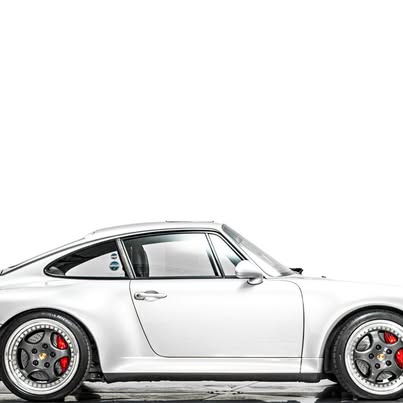
The 993's shell is galvanised and genuinely resistant to structural rot, which is why the rust it does get surprises people. Its signature corrosion is around the window apertures, front and rear. The screen seals trap water against the frame, any previous windscreen replacement that cut through the paint with a removal tool starts the process, and bubbles appear at the corners of the aperture — worst low on the front screen and along the rear screen frame. It is cosmetic until it is not: left alone it perforates the frame, and the proper repair is glass out, metal cut back and welded, and paint, a job at $1,500–3,000 per aperture done correctly. Budget paint-depth readings around both screens on any car, run a fingertip along the seal edges for the gritty lift of bubbling under paint, and treat a freshly painted screen surround with no invoice as a question, not an answer.
Beyond the screens, check the 993's front luggage-compartment floor and battery area for old acid and water damage, the door check-strap mounts — the straps tear their mountings out of the door frame with a distinctive crack on opening, a small welding job if caught — the jacking points and sill ends under their covers, the rear bumper support brackets that corrode quietly behind the bumper, and the exhaust system and its heat shields, which live a hard life inches from a hot air-cooled engine. The underside engine tray hides the bottom of the engine and the rear chassis from view, so the lift inspection in the checklist matters more than any amount of topside polishing. Accident damage matters more than rust on most cars: the wide rear quarters are part of the shell, and a replaced quarter or a boot floor full of filler destroys the thing you are paying the premium for. Paint-meter the rear quarters against the doors and roof, and look inside the rear arches for the factory spot welds and underseal pattern.
The 996 is a generation newer and rust is rarely its story — what you hunt instead is hidden accident repair, crushed jacking points and sill damage from careless lifting, corroded brake pipes on cars from salted-road states, and seized, rusty exhaust hardware that turns every exhaust job into a studs-and-drilling job. Its front radiator pods trap wet leaves against the condensers and radiators, and the corrosion there is real even when the body is perfect. On cabriolets, add the hood frame, the rear window in the hood, and evidence of water in the rear footwells from blocked drainage — which leads directly to the electrics below.
Electrics, immobiliser and alarms
The 993's electrics are simple in design and old in fact. The immobiliser and alarm system is the first hurdle: US cars use a remote fob and an immobiliser that must be disarmed before the car will crank, and the failure modes are mundane — a flat fob battery, a fob that has lost synchronisation after a battery change, corroded contacts in the fob, or an immobiliser control unit with dry solder joints. The symptom is a car that unlocks, lights its dash and then refuses to turn over, and the diagnosis starts with the spare fob and a fresh battery, not with a starter motor. Buy a car with both fobs working and treat a single tired fob as a small but real cost and a security chore. The DME relay described earlier belongs to this section too. Beyond those, the list is age, not design: window regulator mechanisms tire, the extending rear spoiler's motor and microswitches fail and light the spoiler warning lamp — on Aerokit cars the mechanism is deleted with the fixed wing, so a working spoiler light test still tells you about the car's electrical health — the climate control unit's flaps and fans misbehave, the fan final-stage resistor pack fails and takes the cabin fan speeds with it, and the engine-bay wiring on early-production 993s was subject to a factory recall for insulation breakdown that any car's history should show completed. Air conditioning deserves its own sentence on both generations: assume it needs work until it blows cold in front of you, because evaporators, condensers and seals age out, and a re-gas that lasts a fortnight is the oldest trick in the classifieds.
The 996's electrics are more capable and more interconnected, and its signature fault is water. The alarm and immobiliser control unit lives under a front seat, precisely where water from blocked body drains, a leaking screen or a cabriolet's drainage faults collects; a wet unit produces a car that locks itself, refuses its fob, sets its alarm off at random or will not crank, and the bill runs from drying and connector cleaning to a replacement unit and key reprogramming job at $800–1,500. Check under the seats and in the footwells for damp and tide marks on every 996. The ignition switch is the second classic: the cheap electrical switch behind the lock wears and produces a festival of unrelated gremlins — lights, wipers, blower and ignition behaving as if possessed — and a replacement switch job at $150–300 cures all of them. Key fobs wear their buttons through, and the transponder pill inside the key head is what the immobiliser actually reads, so a car with one key is one lost key away from a dealer visit; window regulators stretch their cables and drop glass. None of it is fatal. All of it is negotiable, provided you find it first.
How to inspect one
Work in this order, and do not let a warm welcome, a detailed advert or a shiny detail rush you past the early steps — on these cars the paperwork and the cold engine tell you more than the drive does.
- Fix the generation and the identity first. A 1996 to 1998 car is a 993, air-cooled and manual only; a 2002 to 2005 car is a 996, water-cooled, manual or Tiptronic. Read the VIN, confirm the year and model it decodes to, and on a 996 confirm the car is the facelift generation the 4S only ever came as.
- Read the option sticker under the front luggage-compartment lid and the matching copy in the service book. You are looking for the model's equipment as built, Aerokit codes XAA or XD1 and XD2 where an Aerokit is claimed, and X51 where a power kit is claimed. A missing sticker is not fatal — Porsche can supply build data — but a claimed option with no code anywhere is priced as absent.
- Prove the wide body is the factory shell. Run a paint-depth gauge over the rear quarters, doors and roof: consistent readings support an original shell, while one thick quarter suggests repair or replacement. Look inside the rear arches for factory spot welds and even underseal, and check the panel gaps around the engine lid. A converted narrow car or a repaired wide car is priced as what it is, not as a 4S.
- Read the history file for the jobs that matter, by generation. On a 993: top-end rebuild or valve work, distributor belt, secondary air repairs on US cars, suspension refreshes. On a 996: IMS bearing retrofit, clutch and rear main seal, air-oil separator, radiators, control arms. Invoices from Porsche specialists with dates and mileages count; a stamped book with no invoices behind it counts for less.
- Start the engine from stone cold, having arranged this in advance. A brief puff of smoke on a 993 is normal. On a 996, listen for a rhythmic tick from one bank, watch for heavy smoke that suggests the air-oil separator, and try the oil filler cap: violent suction or whistling supports the AOS diagnosis in the problem areas section.
- Check the oil the right way on a 993 — warm, idling, level ground, gauge and dipstick together — and ask for the owner's consumption record. On both cars, look under the engine and gearbox with a torch: valve covers and chain housings on the 993, bellhousing weep on the 996, and remember that undertrays hide leaks, so a dry driveway proves nothing.
- Drive the car and run the 993 overrun test from the problem areas section: third gear, 6,000 rpm, lift, coast down to 2,000 rpm, then accelerate hard and watch the mirror for blue smoke. On a 996, drive from cold and listen again for the tick as it warms, and check both exhaust tips afterwards for uneven soot.
- Test the gearbox cold and hot. A manual should take second gear cleanly from cold and never crunch when warm; feel for a heavy or high clutch bite point. A Tiptronic 996 should engage drive and reverse promptly, shift without flare under load and come down to first without a thump. Note the clutch and gearbox history either way, because on a 996 the IMS retrofit, clutch and rear main seal are one shared labour job.
- Test the all-wheel drive in a car park: full lock, slow circles, both directions. The car should roll smoothly. Binding, scrubbing or hopping suggests a tired viscous coupling or mismatched tyres; then check that all four tyres match in make, model and approximate tread depth, as the AWD section explains.
- Work the electrics end to end: both fobs locking, unlocking and disarming the immobiliser, windows, seats, mirrors, spoiler operation and warning light on a non-Aerokit car, air conditioning blowing genuinely cold, and on a 996 the ignition switch gremlins — operate lights, wipers and blower together and watch for anything misbehaving. Lift the 996's carpets and check under the seats for damp.
- Get the car on a lift with a specialist and look at what the road hides: wishbone bushes and dampers on the 993, coffin arms and drop links on the 996, CV boots, brake disc condition and caliper operation, screen-aperture rust bubbling on the 993, brake pipes and radiator pods on the 996, and the underside of the engine with the trays off.
- Commission the generation-specific engine verdict before you negotiate: compression and leak-down on a 993, and on a 996 a borescope of the cylinders plus an oil filter cut open for IMS debris, ideally with an over-rev and fault-code readout from Porsche diagnostic equipment. These results, not the seller's confidence, set the price ceiling.
Values
Read this section as instructions for using the market figures the site publishes alongside this guide, not as a price list — the recorded listings and sales under this guide carry the current numbers, and they move. What does not move is the structure of the market, and the first structural fact is the gap between the generations. The 993 4S is a low-production, air-cooled car from the end of a thirty-year line, and it trades in the collector market: provenance, originality, documented options and low recorded mileage move its value strongly, and the best cars are bought by people who were never considering a 996. The 996 4S is a series-production car trading in the enthusiast market, where it is judged against other water-cooled 911s and where condition and completed big jobs matter more than rarity. Never let a seller argue a 996 towards 993 money on the strength of the shared badge and body shape, and never let one argue a 993 down towards 996 money on the strength of age — they are different goods.
Within each generation, the same drivers recur. Manual gearboxes command a clear premium over Tiptronic on the 996, where both exist; on the 993 the question does not arise. A documented factory Aerokit lifts a 993, provided the option codes prove it; an undocumented kit adds little, because the next buyer will discount it exactly as you should. A genuine X51 power kit car, on either generation, carries a real premium and an absolute documentation requirement. On the 996, a completed IMS retrofit with clutch and rear main seal is the single most valuable line in a history file, and a car with a clean recent borescope report sells its certainty along with itself. On the 993, a documented top-end rebuild does the same work. High mileage alone is a weak argument against either car when the file shows the big jobs done in the right order; low mileage with no file is a strong argument against paying a low-mileage premium.
The project-versus-driver gap is widest where the deferred jobs cluster. A cheap 993 that needs a top-end rebuild, a suspension refresh, screen-aperture repairs and a clutch is not a cheap 993 — it is a good car bought in instalments, at retail labour rates, with your time as the deposit, and the arithmetic usually lands close to the price of the sorted car that looked expensive. A cheap 996 with unknown IMS status, tired front suspension and corroded radiators carries the same maths in a different order. Asking prices in private adverts, especially marketplace listings like most of the small pool behind this guide, routinely sit above achieved prices, while auction results show you what the room actually paid on the day — compare like with like, generation with generation, documented with documented, and let the recorded sales on this page discipline any individual seller's optimism, including your own.
Parts and ownership
Ownership suits the organised. Porsche's own classic parts programme supports the 993 well, and the specialist network around the M64 is deep: engine builders, gearbox specialists and trimmers all know the car intimately. Body and trim are the pinch points: wide-body panels, Aerokit spoilers, 993-specific interior plastics and correct lamps are expensive or slow to find, which is another reason accident damage costs more on this generation than the mechanical list suggests. Budget for a set of four correct-size tyres at $1,200–1,800 for the set, an annual service at a specialist at $600–1,000 for the service job even when nothing is wrong, and remember that a 993 driven regularly and serviced on time is a reliable car, while one stored badly and woken roughly is a project with good paint. Carry the spare DME relay, and keep the battery on a conditioner — the immobiliser and alarm drain it, and a flat battery is how fob synchronisation problems start.
The 996 is cheaper to live with in the ways that recur and more exposed in the ways that do not. Routine parts are plentiful and often shared with the Boxster of the same era, brakes and suspension components are sensibly priced, and every sizeable town has an independent Porsche specialist who knows the M96's file by heart. An annual oil service regardless of the car's longer official intervals is the habit specialists recommend, at $300–600 for the service job, with brake fluid every two years on both generations. The expenses that define 996 ownership are the planned ones from the problem sections — IMS retrofit, clutch, control arms, radiators — and the correct strategy is to buy them already done or fund them deliberately in the first year. Tyres cost roughly what the 993's cost, the Tiptronic wants its fluid service, and the cabriolet wants its drains kept clear.
For both generations, insure on an agreed value once the car is sorted, because market-value policies and wide-body repair costs are a poor match; store the car dry, since half the electrical faults in this guide begin as damp; and keep every invoice, because the next buyer's inspection reads the file first and the car second — exactly as yours should.
Which one to buy
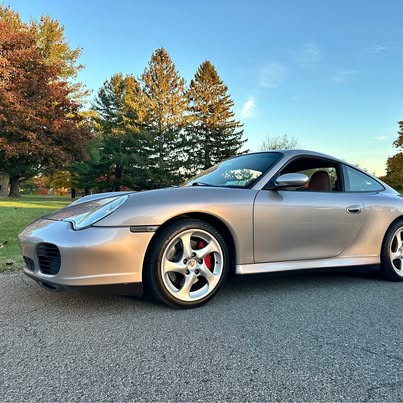
- The all-rounder: a 996 Carrera 4S coupe with a manual gearbox, a documented IMS retrofit, clutch and rear main seal in the file, and a clean borescope report. You get the wide body, the Turbo brakes and all-weather traction with the generation's defining risk already retired, in the most usable 911 shape of its era.
- The value buy: a higher-mileage 996 4S, coupe or cabriolet, bought on condition and paperwork rather than odometer reading — ideally a Tiptronic car, which the market undervalues against the manual, with the suspension refresh and radiators already done. The badge premium is smallest here and the car is the same.
- The collector-driver: a 993 Carrera 4S with full specialist history, a documented top-end rebuild or provably healthy valve guides, original wide-body panels confirmed by paint readings, and both fobs, books and tools present. Drive it regularly; these cars deteriorate faster in storage than in use.
- The showpiece: a 993 4S with a documented factory Aerokit — codes on the sticker, correct Porsche panels — or a genuine X51 power-kit car on either generation. You pay for paper as much as for parts, so buy only when the paper is complete.
- The winter daily: a 996 4S coupe on steel brakes with good tyres, a recent air-oil separator and a dry, fully working electrical system. It is the cheapest route into a wide-body 911 you can genuinely use in February.
The overriding rule: buy the documented car, not the badge, the colour or the story — on the 993 the file must prove the shell, the options and the top end, on the 996 it must prove the IMS bearing and the bores, and a car whose paperwork cannot answer its generation's defining question is priced as if the answer is the bad one.
See the 15 993 911 Coupe cars currently listed.
For sale now
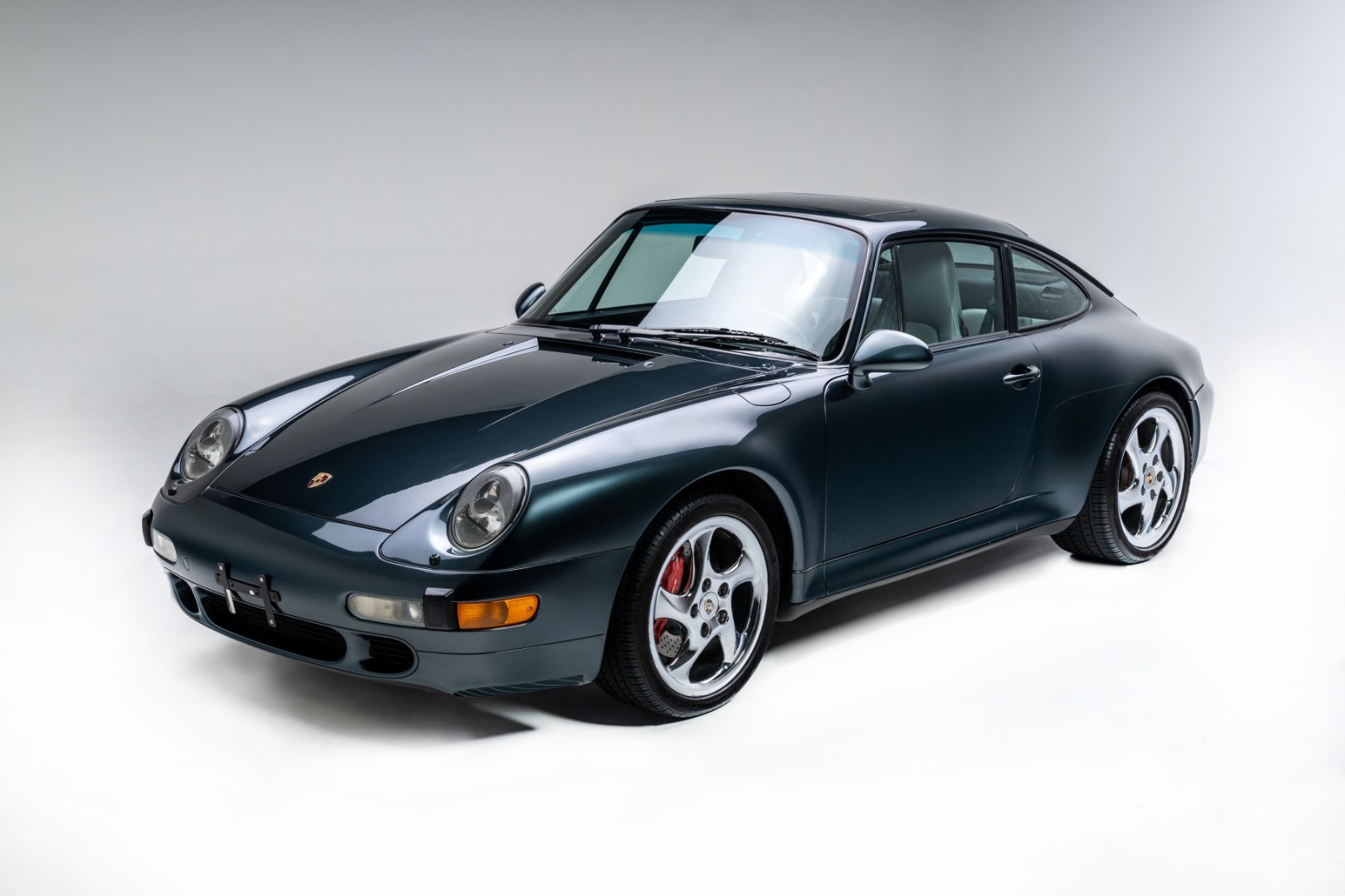 $179,000
Expand
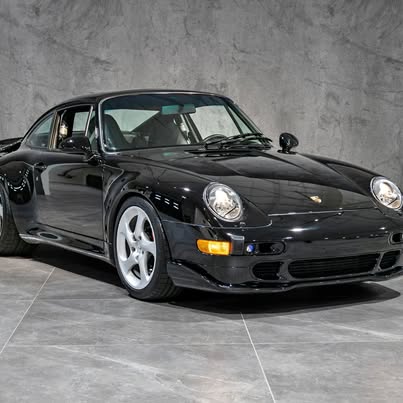 $179,995
Expand
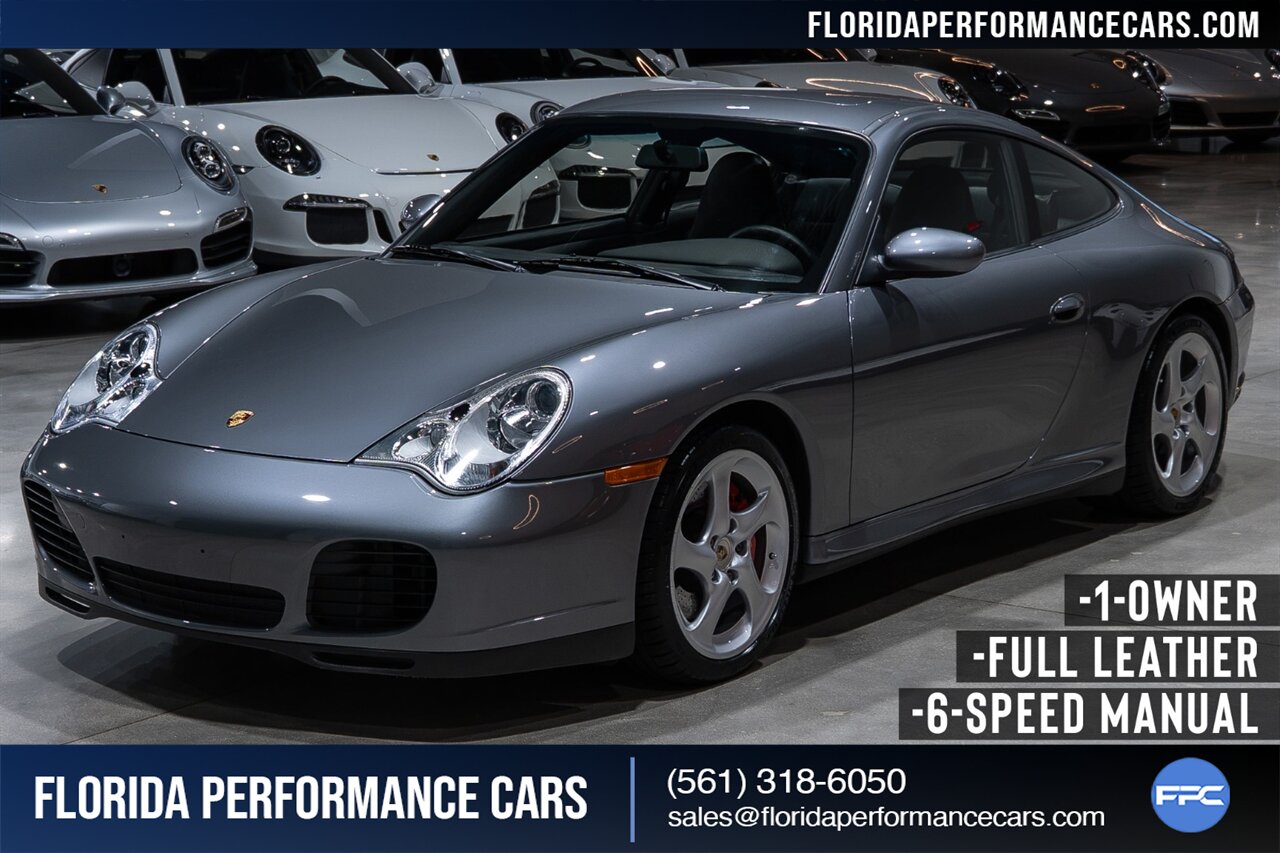
Expand
What they sell for: 993 911 Coupe sale prices.