
Porsche 968 Cabriolet buyer's guide
Porsche 968 Cabriolet -- the model's own buyer's guide: variants, values and what to check.
Years listed: 1992-1995 · Series: 968
Overview and history
The Porsche 968 is the last and best of the front-engined, four-cylinder transaxle cars — the line that began with the 924 in 1976, ran through the 944, and ended when 968 production stopped in 1995. It is also the most misunderstood car in that family. Because it looks like a facelifted 944, the market spent years pricing it like one. Porsche's own engineers took the opposite view: by their count, around 80 percent of the car's components were new or changed compared with the 944 S2 it replaced, and the engine, the gearboxes, the styling and the detail engineering all back them up. Drive a good 968 back to back with a good S2 and the 968 is not a slightly better 944. It is the finished car.
The 968 was introduced for the 1992 model year and built through 1995. Where the 924 and 944 had been assembled by Audi at Neckarsulm under contract, the 968 came home: production moved to Porsche's own plant at Zuffenhausen in Stuttgart, alongside the 911. Total production was small — about 12,776 cars in all, coupes and cabriolets combined — which makes the 968 rarer than any single generation of 944 and far rarer than the 911s of the same years. It was a victim of timing and price. Launched into a recession, priced close enough to the 964-generation 911 to make buyers hesitate, and sold by a company that was itself fighting for survival, it never found the audience its engineering deserved. Porsche killed it in 1995, and the front-engined four-cylinder line died with it; the Boxster, a completely different idea, arrived the following year.
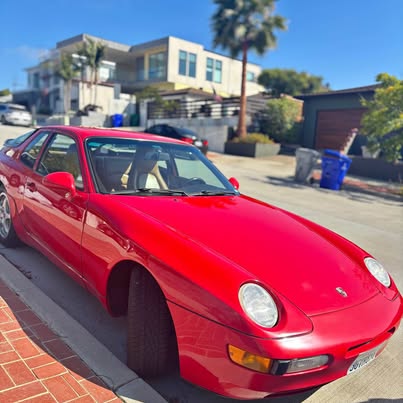
What you get for that obscurity is this: a 3.0-litre four-cylinder engine producing 240 hp — at the time, one of the largest and most powerful naturally aspirated fours ever put in a production car — with variable valve timing, a six-speed manual gearbox mounted at the rear in a transaxle, near-perfect weight distribution, and the balanced, forgiving, exploitable handling the transaxle cars were always praised for, sharpened to its final form. The styling, by Harm Lagaay's team, rounded off the 944's edges, gave it exposed headlamps under clear covers that still rise and fall, and a smooth, full-width rear treatment.
The range is simple, which is one of the pleasures of buying one. There is one engine in two body styles — coupe and cabriolet — with a choice of six-speed manual or four-speed Tiptronic automatic. Europe additionally got the stripped, sharpened Clubsport, a car that has since become the collector's 968, and a tiny handful of turbocharged specials, the Turbo S and Turbo RS, which are museum pieces rather than used cars. North America got the coupe and cabriolet only, in standard trim, and most US cars were well optioned when new.
We currently track just five 968s for sale in the US — three cabriolets among the cars whose body style is stated, in a spread of 1992 to 1994 model years, three of them automatic and two manual — and that thin trickle is representative. These were never common cars, they are now thirty years old, and the good ones change hands quietly. That scarcity cuts both ways for a buyer. You cannot be as picky about colour and specification as a 944 buyer can, and you may have to travel. But the car's whole ownership proposition rests on a small number of well-understood mechanical questions — belts, the transaxle pinion bearing, the VarioCam chain pads, and the service history that answers all three — and a car that passes those questions is one of the most usable, best-balanced classic Porsches ever built. This guide works through them in order.
The ownership history of the typical 968 mirrors that of the 944, only compressed. The cars were expensive new and generally maintained properly by their first owners; then values slid through the late 1990s and 2000s until a 968 cost less than a family hatchback, and a generation of cars was run on a budget by owners who could not afford the belt services and transaxle attention the car demands. Values have since recovered, but the middle of the market is still full of cars carrying a decade of deferred maintenance under a shiny detail. Sorting the cherished from the deferred is the entire job of buying one, and it is a job done with invoices and an inspection lift, not with the listing photographs.
The models
Every standard 968 carries the same 3.0-litre M44/43 engine with the same 240 hp output. There is no slow 968 and no fast 968 in the regular range — the differences are body style, gearbox and, in Europe, the Clubsport's chassis and weight programme. That makes the model table unusually short and the buying decision unusually honest: you are choosing a shape and a driving experience, not an engine.
| Model | Years | Engine | Output | Built | Character |
|---|---|---|---|---|---|
| 968 Coupe | 1992–1995 | 3.0 four (M44/43), VarioCam | 240 hp | part of 12,776 total | The core car; hatchback, stiffest shell |
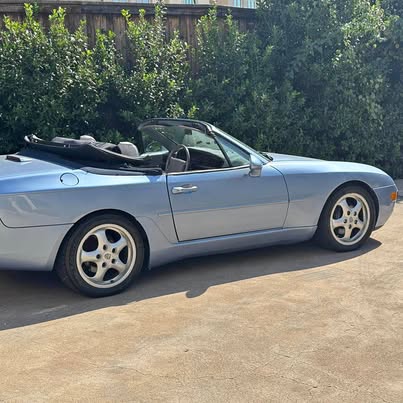
| 968 Cabriolet | 1992–1995 | 3.0 four (M44/43), VarioCam | 240 hp | part of 12,776 total | Open car; the majority of US listings |
| 968 Clubsport | 1993–1995 | 3.0 four (M44/43), VarioCam | 240 hp | 1,923 | Stripped, lowered, sharpened; Europe only when new |
| 968 Sport | 1994–1995 | 3.0 four (M44/43), VarioCam | 240 hp | small UK-only run | Clubsport chassis with comforts restored; UK market |
| 968 Turbo S | 1993 | 3.0 four, turbocharged, 8-valve | 305 hp | 14 | Road-going special; effectively unbuyable |
| 968 Turbo RS | 1993–1994 | 3.0 four, turbocharged, race tune | about 337 hp | 4 | Factory race car; mentioned only to be ruled out |
(Outputs are period DIN figures. US-market cars were rated at 236 hp under the SAE net system; it is the same engine in the same tune, measured differently, and any seller who presents a US car as detuned is wrong.)
The coupe is the car the engineers signed off. The big glass hatch makes it a genuinely practical two-plus-two — the rear seats are for children and short journeys, as in every transaxle Porsche, but the luggage space under the glass, with the rear seat folded, swallows more than most sports cars of any era. The closed shell is the stiffest and lightest of the standard cars, it carries no convertible-top mechanism to maintain, and it is the version the Clubsport was based on. If you intend to drive the car hard or far, this is the default choice.
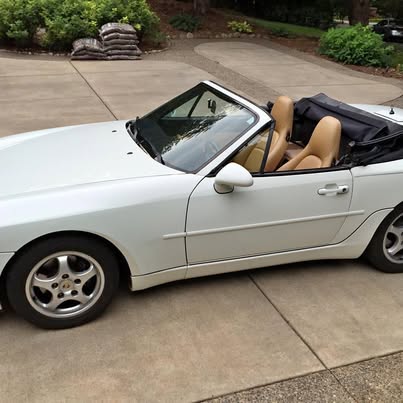
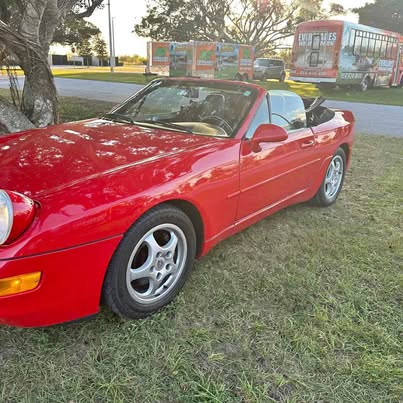
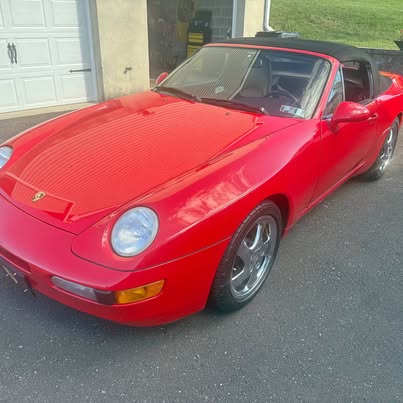
The cabriolet trades the hatch and some stiffness for open air, and it is a better conversion than most of its period because the transaxle shell was strong to begin with. The power top on most cars is a substantial piece of engineering with a plastic rear window; the body gives up the hatch for a small trunk. Scuttle shake exists but is modest. In the US market the cabriolet is what you will mostly find — three of the five cars we currently track are cabriolets — and a large share of US cabriolets were ordered with the Tiptronic gearbox, a combination that defines the relaxed end of the 968 market.
The Clubsport (badged CS) is the connoisseur's car and the one whose values have run away from the rest of the range. Porsche stripped it to save weight — the commonly quoted figure is around 100 kg — by deleting the rear seats, the electric windows and mirrors, much of the sound deadening, the air conditioning and other comforts, then fitted Recaro bucket seats, a smaller steering wheel, suspension lowered by 20 mm with the M030 sport chassis as standard equipment, and a limited-slip differential. It was sold in Europe, the UK and a few other markets, never officially in North America, so US-based Clubsports are later imports. Period colours included Grand Prix White, Guards Red, Speed Yellow, Riviera Blue, Maritime Blue and black, often with colour-matched wheels. The UK-only 968 Sport of 1994–95 put some equipment back into the Clubsport package — electric windows, central locking, a better stereo — at a lower price than the standard coupe, and is best understood as a Clubsport for buyers who wanted to use it daily.
The Turbo S and Turbo RS exist to be identified and then forgotten by anyone actually shopping. For the Turbo S, Porsche went back to the 8-valve turbocharged engine architecture of the 944 Turbo S, enlarged to 3.0 litres, and built fourteen road cars. The Turbo RS was a race car for the German ADAC GT Cup series, of which four were built. If one is offered to you at standard 968 money, it is not one.
Two identity checks apply across the range. First, the 968's VIN and option sticker — the paper label under the rear carpet in the luggage area, duplicated in the service book — carry the model and every factory option code, and they settle arguments about what a car actually is: code M030 for the sport chassis and M220 for the limited-slip differential are the two codes that matter most to value. Second, beware the reverse fraud as well as the usual kind: because the 968 shared so much with the late 944, sellers occasionally describe a 944 S2 with 968-style panels, or list a car loosely enough that the model year and variant in the title do not match the car. The 968's exposed headlamps, its rear panel, its six-speed gearbox and its VarioCam engine distinguish it from any 944 — check that the car in front of you has all four before you price it as a 968.
Engines and gearboxes
The M44/43: the biggest four of its era
One engine powers every standard 968: the M44/43, a 2,990 cc dual-overhead-cam, 16-valve four, developed from the 944 S2's M44/41 but changed so extensively that Porsche gave it its own designation and its own production line. The dimensions tell the story: a 104 mm bore and an 88 mm stroke, the largest cylinder dimensions of any production four-cylinder of its time, in an aluminium block with the bore surfaces treated so the forged pistons run directly in the alloy. Compression is 11.0:1, high for the period, and the engine management is Bosch Motronic with sequential fuel injection, a hot-film air mass meter replacing the S2's flap-type meter, and a mapped ignition system with knock control that lets the engine live safely on modern premium fuel.
Output is 240 hp at 6,200 rpm and 305 Nm (225 lb-ft) of torque at 4,100 rpm — but the torque figure at its peak is not the point. The point is where the torque lives, and that is VarioCam's doing, covered below. A healthy M44/43 should start instantly, idle evenly at around 840 rpm without hunting, pull from below 2,000 rpm in a way no 944 ever did, and rev cleanly to its 6,600 rpm region redline with the note hardening as the cam timing shifts. It should show strong oil pressure — the gauge reading around 4 to 5 bar at speed when warm, dropping at a hot idle, which is normal — and it should not smoke. Blue smoke at start-up after standing points to valve stem seals, a known and budgetable job. Smoke under load is ring or bore wear, and on this engine that is a rebuild conversation in the region of $8,000–15,000 at a specialist, because the alloy bore surfaces demand proper machining knowledge. Walk-away territory unless the price already says so.
Two features inherited from the 944 define the engine's maintenance life. The first is the pair of counter-rotating balance shafts, running at twice crankshaft speed in a housing on the side of the block, driven by their own belt. Porsche licensed the system from Mitsubishi, and it is why a 3.0-litre four can feel this smooth — the shafts cancel the secondary vibration inherent in a big four. The second is that the camshafts are driven by a toothed belt at the front of the engine, and that belt, the balance shaft belt behind the same covers, their tensioners and rollers, and the water pump they share the space with, form a single service ecosystem that dominates 968 ownership. That ecosystem has its own subsection in Problem areas, because it is where the money goes.
The supporting systems are conventional Porsche of the period and mostly robust. The cooling system is generous and the temperature gauge should sit steady once warm; a car that creeps up in traffic wants its radiator, thermostat and fans investigated before it wants an engine verdict. The air conditioning on standard cars was R12 on early production and later cars moved to R134a; a conversion history is a plus, and a system that blows warm is usually a compressor, condenser or a leak at the hoses rather than a catastrophe, typically $600–1,800 to put right properly. Budget for engine mounts too: the hydraulic mounts collapse with age and transmit a vibration at idle that owners misdiagnose as a balance shaft fault. A pair of mounts is a few hundred dollars in parts and transforms a car that buzzes.
VarioCam: what it is and what wears
VarioCam was new on the 968 — the first Porsche production engine with variable valve timing — and it is the system's simplicity that makes it durable. The two camshafts are connected by a short chain at the front of the cylinder head, with a hydraulic tensioner between them. That tensioner is also the actuator: under oil pressure controlled by a solenoid valve, it shifts position and rotates the intake camshaft relative to the exhaust cam, advancing the intake timing by up to 12.5 degrees in the mid-range. The DME engages it from roughly 1,500 rpm under load and switches it back out again above about 5,500 rpm, so the engine gets long-overlap, torque-filling timing where you cruise and cleaner high-rpm timing where you accelerate. The result is the M44/43's party trick: a torque curve with a filled-in middle that makes the car feel like it has a larger engine than it does, and a noticeable step in eagerness as the system engages under a full throttle foot.
The wear point is equally specific. The chain runs against plastic-topped guide pads on the tensioner, and those pads harden, groove and eventually crumble with age and heat cycles. A pad that disintegrates lets the chain run metal on metal, stretch, and in the worst case jump a tooth — at which point valves meet pistons in an interference engine and the bill becomes an engine rebuild. The pads cannot be inspected without removing the cam cover, which is why the inspection section of this guide treats a cam-cover-off check as part of any serious pre-purchase inspection on a car without documented pad replacement. Pads and chain replaced together, with the cover gaskets, run roughly $800–1,500 at a specialist — trivial against the failure they prevent. A rattling from the top front of the engine at idle, a VarioCam that engages with a clunk, or black plastic debris found in the oil at a service are all stop-and-investigate symptoms. The solenoid itself fails occasionally, leaving the timing fixed in one position; the car still runs, but the mid-range fullness goes missing, and a test drive against this description is how you catch it.
The specials: Turbo S and Turbo RS
The fourteen Turbo S road cars and four Turbo RS racers used a different engine altogether: a 3.0-litre version of the 8-valve turbocharged M44 from the 944 Turbo line, with a larger turbocharger and the strengthened internals of the Turbo Cup race engines, making 305 hp in the road car. They share the shell and the transaxle layout with the standard car and almost nothing under the bonnet. Their maintenance is race-engine maintenance, and they appear in this guide only so that nobody sells you a standard car dressed as one. A genuine Turbo S carries its identity in its VIN sequence and factory records; badges and a turbocharger bolted to a 16-valve engine prove nothing except that someone owned a spanner.
Gearboxes: six speeds at the back of the car
The 968 follows the transaxle layout of the whole 924/944 family: the engine sits in front, the clutch is on the engine, and the gearbox sits at the rear, combined with the final drive and driven through a rigid torque tube with a long propeller shaft spinning at engine speed. The layout is why these cars balance as they do — the mass is split between the axles — and it defines two of the car's service items: the torque tube's bearings, which rumble when worn and are a gearbox-out job to replace, and the gearbox itself, which lives where most buyers forget to listen to it, behind them.
The manual gearbox was new for the 968: a six-speed unit, type G44, built by Getrag, the first six-speed in a Porsche transaxle car and one of the first in any production car of the period. Ratios are closely stacked, sixth is a genuine cruising gear, and the change quality on a good box is precise and mechanical, with synchromesh that should take fast second-to-third and third-to-second changes without a graunch even when cold. Worn second-gear synchromesh is the classic high-mileage tell. The clutch is a conventional single-plate unit with a dual-mass flywheel, and the flywheel is a service item in its own right: when its internal damping fails it rattles at idle and on shutdown, judders on take-up, and costs roughly $1,500–2,500 to replace with the clutch while the labour is shared. A clutch alone, done at a specialist with the torque tube disturbed, is a $1,500–2,500 job; these are not cheap cars to clutch, because everything at the back of the car must come apart in sequence.
The automatic option was Porsche's Tiptronic, a four-speed torque-converter automatic with electronic control and a manual gate that lets the driver hold and select gears — its first appearance in the transaxle line. It is a good automatic of its era and a poor match for this engine's character: the torque converter and four long ratios blunt the VarioCam mid-range, and the car feels a class slower. Tiptronic cars dominate the relaxed end of the market — three of the five cars we currently track are automatics — and they suit the cabriolet particularly well. Judge one on fluid condition and history: the fluid and filter should have been changed on schedule, shifts should be clean without flaring, and a box that thumps into gear or hesitates engaging drive from rest is negotiating a rebuild in the $3,000–5,000 range. The manual is worth a premium over the Tiptronic on a coupe and the premium is justified; on a cabriolet bought to cruise, the automatic is a legitimate choice rather than a compromise to apologise for.
The limited-slip differential, option M220, was standard on the Clubsport and optional elsewhere, and it transforms the car's traction out of slow corners. There is no dashboard light and no external badge for it — the option sticker and the build record are the evidence, or a wheels-off-the-ground test on a lift, turning one rear wheel and watching whether the other follows in the same direction.
Problem areas
A 968 does not have a long list of unrelated faults. It has a short list of systems that age on a schedule, plus the usual thirty-year-old-car attrition, and nearly every expensive surprise in 968 ownership comes from the first list being ignored. Work through it in this order: the belts at the front of the engine, the VarioCam chain pads already covered above, the pinion bearing in the transaxle, and the service history that tells you whether any of it has been done. The body, unusually for a classic Porsche, is the least of your worries.
Belts, seals and the front of the engine
The timing belt and balance shaft belt are the 968's defining service. Both live behind covers at the front of the engine, driven from the crankshaft; the timing belt drives the camshafts and the water pump, and the balance shaft belt drives the two balance shafts. If the timing belt fails, the pistons meet the valves — the M44/43 is an interference engine — and a running car becomes an engine rebuild in one second. If the balance shaft belt fails it can take the timing belt with it as it whips around inside the covers, which amounts to the same bill.
The service discipline is therefore by the calendar as much as by the odometer. Porsche's interval for the belts is commonly applied as 45,000 miles, but the belt is rubber, the car is thirty years old, and the experienced-owner rule is replacement every four years regardless of mileage, with tensioners, rollers and the water pump assessed at the same time and the pump usually replaced as a matter of course while access is paid for. A full front-of-engine service — both belts, rollers, tensioners, water pump, and the front seals described below — runs roughly $1,500–2,500 at an independent specialist, and it is the single most valuable invoice a seller can produce. A car with no documented belt history is a car whose first act of ownership is that service, at your cost, before it is driven anywhere with enthusiasm. Price it in without apology.
The front seals are the second half of the story. The crankshaft front seal and the balance shaft seals harden and weep oil inside the belt covers, and oil on a toothed belt degrades the rubber and shortens its life — which is why a belt changed without attending to leaking seals is half a job, and why a seller's invoice that lists belts only, on a car with an oily front end, deserves a follow-up question. The seals themselves are cheap; the labour is the access you have already paid for during the belt service. The same logic covers the cam cover gasket and the seals around the spark plug wells on top of the engine: oil in a plug well announces itself as a misfire under load and costs little to fix while the cover is off for the VarioCam pad inspection.
Balance shaft belt tension deserves its own paragraph because it is the most mis-set item on the car. The balance belt runs with a distinctive whine when correctly tensioned — a faint supercharger-like note that rises with revs is normal on these engines and frightens buyers who do not know it. Set too tight, the whine becomes a howl and the belt and shaft bearings suffer; set too loose, the belt can jump. If a car whines loudly enough to hear in the cabin with the windows up, budget for a belt service with correct tensioning and treat it as evidence about the quality of the last workshop, whichever way it was set.
The transaxle and the pinion bearing
The pinion bearing is the 968 manual gearbox's one genuinely expensive known fault, and it is the inspection item that separates informed buyers from everyone else. Inside the transaxle, the pinion shaft that drives the final drive runs in bearings whose preload and condition determine how quietly the gearbox lives. On a proportion of cars — enough that every specialist knows the failure by name — the pinion bearing wears and begins to whine: a rising, gear-dependent whine from the rear of the car, most audible on a light throttle and on the overrun, changing with road speed and gear selection rather than with engine revs alone. Left alone, the wear progresses, the shaft begins to move, and a bearing replacement becomes a gearbox rebuild with damaged gears and final drive components.
The economics are stark. Caught at the whine stage, a transaxle-out pinion bearing replacement with the associated seals and bearings is roughly a $2,500–4,000 job at a specialist. Ignored until the box is noisy in every gear and jumping out of mesh, you are pricing a full rebuild or a used gearbox of unknown history, $4,000–6,500 and up, on a car where good used boxes are not plentiful. The test costs nothing: on the test drive, in third and fourth gears, feather the throttle between drive and overrun at moderate road speed and listen behind you. A healthy 968 transaxle is quiet. Any whine that comes and goes with throttle load is the bearing introducing itself, and the correct response is a specialist's written estimate deducted from the price — or a walk away if the seller insists it is tyre noise. Tyre noise does not change when you lift off in gear; pinion whine does. That single distinction is worth thousands.
Around the gearbox, the lesser items are the torque tube bearings — a constant-speed rumble from the tunnel that rises with engine revs in every gear and at standstill with the clutch engaged points here, and replacement means removing the transaxle, so it is often done alongside clutch work for a combined bill in the $2,500–4,000 region — and the gear linkage, whose bushes wear into a vague, long change that fresh bushes fix for a few hundred dollars. The clutch hydraulic cylinders weep with age; a pedal that sinks or a reservoir that empties is a master or slave cylinder, each a modest job, but bleed the system and check before condemning the clutch itself. On Tiptronic cars the equivalent discipline is fluid history: a box with no record of fluid and filter changes by 100,000 miles is a box to test very carefully through every gear, hot and cold, including reverse engagement from rest.
Chassis, steering and brakes
The suspension is MacPherson struts at the front and semi-trailing arms at the rear, with transverse torsion bars supplemented by coil springs, anti-roll bars at both ends, and — on M030 sport chassis cars, including every Clubsport — firmer adjustable dampers, stiffer springs and larger brakes. It is a durable layout with no inherent vice, and its faults are the faults of age: perished bushes, tired dampers, ball joints with play, and alignment that has not been set since the last century. A 968 that feels loose, wanders on a straight road, or crashes over bumps is not showing character; it is showing a shopping list, and a full suspension refresh with quality parts, dampers and an alignment runs roughly $2,000–3,500. Judge the dampers by bouncing each corner and by looking for oil misting on the damper bodies; judge the bushes on a lift with a pry bar, not from the driver's seat.
Power steering is by rack and pinion, hydraulic, and leaks are its biography. The high-pressure hose from pump to rack weeps and then sprays; the rack seals pass fluid into the gaiters; the reservoir and its hose sweat. A car that groans on full lock or leaves pink spots is asking for hoses, and possibly a rack rebuild in the $800–1,500 range fitted. Check the fluid level and colour on every viewing — a low reservoir on a car presented for sale tells you the leak is active and the topping-up stopped when the for-sale sign went in the window.
Brakes are four-piston fixed calipers and vented discs of a size that was generous in 1992, and the standard system in good order stops the car hard and straight. M030 cars carry larger front discs and calipers derived from the bigger Porsches. The age faults are seized caliper pistons from corroded bores, perished flexible hoses, and discs lipped and thinned by decades of pad changes without measurement. A full brake refresh — discs, pads, hoses, fluid — is roughly $1,000–1,800 in parts and labour and should be treated as recommissioning, not as a defect to haggle over twice. The ABS is early-generation and reliable; a lit ABS lamp is usually a wheel sensor or its wiring, diagnosed in an hour. Wheels matter to originality: standard cars wear 16-inch Cup-design alloys, 17-inch Cup wheels were the desirable option and are standard-fit on Clubsport, and a car on heavy aftermarket wheels will ride and steer worse than Porsche intended — the light, correct wheels are part of the car's handling, not a styling detail.
Body, top, interior and electrics
Rust is where the 968 breaks with classic-car habit. The shell is galvanised, the panels fit well, and a 968 that has lived a normal life is usually structurally sound in a way that would astonish a 911 buyer of the same era. That said, thirty years is thirty years. Check the sills behind the front wheels where road grit strips the protection, the wheel arch lips, the area around the battery, the lower edges of the doors, the windscreen surround, and the floor of the luggage well under the carpet. Stone-chip damage on the nose is universal and honest. What should stop you is not a bubble but a pattern: bubbling on several panels, filler in the arches, or fresh underseal under a car whose top side is tired. Accident damage is the bigger body risk — panel gaps on a 968 are even from the factory, the hatch and doors shut with a particular solidity, and a car whose gaps wander or whose hatch sits proud has been repaired by someone. The coupe's rear hatch glass delaminates at its edges, turning milky where the glass separates from the frame; it is cosmetic at first, the glass is expensive and increasingly hard to source, and a badly delaminated hatch is a legitimate four-figure deduction.
On cabriolets, the top is a service item with a price tag. The fabric fades and wears at the folds, the plastic rear window clouds, cracks and eventually splits — a window replacement is a trimmer's job in the $600–1,200 range, a full new top fitted runs $2,000–3,500 — and the power mechanism's microswitches and linkages produce tops that stop halfway or refuse to move. Operate the top twice on any viewing, watch it fold evenly, and check the well behind the seats and the carpets for the water stains that mean it has been leaking. A cabriolet with a tired top priced as if the top were new is one of the commonest overvaluations in this market.
Inside, the 968 cabin is the late transaxle interior at its best: a proper dashboard that cracks far less readily than the early 944's, supportive seats, and trim that survives. Wear concentrates on the driver's seat bolster, the steering wheel rim, and the gear knob, and retrimming a pair of seats in leather runs $1,500–3,000, which is why a clean original interior is worth money. Clubsport Recaros in their period cloth are a special case — the cloth is part of the car's identity and retrimming them in leather destroys both value and point. The odometer deserves a specific mention: the VDO instrument cluster's odometer drive gear crumbles with age, and the odometer stops while the speedometer keeps working. A 968 whose mileage froze years ago is common; a seller who cannot document mileage by invoices and inspection records around the gap is a problem, because on a car where value follows mileage, an undocumented gap is priced as the worst case.
Electrics are the usual Porsche pattern of the era: sound wiring, ageing switches and relays, and a handful of known actors. The DME relay — the relay that powers the engine management and fuel pump — fails with age and stops the car dead or prevents starting; experienced owners carry a spare in the glovebox, the part costs under $50, and a car that cranks without firing should be tested with a known-good relay before anyone condemns the management system. The crankshaft reference sensor produces the classic hot no-start: the car runs perfectly, is switched off hot, and refuses to restart until it cools. Pop-up headlamp mechanisms wear and slow; window regulators tire; the heater blower and its resistor pack produce cabins that are either freezing or roasting. None of it is ruinous, all of it is negotiable, and a car where everything electrical works has usually been owned by someone who fixed things as they failed — which is the single best predictor of the mechanical state you cannot see.
How to inspect one
Allow two hours, bring a torch and a friend to work the throttle while you listen, and arrange the test drive before you fall for the paint. On a 968 more than most cars, the inspection is a sequence: paperwork first, because the history file answers the expensive questions before you have spent anything on lifts and specialists.
- Start with the history file, not the car. Lay the invoices out in date order. You are looking for four things: belt services with dates — not just mileages — showing timing belt, balance belt, rollers and water pump; evidence of VarioCam chain pads having been replaced; any transaxle work mentioning the pinion bearing; and regular oil services in between. A thick, dated file is worth real money on this model. A thin file does not end the inspection, but it reprices the car: everything undocumented goes on your bill.
- Verify the identity. Match the VIN on the title to the stamping in the engine bay and the label in the door jamb. Find the option sticker under the rear luggage carpet and in the service book, and decode it: M030 for the sport chassis, M220 for the limited-slip differential are the codes that carry value. A Clubsport claim, in particular, stands or falls on the car's build record — buckets and deleted trim can be copied; a factory code cannot.
- Check the odometer's honesty. The VDO odometer gear fails and the mileage freezes while the speedometer works. Compare the odometer against the dated invoices and inspection records from step 1. A mileage that has not moved between documents years apart means the gear failed — acceptable if the paperwork bridges the gap, a serious deduction if it does not.
- Cold start. Insist the engine is stone cold when you arrive — a warmed-up car hides the two classic tells. It should fire at once and settle to an even idle. Listen at the front of the engine for chain rattle from the VarioCam area and at idle for the balance belt's whine: faint is normal, loud enough to dominate the cabin is a tension problem. Watch the exhaust: a puff of blue that clears is stem seals; continuing smoke is a different conversation.
- Under the bonnet. Look for oil inside the front covers' seams and around the cam cover — front seal weep means the belt service in step 1 was done cheaply or is due. Check the coolant's colour and level, the power steering reservoir's level, and the condition of every rubber fuel line you can see; thirty-year-old fuel hoses are a fire risk, not a detail. Smell the oil on the dipstick for fuel and look at its level and colour.
- The pinion bearing test. On the drive, in third and fourth gears at moderate speed, feather the throttle between drive and overrun and listen behind you. Pinion whine arrives and departs with the load; tyre and wind noise do not. Test every gear, including a lift-off in second, and drive at least twenty minutes so the transaxle is fully warm — a cold box can hide its voice. This is the test from the problem areas section, and it is the one that prices the gearbox.
- Gearbox and clutch. The manual should select every gear cleanly, cold and hot, with no graunch into second on a fast change. Feel the clutch take-up for dual-mass flywheel judder and listen for its rattle at idle and on shutdown. On a Tiptronic, work the manual gate as well as drive, check reverse engages promptly from rest, and feel for flaring between gears under a firm throttle.
- VarioCam on the road. Accelerate from low revs in a high gear and feel for the mid-range filling in as the revs climb through the engagement zone — the engine should pull with a fullness that builds rather than arriving in one step at the top end. A car that feels flat until high revs and then wakes up may have a VarioCam solenoid or mechanism fault; the test distinguishes it from a generally tired engine, which is flat everywhere.
- Chassis and brakes. On a straight, quiet road, loosen your grip at moderate speed: the car should track true without correction. Brake firmly from speed — it should stop straight, without judder through the wheel or pedal. Push it through a familiar corner; looseness, roll that arrives in two stages, or a rear end that needs catching means bushes and dampers, priced as in the problem areas section. Groaning on full lock at parking speed is the steering telling you about its fluid and hoses.
- On a lift, if the car has passed so far. Pay for this on any 968 you are serious about. Look at the sills, arch lips, battery area and luggage well for the rust pattern described earlier; pry the suspension bushes; spin each wheel and listen; check the steering rack gaiters for fluid; look at the transaxle for leaks and the torque tube for the rumble you can only confirm by ear on the road. Fresh underseal over everything underneath is a question, exactly as it is on any classic.
- Top, hatch and water. On a cabriolet, run the power top up and down twice, watch it fold symmetrically, examine the rear window against the light, and feel the carpets and the top well for damp. On a coupe, inspect the hatch glass edges for milky delamination and operate the sunroof if fitted. On both, check the spare wheel well and the footwell carpets for water staining — leaks on these cars are seal problems, and the stains tell you how long they have been leaking.
- Electrics last, all of them. Windows, mirrors, seats, blower on every speed, air conditioning cold, headlamps up and down twice, washers, wipers, central locking, every gauge — including whether the odometer advances during your test drive, which closes the loop on step 3. Then ask about the DME relay: if there is no spare in the glovebox, put one there the day you buy the car.
Values
The 968 market is best read as several small markets wearing one badge, and the spread between them is the first thing to understand. A Clubsport and a standard cabriolet share an engine and a silhouette and almost nothing else as purchases: the Clubsport trades in a collector market that prizes originality, low mileage and the factory specification, while the standard cars trade in a driver's market that prizes condition and history. Reading asking prices across those markets as if they were one produces nonsense in both directions — a standard car priced by Clubsport logic is overpriced, and a Clubsport priced by standard-car logic is the bargain of the year.
Within the standard cars, the hierarchy is consistent. The manual coupe sits at the top of the driver's market, because it is the car the model is famous for being; the manual cabriolet follows; and the Tiptronic cars, coupes especially, sit at the bottom — not because the gearbox is bad, but because the buyers who want this model's defining experience want the six-speed, and the pool of buyers for an automatic is smaller and more patient. Three of the five cars we currently track are automatics, which is typical of the US supply: the patient buyer of a Tiptronic cabriolet is shopping in the deepest part of the market and should negotiate like it.
Condition moves a 968's value more than mileage does, and it does so through the specific jobs this guide has priced. A car with a dated belt service, documented VarioCam pads and a quiet transaxle is worth a strong premium over an identical-looking car without them, because the buyer of the undocumented car is purchasing those jobs along with the car — the market knows it, and the discount for missing history on this model is larger than on most, precisely because the failure modes are so well understood. Conversely, cosmetic tiredness — stone chips, a worn bolster, cloudy cabriolet window — is comparatively cheap to forgive and is where a knowledgeable buyer's money goes furthest: the mechanical file is expensive to recreate and the cosmetic file is not.
Mileage needs the odometer caveat applied before it is read at all. Because the odometer gear fails, displayed mileage on a 968 is a claim, not a fact, and the cars whose mileage is corroborated by a continuous paper trail are the ones that legitimately command low-mileage money. A high-mileage car with a complete specialist history is a better purchase than a supposedly low-mileage car with a gap in the record, and the market is slowly learning to price them that way.
Finally, the asking-versus-achieved gap. These are thin-market cars: few are listed at any moment — five in our current tracking — sellers of good ones are rarely in a hurry, and asking prices for the best cars reflect that patience. Auction results, where the car must sell on the day, are the honest cross-check on what the market actually pays, and the computed market block beneath this guide carries the current figures from our own listings and recorded sales. Read it with the structure above in mind: variant first, gearbox second, documented mechanical condition third, and cosmetics last. A seller who has priced a car by its photograph rather than its file is the negotiation opportunity this model reliably provides.
Parts and ownership
The 968 enjoys a parts situation better than its production numbers suggest, for three reasons: it shares a large proportion of its mechanical components with the late 944, which was built in far greater numbers; Porsche's own classic parts programme supports the transaxle cars properly; and a strong specialist and club scene — in the US and in Europe — has remanufactured or sourced substitutes for most of the items that went scarce. Ownership is not a parts hunt. It is a labour-and-knowledge exercise: the jobs are known, the parts exist, and the cost sits in doing them in the right order.
Easy and affordable: service items, filters, plugs, brake discs and pads, suspension bushes and ball joints, dampers in standard specification, exhaust sections, clutch hydraulics, window and hatch seals, water pumps, belts and rollers, and most engine sensors and relays — including the DME relay you should carry as a spare. Order today, fit this week, at prices in line with any quality European car of the period.
Dearer or slower: the transaxle itself — pinion bearings, synchromesh parts and rebuild labour are specialist territory, and a used gearbox of verified quality is a find rather than a listing; the dual-mass flywheel; the VarioCam chain and pads, cheap parts whose cost is the labour to reach them; coupe hatch glass, where delamination meets a shrinking supply; cabriolet top fabric and rear windows, a trimmer's job rather than a parts counter's; Clubsport-specific trim and its period Recaro cloth, which should be preserved rather than replaced wherever humanly possible; and M030 dampers and brake components, which carry the usual sport-option premium.
Running costs. A sorted 968 is a realistic regular-use classic. Fuel consumption sits in the mid-twenties miles per gallon in mixed use, better on a run in sixth; insurance is in line with other Porsches of its value; and any competent Porsche independent can maintain the car — this is not a model that demands a main dealer. The budget lines that catch new owners are the ones this guide has already priced: the first-year catch-up on a car with gaps in its file, which honestly runs to several thousand dollars once belts, pads, fluids, hoses and brakes are done together, and the standing discipline of the four-year belt cycle thereafter. Cars that have sat unused need the full recommissioning treatment — fuel system cleaned and re-hosed, every fluid changed, brakes stripped and inspected, tyres replaced on age regardless of tread — and a car in regular use is worth a premium over a lower-mileage car that has been asleep, because use is what keeps every seal and bearing in this car alive.
Which one to buy
- The all-rounder: 968 Coupe, six-speed manual. The definitive car — stiffest shell, the hatch's practicality, the gearbox the engine deserves, and the deepest pool of knowledge and parts around it. If you want one 968 to drive everywhere, this is it.
- The open-air car: 968 Cabriolet, manual if you can find one. The conversion is a good one and the experience on the right road is worth the small stiffness penalty. Buy on top condition and history; a manual cabriolet is the scarcer find and worth waiting for.
- The value buy: 968 Cabriolet or Coupe with Tiptronic. The market discounts the automatic heavily for a character difference that matters less with every year, and the cabriolet-automatic combination is the cheapest route into a good 968 by a wide margin. Three of the five cars we currently track are automatics — the supply is there; negotiate accordingly.
- The collector car: 968 Clubsport. The one appreciating asset in the range, bought on factory specification, originality and paperwork. Verify the identity ruthlessly, preserve the cloth and the specification, and expect to import or travel — North America was never supplied when new.
- The UK curiosity: 968 Sport. Clubsport chassis with the comforts restored, at less than Clubsport money because the market files it under neither name. A genuinely clever buy where it was sold.
- The one to admire, not buy: Turbo S and Turbo RS. Fourteen and four built. If you are reading a buyer's guide, you are not their market, and neither is anyone selling one at standard-car money.
And the rule that overrides all of the above: buy the car with the documented belt services, the inspected VarioCam pads and the quiet transaxle — in the body style you can live with. Paint can be polished, seats can be retrimmed and tops can be replaced at prices you can plan for. The three mechanical questions are the car's value, and the seller who can answer them with invoices has the car you want, whatever its colour.
See the 25 968 Cabriolet cars currently listed.
For sale now
 $39,900
Expand
 $22,500
Expand
 $18,500
Expand
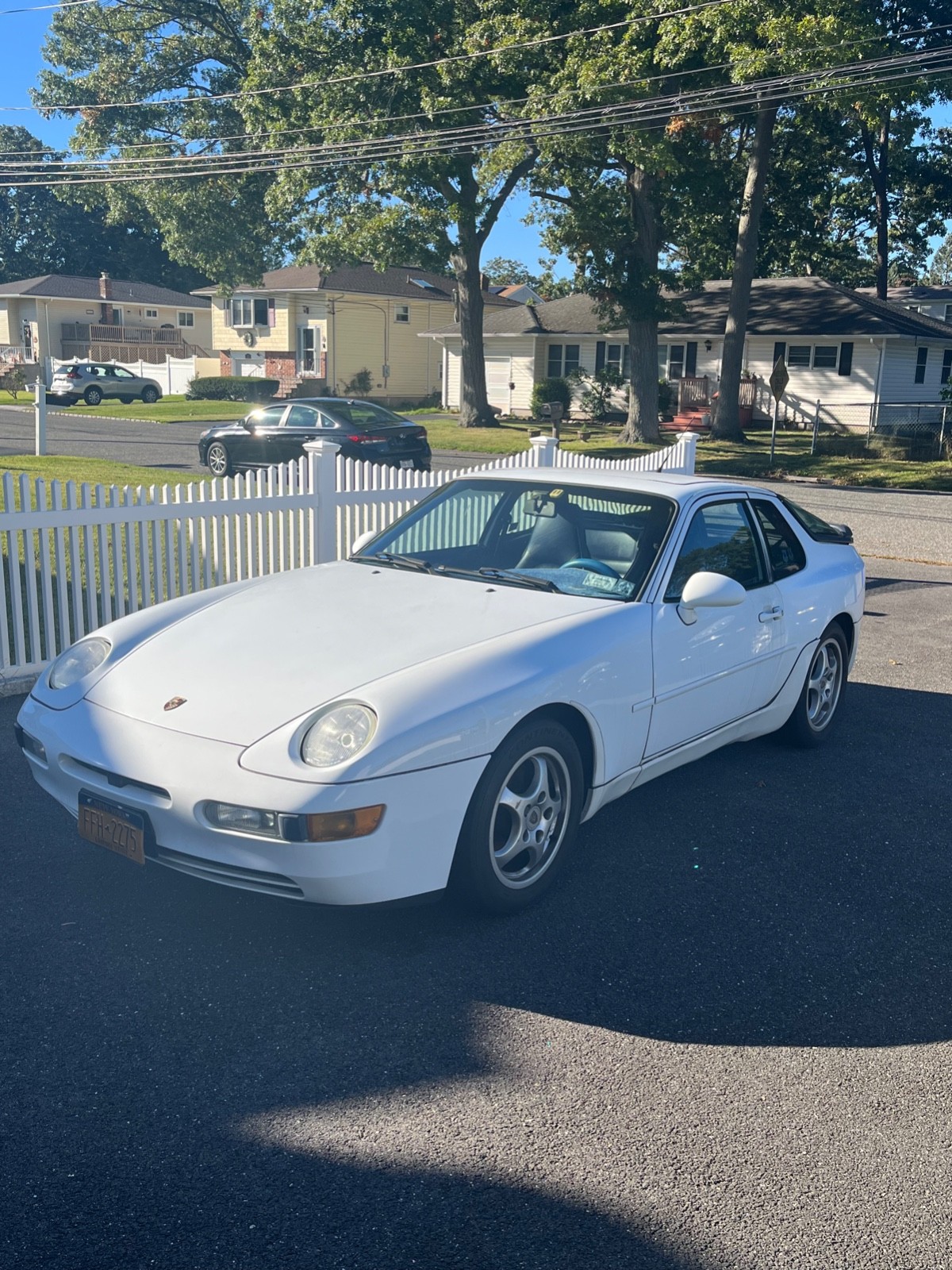 Current bid $16,000
Expand
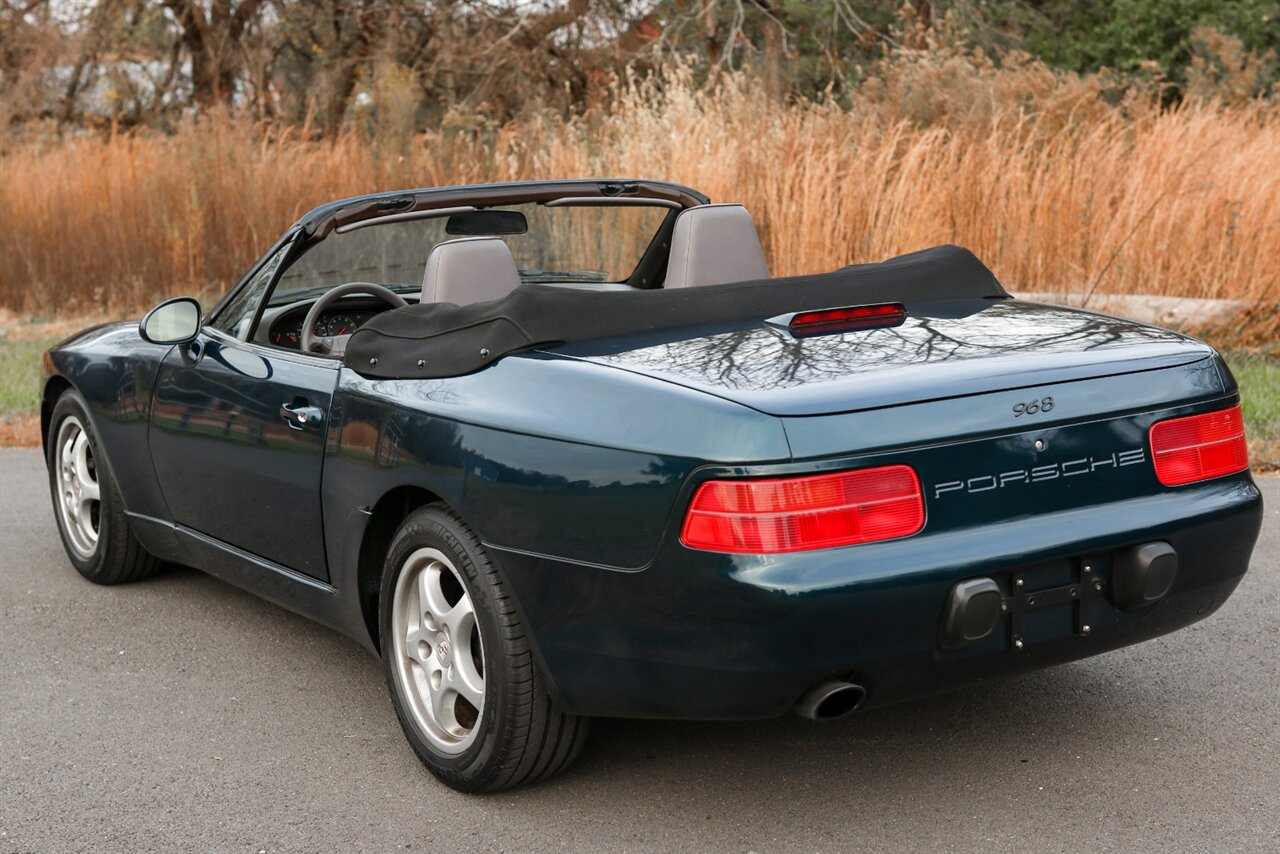 $28,900
Expand
What they sell for: 968 Cabriolet sale prices.