
Rolls-Royce Silver Shadow buyer's guide
Rolls-Royce Silver Shadow -- the model's own buyer's guide: variants, values and what to check.
Years listed: 1968-1980 · Series: Silver Shadow
Overview and history
The Silver Shadow is the car that dragged Rolls-Royce into the modern age — and then sold in numbers the company had never seen before. Launched in October 1965, it replaced the Silver Cloud with a car smaller outside, roomier inside, and different in almost every engineering respect: a unitary monocoque body instead of a separate chassis, disc brakes on all four wheels, independent suspension all round, and a licensed Citroën hydropneumatic self-levelling system working alongside the coil springs. Nothing about it was a warmed-over Cloud. It was a clean-sheet car, styled in-house under John Blatchley, with a low, straight-through wing line and a slim roof — and the traditional upright grille and Spirit of Ecstasy kept deliberately unchanged at the front, because Crewe understood exactly which parts of the tradition were negotiable and which were not.
Production ran from 1965 to 1980, an unusually long life that divides cleanly in two. The original car, retrospectively called the Silver Shadow I, ran to early 1977. The Silver Shadow II, launched in February 1977, kept the same body and engine but changed the steering to rack-and-pinion, retuned the front suspension, and fitted a far better split-level automatic air-conditioning system. Alongside the standard saloon Crewe built a long-wheelbase car with four extra inches in the rear compartment, two-door saloons and drophead coupés by Mulliner Park Ward that later became the Corniche, and — from 1975 — the Pininfarina-styled Camargue coupé on the same platform. Every Shadow also had a Bentley twin, the T-series, identical under the skin apart from grille, badges and trim. If you understand a Shadow, you understand a T, and this guide's inspection advice applies to both.
The Shadow was a success on a scale Crewe had never managed. More than sixteen thousand standard-wheelbase Shadow I saloons alone were built, and total Shadow-family production ran to roughly thirty thousand cars — by far the best-selling Rolls-Royce of its era. North America took a large share, which is why so many survivors are left-hand-drive US cars, and why the American market shaped the specification: automatic transmission only in practice, air conditioning as near-standard equipment, and, from the early 1970s, the emissions equipment and larger bumpers federal rules demanded.
That success is also the trap in today's market. A Shadow was a very expensive car when new. Then values fell, through the 1980s and 1990s, until the purchase price stopped bearing any relation to the cost of the engineering underneath: a cheap Shadow still contains two engine-driven hydraulic pumps, a high-pressure brake and levelling system, eight or more hides of Connolly leather, book-matched walnut, and a 6.75-litre V8 — and all of it still costs Rolls-Royce money to put right. The cars were therefore bought, in large numbers, by owners who could afford the car but not the upkeep, and run until the next bill was bigger than the car felt worth. That is the population you are shopping in. The difference between a good Shadow and a financial disaster is almost never the engine, which is one of the toughest V8s ever put in a production car. It is the hydraulics, the rust in a monocoque shell that cannot be unbolted from a chassis, and twenty years of deferred maintenance arriving on your driveway all at once.
A Shadow bought well is a genuinely usable, comfortable classic that will cross a continent at modern speeds in near silence. A Shadow bought on price alone is the most expensive cheap car in the world. The two look identical in a listing photograph. Everything below is about telling them apart before money changes hands.
The models
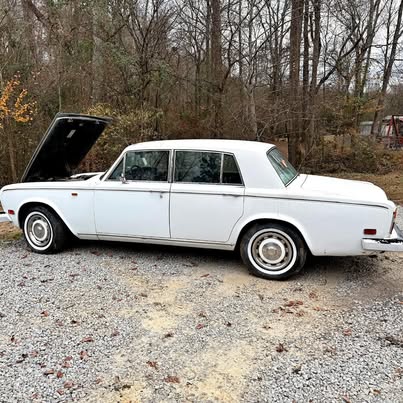
Every mainstream Silver Shadow is a four-door saloon with an automatic gearbox and the V8. The variations that matter to a buyer are the series — Shadow I or Shadow II — the wheelbase, and the market the car was built for. Badges alone will not tell you all three, so learn the tells as well as the names.
| Model | Years | Engine | Output | Built | Character |
|---|---|---|---|---|---|
| Silver Shadow I | 1965–1969 | 6.23 V8 | Not published | Part of 16,717 SWB saloons | The earliest cars; four-speed auto on home-market cars |
| Silver Shadow I | 1970–1977 | 6.75 V8 | Not published | Part of 16,717 SWB saloons | The core car; GM three-speed auto, twin SU carburettors |
| Silver Shadow I long wheelbase | 1969–1977 | 6.75 V8 | Not published | About 2,780 | Four extra inches, all in the rear doors and roof |
| Silver Shadow II | 1977–1980 | 6.75 V8 | Not published | About 8,425 SWB saloons | Rack-and-pinion steering, better air conditioning |
| Silver Wraith II | 1977–1980 | 6.75 V8 | Not published | About 2,145 | The long-wheelbase Shadow II under its own name |
| Two-door saloon and drophead coupé | 1966–1971 | 6.23, then 6.75 V8 | Not published | About 600 coupés, about 500 dropheads | Mulliner Park Ward coachbuilt cars; became the Corniche |
Rolls-Royce famously refused to publish a power figure for this engine, describing output as adequate or sufficient, and that evasion is preserved in the table on purpose: any precise horsepower number a seller quotes for a standard Shadow is an estimate dressed as a fact. Period estimates for the 6.75 cluster around 200 horsepower in European tune, with US emissions cars lower, but the honest figure is the one Crewe gave — enough, delivered very quietly, with torque doing most of the work. Judge the car on how it drives, not on a number nobody at the factory would confirm.
Shadow I versus Shadow II. This is the decision that structures the whole market. The Shadow I (1965–77) steers through a recirculating-ball box, and the steering is the weakest part of the driving experience: light, remote, and vague around the straight-ahead. The Shadow II (1977–80) replaced it with rack-and-pinion steering and revised front suspension geometry, and the difference is not subtle — a II places itself on the road with a precision a I never manages, and most modern drivers prefer it within five minutes. The II also brought split-level automatic climate control, which works far better than the earlier air conditioning, plus detail changes to dashboard, seats and trim. Against that, many buyers prefer the earlier car's cleaner detailing: slimmer bumpers on pre-federal cars, less emissions equipment, more delicate brightwork on the very first cars. Neither is the wrong answer — a sorted I is a lovely car. But do not pay II money for a I, and do not let a seller describe a 1976 car as a Shadow II because it has a later radio: the II starts with the 1977 model year, and rack-and-pinion steering is the fact that defines it.
Standard or long wheelbase. The long-wheelbase car adds four inches (about 100 mm), all in the rear compartment: longer rear doors, a smaller, more formal rear window on many cars, and very often an Everflex-covered roof and a division between front and rear seats. In Shadow II form the long car was renamed Silver Wraith II. The extra length costs nothing mechanically — every system is the same — and buys rear legroom that turns the back seat into the best seat in the car. Long cars were more often chauffeur-driven and professionally maintained early in life, which can show in the history file; they were also more often worked hard. Judge the individual car, and check a division, if fitted, actually powers up and down.
The coachbuilt cars. Mulliner Park Ward built a two-door saloon and drophead coupé on the Shadow platform from 1966; from 1971 those cars were renamed Corniche, a separate market with separate prices. They share the Shadow's engine, gearbox and hydraulics, so the mechanical sections of this guide apply in full — but their panels are coachbuilt, their trim bespoke, and rust repair is a different financial conversation. The Pininfarina-styled Camargue (1975–86) sits on the same underpinnings again. If the car in front of you has two doors, price it as a coachbuilt car, not a Shadow variant.
Market specification. US cars dominate the listings on this site — all eight Shadows we currently track are American-marketplace cars from 1971 to 1980, every one an automatic — and US specification changed across the run. Federal bumpers grew from 1973 onwards, emissions equipment accumulated through the 1970s, and late US cars carry air pumps and carburation and ignition settings tuned for compliance rather than response. A European-delivery car feels subtly sharper and carries slimmer bumpers, but may have lived in saltier climates. None of this is a reason to reject a US car — it is a reason to know which car you are looking at, and to check that emissions equipment claimed to have been removed has been removed competently, with carburettors and ignition re-set to suit, rather than simply unbolted.
Engines and gearboxes
The V8: 6.23 litres, then the 6.75
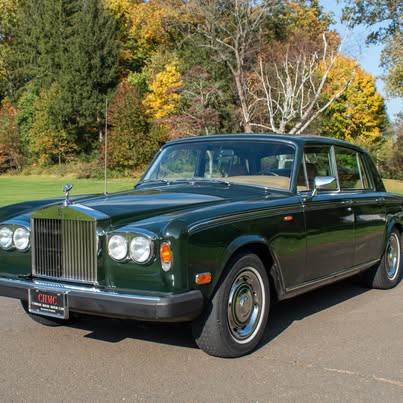
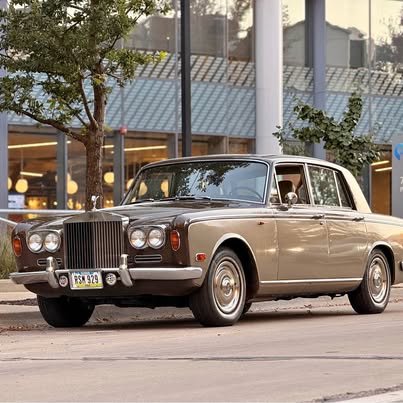
There is only one engine family in a Silver Shadow, and it is a great one. The V8, factory designation L410 in its Shadow form, is an all-alloy, pushrod design with hydraulic tappets, a five-bearing crankshaft and wet liners — architecture introduced in 1959 for the Silver Cloud II and developed for the next four decades, to the last Crewe-built Bentleys of the early 2000s. That longevity tells the essential truth: the basic engine is massively understressed, conservatively tuned, and, if oil and coolant have been changed, very hard to wear out. Engines covering 150,000 miles and more without internal work are unremarkable. What kills Shadows is almost never the bottom end. It is everything bolted around it, and everything the last three owners decided not to service.
The first Shadows carried the engine at 6,230 cc. For the 1970 model year Crewe stroked it to 6,750 cc — the famous six-and-three-quarter litres that became a Rolls-Royce signature. The increase was about torque and effortlessness rather than headline power, and on the road the 6.75 pulls from low revs with a smooth, muffled surge that suits the car perfectly. A healthy example starts promptly, settles to an idle so smooth you check the instruments to confirm it is running, shows strong oil pressure, and pulls cleanly without smoke or hesitation once the hydraulic tappets have filled. Cold-start tappet noise that fades within seconds is common and usually harmless; noise that persists hot is a conversation. Blue smoke on start-up after standing points first to hardened valve-stem seals, a known and manageable job; continuous smoke under load is ring or bore wear, and on this engine that means an engine-out rebuild at a price that will re-order your whole budget.
Fuelling on most cars is by twin SU carburettors — HD8 units on earlier cars, later the HIF type — under a large silenced air intake: simple, smooth, and well understood by any specialist who knows SU work. US emissions cars accumulated extra equipment and altered settings through the 1970s, and the last California-market cars departed furthest from standard, so on any late US car look at what is actually under the bonnet rather than assuming the textbook layout. The common running faults are period SU faults, not Rolls-Royce mysteries: worn throttle spindles drawing air and spoiling the idle, sticking pistons, perished diaphragms, and mixture settings disturbed by amateur tuning. A car that will not idle evenly, hunts, or needs choke long after it is warm is usually asking for a proper carburettor service and set-up — a few hundred dollars if the bodies are sound, rising to a full rebuild bill if spindles and bodies are worn. What it is rarely asking for is a new engine, whatever the seller's mechanic has told him.
Cooling deserves its own paragraph, because overheating is the one insult this alloy engine does not forgive gracefully. The system is conventional — belt-driven pump, large radiator, viscous fan coupling on later cars — but the engine is alloy, the car is heavy, the air conditioning adds load, and fifty years of silt and marginal hoses narrow the margin Crewe built in. A temperature gauge that climbs in traffic, a viscous coupling that never locks up, a radiator that has been sealed rather than recored, or coolant that comes out brown are all findings, not quirks. A radiator recore, pump, hoses and thermostat done together is a four-figure job at a specialist, and money well spent on any car you buy; a cooked engine is a five-figure conversation. Check the gauge on the test drive, in traffic, with the air conditioning on — the exact condition a tired system fails.
Oil leaks need reading rather than panic. Old alloy V8s mark their territory — rocker-cover joints, the valley, crank seals — and a bone-dry engine on a fifty-year-old Shadow usually means it has just been steam-cleaned for sale. Judge volume and location, not mere presence: a few spots are period character, but a car losing oil fast enough to lower the dipstick between checks has seal work priced into it, and rear-main work is an engine-or-gearbox-out job, so the labour, not the seal, is the bill. Oil that is black, thin or fuel-smelling is evidence about the previous owner — and on a Shadow the previous owner's habits are the best predictor of your first year's bills.
The hydraulic system is part of the engine story
No buyer should separate the engine from the hydraulics, because on a Shadow the engine drives the system the car depends on to stop. Two engine-driven pumps, mounted on top of the engine in the valley, pressurise a circuit — working at pressures in the region of 2,500 psi — that serves the power brakes and the self-levelling through a pair of accumulators. There is no conventional vacuum brake servo. The pedal operates valves; stored hydraulic pressure does the stopping. It is a brilliant system when maintained: powerful, progressive and fade-resistant in a two-and-a-half-ton car. It is a frightening and expensive one when neglected, and it is covered in depth in the problem areas below. The point here is simpler: the pumps, accumulators and fluid are service items in the same sense as the oil filter, and a history file with no hydraulic work in twenty years is not evidence the system needs none. It is evidence nobody has paid for any.
Gearboxes
Almost every Shadow you will meet is an automatic, and there are two. The earliest home-market cars used a four-speed automatic built by Rolls-Royce under licence from General Motors' Hydra-Matic design. Export and left-hand-drive cars used GM's Turbo Hydra-Matic 400 three-speed, and from 1968 the TH400 became the standard fitment across the range, remaining so to the end of production in 1980. A tiny number of early cars were built with manual transmission to special order; if one is offered to you, verify it from the chassis record, because rarity cuts both ways — fascinating if genuine, worthless as a premium if it is a story.
The TH400 is one of the strongest automatic gearboxes ever made, used behind big-block American muscle cars, and in a Shadow it is rarely the weak link. Changes should be smooth and almost imperceptible at gentle throttle, firmer under load, with prompt engagement of drive and reverse and no flaring, slipping or delay. Fluid should be red and sweet-smelling; dark or burnt-smelling fluid is a service history written in oil. A gearbox service — fluid, filter, pan gasket — is ordinary money. A rebuild is a specialist job realistically in the region of $3,000–5,500 fitted, but the far more common Shadow complaint is not the gearbox at all: it is the selector linkage, the vacuum modulator and its pipework, or engine tune so poor the box is blamed for the car's hesitation. Drive the car properly before pricing a rebuild into anything, and note that a long delay engaging reverse on a cold morning, on a car that has sat for months, deserves investigation rather than instant condemnation — or instant forgiveness.
The final drive — a fixed differential unit with half-shafts — is strong and quiet when its oil has been changed. Whine under load, clonks on taking up drive, and leaks at the pinion and half-shaft seals are the usual findings at this age, all fixable, none free. Treat driveline clonks seriously: several different worn joints produce the same noise, and only a lift inspection separates a cheap bush from a dear differential.
Problem areas
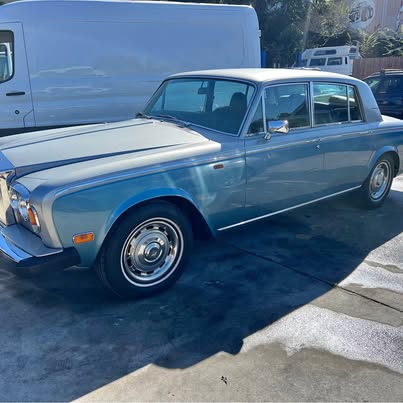
Everything in this section follows from one fact: the Silver Shadow is a complex car that spent two decades being cheap to buy. The failure pattern is therefore not random wear. It is specific systems, neglected in a predictable order, because each was expensive, unfamiliar to general mechanics, or easy to defer because the car still drove. Work through them in the order below — roughly the order in which they can end a purchase.
The hydraulics: brakes and self-levelling
This is the system that defines Shadow ownership, and the one a general classic-car inspection is least equipped to judge. The brakes and rear self-levelling share a high-pressure circuit fed by two engine-driven pumps, with two spherical accumulators storing pressure, height-control valves and levelling rams at the rear, and a maze of high- and low-pressure pipework throughout. The fluid is not ordinary brake fluid and not hydraulic oil. It is Castrol RR363, specially formulated with the lubricity additives the pumps and seals require. RR363 is hygroscopic, degrades with age and moisture, and must be renewed on schedule — specialists work to a fluid change and flush roughly every four years, with hoses renewed on a longer cycle. A system run for years on the wrong fluid, or on RR363 old enough to be black, is a system whose seals, pumps and valves have been wearing from the inside.
Learn the symptoms, because they are the car telling you its service history out loud. The brake pressure warning lamps on the dashboard should light with the ignition and go out as pressure builds after start-up; a lamp that stays on, comes on while driving, or comes on when the brake pedal is pressed repeatedly at idle is reporting low stored pressure. The classic accumulator test needs no tools: with the engine off after a run, pump the brake pedal and count the applications before the warning lamp lights and the pedal feel changes — a healthy system gives you many applications from stored pressure, commonly quoted by specialists as twenty or more, while a car whose lamp arrives after only a handful has tired accumulator spheres whose internal gas charge has leaked away. New or recharged spheres are a few hundred dollars each in parts, but treat tired spheres as a marker, not the whole job: they fail with age, and a car old enough to need spheres is old enough to need its fluid, hoses and pump condition assessed in the same visit.
The levelling system fails in character, too. A car that sits down at the rear after standing overnight, then rises when the engine runs, is leaking pressure internally or externally — height-control valves, ram seals and pipe unions are the usual suspects. A car that sits at the wrong height permanently has maladjusted or seized linkage or valves. A car that rises and falls restlessly, or groans and knocks from the rear over bumps, has air, wear or valve trouble in the circuit. Height-control valves and rams can be rebuilt or replaced by specialists; a full hydraulic overhaul — pumps, accumulators, valves, hoses, fluid, labour — is the famous Shadow bill, and honest budgeting puts a comprehensive system refurbishment in the region of $5,000–10,000 depending on how much is renewed, with individual jobs (a pair of spheres, a height valve, a set of high-pressure hoses) each running from several hundred dollars into the low thousands fitted. That range is exactly why the purchase rule exists: a car with documented recent hydraulic work by a known specialist is worth a substantial premium over an identical car with a silent history file, because on the silent car you should assume the bill is still to come and price it in.
Two traps deserve naming. First, the well-meaning general mechanic: Shadows have been ruined by workshops that treated the system as ordinary brakes, fitted ordinary seals, used ordinary fluid, and bled it like a Ford. Ask who has maintained the car, by name, and value a marque-specialist stamp in the book above almost anything else in the file. Second, the cosmetically silenced fault: a warning-lamp bulb removed, a height linkage disconnected so the car sits still and wrong. Check that the lamps light at ignition-on — a lamp that never lights is a missing bulb until proven otherwise — and that the rear actually levels under load on the test drive, as the inspection section describes.
Rust: the map
The Shadow is a monocoque. There is no chassis frame underneath to save a rotten car, no body to lift off and repair separately: the shell is the structure, and rust in the shell is structural rust. The car was well protected by the standards of 1965, but it was not designed for sixty winters, and American cars from the Northeast and Midwest have often lived them. Work the map in this order.
Sills. The most important panels on the car, as on almost every monocoque of the era. The sills are deep structural box sections, they collect road dirt and moisture, and they rot from inside out, so external paint bubbles are a late symptom, not an early one. Press and prod the full length, examine the jacking points and the sill ends where they meet the wheel arches, and be deeply suspicious of fresh underseal, fresh stone-chip, or new sill covers fitted for sale. Professional sill repair — cutting out, fabricating or fitting repair sections, welding and refinishing — runs roughly $1,500–3,500 a side depending on how far the rot has travelled into the adjoining structure, and it rarely travels alone.
Front wings, inner wings and the bulkhead. The front wings rot around the headlamp surrounds, along the top edge where mud lodges against the inner wing, and at the trailing edge behind the front wheel. Inner-wing and bulkhead corrosion matters more than the outer panel, because it is structure, and because it is where water then enters the front footwells. Look down both inner wings with a torch, and at the bulkhead around the hydraulic components, where fluid leaks strip protection and start corrosion of their own. Wing repair or replacement plus paint is four-figure money per side done properly, and panel fit on a Shadow is unforgiving — a badly aligned front wing announces itself in every photograph you will ever take of the car.
Floors and boot floor. Water enters past perished windscreen and rear-window seals, door seals, and a heater and scuttle area that has had fifty years to start leaking, and then sits under thick sound deadening and Wilton carpet, rotting the floor pans from the top down. Lift every carpet you are allowed to lift, and the boot carpet and spare wheel as well: the boot floor and rear valance rot from standing water in the same way. Surface discoloration is a clean-and-treat job; perforation is panel work, realistically $800–2,000 a section fitted and painted — and floor rot is a marker for the whole shell, because a car wet enough inside to rot its floors has been wet everywhere.
Rear wheel arches, rear wings and door bottoms. The rear arches trap mud on their lips and rot at the lip and where arch meets sill — the classic Shadow photograph angle hides this, so crouch and look, and run a cloth-wrapped magnet along the arch and lower wing. Door bottoms fill with water when their drain holes block, and rot from inside; feel along the bottom edge of every door for bubbling, and check the drains are clear. Individual door and arch repairs are each in the hundreds-to-low-thousands fitted and painted, but they accumulate: four doors, two arches and two sills is a restoration, not a repair list, and should be priced as one.
Subframes and suspension mountings. The suspension mounts to subframes and reinforced points in the shell, and corrosion in these areas is fabrication territory — priced per car, by a specialist, after a lift inspection, and capable of exceeding the value of a cheap example on its own. This is the area listing photographs almost never show, and the strongest argument for paying for a lift inspection. A car can present beautifully at kerb height and be a fabrication project at lift height. The reverse also exists — a scruffy car that is structurally superb underneath — and it is usually the better buy.
Suspension, steering and tyres
Strip away the levelling circuit and the suspension itself is conventional and strong: coil springs and double wishbones at the front, a semi-trailing-arm independent rear, anti-roll bars, and telescopic dampers. The wear items are predictable — ball joints, bushes, dampers, sagging springs — but the car's weight and labour rates set the bill, so a full front-end refresh is a job in the region of $2,000–4,000 fitted at a specialist. Clonks over bumps, uneven tyre wear, wandering on poor surfaces and perished mountings are the tells. Rear subframe mountings deserve specific attention: when they soften and split, the rear steers subtly on the throttle, and the car feels vague in a way owners often blame on a Shadow I's steering box.
Steering divides by series. On a Shadow I, the recirculating-ball box wears and is often adjusted too tight by owners chasing the play away, giving steering vague in the middle and stiff either side of it; a rebuilt box is specialist money, roughly $1,500–3,000 exchanged and fitted, and even then the system is period-vague by design. On a Shadow II, the rack should be direct and clean; play, leaking gaiters, and a heavy or notchy feel are wear or pump faults, and a rack rebuild is again a four-figure fitted job.
Tyres are a budget line buyers forget. The Shadow is heavy, rides on period sizes, and is frequently found wearing tyres that are old rather than worn — check the date codes on all five, because aged, cracked tyres on a two-and-a-half-ton car are a safety item and a four-figure replacement set, not a cosmetic footnote.
Interior and trim
The cabin is why people buy these cars, and it is the second great cost centre after the hydraulics. A Shadow interior uses Connolly hide in quantity — seats, door panels, and on many cars the headlining surround and console — over foam and traditional padding, with book-matched walnut veneer on the dashboard, door cappings and picnic tables, Wilton wool carpet underfoot and lambswool rugs over it in the rear. New, it was one of the finest interiors ever put in a production car. Old, every element has a price, and the prices are craftsman prices.
Leather. Connolly hide dries, cracks and splits along the stitching and across the driver's seat bolster first, because that seat has done the work. Leather that is merely dry and faded responds beautifully to cleaning and feeding, and honest patina suits these cars. Leather cracked through, split at the seams or worn to the backing is retrim territory: a professional retrim in correct materials runs well into five figures — $15,000–30,000 is a realistic span for a full, high-quality job — while individual seat repairs run from several hundred dollars upward per piece. Sit in the driver's seat on every viewing, feel for collapsed foam and broken seat frames beneath the hide, and price what you feel, not what the photographs flatter.
Wood. The walnut veneer itself is durable; its lacquer is not. Fifty years of sun and cabin heat craze, lift and yellow the finish, starting on the dashboard top and the door cappings. Refinishing a full Shadow wood set — stripping, repairing veneer, re-lacquering to the deep Crewe gloss — is specialist work in the region of $2,000–4,500 for the set. Read the finish carefully: milky, crazed lacquer over sound veneer is a refinish; lifted, bubbled or missing veneer is a reveneer, and mismatched tone between pieces means part of the set has already been done, well or badly.
The rest of the cabin. Headlinings sag and stain, especially around a leaking rear window. Carpets rot from beneath when the floors leak. Seat motors, window lifts and the division on long-wheelbase cars fail from disuse as much as use — work every switch, repeatedly, because an intermittent window on viewing day is a dead window by spring. Interior bright trim pits and is re-plating money piece by piece. All of it is priced per hour by people who do it properly, which is why a genuinely good original interior — fed leather, glossy wood, tight headlining, everything working — is worth more, in real money saved, than any mechanical option on the car.
Electrics and air conditioning
Shadow electrics are Lucas-era British: a sound basic architecture, and fifty years of previous owners' additions layered on top. The failure mode is rarely the wire itself; it is earth points, corroded connectors, tired switches and relays, and accessories wired in with enthusiasm and no diagram. Dim lamps, slow windows, intermittent instruments and a fuel gauge with opinions are earth and connector faults until proven otherwise — cheap in parts, tedious in hours. Budget for an auto-electrician's time rather than components, check the battery and its terminals (a car that arrives with a flat battery and a jump pack has told you something), and test the charging system, because an alternator fault left alone flattens batteries and gets misdiagnosed for months.
The air conditioning is not an accessory on a US Shadow; it is core equipment, and on a Shadow II the split-level automatic system is one of the car's best features when it works. When it does not, the causes span the full price range: a system empty of refrigerant, needing seals, a receiver-drier and a recharge at a few hundred dollars; a failed compressor at $800–1,800 fitted; or control faults in the automatic system's servos, sensors and actuators, which need a specialist who knows the system rather than a general air-conditioning shop. Original systems were built for R12; many cars have been converted to R134a, well or badly, and a conversion done without changing seals, oil and drier is a future leak with paperwork. Test it on the viewing: cold air at face level, heat at the feet, fan on every speed, and no clicking or cycling that suggests the controls are hunting. A Shadow with genuinely working air conditioning in an American summer has been maintained by somebody. Price the ones without accordingly.
How to inspect one
Allow half a day, not an hour. Bring a torch, a cloth-wrapped magnet and a notebook, and arrange the viewing so the car is cold and has not been run that morning — a seller who warms the car up before you arrive has edited the evidence. If the car passes your inspection, pay for a marque specialist's lift inspection before money changes hands: the two systems that decide the car's value — the shell underneath and the hydraulics — are the two a kerbside viewing can only half see.
- Start with the paperwork and the chassis number. Match the chassis number on the car's plate to the title and to any build records in the file, and confirm the series and year agree with what is being sold — Shadow I or II, standard or long wheelbase, as the models section sets out. Then read the history file as evidence, in date order, looking specifically for three things: hydraulic work (fluid changes, spheres, pumps, valves, hoses), rust repair, and regular use. A thick file from a named marque specialist is worth thousands. A thin file is not neutral; on this car it is a forecast.
- Cold start, from outside the car. Have the seller start it while you stand at the rear. Watch for blue smoke (valve-stem seals if it clears, worse if it does not), listen for tappet noise that outlasts the first seconds, and note how readily it fires. Then look at the dashboard lamps: the brake pressure warnings must light at ignition-on and go out as pressure builds. A lamp that never lights is a missing bulb until proven otherwise, as the hydraulics section warns.
- The accumulator test. After a run, switch off and pump the brake pedal, counting applications until the warning lamp lights and the pedal feel changes. Many applications — twenty or more is the specialist rule of thumb — means stored pressure is healthy. A lamp after a handful of presses means tired accumulator spheres and a hydraulic system due for assessment, and you should price a system overhaul into the car, not just a pair of spheres.
- Under the bonnet. Check every fluid and read it: engine oil level, colour and smell; coolant colour and level; power-steering fluid; and the hydraulic reservoir — RR363 should be clean, not black. Look for the two hydraulic pumps and their pipework on top of the engine, for leaks at the rocker covers and valley, for perished hoses, bodged wiring, and emissions equipment present, removed, or half-removed. Check the radiator and fan coupling, and the battery and its tray for acid damage and corrosion.
- The shell, at kerb height. Work the rust map from the problem areas in order: sills first, pressed hard along their full length, then front wing edges and headlamp surrounds, rear arch lips, lower wings, door bottoms with a fingertip, and panel gaps all round. Run the magnet over sills, arches and lower doors. Fresh underseal or stone-chip applied for sale is a question, and the answer has to come from underneath, not from the seller.
- Inside the car, carpets up. Lift the carpets in all four footwells and prod the floors; lift the boot carpet and the spare wheel and examine the boot floor. Damp, staining or perforation here confirms the water story the seals tell. Check the windscreen and rear-window seals themselves for lifting and cracking, and look at the headlining for the stains that follow a leaking rear window.
- The interior, switch by switch. Sit in the driver's seat first and judge leather, foam and seat frame from there. Then work everything: every window, repeatedly; seats and their adjustments; the division if the car has one; lights, wipers, washers, horn, instruments, radio. Check the wood piece by piece for crazing, lifting and mismatched tone. An interior where everything works, twice in a row, belongs to a maintained car.
- Air conditioning and heating. Whatever the weather, run the system fully: cold air at face level, heat at the feet, every fan speed, and on a Shadow II, different temperatures at the two levels. Listen for servos hunting and compressors groaning. Working air conditioning on a US car is maintenance evidence; dead air conditioning is a bill somewhere between a recharge and a system rebuild, unknowable until a specialist gauges it — so price the uncertainty.
- The test drive. Twenty minutes minimum, including town traffic, a fast road, and some poor surfaces. The engine should pull smoothly and quietly from low revs; the TH400 should engage drive and reverse promptly and change almost imperceptibly at gentle throttle. Brake firmly from speed, more than once: the car should stop straight, strongly and without fade, judder or a sinking pedal. Note the temperature gauge in traffic with the air conditioning on — the cooling test from the engine section, done properly.
- Levelling, live. With the engine running, load the boot heavily — luggage, a volunteer, whatever the seller permits — and drive briefly. A live system restores the rear ride height, as the hydraulics section describes. Then park, switch off, and judge the stance from a distance: level is correct, down at the rear is a leak or a valve, wrong at one corner is a finding to be explained. Photograph it; faults you talk yourself out of in person are obvious in a picture.
- Steering and suspension on the move. On a Shadow I, expect period lightness but not stiffness either side of centre — that is an over-adjusted or worn box. On a Shadow II, expect direct, clean response; play or notchiness is wear. Listen for clonks over bumps, feel for rear-end steering on the throttle (soft rear subframe mountings), and check the car tracks straight with the wheel centred. Afterwards, check tyre date codes and uneven wear.
- Finish underneath, or commission it. Get the car on a lift, or pay the specialist who will: sills from below, floors, subframes and mountings, hydraulic pipework, brake components, exhaust, and every leak's source rather than its drip point. Perforation in sills, mountings or subframe structure re-prices the car completely. A car that passed steps 1 to 11 and fails here was never the car you thought it was — which is exactly what the lift fee is for.
Values
The market block beneath this guide carries the current listings and recorded-sale figures for the Silver Shadow, refreshed as the market moves, and it is the only place numbers belong — because on this model, a price quoted without a condition statement attached is nearly meaningless. Read that block the way you would read a Shadow itself: by condition first, and by badge second.
The condition spread is the widest in the classic market, and it is driven by arithmetic, not fashion. A neglected Shadow and a maintained one differ by the cost of a hydraulic overhaul, structural rust repairs, an interior retrim and a decade of servicing — a sum that can exceed the entire value of the cheaper car several times over. So the market does not price Shadows on a smooth curve from bad to good. It prices two populations: project and parts-adjacent cars, bought by the brave and the breakers, and maintained, documented, regularly used cars, bought by people who have done the sums in this guide. The gap between them is not a discount to be negotiated away. It is the deferred maintenance, itemised. When a car sits far below the maintained population, the correct question is never how much cheaper it is. It is which of the big bills — hydraulics, shell, interior, or all three — the price is quietly itemising for you.
Within the maintained population, the premiums are rational and durable. A Shadow II generally commands more than an equivalent Shadow I, because the steering and air conditioning make it the better car to use, and usable cars find more buyers. Long-wheelbase cars and Silver Wraith IIs carry a modest premium when the rear compartment is genuinely fine and the division works, and none when it is not. Coachbuilt two-door cars are a separate market and should never be valued off saloon figures. Documented history is the most transferable premium of all: invoices from a recognised specialist for hydraulic work, rust repair and regular servicing add real, recoverable value, because the next buyer can verify what he is not going to have to pay for. Colour and trim move individual cars within the condition population, never across it. No colour rescues a rotten shell.
Asking prices and achieved prices part company on Shadows more than on most classics, for a structural reason: sellers price from what they paid, what they have spent, or what the car cost new, while buyers price from the bills they can see coming. Cars advertised hopefully can sit for many months, and the recorded sales beneath this guide are the corrective — they show what buyers actually paid. Use them as a floor of evidence, not a ceiling of ambition. And allow for the negotiation reality of a thin market: there are few buyers for any individual car, but a seller with a genuinely sorted, documented car is stronger than the thinness suggests, because sorted cars are rarer than production figures imply. Most of the thirty thousand built are not sorted. Many no longer exist. The good ones are a small, self-selecting population, and they are priced like it.
Finally, budget the purchase as a programme, not a price: the purchase, plus the first year's catch-up servicing — which on any car without recent invoices should be assumed, not hoped away — plus a reserve for the hydraulic system if its history is silent. Buyers who do that arithmetic before purchase enjoy these cars. Buyers who spend the whole budget on the purchase and meet the arithmetic afterwards become the next sellers of cheap Shadows.
Parts and ownership
The good news first: a Silver Shadow is one of the best-supported cars of its era, because so many were built and so many survive, and because a strong specialist trade — in the United States as well as Britain — has grown up around the Crewe cars. Heritage factory support, independent specialists and a healthy trade in good used parts mean very little on a Shadow is truly unobtainable. The honest qualification is price and labour: parts for a hand-finished, low-volume luxury car cost what they cost, and many jobs are labour-heavy because the car was assembled without much regard for the mechanic's afternoon.
Straightforward: engine service items, filters, plugs, belts and hoses; carburettor service kits for the SU units; brake pads, discs and wear components; suspension bushes, ball joints and dampers; exhaust sections; tyres in the period sizes; glass rubbers and door seals. A competent marque specialist handles all of it routinely, and a well-kept Shadow's annual servicing is comparable in structure — if not in unit prices — to any other large classic: oil, filters, plugs, fluids including the hydraulic system's schedule, and inspection by someone who knows where these cars hide their wear.
Specialist and dearer: anything inside the high-pressure hydraulic system beyond routine spheres and fluid — pumps, height-control valves, levelling rams and pipework, where the parts are obtainable but the knowledge is the product; RR363 fluid itself, which must be the correct fluid and not a substitute; steering-box rebuilds on the Shadow I and rack work on the II; Connolly-grade leather, veneer work and walnut refinishing; body panels and brightwork, where fit and finish decide the bill; and air-conditioning components for the automatic systems, especially the Shadow II's split-level installation. None of this is a reason not to buy the car. All of it is a reason to buy the car whose previous owner has already paid for the items on this list that wear out.
Running one. A sorted Shadow is a realistic regular-use classic, with three conditions. First, use it: these cars deteriorate by standing — seals dry, hydraulic fluid ages in place, tyres age out, carburettors gum, batteries die — and the cheapest maintenance a Shadow gets is regular exercise. Second, keep it under cover and on a battery conditioner; the electrics and the interior repay dry storage out of all proportion to its cost. Third, use a specialist, and keep every invoice. Fuel consumption is what a 6.75-litre V8 in a heavy car suggests — expect the low-to-mid teens in miles per gallon in mixed use — and club support is strong on both sides of the Atlantic, genuinely useful for parts leads and finding specialists. The budget line that catches new owners is the first year: catching up deferred maintenance on a running car honestly runs into the low-to-mid thousands of dollars before any improvement begins, and recommissioning a car that has sat for years — fuel system cleaned, hydraulics flushed and assessed, brakes overhauled, every fluid and seal renewed, tyres replaced — is a five-figure programme at a specialist done properly. That is not a warning against the car. It is the price of the car, stated in the right section.
Which one to buy
- The all-rounder: Silver Shadow II, standard wheelbase. Rack-and-pinion steering and split-level air conditioning make it the best Shadow to live with, the production run gives you a real choice of cars, and parts support is the deepest in the range. If you want one Shadow to drive and enjoy, start here and buy the best-documented example you can find.
- The traditionalist's car: a late Silver Shadow I. A well-kept 1974–76 car on the 6.75 engine and TH400 gearbox gives you the classic specification with most development done, and period charm the II trades away for competence. Judge the steering on the drive and accept it for what it is, rather than paying to chase play the design put there.
- The value buy: the honest Shadow I with paper. Because buyers chase the II, a Shadow I with documented hydraulic work, a sound shell and a working interior is frequently the most car per dollar in the range. The discount belongs on undocumented cars, not the series — a sorted I beats a tired II at any price relationship.
- The rear-seat car: long wheelbase, or Silver Wraith II. If the car will carry people in the back — family, occasions, long tours with friends — the four extra inches transform it, and the mechanical cost of the privilege is nil. Verify the division works, and value a fine rear compartment as the feature it is.
- The coachbuilt car: two-door saloon or drophead coupé. A different market, a different budget and a different inspection — coachbuilt panels and bespoke trim — but the same engine and hydraulics underneath, so the mechanical discipline of this guide applies in full. Buy one as a Corniche-family car, never as a cheap way into a Shadow.
- The project: only with your eyes open. A cheap Shadow is rational for exactly one buyer: the skilled, equipped owner-mechanic who has priced the hydraulics, shell and interior honestly, has the years the work takes, and wants the project itself. For everyone else it is the most expensive route to a good Shadow that exists.
And the rule that overrides all of the above: buy the documented maintenance, not the model year, the colour or the badge. Hydraulics with invoices, a shell proven sound on a lift, an interior that needs feeding rather than retrimming — those decide what a Silver Shadow costs you. Deferred maintenance on this model cannot be improved gradually; it can only be paid for, in full, by whoever owns the car when it comes due. Make sure that was the previous owner.
See the 11 Silver Shadow cars currently listed.
For sale now
Expand
 $30,000
Expand
Expand
Expand
Expand
Expand
$27,000Expand
What they sell for: Silver Shadow sale prices.