
Triumph Spitfire buyer's guide
Triumph Spitfire -- the model's own buyer's guide: variants, values and what to check.
Years listed: 1967-1978 · Series: Spitfire
Overview and history
You meet the Triumph Spitfire in listings today in a way the factory never intended: not as a neat model-year ladder, but as individual survivors, most of them forty-five to sixty years old, most modified, repaired or repainted at least once, and described by sellers with wildly varying accuracy. That is the starting point for buying one well. The badge tells you the family. The commission plate, the engine number, the rear suspension, the carburettors and the state of the chassis tell you what you are actually looking at.
The car itself is simple, and the simplicity is the appeal. The Spitfire appears in October 1962 as Triumph's answer to the Austin-Healey Sprite and MG Midget, built at Canley in Coventry on a shortened, backbone version of the Triumph Herald chassis, with Giovanni Michelotti's clean, low, two-seat open body over it. Construction is old-fashioned even for 1962: a separate steel chassis, a bolt-on body tub, a one-piece forward-hinging bonnet and front wings that give you superb engine access, coil-and-wishbone front suspension, and a swing-axle rear end with a transverse leaf spring. The engine is the iron Standard-Triumph small four, in 1147 cc form at launch, driving the rear wheels through a four-speed manual gearbox. There is no automatic Spitfire, ever. If a listing offers you an automatic, you are reading a seller error, not a rare variant.
Production runs for eighteen years, through five marks — Mk I (badged Spitfire 4), Mk II, Mk III, Mk IV and the Spitfire 1500 — to August 1980, totalling a little over 314,000 cars. The great majority go to North America, which is why the model survives in the United States in such numbers. It also means the car you meet today is usually a US-specification car, with US emissions equipment, bumpers and gearing shaping how it drives, and you judge it as that car, not as the lighter, stronger home-market version in the period road tests.
Here is the listing reality. In the current Classic Listings pool the Spitfires on offer skew heavily late: the years represented run from a single 1967 car at one end to a cluster of 1970s Mk IV and 1500 cars at the other, with 1975–1979 cars forming the bulk of what you will actually go and see. Early Mk I and Mk II cars are genuinely scarce in ordinary listings now — they survive, but they trade through clubs and specialists more than through general marketplaces. So this guide spends its weight where your money will most likely go: on the Mk III, Mk IV and 1500 as used cars, on what varies between individual examples of the same nominal model — engine swaps, overdrive fitted or not, hardtop present or missing, wire wheels versus steel — and on the inspection that separates a sound Spitfire from a pretty one with a rotten chassis.
Two myths to clear away at the door. First, the Spitfire is not a Triumph TR in miniature mechanically: it is Herald-based, with Herald-derived suspension, gearbox and axle thinking, and it drives and breaks accordingly. Second, it is not a fragile car by design — it is a simple, under-stressed car that tolerates neglect badly in specific, predictable places: the chassis outriggers, the differential, the thrust washers in the engine, and the rear wheel bearings. Learn those places and the Spitfire becomes one of the most honestly assessable classics you can buy, because almost nothing on it is hidden from a buyer willing to get underneath and look.
The models
You buy a Spitfire by mark first and by individual car second, but you verify the mark from the car, not the advert. Titles drift, badges get swapped, bonnets and dashboards migrate between cars. The commission number plate — on the bulkhead or door shut depending on year — and the engine number are your ground truth, and the visual cues below let you cross-check them in thirty seconds.
The Mk I, sold as the Spitfire 4 from 1962 to 1964, is the purest and now the rarest in general listings: low bumpers, a simple dashboard, and the 1147 cc engine on twin SU HS2 carburettors. The Mk II (1965–1967) keeps the same shell and engine size with more trim and a little more power; you distinguish it by trim and badging rather than shape, which is exactly why Mk I/Mk II confusion is common in adverts. The Mk III (1967–1970) is the first major step: the raised front bumper, a proper folding hood replacing the earlier build-it-yourself top, wood veneer dashboard facing, and the 1296 cc engine. The Mk IV (1970–1974) is Michelotti's tidied car — squared-off tail in the style of the Stag and GT6 Mk III, cleaner front end, a synchromesh first gear at last, and the swing-spring rear suspension that finally tames the swing axle's worst habit. The Spitfire 1500 (1974–1980) keeps the Mk IV shell, adds the stroked 1493 cc engine for torque, and in US form accumulates the big impact bumpers, raised ride height and single-carburettor detuning of the federal years.
| Model | Years | Engine | Output | Built | Character |
|---|---|---|---|---|---|
| Spitfire 4 (Mk I) | 1962–1964 | 1147 cc four, twin SU HS2 | 63 bhp | ~45,700 | Purest and scarcest; simple trim, non-synchro first gear, original swing-axle handling |
| Spitfire Mk II | 1965–1967 | 1147 cc four, twin SU HS2 | 67 bhp | ~37,400 | Same shape, better trim and tune; the connoisseur's early car |
| Spitfire Mk III | 1967–1970 | 1296 cc four, twin SU HS2 | 75 bhp | ~65,300 | Raised bumper, real hood, veneer dash; the sweet early performer |
| Spitfire Mk IV | 1970–1974 | 1296 cc four, twin SU HS4 (US: emissions tune) | 63 bhp DIN (UK); US federal tune lower | ~70,000 | Squared tail, all-synchro box, swing-spring rear; the balanced classic |
| Spitfire 1500 | 1974–1980 | 1493 cc four, twin SU HS4 (UK) / single Zenith-Stromberg (US) | 71 bhp (UK); 53 bhp (US federal, late) | ~95,800 | Torquiest and most numerous survivor; US cars trade power for gearing and equipment |
Treat the production figures as the commonly published factory totals, rounded — good enough to judge rarity (a Mk II is a genuinely low-production car; a 1500 is not rare at all), never good enough to justify a premium on their own. Output figures need the same care: a seller quoting the UK 1500's output for a US single-carburettor car is misleading you, innocently or otherwise. Judge the car in front of you by specification, not brochure numbers.
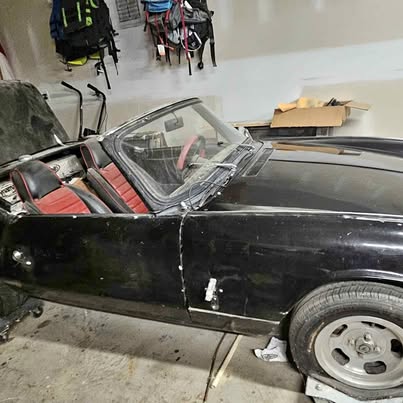
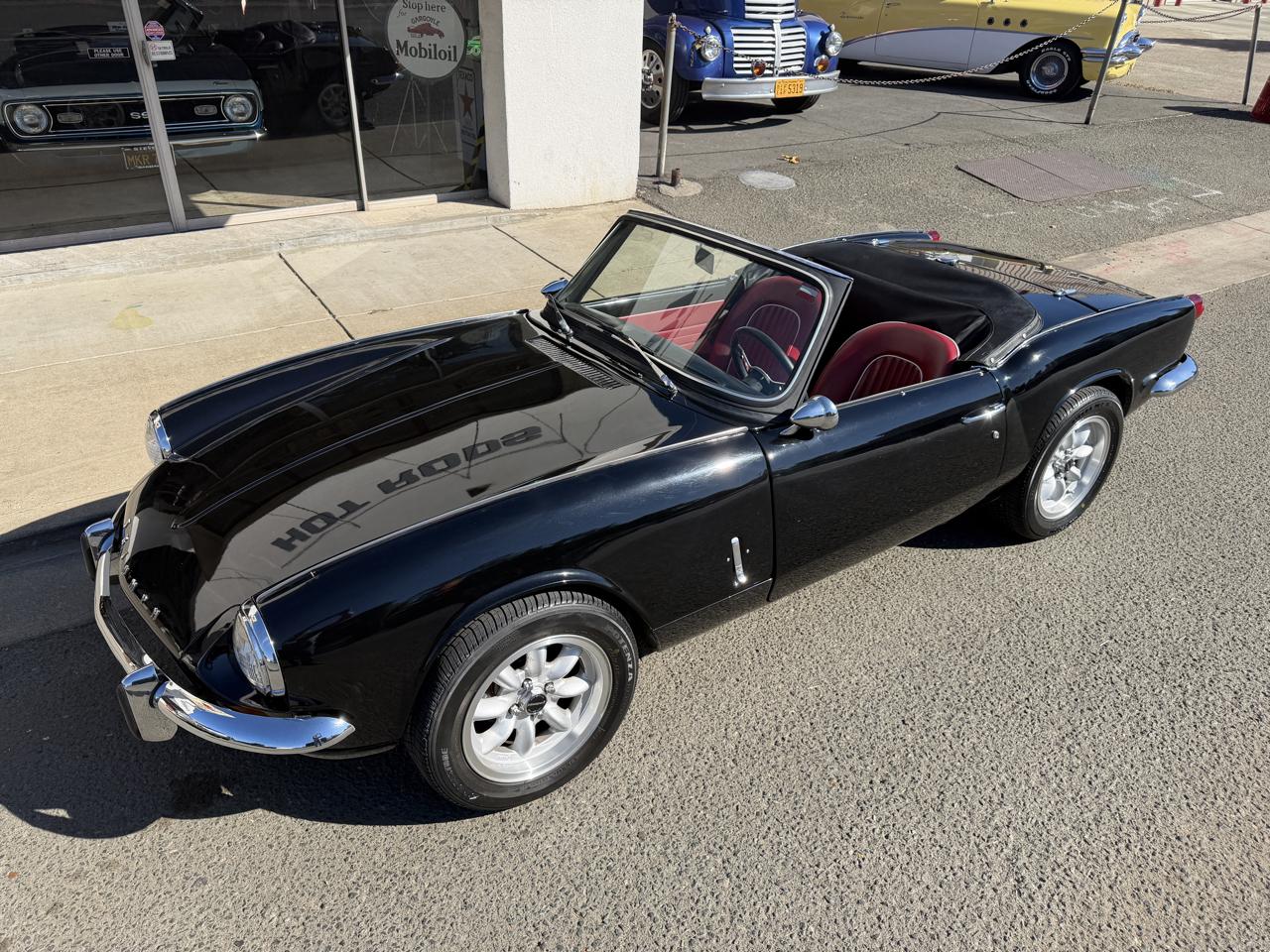
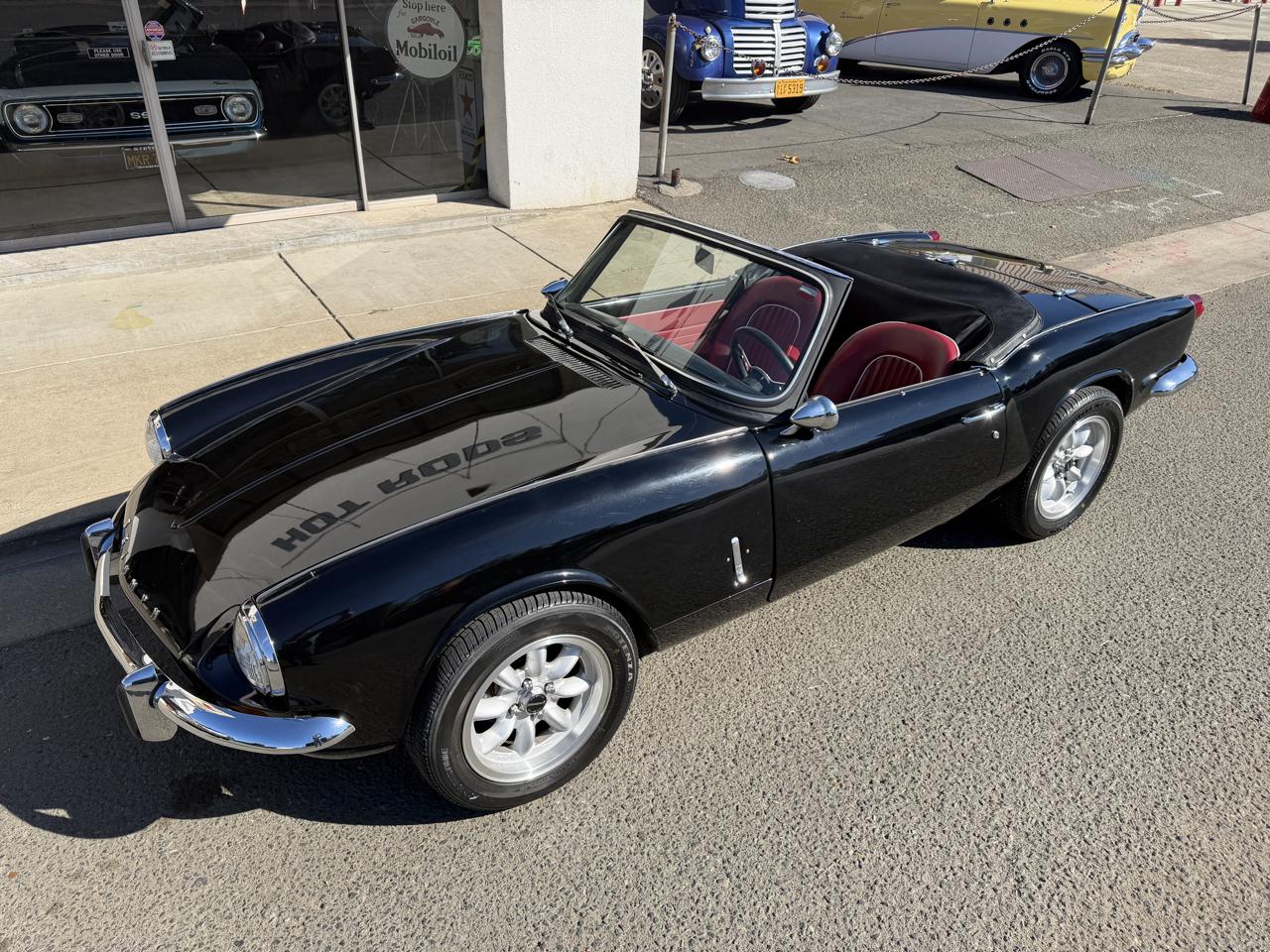
An early car like this one teaches you the first listing skill: dating by detail. You look at the front bumper height, the dashboard, the hood type and the engine size before you believe any year in the text, because 1967 sits exactly on the Mk II to Mk III change and sellers get it wrong in both directions. You check the commission plate against the claimed year, you confirm whether the engine is the 1147 or the 1296, and you treat any mismatch as a question the seller answers with documents, not as a detail you wave through because the car looks charming.
What varies car to car matters more than the mark ladder once you are shopping in earnest, and four options and alterations dominate listings. Overdrive — the Laycock unit on the back of the gearbox, operated by a switch on the gear lever or column stalk depending on year — transforms motorway use and is the single most desirable factory option; it is also retrofitted to many cars, well and badly, so you verify it engages and disengages cleanly rather than trusting the switch's presence. The factory hardtop adds winter usability and value when present and in good order, but a seller charging hardtop money must produce the top, its fixings and its seals. Wire wheels look right and photograph beautifully; they also bring splined hubs, knock-off spinners and tube maintenance, and worn splines are a real cost, so you inspect them as a mechanical system, not as jewellery. Engine swaps are endemic: the 1493 engine goes into Mk IV cars, the GT6's six-cylinder conversion exists but is rare and changes the car's character entirely, and Herald, Toledo and Dolomite small fours all interchange in ways that make "matching numbers" claims worth checking against the engine number prefix. None of these variations is automatically good or bad. Each one reprices the car, and your job is to make the seller's description prove itself on the car.
Engines and gearboxes
The 1147 and 1296 engines: the Herald four grows up
Every Spitfire engine is the same fundamental unit: the Standard-Triumph SC iron four, pushrod overhead valves, three-bearing crankshaft in its early forms, descended from the Standard Eight's 803 cc engine of the 1950s and shared in its development with the Herald, Vitesse small-six programme thinking and later the Toledo and Dolomite 1300/1500. You do not need the genealogy for its own sake; you need it because parts, weaknesses and interchange all follow from it. This is a simple, torquey, low-revving iron engine that makes its power without stress, leaks oil as a matter of course from joints that were never precision-sealed, and fails in two specific mechanical ways that you can test for on a driveway. Everything else is tuning and condition.
The 1147 cc engine of the Mk I and Mk II displaces by a bore and stroke of 69.3 mm by 76 mm, runs twin SU HS2 carburettors throughout Spitfire use, and produces 63 bhp in Mk I tune and 67 bhp in Mk II tune with a higher compression ratio and revised cam timing. It is a sweet, free-revving little engine in good order, noticeably smoother than its Herald application because the Spitfire tune and exhaust let it breathe, and it pulls the light early cars adequately rather than quickly. Its limits are real: three main bearings, modest oil pressure when worn, and a crankshaft end-float problem — the famous thrust washer failure — that is this entire engine family's most important mechanical check on any Spitfire of any mark. The thrust washers controlling crankshaft end float wear and can eventually drop into the sump; once they drop, the crankshaft moves fore and aft under clutch operation, machining the block and crank until the engine is scrap or an expensive rebuild. You test for it directly: with the engine off, lever the front crankshaft pulley gently fore and aft, or watch the pulley while an assistant presses the clutch pedal — visible movement beyond a few thousandths of an inch means wear, and obvious clunking movement means you are buying an engine rebuild whether the seller knows it or not. No other single test tells you as much about a Spitfire engine for as little effort.
The 1296 cc engine of the Mk III and Mk IV grows from the 1147 by bore, to 73.7 mm by 76 mm, and in Mk III form with twin SU HS2 carburettors and a better camshaft it makes 75 bhp and gives the Mk III a genuine performance edge period testers noticed immediately. In Mk IV form the same displacement continues with emissions equipment for the US — air injection, exhaust gas recirculation in federal applications, charcoal evaporative controls, retarded ignition and leaner carburation — and progressively lower effective performance in US tune; later cars move to SU HS4s in home-market form. When you inspect a 1296 you are therefore inspecting two different engines wearing one displacement: the eager Mk III car and the federal Mk IV car whose flatness may be correct-for-specification rather than a fault. The federal car that feels strangled against a Mk III may simply be healthy and strangled by design, which is a buying decision, not a repair bill.
Tuning state dominates how any of these engines feels, and SU carburettors reward understanding. An SU is a constant-depression instrument: a piston rises and falls in the dashpot against a spring and oil damping, carrying a tapered needle through a jet, so mixture follows airflow. Worn throttle spindles leak air and ruin the idle; low dashpot oil lets the piston flutter and causes the hesitation sellers blame on ignition; mismatched needles after a previous owner's "rebuild" give you a car that idles or cruises but never both. You check the basics in order — dashpot oil level, piston fall test (lift the piston and let it drop; it should fall with a soft click, evenly on both carburettors), spindle play by wiggling the throttle shafts, and balance by listening at each intake with a length of hose. A 1296 or 1147 that will not idle evenly almost always has an air leak, spindle wear or ignition wear behind it, in that order, and almost never needs the full carburettor replacement sellers have often already paid for once.
The 1493 engine and the federal question
The 1493 cc engine of the Spitfire 1500 is a stroke job: 73.7 mm bore by 87.5 mm stroke, the long stroke achieved with a new crankshaft, giving you torque at low revs rather than power at high ones. In home-market form on twin SU HS4 carburettors it makes 71 bhp and pulls the taller final-drive gearing Triumph fitted to the 1500 with real ease; it is the most relaxed cruising engine in any Spitfire. In US federal form it is a different ownership proposition: a single Zenith-Stromberg 150 CD4 carburettor, a catalytic converter on later cars, air injection, EGR and compression and ignition settings aimed at the emissions test, producing figures that fall through the production run to around 53 bhp for the late cars. The engine underneath is the same strong unit — arguably the strongest of the family, with the developed bottom end — but the federal installation wraps it in vacuum hoses, thermal switches and a carburettor that punishes amateur adjustment.
You judge a US 1500 therefore in two layers. First, the iron engine: thrust washers as above, oil pressure (a healthy hot idle should hold a reading on a test gauge rather than merely keeping the warning light out — the light alone tells you almost nothing, coming on at very low pressure), compression evenness across the four cylinders within about ten percent, and no bottom-end rumble on a hot restart. Second, the federal layer: every vacuum hose present and routed, the Stromberg's diaphragm intact (a split diaphragm gives you a car that idles and dies as you open the throttle), the automatic choke behaving, and no amateur "desmogging" that removed equipment and left the carburation and ignition mismatched to what remains. A properly running federal 1500 is a pleasant, torquey car within its limits. A badly desmogged one is a flat, pinking, overheating puzzle that three previous owners failed to solve, and the listing price rarely reflects which of the two you are travelling to see. Ask directly what emissions equipment remains on the car and listen for whether the seller knows — the answer sorts the cars faster than any photograph.
One family trait applies to every mark: these engines use oil, past guides and rings and out of the joints. A quart in a thousand miles on a sound engine that holds pressure and compression is a monitoring matter; a quart in three hundred miles with blue smoke on the overrun is a rebuild conversation. The seller's phrase "uses a bit of oil, they all do" covers both cars, and only one of them is acceptable.
Gearboxes, overdrive and the final drive
The gearbox is a four-speed manual in every Spitfire, but it is not the same gearbox across the run. Early cars use the Herald-derived three-rail gearbox with no synchromesh on first gear: you select first at a standstill or with a practised double-declutch, and a crunch into first on the move demonstrates the design, not a defect. Synchromesh on first arrives with the Mk IV's revised box. Later 1500 cars move to the single-rail gearbox shared with the Marina-derived Triumph applications, lighter and more precise when the linkage bushes are fresh and vague when they are not. Overdrive retrofits often bring the gearbox from the donor car with them, so you confirm box and overdrive type from the car, not the advert.
The Laycock de Normanville overdrive is the option that changes the car. It is an epicyclic unit bolted to the back of the gearbox, hydraulically engaged by an electric solenoid, giving you a higher ratio on third and fourth gears (fourth and third on most Spitfire installations) at the flick of a switch. D-type overdrive serves the earlier cars; the J-type serves the 1500 era, with detail differences in engagement harshness and service parts. In use it drops cruising revs by roughly a fifth, which on an engine that is busy at motorway speed is the difference between a car you drive to events and a car you trailer. You test it methodically: engage at a steady fifty in fourth and watch the rev counter fall without a jolt or a flare, hold it under load up a gradient, disengage and confirm it drops out cleanly, and repeat on third. An overdrive that slips under load, engages with a bang, or works only when warm is telling you about oil level, oil grade, solenoid or hydraulic pressure in that order — and overdrive oil is gearbox oil, shared, so a neglected gearbox service is an overdrive fault in waiting. A car advertised with overdrive that does not engage on your test is a non-overdrive car for pricing purposes, whatever the promised fuse turns out to be.
The final drive is the Spitfire's acknowledged weak link, and you should expect to interrogate it on every car. The differential is a small, light unit asked to handle the full torque of the larger engines, and it wears: whine on drive that changes or disappears on the overrun points to pinion and crownwheel wear or bearing preload lost; a clunk on taking up drive points to worn differential internals, worn half-shaft couplings or loose mounting; oil leaks from the pinion seal and casing joints are routine, but a casing low on oil whines its way to failure quickly. Final-drive ratios vary by mark and market — taller gearing on the 1500 to exploit its torque, lower on early cars — and previous owners swap differentials between applications, so a car that feels oddly busy or oddly sluggish at a given road speed may simply carry the wrong ratio for its engine, which the speedometer (driven from the gearbox) will then also misreport. You check speed against a phone GPS on the test drive as a matter of routine; a ten percent error is a clue, not a curiosity.
Half-shafts and rear hubs complete the driveline picture. Worn universal joints click and clunk on take-up and overrun; worn rear wheel bearings — a known service item on this layout — rumble and, neglected, damage the hub and shaft. All of it is checkable on a drive and a jack, and all of it belongs in your price calculation, because a Spitfire with a quiet, tight driveline is worth materially more than an identical-looking car that whines, clunks and clicks its way through your test route.
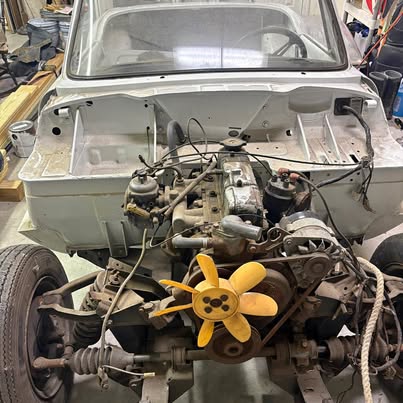
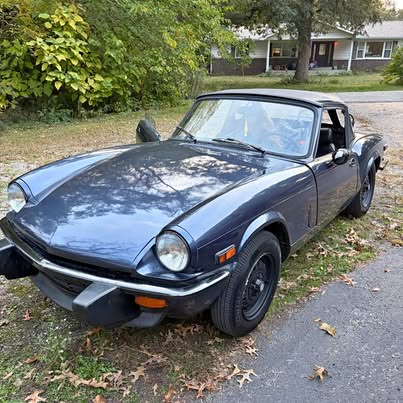
A Mk IV photograph like this one is where you practise the shell checks. You read the tail shape first — the squared, Stag-style rear is Mk IV and 1500 only, so any car with this tail wearing early badges is misdescribed — then you follow the door gaps, the bonnet-to-scuttle shut lines and the sill line along the car's side, because on a separate-chassis car poor gaps mean chassis or outrigger trouble underneath, not merely careless panels. You ask for the same view of the other side and a rear three-quarter before you travel; asymmetry you can see in photographs will be worse in the metal.
Problem areas
Rust: the chassis is the car
On a Spitfire, rust is not a cosmetic section. The separate chassis carries everything, the body tub bolts to it, and the structure you are buying is the frame underneath, not the shiny panels on top. A Spitfire with a sound chassis and tatty paint is a good car awaiting cosmetics. A Spitfire with a rotten chassis and fresh paint is a rebuild project wearing a disguise, and the difference between those two cars is the largest single judgement you make as a buyer. You inspect the chassis as a structure, in a specific order, with a torch, a magnet, a small screwdriver for tapping (with the seller's permission) and no willingness to be hurried.
Start with the main rails and the front crossmember area. The chassis is a backbone design developed from the Herald's, with outriggers supporting the body and floor. Surface rust on the rails is normal and treatable; perforation, flaking layers and previous plated repairs stacked on plated repairs are not. The front of the chassis carries the suspension turrets and takes accident damage as well as rust: look for rippled rails, asymmetric turret positions and filler where a rail should ring when tapped. A car that has taken a front-end shunt often wears a replacement bonnet (the one-piece bonnet and wings assembly is a common swap) and the seller's story will emphasise the panel and omit the frame. Measure or sight along the car if anything looks off; the bonnet gaps discussed in the figure above are your first instrument.
The outriggers and the floor they support are the classic failure zone. The floor pans and the outriggers beneath them trap mud and moisture between panel and frame and rot from the interface outward, so the floor can feel sound under the carpet while the outrigger beneath it is lace. You get under the car — on a ramp if the seller agrees, or at minimum on a mat with a torch — and inspect every outrigger, tapping for the difference between a ring and a crunch. Seat and belt mountings live in this same structure; a car whose seats rock or whose belt mounts flex is failing structurally, not trim-wise. Budget honestly: professional outrigger and floor work runs roughly $800–2,000 per side, and an extensive frame rebuild is a $3,000–6,000 conversation before the body goes back on — which is why chassis state, not engine state, sets the ceiling on what you should pay.
Sills matter less structurally than on a monocoque car, because the chassis does the main work, but rot in the sills, door apertures, rear arches and boot floor still spreads and still costs. You check door fit as a structural test — doors that drop on their hinges, gaps wide at the top and tight at the bottom — and you look inside the rear arches and boot floor for the brown lace photographs never show. The bonnet, a huge one-piece pressing, rusts at its front edge and around the headlamp pods, and a sound used bonnet is neither cheap nor easy to ship, so a rotten one is a genuine cost ($500–1,500 for a good used assembly or repair and paint).
Two closing points complete the map. Water sits at the base of the windscreen and in the scuttle, rotting the bulkhead shelf where the master cylinders mount — softness there is a brake-and-clutch safety issue as well as a rust issue. And everywhere, you distrust underseal applied recently and thickly for sale: fresh black coating over rot is the oldest trick in this market, and a seller who objects to you tapping and probing under a freshly undersealed car has answered your question. The myth to correct here is the one that says a separate-chassis car cannot really fail on rust because you can "just unbolt the body." You can — and the labour to do it, repair the frame properly and refit everything is precisely the cost that makes a rotten-chassis Spitfire the most expensive cheap car you will ever buy.
Engine, driveline and cooling: the mechanical failure modes
The engine's headline failure — thrust washer wear — is tested in Engines and gearboxes, but in problem-area terms it tops your list: it is common, progressive, invisible in photographs, and it converts an engine-out rebuild from optional to mandatory. Alongside it, you assess oil pressure properly, with a mechanical gauge if the car is a serious candidate: you want a healthy figure at hot cruising revs and a stable reading at hot idle, the trend mattering more than the exact numbers. Worn bearings announce themselves as hot-idle pressure collapse and a rumble on a hot restart; worn rings and bores as oil consumption and heavy crankcase breathing; a worn timing chain as a front-cover rattle at idle that quiets with revs. Each symptom has a price: a top-end refresh is an $800–1,800 job professionally; a full rebuild of the small four, done properly with machining, is $3,500–5,500. These engines are cheap to rebuild by classic standards — but cheap is not free, and you price a tired engine as a tired engine.
Cooling faults masquerade as engine faults on Spitfires, so you separate them. The system is a simple pressurised circuit with a small radiator and marginal capacity in hot-climate, slow-traffic use — especially on federal 1500s whose retarded ignition makes them run hot by design. Overheating causes, in the order you test them: a radiator core blocked internally or with fins rotted externally (feel for cold patches across the core on a warmed engine), a thermostat stuck or of the wrong rating, a water pump with a worn impeller or a weeping bearing (squeal and play at the pulley), retarded ignition timing, a weak mixture, and finally a head gasket failing into the waterways (pressurised hoses from cold, bubbles in the header, emulsion under the filler cap). A Spitfire that "just runs hot, they all do" and has an aftermarket electric fan thrown at it without a diagnosis is a car whose real cause is still in there. You want the cause named and evidenced, because a cooked 1493 warps its head into your future.
The differential wear described in Engines returns here as the second great pricing item. A whining differential rebuilt properly — bearings, preload, crownwheel and pinion setup — is a $900–1,800 specialist job; a used unit is cheaper and a gamble in equal measure. Rear wheel bearings and hubs are consumables on the swing-axle car: budget $300–600 per side professionally if hubs are involved, and treat a seller's "slight rumble from the back, probably the exhaust" as a bearing until you have jacked the car and rocked the wheel. Gearbox faults price similarly: synchromesh wear on second is the classic, and a full rebuild sits around $1,200–2,200 plus the clutch you fit while it is out. None of these faults makes a car unsellable. All of them make the asking price wrong until they are subtracted.
Suspension, steering and brakes: the swing axle and everything it implies
The rear suspension is the Spitfire's defining dynamic trait. The early cars use a pure swing axle: each half-shaft pivots at the differential, the transverse leaf spring locates the top, and camber changes dramatically with suspension movement. Lift off mid-corner in a Mk I–III and the loaded rear wheel tucks under and the rear can step out with a suddenness that period testers criticised and modern tyres partly mask but do not remove. Triumph's answer on the Mk IV is the swing spring: the transverse spring pivots at its centre mounting, decoupling the two sides' roll stiffness and greatly reducing the tuck-under tendency. The 1500 continues it. As a buyer you drive the car with respect on your test and feel for looseness, wandering and clunks that mean worn spring bushes, worn half-shaft joints or a cracked transverse spring leaf (look along the spring, and compare ride height side to side). You check rear camber at rest: excessive positive camber or a marked side-to-side difference means spring or mounting trouble, not character. And you verify the car carries the suspension its mark should have, because rear suspension identity is safety identity on this model.
Front suspension is conventional double wishbones with coil springs, an anti-roll bar and trunnion-based lower joints inherited from the Herald. The brass trunnions at the base of the vertical links must be lubricated with oil, not grease — a point the manuals are explicit about and generations of owners got wrong — and neglected trunnions wear the vertical link threads until the joint can fail, which is a collapse-of-the-corner failure, not a rattle. You jack each front corner, check for play in the trunnion and ball joints, and ask when the trunnions were last oiled; a blank look from a long-term owner is information. Wishbone bushes perish, and the whole front end on a high-mileage car benefits from a bush-and-joint refresh that is genuinely DIY-feasible for $250–500 in parts. Steering is rack and pinion, light and direct when sound: play at the wheel comes from rack wear, track-rod ends and the column coupling, and you separate them by having an assistant rock the wheel while you watch each joint in turn. A Spitfire with fresh, tight front suspension and steering is a delight; the same car worn is vague and nervous, and the difference is a weekend and a modest parts bill — one of the few places where a tired car is cheap to make right.
Brakes are discs at the front and drums at the rear across the range, with servo assistance and dual-circuit hydraulics spreading through the later and federal cars. The system is adequate when maintained, and dangerous in the specific ways old hydraulics always are: perished hoses that balloon under pressure, seized rear wheel cylinders that leave you braking on the front axle alone, a master cylinder bypassing internally (pedal sinks slowly under sustained pressure — test exactly that, foot held hard on the pedal for thirty seconds in the seller's driveway), and handbrakes that hold on one side or not at all. Brake pipes on a salt-state car deserve a line-by-line look along the chassis. A full hydraulic refresh is $400–900 in parts and a known quantity; you budget it into any car without recent evidenced brake work, because on a fifty-year-old Spitfire the brakes are a first-month job, not a negotiation point.
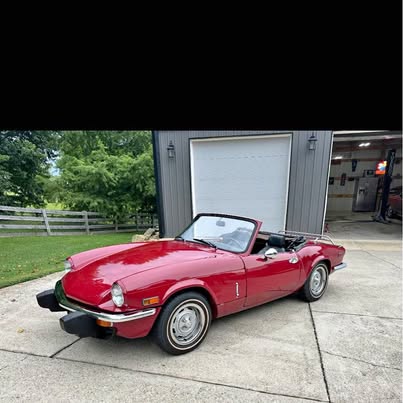
With a 1500 of this period, your photograph reading changes. You stop looking at the colour and start asking what the listing cannot show: whether the single Zenith-Stromberg and its vacuum plumbing survive intact, whether the ride height sits at the raised federal setting or has been lowered (and if lowered, by springs alone or by a full, thought-through conversion), and whether the big federal bumpers are present and straight, because replacing them is a cost and removing them is a legal and resale question in some states. You request an engine-bay photograph before travelling on any 1500 — on this variant, the engine bay is the listing.
Electrics, interior and the top
Spitfire electrics are Lucas, simple, and old, and the faults follow the physics of age. The system is negative earth on all but the earliest production (verify on an early car — polarity conversions are common and usually undocumented), with a dynamo on early cars giving way to an alternator, and earth points that corrode until circuits fail in combinations that look like component failure. You work the electrics as a checklist: every lamp, the indicators, the horn, the wipers, the heater fan, the gauges (fuel and temperature gauges reading low together usually indict the voltage stabiliser behind the dash, not the senders), and the charging light. Intermittent faults are earths and connectors until proven otherwise. A replacement loom is a $250–450 part; melted, bodged, spliced wiring in the engine bay is a fire-risk flag that reprices a car immediately, because you cannot insure your way out of someone else's wiring.
The interior is vinyl, simple and almost entirely reproducible: a tired interior is fixable with seat kits, carpets and a dash top for $800–2,000 in parts, and a "fully restored interior" in a listing may mean exactly those kits competently fitted, which is fine — or seat covers over collapsed foam and split frames, which is not. You sit in both seats, feel for the frame and webbing under you, slide the seats on their runners, and check the belt webbing and mounts, which tie back to the floor structure in the rust section. Veneer dash facings delaminate and crack; replacements exist. A full, working, matching set of Smiths or Jaeger instruments is worth more than sellers credit, because individual gauges are now the expensive way to complete a dash.
The soft top is a service item with a price. A Mk III-onwards folding hood in good order — vinyl sound, rear window clear, frame straight, header rail latching evenly — is a genuine asset. A torn or cloudy-windowed top is a $450–900 replacement fitted, and a car that "never goes out in the rain" with a perished top is a car whose floors have nonetheless seen water, which sends you back to the floor pans with your torch. On early cars, completeness is the whole question: a Mk I or II missing its hood frame irons is missing parts that are genuinely hard to source. The factory hardtop needs its seals, fixings and headlining checked, and storage damage is the norm. None of this decides a purchase alone; all of it belongs in the arithmetic.
How to inspect one
You inspect a Spitfire in this order, because the order front-loads the faults that kill a deal and leaves the cheap faults for last. Take a torch, a magnet, a phone with GPS for the speedometer check, and an assistant if you can. Allow an hour. A seller who will not allow the cold start, the underside look or the full test drive is telling you the inspection result in advance.
- Start from cold, and watch the seller's hands. You insist the engine is stone cold when you arrive — a warmed car hides starting faults, low oil pressure and thrust washer clunks. From cold, a healthy SU-fed engine fires with choke, settles as you push the choke home in stages, and shows no blue smoke beyond a puff. Heavy blue smoke that persists is the oil-consumption fault from Problem areas; white vapour that does not clear and sweetens the exhaust is coolant, and you stop and investigate before anything else.
- Do the thrust washer test before the test drive. Assistant in the car, engine off, handbrake on: you watch the front crankshaft pulley while the clutch goes down and up, then lever the pulley gently. The minimal movement of a sound engine against the obvious travel of a worn one is the single highest-value observation of the day — it is the engine test from Engines and gearboxes, and a bad result reprices or ends the purchase regardless of how the car drives.
- Read the identity before you fall for the car. Commission plate, engine number, gearbox and overdrive presence, suspension type at the rear. You confirm the mark, the engine size and the specification match the advert and each other. A 1500 engine in a Mk IV shell, an early suspension under a late car, a non-overdrive car with an overdrive switch blanked off — each is a fact that changes the price and must be priced, not discovered after payment.
- Work the chassis in the rust section's order. Rails, front turrets, every outrigger, floors, belt mounts, boot floor, bulkhead shelf. Torch on, magnet on the sills and arches, tap test where you may. This is the step sellers rush and the step you slow down. Fresh underseal gets extra suspicion, exactly as Problem areas sets out.
- Check panel fit as a structural instrument. Bonnet gaps even and parallel, doors opening without dropping, boot lid sitting square. On this car, gaps are the chassis talking. Asymmetry plus a story about a "light front bump" means you look at the front rails again, harder.
- Jack each corner and rock each wheel. Front: trunnion and ball-joint play, bearing roughness. Rear: bearing rumble and play, half-shaft joint clunk as you rotate and reverse. The rear bearing check from Problem areas happens here, wheel by wheel, and any corner that rocks or growls goes on the cost list.
- Test the brakes standing still before you trust them moving. Pedal held hard for thirty seconds must not sink (the master cylinder test from Problem areas). Then hoses by eye, pipes along the chassis, handbrake holding on a slope later in the drive. Budget the hydraulic refresh into any car that fails any part of this step.
- Run the electrics checklist. Every lamp, indicators, horn, wipers, heater fan, gauges, charging light, and the overdrive solenoid click if fitted. You are hunting the earth-and-connector faults and the bodged-wiring flag from Problem areas; a car whose gauges all read low together is showing you the voltage stabiliser, and a car with spliced engine-bay wiring is showing you a fire risk.
- Drive it long enough to get it fully hot — twenty minutes minimum. Short drives hide overheating, hot oil-pressure collapse and overdrive behaviour. You use every gear, you feel the downshift into second for synchromesh wear, you take up drive repeatedly for differential and joint clunks, and you listen for the differential whine on drive versus overrun exactly as Problem areas describes.
- Test the overdrive as a system, if fitted. Steady fifty in fourth, engage, confirm the rev drop without flare or bang, hold it up a gradient under load, disengage, repeat in third. An overdrive that fails any part of this is priced as absent, per Engines and gearboxes.
- Check speed against GPS and temperature against behaviour. A speedometer out by more than a few percent suggests a swapped differential or gearbox from the final-drive discussion. Temperature should stabilise; a gauge climbing in traffic with a cold patch on the radiator core is the blocked-radiator diagnosis from Problem areas, made on the seller's fuel.
- Finish with the top, the hardtop and the paperwork. Erect the hood yourself, latch the header rail, check the rear window and frame. If a hardtop is in the price, inspect its seals and fixings. Then documents: title matching the commission number, and receipts evidencing the claimed engine, brake or chassis work. A Spitfire with a fat receipt file for the right jobs is worth a premium over an identical car with a story, because on this model the receipts are the difference between the faults above being history and being your future.
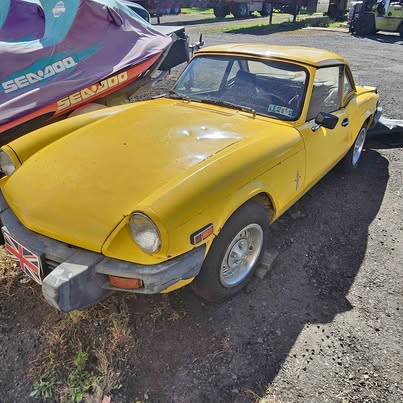
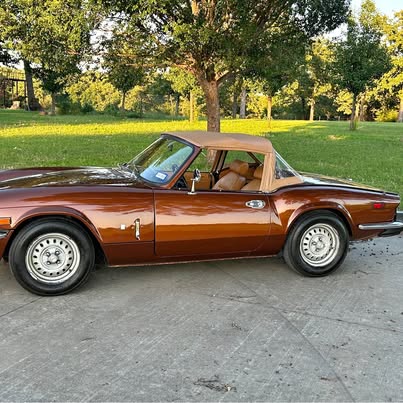
A late car like this one concentrates your inspection into steps 9 to 11. You look first at how it sits — late federal cars sit high by design, so a level stance is correct and a lopsided car is telling you about springs — then you spend your time on the hot drive, the overdrive if fitted, and the temperature behaviour, because on a 1979 car the mechanical systems decide whether it is a driver or a project. You photograph the engine bay yourself on arrival; listing photographs almost never include it, and on the late 1500 it is the most informative view of the car.
Values
You read the Spitfire market by condition first and by mark second, because the condition spread on this model is wider than the variant spread, and the build's market block beneath this guide — the current listings and recorded sales — only makes sense once you understand what separates the cars inside it. A Spitfire is an inexpensive classic, built and surviving in large numbers, and its market behaves accordingly: there is almost always another one, which caps what any ordinary car can ask, and the discipline of walking away is worth more here than on a rare car where scarcity pressures you.
Within that, the drivers of value are consistent. Chassis and body structure dominate everything: a structurally sound, honestly presented car commands its money even with tired paint and a worn interior, because every buyer who knows the model is pricing the frame first, and a car with evidenced chassis work by a known hand holds that value. Mechanical freshness comes next — an engine with a receipted rebuild, a quiet differential, working overdrive — because those are the costs the next owner otherwise faces in year one. Variant premiums exist but stay modest and rational: the Mk III earns a premium as the most desirable combination of early looks and the 1296 engine; the Mk I and Mk II earn scarcity interest from early-car specialists rather than from the general market; overdrive adds real money on any mark because it adds real usability; a good hardtop and wire wheels add a little, and only when they are genuinely good. The US federal 1500 sits at the accessible end not because it is a lesser car to own but because it is the most numerous survivor and the least powerful in federal tune, and a seller asking early-car money for a standard federal 1500 is asking you to ignore the supply that the listings in front of you demonstrate.
The project-to-driver gap is where the market most often misleads newcomers. A non-running Spitfire looks cheap against a driving car until you price the recommissioning honestly: brakes, tyres, hydraulics, fuel system, cooling, electrics and the chassis work that storage usually reveals routinely close most of the gap to the driver — before you value your own weekends. The rational buys are therefore usually at the ends of the market: the honest project bought as a project, and the sorted driver bought at a fair premium. The trap is the middle — the shiny, recently painted, mechanically unexamined car priced as a driver on paint alone. Asking and achieved prices diverge most on exactly those cars. You negotiate from named, costed faults — outriggers, thrust washers, differential, brakes — with the job ranges from Problem areas in your hand, and a seller who has done those jobs properly will show you the receipts. That exchange, receipts against inspection findings, is the whole Spitfire market in miniature.
Parts and ownership
You keep a Spitfire easily by classic standards, and the ownership case is one of the model's genuine strengths. The mechanical parts supply is deep: engine, gearbox, suspension and brake components are reproduced or held by the established Triumph specialists in Britain and the United States — Moss Motors, Rimmer Bros and Canley Classics between them cover most of the range — and the club infrastructure, through the Triumph Sports Six Club in Britain and the Vintage Triumph Register and local Triumph clubs in the US, carries the knowledge and the classifieds of a model that was always a club car. Service parts — filters, plugs, points, brake consumables, hoses, belts — are cheap and same-week; engine and gearbox internals, differential components, bushes, hood and trim kits are all catalogue items. The parts that require patience are body-specific and early-car-specific: good bonnet assemblies, early hood frames and irons, and certain Mk I and Mk II trim, and on those you buy on inspection and club advice rather than on a catalogue photograph.
Running the car asks for rhythm rather than money. Oil and filter changes at 3,000-mile intervals suit an engine of this era; trunnion oiling on the same rhythm, with oil as the manuals specify, is the small discipline that prevents the front suspension's one dangerous failure; valve clearances, points and SU dashpot oil are an afternoon's annual ritual; and the cooling system wants fresh coolant and a hose inspection before every summer rather than after the first boil. Fuel is a live issue: these fuel systems predate ethanol blends, so you use ethanol-resistant hose throughout (perished or rock-hard hose on a newly bought car is a first-week replacement) and you expect carburettor diaphragms and seals to be consumables. Tyres are 155 or 175 section on 13-inch wheels — inexpensive, but they age out before they wear out, so you read date codes on any car you buy, because the swing-axle rear end on aged, hardened tyres is a combination with no upside.
Ownership costs beyond parts stay modest: agreed-value classic insurance is cheap for a car of this value, and the car's simplicity keeps specialist labour hours low — most jobs in this guide are half-day jobs. Storage is the one place to spend thought: a Spitfire stored damp loses its floors and outriggers to exactly the rust map in Problem areas, so a dry garage and a monthly run to full temperature preserve more value than any cosmetic spend. Buy the car a trickle charger and a workshop manual — the factory reprints and the Haynes manual both cover the range — and you own one of the most self-sufficient classics ever sold in America.
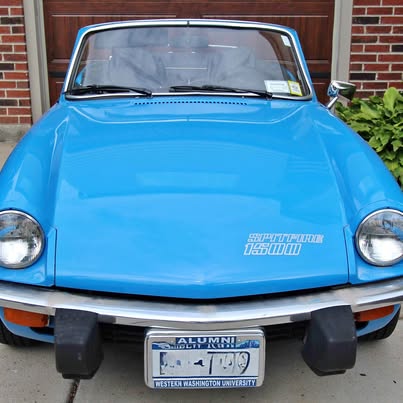
A blue 1500 of this era is the ownership sweet spot in practical terms, and the photograph shows you why buyers keep choosing it: the shell is the tidied Mk IV shape, the parts behind every panel are catalogue items, and the knowledge base for every fault it can develop is fifty years deep. What you look for in this view is stance and panel honesty — even ride height, straight sills, a bonnet line that sits flush — because on the common car, value lives in structure and originality of specification, not in rarity. You buy the best-documented example of this car you can find, and the documentation, not the colour, is what you pay for.
Which one to buy
Your pick depends on the driving you intend: every mark has a buyer it suits perfectly and a buyer it will frustrate. Choose by use, then buy the best example of that mark your budget reaches, because condition gaps outweigh mark gaps.
- The purist's early car: Spitfire 4 (Mk I) or Mk II. You buy the 1147 cc cars for their simplicity, their lightness of control and their period charm, and you accept non-synchromesh first gear, the original swing-axle manners and genuine scarcity of parts like hood frames. Buy on structure and originality above all; a correct early car is a piece of 1962, not a performance proposition.
- The sweet spot: Spitfire Mk III. You buy the Mk III if you want one Spitfire that does everything the model promises — the 1296 engine at its most eager, the proper folding hood, the veneer dash, the early looks — and you pay the modest premium a good one asks. For most buyers reading this guide, this is the recommendation.
- The balanced classic: Spitfire Mk IV. You buy the Mk IV for the tidied styling, the all-synchromesh gearbox and the swing-spring rear end in the lightest, simplest package that has them. A Mk IV with overdrive is the thinking buyer's all-rounder, and in US listings it is the car where careful shopping finds undervalued examples misdescribed by sellers who cannot tell it from a 1500.
- The easy ownership buy: Spitfire 1500, home-market specification or a well-kept early federal car. You buy the twin-carburettor pattern 1500 for torque, relaxed gearing and the deepest parts and knowledge support, and you get the most usable classic of the range. Check the thrust washers and the cooling system with particular care; the long-stroke engine rewards both checks.
- The value buy: a sound late US federal 1500. You buy the federal car knowingly — single carburettor, modest power, raised ride height — at the price that specification commands, and you get the cheapest route into a structurally sound, fully supported Spitfire that you can improve progressively if you choose. You do not buy it at twin-carburettor money, and you do not buy a badly desmogged one at any price until the carburation and ignition are proven coherent on a long, hot test drive.
- The option that changes any pick: overdrive. Whatever mark you choose, an example with working, tested overdrive is worth paying for over an otherwise equal car without it, because it converts the Spitfire from a local-roads car into a car you can take anywhere. Verify it on the road, per the inspection checklist, and pay for the verified function, not the switch.
The overriding rule: buy the chassis, then the driveline, then the specification, and let the paint come last — a sound Spitfire with honest mechanics is always the right purchase, and a beautiful one with a rotten frame is never a bargain.
See the 9 Spitfire cars currently listed.
For sale now
Expand
 $4,800
Expand
 $11,900
Expand
Expand
$4,000Expand
$2,700Expand
What they sell for: Spitfire sale prices.