
Volkswagen Karmann Ghia buyer's guide
Volkswagen Karmann Ghia -- the model's own buyer's guide: variants, values and what to check.
Years listed: 1964-1974 · Series: Karmann Ghia
Overview and history
The Volkswagen Karmann Ghia is the car that proved a Beetle could be beautiful. Underneath, it is pure Type 1 Volkswagen — the same air-cooled flat-four, the same floorpan, the same torsion-bar suspension and swing axles as the Beetle parked next to it in the showroom. On top sits one of the most admired bodies ever put on a mass-production chassis: a low, hand-finished coupe (and, from 1957, a cabriolet) styled in Turin by Carrozzeria Ghia and built in Osnabrück by Karmann. Volkswagen sold it from 1955 to 1974, never made it fast, never really tried to — and built 445,238 of them anyway, because the shape did all the work.
The idea came from Karmann, not from Wolfsburg. Wilhelm Karmann's firm already built the Beetle cabriolet, and in the early 1950s Karmann commissioned Ghia in Turin to design a prestige coupe on Beetle mechanicals. Ghia's Luigi Segre led the styling — the design is often credited to Segre working with Mario Boano and his son Gian Paolo — and the prototype, shown to Volkswagen's Heinrich Nordhoff in 1953, was approved with remarkably few changes. The production car was unveiled in July 1955 and built from August of that year. The cabriolet followed in August 1957. It was named, simply and honestly, for the two firms that created it: Karmann built it, Ghia drew it.
Understand what Karmann was actually doing, because it governs everything about buying one today. This was not a pressed-steel production body in the Beetle sense. Karmann's craftsmen welded the panels together and finished the seams by hand, loading them with lead solder and filing them smooth — the flowing line over the front wings, through the doors and into the rear haunches is one continuous hand-finished surface, with no bolt-on fenders anywhere on the car. That is why a rusty or badly repaired one costs Porsche money to put right: there is no panel on a Karmann Ghia that a bodyshop can simply unbolt and replace.
Mechanically, the car tracked the Beetle's development almost step for step, usually a season behind the sedan. It started with the 1,192 cc flat-four making about 36 hp in US SAE gross terms, gained a 1300 for 1966, a 1500 for 1967 — the year it also got front disc brakes and 12-volt electrics in the US market — a 1600 single-port for 1970 and the 1600 dual-port for 1971 through the end. Top speed climbed from roughly 72 mph to the mid-80s across nineteen years, which tells you the trajectory: this was always a style car with adequate performance, and owners who understand that are happy, while owners who expect a sports car are disappointed within a mile. The correct frame of mind is a beautifully dressed grand tourer at Beetle pace, with Beetle running costs for everything except the body.
North America took the majority of production, which is why the US market defines the car today: US-spec details — sealed-beam headlamps, mph speedometers, and from the late 1960s a thicket of safety and emissions equipment — are the norm on surviving cars, and the small pool of cars in our own listings is typical of the pattern. Of the seven Karmann Ghias listed on this site when this guide was written, all seven were Facebook Marketplace cars, the years ran from 1965 to 1974, and three of the seven were 1974s, the final year — late cars survive in the largest numbers because they are the youngest and were built in quantity. Treat that sample of seven as a snapshot, not a census, but the shape of it is right: the typical Ghia you will go and see in the US is a late car.
Production ended in July 1974, replaced in spirit by the water-cooled, Giugiaro-styled Scirocco — a fine car that has never made anyone cross the street for a second look. The Ghia's reputation has only grown since: its value is almost entirely in its body, the mechanicals are shared with one of the best-supported classics in the world, while the shell is hand-finished, rust-prone and expensive to restore. Everything in this guide follows from that split. Buy the body. The Beetle underneath will forgive you almost anything; the Karmann bodywork will not.
The models
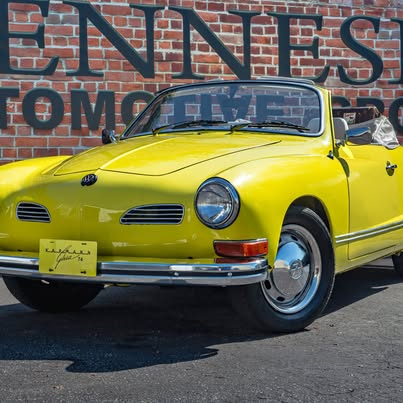
There is only one Karmann Ghia Type 14 in the sense that matters — one body, two roof forms, and a nineteen-year procession of Beetle engines and detail changes underneath it. Volkswagen never sold trim levels or performance variants of the Type 14; the badge on the decklid read "Volkswagen" and the script on the nose and rear said Karmann Ghia, and the differences that matter to a buyer are year differences. Learn the years and you know the range.
| Model | Years | Engine | Output | Built | Character |
|---|---|---|---|---|---|
| Coupe 1200 | 1955–1965 | 1,192 cc flat-four | 36–40 hp (SAE gross) | part of 364,401 coupes | The original; early cars are the "lowlights" |
| Cabriolet 1200 | 1957–1965 | 1,192 cc flat-four | 36–40 hp (SAE gross) | part of 80,837 cabriolets | Open car on the same running gear; top condition is everything |
| Coupe/Cabriolet 1300 | 1966 | 1,285 cc flat-four | 50 hp (SAE gross) | — | One-year engine; a sweeter, freer-revving motor |
| Coupe/Cabriolet 1500 | 1967–1969 | 1,493 cc flat-four | 53 hp (SAE gross) | — | Discs and 12 volts arrive; the Autostick appears in 1968 |
| Coupe/Cabriolet 1600 | 1970–1974 | 1,584 cc flat-four | 57–60 hp (SAE gross) | — | The most usable Ghia; dual-port from 1971 |
(Total Type 14 production was 445,238 cars — 364,401 coupes and 80,837 cabriolets. Volkswagen did not publish a clean production split by engine, so the table does not invent one. Outputs are period US SAE gross figures; European DIN ratings are lower for the same engines.)
The lowlights, 1955–59. The earliest cars are the connoisseur's Ghias and the ones the rest of this guide will keep warning you about. Collectors call them "lowlights" because the headlamps sit noticeably lower in the front wings than on later cars, and the fresh-air intakes in the nose are small, delicate slots — "nostrils" — rather than the larger grilles fitted from the 1960 model year, when the lamps were raised and the intakes enlarged and given proper grilles. Lowlights also carry small, slim taillights, a distinctive early dashboard and, on the first cars, details like the small rear window surround trim and thin bumpers that later production coarsened. They are the purest form of Segre's design, the rarest survivors, and the hardest and most expensive to restore correctly, because so much of their trim is early-only. A 1955–59 car is a commitment, not a starter classic.
The middle cars, 1960–66. From the 1960 model year the Ghia settled into its mature early form: raised headlamps, larger nose grilles, bigger front indicators, a padded dashboard top arriving in this period, and steady detail improvement. The 1961 model year brought a fully synchronised four-speed gearbox (earlier cars have an unsynchronised first gear), and the 1200 gained output in its "34 hp DIN" form. The 1966 car is a small landmark: the one-year-only 1300 engine, the last year of 6-volt electrics in the US, drum brakes all round, and a revised dashboard. These middle cars are arguably the sweet spot of the range for a driver — classic early looks, fewest emissions-era complications — and they are priced accordingly when they are good.
The 1500 cars, 1967–69. The 1967 model year is the biggest mechanical step in the car's life: the 1500 engine, front disc brakes (a first for Volkswagen in the US market), dual-circuit braking, 12-volt electrics and a wider rear track with revised swing-axle geometry. The fuel filler moved out of the front trunk to an external flap for 1968, and 1968 also brought the option that splits opinion to this day — the Automatic Stick Shift, the semi-automatic covered in the gearbox section, whose cars received the new double-jointed independent rear suspension a year before the manuals. US safety rules accumulated through these years: headrests on US cars from 1968, side markers, collapsible steering column. The 1969 manual cars got the IRS rear end too, which makes a 1969 1500 the connoisseur's late car: disc brakes, 12 volts, IRS, and still the slimmer bumpers and smaller lights.
The 1600 cars, 1970–74. The final generation is the most numerous, the most usable and the most visually changed. The 1970 brought the 1600 single-port engine and much larger front indicators that wrap around the wing; 1971 brought the dual-port 1600, the best engine the car ever had; 1972 brought the biggest taillights of the run — large rectangular units that dominate the rear view — and heavier bumpers; US cars for 1973–74 wear the full late safety treatment. Purists prefer the early silhouette, but as a car to drive every week the late Ghia wins on brakes, electrics, engine and parts availability. Note that in our own small listing pool — seven cars — the 1600-era cars dominate, with three 1974s and a 1970 among them; that mirrors the wider US market, where late cars are simply the most common survivors.
Coupe or cabriolet? The cabriolet, built from August 1957, is mechanically identical and structurally reinforced in the sills and body to compensate for the missing roof. Its folding top is a proper padded, lined Karmann hood — a quality item that costs real money to replace well — and it folds under a flush cover to leave the rear line almost as clean as the coupe's. Cabriolets were built in far smaller numbers (80,837 against 364,401 coupes) and carry a consistent premium. They also rust in more places, leak in more places, and hide their worst rust under the very reinforcements that stiffen them. Buy one with the top down and the carpets up, never the other way round.
The Type 34 — the sibling that isn't this car. Sellers occasionally describe a Type 34 as a "Karmann Ghia", and it is one — but it is not this car, and nothing in this guide prices or inspects it. The Type 34 (1961–69) was Karmann's second Ghia-bodied Volkswagen, styled by Sergio Sartorelli, built on the larger Type 3 platform with 1500 and 1600 Type 3 engines, and nicknamed the "razor edge" for its sharp, folded styling. Only about 42,500 were built, it was never officially sold in the US, and its body and trim parts situation is dramatically worse than the Type 14's. If the car in front of you has a flat, angular nose, a full-width grille panel and a Type 3 dashboard, you are looking at a Type 34: a fascinating car, a different guide.
Engines and gearboxes
Every Type 14 engine is the Beetle's air-cooled flat-four, mounted behind the rear axle, driving through a transaxle — which is the best news in this guide, because it means the mechanical side of a Karmann Ghia is supported by the deepest, cheapest parts network in the classic car world. The engines differ in capacity and detail across the nineteen years, but the architecture never changed: a magnesium-alloy crankcase, pushrod overhead valves, a single downdraft carburettor on all but a handful of cars, cooling by a belt-driven fan in a pressed-steel shroud, and no water anywhere in the system. There is no radiator to boil and no head gasket to blow; there is also no tolerance for missing cooling tinware, a slipping fan belt, or oil neglect, because the oil does a share of the cooling work.
The 1200 (1955–65)
The original engine displaces 1,192 cc and made 36 hp (SAE gross) in its first US form, rising to 40 hp SAE gross — the "34 hp" DIN engine — from 1961. It is a gentle, unstressed unit that suits the early cars' character: cruising at 60 mph is comfortable, 70 is a commitment, and hills are planned for. On a viewing, judge it exactly as you would a Beetle 1200. It should start from cold on the choke (automatic choke on later cars, manual on the earliest), idle evenly once warm, and pull without a flat spot as the throttle opens. Oil leaks are normal in kind but not in degree: a film around the pushrod tubes and the crank pulley is period patina, while oil dripping from the flywheel end of the crankcase means the rear main seal — an engine-out job, though a cheap one by classic-car standards, roughly $600–1,200 at a shop including the clutch you should replace while you are there. Check the heat exchangers, the boxes around the exhaust that feed the cabin heater: on a Ghia they rot like a Beetle's, and a car whose heater blows exhaust smell into the cabin has perforated exchangers, which is a safety item, not a comfort item. End float is the deep check on any high-mileage 1200: with the engine off, pull and push the crank pulley hard. Noticeable movement — more than a faint click — means worn thrust bearings and a rebuild in the car's future.
One early-car trap deserves naming: the first Ghia engines are the Beetle's 36 hp unit with its integral generator stand and early fuel pump arrangement, and many have been replaced over seventy years by later 40 hp or bigger engines. That is no sin in a driver, but on a lowlight being sold as original, the engine number — stamped on the crankcase, on the generator stand boss on early engines and at the base of the stand on later ones — should be of the correct series and era for the chassis number. A correct-matching early engine is worth money; a 1600 in a 1958 car makes it a restomod whatever the asking price assumes.
The 1300 (1966) and 1500 (1967–69)
The 1966-only 1300 (1,285 cc, 50 hp SAE gross) is the connoisseur's small engine: it revs more freely than the 1200, pulls the light Ghia shell along noticeably better, and is a one-year engine in the US Beetle and Ghia alike, which makes a genuinely original 1966 car mildly collectible. Its heads and single-port induction are shared with the 1300 Beetle, and parts remain easy.
The 1500 (1,493 cc, 53 hp SAE gross) from 1967 is the workhorse of the middle years and the engine most US buyers will meet. It brought a useful torque increase rather than headline power, and it arrived with the two changes that transform the car's usability: front disc brakes and 12-volt electrics. The 1500 is a single-port engine — one inlet tract per pair of cylinders — and its characteristic faults are Beetle faults. The single Solex downdraft carburettor (30 PICT series on these cars) wears its throttle spindle bushes, drawing air at idle and producing the classic hunting, stalling idle that owners chase through the ignition system for months; the test is to wiggle the throttle spindle and feel for play, and the cure is a rebushed or quality rebuilt carburettor, roughly $200–450, not another used one with the same wear. The automatic choke element fails and the car runs rich when warm. The vacuum advance canister on the distributor perishes, and the car hesitates pulling away. None of this is expensive; all of it is misdiagnosed constantly, so a middle-years car that "runs rough, probably needs an engine" very often needs $300 of carburation and ignition work instead.
The 1600 (1970–74)
The final engine is the best. The 1970 car has the 1600 single-port (1,584 cc, 57 hp SAE gross); from 1971 the dual-port version (60 hp SAE gross in its first year, with US net ratings lower thereafter as emissions tuning tightened) gave the Ghia its strongest performance of the run — a genuine 85 mph car that will cruise at modern highway speed without the sense of strain the smaller engines carry. Dual-port heads breathe better, and the engine's weak points are well mapped: the cylinder heads crack between the valve seats and the spark plug hole if the engine has been overheated or run with missing cooling tin, which shows as a misfire and a chuffing exhaust note at the head joint; the oil cooler seals weep with age; and the crankcase's rear main seal and the flywheel O-ring leak as on every flat-four. The single most important check on any 1970s Ghia is the cooling tinware and the engine bay seal. The rubber seal around the engine and every piece of pressed tin must be present, because the fan draws cool air from above the decklid and exhausts it below; a missing seal lets the fan recirculate hot exhaust-side air and cooks the engine slowly. A seller who has removed tin "for access" has been cooking the motor. Walk the engine with a torch and account for the tin like a parts inventory.
Emissions-era equipment on US cars — the charcoal canister, the throttle positioner on some years, EGR on the very last cars — is frequently removed or dead. That matters less for how the car runs than for where you can register it: if your state inspects emissions equipment on a 1970s car, a stripped engine bay is a paperwork problem priced into the car, so check your local rule before you buy.
Gearboxes: four-speed manual and Automatic Stick Shift
The standard gearbox is Volkswagen's four-speed manual transaxle, fully synchronised from the 1961 model year — cars built before that have an unsynchronised first gear, which means coming to a complete stop before engaging it, and a crunch from a seller demonstrating otherwise is driver error, not necessarily gearbox wear. Synchromesh on second is the wear point on all of them: a baulk or crunch on the 3–2 downchange when cold that improves warm is worn synchro, and a box that jumps out of gear under load — fourth on overrun is the classic — needs a rebuild, roughly $1,500–2,800 for the transaxle work at an air-cooled specialist. Gear oil leaks from the axle tube boots on swing-axle cars and the nose cone seal are normal maintenance. The clutch is a Beetle item, cable-operated, and cheap; judder is usually oil on the plate from the rear main seal, which is why the two jobs are quoted together so often.
From 1968 to the end of production, US buyers could choose the Automatic Stick Shift — universally called the Autostick. It is not a conventional automatic: it is a three-speed manual gearbox with a vacuum-operated clutch worked by a switch in the gear lever, plus a torque converter that lets the car idle in gear and pull away smoothly. You shift it yourself between its ranges, there is no clutch pedal, and Autostick cars received the double-jointed IRS rear suspension from their 1968 introduction. Judge an Autostick on its vacuum system, because almost every Autostick fault is a vacuum fault: the control valve on the engine bay wall, the vacuum reservoir, and the web of small hoses must hold vacuum, and a car that crunches into gear, drags its clutch or refuses to disengage has usually perished in the hoses, not in the gearbox. The servo and control valve are rebuildable, parts are thinner than for the manual but available from the air-cooled trade, and the ATF for the converter circuit is separate from the gearbox oil — check both, and check that nobody has filled one with the other. Converted cars exist: an Autostick Ghia converted to a four-speed manual is worth less than either an original manual or an honest Autostick, so look for the control valve scars and the missing clutch cable tube evidence before paying manual-car money.
A note on the rear suspension, because it arrives with the gearbox chronology. Cars before 1968, and manual cars through 1968, use the Beetle's swing axle: simple, strong, and prone to the camber changes and tuck-under behaviour period road testers criticised; the 1967 widening of the rear track tamed it considerably. IRS — double-jointed axles with constant-velocity joints, fitted to Autostick cars from 1968 and all US cars from 1969 — keeps the rear wheels upright and is the better-driving arrangement, at the cost of CV boots and joints to maintain. Neither is a reason to reject a car, but know which one you are buying, because the seller's description will rarely tell you.
Problem areas
Everything mechanical on a Karmann Ghia is a Beetle problem, and Beetle problems are cheap. Everything structural is a Karmann problem, and Karmann problems are not. That sentence is the whole section in advance: the failure mode that writes a Ghia off is never the engine, it is the hand-built body rotting or having been repaired by someone who treated it like a Beetle with bolt-on wings. Work through the body first, the body second, and the mechanics last.
Rust: the Ghia map
The Ghia's body is a welded steel shell on the Beetle floorpan, and it rusts in a specific, learnable pattern. Assume any car you view has rust somewhere on this map until you have personally checked it off, point by point.
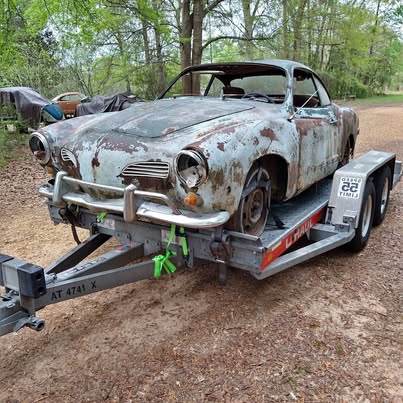
The nose. The signature Ghia failure, and the first place to look on any car. The long, low nose is a double-curved pressing with no panel breaks, and it collects damage and rust in equal measure. Rust starts inside, around the headlamp buckets: water thrown up inside the front wings and condensation in the sealed nose section attack the bucket mountings and the panel around the lamps, and the first external sign is bubbling in the paint ring around a headlamp rim. Prod gently around both buckets with a fingertip and a magnet. A nose that has been filled will feel and sound wrong — thick, dead, uneven — and the magnet wrapped in cloth will slide weakly where filler is deep. Then look at the very front, low down: the nose tip is the first thing every careless parker for seventy years has touched, and it cannot be unbolted and replaced. Straightening and refinishing a damaged, filler-heavy nose properly is panel-beating work at roughly $2,500–6,000 depending on how much metal has to be made; a nose that needs a replacement front clip sectioned in is a bigger conversation still. This single panel is why Ghia restoration costs surprise people.
Headlight buckets and front inner wings. Open the front trunk and look at the inner structure around the spare wheel well and the headlamp backs. The buckets themselves rust through, the wiring grommets perish, and the fresh-air intake boxes at the base of the windshield pillars — the system that feeds the dashboard vents through hoses from the nose grilles — trap leaves and water and rot their mountings. Rust in the spare wheel well floor and around the front trunk seal channel is common and repairable; rust creeping into the inner wing structure where the front suspension beam's body mounts sit is structural, and it is the point where a cheap car stops being cheap.
Rocker panels and heater channels. The structural heart of the car, exactly as the sills are on any unitary classic — except that on the Ghia the rocker is also the heater channel, carrying hot air from the engine's heat exchangers forward to the cabin outlets, and it is a closed box section that rots from the inside. Work the full length of both rockers with your hand and a torch: bubbling at the bottom edge, softness under thumb pressure, and rust staining at the jack points are the signs. Lift the car on its own jack points if the seller allows — a rocker that flexes, creaks or sheds rust as the corner lifts has failed the test that matters. Heater channel replacement is the big Ghia weld job: the body ideally comes off the pan or at least is braced, the channel and rocker are cut out and replaced as a unit, and done properly with paint you are looking at roughly $2,000–4,000 per side at a specialist. A car needing both sides has consumed most of the value gap between a project and a good car before you have touched the nose. Cabriolets, with their reinforced sills, hide this rust better and cost more to repair when it is found — the reinforcement plates make excellent moisture traps.
Floor pans and the battery area. The Beetle-derived floorpan rusts as Beetles do: along the outer edges where the pan meets the heater channels, around the seat mountings, and under the rear seat. Half-pan repair sections are cheap and universally available, and pan rust alone is a bargaining point, not a walk-away. The battery lives in the engine compartment on the Type 14 — not under the rear seat as on a Beetle — and its tray and the panel beneath it rot from acid and standing water; a tray that has been replaced with a flat plate riveted over rust is the usual bodge, so look from underneath as well as from above. While you are under the rear seat, check the pan under the fuel tap area on early cars and the central tunnel for the gear linkage access — surface rust is normal, perforation at the pan edges is the channel story again.
The rear: decklid, rear quarters and engine bay. The engine lid — the decklid — rusts along its lower edge and around its seal channel, and because it is a large, flat, visible panel, filler in it waves at you in reflected light: sight down it. The rear wheel arches bubble at their lips where the inner and outer skins meet, and the valance below the decklid traps heat and water and rots quietly. Inside the engine bay, check the side trays and the seal channel that carries the engine bay rubber — that seal's condition is a mechanical matter as much as a cosmetic one, per the cooling warning in the engine section. The rear window surround on coupes leaks and rusts at its lower corners, letting water into the rear luggage area; lift the rear carpet and the seat base and look.
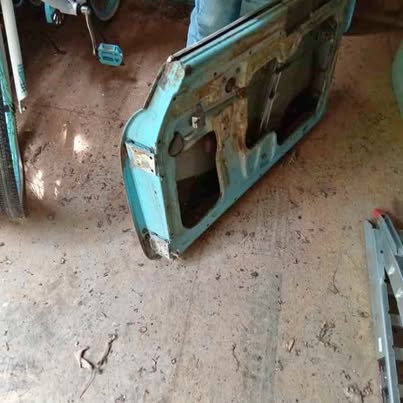
Doors, and the small traps. Door bottoms fill with water when their drain holes block, and rot from the inside along the lower skin — run a fingertip along every door's bottom edge and feel for bubbling under the paint. The windshield surround, the base of the A-pillars, the front trunk lid's edges and the seams where the rear wings meet the body all deserve the magnet. And learn the underseal read: fifty-year-old factory coatings look honestly patchy, thin at the edges and chipped by stones. A uniform coat of fresh black stone-chip blown over everything the week before a sale — seams, brake pipes, pan edges, the lot — is a cover-up until the seller proves otherwise.
Body construction and accident damage
Because the Ghia's wings are welded into the structure and its seams were lead-loaded at the factory, accident repair is where bad Ghias are made. The checks are specific. Sight down each flank in good light: the long, unbroken curve from the headlamp over the front wing, through the door and over the rear haunch should flow without a ripple, a step or a change of reflection. Any break in that line is a repair, and the question becomes whether it was beaten back into shape by someone who understood the car or filled into shape by someone who did not — the magnet and a paint-depth gauge, if you have one, answer it. Check the factory lead seams: the joints at the base of the windshield pillars and where the nose section meets the wings were lead-loaded and invisible when new, so a visible seam, a crack line in the paint following a joint, or filler dust in the trunk around a joint means the area has been opened up. Panel gaps should be even and modest — Karmann's hand finishing gave these cars better gaps than most 1950s production — and a door that sits proud at one corner with a tight gap at the other is describing twisted structure or a hung repair, not adjustment. Finally, look underneath at the front beam mounting area and the frame head of the pan: a Ghia that has had a front-end hit hard enough to bend the pan's frame head drives crooked and wears tyres, and no amount of pretty paint above it fixes that.
Mechanical: Beetle parts, Ghia consequences
The mechanical problem list is short because the car is a Beetle, but three items price Ghias specifically. Brakes: drum-braked cars (US cars before 1967) stop adequately when maintained and poorly when not — seized wheel cylinders and oval drums are the standard findings, and a full drum-brake hydraulic refresh runs roughly $600–1,200. Disc-brake cars use common VW calipers and are cheap to keep right; a car that pulls under braking has a seized caliper or a collapsing flexible hose. Front suspension: the beam front end wears its link pins or ball joints (the design changed during the run, in step with the Beetle) and its steering box; play at the wheel rim beyond an inch or so prices a front-end refresh at roughly $800–1,800 fitted. Cooling tinware — covered in the engine section — is the item that kills engines: budget a few hundred dollars to replace missing tin and seals on any car where they are absent, before the first long drive, not after the first overheated head.
Interior, trim and the cabriolet top
The Ghia's cabin is Beetle-simple in construction and Ghia-specific in almost every visible part, and that is where restoration budgets quietly double. The dashboard is a painted steel panel on early cars, gaining padding and woodgrain-effect trim on later US cars; the large central speedometer is shared with nothing else and early lowlight instruments are genuinely scarce. Seats are low-back buckets on early cars, gaining headrests for the US from 1968, upholstered in vinyl that survives well and leatherette-and-cloth combinations that do not; seat frames break at their mountings and the recliner mechanisms wear. Door cards warp with water — check the bottoms, which also tell you about the door drains. The brightwork is the expensive trap: the slim side trims, the window surrounds, the nose grilles, the Karmann badge on the lower front wing and the script badges are all Ghia-only, much of it is pot metal that pits, and re-plating or replacing a full set of exterior trim runs into four figures quickly. Count the trim like money: a car with all its brightwork present and straight is worth a real premium over a shinier car with pieces missing, because some early pieces are effectively unobtainable except used.
On cabriolets, the top is a major inspection item in its own right. A correct Karmann top is padded and lined, folds flat under its cover, and costs roughly $2,500–4,500 fitted to replace well; a cheap single-skin top is a visible devaluation. Work the mechanism through its full travel, check the frame for bent bows, and hose the closed top — or view the car after rain — and look for the leaks at the header rail and rear quarters that fill the rear footwells and start the floor rust. A cabriolet with a tired top and wet carpets is a floor-pan conversation wearing a premium price.
Electrics
Fifty-to-seventy-year-old Volkswagen electrics fail at connections, not in components: earth points corrode, the fusebox terminals tire, and the result is dim lamps, a wandering fuel gauge and indicators with opinions. The system-level checks are these. On 6-volt cars (US cars through 1966), everything is dimmer by design and far less tolerant of resistance — a 6-volt Ghia with weak earths is nearly undriveable at night, and a 12-volt conversion is common, acceptable on a driver, and a deduction on an originality-priced early car; ask which you are looking at. Generators and regulators are Beetle parts and cheap; the Ghia-specific electrical items are the switches, the clock, and the lowlight-era lighting units. On Autostick cars, add the electrical side of the vacuum clutch system — the contact in the gear lever and the control valve solenoid — to the list, because a chafed lever wire is a classic cause of a car that will not disengage its clutch at a junction. A car on which everything electrical works — lamps bright, wipers parking, horn, heater blower on its speeds, all the warning lights honest — is a car that has been used and maintained, which remains the best single predictor of a good Ghia.
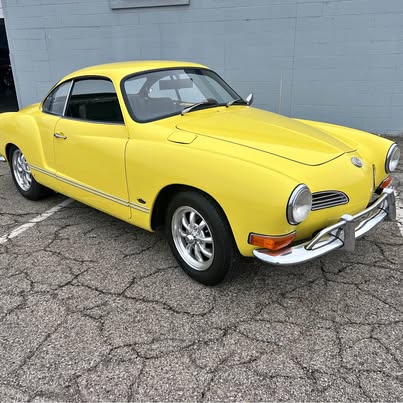
How to inspect one
Allow an hour and a half, bring a torch, a magnet wrapped in cloth, a tyre tread gauge and a friend to work the pedals and lights. The order below is deliberate: identity first, then the body — because the body decides whether the car is worth inspecting further — then the mechanics, which on this car are the cheap part.
- Start with the numbers. The chassis number is stamped into the floorpan tunnel under the rear seat, and the body number appears on a plate in the front trunk. Match the chassis number to the title exactly — pan swaps are common in the air-cooled world, and a Ghia on a Beetle pan or with a title describing a different year is a paperwork problem you price before anything else. The engine number, stamped on the crankcase, tells you the engine's era: it should be consistent with the car's year (1200 in an early car, 1500 in a 1967–69, 1600 in a 1970–74). A later engine in a driver is fine; a later engine in a car priced as matching-numbers original is a renegotiation.
- Cold start. Insist the engine is cold when you arrive — a warmed-up Ghia hides choke faults, Autostick vacuum leaks and low oil pressure. It should start readily, idle without hunting once warm, and show no blue smoke beyond a first puff. A car that needs throttle nursing to idle has the carburettor or vacuum faults from the engine section, priced accordingly.
- The nose, first and longest. Crouch in front of the car and look along the nose's curves. Run the magnet around both headlamp rims and across the nose tip, feel for filler, look for bubbling around the buckets, and open the front trunk to inspect the inner structure, the spare wheel well and the fresh-air boxes. This is the panel that writes Ghias off; spend ten minutes here before you look at anything shiny.
- Rockers and heater channels. The full length of both sides, hand and torch, exactly as in the rust section. Press hard along the bottom edges, check the jack points, and if the seller permits, lift each corner on the car's own jack and watch and listen. A car that fails here needs $2,000–4,000 a side of welding; decide whether the price already knows that.
- Floors and battery. Lift the carpets front and rear, look under the rear seat at the pan, and find the battery in the engine compartment: lift it or rock it and inspect the tray and the panel beneath for acid rot and riveted-plate bodges. Pan edges perforated where they meet the channels means the channel job and the pan job arrive together.
- Flanks, gaps and seams. Sight down both sides for the unbroken curve; check door gaps for evenness, the factory lead seams at the windshield pillars for cracks or filler, and the decklid by reflected light for filler waves. Run the magnet over the rear arches and door bottoms. Count the missing or damaged pieces of Ghia-only brightwork as you go — each one is a deduction with a hard-to-find replacement.
- Rear body and engine bay. Check the decklid's lower edge and seal channel, the rear valance, the engine bay side trays and the rear window surround on a coupe. Account for the cooling tinware and the engine bay seal piece by piece, and check the heat exchangers for perforation — heater on, nose working: exhaust smell in the cabin is a failed exchanger.
- Underneath. If the car survives steps 3–7, a lift inspection is worth paying for. Look at the frame head and front beam mounts for accident damage and rust, the pan's central tunnel, the axle boots or CV boots, brake pipes, and the underside of the heater channels. Read the underseal as you go: patchy and honest is factory; a fresh uniform black coat over everything is a question, not an answer.
- The test drive. Fifteen minutes minimum, including a stretch at 60 mph. A 1600 should reach it easily; a 1200 will take its time and that is correct behaviour, not a fault. The gearbox should change cleanly, hold fourth on the overrun without jumping out, and the steering should be light with no more than an inch of free play. Brake firmly from speed: the car should stop straight, and pulling means calipers, cylinders or hoses. On a swing-axle car, note the rear end's behaviour over mid-corner bumps without provoking it — you are confirming it is predictable, which a sound one is.
- Autostick cars, additionally. Drive it long enough to make a dozen gear changes. Engagement should be prompt and crunch-free as you move the lever, the car should creep gently at idle in gear, and the clutch should disengage the instant the lever is touched. Hesitation, crunching or drag points at the vacuum system — hoses, reservoir, control valve — which is a few hundred dollars of rubber and labour if you are lucky and a specialist conversation if you are not. Check the converter's ATF level and the gearbox oil separately, and ask which is which; a seller who cannot answer has not been maintaining the system.
- Cabriolets, additionally. Put the top fully down and fully up yourself. Check the frame's bows for straightness, the latches at the header rail, the rear window, and the well behind the rear seat for water staining. Look at the rear footwells and under the rear carpets for the leaks the top has been feeding. A top that needs replacement is a $2,500–4,500 deduction; a top frame that needs work is worse, because the parts are Ghia-only.
- Interior and electrics, last. Sit in both seats and feel for broken frames and collapsed padding. Work every switch: lamps, wipers, washers, horn, heater blower, indicators, the clock if fitted. On a 6-volt car, run the headlamps and wipers together and judge how much everything dims — that is your night-driving preview. A complete, working, original interior with all its Ghia-specific pieces present is the hardest part of the car to recreate, so weight it heavily in the final price.
Values
The figures that matter for this model are computed from this site's own listings and recorded sales, and they sit below this guide — the listed-now summary and the market block are refreshed every time the site rebuilds, so use them rather than any number quoted elsewhere. What follows is how to read them.
The Karmann Ghia market is a condition market wearing a year market's clothes. The broad structure is stable: cabriolets sit above coupes of equivalent condition and year, lowlights sit above later cars of equivalent condition, and the 1970s cars form the volume at the accessible end. But condition moves an individual car further than specification does. The spread between a project coupe with rotten heater channels and a restored coupe of the same year is the widest in the air-cooled Volkswagen world, precisely because the restoration cost is concentrated in hand-finished bodywork: the same welding and panel work that a Beetle absorbs for one figure costs multiples of it on a Ghia, so the market rationally pays up for cars whose bodies are already right and discounts projects to near their parts value.
Read our own listing pool with that in mind, and read it honestly for its size: when this guide was written the site carried seven Karmann Ghias, all seven from Facebook Marketplace sellers — three 1974s and one each from 1965, 1968, 1969 and 1970. That is a seller's-marketplace sample, not an auction record: it skews to driver-quality and project cars offered by private sellers, its asking figures are opening positions rather than achieved prices, and with seven cars a single exceptional or desperate listing moves any average violently. The auction record — where the best Ghias trade — is the corrective for the top of the market, and the recorded-sales block below this guide is the corrective for everything else. Four of the seven listed cars were described as automatics and two as manuals, which almost certainly flatters the Autostick's true share of survivors — marketplace listings mislabel gearboxes routinely, so verify the pedals, not the description, on any car you pursue.
Two premiums are real and one is not. Originality on an early car is real: a lowlight with its correct-series engine, early trim complete and honest bodywork commands money a restored-later car cannot reach, because the supply is fixed and shrinking. The cabriolet premium is real and consistent across all years. The premium that is not real is the one asked for fresh paint: a recently resprayed car with undocumented bodywork underneath it is worth less to an informed buyer than the same car in honest older paint, because on a Ghia the paint is where the evidence lives. Negotiate from the inspection, not the colour: heater channels, nose, floors and trim completeness are the four numbers that price the car, and a seller who has documented welding with photographs has something genuinely worth paying for.
Parts and ownership
A Karmann Ghia is two ownership propositions sharing one garage space. The mechanical car is a Beetle — the cheapest, best-supported classic ownership experience there is. The body and trim are a low-volume coachbuilt car, supported by a dedicated specialist trade and priced accordingly. Budget for both and the car is a joy; budget only for the Beetle and the first body bill will feel like a betrayal.
Easy and cheap: everything the car shares with the Beetle. Service items, ignition parts, carburettor rebuild kits and rebuilt carburettors, clutch kits, brake components for both drum and disc cars, exhausts and heat exchangers, suspension wear parts, gearbox seals and bearings, engine parts at every level from gasket sets to complete rebuilt long blocks — the air-cooled trade stocks it all, at prices that embarrass every other classic marque, and any competent air-cooled specialist can maintain the car. A routine service is a few hundred dollars; a rebuilt engine, if the worst happens, is a known, catalogue purchase rather than a bespoke rebuild.
Harder and dearer: everything Karmann touched. Body repair panels exist — rocker and heater channel sections, floor pans, nose repair sections, headlamp bucket areas and arch repairs are made by the specialist trade — but they are repair sections, not the bolt-on wings a Beetle enjoys, and fitting them is welding and finishing labour. Brightwork, badges, scripts, window trims and nose grilles range from reproduced (the common late pieces) to used-only (early and lowlight pieces), and a full exterior trim set in good order is a four-figure assembly. Interior trim is reproduced in the common colours and patterns by the VW trim trade, with early-car materials thinner on the ground. Cabriolet top frames and mechanisms are the scarcest major assembly on the car. Glass is available; the curved rear window and early glass are the items to handle carefully. The practical rule: never throw away a Ghia-specific part, however rough, until its replacement is in your hand — and when buying, treat missing Ghia trim as a cost line, not a detail.
Running one. A sorted Ghia is a realistic regular-use classic: fuel consumption in the mid-to-high 20s mpg, Beetle service intervals, insurance in line with other cars of its value, and a driving experience that asks only that you accept its pace. The ownership costs that catch people are the ones this guide has flagged throughout — deferred body maintenance becoming structural welding, missing cooling tinware becoming an engine, and a cheap respray becoming an archaeological dig. The first-year budget on a newly bought driver should carry $1,500–3,500 for the deferred mechanical maintenance most cars arrive with, over and above anything the body needs. Store the car dry if you possibly can: the Ghia's rust map is a water map, and a garaged car on a battery tender deteriorates at a fraction of the rate of a car under a cover on a drive.
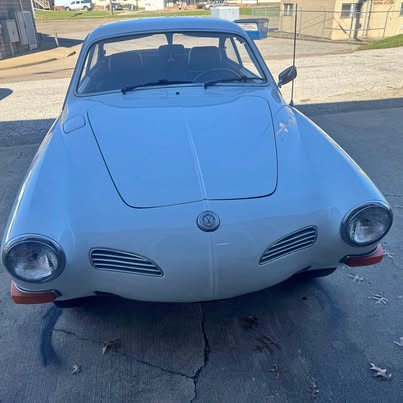
Which one to buy
- The all-rounder: 1971–74 coupe. The dual-port 1600, front discs, 12 volts, IRS and the deepest parts support in the range, in the most numerous body. If you want one Ghia to drive everywhere, this is it — buy the best body you can find and ignore the big-bumper styling debate.
- The sweet spot: 1966–69 coupe. The 1300 one-year car, the disc-braked 1500s, and the 1969 that adds IRS while keeping the slimmer lights and bumpers. More character than the late cars, nearly as usable, and the market knows it — good ones are not cheap, but they are worth it.
- The value buy: 1970 single-port coupe. The 1600's usability without the dual-port cars' following, often priced as just another late Ghia. The engine is simpler and nearly as strong in real driving. As ever, the discount only counts if the heater channels are sound.
- The connoisseur's car: a lowlight, 1955–59. The purest shape and the rarest survivor — and a purchase to make with a specialist beside you, a magnet in your hand and a restoration budget you have said out loud. Buy the most original one you can find; a lowlight with its early trim intact is a different asset class from one without.
- The open car: cabriolet, any year. Buy it on top condition, sill soundness and dry carpets, in that order, and prefer a documented car with a tired engine to a fresh-engined car with a tired top frame. The premium over the coupe is real and recoverable.
- The left-field pick: an honest Autostick. The market discounts them, the system is reliable when its vacuum hoses are maintained, and the IRS rear end came with it from 1968. A well-kept Autostick car is the cheapest route into a genuinely good late Ghia — just verify it is original, not a stalled manual conversion.
And the rule that overrides all of the above: buy the body, and let the Beetle underneath take care of itself. Engines, gearboxes, brakes and electrics are cheap, available and fixable at prices you can plan for. The hand-finished shell is none of those things. The least rusty Ghia you can find, in the year you can live with, is the right car — every time.
See the 32 Karmann Ghia cars currently listed.
For sale now
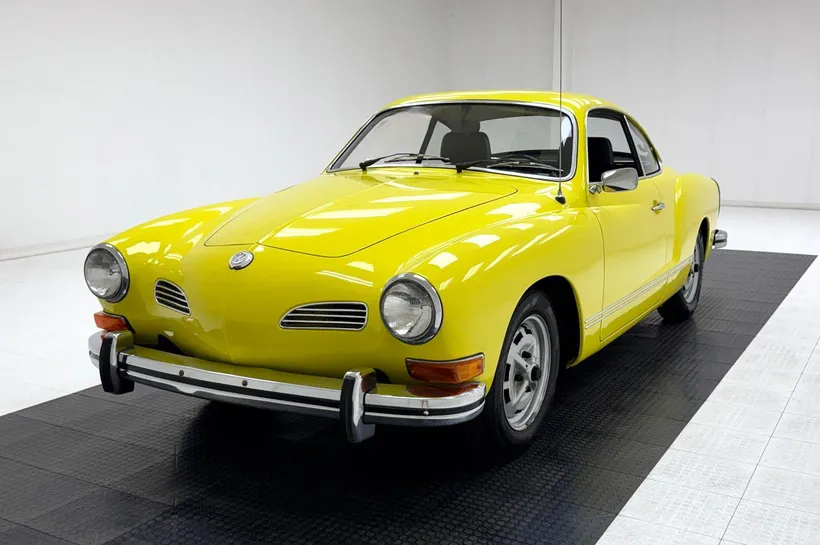 $14,000
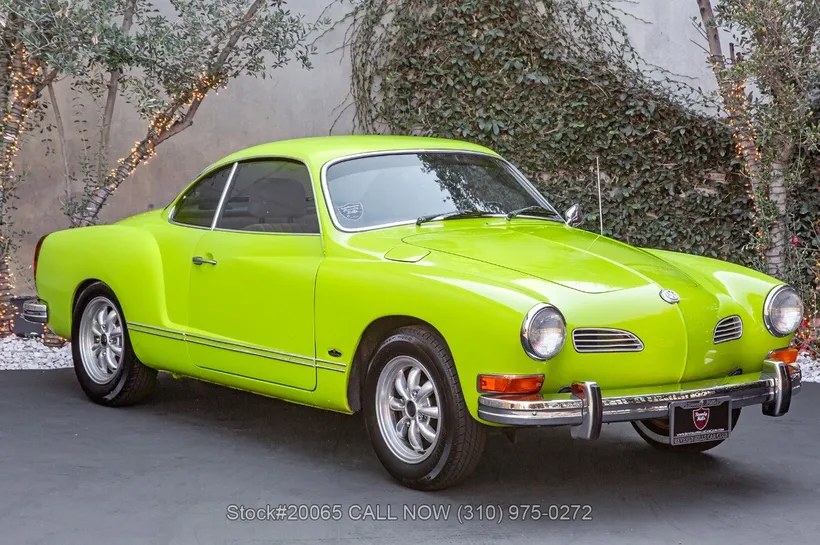 $21,250
Expand
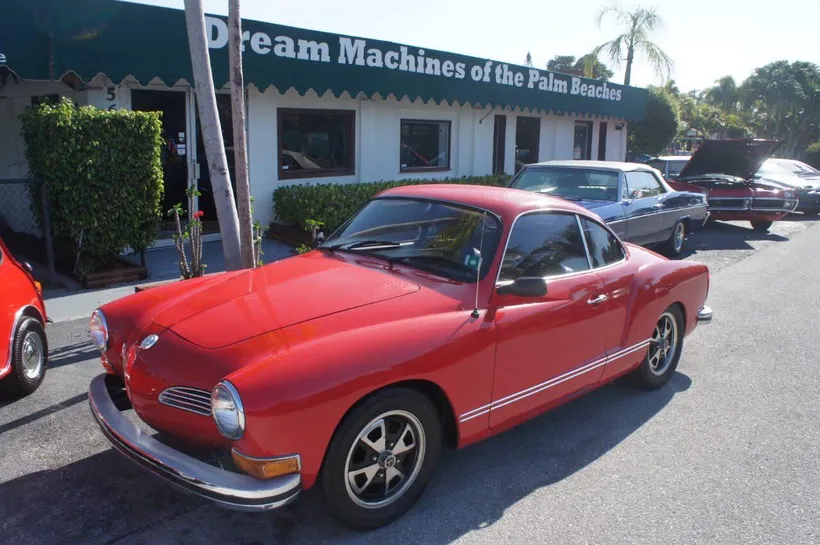 $27,500
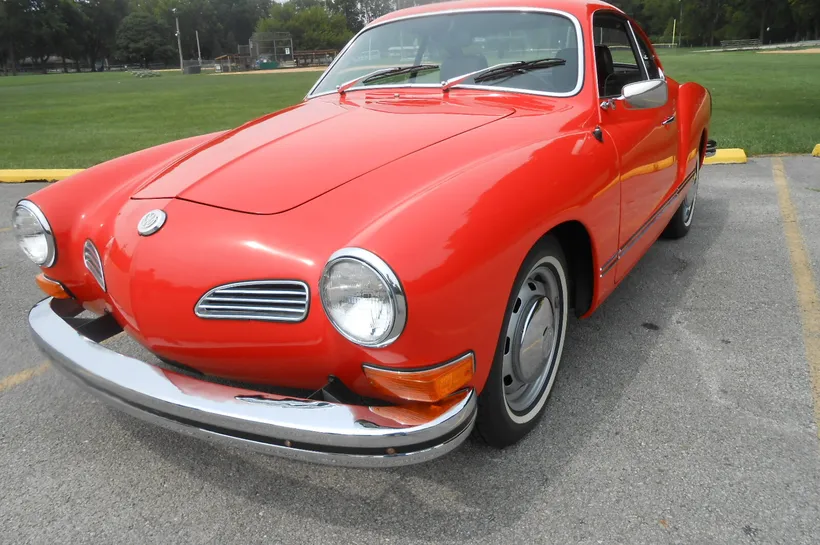 $25,000
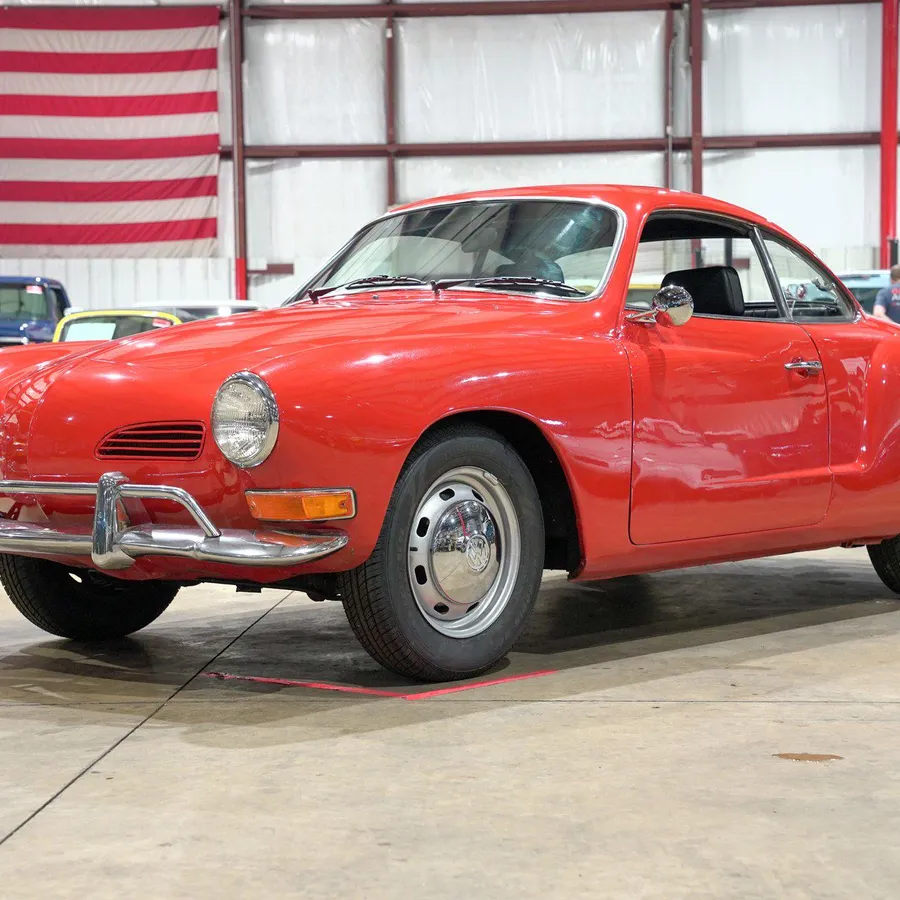 $19,900
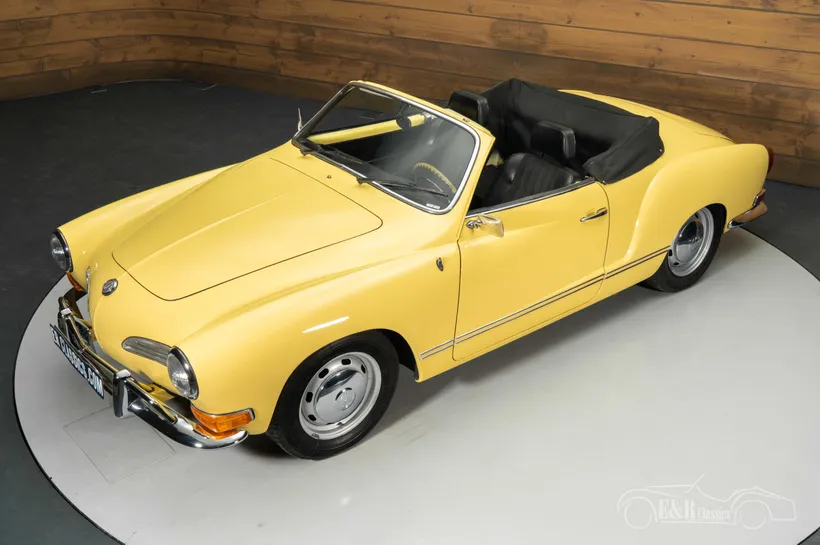 $21,250
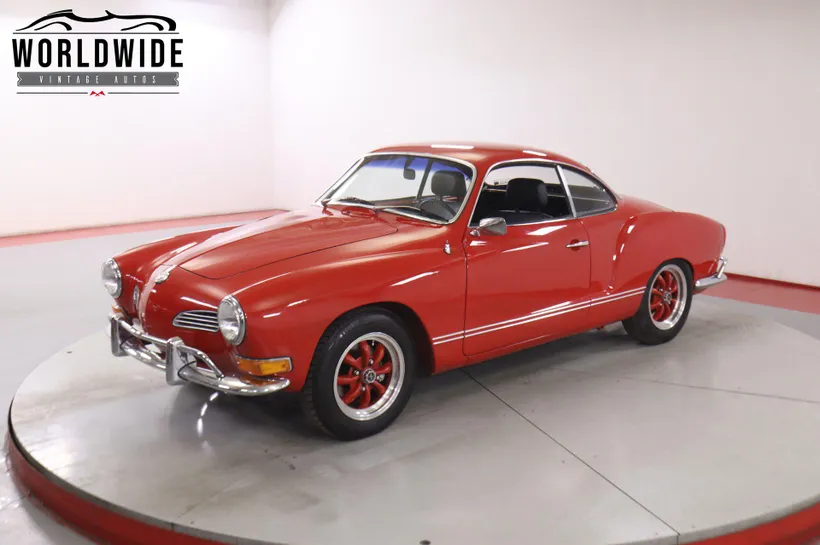 $23,900
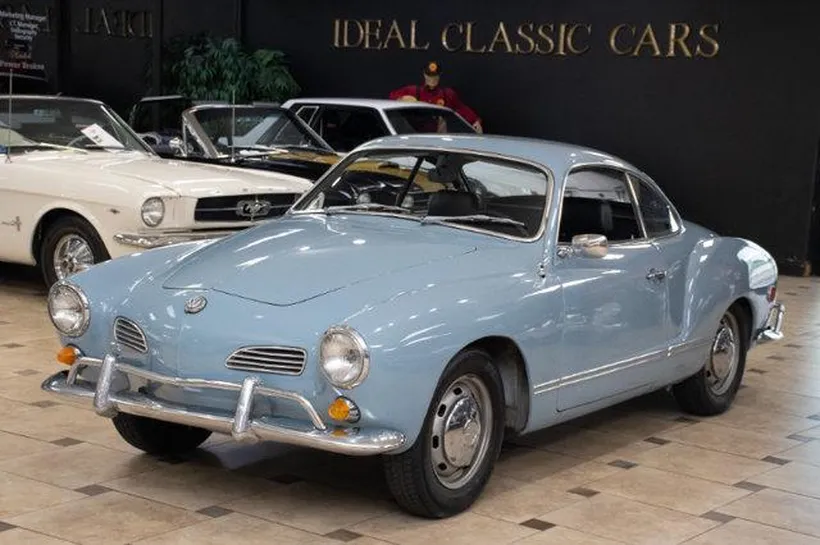 $21,250
What they sell for: Karmann Ghia sale prices.