
Volvo 940 Sedan 4D buyer's guide
Volvo 940 Sedan 4D -- the model's own buyer's guide: variants, values and what to check.
Years listed: 1994-1996 · Series: 940/960
Overview and history
The Volvo 940 is the last of the old Volvos in the purest sense: the final rear-wheel-drive Volvo sedan and wagon line built around a live rear axle, a longitudinal four-cylinder engine you can see all of, and a body drawn almost entirely with a ruler. The 940 is not fast, it is not fashionable, and it was never meant to be either. It is a car engineered for winter starts at twenty below, for 300,000 miles, and for being repaired by a competent person with ordinary tools in a cold garage. In an era when every contemporary rival has become electronically fragile, that simplicity has become the luxury.
The 940 arrived in the autumn of 1990 as a 1991 model, as the successor to the 740, and it is best understood as the 700 series perfected rather than replaced. The structure, the 109.1-inch wheelbase, the MacPherson-strut front suspension, the live rear axle and the redblock engine family all carry over. What changed was the body — rounder at the edges, with softer rear styling — the detail engineering, and the safety equipment: SIPS side-impact structure, an integrated child booster cushion option, and, as the years passed, airbags and anti-lock brakes. It is the third and final edit of a design Volvo had refined for a decade, which is exactly why it is so sorted.
It sat alongside the 960, and you need to keep the two separate because sellers routinely blur them. They share a shell; the 960 is the luxury sister car with a 2.9-litre whiteblock inline six (the B6304), multi-link independent rear suspension on the sedan, and plusher trim. The 940 is the four-cylinder car — the cast-iron redblock in naturally aspirated, turbocharged and, briefly in America, 16-valve form, with a live axle on every body style. North American choice was deliberately narrow: 1991 to 1995 only, sedan and wagon, mostly automatic. That narrowness is good news now, because there are only a handful of specifications to learn and nearly every mechanical part interchanges across them.
While the 940 was in production Volvo launched the front-wheel-drive 850, unmistakably the future. The 940 continued because a large, loyal part of Volvo's customer base — in Sweden, in the American snow belt, among taxi operators and families who kept cars for fifteen years — did not want the future yet. They wanted rear-wheel drive, a wagon that swallowed furniture whole, and an engine their mechanic already knew. Volvo kept building the car for them at Torslanda in Gothenburg and at Ghent in Belgium until February 1998, long after American imports had ended in 1995. After the 940, there is no simpler Volvo: everything that followed has more electronics and more jobs that begin by removing something unrelated.
To the redblock faithful the 940 is the final, best-developed home of the B230 engine — injection and electrics sorted, rust protection and comfort better than a 240's, and none of the 850's front-drive complexity. To the tuning world the Turbo's B230FT is a famously understressed starting point that tolerates far more power than Volvo ever asked of it. The inspection logic serves both: buy the straightest, least rusty shell you can find, prove the timing belt and the crankcase breather, interrogate the automatic gearbox, and the rest is maintenance.
Mileages on survivors are often genuinely high — 180,000 to 250,000 miles is normal and should not frighten you. What matters is the split between cherished wagons with thick files and tired sedans passed down as winter cars. That difference is the entire buying decision.
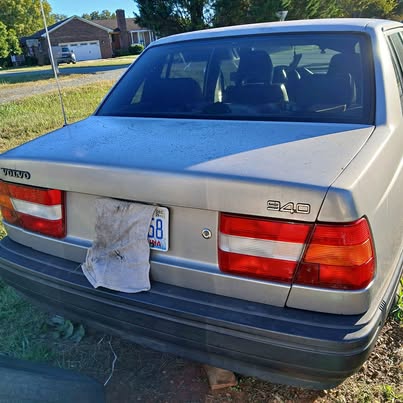
A 1995 silver sedan from North Carolina — the final American model year and the specification most US buyers will meet: four-cylinder redblock power, automatic gearbox, sedan body. On any late car, judge the shell, the service file and the gearbox first; the engine is the least likely part to end the car's life.
The models
The American 940 range is refreshingly small: the naturally aspirated 940, the 940 GLE with the 16-valve engine for the first two years, the 940 Turbo, and the 940 SE for 1991 only. Every one came as a sedan or a five-door wagon. Trim layered over those mechanical identities, and year-to-year packaging changes mean two cars with the same badge may not have the same standard kit. Learn the engine and gearbox in front of you first, the body second, and the badge last.
The base car, badged simply 940 and later 940 GL in some listings, carries the B230F: a 2.3-litre eight-valve redblock making 114 hp in a car weighing around 3,100 to 3,300 pounds. Performance is unhurried — roughly eleven seconds to 60 mph with the automatic — and nobody buys this car for pace. They buy it because the B230F is one of the most durable production engines ever made, because the wagon carries as much as many modern crossovers, and because the whole car can be maintained for parts-store money. Most American base cars are automatic; the five-speed manual is rare in the United States and disproportionately sought after now for exactly that reason.
The 940 GLE of 1991 and 1992 is the odd one, and the one sellers most often misdescribe. Its engine is the B234F, the 16-valve twin-cam redblock at 153 hp — smoother, keener to rev, and thirstier for maintenance discipline, with its own timing-belt arrangement, a separate balance-shaft belt, and an interference head where the eight-valve engines are non-interference. A neglected GLE is therefore a riskier purchase than a neglected base car, though a sorted GLE is the sweetest naturally aspirated 940 to drive. After 1992 the 16-valve engine left the American line and GLE continued as a trim badge over the eight-valve engine — so never buy a GLE on the badge alone. Lift the bonnet: the twin-cam has a wide head with plugs down the centre; the eight-valve a narrow head with plugs on the exhaust side. That ten-second check settles what the car is.
The 940 Turbo, sold across the whole American run, is the enthusiast default. Its B230FT adds a Mitsubishi TD04 turbocharger, an intercooler, lower-compression pistons and electronic boost control to the same iron-block architecture, making 162 hp and, more usefully, 195 lb-ft of torque delivered low and held wide. With the automatic it reaches 60 mph in the high eight-second range; the rare manual feels a generation more alert. Turbo cars also brought alloy wheels and frequently leather. Two myths need killing. First, no American 940 Turbo left the factory with the 16-valve engine — a US car claiming both is a swap or a misunderstanding until paperwork proves otherwise. Second, the Turbo is not fragile: the factory tune runs modest boost, and turbo failure on a standard car is almost always an oil-supply or age story.
The 940 SE, offered for 1991 only in North America, is mechanically a Turbo wearing a 960 body: the B230FT powertrain in the plusher facelifted shell, with the luxurious interior and, on the sedan, the 960's independent rear suspension rather than the live axle. An SE is identified by body and trim, not by a unique engine. It is rare and interesting, worth no automatic premium over a Turbo unless condition and originality justify it — and any claimed SE needs checking against its VIN and build data.
European buyers had a wider menu that occasionally surfaces in America as a private import: the B200F 2.0-litre at 111 hp, the B230FK low-pressure turbo at 135 hp, and the D24 and D24TIC diesels — a 2.4-litre Volkswagen-sourced inline six at 82 hp or, turbocharged and intercooled, 122 hp. The diesel is tough and economical but almost unknown in the United States, with stricter belt and injection-pump discipline and thin specialist support. Recognise the badges so you do not misprice an import, and insist its paperwork is in order.
| Model | Years | Engine | Output | Built | Character |
|---|---|---|---|---|---|
| 940 / 940 GL sedan and wagon | 1991-95 US; 1990-98 Europe | B230F, 2.3 8v NA | 114 hp | Volume model | The all-rounder; slowest and toughest, the default family buy |
| 940 GLE 16-valve | 1991-92 US | B234F, 2.3 16v NA | 153 hp | Low-volume, two years only | The sweet NA drive; interference head, strictest belt discipline |
| 940 Turbo sedan and wagon | 1991-95 US; 1990-98 Europe | B230FT, 2.3 8v turbo | 162 hp | Volume performance model | The enthusiast default; effortless torque, huge tuning headroom |
| 940 SE | 1991 US only | B230FT, 2.3 8v turbo | 162 hp | One-year, low-volume | Turbo power in the 960 shell; verify identity, mind the IRS sedan rear |
| 940 2.0 / low-pressure turbo (Europe) | 1990-98 Europe | B200F / B230FK | 111 / 135 hp | Volume European models | Tax and insurance specials; FK is the quiet bargain where found |
| 940 Diesel (Europe) | 1990-98 Europe | D24 / D24TIC, 2.4 six diesel | 82 / 122 hp | European fleet staple | Frugal and durable; specialist support thin in North America |
Equipment notes that affect value: air conditioning was effectively universal on American cars and will need money on almost any survivor (see Problem areas). Check a sunroof's drains before you celebrate it. The wagon's optional rear-facing third-row seat is a genuine family asset and selling point now, provided its belts and mountings are present. Heated front seats were widely fitted in the northern states; elements fail with age and are testable in minutes. Nivomat self-levelling rear dampers, fitted to many wagons, are covered in Problem areas because their replacement cost shapes the value of any sagging wagon. Finally, note the running change that matters most to home mechanics: most cars carry Bosch LH-Jetronic management, a minority of naturally aspirated cars the Rex-Regina system — two entirely different fuel and ignition systems wearing the same body, identified in the engine section.
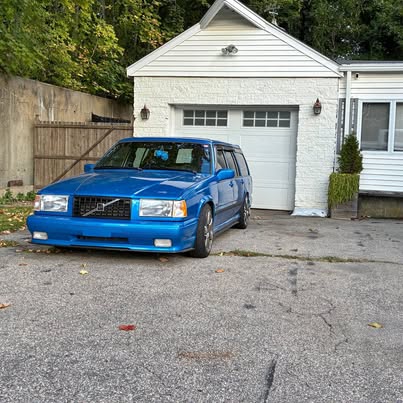
A 1993 blue wagon from Rhode Island. The wagon is the 940 in its most useful form and the body the market wants most, which makes underside and tailgate inspection doubly important on a New England car: road salt, not mileage, is what ends these cars in the Northeast.
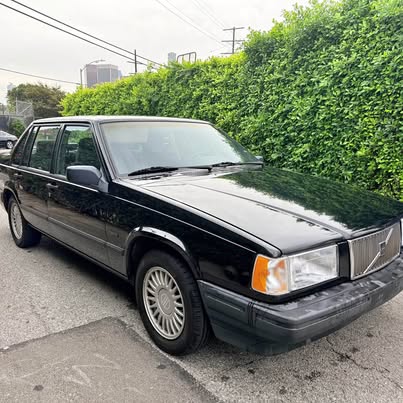
A 1994 black sedan from Los Angeles — the opposite ownership case to the Rhode Island wagon. A Southern California shell is the strongest starting point a 940 buyer can find; spend the inspection on heat-aged rubber, the cooling system and the air conditioning rather than on corrosion.
Engines and gearboxes
The redblock eight-valve: B230F and B230FT
Every mainstream American 940 runs a redblock, so called for the red paint on its cast-iron block. The B230 is the family's final, largest development: 2,316 cc, a single overhead camshaft driven by a toothed belt, two valves per cylinder, an aluminium crossflow head, and electronic fuel injection. There is nothing exotic in it, and that is the point. The forged-steel crankshaft runs in five main bearings, the block is massively overbuilt for the power it makes, and the engine's party trick is indifference — to mileage, cold starts, towing, and neglectful storage. Redblocks routinely pass 300,000 miles without the head coming off, provided two jobs are kept up: the timing belt and the crankcase breather, both covered in Problem areas.
The B230F in the base car and most GLE-trim cars makes 114 hp at 5,400 rpm and 136 lb-ft of torque at 2,750 rpm on a compression ratio of 9.8:1. It breathes through a single throttle body, idles at a lumpy, unmistakable redblock lope, and delivers its best work between 2,000 and 4,000 rpm. Most cars use Bosch LH 2.4 Jetronic injection with a separate Bosch EZK 116 ignition computer: the LH system meters air with a hot-wire air-mass meter, fires the injectors in groups, and adapts within limits to wear and altitude. A minority of naturally aspirated cars — you will meet them from 1990 through the middle of the run, often but not exclusively base-trim cars — use the Rex-Regina system instead, built around Regina fuel injection and a Rex ignition with a single coil pack arrangement and a manifold-pressure sensor rather than an air-mass meter. The two systems share almost no diagnostic parts, sensors or control units, so identify yours before ordering anything: a Bosch car has the large air-mass meter in the intake tract between airbox and throttle body and a distributor at the back of the cylinder head; a Regina car has no air-mass meter in that tract and uses its pressure sensor on the bulkhead. Both systems are reliable. Both are diagnosable with the under-bonnet diagnostic socket and its blink codes on pre-OBD-II cars, which needs no tools beyond a note of the code sequence. From 1995, American diagnostics moved toward OBD-II compliance, which makes code reading easier still.
The turbocharged B230FT keeps the same block, head architecture and 8.7:1 lowered compression, adds oil-spray cooling jets beneath the pistons on later cars (the so-called squirter blocks from 1993 onward, prized by tuners), a Mitsubishi TD04HL turbocharger — a 13C unit in standard factory tune — a front-mounted intercooler, and Bosch LH 2.4 management with boost control and a knock-sensing ignition strategy that retards timing cylinder by cylinder in effect through the EZK system. Output is 162 hp at 4,800 rpm and 195 lb-ft at 3,450 rpm, figures that undersell the car: the torque arrives early and the wagon in particular surfs on it in a way that makes the naturally aspirated car feel breathless on hills and freeway merges. Factory boost is modest, around 7 to 8 psi on a standard car, and the engine was built with headroom in every direction — stronger rods arrived with the later B230 revisions, the head gasket is a stout composite design, and the cooling system is sized generously. That headroom is why the tuning scene loves the FT and why you must inspect a modified Turbo as a modified car: check for manual boost controllers, chipped or swapped ECUs, larger injectors and amateur wiring, and price the car as the sum of its modifications' quality, not the seller's horsepower claim. A standard, unmolested Turbo is the safer and, increasingly, the more valuable car.
Service discipline for the eight-valve is simple and non-negotiable. Oil and filter every 5,000 miles on a turbo car, no more than 7,500 on a naturally aspirated car, in 10W-30 or 10W-40 by climate — these engines are not fussy about brand and are fussy about level, because consumption rises with age. The timing belt interval is 50,000 miles on the schedule most often quoted in America; treat any car without dated evidence as due, noting the eight-valve engines are non-interference — a broken belt strands you but does not bend valves. Plugs are conventional items at 30,000-mile intervals, the distributor cap and rotor on Bosch cars are wear items, and the flame trap should be cleaned or renewed at every oil service on a high-mileage car, not left until it blocks. Coolant is standard ethylene-glycol every two to three years; the thermostat is a cheap known failure that shows first as slow warm-up and poor heater output.
The 16-valve: B234F, and the European engines
The B234F deserves its own subsection because treating it as a B230F with more power is how buyers get hurt. The twin-cam flagship makes 153 hp at 5,700 rpm with 150 lb-ft of torque, and it is a lovely engine when right — freer, smoother and more willing than any eight-valve. It also introduced two balance shafts driven by their own belt behind the main timing belt, and an interference head: if the timing belt fails, valves meet pistons and the bill becomes a cylinder-head rebuild. The balance-shaft belt is the trap inside the trap — owners replace the main belt and ignore it, and a failed balance belt can shed debris into the main belt and take both out. The correct job is both belts, tensioners and seals together at the same 50,000-mile discipline, and a GLE with no paperwork needs it priced in full: budget $700 to $1,200 fitted for the complete twin-belt service with seals, against $400 to $700 for the eight-valve job. The 16-valve also weeps oil from its cam carrier joints, and its hydraulic lifters tick on cold starts if oil changes have slipped. None of this disqualifies the car; it disqualifies the neglected example at a premium price.
European engines appear rarely in America. The B200F 2.0-litre (111 hp) drives like a slightly thinner 2.3; the B230FK low-pressure turbo (135 hp) should be valued like a base car in America, not a Turbo, whatever the seller says. The D24TIC diesel is a 2,383 cc Volkswagen inline six making 122 hp — clattery, torquey and capable of enormous mileages, but its Bosch VE injection pump and stricter belt regime (failure is catastrophic, and pump timing is set with a dial gauge) need a diesel specialist. Buy a diesel on diesel logic, with a specialist inspection, not on redblock logic.
Gearboxes: M46, M47 manuals and the Aisin-Warner automatics
Most American 940s are automatic, and the automatic is an Aisin-Warner four-speed: the AW70 on naturally aspirated cars, the stronger AW71 on Turbo cars, the AW72L with lock-up converter on the 16-valve GLE, with the ZF 4HP22 on a small number of early and European cars. These are conventional hydraulically controlled gearboxes with a kickdown cable — not a switch, and its adjustment matters — and a reputation for outliving the car if the fluid is changed and dying expensively if it is not. Volvo's period long-life fluid language did them no favours; the best-shifting survivors are the ones whose owners changed the Dexron-type ATF anyway. A healthy box engages Drive and Reverse promptly from cold, shifts almost imperceptibly at light throttle, kicks down decisively, and holds overdrive without hunting at a steady 55 mph. Fluid service is a drain-and-fill, or a cooler-line flush for a full exchange, at about $60 to $140 in parts, and a series of drain-and-fills is the correct first response to dark fluid and lazy shifts. A box that slips under load or bangs into gear after fresh fluid is worn, and a rebuild fitted is a $2,200 to $3,800 job — more than many base cars are worth, which is why the inspection road test gives the automatic more time than any other system. Identify the box from the plate on its casing before assuming Aisin parts apply to a ZF car.
The manuals are Volvo's own: the M47 five-speed on most manual cars and the older M46 four-speed with a Laycock overdrive, operated by a dashboard switch, on earlier and some turbo applications. Both are strong, notchy, long-throw boxes that suit the car. The M47 has no structural weakness — worn linkage bushes, a tired clutch, and second-gear synchromesh wear in hard-used turbo cars are its whole list. The M46's overdrive is its weakness: it engages only in fourth, depends on clean oil, a working solenoid and a sound relay, and fails to a simple four-speed when neglected; diagnosis is electrical first, hydraulic second. Clutch replacement is a straightforward rear-drive job at $700 to $1,200 fitted, so a slipping clutch on a cheap manual car is a negotiation point, not a walk-away. Manual 940s are rare enough in America that a good one commands a real premium, especially as a Turbo wagon.
Final drive is a live axle on all 940s (the SE sedan excepted), in ratios matched to engine and gearbox, with an optional limited-slip differential few American cars carry — believe no seller's claim without the axle tag or a jacked-up wheel test. The axle itself is close to unburstable; it needs oil, seals and the suspension that locates it, all covered next.
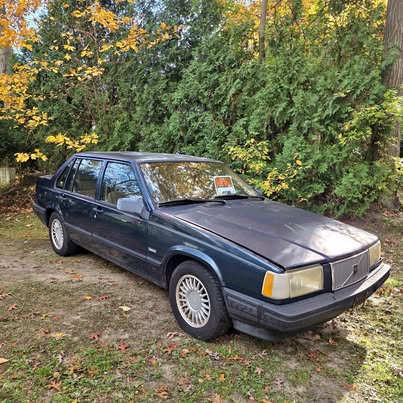
A 1993 green GL sedan from Brookhaven, New York. The GL badge tells you trim, not engine management: before ordering any fuel or ignition parts, establish whether the car in front of you carries Bosch LH-Jetronic with its air-mass meter or the Rex-Regina system without one — the two share almost nothing.
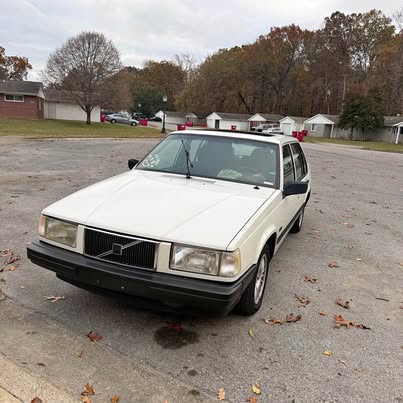
A 1995 white sedan from Fort Campbell, Tennessee. Late American cars are the easiest 940s to diagnose and the most likely to have been family-kept; use that advantage — read the codes, check the belt date, and let evidence rather than model year set your offer.
Problem areas
Engine: flame trap, timing belt, sensors and the no-start relays
Start with the fault that causes more consequential damage than any other on the eight-valve redblock: the flame trap. Volvo's crankcase breather draws oil vapour from the block through a small plastic flame-trap element in a housing on the side of the engine, fed by a separator box and hoses. On a car doing short trips on old oil, the element and hoses fill with emulsion and carbon and gradually choke. Crankcase pressure then pushes oil past the seals that were never designed to hold pressure — the front camshaft and crankshaft seals first, then the rear main seal between engine and gearbox — and coats the engine bay in a fine, demoralising mist that sellers wipe off before you arrive. The classic misdiagnosis is to replace the leaking seal, at $600 to $1,100 in labour for the rear main alone, without touching the breather, whereupon the new seal leaks within the year because the cause is untouched. The test costs nothing and takes a minute: with the engine warm and idling, remove the oil filler cap and lay a thin rubber glove or the palm of your hand loosely over the neck, or simply pull the dipstick and watch for puffing vapour. A healthy system holds a slight vacuum. A choked system puffs and pressurises. The cure is a flame-trap kit and hoses at $40 to $120 in parts and an hour or two of fiddly labour — the trap sits low on the intake side and access is through patience rather than dismantling — plus an oil change, because the same neglect that blocked the trap has thinned the oil. Treat it as a first-week job on any car without evidence, turbo cars included, and on turbo cars add the breather hose to the turbo inlet to the clean-out, because oil pulled through a blocked system is also what fills intercooler pipework and gets blamed on the turbocharger.
The timing belt is the second discipline. On the eight-valve engines a snapped belt is an inconvenience — the pistons clear the valves, the car stops, you tow it and fit a belt — but the belt also drives nothing else critical, and a belt that jumps teeth through oil contamination from those breather-driven seal leaks runs badly and strands you just as effectively. On the B234F 16-valve and on the diesel, belt failure is an engine-out catastrophe, as covered in the engine section. Evidence is what counts: a dated sticker on the timing cover, an invoice naming belt, tensioner and seals, or nothing. Verbal assurance counts as nothing. While the belt is off, the front seals are pennies; insist on them, because oil on a new belt halves its life.
The no-start and hot-restart faults that give these cars an unfair reputation are almost always three cheap components. First, the fuel pump relay — behind the ashtray in the centre console fuse panel — whose solder joints crack with heat and age. The signature is a car that cuts out hot, refuses to restart for twenty minutes, then starts as if nothing happened, or pumps you cannot hear priming at key position two. A replacement is a $25 to $60 part that pushes in by hand; carry a spare in the glovebox, as every experienced owner does. Second, the radio suppression relay in the engine bay, feeding clean power to the injectors, which fails with the same symptoms and is routinely misdiagnosed as an ECU failure. Third, the crankshaft position sensor at the top of the bellhousing, whose cable insulation crumbles over the hot bellhousing. Its failure is total and intermittent: the engine dies, the tachometer drops to zero instantly — that tach drop is the diagnostic — and the car restarts when it cools. A sensor is an $80 to $180 part. Test the relays by substitution before letting anyone sell you an ECU; the Bosch and Rex-Regina control units themselves are notably reliable. Add the fuel pumps to the same list: a low-pressure lift pump in the tank and the main pump beneath the floor. A main pump that buzzes loudly is working too hard, usually because the in-tank pump has died — diagnose both, or you will replace the main pump twice.
Turbo-specific age faults are honest and diagnosable. The turbo oil return pipe seals at the block with an O-ring and gasket that harden and weep oil down the engine, universally misread as a rear main leak; the parts cost a few dollars. Intercooler and intake hoses soften, swell, and split or blow off under boost — a sudden loss of power and a whoosh is a hose, not a turbo. The wastegate actuator diaphragm weakens and the car makes low boost with no other symptom; test it with a hand pressure pump before condemning the turbocharger, whose genuine failure shows as blue smoke after idling and on the overrun, oil pooled in the intercooler beyond a light film, and shaft play at the compressor wheel. A rebuilt exchange turbo runs $600 to $1,100 for the part. Head gaskets on the B230FT fail occasionally after an overheating event, pressurising the cooling system — test cold, cap off, watching for immediate bubbling and a top hose that goes hard within a minute. Overheating itself is almost never the engine's fault: it is the fan, a silted radiator, a stuck thermostat or a failed cap, in that order, and a car with an overheating history needs its head gasket proven, not assumed.
Cooling and charging close the engine list. Radiators silt internally and their plastic end tanks embrittle; a replacement is a $150 to $300 part and a driveway job. Bulkhead heater hoses and the heater control valve perish invisibly — replace on age, not appearance. The alternator brush and regulator pack wears out in the 150,000 to 200,000-mile window, announcing itself with a dim charge light at idle; the pack is cheaper than the alternator. The power-steering pump whines on tired fluid; fresh fluid quiets most of them.
Rust: the map
The 940 is better protected than the 240 — more galvanised panels, better cavity wax and seam sealing — and a southern or garaged car can be startlingly clean underneath at thirty years old. Rust still decides more 940 purchases than any mechanical fault, because welding is the one cost that scales without limit. Work the map in this order. Rear wheel arches and sill ends first, especially on wagons: the arch lip traps mud, and bubbling at the lip means the inner arch is worse. Press hard along the sill seams and jacking points, feeling for softness under the underseal rather than admiring paint. Next, the wagon spare-wheel well (it collects water from tired tailgate and rear-light seals; surface rust is evidence, perforation is a welding bill) or the sedan boot floor. Front wings rust at the rear lower corner — they bolt on, so wing rust alone is a parts cost, not a structural one. Then the battery tray, the windscreen surround where a replacement screen has cut the paint, door bottoms, the tailgate's lower edge, and underneath, the brake pipes along the axle and the front crossmember on any northern car.
Calibrate your offer accordingly. Arch-lip bubbling is cosmetic and negotiable. Softness at a sill end, jacking point or floor edge is structural welding at $800 to $2,000 per side, and a car needing both sills and both arches is a project at a project price however well it drives. Southern and western cars are worth a travel budget and a premium for this reason alone: you can replace every mechanical wear item on a 940 for less than properly welding a rotten shell.
Chassis, steering and brakes
The front suspension is MacPherson strut with a lower control arm, a separate ball joint (unlike its 850 successor, the 940's joint is replaceable on its own), and an anti-roll bar with drop links. The large rear bush on the front control arm — the stay-arm bush, often called the cone bush — perishes and splits, letting the wheel move fore and aft under braking: a clunk on brake application, wander under braking, and inner-edge tyre wear. It is the single most common front-end fault on the car. Budget $60 to $150 per side in parts for quality bushes and ball joints, and do both sides together. Strut-top mounts notch and make the steering grainy at parking speeds. Dampers tire gradually; judge by body control over a speed bump, not cruising comfort, because the ride tolerates tired dampers deceptively well. Steering is a ZF rack-and-pinion, power-assisted and generally tight; play is usually track-rod ends, and the pump and hoses leak before the rack fails. Wheel bearings hum in the 40 mph range and change pitch with cornering load when they go.
The rear suspension is the live axle on trailing arms, coil springs, a Panhard rod and torque rods, needing little beyond dampers, springs and bushes — all cheap, all available. The exception is the Nivomat self-levelling damper fitted to many wagons: excellent when working, $400 to $700 per unit like-for-like when it is not. The test is simple — a working car sits level after a short drive even loaded, and sags when the units are dead. A sagging wagon carries a real bill: Nivomats, or a conventional damper-and-spring conversion at $300 to $600 in parts for the pair, which most owners accept happily. The 940 SE sedan's independent rear is the exception to all of this and needs 960 parts logic, not 940 logic. Axle faults are limited to seal weeps, axle oil nobody has changed since the factory, and an overrun whine at very high mileage that most cars simply live with.
Brakes are discs all round, with ABS on most later American cars and strong, progressive feel when maintained. The age faults are seized caliper slide pins and pistons — pulling under braking, uneven pad wear, a hot wheel after a drive — perished flexible hoses, and corroded pipes as noted in the rust section. The handbrake works through shoes inside the rear disc hat and seizes through disuse; test it on a slope. A full refresh with discs, pads, hoses and fluid is a $400 to $800 proposition at an independent and transforms a vague car, so budget it rather than fearing it.
Interior, electrics and the heater
The cabin is where a 940 shows its life most honestly. The headline job is the heater core, which leaks into the front footwells, misting the windscreen with a sweet-smelling film that returns however often you wipe it; damp carpets with a coolant smell are its fingerprint. On the 940 the core is a genuinely big job — dashboard-deep, $900 to $1,600 fitted at a specialist — so a leaking core is a serious negotiation point, not a shrug. The blower motor fails with a squeal or a smell; speeds that work only on the highest setting indict the resistor pack, a cheap part, not the motor. Test every speed, run the heater hot for ten minutes, and put your hand in both footwells afterwards. Air conditioning follows the era's Volvo pattern: durable compressors, condensers that corrode at the lower edge, and slow leaks at hardened O-rings. Genuinely cold air after twenty minutes means money spent recently; a car described as needing a charge needs a leak found, at $150 to $400 for diagnosis and seals plus refrigerant.
The instrument cluster carries the model's signature electrical fault: the Yazaki and VDO clusters suffer failing solder joints and an odometer drive gear that crumbles, so the odometer stops, the speedometer dies intermittently over bumps, or the gauges wander. Huge numbers of 940s therefore display less than their true mileage. Test that the odometer advances on the road test, cross-check the file's mileage sequence, and price a frozen-odometer car as the higher-mileage car it is. Specialist cluster repair runs $150 to $350; replacement gears cost a few dollars. Beyond the cluster: the in-tank fuel gauge sender fails and the gauge wanders, power window regulators slow and strip, sunroof drains block and fill the footwells with rainwater that gets blamed on the heater core — distinguish them by smell, because rainwater does not smell sweet — and the wagon tailgate harness fatigues at the hinge, killing the rear wiper, lock and number-plate lights one by one. That harness is a wagon rite of passage: budget $250 to $500 fitted, and test every tailgate function on any wagon viewing. Seat heaters fail at the element's flex point, and sunroof-car headlining sags — a $300 to $600 retrim if it bothers you.
Body hardware closes the list: door check straps groan, window seals whistle, and sedan boot seals leak into the spare-wheel well. None of it stops the car; all of it distinguishes the cherished survivor from the winter beater, and on a model this durable, these details are legitimately where the value lives.
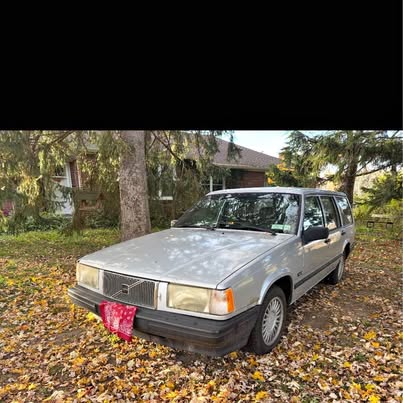
A 1993 silver wagon from Elma, New York. On any northern wagon, work the full tailgate checklist before you discuss price: rear wiper, tailgate lock, number-plate lights and heated rear window all run through the hinge harness that fatigues on every one of these cars, and the spare-wheel well underneath tells you whether the tailgate seals still seal.
How to inspect one
Work in this order: identity first, then the shell, then the cold engine and the gearbox that decide whether the car is a driver or a project.
- Verify identity before value. Read the VIN through the windscreen and on the door jamb, and lift the bonnet to confirm the engine matches the story. A narrow eight-valve head with side-mounted plugs is a B230 car; a wide twin-cam head with centre plugs is the B234F GLE, whatever the badge says; a turbocharger and intercooler plumbing make it an FT. On a claimed 940 SE, confirm the 960-style body and trim from the build data — the SE is a one-year car and the badge alone proves nothing. A car whose engine and badge disagree is priced as the lesser car until paperwork proves otherwise.
- Read the file for the three dates that matter. Timing belt within 50,000 miles with tensioner and front seals (both belts on a 16-valve car), flame-trap or breather service, and automatic gearbox fluid changes. Invoices beat stamps and stamps beat conversation. A thick file on a base sedan is worth more than low mileage with no paper, every time, on this model above most.
- Do the rust circuit before you start the engine. Rear arch lips and sill ends first, thumb pressure along the sill seams and jacking points, then the wagon spare-wheel well or sedan boot floor, front wing rear corners, battery tray, windscreen corners and door bottoms. Softness at a sill or jacking point is structural welding and reprices the car on the spot; clean arches on a northern car are the single best reason to buy it.
- Cold start, bonnet up, breather test. Insist the engine is stone cold — arrange it in advance and be suspicious of a warmed-up car. Start it, listen for a second or two of top-end rattle at most, then do the flame-trap test from the problem-areas section: hand or glove over the oil filler neck should feel slight vacuum, never pressure and puffing. Watch for blue smoke on start-up (valve seals and age) and continuous blue smoke under load (rings or, on a turbo, turbo seals).
- Listen for the fuel pumps and watch the tachometer. Key to position two: you should hear the pumps prime briefly. If you do not, the fuel pump relay is the first suspect and a cheap one. If the engine ever cuts on the road, watch whether the tachometer falls instantly to zero; that points to the crank position sensor, not the fuel system, and the distinction halves the diagnosis bill.
- Interrogate the automatic gearbox properly. From cold, Drive and Reverse should engage promptly and gently; on the move, changes should be clean with no flare, thumps or hunting in overdrive. A car that will not kick down or hangs onto gears has often got a misadjusted or seized kickdown cable — a cheap fix — but a box that slips under full throttle is worn, and no adjustment cures it. Pull the dipstick: black, burnt-smelling fluid on a good-shifting box means an overdue service; the same fluid on a bad-shifting box means walk away or price a rebuild. A manual car wants no second-gear crunch, a mid-travel clutch bite, and, on an M46 car, overdrive engaging crisply in fourth.
- Boost test for Turbo cars. In third gear from 2,500 rpm the car should pull hard and evenly with no surging, whooshing or sudden softness. Surge and low boost point first to hoses and the wastegate actuator, not the turbocharger. After a hard run, let the car idle for two minutes and watch for blue smoke building behind it — turbo seals or a blocked breather pressurising the oil return, and the breather test in step 4 tells you which to suspect first.
- Heater, blower and air conditioning, tested like you mean it. Heater on hot, blower through every speed, for a full ten minutes of the drive. Feel both front footwells afterwards for damp and smell for coolant sweetness — the heater-core test from the problem-areas section, and the most expensive cabin job on the car if you skip it. Then AC on maximum for the remainder of the drive: genuinely cold after twenty minutes is a car that has been maintained; cold for five minutes then warm is a leaking system.
- Front-end and steering audit. On the road, brake firmly from 50 mph twice: a clunk, a tug or wander under braking is the control-arm cone bush until proven otherwise. At parking speed, turn lock to lock listening for notchiness from the strut tops, and over small bumps listen for drop-link knock. Check inner front tyre edges for the wear pattern that confirms bush movement.
- Wagon rear-end checks, or sedan equivalents. Load the wagon's rear with your own weight on the bumper, drive a short distance, and confirm a Nivomat car levels itself; a car still sagging after the drive needs dampers or a conversion, priced in Problem areas. Test every tailgate electrical function — wiper, washer, lock, number-plate lights, heated window — because the hinge harness fails them one at a time. On a sedan, check the boot floor for water and the rear light seals.
- Odometer truth test and warning-light census. Confirm the odometer and trip meter actually advance during the drive — the cluster gear failure in the problem-areas section means displayed mileage on many 940s is fiction, and the service file's mileage sequence is the cross-check. Ignition on before starting: ABS, SRS, check-engine and bulb-failure lights should all light and then go out. A missing warning bulb is an old trick; a stored blink-code or OBD-II fault is a bargaining chip with a price attached.
- The underside and the paperwork, together. A car that survives the first eleven steps has earned a ramp: brake pipes along the axle, axle and gearbox seals, exhaust, and the front crossmember on a salt-belt car. Then reconcile title, VIN, mileage story and any Turbo modification list before money moves. A cheap car failing steps 3, 6 or 8 is a project, and should be priced as one without apology.
None of this needs specialist equipment for the first pass: a torch, a glove for the breather test, and an hour.
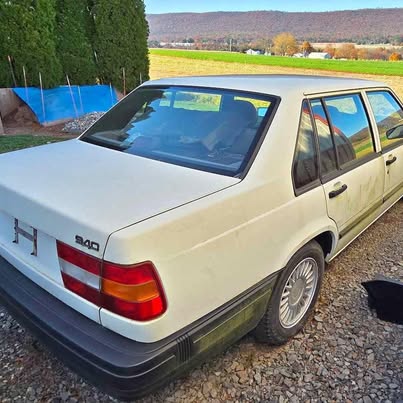
A 1993 white car from Hegins, Pennsylvania. Cars described with minimal trim detail like this one are where the ten-second bonnet checks earn their keep: count the cam covers, find the turbo or its absence, and identify the fuel system before you value the car at all.
Values
The computed market block beneath this guide carries the live numbers — what is listed now and what recorded sales show — so read the 940 market through it and through condition, because this is a range where asking prices tell you more about the seller's hopes than about the car. The spread between the cheapest and dearest 940 offered at any moment is wide, and almost all of it is explained by four things: body style, turbo or not, shell condition, and evidence. Model year, within the American 1991 to 1995 window, explains almost nothing. A tired, high-mileage automatic sedan with no belt history, a sagging heater core and sill rust is a parts-adjacent car wherever it is advertised. A documented, rust-free Turbo wagon with the breather done, the belt in date and cold air conditioning sits in a different market entirely, even though a casual observer sees the same brick.
The durable premiums are few and logical. The wagon body carries the clearest one: the 940 wagon is the icon, the useful one, and the one two buyers want for every tidy example that surfaces, so a good wagon outdraws an equivalent sedan consistently. The Turbo carries the second premium, and the manual gearbox on a Turbo the third — manual Turbo wagons were a small minority when new and are a tiny minority of survivors, and the market pays for that scarcity when the car is standard and documented. Originality pays on Turbo cars in a way it does not on base cars: an unmodified FT with its factory boost control intact is worth more to the next buyer than a faster car with an unknown tune, because the standard car's next decade is predictable. Southern and western shells pay for themselves in the same way — the premium for a rust-free underside is real money saved, not cosmetics.
The discounts are equally honest, and they are your opportunity. Automatic naturally aspirated sedans are the cheapest way into the model, which makes a clean, documented base sedan the value buy of the range: same shell, same durability, least money. High mileage should discount a well-documented 940 only modestly — these engines and shells were built for 300,000 miles, and a 220,000-mile car with a full file is routinely a better purchase than a 120,000-mile car with none, doubly so given how many odometers have stopped telling the truth. The 16-valve GLE discounts against the Turbo because informed buyers price its stricter belt discipline, which makes a GLE with a fresh, invoiced twin-belt service genuinely undervalued.
Negotiation on a 940 is arithmetic, not theatre. Most private sellers are selling a thirty-year-old Volvo, not a collectible, and documented faults move the price: an out-of-date belt, a blocked breather, a leaking heater core, dead Nivomats, a frozen odometer. Use the job costs in the problem-areas section and keep the project-versus-driver gap in view: the distance between a cheap 940 and a sorted one is usually less than the cost of sorting the cheap one yourself once welding or a heater core is involved, and greater than that cost when the faults are only relays, bushes and fluids. Learn to tell those two cheap cars apart and you will buy well. On the best Turbo wagons the negotiation runs the other way — your leverage is the cost of the faults you can prove, not the hope of a bargain.
Parts and ownership
The 940 is one of the cheapest European cars of its era to keep properly, and the reason is arithmetic: an eight-year production run on top of a decade of 700-series development, an engine family shared with the 240 and 740 in enormous numbers, and an enthusiast and taxi-fleet afterlife that kept every wear part in production long after Volvo moved on. Volvo's own classic support for the redblock cars remains good for service items. The specialist ecosystem — the big American Volvo houses such as FCP Euro and IPD in the United States, and the Swedish, German and British specialists in Europe — stocks timing-belt kits, flame-trap kits, complete front-suspension refresh sets, relays, sensors, brake and exhaust systems, and remanufactured instrument clusters as catalogue items rather than special orders. Breakers still see these cars, which keeps seats, glass, ECUs, gearboxes and trim available used at sensible prices, and the interchange with 740 and 940 parts widens the pool further — though always verify by part number, because mid-run changes in sensors, relays and trim are common.
What is getting harder is the cosmetic and the model-specific: uncracked dashboard tops and door pockets, wagon load-area trim, SE luxury trim, and 16-valve B234F parts — available, but thinner on the shelf than eight-valve parts. Nivomat dampers remain the single most expensive wear item on the car. Before buying any car that needs a specific trim piece, search for that piece first; the mechanical parts will be there, and trim is where a cheap car quietly becomes an unfinished one.
Running one is straightforward. Fuel consumption is honest rather than frugal — mid-20s on a highway run from a naturally aspirated automatic, low-20s around town, a Turbo thirstier — and insurance on base cars is among the kindest of any classic-era family car. The home mechanic is exceptionally well served: a roomy engine bay, blink-code or basic OBD-II diagnostics depending on year, and workshop literature as complete as for any car ever made. The jobs that defeat driveways are few and flagged: the heater core, the rear main seal, and welding. Everything else is weekend-scale work with ordinary tools.
Ownership rhythm: buy the car, immediately establish the timing belt, breather, gearbox-fluid and coolant baselines unless the file proves them, put a spare fuel pump relay in the glovebox, and then simply maintain it. A 940 treated that way does not feel like a classic car commitment. It feels like a car — which is precisely what its owners have always valued about it.
Which one to buy
- The all-rounder: a 1994-95 naturally aspirated wagon, automatic, with a full file. The last, best-developed version of the standard car: the toughest engine in its final form, the most useful body, diagnostics at their easiest, and running costs no higher than any honest family car. Buy the cleanest underside you can find and drive it forever.
- The value buy: a documented base or GL sedan, automatic, from a dry state. The market prices sedans and automatics down and durability does not care. A rust-free southern sedan with its belt and breather done is the most transportation per dollar in this entire guide.
- The enthusiast's car: a standard, unmodified 940 Turbo wagon. Effortless torque, the full brick silhouette, and an engine with headroom you may never need. Pay for originality and evidence; walk away from undocumented tunes at standard-car money or any money.
- The connoisseur's car: a manual Turbo, sedan or wagon. The rarest mainstream American specification and the one that transforms the car's character. Scarce enough that you buy on condition when one appears, accepting higher mileage with a file over low mileage without one.
- The sweet spot with a warning: a 1991-92 GLE 16-valve with a fresh twin-belt invoice. The nicest naturally aspirated drive in the range, and fairly priced because buyers fear it. The invoice is the whole deal — without dated proof of both belts, price the full service into the car or choose an eight-valve instead.
- The curiosity: a genuine 1991 940 SE. Turbo pace in the 960 suit, one year only, and interesting for exactly that reason. Verify the identity from build data, inspect the rear suspension on 960 logic, and pay a Turbo price plus a condition premium — not a rarity fortune.
The overriding rule: on a 940, shell and evidence beat badge and mileage every time — a documented base wagon is a better purchase than a story-laden Turbo, because every expensive fault on this model is a known fault with a known price, and the file is how you know whether you are paying it or the last owner already did.
See the 3 940 Sedan 4D cars currently listed.
For sale now
$4,800Expand
What they sell for: 940 Sedan 4D sale prices.