
Acura CL buyer's guide
Acura CL -- the model's own buyer's guide: variants, values and what to check.
Years listed: 1998-2003 · Series: CL
Overview and history
You are looking at the forgotten Acura. The CL is a front-wheel-drive luxury coupe built in Marysville, Ohio, sold in two short generations — 1997 to 1999 and 2001 to 2003, with no 2000 model year — and then dropped without a replacement. It never gets the affection the Integra gets or the respect the TL sedan gets, and because of that it is one of the cheapest ways into a well-built Honda-era coupe — provided you understand the one component that decides whether a given car is a bargain or a trap. That component is the automatic gearbox. Read the gearbox subsection before you read anything else twice.
Correct a persistent myth first. The CL is not simply a Honda Accord coupe with leather and a different badge. It shares its platform, basic engines and much of its switchgear with the Accord of its day — the first generation with the fifth-generation Accord, the second with the sixth-generation Accord and the second-generation TL — and that sharing is a strength, because it makes mechanical parts cheap and familiar. But the CL has its own body, interior and suspension tuning, more equipment as standard, and, in the second-generation Type-S, a drivetrain combination Honda never sells you in an Accord coupe of the same years. You buy a CL for Accord mechanical honesty with a quieter cabin and better seats. You do not buy one expecting a rear-drive sport coupe.
The first generation arrives for 1997, positioned in spirit below the old Legend coupe, though smaller, front-driven and far less ambitious. You get a four-cylinder with a manual gearbox or a 3.0-litre V6 with an automatic only. The styling is neat, conservative and anonymous. The cabin is the selling point: real room for two adults in front, occasional room in the back, a large boot, leather on most cars, automatic climate control, and build quality that still impresses when you shut a door on a tidy example today. This is a car designed for long American distances at a relaxed cruise, not for a back road at dawn — although the manual four-cylinder car, lighter in the nose, is more willing than you expect.
Acura pauses the car after 1999; there is no 2000 CL. When the name returns for 2001, the car underneath is substantially new: a larger, stiffer body, a 3.2-litre V6 in every car, a five-speed automatic with a manual override, and a proper flagship in the Type-S. It is also the generation that gives the CL its one genuinely collectable variant. For 2003 only, and on the Type-S only, Acura offers a six-speed manual gearbox with a limited-slip differential. That single model year transforms the car's character and its risk profile, because it removes the fragile automatic from the equation entirely.
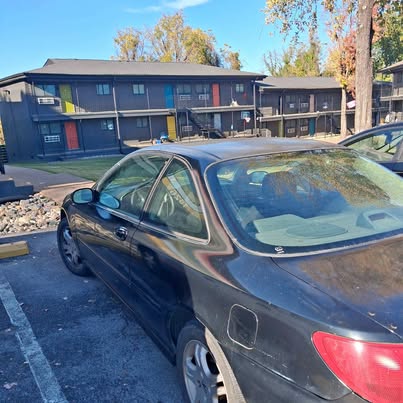
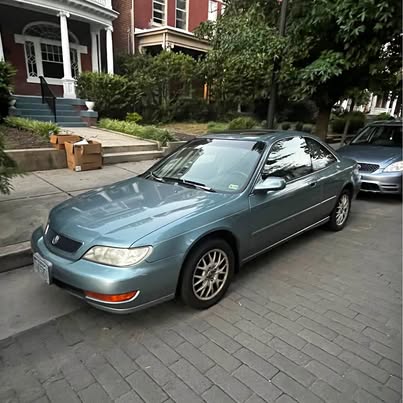
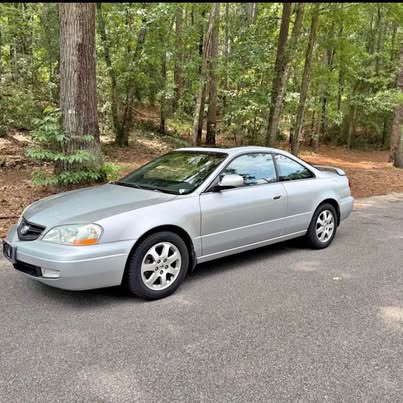
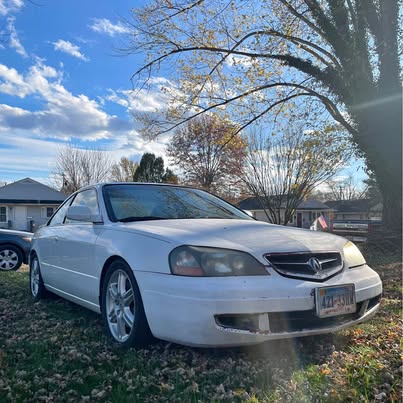
The CL is a North American product, built in Ohio for this market, with no Japanese-domestic or European equivalent — which matters later when you shop for trim and body parts. The surviving pool is entirely a used-American-car pool: mileages are high, histories are variable, and exposure ranges from dry southern cars to salt-belt cars that have lived through twenty winters. That spread shows in the site's own current pool, which you should read as a snapshot, not a census. At the time this guide was prepared the store holds nine CLs, all currently for sale and all sourced from Facebook Marketplace listings: five 2003 cars, two 2001 cars, one 1998 and one 1999, so the pool skews heavily to the second generation and its final year. Five are listed as automatics and four as manuals — a proportion that flatters the manual's true rarity in the wider fleet, where the automatic dominates overwhelmingly. Treat those nine cars as an illustration of the market's shape, not as evidence about how many of any variant survive.
Why buy one now? A sorted car gives you strong driving experience per dollar: the V6s are smooth, torquey and unstressed, the cabin is genuinely comfortable, and the cars cruise quietly in a way no modern economy coupe matches. The mechanical base is Honda, so any shop that knows Accords and TLs already knows most of your car. And the 2003 Type-S manual is a real driver's car hiding in plain sight. Against that, you weigh one dominant liability, a list of age-related jobs now due on every car regardless of mileage, and a parts situation that is excellent mechanically and increasingly thin for CL-specific trim.
Correct one more myth here, because it distorts shopping. The CL does not have a timing chain that lasts the life of the engine. Every engine in this guide drives its camshafts with a rubber timing belt, every one is an interference design in which belt failure bends valves, and every CL you look at is now old enough that the belt question is not "has it been done on schedule" but "can the seller prove when it was last done." A car with no proof needs the job immediately, and you budget for it as such.
The models
The range is simple once you lay it out by generation, and confusing only because Acura reuses the CL name across two different cars. First generation, 1997–1999: four-cylinder 2.2CL and 2.3CL, plus the V6 3.0CL. Second generation, 2001–2003: 3.2CL in standard tune, plus the 3.2CL Type-S. There is no four-cylinder second-generation car, no V6 manual first-generation car, and no manual Type-S before 2003. Any listing that claims one of those combinations is misdescribed, mis-badged or modified, and you establish which before you travel.
| Model | Years | Engine | Output | Built | Character |
|---|---|---|---|---|---|
| 2.2CL / 2.3CL | 1997 (2.2); 1998–1999 (2.3) | F22B1 2.2 / F23A1 2.3 SOHC VTEC four | 145 hp / 150 hp | Not separately published in a form worth quoting precisely; the minority of first-generation production | The light-nosed, honest car; the only first-generation route to a manual gearbox |
| 3.0CL | 1997–1999 | J30A1 3.0 SOHC VTEC V6 | 200 hp | The majority of first-generation production; exact split not reliably published | The relaxed luxury coupe Acura intended; automatic only, smooth and soft |
| 3.2CL | 2001–2003 | J32A1 3.2 SOHC VTEC V6 | 225 hp | The volume second-generation car | A quicker, stiffer, better-equipped GT; automatic only |
| 3.2CL Type-S | 2001–2003 | J32A2 3.2 SOHC VTEC V6 | 260 hp | A minority of second-generation production; the 2003 manual is a small subset of that minority | The performance car: firmer chassis, bigger brakes; six-speed manual with LSD for 2003 only |
A note on the Built column, because this guide does not invent figures. Acura publishes production in aggregate in ways that do not give a clean, verifiable per-variant build count for the CL, and the numbers repeated on forums vary too widely to print as fact. What is reliable, and what you actually need, is the ordering: the V6 automatic cars are the common cars in both generations, the four-cylinder is uncommon, the Type-S is a minority, and the 2003 manual Type-S is genuinely rare. Verify any individual car's identity from its VIN and equipment, never from a seller's production claim.
The 2.2CL exists for 1997 only, with the 2.2-litre F22B1. For 1998 the four-cylinder grows to 2.3 litres as the F23A1 and the car becomes the 2.3CL, with small power and torque gains. In practice you shop for the two as one model. You get a five-speed manual or a four-speed automatic, and the manual is the one you want: the four-cylinder car is noticeably lighter over the front axle than the V6 and turns in more willingly. Performance is adequate rather than fast, but the engine revs cleanly and VTEC gives it a second wind. Equipment is a step below the V6 and varies with the Premium trim level, so check the individual car for leather, sunroof and climate control rather than assuming them.
The 3.0CL is the car most first-generation buyers chose, and the reason is the engine. The J30A1 gives you 200 horsepower, a broad, quiet spread of torque and a refinement the four cannot match. It comes only with the four-speed automatic, and the combination defines the car: you waft. The suspension is soft, the steering is light, and the whole car encourages a gentle pace. That is not a criticism if it is what you want — as a comfortable, inexpensive cruiser, a sorted 3.0CL is a pleasant thing — but do not buy one expecting responses it never had. Most have leather, a sunroof and the full climate system. Condition separates the model years far more than specification does.
The second-generation 3.2CL, from 2001, moves everything on. The J32A1 gives 225 horsepower, the five-speed automatic adds a ratio and a SportShift manual override, the body is stiffer, the brakes are stronger and the interior is a more serious place, with side airbags and a richer specification. You feel the difference in the first mile: firmer, quieter at speed, more responsive. It is still a front-drive GT rather than a sports coupe, but a better GT in every measurable way. If you want a CL to use every day and you do not need the Type-S badge, this is the rational car — subject, always, to the gearbox evidence below.
The Type-S is the flagship and the only CL with a performance brief. The J32A2 gives 260 horsepower through higher compression, a more aggressive camshaft and VTEC profile, a two-stage intake manifold and a freer exhaust; the detail is in the engines section. The chassis gets firmer springs and dampers, a larger rear anti-roll bar, larger wheels and bigger front brakes. The automatic Type-S is a fast, capable coupe. The 2003 manual Type-S is something else again: six closely spaced ratios, a helical limited-slip differential that lets the car pull out of a corner instead of spinning its inside wheel, and the full 260 horsepower with no torque converter in between. Verify a claimed manual Type-S carefully: the car must be a 2003 and a Type-S by VIN and equipment — a standard 3.2CL with a badge is not the same car.
Most CLs you meet are well equipped: leather, powered and heated front seats on V6 and second-generation cars, automatic climate control, a powered sunroof, cruise control and a Bose-branded audio system are all common. Navigation appears on some second-generation cars; its electronics are now an age liability as much as a feature, and a working system is a small bonus, not a reason to pay more. What matters is whether the systems on the individual car still work — every seat motor, every window, the sunroof in both directions, the climate control hot and cold. The inspection section gives you the order to test them in.
Engines and gearboxes
Three engine families cover the range: the F-series four-cylinder and two generations of the J-series V6. All are Honda designs of the 1990s at their best — single overhead camshaft per bank with VTEC, sequential fuel injection, and a reputation for lasting a very long time when the oil and the timing belt are changed on time. None of them is the reason you walk away from a CL. The gearboxes include the reason you walk away from most of them.
The F-series four-cylinder: F22B1 and F23A1
The 2.2-litre F22B1 in the 1997 2.2CL and the 2.3-litre F23A1 in the 1998–1999 2.3CL are closely related single-cam VTEC fours from the Accord line, making 145 and 150 horsepower respectively, the 2.3 with a little more torque a little lower down. In the car the difference is smaller than the numbers suggest, so choose on condition and gearbox rather than badge. Both are smooth for fours of their era, willing to rev, and economical in a way no V6 CL is. The architecture is an iron block with an alloy head — note that, because it distinguishes the F-series from the all-alloy J-series V6s — with balance shafts that keep secondary vibration out of the cabin. VTEC here is the economy-and-midrange form of the system, favouring torque and efficiency rather than a high redline, so you get a thickening of the pull as the revs rise rather than a hard top-end surge.
The timing belt drives the camshaft, and the balance shafts have their own belt; both are renewed together, along with the water pump, tensioners and any weeping seals. The factory interval for this era is in the region of 105,000 miles or seven years — and every surviving car is now governed by the years, not the miles. A belt of unknown age is a belt you replace, with the full kit, immediately: budget $700–$1,200 at an independent Honda specialist, and treat a seller's verbal assurance as no assurance at all. You want an invoice that names the belt, the water pump and the date.
Beyond the belt, the fault list is short, which is the four-cylinder car's real appeal. Oil leaks gather at the distributor O-ring and internal seal, at the VTEC solenoid gasket and screen, and at the valve-cover gasket; none is expensive — a solenoid gasket is a $60–$150 job, a valve-cover set $120–$250 fitted — but oil on a timing belt shortens the belt's life, so a leak at the front of the engine brings the belt job forward. The idle air control valve carbons up and gives you a hunting idle, worst when cold or with the air conditioning on; cleaning sometimes cures it, a replacement runs $150–$350 fitted. EGR passages clog at high mileage and set an insufficient-flow code; the cure is removing the manifold and cleaning the passages, $300–$600 in labour. The main relay under the dash fails with heat and age and gives you the classic symptom: the car starts fine cold, refuses to restart after a short hot stop, then starts again when it cools. A relay is $50–$100 and ten minutes to fit. A four-cylinder engine that has had oil changes and a belt is a 250,000-mile engine. Use oil consumption as your health check: blue smoke on a trailing throttle points to valve-stem seals, a quart disappearing in a few hundred miles points to rings, and a compression and leak-down test — $120–$250 in a pre-purchase inspection — settles which.
The J30A1: the first-generation V6
The 3.0-litre J30A1 in the 1997–1999 3.0CL is a 60-degree, all-alloy, single-cam-per-bank V6 with VTEC, making 200 horsepower and 195 lb-ft of torque. It is notably smooth and quiet, with the even, muted hum that defines the family, and in the CL it is tuned entirely for effortless progress. The single-cam layout — four valves per cylinder from one camshaft per bank — keeps the heads compact and the engine short enough to fit transversely in an Accord-derived bay.
The timing belt runs at the front of the engine and drives both camshafts and the water pump. The interval is again in the region of 105,000 miles or seven years, and again the years now rule. The job is bigger than on the four — more covers, tighter access, an engine mount to remove — and it is the moment to renew the water pump, tensioner and idler pulleys, hydraulic tensioner, accessory belts and front crankshaft seal as a matter of course. Budget $800–$1,400 at an independent specialist for the complete job. Belt failure on this interference engine bends valves and turns a service item into a $2,500–$4,500 cylinder-head repair or an engine replacement.
The J30A1 has one era-specific weakness to know by name: the alternator. Early J30 cars use a Delphi alternator with a poor service record, and many cars are already on a replacement. The symptoms are the usual ones — a battery light, dimming at idle, a car that needs jump-starts despite a good battery — and the test is a charging-voltage check at the battery with the engine running and loads on. A quality replacement runs $300–$600 fitted. Look also at the power-steering pump and its high-pressure hose, which weep with age; a pump reseal or replacement is $250–$550, a hose $200–$400 fitted. Engine mounts collapse with age and give you a thump on take-up and vibration at idle in gear; replace the failed mounts at $150–$350 per mount fitted, not automatically all of them.
Valve clearances on the J-series are set with screw-and-locknut adjusters, not self-adjusting hydraulic lifters, so they are a service item almost nobody does. Tight clearances give you no warning noise — a tight valve is a quiet valve — and eventually a burned exhaust valve and a misfire no plug or coil cures. If a J-series car has a persistent single-cylinder misfire, check the clearances before you let anyone sell you parts; the adjustment is $300–$550 in labour. Misfires from a failed ignition coil are common and easily diagnosed by swapping coils between cylinders and watching the misfire move; a coil is $60–$140. Fit new spark plugs as a baseline and read the old ones for oil in the plug tubes, which means valve-cover tube seals — a $200–$400 job, usually combined with the cover gaskets.
The J32A1 and J32A2: the second-generation V6s
The 3.2-litre engines in the 2001–2003 cars develop the same J-series architecture. The standard J32A1 makes 225 horsepower and 217 lb-ft. The Type-S J32A2 makes 260 horsepower and 232 lb-ft, and the gap is real engineering, not a badge and a software tweak — correct that myth whenever you meet it, because it is used to sell standard cars at Type-S money. The Type-S engine runs a higher compression ratio, a more aggressive high-lift VTEC cam profile, larger intake valves, a two-stage intake manifold that changes its effective runner length with engine speed, and a larger-bore, freer-flowing exhaust. The result pulls harder everywhere and keeps pulling to a redline around 7,000 rpm, where the standard engine is finished.
The two-stage manifold introduces the second-generation car's signature engine fault. The intake manifold runner control system uses a vacuum-operated actuator — commonly called the IMRC actuator — to turn a shaft that opens the secondary intake path at higher revs. The actuator ages, the shaft carbonises and stiffens, and the system stops switching. You lose the top-end step, you may get a check-engine light, and the car feels flat above about 4,000 rpm in a way owners blame on the gearbox or the fuel. The distinguishing test is direct: watch the actuator while an assistant raises the revs through the changeover point, or work it by hand and feel for a stiff, gritty shaft. A replacement actuator is a $120–$300 part; the job, including cleaning the shaft, runs $250–$550 fitted — a small job that restores a large part of the Type-S's character.
Everything said about the J30's timing belt applies here with the same numbers and the same urgency: 105,000-mile/seven-year region, full kit with water pump and tensioners, $800–$1,400 at an independent, catastrophic valve damage if it breaks. Add two specifics. First, cooling-system age matters more on these heavier, harder-worked cars: radiators seep at the plastic end-tank crimps, thermostats stick, and the first sign is often a temperature gauge creeping above its usual position in traffic. A radiator runs $350–$700 fitted, a thermostat $150–$300. Never buy a J-series car with a history of overheating without compression and leak-down tests, because a cooked engine can hide a head-gasket failure behind an apparently cured symptom. Second, the oil-pump and front-seal reseal is a timing-belt-area job, so combine it with the belt and save the labour overlap — an invoice showing both jobs together marks a seller who has maintained the car properly. EGR codes, idle-control carboning, coil failures and the valve-clearance point all carry over, and the clearance point matters most on the Type-S, whose harder-worked exhaust valves suffer first when clearances close up.
Gearboxes: the manual you want, and the automatic that decides everything
Four gearboxes appear across the range, and they divide cleanly into the ones you seek out and the ones you interrogate. The five-speed manual, fitted only to the four-cylinder first-generation cars, is a conventional Honda manual of excellent reputation: light, accurate, with a clutch that lasts a long time in normal use. Synchromesh on second and third wears first on a hard-used car, showing as a graunch on a fast change that disappears when you slow the change down. A clutch replacement runs $700–$1,200 fitted. Check that the bite point is not at the very top of the pedal travel and that there is no judder pulling away, which points to a contaminated or warped friction plate, often from a leaking rear main seal — the seal is cheap, the labour to reach it is the clutch job, so the two are always done together.
The six-speed manual in the 2003 Type-S is the gearbox that makes this guide worth writing. It is a close-ratio unit developed for this application, with a helical limited-slip differential as standard — not an option, not a later addition, standard on every factory manual Type-S. The differential separates the car from every other front-drive Honda coupe of its era: under power out of a tight corner the car pulls itself straight instead of lighting up its inside front tyre. Shifts are short and mechanical, the clutch is heavier than the four-cylinder car's, and the whole drivetrain feels a class more serious. Faults are few: synchro wear on a rushed car, and a clutch that is a $900–$1,500 job fitted. Honda specifies its own manual transmission fluid, and a car whose changes improve dramatically after a fluid change to the correct specification is a car that has been run on the wrong oil — a useful diagnostic, not a disaster. Verify the differential works: a firm launch should pull the car straight with both front wheels working, not spin one wheel helplessly. A genuine, unmodified 2003 manual Type-S with history is the CL to buy.
Now the automatics, and take this slowly, because this is where CL ownership is won and lost. The four-speed in all first-generation cars and the five-speed in all second-generation automatic cars share a design philosophy and, to different degrees, a weakness. Honda builds these gearboxes differently from most manufacturers: instead of planetary gearsets, a Honda automatic is a set of constant-mesh gear pairs with individual clutch packs engaging each ratio, controlled hydraulically and electronically. In good health the result is a crisp, positive shift unlike the slurred change of a conventional automatic. The weakness is that the clutch packs generate friction debris in service, the internal filter is not serviceable — it lives inside the casing and is renewed only when the gearbox is opened — and the fluid passages and solenoid screens are fine enough to be affected by that debris and by degraded, overheated fluid. Everything that follows is a consequence of those three facts.
On the first-generation four-speed, failure is usually gradual. The clutch material for the higher gears wears, the fluid darkens and picks up a burnt smell, the control solenoids and their screens clog, and the shifts deteriorate: first a flare — revs rising between ratios — on the 2–3 change, then harshness, then slipping under load, then a flashing gear indicator and limp mode. Heat accelerates all of it. A four-speed car that shifts cleanly from cold and hot, with fluid that is red rather than brown and does not smell burnt, is a usable car; a four-speed car with any flare or slip needs a rebuild, and no fluid change cures worn clutch packs. Budget $2,200–$3,800 for a quality rebuild or a remanufactured unit fitted — often close to the whole value of a first-generation car, which is exactly why the gearbox test matters more than the paint.
On the second-generation five-speed — the unit in the 2001–2003 3.2CL and Type-S automatics, shared with the contemporary TL and V6 Accord — the problem is more severe, more specific and more famous, and you need it precisely. The failure centre is the third-gear clutch pack. The pack receives insufficient lubrication and cooling for the duty it sees, it overheats, and its friction material breaks down prematurely. The debris circulates in the fluid, restricts the internal filter and the fine passages, drops the hydraulic pressure the remaining clutch packs depend on, and the failure cascades: what begins as third-gear wear becomes a gearbox that slips, flares, shifts harshly, hunts between ratios, drops into a false neutral under load, or locks itself into a limp gear with the D5 indicator flashing and the check-engine light on, often with codes in the P0730/P0740/P1750 family. The torque-converter clutch also suffers as the fluid degrades, giving you a shudder at light throttle in top gear that feels like driving over a rumble strip and is routinely misdiagnosed as a tyre or driveshaft problem. The distinguishing test is in the inspection section: the shudder changes or disappears when the gearbox drops a ratio or the converter unlocks, which a tyre fault never does.
Separate this from the other well-known five-speed issue, because sellers conflate them deliberately or in ignorance. Honda also issues a safety recall concerning the second-gear countershaft: inadequate lubrication can overheat and discolour the gear, and in the extreme, tooth chipping can jam the transmission. The remedy is an external oil-jet kit, fitted into the filler opening, that sprays fluid onto the second gear — or, where inspection shows damage, a replacement gearbox. A car with a recall invoice showing the oil-jet kit has had the second-gear recall addressed. It has had nothing done about the third-gear clutch pack, which is the common failure. Correct the myth explicitly whenever a seller offers you the recall paperwork as proof the gearbox is "fixed": the jet kit and the clutch failure are different problems in different gears with different remedies. The related warranty extension on these units is now long expired on every CL, so it gives you no protection; it matters only as history, because a car whose gearbox was replaced under it starts its second life with a later, better unit than a car still on its 2001 original.
So what does a fixed second-generation car look like on paper? You want one of three documents, in this order of value. Best: an invoice for a Honda or Acura remanufactured gearbox, fitted by a dealer or specialist, dated as late as possible, with part number and mileage recorded — the factory remanufactured units incorporate updated clutch materials and internal revisions, and a late replacement is the closest thing to a permanent cure the automatic offers. Next: an invoice from a reputable transmission builder for a full rebuild that names the work — clutch packs renewed, internal filter replaced, torque converter replaced or rebuilt, solenoids tested or renewed, ideally an external fluid cooler fitted — because a rebuild that does not name the converter and the filter leaves two links of the failure chain in place. Weakest but still useful: a documented history of frequent fluid changes with the correct Honda ATF — ATF-Z1 in period, superseded by ATF DW-1 — at intervals far shorter than the book figure, which slows the failure but does not redesign it. What does not count: a single recent fluid change with no earlier history (fresh fluid in a failing box is sales preparation, and it removes the evidence the old fluid would have given you), a receipt for an additive, or the oil-jet recall invoice on its own. A properly fitted external cooler is a genuine positive — it attacks the heat at the root of the failure.
Fluid discipline for the car you buy is non-negotiable. You use only the specified Honda fluid, changed by drain-and-fill — a drain removes roughly a third of the total fill, so a proper service is three successive drain-and-fills with driving between them — every 20,000 to 30,000 miles regardless of any lifetime-fill claim. Budget $180–$350 for the triple drain-and-fill at a specialist. Never let a shop power-flush a high-mileage Honda automatic with an unknown history: dislodging a decade of debris into a filter you cannot change is how a working gearbox becomes a failing one. And you check the fluid on every car you view, exactly as the inspection section describes, because on this model the dipstick tells you more than the paintwork does.
Problem areas
The gearbox and the timing belt dominate this car, and both are covered in full above. What follows is everything else, organised by system. The pattern is how ordinary it all is: this is a Honda of its era, so the faults are the era's Honda faults — rubber, electrics, ancillaries and corrosion where road salt reaches — plus a short list of CL-specific trim items that are getting harder to source. Almost everything here is now due on age alone, so you are not asking whether a twenty-year-old CL needs these jobs, you are asking which of them the car in front of you has already had.
Suspension, steering and brakes
The CL rides on double-wishbone front suspension — a genuine Honda signature of the period and a reason the cars steer and ride as well as they do — with a multi-link rear. The failure mode is wear, distributed across many joints and bushes, which is why a tired CL feels vague rather than broken. Upper and lower ball joints wear first and matter most: a separated lower ball joint drops the corner of the car onto the road, and you check wear by unloading the suspension and levering for play, not by shaking the wheel on the ground. Any car with no record of ball-joint replacement gets them inspected on a lift; a worn pair runs $250–$500 per side fitted. Compliance bushes in the front lower arms crack and soften, giving you wandering under braking and inner-shoulder tyre wear. Anti-roll bar links knock over sharp bumps and are cheap, $80–$180 a pair fitted. Dampers are simply old; a set of four runs $700–$1,400 fitted with an alignment. Judge the system whole on the test drive: a good CL tracks straight and rides quietly. A car that knocks, wanders and crashes is showing you a $1,000–$2,000 recommissioning bill arriving in instalments.
Steering is hydraulic on all cars. The rack lasts well; the leaks come from the pump, the high-pressure hose and the rack boots, and dark, burnt-smelling reservoir fluid means the system has been run hot and low. A remanufactured rack, if you ever need one, is $700–$1,300 fitted. Check the boots at full lock: fluid inside a boot means the rack seals are passing, and that is a rack job, not a boot job.
Brakes are discs all round, larger at the front on the Type-S, with ABS. The hardware is conventional and cheap; the faults are age faults. Calipers seize, especially rears in salt states, showing as a hot wheel after a drive, a pull under braking, or pads worn to the metal on one side while the other side looks new. Slide pins dry out and cause the same uneven wear, so a proper brake service always includes pins cleaned and lubricated. A full refresh — discs and pads both axles with two calipers where needed — runs $600–$1,200. Brake pipes corrode along the rear of the car in salt use, and a pipe failure is a no-drive event; flaking, bubbled rust on a pipe is a replacement, $300–$700 depending on how many pipes are made and fitted. An ABS lamp that does not light with the ignition and go out after starting has been tampered with, and a seller who hides a lamp is telling you who they are. Wheel bearings hum in the classic way, changing as you load the corner in a gentle weave; a front bearing is $250–$450 per side fitted. CV boots split, throw their grease, and then the joint clicks on full lock; a complete replacement shaft at $250–$500 per side fitted is usually more economic than a rebuild. Neither fault rejects a car. Both price it.
Body, rust and water leaks
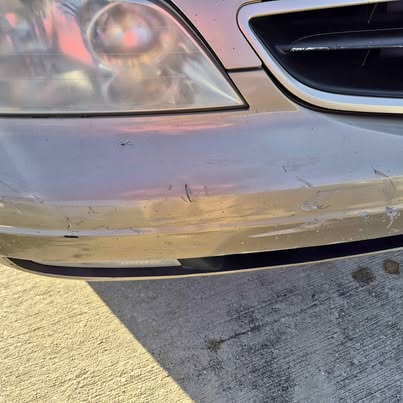
The CL is well protected by the standards of its decade and it does not rust like a 1970s classic — correct that expectation now, because buyers either panic about rust that is not structural or ignore the specific places where this car does corrode. The pattern is the standard northern-Honda pattern. The rear wheel arches go first, bubbling at the lip where mud sits behind the liner. The sills corrode from the inside at the jacking points and rear ends. The subframes — front and especially rear — corrode on salt-belt cars to a degree that can become structural, and a flaking, holed rear subframe is a serious job: $800–$1,800 for a sound replacement frame fitted, with the suspension disturbed and realigned, assuming you can find a good frame. Door bottoms, the boot-lid seam and the bonnet's leading edge show cosmetic rust. The floor is usually sound where the underseal is intact. None of this is visible from a standing look at a shiny car, which is why the inspection puts the car on a lift with a torch in your hand.
Paint is its own problem area. Honda and Acura clearcoat of this era fails with age and sun: the clear layer milks, lifts and peels in sheets, most often on the horizontal surfaces — bonnet, roof, boot lid — and most often on darker colours and southern cars. No polish cures peeling clearcoat; the cure is repaint of the affected panels, $400–$900 per panel, or $3,000–$6,000 for a full quality repaint, which on most CLs exceeds any rational budget and tells you to buy the car whose paint survives. Dullness on a car whose clear is still intact does respond to machine polishing, $250–$600, and the inspection section separates the two.
Water leaks follow the standard Honda routes. Sunroof drains block at their outlets and overflow into the headlining and A-pillars; clearing them is $100–$250 at a shop, and a stained headlining means the car has leaked for a while, so look for the consequences in the footwells. The boot fills from failed tail-lamp gaskets and a perished boot seal, and the spare-wheel well is where you look — a rusty or tide-marked well is a leak with a history. Door membranes, disturbed when a regulator or speaker has been replaced, let water past the door cards into the footwells. Wet carpets are never "just one of those things"; the underlay holds water against the floor for months. Body parts supply is the quiet constraint behind all of this: panels shared with the Accord are easy, but CL-specific panels, lamps, bumpers and glass are coupe-only, out of production and sourced used, so you price accident damage accordingly and check for the VIN stickers Honda applies to major panels — a panel missing its sticker, or carrying another car's number, has been replaced.
Interior, electrics and climate
The cabin is the CL's strength and it ages better than most, but every electrical convenience is now twenty years old and you test every single one, because the bill is a long list of small bills that add up to a large one. The driver's seat is the wear item: the leather bolsters crack and split on the entry side, the foam collapses, and the powered motors and switches fail one function at a time. A seat that will not move, or a dead memory function, is usually a switch pack or a motor, $150–$450 per fault with used parts. Heated seat elements break in the base and leave you a heater that warms the backrest only; an element is a trimmer's job, $250–$500. Do not dismiss seat faults as cosmetic — you sit in this car for every mile you drive it.
Window regulators fail as they do on every Honda of the era: the cable mechanism frays and the window drops into the door, or grinds and tilts as it rises. Test every window, all the way down and up, twice, while you listen. A regulator with motor runs $200–$400 per door fitted. Door lock actuators buzz and fail in the same pattern — a lock that grinds and does not move is an actuator, $150–$300 per door — and on a two-door car with long, heavy doors, check the hinges: a door that drops as it opens has worn hinges, and the door's weight makes it worse every month.
The climate control is effective when it works and has two standard faults. The air-conditioning compressor wears out, and where a compressor has failed internally, debris contaminates the system — the black-death pattern familiar on Hondas of this period — so fitting a compressor alone guarantees a second failure; a proper job flushes or replaces the condenser, receiver-drier and expansion valve as the contamination dictates, and the honest range is $900–$1,800 complete against $600–$1,000 for a compressor and recharge that may not last. Test it properly: cold at the vents at idle after five minutes, not "it was cold last summer." The second fault is the blend and mode actuators behind the dash, which strip their gears and click, or stick, so the system will not change temperature or direction; an actuator is $150–$350 fitted depending on access. The blower control fails and leaves you full speed or nothing — an $80–$200 job and a useful sign of whether small things got fixed.
Elsewhere the electrics are Honda-reliable with specific exceptions. The ignition switch's electrical contact wears on late-1990s cars — Honda recalls switches of this era for exactly this — and gives you stalling or a dash that dies and returns as you jiggle the key; a switch is $120–$280 fitted and the symptom is distinctive enough to name. The SRS lamp lights for clock-spring, seat-belt buckle switch and sensor faults; buckle switches are a known Honda warranty item on many models, so check with a dealer before paying anyone, and a clock-spring failure that also takes the horn and cruise switches identifies itself. The Bose amplifiers and head-unit display fail with age; used replacements at $100–$350 are the practical route. The navigation system on equipped second-generation cars is valued at zero. A car with a cheap aftermarket alarm spliced into the loom has had its future electrical faults pre-installed, and amateur wiring anywhere is a deduction.
Exhaust, emissions and ancillaries
The exhaust rots from the rear forward in salt use; the manifold and catalytic converter end lasts far longer than the pipes and silencers behind it. A replacement system from the converter back runs $500–$1,100 fitted. Oxygen sensors age and slow down, costing fuel economy and eventually a check-engine light; they are $120–$280 each fitted, and a car on its original sensors is on borrowed time. Catalytic converters fail from age, from contamination after misfires, and by theft; a compliant replacement costs $600–$1,400 fitted, and a converter-efficiency code is not "just a sensor" until a sensor and the misfire history have been proven, in that order.
The EGR, evaporative-emissions and idle-control systems generate most of the check-engine lights you meet on a viewing, and all three are covered in the engine subsections. The point here is procedural. A check-engine light that is on is a code you read before you buy, with a scanner, in front of the seller. A car offered with the light freshly cleared — a scanner shows readiness monitors not yet set, the fingerprint of a recent clear — is a car whose seller has hidden the one piece of evidence you most need. In states with emissions inspection, a car that cannot set its monitors cannot pass, and that is a repair bill, not a registration errand. Budget a generic $300–$800 for the common emissions faults, and treat multiple stored codes as multiple faults, because that is what they are.
Ancillaries finish the picture. The starter fails with age and heat, giving you a single click and no crank on a hot engine that a jump pack does not cure; $250–$500 fitted. The power-steering reservoir's internal screen blocks and makes the pump whine on aerated fluid, a fault routinely misdiagnosed as a failed pump — look for foaming fluid while an assistant turns the wheel before you condemn the pump. Coolant hoses are all age-perished by now and are renewed as a set when the system is opened, $200–$450 in parts and labour. None of these items is a surprise. All of them together are why a CL with a thick file of recent invoices for ordinary things is worth more than a shiny CL with no file at all.
How to inspect one
Inspect in this order. The order is the point: the cheap, decisive tests come first, so you can walk away from a bad car in twenty minutes instead of discovering the gearbox after two hours. Take a torch, a tyre-depth gauge, an OBD scanner and a friend to work the controls while you watch. Insist on starting the car cold — a seller who warms the car up before you arrive has edited your inspection, and you reschedule rather than inspect the edited version.
- Paperwork before paintwork. Read the title, the VIN and every gearbox and timing-belt invoice at the car, and confirm the VIN on the dash plate, the door label and the title all match. You are looking for the two documents that decide this model: a timing-belt invoice with a date and mileage, and a gearbox invoice of the kind described in the gearbox section — factory remanufactured unit, or a named rebuild with converter and filter. A car with both is a serious candidate. A car with neither is priced as a car that needs both.
- Cold start, ears first. Start from stone cold and listen: a clean start, a fast idle that settles, no belt-area whine, no manifold blow, no top-end rattle that takes more than a second to fade. Watch the exhaust — blue smoke at start-up that clears points to valve-stem seals, continuous blue smoke is rings, sweet-smelling white vapour that does not clear is coolant, and you stop there. Check that every warning lamp lights with the ignition and goes out after starting; a missing ABS or SRS lamp is a removed bulb and a hidden fault.
- The gearbox fluid, before you drive anywhere. With the engine warm and idling as Honda's procedure requires, pull the automatic's dipstick. The fluid should be translucent red. Dark brown fluid, or fluid with a burnt smell, is the gearbox telling you its clutch packs have been shedding material — cross-reference the failure mechanism in the gearbox section, because this is its earliest visible stage. Black, gritty fluid in a car that still shifts well means you are buying the failure on an instalment plan. On a manual car, check instead that the clutch bites mid-pedal.
- The static gearbox test. In a safe space, engage Drive and Reverse in turn with your foot on the brake. Engagement should be prompt and clean, under about a second, with no bang and no shudder. A long delay, a flare of revs or a thump into Reverse is wear announcing itself. On the five-speed, the D5 indicator must be steady; any flashing, now or at any point in the drive, ends the negotiation until a transmission shop has read the codes.
- The road test — gearbox first. Drive at least twenty minutes and get the car fully hot, because the five-speed's faults are heat-dependent. Accelerate gently through every ratio and feel specifically for the 2–3 change: a flare, a slide or a double engagement on that shift is the third-gear clutch pack from the gearbox section, in person. Then hold a light-throttle cruise in top gear and feel for the rumble-strip shudder of a failing torque-converter clutch; confirm it by noting that it vanishes the moment the gearbox changes down or the converter unlocks. Use the SportShift override to test each gear under load, and finish with a long, gentle climb — a gearbox that slips anywhere slips worst hot, under load, on a gradient.
- The road test — chassis. On a straight, empty road, confirm the car tracks straight with the wheel level. Brake firmly from speed: no judder through the pedal, no dive to one side from a seized caliper, per the brakes section. At parking speed, turn lock to lock and listen for CV clicking and power-steering groan. Over a rough surface, listen for anti-roll bar link knock and the creak of worn bushes. Weave gently at speed and listen for a wheel bearing's hum rising and falling. A car that passes the gearbox test and fails this one is a negotiation; a car that does the reverse is a walk-away.
- Engine health checks. Hot and idling, check under the oil filler cap for thick emulsion with coolant loss, the coolant for oil and the oil for coolant. Read all codes, stored and pending, and check the readiness monitors: not-ready monitors on a car presented for sale mean the codes were recently cleared, per the emissions section, and you price the car as a car with an unknown fault. If anything is ambiguous — smoke, a misfire, an overheating history — commission the compression and leak-down test now, at $120–$250, rather than arguing about it.
- The Type-S specifics, if it is a Type-S. Confirm the year is 2003 if the car is a manual, from the VIN, not the listing. Work the engine through the intake changeover around 4,000 rpm: you should feel the character harden as the two-stage manifold arrives. A car that stays flat gets the IMRC actuator test from the engines section — work it by hand and feel for a stiff, carbonised shaft. On the manual car, make the firm launch from the gearbox section to confirm the limited-slip differential loads both wheels.
- On the lift — structure and pipes. Look first at the rear subframe, the rear arch lips and the sill ends, the corrosion map from the body section, and press suspect areas with a screwdriver handle: sound metal rings, rotten metal crunches. Follow the brake pipes front to back and price flaking pipes as replacements. Check the lower ball joints and CV boots, lever every suspension joint for play, and spin each wheel for bearing roughness and a dragging brake. Read the underside for leaks: oil at the front of a V6 is the belt area and its seals.
- Tyres as evidence. Read all four tyres for make, size, date code and wear pattern, because tyres are the previous owner's confession. Matched, quality tyres worn evenly mean the alignment and maintenance were cared for. Inner-shoulder wear at the front means the compliance bushes and alignment from the suspension section. Tyres older than six or seven years by their date codes are replaced regardless of tread, and four tyres belong in your offer arithmetic.
- Every switch, every function. Work through the interior section's list in order: both seats in every direction plus heat; every window down and up twice; the sunroof tilt and slide, then check the headlining for the water stains from the leaks section; both locks from fob and switches; the climate control from full cold to full hot, with the air conditioning measured cold at the vents after five minutes; the blower on every speed; audio, horn, cruise switches and every lamp. Each failure is small. Count them, price them from the ranges in the problem sections, and present the seller with the itemised total — the most persuasive negotiating document you own.
- The second start, and the decision. Leave the car at least half an hour and start it again. The F-series main-relay fault and several idle faults only appear on the hot restart, so this is a test, not a formality. Then decide on the evidence in the order this checklist produced it: identity and paperwork, gearbox, engine, structure, and only then cosmetics. A CL that passes the first four with documents is a car you buy with confidence. A CL that fails the gearbox test is a car you buy only at a price that already contains a rebuilt gearbox — and usually the correct decision on that car is to let someone else buy it.
Values
Read the market for this car as a market in condition and evidence, not a market in model years. The spread between the cheapest CL you can find and the most expensive one is wide, and almost none of it is explained by the badge or the year. It is explained by the two documents this guide keeps returning to. A car with a proven timing belt and a proven gearbox sits in a different market from an identical-looking car with neither, because the buyer of the undocumented car is buying the car plus two large, probable repair bills, and the price has to carry both. When you compare the listings that accompany this guide, compare them on that basis first, and only then on mileage, colour and equipment.
Within that frame, the variants rank in a stable order. The 2003 Type-S with the manual gearbox carries the clear premium, and it earns it: the rarest version, the only one with the limited-slip differential, and the only second-generation car that removes the model's defining mechanical risk entirely. Expect sellers of genuine manual Type-S cars to know exactly what they have, and expect the negotiation to be about condition and history rather than about whether a premium exists. The automatic Type-S sits below it, valued as a faster standard car whose gearbox risk is unchanged. The standard second-generation car is the volume car and the value centre of the range. In the first generation, the 3.0CL is the common car and the four-cylinder manual is the connoisseur's footnote — scarcer than the V6, sought by a small number of buyers who understand its lighter nose and simpler risk profile, and rarely priced as the rarity it is, which makes it the quiet bargain of the range when you find a good one.
Mileage misleads on this model more than on most. A high-mileage car with a continuous specialist history, a late factory remanufactured gearbox and a recent timing belt is a better buy than a low-mileage car that has sat, been serviced nowhere in particular, and still carries its original gearbox and an elderly belt. Low mileage does not preserve rubber, does not renew clutch packs and does not stop clearcoat failing in the sun; it mainly means the expensive age-based jobs are all still ahead of you, undiscounted. Pay for work done and documented. Do not pay for a small number on the odometer as if it were the same thing.
The asking-versus-achieved gap works in your favour if you arrive with evidence. Private sellers price from optimism and from the best car they can find listed; cars that actually change hands do so on condition, and the itemised inspection list from the previous section is what closes the gap. Cars with a slipping gearbox, a flashing gear indicator or peeling clearcoat sit for sale for a long time. Conversely, a genuinely documented manual Type-S or a fully evidenced automatic sells without much discount, because the next buyer is standing behind you with the same checklist. The project-versus-driver gap is the widest of all: the cost of returning a non-running car to the road approaches or exceeds the finished car's worth, so the driver-quality car with honest cosmetics is almost always the cheapest CL to own over three years, even when it is not the cheapest to buy this weekend. Buy the best-evidenced car you can reach, and use the market information beneath this guide with the framework above.
Parts and ownership
Own a CL the way you own any Honda of its era: with a specialist who knows the cars, a fluid discipline you do not negotiate with yourself about, and a small stock of the parts that fail on a schedule. The experience divides cleanly into the mechanical car, which is easy, and the CL-specific car, which needs foresight.
Mechanical parts supply is excellent and cheap, because the Accord and TL share so much of it. Service items, brakes, suspension joints, bearings, sensors, coils, alternators and starters are available from multiple suppliers, usually next day. Fit quality parts from the established OEM-supplier brands; on ball joints, timing components and gearbox internals, the cheapest available part is false economy in a way it is not for a bulb. Used engines are plentiful and inexpensive relative to a rebuild, which is the practical answer to a catastrophic failure on a standard car. The Type-S engine is the exception: a correct J32A2 is scarcer and worth more, so you protect the one you have with oil, coolant and valve clearances rather than planning to replace it.
Gearbox expertise is the one place you choose your supplier before you need them. A general repair shop is not the place for a Honda automatic of this design; you want a transmission builder who knows the clutch-pack architecture, can source the internal filter, clutch kits and solenoids, and replaces the torque converter as a matter of course. Identify that shop while your car still works, and remember the fluid rule from the gearbox section for the whole of your ownership: correct Honda fluid only, drain-and-fill services every 20,000 to 30,000 miles at $180–$350, an external cooler considered at the first rebuild or the first sign of heat distress at $250–$500 fitted. On a manual car, ownership is simpler: correct Honda manual fluid on a similar interval at $80–$150, and a clutch when it wears.
Body, trim and electrical parts are where you plan ahead. CL-specific panels, lamps, bumpers, glass, seat trim, switch packs and interior plastics are out of production and come from breakers, old stock and other owners. The strategy that works is to buy the good used parts when you see them, not when you need them: a spare set of lamps, a driver's seat in your colour with intact bolsters, the climate and audio units, any exterior trim unique to the coupe. Join the model-specific forums and owners' groups, which are the real parts exchange for this car and the repository of its repair knowledge — the gearbox history, the IMRC fix, the relay and actuator patterns in this guide are all common knowledge there. A car bought from within that community often arrives with the best history of all, because the community enforces the maintenance standard on its own members.
Running costs are those of a large-engined car of its era. Fuel economy is honest rather than good: the four-cylinder manual is the economical car, the V6s use fuel in proportion to their smoothness and weight, and a sudden rise in consumption is a diagnostic clue — a lazy oxygen sensor, a stuck thermostat, a dragging brake — not a fact of life. Insurance is generally unremarkable for the standard cars; the Type-S, and especially the manual, is worth an agreed-value conversation once you have a good one, because a market-value settlement after a loss will not find you another. Tyres in the original sizes are readily available; the Type-S's larger, lower-profile fitment costs more per corner, $150–$280 per tyre for a quality brand, and this front-drive chassis uses its front tyres hard and rewards good ones.
Budget the year realistically. A sorted CL wants an annual service at $250–$450, the gearbox fluid discipline above if it is an automatic, and a rolling allowance for the age items this guide lists — a regulator here, an actuator there, a brake refresh as they fall due — funded steadily rather than met as surprises. The timing belt is the one large scheduled item, at the $800–$1,400 range on the V6s, and you should know the date of yours from the day you buy the car. None of this is expensive by luxury-coupe standards, and all of it is cheaper than the same list on the German cars this coupe was sold against — which is, in the end, the CL's whole case for itself. Store the car dry if you can, wash salt out of the rear arches and off the subframes in winter, keep the sunroof drains clear, and drive the car properly and regularly: these engines and gearboxes deteriorate faster in short-trip, standing-around use than they do covering real distances at full temperature.
Which one to buy
Buy on evidence first and variant second, and within that rule the range resolves into clear picks.
- The one to have: a 2003 3.2CL Type-S with the six-speed manual. The full 260-horsepower J32A2, the close-ratio gearbox, the helical limited-slip differential and none of the automatic risk — the only CL that is both the fastest and the safest buy in mechanical terms. Verify the year and the Type-S identity from the VIN, confirm the differential works, and pay for history.
- The all-rounder: a second-generation 3.2CL with a documented factory remanufactured gearbox. The standard 225-horsepower car is quick enough, better equipped and better riding than the Type-S for daily use, and a late replacement gearbox converts its one great liability into a service item. This is the CL for covering distance in comfort.
- The value buy: a first-generation 2.3CL with the five-speed manual. The light nose, the simple F-series engine, the manual gearbox and a risk list made of small, cheap items. It is not fast and it does not need to be — a tidy one is the cheapest honest route into the model and the easiest to maintain on a driveway.
- The relaxed cruiser: a 3.0CL with full history. Buy the V6 first-generation car for its smoothness and its cabin, with the timing belt proven and the four-speed automatic shifting cleanly from cold and hot. Do not buy one with any shift flare at any price that assumes the gearbox will improve.
- The enthusiast's automatic: a 2001–2002 Type-S with gearbox paperwork. The same 260-horsepower engine and chassis as the 2003 car at a lower entry point, for the buyer who wants the performance and accepts the automatic — but only with the remanufactured-unit or named-rebuild invoice in the file. Without that document, this car is a manual Type-S fund with a gearbox bill attached.
- The project: any CL with a failed gearbox, bought at failed-gearbox money. A legitimate buy for the owner who has priced the rebuild, the belt service, the brakes and the tyres before bidding. There is no legitimate buy here at driving-car money, and that distinction is the whole of project buying on this model.
The overriding rule: on any automatic CL, you are buying the gearbox's paperwork, not the car around it — no invoice for a factory remanufactured unit or a named, complete rebuild means you price the car as if the gearbox fails on the drive home, and if the seller will not meet that price, you walk away and find the car whose owner already paid the bill.
Follow that rule and the CL is what it should always have been: a well-made, comfortable, quietly quick Honda coupe that costs ordinary money to own. Break it, and the same car teaches you why the rule exists.
See the 12 CL cars currently listed.
For sale now
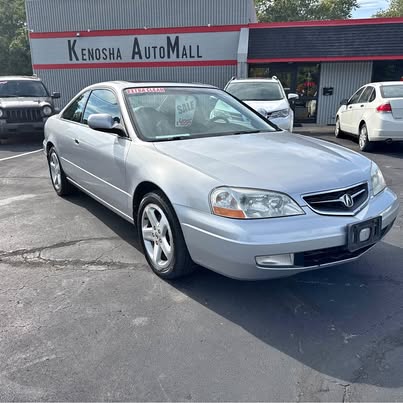 $4,995
Expand
 $4,000
Expand
What they sell for: CL sale prices.