
Acura CL buyer's guide
Acura CL (1997–2003) — CL, CL Type S: what's listed, and what they sell for.
Years: 1997–2003 · Models: CL, CL Type S
Overview and history
The Acura CL is the forgotten Acura — a front-wheel-drive luxury coupe built for exactly seven model years, in two short generations, and then dropped without a successor. That obscurity is precisely what makes it interesting now. Underneath the coupe bodywork sits Honda Accord engineering from the years when Honda's build quality was at its peak, and the range tops out with a 260-horsepower Type S that, for one year only, could be had with a six-speed manual gearbox and a limited-slip differential. The catch — and there is one big catch, covered at length below — is the automatic gearbox fitted to most of them.
The CL arrived for the 1997 model year as the replacement in spirit for the Legend coupe, which had ended production in 1995. It was a landmark car for Acura in one specific way: it was the first Acura designed and engineered in the United States and built at Honda's Marysville, Ohio plant, rather than imported from Japan. The name was said to stand for "Contemporary Luxury," and that was the honest brief — this was never a sports car. It was a quiet, comfortable, heavily equipped personal coupe for buyers who might otherwise have bought a Toyota Solara, a Lexus SC or an American personal-luxury coupe, and who wanted Honda reliability underneath.
The first generation (1997–1999) was based on the fifth-generation Honda Accord platform and offered a choice of a 2.2- or 2.3-litre four-cylinder or a 3.0-litre V6. There was no 2000 model year CL at all — the car took a gap year while its replacement was finished — and the second generation arrived for 2001 on the newer sixth-generation Accord underpinnings, now V6-only, in 3.2-litre standard and Type S forms. Production ended after 2003. Acura consolidated around the TL sedan, the coupe market was shrinking, and the CL name was never used again.
The CL also matters in the Honda story for where it was made. Marysville built it alongside the Accord and later the TL, on the same lines, with the same workforce — which is why the CL's panel fit, paint and general assembly quality feel like a good Accord's rather than a low-volume car's, and why so much of it unbolts like one. It was Honda proving that its American plant could build its luxury brand's cars, a proof the whole Acura range now rests on. For the buyer today, the practical consequence is simpler: the car was assembled well, and the things that have gone wrong with a surviving CL are almost never assembly faults. They are age, heat, salt and skipped services — all of them findable, and most of them priced in the sections that follow.
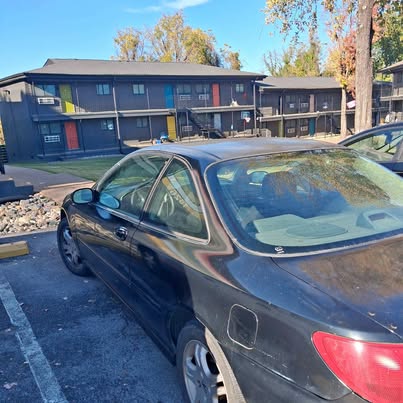
Two ownership histories define today's survivors. The four-cylinder manuals and the 2003 Type S manual were bought by people who wanted them, and tend to have been kept by enthusiasts. Everything automatic was bought as comfortable transport, run until the gearbox or the timing belt bill arrived, and then sold on cheap — which is why the CL market is a minefield of cosmetically decent cars with a four-figure repair already scheduled. The nine cars we currently track are all Facebook Marketplace listings, split across both generations, and they show the pattern plainly: five automatics and four manuals, an unusually manual-heavy mix for a luxury coupe, because the manual cars are the ones still worth advertising to people who know what they are.
The models
Every CL is a two-door, front-wheel-drive coupe built in Ohio. The badge tells you the engine size and, on second-generation cars, whether it is a Type S. There are only five variants across both generations, which makes the range simple — but it also makes misdescription easy, and two of the traps below are worth learning before you look at a single car.
| Model | Years | Engine | Output | Built | Character |
|---|---|---|---|---|---|
| 2.2 CL | 1997 | 2.2 four (F22B1) | 145 hp | — | One year only; the original four-cylinder car |
| 2.3 CL | 1998–1999 | 2.3 four (F23A1) | 150 hp | — | The light, simple CL; manual available |
| 3.0 CL | 1997–1999 | 3.0 V6 (J30A1) | 200 hp | — | First-generation flagship; automatic only |
| 3.2 CL | 2001–2003 | 3.2 V6 (J32A1) | 225 hp | — | The refined second-generation cruiser |
| 3.2 CL Type S | 2001–2003 | 3.2 V6 (J32A2) | 260 hp | — | The performance car; 6-speed manual for 2003 only |
(Acura never published a clean build split by variant, and any seller quoting you an exact production figure for a specific CL variant should be asked where it came from. Outputs are the period SAE net figures.)
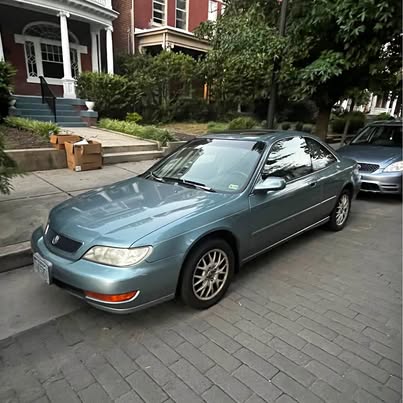
The first generation (1997–1999). The early car is the smaller and lighter of the two, styled with a distinctive sloping rear deck that divided opinion when new and now reads as genuinely period. The four-cylinder cars — badged 2.2 CL for 1997 and 2.3 CL for 1998–99 — came in base and Premium trim and were the only CLs of any year offered with a five-speed manual as well as an automatic. The 3.0 CL put the J30A1 V6 in the same shell, automatic only, and with the Premium package (leather, and the rest of the period luxury kit) it was the flagship. Judge the first generation as what it is: an Accord coupe in a tailored suit, with an Accord's virtues and an Accord's appetite for rear wheel-arch rust.
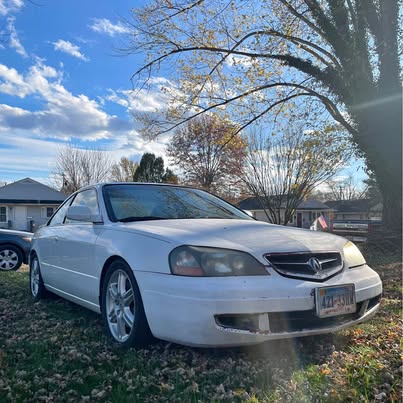
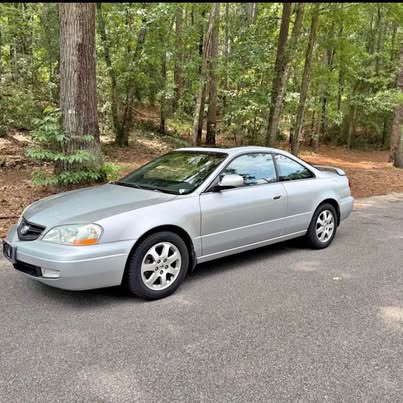
The second generation (2001–2003). The 2001 car is bigger, heavier, quieter and more conventionally styled — a more convincing luxury coupe and a less distinctive one. The four-cylinder option disappeared; every second-generation CL has the 3.2-litre J-series V6, a five-speed automatic with a manual shift gate (SportShift), and a long standard-equipment list. A navigation system was the headline option. The standard 3.2 CL is a genuinely pleasant long-distance car. It is not quick by modern standards, but it is smooth, hushed and well made.
The Type S. The Type S is the car this guide exists for. The J32A2 engine's extra 35 horsepower over the standard 3.2 came from real hardware — higher compression, more aggressive camshafts, a larger throttle body, a dual-stage intake manifold and a freer-flowing exhaust — and it was matched with firmer suspension tuning, 17-inch wheels and perforated leather. For 2001 and 2002 the Type S was automatic-only. For 2003, and 2003 only, Acura offered a close-ratio six-speed manual with a helical limited-slip differential, and built it in small numbers — low thousands by most period accounts. That car is the one genuinely collectible CL: the last and best of Honda's front-drive performance coupes before the formula changed.
Two identity traps, both created by cheap badges and cheaper listings. First: the manual Type S exists only as a 2003. A "2001 Type S six-speed" or a "2002 Type S manual" is not a rare find; it is a misdescribed car, a swapped car, or a mistake, and in every case the price should fall until the story is proven. Second: Type S badges, wheels and seats all swap onto a standard 3.2 in an afternoon. Verify the engine, not the trim — the engine code is stamped on the block, J32A2 for a Type S against J32A1 for the standard car, and every CL's VIN begins 19UYA, marking a US-built Acura coupe. The VIN plate and the title are step 1 of the inspection for a reason.
Engines and gearboxes
The four-cylinders: F22B1 and F23A1
The 2.2-litre F22B1 (1997) and 2.3-litre F23A1 (1998–99) are single-overhead-cam, 16-valve Honda fours with VTEC variable valve timing, and they are among the toughest engines Honda ever made. A healthy one starts instantly, idles almost silently, and pulls cleanly if unspectacularly — 145 hp in the 2.2, 150 hp in the 2.3. These are interference engines with a timing belt, and the belt is the whole service story: Honda's interval is 105,000 miles or seven years, and a snapped belt bends valves. On any four-cylinder car with no belt receipt, the belt is overdue by definition — the newest first-generation car is now more than two and a half decades old — and the job, done properly with the water pump, tensioners and seals while the front of the engine is apart, runs roughly $800–1,400 at an independent shop. Price it into the offer rather than arguing about it.
Two F-series specifics catch buyers out. The first is the balance-shaft seal. These engines run twin balance shafts, and the front balance-shaft seal on early F-series engines can walk out of its bore, at which point the engine pumps its oil out onto the road in minutes. Honda's fix was a simple retainer clip, and it should have been fitted decades ago — ask, and look for the receipt or check for the retainer when the belt is done. The second is the distributor: the internal seal hardens and leaks oil into the distributor cap, causing misfires that owners chase through plugs and leads, and the external O-ring weeps oil down the back of the head. Both are cheap parts; both are diagnosed by taking the cap off and looking. A hot-start reluctance that clears and returns — the car cranks, won't catch when heat-soaked, then starts fine twenty minutes later — is the classic Honda PGM-FI main relay on first-generation cars: dry solder joints in the relay open as it warms. The relay is inexpensive and lives under the dashboard; it is a satisfying fix and a useful bargaining chip, because sellers often describe it as an intermittent fault nobody could find.
The 3.0 V6: J30A1
The first-generation V6 is the 3.0-litre J30A1, the engine that launched Honda's J-series family: a 60-degree V6, single overhead cam per bank, VTEC, 200 hp. It is smooth, torquey and long-lived, and it shares the four-cylinder's timing-belt discipline — belt, water pump and tensioners at 105,000 miles or seven years, interference design, same $800–1,400 service when it's due. A J30 with a documented belt service and clean oil is a 250,000-mile engine.
Its signature fault is carbon. The exhaust gas recirculation passages in the intake manifold clog with deposits, the flow falls, and the engine sets an EGR insufficient-flow code (P0401) and may stumble or surge at light throttle. Honda extended the warranty on this exact fault for the V6 cars of this era because it was so common. The fix is mechanical, not electronic: the manifold comes off, the passages are drilled and cleaned out, and the car runs properly again — $300–600 at a shop, mostly labour. A seller who tells you a 3.0 "needs a sensor" for its engine light may be describing a Saturday of cleaning. The J30 also uses a distributor, so the same oil-leak and cap checks as the fours apply, and valve clearances are set with screw-and-locknut adjusters: a J-series that has never had its clearances checked can develop tight exhaust valves, which eventually show up as a misfire that no plug or coil will cure. A clearance check belongs in any major service — ask whether it was done with the belt.
The 3.2s: J32A1 and J32A2
The second-generation cars use the developed J-series: 3.2 litres, coil-on-plug ignition (no distributor), and 225 hp in the J32A1 fitted to the standard CL. The Type S J32A2 makes 260 hp at a higher redline, and the difference is hardware, not a badge: compression raised to 10.5:1, more aggressive camshaft profiles, a larger throttle body, a dual-stage intake manifold that changes its effective runner length with rpm, and a lower-restriction exhaust. The A2 wants premium fuel; run it on regular and the knock sensors simply pull the performance back out. Both engines keep the family rules — timing belt at 105,000 miles or seven years, interference design, screw-and-locknut valve clearances that need periodic checking, and EGR passages that carbon up and set the same insufficient-flow code as the 3.0.
The ignition change matters for diagnosis. With a coil per plug, a failing coil gives you a single-cylinder misfire that moves with the coil when you swap it — a five-minute test that separates a $40–80 coil from everything scarier. Spark plugs are long-life items but the rear bank is the awkward one, so check for a receipt showing all six were actually changed rather than the easy front three. Oil leaks on a high-mile J32 are usually the valve-cover gaskets and plug-tube seals, visible as oil in the plug wells when the coils come out. None of this is serious money. What is serious money on a second-generation car is never the engine — it is the gearbox bolted to it.
Gearboxes: the automatics, and the manuals
Understand Honda's automatic first, because it is not built like anyone else's. A conventional automatic uses planetary gearsets; Honda's design uses constant-mesh gears on parallel shafts, engaged by individual clutch packs — effectively an automated manual gearbox. It gives crisp shifts when new, but it puts enormous faith in its clutch packs and its fluid, and in the CL's era that faith was not repaid.
The first-generation four-speed automatic (all 3.0s, and automatic four-cylinders) is the weaker unit fitted to the lighter car. It fails, but it fails in cars that are now worth very little, and it usually gives warning: flaring on the 2–3 change, a delay engaging Drive or Reverse from cold, dark fluid that smells burnt. The second-generation five-speed is the notorious one. Fitted to the 2001–03 CL (and shared with the TL, MDX and Odyssey of the same years), it suffered two distinct problems. The third-gear clutch pack wore prematurely and overheated, producing slipping and flaring on the 2–3 shift that progressed to a flashing D light, limp behaviour and eventually no drive. Separately, a 2004 safety recall addressed second-gear overheating — heat discoloration of the gear that could in the worst case lead to gear breakage — with an oil-jet kit fitted in the filler neck to spray fluid onto the gear. Honda also extended the warranty on these gearboxes to seven years and 100,000 miles. All of that expired long ago. In 2026, every five-speed CL is either on a rebuilt gearbox, or on an original gearbox living on borrowed time, or already slipping. A specialist rebuild runs roughly $2,500–4,500 depending on region and how much hard-part damage is found inside, and a good rebuilder fits updated clutch materials and addresses the lubrication shortcomings rather than simply re-lining the box.
The fluid tells the truth before the test drive does. Pull the dipstick: the fluid should be red and smell of almost nothing. Brown fluid, or fluid with a burnt smell, in a car with no rebuild receipt, is a gearbox at the end of its life whatever the seller says about how it drives today. Conversely, a documented specialist rebuild — invoice, named rebuilder, date, mileage — is the single most valuable piece of paper a CL can come with, worth more than low mileage, because a low-mileage car on its original five-speed is a car whose big bill simply hasn't arrived yet.
One more automatic test costs nothing and reveals a lot: use the SportShift gate on a second-generation car, or hold the lower gears manually on a first-generation one, and make the box change up and down under load at part throttle, several times, fully hot. A healthy box repeats the same change the same way every time. A dying one is inconsistent — clean once, flaring the next, occasionally thumping into gear — and inconsistency is the early stage of the failure the dipstick and the 2–3 test are looking for. Also note torque-converter shudder: a vibration under light throttle at cruising speed, as the lock-up clutch engages, that feels like driving over a rumble strip. On these cars it usually means worn converter clutch material and tired fluid together, and while a fluid change sometimes postpones it, on a five-speed it belongs in the same budget conversation as the rebuild itself.
The manuals are the opposite story. The first-generation five-speed, fitted to the four-cylinder cars, is a standard Honda manual: light, accurate, and durable, with synchromesh that wears on second and third if the car has been abused and a clutch that lasts well over 100,000 miles in ordinary use ($700–1,200 fitted when it finally goes). The 2003 Type S six-speed is a close-ratio box with a helical limited-slip differential — a genuine traction advantage out of corners and in the wet, and unique in the CL range. It is equally robust; check for a third-gear crunch on a fast change, tired synchromesh being the only real wear item, and for clutch judder from a standing start. A manual CL of either kind sidesteps the model's defining problem entirely, which is exactly why the manuals are the cars that survive.
Problem areas
Everything in this section follows from one fact: the CL is now a cheap old car built from expensive-car components and Accord mechanicals, and its market — nine cars tracked as we write, every one a private Facebook Marketplace listing — is priced at the level where deferred maintenance is the norm rather than the exception. The good news is that the list of things that can kill one is short, and the first item on it decides the value of most cars you will ever look at.
The gearbox decides the price
The engines section covers how the automatics fail; here is what that means standing in front of a car. Every automatic CL falls into one of three states, and your job at a viewing is to establish which one, because the asking prices rarely reflect it.
State one: rebuilt, with paperwork. A named specialist, an invoice, a date and a mileage within the last several years. This is the car to buy — the big bill has been paid by someone else, and the updated internals in a good rebuild are better than what Honda fitted in 2001.
State two: original and still shifting cleanly. Possible, especially on a gently used first-generation four-cylinder automatic, but treat it as a loan, not an asset. Drive it long enough to test every change hot and cold (step 5 of the inspection), check the fluid, and make your offer with the rebuild priced in. If the seller wants state-one money for a state-two car, walk.
State three: already failing. Flaring or slipping on the 2–3 change, a pause before Reverse engages, a flashing D indicator, burnt fluid, or a story that begins "it just needs a sensor" or "the fluid just needs changing." Fresh fluid does not repair a worn clutch pack; at best it changes how the failure feels for a month. A state-three car is worth its value as a shell and an engine minus the rebuild — and a Type S in state three is a project, not a performance car, whatever the badge says.
The manual cars skip this entire section. That is not a small thing; it is the central fact of CL buying.
Rust and paint: the map
The CL is a 1990s Ohio-built Honda, and it rusts like one — which is to say, in specific places, predictably, and mostly where you have to look rather than where you can see.
Rear wheel arches. The classic Honda failure, and the first place to look on any CL. The rear quarter panel's arch lip traps mud and moisture against the seam where the bumper cover meets the quarter, and the panel rusts from the inside out: by the time bubbles show on the outside of the lip, the inner structure is involved. Run a fingertip around the inside of both rear arch lips and feel for roughness and swelling. Arch rust is cosmetic surgery on a cheap car — cut out, weld, paint, realistically $800–2,000 a side done properly — and on a car at this end of the market it is often the point where the sums stop working, so find it before you buy, not after.
Front subframe and suspension mountings. Salt-state cars rot the front subframe and the areas where the suspension and steering mount to the shell. This is structural, and it is invisible from above. Get the car on a lift or at minimum on ramps with a torch: perforation around the subframe mounts or the lower control-arm pickups is fabrication work priced per car, and on a CL it usually ends the conversation. Cars from the Southeast — most of the current pool sits in Georgia, Virginia, Tennessee and Florida — are far more likely to be sound here than a car that has lived in New York or the Pacific Northwest's salted winters, but "southern car" is a claim to verify underneath, not a substitute for looking.
The smaller traps. Sills and floor pans are better than on most Hondas of the era but not immune — lift the carpets if the car smells damp, and check the spare-wheel well, because the trunk seal and the rear lamp seals leak with age and the water sits under the spare. Door bottoms and the bottoms of the front fenders behind the wheels bubble on neglected cars. None of these alone kills a CL; together they tell you how the car has lived.
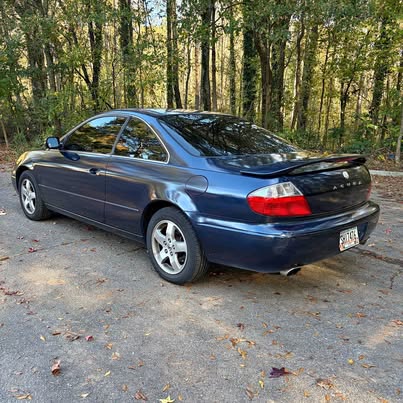
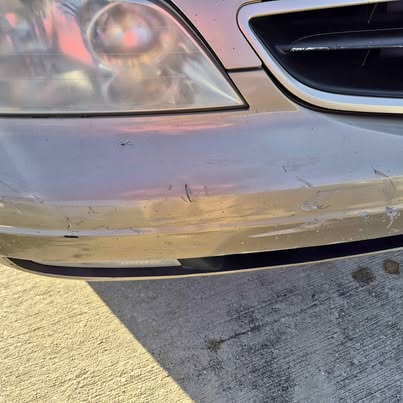
Paint. The other side of the southern-car bargain is the sun. Honda clearcoat of this era fails on horizontal surfaces — roof, hood, trunk lid — going milky, then peeling, and most surviving CLs in southern states show it to some degree. It is not a structural issue and it does not affect how the car drives, but a quality respray of the affected panels costs more than most CLs are worth, so the honest choices are to live with it, wrap it, or pay a premium for one of the minority of cars — garaged, northern, or already resprayed — whose paint survives. Decide which buyer you are before you start travelling to viewings, because at this price level you will otherwise reject every car you see for a fault nearly all of them share.
Suspension, steering and brakes
Both generations ride on double-wishbone front suspension and a multi-link rear — proper Honda hardware, and the wear pattern is pure high-mileage Honda.
Ball joints are the safety check. The front lower ball joints carry the car's weight, they wear, and a neglected one can separate, dropping the corner of the car onto the road. Any clunk over bumps, any play when the front wheel is rocked top-to-bottom on a jack, means the joint is replaced before the car is driven anywhere — the parts are inexpensive, the labour is an hour or two a side, and there is no excuse for deferring it. Upper control-arm bushes and ball joints, compliance bushes and anti-roll bar links wear in the same mileage window and give you vague steering, knocks and uneven tyre wear; a full front-end refresh with quality parts is a few hundred dollars in components and transforms how the car feels.
The rest of the rolling gear. Wheel bearings hum — rear hub bearings especially — and the note changes pitch as you load and unload the bearing by weaving gently on a quiet road. CV boots split and the joints click on full lock; a clicking joint is a replacement axle or joint, not a catastrophe. Power steering pumps whine and weep and racks leak at the seals; check the fluid level and look for wetness at the rack boots. Learn the pump's cheapest trick before you condemn it: the inlet hose O-ring at the pump hardens with age, draws air into the fluid, and produces a loud whine with foamy fluid in the reservoir that owners routinely misdiagnose as a dying pump or rack. The O-ring costs almost nothing and the job takes minutes; a pump that is quiet with fresh fluid and a new O-ring was never faulty. The engine and gearbox mounts deserve a look on the V6 cars too: the rubber tears with age and mileage, and the symptom is a clunk on throttle application and release and a vibration at idle in gear that disappears in neutral. Mounts are a few hundred dollars fitted; a seller who describes the clunk as "the transmission" may be handing you a discount on a fault that lives in the engines section of his imagination rather than in the gearbox. Brakes are conventional discs and cheap, but a car that has sat wears rust bands and lips on every disc, and the first-generation cars in particular can judder under braking from discs that were marginal when new. Budget a full hydraulic refresh — hoses, fluid, calipers freed or replaced, fresh discs and pads — at $600–1,500 on any car that has been standing, and check the handbrake actually holds, because at this age it often barely does.
Electrics, air conditioning and warning-light games
A CL's electrics are Honda-simple, and most faults are wear items wearing out. Power window regulators are cable-driven and the cables fray and snap — a window that crunches, slows or drops into the door is a regulator, $150–400 a side fitted. Door lock actuators buzz and give up one door at a time. The air conditioning is a genuine inspection item rather than a comfort check: compressors and compressor clutches fail at this age, condensers corrode, and a system that blows cool-but-not-cold in November may blow warm in July — a compressor replacement with the receiver-drier and a proper evacuation and recharge runs $700–1,400, so "the A/C just needs a recharge" should be priced as a compressor until proven otherwise.
The warning lights need a protocol, because at this price level the games are common. At key-on, before starting, the SRS (airbag), ABS and check-engine lamps must all illuminate for their bulb check and then go out after the engine starts. A lamp that never illuminates has often been removed or taped over to hide a fault — walk away from that car, because a seller who hides one fault is hiding the method, not just the fault. An SRS light that stays on in a second-generation car is frequently the passenger-seat occupancy sensor (OPDS) or a seat-belt buckle switch; Honda warranted seat-belt components for the life of the car in the US, so a buckle-switch fault may be a free dealer repair even now — worth knowing before you let a seller discount for it or charge you for it. Bring a basic OBD-II code reader to every viewing: every CL is OBD-II, stored and pending codes take two minutes to read, and an EGR code on a V6 or a transmission-range code on an automatic tells you more than the seller's description will.
Interior and trim
The CL cabin was a selling point when new — quiet, well trimmed, and better finished than the Accord it was based on — and it ages in predictable places. Leather cracks and wears through on the driver's bolster first; judge the interior from the driver's seat, as with any car of this era, and remember that a professional retrim costs more than the car, so a good original interior is worth a real premium and a bad one is a permanent condition. Headliners sag, southern heat being the usual cause, and a proper re-trim of the headliner board is a few hundred dollars; a headliner held up by pins is a fair summary of how the rest of the car has been maintained. Seat heaters fail (usually the element in the cushion), power seat motors and switches grow intermittent, and sunroof drains block and drip into the headlining — check for water staining around the roof lining's edges. The dashboard itself is durable and rarely cracks on these cars, which makes a cracked or warped dash top a sign of an exceptionally sun-baked life. None of this stops the car working. All of it is visible in five minutes, and all of it is leverage.
How to inspect one
Allow an hour, bring a torch, a basic OBD-II code reader, a magnet wrapped in cloth, and a rag for the gearbox dipstick. At this end of the market you are not looking for a perfect car — you are establishing which of the known bills the car in front of you has already had paid, and which ones are about to become yours.
- Start with the paperwork and the identity. Match the VIN on the title to the plate on the dashboard and the door-jamb sticker — every CL's VIN begins 19UYA. Confirm the title is clean and in the seller's name; at this price level, title problems and curbstoned cars are common, and a rebuilt title halves what the car is worth. On a Type S, check the engine code on the block: J32A2 for a real Type S, J32A1 for a standard car wearing the badges. And apply the manual rule: a manual Type S is a 2003 or it is not a factory manual Type S.
- Ask the two history questions before you look at anything else. When was the timing belt done, and has the gearbox been rebuilt — and can I see the invoices? A thick history file is worth more than any cosmetic virtue this car can have. No belt receipt means the belt is due (it is an interference engine; see the engines section). No gearbox paperwork on an automatic means you price the car as state two at best, from the problem areas section.
- Cold start. Insist the engine is cold when you arrive. A Honda of this era should start at once and settle to a clean idle. Watch for smoke (blue is oil, and on a J-series points first to valve stem seals), listen for valvetrain clatter that does not fade, and note any hot-start story the seller volunteers — on a first-generation car, a heat-soak no-start is usually the main relay, cheap to fix and useful leverage.
- The bulb check and the code reader. Turn the key to on without starting: SRS, ABS and check-engine lamps must all light, then go out once the engine runs. A lamp that never lights has been disabled — walk away. Then plug in your reader. An EGR flow code on a V6 is the carbon clean from the engines section; transmission codes on an automatic confirm what the test drive is about to tell you; a reader that shows the monitors were reset that morning is a seller clearing codes before your visit.
- The gearbox test — the decisive step on any automatic. Pull the dipstick first: red and neutral-smelling is good, brown and burnt is a failing box whatever happens next. Then drive at least twenty minutes, long enough for the box to get fully hot, and test every change: the 2–3 shift under moderate throttle (flare — revs rising between gears — is the five-speed's signature failure), kickdown, and engagement of Drive and Reverse from a standstill, which should take a second, not three, and arrive without a thump. Repeat the 2–3 change several times, hot, uphill if you can. On a manual, work every synchro with quick changes, third especially, and feel for clutch judder pulling away.
- Rear arches and underneath. Fingertip around the inside of both rear arch lips for swelling and roughness, magnet along the lower quarters and sills, and then get under the car — lift, ramps or at minimum a torch and a mirror — for the front subframe and its mountings, the floor seams and the spare-wheel well. Arch rust is money; subframe perforation is a walk-away.
- Ball joints and front end. Jack each front corner and rock the wheel top-to-bottom and side-to-side. Play at the lower ball joint is a safety item — priced into the deal and fixed before the car is driven home any distance. Knocks over bumps on the drive point to bushes and links; vague steering plus knocks is a front-end refresh priced into the offer.
- The full drive. Fifteen to twenty minutes, including a highway stretch. Weave gently and listen for a wheel bearing whose note changes as it loads. Brake firmly from speed: the car should stop straight without judder. Check the cruise control holds, the steering is centred, and there is no vibration through the wheel at 60–70 mph that balancing alone won't explain.
- Air conditioning and heat. Run the A/C on maximum for several minutes — properly cold, not cool — and cycle the climate control through its modes. Then run the heater hot. A compressor that short-cycles or a system that fades at idle is the $700–1,400 conversation from the problem areas section, not a recharge.
- Every switch, every window. Work all four windows through their full travel (slow or crunchy means a regulator is going), every door lock from the fob and the switch, the sunroof, seat heaters, power seats and mirrors. Note the headliner's edges for sag and water staining, and sit in the driver's seat and feel for a collapsed cushion and a worn-through bolster.
- Trunk and spare well. Lift the spare and the trunk floor trim. Water staining, rust in the well corners or a damp smell means the trunk and rear lamp seals are leaking — minor money, but the same water sits in the rear quarters, so let it send you back to step 6 for a second look at the arches from inside if you can reach them.
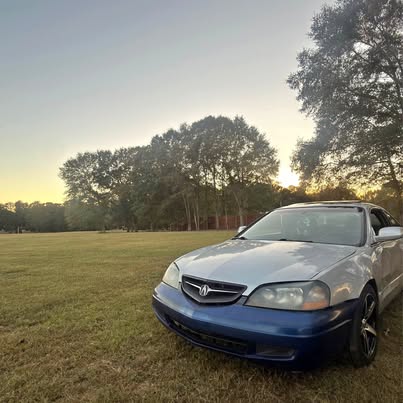
- Stance and the walk-around. Stand back and look at the car level and square: it should sit even, arch gaps equal, no corner down (a down corner is a spring or a tired strut; a generally nose-high or tail-high car has usually had mismatched replacement springs). Look down each flank for ripples and mismatched paint, check the clearcoat honestly under direct light, and count the faults you have found against the asking price. On a CL, the arithmetic is simple: clean title, belt done, gearbox proven, arches sound — a car with all four is rare and worth stretching for; a car missing two of them is priced as a project whatever the seller calls it.
Values
The build's market block below this guide carries the current listings and recorded-sale figures, refreshed as the market moves; what follows here is how to read them, because the CL's numbers make no sense without the condition story behind them.
The CL sits at the bottom of its depreciation curve, and at the bottom of a curve the spread between the best and worst example of the same model is wider, proportionally, than at any other point in a car's life. For the CL that spread is not driven by mileage or even by cosmetics. It is driven by two pieces of paper — the timing belt invoice and the gearbox invoice — and by the title brand. A clean-title car with both jobs documented is a genuinely scarce thing, because most CLs were sold on the moment one of those bills arrived. A car with neither, however shiny, is a car whose purchase price is only the first instalment, and the gap between the two is roughly the cost of the work itself. That is the project-versus-driver gap for this model, and it is unusually mechanical: unlike a rusty Mercedes, a project CL can be made right with a known sum of money, which means you can price one accurately before you buy it.
Within the range, the premiums are clear and logical. The 2003 Type S six-speed manual carries the only real collector premium in the range — it is a one-year, small-production performance car from Honda's best era, and the supply of unmodified ones only shrinks. The automatic Type S carries a smaller premium over the standard 3.2, and it is entirely conditional on gearbox state: a state-three Type S automatic is worth less than a state-one standard car, because the standard car can be driven and the Type S cannot. First-generation four-cylinder manuals are the quiet value in the range — nobody collects them, so nobody inflates them, and a good one is simply a well-built Honda coupe at used-Accord money. First-generation V6s and high-mileage second-generation automatics without paperwork sit at the bottom, and their asking prices are the most negotiable in the range, because every informed buyer is pricing the same rebuild.
On asking versus achieved: at this level, asking prices are aspirations, and cars sit. A CL advertised for months at a firm price is telling you the market has already voted. The realistic negotiation levers are the documented absences — belt due, fluid burnt, arches bubbling, A/C warm — each with a real cost attached from the sections above. Sellers of good cars know what they have; sellers of state-three cars frequently do not, and the honest move is to show them the arithmetic rather than argue about the badge.
Parts and ownership
The CL's ownership proposition is the reverse of most ageing luxury coupes: the mechanical parts are cheap and everywhere, and it is the coupe-specific trim that takes the hunting.
Easy: everything the car shares with the fifth- and sixth-generation Accord and the contemporary TL — which is most of what wears out. Service items, filters, brake discs and pads, suspension arms, bushes, ball joints, wheel bearings, CV axles, alternators, starters, A/C compressors and condensers, window regulators and lock actuators are all stocked by every parts chain and the big online catalogues at ordinary Honda prices, because the production volumes behind them were enormous. Honda and Acura dealers still supply a great deal for these cars, and the used-parts supply from dismantled Accords, TLs and CLs remains deep, if slowly thinning as the donor cars age out of the yards.
Harder and dearer: CL-only body panels (front fenders, hood, the coupe doors, rear quarters and trunk lid fit nothing else), coupe glass, headlamp and tail-lamp units in unyellowed condition, Type S-specific trim, and anything unique to the 2003 six-speed car — the gearbox itself, its limited-slip differential and its linkage are small-production parts that you will source used, patiently, and at whatever the seller asks. Interior trim in the right colour, uncracked and unworn, is the emerging scarcity: the leather and plastics were coupe-specific, the cars are old, and the good interiors are mostly still attached to good cars. Buy interior condition; you cannot easily shop your way out of a bad one.
The known bills, gathered in one place. Timing belt service with water pump and tensioners: roughly $800–1,400. Automatic gearbox rebuild by a specialist: roughly $2,500–4,500 — the number that decides most purchases. Clutch on a manual car: $700–1,200. EGR passage cleaning on a V6: $300–600. A/C compressor replacement done properly: $700–1,400. Front lower ball joints: a few hundred dollars a side fitted, and not optional. A full brake hydraulic refresh on a car that has stood: $600–1,500. One genuinely delightful exception: Honda's US seat-belt warranty is a lifetime warranty, so a failed buckle or retractor on a CL may still be a free dealer repair — check before paying anyone to touch the SRS system.
Running costs. Fuel consumption is honest Honda: the fours are frugal, the V6s return economy in the low-to-mid twenties on a highway run and the high teens around town, and the Type S asks for premium fuel to make its rated power. Insurance is cheap — the car is invisible to thieves and valuers alike. Tyres are ordinary sizes. The budget line that catches new owners is the first year: catching up deferred maintenance on a running, driving CL honestly costs real money before you improve anything — belt if unproven, fluids throughout, brakes if it has stood, a set of tyres if the date codes say so — and a car bought in state three needs its gearbox money on top. Buy a car that has been in regular use, with the belt done and the gearbox proven, and a CL is one of the cheapest well-built coupes in the world to run. Buy the other kind, and it is a project with a coupe roof.
Which one to buy
- The all-rounder: 3.2 CL (2001–2003) with a documented gearbox rebuild. The refined car, the long equipment list, the quiet cabin — and the one big bill already paid by the previous owner. This is the CL to buy if you want to drive one rather than restore one.
- The enthusiast buy: 2003 Type S six-speed manual. The only collectible CL: 260 hp, a limited-slip differential, one year of production. Verify the year and the engine code ruthlessly, pay the premium for an unmodified one, and keep it that way.
- The value buy: 2.3 CL five-speed manual (1998–1999). The lightest, simplest CL, with the toughest engine Honda made in the decade and no automatic to fail. Nobody is inflating these. A good one is a well-built coupe for used-Accord money.
- The cruiser: 3.0 CL (1997–1999). The first-generation flagship is a lovely, smooth thing — but only with gearbox evidence and a timing belt receipt. Without both, it is not a cruiser; it is a quote waiting to happen.
- The badge buy, carefully: Type S automatic (2001–2003). A genuinely quicker, better-sorted car than the standard 3.2 — bought strictly on gearbox state. A rebuilt one is a bargain performance coupe; an original-gearbox one is a project wearing a Type S badge.
- The project: any automatic in state three, bought at state-three money. The sums can work on a CL in a way they never do on a rusty car, because the big bill is a known number. Just make sure the shell, the arches and the interior justify spending it — you will not get the gearbox money back on a car that is tired everywhere else.
And the rule that overrides all of the above: buy the paperwork, not the car — a CL with a documented timing belt and a proven gearbox is worth more than a prettier car without them, every time. The engines are tough, the rust is findable, and the parts are cheap. The two invoices are the car.
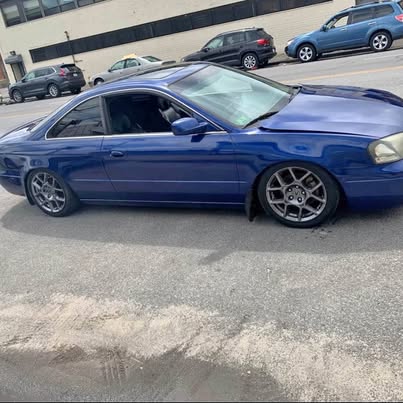
Listed now
On Classic Listings today: 15 cars are listed here; 2 for sale and 8 marked sold; average asking price $4,498; asking range $4,000 to $4,995; sold cars average $7,407.
See the 15 CL cars currently listed.
The market — recorded sales
Recorded-sale figures: 8 recorded sales · median $6,578 · range $3,800 to $16,000 (Aug 2024 – Aug 2026)
Based on 8 recorded sales — too few for a benchmark value.
| Date | Car | Sale price | Source |
|---|---|---|---|
| Aug 14, 2026 | 2001 CL | $4,500 | Cars & Bids |
| Aug 6, 2026 | 2003 CL | $7,800 | Cars & Bids |
| Jul 28, 2026 | 2003 CL | $7,500 | Cars & Bids |
| Jul 24, 2026 | 2003 CL | $16,000 | Cars & Bids |
| Jun 19, 2026 | 1999 CL | $3,800 | Cars & Bids |
| May 22, 2026 | 2001 CL | $3,800 | Cars & Bids |
| May 20, 2026 | 2003 CL | $5,655 | Cars & Bids |
| May 12, 2026 | 2003 CL | $10,200 | Cars & Bids |
Dates are the sale date where the source states one; otherwise the date the sale was recorded here.
For sale now
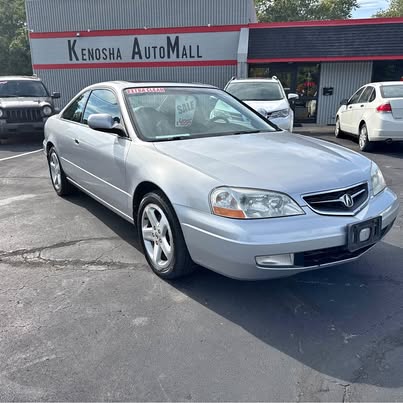 $4,995
Expand
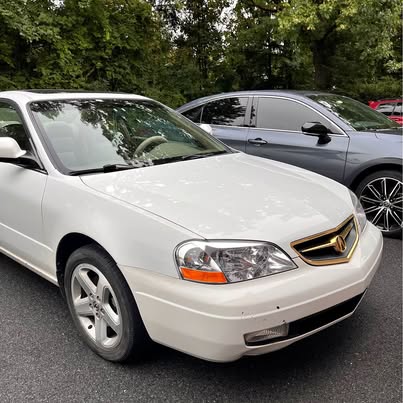 $4,000