
Acura RL 3.5 Sedan 4D buyer's guide
Acura RL 3.5 Sedan 4D -- the model's own buyer's guide: variants, values and what to check.
Years listed: 1998-2004 · Series: RL
Overview and history
You are not buying a fast car, a fashionable car, or a car anyone at a show will cross a field to see. You are buying Acura's flagship sedan, built in Sayama, Japan, and refined over three generations around one idea: refinement and durability first, everything else second. If you expect a Japanese S-Class or a sports sedan in disguise, you will be disappointed within a mile.
The RL exists because of the Legend. Acura launches in the United States in 1986 as Honda's premium division, and the Legend proves that a front-wheel-drive, V6-powered Japanese luxury sedan can sell to buyers who would once have considered only a European badge. The second-generation Legend of 1991–95 establishes the template the RL inherits almost intact: a big, refined front-drive sedan with a longitudinal V6, double-wishbone suspension, a long equipment list and no interest in a V8. When Acura retires the Legend name after 1995 in its move to alphanumeric badges, the RL — Road Luxury in Acura's internal language — takes over as flagship for 1996.
That first car, chassis code KA9, is best understood as a third-generation Legend that Acura declines to call one. It keeps the Legend's longitudinal front-drive layout and a development of its C-series V6, enlarged to 3.5 litres and retuned for torque rather than revs, plus the Legend's virtues: a supple ride, a hushed cabin, seats you can sit in all day and controls that never ask you to think about them. What it drops is the Legend coupe and the manual gearbox. The RL is automatic-only from first day to last, in every generation; a factory manual RL does not exist, and one offered to you is a conversion, whatever the advert says.
The KA9 runs from 1996 to 2004, with revisions rather than replacement: a freshening for 1999, and more useful changes for 2002 that raise power, retune the suspension and improve refinement. By the end it is an old design selling on comfort and value against newer rivals, and it knows it. That is its character, and why good KA9s now make such effective, undemanding daily transport.
The second generation, KB1, arrives for 2005 and is far more ambitious. The engine moves to a transverse layout and joins Honda's J-series family, still 3.5 litres but now with VTEC and substantially more power. More importantly, every KB1 is all-wheel drive — not with a simple reactive system borrowed from a crossover, but with Super Handling All-Wheel Drive, SH-AWD, developed for this car and debuting here: it sends torque to the rear axle, divides it between the rear wheels, and overdrives the outside rear wheel in a corner to help turn the car. Around it Acura builds its most technically complete sedan ever: adaptive headlights, an available Collision Mitigation Braking System that can brake the car itself, adaptive cruise control, Bose audio, keyless access and start, and extensive aluminium body panels. The KB1 is the RL as a technology statement, and the generation that most rewards the homework in this guide.
The third act is a facelift, not a new car. The KB2, sold from 2009 to 2012, keeps the KB1 structure and SH-AWD, enlarges the engine to 3.7 litres, restyles the car around Acura's large shield grille, and, from 2011, fits a six-speed automatic. The RL ends after 2012, replaced for 2014 by the RLX, a different car outside this guide's scope. Do not let a seller blur the two: an RLX is not a late RL, and parts, values and problem areas do not read across.
You will hear, usually within a minute, that the RL is "just a big Accord." Answer it precisely. The KA9 shares essentially nothing structural with the Accord of its day: its C35 is a 90-degree, longitudinally mounted V6 from Honda's C-series, a family the Accord never uses — the contemporary Accord V6 is a transverse 60-degree J-series — and its platform, suspension and body are its own, developed from the Legend line and built in Sayama. The KB cars come closer without making the charge true. Big Hondas of the era share broad engineering, and the J-series family does serve in Accords — but the RL's J35A8 and J37A2 are RL applications with their own hardware, SH-AWD is never offered on any Accord, the body uses aluminium panels no Accord carries, and the cabin equipment, insulation and tuning sit a clear class above. It is a line repeated by people who have not driven the two back to back.
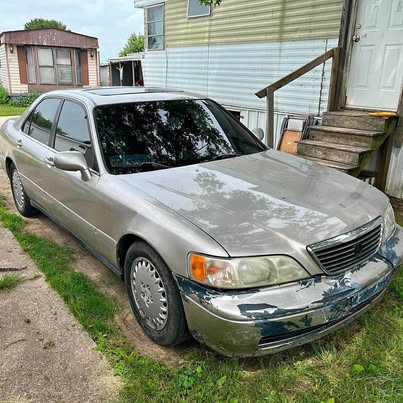
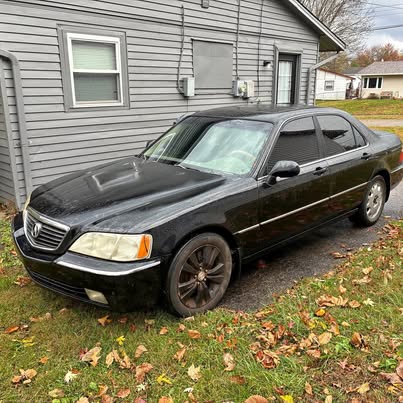
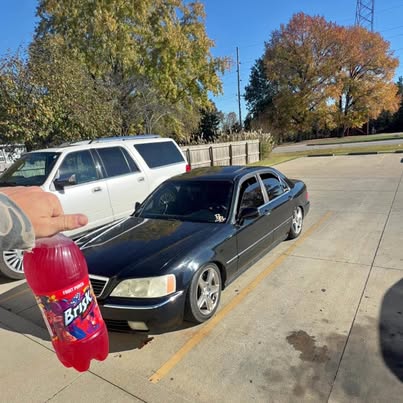
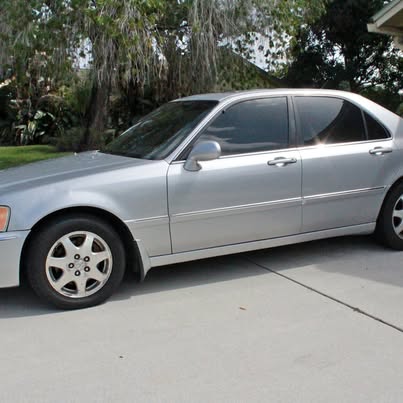
What the RL is, in every generation, is a durability proposition in a luxury sedan: conservative where conservatism pays — timing belts replaced on schedule, automatics that want clean fluid, steel springs rather than air suspension — and ambitious only where Acura is confident, which in the KB cars means all-wheel drive and safety electronics. A note on what you will actually find: the pool listed on this site at the time of writing is small and skewed — eight cars, all first-generation KA9 3.5RLs from 1996 to 2004, and not one KB1 or KB2. That tells you truly where the advertised surviving population sits, because the first generation sold for nine years and is by far the easiest to find. It does not mean the later cars do not exist; it means you look wider and wait longer for a KB, and that inspection discipline matters more, not less, when a rare later car tempts you to grab it. Resist. There is always another RL.
The models
The range is simple to map and easy to get wrong in detail, because Acura sells the car in a few heavily equipped forms and changes the packaging between years without changing the badge on the boot. There is no engine choice within a generation, no manual option in any generation, and no estate, coupe or convertible. Every RL is a four-door sedan and automatic, and the differences that matter are generation, year, and — on KB cars — which technology packages the original buyer specified. Learn to read those packages: they change what can go wrong and what a car is worth.
| Model | Years | Engine | Output | Built | Character |
|---|---|---|---|---|---|
| 3.5RL (KA9) | 1996–2004 | 3.5-litre C35 V6, SOHC, no VTEC | 210 hp, rising to 225 hp for 2002–04 | Sayama, Japan | The comfort flagship: longitudinal front-drive, torque-rich, unhurried, the simplest RL to own |
| RL SH-AWD (KB1) | 2005–2008 | 3.5-litre J35 V6, SOHC VTEC | 290 hp | Sayama, Japan | The technology flagship: SH-AWD debut, adaptive lights, available collision-mitigation braking |
| RL SH-AWD (KB2) | 2009–2012 | 3.7-litre J37 V6, SOHC VTEC | 300 hp | Sayama, Japan | The facelift car: more torque, bolder styling, six-speed automatic from 2011, the rarest RL |
The KA9 divides into three phases, and you buy by phase as much as by year. The 1996–98 cars are the purest expression: the 210 hp C35 tuned for torque, a four-speed automatic, leather and real wood, dual airbags, anti-lock brakes, traction control and automatic climate control. A Premium trim sits above the base car, adding items such as a power moonroof and upgraded audio; check the actual car rather than the badge, because advert descriptions for these years are routinely copied from the wrong year. The 1999 facelift brings revised styling, side airbags, larger brakes and small suspension changes — the point at which the KA9 becomes the finished article. A satellite navigation option appears in this period; treat it as a period curiosity and never pay a premium for it.
The 2002 revision is the KA9 to have within the generation. Power rises to 225 hp through breathing and management changes, the suspension is retuned, insulation improves, and the car carries nine years of production learning. The 2002–04 cars feel measurably more alert without losing the ride that is the point of the model. A Special Edition appears at the end of the run; it is a trim exercise, not a mechanical one, and deserves no premium beyond condition. Across all KA9s, check the VIN plate, the engine number and the chassis code in the VIN. If paperwork, VIN and engine do not agree, walk away — there are enough straight cars that you never need a muddled one.
The KB1 is one mechanical specification wearing different technology packages, and the packages are where sellers mislead, usually from ignorance. Every 2005–08 car has the 290 hp J35, a five-speed automatic with paddle shifters, SH-AWD, leather, wood, dual-zone climate control, Bose audio, xenon headlights that swivel with the steering, and satellite navigation as standard in the US market. For 2005 the car is effectively one fully loaded trim. In following years the offer becomes a base car, a Technology Package car, and a top package adding the Collision Mitigation Braking System (CMBS) with adaptive cruise control. CMBS uses a grille-mounted radar to judge closing distance, warns you, pre-tensions the seatbelts and, if it decides a collision is unavoidable, brakes the car to reduce impact speed. It is genuinely useful and genuinely expensive when the radar fails, which is why this guide treats a CMBS car as a different purchase from a non-CMBS car, not merely a better-equipped one.
One KB1 option deserves its own warning: the Michelin PAX run-flat system, fitted to cars with the CMBS package in the middle KB1 years. PAX uses a special wheel, tyre and internal support ring, needs special equipment to service, and its tyres are long out of normal production channels. Most surviving PAX cars have been converted to conventional wheels and tyres; the rest still roll on aged assemblies you do not want. Ask directly whether the car still has PAX wheels. If it does, price standard wheels and tyres into the purchase before you agree anything, and check the spare, because a PAX car carries no conventional spare.
The KB2 facelift, 2009–12, keeps the formula and sharpens it. The J37 gives you more torque where you use it, the styling is revised around that large grille — judge it with your own eyes — and Technology Package cars gain improved interior materials, a weather overlay on the navigation and upgraded audio. The trim ladder mirrors the late KB1: base, Technology Package, and Technology with CMBS and adaptive cruise. The meaningful mechanical change comes for 2011, when a six-speed automatic replaces the five-speed. The 2011–12 cars are the most developed RLs built and among the hardest to find. Rarity is not value here: a KB2 is worth more than a KB1 because it is newer and better, not because it is scarce, and you should not pay a collector premium for a car the market still treats as a used luxury sedan.
Trim badges tell you less than the individual car's option content. Canadian cars differ in detail, with metric instrumentation — confirm whether the odometer reads miles or kilometres before you judge mileage. Grey-import Japanese-market cars, sold there as the Honda Legend, exist in small numbers; they are right-hand drive and sit outside this guide's values discussion entirely.
Engines and gearboxes
Every RL engine is a single-overhead-camshaft V6 with four valves per cylinder, an aluminium block and heads, a timing belt rather than a chain, and an interference design in which a failed belt lets pistons meet valves. That sentence governs RL ownership more than any other in this guide. The engines themselves are among the most durable Honda has built; the belt, its tensioner, its idlers and the water pump it drives are consumables with a service life, and the economics of buying an RL turn on whether they have been replaced on time, with proof, or whether you are about to pay for them. Honda's schedule centres on a timing-belt interval of 105,000 miles or seven years, whichever comes first, in normal service, and shorter in severe service. Treat any car without documented belt history as a car that needs a belt immediately, and budget it before you negotiate, not after.
The C35 — 3.5 litres, KA9, 1996–2004
The C35A is the last and largest development of Honda's C-series, the 90-degree V6 family that powers both Legend generations. In the RL it displaces 3,474 cc and sits longitudinally — north-south — in the Legend tradition, driving the front wheels through a transaxle with a separate differential. It has no VTEC. That surprises buyers who assume every Honda of the era has it, but the C35 is tuned the other way: a torque peak low in the rev range and a redline it never encourages you to visit. Output is 210 hp for 1996–2001 and 225 hp for 2002–04, the later gain coming from intake, exhaust and management revisions rather than any change in character. In use it is smooth, quiet and unstressed, and it suits the car exactly.
The bottom end is strong and oil-tight when maintained, and the top end uses hydraulic lash adjustment, so there is no valve-clearance service of the kind the J-series demands. Ignition is distributorless, injection is conventional multi-point, and engine management is simple by modern standards — a genuine advantage, because any competent Honda specialist can diagnose a C35 car with a basic scan tool.
Its weaknesses are age weaknesses, not design flaws. Valve-cover gaskets harden and weep, cam and crank seals pass oil, and every hose on a KA9 is old enough to deserve replacement on condition rather than on failure. Radiator end tanks crack, the thermostat should be renewed with the belt service, and any overheating in the car's past is a serious mark against it: a cooked C-series can warp heads and turn a cheap car into an engine-out job. Budget $900–1,600 for a complete timing-belt service with water pump, tensioner, idlers and seals at an independent specialist; overheating damage moves you into $2,500–4,500 for head work before you have fixed the cause. The engine itself, serviced, is the least of your worries in a KA9. Everything bolted to it is twenty-plus years old, and that — not the design — is what you are inspecting.
The J35 — 3.5 litres, KB1, 2005–2008
The KB1's J35A8 belongs to Honda's 60-degree J-series, but the A8 variant is the RL's own: 3,471 cc, VTEC, drive-by-wire throttle and 290 hp. Early material quotes 300 hp; that figure comes from the older SAE rating method, and 290 hp is the same engine measured more honestly, not a detune. Do not let a seller charge you for the difference. Where the C35 wafts, the J35 works: stronger everywhere, more willing to rev, and with SH-AWD it gives the KB1 a turn of speed the KA9 never attempts. It also asks more of you. Honda specifies valve-clearance inspection at 105,000 miles, and sooner if the top end becomes audibly noisy; the clearances are set with screw adjusters on the rocker arms, a straightforward but labour-bearing job most cheaply combined with the timing-belt service.
The J35 keeps the family layout: belt-driven single camshaft per head, belt-driven water pump, coil-on-plug ignition, and a variable-length intake manifold. Its known service items are predictable. The VTEC spool valve and oil-pressure switches leak, and trigger fault codes when their screens clog with old oil; the fix is seals, screens and clean oil at $250–600, and it is a hygiene tell — clogged VTEC screens mean stretched oil changes. The power-steering pump's inlet O-ring is a famous J-series item: the seal hardens, the pump draws air, the fluid foams, and the steering whines, worst on cold starts. The part costs a few dollars and diagnosis is the skill; price a whining car as a pump job at $350–700 until you prove it is only the O-ring. Alternators and starters fail conventionally; budget $450–800 fitted for either.
Oil consumption on a J35 should be minimal. A KB1 that uses a quart between changes is telling you something — usually stretched intervals and ring deposits — and you price it accordingly. The core engine is not the risk. The risk is the 105,000-mile service combining belt, pump, tensioner, valve clearances, plugs and drive belts into one $1,200–2,000 specialist bill, falling due on a car whose "full history" turns out to mean oil changes. Read the invoices. The belt line item is either there or it is not.
The J37 — 3.7 litres, KB2, 2009–2012
The J37A2 enlarges the formula to 3,664 cc, keeps VTEC and drive-by-wire, and produces 300 hp with a usefully fatter torque curve than the J35. It is the strongest RL engine and the most responsive, particularly with the six-speed automatic of 2011–12. It is also the engine with the one documented appetite you must interrogate on every KB2: oil consumption. J37 engines in Acura applications, the RL's A2 among them, are the subject of manufacturer service action for excessive oil use, traced to carbon deposits clogging the piston oil-control rings, which then stop scraping the cylinder walls effectively and let oil pass into combustion. Acura extended warranty coverage for the condition on affected applications for a period; on cars of this age that coverage is history, so what matters is the individual car's behaviour and records, not the programme.
Interrogate it directly. Ask how much oil the car uses between changes and watch the seller's face as much as the answer. Check records for top-up notes, the tailpipe for oily soot and the spark plugs, if you can, for ash deposits. A J37 using a quart in 1,000 miles has a problem oil changes will not cure; the cure is a piston-and-ring job at $3,000–5,500, which converts a KB2 from bargain to project at a stroke. A J37 that uses little or nothing is a fine engine — no more complicated than the J35, and under the same belt discipline at the same $1,200–2,000 combined-service cost. Do not reject the generation for the issue. Reject the individual car for it, with evidence.
The J37 shares the J35's ancillaries: spool-valve seals, steering-pump O-ring, alternator, starter, engine mounts. KB mounts are designed to cancel vibration and cost $400–900 per mount fitted, so a KB that thumps at idle in gear may carry a bill its seller has been avoiding. Test in Drive, foot on the brake, where a failed mount announces itself through wheel and seat.
Gearboxes and SH-AWD
There is no manual RL, no dual-clutch RL and no CVT RL. Every car here uses a Honda-built torque-converter automatic, in three versions dividing by generation. The KA9 uses a four-speed: relaxed, long-legged, well matched to the C35's torque, smooth when its fluid is fresh. The KB1 and 2009–10 KB2 use a five-speed with a sequential mode on steering-wheel paddles; the 2011–12 KB2 uses a six-speed, also with paddles, whose extra ratio improves acceleration and cruising refinement. All are electronically controlled, sealed in the marketing sense and fully serviceable in the real sense, and all live or die on fluid condition.
Honda automatics of this era carry a reputation you should understand rather than repeat. The documented failures of the late 1990s and early 2000s centre on high-volume transverse gearboxes in other models, where clutch-pack wear combined with fluid owners never changed destroyed gearboxes early. The RL's boxes are related in philosophy, not identical in hardware, and do not show the same failure rate — but the lesson transfers: these gearboxes tolerate clean fluid, punish neglect, and the fluid is not lifetime fill whatever anyone tells you. Specialists change it — a drain-and-fill of the correct Honda ATF, replacing roughly a third of the total each time, repeated over successive services — on a roughly 30,000-mile cadence. A drain-and-fill costs $120–250; a neglected box that flares on an upshift, shudders on torque-converter lock-up or delays engagement from Park is a $2,800–4,500 rebuild decision. There is no cheap middle path, which is why the inspection section makes you test the shifts hot, cold and under load.
On the KA9, remember the separate differential: the longitudinal layout gives it its own oil, distinct from the transmission fluid, and it is the most commonly forgotten service item on the car. The change itself is $60–120, but the damage from a decade without one is not.
SH-AWD, fitted to every KB1 and KB2, deserves a mechanical explanation, because once you understand it you can test it, and once you can test it you cannot be sold a broken one as a good one. The transverse engine and gearbox drive a transfer assembly that sends a proportion of torque rearward through a prop shaft to the rear differential unit. In steady cruising the system is front-biased, for economy and stability. When you accelerate, or it detects slip or cornering load, it can send up to about 70 per cent of torque to the rear axle. That alone would make it a competent all-wheel-drive system. What makes it Super Handling happens inside the rear unit.
The rear differential contains two electromagnetic clutch packs, one per rear wheel, controlled by an electronic unit using steering angle, yaw rate, lateral acceleration, wheel speeds and throttle position. By varying clamping force on each pack, the system divides rear torque between the rear wheels — in the limit, effectively all of it can go to one side. An acceleration device, a planetary gear arrangement, can overdrive the rear wheels relative to the front by up to about five per cent. In a corner, overdriving the outside rear wheel while feeding it most of the rear torque creates a yaw moment that helps turn the car and counters the understeer of a nose-heavy sedan. You feel it as the car pivoting willingly rather than pushing wide, clearest on a steady-throttle roundabout. It is not a gimmick: it is the best reason to buy a KB over a KA9, and the most expensive system on the car when it fails.
Service needs are specific. The rear unit uses its specified all-wheel-drive differential fluid and the transfer assembly has its own gear oil; both have intervals clustering around 30,000 miles in severe service, and both are skipped by generalist shops that do not know the system exists. A fluid service for both together runs $180–350. Failure modes are clutch-pack wear, showing as judder on tight low-speed turns; warning lights; and a car that defaults to front-wheel drive on a detected fault — safe, but no longer the car you paid for. Rear-unit replacement is a $1,800–3,500 event. The distinguishing test is in the inspection section: tight figure-of-eight turns feeling for judder, then a brisk cornering run with no dashboard lights. Do both, every time.
Problem areas
An RL rarely fails all at once. It declines system by system, and the pattern of decline records how it has been serviced. Read this section as a map of where money hides in a cheap car: each area names the component, explains the mechanism, and gives you the test that separates a small bill from a large one. Costs are independent-specialist ranges; a main dealer charges more.
Timing belt, cooling and engine ancillaries
On all three engines the water pump is belt-driven, so a pump that weeps coolant or growls through its bearing is not a "monitor it" item — it is a belt-off job, and you renew belt, tensioner and idlers while you are in there regardless of age. The evidence is crusting around the pump weep hole and behind the lower timing cover, and a coolant level that drops slowly with no visible hose leak. A seller who calls coolant loss "just topping up" is describing this job: $900–1,600 on a KA9, $1,100–1,900 on a KB, pump included.
Cooling systems age as a system. Radiator end tanks crack at the crimp where plastic meets the core, announcing themselves with a sweet smell after a hot shutdown and a tide mark down the tank. Thermostats stick partially closed and produce a car that runs warm in traffic and normal at speed — test exactly that way, watching the gauge through ten minutes of idle after a run. Small bypass and heater hoses split before the big hoses do. Individually none of this is expensive — a radiator is $350–700 fitted, a thermostat $150–300 — but two symptoms together mean a system at the end of its life, and overheating history devalues any RL out of proportion to the visible damage. Ask directly whether it has ever overheated, then look for the evidence anyway: sealant residue, a new radiator in an untouched bay, coolant stains on the subframe.
The air-conditioning compressor clutch relay is the ancillary exception worth naming on every generation. Its contacts stick, the clutch stays engaged or cycles wrongly, and the system stops cooling or drags the compressor toward failure. The relay is a $15–40 part in the under-bonnet fuse box, and swapping it with an identical relay from another circuit is a two-minute test that separates a relay from a $700–1,200 compressor job. Run that test before anyone condemns a compressor. Ignition coils fail singly at high mileage and produce a single-cylinder misfire that moves with the coil when you swap coils between cylinders; that swap is the test, and a coil is $80–180. A misfire that does not move is compression, injector or wiring, in ascending order of expense and descending order of likelihood.
EGR passages clog with carbon on high-mileage C35 and J35 engines, particularly on short-journey cars, producing rough idle, hesitation just off idle and an EGR-flow code. Soot builds in the intake-manifold ports until flow falls below what the control unit expects; the cure is mechanical cleaning at $300–650 in labour, not a new valve. Sellers replace the valve, the code returns, and the car is advertised with a "small EGR issue." You now know its real price.
Automatic transmission and driveline
The gearbox test is the most important fifteen minutes of any RL inspection. Honda automatics fail by clutch-pack wear accelerated by degraded fluid, and degraded fluid is invisible in an advert and obvious in shift behaviour. Healthy fluid is red and faintly sweet; neglected fluid is brown, then black, and smells burnt — and burnt fluid means clutch material is already suspended in it, so the wear has already happened. The trap is that a seller can change black fluid the week before you view the car, and the dipstick then lies to you. The shifts do not lie. A healthy box engages Drive and Reverse within a second, without a thump; upshifts without flare, the rise in revs that betrays slipping clutch packs; locks its converter at a cruise without shudder; and does all of this cold, warm and fully hot. Flare, shudder or delay in any state is wear in progress. No adjustment and no additive fixes it. Budget the $2,800–4,500 rebuild figure into the price, or walk away.
Solenoids are the one cheaper gearbox fault worth distinguishing. Their screens clog with clutch debris, producing harsh or mistimed shifts on a box whose fluid is clean and whose engagement is sound. A solenoid set is $300–700 fitted. The distinguishing combination: harsh shifts plus clean fluid plus no flare points to solenoids; harsh shifts plus burnt fluid plus flare points to the box itself. Get this wrong in the optimistic direction and you have bought a rebuild at solenoid money.
Driveline wear outside the box is modest. CV joint boots split first — a boot is $200–350 per side fitted, while a joint that has run dry and clicks on full lock is $350–600. The KA9's separate front differential whines under load when its oil has been forgotten; you separate differential whine from a wheel bearing by weaving gently to load the car side to side — a bearing changes note as its load changes, a differential does not. On KB cars, a thump from the rear on taking up drive is mount or backlash, and deserves a ramp inspection.
Suspension, steering and brakes
The KA9 uses double-wishbone front suspension and a multi-link rear; the KB cars use the same basic architecture, tuned firmer and carrying more weight. No US-market RL uses air suspension or electronically adjustable dampers, which is excellent news: dampers are conventional, springs are steel, and a tired suspension is a shopping list, not a system failure. On a neglected KB, however, that list hides the car's second purchase price.
Ball joints and bushes wear first. The front lower ball joints carry the car's weight and are a safety item, not a refinement item: play in a lower ball joint is an immediate fail, full stop, because separation is a loss-of-control failure. Check with the car jacked and the wheel rocked at twelve and six o'clock, and treat seller resistance to that check as your answer. Front-arm bushes perish and split, producing wander under braking and knocks over sharp bumps; a full front-end refresh runs $800–1,800 and transforms a tired car, which is why it is worth doing properly on a good one. Dampers lose control between 100,000 and 150,000 miles; the real test is the drive — a car that floats after a crest, dives under braking and crashes through its travel needs dampers, at $900–1,600 for four fitted with alignment. Alignment is not optional after suspension work on an SH-AWD car; budget for it and ask for the printout.
Steering is hydraulic on every RL. Racks leak from their end seals with age, wetting the boots and dropping the fluid level; a quality remanufactured rack is $700–1,300 fitted. Pumps whine for the O-ring reason explained in the J35 section — check that first, always — and high-pressure hoses weep at their crimps. On KB cars, test the adaptive headlights while the steering is in your hands: the xenon lamps swivel with steering input, and a failed swivel motor or level sensor is a $400–1,000 repair. Headlamp lenses cloud on all generations; polishing is a $50–150 answer and replacement lamps are not, so polish first.
Brakes are conventional discs all round, generously sized on the KB cars, and their problems are maintenance problems. Sticking caliper slide pins produce uneven pad wear and pull under braking; seized rear calipers on cars that sit are the KA9 speciality. Discs and pads are $300–600 per axle fitted. The ABS modulator can fail electrically on older KA9s, lighting the ABS warning and reverting the car to conventional braking; the repair is $400–900. Brake fluid absorbs water from the moment it is filled and should be changed every three years; black fluid in the reservoir means calipers corroding from the inside, so price a fluid change and caliper inspection into any such purchase.
Electrics, electronics and interior systems
The KA9's electrics are simple, and its failures are legion only because the youngest KA9 is over twenty years old. Window regulators fail — the cable mechanisms fray and the window drops or grinds — at $250–450 per door fitted. Door lock actuators weaken until a door locks lazily or not at all. Seat heater elements break in the seat base where the wire flexes, giving you a working backrest heater and a cold base, which is the diagnostic signature. Bose amplifiers lose channels as their capacitors age. None of these is a reason to reject a car; all of them together are a reason to reject a price. List every dead item, price the list, and negotiate from it.
The KB cars multiply the electronics by an order of magnitude, and two failures dominate. The first is the HandsFreeLink Bluetooth module. On KB1 cars, and across Acura's range of the period, the module fails in a way that stops it sleeping when the ignition is off, and it then draws current continuously, flattening a healthy battery in one to three days of standing. The mechanism matters because it disguises itself: owners replace batteries, then alternators, and the drain persists because the fault is a module that never powers down. The distinguishing test is a parasitic-draw measurement at the battery with the car locked and asleep — a healthy KB settles to a small fraction of an amp, while a failed module holds the draw high. The cheap cure is to disconnect the module, costing you Bluetooth pairing and nothing else; a replacement module runs $300–600 fitted. If a KB1 seller mentions a new battery, ask why, then ask whether the car can sit for a week. Watch the pause.
The second is the navigation stack. The DVD-based drive in the boot reads its map disc constantly and its mechanism wears; a car that shows navigation errors, loses its position or reboots its screen usually needs a drive, at $350–800 for a repaired or used unit, not a screen. Decide before you view whether you care: a KB bought as transport lives happily with a dead drive, while one bought as the full technology flagship cannot, and the two cars are worth different money. Keyless-access faults are usually door-handle sensors or a weak fob battery — test both fobs and every handle, and price a handle at $250–500 fitted before you price a control unit.
CMBS and adaptive cruise add a grille-mounted radar and one hard rule: any frontal impact history on a CMBS car, however cosmetic, requires evidence that the radar was inspected and aligned afterwards, because a misaligned radar is a safety system deciding from bad data. Radar units are $1,000 and upward when they can be sourced, and alignment is a specialist procedure. A lit CMBS warning is a large negotiation or a walk-away. Tyre-pressure warnings, by contrast, usually mean dead sensor batteries at this age; sensors are $60–120 per wheel fitted, so a TPMS light is a small bill and a useful test of whether the seller maintains small things. Any SRS light — often a failed clock spring, at $200, though control units cost considerably more — means the airbag system is partially or wholly offline until repaired. Never accept "it has always been on" as an explanation, about any warning light, ever.
Body, rust and trim
Honda body engineering of this period is good and the RL's rust record is respectable rather than exemplary, so geography decides everything. A KA9 from a dry state can be essentially rust-free underneath at twenty-five years old. The same car after fifteen salted winters is a different proposition, and rust starts where it always starts: rear arch lips where panels trap mud, sill ends ahead of the rear wheels, subframe mounts, brake and fuel lines, and door bottoms where drain holes block. The KA9's sill covers hide the sills, so you inspect what you can see — arch lips, jacking points, subframe, floor edges — and treat bubbling at an arch lip as evidence about the sill behind the cover, not a local blemish. Structural repair runs $800–2,500 per side to a proper welded standard, and a car needing both sides plus subframe work has consumed its price advantage entirely. KB cars rust less visibly, but their steel subframes corrode in salt exactly as the KA9's do. Aluminium brings its own rule: it corrodes under damaged paint, it cannot be straightened by a traditional panel beater, and a damaged aluminium bonnet or wing is a replacement panel at $600–1,400 painted, not a repair.
Paint tells the car's story panel by panel. Factory finish is good and orange peel even; a panel differing in texture, colour under street light, or overspray on its rubbers has been painted — not a sin, but the reason matters, so ask while you check the gaps. KA9 clear coat fails on horizontal surfaces in strong sun, starting on roof and boot lid; proper paint is $2,500–5,000 for the affected panels blended, which reframes any "cheap, just needs cosmetics" KA9 instantly. Glass is expensive on KB cars; a cracked windscreen is a $400–900 event fitted, so check it stone by stone.
Trim is where the RL bleeds money if you demand perfection. KA9 leather cracks on the driver's bolster and wheel rim; retrimming a seat properly is $500–1,000, and good used seats are the smarter buy. Console veneer cracks around the gear selector; on KB cars the soft-touch coatings on switches go sticky with age, with no cure short of replacement or refinishing. Dashboard tops crack on sun-baked KA9s. None of this stops the car working, and the rule follows directly: decide your standard before you buy, and buy the car that already meets it. Interior restoration is the worst-value money you can spend on an RL.
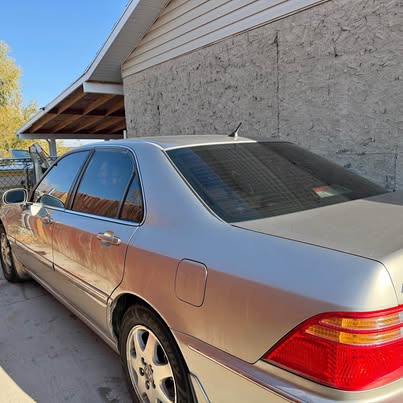
How to inspect one
Inspect in this order, without skipping, and take notes. Paperwork and cold checks come first, while the car is exactly as the seller's claims meet it; the drive follows, when you know what to listen for; ramp and electrical checks come last. Cross-references point back to the problem areas, because a test you do not understand is just a ritual.
- Start with the paperwork, not the car. Match the VIN on the documents to the windscreen plate and door-jamb label. Confirm the engine is the one the generation demands — C35, J35 or J37 — then read the invoices for one line above all others: the timing-belt replacement, with date and mileage. No belt evidence means you budget the belt service into the price today.
- Check the odometer's story. Compare mileage against service and inspection records and against wear on the driver's bolster, steering wheel and pedals. On a Canadian car, confirm whether you are reading miles or kilometres before you judge anything. Wear wildly out of line with claimed mileage is a reason to stop, not to negotiate.
- Cold engine bay, before anyone starts it. A pre-warmed engine hides cold-start rattles, steering-pump whine and gearbox engagement faults. Check oil level and condition, coolant level, brake-fluid colour and steering fluid level. Look for the coolant crusting from the cooling section, and for fresh sealant or one conspicuously new component in an untouched bay.
- Cold start, bonnet up, listen. The engine should start cleanly, settle to a smooth idle within seconds, and make no timing-area rattle, no belt squeal and no steering groan as you turn the wheel lock to lock. On a KB car the steering-whine test from the J35 section happens now, cold, where the pump O-ring fault is loudest.
- Gearbox engagement, still stationary. Foot on the brake: Drive, Reverse, Drive again. Engagement should take about a second, without thump or shudder, as the transmission section specifies. Delay or violence here ends the inspection for most buyers, and it should.
- Body walk-round in daylight. Panel by panel: gaps, paint texture, overspray on rubbers, clear-coat failure on roof and boot. Then low: rear arch lips, sill ends, jacking points, door bottoms, following the rust map in the body section. On a KB car, identify the aluminium panels and check them for damage that means replacement, not repair.
- Tyres and wheels, including the PAX question. Uneven wear reports on alignment and bushes; mismatched budget tyres on a flagship report on the owner. On a KB1 with the CMBS package, establish whether the car still runs PAX wheels, as the models section warns — if it does, price conventional wheels and tyres before you go further. Check the spare, jack and wheel brace are present.
- The short drive: gearbox first. Feel every upshift for flare and every steady cruise for converter shudder, cold. Find a quiet hill and make the box work under load; on a KB car, use paddle mode to hold gears and load the converter deliberately. Any flare, shudder or delay is the transmission section's rebuild conversation, not a quirk.
- The cornering drive: SH-AWD on KB cars. In an empty car park, drive tight figure-of-eight turns at walking pace, windows down, listening for judder from the rear — the clutch-pack test from the gearboxes section. Then take a roundabout or on-ramp at a brisk, steady throttle and feel for the car pivoting willingly, with no SH-AWD warning light. A system that judders or lights the dash has a bill attached; size it before you agree a price.
- Ride, steering and brakes at speed. On a rough road, listen for knocks from worn bushes and ball joints; under firm braking, feel for pull, judder and excessive dive; at a cruise, confirm the car tracks straight with the wheel centred. Sit in traffic for ten minutes afterwards and watch the temperature gauge for the partial-thermostat behaviour in the cooling section.
- The mount test. Stopped, engine warm, foot hard on the brake, select Drive, then Reverse. A thump or shudder through wheel and seat points to the engine mounts discussed in the J37 section — and on a KB car each mount is real money, so count the thumps.
- Every electrical item, systematically. All windows, locks, seats, heaters, mirrors, sunroof, lights including the KB adaptive swivel, wipers, air conditioning hot and cold on both zones, audio, navigation until it fixes its position. Build the fault list the electrics section tells you to negotiate from. On a CMBS car, confirm adaptive cruise holds a gap, and that no warning light is lit — bulb-checked at ignition-on.
- The battery-drain question, KB cars especially. Ask when the battery was replaced and why, and whether the car can stand unused for a week. If you are serious, arrange the parasitic-draw test from the HandsFreeLink discussion. It is the cheapest test in this guide relative to the annoyance it saves you.
- Underneath, on a ramp if the car has passed so far. Subframes and mounts, brake and fuel lines, exhaust, CV boots, differential and rear-unit leaks on KB cars, damper leaks, and the underside evidence of the rust map. On a KA9, ask when the separate front differential oil was last changed.
- Oil-consumption evidence on a KB2. With the J37 discussion in mind: check oil level against the last recorded service mileage, look for oily soot at the tailpipe, and ask the top-up question directly. A vague answer on a J37 car is an answer.
- Finish with a scan. Run a full-system scan with a Honda-capable tool — not just engine codes — across transmission, ABS, SRS, SH-AWD and body systems. Stored history codes tell you what has been cleared for your visit. If the seller refuses a scan or a ramp, you have completed the inspection: the answer is no.
Values
Read the market block beneath this guide for the numbers; this section teaches you how to read it. The RL spread is a condition spread, not a model spread. Cheapest and dearest cars are separated less by generation or trim than by evidence: documented belt services, clean gearbox behaviour, working electronics, and an interior that has not been baked thin. A late KA9 with full invoices rightly commands stronger money than an early KB with gaps in its history and a warning light or two, even though the KB is newer and more advanced on paper.
Asking prices flatter almost every RL. These are low-volume sedans with a small, patient buyer pool, so sellers test the market and wait, and the asking-versus-achieved gap is widest on cars with a story — high mileage without records, deferred services, dead technology. Cars that sell promptly share one profile in every generation: honest mileage, major services already done, everything working, presentation matching the paperwork. Premiums attach to the 2002–04 KA9, to Technology Package KB cars, and to the six-speed KB2 — in each case because the car is better to own, not because it is rarer. A CMBS car carries a premium only when the system demonstrably works; a PAX-equipped car carries a discount until it is converted.
The project-versus-driver gap defines this market. A project RL — running, but carrying a due belt service, tired suspension and dead electrics — is not a cheap way into the model, because the work it needs costs a large fraction of what a sorted driver costs, and you supply the time and the risk. The rational purchase is almost always the best-documented driver you can find, at a fair price for its condition, over the cheapest car at any price. Negotiate from your inspection list, item by item. Sellers of good cars expect it; sellers of bad cars fear it, and their reaction tells you which car you are standing in front of.
Parts and ownership
Ownership is straightforward if you choose your support before you need it. Every RL is a Honda underneath, and a good independent Honda or Acura specialist covers almost everything in this guide, including SH-AWD fluid services and full-system scanning. Main dealers remain useful for CMBS radar alignment, module coding and the occasional factory-only part; identify your nearest cooperative dealer even if you never use them for servicing.
Mechanical parts supply is strong. Service items, belt kits, brakes, suspension components and gearbox solenoids are widely available from Honda channels and quality aftermarket makers. Budget a full baseline service on any new purchase — all fluids including gearbox, differential and, on KB cars, SH-AWD rear unit and transfer, plus filters and plugs — at $600–1,100 depending on generation, as part of the purchase price. The rhythm thereafter is oil changes at sensible intervals, gearbox drain-and-fills on the engines section's cadence, brake fluid every three years, and the belt on its seven-year clock. Expect $500–1,000 a year in routine maintenance on a KA9 in regular use, and $700–1,300 on a KB, before tyres and fuel; a deferred car doubles those figures in its first year.
Where supply thins is exactly where this guide has warned you: KB radar units and some body electronics, PAX tyres, aluminium panels, and generation-specific interior trim. None of it makes the car unownable, but you buy trim and electronics on condition, not on a promise of easy replacement. Insurance is unremarkable, fuel economy is respectable rather than frugal, and the cars tolerate daily and winter use and high mileages without complaint, provided fluids and belt stay ahead of schedule. Run one that way and an RL is among the least demanding luxury cars of its era. Run one on hope and it sends you the bill in instalments.
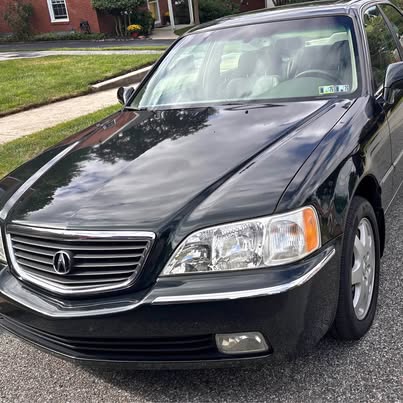
Which one to buy
- The all-rounder: a 2002–04 KA9 3.5RL. The most power the first generation offers, nine years of production fixes, the simplest electronics of any RL and the easiest ownership. Buy the best-documented example you can find.
- The value buy: a 1999–2001 KA9 with full belt history. The facelift car without the late-car premium. The money you save against a 2002–04 example buys the baseline service and a set of tyres, provided the invoices are real.
- The technology buy: a 2005–07 KB1 without PAX wheels. SH-AWD in its debut car and the full equipment list. Pass the HandsFreeLink drain test and the figure-of-eight test and you own the most interesting RL built.
- The best car: a 2011–12 KB2 with the six-speed automatic. The strongest engine, the best gearbox and the most developed chassis — conditional, absolutely, on clean oil-consumption evidence for that individual J37.
- The one to avoid: any RL, of any generation, with a gearbox fault and no belt record. That combination is not a bargain at any discount a private seller will accept. Walk away and wait for the next car.
The overriding rule: buy the individual car's evidence, not its generation, its trim or its mileage — a documented RL with every system working is the cheap car, whatever its asking price, and an undocumented one is the expensive car, whatever its discount.
See the 5 RL 3.5 Sedan 4D cars currently listed.
For sale now
$7,500Expand
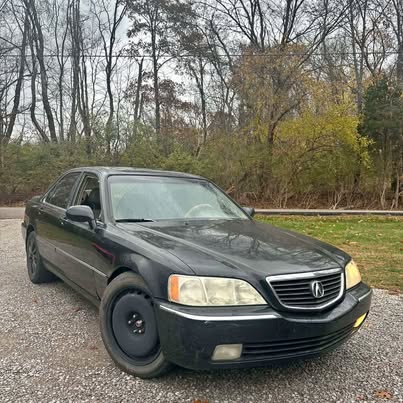 $1,400
Expand
What they sell for: RL 3.5 Sedan 4D sale prices.