
Acura RL buyer's guide
Acura RL (1996–2004) — RL: what's listed, and what they sell for.
Years: 1996–2004 · Models: RL
Overview and history
This guide covers one car, scoped plainly: the first-generation Acura RL, chassis code KA9, sold in North America from 1996 to 2004. It is the car Acura sold as the 3.5RL at launch and simply as the RL thereafter. The second-generation RL that followed for 2005 — all-wheel drive, a different platform and a different character — is a separate car with a separate story and is not covered here. If a listing says RL and the car was built between 1996 and 2004, this is your guide. If it was built after 2004, it is not.
The RL exists because the Legend had to be replaced, and understanding that succession explains almost everything about it. The second-generation Legend (1991–1995) had been a genuine success for Acura: handsome, quick for its class, offered as a sedan and a coupé, with a manual gearbox available and a sporting edge that embarrassed more expensive European rivals. It also carried a name. Honda's luxury division had launched in 1986 with names — Legend, Integra, Vigor — and by the mid-1990s Acura had decided, following the German example, that the brand itself should do the selling and the cars should carry letters. The Legend name was retired in North America, the coupé was dropped, the manual gearbox was dropped, and the replacement arrived for 1996 as the 3.5RL: RL for Refined Luxury, 3.5 for the engine size that was now the car's headline.
In Japan and most other markets the same car continued to be sold as the Honda Legend, which is worth remembering when you search for parts and information — a great deal of the technical knowledge for this car lives under the Legend name. Underneath, the KA9 was an evolution rather than a revolution: it kept the Legend's most unusual engineering decision, a longitudinally mounted V6 driving the front wheels, grew slightly in size, and traded the Legend's sporting brief for an explicitly comfort-led one.
That trade was deliberate, and it is the key to the car. Acura positioned the RL not against the BMW 5 Series driver but against the Lexus LS 400 buyer who wanted quiet, space, equipment and reliability without the flagship price or running costs. The RL was therefore tuned soft on purpose: light steering, a compliant ride, an engine note you have to listen for, and a cabin trimmed to isolate rather than involve. Contemporary road tests praised the refinement and the value and criticised the anonymity, and both judgements were correct.
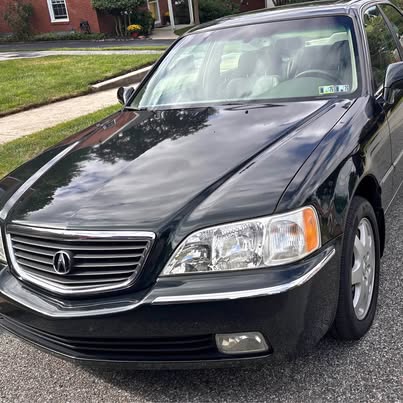
The styling says the same thing. The RL is a rounded, conservative three-box sedan with a long bonnet — a proportion dictated by that longitudinal engine — modest chrome, and detailing so restrained that most people cannot identify the car at twenty paces. That was a commercial problem when new, because flagship buyers often want to be seen to have bought a flagship. It is an advantage now: the RL never became fashionable, so it never became collectible, so it never became expensive.
Production ran through two clear updates. The original 1996–1998 cars established the formula. A substantial facelift for 1999 sharpened the front end, added equipment and addressed the early cars' plainness. A second round of changes for 2002 brought a useful power increase and chassis revisions, and the run finished in 2004 with the best-equipped and most powerful cars of all. Section 2 walks through those phases in detail.
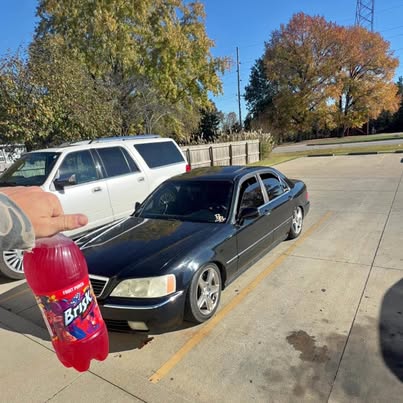
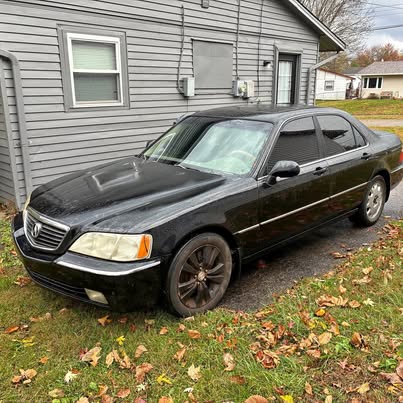
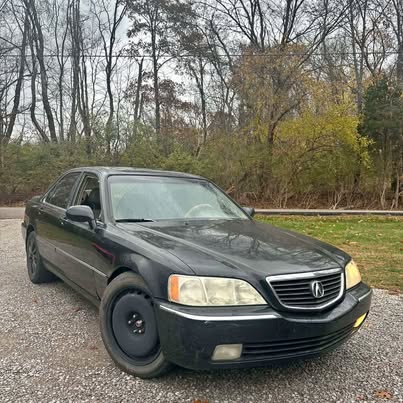
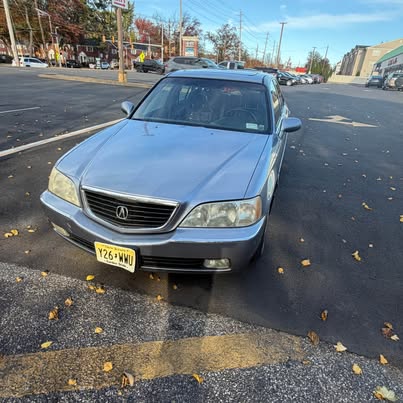
The pool behind this guide tells you where the surviving market lives. In the current Classic Listings pool of 8 RLs, every car is a 3.5 Sedan, every car is automatic — the RL was never offered any other way — and every car comes through a Facebook Marketplace seller, spread across Illinois, Ohio, Florida, Utah, Pennsylvania and New Jersey. Colours in that pool of 8 run to three black cars and single examples in gold, silver, beige, green and blue. That is a fair picture of the wider reality: an inexpensive used sedan that changes hands locally and informally, not through marque specialists — so the usual classic-car signals are mostly absent, and condition has to be judged from the car itself. That is what the inspection section is for.
These were well-built cars typically bought new by older, careful owners and maintained at Acura dealers. That first life is the RL's great asset. Its later lives, as a cheap luxury sedan passed down the price ladder, are its great risk: the car tolerates neglect quietly for a long time, then presents the accumulated bill at once. The difference between a good RL and a money pit is not mileage, specification or year. It is whether the timing belt, the gearbox fluid and the small electrical systems have been looked after.
The models
There is, in the strictest sense, only one first-generation RL. Acura never built a coupé, a wagon, a sport model or a smaller-engined version for North America: every KA9 is a four-door sedan, every one carries the same 3.5-litre V6, and every one drives its front wheels through the same four-speed automatic. The current pool reflects that exactly — its model roster contains a single entry, the Acura RL 3.5 Sedan 4D, accounting for all 8 cars, spanning the 1996 to 2004 year range. So the "models" question for an RL buyer is not which model, but which phase of the car's life, and which trim level. Both matter more than the single-badge range suggests.
| Model | Years | Engine | Output | Built | Character |
|---|---|---|---|---|---|
| Acura RL 3.5 Sedan 4D — launch cars | 1996–1998 | 3.5 V6 (C35A), automatic | 210 hp | Not reliably published by phase | The original formula; plainest styling, simplest equipment |
| Acura RL 3.5 Sedan 4D — facelift cars | 1999–2001 | 3.5 V6 (C35A), automatic | 210 hp | Not reliably published by phase | Sharper face, more equipment, the balanced buy |
| Acura RL 3.5 Sedan 4D — late cars | 2002–2004 | 3.5 V6 (C35A), automatic | 225 hp | Not reliably published by phase | The power increase and the fullest specification |
Production figures by phase are not reliably published in a form this guide can stand behind, so the table leaves them open rather than inventing precision. Outputs are the period North American ratings. What the table does show is the real structure of the range: one car, three ages, and a power step in 2002 that is the only mechanical dividing line that matters.
The launch cars, 1996–1998. The original 3.5RL arrived with a full luxury specification by the standards of the day: leather upholstery, automatic climate control, power seats, a Bose audio system, anti-lock brakes, traction control and dual front airbags, with the trim structure dividing broadly between the standard car and a better-equipped Premium model. A navigation system — a novelty in 1996 — was offered as an option in this period, early enough that any surviving unit is now a period curiosity rather than a tool; judge it as trim, not as equipment you will use. The launch cars are the plainest to look at, with the softest front-end styling, and they are now the oldest and usually the highest-mileage survivors. Nothing about that disqualifies one: the mechanical package is essentially the same as a 2001 car's. But buy a launch car on condition alone, because it carries no equipment or styling advantage to compensate for age.
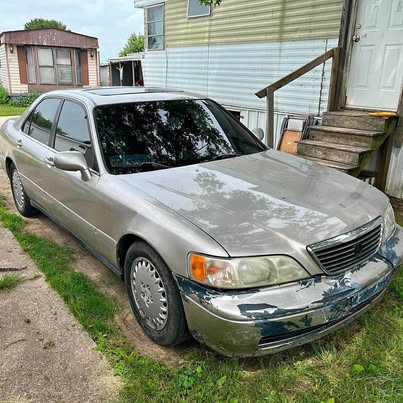
The facelift cars, 1999–2001. The 1999 update makes the RL feel like a finished product. The front end was restyled with a more defined grille and integrated fog lamps, and the cabin gained in materials and equipment: xenon headlamps arrived, front side airbags were added, the wood and leather presentation improved, and the audio and climate systems were revised. Power stayed at 210 hp — the facelift was about presence and equipment, not speed. For most buyers this middle phase is the sweet spot: new enough to have the safety and lighting equipment you actually want, old enough to be priced like any other RL, and mechanically identical in all the ways that determine running costs. A 2000 or 2001 Premium with a documented belt service is the easiest RL to recommend in this guide.
The late cars, 2002–2004. Output rose to 225 hp for 2002, with torque increased as well, through revisions to the engine's breathing and exhaust rather than any change of architecture; the chassis was retuned with firmer damping that took a small amount of float out of the ride without spoiling it; and the equipment list filled out further, with OnStar telematics standard in this period and, by the final 2004 cars, satellite radio among the headline features. Late cars also disproportionately include the low-mileage, garaged, dealer-maintained survivors, because they were most likely to be bought by the original demographic and kept a long time. If two cars present equally well and one is a 2003, take the 2003 — but do not pay a large premium for the 15 extra horsepower, which on the road reads as slightly keener response rather than a transformation.
Trim: standard and Premium. Across the run, Acura sold the RL in a standard trim and a Premium trim, the Premium adding equipment of the heated-seat, upgraded-audio, memory-function and sunroof kind, varying in detail by year. Two cautions apply. First, the standard car was already well equipped, so any Premium premium a seller asks should be small. Second, trim descriptions are unreliable at this age: verify equipment by using it, item by item, during the inspection. A claimed Premium whose heated seats, memory function and sunroof motor do not work is a standard car with extra faults.
What there is not. There is no manual RL, of any year. There is no RL coupé, no sport package that changes the car's character fundamentally, no V8, and no all-wheel-drive KA9 — all-wheel drive belongs to the 2005 successor. Every car you will ever look at has the same engine, the same gearbox layout and broadly the same cabin. That uniformity is a buying advantage: it removes specification anxiety entirely and leaves a single question — how well has this particular car been kept?
One identity check: the VIN will confirm a North American Acura, where a Japanese-market Honda Legend would be right-hand drive and badged differently. Grey-import Legends surface occasionally; they are mechanically kindred but complicate parts ordering, lighting compliance and resale, and should be priced as the curiosity they are, not as a shortcut to a better RL.
Engines and gearboxes
The C35A: the last of the C-series
Every first-generation RL is powered by the same engine: the C35A, a 3.5-litre (3,474 cc) V6, and the last production development of Honda's C-series family — the engine line that began with the original Legend of 1986 and, in a very different form, also powered the first NSX. By the time it reached the RL the C-series had been thoroughly civilised. The C35A is a 90-degree V6 with a single overhead camshaft per bank operating four valves per cylinder, aluminium construction, and conventional multi-point fuel injection. It has no VTEC — Honda's variable valve timing system, fitted to so many of its sporting engines, was never part of this engine's brief — and no turbocharger, no supercharger and no hybrid assistance. It was designed to produce adequate power, in near-silence, for a very long time, and on the evidence of the survivors it does exactly that.
In launch form the engine was rated at 210 hp with 224 lb-ft of torque; from 2002, revisions to the intake, camshaft timing and exhaust lifted those figures to 225 hp and a correspondingly stronger torque output. Neither version is quick by modern standards and neither feels strained: the RL is a heavy sedan and the engine's job is to move it with a smooth, even surge rather than a crescendo. What distinguishes a healthy C35A is not performance but manners. It should start immediately, idle at a near-imperceptible smoothness, pull without flat spots or hesitation, and make no more than a muted hum under load. Ticking, tapping, rumbling or a lumpy idle are all out of character, and because the engine is so quiet when right, faults announce themselves unusually clearly when it is wrong.
The engine's fundamental durability is not the issue with an RL. The bottom end is strong, oil consumption on a maintained car is modest, and high mileages are routine — these engines were built for a market where a flagship Honda was expected to outlast its owner's interest in it. The issues are three, and all three are matters of maintenance rather than design: the timing belt, the cooling system that protects the head gaskets, and the slow accumulation of oil leaks and perished rubber on a car that is now between twenty and thirty years old. Each gets its due in the problem areas section; the belt deserves introduction here, because it defines the engine's ownership contract.
The C35A is an interference engine driven by a timing belt. Interference means that if the belt fails, the pistons and valves occupy the same space at the same time, and the result is bent valves and a cylinder-head rebuild at best. Honda's service schedule for the belt is 105,000 miles or seven years, whichever comes first — and it is the years clause that catches RL buyers, because so many surviving cars now do few miles. A 90,000-mile car on its original 1999 belt is not a low-mileage find; it is an overdue car whose belt is a quarter-century old. The belt job is also the moment to replace the water pump, tensioner and idlers, which are disturbed in the process and share the same service life. Done together at an independent Honda specialist, the full job typically runs in the region of $900–1,600 depending on region and exactly what is included; done at a dealer, expect more. A seller who can produce an invoice for that job, dated and mileage-stamped, has handed you the single most valuable piece of paper in the car's file. A seller who says the belt "looks fine" has told you nothing — belts are not judged by looks — and a seller who does not know is asking you to budget the job immediately, which you should.
The longitudinal layout: a front-drive car built like a rear-drive car
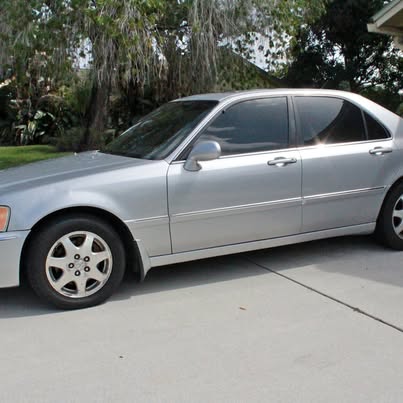
The RL's most interesting engineering decision is one you cannot see until you open the bonnet, and it deserves a full explanation because it confuses buyers and even some mechanics. Almost every front-wheel-drive car mounts its engine transversely — sideways, across the car — because that is the compact way to package an engine and gearbox in a short nose. The RL, following the Legend, mounts its V6 longitudinally: fore-and-aft, in line with the car, exactly as a rear-wheel-drive car does. The bonnet is long because the engine is long in the car. Open it and you are looking at a layout that resembles a BMW's, in a car that drives its front wheels.
Honda did this for three reasons, and all three still benefit the car. First, proportion and packaging: a longitudinal engine lets the front wheels sit further forward relative to the cabin and gives the long-bonnet, short-deck stance the flagship class expects. Second, refinement: a longitudinal engine can be mounted to isolate vibration in a way a transverse installation struggles to match, and the RL's idle smoothness is partly this layout's doing. Third — and most cleverly — driveshaft equality. In a transverse front-drive car the gearbox sits to one side, so one front driveshaft is short and the other long, and under power the unequal angles produce torque steer, the tugging at the wheel that betrays a powerful front-drive car. The RL's arrangement places the differential effectively in line with the engine and feeds the front wheels through driveshafts of near-equal length, which is why an RL pulls away cleanly and straight where a transverse car of similar power would squirm.
Mechanically, the automatic gearbox sits in line behind the engine, and drive is taken forward to the front differential and wheels. The practical consequences are modest but real. Access is good along the sides of the engine and tighter at the back; some jobs that are trivial on a transverse Honda — the starter motor and alternator in particular — are more involved here, and labour times reflect it. The RL also does not share its engine-bay hardware wholesale with the Accord or TL, however similar the switchgear looks, so "Honda parts are all the same" is a sentence to treat with suspicion when ordering. Use a mechanic who has seen one before, or at least one who will look at the layout before quoting the job.
The gearbox: four speeds, automatic only, and a fluid question
There is one gearbox in the first-generation RL: a four-speed electronically controlled automatic, with no manual option at any point in the run — all 8 cars in the current pool are automatic because all RLs are. It is a conventional torque-converter automatic of its era, with Honda's Grade Logic control, which holds a lower gear on descents and avoids hunting between ratios on grades. In health it suits the car perfectly: shifts are smooth to the point of being easy to miss, kickdown is willing if not hurried, and at a cruise the engine settles to a low, quiet hum. Do not judge it against a modern eight-speed; judge it on smoothness, prompt engagement of drive and reverse, and an absence of flare — a rise in revs without a corresponding rise in road speed — during changes.
The gearbox's service reality is the second great theme of RL ownership, after the timing belt. Honda automatics of this generation use Honda's own fluid — ATF-Z1 originally, superseded by ATF DW-1 — and are intolerant of the wrong fluid and of no changes at all. The correct service is a drain-and-fill, which replaces roughly a third of the fluid each time; conscientious owners repeat it over a short interval to refresh most of the charge, and a sensible interval is around every 30,000 miles. What these gearboxes do not want is a high-pressure power flush on a neglected high-mileage unit, which can stir settled debris into the valve body — if a car has no fluid history, the gentle drain-and-fill sequence is the prudent route.
Failure usually announces itself politely first: a delay engaging drive on a cold morning, a shudder from the torque converter at light throttle, a flare on the 2–3 change, or fluid that comes out dark and smelling burnt rather than red and sweet. A rebuild or quality remanufactured unit fitted is realistically $2,500–4,500 all-in — which can exceed the purchase price. That is why the fluid's colour and smell are worth as much as any other single test in this guide. Pink-red fluid with a record of changes means the most expensive component has been cared for; brown fluid with no record is a negotiation.
One trap: the automatic is sometimes condemned for behaviour that is actually the engine's fault. A misfire, a tired engine mount or a failing driveshaft joint can all present as a shudder that feels like a gearbox event. Note whether the symptom follows road speed, engine speed or gear changes — the inspection section's test — before anyone quotes you a rebuild.
Problem areas
The RL's problem areas have a consistent shape: the structure and the core engine are strong, the failures cluster in the systems around them — the belt drive, the gearbox fluid, the braking electronics, the climate and audio hardware, and the slow ageing of rubber, leather and paint. Almost everything here is fixable at a price you can know in advance; the skill is pricing it before you buy, not discovering it after.
Engine: belts, cooling and leaks
Timing belt — the defining job. Everything said in the engines section applies with full force here: 105,000 miles or seven years, interference engine, belt plus water pump plus tensioner and idlers as one job, roughly $900–1,600 at an independent specialist. The failure mode needs no elaboration — a snapped or stripped belt bends valves — but the diagnostic trap does. There is no reliable way to inspect a timing belt's remaining life visually on this engine without dismantling to it, and a belt that has been sitting in one position on a stored car ages whether the car moves or not. So the rule is binary: documented and in date, or budget it now. "The previous owner said it was done" is not documented.
Cooling system and head gaskets. The C35A's head gaskets are not a notorious weak point, but they are the predictable casualty of cooling neglect, and the cooling system on a twenty-something-year-old RL is full of original plastic and rubber: radiator end tanks that heat-cycle and eventually weep or crack, hoses that harden, a thermostat that can stick, and fans that age out. The sequence to fear is a small leak, a slow loss of coolant, an overheat noticed late because the car is so quiet, and a warped head. Read the car, not the seller: coolant clean and at level, temperature gauge climbing to the middle and staying there through a long idle and a drive, no sweet smell, no white residue around the radiator seams, no emulsion under the oil filler cap. A radiator is a few hundred dollars fitted; a head-gasket job is realistically $1,800–3,000, and on a cheap car it ends the argument.
Oil leaks and mounts. Expect seepage. Valve-cover gaskets, cam and crank seals and the various O-rings of a C-series engine harden with age and heat, and a dry C35A at 150,000 miles is the exception. Distinguish a weep that leaves a mist on the block — monitor it — from a leak that drips onto the exhaust or the driveway, which is a job. Engine mounts deserve a specific check: the RL's smoothness depends on them, the front mount in particular works hard, and a failed mount presents as a thump on take-up of drive and a vibration at idle that owners misdiagnose as a misfire or a gearbox fault. With the bonnet open and a helper shifting between drive and reverse with the brake held, watch the engine: a small rock is normal, a lurch is a mount.
Starting and charging. The starter motor and alternator are honest Honda components in awkward addresses on this layout, so labour inflates both jobs — budget $400–800 for either, fitted. A slow crank that a new battery does not cure is usually the starter telling the truth. Also check the ignition switch: Honda recalled and widely replaced electrical ignition switches of this era for wear that could stall the car, and an intermittent electrical cut that resets with a jiggle of the key is that fault until proven otherwise.
Gearbox and driveline
The gearbox section above covers the theory; the failures in practice are these. Torque converter shudder — a judder at light throttle around town speeds as the converter clutch engages — is the most common complaint, and its first remedy is also its best diagnostic: a drain-and-fill with the correct Honda fluid cures a surprising share of cases, because the shudder is often degraded fluid rather than worn hardware. Price a fluid service ($120–250 in fluid and labour) before pricing a converter. Shift flare and delayed engagement point deeper: check the fluid level and condition first, then accept that internal wear is likely and a rebuild quote belongs in the negotiation. Driveshafts and CV joints are conventional: clicking on full lock is an outer joint, vibration under load can be a worn inner joint, and split boots caught early are a cheap boot kit rather than a shaft. Finally, the differential and final drive share the gearbox's fluid regime — another reason the fluid history matters out of proportion to its cost.
Brakes, ABS and suspension
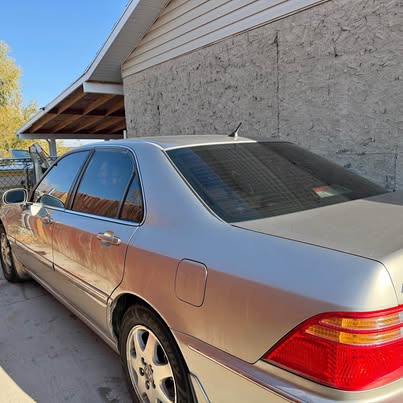
The ABS modulator is this car's signature expensive fault. The RL's anti-lock system uses a modulator with an accumulator and pump arrangement typical of 1990s Honda flagships, and with age the unit's internal seals deteriorate: the pump runs too often or too long, the ABS warning lamp comes on, fluid can weep from the unit, and in the advanced case the pedal feel changes. The standard brakes continue to work without ABS — the car does not become unbrakeable — but a lit ABS lamp is a test failure in some jurisdictions, an insurance conversation in others, and a repair that was expensive when the parts were plentiful. New modulators have long been costly and are increasingly a used-part or rebuild conversation, with realistic costs from a few hundred dollars for a good used unit fitted to well over $1,000 for the fullest remedy. Prevention is fluid discipline: brake fluid absorbs water, old fluid corrodes the modulator from inside, and a car with a record of two-yearly fluid changes is materially less likely to present this fault. On any viewing, the test is simple and is step 8 of the inspection: lamp on with ignition, lamp out after start, and silence — no pump running on and on — thereafter.
Ordinary brakes, by contrast, are cheap and conventional: discs, pads, calipers and hoses are all available at ordinary Honda money, and a full hydraulic refresh on a stored car — calipers freed or replaced, hoses renewed, fluid changed — is an $800–1,500 event at a shop, less if you do the simple parts yourself. Judge a stored car on the discs: rust bands and lips mean standing time, and standing time means the caliper pistons and slide pins need attention whether the pedal feels acceptable on the day or not.
Suspension and steering. The RL uses double wishbones at the front and a multi-link rear, tuned soft, and its wear items are the expected ones: ball joints, tie-rod ends, anti-roll bar links and bushes, and dampers that will be tired or replaced by now on most cars. Worn joints announce themselves as knocks over broken surfaces and vagueness in the steering; tired dampers as float and a second bounce after a crest — on a car tuned soft from new, judge against "controlled" rather than "firm." The power steering rack can weep from its seals and the pump can whine on tired fluid; a rack replacement is a $700–1,200 fitted event, so test on full lock both ways and listen. Wheel bearings hum rather than knock, rising with road speed and changing note in gentle curves.
Rust: modest, real, and where to look
Rust is not the RL's defining problem — Honda's rustproofing on its flagship was respectable, and the structure holds up well. Modest is not absent, however, and on a salt-belt car the following map applies. Rear wheel arches are the first place: the lip traps mud and salt against the seam, and bubbling at the arch edge, especially where it meets the sill, is the classic RL rust spot. Feel the inner lip with your fingertips; the rust works from inside the fold outward. Sills and jacking points follow, and should be pressed hard along their length. Subframes, front and rear, deserve a torch and a prod on any northern car: surface rust is cosmetic, but flaking and softness around the mounting points are structural. Brake and fuel lines corrode in the same climate; replacement is not ruinous ($300–700) but it is a safety item, not a cosmetic one. Add the boot floor and spare-wheel well, which collect water from a tired boot seal, the bottoms of the doors, where blocked drains let doors hold water, and the battery tray area. A Florida or Utah car and an Illinois or Pennsylvania car are different propositions underneath even at identical mileages — in the current pool of 8, cars are listed in both climates, so ask where the car has lived, not just where it is listed. Arch and subframe work priced after purchase is the one bill that can spoil the RL's cheap-flagship arithmetic.
Electrics, climate and audio: the ageing layer
This is where an RL most often spends its owner's money in small, irritating instalments, and where a thorough viewing pays for itself.
Climate control. The automatic climate system is effective when healthy — cold air conditioning is part of the RL's luxury brief — and its age faults are the standard Honda set. The compressor and its clutch wear; the condenser, in front of the radiator collecting road damage, leaks; seals dry out on a car whose air conditioning has not been run. A system left unpressurised for years is not a "regas" — it is a diagnosis, a leak repair and then a regas, realistically $400–1,200 depending on the failed component. Test it on every viewing, whatever the season: full cold within a minute, all fan speeds, every air-distribution mode. Blend and mode actuators — the small motors that move the flaps behind the dashboard — fail with age and announce themselves as clicking from behind the dash or air that will only come from one set of vents; the parts are affordable, but labour varies from trivial to dashboard-deep, so note which function has failed and price accordingly.
Bose audio. The Bose system was a headline feature and is now a period piece with known failure modes: amplifier circuits age, speaker surrounds perish, and the result is crackling, channels dropping out, or a system that plays at a whisper or not at all. The boot-mounted CD changer, where fitted, jams. None of this affects the car mechanically, but repair costs surprise owners because Bose components are a matched system — replacing one piece with generic hardware often means reworking more than the failed piece. A specialist repair of the original units typically runs $200–600 depending on how many components need attention.
The rest of the electrical layer. Door lock actuators fail one by one, giving a car that locks on three doors and thinks about the fourth; window regulators slow and then stop, the driver's first; the power aerial, where fitted, sticks; memory functions lose their memory; and instrument illumination dims bulb by bulb. Individually these are $50–300 annoyances. Collectively they are the most reliable condition signal the car gives you: an RL where every lock, window, seat motor, mirror and bulb works has been owned by someone who fixed things as they failed, and that owner will have changed the belt and the gearbox fluid too. An RL with five electrical faults is telling you how its invisible maintenance went. Believe it.
Airbags and warning systems. The SRS lamp should self-test and extinguish on every start; a lit lamp on cars of this era is commonly a seat-belt buckle switch, a connector issue, or a fault stored after a flat battery — but it must be diagnosed, not ignored, because the system disables itself while the lamp is on. Facelift cars carry front side airbags as well. Budget a diagnostic session ($100–200) into any car with a warning lamp showing, and treat a defeated warning bulb — check that every lamp lights at ignition-on before start — as a walk-away signal.
How to inspect one
Allow an hour, bring a torch, and insist on a cold start — arrange it before you set off, because half of what this checklist reads depends on the engine being cold. An RL flatters faults into invisibility on a short, warm drive; the cold start, the fluids and the electrical sweep are where it tells the truth.
- Paperwork and identity first. Match the VIN on the title to the plate at the base of the windscreen and the door-jamb label. Confirm the car is a KA9, then ask the only question that rivals the VIN for importance: "When was the timing belt done, and may I see the invoice?" Dated paperwork for the belt, and any record of gearbox fluid changes, moves this car to the front of the queue. No paperwork is not a walk-away — at this end of the market it is normal — but it sets the budget: belt job and fluid service, immediately, priced into your offer.
- Cold start. With the engine cold, turn the key. It should start promptly and settle to a smooth, quiet idle with no ticking that persists, no hunting and no smoke beyond a breath of condensation. Blue smoke is oil; thick white smoke that persists is coolant; both are negotiations or walk-aways. Watch the dashboard as you turn the key: every warning lamp — ABS, SRS, check engine, brake — must light in the bulb check before start and go out after. A lamp that never lights has been defeated, and that ends the viewing.
- Under the bonnet: fluids and leaks. Check engine oil level and condition — black is overdue, milky is a head-gasket conversation, a level well over full with a smell of fuel deserves questions. Check coolant in the expansion tank: clean, coloured and at level. Look down both sides of the C35A for oil weeps, around the radiator seams for coolant tracks, and at the belts and hoses you can see for cracking. Have a helper hold the brake and shift drive–reverse–drive while you watch the engine rock on its mounts: a lurch is a mount, priced in the problem areas section.
- The gearbox fluid test. With the engine warm and idling, following the dipstick procedure for the car, draw the automatic transmission dipstick and look and smell. You want red to pink-red fluid that smells neutral. Brown fluid is overdue and a service belongs in the budget; dark fluid that smells burnt, on a car with no change record, is the single strongest predictor of a four-figure gearbox bill, and it should move your offer by that order of money. Wipe, re-dip and confirm — do not judge the first draw alone.
- Arches, sills and doors. Crouch at each rear wheel arch and run your fingertips around the inner lip, feeling for bubbling and crust under the paint, especially where the arch meets the sill. Press along both sills, check the jacking points, and run a fingertip along the bottom edge of every door for bubbling. Look at panel gaps and paint match in daylight: an RL this age may well have had cosmetic paint, which is fine; ripples, overspray on rubbers and mismatched orange-peel are accident history asking to be explained.
- Underneath, if you possibly can. A lift inspection is worth its modest cost on any RL, and essential on a salt-belt car. Torch the front and rear subframes around their mounts, the brake and fuel lines, the floor pans and the boot floor from below. Flaking and softness at subframe mounts are structural; surface rust is a talking point. If no lift is available, a torch and knees on the ground at each corner still catch the worst of it.
- Boot and spare wheel well. Lift the boot floor and the spare. Look for water staining, rust in the well corners and a damp smell, and check the boot seal that let it in. Test the power aerial if fitted, the boot release, and the CD changer if the car has one — three small systems that fail quietly and cost real money in aggregate.
- Brakes and ABS. From the driver's seat, ignition on: the ABS lamp must light and then go out after start, and you should not hear the ABS pump running on repeatedly at standstill — that is the modulator fault from the problem areas section announcing itself. On the drive, brake firmly from speed: the car should stop straight, the pedal should be firm and consistent, and judder means discs, pulling means a caliper. Note the disc condition through the wheels: heavy rust bands and lips mean standing time and a hydraulic refresh in the budget.
- The test drive — gearbox first. Fifteen minutes minimum, including a stretch at highway speed. Engagement of drive and reverse should be prompt, with no long pause and no thump. Changes should be smooth and flare-free; hold a light, steady throttle around town speeds and feel for torque converter shudder, then use kickdown once and confirm the car pulls cleanly and straight, with no tug at the wheel — the longitudinal layout should deliver exactly that. Note whether any shudder follows engine speed, road speed or the gear change itself; that distinction separates engine, driveline and gearbox causes, as the problem areas section explains.
- Heat, cold and noise. Let the car idle hot after the drive. The temperature gauge should sit steady in the middle, the fans should cycle, and the cabin should stay cool with the air conditioning on full cold — set it, wait a full minute, and work every fan speed and every air-distribution mode, listening for actuator clicks from behind the dash. Listen at idle for power steering whine on lock and for wheel-bearing hum on the drive, in gentle curves both ways.
- The full electrical sweep. Operate everything, in a fixed order so nothing is missed: all four windows, all door locks, both mirrors, both front seats in every direction, seat memory and heated seats if fitted, sunroof through its full travel, washers and wipers, every exterior light, the audio system on radio and CD, the horn, and the instrument illumination. Count the failures. Each is a priced item; the total is your condition verdict — maintained cars pass this sweep, neglected cars do not.
- Interior and stance, last. Sit in every seat. Leather should be worn honestly rather than split and collapsed; the driver's seat carries the mileage, so judge from there. Check the headlining for sag, the wood-effect trim for lifting, and every seat belt for smooth retraction. Then stand back: an RL should sit even, with no corner down. A car that has passed the belt, fluid, ABS and electrical tests above and sits straight is a good RL in any year and any colour.
Values
The figures that matter for this series are computed from this site's own listings and recorded sales, and they sit below this guide — the listed-now summary and the market block are refreshed every time the site rebuilds, so use them rather than any number quoted elsewhere. What follows is how to read them.
The first thing to understand about RL values is that the market barely distinguishes between the cars. There is no coupé premium, no manual premium, no sport-model premium, because none of those cars exists. Year and phase move the numbers a little — a 2004 is worth more than a 1996 in comparable condition, and the 2002-onwards power increase is worth something to the few buyers who know about it — but condition moves them almost entirely. The spread between the cheapest and the dearest first-generation RL on offer at any moment is, in practice, a spread between a neglected car with an overdue belt and brown gearbox fluid and a maintained car with invoices, and it is a wide spread relative to the car's modest absolute level. Read every asking figure through that lens: the question is never "what is a 2001 RL worth?" but "what has been spent on this 2001 RL, and what is about to need spending?"
That produces the RL's defining value characteristic: the deferred-maintenance bill is a large fraction of the car's worth. A timing belt service, a gearbox fluid programme, an ABS modulator remedy and a set of tyres can together approach or exceed the purchase price of a cheap example, which means the cheap example is not cheap — it is a part-payment. Conversely, a car priced at the top of the range with those jobs documented and recent is often the genuine bargain, because the seller rarely recovers the full cost of good maintenance in the asking price. In this market you are not really buying a car; you are buying its last five years of invoices, with a car attached.
The current pool illustrates the shape of supply honestly. All 8 cars in the pool are for sale, all are the single 3.5 Sedan model, all are automatic, and all are offered by Facebook Marketplace sellers rather than dealers or specialists — a private, local, informal market, in which asking prices are opening positions rather than researched valuations, and in which a polite, informed offer backed by a priced fault list carries real weight. There are no sold cars in this pool to correct the asks against, so treat asking figures with particular care and lean on the condition arithmetic above: price the car, then subtract the documented jobs it still needs, at the rates given in this guide.
Two further cautions. Mileage matters less than the market assumes: a 180,000-mile car with a full belt and fluid history is a safer buy than a 90,000-mile car whose belt is a decade overdue, because the C35A's core wears slowly while its belt and gearbox fluid age on the calendar as much as on the road. And originality premiums barely exist here — no collector market bids for time capsules — so a genuinely exceptional survivor can often be bought for ordinary money plus a modest premium. That asymmetry is the whole opportunity.
Parts and ownership
The RL is a Honda flagship built in large enough numbers, from a manufacturer with a long tradition of supporting its older cars, and that shows in the parts picture — with one structural caveat: the RL's longitudinal layout and flagship status mean it shares less with the mass-market Hondas than owners expect, so part numbers, not assumptions, should drive every order.
Easy: service items — filters, plugs, brake pads and discs, drive belts, batteries, tyres in standard sizes — are ordinary Honda-pattern parts at ordinary prices. Suspension wear items, wheel bearings, CV boots and shafts, radiators, hoses, thermostats and most engine sensors are likewise obtainable without drama, and the independent Honda specialist network knows the C-series engine well because it powered Legends for a decade before the RL.
Harder and dearer: the ABS modulator — increasingly a used or rebuilt unit, and the part to protect with brake fluid changes. Bose audio components, a matched system that belongs with a specialist repairer. Facelift-specific trim and lighting — xenon headlamp components for the 1999-onwards cars cost more than halogen units, and good used lamps are worth securing when they appear. Climate actuators, early navigation hardware, and any RL-specific body panel or glass, where supply is thin because the cars were never numerous. None of this is unobtainable; all of it rewards an owner who buys the good used part when it surfaces rather than when it is needed.
Running costs. A sorted RL is an inexpensive luxury car to run: fuel consumption in the high teens to low twenties miles per gallon in mixed use, insurance in line with an ordinary sedan of its value, and servicing any competent independent can handle. The budget line that catches new owners is the first year: catching up deferred maintenance on a running RL — belt service, fluids throughout, brake work, tyres, and the electrical annoyances — honestly runs $1,500–3,500 before you improve anything, and recommissioning a car that has sat for years runs more, because standing is hard on every seal, hose and brake component this guide has named. Buy a car in regular use over a stored car, even at a higher price: the RL's systems stay healthy by working, and the electrical sweep in step 11 is effectively a test of whether the car has lived a working life.
Ownership suits a particular pattern: regular, reasonably long journeys, a yearly service that actually happens, and an owner who treats a warning lamp as an appointment rather than an ambience. Run that way, an RL asks very little. Run as a short-trip car serviced only when something breaks, it accumulates the small faults that make the next buyer's inspection list long — which is exactly how the good ones become cheap for the buyer who reads the list correctly.
Which one to buy
- The all-rounder: a 1999–2001 facelift car, Premium trim. The sharpened styling, xenon lamps, side airbags and improved cabin, on the same mechanical package as every other RL, usually priced no higher than the launch cars in real terms. With a documented belt service, this is the easiest RL to own and the easiest to sell on.
- The best car: a 2002–2004 late car. The 225 hp tune, the retuned chassis and the fullest equipment, and the highest chance of finding a long-term, garaged, dealer-maintained survivor. Buy it when condition matches the year — do not pay a late-car premium for a neglected late car.
- The value buy: a 1996–1998 launch car with invoices. The plainest RL and mechanically the same proposition as a 2001. A launch car whose belt, fluid and brake work is documented is the cheapest route into everything this guide praises.
- The connoisseur's buy: the best-maintained car in the least fashionable colour. Green, gold and beige cars are overlooked even within an overlooked range. The market's indifference is your discount.
- The one to avoid: any car with an overdue belt, burnt gearbox fluid and a lit ABS lamp together. Each fault alone is a priced negotiation. Together they describe an ownership pattern, and the rest of that pattern will be waiting behind them.
And the rule that overrides all of the above: buy condition and documentation, not year, mileage or trim — the best RL is the one whose belt is in date, whose gearbox fluid is red, and whose every switch works. The RL was invisible when new because it refused to shout, and it is invisible now because the market still prices the shout. What that leaves is a flagship Honda — longitudinal engine, equal-length driveshafts, a cabin built to a standard Honda no longer attempts at this price — for ordinary used-sedan money. Condition is everything, because condition is the only thing the price is actually measuring.
Listed now
On Classic Listings today: 5 cars are listed here; 2 for sale and 2 marked sold; average asking price $4,450; asking range $1,400 to $7,500; sold cars average $7,075.
See the 5 RL cars currently listed.
The market — recorded sales
Recorded-sale figures: 2 recorded sales · median $7,075 · range $6,700 to $7,450 (Nov 2023 – Nov 2025)
Based on 2 recorded sales — too few for a benchmark value.
| Date | Car | Sale price | Source |
|---|---|---|---|
| Nov 13, 2025 | 1998 RL | $6,700 | Cars & Bids |
| Oct 22, 2025 | 2002 RL | $7,450 | Cars & Bids |
Dates are the sale date where the source states one; otherwise the date the sale was recorded here.
For sale now
$7,500Expand
$1,400