
Acura TL buyer's guide
Acura TL (1995–2008) — TL, TL Type S: what's listed, and what they sell for.
Years: 1995–2008 · Models: TL, TL Type S
Overview and history
The Acura TL is the car that taught American buyers a Japanese luxury sedan did not have to copy a Mercedes to be worth its money — it had to be quicker, better equipped, quieter about its running costs and, above all, honest about what it was: a front-wheel-drive Honda underneath, engineered to a standard the German cars of the day rarely matched for reliability. This guide covers the first three generations, sold from the 1996 to the 2008 model years: the original UA1–UA3 cars of 1996–98, the second-generation UA4 and UA5 of 1999–2003, and the third-generation UA6 and UA7 of 2004–08. The later TL of 2009 onwards — bigger, heavier, controversially styled and eventually offered with all-wheel drive — is a different car with a different market, and it is not what this guide is about.
The TL arrived in the spring of 1995 as a 1996 model, replacing the Vigor, a car remembered for its odd five-cylinder engine and cramped rear seat and for very little else. Acura kept the five-cylinder for the entry car, badged 2.5 TL, and added a 3.2 TL with a V6 for buyers who wanted the real thing. Both were built at Honda's Marysville plant in Ohio, which matters: the TL was designed in America, for America, and tuned for American distances, air conditioning loads and expectations of standard equipment. Leather, automatic climate control, a proper stereo and power everything were not an options list to be worked through with a salesman; they were simply the car.
The second generation, launched for 1999, is the car that made the name. Bigger, styled more sharply, and powered exclusively by a 3.2-litre V6 with VTEC, it undercut the BMW 3 Series, the Lexus ES and the Mercedes C-Class on price while out-equipping all of them. A five-speed automatic arrived for 2000, a facelift and the 260-horsepower Type S for 2002. Then the automatic gearboxes started failing, in numbers Honda could not ignore, and the model's reputation took a wound it has never entirely healed. That failure — how it works, which cars it affects, how to test for it and how to price it — is the single most important subject in this guide.
The third generation, for 2004, was the corrective and the high point. Styled under Jon Ikeda with a chiselled, wedgy profile that still looks right today, it brought a six-speed manual option with a limited-slip differential and Brembo front brakes, a cabin a clear class above the car it replaced, and standard equipment — xenon headlamps, Bluetooth phone integration, a surround-sound audio system developed with Elliot Scheiner — that shamed cars costing far more. The Type S returned for 2007 with a 3.5-litre engine, and it is the connoisseur's TL. Production ended with the 2008 model year.
Today these are inexpensive used cars with an expensive-car appetite for exactly one component. The engines are among the toughest Honda ever built, the bodies resist rust better than most cars of their era, and the interiors, electronics and running gear have known, priceable faults. But the automatic gearbox, on the wrong car with the wrong history, can cost more to put right than the car is worth. Buy the gearbox's history as much as the car, and a TL remains what it always was: the thinking person's luxury sedan, now at used-Civic money. Buy blind, and it is a lesson.
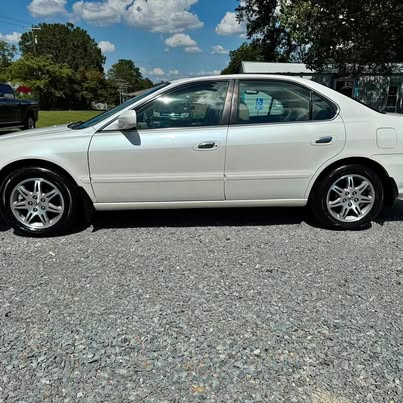
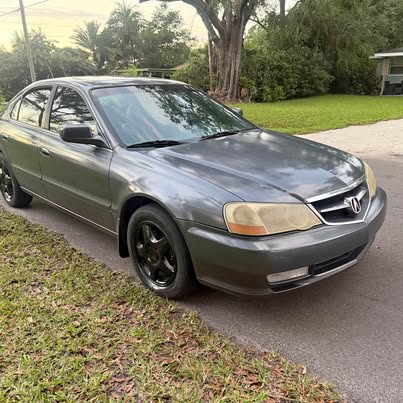
The models
Every TL covered here is a four-door, five-seat, front-wheel-drive sedan. There was no coupe, no wagon and no convertible. The differences that matter are generation, engine and — on the cars where it was offered — whether the badge says Type S. Trim levels in the European sense barely exist: Acura sold the TL essentially fully equipped, with the navigation system the one big-ticket option on most years, so two cars of the same year and engine are usually separated by condition and history rather than specification.
| Model | Years | Engine | Output | Built | Character |
|---|---|---|---|---|---|
| 2.5 TL | 1996–1998 | 2.5 five-cylinder (G25A4), injection | 176 hp | Not published by trim | The entry car; smooth, odd, slow-selling |
| 3.2 TL (first generation) | 1996–1998 | 3.2 V6 (C32A), injection | 200 hp | Not published by trim | The real first TL; quiet, soft, now rare |
| 3.2 TL (second generation) | 1999–2003 | 3.2 V6 (J32A1), VTEC injection | 225 hp | Not published by trim | The volume car; gearbox history is everything |
| 3.2 TL Type S | 2002–2003 | 3.2 V6 (J32A2), VTEC injection | 260 hp | Not published by trim | The quick one; same gearbox question, asked harder |
| TL (third generation) | 2004–2008 | 3.2 V6 (J32A3), VTEC injection | 270 hp, later rated 258 hp | Not published by trim | The high point; manual cars are the prize |
| TL Type S (third generation) | 2007–2008 | 3.5 V6 (J35A8), VTEC injection | 286 hp | Not published by trim | The flagship; the collector's TL |
(Outputs are US-market figures as rated when new. The third-generation base car's apparent fall from 270 to 258 horsepower for 2006 is a paperwork change, not a mechanical one: the industry adopted a stricter SAE rating procedure, the engine did not change, and a 2006 car is no slower than a 2004. Acura published sales by nameplate rather than a trustworthy production split by trim, so the Built column says so rather than inventing numbers.)
The first generation (1996–98). Two cars shared one body. The 2.5 TL used the G25A4 five-cylinder inherited from the Vigor — smooth and characterful, and never pretending to be quick. The 3.2 TL used a 200-horsepower V6 from the Legend family line and was the car Acura actually wanted to sell. Both ride softly, steer lightly and feel a decade older than the car that replaced them, because in design terms they nearly are. They are rare today in any condition worth buying, and bought now mostly by Honda completists — a warning about parts, and about how few good ones survive.
The second generation (1999–2003). One engine, one body, two gearboxes and, from 2002, two states of tune. The standard car makes 225 horsepower and does everything quietly and competently. The Type S, sold for 2002 and 2003 only, makes 260 horsepower with a higher compression ratio, a two-stage intake manifold, a freer exhaust and firmer suspension, and it is a genuinely quick car even now. The 1999 car has a four-speed automatic. Every car from 2000 onwards has the five-speed automatic with a manual override, and that gearbox — not the engine, not the body, not the electrics — is what decides whether a second-generation TL is a bargain or a trap. Read the problem-areas section before you fall for either version.
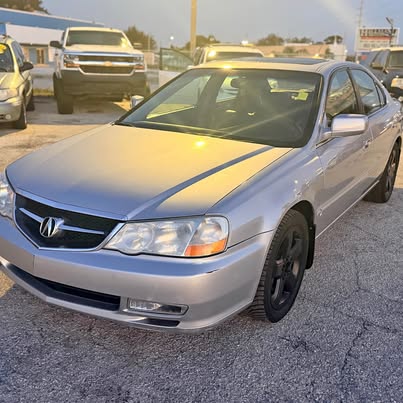
The third generation (2004–08). The base car kept the 3.2-litre V6, now making 270 horsepower as first rated, and was offered with a choice the previous generations never gave you: a five-speed automatic, or a six-speed manual with a helical limited-slip differential, Brembo front calipers and firmer suspension. The manual was dropped from the base car after 2006. The Type S arrived for 2007 with the 3.5-litre J35 engine, 286 horsepower, its own suspension tune, quad exhaust outlets, distinctive wheels and the choice of the six-speed manual or an automatic with paddle shifters. An A-Spec package — dealer-fitted suspension, body kit and wheels — was offered on third-generation cars and is a legitimate period extra, not a trim level; judge an A-Spec car by the condition of its parts, not by the badge.
Navigation and the options that matter. The one visible factory option is the navigation system, its touchscreen carrying climate and audio displays on many cars — check every function through it, but treat the navigation itself as a period piece, not a value driver. Leather, a sunroof and, from the second generation, xenon lamps were standard or near-standard; a car advertised as unusually highly specified is usually a standard TL described enthusiastically.
Engines and gearboxes
The five-cylinder and the first V6: G25A4 and C32A
The first generation's two engines share a temperament: both are smooth, both are understressed, and both are now old enough that neglect, not design, is what kills them.
The G25A4 in the 2.5 TL is a 2.5-litre inline five, mounted longitudinally in a front-wheel-drive car — an arrangement inherited from the Vigor that explains the first TL's long nose. It makes 176 horsepower, revs sweetly and has the offbeat exhaust note only a five-cylinder makes. It is a timing-belt engine, and the belt, its tensioner and the water pump it sits beside are the whole maintenance story: change them on schedule or accept that a snapped belt on an interference engine means bent valves. Parts specific to this engine are the thinnest in this guide, because it was sold in small numbers in few models.
The 3.2 TL's C32A is a 3.2-litre V6 from the family that powered the second-generation Legend, making 200 horsepower in the TL. It is a longitudinal installation again, which makes some service access better than on the later transverse cars and some worse. These engines have a known appetite for head-gasket trouble when overheated, and the cause is almost always upstream: a tired radiator, a stuck thermostat or coolant changes skipped for a decade. A first-generation car that has ever run hot needs its cooling system proven, not its gauge believed. Watch the temperature needle on the test drive, look for coolant residue around the radiator's plastic end tanks, and smell the oil filler cap for the sweet taint of coolant in the oil.
Neither first-generation engine is a reason to buy or avoid the car on its own. Both are honest Honda units from the company's most over-engineered decade. What you are buying at this age is the last twenty years of coolant, oil and timing-belt discipline, and the paperwork either shows it or it did not happen.
The J-series V6: J32 and J35
Every TL from 1999 onwards uses a version of Honda's J-series: a 60-degree V6 with a single overhead camshaft per bank, four valves per cylinder and VTEC variable valve timing and lift on the intake side. It is mounted transversely, drives the front wheels, and in every TL application it is fuel-injected, distributorless on later cars, and fundamentally one of the most durable engines of its era. J-series engines in Accords, Odysseys and Pilots routinely pass 250,000 miles. In a TL, the engine is almost never the problem. Understand its three service realities and you understand the whole mechanical case for the car.
The J32A1 (1999–2003, standard car) makes 225 horsepower: smooth to its redline, torquey enough that the car rarely feels strained, quiet when its exhaust and mounts are healthy. The J32A2 in the 2002–03 Type S makes 260 horsepower from higher compression, a two-stage intake manifold, a larger throttle body and a freer exhaust — the same character turned up, pulling noticeably harder above 4,500 rpm where the standard car is content to change up. The J32A3 (2004–08) makes 270 horsepower as originally rated, with drive-by-wire throttle and high-flow intake and exhaust; under the revised SAE procedure from 2006 the identical engine is quoted at 258 horsepower. The J35A8 in the 2007–08 Type S is a 3.5-litre development making 286 horsepower, with the strongest low- and mid-range pull of any TL here.
Timing belt: the one non-negotiable. Every J-series in a TL is an interference engine driven by a timing belt, specified for replacement at 105,000 miles or seven years, whichever comes first, with the water pump, tensioner and idlers changed at the same time because the labour is already paid. If the belt breaks, pistons meet valves and the repair stops being a service item and becomes an engine-out rebuild or a replacement engine, realistically a repair bill in the low thousands of dollars before anyone has discussed the gearbox. A car at or past the interval with no invoice for the job has that job priced into it, full stop: a timing-belt service with pump and tensioners at an independent Honda specialist is typically a repair cost of about 900 to 1,400 dollars. Ask for the invoice or the sticker under the bonnet, and treat a seller's verbal assurance as no evidence at all.
Oil, VTEC and the small stuff. VTEC engagement depends on oil pressure and cleanliness; a car run long on dirty oil can develop a lazy, uneven changeover and, eventually, sludge. These engines weep oil with age from predictable places: valve-cover gaskets, the spool valve and its filter screen, cam seals. None of it is fatal and most is cheap in parts; all of it is evidence about how the car was kept. Oil consumption on a high-mileage engine is usually valve-stem seals and tired rings in some proportion — a puff of blue smoke on a cold start that clears points to seals, smoke under sustained load points deeper.
The EGR fault that mimics worse things. Second-generation cars, particularly the earlier ones, clog the exhaust-gas recirculation passages in the intake manifold with carbon: a check-engine light with an insufficient-flow code, sometimes a light surge at cruise. Honda extended warranty coverage on the system when the cars were young; today it is a manifold-off cleaning job, a few hours of labour and gaskets, not an engine verdict. The trap is the reverse diagnosis — a seller blaming every fault on EGR. Clogging does not cause misfires under load, does not make the gearbox flare and does not explain blue smoke.
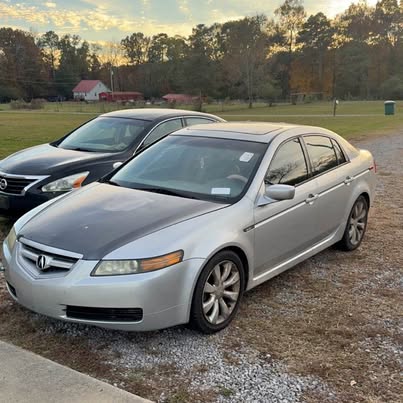
Gearboxes: the four-speed, the five-speed automatic and the manuals
The first automatics. First-generation cars and the 1999 car use four-speed automatics of conventional Honda design — not the stars of the failure story that follows, but old: judge them on fluid colour, shift quality cold and fully hot, and a history showing fluid changes rather than a flush performed last week to hide a problem. Fresh, bright fluid in a car with no history is a question, not a reassurance.
The five-speed automatic (2000–08) is the centre of this guide. From 2000 the second-generation TL received a five-speed automatic with a sequential manual override, and a version of the same basic unit served the third generation. In service, a large proportion of the 2000–03 gearboxes failed — slipping, flaring between gears, harsh engagement, loss of drive — often well before 100,000 miles. The mechanism, established over years of failures and teardowns, is a combination of inadequate lubrication and cooling for parts of the gear train and clutch packs that then overheat, shed friction material, and circulate that debris through a transmission whose filter is internal and not serviceable without dismantling the unit. Once debris is moving, the failure feeds itself: solenoids and passages foul, shifts degrade further, and heat builds again. Honda's responses at the time included a recall that fitted an oil jet to improve lubrication to the affected gear on cars judged not yet damaged, replacement of gearboxes showing heat damage, and a warranty extension on the transmission for affected model years to seven years and, after further action, to 109,000 miles. All of that protection expired long ago. Today the gearbox in front of you is either an original unit that has survived, a Honda replacement, an independent rebuild of unknown quality, or a unit in the process of failing — and telling those four apart is the core skill of buying a TL.
A good five-speed changes cleanly and consistently, cold and hot, with no flare — no rise in engine revs between ratios as if the clutch were slipping, because in effect it is — no delayed engagement of drive or reverse, no shudder under light-throttle lock-up at cruising speed and no whine that rises with road speed. Third-generation automatics are better than the worst second-generation units but are not immune, and the 2007–08 Type S automatic is a distinct, stronger application with paddle shifters; judge it by the same tests, not by its badge. A rebuild or quality replacement unit, fitted, is realistically a repair cost of about 2,800 to 4,500 dollars at a specialist — on many of these cars, more than half the purchase price, which is why the gearbox test in the inspection section is pass-or-walk-away rather than a negotiating detail.
The six-speed manual (2004–06 base car; 2007–08 Type S) transforms the third-generation TL. It comes with a helical limited-slip differential and Brembo front brake calipers, and it removes the model's one structural weakness from the car entirely. The gearbox itself is strong; its known fault is a third-gear synchromesh complaint — a grind, a notch or a pop-out on the change into third — which Honda addressed in a service bulletin involving updated synchromesh components. Many owners found a change to a friction-modified synchromesh-type manual gearbox fluid improved or cured a mild case, which tells you how to read a car: a slight third-gear baulk with an otherwise clean change is a known, priceable fault, while a car that pops out of third under load needs the gearbox opened and should be priced as such. Clutch life is ordinary Honda: judge it on bite point, judder and slip in a high gear at low revs under full throttle. Manual cars are a small minority of production and a large majority of what enthusiasts want, and the market knows it.
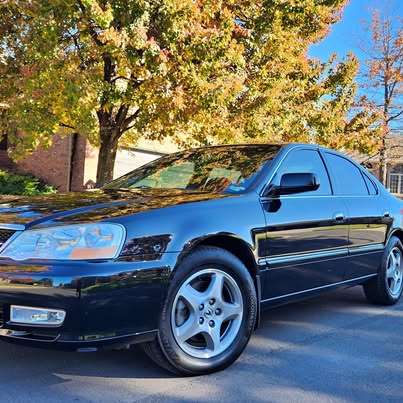
Problem areas
A TL fails in a particular order. The gearbox first, by a distance. Then the things age and heat do to rubber, leather, screens and solder. Then, well behind the rust that kills European cars of the same age, corrosion — present in salt country, rarely structural on a cared-for car, and honest when you find it. Work through this section in that order and you will spend your inspection time where the money actually is. Almost every fault here is priceable except one: an automatic gearbox in active failure on a cheap car, which converts the purchase into a gamble whose stake is the rebuild bill.
The automatic gearbox: the failure, in full
Start with the fluid, because the fluid is the gearbox's diary. The five-speed automatic has a dipstick, which is a gift most modern cars deny you. On a car that has been driven and is fully warm, the fluid should be reddish and translucent and should smell like transmission fluid — sharp, but not burnt. Brown, dark or black fluid, fluid that smells scorched, or fluid with visible particles is a gearbox that has been overheating and shedding material. That does not automatically condemn the car — neglected fluid on a still-clean-shifting unit can be changed in stages and watched — but it moves the burden of proof entirely onto the road test.
The road test must cover the gearbox in four states, because this unit characteristically behaves in one and fails in another. Cold, from a genuine overnight cold start if you can arrange it: engagement of drive and reverse should be prompt and without a clunk or a long, revving pause. Warming, at town speeds: watch the changes between second and third and third and fourth under light and moderate throttle for flare, the tell-tale rise in revs as one clutch pack lets go before the next has taken up. Fully hot, after at least twenty minutes including some harder driving: repeat those changes, because heat is when marginal clutch packs and tired solenoids declare themselves. And at a steady cruise, around 45 to 55 miles per hour on a light throttle: feel for the torque-converter lock-up shudder, a vibration like running over a rumble strip that comes and goes with tiny throttle movements. A shudder alone can be fluid-related and is sometimes cured by a fluid change; flare, slip, delayed engagement or a gearbox that hunts or drops out of gear are not fluid faults. They are the failure, in progress.
Listen as well as feel. A whine that follows road speed can be a bearing or pump complaint inside the unit; a single harsh change repeated in the same place in the pattern can be a solenoid or pressure problem — cheaper than a rebuild, but diagnosed by a specialist with pressure gauges and a scan tool, not by optimism. Any check-engine or flashing gear-indicator light on an automatic car is a stored transmission fault until a code read proves otherwise, and a code read is cheap, quick and non-negotiable on a car you are serious about.
Now the history, which matters as much as the test. Honda replaced very large numbers of these gearboxes under warranty and goodwill, and a replacement or specialist rebuild invoice — with a date, a mileage and a parts list — transforms the risk: you are no longer buying the original suspect unit. But date it: a replacement fitted at 80,000 miles to a car now showing 190,000 is itself a high-mileage gearbox and must be tested as one. Ask also whether the car carries the external oil-jet modification fitted under recall to some cars, visible as an added line at the filler area — but do not treat the jet as immunity: it addressed lubrication to one gear on undamaged gearboxes, and plenty of modified cars later failed for the clutch-pack reasons above.
Third-generation automatics deserve the same discipline with a calmer prior. The failure rate that made the second generation notorious did not repeat at the same scale, and a well-kept 2004–08 automatic with fluid changes in its history is a reasonable purchase. But reasonable is not exempt: the unit is related, the cars are now old, and a neglected third-generation gearbox fails expensively in exactly the same currency. The Type S automatic of 2007–08, with its paddle shifters, invites harder use; test it hot and test it in manual mode as well as drive.
Price the risk honestly. If the gearbox passes every test and carries a documented replacement or rebuild, buy the car on its other merits. If it passes but has no history at all, price in a contingency and change the fluid promptly, in stages, with the correct Honda-specification fluid — these gearboxes are sensitive to fluid specification, and a universal fluid of the wrong friction character can make a healthy unit shift badly. If it fails any test, walk away or price the car as needing a gearbox, at a repair cost of roughly 2,800 to 4,500 dollars fitted, and mean it: there is no cheap version of this repair, no additive that reverses clutch wear, and no seller's explanation that changes the physics.
Rust and the body: better than most, not immune
The TL's rust story is a pleasant surprise set against European contemporaries, and it should still be checked like a rust story. Honda's corrosion protection was good, the panels were well drained, and a TL that has lived in the South or West is commonly structurally sound at an age when a German rival is a welding project. The cars in our current listings cluster heavily in the Southeast and Midwest, which is exactly the split to keep in mind: a Florida or Alabama car and an Ohio car of the same year are different propositions underneath.
Work in this order. Rear wheel arches and quarter panels first: salt and trapped mud attack the arch lip and the seam where the quarter meets the sill, and bubbling at the arch edge means the seam is going from inside. Sill ends and jacking points: prod them, look for metal crushed or softened by years of careless jacking, and treat fresh black underseal localised to the sills as a question. Subframes, front especially: it carries the engine and suspension and corrodes in salt states to a degree the shell does not; surface rust is normal, but flaking or holed subframe metal is a replacement conversation — a big used part plus a full day's labour, not a patch. Door bottoms and lid seams: run a fingertip along the lower edges for bubbling, and check the drain holes are clear. Boot floor and spare-wheel well: lift the spare; water enters past a tired boot seal or lamp gasket and sits where you cannot see it. Sunroof drains: blocked drains wet the headlining corners and footwells, and wet carpets on a TL are a drainage fault to trace, not a character trait.
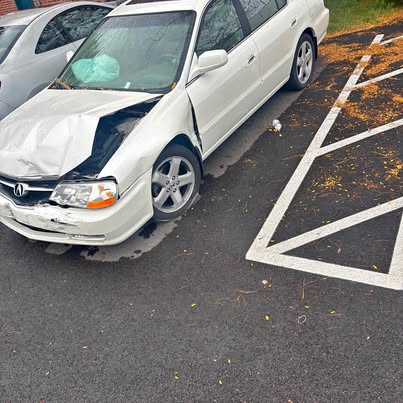
Paint itself is a known soft spot rather than a rust precursor: Honda clear coat of this era fails on horizontal surfaces — bonnet, roof, boot lid — peeling and clouding after years of sun, and dark colours show it first. Clear-coat failure is cosmetic and honest, but correcting it means paint, and a full quality respray costs more than most of these cars are worth; a car with failed clear coat should be priced as a car you will either live with or wrap, not as a cheap fix. Check panel alignment and paint match for accident history as on any car, and remember that a TL's structure is a monocoque: a hard front corner impact disturbs the subframe mounting points, so mismatched front panel gaps plus a replaced radiator support deserve a proper look underneath.
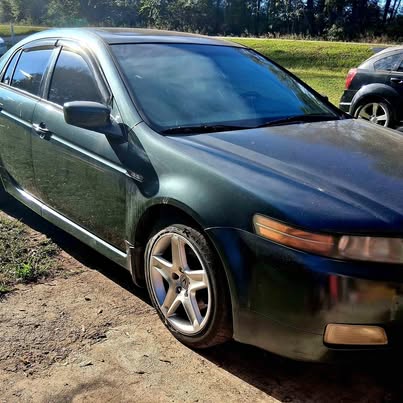
Suspension, steering, brakes and mounts
The TL rides on double-wishbone front suspension in the classic Honda manner on the first two generations, with the third generation refining the same basic idea, and a multi-link rear. It is a durable layout whose wear items are predictable and mostly inexpensive — which makes them excellent evidence, because a car whose cheap wear items are all worn out is a car nobody maintained.
Front compliance bushings and ball joints. The front lower-arm bushings, particularly the compliance bushings that control fore-and-aft wheel movement, perish and split with age and heat. The symptoms are a clunk or knock under braking or over sharp bumps, a vague wander under braking, and uneven front tyre wear. Press on the front wheel fore and aft, look at the bushings with a torch for cracking and separation, and price a set of arms or bushings as a routine repair cost — parts are modest, labour is the bill, and an alignment afterwards is mandatory, so budget the job as a few hundred dollars a side done properly rather than as a single cheap part.
Engine and gearbox mounts. The J-series sits on mounts that include a vacuum-controlled front mount on many applications, and they fail with age, letting the engine rock. The tell-tales are a thump on taking up drive, vibration at idle in drive that smooths in neutral, and visible cracking or collapse at the mount. Mounts are a repair cost in the low hundreds of dollars per mount fitted — a reason to use a Honda specialist rather than pay dealer labour on a full set.
Power steering. These systems weep from the pump, hoses and rack, and the pump whines when its inlet O-ring hardens and lets it draw air — a famous, tiny, inexpensive part behind a disproportionate noise. Foamy fluid in the reservoir plus a whine that changes with steering input is that O-ring until proven otherwise. A pump run dry for months is a pump and possibly a rack; and red fluid in the reservoir is wrong — Honda power steering takes its own specified fluid, not automatic transmission fluid.
Brakes. Standard cars use conventional sliding-caliper brakes that ask only for honest maintenance: discs, pads, fluid and unstuck calipers. Manual third-generation cars and the Type S use Brembo front calipers — better brakes with pricier pads and discs, and a seized Brembo is a specialist repair cost rather than a budget-parts fix. A car that has sat wears rust bands on its discs and can seize a rear caliper; the handbrake should hold firmly on a slope. Dark, old brake fluid is a maintenance confession: Honda specified regular changes and a neglected car shows it here first.
Wheels and tyres. Check the inner rims of the larger Type S and A-Spec alloys for cracks, and that all four tyres match in size and approximate age; mismatched budget tyres on a 260- or 286-horsepower front-wheel-drive car are a statement about the previous owner's priorities. Torque steer is a fact of the layout — but a car that also pulls under braking has an alignment, bushing or tyre problem, not character.
Interior, electrics and the third-generation dashboard
The dashboard crack. Third-generation cars have a signature interior fault: the dashboard top cracks, characteristically around the passenger airbag outline and near the centre speaker and defroster vents, as the material ages and heat-cycles — from hairlines to a dashboard that looks like dried mud. It dominates the cabin's appearance and is expensive to correct properly: a replacement dashboard is a dashboard-out job, and most owners choose a fitted cover, a used dashboard or acceptance. Inspect in bright light at an angle; cracks hide in flat light. A crack-free original dashboard on a 2004–08 car is now a genuine selling point.
Leather and seat wear. Honda leather of this period is coated, durable and prone to cracking and dye wear on the driver's outer bolster, exactly where a driver slides in; perforated sections on later cars tear at the perforations as the leather dries. Split seams and a worn-through bolster are retrimming costs — a repair cost of a few hundred dollars for a local panel repair, more for a full seat — while a clean, uncracked interior on a high-mileage car is some of the best evidence of careful ownership you will find.
The HandsFreeLink battery drain. Third-generation cars with Bluetooth phone integration have a classic parasitic drain: the HandsFreeLink module fails in a state where it never sleeps, and the car flattens its battery over a weekend. The tell is a car that starts happily all week and is dead after two or three days standing, with a good battery and a charging system that tests fine. Owners commonly unplug the module, behind the overhead console, and lose Bluetooth; a replacement module is the proper repair cost, in the low hundreds of dollars for the part. A seller's story about a mystery drain on a 2004–08 car is this module until a current-draw test proves otherwise — a negotiating point, not a walk-away.
Screens, navigation and switchgear. Navigation touchscreens dim, delaminate and lose touch accuracy; the same screen often serves the climate and audio displays, so test every function through it, not just the map. CD changers jam, and the audio systems are good enough that a dead channel or blown speaker is worth pricing. Xenon headlamps fail at the bulb, the ballast or the igniter, in rising order of cost; a pink or flickering lamp is a bulb near the end, and swapping a dead lamp's bulb side to side isolates ballast and igniter. Test every window, the sunroof in both directions, the seat heaters, the mirrors and the climate control on full hot and full cold — a car whose air conditioning does not work in a Florida listing in summer has told you something about its maintenance budget.
Keys and the small print. These cars use transponder keys: a second key, cut and programmed, is a real cost in the low hundreds of dollars and belongs in the negotiation on a one-key car. Check the remote locking on every door — a dead actuator is a cheap part inside an expensive door — and work the small things generally, because a car where everything small works was owned by someone who fixed things.
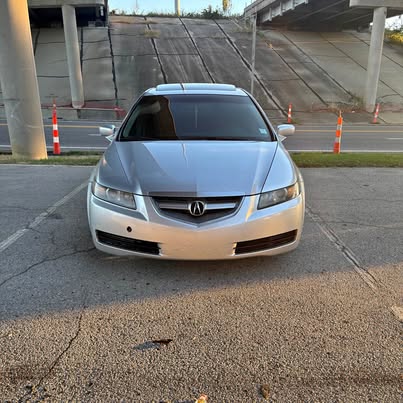
How to inspect one
Allow an hour, insist on a cold start, and bring a torch, a tyre-pressure gauge and a phone to photograph the paperwork. The order below is deliberate: paperwork and gearbox first, because on a TL those two decide whether the rest of the inspection is worth your time at all.
- Start with the paperwork. Match the VIN on the title to the plate at the base of the windscreen and the sticker on the driver's door jamb. Then read the history file in a specific order: timing belt first — an invoice with date and mileage inside 105,000 miles and seven years, or the car needs the job — then gearbox evidence: a Honda replacement invoice, a specialist rebuild invoice, or fluid-change records. Then everything else. A thick file moves the car up a class; a verbal history moves it nowhere.
- Cold start. The engine should be genuinely cold. A J-series starts at once, idles evenly and is quiet apart from injector tick. A puff of blue smoke that clears suggests valve-stem seals; smoke that persists, a top-end rattle that stays, or a check-engine light that does not go out are all findings to price, not to wave through. Watch the temperature gauge's whole journey on the drive that follows — it should rise to the middle and stay there.
- The gearbox fluid. With the engine warm, pull the automatic's dipstick. Reddish and translucent is right; dark brown, black or burnt-smelling fluid is the diary of an overheating gearbox, as the problem-areas section explains. Note the level, wipe and re-check, and photograph the dipstick against a white tissue — the colour in the photograph settles arguments later.
- The gearbox road test, cold. Drive from cold. Engagement of drive and reverse must be prompt, with no long pause and no clunk. At town speeds, make the second-to-third and third-to-fourth changes repeatedly under light and moderate throttle and watch the rev counter for flare — any rise in revs between ratios is slip, and slip is the failure beginning.
- The gearbox road test, hot. After at least twenty minutes, including harder acceleration, repeat step 4 exactly. Then hold a steady 45 to 55 miles per hour on a light throttle and feel for torque-converter lock-up shudder. A gearbox that is clean cold and flares hot has failed this inspection, whatever the seller says about it being fine this morning. On a manual car, use this step for the third-gear change — up and down, loaded and unloaded — and for clutch bite, judder and slip.
- Engine health at operating temperature. Let it idle hot. It should be smooth, with no misfire, no hunting and no smell of coolant. Check the oil filler cap for mayonnaise-like emulsion, the coolant reservoir for oil contamination and a sensible level, and the engine bay for the weeps described in the engines section — valve covers, spool valve, cam seals. Rev it gently and listen for the VTEC changeover's clean change of note at higher revs on a safe road later in the drive.
- Underneath, or as close as you can get. Torch along the rear arch lips, sill ends and jacking points, the boot floor from below and, above all, the front subframe. Surface rust is normal in salt states; flaking, holed subframe metal is a price-changing finding. Look for oil at the steering rack and a wet gearbox casing. If the car passes so far, a paid lift inspection before money changes hands confirms both in ten minutes.
- Suspension, steering and mounts. Drive over broken surfaces at low speed and listen for front-end knocks under braking and over bumps — compliance bushings until proven otherwise. At idle in drive, foot on the brake, feel for vibration that disappears in neutral: engine mounts. Work the steering lock to lock at a crawl and listen for power-steering whine; check the reservoir for foamy fluid. Brake firmly from speed: the car must stop straight, without judder, and the handbrake must hold on a slope.
- Body and paint in flat light. Walk the car slowly. Check clear coat on the bonnet, roof and boot lid for clouding and peeling, arch edges for bubbling, door bottoms with a fingertip, and panel gaps for accident history. Lift the boot carpet and the spare wheel: staining or rust in the well is a leaking seal or lamp gasket and a marker for how the car has lived. Check the sunroof drains' evidence — dry headlining corners, dry footwell carpets.
- The cabin, forensically. On a third-generation car, rake your torch across the dashboard top at a low angle and look for cracks around the passenger airbag outline. Sit in the driver's seat and judge the bolster. Then work everything: navigation screen and its climate and audio pages, every window, the sunroof both ways, seat heaters, mirrors, locks, the CD changer and every speaker. Everything that works is evidence of care; everything that does not is a priced line in the negotiation.
- The battery question. Ask directly how long the car can stand before the battery goes flat, and look at the battery's date. On a 2004–08 car, a history of mystery drains points at the HandsFreeLink module described in the problem areas — a priceable fault, but only if you price it. Check the charging light behaves, and that the car starts crisply after the long test drive and a heat soak, not just from cold.
- Keys, codes and the final count. Count the keys and remotes; one key is a cost. Read any stored fault codes with a basic scanner — on an automatic car this turns a flashing suspicion into a stored transmission code. Then tot up what you have found: timing belt due, gearbox evidence absent, dashboard cracked, bushings tired. A TL rewards arithmetic. Buy the car the numbers support, not the car the colour flatters.
Values
The market block beneath this guide carries the current numbers — what is listed now, at what asking prices, and what recorded sales show. This section teaches you how to read those numbers, because on the TL the spread between the cheapest and the dearest car of the same year is not really a spread in value. It is a spread in risk, and the market prices it more honestly than it prices most cars.
Start with the condition spread, which on this model is a gearbox spread wearing a disguise. Two apparently identical 2003 cars can be separated by the entire cost of a transmission rebuild, and the cheaper car is usually the one whose price has quietly subtracted it. When you compare a listing against the recorded figures, ask which of the four gearboxes the car actually has — original and unproven, original and demonstrably healthy, documented replacement, documented rebuild — and you will find the asking prices sort themselves into sense. A documented replacement or a good rebuild is worth a real premium over an unproven original at the same mileage, and it is one of the few premiums in this market that is rational to pay in full.
Asking and achieved prices part company in the usual way, with a twist: sellers of manual and Type S cars know what they have, because their buyers are enthusiasts who search nationally, and those asks tend to be firm and close to achieved. Sellers of ordinary automatics often price against other listings rather than against sales, and there is commonly room between ask and deal — especially on a car that has sat listed while its timing-belt interval expires. Time on sale is information: a well-priced manual or Type S does not sit, and an automatic that sits is usually sitting on a question a viewer has already asked.
The variant premiums are clear and they are earned. The six-speed manual third-generation car carries a premium because it deletes the model's defining risk and adds a limited-slip differential and Brembo brakes — it is not a trim premium, it is a different ownership proposition. The 2007–08 Type S carries the flagship premium, strongest with the manual gearbox, because it is the fastest, rarest and best-equipped TL of the three generations. The 2002–03 Type S carries a smaller premium that should always be discounted by its gearbox evidence: the performance is real, but so is the duty cycle it imposed on the same five-speed automatic. First-generation cars trade in a small, thin market of Honda enthusiasts where originality and condition move prices more than mileage does, and where a single exceptional car can distort any small sample — read individual sales, not averages, at that end of the guide.
The project-versus-driver gap is unusually mechanical here. A project TL is rarely a rust project; it is a car needing a timing belt, a gearbox, a dashboard, bushings and mounts in some combination, and each of those is a known price rather than an open-ended restoration. That makes project cars more honestly assessable than most: add the invoices the car needs, at specialist prices, to the asking price, and compare the total with a sorted car. If the total is close, buy the sorted car and let someone else enjoy the workshop time. If the gearbox is among the needs, remember that its cost alone can exceed the entire value of a finished ordinary automatic — which is why failed-gearbox cars change hands so cheaply, and why they are only bargains for buyers who genuinely intend to fit the gearbox and keep the car.
Finally, mileage is mispriced in both directions here. A high-mileage car with a documented timing belt, a documented gearbox and a clean dashboard beats a low-mileage car with no paperwork that has sat for years — sitting flattens batteries through tired modules, seizes brake calipers and ages the timing belt by its calendar clause while the odometer stands still. Pay for evidence. On a TL, evidence is the whole car.
Parts and ownership
The TL is one of the easiest luxury cars of its era to keep, for a structural reason: underneath the badge it is a Honda, built in Ohio in large numbers alongside the Accord family, and the mechanical ecosystem of Honda — dealers, independent specialists, pattern parts, breakers — is entirely at its service. The trap is to assume that means everything is cheap. The service items are. The model-specific items are not, and knowing which list a part sits on is the ownership skill.
Easy and inexpensive: engine service items — filters, plugs, ancillary belts, fluids of the correct Honda specifications — brake discs and pads for the standard calipers, suspension arms and bushings, wheel bearings, alternators, starter motors, air-conditioning service parts, standard exhaust sections, and most sensors and switches. The J-series was fitted across the Honda and Acura ranges in enormous numbers, so ancillaries are available new, pattern and used at every price point, and any competent Honda specialist already knows the engine. Order today, fit this weekend describes most routine work fairly.
Harder and dearer: the automatic gearbox, which is a rebuild-or-replace decision rather than a parts purchase, at the repair cost set out earlier; Brembo front brake components for the manual and Type S cars, which carry Brembo prices; the third-generation dashboard, where a good used uncracked example is hunted and a new one is a major job to fit; navigation screens and the integrated audio units, which are repair-or-used items rather than catalogue parts; xenon ballasts and igniters, dealer-priced new and sensibly bought tested and used; Type S-specific suspension and exhaust parts; and first-generation five-cylinder engine parts, which are simply thin on the ground anywhere. None of this is unobtainable. All of it rewards a buyer who checks availability before purchase rather than after.
Running costs. A sorted TL is a realistic daily car: fuel consumption in the low-to-mid twenties miles per gallon in mixed use, mainstream insurance, and servicing any good independent can handle. The budget lines that catch new owners are the catch-up and the calendar. The catch-up — timing belt if due, gearbox fluid, brake fluid, matched tyres, the bushings and mounts the previous owner stopped doing — honestly runs to a four-figure sum in the first year on a neglected car, and belongs in your purchase arithmetic as a repair cost you plan. The calendar catches the low-mileage car: the timing belt ages out at seven years regardless of mileage, tyres age out, brake fluid absorbs water standing still, and a car that has done 2,000 miles in five years needs recommissioning money, not congratulation.
Ownership practice. Three habits keep a TL cheap to own. Change the automatic gearbox fluid on a schedule with the correct specified fluid, in partial changes, and never let a shop talk you into a universal fluid or an aggressive flush on an old unit. Keep the timing-belt paperwork with the car and replace on time or miles, whichever the car reaches first. And fix water early: clear the sunroof drains, reseal a leaking boot or lamp gasket, and dry a wet carpet the week you find it, because on this car water is a nuisance when caught and a floor pan when ignored. Owners' clubs and forums for the TL are large, technically literate and unusually honest about the gearbox — a car's presence in that community, with a documented history, is a good sign in itself.
Which one to buy
- The all-rounder: third-generation TL, 2004–06, automatic with a full history. The best cabin, the best styling, the calmest gearbox risk of any automatic TL and equipment that still feels modern. Buy the history file, not the mileage.
- The driver's car: third-generation six-speed manual. Limited-slip differential, Brembo brakes, no automatic to fear. The third-gear synchromesh check is your one gearbox test. These are the TLs enthusiasts keep, and the market prices them accordingly.
- The flagship: 2007–08 TL Type S. The 3.5-litre engine and the full specification, manual if you can find one, automatic if its history is documented and it passes the hot test. The connoisseur's TL and the one most likely to be collectible in time.
- The value buy: second-generation TL, 2002–03, with a documented gearbox replacement. The facelift car, the better interior, and — once the gearbox question is answered by an invoice — 225 honest horsepower for very little money. Without the invoice, it is not the value buy; it is the gamble.
- The enthusiast's risk: 2002–03 Type S. Genuinely quick and genuinely appealing, bought with open eyes: full premium only with gearbox evidence, steep discount without it, and the hot test passed either way.
- The completist's car: first-generation 3.2 TL. Rare, soft, charming and supported by the thinnest parts supply in this guide. Buy the best one you can find, because you will not be choosing between several.
And the rule that overrides all of the above: buy the gearbox's history and the timing belt's invoice, in the specification you can live with. Engines, bushings, dashboards and brakes on a TL are all fixable at prices you can plan for. An unproven automatic and an undocumented timing belt are the two gambles that turn the cheapest luxury Honda ever made into an expensive one — and both of them can be settled, before money changes hands, by a sheet of paper and a twenty-minute drive.
Listed now
On Classic Listings today: 23 cars are listed here; 3 for sale and 7 marked sold; average asking price $3,100; asking range $1,500 to $4,000; sold cars average $8,957.
See the 23 TL cars currently listed.
The market — recorded sales
Recorded-sale figures: 7 recorded sales · median $10,100 · range $3,200 to $15,000 (Nov 2024 – Nov 2026)
Based on 7 recorded sales — too few for a benchmark value.
| Date | Car | Sale price | Source |
|---|---|---|---|
| Nov 12, 2026 | 2003 Acura Acura TL 3.2 Sedan 4D | $3,200 | |
| Nov 10, 2026 | 2005 TL | $5,650 | Cars & Bids |
| Oct 26, 2026 | 2003 TL | $5,200 | Cars & Bids |
| Sep 3, 2026 | 2005 TL | $10,100 | Cars & Bids |
| Jul 20, 2026 | 2004 TL | $10,800 | Cars & Bids |
| Jul 7, 2026 | 2005 TL | $12,750 | Cars & Bids |
| Apr 9, 2026 | 2005 TL | $15,000 | Cars & Bids |
Dates are the sale date where the source states one; otherwise the date the sale was recorded here.
For sale now
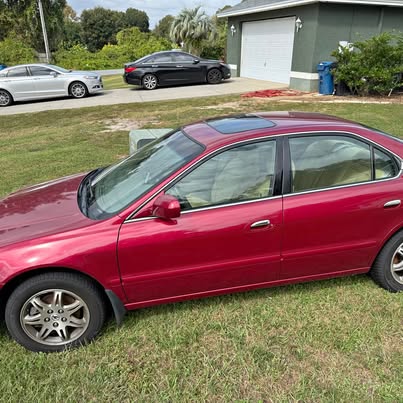 $4,000
Expand
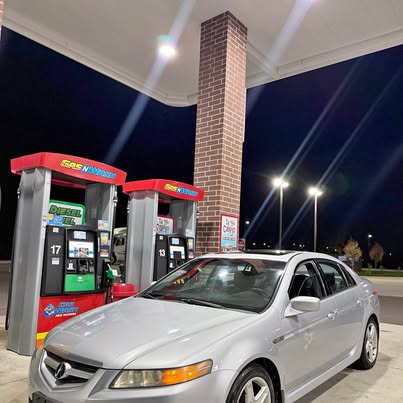 $3,800
Expand
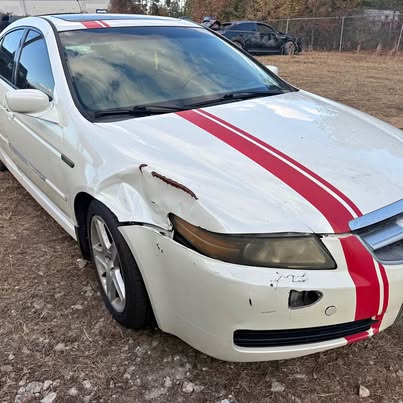 $1,500