
Acura TSX buyer's guide
Acura TSX (2004–2008) — TSX: what's listed, and what they sell for.
Years: 2004–2008 · Models: TSX
Overview and history
The Acura TSX is the car that proved a smaller, sharper Honda could wear a luxury badge in America without apologising for itself — a front-wheel-drive sedan built not from the big American Accord, but from the narrower, tauter Accord sold in Europe and Japan, fitted with a high-revving 2.4-litre engine, a proper six-speed manual gearbox for those who wanted it, and a cabin trimmed to a standard the US Accord never attempted. It sold from the 2004 to the 2014 model years in two generations, and it remains, two decades on, one of the most honest used buys in its class: a car whose engines are genuinely tough, whose faults are known almost to the last relay, and whose prices have settled at a level where condition, not model year, should decide everything.
The TSX arrived for 2004 because Acura had a gap. The Integra sedan was gone, the TL had grown into a V6 car, and younger buyers who wanted a European-style sports sedan — a BMW 3 Series in size and intent, if not in layout — had nowhere to go in an Acura showroom. Honda's answer was already sitting in its own European range. The Accord sold in Europe and Japan was a different, smaller car from the American Accord: narrower, stiffer, with double-wishbone front suspension and a chassis tuned for roads where corners matter. Acura federalised that car, gave it the K24 in its strongest factory tune, loaded it with standard equipment, and sold it as the TSX. The first generation's chassis code, CL9, is worth learning now: it is stamped on the car, and it separates a real TSX from the American Accord it is so often confused with.
That first generation ran from 2004 to 2008, and it is the car this guide — and our current listings — are mostly about. Of the 19 TSXs we currently track, every one is a 2004 or 2005 car, 17 of them automatic and just 2 manual, which tells you two things at once: the early first-generation cars are where the affordable market now lives, and the manual cars everyone wants are already the minority they always were. A mild facelift for 2006 brought a small power increase, revised styling and equipment upgrades, but the car underneath did not change in character. Period reviewers put it against the BMW 325i and the Audi A4 and praised exactly the things that still matter in a used one: steering with real feel, a slick gear change, an engine that loves the top of its rev range, and build quality that has aged far better than most of its rivals.
The second generation, chassis code CU2, arrived for 2009 and ran to 2014. It is a bigger car in every dimension — longer, wider, heavier — styled more aggressively, quieter and more luxurious, and powered by a developed version of the same 2.4-litre four. It answered the first car's main criticisms: more rear legroom, more refinement, more presence. What it gave back was some of the original's lightness of touch. For 2010 Acura added a 3.5-litre V6 version, automatic only — a fast, smooth, torque-heavy TSX that is a genuinely different ownership proposition, covered as its own variant below. And for 2011 came the Sport Wagon, a five-door estate version, four-cylinder and automatic only, sold until production ended in 2014. The wagon is the rarest TSX of all, and the one whose values behave least like the sedans'.
When production ended after 2014, Acura merged the TSX and TL lines into the TLX and retired the nameplate. Nothing that replaced it is quite the same proposition: a European Honda chassis, a naturally aspirated engine that makes its power with revs rather than boost, and — in the manual cars — one of the best front-wheel-drive gear changes ever sold in America.
Today these are old cars, and you should buy one as an old car, not as a cheap new one. The newest TSX is more than a decade old; the cars in our listings are around twenty. At that age the questions are not about specification — every TSX was well equipped — but about air conditioning that still blows cold, a power-steering rack that does not leak, an automatic gearbox whose fluid tells an honest story, and an engine that has never been run low on oil. The good news is that a TSX answers those questions more clearly than most cars do: almost everything that goes wrong with one is documented, diagnosable on a driveway with the tests in this guide, and priceable before you buy.
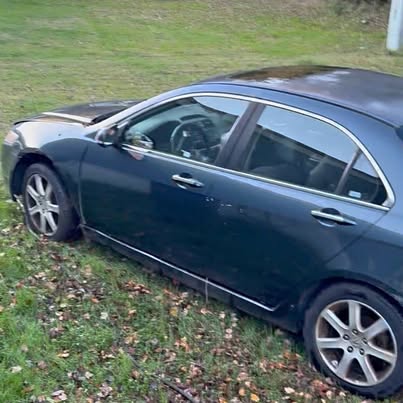
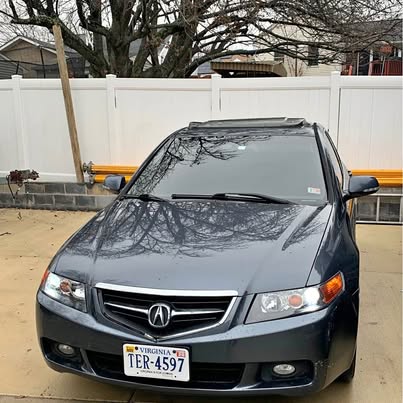
The models
Every TSX is a front-wheel-drive, five-seat car derived from the European and Japanese Accord. There was no coupe and no convertible. The range divides into two sedan generations and one wagon, two four-cylinder engines and one V6, and a short list of variants whose badges mean less than their condition. Acura sold the TSX essentially fully equipped — leather, a sunroof, climate control and, on most cars, heated seats were standard rather than options — so the real differences between two cars of the same year are almost always gearbox, mileage and history, not specification.
| Model | Years | Engine | Output | Built | Character |
|---|---|---|---|---|---|
| TSX (first generation, CL9) | 2004–2005 | 2.4 four (K24A2), i-VTEC injection | 200 hp | Not published by trim | The original; the core of today's cheap market |
| TSX (first generation, facelift) | 2006–2008 | 2.4 four (K24A2), i-VTEC injection | 205 hp | Not published by trim | Small power gain, equipment upgrades, same character |
| TSX (second generation, CU2) | 2009–2014 | 2.4 four (K24Z3), i-VTEC injection | 201 hp | Not published by trim | Bigger, quieter, more refined; a little less sharp |
| TSX V6 | 2010–2014 | 3.5 V6 (J35Z6), i-VTEC injection | 280 hp | Not published by trim | Automatic only; effortless pace, different running costs |
| TSX Sport Wagon | 2011–2014 | 2.4 four (K24Z3), i-VTEC injection | 201 hp | Not published by trim | The estate; rarest TSX, automatic only |
| TSX Special Edition | 2012–2014 | 2.4 four (K24Z3), i-VTEC injection | 201 hp | Not published by trim | Appearance trim on the second-generation sedan |
(Outputs are US-market figures as rated when new. Acura published sales by nameplate rather than a trustworthy production split by variant, so the Built column says so rather than inventing numbers. The first generation's rise from 200 to 205 horsepower for 2006 came from intake, throttle-body and exhaust revisions, not a new engine; the second generation's 201 horsepower is quoted under the later, stricter SAE rating procedure, and a CU2 is not slower than the badge arithmetic suggests.)
The first generation (2004–08, CL9). This is the purist's TSX and, in 2004–05 form, the whole of our current listings pool — all 19 cars. The recipe never varied: the 2.4-litre K24A2, a choice of six-speed manual or five-speed automatic, and a chassis that rewards being driven properly. The 2006 facelift brought the 205-horsepower tune, fog lamps, styling tweaks and an upgraded audio system. None of that changes the buying logic: an early car with a full history beats a later car without one, every time. Navigation was the one major factory option; cars with it carry a touchscreen that also runs the climate and audio displays, which makes testing that screen part of testing the car.
The second generation (2009–14, CU2). A larger, heavier and more luxurious car, on a developed version of the same architecture. The K24Z3 is a development of the original K24 and keeps its character: smooth, willing and happiest above 4,000 rpm. Electric power steering replaced the first car's hydraulic rack, and a Technology Package added navigation, an upgraded ELS audio system and a rear-view camera. Read the second-generation car as the more comfortable and modern used buy, and the first as the better driver's car; both statements are true, and which matters is a decision about you, not about the cars.
The V6 (2010–14). The 3.5-litre J35Z6 gave the second-generation car 280 horsepower, a five-speed automatic with paddle shifters as the only gearbox, larger brakes and 18-inch wheels. It is quick in a way no four-cylinder TSX is, and it is also heavier over the front axle, thirstier, harder on its front tyres and the only TSX whose engine is driven by a timing belt rather than a chain — a service fact with a four-figure consequence if skipped, covered in the engines section. Buy it knowingly, as a compact luxury express, and it is a fine car.
The Sport Wagon (2011–14). The same second-generation running gear under a genuinely handsome estate body, with the four-cylinder engine and the five-speed automatic only — Acura never offered the wagon with the manual gearbox or the V6, a fact to settle before you start hunting for one that does not exist. Load space, a power tailgate on most cars and real rarity are its cards, and because so few were sold, wagon prices do not follow the sedans' logic.
The Special Edition (2012–14). A trim package on the four-cylinder sedan — suede-effect seat inserts, red stitching and lighting accents, aluminium pedals and darker wheel finishes. It changes nothing mechanical: judge one exactly as you would the standard car.
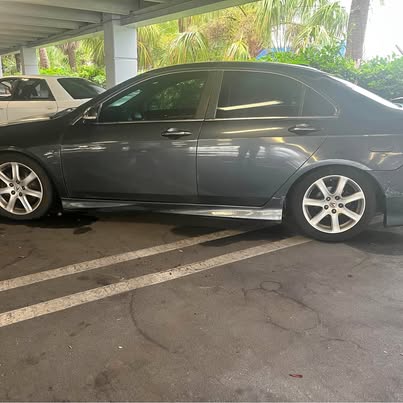
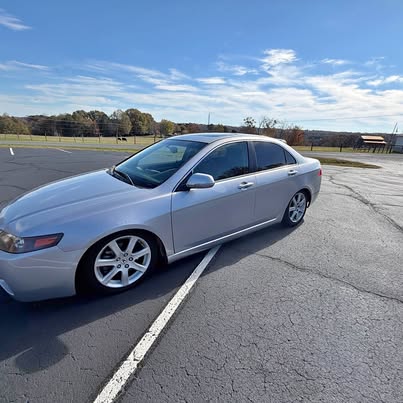
Engines and gearboxes
The first K24: K24A2 (2004–08)
The K24A2 is the heart of the first-generation TSX and the strongest version of Honda's 2.4-litre K-series four ever sold in a mainstream car. It is an all-aluminium, double-overhead-camshaft engine with a timing chain rather than a belt, four valves per cylinder and i-VTEC — variable valve timing on both camshafts, with variable lift and duration on the intake side. In 2004–05 form it makes 200 horsepower at 6,800 rpm and 166 lb-ft of torque; the 2006 revisions to the intake tract, throttle body and exhaust lifted that to 205 horsepower, with torque quoted slightly lower under the revised rating procedure. Neither figure tells the real story, which is the delivery: this engine is deliberately soft below about 3,000 rpm, wakes up as the high-lift cam profile engages around 6,000 rpm, and pulls cleanly to a redline beyond 7,000. Driven gently it feels ordinary. Driven as it was designed to be driven, it is one of the great four-cylinder engines.
That character dictates how you judge one. A K24A2 should start instantly, idle evenly and quietly, and pull without hesitation or flat spots through the whole rev range — test the top of it on the test drive, because faults this engine hides at 3,000 rpm announce themselves at 6,500. Oil pressure and cleanliness are its lifeblood, for two mechanical reasons. First, the VTEC and VTC (variable timing control) systems are operated by oil pressure through solenoid valves and fine filter screens; dirty or low oil shows up first as lazy or uneven cam control, a check-engine light with cam-timing codes, and in time as genuine wear. Second, the timing chain's tensioner is hydraulic and fed by the same oil: an engine run low or run long between changes wears its chain and guides, and the classic symptom is a brief rattle from the timing cover for a second or two on a cold start, as the tensioner waits for pressure. A rattle that lasts a second on a high-mileage car is a warning to budget; a rattle that continues, or a chain that can be heard at a hot idle, is a chain, tensioner and guides job — realistically a repair cost of about 900 to 1,600 dollars at an independent specialist, and a job that should be priced into the car, not discovered after it.
Oil consumption deserves its own paragraph, because it is the K24's most misread trait. These engines use some oil by design at high revs, and a quart between changes on a hard-driven car is not a verdict. What matters is the pattern: consumption that has clearly accelerated, oil low on the dipstick at the viewing with no explanation, or blue smoke under sustained load. The usual mechanisms are hardened valve-stem seals and, on neglected engines, piston rings varnished by extended oil intervals — all made worse, and the chain wear above made likelier, by the single root cause of low oil level. The dipstick is therefore not a formality on a TSX; it is the first engine test, and it appears as step 3 of the inspection for that reason.
The rest of the K24A2's service story is short. There is no belt to snap. Spark plugs are long-life iridium items, and the drive belt, its tensioner, the alternator, starter motor and water pump are ordinary Honda parts with ordinary lives; a starter that cranks slowly and clicks on a car with a proven battery is a known, moderate-cost replacement, not a mystery.
The developed K24: K24Z3 (2009–14, and the Sport Wagon)
The second generation's K24Z3 is an evolution of the same engine: still 2.4 litres, still chain-driven, still i-VTEC, making 201 horsepower and about 170 lb-ft of torque, with the power delivered a little lower in the rev range and the whole car tuned more for quiet progress than for the last thousand revs. It is every bit as durable in principle, and it carries one fault the earlier engine largely escapes: oil consumption serious enough that Acura addressed it in service bulletins and extended coverage when the cars were younger.
The mechanism is piston-ring related — rings that lose their ability to control oil, worsened by extended oil-change intervals and the low-friction ring package fitted for economy. The progression is consistent: consumption climbs from negligible to a quart in a thousand miles or less, the owner who does not check the level runs the engine low, and low oil then attacks the timing chain, the VTC actuator and the bearings in that order. The VTC actuator itself is this engine's signature noise: a brief, harsh rattle from the top of the engine on a cold start, as the locking pin in the variable-timing gear fails to hold and the gear chatters until oil pressure builds. A second or two of it, occasionally, on a car with a full oil history is a known foible to monitor and budget for — an actuator replacement is a repair cost in the region of 600 to 1,100 dollars fitted. A car that rattles at every start, uses oil visibly and shows a low dipstick is describing one connected story, and you should believe it.
Everything said about the K24A2's oil discipline applies here twice over. On a second-generation car, ask not just whether the oil was changed but whether it was ever allowed to run low, and check the level yourself before the test drive and again after it. An engine kept full of clean oil is a 250,000-mile engine; one run dry-ish for years is a chain, actuator and rings conversation wearing a tidy body.
The V6: J35Z6 (2010–14 TSX V6)
The V6 car uses Honda's J-series 3.5-litre V6 in J35Z6 form: a single-overhead-camshaft-per-bank, 24-valve engine making 280 horsepower and 254 lb-ft of torque, mounted transversely and driving the front wheels through the five-speed automatic only. It is smooth, strong and thoroughly proven — the J-series powered Accords, Odysseys, Pilots and several Acuras in enormous numbers — and it changes the TSX's character completely, replacing the four's rev-hungry delivery with torque everywhere and a car that is quick without ever being asked.
It has one service item that dominates its ownership maths: a timing belt. Unlike the chain-driven fours, the J35 is belt-driven and is an interference engine — if the belt fails, valves meet pistons and the repair becomes a cylinder-head or engine replacement conversation in the thousands of dollars. The belt, its tensioner and idlers, and the water pump that shares the labour, are specified at 105,000 miles or seven years. A V6 at or past that point with no invoice has the job priced into the purchase, at a repair cost of roughly 900 to 1,400 dollars at an independent specialist. Look for the invoice or the under-bonnet sticker; verbal assurance is not evidence. Beyond the belt, the J35's needs are the family's usual ones: oil weeps from valve-cover gaskets and the spool valve area, mounts that tire under the torque, and an appetite for clean oil on schedule. A high-mileage V6 that smokes blue on a cold start is showing valve-stem seals, as on any engine of its age.
Gearboxes: the six-speed manual and the five-speed automatic
The six-speed manual — offered on the first-generation car throughout its run, and on the second-generation four-cylinder sedan — is one of the finest front-wheel-drive gear changes ever made: short, precise, mechanical in the best sense, paired with a light, progressive clutch. It turns a TSX into the car its chassis always wanted to be, and the market knows it: in our current pool of 19 cars, only 2 are manual. Judge it on the standard evidence. The change should be clean into every gear, hot and cold; second and third synchromesh work hardest and complain first, as a grind or a baulk on a hurried change. A mild notchiness into third that disappears with fresh, correct-specification gearbox oil is a known, priceable foible; a car that pops out of gear under load needs the gearbox opened and should be priced as such. Clutch life is ordinary Honda — test bite point, judder on take-up, and slip in a high gear at low revs under full throttle. A clutch replacement is a repair cost of roughly 900 to 1,500 dollars fitted: a known quantity, and no reason to reject an otherwise right car.
The five-speed automatic with Sequential SportShift manual override is the gearbox in the overwhelming majority of TSXs — 17 of our 19 current cars — and it needs a fairer hearing than Honda automatics of this era usually get. This is not the failure-prone V6 automatic of the contemporary TL and Accord V6; the TSX's unit works behind a four-cylinder engine making modest torque, and its record is far better. It is not, however, immortal, and at twenty years old its health is decided by fluid history. The failure pattern, when it comes, is the conventional one: fluid that is never changed oxidises and loses its friction character, clutch packs and the torque-converter lock-up clutch wear, debris circulates, and the gearbox begins to flare between gears, shudder under light-throttle lock-up at cruising speed, or engage drive and reverse with a delay and a thump. Two cheaper faults mimic the beginning of that story and are worth knowing by name: the third- and fourth-gear oil-pressure switches, external and replaceable, whose failure causes harsh or erratic shifts in those gears specifically, at a repair cost in the low hundreds of dollars; and tired fluid itself, which a staged series of drain-and-fill changes with the correct Honda-specification fluid can genuinely improve. A full rebuild or quality replacement unit, by contrast, is a repair cost of roughly 2,800 to 4,200 dollars fitted — on a first-generation car, potentially more than the purchase price, which is why the automatic test in the inspection is pass-or-negotiate-hard rather than a detail.
Fluid is the tell. These gearboxes have a dipstick: on a fully warm car the fluid should be reddish and translucent, smelling sharp but not burnt. Dark fluid on a clean-shifting car with a history of changes is a maintenance item; black, burnt-smelling fluid on a car with no history is a gearbox living on borrowed time. On second-generation cars the same unit serves behind both engines; behind the V6 it works harder, so test a V6 in manual mode as well as drive, and test every automatic hot — at least twenty minutes in — because a marginal unit that behaves cold will flare, shudder or hunt when its fluid is thin and hot.
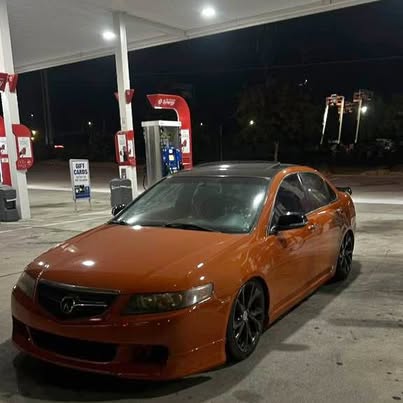
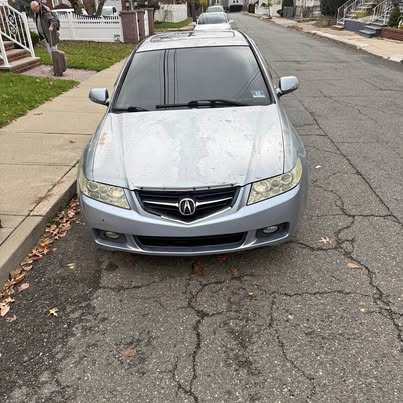
Problem areas
A TSX does not fail the way a European car of its age fails. The body rarely rots structurally outside the salt belt, the engines are among the toughest Honda built, and there is no single catastrophic fault with the TSX's name on it in the way the contemporary TL has its gearbox. Instead, a TSX fails by accumulation: an air-conditioning compressor here, a leaking steering rack there, tired suspension bushings, a gearbox whose fluid was never changed — each item individually priceable, together capable of doubling the cost of a cheap car in its first year. Almost nothing below should make you walk away from a car on its own; several together, on a car with no history, should make you walk away from the price.
Air conditioning: the compressor, its relay and its clutch
The TSX's best-known fault is its air conditioning, and on the early first-generation cars it is close to a rite of passage. The failure centres on the compressor. In the milder version, the compressor clutch relay sticks closed, the compressor runs without cycling off, pressures and temperatures climb, and the compressor is damaged by a fault that began in a relay costing very little — which is why the relay is a service item on these cars, and why a car whose air conditioning has just been repaired deserves the question of whether the relay was changed with it. In the fuller version, the compressor fails internally and sheds debris into the system; once that has happened, a new compressor alone is not a repair, because the debris remains in the condenser and lines to kill the replacement. A proper repair means compressor, condenser, receiver-drier and a system flush, at a repair cost of roughly 1,200 to 2,200 dollars fitted — the commonest four-figure bill in TSX ownership, and the reason the air conditioning test is not optional even in winter.
Test it properly. From a cold start, select the coldest setting and maximum fan: the air should be properly cold within a minute or two, and stay cold at idle and at a cruise. Listen for a clutch that cycles cleanly rather than chattering or staying permanently engaged, and for grinding that rises with engine speed. Weak cooling that improves with speed points to airflow or charge; cooling that fades at idle points to fans or a tired compressor; no cooling at all with a recent regas in the history points to a leak or a dead compressor, and a seller's fresh regas the week before sale should be read as a question, not a kindness. On dual-zone cars, test both sides independently — a blend-door actuator fault gives one warm side and one cold one, and is far cheaper than the compressor it is so often mistaken for. A car with cold air and an invoice for compressor, condenser and relay together is worth a measurable premium over one without.
Cooling proper is far less dramatic: radiators tire, plastic end tanks weep, and thermostats stick. The temperature gauge should rise promptly and sit unmoving in the middle of its range; a car that has overheated at any point needs its head gasket proven, because the K24 tolerates a great deal but not that.
Steering: rack leaks, pump whine and the electric second generation
The first-generation car uses hydraulic power steering, and its two faults are a leaking rack and a noisy pump — usually in that order of expense. The rack seals harden with age and heat, and the leak shows as fluid weeping from the rack boots and a reservoir level that falls between services. Squeeze each rack boot: a boot full of fluid is a rack that is already leaking into it, whatever the outside of the rack looks like. A rack replacement, with alignment, is a repair cost of roughly 800 to 1,400 dollars fitted; a car merely weeping slightly, with a stable fluid level, can be lived with and monitored, but price the trend, not the day. There is a second, safety-related reason to examine the system closely on 2004–08 cars: the power-steering feed hose was the subject of a recall, because a deteriorated hose could leak fluid onto a hot exhaust and smoke or worse. Check for any recall completion in the history, and inspect the hose itself for cracking, hardening and weeping at its crimps.
The pump's fault is cheaper and noisier. The inlet O-ring hardens, the pump draws air on the suction side, and the result is a whine or groan worst on a cold start and when turning at parking speeds, often with frothy fluid in the reservoir. It is routinely misdiagnosed as a dying pump; the O-ring is a small, inexpensive part and the job is well within home-mechanic territory. A pump that still whines with a new O-ring and fresh, correct fluid has earned its replacement — a repair cost in the low hundreds of dollars — but test the cheap cause first: rule the seal in or out before buying the assembly.
The second-generation four-cylinder car replaced hydraulics with electric power steering, which deletes the rack-leak and pump story and substitutes its own: uneven assistance, a wheel that does not self-centre cleanly, or warning lights and intermittent loss of assistance from the torque sensor or control unit. These faults are rarer than the first car's leaks but less home-serviceable; a car with any steering warning or notchiness at the straight-ahead needs a scan and a specialist opinion before purchase, not a shrug. The V6 kept a hydraulic system, and the first generation's inspection logic with it.
Suspension, brakes and the wear that hides in the geometry
The TSX's double-wishbone front suspension is a large part of why it drives as it does, and its wear items are predictable. The front lower control-arm compliance bushings — the large rear bushings that locate the arm under braking and acceleration — tear and split with age, giving a clunk over bumps, a shudder under braking and a front end that feels vague in a way alignment never quite cures. They are visible on a lift and are a repair cost in the low hundreds of dollars per side. Upper ball joints and anti-roll bar links add their own knocks; none of it is exotic, and a car that knocks over every ridge is telling you its suspension budget has been deferred, which is information about the whole car.
At the rear, read the tyres first. TSXs run noticeable negative camber at the rear by design, and worn or sagging suspension exaggerates it: the signature is rear tyres worn smooth on their inner edges while the outer tread looks fresh. A car on new rear tyres with no alignment printout may simply have had the evidence replaced. An alignment with the printout settles it; chronic inner-edge wear that alignment cannot bring into range points to tired springs or arms, priced as parts and labour, not as a mystery.
Brakes are conventional discs all round and cheap in parts, with two habits to test for. The first is judder: a vibration through the pedal and wheel under firm braking from speed, usually from front disc thickness variation after heat cycles — discs and pads, a repair cost in the low hundreds of dollars, not a caliper rebuild. The second is the rear calipers, whose handbrake mechanisms and slide pins seize with age and salt, showing as a dragging, hot or unevenly worn rear brake and a handbrake that barely holds. A full hydraulic refresh on a neglected car is a repair cost of roughly 700 to 1,400 dollars, and belongs in the first-year budget of any car whose brakes feel anything other than straight, strong and silent.
Engine and gearbox mounts present as chassis faults: a thump when drive is taken up, vibration at idle, a clunk on the overrun. They are hydraulic or rubber units with finite lives, replacement is priced per mount in the low hundreds of dollars, and worn mounts accelerate driveshaft and exhaust flex-joint wear — so a car that vibrates and thumps is spending money in several places at once.
Rust and the body: better than most, checked the same way
Honda protected these cars well, and a TSX that has lived in the South or West is commonly sound underneath at an age when a German contemporary is a welding project. Our current pool makes the geographical point for you: the 19 cars are scattered from Florida and Georgia to New York, Massachusetts and West Virginia, and a Florida car and a Massachusetts car of the same year and mileage are different propositions underneath however identical they look in photographs. Work the salt-belt list in order. Rear wheel arches and quarter seams first, where trapped mud and salt attack the lip from inside and bubbling at the edge is the first visible sign. Subframes, front especially, which carry the engine and suspension and corrode in salt country to a degree the shell does not — surface rust is normal, flaking and holed metal is a replacement part plus a day's labour. Brake and fuel lines along the underside, which fail by corrosion long before the shell does and are a safety item, not a cosmetic one. Sill ends, jacking points and door bottoms, checked with a fingertip and a prod, drains cleared. The boot floor and spare-wheel well, lifted and looked into, because water past a tired seal collects exactly where photographs never go.
Paint is the body's other confession. Honda clear coat of this era fails on horizontal surfaces — bonnet, roof, boot lid — clouding and peeling after years of sun, dark colours first; the light colours that dominate our pool are not immune at twenty years. Correcting it means paint, and a quality respray costs more than the price difference between a fair car and a good one; price a peeling car as one you will live with, not as a cheap fix. Check panel alignment and paint match for accident history with particular care on the first-generation cars, whose values are low enough that a mediocre repair was often the economic choice. A magnet, a torch and a low look along each flank will find most of what a seller's photographs were taken to avoid.
Interior, electrics and the small failures that price a car
The TSX cabin ages well in structure and badly in a few specific places, and because a full interior is effectively impossible to replace at sensible money, what you see is what you will live with. The leather — standard on most cars — cracks on the driver's seat bolster and cushion first; sit in the driver's seat, not the passenger's, and judge support as well as covering, because the foam tires with the leather. Seat heaters fail, usually an element or a switch, and are tested in seconds. The centre-console lid and armrest covering splits; sun visors droop as their pivots wear; both are small money and reliable evidence of how the car was treated.
Electrics fail by component, not by system, and the list is known. Door-lock actuators tire and fail one door at a time — test every door, the boot and the fuel flap from the fob and from the driver's switch; an actuator is a repair cost in the low hundreds of dollars fitted per door, and two dead ones are a negotiation, not a footnote. The climate and audio display on non-navigation first-generation cars can dim or die as its circuit board ages — a known fault with repair services available — while on navigation cars the touchscreen carries climate and audio functions, so a failing screen is a functional fault, not just a dated map. Window regulators and switches slow and fail with age; work every window from both its own switch and the master's. HID headlamps on equipped cars fail at the bulb, the ballast or the igniter, in rising order of cost, and lenses cloud — test the lamps, and price a cloudy pair as a restoration or replacement, not a polish-and-forget. The hands-free telephone module on equipped second-generation cars has a known habit of failing in a way that draws current with the car switched off, flattening a good battery overnight; a car with a history of mysterious flat batteries and a warm module behind the trim has probably already told you its diagnosis, and unplugging or replacing the module is the cure.
Under the bonnet, the ancillary list is short and honest: starters that crank slowly and click, alternators whose bearings whine, drive-belt tensioners that chirp, and condensers holed by road debris. None of it is TSX-specific, all of it is age-appropriate at fifteen to twenty years, and a car whose engine bay shows fresh components in these places — with invoices — has had an owner who fixed things when they failed, which is the single best predictor of everything else in this guide.
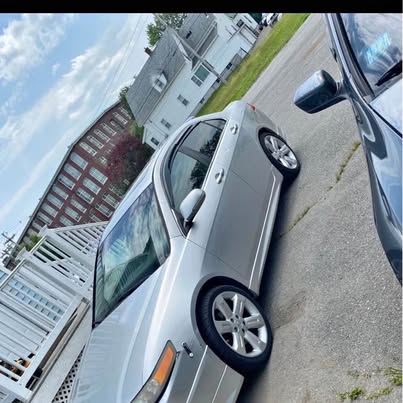
How to inspect one
Allow an hour, bring a torch and a cloth for the dipsticks, and arrange the viewing so the engine is genuinely cold when you arrive — half the tests below depend on it. If the car passes you, a lift inspection by an independent Honda or Acura specialist before money changes hands is money well spent: the subframes, rack boots and compliance bushings in the problem-areas section are all lift judgements, not driveway ones.
- Start with the paperwork. Match the VIN on the title to the plate at the base of the windscreen and the door-jamb sticker, and confirm the chassis code reads as a TSX should. Then read the history for the four invoices that price this car: automatic gearbox fluid changes, air-conditioning work, a timing-belt invoice on a V6, and oil changes frequent enough to protect the chain and rings on a four. A thick file is worth real money; its absence is priced in the steps that follow.
- Cold start. With the engine stone cold, start it and listen for the first two seconds. A brief timing-chain or VTC actuator rattle that stops as oil pressure builds is the known warning from the engines section — note it and budget it. A rattle that continues, a whining power-steering pump on a first-generation car, or blue smoke from the exhaust each open their own conversation. Watch the idle settle: even and quiet is correct.
- The dipsticks. Check the engine oil first: level, colour and smell. Low oil on a K24 is the root cause of the chain, actuator and ring faults, so a low stick with no explanation is a serious mark against the car. Then, on an automatic, check the gearbox fluid warm: reddish and translucent is right, dark and burnt-smelling is the gearbox's diary entry for neglect, exactly as the gearbox section describes.
- Air conditioning, from cold. Select the coldest setting and full fan and time it: properly cold air within a couple of minutes, staying cold at idle. Listen for the compressor clutch cycling cleanly rather than running permanently — the stuck relay from the problem-areas section — and for grinding at the compressor. On dual-zone cars test both sides separately. Weak air conditioning on an early car is a four-figure negotiation, so settle it now, not in July.
- Steering, stationary and parking-speed. On a hydraulic car, turn lock to lock at a standstill: smooth, quiet assistance is correct; groaning, whining or frothy fluid in the reservoir is the pump O-ring test from the steering section. Squeeze the rack boots for fluid and check the reservoir level against its marks. On an electric-steering second-generation car, feel for notchiness at the straight-ahead and confirm the wheel self-centres; any warning light ends the viewing until it is scanned.
- Under the car. Torch along both subframes, the rear arch lips, sill ends, brake lines and the front lower control arms. Flaking or holed subframe metal is structural money; torn compliance bushings explain a front end that knocks; a rack boot full of fluid settles the steering question. Read fresh, localised underseal on the sills or arches as a question, not an answer.
- Body and gaps. Walk the flanks at a low angle for ripples, run a fingertip along every door bottom and arch lip, and check the horizontal panels for the clear-coat failure described in the rust section. Mismatched paint or uneven gaps mean accident history; on a car at this value, the quality of the repair matters more than the fact of it.
- The test drive: engine. Fifteen minutes minimum, including a stretch where you can use the full rev range. A four-cylinder car should pull cleanly through the VTEC changeover to the redline without hesitation, smoke or noise; a V6 should pull hard from low revs without drama. Any misfire, flat spot or check-engine light is a code read before it is anything else.
- The test drive: gearbox. On an automatic, judge the changes cold, warming and fully hot: no flare between ratios, no delayed or thumping engagement of drive or reverse, no shudder at a steady light-throttle cruise — the lock-up test from the engines section. Test manual mode where fitted. On a manual, work every gear, hurry the change into second and third, and test the clutch for slip in a high gear at low revs under full throttle.
- Brakes, suspension and tyres. Brake firmly from speed: straight, silent and judder-free is correct. Drive over broken surfaces and listen for the knocks that price the bushings and links. Then read all four tyres: inner-edge wear at the rear is the geometry story from the problem-areas section, and uneven wear at the front confirms it.
- Ride height and stance. Stand back and look. A TSX should sit level and even, with the arches at matching heights. A car sitting low at one corner or nose-high is showing you tired springs, tired mounts or previous repair; combine what you see here with the tyre evidence from step 10 before accepting an explanation.
- Interior and electrics last. Sit in the driver's seat and judge the leather and the foam. Then work everything: every door lock from the fob, every window from both switches, seat heaters, sunroof, lamps, the display or touchscreen, and the heater on full hot. A car whose electrics all work has usually been maintained by someone who fixed things when they failed — which, on a TSX, is the best single sign there is.
Values
The TSX market is a condition market wearing a model-year disguise, and the first discipline is to stop reading asking prices as values. These cars are advertised across every channel from franchised dealers to private sellers clearing a driveway, and the spread between the most optimistic advertisement and the price a car actually changes hands for is routinely wide — because the seller of a twenty-year-old Acura is often pricing the car they remember buying rather than the one in front of you. Completed sales and auction results, where the model has them, are the honest evidence; a cluster of similar cars advertised at similar money for months is evidence of the opposite kind — a price the market has already declined.
Within that market, the spread is driven by a short list of provable things. Gearbox comes first: a manual car is scarce — just 2 of the 19 cars we currently track — and the best manual cars are fought over by buyers who have been waiting for one, while an automatic with burnt fluid and no history is discounted by every informed buyer who tests it properly. Air conditioning comes second, because the compressor repair is the model's signature four-figure bill: a car with cold air and the invoice to prove the full job was done carries that value in it, and a car without cold air should be priced as if the bill were already yours, because it is. Geography is third: a car that has lived in the South carries an underside a salt-belt car cannot match at any mileage, and experienced buyers pay for that history.
The variants price in their own logics. First-generation cars are the volume market and the cheapest way in, with the 2006-onwards facelift cars attracting a modest premium for their equipment and power gain — worth paying only when the underlying condition is equal, which it often is not. Second-generation cars ask more for their size, refinement and modernity, and the oil-consumption history in the engines section is the discount lever on the wrong example. The V6 is a small market of its own: quick, rare and thirsty, valued by buyers who specifically want it and ignored by everyone else. The Sport Wagon breaks the pattern entirely — so few were sold that a good wagon finds buyers who have been searching by name, and its prices owe more to that queue than to anything the sedans are doing.
The project-versus-driver gap follows the fault list. A cheap TSX is usually cheap for one of three reasons — dead air conditioning, a neglected automatic gearbox, or a salt-belt underside — and each is a known bill rather than an open-ended one, which makes the TSX a better project buy than most: you can price the faults before you buy, add them honestly, and know whether the sum still makes sense. What does not exist is a cheap TSX that stays cheap while carrying all three. Negotiate from the invoices the car does not have, and let the computed market block beneath this guide — the site's own recorded listings and sales — give you the current numbers to negotiate against.
Parts and ownership
The TSX is one of the easiest cars in these guides to keep, because it sits on one of the largest parts bases Honda ever built. The K24 family powered Accords, Elements, CR-Vs and Acuras in very large numbers, the J35 V6's family is larger still, and the kinship with the European Accord and the wider Honda range means service parts, suspension components, brakes and filters are available from Honda, from Acura and from a deep bench of quality aftermarket suppliers, at prices closer to ordinary Honda money than to luxury-brand money. Order today and fit this weekend is a realistic expectation for almost everything routine.
Easy: filters, plugs, brake discs and pads, suspension arms, bushings and links, anti-roll bar links, wheel bearings, alternators, starters, drive belts and tensioners, engine and gearbox mounts, door-lock actuators, power-steering pumps and O-rings, and the air-conditioning relay that every owner should treat as a consumable. Harder and dearer: the air-conditioning compressor done properly — compressor, condenser, drier and flush together, as the problem-areas section explains — a steering rack, a rebuilt automatic gearbox, the timing-chain and VTC actuator set on a neglected four-cylinder, the navigation touchscreen and climate display boards, high-intensity discharge ballasts, and good interior trim, especially driver's seats in the right colour and unworn leather. None of it is unobtainable; all of it is priced like the low-volume luxury variant it is, rather than like the mass-market Honda underneath.
Running costs. Fuel consumption is honest rather than remarkable: the fours are economical when driven gently and noticeably less so when driven as the engine invites, and the V6 trades a clear margin of fuel for its pace. Insurance is generally kind, and servicing is within the competence of any good independent Honda specialist — which matters more than any single parts price, because the TSX rewards a specialist who knows the K24's oil discipline and the automatic's fluid specification. The budget line that catches new owners is the first year: catching up deferred maintenance on a running, basically sound car — fluids including the gearbox, brakes, bushings, the air-conditioning relay and whatever the inspection found — is a realistic four-figure sum before you improve anything. Budget for it, buy the best-documented car you can find rather than the cheapest, and the TSX repays you as it has repaid two decades of owners, for as long as you keep its oil full and clean.
Which one to buy
- The all-rounder: a facelift first-generation car, 2006–08. The 205-horsepower tune, the equipment upgrades and the original chassis at its most developed. If you want one TSX to drive every day, this is it — in manual form if you can find one, and with the air-conditioning invoice in the file.
- The value buy: a 2004–05 automatic with a history. The whole of our current listings pool is these cars, and for good reason: they are the cheapest TSXs there are, and a documented one with cold air conditioning, clean gearbox fluid and a southern underside is most of the TSX experience for the least money in the range.
- The driver's car: any six-speed manual. Only 2 of the 19 cars we currently track are manual, and that scarcity is the market telling the truth. The manual transforms the car, deletes the automatic's questions entirely, and will always be the easiest TSX to sell. Buy the best one you find, when you find it.
- The comfortable buy: a second-generation sedan, 2009–14. Bigger, quieter and more modern, with the same basic honesty — provided the oil-consumption questions in the engines section are answered by the history and the dipstick, in that order.
- The express: the V6, 2010–14. Real pace and real smoothness, bought knowingly: automatic only, thirstier, and carrying a timing belt whose invoice is non-negotiable. With the belt done and the gearbox proven hot, it is a small luxury express like nothing else at its money.
- The connoisseur's car: the Sport Wagon, 2011–14. The rarest TSX, the prettiest and the most useful, in a market where buyers wait for good ones by name. Automatic and four-cylinder only — settle that before you hunt — and worth stretching for when the right car appears.
And the rule that overrides all of the above: buy the TSX with the paperwork — oil changes, gearbox fluid, air conditioning and, on a V6, the timing belt — in the specification you can live with. Engines, compressors, racks and bushings are all fixable at prices you can plan for. A car whose twenty years of maintenance exists only as a seller's assurance is the one TSX that can still surprise you, and it is the one thing about a cheap one that no inspection can fully repair.
Listed now
On Classic Listings today: 10 cars are listed here; 0 for sale and 0 marked sold.
See the 10 TSX cars currently listed.
The market — recorded sales
No dated sales recorded for this series yet — as sales are recorded, they will appear here with their dates and prices.