
Alfa Romeo 164 buyer's guide
Alfa Romeo 164 -- the model's own buyer's guide: variants, values and what to check.
Years listed: 1991-1995 · Series: 164
Overview and history
The Alfa Romeo 164 is the car that kept Alfa Romeo alive in America for five more years, and the last Alfa sedan sold in the United States before the marque withdrew in 1995 and stayed away for two decades. It is also one of the most interesting front-wheel-drive sedans of its era: a sharp-edged Pininfarina body over a transverse V6 designed by Giuseppe Busso — the engine Alfa enthusiasts simply call "the Busso" — with a sound and a willingness to rev that no rival executive sedan of the period even attempted. If you are standing in front of one today, you are looking at a car bought new by enthusiasts, depreciated like an ordinary Italian sedan, and then either cherished by people who understood it or neglected by people who did not. Almost everything about buying one follows from working out which of those two lives the car in front of you has had.
The 164's origins are in the Type Four project, the early-1980s platform-sharing agreement between Fiat, Lancia, Saab and the then-independent Alfa Romeo. The Fiat Croma, Lancia Thema, Saab 9000 and Alfa Romeo 164 all grew from that shared floorpan and basic structure, which is why you will sometimes hear the 164 dismissed as a Saab 9000 in Italian clothes. Resist that reading. The shared content was largely structure, glasshouse hard points and some systems; each car received its own body, suspension tuning and, in the Alfa's case, entirely its own engines. Pininfarina's Enrico Fumia drew the 164's body: a clean wedge, a rising waistline, flush glazing, a full-width rear light treatment and almost no decoration. Fiat took control of Alfa in 1986, a year before the 164's Frankfurt launch; production ran until 1998.
The American story is narrower and later. The 164 reached the United States for the 1991 model year, through a shrinking dealer network, and only with the 3.0-litre V6. Three trims came first: the base 164, the leather-trimmed 164 L and the sharper 164 S. A facelifted range followed for 1994, renamed LS and Quadrifoglio, with the new 24-valve V6. After the 1995 model year Alfa Romeo withdrew from the US market entirely. That withdrawal is the single most important fact in this guide, because it explains the car's whole ownership landscape: no factory network, no dealer pipeline of traded-in cars, parts and knowledge carried ever since by a small, devoted independent network. The cars that survive in good order are the ones whose owners replaced that infrastructure with their own attention.
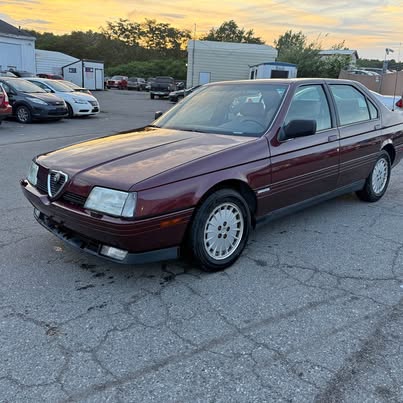
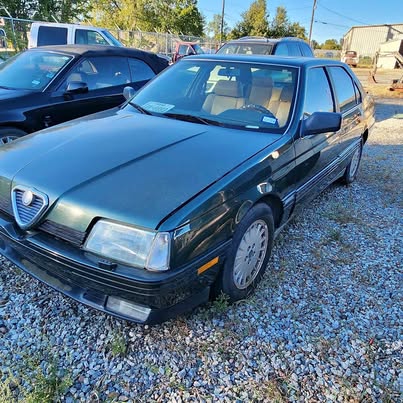
Our own current listings show the American market in miniature: six cars, all V6 sedans from the 1991–1995 American run — mostly 164 L cars from the first series, one 1995 LS, in grey, green, white, silver and black, split between automatics and manuals in a four-to-two ratio, and spread from California to Massachusetts, Ohio and Texas. There is no 164 S and no Quadrifoglio among them, and no European-market car. The S and the Quadrifoglio still get full treatment below, because you will meet them in the wider market and they are the versions most often misdescribed — but the typical 164 actually offered today is a first-series L, usually automatic, whose value rests entirely on how it has been maintained since the dealers went home.
The models
Every 164 ever built is a four-door, front-wheel-drive sedan with a transverse engine — there were no coupes, wagons or convertibles, which simplifies the range considerably. What separates one 164 from another is engine, trim and, for the American market, which side of the 1994 facelift the car sits on. Read the badge carefully, but verify it against the engine: on a thirty-year-old Italian car, badges migrate, and the difference between a 12-valve L and a 24-valve LS is mechanical fact you can check under the bonnet in a minute.
| Model | Years | Engine | Output | Built | Character |
|---|---|---|---|---|---|
| 164 2.0 Twin Spark (Europe) | 1987–1998 | 2.0 four-cylinder, twin spark | 143–148 hp | The European volume car | The range's foundation; never sold new in the US |
| 164 2.0 V6 Turbo (Europe) | 1991–1998 | 2.0 V6 turbo | About 200 hp | Italian-market tax special | Quick, complex, rare; grey imports only |
| 164 2.5 TD (Europe) | 1987–1997 | 2.5 turbodiesel (VM) | 114–125 hp | European fleet staple | Durable, agricultural; irrelevant to US buyers |
| 164 / 164 L (US) | 1991–1993 | 3.0 V6, 12-valve | 183 hp | The bulk of US sales | The standard American 164; cloth base, leather L |
| 164 S (US) | 1991–1993 | 3.0 V6, 12-valve | 200 hp | Low volume | The sport sedan: firmer, adjustable dampers, manual |
| 164 LS (US) | 1994–1995 | 3.0 V6, 24-valve | 210 hp | Low volume | The facelift luxury car; manual or automatic |
| 164 Quadrifoglio (US) | 1994–1995 | 3.0 V6, 24-valve | 230 hp | Very low volume | The flagship; manual only, the collector's 164 |
Production figures by trim were never published in a form worth trusting, so the table gives build character rather than invented splits; the roughly 274,000 total for the whole run is the documented figure. Outputs are period ratings.
The first American series: 164, 164 L and 164 S (1991–1993). These are the cars our listings mostly hold, all using the 12-valve 3.0 V6. The base 164 is the plain car — cloth seats, fewer toys — and is now the rarest of the three simply because nobody preserved base models. The L, for Lusso, is the volume car: leather upholstery, automatic climate control, power seats, the fuller equipment list, and very often the four-speed automatic. The L is not a lesser car mechanically — same engine, same chassis — it is the same car trimmed for comfort, and after thirty years that usually means the calmer life. The S is the enthusiast's 12-valve: a 200 hp engine, a five-speed manual in most cases, firmer suspension with electronically adjustable dampers offering soft and sport settings, deeper body cladding and spoilers, and sport seats, with distinctive Recaro seats a sought-after option. An S should feel tauter and sound keener than an L; if it does not, ask why.
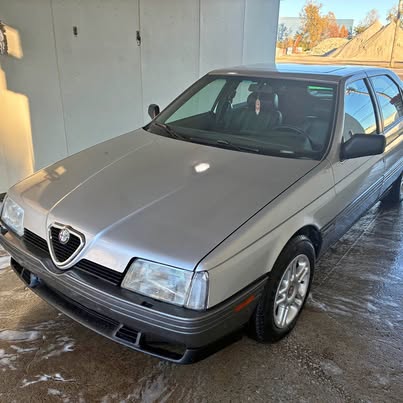
The facelift: 164 LS and Quadrifoglio (1994–1995). For 1994 the American range was revised around the new 24-valve engine. The styling changes are modest — revised bumpers and trim, new wheel designs — but the mechanical change is the point: four valves per cylinder, double overhead cams per bank, more power everywhere and a stronger top end. The LS is the L's successor, offered with both the five-speed manual and the automatic. The Quadrifoglio — the four-leaf clover, Alfa's historic performance badge — is the flagship: 230 hp, manual gearbox only, sport suspension with the adjustable dampers, and the fullest equipment. It is the rarest American 164 and the one with genuine collector interest, which makes it the one most worth verifying forensically: a facelift car with Quadrifoglio badges should show the 24-valve engine, the manual box and the sport specification together, and the VIN and documentation should agree with all three.
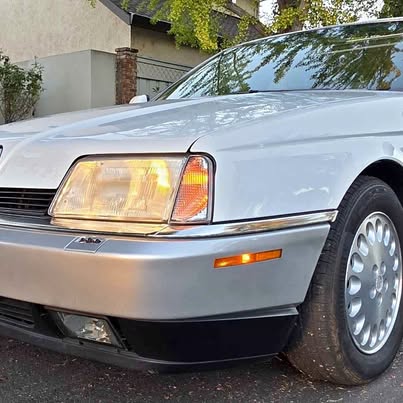
Trim traps and identity notes. Three recur. First, the S and the Quadrifoglio carry premiums, so L and LS cars acquire their badges, spoilers and wheels; the engine output, the damper hardware and the original specification are what you are paying for, and all are checkable. Second, gearbox tells you nothing about trim on the L and LS — but there is no automatic Quadrifoglio, and an automatic car wearing the cloverleaf has already failed its first identity test. Third, American 164s are all 3.0 V6 cars: a four-cylinder or diesel 164 in the US is a private import, with everything that implies for title history, emissions equipment and parts knowledge — a different purchase, priced as one.
Engines and gearboxes
One engine matters in America, in two forms: the Busso V6, first as a 12-valve and then as a 24-valve. Learn both, because they share a bottom end, a character and a timing-belt discipline, but they differ in how they make their power, what their belt jobs cost and which ancillaries give trouble. The European four-cylinder and diesel engines are covered briefly at the end for completeness — you are unlikely to meet one, and if you do, the inspection logic changes.
The Busso V6, 12-valve: the 1991–1993 engine
Giuseppe Busso designed this engine in the 1970s for the Alfa 6, and it grew through the GTV6 and Milano into the 164's 2,959 cc form: an all-alloy 60-degree V6, 93 mm bore by 72.6 mm stroke, with a single overhead camshaft per bank driven by a toothed belt, two valves per cylinder, and Bosch Motronic electronic fuel injection and ignition management. In American base and L trim it is rated at 183 hp; in the S, with higher compression and revised management among its changes, at 200 hp. Neither figure tells you what the engine is like. The Busso is defined by how it delivers: a clean pull from low revs, a hardening note through the midrange, and a top end that does not merely tolerate revs but audibly asks for them. Period testers who dismissed the 164 as a front-drive sedan routinely conceded the engine was the best in its class at any price. Thirty years on, that remains the reason to buy the car.
Mechanically the 12-valve is a strong, understressed unit with three disciplines. The first is the timing belt, and it is the most important paragraph in this section. The belt drives both camshafts and the water pump's neighbour ancillaries in a crowded transverse bay, and the 164's original belt tensioner arrangement — an oil-pressure-fed tensioner design carried over from earlier applications — earned a reputation for losing tension as seals aged and oil pressure varied, letting a belt slacken, slap and, in the worst cases, jump teeth. A jumped belt on this interference engine means valves meet pistons. The aftermarket and specialist answer is a converted or carefully rebuilt tensioner setup, inspected at every belt change, and a belt interval treated with respect: factory schedules were written for a younger car, and experienced 164 owners and specialists treat roughly four to five years, or around 30,000–40,000 miles, as the prudent renewal rhythm, whichever arrives first. A belt job done properly — belt, tensioner attention, idlers, water pump while access is paid for, cam seals inspected — runs roughly $900–1,600 at a specialist, more on a 24-valve. A car with no dated evidence of the job needs it immediately, at your cost, and the price you offer should say so.
The second discipline is oil. The Busso holds its level honestly when healthy, but stem seals harden with age and heat, and a high-mileage 12-valve that puffs blue on a cold start or after a long idle is showing you seal wear, not necessarily bore wear — the distinction matters, because seals are a top-end job at roughly $800–1,500 while bores are a rebuild. These engines also weep: cam-cover gaskets and cam seals develop the light misting that is normal at this age, while a wet undertray and a dropping level are a maintenance verdict. Check the level before you start any 164, because a seller who runs a Busso low on oil is telling you how the whole car has been kept.
The third discipline is cooling. The transverse installation packs the radiator, twin electric fans, air-conditioning condenser and a thicket of hoses into a shallow nose, and the system has little margin once components age. Thermostats stick, fan relays and motors fail, radiators silt, and the gauge on a healthy 164 should rise to its normal mark and stay there in traffic with the fans cycling. A car that creeps upward at idle has a fault to find before it becomes a head-gasket conversation — on an alloy V6 that has overheated hard, warped heads and a $2,500–4,500 top-end rebuild enter the picture. The test is free and it is in the inspection section: idle the car to full temperature and watch.
Supporting systems give the smaller troubles. The Motronic management is fundamentally reliable; its faults are usually inputs — a tired airflow meter, perished intake hoses drawing unmetered air, corroded grounds, a failing crank sensor — presenting as hunting idle, hesitation or a hot restart refusal. Spark plugs on the rear bank are awkward to reach in the transverse installation, so lazy services skip them; a misfire under load on a car with a "recent service" is worth investigating there first. Alternator access is similarly tight, and charging problems should be diagnosed as wiring and grounds before anyone sells you an alternator at $400–700 fitted.
The Busso V6, 24-valve: the 1994–1995 engine
For the facelift, Alfa reworked the top end: new cylinder heads with double overhead camshafts per bank and four valves per cylinder, revised induction and management, and outputs of 210 hp in the LS and 230 hp in the Quadrifoglio. The bottom end, the 60-degree alloy block and the essential character carry over — it is recognisably the same engine, breathing better. The 24-valve pulls harder at the top, revs more eagerly and is the more collectible specification, but it asks more of an owner in two specific ways.
First, the timing-belt job grows. More camshafts, more idlers and tensioner bearings, tighter access: budget roughly $1,200–2,000 for a thorough belt service at a specialist, and treat the tensioner bearings as renewal items, not inspection items, because a seized bearing takes the belt with it. The interference stakes are identical — a failed belt on a 24-valve is a four-valve-per-cylinder rebuild, realistically $3,500–6,000 — so the evidence rule is stricter, not looser, on the more valuable engine. Second, the ancillaries multiply: the 24-valve's ignition and injection hardware is a step more modern and a step less forgiving of corroded connectors and tired sensors, and its exhaust manifolds and downpipes work harder in a hotter bay. None of this should steer you away from an LS or Quadrifoglio. It should steer you toward the documented car and away from the deferred-maintenance car, because on a 24-valve the deferred bills are bigger.
One myth deserves correcting here: the 24-valve is not a different, fragile engine and the 12-valve is not a crude one. They are two states of one design, separated by a cylinder-head programme. The 12-valve is simpler and a little cheaper to service; the 24-valve is faster and rarer. Condition and evidence separate good examples of either from bad ones far more sharply than the valve count does.
The engines America did not get
Briefly, for the car you may meet as an import. The 2.0 Twin Spark is a 1,962 cc four with a chain-driven twin-cam head, two plugs per cylinder and 143–148 hp; durable and characterful, with thin US support simply because the cars are rare here. The 2.0 V6 Turbo is a 1,996 cc Busso with a single turbocharger and around 200 hp, built for Italian tax law; it shares the V6's belt discipline and adds turbo heat and complexity. The 2.5 TD is a VM Motori five-cylinder turbodiesel of 114–125 hp, tough and unrefined. Considering any of these in America means buying a hobby within a hobby: verify title and emissions status first, and find the specialist before, not after, you pay.
Gearboxes
Two gearboxes were offered in America, and the choice interacts with trim: the L and LS came with either, the S is found overwhelmingly with the manual, and the Quadrifoglio is manual only.
The five-speed manual is a strong, pleasant gearbox with a light, accurate change when its linkage bushes are fresh and its oil is changed on schedule. Its wear pattern is the usual one for a torquey front-drive car: synchromesh tires first on second and third, mountings soften, and linkage wear turns a precise shift vague — a $150–400 bush and mount refresh that transforms a car sellers describe as having a "tired gearbox". A box that crunches on fast changes, jumps out of gear under load or whines is a rebuild conversation at roughly $1,500–2,500 plus removal labour, usually combined with a clutch at $900–1,500 fitted, since the labour overlaps almost entirely. Do the cold test: a synchro that is merely stiff for the first mile on a cold morning is an old car being honest; one that crunches warm, every time, is worn.
The four-speed automatic is a ZF 4HP18 unit with electronic control offering economy and sport modes. It suits the L's character well and, properly serviced, is durable — but "properly serviced" is the load-bearing phrase. These boxes want their specified fluid, changed with the filter on schedule, and they die the standard death of neglected automatics: fluid never changed, shifts that flare and shudder, and finally a box that delays engaging drive or reverse from cold. A fluid and filter service runs roughly $200–350 and sometimes civilises a box whose only sin was old fluid; a rebuild runs roughly $2,200–3,800, a large fraction of an ordinary L's whole value. That arithmetic is why the automatic test in the inspection section is a go-or-no-go gate: on an automatic 164 you are buying a gearbox with a car attached, and you should test it stone cold, before the seller has had a chance to warm it through.
Problem areas
A 164 rarely dies of one dramatic failure. It declines by accumulation: a belt service deferred because the car still runs, a climate fault ignored because the windows open, an automatic serviced never because it still shifts, a rear subframe mount quietly converting itself to oxide under a car that still photographs well. The expensive 164 problems are therefore predictable, and they cluster in a short list: the timing-belt system, the automatic climate control's stepper motors and heater core, the ZF automatic when neglected, electrical and ground faults born of age, and corrosion in a small number of specific structural places. Work through the systems in this order and you will find the bills that matter while they are still negotiable. One honesty note: our current listings pool for this model is six cars and carries no examined-photo aggregate, so nothing below is dressed up as a statistic from our own cars. This is the model's documented behaviour across three decades of specialist and owner experience, set out so you can test for it, car by car.
The timing belt, tensioner and the interference stakes
This is the fault that ends 164 engines, and it deserves the first heading. The Busso V6 in both forms is an interference design: if the timing belt breaks, slips or jumps enough teeth, pistons strike open valves. There is no external inspection that tells you a belt is safe — a belt can look clean and supple and be a year past the age at which its cords have fatigued — so the only evidence that counts is a dated invoice, a dated sticker in the engine bay backed by a receipt, or a belt you commission yourself. Treat every car without that evidence as needing the full job immediately: belt, tensioner attention, idlers and bearings, water pump, cam seals inspected, at roughly $900–1,600 on a 12-valve and $1,200–2,000 on a 24-valve at a specialist.
The 164-specific trap is the tensioner. The 12-valve car's original oil-fed tensioner design depends on seals and oil pressure to maintain belt tension; as it ages it can bleed down, let the belt run slack — sometimes audibly, as a slap or flutter at start-up that owners learn to ignore — and a slack belt under a sudden load change is a belt that jumps. Specialists address this at belt time with rebuilt or converted tensioner arrangements and a careful tension setting, which is one of the several reasons a 164 belt job belongs with someone who knows these engines rather than the cheapest general shop in town. The 24-valve replaces that worry with a more conventional one: more bearings and idlers in the belt path, any one of which can seize with age and shred a belt from behind. The practical rules are identical for both engines. Never accept "the belt was done" without a date. Never let a seller's low mileage reassure you — belts age on the calendar in a garaged car exactly as they do on the road, and a 60,000-mile car on a ten-year-old belt is overdue, not preserved. And if you buy a car with belt evidence that is merely old rather than absent, drive it gently to the specialist, not enthusiastically home via the long way.
Climate control: stepper motors, heater core and the dashboard
The 164's automatic climate control is the car's most famous ownership story, and it deserves its reputation in both directions: when it works it is genuinely good, and when it fails it fails in the dashboard, where labour is the bill. The system moves its air-distribution and temperature flaps with small electric stepper motors whose plastic drive gears age, crack and strip. The symptoms arrive in a recognisable order: clicking or chattering from behind the dashboard as a stripped gear hunts for its position, air that will not go where the display says it is going, a temperature blend stuck hot or cold, defrost that cannot be summoned on the one wet morning you need it. A car that clicks behind the dash on start-up or on every temperature change is telling you its stepper gears are going, and you should believe it the first time.
The repair's economics are the trap. The motors themselves are modest parts, and improved replacement gears and motors exist in the specialist network; the cost is access, because proper replacement means removing the dashboard, which is most of a day's skilled labour — total bills of roughly $1,000–2,000 are typical for the job done completely, and the only sane way to do it is completely, renewing both motors and inspecting everything else the dashboard hides while it is out. That "everything else" is the second famous item: the heater core, which lives in the same territory and leaks with age, announcing itself with a sweet coolant smell in the cabin, misting inside the windscreen that will not clear, and eventually damp in the passenger footwell. A leaking core is the same dashboard-out labour plus a core at roughly $150–350 in parts. The buying rule writes itself: test every climate mode, every temperature extreme and the defroster on any 164 you are considering, for minutes, not seconds — and price a car with dead or clicking climate as a car with a four-figure appointment already booked, because it is. A seller who has had the steppers and core done, with an invoice, has spent real money on your behalf; credit it in the price exactly as you would a timing belt.
The air-conditioning side is more conventional: compressors tire, condensers corrode, O-rings shrink, and a system that has sat unpressurised for years needs seals, a receiver-drier and a proper vacuum before gas, at roughly $500–1,200 to recommission honestly. A re-gas that lasts a fortnight is a leak being sold as bad luck. Test the air-conditioning at idle, not at speed on a cool day — and note that on a 164 the climate system is one integrated unit, so "the heater works, only the air-con doesn't" can still mean dashboard labour, depending on which flap and motor have failed.
Rust and structure: a short map, strictly enforced
The 164's shell was better protected than earlier Alfas — this is not a 1970s Alfa Romeo, and wholesale floor and sill rot is not the default — but the cars are now thirty-plus years old, and corrosion follows a map you can learn and check in fifteen minutes. The critical location is the rear: the rear subframe and its mounting points, the rear suspension attachment areas and the surrounding floor. The subframe traps moisture and road salt against the structure, surface rust progresses unseen, and a car whose rear subframe mounts are perforated is a structural repair — cutting, welding and realignment at roughly $1,500–3,500 depending on extent — not a cosmetic one. Get the car on a lift or get properly underneath it with a torch; this is the one inspection you cannot do from the kerb, and it is the one that decides whether a cheap 164 is cheap.
Work outward from there. Sills corrode at their ends and at jacking points. Front subframe and its mounts suffer on salted-road cars. Wheel-arch lips bubble where mud sits against the seam, front wings rust at their lower rear edges, and the boot floor and spare-wheel well collect water from perished seals and light gaskets and rot quietly from inside — lift the spare on every car. The pattern to respect is the difference between honest surface corrosion in the known places, which is a maintenance item, and perforation at mounts and suspension attachments, which is a project with a welding bill attached. Northern cars — and our listings include cars that have lived in Massachusetts and Ohio — deserve the full torch-lit treatment; a lifetime California or Texas car starts with a presumption of soundness that still has to be verified, because a 164 stored damp can rust from the inside out in the boot and footwells regardless of its postcode.
Engine, cooling and gearbox faults beyond the belt
With the belt settled, the Busso's remaining faults are manageable and mostly cheap relative to the car's value — which is why their presence in multiples is such a good character witness for the previous owner. Oil leaks follow a geography: cam-cover gaskets harden, cam seals weep, and a light misting is normal at this age; a wet engine, a dropping dipstick and a stained driveway ignored for years are not, because that pattern means every other fluid has been ignored too. Oil consumption divides the same way: a blue puff on cold start or after idling points to valve-stem seals, a top-end job; smoke under sustained load points to rings and bores, which on a Busso means a rebuild discussion at $4,000–7,000 and, on an ordinary L, a walk-away unless the price is a project price. A Busso that knocks under load is never a haggling point. It is the end of the inspection.
Cooling faults recur here because they are the second engine-killer: a stuck thermostat, a dead fan relay, a silted radiator, and an owner who watches the gauge climb and drives on. Ask directly whether the car has ever overheated, and read the coolant: clean and correctly coloured is right; rusty, oily or topped up with plain water tells you the system has a history you will pay to finish. The head gaskets are not a notorious Busso weakness — failures usually arrive via overheating rather than spontaneously — so a chemical block test or cooling-system pressure test is the honest way to settle any specific suspicion.
The automatic gearbox fails by neglect, as covered above: delayed engagement from cold, flare between shifts, shudder as drive takes up. Test it stone cold, because a warm ZF hides all three symptoms for the first ten minutes. The manual gearbox fails by wear: synchromesh crunch on second and third, tired mountings, sloppy linkage. The distinction between linkage sloppiness, which is a few hundred dollars of bushes, and internal wear, which is a rebuild, is one of the most valuable judgements you will make in front of a manual car — sellers price them identically, and they are not the same car at all. Clutch condition on a manual is judged by bite point, judder and any slip under full throttle in a high gear; budget the $900–1,500 fitted figure on any car that fails those tests, and remember the gearbox work shares the same labour.
Power steering deserves its own sentence, because the 164's rack and high-pressure hoses age together: a groaning pump is usually low fluid from a leak rather than a dying pump, racks weep from their seals, and hoses perish. A steering refresh — hoses, fluid, possibly a reconditioned rack at roughly $500–900 fitted — is ordinary money, but fluid on the driveway is another small ignored thing that tells you how the car has been lived with.
Suspension, brakes and steering wear
The 164 rides on MacPherson struts at the front and an independent rear layout using transverse links and trailing arms — sophisticated for its class and period, which is why a good 164 handles with a fluency its front-drive layout does not promise. Age attacks it in the usual places: front control-arm bushes soften and tear, ball joints develop play, anti-roll bar links knock, and rear bushes wear until the rear end steers itself subtly over bumps and under braking, a vagueness owners often blame on the front end. A full bush and joint refresh, corner by corner at roughly $250–600 a corner with alignment, transforms these cars, and documented suspension work is a selling point worth paying for. The S and Quadrifoglio add electronically adjustable dampers with soft and sport modes: a car stuck in one mode or showing a suspension warning has a diagnostic path to walk, and conventional replacement dampers are the pragmatic answer many owners choose — acceptable if disclosed and priced, a deduction if discovered.
Brakes are discs all round with anti-lock braking, and the faults are those of age and standing: calipers seize, the rears first; hoses perish; discs lip and corrode on cars that sit; and an ABS warning light is more often a wheel-speed sensor or its corroded connector than the control unit — read the fault before pricing the expensive part. A full brake refresh with rebuilt calipers, hoses, discs and pads runs roughly $700–1,300, and should be budgeted without argument on any car that has stood, along with tyres judged by date code rather than tread.
Electrics, interior and the small things that are not small
The 164 was an electrically ambitious car for its era — power seats, automatic climate, extensive warning systems — and thirty years on, its electrical faults are those of connectors, grounds and heat rather than design. The pattern to learn is that one bad ground or corroded multi-connector produces three unrelated symptoms, and the specialist's first tool is the wiring diagram and a meter, not a parts catalogue. Window regulators slow and fail, the driver's first. Seat motors and switches tire. The electronic speedometer and its sender are a known irritation — a dead or wavering speedometer is usually the sender or its connections rather than the cluster. Locking actuators fail one door at a time. Warning lights glow for corroded sensor connections as readily as for real faults, which cuts both ways: never buy a car whose seller explains away a warning light, and never condemn one until the fault has been read properly.
Door handles are a small item with an outsized reputation: the exterior handles' plastic components grow brittle and break, and a car with one mismatched or stiff handle is showing you normal 164 life, while a car with all four tired is showing you a parts hunt — check the specialist and used supply before assuming any trim item is available, because on a low-volume car in a market the factory left, trim is the true scarcity. The same applies inside: headlinings sag, leather dries and splits on the driver's bolster first, seat foams soften. Read the cabin as a document. A supple, intact, original interior in a 150,000-mile car is the signature of a garaged life and a careful owner; a wrecked cabin in a low-mileage car is a contradiction that needs an answer in paperwork.
How to inspect one
Allow ninety minutes, insist on a cold engine and a cold gearbox, and arrange access to a lift or at least a jack and stands for the structural check — on a 164, the underneath is not optional. Bring a torch, a small magnet wrapped in cloth, and your phone for photographs of every plate and invoice you are shown. Work in this order: identity first, because no mechanical virtue redeems a misdescribed car; the belt evidence second, because it is the largest single risk; structure third; the dashboard systems fourth; and the road test last, when you know what you are listening for.
- Paperwork, VIN and trim identity. Match the VIN on the title to the car's plates and stampings, character by character, and confirm the title brand — clean, rebuilt and salvage are three different prices. Then test the trim claim against the car: a Quadrifoglio must be a 24-valve manual, an S should carry its sport specification and adjustable-damper hardware, and any car whose badges promise more than its engine and equipment deliver is priced on what it is, not what it says.
- The belt question, asked with a pen in your hand. Ask for the timing-belt invoice and read the date and mileage yourself; look for the tensioner, water pump and idlers on the same invoice, because a complete job lists them. No invoice means the full belt service from the problem areas section goes into your budget and your offer, immediately. A sticker without an invoice is a claim, not evidence.
- Cold start and the dipstick. Read the oil level and colour before you start the engine — a Busso run low is a maintenance verdict in one glance. From stone cold, the engine should start promptly, idle evenly and settle without hunting. A blue puff at start-up points to stem seals; smoke that persists under load later in the drive points deeper.
- Cooling, watched to full temperature. Leave the car idling while you do the next steps. The gauge should rise to its normal mark and hold there, fans cycling on and off. Creep upward at idle, a fan that never cuts in, or coolant that is rusty, oily or plain water each end the casual phase of the inspection — the car has a cooling story, and you price the diagnosis before you price anything else.
- Structure, in the map's order. On the lift or underneath with the torch: rear subframe mounts and rear suspension attachments first, because perforation there is the structural verdict from the rust section; then sill ends and jacking points, front subframe mounts, arch lips with the magnet, and the boot floor with the spare lifted out.
- The climate test, in full, for minutes. Run the automatic climate control through everything: maximum heat, maximum cold, every distribution mode including defrost, fan speeds, and the air-conditioning at idle. Listen behind the dashboard for the clicking and chattering of dying stepper gears, and feel whether air actually follows the display's commands. This single test prices the most famous 164 repair; a failure here is the dashboard-out figure from the problem areas section, not a shrug.
- Every electrical consumer, once. All four windows, locks, mirrors, seat motors, lights, wipers and washers, instruments — including whether the speedometer reads steadily on the drive to come. Note the door handles, inside and out, for brittleness. You are not being fussy; on a 164, each dead consumer is either a fuse, a ground or a parts hunt, and you want the count before you negotiate, not after.
- The automatic test, cold — automatics only, and it is a gate. Before the car warms through, engage drive and reverse from rest and time the engagement: a long delay or a thump is the ZF telling you its history, exactly as the gearbox section warned. On the road, feel for flare between gears and shudder as drive takes up under load. Any of the three, badly, ends the negotiation or reprices the car by a rebuild.
- The manual test — manual cars. Work second and third gears hard in both directions, up and down, listening and feeling for the synchromesh crunch described in the problem areas. Separate sloppiness, which is linkage bushes and modest money, from crunching, which is internal wear. Then test the clutch: bite point, judder on take-up, and slip under full throttle in a high gear on a hill.
- The Busso test. On a clear road, with the engine fully warm, use the rev range. A healthy 12-valve pulls cleanly and hardens its note as it climbs; a 24-valve adds a stronger top end still. Hesitation, a flat spot or a misfire under load sends you back to plugs on the awkward rear bank, intake hoses and airflow metering before anyone condemns the engine. An engine that will not rev happily is an engine with a question outstanding.
- Brakes, steering and stance. Brake firmly from speed: straight, without judder, pull or a pedal that sinks. At parking speed, turn lock to lock and listen for groaning from the power steering and feel for notchiness in the rack. Stand back and read the stance — level, even arch gaps — and check tyre date codes as well as tread, all four matching in size and ideally in make.
- The cabin as the final witness. Sit in the driver's seat last and reconcile the car: does the bolster wear, the wheel's shine, the pedal rubbers and the headlining agree with the odometer and the paperwork? Does the file contain the belt, the fluids, the climate work — the three expenditures that separate kept 164s from abandoned ones? If the identity, the structure, the belt evidence and the cold tests all agree, you are looking at an honest 164, and on this model honest examples are the scarce commodity. Buy on that agreement, not on the shine.
Values
The build of this page carries the live market beneath this guide — the cars listed now and whatever recorded sales the site holds — refreshed as the market moves, and that block is where the numbers live. This section teaches you how to read them, because the 164 market is thin, national and evidence-driven, and a naive reading of asking prices will mislead you in both directions. Start with the shape of the market. The 164 was never a high-volume American car, the survivor pool is small, and at any given moment the number of cars genuinely for sale nationally is modest — our own listings, six cars at the time of writing, are a fair sample of the whole visible market rather than a slice of it. Thin markets behave differently from liquid ones: prices are set by the last comparable sale and the next motivated buyer, cars sit for months at hopeful money then sell in a weekend when the right Alfista appears, and the spread between the cheapest and dearest car wearing the same badge is driven almost entirely by evidence and condition rather than year or mileage. Treat any single asking price as an anecdote. Treat the pattern — which cars sell, and which sit — as the information.
Within that pattern, the hierarchy is stable. The Quadrifoglio sits at the top as the rarest and most collectible American 164, priced on originality and documentation. The S follows as the enthusiast's 12-valve car, then the LS, whose 24-valve engine pulls it above the L despite its luxury brief. The L and the base car form the volume market — though "volume" is relative here — where trim counts for little and the individual car's file counts for almost everything. A documented, rust-free, climate-working L is worth more, to anyone who intends to drive the car, than a neglected Quadrifoglio with a dead dashboard and no belt history. Badges set the ceiling for a model; evidence sets the price of a car. Four things move an individual car's price, in this order. First, the timing belt and its invoice: on a car whose engine is destroyed by a belt failure, a dated belt service is the difference between a car and a gamble, and the informed part of the market prices accordingly. Second, structure: a verified sound rear subframe and mounts are genuinely scarce in northern cars and cannot be bought cheaply after the fact. Third, the dashboard systems: working climate with the steppers and heater core already done removes the model's most notorious four-figure bill, and sellers who have done it will, rightly, ask you to pay for some of it. Fourth, on automatics, cold behaviour: a ZF that engages cleanly from cold is a serviced gearbox, worth real money against a car whose box you would have to rebuild.
Read asking prices against the cost of the deferred work, because on a 164 that arithmetic is the whole negotiation. The project-versus-driver gap is not a gentle slope; it is a cliff with a belt job, a dashboard job and possibly a gearbox rebuild stacked at the bottom of it. A cheap 164 that needs all three is a mid-priced 164 whose bills arrive in the first year. Conversely, the seller who has spent the money and kept the invoices has done the market's least glamorous work, and the premium such a car carries over a shiny but undocumented example is usually smaller than the invoices total. That gap is the informed buyer's margin. Sellers of good 164s are enthusiasts in no hurry, while sellers of neglected cars are often selling the bill they just received. Price your offer from the evidence, and explain it from the evidence.
Parts and ownership
Owning a 164 in America means belonging to a small, well-organised support world that replaced the factory network Alfa took home in 1995: dedicated Alfa specialists in most regions, established parts suppliers who stock 164-specific items, an active club scene through the Alfa Romeo Owners Club, and online communities whose collective knowledge of stepper motors, tensioner conversions and ZF fluid schedules exceeds anything the original dealers retained. The discipline of ownership is knowing which of three buckets every need falls into, because the buckets have very different costs.
Easy and ordinary: the service life of the Busso V6. Filters, plugs, belts and tensioner components through the specialist suppliers, brake discs and pads, suspension bushes and joints, dampers, exhaust sections, hoses, thermostats, water pumps and standard electrical consumables are all obtainable without drama, at prices in line with any European sedan of the era. A routine service at a specialist runs roughly $250–450, and the scheduled big item is the belt service at $900–2,000 depending on engine. Find your specialist before you buy if you can — the relationship is part of the purchase, and a pre-purchase inspection on a lift by someone who knows where the rear subframe hides its rust is the best money in this entire guide.
Harder, and priced accordingly: the model-specific mechanicals and the dashboard. Climate stepper motors and improved gears, heater cores, ZF automatic internals and rebuild expertise, adjustable-damper components for the S and Quadrifoglio, and 24-valve top-end parts are all available through the network, but from a small number of suppliers, sometimes from European stock, with lead times in weeks rather than days. Budget the labour honestly: the 164's famous jobs — dashboard out, gearbox out, belt service — are labour-shaped, and a specialist's rate applied to a known procedure is a fair price.
The true scarcity: trim, glass and cosmetics. Door handles, interior plastics and switchgear, seat leather in the correct finish, headlamp and trim pieces, badges and the small brightwork that distinguishes an LS from an L — these age out of supply first, are shared with no other car, and trade in a used market of breaker cars and hoarded spares. This is why the inspection section weights cabin condition so heavily: a mechanically tired 164 can be rebuilt with money and patience, while a wrecked interior asks you to find parts that may take a year of watching the network's classifieds. When a parts car or a trim stash appears at fair money, 164 owners buy first and find shelf space later; you will understand within a year of ownership.
Running costs and the shape of a year. Fuel consumption is period executive-sedan fare and irrelevant next to maintenance. Insurance is usually straightforward on agreed-value or classic policies, and valuation conversations go better with documentation: photographs, invoices and the evidence file. The honest first-year budget for an undocumented car should assume the belt service, all fluids including the automatic's, brake and tyre attention and a contingency for one electrical fault — realistically a four-figure sum before you improve anything — while a documented car bought well can run a year on a service and consumables alone. Storage matters more than mileage: a garaged 164 ages slowly; one parked outdoors ages at the rear subframe, the leather and the seals simultaneously. Drive it regularly, because relays, seals, calipers and climate steppers all prefer a car that works to one that sleeps.
Which one to buy
- The all-rounder: a documented 164 L, manual if you find one, automatic if it passes the cold test. The volume American car is the sweet spot: the full Busso experience, the comfortable cabin, the deepest pool of survivors, and prices set by evidence rather than badge. Buy the file, not the colour.
- The value buy: a first-series L automatic with the big three already done. Belt invoiced, climate working in every mode, gearbox serviced and clean from cold — a car with those three receipts has had its notorious bills paid by someone else.
- The driver's car: the 164 S. The 200 hp 12-valve, manual gearbox and adjustable dampers make the S the keenest first-series car. Verify the sport specification is real, test the dampers in both modes, and pay for originality.
- The collector car: the Quadrifoglio. The 230 hp 24-valve flagship is the rarest American 164 and the one with a genuine collector future. Buy it as you would any collectible: identity first, originality second, documentation over patter — and remember that an automatic wearing its badge is not one at all.
- The modern-feeling car: the 164 LS. The 24-valve engine and facelift cabin make the LS the most complete everyday 164, and a manual LS is a genuinely rare specification. The belt job costs more and the evidence rule is stricter; the reward is the strongest engine in the range this side of the Quadrifoglio.
- The project: a structurally sound car with mechanical needs, bought at a project price. A 164 with a verified solid rear subframe and a dead belt, dead steppers or a tired gearbox is a rational project, because every one of those faults has a known fix at a known cost. The reverse — shiny mechanicals over perforated mounts — is the only irrational one.
And the rule that overrides all of the above: buy the 164 whose belt invoice, structure and dashboard all check out, in whichever trim that car happens to be. Engines can be serviced, gearboxes rebuilt and steppers renewed at prices you can plan for. A rotten rear subframe, a belt history nobody can prove, or a badge the engine will not support are the three things no budget quietly fixes — and on a model this thinly traded, the right car is simply the honest one, whenever it appears.
See the 14 164 cars currently listed.
For sale now
$5,000Expand
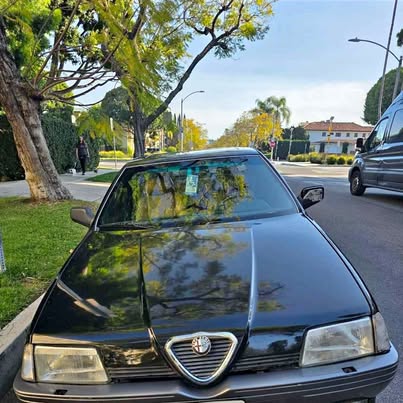 $4,900
Expand
What they sell for: 164 sale prices.