
BMW 2002 buyer's guide
BMW 2002 -- the model's own buyer's guide: variants, values and what to check.
Years listed: 1968-1976 · Series: 2002
Overview and history
The BMW 2002 is the car that saved BMW as a maker of sporting saloons and, in the process, invented a market. When it arrived in 1968 it was not a new car from a clean sheet. It was the two-door Neue Klasse — the New Class — body that BMW had been building since 1966 as the 1600-2, fitted with the larger 2.0-litre M10 four-cylinder engine from the bigger 2000 saloon. That simple combination — a light, stiff, boxy two-door shell, an independent rear suspension at a time when most rivals still ran a live axle, front disc brakes, and a willing overhead-cam engine that loved to rev — produced a car that was quicker, better balanced and more fun than almost anything at its price, and that could still carry four people and their luggage without complaint.
To understand why it matters you have to understand where BMW stood. The Neue Klasse 1500 of 1962 had rescued the company from the brink of absorption by Daimler-Benz. Through the 1960s the range grew — 1600, 1800, 2000 — all four-door saloons with the same basic architecture: unitary construction, MacPherson struts at the front, semi-trailing arms at the rear, and the slant-mounted M10 engine tilted 30 degrees to keep the bonnet line low. The two-door derivative, launched as the 1600-2 in 1966 (the -2 denoting two doors), was lighter and cheaper, aimed squarely at younger buyers. Fitted with the 2.0-litre engine — a combination BMW's American importer Max Hoffman had pressed for — it was badged 2002 (2.0 litres, two doors) and shown in January 1968. David E. Davis Jr.'s famous Car and Driver review that April put the car on the American map, and the template it set — compact, premium, driver-first, understated — is recognisably the template of the 3 Series that replaced it.
Production ran from 1968 to 1976, though the story splits in two. European production of the mainstream car wound down in 1975 as the E21 3 Series arrived; the US-market car, burdened with emissions equipment and impact bumpers, continued into 1976 because American buyers would not let it go and because the E21 was not yet federalised. Across the whole 02 family — 1502, 1600-2, 1602, 1802, 2002 and its derivatives, plus the Touring hatchbacks and the rare convertibles — BMW built roughly 860,000 cars, of which the 2002 in its various forms accounts for the largest single share, well over 400,000. That volume matters to you as a buyer today: this is a mass-produced classic with mass-produced-classic parts support and enough survivors that you can afford to be choosy. Never let a seller tell you otherwise.
The range developed in clear steps: single-carburettor 2002 (100 hp), twin-carburettor ti (120 hp), the injected tii of 1971 (130 hp), and in 1973 the 2002 Turbo — Europe's first turbocharged production car, 170 hp and only 1,672 built. Alongside the saloons came Touring hatchbacks from 1971 and open cars built by Baur. A major facelift in 1973 — square rear lamps, revised grille and interior, and for the US the infamous 5 mph bumpers from 1974 — divides early 'roundie' cars from later 'square-light' cars in every buyer's vocabulary.
What you are buying is the purest expression of the original BMW idea: light weight, near-perfect balance, an engine that rewards use, and steering with genuine feel. It is also a car between fifty and nearly sixty years old, built from steel that rusts with enthusiasm. The rest of this guide separates the cars that will reward you from the cars that will consume you — because with a 2002 the difference is almost never the badge. It is the shell, the history, and the honesty of the work already done.
The models
The 2002 badge covers a wider spread of cars than the single name suggests, and the differences between them — engine tune, fuel system, market specification, model year — matter more to value and to the ownership experience than almost anything else. Read this section with the car's VIN plate and engine number in mind, because the single most common 2002 trap is a car that is badged, described or priced as something it is not.
At the top of the mainstream range sits a simple progression. The base 2002 (1968–1976) is the volume car: single downdraught carburettor, 100 hp in European form, less in later US emissions tune. The 2002 ti (1968–1972, not officially sold in the US) added twin Solex 40 PHH sidedraught carburettors and 120 hp. The 2002 tii (1971–1975) replaced carburettors with Kugelfischer mechanical injection for 130 hp, sharper throttle response and a premium price then and now. The 2002 Automatic was offered through most of the run with a three-speed ZF or Borg-Warner automatic and is the softest, slowest version. The 2002 Turbo (1973–1974) stands alone: turbocharged, 170 hp, wide arches, deep front spoiler, and genuine rarity.
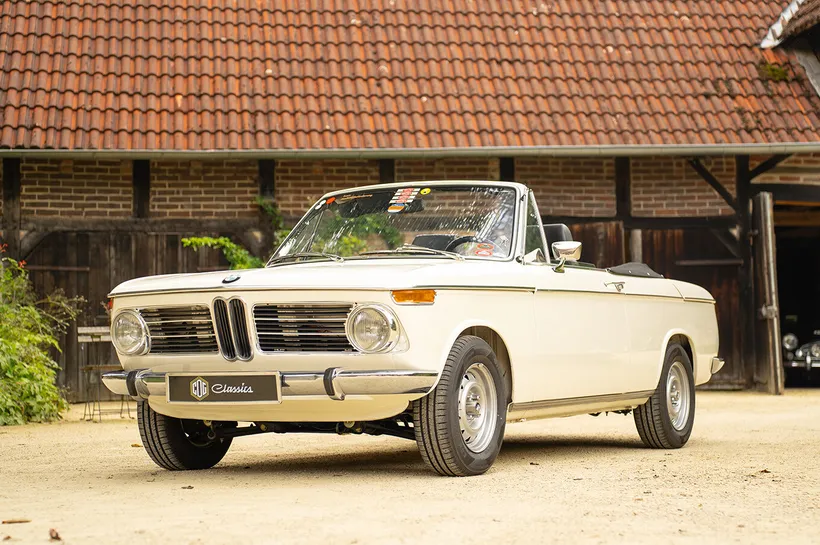
Body styles multiply the list. The standard car is a two-door saloon — BMW called it a saloon, the market calls it a coupé, and it is neither a pillarless design nor a hatchback; it has a proper separate boot. The Touring (1971–1974) is a three-door hatchback with a large tailgate and folding rear seat, sold as the 2000 Touring before the 1971 renaming and then as 1802 and 2002 Touring; it is practical, slightly heavier, and its tailgate aperture and rear structure rust in their own specific ways. Baur built open cars in two forms: the early full Cabriolet (1968–1971, on the 1600 and 2002) and the later Targa-style Top Cabriolet with a fixed roll-over hoop and removable roof panel and rear window section. Genuine Baur cars carry Baur's own plate and are documented; a saloon with its roof cut off by an unknown hand is not a Baur and should be valued as a damaged saloon, full stop.
Market specification is the third axis, and for American buyers the most important. US cars changed year by year as federal rules tightened: sealed-beam headlamps, side marker lights, progressively stricter emissions equipment (air pump, exhaust gas recirculation, thermal reactor on the last cars, retarded ignition, leaner carburation), lower compression in later years, and from 1974 the large aluminium 'diving board' impact bumpers. A 1976 US car is a meaningfully different driving experience from a 1969 European car — heavier, softer, strangled — though often better preserved, because American survivors frequently lived in dry states while European cars dissolved in salt. Grey-import cars exist in small numbers; check their paperwork and equipment with care.
The model-year break you need is the autumn 1973 facelift. Earlier cars — roundies — have round rear lamps, slimmer bumpers and the prettier, purer specification. Facelift cars have square rear lamps, a black plastic grille panel and revised trim. The 1976 cars were US-only in effect, with the thermal reactor system that cooks its own exhaust manifold and is the first thing most owners remove where the law allows. None of this makes a late car a bad car. It makes it a different car, and it should be priced as one.
| Model | Years | Engine | Output | Built | Character |
|---|---|---|---|---|---|
| 2002 | 1968–1976 | 2.0 M10, single Solex | 100 hp (Euro) | The bulk of 2002 production | The all-rounder; tune and market spec vary hugely by year |
| 2002 ti | 1968–1972 | 2.0 M10, twin Solex 40 PHH | 120 hp | Limited; not a US model | The revvy carburettor car; rare and often mislabelled |
| 2002 tii | 1971–1975 | 2.0 M10, Kugelfischer injection | 130 hp | Substantial minority of production | The connoisseur's choice; injection condition is everything |
| 2002 Automatic | 1968–1976 | 2.0 M10, single Solex | 100 hp (Euro) | Small share | Soft and slow; priced as such; manual conversions common |
| 2002 Turbo | 1973–1974 | 2.0 M10, KKK turbo, Kugelfischer | 170 hp | 1,672 | The icon; verify identity ruthlessly |
| 2002 Touring | 1971–1974 | 2.0 M10, single Solex | 100 hp | Minority of production | Practical hatch; check tailgate structure |
| 2002 Baur Cabriolet / Targa | 1968–1975 | 2.0 M10, various | 100–130 hp | Low thousands | Open car; Baur plate or it did not happen |
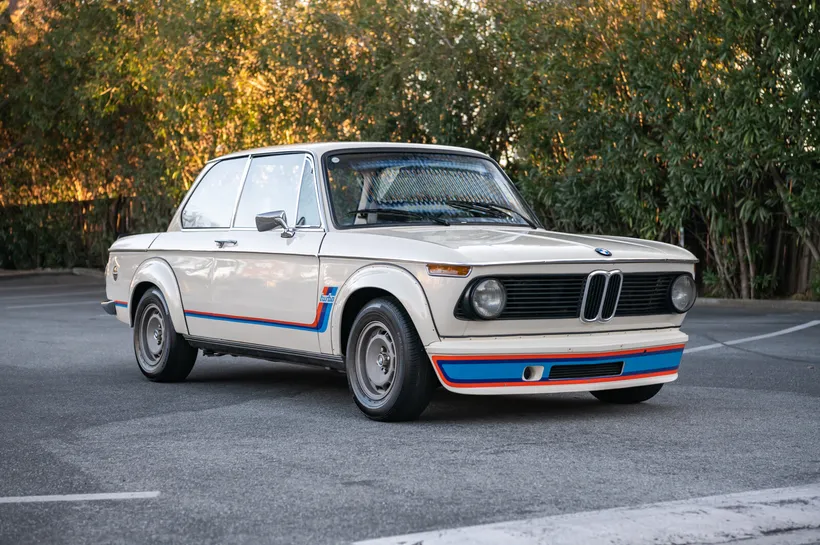
Two identity warnings belong here because they recur constantly. First, the tii: because a tii is worth substantially more than a base car, base cars acquire tii badges, tii injection systems, and tii stories. A genuine tii has the Kugelfischer pump and its distinctive intake plenum and individual throttle housings, a tii-specific VIN sequence, and — critically — the structure to match, including the larger front brakes and the correct ancillaries. An engine swap does not make a tii; it makes a modified base car, and it should be priced as one. Second, the Turbo: with only 1,672 built and values in a different league, replicas exist in numbers. A real Turbo has its own VIN range, the turbocharged engine with its low-compression pistons and oil cooler, the flared arches as factory steelwork rather than add-ons, the deeper front valance, and a paper trail. If any one of those is missing, walk away or pay replica money — there is no middle position.
Finally, do not overlook the humble versions. A well-sorted base 2002 is 90 percent of the driving pleasure of a tii at a fraction of the price and fuel-system risk. The market prices badges. The driver should price condition.
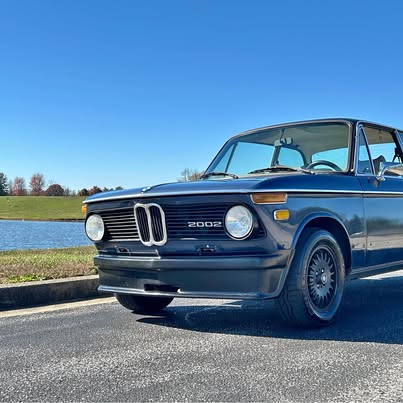
Look at the proportions first, because they are the whole idea of the car: tall upright glasshouse, long flat bonnet, short rear deck, wheels close to the corners. That glasshouse is why the driving position and visibility are so good. When you view a car, stand in this same three-quarter position and check that the door and bootlid gaps are even and that the swage line running the length of the body is unbroken by filler ripples. A 2002 that looks wavy from this angle is telling you its history before you have opened a single panel.
Engines and gearboxes
Every 2002 uses a member of one engine family, the M10, and that is excellent news. The M10 is one of the great production engines: a cast-iron block with an aluminium crossflow cylinder head, a single overhead camshaft driven by a duplex chain, five main bearings on the 2.0-litre crankshaft, and a bottom end so strong that BMW later built its 1,000-horsepower-plus Formula 1 turbo engines on the same basic block architecture. In 2002 form it displaces 1,990 cc from an 89 mm bore and 80 mm stroke. It is not a delicate engine. It is an engine that wears in predictable places, responds to maintenance, and will run — roughly, smokily, but run — long after a neglected example should have stopped. Your job is to judge where on that long arc of wear a particular engine sits.
The carburettor engines: single Solex and the ti twins
The base engine uses a single Solex 32/32 DIDTA (later 32/32 or 36/40 pattern depending on market and year) two-stage downdraught carburettor, with an automatic choke on most versions. European output is 100 hp at 5,500 rpm with 8.5:1 compression; US cars ran lower compression in later years and carried emissions tuning that cost both power and throttle response. The character is torquey and unstressed rather than rev-happy — peak torque arrives low, the engine pulls cleanly from 2,000 rpm, and it will cruise all day at motorway speed turning roughly 3,500 rpm in top gear with the standard final drive. Weaknesses concentrate in the carburettor itself and in the automatic choke, covered in the problem areas section, and in a general loosening with age: worn throttle spindle bushes draw air and make the idle wander, and no amount of mixture adjustment will fix an air leak.
The ti engine raises compression to 9.3:1, fits a hotter camshaft profile, and breathes through twin Solex 40 PHH sidedraught carburettors on individual intake runners — the classic Italianate setup, and it sounds and responds like it. Output is 120 hp at 5,500 rpm. The gain is real but it lives at the top of the rev range; below 3,500 rpm a ti is barely stronger than a base car, and above it the engine takes on the hard, eager edge that makes people seek these cars out. The price is carburettor balance. Twin sidedraughts that are out of synchronisation or worn in their spindles produce exactly the flat, fluffy, disappointing running that gives the model a bad name among people who have only driven neglected examples. A ti that does not pull cleanly and hungrily to 6,000 rpm has a setup problem, not a character trait.
Many cars wear Weber carburettors — a single 32/36 DGV conversion, or twin 40 DCOE sidedraughts. Judge them on their merits: a well-jetted Weber on a healthy engine is a perfectly good way to run a 2002, while a badly jetted one fitted to mask a worn engine or dead injection system is a warning sign. Ask what jets are fitted and who set it up; a seller who knows is a seller who maintained the car.
The tii: Kugelfischer mechanical injection
The tii engine keeps the 9.3:1 compression of the ti, adds a slightly different camshaft, and replaces carburettors with the Kugelfischer PL 04 mechanical fuel injection system. Understand what this system is, because half the fear surrounding the tii is ignorance and the other half is justified. The Kugelfischer pump is a miniature mechanical computer: a four-plunger inline pump, driven at half engine speed from the timing case, whose delivery is shaped by a three-dimensional cam — the famous space cam or 'potato' — that maps throttle position and engine speed to fuel quantity. Fuel is injected at low pressure, around 250–350 psi at the injectors, into the intake ports through four individual throttle housings. There are no electronics at all. Cold enrichment is handled by a warm-up regulator acting on the pump linkage; a separate cold-start injector handles cranking.
When it is right, it is superb: instant throttle response, clean pulling to the 6,400 rpm region, and the definitive 2002 driving experience. When it is wrong, it is wrong in expensive, specialised ways. The space cam wears, the pump's seals harden and leak fuel into the pump's oil supply (check the pump oil for a fuel smell — the classic early warning), throttle housings wear at their shafts, and mechanics who did not understand the system 'fixed' it by adjusting the one thing they could reach, leaving the calibration scrambled. A pump rebuild by one of the handful of specialists who still do it correctly is a $1,500–3,000 job, and throttle housing refurbishment adds more. A tii with documented, recently serviced injection is worth a real premium; a tii with unknown injection and poor running should be priced as if the pump rebuild were already spent — because it soon will be.
The Turbo uses the same Kugelfischer system with a different space cam and calibration, plus a KKK BLD turbocharger blowing through the intake at up to about 0.55 bar (8 psi) of boost, compression lowered to 6.9:1, forged low-compression pistons, an engine oil cooler, and sodium-filled exhaust valves in the specification. It produces 170 hp at 5,800 rpm with pronounced turbo lag below about 3,500 rpm and a violent surge above it. This guide treats the Turbo mainly as an identity and verification exercise — see the models section — because at Turbo money you should be buying with marque-specialist inspection support, not a general checklist.
Gearboxes, clutch and final drive
The standard gearbox is BMW's four-speed manual, a Getrag-built all-synchromesh box with a remote linkage that is precise when its bushes are fresh and vague when they are not. Ratios are sensibly spaced for the engine's torque, and the box itself is strong; the wear items are second-gear synchromesh (test it with fast changes, hot and cold), the linkage bushes and the selector shaft seal, and the rear extension housing bushing on high-mileage cars, which lets the propshaft flange wobble and eats the seal. From 1974 a five-speed overdrive gearbox (Getrag 245 pattern in later terminology) was optional on some markets and is a common and desirable retrofit on any car; the close-ratio five-speed from the later E21 320i and the overdrive five-speed from the E21 and early E30 are the usual donor boxes, and a good conversion uses the correct shortened propshaft, the correct speedometer drive correction, and a clutch matched to the flywheel. A five-speed conversion done properly transforms motorway use — top-gear revs drop by roughly 800 rpm at cruising speed — and should add value. One done with a binding linkage, a vibrating propshaft or a speedometer reading nonsense should subtract it.
The automatic is a three-speed unit (ZF 3HP12 in early cars, Borg-Warner 35 pattern in some markets) with a conventional torque converter. It suits the car poorly — the M10 needs revs and the converter blunts them — but it is durable if its fluid has been changed, and automatic cars are often the least thrashed survivors. Manual conversions are common; check that pedal box, clutch hydraulics, flywheel, spigot bearing and propshaft are all the correct manual parts. The clutch is a straightforward hydraulically operated single dry plate with a life of 60,000–100,000 miles; judder on take-up points to oil contamination from a leaking seal or to a heat-spotted flywheel, not to 'character'.
The final drive is a hypoid unit bolted to the rear subframe, with ratios varying by model and market — typically 3.64:1 on European cars, 3.90:1 on many US and automatic cars. Limited-slip differentials (25 percent lock-up in the common ZF unit) were optional and are frequently claimed and infrequently present; the only proof is the stamped tag or, with both rear wheels off the ground, turning one wheel and watching the other turn the same way. The half-shafts use constant-velocity joints at each end, and their boots and joints are ordinary wear items.
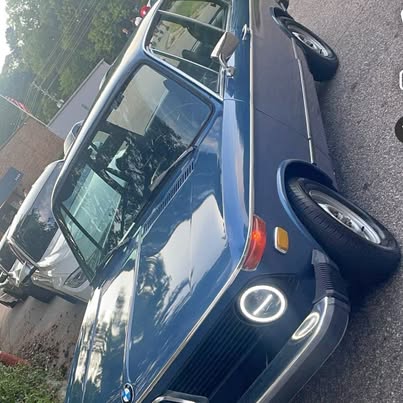
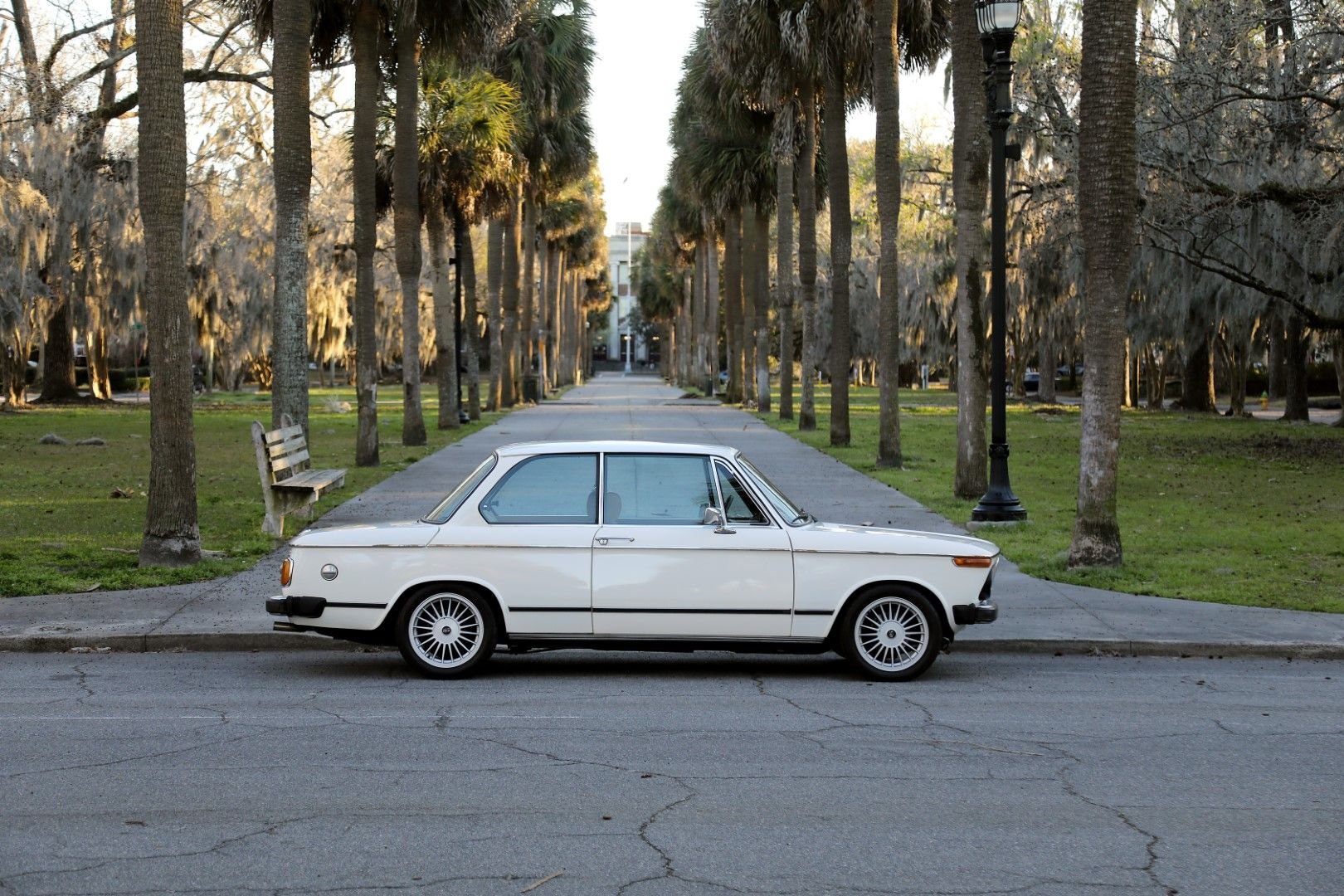
This side view is a stance check as much as a styling photograph. A healthy 2002 sits level or very slightly nose-up, with the top of the rear tyre just clear of the arch lip. Sagging at the rear means tired springs or a rotten subframe mounting area; a jacked-up rear usually means heavy-duty springs fitted to mask exactly that. Look along the sill line: it should be straight. A visible dip in the middle is the shell flexing where floor and sills have lost their strength, and no engine redeems a rotten shell.
Problem areas
A 2002 does not have a long list of exotic failure modes. It has a short list of ordinary ones that have had fifty years to develop, headed — by a distance — by rust. Everything in this section is ordered by consequence: structure first, then the systems that stop, steer and run the car, then the things that merely annoy. Learn the rust map until you can recite it, because on this model the shell is the car. Engines can be rebuilt in a weekend workshop; a shell that needs sills, floors, turrets and arches is a restoration project at restoration prices whatever the advertisement says.
Rust: the map
Start at the front and work back, because the pattern is consistent. The front panel and the valance below it rot around the headlamp bowls and along the lower edge where road spray collects. The front wings (fenders) rot at the rear lower corner where they meet the sill, at the top inner flange where the wing bolts to the inner wing, and around the side indicator. The inner wings themselves — the structural aprons that carry the MacPherson strut turrets — are the first genuinely serious item: the turrets must be sound, because the front suspension bolts to them, and rust where the turret meets the apron, or in the apron rail running back to the bulkhead, is structural work requiring the wing off and proper fabrication. Prod around the turret tops under the bonnet and look for flaking, bubbling or previous plating. A car with plated-over turrets and underseal over the plates has had the cheap version of the repair.
The bulkhead and the front footwells follow. Water enters through a perished windscreen seal, a blocked scuttle drain, or the heater intake, and settles in the front footwells under the sound deadening, where it rots the floor from the top down while the underside still looks respectable. Lift the carpets — insist on it — and press the floor hard with your thumb along the seam where floor meets inner sill and where the pedals mount. The sills themselves are the centre of the whole question. A 2002's sills are structural box sections with an inner, a centre membrane and an outer skin. They rot from the inside out, fed by blocked drain holes and by the rear wheel throwing water at the sill's rear closing panel. By the time the outer sill bubbles visibly, the inner structure is usually far worse. The test is physical: jack the car on its jacking point, or better, open both doors with the car on its wheels and look for movement and misalignment, then get under the car (or get it on a lift) and inspect the inner sill and the floor edges with a light and a screwdriver used as a probe, not a hammer. Honest sill replacement — inner and outer sections, properly sectioned and welded — runs roughly $1,000–2,500 per side at a competent classic body shop, and a car needing both sides plus floors is a car whose purchase price must reflect a five-figure body budget before paint.
The rear of the car has three classic sites. First, the rear wheel arches and the inner arch where it meets the boot floor and the sill end: the double-skinned lip traps mud, and rust here spreads into the quarter panel where it becomes visible and expensive. Second, the boot (trunk) floor and spare wheel well: water leaks past the rear lamp seals and the bootlid seal, pools in the well, and rots the floor and the fuel tank's top surface. Lift the spare wheel out — the well beneath it is one of the most honest pieces of metal on the whole car. Third, and most serious, the rear subframe and differential mounting area. The rear subframe bolts to reinforced points in the boot floor and rear seat area; those reinforcements and the surrounding floor corrode, and the differential nose mount tears its surrounding metal on hard-driven cars. A clunk from the rear on power on/off transitions, or visible cracking and rust around the mounts seen from inside the boot with the trim removed, is a major repair involving dropping the subframe and welding in new metal. On Touring models add the tailgate frame, the aperture seal channel, and the rear pillars; on Baur cars add the scuttle and header rail areas where the conversion's sealing was always marginal.
Doors rot along their bottom edges, the bootlid along its rear lip; the bonnet is usually the best panel on the car. Around the screen apertures, rust starts under the seals and bubbles the paint at the corners — budget for aperture repair and new seals whenever a car is painted. The rule for all of it: underseal is a hiding place, not a treatment. Thick fresh underseal on a car being sold is a question, not an answer. Magnet, light, probe, lift. In that order, every time.
Front suspension, steering and the rear axle
The front suspension is MacPherson struts with lower control arms, an anti-roll bar, and steering through a worm-and-roller steering box (not a rack) mounted on the front subframe. The system's wear points are well defined. Control arm ball joints and the inner arm bushes wear and produce a knock over sharp bumps and a vagueness on turn-in; the track rod ends and the steering box's centre link and idler bushings add free play layer by layer until the car wanders and the steering wheel sits off-centre. Test the steering box itself with the engine off and the wheels straight: more than about an inch of free movement at the wheel rim before the road wheels respond is wear to price in, and adjustment of the box's preload will mask, not cure, a worn worm. Strut top mounts crack their rubber with age; strut inserts (dampers) are replaceable cartridges inside the strut housing and are cheap and transformative when renewed. Front wheel bearings are conventional tapered rollers — listen for a hum that changes with cornering load.
At the rear, the semi-trailing arms pivot from the subframe on rubber bushes that perish and allow the arms to shift, changing rear toe under load and making the car steer from the rear in fast corners — the classic 2002 'loose tail' blamed on the design is usually just fifty-year-old rubber. Renewing the trailing arm and subframe mounting bushes restores the car more completely than any damper upgrade. The differential whines when its bearings or crown wheel and pinion wear — a whine on a light throttle at 40–60 mph that disappears on the overrun is the pinion bearing or mesh, and a diff rebuild is a specialist job in the $800–1,800 range. Half-shaft CV joints click on full lock when worn; a boot kit is cheap, a joint is not.
Brakes fail gradually. Front discs (ventilated on tii and Turbo, with larger calipers) and rear drums are adequate for the car's weight when maintained, and inadequate when the drums are out of adjustment, the flexible hoses are ballooning, or the servo vacuum hose is perished. Cars that have sat develop seized caliper pistons and a long, wooden pedal. A full refresh — calipers rebuilt or exchanged, hoses, rear cylinders, fluid — is a $600–1,500 job at shop rates and should be assumed on any car without recent documented brake work. The handbrake acts on the rear drums and is only ever as good as their adjustment.
Engine wear, cooling and the fuel system
M10 wear announces itself honestly. Cold-start rattle from the timing case that fades in two seconds is chain and tensioner wear — the hydraulic tensioner (a later improvement over the original mechanical unit, and a common retrofit) and the chain guides are service items, and a chain that rattles continuously at idle is overdue. Blue smoke on start-up that clears is valve stem seals, a cheap and common job done in situ. Blue smoke under acceleration is rings and bores; a healthy M10 uses little oil, and consumption beyond roughly a quart in 1,000 miles on a car driven moderately means wear to quantify with a compression test (expect roughly 150–175 psi across all four on a healthy 8.5:1 engine, higher on a 9.3:1 engine, with no cylinder more than about 10 percent below the highest) and, better, a leak-down test. The head gasket fails between cylinders or into the water jacket with age and overheating history; the aluminium head warps if the engine has been run hot, and a skim plus gasket set is routine but must be done by someone who checks the head for cracks between the valve seats and the waterways, the M10 head's known cracking site.
Cooling is marginal by modern standards and unforgiving of neglect. The radiator is small, the water pump's bearing and seal are a 40,000-mile item in hard use, and the viscous or fixed fan (depending on year) moves limited air at idle. A 2002 that runs hot in traffic has a cause — silted radiator, failing pump, collapsed lower hose, wrong or stuck thermostat, retarded ignition — and 'they all do that' is false. Overheating is the fastest way to kill an M10 head, so treat any temperature abnormality as a defect to be diagnosed before purchase, not a quirk to be managed after it.
Fuel system issues divide by type. Carburettor cars suffer heat soak and percolation on hot restarts, worn spindle bushes, perished diaphragms in the accelerator pump and the choke pull-down, and automatic chokes that stick on (rich running, fouled plugs) or off (cold-start misery). The fuel pump is mechanical, cheap and reliable; the tank rusts internally on cars that sat with old fuel, shedding rust that blocks filters and jets in an endless cycle until the tank is removed and cleaned or replaced — if a car has an inline filter full of brown debris, the tank is the problem, not the filter. The tii's Kugelfischer system is covered in the engines section; its additional ownership trap is fuel quality and cleanliness, because the pump's fine tolerances tolerate neither rust nor varnish. Turbo cars add turbocharger bearing wear (blue smoke, shaft play you can feel at the compressor wheel with the intake hose off), perished boost hoses, and the near-certainty that any surviving car has been modified; originality verification is the whole game.
Interior, electrics and trim
The interior is simple, hard-wearing and — this is the catch — increasingly expensive to put right in original materials. Seat foams collapse, early seat padding disintegrates into dust inside the covers, vinyl splits along seat-base seams, and reclining mechanisms develop play. Dashboards crack across the top pad in sun-state cars; uncracked early dashboards are genuinely scarce. Door cards warp when their vapour barriers fail — which also feeds sill and floor rust, so a warped card is a water-management clue, not just a cosmetic item. Headlinings sag where window seals leak, and carpets hide the floors, which is why lifting them is non-negotiable. A full retrim in correct materials can run $3,000–6,000, so a genuinely good original interior is worth real money.
Electrics are conventional Bosch practice and fail conventionally: earths (grounds) corrode and produce haunted behaviour — dim lights, gauges that lie, indicators that flash the dashboard instead of the lamp — and the cure is cleaning the ground points, not replacing components. The fuse box uses ceramic torpedo fuses whose contacts corrode; intermittent everything often traces to a fuse that looks intact but is not making contact. Charging problems are usually alternator brush wear or regulator failure, both cheap. Heater fans squeal and die, and replacing one is an awkward half-day; the heater valve leaks onto the passenger footwell and quietly feeds floor rot. Trim is a mix of good reproduction availability and unobtanium, with early round-lamp rear clusters, early grilles and Touring-specific parts the hardest to source.

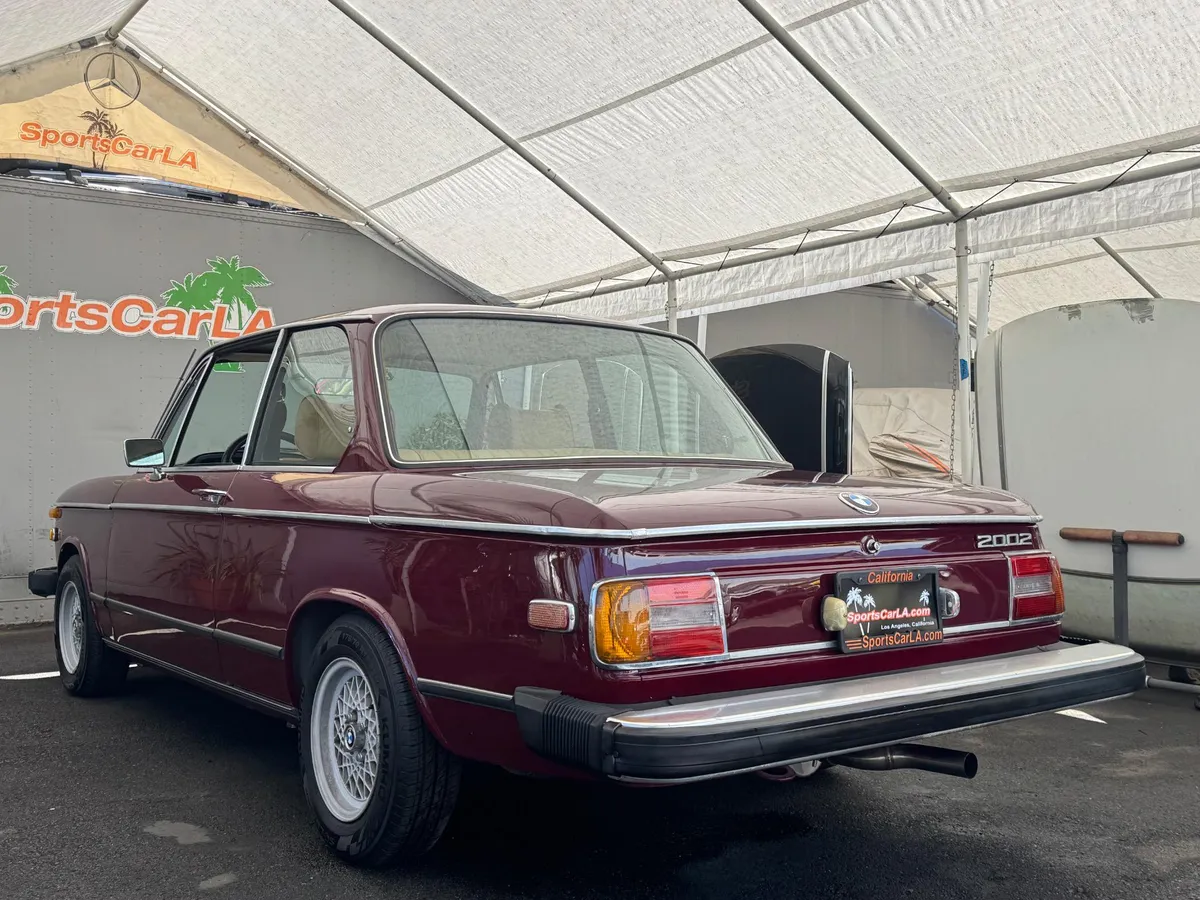
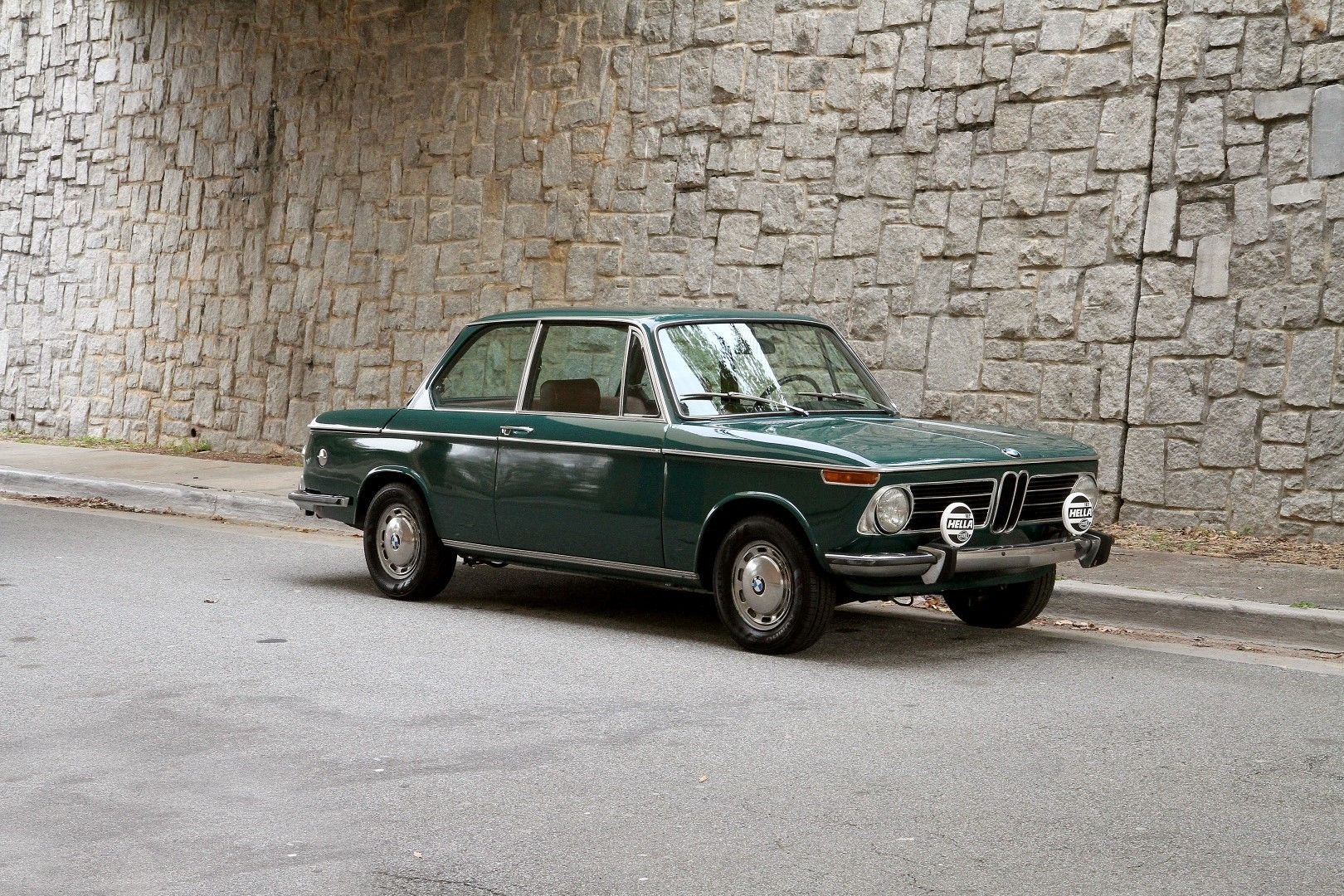
Use this early car to learn the roundie details that sellers get wrong and buyers pay for. Round rear lamps, slim bumpers without the later rubber impact strips, and the simpler grille treatment mark a pre-facelift car, and every one of those parts is harder to replace than the facelift equivalent. Check the rear panel between the lamps for filler and for lamp apertures that have been repaired — the round-lamp panel rusts around the lamp seals and is often plated crudely. On any early car, also price the trim honestly: if the brightwork in the photograph looks tired, replacing it piecemeal will cost more, in money and in months of searching, than the mechanical work the same car needs.
How to inspect one
Inspect a 2002 in a fixed order: identity, shell, structure from underneath, engine health, fuel system, running gear, road behaviour, paperwork. Each stage can end the inspection — there is no point compression-testing an engine in a car whose sills are dust. Bring a magnet in a cloth, a torch, a screwdriver for probing seams, and a friend to work the pedals and steering while you watch. Allow ninety minutes. A seller who will not allow carpets up, a cold start, and time on a lift or ramps is telling you the result in advance.
- Verify the identity before anything else. Read the VIN on the plate in the engine bay and the number stamped into the body, and check both against the title or registration. Then read the engine number on the block's machined pad and confirm it is a 2.0-litre M10 of the correct type for the claimed model. If the car is sold as a tii, find the Kugelfischer pump, the individual throttle housings and the tii ancillaries, and treat a carburettor car with tii badges as a base car, priced accordingly. If it is sold as a Turbo, stop and involve a specialist — the money at stake justifies it every time.
- Start the engine from stone cold, having confirmed beforehand that it is cold by touching the exhaust manifold. Listen for timing chain rattle and how long it lasts, watch for blue smoke on start-up and on the first throttle blips, and note how the choke (or, on a tii, the warm-up enrichment) behaves as the engine warms. An engine that was warmed up before you arrived has had its cold behaviour — the most revealing thirty seconds of the whole inspection — deliberately hidden.
- Walk the exterior slowly with the magnet. Test the lower front wings, sill outers, door bottoms, arch lips, rear panel and bootlid lip. Where the magnet feels dull, there is filler; some on a fifty-year-old car is normal, but filler over the structural areas in the rust section is a negotiation or a walk-away. Check panel gaps and the swage line from a low three-quarter angle.
- Open the bonnet and read the front structure. Inspect the strut turrets and inner wing aprons for rust, plating and cracking, the bulkhead seams, and the battery tray area. Look down the inner wings for accident ripples. Check the radiator for silt and weeping seams, the hoses for perishing, and the coolant for rust colour or oil contamination — either is a finding, not a detail.
- Lift the carpets in both front footwells and the boot, and remove the spare wheel. Press the floors hard along the inner sill seam, inspect the boot floor and well for rust and previous plating, and look at the rear subframe mounting reinforcements visible from the boot. The sill-jack test from the rust section settles the sills: jack on each jacking point in turn and watch whether the point rises with the car or pushes into it. Any crunching, movement or door-gap change ends the structural argument.
- Get the car on a lift or ramps and inspect the underside methodically: inner sills, floor edges, front subframe and its mounts, rear subframe mounts and the differential nose mount area, trailing arm pivot points, brake and fuel lines, and the fuel tank's lower surface. Probe suspect seams with the screwdriver. Fresh underseal applied over rust will flake under the probe and reveal orange dust — the classic signature of a cosmetic underside.
- Quantify the engine. With the engine warm, perform a compression test on all four cylinders and compare the spread, not just the numbers — evenness matters more than the absolute figure. Check the oil for fuel smell and emulsion, the oil filler cap for mayonnaise-type deposits, and the coolant expansion for bubbles at idle that suggest head gasket leakage. On a tii, smell the injection pump's oil supply for fuel dilution, the earliest and cheapest tii test there is.
- Test the fuel system in its own terms. On a carburettor car, check for a wandering idle (spindle air leaks), hesitation on snap throttle (accelerator pump), and rust debris in any inline filter (tank condition). On a tii, demand a drive long enough to test hot restarting, steady-state cruising at light throttle, and full-throttle pulling to at least 5,500 rpm; surging at cruise and richness that fouls plugs point at space cam and pump calibration, and price them as pump work, not tuning.
- Check the gearbox, clutch and driveline on the move and at rest. Fast second-gear changes, hot and cold, expose synchromesh wear; a clutch that bites at the very top of pedal travel or judders on take-up is a clutch and seal job in waiting. Listen for differential whine on a light throttle at 40–60 mph and for rear clunks on power transitions that point back to the differential mount and subframe findings from step 6.
- Assess the suspension and steering as a system. With a helper rocking the steering wheel, watch the track rod ends, centre link and idler for lost motion. Bounce each corner and feel for damper control. On the road, the car should track straight hands-off on a flat road, turn in without a two-stage delay, and hold a line in a fast corner without rear-steer correction. Vagueness is almost always cumulative bush and joint wear — price the full refresh, not one component.
- Drive it properly: at least twenty minutes, mixed roads, full operating temperature. Use the whole rev range, brake hard from speed twice (the second stop tells you about fade and hose condition), test the handbrake on a slope, and run the heater, wipers, lights and indicators. Afterwards leave it idling for five minutes and watch the temperature gauge — the traffic test that sellers' short drives avoid — then shut it off, wait five minutes, and test the hot restart.
- Close with the paperwork. Match the history to the car's condition — invoices for bushes, brake work and injection service are worth more than a stamped book alone. Check what spares come with the car and whether removed emissions or injection equipment (on US and tii cars especially) is included in boxes. Removed original equipment that comes with the car is money; equipment that was thrown away is a future bill.
This late car shows you exactly what to look for on a final-year US example. The big aluminium bumpers sit on hydraulic struts that corrode and seize, and the bumper mounting points in the body take the rust that the struts trap against them — push each bumper corner and check for movement and for bubbling where the mounts meet the panels. Late US cars also carry the heaviest emissions equipment of the run, so under the bonnet you are checking two things at once: whether the thermal reactor and air injection hardware is present and intact (which matters where emissions testing still applies), and whether a previous owner's removal job was done completely and neatly or left vacuum leaks and capped hoses scattered across the engine bay.
Values
The build's market block beneath this guide carries the current numbers — what is listed now and what recorded sales show — and it is refreshed as the market moves, so this section deliberately teaches you how to read those numbers rather than repeating figures that would stale. The 2002 market rewards one thing above all others, and it is not the badge. It is a sound shell with documented work. Learn the spread and you will never overpay for the wrong end of it.
The condition spread on a 2002 is wider than on most classics at its level, because the distance between a rusty project and a properly restored car is measured in bodywork, and bodywork is the most expensive work there is. At the bottom sit project cars: non-running or barely running, structurally rusty, bought for parts value or as a restoration base. Above them are honest drivers — structurally sound, mechanically maintained, cosmetically imperfect — where most sensible buying happens. Above those are restored and exceptional original cars, where the money has visibly been spent on the shell and the details. The gap between a driver and a restored car is not a premium you negotiate away; it is the cost of the work, already done by someone else, at a discount to what it would cost you. When the market figures below show a wide range, that spread is the story: the cheap cars are cheap because of the shell, and no cheap car becomes a good car for less than the price difference.
Variant premiums are real but uneven. The tii carries a consistent premium over the equivalent base car, justified by performance and specification and amplified by scarcity of good ones — but it applies in full only to verified cars with healthy injection; a tii needing pump work gives much of the premium back in the negotiation, and a badged conversion earns none of it. The Turbo is a separate market entirely, priced with the blue-chip collectables, and its figures should never be used to anchor expectations for ordinary cars. Round-lamp early cars carry a modest premium over facelift cars in equivalent condition, driven by looks and by the lighter, simpler specification. Tourings trade at a small discount to saloons despite their rarity, because demand is thinner — which makes a good Touring one of the smarter buys in the range. Automatics are the softest of all and are priced as conversion candidates or gentle drivers; Baur cars sit in a niche where condition and documentation matter more than the usual rules.
Asking prices and achieved prices diverge in the usual way, with one 2002-specific twist: sellers of ordinary cars routinely anchor on the best tii and Turbo results advertised, and price a base automatic as if badges were transferable. They are not. Use the recorded-sales evidence in the market block, not asking prices, to judge where a car sits, and use the inspection findings to move within the range: documented shell work moves a car up, undocumented freshness moves it down, and every structural finding is a priced item, not a debating point. Finally, the project-versus-driver gap: a project makes financial sense only if you can weld, or if the car is a rare variant whose finished value carries the body bill. For a base car, the arithmetic almost always favours buying the best shell you can find and spending on mechanics — the reverse of the order in which most first-time buyers spend it.

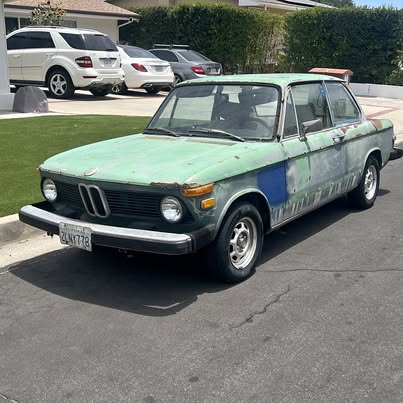
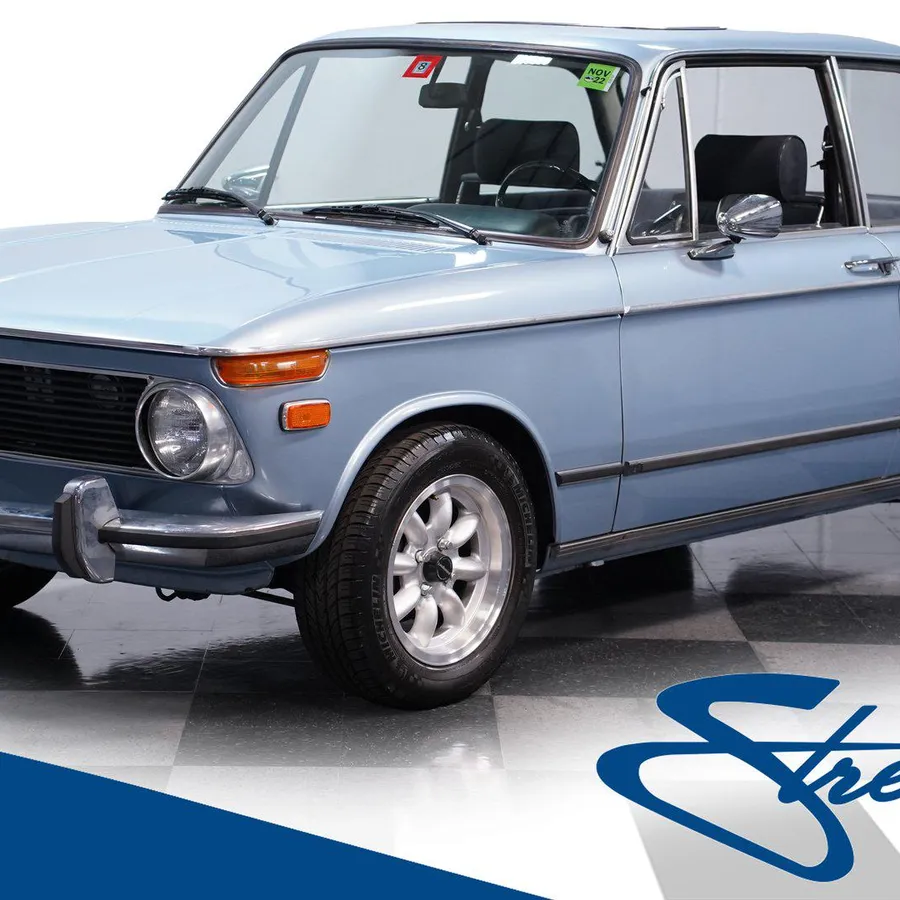
Most cars you will actually see look like this one: a facelift-era, US-market 2002 in a period colour. Judge it by the standards in this guide, not by comparison with the icons. Facelift cars have the best parts availability of the range, the most forgiving prices, and — because they were built in the largest numbers and often kept as second cars — a surprising number of low-rust original survivors among them. A straight, honest car in this specification, bought at driver money, is the centre of the 2002 market for a reason.
Parts and ownership
Owning a 2002 is one of the easiest classic-car propositions there is, provided you accept the division of the parts world into three tiers. The first tier — service items, mechanical wear parts, brake components, suspension bushes, engine internals — is comprehensively supplied, much of it still through BMW's own classic parts operation (BMW Group Classic, formerly Mobile Tradition) and the rest through a deep bench of specialists in the US, Britain and Germany. The M10's long production life in later models means engine parts in particular are rarely a problem: pistons, bearings, chains, gaskets, water pumps and clutch kits are routine orders, not treasure hunts. Budget for consumables at ordinary classic-car levels and expect most mechanical orders to arrive in days.
The second tier — body panels and structural repair sections — is good and improving. Sills, floor sections, wheel arch repair panels, front wings and valances are reproduced, and specialist panel makers supply the more complex pressings. Quality varies: some reproduction wings and arches need real fettling to fit, and a body shop's labour to make a cheap panel fit can exceed the saving over a better panel, so buy panels on reputation. Glass is available, window and door seals are reproduced in varying fidelity (the best windscreen seals matter, because a poor seal is a rust programme), and bright trim is partly reproduced, partly a used-parts search. The third tier — model-specific trim and rare-variant parts — is where ownership gets patient. Early round-lamp rear clusters, early grilles, ti and tii specific fittings, Kugelfischer components beyond service items, Touring tailgate hardware and Baur roof parts are the scarce categories. For a tii, the pump and throttle housings are serviced by a small number of specialists worldwide; join the owner community before you need them, not after.
Running a 2002 day to day is straightforward. Service intervals by modern habit: engine oil and filter every 3,000–5,000 miles (the M10 is kind to oil but the newest oil in any fifty-year-old engine is cheap insurance), valve clearances checked annually — a screw-and-locknut adjustment, easily learned — coolant every two years, brake fluid every two years, gearbox and differential oils every few years. Carburettor cars benefit from use; the cars that deteriorate fastest are the ones that sit, because fuel varnishes, seals dry, and brakes seize. Fuel itself needs one note: the M10 was designed for leaded fuel, but its valve seats tolerate unleaded in normal road use for most owners, with hardened seats fitted as part of any head rebuild removing the question permanently; ethanol-blended modern fuel attacks old rubber fuel lines and carburettor components, so renew fuel hoses with ethanol-rated hose as a first-week job on any new purchase and treat it as safety work, because it is.
The ownership community is a genuine asset: active forums with two decades of searchable repair archives, regional clubs, marque specialists who answer the phone, and a culture of driving rather than polishing. Parts interchange knowledge (which E21 and E30 components upgrade a 2002 properly, and which are bodges) is freely shared. Insurance is ordinary agreed-value classic insurance. Storage advice is standard with one emphasis: keep it dry, because every rust site in this guide starts with water sitting where it should not.
Set a realistic annual budget. A sorted driver, used regularly, typically asks for a modest four-figure spend in a heavy year and far less in a light one, spread across tyres, brakes, bushes and the rolling renewal of fifty-year-old rubber and seals. What it should not do, once sorted, is surprise you — the 2002's failures are telegraphed, gradual and diagnosable, which is precisely why experienced owners recommend it to first-time buyers.
Which one to buy
- The all-rounder: a base 2002, manual gearbox, structurally sound, on its original single carburettor or a well-executed Weber conversion. Ninety percent of the experience, the easiest parts life, the widest choice — buy the best shell offered in this specification and you will not regret it.
- The connoisseur's pick: a verified 2002 tii with documented, recently serviced Kugelfischer injection. The definitive 2002 to drive. Pay the premium only for the verification and the injection health; without both, it is an expensive badge.
- The value buy: a facelift square-lamp car, or a Touring, in honest driver condition. The market underprices both against the round-lamp saloon, and the driving experience gives almost nothing away.
- The gentle buy: an Automatic with a rust-free shell, bought at automatic money, either to enjoy as a relaxed driver or as the basis for a properly executed manual conversion with all the correct parts.
- The early-car buy: a pre-facelift roundie, any engine, bought for its looks and lightness — with its scarcer trim and lamp parts audited before purchase, not after.
- The blue-chip buy: a genuine 2002 Turbo, bought only with specialist verification of VIN, engine and structure and a paper trail that survives scrutiny. At this level you are buying an asset that happens to be a car; inspect it like one.
- The project buy: only a rare variant, or a base car so cheap that its parts value underwrites the purchase, justifies taking on structural rust. If you cannot weld, the project to buy is someone else's finished bodywork.
The overriding rule: buy the shell, not the badge, the engine or the story — a rust-free base car is a better 2002 than a rusty tii at any price, because every mechanical fault on this model can be fixed in a workshop and a rotten structure can only be fixed with a restoration budget.

Finish where the model finished, with a final-year car. Its value does not live in its year; it lives in whether its structure survived New England winters, whether its emissions-era engine still pulls cleanly, and whether its history is documented. That is true of every 2002, from the first round-lamp car of 1968 to this last car of 1976. The badge stayed the same for eight years. The cars underneath it vary enormously — and now you know how to tell them apart.
See the 625 2002 cars currently listed.
For sale now
 $21,250
 $38,950
Expand
 $21,250
 $21,250
 $119,000
 $40,995
Expand
Expand
What they sell for: 2002 sale prices.