
BMW 2002tii buyer's guide
BMW 2002tii -- the model's own buyer's guide: variants, values and what to check.
Years listed: 1971-1975 · Series: 2002
# BMW 2002tii — Buyer's Guide
Overview and history
The BMW 2002tii is the thinking driver's version of the car that made BMW in America. Take the standard 2002 — the light, boxy, two-door Neue Klasse saloon that from 1968 onwards taught a generation that a small car could be precise, quick and properly engineered — and replace its single downdraught carburettor with Kugelfischer mechanical fuel injection. You gain roughly a quarter more power, a throttle that answers the instant you move your foot, and clean pulling power from low revs to the red line. The little "tii" badge — touring international injection — understates the difference. Drive a sorted tii back to back with a sorted carburetted car and you will not need the badge explained to you.
The tii arrives late in the 2002 story, and that timing shapes everything about buying one now. BMW launches the injected car in Europe in 1971 as the flagship of the range below the later Turbo. The United States gets it for the 1972 model year, and US production ends after 1974: tightening emissions rules make the expensive, low-volume model hard to justify, and the carburetted 2002 carries on alone through 1976. European production continues into 1975 in small numbers as the E21 3 Series takes over. So the tii is a short-run car — three US model years, a handful of European years either side — built in the tens of thousands worldwide, with only a minority to US specification. On Classic Listings the pool reflects that shape: 58 cars recorded at the time of writing, 19 offered for sale and 39 recorded as sold, concentrated in the 1972 to 1974 model years, with California the single largest state by a wide margin. It is not a rare car in the Turbo sense, but it is a genuinely uncommon one.
The tii premium — and there is a real, durable premium over an equivalent carburetted car — buys you the driving experience, the rarity, and the definitive normally aspirated 2002. It also buys you exposure to the one system on the car that cannot be fixed with ordinary workshop skills. A Kugelfischer pump that is worn, maladjusted or passing fuel into its own oil is a specialist rebuild, and a generation of mechanics who did not understand the system made many surviving cars worse by adjusting what they could reach. So the tii buying rule is stricter than the 2002 rule: buy the shell first, the injection system second, and everything else after that. This guide works in that order — and it asks nothing of you on trust. Every important tii claim, identity, injection health, engine condition and structural soundness included, can be tested, measured or inspected on the day.

The models
The tii badge covers fewer variants than the wider 2002 range, but the variants it does cover differ in ways that matter to value, to driving and to what can go wrong. The axes are market, model year and the 1973 facelift — and then, cutting across all of them, the single question of whether the car in front of you is a tii at all.
European cars come first, chronologically. BMW builds the tii from 1971, initially alongside the twin-carburettor ti, which it soon eclipses. The European car is the lightest and purest specification: no federal emissions equipment, slim chrome bumpers throughout its life, and the full European output. A genuine European-specification car in the US today is usually a later personal import. Check its paperwork, lighting, speedometer units and title history with the care you would give any grey import — not because European cars are suspect, but because their histories are harder to verify from US records alone.
The US car is the mainstream tii and the one this guide centres on, and it runs three model years. The 1972 car is the early car: round rear lamps — the "roundie" — slim bumpers, the earlier cylinder head and intake hardware detailed in the engines section, and the least emissions encumbrance of any US tii. The 1973 car is transitional: still a roundie, but carrying detail changes under the bonnet. The 1974 car is the square-light car: rectangular rear lamps, revised grille and trim, and the large aluminium US impact bumpers — the "diving boards" — that add length and weight. The 1974 tii keeps its performance better than the 1974 carburetted car does, because the Kugelfischer system meters cleanly enough to live with tightening standards without the thermal reactor that blights the last carburetted US cars. Even so, a 1974 is a heavier, softer-edged car than a 1972, and you should feel that on the test drive and see it in what you pay.
| Variant | Years | Engine | Output | Built | Character |
|---|---|---|---|---|---|
| 2002tii, European specification | 1971–1975 | 2.0 M10, Kugelfischer injection | 130 hp (DIN) | Minority of tii production; personal imports in the US | The purest tii; verify import paperwork and history carefully |
| 2002tii, US specification, early | 1972–1973 | 2.0 M10, Kugelfischer injection | 125 hp (US tune) | The bulk of US tii sales | The roundie everyone wants; earliest cars carry early intake hardware |
| 2002tii, US specification, facelift | 1974 | 2.0 M10, Kugelfischer injection | 125 hp (US tune) | One US model year only | Square lamps and impact bumpers; injection intact, edges softened |
| 2002 Turbo | 1973–1974 | 2.0 M10, turbocharged, Kugelfischer | 170 hp (DIN) | 1,672 | A different car and a different market; specialist territory, covered here only as an identity warning |
Now the trap, stated as plainly as it can be stated, because it is the most expensive mistake in this market. A carburetted 2002 wearing tii badges is not a tii. The premium attracts the badge, and badges are cheap. Sellers — some dishonest, some merely repeating a previous owner's story — present base cars with tii lettering, cars with a tii engine dropped into a carburetted shell, and cars with injection hardware fitted to an engine never built as a tii unit. Each is a modified 2002, worth substantially less than a genuine tii in the same condition. The evidence is physical and documentary, and you can check all of it yourself: the Kugelfischer pump at the front of the engine with its drive belt, the alloy plenum and four individual throttle housings in place of any carburettor, the cold-start injector and warm-up regulator hardware, the rear-mounted electric supply pump, a VIN in the tii's own dedicated sequences, and — on an original car — an engine number on the block's pad that corresponds to the chassis number. A mismatch means an engine change at some point in the car's life: not automatically a reason to walk away, but a reason to reprice the car as what it demonstrably is, and to make the seller's story earn its money with invoices rather than adjectives.
Finally, place the tii against its siblings. Against a base 2002 it is sharper, faster, more valuable, and riskier in exactly one system. Against the Turbo it is the sane purchase: most of the character, a fraction of the cost and complexity, and a market deep enough to buy and sell in without a specialist broker. For road use, the tii is not the consolation prize of the 2002 range. It is the summit.

Engines and gearboxes
The M10 in tii specification
Every tii uses the same fundamental engine as every other 2002: the M10, displacing 1,990 cc from an 89 mm bore and an 80 mm stroke, with a cast-iron block, an aluminium crossflow cylinder head, a single overhead camshaft driven by a duplex chain, and five main bearings. Tilted 30 degrees in the bay to keep the bonnet line low, it is famously over-engineered in its bottom end and one of the most durable engines of its era. The tii version differs in compression, breathing and fuel delivery: compression rises to around 9.0:1 in US tune and higher in European tune, the camshaft profile exploits the injection's precise metering, and the head and ports are the best-flowing production M10 castings of their day. Output is 130 hp in European DIN terms and about 125 hp in US tune, delivered high in the rev range — this engine makes its power by revving, pulls with real enthusiasm past 4,000 rpm, and is redlined in the mid-six-thousands. Torque is what you feel on the road: the injected engine answers from 2,500 rpm in a way the carburetted engine, waiting for its choke-era Solex to catch up, does not.
Two cylinder heads appear in tii production. Early cars carry the casting marked 121; during 1972 production BMW introduces the E12 casting, with revised port and chamber shaping, and later tii engines carry it. Neither head makes a car wrong — both are correct factory fitments for their build dates — but head swaps are common after overheating damage, and a seller claiming an original engine whose head casting contradicts the build date owes you the story and the paperwork. The castings crack in a known place when an M10 has been run hot: between the valve seats and the adjacent waterways. Any head that comes off should be crack-tested before money is spent on it.
Engine wear follows the standard M10 pattern — honest and progressive. A brief timing-chain rattle at cold start that fades within a second or two is an ageing tensioner; a chain that rattles continuously is overdue a chain, guide and tensioner job. Valve stem seals harden and pass oil, giving the classic puff of blue smoke on start-up and on the overrun; that is a modest in-situ job and no reflection on the bottom end. Smoke under load is rings and bores, and that is a rebuild conversation. Oil consumption is your simplest gauge: a healthy M10 consumes little, and consumption approaching a quart in a thousand miles on a gently driven car means wear that a compression test — expect roughly 160 to 185 psi across the four on a healthy high-compression tii engine, with no cylinder far below the highest — and a leak-down test will quantify. Do both before purchase on any car priced as a strong engine; they convert "runs great" into numbers. The engine wants oil changes on the traditional 3,000-mile classic rhythm, clean coolant, and a cooling system in full health, because the M10's one genuine fragility is its alloy head's intolerance of overheating. Treat the temperature gauge as the most important instrument on the car.
The Kugelfischer injection system
This is the section the whole purchase turns on, so take it slowly. The Kugelfischer system — the pump belongs to the PL 04 family — is mechanical fuel injection in the purest sense: no electronics, no software. A four-plunger inline injection pump, mounted at the front of the engine and driven at half engine speed by a toothed belt from the crankshaft, generates injection pressure and delivers metered fuel to four injectors, one in each intake port. What decides how much fuel each plunger delivers is the system's famous three-dimensional cam — the space cam, sometimes called the potato for its shape — a sculpted cam whose surface encodes the engine's fuel map. A follower rides the cam, positioned by throttle opening on one axis and engine speed on the other, and the surface height at that point sets the plunger stroke. It is a mechanical computer, machined in steel, and when its surface is unworn and its linkage is set to the factory marks, it meters with a precision carburettors cannot approach. That is the whole secret of the tii's throttle response: the fuel is already correct, everywhere in the range, the instant you ask.
Fuel reaches the pump from an electric supply pump at the rear of the car near the tank, through a filter, at low feed pressure; the injection pump raises it to injection pressure — an order of magnitude beyond anything a carburettor ever sees — and any leak on the high-pressure side is a fire risk, not a nuisance. The air side is equally distinctive: a large alloy plenum feeds four individual throttle housings, one per cylinder, each with its own butterfly on a linked shaft. Early production uses plastic intake runners between the housings and the head; later cars use aluminium runners. The plastic runners crack with age and heat cycling, drawing unmetered air and spoiling the idle and low-speed running in ways that get blamed on the pump; the aluminium runners are the durable answer, and their presence on an early car is a sensible upgrade, not an originality crime. Throttle shafts wear in their housings and leak air the same way. Before anyone condemns a pump, a competent specialist checks the air side — runners, shaft play, linkage geometry, per-cylinder balance — because air leaks mimic injection faults almost perfectly.
Cold running is managed by two devices that between them explain most bad-running tii complaints. The cold-start system uses a separate injector in the plenum, fired during cranking by a thermo-time switch that limits it by coolant temperature and cranking time; a car that will not start cold but runs well hot often has a dead cold-start injector, a failed switch or no power to either — all cheap and testable. Warm-up enrichment is handled by the warm-up regulator acting on the pump's linkage: cold, it holds the mixture rich; as the engine warms, it leans the delivery to the hot-running map. Stuck in the cold position, the car runs rich all the time — sooty plugs, fuel smell, poor economy — and a seller tells you "they all run a bit rich." They do not. Stuck in the hot position, the car is lean and hesitant when cold, stalls at junctions until fully warm, then runs deceptively well for the rest of the test drive — which is why the inspection section insists on a genuinely cold start observed by you.
Pump wear announces itself through the pump's oil. The pump carries its own small oil supply lubricating the cam and followers, and as the plungers and seals wear, fuel migrates past them into that oil. The test is primitive and definitive: remove the pump oil filler, smell the oil, and check its level and consistency. Oil that smells strongly of petrol, sits overfull, or runs thin between your fingers is telling you the pump is passing fuel — the classic early warning, present long before the car stops running properly. Budget accordingly: a pump rebuild by one of the handful of specialists who hold the correct space cams, test benches and calibration data is a $1,800–3,500 job depending on what the bench finds, and throttle housing refurbishment adds several hundred more. Against that, a pump with documented recent specialist service is one of the strongest value signals a tii can carry. Ask for the invoice; the specialists are few enough that a genuine one names a workshop the community knows.
Set-up is the last piece. A Kugelfischer system is calibrated on the pump bench and then set on the car with the linkage at its factory reference marks; the system's great ownership trap is the well-meaning adjustment of the one accessible linkage by someone chasing a symptom whose cause lay elsewhere — a cracked runner, a tired supply pump, retarded ignition. Each such adjustment scrambles a calibration that can only be restored methodically. Smooth idle at the correct speed, clean pick-up with no flat spot, no rich smell hot, no cold hesitation beyond the first minute, and plugs of an even biscuit colour after a mixed drive: that is what correct looks like, and a car that does all of it has been in good hands.
Gearboxes, clutch and final drive
The tii's gearbox story is short, because BMW keeps it simple: every factory tii is a manual. The standard box is the Getrag four-speed, all-synchromesh, with ratios well matched to an engine that likes revs — you change down for overtaking rather than leaning on torque, and the box rewards it with a precise, mechanical shift when its linkage bushes are fresh. Worn bushes make the change vague and the lever floppy at rest; that is a cheap bush kit and an hour or two of labour, and it transforms the car, so do not let a sloppy change talk you out of a good car — but do use it to talk the price down. The box's real wear item is second-gear synchromesh, tested by brisk changes up and down, hot and cold. A box that crunches second only when cold is worn; a box that crunches it always is a rebuild, in the $1,200–2,500 range at a specialist including removal and refitting.
A close-ratio five-speed is a rare factory option and a common talking point in advertisements; treat any claimed factory five-speed tii as a claim requiring build-record proof. Far more common, and entirely respectable, is the overdrive five-speed conversion using the Getrag 245-pattern box from the later E21 320i: correctly done, with the shortened propshaft, the right clutch and speedometer correction, it drops cruising revs by several hundred rpm and makes a tii a relaxed long-distance car. Done badly — binding linkage, vibrating propshaft, speedometer adrift — it subtracts value instead. The Classic Listings pool shows the pattern honestly: the overwhelming majority of recorded cars are manuals described simply as such, with a handful recorded as five-speeds and four-speeds. Judge a conversion on its execution and paperwork, not its existence.
There is no automatic tii, and the point deserves repeating here because it is a gearbox fact with identity consequences: an automatic car wearing tii badges is a badged carburetted car or a home conversion, priced as a carburetted car with a story. The clutch is a conventional hydraulically operated single dry plate, with a life of 60,000 to 100,000 miles in ordinary use; judder on take-up means oil contamination from a leaking crankshaft rear seal or gearbox input seal, or a heat-spotted flywheel, and the fix is a clutch job at $700–1,200 in parts and labour, during which the leaking seal gets replaced as a matter of course. The final drive is a hypoid unit on the rear subframe, most commonly a 3.64:1 ratio, with a limited-slip differential — a ZF unit with modest lock-up — as a period option claimed far more often than it is fitted. The proof is the tag on the casing or, with both rear wheels clear of the ground, turning one wheel by hand and watching the other turn the same way. An open differential's opposite wheel turns backwards. Physics wins.

Problem areas
A tii fails in two currencies: rust, which it shares with every 2002, and injection trouble, which is its own. Everything else is ordinary classic-car maintenance at ordinary prices. This section is ordered by consequence, starting where every 2002 inspection starts — because a tii with a rotten shell is a parts car with an interesting engine, whatever the asking price says.
Rust: the map
The shell is unitary, the steel is ungalvanised, and the youngest tii is now half a century old. Work from the front. The front panel and valance rot around the headlamp bowls and along their lower edges. The front wings rot at the rear lower corner where they meet the sill, along the top flange, and around the side repeater lamp. The inner wings carry the MacPherson strut turrets, and rust in the turret or the apron rail running back to the bulkhead is structural: the front suspension hangs off that metal. Look under the bonnet for flaking, bubbling or previous plating around the turret tops, and be suspicious of fresh underseal or paint localised exactly there. Plating over a turret without cutting out the rot is the cheap repair, and it lasts about as long as the sale process.
The bulkhead, scuttle and front floors come next. Water gets in past a perished windscreen seal, through a blocked scuttle drain, or past the heater intake, and sits under the sound deadening in the front footwells, rotting the floor from the top down while the underside still photographs well. Lift the carpets — insist, and treat refusal as a result — and press hard along the seam where the floor meets the inner sill and around the pedal mounting area. Softness, flaking or the crunch of dead metal under your thumb settles the question. The heater valve, mounted above the passenger footwell, leaks coolant into exactly the same area, so a sweet smell and damp carpet on that side is a water-management story, not just a heater story.
The sills are the centre of the whole car. They are structural box sections — inner sill, centre membrane, outer skin — and they rot from the inside out, fed by blocked drain slots and by road water thrown at the rear closing panel. Visible bubbling on the outer sill means the inside is worse, always. Test physically: get the car on a lift or ramps and inspect the inner sill and floor edges with a lamp and a screwdriver used as a probe; check the jacking points will take the car's weight without complaint; open both doors on level ground and look for the gaps changing as the shell flexes. Honest sill work runs roughly $1,000–2,500 per side at a competent classic body shop, and a car needing both sills, floors and turrets is a restoration project whose price must leave a five-figure body budget intact before paint is discussed. On a tii the value ceiling is high enough that proper shell work can be economically rational where it would sink a base car — but only at project money. Pay driver money for project metal and the arithmetic never recovers.
The rear has three classic sites. The rear wheel arches and inner arches trap mud in their double-skinned lips and rot outward into the quarter panel, where the repair becomes visible and expensive. The boot floor and spare wheel well collect water past tired rear lamp seals and the bootlid seal; lift the spare wheel out, because the well beneath it is one of the most honest pieces of metal on the car, and check the top of the fuel tank for the rust pooled water leaves there. Most serious is the rear subframe and differential mounting area: the subframe bolts to reinforced points in the floor and boot area, those reinforcements corrode, and the differential nose mount tears its surrounding metal on hard-driven cars. A clunk from the rear on and off the power, or cracking and rust around the mounts with the boot trim removed, means dropping the subframe and welding in new metal — a walk-away-or-reprice moment on any car not sold as a project. Doors rot along their bottom edges, the bootlid along its rear lip, and screen apertures bubble under their seals. Fresh, thick underseal on a car being sold is a question, not an answer: magnet, lamp, probe, lift, in that order.

The injection and fuel system in service
Everything in the engines section about how the Kugelfischer system works becomes, in service, a short list of recurring failures. Learn them as symptom-and-cause pairs, because sellers describe symptoms and you are buying causes.
Rich running when hot — sooty plugs, fuel smell, poor economy, black haze under load — points first to the warm-up regulator stuck in its cold position or its linkage maladjusted, second to a worn space cam or pump calibration drift, and third to supply-side fuel pressure problems. A plug read and an exhaust gas check hot, plus the pump-oil check below, separate a twenty-minute regulator fault from a pump at the end of its life — and that difference is most of the purchase negotiation. Lean hesitation when cold that clears completely when hot points the other way: regulator stuck lean, a dead cold-start injector or thermo-time switch, or low supply-pump delivery at cranking. A car that starts instantly from cold, idles cleanly, then stumbles for the first mile has a warm-up fault, not a personality.
Fuel in the pump oil is the tii's signature wear warning. The pump's plungers and seals age, fuel migrates into its lubricating oil, and the oil level rises, thins and smells of petrol. Check it on every car, without exception: filler cap off, smell, dip a finger, judge the consistency. A pump passing fuel is approaching a bench rebuild at $1,800–3,500, and no adjustment cures it, because the fault is internal wear, not calibration. The second signature fault is air, not fuel: cracked plastic intake runners on early cars and worn throttle-shaft bores on high-mileage cars admit unmetered air, producing a lumpy, hunting idle and lean low-speed running that generations of owners have tried to cure at the pump. Inspect the runners for hairline cracks — flex them gently and listen — and check for shaft play at each throttle housing. Runners and housing work cost hundreds, not thousands, which is why the air side is checked before the pump is condemned.
The rest of the fuel system is shared 2002 hardware with tii consequences. The rear electric supply pump tires with age and delivers less than the injection pump demands, showing up as starvation under sustained load rather than at idle; a timed delivery test into a container, done safely away from ignition sources, settles it. The tank rusts internally on cars that have sat with stale fuel, shedding debris that blocks filters and threatens a precision pump; a filter full of brown sediment means the tank is the problem, and cleaning or replacing it, at a few hundred dollars plus labour, is part of the real price of the car. Every rubber fuel hose not documented as replaced should be assumed perished: on the high-pressure side of this system a split hose is a fire, so budget a full hose replacement with correct high-pressure-rated line as an immediate post-purchase job. Ethanol in modern fuel accelerates all of this, and a tii that has sat for years needs its whole fuel path, tank to injectors, treated as suspect until flushed and proven.
Engine, cooling and ancillaries
The M10's failure modes are covered mechanically in the engines section; the ownership points are these. Overheating is the engine's one fast route to serious damage, and the cooling system that prevents it is small, old and intolerant of neglect: a radiator that silts up internally, a water pump whose bearing and seal are consumables, hoses that collapse internally while looking sound, a thermostat that sticks. A tii that runs hot in traffic has a cause — find it before purchase, because "they all do that" is false and the consequence of believing it is a warped or cracked head. A cooling-system pressure test and a combustion-gas check in the coolant take minutes and belong in any serious inspection. Head gasket failure follows overheating history; look for emulsion under the oil filler cap and coolant loss without an external leak, and confirm with the gas test rather than arguing from symptoms.
Oil leaks are endemic and mostly cheap: rocker cover, timing case, sump and crankshaft seals all weep with age, and a dry M10 is usually a recently cleaned M10. Judge leaks by rate and location — a rear main seal leak matters because it contaminates the clutch and shares labour with a clutch job. The exhaust manifold cracks on hard-used cars and ticks when cold, and the tii's manifold is model-specific enough that a cracked one is a sourcing exercise. Ignition is conventional points-and-coil Bosch practice; a car that misfires under load wants plugs, leads, cap, rotor and points checked in that order before anyone blames the injection.
Chassis, steering and brakes
The front suspension is MacPherson struts with lower control arms and an anti-roll bar; steering is by a worm-and-roller box, not a rack, and its feel depends on the accumulated play in the box, the centre link, the idler and the track rod ends. More than about an inch of free movement at the wheel rim before the road wheels respond means wear to price in, and adjusting the box's preload masks a worn worm rather than curing it. Control arm ball joints and bushes knock over sharp bumps and dull the turn-in. Strut inserts are replaceable cartridges and one of the best-value renewals on the car; strut top mounts crack their rubber with age; front wheel bearings hum and change note with cornering load. None of it is expensive individually — a full front-end refresh with quality parts is a $800–1,800 exercise at shop rates — but together it is the difference between the taut car the tii is supposed to be and the vague one neglected examples become.
At the rear, the semi-trailing arms pivot on rubber bushes that perish and let the arms shift, changing toe under load and making the car steer gently from the rear in fast corners. Owners blame the design; the design is fine, the rubber is fifty years old. Renewing the trailing-arm and subframe bushes restores the car's manners more completely than any damper change, and it is the first chassis money a new owner should spend. The differential whines on a light throttle at cruising speed when its pinion bearing or gear mesh wears — a whine that vanishes on the overrun is the classic signature, and a rebuild is a specialist job in the $800–1,800 range. Half-shaft CV joints click on lock when worn, and their boots split long before that; a boot kit is cheap insurance caught early.
Brakes on the tii are front discs with the model's larger calipers and rear drums, entirely adequate when maintained and quietly dangerous when not. Cars that have sat grow seized caliper pistons, ballooning flexible hoses and a long wooden pedal; rear drums drift out of adjustment and take the handbrake's effectiveness with them. Assume a full refresh — calipers rebuilt or exchanged, hoses, rear cylinders, fluid — at $600–1,500 on any car without recent documented brake work, and treat a seller's "brakes feel fine" on a car covering a few hundred miles a year as an unverified claim. Wheels matter too: the correct fitment is a modest-width tyre on a 13-inch wheel, and oversized wheels with ultra-low-profile tyres ruin the ride and steering feel the car was built around.
Interior, electrics and trim
The cabin is simple, durable and increasingly expensive to restore in correct materials, which inverts the usual buying logic: a genuinely good original interior is worth real money because you cannot recreate it cheaply. Seat foams collapse and early padding disintegrates inside the covers; vinyl splits along seat-base seams; reclining mechanisms develop play. Dashboards crack across the top pad in sun-belt cars — and the pool's geography, with California the dominant state, means you will see the best-preserved metal and the most sun-cooked dashboards in the same market. Uncracked early dash pads are genuinely scarce. Door cards warp when their moisture barriers fail, and that failure also feeds water into the sills and floors, so read a warped card as a water clue, not just a cosmetic one. A full retrim in correct materials runs $3,000–6,000; price tired interiors accordingly.
Electrics are conventional Bosch and fail conventionally. Corroded earth points produce the haunted symptoms — dim lamps, lying gauges, indicators flashing the dashboard — and the cure is cleaning earths, not replacing components. The ceramic torpedo fuses corrode at their contacts and cause intermittent faults while looking intact; rotating each fuse in its holder cures a surprising share of tii electrical mysteries on the spot. Heater fans squeal and fail and are awkward to replace. Trim is the long-term ownership tax: early round-lamp clusters, early grilles and tii-specific small parts are the hard-to-source items, while mechanical parts remain well supported — price missing early trim with the search cost, money and months, honestly included.

How to inspect one
Inspect a tii in a fixed order — identity, cold start, shell, underside, engine, injection, running gear, road test, paperwork — and let each stage end the inspection if it fails. There is no point leak-down-testing an engine in a car whose sills are dust, and no point falling for a beautiful shell until you have smelled the injection pump's oil. Bring a magnet wrapped in cloth, a lamp, a screwdriver for probing seams, a friend to work the controls while you watch, and ninety minutes. Insist on three things before you travel: the engine stone cold on arrival, the carpets liftable, and access to a lift or ramps. A seller who refuses any of the three has given you the inspection result early.
- Verify the identity before anything else. Read the VIN plate and the number stamped into the body and check both against the title. Confirm the car sits in the tii's own VIN sequences rather than the carburetted cars' sequences, then find the physical injection: Kugelfischer pump at the front of the engine with its drive belt, alloy plenum, four individual throttle housings, cold-start injector, warm-up regulator linkage and the rear electric supply pump. Read the engine number on the block's pad and compare it with the chassis number. A carburettor under the bonnet of a car sold as a tii ends the inspection at tii money — the car is a badged 2002, whatever the badges say.
- Confirm the engine is genuinely cold — touch the exhaust manifold — then start it and stay outside the car for the first minute. Note how readily the cold-start system fires it, whether it settles to a clean enriched idle, and how the warm-up regulator behaves as temperature builds: the idle should steady and clean progressively, with no rich smell lingering once the engine is hot and no stalling at the first junctions. Watch for blue smoke at start-up (stem seals), smoke under the first hard blips (rings), and listen for timing chain rattle and how many seconds it survives.
- Smell the injection pump's oil while the engine warms. Filler cap off: petrol smell, an overfull level or thin, fuel-cut consistency means the pump is passing fuel internally and a specialist bench rebuild belongs in the price. This is the single cheapest test in this guide and the one that protects you from the model's single most expensive surprise.
- Work the shell with the magnet and your eyes. Front panel, wing bottoms, door bottoms, rear arch lips, bootlid lip, screen corners. Magnet fall-off means filler; ripples along the flank mean history. Check door gaps with the car on its wheels, then look for the gaps changing as a door is opened and closed — movement is shell flex, and shell flex is structure.
- Lift the carpets and the boot trim. Press the front floors along the inner sill seam and around the pedals; inspect the boot floor, lift the spare wheel and read the well beneath it, and examine the rear subframe and differential mounting area for rust and cracking. Damp on the passenger side sends you to the heater valve as well as the seals.
- Get the car in the air. Probe the inner sills and floor edges, test the jacking points, inspect the strut turrets from below as well as above, and check the subframe mounting points front and rear. Spin each wheel: listen for bearing hum, feel for caliper drag, and look at the flexible brake hoses for cracking and ballooning. Fresh underseal concentrated in exactly these places is a finding, not a reassurance.
- Test the steering and suspension statically. With the engine off and the wheels straight, measure free play at the wheel rim; an inch or less is acceptable, more is a priced list of box, link, idler and track-rod wear. Bounce each corner and watch the damping settle; rock each front wheel top and bottom for bearing and ball-joint play; inspect the rear trailing-arm and subframe bushes for perished, extruded rubber.
- Run the engine health numbers. With the engine hot, take a compression test across all four cylinders and a leak-down test on any cylinder that reads low; check oil pressure behaviour at hot idle; pressure-test the cooling system and test the coolant for combustion gas. Compare what you measure with what the seller claims the engine is — a rebuilt engine produces invoices, and its numbers produce themselves on your gauges.
- Audit the fuel system end to end. Inspect every rubber hose for age and correct pressure rating, the tank outlet and filter for rust sediment, and the supply pump's delivery volume. Sediment in the filter means tank work in your near future; original-looking hoses mean a full hose replacement in your immediate future. Neither is negotiable at tii injection pressures.
- Road test for at least twenty minutes, including the full warm-up from the cold start you witnessed. The car should pull cleanly from 2,500 rpm with no flat spot, rev eagerly past 5,000 rpm, idle hot without hunting or rich smell, and restart hot without drama. Work the gearbox hard: fast changes into second, up and down, hot and cold, expose the synchromesh. Listen for differential whine on a light throttle at cruising speed and for rear-end clunks on power transitions, and brake firmly from speed more than once — the car should stop straight, with a firm pedal that does not sink.
- Test every electrical consumer and read the results as a system. Lights, indicators, gauges, heater fan, wipers, horn. Intermittent or haunted behaviour usually traces to earths and torpedo-fuse contacts rather than components, but a car where nothing electrical works properly is telling you about the standard of its last decade of maintenance — believe it, and apply the same discount to the mechanical claims.
- Finish with the paperwork, and make it prove the expensive things. Invoices for injection pump service from a recognisable specialist, engine work, sill and floor work with photographs taken during the repair, and a history file that matches the car's VIN and engine numbers are worth more than any verbal history. A thin file on a car priced as a sorted tii means you are being asked to pay for work nobody can prove happened. Price the car you can verify, not the car you are told about.

Values
Read the market figures that accompany this guide — the current listings and the recorded sales — as a spread, not a price, because the tii market is above all a condition market. The gap between the best and worst genuine tii is enormous, wider than the gap between a good tii and a good carburetted car, and it is driven by three things in strict order: the shell, the injection, and the paperwork. A rust-free car with a tired engine is a sound purchase at the right level, because engines are rebuildable on a known budget. A shiny car over repaired rust is the market's most persistent trap. And a car with a recently rebuilt injection pump, evidenced by a specialist invoice, sits in a different value band from an identical car whose pump condition is unknown — the unknown pump is a deferred bill of unpredictable size, and experienced buyers discount for it automatically.
Within the model, the premiums are rational and you should expect to pay them rather than argue with them. Early US cars — the round-lamp, slim-bumper 1972 and 1973 cars — carry a premium over the 1974 facelift car, because they are lighter, prettier to most eyes and closer to the European original; the 1974 car answers with easier trim sourcing and, often, a less hard-driven life. European-specification cars command interest for their purity when their import history is fully documented, and a discount when it is not. Original, build-record-confirmed bright colours earn a genuine premium over the same colour applied later over a different birth colour, and matching engine and chassis numbers earn theirs. A well-executed five-speed conversion is broadly value-positive for a car bought to drive and value-negative for a car bought as a collectible — decide which buyer you are before you decide what a conversion is worth.
The project-to-driver gap is where tii economics bite the unwary. A project tii looks temptingly close to a driver in photographs — the model photographs well even when tired — but the honest distance between them is the full cost of shell work, injection work and a mechanical refresh, and those three bills together exceed the price difference between a project and a sorted driver in almost every market condition. The rational project buyer wants the restoration itself, or is buying a specification no sorted equivalent matches. Everyone else buys the best car they can find and lets a previous owner have paid for the welding and the pump bench. Negotiation follows the same logic: your leverage is never the asking figure, it is your itemised, evidenced list — pump oil that smells of fuel, sill metal that moves under a probe, synchromesh that crunches on your test — priced at real workshop rates. Sellers who resist the inspection itself have answered it already.
Parts and ownership
The tii sits in the sweet spot of classic ownership: old enough to be simple, popular enough to be supported. Mechanical parts for the M10 and running gear are available from BMW's own classic parts operation and from a deep bench of independent specialists in the US and Europe, and most service items — filters, ignition parts, brake components, bushes, clutch kits — are ordinary orders at ordinary prices. A major service with fluids, filters, plugs and a valve-clearance check runs a few hundred dollars in parts and is well within home-workshop scope; the car was designed for an era when owners did this work, and it shows in the access and the fasteners.
The injection system is the exception that organises your ownership life, and it is a manageable exception if you respect it. The pump itself is not a parts-counter item: rebuilds belong to the small group of specialists who hold the space cams, seals and test benches, at the $1,800–3,500 level quoted earlier, and turnaround is measured in weeks, so a car in regular use should have its pump health monitored — oil smell and level at every service — rather than discovered at failure. Injectors, supply pumps, filters and hoses are available; throttle housings are refurbished rather than replaced. Keep the fuel clean and the car used — these systems deteriorate faster in storage than in service — because the pump's tolerances forgive neither rust nor varnish.
Body and trim parts split by era. Facelift panels and trim are the easier finds; early round-lamp clusters, early grilles and slim-bumper brightwork take searching and cost accordingly, which is why the models section tells you to price missing early trim into the purchase rather than assume it can be found later. Glass, seals and weatherstrip are well reproduced, and interior materials are available in correct or near-correct patterns — with the caveat from the problem areas section that a full retrim at $3,000–6,000 makes original interiors worth preserving at almost any reasonable cost.
Running costs beyond the injection are modest by classic standards. Insurance is mainstream classic-car business. Fuel consumption in mixed use is respectable for a performance car of its era, provided the warm-up regulator is doing its job; a tii drinking fuel is a tii asking for diagnosis, not a tii being a tii. Tyres in the correct sizes are inexpensive. The ownership rhythm is simple: use the car regularly, service it on time rather than mileage, store it dry, keep the battery charged and the fuel fresh, and join the model community — the 2002 owner network is one of the deepest in the classic world, and its knowledge of who rebuilds pumps and which cars are known is a genuine ownership asset.

Which one to buy
- The all-rounder: a 1973 US car with documented injection service and a sound, honestly presented shell. You get the early-car look and bumpers, the later detail specification, and the deepest choice in the market — this is the tii to buy if you intend to drive it for a decade.
- The purist's pick: a 1972 US car, or a documented European-specification car, with matching engine and chassis numbers and its early intake hardware either intact and sound or replaced with the aluminium runners by a known hand. The earliest cars are the lightest and the most collectible, and they reward owners who value originality over convenience.
- The value buy: a 1974 facelift car in a strong colour with a full history file. The market discounts the bumpers and the square lamps; the car underneath is the same injected M10 experience with the same rust map, and a well-kept 1974 is the cheapest honest route into a genuine tii.
- The driver's project: a structurally sound car with tired cosmetics and unknown injection, bought at project money with the pump rebuild already in your budget. The shell is the non-negotiable — everything else on a tii can be bought, rebuilt or refinished, but rotten structure at driver money is the one purchase this guide exists to prevent.
- The one to avoid: any car whose tii identity rests on badges and a story — carburettor under the bonnet, wrong VIN sequence, no injection hardware — priced as a tii. Walk away at that price without regret; the genuine cars are findable, and the pool of recorded cars, with dozens of sales behind it, proves the market is deep enough to wait in.
The overriding rule: buy the shell first, the injection second and the story last — a rust-free tii with a documented pump is worth more than any other tii at the same money, and a car that fails the identity checks is not a tii at any price.
See the 356 2002tii cars currently listed.
For sale now
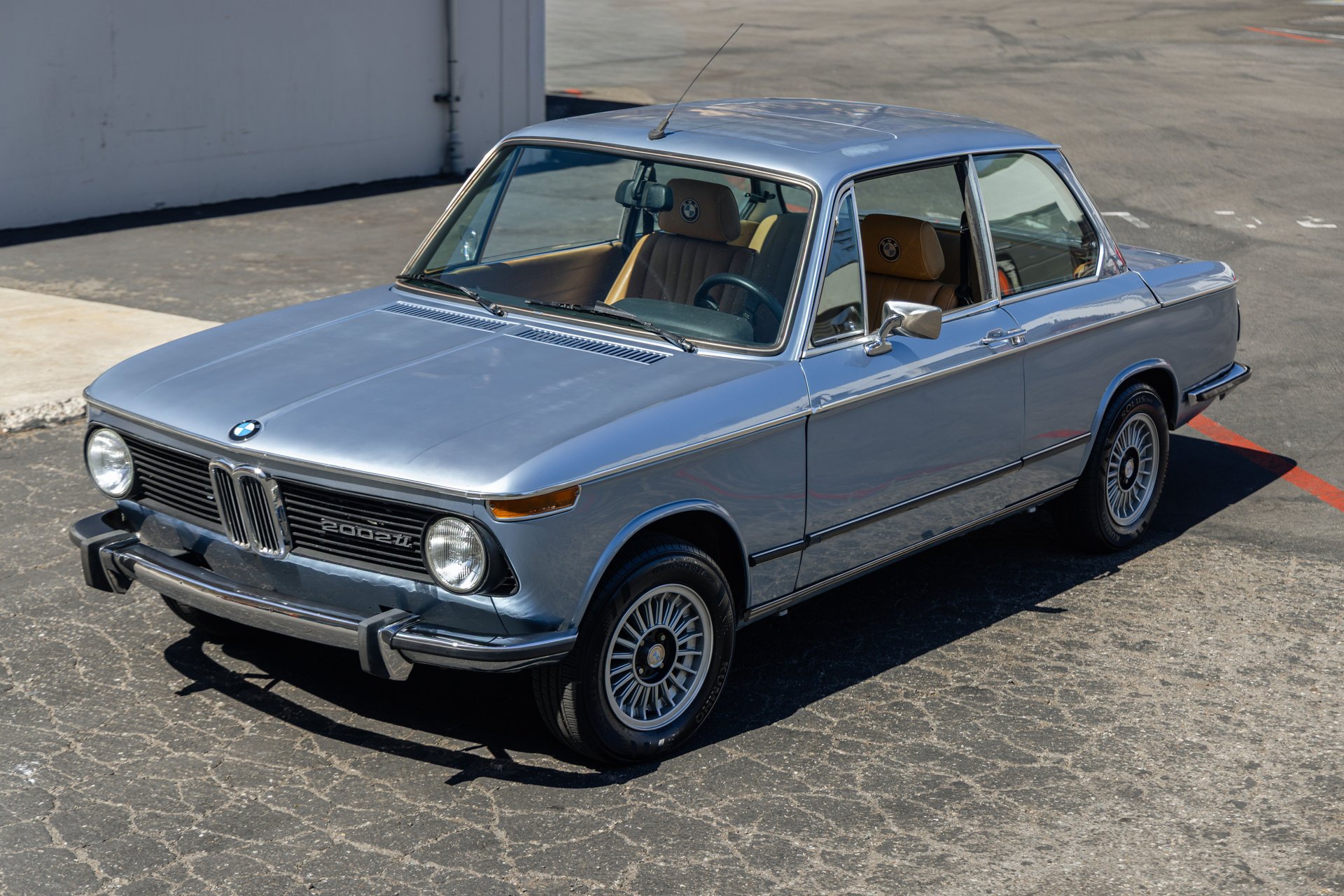 $49,995
Expand
 $49,995
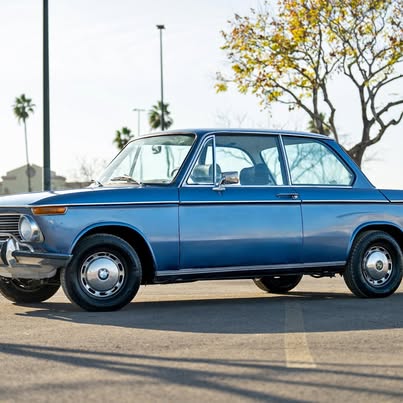 $28,000
Expand
What they sell for: 2002tii sale prices.