
BMW 3 Series buyer's guide
BMW 3 Series -- the model's own buyer's guide: variants, values and what to check.
Years listed: 1981-1998 · Series: E21
Overview and history
The BMW 320i is the car that carried BMW through the late 1970s in America, and it is two cars wearing one badge depending on where you stand. This guide covers the car our listings actually hold: the US-market E21 320i, sold in the United States from the 1977 to the 1983 model years. Every car in our current pool — four cars, spanning 1978 to 1983 — is an E21. There is no E30 in the pool, and that matters, because in Europe the 320i name continued on the E30 with a small six-cylinder M20 engine that was never officially sold in the US. A European E30 320i and a US E21 320i share a badge, a layout and almost nothing else. If a seller describes a six-cylinder 320i, you are looking at a grey import or a misunderstanding, not at the car this guide prices and inspects.
The E21 was the first car BMW called a 3 Series. It replaced the beloved 2002 in 1975 in Europe and reached the US for 1977, and the brief was difficult: keep the 2002's sporting character while meeting American safety and emissions rules that were tightening every year. The result is a compact two-door sedan — every US 320i is a two-door, whatever a listing's body-style field says — with a long bonnet, an upright cabin, MacPherson strut front suspension, independent semi-trailing arms at the rear, rack-and-pinion steering and a fuel-injected four-cylinder engine where most rivals still ran carburettors. BMW built roughly 1.36 million E21s across all engines and markets, and the 320i was the only version America officially got for most of the run.
Under the bonnet sits the M10, one of the great long-lived engine designs. BMW's four-cylinder architecture dated to the early 1960s, powered the 2002 and would, in developed form, still be winning races decades later. In the 320i it came in two sizes: a 2.0-litre for 1977–79 and a smaller, cleaner 1.8-litre from 1980, both running Bosch K-Jetronic continuous fuel injection. Neither is fast by modern standards. Both are honest, torquey, mechanical-feeling engines in a car light enough to make the most of them.
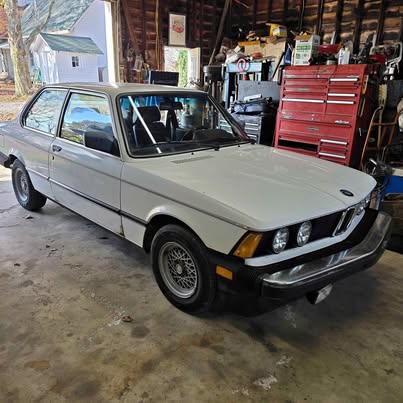
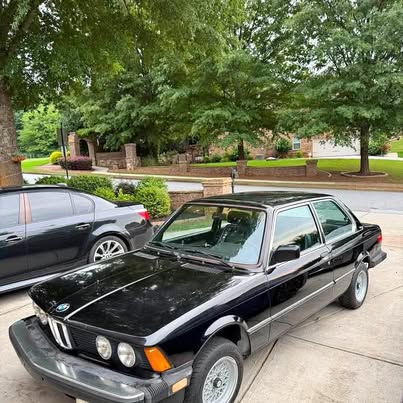
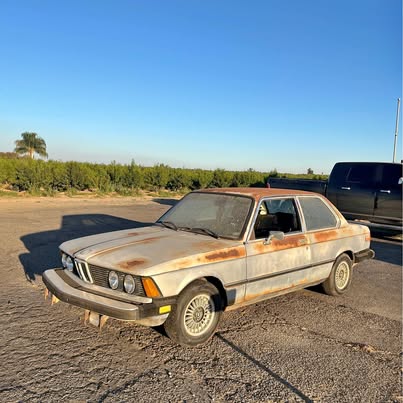
What defines a 320i today is not the engineering, which is fundamentally sound, but the forty-plus years since. These were affordable used cars for a long time — bought cheap, driven hard, parked outside, and maintained to a budget that rarely stretched to rustproofing or injection specialists. The survivors divide sharply. Cars from dry states that stayed in use tend to be structurally honest and mechanically tired in fixable ways. Cars from the salt belt, and cars that sat for a decade anywhere, tend to be the opposite: presentable at ten paces and expensive underneath. Our own small pool illustrates the spread — the four cars currently tracked sit in Indiana, Georgia, California and Missouri, and where an E21 has lived matters more than how far it has driven.
Buy one for what it is: a light, simple, communicative classic sedan you can drive every day, work on in a home garage, and hear working. The steering talks, the engine note is a proper four-cylinder growl, and nothing about the car is filtered or assisted into numbness. Go in with your eyes open about rust and about K-Jetronic, and a good 320i is one of the most usable classics of its era at any price.
The models
The US range is refreshingly simple. There is one body, one basic specification, and a clean split in the middle of the run where the engine shrank and the emissions equipment changed character. Understanding that split — 2.0-litre early cars against 1.8-litre late cars — is most of what "which 320i" means.
| Model | Years | Engine | Output | Built | Character |
|---|---|---|---|---|---|
| 320i 2.0 | 1977–1979 | 2.0-litre M10 four, K-Jetronic | 110 hp (SAE net) | Part of about 1.36 million E21s, all variants | The torquier early car; thermal-reactor emissions, four-speed manual |
| 320i 1.8 | 1980–1983 | 1.8-litre M10 four, K-Jetronic with lambda | 101 hp (SAE net) | Part of the same E21 total | The cleaner, sweeter car; catalyst, five-speed manual, better economy |
| 320iS | 1980–1983 | 1.8-litre M10 four, K-Jetronic with lambda | 101 hp (SAE net) | A package, not a separate production line | The driver's pick: Recaros, sport suspension, air dam, alloys |
| 320i Automatic | 1977–1983 | Engine as per year | As per year | A minority of US sales | Three-speed ZF automatic; relaxed, slower, usually gentler lives |
(Outputs are US SAE net figures. BMW did not publish a clean US-only production split for the 320i in a form we can verify, so no US total is claimed here — treat any seller quoting an exact US build number with suspicion unless paperwork supports it.)
The early cars, 1977–79. The 2.0-litre cars feel a little brawnier than the later ones and have the simpler, more 2002-like character many enthusiasts prefer. They also carry the era's least lovable emissions hardware: a thermal reactor exhaust system, air injection and exhaust gas recirculation, described in the problem areas section because a cracked reactor is a real bill and a legal question in states that still test. The standard gearbox is a four-speed manual. Interiors are at their most basic, and the early dashboard and trim details differ in small ways from late cars. A sunroof was a popular option throughout the run.
The late cars, 1980–83. For 1980 BMW re-engineered the US car around the catalyst era: the 1.8-litre engine with a three-way catalytic converter and oxygen-sensor lambda control, a five-speed overdrive manual as standard, electronic ignition, and detail improvements throughout. On paper the 1.8 gives away nine horsepower to the 2.0. On the road it gives away very little — it revs more sweetly, the five-speed makes freeway work far more relaxed, and the fuel system is easier to keep legal and correct. Most experienced E21 people, choosing a car to drive rather than to collect, choose a late car.
The 320iS. The iS was an option package offered on the late cars, not a separate model, and it is the connoisseur's 320i. It brought Recaro sports seats, a deeper front air dam, fog lamps, cross-spoke alloy wheels, a leather-wrapped sports steering wheel, uprated suspension with a larger front anti-roll bar and a rear bar the standard car lacks, and deletion of the exterior model badge. A limited-slip differential was a separate option frequently ordered on iS cars, but it was not guaranteed by the package — verify it on the individual car, as the inspection section explains. Because the iS wears no badge, sellers both over-claim it and overlook it: a car with Recaros and an air dam is probably an iS, and a car claimed as an iS without them is not.
The automatic. The optional three-speed ZF automatic takes the edge off the performance and the involvement, and everyone in the market knows it, so automatics are the cheapest way into a sound shell. That is a legitimate strategy — the manual conversion is well understood — but price a conversion honestly before assuming it. Automatics often had easier lives and better-preserved interiors, and a good automatic is a pleasant, unhurried car in its own right.
Trim, options and colours. Air conditioning was a common and desirable fitment, usually a Behr system, and it works adequately when fully sorted and poorly when anything is tired. Power steering was not part of the US 320i recipe — the steering is unassisted, light at speed and heavy only in parking manoeuvres. Period colours in our pool run from White and Black to Blue and Polaris Metallic, a silver that suits the car's sharp lines particularly well. Whatever the colour, originality of the shell matters more than the shade: a repaint in a non-original colour is a negotiation point, and a repaint over filler is a walk-away point.


Engines and gearboxes
The 2.0-litre M10: 1977–79
The early US 320i runs the 1,990 cc version of the M10: an iron block, an alloy single-overhead-cam cylinder head with two valves per cylinder, a chain-driven camshaft and a bore and stroke of 89 mm by 80 mm. US cars ran a low 8.1:1 compression ratio to suit the emissions tune and the fuel of the day, and made 110 hp SAE net. It is an understressed engine in the best sense. The bottom end is famously strong — the same basic architecture carried far more powerful racing derivatives — and in road tune the crankshaft, rods and pistons are rarely the problem at any mileage you will meet.
What the 2.0 asks for is basic, regular care. Valve clearances are set mechanically, by eccentric adjusters on the rocker arms, and they close up or open out with wear until a neglected engine ticks, loses a little crispness and eventually burns a valve if ignored for long enough. Clearances want checking roughly every 15,000 miles — about 0.15 to 0.20 mm cold — and a car with a service record showing valve adjustments is a car that was looked after by someone who understood it. The timing chain is a single-row chain with a hydraulic-and-spring tensioner; a brief rattle at a cold start that fades as oil pressure builds is the tensioner taking up, while a rattle that persists hot, or a slapping noise on the overrun, is a worn chain and guides asking for a planned job — realistically $900–1,800 with the associated parts — before it becomes an unplanned one. Oil leaks are endemic and mostly harmless: rocker cover gasket, front crank seal, the distributor O-ring and the oil filter housing all weep with age, and a dry M10 is rarer than a wet one. Judge leaks by rate, not presence. A drip that marks its parking space overnight is a job; a misting that never reaches the floor is a characteristic.
The early cars' ignition still uses contact breaker points in the distributor, with dwell and timing set as a service operation. Worn points, a tired condenser and a worn distributor advance mechanism produce exactly the flat, hesitant running owners then blame on the injection. Set the ignition right before diagnosing anything downstream of it — that order of operations, ignition first, fuel second, is the single most valuable diagnostic rule on an early 320i. Vacuum and centrifugal advance both need testing: a seized centrifugal advance makes the car feel strangled at speed, and a split vacuum diaphragm makes it stumble just off idle.
The 1.8-litre M10: 1980–83
For 1980 the US engine shrank to 1,766 cc — the same 89 mm bore with a shorter 71 mm stroke — and compression and tune changed for the catalyst era. Output is 101 hp SAE net, but the character improved: the shorter stroke makes the 1.8 the freer-revving engine, and with the five-speed gearbox behind it the later car is the better drive in almost every real situation. Electronic ignition replaced points, removing one whole class of service neglect.
The bottom-end virtues carry over unchanged, and so do the ownership rules: mechanical valve clearances on the same roughly 15,000-mile rhythm, the same chain and tensioner behaviour, the same weeping gaskets. Two late-car specifics deserve attention. First, the catalyst and lambda tune make the engine more sensitive to exhaust leaks ahead of the oxygen sensor — a blowing manifold gasket admits air, the sensor reads lean, the system enriches, and the car runs rich and thirsty for a reason that looks electronic and is actually a gasket. Second, overheating does an M10 head no favours at any age: an engine that has been cooked can warp the alloy head and, in bad cases, crack it between valve seats. Milky oil, coolant loss with no visible leak, or a cooling system that pressurises hard from cold are head-gasket-or-worse symptoms on either engine, and the honest price of a head gasket job — $1,200–2,200 done properly with a skim and pressure test — belongs in the negotiation, not in your surprises file.
Bosch K-Jetronic: the system that decides how the car runs
Every US 320i uses Bosch K-Jetronic, also called CIS — continuous injection system. There is no computer metering fuel in pulses. Instead, intake air lifts a sensor plate in the airflow meter; the plate's movement, through a lever, raises a plunger in the fuel distributor; and the distributor feeds all four mechanical injectors continuously, in proportion to airflow. System pressure is high — around 5 bar, roughly 70 psi — and the pressure that actually meters the fuel, called control pressure, is varied by the warm-up regulator: low when cold, for enrichment, rising to roughly 3.4–3.8 bar warm. The injectors themselves are simple spring-loaded nozzles that open at about 3 bar and spray whenever pressure is present. Understand those moving parts and you understand every classic CIS symptom.
A healthy system starts instantly hot or cold, idles evenly, and pulls without hesitation. The failure modes cluster predictably. Cold-start trouble with a good warm start points at the cold-start circuit: the cold-start injector on the manifold, fired briefly by the thermo-time switch, and the auxiliary air valve that raises cold idle speed — a valve that sticks shut gives a cold engine that will not idle, and one that sticks open gives a warm engine idling far too fast. A car that starts cold but hunts and stalls until warm usually has a warm-up regulator whose control pressure is wrong — its internal bimetal strip and electric heater drift with age, and the test is a pressure gauge, not guesswork: control pressure measured cold and warm against specification settles it in ten minutes. A car that starts cold, runs well warm, but cranks forever on a hot restart has the signature CIS fault, loss of rest pressure, covered in detail in the problem areas section.
On the 1980-on lambda cars, a frequency valve in the system buzzes continuously in normal operation, trimming the mixture around the oxygen sensor's reading. You can hear it and feel it with a fingertip. A silent frequency valve on a running late car means the lambda system is dead — failed valve, failed relay, dead sensor or broken wiring — and the car is running on its base mechanical setting, which is survivable but not correct, and not legal where emissions equipment is inspected.
The cardinal rule with K-Jetronic is that it is a pressure system, and it is diagnosed with a pressure gauge set — a proper system-and-control-pressure test costs $200–400 at a shop that knows CIS, and it replaces a thousand dollars of parts-swapping. The cardinal sin is adjusting the mixture screw to mask a fault: the screw sets the relationship between plate and plunger, it interacts with everything, and cars that have been "tuned" by ear arrive with every baseline wrong. A seller who boasts that his mechanic "adjusted the injection" has told you something important.
Gearboxes
Early cars carry the Getrag 242 four-speed manual as standard; from 1980 the Getrag 245 five-speed, with an overdrive top, became the standard US manual and is the gearbox most buyers should want. Both are light, precise boxes with a slightly notchy, mechanical change that is part of the car's charm. Judge them on second-gear synchromesh — the first to wear, tested by a brisk change down from third on the move — and on noise in neutral that disappears when the clutch is pressed, which is input bearing wear. A full synchro-and-bearing rebuild runs roughly $1,500–2,800; a used box is cheaper but a gamble of the same age. Clutch life is ordinary, replacement $900–1,600 fitted, and a high, vague biting point or judder on take-up prices the job into the car. Behind the gearbox, the rubber flex disc — the guibo — at the front of the propshaft and the centre support bearing perish with age; vibration under load in the lower gears and a clunk on taking up drive are their signatures, and together they are a $450–850 job that transforms a shabby-feeling car.
The optional automatic is ZF's 3HP22 three-speed. It suits the car's relaxed side, changes cleanly when healthy, and is a strong, simple unit. Hesitation engaging drive or reverse from cold, flaring between changes, or dark, burnt-smelling fluid all point to a rebuild in the $2,200–3,800 range, and on an automatic car the fluid's colour and smell are worth more than the seller's account of the box. Manual conversions are well documented and use factory parts, but budget for the box, pedal box, flywheel, clutch hydraulics and labour as one sum — and remember the finished car is a conversion, which the next buyer will also note.
Problem areas
Everything mechanical on a 320i can be fixed with money you can plan for. The body decides whether the car deserves that money. Our current pool is small — four cars — so this section makes no statistical claims from it; it is written from how these cars age, and your inspection should assume the faults below are present until the individual car proves otherwise.
Rust: the map
E21 rustproofing was average for the 1970s, which is to say the car was protected well enough for its first decade and is now more than forty years past it. Rust follows water and trapped mud, in this order:
Front floor pans and the toe boards. The single most important structural check after the sills. Water enters past tired windshield seals and through the heater plenum, runs down inside, and sits under the carpets and sound deadening at the front footwells. The pans rot from the top down as well as the bottom up, which is why a car can look sound underneath and still have floors like lace under the mats. Lift every carpet. Surface scale is treatable; perforation is a cut-and-weld job at roughly $700–1,800 a side fitted, and floor rust never travels alone — read it as a marker for the whole shell's life.
Sills, rockers and jacking points. The sills carry the jacking points and trap road dirt thrown up by the front wheels. Prod along the full length of both sills and around each jack point, and distrust fresh black underseal or fresh paint on a car whose seller calls it original. A sill that flexes, crunches or flakes under firm thumb pressure is structural welding — roughly $900–2,000 a side cut out, welded and painted properly — and a car needing both sills and both floors has consumed most of a cheap purchase price before it turns a wheel.
Rear wheel arches, rear panel and trunk floor. The arch lips trap mud against the inner arch, and the rear panel and trunk floor suffer from water entering past the rear window seal and the trunk seal, then sitting in the spare wheel well and the low corners either side of it. Lift the spare wheel out — never judge a trunk floor with it in place. Staining and surface rust are a clean, treat and seal afternoon. A perforated trunk floor is panel work at roughly $600–1,500, and rust creeping from the well into the rear panel seams is worse than it photographs.
Rear shock towers. Inside the trunk, the tops of the rear suspension turrets are a known E21 failure. The towers carry the spring and damper loads, they are sprayed with road water from below, and they rot at the seam where turret meets inner wing. Perforation here is not cosmetic: it is the rear suspension's mounting, and repair is fabrication, priced per car, that can exceed a cheap car's value. Push hard on the tower tops and look for cracking paint and movement. This is the check sellers' photo sets most consistently omit.
Front strut towers, inner wings and battery tray. In the engine bay, examine the strut tower tops for cracking and rust at the seams, the inner wings along their length, and the battery tray and the metal beneath it, which corrodes from acid from above and is invisible with the battery in place. Rock the battery and look at the tray edges with a torch; tray replacement is small money, inner-wing repair underneath it is not.
The smaller traps. Door bottoms, where blocked drain slots let the doors hold water — run a fingertip along every door's lower edge and feel for bubbling. The bottoms of the front wings behind the wheels. The sunroof frame and its drain tubes on sunroof cars, where a blocked drain delivers water to the headlining and the floor rather than to the road. The windshield and rear window surrounds, where rust starts under the seal and announces itself as a lifted, cracked rubber and a damp carpet. None of these alone kills a car. Together they describe how it lived, and the welding bill for "a few small areas" has ended more E21 projects than any engine failure.
K-Jetronic and the fuel system in old age
The injection hardware itself is durable. What fails is pressure, rubber and cleanliness — and storage. Work through the system in the order the fuel travels.
Tank, pump and accumulator. Cars that have sat develop rust and varnish in the tank, and the first drives stir it into the filter and the fuel distributor. A whining in-tank or main pump, a car that starves under sustained load, or filters that clog repeatedly are contamination symptoms, and cleaning the system end to end — tank out and cleaned, lines flushed, filters renewed — is a $600–1,400 recommissioning job that no additive replaces. The main fuel pump itself is $180–350 for the part and fails noisily before it fails completely, which is a kindness. The fuel accumulator, a spring-and-diaphragm canister by the pump, holds rest pressure after shutdown so the fuel in the lines stays liquid and pressurised. When its diaphragm fails, pressure bleeds away within minutes, the fuel in the warm engine bay vaporises, and the car needs long cranking on a hot restart while a cold start — helped by the cold-start injector — stays fine. That symptom split is the diagnosis: hot-restart cranking with perfect cold starting is rest pressure until proven otherwise, proven with a gauge watching pressure decay after shutdown. An accumulator is a $120–220 part and an hour's fitting; it is also the most misdiagnosed fault on the car, routinely blamed on the starter, the battery and "old cars".
The fuel distributor and injectors. The distributor's control plunger moves in a barrel with microscopic clearances and sticks when varnish from stale fuel gums it — the stored-car fault. A sticking plunger gives mixtures that are wrong in ways that change with temperature and throttle, and freeing it is specialist work; a professional distributor rebuild runs roughly $600–1,100, which is why fuel-system cleanliness on a stored car is priced before purchase, not after. The mechanical injectors wear and dribble: a dribbling injector leaks fuel into a port after shutdown, causing a lumpy first seconds of running and contributing to hot-start trouble. Injectors are testable on a bench for spray pattern and opening pressure, and a set renewed is roughly $250–500 in parts. The rubber seals where the injectors sit in the manifold harden and leak air — and on CIS, air that enters after the sensor plate is unmetered air, leaning the mixture in a way no adjustment cures. New injector seals cost pennies; finding them as the cause is the skill.
Air leaks generally. The big rubber boot between airflow meter and throttle, the manifold gaskets, the vacuum hoses to the brake booster and distributor, the oil filler cap seal, even the dipstick seal — every one is a vacuum leak that leans the idle and makes the car hunt and stall. A CIS car with a poor idle has an air leak until a smoke test or a systematic hose-by-hose inspection proves otherwise. Budget $150–400 to renew the full set of perishable rubber in the intake path on any car without evidence it has been done, and expect the transformation to be out of proportion to the bill.
Warm-up regulator and cold-start components. The warm-up regulator sets cold enrichment and drifts; its electrical heater fails open-circuit, leaving the car rich for too long after a cold start, sooty and thirsty. A rebuild or exchange unit is $250–450. The thermo-time switch and cold-start injector fail the other way — no cold enrichment at all, and a car that needs ten seconds of cranking and throttle nursing on a frosty morning. None of these components is expensive alone. The expense is diagnosis by substitution, which is why the pressure-gauge test in the engines section is the money-saving step.
Front suspension, steering and brakes: the 50 mph shimmy and its friends
The E21 front end — MacPherson struts, lower control arms and an anti-roll bar — is simple, and its wear produces the car's most famous dynamic fault: a steering shimmy that arrives around 45–55 mph and fades above it. The mechanism is play. Worn control arm bushings — the large bushings that locate the arms — let the front wheels change toe minutely under load, worn tie-rod ends and tired steering rack mountings add their own slack, and a slightly out-of-round tyre or warped brake disc supplies the excitation. The wheel then oscillates at the speed where everything resonates. The trap is that owners replace one component at a time — discs, then wheels balanced twice, then a tie rod — and the shimmy survives each single fix because the play was the sum of four small wears. The correct approach is to lever every joint and bushing on a lift, list everything with movement, and renew the set: control arm bushings and ball joints, tie-rod ends and rack boots, roughly $350–700 in parts with labour on top, followed by a proper alignment. Test the result at exactly the speed the shimmy lived at.
Strut top mounts perish and knock over sharp bumps, and tired dampers show as a car that floats and pitches rather than crashes — the E21 was softly damped when new, so judge against the standard of its era, not of a modern sports sedan. At the rear, the semi-trailing arm layout depends on its subframe mounting bushings and trailing arm bushings; when they soften, the rear axle steers the car slightly under power and over bumps, giving a vague, wandering feel at freeway speed that owners often chase in the front end for months. Clunks from the rear over bumps are subframe bushings, damper mounts or a loose exhaust before they are anything exotic. A full set of rear bushings renewed is a $500–1,000 job and one of the most satisfying spends on the car.
Brakes are front discs and rear drums on US cars, vacuum assisted, and entirely adequate when maintained. What forty years does is seize, perish and warp: front calipers stick after storage and pull the car to one side, rear wheel cylinders weep into the drums and quietly halve the rear braking, flex hoses swell internally and hold pressure on — a brake that drags and a wheel that runs hot after a short drive. A complete hydraulic refresh — calipers rebuilt or exchanged, cylinders, hoses, master cylinder if the pedal is spongy after bleeding, fluid throughout — runs $700–1,600 with labour and is non-negotiable money on any car that has sat. Discs wear a lip and warp; measure them rather than judging by the pedal. The handbrake is a cable-operated mechanism in the rear drums and fails by cable stretch and seized linkage, not by the lever's feel.
Emissions hardware: two different problems
Early cars, 1977–79. The thermal reactor is a heavy, insulated exhaust manifold substitute that runs extremely hot to burn off pollutants, and it cracks — from the inside, from thermal cycling, exactly as its design invited. A cracked reactor ticks and blows, fails emissions inspection where fitted equipment is checked, and a correct replacement has been expensive and scarce for decades, realistically $800–2,000 if a sound unit can be found at all. Many cars had reactors removed and tubular manifolds fitted in period. Whether that is acceptable depends entirely on your state's inspection regime: in a state that tests equipment, a de-reactored car is a problem you are buying; in one that does not, it is a pragmatic period modification. The air injection pump and its plumbing and the EGR valve fail by seizing, leaking and rotting, and a car that still carries complete, working early emissions equipment is genuinely unusual — price that originality, or price its absence, but do not fail to look.
Late cars, 1980–83. The catalyst system is simpler to live with and easier to keep legal. Failure points are the oxygen sensor (a service item, cheap), the frequency valve and its relay as described in the engines section, and the catalyst itself, which dies from age, from oil burning, or from prolonged rich running — a dead cat on a car with an unfixed rich fault will die again. Exhaust leaks ahead of the sensor corrupt the lambda control, as described earlier. A late car with its catalyst present, its frequency valve buzzing and a recent sensor is a car that will pass where it needs to; a late car with the catalyst hollowed out is, again, a legal question priced by your state, not by the seller's reassurance.
Interior, electrics and the famous small faults
The hazard switch. The most famous E21 fault of all: the hazard warning switch in the dashboard ages, its latch fails, and the switch pops out of its housing — and because the turn signal circuit runs through it, a popped or failed hazard switch can take the indicators with it. A car with no working turn signals may need nothing more than a hazard switch held in, or replaced — a $40–90 part and minutes to fit. Test it on every viewing, both because it is a safety item and because it is the cheapest negotiation on the car.
Dashboard and seats. American sun cracks E21 dashboards, and an uncracked original dash is now genuinely scarce and worth money; the realistic grades are cracked (most cars), capped with a moulded cover (acceptable if honestly described), or recovered (price varies with quality). Seat foam and bolsters collapse with age and use, the driver's seat first; standard seats re-foam and re-cover at $400–900 a seat in typical trim-shop hands, and the iS Recaros cost more to do properly but are worth more done. Window regulators — manual winders on most cars — wear their pivots and slow down before they fail, and door check straps snap with a bang that frightens first-time viewers out of proportion to the $30 part.
Heater and air conditioning. The heater blower squeals as its bearings dry, then slows, then stops; access is better than on many contemporaries but the job still runs $400–900 at a shop if the motor needs replacing rather than lubricating. Test the blower on every speed, because a car with a dead blower and fogged windows is miserable and the repair is already scheduled. The heater control valve and its cable seize, giving a car stuck on hot or cold. Air conditioning, where fitted, uses period hardware that will by now have been converted, neglected or both: assume a recommissioning budget of $800–2,000 for a system that blows warm, between compressor, drier, hoses and refrigerant, and treat genuinely cold air as a selling point worth paying for.
Electrics generally. Period BMW electrics fail at connections. The torpedo-type fuses corrode in their clips and produce intermittent faults that vanish when the fuse is rolled in its holder — clean contacts and new fuses cure a remarkable share of E21 electrical mysteries for pennies. Earth straps corrode, the alternator's brushes and regulator wear as a unit, and the instrument cluster suffers failed odometer drive gears and dim, oxidised bulb contacts. A car where everything electrical works — indicators, blower, wipers, washers, instruments, lights — has usually been used and maintained, which remains the best single sign there is.
How to inspect one
Allow an hour, bring a torch, a cloth-wrapped magnet, a tyre pressure gauge and a friend to work pedals and switches while you watch. Insist on a cold engine when you arrive. If the car passes your inspection, pay for an hour on a lift before money changes hands — on an E21 the floors, sills and shock towers decide the car's value, and two of the three are judged best from underneath or from inside the trunk.
- Paperwork and identity first. Match the VIN on the title to the plate in the engine bay and the stamping on the body. Check the engine is an M10 four — a six-cylinder in a US 320i means a swap or a grey-import car, either of which changes the conversation entirely. Read the service history for the tells of an understood car: valve clearance adjustments, CIS pressure tests, brake fluid changes. A thick file is worth real money on a 320i.
- Cold start. From fully cold, the car should start within a few seconds, settle to a fast idle, and step down as it warms. Long cranking cold points to the cold-start circuit in the problem areas section; a car that will not idle until warm points to the auxiliary air valve or warm-up regulator. Note blue smoke at start-up (valve stem seals, tolerable) against smoke that continues under load (rings, expensive).
- The hot restart test. Drive or run the car fully warm, switch off, wait ten minutes, and restart. This is the accumulator test from the fuel section performed without tools: instant restart means rest pressure is holding; long, churning cranking on a car that started perfectly cold is loss of rest pressure, and you now know the first job and its rough size.
- Under the car. Torch along both sills and around every jacking point, prod the front floor pan seams, and read the underseal as you go — honest factory coating is patchy and thin at the edges, while a uniform fresh black coat over everything is a question, not an answer. Perforation in sills, floors or rails is structural, and this step decides whether you continue at all.
- Trunk and shock towers. Lift the spare wheel out and judge the trunk floor and well corners underneath it. Then press hard on both rear shock tower tops inside the trunk and look for cracked paint, bubbling or movement — the tower check from the rust section, and the one most often skipped.
- Engine bay structure and fluids. Strut tower seams, inner wings, and the battery tray edges with the battery rocked. Then fluids: oil level and smell (fuel in the oil on a CIS car suggests a dribbling injector or over-rich running), coolant colour, brake fluid colour. Check for the emissions equipment your state requires — reactor or manifold on an early car, catalyst on a late one — and decide the legal question now, not after purchase.
- Body, magnet and gaps. Run the magnet over sills, arch lips, lower doors and wing bottoms; filler announces itself. Sight down both flanks, check door bottoms with a fingertip, and count the jobs: every bubbled arch and soft door bottom is welding and paint with a price, so add them up honestly rather than admiring the whole.
- The shimmy test. On the drive, hold the car at 45–55 mph on a smooth road. Any steering oscillation is the front-end play described in the suspension section — do not accept "they all do that" or "it just needs balancing" as a complete account, and price a bushing-and-joint renewal into the offer. In the same drive, brake firmly from speed twice: pulling, judder or a dragging, hot wheel afterwards each name their own repair.
- Gearbox and clutch. Work every gear, including a brisk change down into second — the synchromesh test from the engines section. Listen for neutral noise that vanishes with the clutch pressed. On an automatic, check engagement delay from cold and smell the fluid: dark and burnt is a rebuild conversation. Feel for driveline clunks and under-load vibration, which point to the guibo and centre bearing.
- Electrics, hazard switch and heater. Work everything: indicators and hazard switch first — remember the popped-switch fault — then blower on every speed, wipers, washers, lights, horn, instruments and every gauge. A dead blower or dead lambda buzz on a late car (listen for the frequency valve with the engine running) each price a known job into the car.
- Ride, stance and rear axle behaviour. Stand back and look: the car should sit level, without a sagging corner. On the road, note any rear-end wander or steering from the back under power — tired subframe and trailing arm bushings — and any whine from the differential that changes with throttle. If an iS is claimed, this is also where you verify the package: Recaros, air dam, rear anti-roll bar. For the limited-slip differential, jack one rear wheel with the gearbox in neutral and turn it: the opposite wheel turning the same way indicates a limited-slip unit, opposite directions an open one.
- Interior last, and price the whole car. Sit in every seat, feel for collapsed foam, check the dashboard for cracks, work the sunroof if fitted and look for headlining stains that betray its drains. Then stop, add up every job this inspection has found with the prices given in this guide, and make your offer on the car as it is — not on the car the seller describes.
Values
Read this section alongside the market block the build appends beneath this guide, which carries the current listings and recorded sales for the model. That block is the numbers; what follows is how to interpret them, because the 320i market is one where the spread between cars matters far more than any single figure.
The first thing to understand is that condition, not specification, sets a 320i's price. The range runs from parts cars and stored projects at the bottom — cars whose value is the sum of a usable shell, an interior and a set of trim — through honest drivers in the broad middle, to genuinely sorted, rust-free, well-documented cars at the top. The gap between a project and a sorted driver is wider than the cost of the mechanical work that separates them, because the difference is usually the shell: welding and paint are the expensive currencies in this market, and a car that needs neither is worth a premium that looks irrational until you have priced a pair of sills, a pair of floors and a repaint.
Within that spread, the variants rank predictably. Late five-speed cars are worth more than early four-speeds in like condition, because they are the better drive and the easier emissions proposition. A genuine 320iS carries a premium over a standard late car — Recaros, suspension and rarity all pull the same way — but only when the package is verified on the car, since the badge that would prove it was deleted by the factory. Automatics sit at a discount to manuals in equal condition, which makes a sound automatic shell the value route into the model for a buyer willing to convert or content to cruise. Colour moves money at the margins: period metallics such as Polaris suit the car and sell easily, while a non-original colour change costs the seller, not the buyer, money.
Asking prices and achieved prices are different animals here. These cars are often listed optimistically by sellers anchored on what they have spent, and the market's honest middle is set by auction results and by cars that actually change hands — which is why the recorded sales in the appended block deserve more weight than the asking range beside them. Our current tracked pool is small — four cars, three offered for sale and one recorded as sold, spanning 1978 to 1983 — so treat any single listing in it as an anecdote, not a market. A thin pool cuts both ways for a buyer: choice is limited, but so is competition for the good cars when they appear.
The negotiation reality is that most 320is for sale need a definable list of work, and the inspection section of this guide is designed to produce exactly that list with prices attached. A car presented as needing nothing, priced at the top, should be required to prove it — cold start, hot restart, lift inspection, towers and floors. A car priced honestly as a project should be judged on the one thing money cannot fix economically: the shell. Rust-free and mechanically tired beats shiny and structurally soft at almost any asking price in this market, and the difference between the best and worst 320i you can buy is almost entirely a difference in how the previous owners stored it and where they lived.
Parts and ownership
The 320i is one of the best-supported four-cylinder BMWs of its era, for a structural reason: the M10 engine family and its ancillaries were built in enormous numbers across the 2002, E21 and early E30 ranges, and the enthusiast trade around the 2002 in particular keeps machining, rebuilding and reproducing parts that the 320i shares. BMW's own classic parts operation still lists a surprising amount for the E21, and the specialist network in the US and Germany between them covers most of the rest.
Easy: service items — filters, plugs, points and condensers for early cars, belts, hoses; brake discs, pads, calipers and hydraulics; suspension bushings, ball joints and dampers; clutch kits; water pumps, radiators and thermostats; exhaust systems in standard form; CIS service parts including pumps, accumulators, filters, injector seals and rebuilt exchange warm-up regulators; glass rubbers and most body seals. Order today, fit this weekend, at prices close to modern-car money.
Harder and dearer: the fuel distributor, which is rebuild rather than replace — $600–1,100 exchange from a CIS specialist; a correct thermal reactor for an early car, scarce at any price; crack-free dashboards, which are effectively a used-market lottery; iS Recaro trim in original material; good chrome and brightwork; rust repair panels beyond the commonly reproduced sections, where fabrication takes over; and ZF automatic internals, which are specialist work rather than shelf parts. A quality repaint costs what a quality repaint costs on any car, which is why this guide keeps repeating the same mantra in different words: buy the body, fix the mechanics.
Running costs. A sorted 320i is a realistic regular-use classic. Fuel consumption sits in the mid-to-high twenties per gallon on a run for the manual cars, servicing is within any competent independent's ability — with the one caveat that K-Jetronic diagnosis wants a shop that owns the pressure gauges and knows CIS, which is a shrinking but findable specialism — and insurance sits in line with other classics of similar value. The budget line that catches new owners is the first year: catching up deferred maintenance on a running car honestly costs a four-figure sum before you improve anything, and recommissioning a car that has sat for years costs several times that, because storage attacks the fuel system, the brakes and every rubber component simultaneously. Cars that have sat need the tank and lines cleaned end to end, every brake component inspected, all fluids renewed and the perishable intake rubber replaced as a matter of course. Buy a car in regular use over a sleeping car at a lower price; the arithmetic almost always favours the driven one.
Which one to buy
- The all-rounder: a 1980–83 five-speed. The catalyst engine, electronic ignition, overdrive gearbox and the easiest legal life. This is the 320i to buy if you want to drive one regularly, and the deepest part of the market to buy from.
- The driver's pick: a genuine 320iS. Recaros, the rear anti-roll bar, the air dam and the detailing add up to the most desirable E21 America got. Verify the package piece by piece, check the differential separately, and pay the premium only for a car that proves it.
- The character buy: a 1977–79 2.0-litre. The torquier engine and the closest feel to the 2002 the car replaced. Buy it where your state's rules let you live with its emissions hardware, and inspect the reactor before you fall for the car.
- The value buy: a sound automatic. The cheapest route to a good shell and a good interior, because the market discounts the gearbox. Either enjoy it as the relaxed cruiser it is, or price a manual conversion into the purchase with your eyes open.
- The project to take on: a dry-state, complete, non-running car. Storage faults on a 320i are known, priced and fixable — tank, pump, accumulator, brakes, rubber. The project to refuse is the same car with perforated floors, sills or shock towers, wherever it has lived.
And the rule that overrides all of the above: buy the least rusty car you can find, in the specification you can live with. Engines, injection, gearboxes, brakes and blower motors are all fixable at prices this guide has put numbers on. A rotten shell costs more to put right than the finished car will be worth — and it is the one thing about a 320i that can never be made original again.
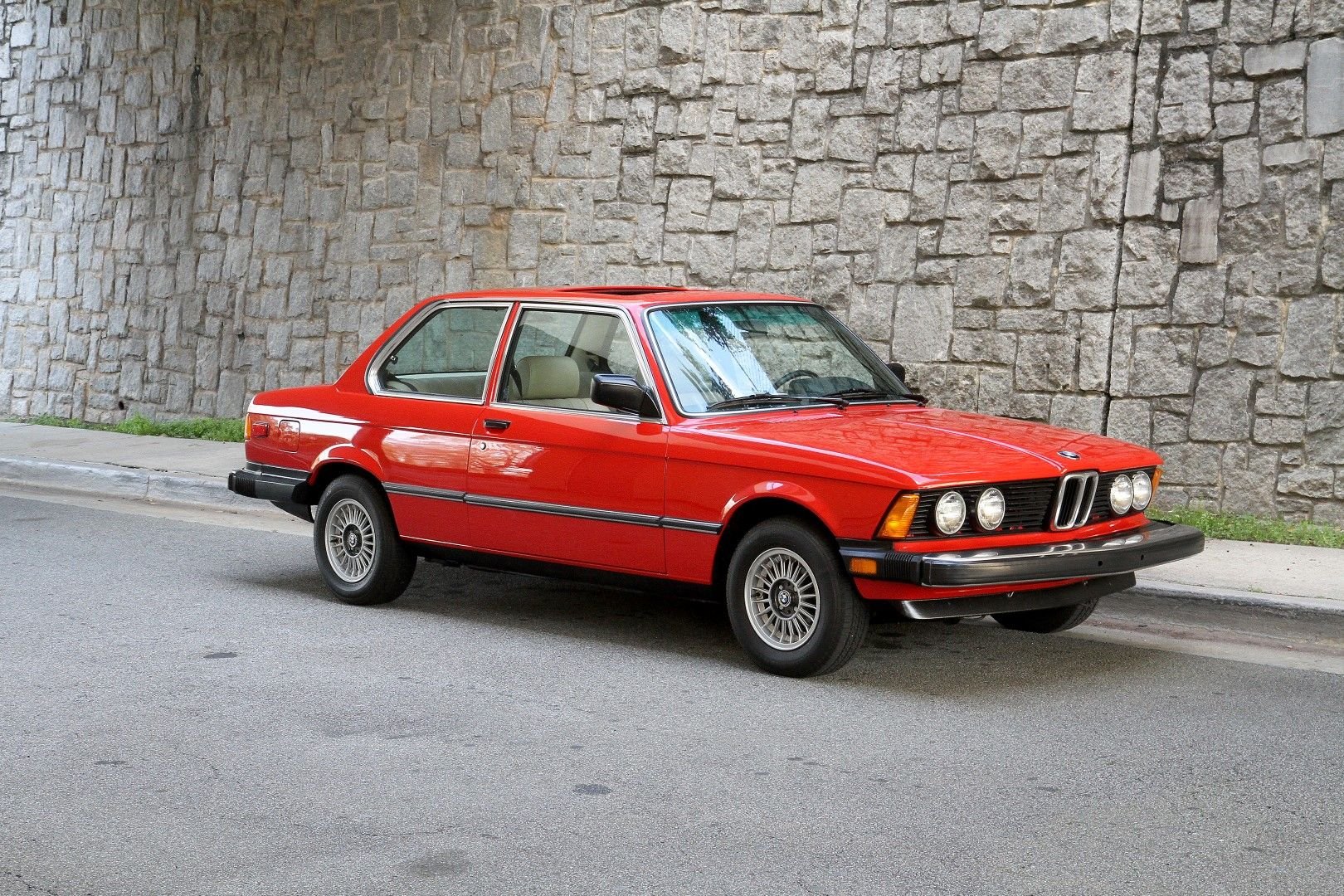
See the 45 3 Series cars currently listed.
For sale now
Expand
What they sell for: 3 Series sale prices.