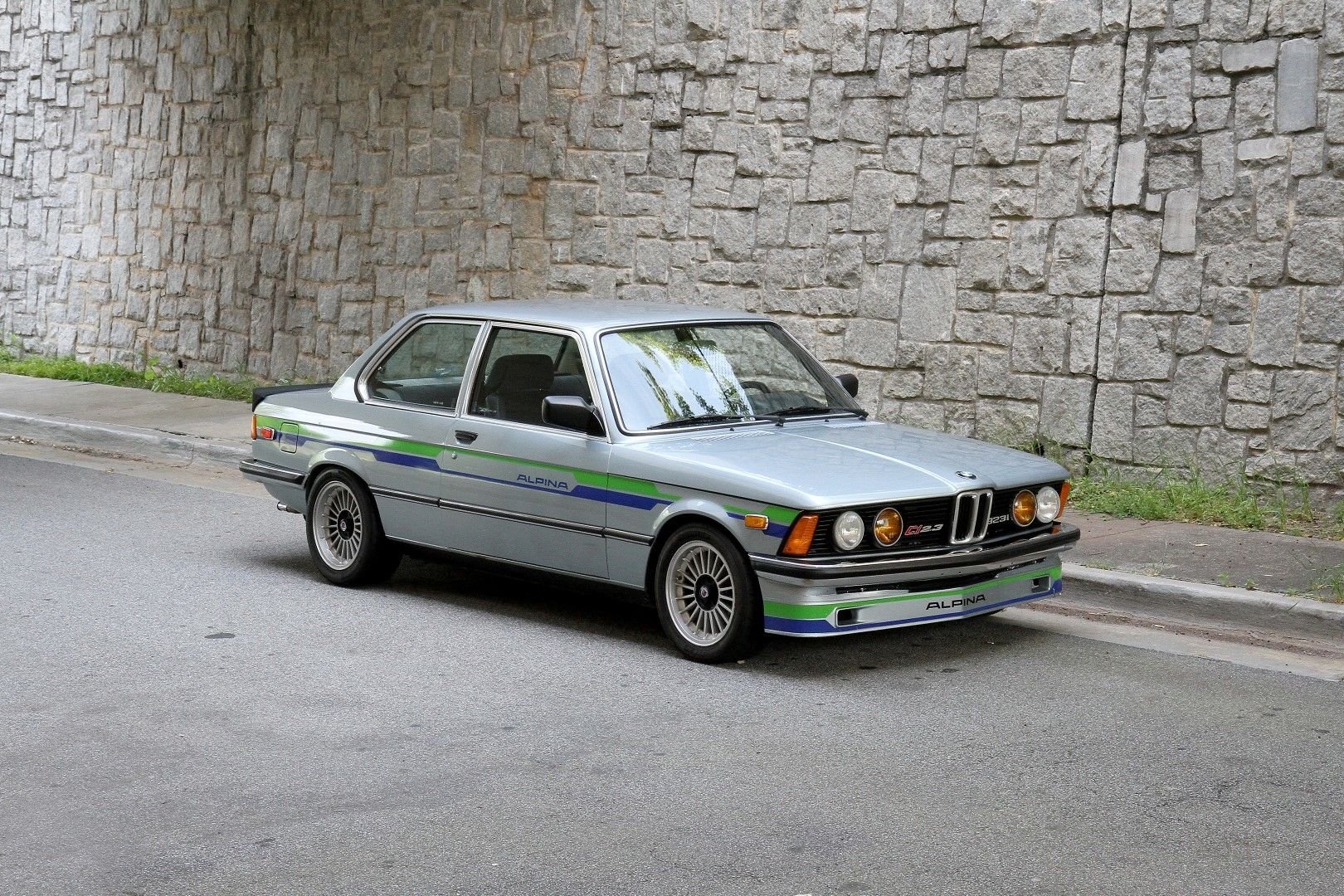
BMW E21 buyer's guide
BMW E21 (1975–1983) — 320i, 323i, 318i: what's listed, and what they sell for.
Years: 1975–1983 · Models: 320i, 323i, 318i
Overview and history
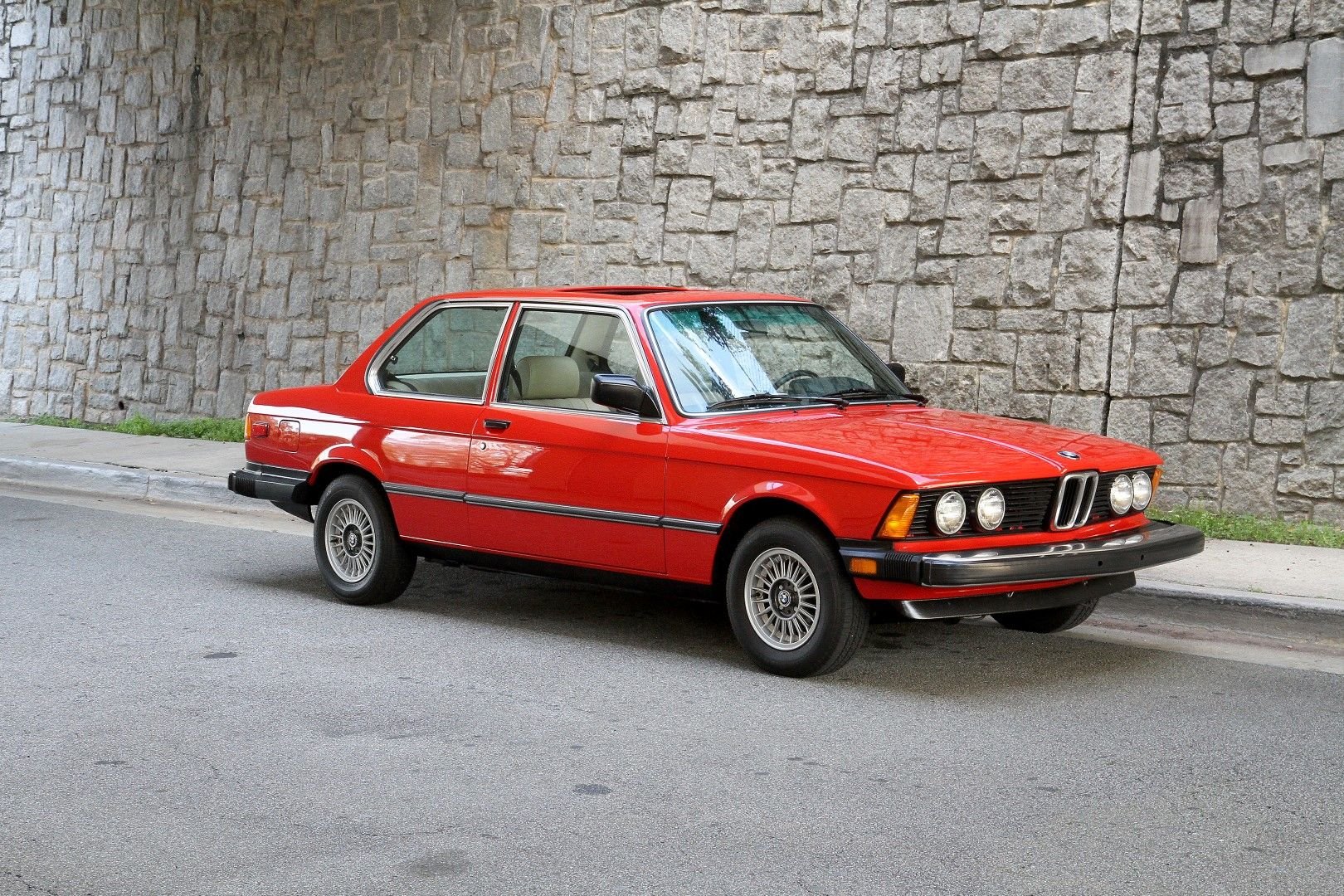
You are looking at the car that invents the modern 3 Series. The E21, built from 1975 to 1983, replaces the beloved 02 series — the 1602, 2002 and 2002tii that made BMW in America — in the middle of the fuel crisis, the emissions squeeze and the 55 mph era. BMW's answer is bigger, quieter, safer and more refined than a 2002, and deliberately less raw. Period testers call it soft; 2002 owners call it a betrayal. Time calls it the template: two doors, a long bonnet, a short boot, the Hofmeister kink, a driver-tilted dashboard and a straight engine driving the rear wheels. Every 3 Series since follows this layout.
The car launches in Europe in the summer of 1975 as a four-cylinder range — 316, 318, 320 and the injected 320i — all using the M10 engine the 02 series had already proven. The styling, under Paul Bracq, tidies the 02's upright charm into something more formal. Underneath you get MacPherson struts, semi-trailing-arm rear suspension, rack-and-pinion steering, front discs and, on most models, rear drums. There is no four-door E21 and no factory estate, ever. The only body variations are the two-door saloon — BMW calls it a sedan, the market calls it a coupe, both describe the same shell — and the Baur cabriolet in the next section. If a seller shows you a four-door E21, you are not looking at an E21.
America gets a narrower story. The US car, sold from the 1977 to the 1983 model years, is a single model: the 320i. There is no US 316, no US 323i, no carburetted US E21 of any kind. That one badge covers two quite different cars, and telling them apart is the most important identity skill in this guide. The 1977–1979 car carries a 2.0-litre M10 with K-Jetronic injection and cleans its exhaust with a thermal reactor — a glowing-hot chamber in the exhaust manifold that burns off pollutants — plus exhaust-gas recirculation and an air pump. The 1980–1983 car carries a smaller 1.8-litre M10, still K-Jetronic but now in Lambda form, with an oxygen sensor, a three-way catalyst and electronic mixture trimming. The badge does not change; the engine, exhaust, fuel-system behaviour and buying advice all do.
Europe gets the full arc of the car. The six-cylinder M20 arrives in 1977 in the carburetted 320/6 and, from 1978, in the injected 323i, the range flagship. A facelift in late 1979 brings revised suspension geometry, a redesigned interior, and an engine line that adds the economy 315 and the injected 318i. The last cars leave the line in 1983 as the E30 takes over — keeping the E21's engines and suspension layout, which is why so much E21 parts supply and knowledge carries forward.
Total production is roughly 1.36 million cars — common when new, surprisingly scarce now. Rust, low values and decades as cheap transport consume them; for a long time an E21 is the BMW you buy because you cannot afford an E30, and cars bought on that logic are rarely garaged. Good shells are the rarity now, not good engines.
A note on this site's own pool, so you can weight it: the Classic Listings store currently holds just five E21 records — three for sale and two recorded sold, all five filed as 320i, spanning 1978 to 1983. That is a tiny sample of a 1.36-million-car run, reflecting a US-weighted pool, not the model range. This guide covers the full range, European cars included, because private imports are a real part of the US market. Do not mistake five listings for a census: on a pool this small you judge each car on its own shell, fuel system and paperwork.

The models
The table covers the range as BMW builds it. Outputs are period figures — DIN PS for European cars, SAE net horsepower for US cars; the scales are close but not identical, so do not split hairs over two or three units. Production figures are the commonly published factory totals, rounded where sources differ; treat the order of magnitude as reliable.
| Model | Years | Engine | Output | Built | Character |
|---|---|---|---|---|---|
| 315 | 1981–1983 | 1.6 M10, carburettor | 75 hp | ~108,000 | Economy run-out model; simple, slow, honest |
| 316 | 1975–1983 | 1.6 M10, carburettor (1.8 from 1980) | 90 hp | ~336,000 | The volume European starter car |
| 318 | 1975–1980 | 1.8 M10, carburettor | 98 hp | ~93,000 | The balanced early four-cylinder |
| 318i | 1980–1983 | 1.8 M10, K-Jetronic | 105 hp | ~40,000 | Facelift injected four; the sensible European buy |
| 320 | 1975–1977 | 2.0 M10, twin carburettors | 109 hp | ~118,000 | Early range-topper; thirsty, characterful |
| 320i (Euro) | 1975–1977 | 2.0 M10, K-Jetronic | 125 hp | Part of 320i total | The 2002tii's true successor |
| 320i (US, 2.0) | 1977–1979 | 2.0 M10, K-Jetronic, thermal reactor | 110 hp | Part of 320i family total | America's only E21; hot-running emissions car |
| 320i (US, 1.8) | 1980–1983 | 1.8 M10, Lambda K-Jetronic, catalyst | 101 hp | Part of 320i family total | Cleaner, cooler, slightly softer; S package offered |
| 320/6 | 1977–1982 | 2.0 M20 six, carburettor | 122 hp | ~83,000 | The smooth, quiet six-cylinder cruiser |
| 323i | 1978–1982 | 2.3 M20 six, K-Jetronic | 143 hp | ~137,000 | The flagship; the E21 to have in Europe |
| Baur TC1 Cabriolet | 1978–1981 | 316–323i engines | As donor | ~4,600 | Targa-top conversion by Baur, sold through BMW dealers |
The US 320i — one badge, two cars. Learn this split cold; most North American shopping happens here. The 1977–1979 car has the 2.0-litre engine, a four-speed manual as standard and the thermal-reactor exhaust. It makes its power willingly but runs hot by design — a reactor only works when the exhaust stays extremely hot — and that heat cooks under-bonnet wiring, hoses and the reactor itself over decades. The 1980–1983 car has the 1.8-litre engine, a five-speed overdrive manual as standard, the Lambda system with a catalyst, a revised interior and the facelift suspension changes. It gives away a little pace and gains everywhere else: cooler running, better highway gearing, a catalyst you can still buy. Correct the myth at once: the later car is not a detuned disaster and the early car is not a hidden European prize. The European 2.0 injection car makes 125 hp without emissions hardware; the US 2.0 makes 110 hp with it. The difference lives in the exhaust and tuning.
Within the late US range, learn the S package — badged 320is in most references, though the car still wears 320i badges. On the 1980–1983 cars it bundles Recaro seats, a front air dam, a rear anti-roll bar (base cars have none), a limited-slip differential, sport wheel and fog lamps. It transforms the car's feel — and it gets faked, because an air dam and Recaros bolt in during an afternoon. The differential is harder to fake: test it on a lift as the gearbox section describes, and treat a claimed 320is without it as a 320i with accessories.
The European four-cylinders. The 315 and 316 are working cars: single carburettor, four-speed gearbox, interiors trimmed to a price — the cheapest route into the shell, but in the US they arrive only as private imports, and you should ask why a seller imported the slowest version. The 318 and especially the facelift 318i are the sweet spot: enough torque to stop feeling strained, injection on the 318i with the same K-Jetronic story as the US car, running costs identical to a 316's. The early European 320i is genuinely quick for 1975 and the direct heir to the 2002tii — a documented real one deserves serious attention.
The 323i and the 320/6. The 323i is the E21 Europe remembers as a small Q-car: 2.3 litres of M20 six, K-Jetronic, 143 hp, twin exhausts, discs all round, a five-speed in overdrive or close-ratio form, top speed around 118 mph. It is never officially sold in the US. Every American 323i is a grey-market import from the federalisation era or a later 25-year-rule import, and that history is the whole buying question: federalised cars may carry hacked wiring, changed bumpers and paperwork that does not match the car. A clean, honestly imported 323i with its European specification intact is the most desirable E21 you can buy; a tired federalised car with a story is the easiest to overpay for. The 320/6 sits below it: the same smoothness in 2.0-litre carburetted form, quieter and lazier, often automatic, often well kept — and usually better value in the US precisely because nobody fakes one.
The Baur cabriolet — context, not a separate species. Baur of Stuttgart converts roughly 4,600 E21s between 1978 and 1981 into the TC1: a targa-style open car with a removable roof panel, a folding rear hood and a fixed rollover hoop in the B-pillars, sold through BMW dealers with factory warranty on any engine from 316 to 323i. It is not a full convertible — the hoop stays — and that is why it works: the shell keeps most of its stiffness and seals better than most full conversions of the era. Survivors are scarce because open cars rust faster and Baur parts are a specialist hunt. Price a Baur on shell condition and hood completeness; sill repairs matter twice on a car whose roof contributes nothing.
Two identity traps close this section, because both cost buyers money. First: the badge never tells you the engine on a car this old. Forty years is plenty of time for a 316 to gain a 2.0 engine or a 320/6 to be rebadged as a 323i. The engine number, stamped on a pad on the block's left side, tells you what is fitted; the chassis number tells you what the car left the factory as. Decode both before you negotiate. Second: grey-market paperwork is part of the car. On any European-spec car in the US, the import documents or a clean 25-year-rule trail are worth real money — their absence becomes your resale problem too, and the market prices that in.

Engines and gearboxes
The M10 four-cylinder
Every four-cylinder E21 — every US car and most European ones — runs some version of the M10, and that is good news. The M10 is BMW's iron-block, alloy-head, single-overhead-camshaft four, chain-driven, with roots in the early 1960s and a reputation built in the 2002. It is over-engineered for the outputs asked of it here, tolerant of high mileages, and simple enough that a home mechanic can do everything except machining. In E21 service it appears at 1.6 litres (315, early 316), 1.8 litres (318, 318i, late 316, late US 320i) and 2.0 litres (320, early 320i). Bore, compression and fuelling change; the architecture does not.
Fuelling defines the M10 variants more than displacement does. The carburetted cars use Solex equipment — a single downdraught on the small engines, twin carburettors on the early 320 — and a bad runner usually suffers three small faults at once: a sticking automatic choke, a perished diaphragm, a worn linkage. The injected cars use Bosch K-Jetronic, covered in depth in the problem areas; note here only that it is a mechanical, continuous-flow system with no control unit on early cars and only a mixture-trimming Lambda loop on late US cars. There is nothing to plug a laptop into. You diagnose it with pressure gauges, a multimeter and patience.
In US form, learn the two specifications as separate engines. The 1977–1979 2.0 makes about 110 hp and breathes through the thermal-reactor manifold, a cast chamber that glows in service and cracks with heat cycling; the engine is the strongest US M10, its supporting hardware the liability. The 1980–1983 1.8 makes about 101 hp, runs a conventional manifold into a three-way catalyst, and uses Lambda K-Jetronic: an oxygen sensor reports to a control unit that pulses a frequency valve in the distributor's return circuit, trimming the mixture many times a second. When it works — clean idle, decent economy, no reactor heat — it works well. When the sensor dies or the valve stops buzzing (you can hear and feel it running), the car reverts to its base tune and runs rich, flat or both.
M10 health is easy to assess because the engine is honest about it. The timing chain is long-lived but its tensioner and guides wear: a rattle from the front cover on a cold start that fades in seconds is wear announcing itself; a rattle that stays is a bill. Valve clearances are set with eccentrics on the rocker arms at roughly 0.010–0.012 in (0.25–0.30 mm) cold; uniform ticking is usually clearances due, one loud tick a worn eccentric. Oil consumption is more often valve stem seals — blue smoke on start-up and on the overrun, clearing under load — than rings. Even compression figures across the four describe a usable engine; one cylinder well down describes a negotiation. Budget $900–1,600 for a head-gasket job, $250–450 for stem seals done with the head in place, $400–800 for chain, tensioner and guides renewed preventively. A full rebuild runs $3,500–6,500 — why nobody rebuilds a tired 316 engine and everybody rebuilds a matching-numbers 323i's six.
Servicing is cheap: oil and filter every 5,000 miles or annually, plugs at 12,000–15,000, coolant and brake fluid every two years. Keep the cooling system honest, because the alloy head on an iron block does not forgive overheating.
The M20 six-cylinder
The M20 is the small six BMW designs in the mid-1970s to give the E21 the refinement the four cannot, and it transforms the car. A single-overhead-camshaft, twelve-valve straight six with iron block and alloy head, its defining difference from the M10 is at the front: a toothed rubber belt drives the camshaft, not a chain. It appears as the 2.0-litre carburetted engine in the 320/6 and the 2.3-litre K-Jetronic engine in the 323i. The 323i's 143 hp makes it the only genuinely quick E21, and the six's inherent smoothness makes even the 320/6 feel a class above the fours at a cruise.
The belt is the engine's one non-negotiable. The interval is around four years or 50,000 miles, and on a classic-use car the years expire long before the miles. A snapped belt bends valves — this is an interference engine — and turns a $350–600 belt-and-tensioner job into a $1,800–3,200 head rebuild. If the seller cannot show a dated belt invoice, the belt is overdue, whatever it looks like, because belts do not show their age until they fail. Price the car accordingly and change belt, tensioner and water pump in the first week. That discipline removes most of the M20's fear factor.
The rest of the M20's character is longevity with known wear points. Camshaft and rocker wear shows as top-end ticking that valve clearances cannot fully quiet; budget $700–1,200 for a camshaft and rockers if it comes to that. The 323i's K-Jetronic shares its behaviour and costs with the injected fours, so the problem areas apply with six injectors instead of four. The 320/6's Solex 4A1 carburettor, a four-barrel prone to warping and sticking secondaries, transforms with a $500–900 specialist rebuild. Six-cylinder cooling margins are tighter, so renew radiator, fan coupling, thermostat and hoses as a set on any car with unknown history, $600–1,100 in parts and labour. Exhaust manifolds crack as on the M10 — listen for a tick that closes as the engine warms — and the 323i's twin-pipe system costs $700–1,400 in quality stainless. Oil leaks gather at the rocker cover and camshaft seals; they are afternoon jobs, but they hide the leaks that matter, so a clean M20 bay is worth money as evidence alone.
One myth to kill: the 323i does not share its engine with the later E30 325i. The E21's 2.3 is the early M20 tuned for smoothness and mid-range pull; the E30's 2.5 is a development of it, not the same engine. Parts interchange is partial and values are entirely separate. Judge a 323i as what it is — the fastest, most refined E21.

Gearboxes and final drive
Early four-cylinder cars use the Getrag 242 four-speed manual: strong, a little wide in its ratios, with synchromesh that wears on second gear first — the classic test is a fast cold change into second, which should be clean, not crunchy. From the facelift, and on the late US 320i as standard, you get the Getrag 245 five-speed with an overdrive top, the gearbox you want for touring. The 323i offers the overdrive five-speed or a close-ratio box with a dogleg first — desirable, collectible, slightly slower to use until it is in your hands. Any Getrag that jumps out of gear or whines in every gear is telling you about bearings and selectors; a specialist rebuild runs $1,200–2,200 plus fitting, a good used box $400–900. A crunchy second gear is a price chip, not necessarily a walk-away.
The automatic option is the ZF 3HP22 three-speed, fitted to a minority of cars and a good share of 320/6s. It is robust: shifts should be clean, fluid red, and a flaring change into top or a delay engaging drive from cold points to tired seals and a $1,500–2,500 rebuild. Automatics suit the 320/6 and fight the 323i; a manual-swapped car earns manual money only when the swap is complete and documented.
Clutches are conventional: $180–350 for a kit, $600–1,000 fitted. Judder points to oil contamination, a high biting point to a worn plate. The hydraulic cylinders perish at $60–150 each; a pedal sinking slowly at a long light is a master cylinder asking to be changed before it strands you.
Final drives are long-lived if they have oil in them: a whine on the overrun is wear, a clonk on take-up is backlash. The standard differential is open; the limited-slip, a 25 percent unit, comes with the US S package. On a lift, in neutral, turning one rear wheel drags the other the same way on a limited-slip car and spins it backwards on an open car. Sellers get this wrong in both directions — test it yourself; ninety seconds, real money. Driveshaft centre bearings and the rubber flex disc (the guibo) perish and cause a drumming vibration under load at 30–50 mph owners misdiagnose as wheel balance for years. Parts are $40–120; the diagnosis is the valuable part.
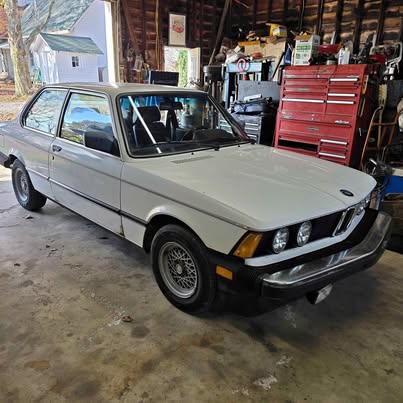
Problem areas
K-Jetronic behaviour: the fuel system is the ownership experience
More E21s are misdiagnosed and sold cheap in frustration over Bosch K-Jetronic than over any other system, and almost all of it is unnecessary, because K-Jetronic is logical. It is a purely mechanical continuous-injection system: an electric pump feeds a fuel distributor at high pressure; incoming air lifts a sensor plate in the airflow meter, and the plate lifts a control plunger that meters fuel continuously to each injector in proportion to airflow. The injectors are spring-loaded nozzles opening at around 3.3–3.8 bar, spraying whenever the engine runs. There are no injection pulses and, on early cars, no electronics at all. Mixture strength is set by control pressure, bled from the top of the plunger by the warm-up regulator: low pressure richens, high pressure leans. Cold, the regulator holds pressure around 1.3–1.8 bar for enrichment; warm, it rises to roughly 3.4–3.8 bar. System pressure runs around 4.7–5.4 bar. Those numbers, plus residual pressure after shutdown, are the system's entire diagnostic language. Anyone who proposes parts before measuring them is guessing at your expense. Learn the failure patterns by their mechanisms; each symptom has a short list of causes and a test that separates them.
Hot-start failure is the signature E21 complaint: the car starts cold, runs well, stops for fuel, then cranks and cranks, catching only after a wait. The mechanism is fuel vaporisation. K-Jetronic relies on residual pressure — roughly 2.5 bar or more held for twenty minutes after shutdown by the fuel accumulator, the pump's check valve and the distributor's sealing. When it leaks away, fuel in the hot lines boils, and the pump must refill a system full of vapour before the injectors see liquid fuel. The test is a pressure gauge left connected after shutdown, then clamp-testing to isolate accumulator, check valve or distributor. Parts are $90–180 for an accumulator, $25–60 for a check valve: a $200–450 problem professionally solved — and the one most often "fixed" with a $900 fuel distributor that changes nothing.
Cold-start and warm-up faults live in the warm-up regulator and its supporting cast. A car that starts cold but hunts or runs gutless until warm, then runs perfectly, has the wrong cold control pressure — usually too high, because the regulator's bi-metallic strip has aged or its tiny inlet filter is blocked with tank debris, so the engine never gets its enrichment. Poor starting from cold implicates the cold-start valve — a fifth (or seventh, on a six) injector driven by a thermo-time switch — and the auxiliary air valve, which bypasses the throttle to raise cold idle and sticks with age. Tests: pressures first, then a cold-start spray test into a jar and an auxiliary-air-valve pinch test — squeeze its hose on a cold idling engine and the idle should change; hot, it should not. Regulator rebuilds run $250–450 exchange, cold-start valves $80–160, auxiliary air valves $100–220. None of this requires a distributor.
Uneven running and a lumpy idle are air leaks until proven otherwise. Every boot, hose and seal downstream of the sensor plate admits unmetered air — air the plate never measured, so no fuel is metered for it. The big boot between airflow meter and throttle body splits underneath where you cannot see it; injector O-rings shrink; even the oil-filler cap and dipstick seals belong to the metered system, which is why the car stumbles when you pull the dipstick. Smoke-test the intake or work through the rubbers methodically. Injector seals are under $30; a new boot is $60–140. Only when the air side is sealed do you touch mixture — a 3 mm Allen key through the airflow meter housing, a quarter-turn at a time, on an exhaust analyser. Cars whose mixture has been twiddled to mask an air leak run wrong everywhere. A specialist's full K-Jet health check — pressures, spray patterns, mixture — runs $300–600 and is the best money in E21 ownership.
Injector and distributor wear are the expensive end, and rarer than their reputation. Injectors that dribble instead of atomising cause hot-start trouble and a rough idle that survives every other fix; a pop-tester settles it, at $45–95 per injector. The distributor's metering slits varnish up after long storage — the revival car that will not run above idle is often a gummed distributor and a rusty tank. A professional rebuild runs $600–1,100. Protect yours with a clean tank and fresh filters — the main filter is $20–35 and nobody changes it. Cars that have sat need the tank inspected before the first start attempt; a rusty tank cleaned and sealed runs $300–700.
On Lambda cars, add one layer: the frequency valve must buzz. Warm, you should hear and feel it cycling, and the oxygen sensor ($40–90) should swing its voltage as the system trims. A dead sensor or silent valve leaves the car on its base tune — driveable, thirstier, dirtier, and a failed emissions test where these cars are still tested. Diagnosis is a multimeter and ten minutes; the control unit almost never fails, but its wiring and grounds do.
Finally, the myth that organises all the others: K-Jetronic is not unreliable, and converting to carburettors or a later electronic system is not an upgrade — it is an admission that nobody measured the pressures. A sorted K-Jet car starts hot and cold, idles cleanly and returns the economy BMW claimed. When a seller tells you the injection "always gives trouble," translate correctly: it has never been properly serviced, and the price should carry the $600–1,500 that takes to put right.
The shimmy, the steering and the chassis
The E21 shimmy is famous enough to have a name, and specific enough to diagnose. The car shakes through the steering wheel, typically arriving around 45–55 mph, sometimes fading above 60. Owners balance wheels for years without curing it, because balance is rarely the root. The mechanism lives in the front suspension design: MacPherson struts located by a control arm, with the anti-roll bar doubling as the arm's fore-and-aft locating link through rubber bushes. When those bushes age and tear — they are forty years old now — the wheel gains fore-and-aft movement. Add worn track-rod ends, tired rack mountings, worn strut tops and tired dampers, and the system has enough combined play to oscillate at speed. The shake is the sum of small plays, which is why single-part fixes disappoint.
Diagnose in order. First, tyres and balance — a flat-spotted tyre feels exactly like the classic shimmy. Second, the lever test on stands: a pry bar at the control-arm and anti-roll-bar bushes while an assistant watches — visible fore-and-aft shift at the wheel is worn bushes, full stop. Third, track-rod ends and rack mounts. Fourth, dampers: a car that bounces twice after a firm push has no damping left. The cure is a front-end refresh — bushes, track-rod ends, strut tops, alignment — at $250–500 in quality rubber parts (polyurethane lasts longer, transmits more harshness; choose knowingly) and $400–800 in labour. Do the whole axle at once; one new bush in a tired system moves the shimmy rather than removing it.
Steering is rack-and-pinion, unassisted on most fours. If a manual car feels vague rather than heavy at road speed, suspect rack mounting rubbers and the column coupling before the rack itself; racks wear around centre first, and a rebuilt rack runs $350–650 exchange. Check the boots: a split boot admits grit and finishes the rack quietly.
Brakes divide by model: most fours run front discs and rear drums — adequate, with modest fade resistance — while the 323i gets discs all round. Forty-year-old hoses balloon, drum cylinders weep, and handbrake mechanisms seize on cars that sit. A full hydraulic refresh is $400–900 and non-negotiable on any car with unknown history. Warped front discs cause a pulsing pedal and a shake under braking that owners confuse with the shimmy; disc shake arrives only when you brake, the suspension shimmy either way. Test for both.
At the rear, worn semi-trailing-arm bushes let the rear wheels steer themselves slightly under load — the car feels nervous in fast sweepers and wears the inner edges of the rear tyres. Subframe mounts perish and add a clonk over bumps; sagging dampers and springs show as a car sitting low at the rear with excessive negative camber. A rear bush refresh is $200–450 in parts and a day of labour. Worn rear wheel bearings hum in a way that changes as you weave gently at speed — weave left and the right bearing speaks, and vice versa.
None of this chassis is exotic: a known list, known cures, modest parts costs. What you price on a test drive is not whether the car shimmies — many do — but whether the asking price admits the $800–1,500 a full bush, damper and alignment refresh costs.
Rust: the map
Rust decides E21 values more than any other factor, because the mechanical car is cheap to fix and the structural car is not. BMW rustproofs the E21 thinly, and the design traps water in predictable places. Walk the map in order — most structural first, which is also the order of repair cost.
Rear wheel arches and inner tubs. The arch lip traps mud against the seam where outer wing meets inner tub, and rot starts inside, bubbling through at the lip last — by the time paint bubbles show, the inner structure is usually involved. Press around the lip and into the tub from inside the boot. Proper repair runs $800–1,800 a side; filler over the lip is a $200 disguise with a two-year life.
Sills (rocker panels) and jacking points. The sills are structural, carry the jacking points, and rot from the inside out where the drain holes block. The test is physical: jack at each factory point — a point that crunches or deflects condemns the sill. Replacement runs $1,000–2,500 a side with the inner sill addressed; outer skins over rotten inners are cosmetic fraud.
Floors, especially the front footwells. Water arrives from blocked sunroof drains, perished windscreen seals and a leaking scuttle, then sits under the sound deadening against the steel. Lift the carpets — a seller who will not let you has answered the question — and press around the seat mounts and pedal area. Surface scale is treatable; perforation at seat or belt mounts is structural. Floor sections run $600–1,500 a side welded.
Boot (trunk) floor and spare-wheel well. The rear light seals and boot seal leak, the well collects the water, and the floor rots around the spare. Lift the spare out — always — and inspect the well and the floor extensions over the rear chassis legs. Perforation here is common and hidden: $500–1,200 depending on spread.
Rear shock-absorber turrets. These carry suspension loads and rot where the turret meets the inner wing inside the boot. Cracking or previous plating here runs $800–2,000 a side done properly, and a car needing both sides plus sills plus arches is a restoration project whatever its paint says.
Front wings (fenders) and inner wings. The wings bolt on — a mercy — but the inner wings, scuttle corners and A-pillar bases do not. Check the wing tops, the mud pack behind the front wheels, and the battery tray, where acid and water combine. A tray is $150–400; A-pillar and scuttle rot is four figures and a windscreen-out job.
Sunroof cars: the roof itself. The steel panel and tray rust, the four drain tubes block or detach, and water travels down the pillars into the sills and floors — why a sunroof car with sill rot deserves extra suspicion about the source. A blocked-drain car with sound metal is a bargain; bubbling panel edges mean a panel hunt and headlining job, $600–1,500.
Doors, bonnet and bootlid edges rot cosmetically at their lower seams. A sound used door at $150–400 beats repairing a rotten one. Treat bubbling as a condition note, not a structural verdict — but let it calibrate your belief in a "rust-free" claim, and inspect that car's sills twice.
The governing rule: surface rust is a Saturday, structural rust is a season, and the E21 hides the second kind behind the first. Fresh underseal is protection on sound metal and a curtain over rot on the other kind; the difference is whether the metal rings or crunches when you press it. Any car at strong money gets a lift inspection — $100–200, the highest-value money in the purchase.
Cooling, electrics and the interior
The cooling system is the engines' life-support and the E21's most neglected system. The radiator is marginal when new and blocked when old; the viscous fan coupling fails silently, freewheeling when it should lock up; thermostats stick; pump bearings weep; heater valves seize, which is why so many E21s have no heat or heat that will not turn off. Read the gauge: climbing at idle and falling at speed describes airflow — fan coupling first, radiator second; climbing under load describes circulation — blockage, pump or thermostat. Overheating warps the alloy head, and a car with a recent head gasket but no radiator or fan work still carries its root cause. Renew the system as a set on any keeper: radiator $180–380, fan coupling $60–130, pump $50–110, thermostat $15–30, hoses $80–180 — $600–1,100 all in professionally. The cheapest engine insurance there is.
Electrics are simple, which does not mean healthy. The famous fault is the hazard-warning switch: its internals collapse with age, and because the indicator circuit routes through it, a failed switch takes the turn signals with it — a car with no indicators and a hazard switch that pops out has a $40–90 switch fault, not a wiring disaster. Buy the switch, not the story. Fuse-box contacts corrode, and earth points, especially the engine-to-body strap, cause the flickering gauges sellers describe as character. A lying fuel gauge is usually the tank sender, $60–140. A charging light glowing at idle is alternator brushes, $25–50, not an alternator. The blower resistor pack fails speed by speed until only full speed remains, a $30–70 pack. All of it is diagnostic: an E21 whose electrics all work has had an owner who fixed small things, and that owner usually fixed the big ones too.
The interior wears in known places. Seat foam collapses — the driver's bolster first — and trim splits along the stitching; Recaros hold up better and are worth $600–1,500 a pair used, which is why they get faked into standard cars. The dashboard cracks across the top in sun states — assume any car from California, Arizona or Texas is cracked until seen — and a crack-free dash is a $300–700 part and a day to fit, so it is genuine value. Door cards warp, headlinings sag, and carpets that have held floor leaks smell of it. A complete, uncracked interior is the second-rarest thing in the E21 world after a rust-free shell, and photographs flatter interiors — sit in every seat, work every switch, price what you find.
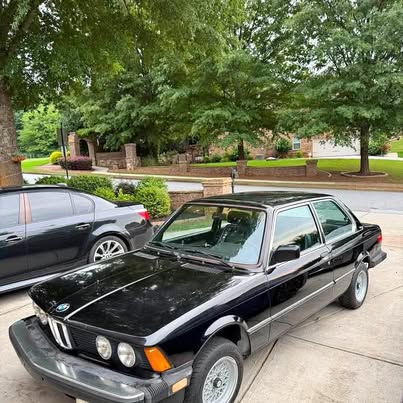
How to inspect one
Work in this order, from the faults that kill a purchase to the faults that merely price it. Bring a magnet wrapped in cloth, a torch, a jack you trust, and — for any injected car at real money — a K-Jetronic pressure gauge set or a specialist who owns one.
- Paperwork and identity first, before you touch the car. Match the chassis number on the plate and its stamped locations to the title. Decode it to confirm model, year and original engine. On a US car, confirm which 320i you are buying — 1977–79 thermal-reactor 2.0 or 1980–83 Lambda 1.8 — from the year and the engine bay, not the seller's description. On any European-spec car, ask for the import trail. Discrepancies here end the inspection; nothing later rescues a car whose identity does not check out.
- Cold engine, your hand on the bonnet. Insist the engine is stone cold when you arrive. A warmed-up car hides cold-start faults, chain rattle and stem-seal smoke. If the bonnet is warm, note it and discount every starting observation that follows.
- The sill-jack test from the rust section. Jack the car at each factory jacking point in turn, watching and listening. Crunching or deflection condemns that sill, and two condemned sills reclassify the car as a project regardless of anything else. While each corner is up, rock the wheel for bearing and bush play.
- Walk the rust map with the magnet and torch. Arch lips and inner tubs from inside the boot; floors with carpets lifted; spare-wheel well with the spare out; shock turrets; battery tray; wing tops; door bottoms. Press anywhere the paint bubbles. You are sorting the car into sound, surface or structural, and the rust section prices each verdict. Fresh underseal gets pressed, not admired.
- Cold start, eyes on the exhaust, ears open. From cold, a K-Jet car should fire within a few seconds, settle to a fast idle around 1,200–1,500 rpm that falls as it warms, and need no throttle. Note blue smoke (stem seals), chain rattle and its duration (tensioner and guides), and any hunting (warm-up regulator or air leak). A carburetted car should start on its choke and come off it progressively; one that needs nursing is describing its automatic choke.
- The hot restart — the K-Jetronic exam. Drive until fully warm, switch off, wait ten minutes, then restart. The hot-start failure in the problem areas shows itself exactly here, and only here. A car that restarts hot, first turn, has a healthy accumulator, check valve and residual pressure. A car that cranks long has a $200–450 fault the seller either fixes or funds.
- The road test: shimmy speeds first. Drive through 40–60 mph on a smooth road, hands light. Feel for the shimmy and whether it fades above 60. Then brake firmly from 50: a shake arriving only under braking is discs; a shake already there is bushes. Make the fast change into second at the first junction, while the gearbox is still cool — worn synchromesh hides when warm.
- Steering, straight-line and weave tests. Check the wheel sits straight, the car tracks without correction and there is no band of play around centre. Weave gently at 40 mph to load each rear bearing in turn and listen for the hum that changes sides, and feel on the overrun for the drumming at 30–50 mph that marks the driveshaft centre bearing and guibo.
- Engine health under load. Accelerate hard in third from low revs: the car should pull cleanly without hesitation (air leaks and mixture faults show here), without pinking or a smoke screen. Watch the temperature gauge — it should settle just under halfway and stay there in traffic. A gauge climbing at idle is the fan-coupling conversation, priced at $600–1,100.
- Every electrical item, worked, not glanced at. Indicators and hazards together — the hazard switch takes the indicators with it when it fails — lights, wipers, blower on every speed, rear demister, gauges plausible, charging light out by idle. Work the sunroof twice if fitted. Each dead item is small money; a pattern of dead items is an ownership history.
- Gearbox, clutch and differential on the lift. Get the car up. Test the differential for the limited-slip behaviour in the gearbox section — wheels turning together or against each other settles an S-package claim. Separate the oil leaks that matter (crank and gearbox seals, a wet pinion) from those that do not, and take a second, lit look at every structural point from step 4.
- K-Jetronic pressures on any injected car at strong money. System pressure, cold and warm control pressure, and residual pressure after twenty minutes, against the figures in the problem areas. This one test, $100–200 at a specialist, separates a sorted injection system from a story; it is the most predictive measurement you can buy on an E21. A seller who refuses has priced your risk for you.
- The interior, sat in and believed. Feel for collapsed foam in the driver's seat, then the back. Examine the dashboard top in daylight, the headlining for sag, the carpets for the damp smell of floor leaks. Price a cracked dash and tired trim as the $1,000–2,500 they represent; the photographs will not have shown you any of it.
- The second cold start, next day if you can. Marginal warm-up regulators, weak batteries and slow residual-pressure leaks all confess on the second morning. Buying at distance? Pay the specialist from step 12 to work steps 2 through 13 and accept his written verdict over the listing photographs.
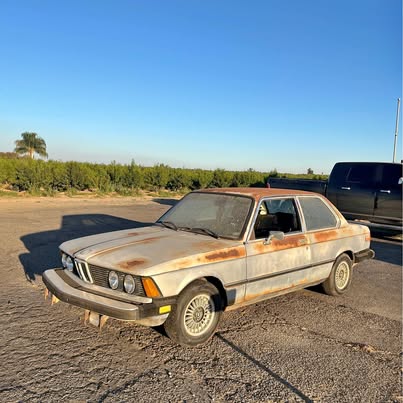
Values
This section deliberately gives you no prices, and the reason protects you. E21 values move with condition more violently than with model, and any figure printed in a guide is stale within a season. Beneath this guide, the site appends its own computed market block — cars listed now and recorded sales — refreshed at every build. Read that block for numbers. Read this section for how to interpret them.
Start with the condition spread, the widest in the classic BMW world relative to the car's price. The same badge covers a structural project worth its parts, a presentable driver, and a restored car whose owner has spent several times its purchase price on metalwork. The gap between project and driver is mostly rust repair — the priced map in the problem areas — and the gap between driver and excellent is mostly paint, interior and the last owner's patience. When two asking prices differ by a factor of three, you are usually looking at two different cars sharing a silhouette, not an optimist and a realist. Price the shell in front of you against this guide's repair ranges and the asking price either explains itself or it does not.
Asking and achieved prices part company in predictable places. Sellers price the badge and the memory; buyers who know the model price the sills and the fuel system. Cars advertised as rust-free without lift photographs, and cars whose K-Jetronic is called "temperamental," routinely achieve well under asking after inspection — or sit unsold until the price walks down to meet it. Auction results, including the recorded sales below, are the honest end of the market: weight a documented auction result above any classified asking price, and treat a car listed for months as evidence about its price, not the market.
Variant premiums follow the expected hierarchy, with two E21 twists. The 323i carries the flagship premium in Europe and, for clean imports, in the US, because it is the only fast one and supply is thin. US S-package cars carry a real but smaller premium, only when the package is verified — an unverified S claim earns no premium at all. Twist one: the early European 320i, the 125 hp car, is scarcer than its reputation and quietly appreciates among buyers who know the range. Twist two: Baur cabriolets do not carry the premium their rarity suggests, because the market prices the hood, seals and open-car rust risk alongside the rarity.
The project-versus-driver gap is where E21 buyers lose the most money. A cheap E21 with structural rust is not a discounted driver; it is a restoration whose cost exceeds the finished car's value in all but 323i cases. The rational cheap E21 is the mechanically neglected car with a sound shell: K-Jetronic faults, tired bushes, dead dampers and worn brakes are bounded, priced work totalling less than one side of sill replacement. A car that drives badly but rings solid when you press its arches is a bargain class; a car that drives sweetly over rotten sills is a liability with good manners.
Negotiation is therefore an evidence exercise, not a haggle: bring the inspection findings with their repair ranges — front-end refresh, cooling set, hot-start fault, the belt with no invoice — and sellers who know the model meet you on that list. Insure what you buy at an agreed value reflecting the sorted car, not the purchase price; E21s are still insured as cheap old BMWs by default.
Parts and ownership
The E21 is one of the easier 1970s cars to keep, because BMW built 1.36 million of them, the E30 shares its engines, and the classic BMW parts ecosystem still supports the model seriously. Mechanical parts are the easy half: M10 and M20 internals, K-Jetronic service parts, brakes, bushes, dampers, clutches and exhausts are all available off the shelf at the prices quoted throughout this guide, and anything shared with the E30 is easier still. Budget $600–1,200 a year in parts and consumables for a car in regular use, plus your labour, with the first year costing double while you clear the previous owner's deferrals. That bulge is normal. Plan for it.
Body and trim are the honest difficulty. Bolt-on panels circulate used and some are reproduced; repair sections for the common rust areas exist from the European panel makers, which is why this guide can price rust repairs at all. What you cannot easily buy is trim: seat fabrics, early dashboard variants, some switchgear, Baur hood components. The rule follows directly: buy completeness. A car missing its trim takes years of watching parts listings to finish; the complete car takes a catalogue. When you find trim, buy it when you see it, not when you need it.
Ownership rhythm rewards routine: fresh oil annually regardless of mileage, coolant and brake fluid every two years, valve clearances with the plugs, the fuel filter on schedule rather than on symptoms, and — on any M20 — the timing belt on years, not miles, invoice kept. The car wants to be driven: K-Jetronic varnishes, brakes corrode and seals dry out on cars that sit, and the archetypal recommissioning bill is a sitting bill, not a wearing-out bill. Thirty miles a fortnight keeps every system honest. Garaging matters more than mileage — a dry-stored 150,000-mile car beats a wet-stored 60,000-mile car.

Which one to buy
- The all-rounder: a facelift US 320i, 1980–1983, five-speed, shell verified sound. The Lambda system, catalyst, overdrive gearbox and revised suspension make it the easiest E21 to live with in America, and the market still prices it as an ordinary old BMW. The car for the buyer who wants to drive rather than restore.
- The enthusiast's pick: a verified S-package car, 1980–1983. Recaros, rear anti-roll bar and limited-slip transform the drive. Buy only when the differential test confirms the package — an unverified S is the all-rounder wearing a costume, priced as one.
- The flagship: a 323i with a clean import trail. The fastest, smoothest, best-braked E21. In the US you buy the car's history as much as the model: intact European specification, honest paperwork and a sound shell justify the premium; a tired federalised car at flagship money does not.
- The value buy: a European 318i or a sound 320/6. Injected four-cylinder running costs with facelift manners, or six-cylinder refinement nobody else is bidding on — either undercuts the fashionable cars while delivering most of the experience.
- The character buy: an early US 320i, 1977–1979, bought knowingly. The strongest US M10, and the car closest in feel to the 2002 it replaced. You accept the thermal reactor and its cracking manifolds as the price of admission, and you inspect the cooling system like the purchase depends on it, because it does.
- The open car: a Baur TC1, bought on shell and hood. Complete hood hardware and sound sills — twice as important with no structural roof. Walk away from an incomplete hood.
- The project to take: a mechanically neglected, structurally sound car at project money. K-Jetronic faults, a shimmy, dead dampers and a slipping clutch are all priced, bounded work in this guide. This is the rational cheap E21.
- The project to leave: any car failing the sill-jack test at driver money, whatever its model. A documented, complete 323i can occasionally carry restoration arithmetic a 320i cannot — and even then you are buying a restoration, not a car.
The overriding rule: buy the shell, then the fuel system, then everything else — a rust-free E21 with faults you can price is always a better purchase than a shiny E21 whose sills, arches and turrets you have not verified, because every other system on this car is fixable for hundreds and the structure is fixable only for thousands.
Listed now
On Classic Listings today: 11 cars are listed here; 2 for sale and 8 marked sold; sold cars average $10,000.
See the 11 E21 cars currently listed.
The market — recorded sales
Recorded-sale figures: 4 recorded sales · median $13,300 · range $9,000 to $15,500 (Aug 2024 – Aug 2026)
Based on 4 recorded sales — too few for a benchmark value.
| Date | Car | Sale price | Source |
|---|---|---|---|
| Aug 26, 2026 | 1983 3 Series | $9,000 | Cars & Bids |
| Jul 1, 2026 | 1983 3 Series | $15,500 | Cars & Bids |
| Mar 19, 2026 | 1983 3 Series | $12,500 | Cars & Bids |
| Jan 9, 2026 | 1982 3 Series | $14,100 | Cars & Bids |
Dates are the sale date where the source states one; otherwise the date the sale was recorded here.
For sale now
Expand