
BMW 7 Series buyer's guide
BMW 7 Series -- the model's own buyer's guide: variants, values and what to check.
Years listed: 1988-2001 · Series: E32
# BMW 750iL — Classic Listings Shopping Guide
Overview and history
The 750iL is the car BMW built to announce that it was no longer the junior partner in the luxury business. When the E32 7 Series was being developed in the early 1980s, the flagship brief was explicit: match Mercedes-Benz on refinement, beat it on technology, and cap the range with an engine Mercedes did not have. The result, launched in Europe in 1987 and sold in the United States from the 1988 through the 1994 model years, was the first German production V12 of the post-war era — a 5.0-litre, twelve-cylinder saloon at a moment when the biggest BMW you could buy had six cylinders and the twelve-cylinder market belonged to Jaguar alone. The engine was the headline, but it was not a stunt. The M70 V12 was engineered as a volume production unit, with two of everything in its management system so that a failure in one bank left you with a running six-cylinder engine to get home on, and the car around it — the long-wheelbase E32 shell, with self-levelling rear suspension, a cabin trimmed in leather and walnut, and electronic systems that were genuinely ahead of the field — was built to the same standard.
Understand what the "iL" part buys you, because it defines the car. The long-wheelbase shell adds roughly 115 mm (about 4.5 inches), all of it in the rear door and rear legroom, and in the US market the V12 came only in this long form: there was no short-wheelbase 750i on the American price list, whatever a seller's advert says. If the rear door looks short and the rear legroom looks ordinary, you are not looking at a US 750iL — you are looking at a six- or eight-cylinder car, a European import, or a misdescription, and the VIN settles which before you travel. The long car was aimed at owners who might be driven as well as drive, and the standard equipment followed that brief: self-levelling rear suspension, electrically adjustable seats front and rear on many cars, double-thickness side glass on later examples, and a level of sound deadening that makes a good one eerily quiet at a cruise even now.
The proposition today is the familiar flagship trap, in its most extreme form. This was one of the most expensive and most complicated saloons in the world when new. It is now one of the cheapest ways in the world to buy twelve cylinders — and it still costs twelve-cylinder money to run properly, because nothing about the car has become simpler with age. Every system that made it remarkable in 1988 — the twin engine computers, the electronic throttles, the hydraulic self-levelling suspension, the sheer count of electric motors, valves and modules — is now thirty-five years old and wants maintenance that a general workshop has likely never performed on one of these. A cheap 750iL with deferred work is not a bargain V12; it is a parts catalogue with a registration document. A maintained one, bought from an owner who understood the car and kept the invoices, is something else entirely: a hand-finished, rear-drive, twelve-cylinder flagship of a quality BMW itself no longer builds, for less than the cost of the engine work on a neglected one. Everything in this guide is aimed at telling those two cars apart before your money moves.
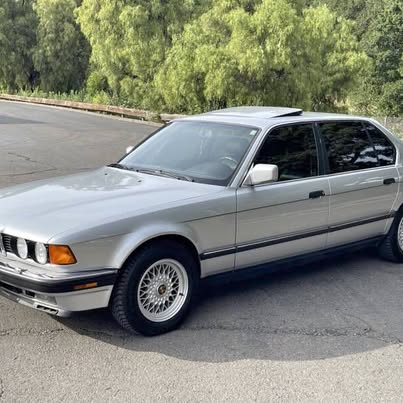
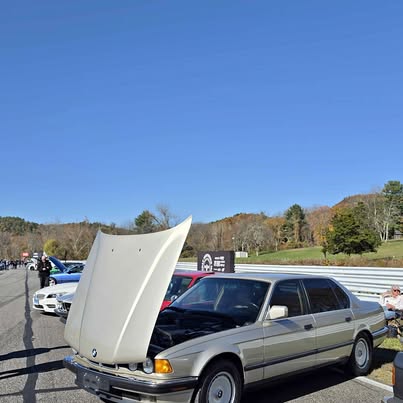
One more piece of context before the detail, because it shapes the whole market for these cars. The E32 750iL was never a big seller in the US — it was expensive, the 735i and later the V8 740iL did most of the range's volume, and the V12's reputation for complexity began forming while the cars were still under warranty. Survivors are therefore thin on the ground in any condition, and genuinely sorted survivors are thinner. The site's own pool for this guide is a fair illustration of the supply picture: a handful of cars, in the muted metallic colours — silver, gold, bronzit beige — that these cars were almost always ordered in, scattered across the country rather than concentrated anywhere. You do not get to be picky about colour and postcode with a 750iL. You get to be picky about condition and paperwork, and that is where this guide spends its time.

The models
The US 750iL range is mercifully simple compared with most flagships: one body, one engine, one gearbox, sold in a single highly equipped specification, with the model years and the options list doing the differentiating. The table below lays out the car itself and the related variants you will meet in adverts and have to place correctly.
| model | years | engine | output | built | character |
|---|---|---|---|---|---|
| 750iL (E32, US) | 1988–1994 | M70B50 5.0 V12 | 296 hp, 332 lb-ft | not reliably published as a US-only iL figure | The car this guide covers: long wheelbase only in the US, self-levelling rear, twin-DME management, the first post-war German V12 |
| 750i (E32, Europe) | 1987–1994 | M70B50 5.0 V12 | 300 PS (DIN) | not reliably published separately here | The short-wheelbase car the US never got officially; any example in the US is a grey import — check federalisation paperwork before anything else |
| 750iL Highline (Europe) | 1990–1994 | M70B50 5.0 V12 | 300 PS (DIN) | small numbers, no figure this guide will invent | The chauffeur specification: reclining rear seats, tables, a refrigerator and a second climate system; rare, complicated, and priced on condition like everything else here |
| 750iL (E38, successor) | 1995–2001 | M73B54 5.4 V12 | 322 hp, 361 lb-ft | a different car and a different guide | The replacement: bigger, more electronic, single-DME management; do not let a seller blur the two generations — almost nothing mechanical is shared |
A note on the production column, because it is a trap in lesser guides: BMW published E32 range totals, but a clean, verifiable production figure for the US-market 750iL alone is not something you should trust wherever you read one, so this guide does not print one. What is true and useful is the shape of supply. The V12 was the low-volume flagship of a range whose volume was done by the sixes and, from 1993, the V8; US survivors are scarce, and the attrition since has been brutal precisely because the cars became cheap while the repairs did not. A model that was rare when new and expensive to keep is, thirty years on, rare squared.
Within the US run, the changes are evolutionary and worth knowing mainly so you can date a car and spot a wrong-year description. The earliest cars, 1988 and 1989, are the purest form of the launch specification: the same M70 engine and four-speed automatic throughout the run, with equipment and electronic detail evolving rather than any mechanical reinvention. Through the early 1990s BMW layered in the systems that became E32 signatures — automatic stability and traction control (ASC+T) on later cars, Servotronic speed-sensitive steering assistance, improved sound insulation and double glazing as an option, and detail revisions to trim and switchgear. The final cars, 1993 and 1994, share showroom space and some showroom confusion with the V8 740iL that arrived for 1993 — the two look near-identical, share the wide grille, and are routinely confused in listings, which is why the identity checks matter: a 740iL has eight cylinders and an M60 engine, a 750iL has twelve and an M70, and the engine number, the VIN decode and a simple count of ignition leads and intake runners settle it in minutes. Never pay V12 money for a V8 car, and never let a seller wave the question away — the confusion is common enough that you should assume it is possible in every listing until you have checked.
Options and equipment to understand when you compare two cars: self-levelling rear suspension is standard on the iL and is a system to inspect, not an option to price (see Problem areas). Electronic Damper Control (EDC) was fitted to some cars and is identifiable by the wiring at the top of the dampers and the console switch; working EDC is a pleasure, dead EDC is a four-figure conversation. The Highline rear compartment package — tables, fridge, footrests, a fax machine in period, on European cars — never came to the US officially, so a claimed US Highline needs import paperwork to be believed. Rear seat heating, a factory telephone and a CD changer are period charm and worth nothing extra. What is worth money, in descending order, is a documented engine-out reseal or throttle-body rebuild, a documented suspension rebuild including the self-levelling accumulators, and a thick file of ordinary servicing by someone who knew the model. On this car, the paperwork is not supporting evidence for the specification. The paperwork is the specification.

Engines and gearboxes
The M70B50: two sixes in a trench coat, and why that is a compliment
The M70 is a 4,988 cc, 60-degree V12 with an aluminium block and heads, a single overhead camshaft per bank operating two valves per cylinder, and chain drive to the cams. Its architecture is openly derived from BMW's M20 straight six — two six-cylinder banks on a common crankshaft, sharing bore and stroke dimensions with the six — and that derivation is the engine's great strength. There are no exotic valve mechanisms, no variable timing, no direct injection. The reciprocating parts are conventional, the bottom end is famously understressed (296 hp from five litres is a gentle state of tune, roughly 60 hp per litre), and a healthy M70 is one of the smoothest and quietest production engines ever sold. It pulls from idle with an evenness no V8 matches, revs cleanly to its redline, and does its best work in the mid-range, where the torque arrives in a single seamless push. Judge it by that standard: a good M70 at idle should be nearly inaudible from the driver's seat with the doors shut, with no shake through the steering wheel and no rhythmic lump. Any V12 that idles like a tractor is telling you something specific is wrong — and on this engine, specific wrongs are diagnosable, because the management system was designed to tell you which bank, and often which cylinder group, is unhappy.
What the simple architecture does not prepare you for is the duplication. Because the engine is managed as two sixes, it carries two of almost everything in the induction, fuel and ignition systems: two air flow meters, two throttle bodies, two distributor caps and rotors (one per bank, at the front of each head), two ignition coils, two fuel rails, two fuel pumps and filters in the supply system, and two engine computers. Every one of those items is a wear part or an age part, and every repair estimate you receive will quietly double when the mechanic remembers there are two. Spark plugs are the trivial example — twelve of them, and the rear ones are an exercise in patience and extensions. Ignition leads are the less trivial one: a full set is a V12-priced set, and tired leads are a genuine cause of the misfires owners chase elsewhere. When you budget for this engine, take any six-cylinder BMW service figure you know, double the parts count, add the access penalty for an engine bay that is completely full, and you will be close.
Twin computers and electronic throttles: the EML system, limp mode, and the tests that matter
The M70's management is the part of the car that generates the folklore, so let us be precise. Each bank is run by its own Bosch Motronic DME control unit. Above them sits a third module, the EML, which governs the electronic throttle system: there is no throttle cable on a 750iL. Your right foot moves a potentiometer, the EML interprets it, and two electric throttle bodies (often called DK motors) open in synchronisation. This was pioneering in 1987 and it gives the engine its eerie smoothness, but it also creates the car's signature failure mode. The throttle bodies contain brushes and tracks that wear; the EML watches the two banks for agreement; and when one bank's throttle, air meter or DME disagrees with the other beyond tolerance, the system protects itself by shutting a bank down or restricting throttle opening. The car then runs on six cylinders — by design, as a limp-home strategy — with the power of a 735i and a dashboard warning to explain itself.
Here is the myth to correct explicitly, because it sells and kills more of these cars than any mechanical fault: a 750iL running on six cylinders does not have a dead engine. It has a management disagreement, and the cause is usually electrical and findable — a worn throttle body, a failed air flow meter, a cracked intake gasket leaning one bank out, a dying distributor rotor, low system voltage confusing all three computers at once. The diagnostic order matters and a specialist follows it instinctively: first, battery and charging voltage, because an E32 with a weak battery generates faults the way a drunk generates opinions; second, ignition consumables per bank (caps, rotors, leads, plugs), because they are cheap and guilty often; third, intake sealing, tested with a smoke machine, because the M70's intake manifolds sit on rubber gasket rings — one per cylinder — that harden, shrink and leak air the air meters never measured, leaning the mixture and roughening the idle in exactly the way owners blame on the computers; fourth, throttle body condition and synchronisation, a specialist job with the right test equipment. A throttle body rebuild by one of the known specialists runs roughly $600–1,200 for the pair exchange; intake resealing with all twelve gaskets, the two crankcase ventilation valves and the associated hoses is a $900–1,800 job, mostly labour, and it transforms a car that has it done. The expensive version of this story is the owner who replaces computers on suspicion. Computers on these cars fail far less often than the things connected to them, and a seller who tells you "it needs an ECU" is usually telling you nobody competent has diagnosed it.
The remaining M70 wear items are conventional but worth naming. Valve stem seals harden with age and heat; the signature is a puff of blue smoke on start-up after sitting and a larger cloud when you accelerate after a long trailing-throttle descent, with oil consumption rising toward a quart every few hundred miles in bad cases — distinguishable from ring wear by a compression and leak-down test that comes back healthy, because stem seals do not fail leak-down. The crankcase ventilation system uses a valve per bank; when the diaphragms fail you get crankcase vacuum oddities, oil leaks pushed out of gaskets by pressure, and rough running. Timing chains on the M70 are long-lived and are not a scheduled terror the way some later BMW V8 guides are; what ages is everything rubber and plastic around the engine — coolant hoses, vacuum hoses, the fuel hoses in the engine bay, which on a car this age are a fire-safety inspection item, not a cosmetic one. Any fuel smell in the engine bay of a car you are viewing ends the viewing until it is explained: thirty-year-old high-pressure fuel hose above a hot V12 is the one fault on this car that can take the whole car with it.
Gearboxes: the ZF 4HP24 EH, the only choice, and its one weakness
No manual 750iL was ever sold. The US car uses ZF's 4HP24 EH, a four-speed automatic with electronic-hydraulic control and a lock-up torque converter — the heavy-duty four-speed ZF fitted across the big BMWs of the period, and a fundamentally strong gearbox that was also used behind the V12 precisely because it could take the torque. (Listing data files these cars variously as "Automatic" and as "4-Speed"; they are the same gearbox described two ways, and if a listing claims a five-speed or a manual, the listing is wrong, not the car.) The selector offers the usual PRND321 with economy and sport programmes, and in health the gearbox is nearly invisible: shifts at light throttle are a change of engine note more than an event, kickdown is prompt, and reverse engages without ceremony.
Its weaknesses are age, heat and neglect, in that order. The fluid is conventional Dexron-type ATF and it is a service item whatever any period "sealed" language implies — a gearbox that has done 120,000 miles on old fluid, in a two-and-a-quarter-tonne car, behind a torque-rich V12, has been asked a lot. Test it cold and hot, because the two tell different stories. From cold, engagement of drive and reverse should take under about two seconds with no thump; a long delay followed by a bang, worst on the first engagement of the day, points to hardened internal seals losing pressure overnight. Hot, after twenty minutes of driving, watch for flare on the 2–3 shift (revs rising between gears), shudder as the converter locks up at a steady 45–55 mph cruise, and any reluctance to kick down. The E32's "trans programme" limp warning is often electrical rather than mechanical — low voltage, a faulty selector switch or a connector issue can put a healthy gearbox into third-gear limp — so a car displaying it needs a voltage check and a code read before anyone quotes you a rebuild. That said, price the worst case honestly: a fluid and filter service is $300–500; valve-body work $800–1,500; a proper rebuild of a 4HP24 by a ZF specialist $2,800–4,200, at which point the economics only work on a car that is excellent everywhere else. A gearbox that shifts cleanly cold and hot, with evidence of fluid changes in the file, is one of the strongest reasons to choose one 750iL over another — because unlike most things on this car, you cannot make a tired one young again cheaply.
Problem areas
Cooling and the heater plumbing: a big system with a lot of plastic in it
Start where the danger is. The M70 generates the heat of five litres and twelve cylinders in an engine bay with no spare air in it, and its cooling system is extensive: a large crossflow radiator, a belt-driven water pump, a viscous-coupled fan, an electric auxiliary fan with a multi-stage resistor pack, an expansion tank, and — the part everyone forgets — a heater circuit of real complexity, with an electric auxiliary coolant pump and solenoid heater valves feeding a dual-zone climate system. A great deal of the pipework and several of the housings are plastic or rubber that was fitted when the Berlin Wall was standing. The failure pattern is consistent: hoses go hard and weep at their clamps, plastic necks and the expansion tank embrittle and crack, the viscous fan clutch loses its silicone fluid and stops pulling air at idle, the auxiliary fan's resistor pack fails so the electric fan only runs at full speed or not at all, and the first hot day in traffic turns a marginal system into an overheating event. On an alloy V12, a serious overheat is not a shrug — sustained overheating risks head gasket failure and warped heads, and the repair arithmetic on a twelve-cylinder engine (two heads, two gaskets, a great deal of labour) runs to $3,500–6,000 before anyone has discussed the cause.
Your inspection is forensic and cheap. Cold engine, expansion tank open: the coolant should be clean, correctly coloured and at the mark, with no oil film, no brown sludge and no stop-leak glitter — glitter means someone has already had the scare and chosen the cheap answer. Squeeze every hose you can reach; supple is right, crunchy or rock-hard is a bill. Look for the pale crust of dried coolant at hose joints, at the water pump weep hole, around the thermostat housing and along the radiator seams. Spin the viscous fan on the cold engine: it should have drag and stop quickly; a fan that freewheels is a dead clutch, and one seized solid that roars like a hovercraft from cold is equally wrong. Then use the test drive properly — the car must idle, fully hot, in one place for ten minutes after the drive with the climate control running, while you watch the gauge and then the ground underneath. Marginal E32 cooling systems confess at hot idle, never at 50 mph. Budget the reality into your offer: a full preventive refresh — radiator, expansion tank and cap, water pump, thermostat, the main hoses and a fan clutch — is roughly $1,400–2,400 fitted at an independent specialist, and on a car with no invoice for it, that money is already spent; the only question is whether you or the seller accounts for it.
The heater circuit deserves its own paragraph because it produces the E32's most misdiagnosed winter faults. The dual-zone system uses solenoid valves to meter hot coolant to each side of the heater matrix, assisted by an electric pump. When the valves stick or their seals perish, you get the classic symptoms: heat on one side and cold on the other, heat at speed but none at idle (that one is the auxiliary pump), or a slow coolant loss with a sweet smell in the cabin and a misting windscreen — that last combination is the heater matrix itself leaking, and the matrix is buried behind the dashboard, so the part is cheap and the labour is not; $1,200–2,000 is a realistic fitted figure, and it is a job you want evidence of having been done, not a job you want to commission. A car that blows strong, even, controllable heat on both sides, at idle, has passed a test that eliminates a surprising amount of money.
Self-levelling suspension, steering and brakes: hydraulics everywhere
The 750iL's rear suspension is self-levelling (BMW called it LAD), and it is standard, not optional, on the US car — so you do not get to choose a car without it, only a car where it works or a car where it has been dealt with. The system uses hydraulic rear struts fed by an engine-driven pump — shared with the power steering circuit and filled with green Pentosin CHF mineral hydraulic fluid — through a ride-height control valve, with nitrogen-filled accumulator spheres providing the spring compliance. Learn its two signatures, because they separate a few hundred dollars from a few thousand. Signature one: the rear ride is harsh and bouncy over sharp bumps, the car jiggles and crashes where it should glide, but the ride height is correct and stays correct overnight. That is dead accumulator spheres — the nitrogen charge has leaked away over thirty years, so the struts have lost their cushion. Spheres are a few hundred dollars a pair and the job is well understood. Signature two: the car sits low at the rear after standing, or pumps itself up visibly and audibly after you start it, or the Pentosin reservoir is low and the underside around the struts and lines is wet. That is leaks — struts, lines or the control valve — and the money is bigger: struts are expensive when findable, and a full hydraulic refresh can run $1,500–3,000. Many cars have had the system deleted and converted to conventional rear springs and dampers. A complete, matched conversion, done with the correct springs, is an acceptable and even sensible answer; a bodge — standard dampers fitted against self-levelling springs, the car sitting at a strange attitude with the pump still plumbed in — is not. Get underneath, identify which car you are looking at, and price it accordingly. And check the Pentosin reservoir as a matter of routine: the fluid should be green and clean, the level correct, and if anyone has topped the system with ordinary red ATF or power steering fluid — a classic previous-owner error — the seals throughout the shared steering and suspension circuit have been attacked, and you should price the car as a hydraulic rebuild waiting for a date.
The front suspension and steering are conventional E32, which means a MacPherson strut front end with a separate thrust arm whose large bush is the famous wear item across the whole range. When it tears, the car shimmies through the steering wheel at 50–60 mph, worse under light braking, better accelerating through it — and do not let anyone sell you a wheel-balancing explanation, because balance faults do not care about the brake pedal and thrust-arm bushes do. Lower control arm ball joints, tie rods and idler components wear in sympathy, and at this age the honest answer is usually a front-end refresh at $1,000–1,900 fitted, after which the car steers like the flagship it is. Steering is by recirculating-ball box with speed-sensitive assistance on later cars; a small amount of on-centre free play is the design, a quarter-turn of slack is wear or maladjustment, and adjustment comes before replacement. Groaning from the pump is usually low or aerated fluid from a leaking suction hose — cheap — rather than a dead pump. Brakes are big, durable and honestly sized for the weight; you are checking maintenance, not design. A pulsing pedal is disc thickness variation from cheap pads and hard use, the ABS system is robust by modern standards, and the real brake inspection on a northern car is the steel pipes along the rear subframe, which corrode and eventually burst on a car heavy enough that you do not want to discover it on a hill. Get it on a lift and look.
Electrics: voltage first, modules second, and the faults that impersonate each other
The E32 was one of the first saloons built around networked electronics, and the 750iL carries the fullest version of it: two engine computers and the EML module, a check-control system, memory seats and mirrors, an on-board computer, dual-zone automatic climate control, and motors in places you would not think to look. Thirty-five years on, the faults are well mapped, and the first rule of E32 electrics is that almost everything is a voltage problem until proven otherwise. The battery lives under the rear seat, it is a big one, and a tired example produces a carnival of apparently unrelated symptoms — gearbox limp warnings, check-control nonsense, throttle faults, central locking oddities — because every module in the car is making decisions on low voltage. A seller presenting a car with a brand-new battery has told you something; a specialist presenting you with a diagnosis will have load-tested the battery and checked charging voltage before condemning a single module. Copy that order.
The known offenders, in the order you will meet them. The instrument cluster contains electrolytic capacitors that dry out with age; the symptoms are flickering or dead gauges, intermittent warning lights and a speedometer with a mind of its own, and the fix is a cluster rebuild by a specialist, a few hundred dollars, not a replacement cluster of equally unknown age. The blower motor's final stage on the E32 is the famous "sword" — a finned resistor pack shaped like its nickname — and when it fails the fan works only on full speed, or not at all, or runs on after you have switched off; it is a known part, accessible with patience, and a few hundred dollars fitted. Seat adjustment faults follow the E32 pattern: cables whose housings have shortened with age drive one side of a seat more than the other, producing the twisted seat back that is trivial to fix and diagnostic to find — a car whose owner never bothered fixing something that visible and that cheap has usually applied the same standard everywhere else. Memory modules, mirror motors and the electric rear seats on equipped cars fail one at a time and are priced one at a time. Window regulators are sturdier than on the later E38 but the motors and switches age; test every window from every switch. The climate control panel and its stepper motors produce clicking dashboards and air delivered to the wrong vents; the heater valves from the cooling section live here too. None of these faults is a reason to reject a car alone. All of them together, in a car with damp carpets, is a reason — because water is the multiplier, which brings us to the body.
Body, rust and interior: galvanised, not immortal, and the water story
The E32 shell was well protected for its era and a car from California or the dry South can present an underside that looks half its age. The rust map, when it comes, is specific: the bottoms of the doors, where the seal traps moisture against the skin; the rear wheel arch lips and the sill ends behind them; the jacking points, especially where the rubber pads have gone missing and the metal has taken road blast and trolley-jack damage directly; the front subframe and its mounting areas; and the boot floor, around the spare wheel well. Crushed, split sills tell you how the car has been lifted for thirty years, which tells you whose hands it has been in. Panel gaps should be even, the front wings unbolt (so disturbed bolts and fresh paint on wing edges mean front-end work — ask why), and the boot floor and inner wings should be ripple-free under the carpet. Paint was high quality; the metallics in the pool colours — silver, the golds and bronzit — can suffer clearcoat failure on the horizontal panels in sun states, and a full respray of a car this size costs more than most examples are worth, so you buy paint condition, you do not plan to create it.
Water management is the interior inspection that matters most. Sunroof drains block; the evidence is staining at the corners of the headlining, damp A-pillar trims and wet front footwells. The boot well collects water from tired tail lamp seals, and on this car the well and the cabin are not innocent spaces — modules and the battery live low in this car, and an E32 with wet carpets and electrical gremlins is telling you one connected story, not two separate misfortunes. Listen to it. Inside, the wear pattern separates loved cars from used-up ones more honestly than the odometer: the driver's seat bolster, the steering wheel rim, the pedal rubbers. The leather is durable and feeds back to life; cracked, split leather is replacement money. Headlinings sag as the foam backing disintegrates — a stapled or pinned headlining is a $600–1,200 professional retrim in waiting. The walnut trim cracks its lacquer in the sun and lifts at the edges; perfect wood in a high-mileage car usually means a cherished car, and shabby wood in a low-mileage car means a stored-badly one. Electric rear blinds, seat heaters and the rear compartment extras on equipped cars should all be worked, one switch at a time, because on a 750iL the interior is not trim — it is half the car's systems, wearing leather.
One structural honesty note that applies to every E32 and doubles for the V12: these cars are heavy, and they were expensive enough when new that accident repairs were usually done properly — but "usually" is doing work in that sentence. Check the front chassis legs for ripple after any sign of wing replacement, check that the wide V12 grille and its surround are genuine and straight (V12-specific front panels are not the cheap six-cylinder items), and check the spare wheel well for the creases that betray a rear shunt. A straight, dry, original shell is the one thing on a 750iL you cannot buy later at any sensible price. Everything else in this section is a negotiation; the shell is a verdict.
How to inspect one
Work in this order. It puts the cheap, decisive tests first — paperwork, cold start, voltage — before the ones that need a road, and it never lets paintwork speak before the engine has.
- Paperwork and VIN first. Decode the VIN and confirm the car is what it claims: E32, long wheelbase (look at the rear door before you look at the badge), M70 V12, model year matching the title and the door-jamb build sticker. Then read the history file looking for the invoices that matter on this car: intake reseal or throttle-body work, cooling system refresh, self-levelling accumulators or struts, gearbox fluid changes, and regular servicing by a BMW specialist. On a 750iL, missing paperwork is not a gap in the story; it is the price.
- Cold engine, bonnet up, stand at the front wing. The car must be overnight-cold — refuse a pre-warmed engine, because a warm V12 hides its sins. Have the seller start it while you watch and listen. A healthy M70 settles almost immediately to a near-silent, shake-free idle. A long crank, a lumpy idle, one bank audibly rougher than the other, or a car that is plainly running on six cylinders is the EML and intake story from the engine section — diagnosable, but only cheap if you diagnose it before you own it. Watch for blue smoke on start-up (valve stem seals) and smell the exhaust for coolant sweetness.
- Voltage before everything electrical. Ask the age of the battery under the rear seat, and treat a brand-new battery as a question, not an answer. If you can, have charging voltage checked — it should be a healthy 13.8–14.4 volts running. Half the fault codes and warning lights you will see in step 9 are born here, and the gearbox limp warning in step 6 may be too.
- Under the bonnet, engine off. Open the expansion tank: clean coolant, correct level, no oil film, no stop-leak glitter. Squeeze the hoses, hunt for coolant crust at the radiator necks, the pump and the thermostat housing, spin the viscous fan and judge its drag. Check the Pentosin reservoir for the steering and self-levelling circuit — green fluid, correct level, and no story about topping it up with ATF. Smell for fuel anywhere in the bay; any fuel smell stops the inspection until it is explained. Check the oil: level, colour, and a filler cap free of mayonnaise emulsion.
- The bank-balance tests. With the engine idling, listen at each exhaust outlet and each bank of the engine in turn; the M70 is two sixes, and a fault almost always lives in one bank. Note any honking or whistling from the intake area (crankcase ventilation), any vacuum hiss (intake sealing), and whether the idle hunts. Ask the owner directly how much oil the car uses between changes — a quart per thousand miles or better is acceptable at this age; a quart every few hundred, with the start-up smoke from step 2, is the stem-seal story, and a compression and leak-down test in step 12 separates seals from rings.
- The cold drive — gearbox first. From cold, engage drive and reverse and count: under about two seconds, no thump. A long delay and a bang on the first engagement of the day is hardened seals, priced as in the gearbox section. Note any "trans programme" warning and remember step 3 before you fear it. Drive gently until fully warm; shifts should be a change of note, not an event.
- The hot tests. Once warm, accelerate hard through a kickdown — no hesitation, no misfire under load, no flare between gears — then hold a steady 45–55 mph and feel for converter lock-up shudder. Find 50–60 mph and brake lightly: a shimmy that arrives with the brakes is thrust-arm bushes from the suspension section, not wheel balance. Then idle the car, hot, for ten minutes with the climate control working, and watch the temperature gauge — the cooling section explains why this is where marginal systems confess.
- Rear ride and steering. Drive over sharp, broken surfaces. Harsh, bouncy rear ride at correct height is dead self-levelling spheres; a car that sat low at the rear when you arrived, or that pumps itself up after starting, has leaks. Note steering free play on centre, any pump groan at parking speeds, and brake firmly from 60 mph: straight, no pulse, no pull.
- Every electrical item, one at a time. All four windows from all switches, sunroof, every seat adjustment front and rear including the backs for seat twist, mirrors and memory, heated seats, climate control hot and cold on both sides at idle (this is also the heater-valve and auxiliary-pump test), blower at every speed, instrument cluster behaviour, on-board computer, central locking from every door, boot release. Work the whole list; on this car the list is long and every dead item is money.
- Interior and water forensics. Feel the front carpets for damp, look at the headlining corners for sunroof-drain stains, lift the boot carpet and check the spare wheel well for water and ripples, check the driver's bolster, the wood lacquer and the headlining for sag. Damp carpets plus electrical gremlins is the connected story from the body section — price it as one big fault, not several small ones.
- Underside and structure. On a lift if you can, on your back if you must: sills and jacking points, door bottoms, rear arch lips, boot floor, brake pipes along the rear subframe, front subframe mounts, self-levelling struts and lines (wet or dry?), and whether a suspension conversion, if present, looks complete and matched. Fresh underseal in one localised patch is a question, not an answer.
- Pay for a pre-purchase inspection by a BMW specialist who knows the M70. You want the car on a lift, a cooling-system pressure test, a smoke test of the intake system, compression and leak-down figures if step 2 or step 5 gave you any doubt, throttle-body and EML diagnosis by someone with the period test equipment, and a written list. It will cost a few hundred dollars. On a car whose entire risk is deferred maintenance on doubled systems, it is the best money in the transaction — and a seller who refuses it has completed your inspection for you.
Values
There are no prices in this section, deliberately — the listings and recorded sales on this site carry the live numbers, refreshed as the market moves, and any figure printed in a guide would be stale before it was useful. What does not go stale is how this market behaves, and the 750iL market behaves in ways that punish casual reading.
The first driver is the condition spread, and on this car it is not a spread so much as a cliff. The gap between a neglected 750iL and a sorted one is a multiple, not a percentage, and it is fully explained by the arithmetic you have just read: doubled systems, hydraulic suspension, a cooling refresh, a front-end rebuild — a neglected car can carry a repair list that exceeds its own purchase price before it is a good car, and the market, which is small and increasingly expert, knows it. Neglected cars sit, get reduced, and eventually sell to optimists or breakers. Documented cars — cold-start video showing a silent idle, invoices for the intake, throttles, cooling and spheres, an underside photographed rather than described — sell to the small pool of buyers who have done this homework, and they sell without drama. When you compare two asking prices, do not compare the cars; compare each car plus the invoices it still needs. On a 750iL the cheap car is very often the most expensive object in the classifieds.
The second driver is the asking-versus-achieved gap, which on flagship BMWs is anchored in fantasy more often than most. Sellers anchor on what the car cost new, on the best auction result for the best example, or on what they have spent; the market pays for condition and documentation and ignores all three anchors. Auction results, where the bidding is public and the cars are photographed underneath, are the most truthful evidence of achieved money, and they reward exactly the things this guide has told you to look for. A private asking price well above the auction evidence needs a specific justification, and low mileage alone is not one — a low-mileage 750iL that has sat still needs every rubber, plastic, hydraulic and electrical age item in this guide attended to regardless of what the odometer says, and the expert end of this market prices that in without mercy.
Variant premiums are simpler here than on most flagships because the US range is one car. There is no rare US sub-model to chase; the premiums that exist attach to the final model years with their extra equipment, to the best colour and interior combinations, and above all to documented history. European oddities — the short-wheelbase 750i, the Highline — are worth what their paperwork and condition support and not a penny of novelty premium until federalisation and originality are proven. And the project-versus-driver gap is the sharpest line of all: a running, driving, documented 750iL is a usable classic today, while a project V12 is a multi-year commitment whose finished value rarely repays the cost of finishing it, because the finishing is priced in doubled systems. Buy the driver. Let the project be bought by someone who wants the project itself — that is a legitimate hobby, but it is a hobby, not a shortcut to a cheap V12.
Parts and ownership
Parts supply for the E32 splits cleanly into three tiers, and knowing which tier a needed part sits in is most of ownership. Tier one is the mechanical service ecosystem: filters, brake components, suspension arms and bushes, water pumps, radiators, gaskets, ignition consumables and most engine ancillaries are available off the shelf from BMW's classic programme and from the big German aftermarket suppliers who made many of the parts originally, at prices that are sensible rather than flagship-punitive — provided you order by part number from the specialist suppliers rather than paying the main-dealer counter premium. The M70 shares much of its service world with the other big BMWs of the period, and the E32's production volume means the pattern-parts trade is healthy. Tier two is the model-specific systems: self-levelling accumulators and struts, heater valves, throttle bodies, EML and DME modules, the climate "sword", cluster components. These are the preserve of specialists — rebuilders who exchange throttle bodies and clusters, breakers who know what an E32 is, and the owner community that maintains the map of who does what. Almost everything in this tier is obtainable or rebuildable; almost none of it is obtainable this afternoon, and a car needing three tier-two items at once is a scheduling project, not a weekend. Tier three is trim and the V12-specific details: interior wood and leather in the right colours, switchgear, the wide-grille front panels, Highline hardware. Here you are searching, waiting and occasionally buying a parts car, and the correct response is to verify availability of anything a specific car needs before you buy the car assuming the part exists.
The ownership pattern that works is well established. Find an independent BMW specialist who has actually worked on M70s — ask the question directly, because the diagnostic order for the twin-DME and EML systems is pattern knowledge, not general knowledge, and an hour with the right person is worth a day with the wrong one. Budget a first-year catch-up: cooling system, every fluid including the gearbox and the Pentosin circuit, the intake and ignition consumables your inspection flagged, and the spheres if the ride says so. After that, a well-bought 750iL settles into modest, predictable annual spend, punctuated by the occasional tier-two event. Running costs otherwise: fuel consumption in the low-to-mid teens in town and around twenty on a run, premium unleaded; tyres in common sizes on the original wheels; insurance often reasonable on agreed-value classic policies given the cars' modest market values. DIY is realistic for brakes, suspension, cooling components and most gasket work, and the factory repair information circulates in the owner community — but throttle and EML diagnosis is specialist territory, and your time budget deserves the same honesty as your money budget. This is a hobby-grade commitment wearing a flagship's clothes; owners who accept that tend to keep these cars for years and love them. Owners who bought one as cheap luxury transport sell them within a year, usually to the first group, at a loss. Decide which owner you are before the test drive, not after.
Which one to buy
- The all-rounder: a late US car (1992–1994) with a thick specialist history file. The fullest equipment, the most sorted electronics of the run, and the best chance that the intake, cooling and self-levelling work has already been done by an owner who understood the car. This is the default recommendation for most buyers.
- The value buy: an early car (1988–1990) in honest, dry, rust-free order with a silent cold idle. The launch specification is mechanically the same V12 flagship, the market prices early cars softly, and a good shell plus a healthy engine matters more than model-year equipment. Price in the cooling refresh and spheres, and it is the cheapest honest route into a sorted 750iL.
- The connoisseur's car: a European Highline or a documented short-wheelbase 750i import, bought only with federalisation paperwork in hand and the rear-compartment systems demonstrated working. Rare, fascinating, and exactly as expensive to keep as it looks — buy it because you want that car, with your eyes open.
- The one to avoid: any 750iL that is running on six cylinders with the fault undiagnosed, that smells of fuel under the bonnet, that sits low at the rear with a dry Pentosin reservoir, or whose seller warmed the engine before you arrived and cannot produce a single specialist invoice. There are few of these cars, but there are fewer good ones, and patience is still cheaper than a V12.
- Buy on condition, documentation and cold-start behaviour, not on mileage, colour or badge: on a 750iL the service history is the specification, and a fully invoiced car at a fair price is always cheaper than a neglected car at a low one.
See the 24 7 Series cars currently listed.
What they sell for: 7 Series sale prices.