
Buick Centurion buyer's guide
Buick Centurion -- the model's own buyer's guide: variants, values and what to check.
Years listed: 1972-1973 · Series: Full Size
# Buick Centurion (1971–1973) — Buying Guide
Overview and history
You are looking at the biggest, shortest-lived idea Buick had in the early 1970s: a full-size car with the division's largest engine fitted as standard, sold for exactly three model years and then quietly folded back into the range it came from. The Centurion arrives for 1971 as the direct replacement for the Wildcat, and it takes over the Wildcat's job exactly — the sporty full-size Buick, sitting between the LeSabre below it and the Electra 225 above it. When the name disappears after 1973, replaced for 1974 by the LeSabre Luxus, nothing about the concept has failed — the market underneath it has collapsed: insurance surcharges, the first fuel-economy panic and tightening emissions rules make a standard 455 a liability a volume division can no longer defend.
Understand the car in front of you as a product of the last confident moment of the American big car. General Motors redesigns its full-size B- and C-body lines completely for 1971, and these are the largest mainstream cars GM ever builds — longer, wider and heavier than anything that follows them. The Centurion rides the B-body platform on a 124-inch wheelbase, sharing its basic shell, glass and structure with the LeSabre, but where a LeSabre starts life with a 350 small-block, every 1971 and 1972 Centurion leaves the factory with the Buick 455 big-block under the bonnet. That single fact is the whole car. You are not buying trim or gadgets; you are buying the engine in its most accessible full-size wrapper.
What you actually get is more honest than the marketing: hardtop coupe, four-door hardtop and convertible bodies, Buick's soft, isolated ride, power steering and power front disc brakes as part of the furniture, and torque — real, low-speed, axle-twisting torque — from an engine family Buick had been refining since the 400 and 430 of 1967 and had bored out to 455 cubic inches for 1970.
The production story tells you what you will and will not find today. Buick builds 29,398 Centurions in the strike-shortened 1971 season, 36,165 in 1972 and 44,976 in 1973, for a three-year total of 110,539 cars — healthy numbers, yet the mix matters far more than the total. Convertibles account for just 10,296 of the run across all three years: 2,396 in 1972 and 5,739 in 1973, the 1973 figure inflated by the fact that the Centurion is Buick's only convertible that year, the LeSabre droptop taking a year off and the intermediates having lost theirs for good.
The three years are not interchangeable, and you should learn the arc before you learn any individual car. The 1971 is the last of the gross-horsepower cars: 315 advertised horsepower, an engine bay innocent of most of what the decade is about to do to it, and — briefly, early in the year — genuinely exotic options including the Stage 1 engine tune and even a manual gearbox. The 1972 is the same car wearing net horsepower figures that make it look weaker on paper than it is; the hardware barely changes while the ruler used to measure it does. The 1973 is the pivot year: the 5-mph front bumper arrives, the standard engine is demoted to a 350 four-barrel with the 455 becoming an option you must verify rather than assume, and emissions hardware — exhaust gas recirculation above all — moves into the engine bay to stay. The cars listed on this site concentrate on 1972 and 1973, which is representative: those are the years that survive in numbers.
Why buy one at all, when the Electra is plusher and the LeSabre cheaper? Because the Centurion is the driver's full-size Buick of its era in the only sense that matters mechanically — the big engine without the big car's full weight of luxury equipment, in the last body generation built before the catalytic-converter era rewrote everything. It is also, frankly, the cheapest honest route into a genuine Buick 455 in a complete, usable car. The GS 455 and GSX carry the performance premium; the Riviera carries the style premium; the Electra carries the luxury premium. The Centurion carries none of them, and the engine does not know the difference. Buy the car for that, inspect it as the fifty-year-old, two-and-a-half-ton structure it is, and the rest of this guide follows.

The models
The range is simple to the point of austerity, and that simplicity is your friend: three body styles, one wheelbase, and an engine story that changes by year rather than by trim level. There are no Centurion sub-series, no Custom or Limited badges to decode — Buick reserves that layering for the Electra. A Centurion is a Centurion; what separates one car from another is its body, its year, its engine code and its options list, in that order.
The two-door hardtop coupe is the volume seller and the car you will meet most often. It is a true pillarless hardtop — wind both windows down and the side of the car is one open sweep from windscreen to rear pillar — and most wear a vinyl roof covering, a fact with serious rust consequences covered in the problem areas below. The four-door hardtop shares the pillarless treatment, which makes it handsome and makes its door seals and window alignment just as fussy as the coupe's. The convertible is the rarity: 10,296 built across three years against more than 100,000 closed cars, built on the same 124-inch wheelbase with additional underbody bracing to replace the stiffness the roof provided. In 1973 the convertible becomes a small landmark in its own right — Buick's only open car that year.
Year by year, the differences that matter are these. 1971 cars carry the 455 as the only engine, rated 315 hp gross with a single exhaust and more with duals; the grille is a full-width design and the bumpers are still slim, pre-regulation items. Very early in the model year Buick offers the 455 in Stage 1 tune and a manual transmission — both are dropped quickly, both are vanishingly rare, and both claims require documentary proof, because a badge and a story cost nothing. 1972 brings a revised vertical-bar grille and new tail-lamp lenses; the 455 remains the only engine, now quoted in net figures. 1973 is the visual and mechanical break: a much larger, protruding 5-mph front bumper with rubber-faced overriders, a new vertical grille shared with the LeSabre, revised tail-lamps — and the standard engine becomes the 350 four-barrel at 175 net horsepower, with the 455 demoted to an extra-cost option.
| Model | Years | Engine | Output | Built | Character |
|---|---|---|---|---|---|
| Centurion 2-door hardtop | 1971–73 | 455 V8 (350 standard 1973) | 315 hp gross (1971); 225/250 hp net (1972–73) | The bulk of 110,539 total | The all-rounder; vinyl roof is the rust trap |
| Centurion 4-door hardtop | 1971–73 | 455 V8 (350 standard 1973) | As above | Part of 110,539 total | Family hardtop; pillarless doors, fussy seals |
| Centurion convertible | 1971–73 | 455 V8 (350 standard 1973) | As above | 10,296 total; 2,396 in 1972, 5,739 in 1973 | The rarity; Buick's only convertible in 1973 |
| Centurion 455 Stage 1 | 1971 (early only) | 455 V8, Stage 1 tune | Above standard 455 tune | Handful; proof required | The unicorn — VIN code V, block code WS |
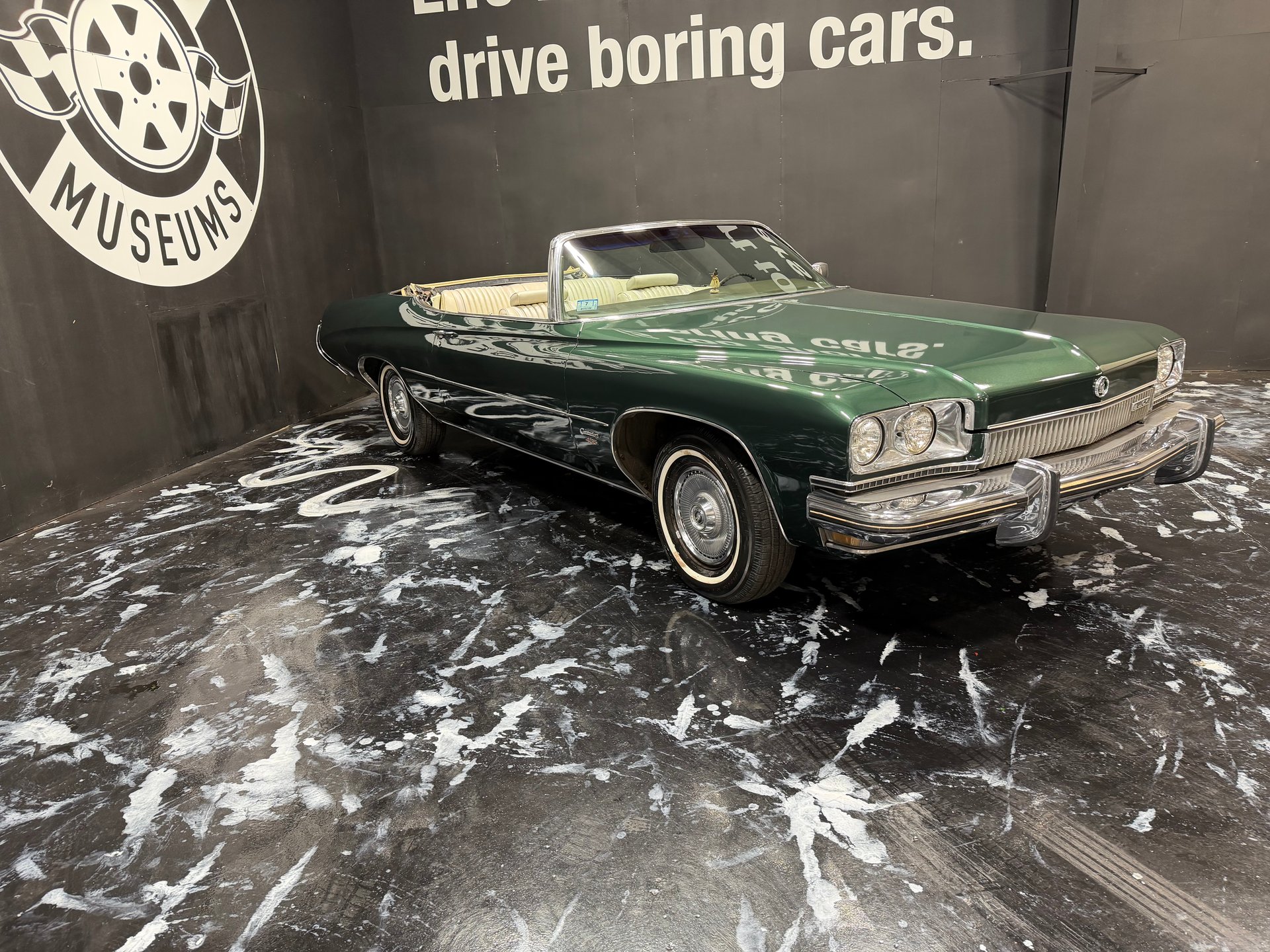
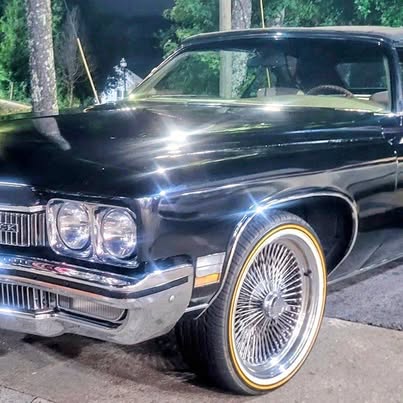
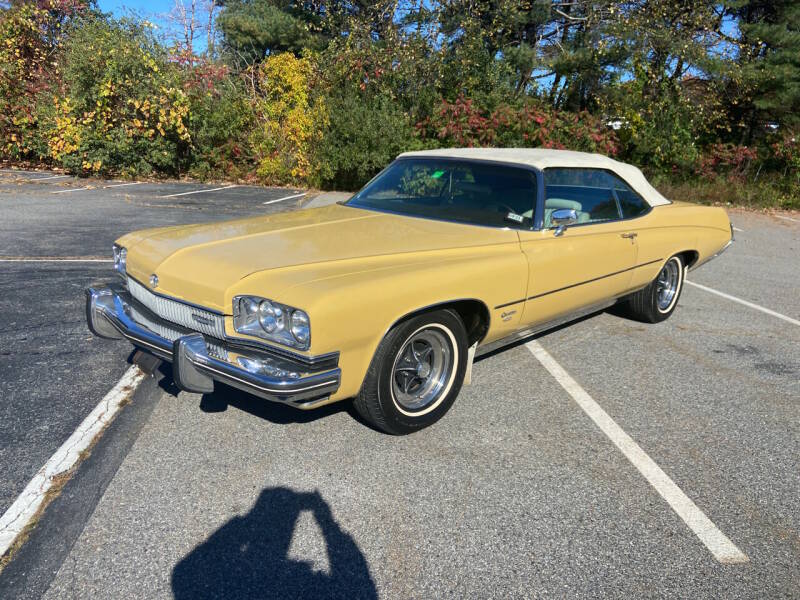
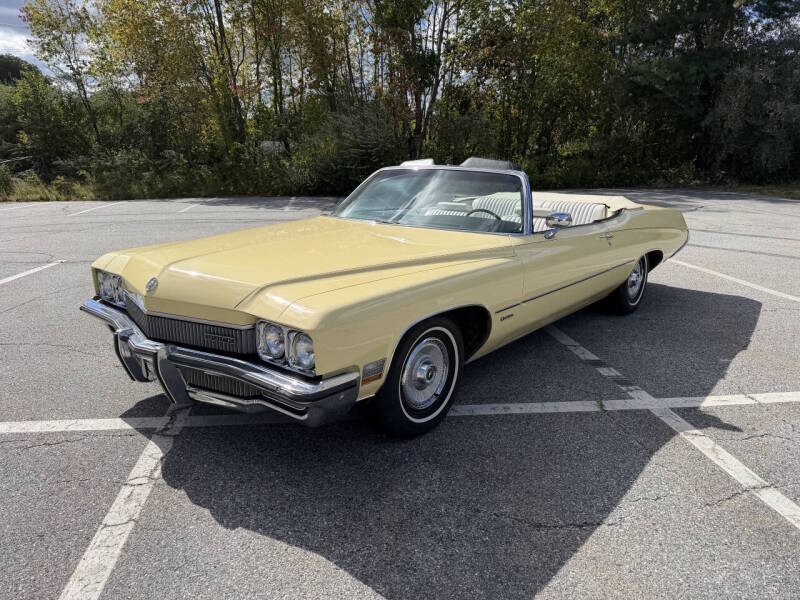
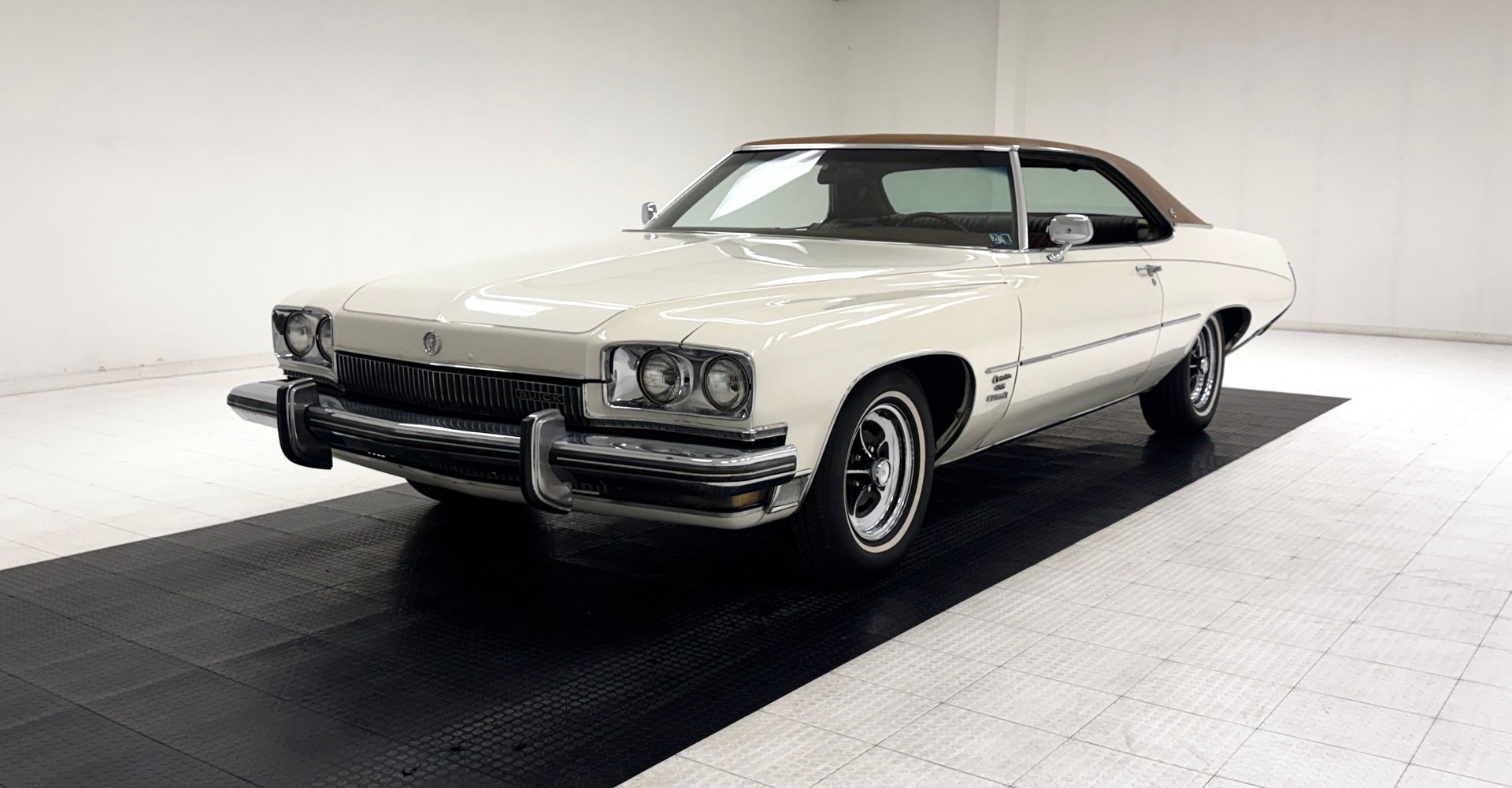
Options shape individual cars far more than trim does, so learn the ones that change a car's value or its behaviour. Air conditioning — Buick's automatic climate control on better-equipped cars — is common and desirable, and a working system is worth real money because recommissioning a dead one is not cheap. Positraction (Buick's name for the limited-slip differential) is a genuine plus behind a torquey 455. Bucket seats with a console appear in coupes and convertibles in place of the standard notchback bench, and they transform the cabin's feel without changing anything mechanical. The chrome Buick road wheels — the styled steel wheels on the white coupe in these photographs — suit the car and are period-correct; the full wheel covers on the green convertible are the standard look. Either is right. Oversized modern wheels, as worn by the red and black cars elsewhere in the listings pool, are a fashion statement the suspension was never designed for, and the parts section deals with what they do to fifty-year-old ball joints.
One myth to kill before it costs you money: there is no such thing as a Centurion GS, and "Stage 1" is not a trim package with badges to spot — it is an engine specification, offered on the Centurion only briefly at the start of 1971, identified by the VIN engine code and the two-letter code stamped on the engine block, not by anything stuck to the bodywork. A car advertised as a Stage 1 Centurion without a V in the fifth position of the VIN and the matching block code is a standard car with a story attached. The white coupe photographed here carries a "455" callout on its front wing — that is the standard Centurion 455 badge, fitted to ordinary cars, and it proves nothing beyond the engine family the VIN already confirms.


Engines and gearboxes
The Buick 455 big-block
The engine that defines this car is Buick's own big-block, and you should understand from the outset that it shares nothing but displacement bragging rights with the Chevrolet 454 or the Pontiac and Oldsmobile 455s. The Buick 455 is a thin-wall casting of Buick's own design, evolved from the 400 and 430 of 1967, with a 4.3125-inch bore and a 3.90-inch stroke, a Rochester Quadrajet four-barrel carburettor on a cast-iron intake manifold, hydraulic lifters, and a distributor driven at the front of the engine off the camshaft. It is, by the standards of big-blocks, a light and compact engine that makes its power the Buick way: not through revs — it is all done by 4,400 rpm — but through torque, 450 lb-ft of it at 2,800 rpm in 1971 tune.
The states of tune, year by year, are where buyers get confused and sellers get creative, so be precise. For 1971 the rating is 315 hp gross at 4,400 rpm and 450 lb-ft at 2,800 rpm, with 8.5:1 compression — already lowered from the 10:1 of 1970 so the engine tolerates the low-lead and unleaded fuels arriving at American pumps. A dual-exhaust version breathes better and is rated higher; a single-exhaust car is the softer tune, and you can tell them apart by counting tailpipes and, definitively, by the VIN code below. For 1972 the industry switches to SAE net ratings — power measured with full exhaust, air cleaner, alternator and all accessories fitted — and the identical hardware emerges wearing smaller numbers: 225 net horsepower for the single-exhaust car, 250 net for the dual-exhaust car, with torque around 360 lb-ft. The car has not become slower in proportion to the numbers; the ruler has changed. Anyone selling a 1972 as "down on power" or a 1971 as "the fast one" on the strength of the brochure figures is selling you the ruler change. For 1973 the 455 continues as an option at the same 225/250 net ratings, but the engine bay gains an EGR valve on the intake manifold and the tuning grows more emissions-led: leaner carburettor calibration, retarded part-throttle spark strategy managed by vacuum switches, and a transmission-controlled spark system on many cars that withholds vacuum advance in the lower gears. It still pulls like a 455. It is just fussier about how it does it.
Identity is everything with these engines, because a 455 badge is cheap and a 455 is not the only engine that fits the hole. Work through three checks. First, the VIN: on 1972 and 1973 cars the fifth character of the thirteen-character VIN, visible through the windscreen on the driver's side of the dash, is the engine code — T for the 455 with single exhaust, U for the 455 with dual exhaust, V for the Stage 1 engine, and W for the high-output 455 variant fitted to the Riviera GS line; a 1973 car whose fifth character is one of the 350 codes left the factory as a 350 car no matter what now sits in the bay. Second, the block code: Buick stamps a two-letter production code on the deck of the block by the number-one cylinder — WF is the standard 1972 big-car 455, WS is the Stage 1, XF is the 1973 equivalent of the standard engine — and a seller claiming a rare tune should be able to show you the stamp, not describe it from memory. Third, the casting numbers: the standard heads and block castings for these years are documented in any Buick reference, and a genuine 455 is identifiable by the casting number at the back of the block behind the intake manifold. Badges and air-cleaner decals are how you get fooled; these three checks are how you don't.
The 455's known weaknesses are specific, well understood and mostly about oil. Buick's oil pump lives in the aluminium front timing cover, driven off the camshaft, and the pump gears run directly in the cover's aluminium housing. Over decades the housing scores and clearances open up, and the symptom is the classic one: adequate pressure at speed, a flickering oil light or a sagging gauge at hot idle. Do not let anyone diagnose this as "they all do that" — some wear is normal, but the test is a mechanical gauge screwed into the gallery in place of the sender. Healthy hot idle pressure with the oil fully warm is the difference between a car you drive home and a bottom-end rebuild. The repair, when clearances are the problem, is a pump rebuild with a booster plate against a fresh wear surface, typically $300–700 in parts and labour if the cover itself is salvageable, and considerably more if the cover is scored beyond use, because good covers are increasingly hunted parts. The same front cover carries the water pump and the timing chain, and the chain set includes the period GM nylon-toothed cam sprocket: the nylon sheds teeth with age and heat cycles, the chain slackens, and the eventual failure is a jumped tooth and a car that cranks strangely and will not fire, or fires with its timing wandering. Rock the crank pulley back and forth while a helper watches the distributor rotor — several degrees of free play before the rotor moves is a chain asking to be replaced, a $600–1,200 job with the cover off, at which point the oil pump and front seal should be done in the same labour.
The rest of the 455's foibles are the era's, not the engine's. The Rochester Quadrajet is an excellent carburettor that suffers three specific indignities: the fuel-inlet fitting threads strip in the soft casting, the well plugs at the base of the main body weep fuel into the manifold overnight so the car cranks long on a cold morning, and fifty years of "rebuilds" by people who did not understand its secondary air-valve spring leave cars with a bog when the big secondaries flop open. A Quadrajet that bogs on a hard throttle opening from a cruise is an air-valve tension problem nine times in ten, not a fuel pump and not ignition — the test is to open the throttle gently in stages and feel whether the hesitation arrives exactly as the secondaries should phase in. The points ignition wants its dwell set, not guessed, and a worn distributor shaft bushing makes dwell wander with rpm, which feels exactly like a carburettor fault; put a dwell meter on it before you touch a mixture screw. The AIR smog pump fitted to many 1972–73 cars seizes when its bearings dry out and then squeals or throws its belt; it is legally required equipment in some jurisdictions and dead weight in others, but a seized one must be dealt with either way. And the whole engine runs hot by design in a heavy car: the fan clutch, the shroud and the radiator's condition matter more than any thermostat argument, and a Centurion that creeps upward in traffic with a slack, free-spinning fan clutch has told you its diagnosis already.
The 350, and the Stage 1 question
For 1973 the standard Centurion engine becomes Buick's 350 small-block with a four-barrel Quadrajet, rated 175 net horsepower. It is a perfectly decent engine — the same basic architecture as the 455 in miniature, sharing its front-cover oil pump design and its general manners — but it moves a car weighing well over two tons with adequacy rather than authority, and it changes what the car is. A 350 Centurion is a LeSabre in Centurion clothing, and it should be priced as one. The trap is symmetrical: sellers of 350 cars advertise "Centurion" and let you assume the 455; sellers of 455 cars in any year advertise the gross-era numbers. Your defence is the fifth VIN character, every time, checked against the physical plate and not against a photograph of one.
The Stage 1 is the opposite trap — rarity claimed where none exists. Buick's Stage 1 package for the 455 means a specific camshaft, larger valves, stronger valve springs, a recalibrated carburettor and distributor, and the higher output rating; on the Centurion it is offered only at the start of the 1971 model year and withdrawn early, making a genuine Centurion Stage 1 one of the rarest production Buicks of the era. Any 1972–73 Centurion advertised as a factory Stage 1 needs paperwork, not patter. The honest summary is that the standard dual-exhaust 455 in a well-sorted Centurion gives you nearly everything the Stage 1 romance promises at street speeds, because torque at 2,000 rpm is what moves this car and the standard engine has it in full.
Gearboxes: the Turbo Hydra-Matic 400
Every automatic Centurion — which is to say, effectively every Centurion you will ever see, the early-1971 manual cars being museum-grade rarities — uses the Turbo Hydra-Matic 400, GM's heavy-duty three-speed automatic, and it is one of the strongest production gearboxes ever built. There are no ratios to choose and no variants to decode beyond the tag on the case; the TH400 behind a mild 455 in a car that has not been abused is a 200,000-mile component that usually outlives two engines' worth of gaskets. Its shift logic is part vacuum, part electric: a vacuum modulator on the side of the case reads engine load and governs shift firmness and timing, while kickdown is triggered by an electric switch at the throttle linkage passing current to a solenoid in the case — not by a cable, as on the smaller TH350. That distinction is your diagnostic key. A Centurion that will not kick down at full throttle but shifts normally otherwise has an electrical fault — switch, wiring or solenoid — not a dying gearbox. A Centurion whose shifts have gone soft and late across the board, especially when cold, points first at the modulator or its vacuum hose, which perishes where it passes near the exhaust and leaks silently. Both fixes are tens of dollars in parts; a full TH400 rebuild, when the box genuinely slips under load or the fluid comes out black and smelling of burnt friction material, runs $1,500–2,800 at a competent transmission shop, and the box is so well supported that this is a routine, quoted job rather than a research project.
Test the gearbox the way the inspection section formalises: fluid that is red and sweet-smelling on the dipstick, engagement of Drive and Reverse from rest without a delay you can count, clean upshifts under light throttle at low speed, a firm kickdown from a cruise, and no flare — a rise in revs without a rise in speed — on the 2–3 shift under load. Behind it sits GM's corporate live rear axle on coil springs with trailing arms, Positraction-equipped on some cars; a Positraction car that chatters in tight slow turns usually wants its fluid changed with the correct limited-slip additive before it wants a rebuild.

Problem areas
Rust: the map
Everything else on a Centurion is repairable with parts that exist; the body is the car, and the body is where these cars die. The 1971-generation GM full-size shell is a large, complex pressing with box sections, double skins and drainage paths designed in an era when a ten-year life was a full life. In the photo notes for the Centurions examined on this site, rust is mentioned in 4 of the 5 cars photo-checked — treat that as the base rate for the model, not as bad luck, and inspect accordingly. Work the map in the order the water works it.
Start at the roof, because the most common Centurion body — the vinyl-roofed hardtop — hides its worst rot in plain sight. The vinyl covering is glued over a roof skin that was often only lightly finished at the factory, and once the covering's seams split or its edges lift, rain is wicked underneath and held against the steel by the padding. The rust then proceeds invisibly for years: the first external evidence is pimpling or bubbling in the vinyl itself, a ripple along the rear window's lower corners, or rust staining at the C-pillar base. Press and slide your palm over the whole roof; a crunchy, crackling feel under the vinyl is perforated steel, full stop. Budget $1,500–3,500 per side for cutting out and re-skinning serious pillar and roof-edge damage, and understand that a coupe needing a roof is a parts-price car unless its specification is extraordinary. Convertibles swap this problem for the windscreen frame and header rail, where the top's seals sit and where water ponds; lift the header seal if the seller permits and look for scale, and treat any softness around the windscreen pillars as structural, because on a convertible it is.
The front wings rot from the inside at the bottom rear corner, behind the front wheel, where road dirt packs against the inner brace and holds moisture against the skin; look for bubbling at the wing's trailing edge just ahead of the door, and open the door and look at the hinge pillar and the cowl side behind it. The bonnet's leading edge and the boot lid's lower seam go the same way — seam rust starts inside the folded hem and pushes the paint up in a line. Doors fill with water when their drain slots block, which they do with the car's own underseal and leaves; the bottom edge swells and the skin separates from the frame, and on a pillarless hardtop a heavy, water-damaged door also sags on its hinges and stops sealing at the glass. Rocker panels — the sills — are structural on this shell; jack the car at the sill jacking point and watch: a sill that deforms, crackles or lets the jack pad sink is not a cosmetic item, and sill and inner-sill replacement is $1,000–2,500 a side done properly with the door gaps re-hung afterwards.
Underneath, the floor pans rot from both directions — road salt from below, and wet carpet from above where the windscreen, cowl vents or heater matrix have leaked for years. Lift the carpets or at least press hard through them along the footwells and under the rear seat; a floor that feels like a trampoline is a floor that is mostly rust scale. The boot floor is a notorious trap on these shells: the spare-wheel well and the flat floor over the fuel tank trap water under the boot mat, and sellers who have never lifted the mat genuinely do not know. Lift it. Rear quarters rot behind the rear wheels where the inner and outer skins meet, and the frame itself — a full perimeter frame, which is the Centurion's one structural mercy — rusts at the rear kick-up over the axle and at the body-mount points; surface scale is normal, flaking, holed or visibly thinned rails are a walk-away on a closed car and a hard negotiation on a convertible. Body mounts that have collapsed let the shell sit down on the frame, which shows as doors that have dropped and panel gaps that no adjustment will even out.
Chassis, suspension, steering and brakes
The Centurion's chassis is conventional GM practice at its most massive: independent front suspension by coil springs and unequal-length arms, a live rear axle on coils with trailing arms, power steering by recirculating ball, power front disc brakes with rear drums. None of it is exotic and all of it is heavy, which means wear arrives as looseness and sag rather than breakage, and a car can feel "fine, for a big old Buick" while being loose at every joint. Front ball joints — uppers and especially lowers — carry the weight and the braking loads; check them loaded and unloaded as the inspection section describes, because a lower ball joint that separates does so without ceremony. The idler arm and centre link wear into steering free play that drivers compensate for unconsciously; an inch or more of dead travel at the wheel rim before the road wheels stir is wear, not character. Rubber bushings throughout — control-arm, trailing-arm, anti-roll bar — perish with age whether the car is driven or stored, and perished rear trailing-arm bushings let the axle steer the car under power and braking, a vague, wandering feel at highway speed that gets blamed on alignment.
Springs sag, and they sag asymmetrically; measure the car on level ground from ground to wheel-arch lip at all four corners, and treat a corner sitting visibly low as a spring or a collapsed body mount until proven otherwise. Shock absorbers are cheap and universally neglected — bounce each corner and count; more than one free oscillation means the dampers are decoration.
Brakes deserve a paragraph of suspicion on any car this heavy. The system is a dual-circuit hydraulic setup with a vacuum booster, front discs and rear drums, and its enemies are internal: brake pipes that look sound outside and are rusted thin along the frame rails, flexible hoses that delaminate internally and act as one-way valves — the caliper that drags and the wheel that runs hot after a drive — and calipers whose pistons seize in bores corroded by moisture-laden fluid that has not been changed since the previous century. Pull the master cylinder cap and look at the fluid: dark brown fluid is a system-wide flush and a hose-and-caliper budget waiting to happen, roughly $800–1,800 to go through the hydraulics properly with pipes, hoses, calipers and wheel cylinders. A pedal that sinks slowly under sustained pressure at a standstill is a master cylinder bypassing internally; a hard pedal with poor stopping is a booster or its vacuum supply; a car that pulls under braking is a hose, a caliper or a contaminated lining, and the hot-wheel test after the drive — walk around and feel each wheel's temperature with the back of your hand — separates them faster than any amount of staring.
The convertible top, interior and trim
On a convertible, the top mechanism is a hydraulic-electric system: a motor-driven pump, two lift cylinders, and a scissor frame that must stay synchronised. Cylinders weep at their seals and paint the boot-well area with hydraulic fluid; the pump runs slowly or groans when its fluid is low or its motor brushes are worn; frame pivots wear oval and the top begins to sit crooked and strain its latches. Cycle the top twice, fully, and watch it from outside the car: it should rise evenly, without one side leading, and seat on the header rail without being pulled down the last inch by force. A replacement top in vinyl with a plastic or glass rear window, fitted, is a $1,500–2,500 job; frame and cylinder work is on top of that. The top well and the boot floor beneath it are where the water the top fails to exclude ends up, so a convertible's boot floor inspection is doubly mandatory. The power rear window in the top, the well liner and the boot that covers the folded top are all consumables whose absence tells you about the car's general standard of care.
Inside, the Centurion's cabin is vinyl, cloth-and-vinyl or leather-trimmed depending on options, over foam that is now fifty years old and behaves accordingly: seat foam crumbles and the covers split along their seams, most visibly on the driver's outer bolster where every entry slides across it. Dash pads crack in the sun along the speaker grille and the defroster outlets, and a cracked pad is a cosmetic negotiation, not a catastrophe — replacements and caps exist, at a price. The pillarless hardtop bodies make unusual demands of the glass: four panes per side on the four-door, two long panes on the coupe, all of which must align to each other and to the roof rail seals with no pillar to hide behind. Worn window regulators, perished channel felts and dropped door hinges conspire into wind noise and water leaks that owners describe as normal; they are not normal, they are wear, and sorting them is fiddly labour rather than expensive parts. Door cards warp at their lower edges from the same water that rots the doors. None of this is rare or unobtainable — full-size Buick interior trim is reproduced in part and survives in part — but a complete interior retrim in correct materials runs $3,000–6,000, so an original, intact cabin is worth real money against a shiny repaint.
Electrics, vacuum systems and climate control
A Centurion's electrics are simple in architecture and elderly in execution. The charging system is a Delco alternator with an external or internal regulator depending on year; the failure mode to know is the dim, flickering charge light at idle that becomes a flat battery a week later, usually brushes or a diode, and cheap. The real electrical story is earths: fifty years of corrosion at body earth points produces the haunted-car symptoms — lamps that glow in sympathy with others, gauges that read with the lights on — and the cure is cleaning earths, not replacing components. Power windows slow to a crawl from dried grease in the regulators and tired motors; a window that moves at half the speed of its twin is asking for the door card off and a service, and the parts exist.
Vacuum is the car's second wiring loom. The engine's vacuum runs the brake booster, the TH400's modulator, the climate control's blend doors, the headlamp and wiper ancillaries on some options, the cruise control and a thicket of emissions switches on 1973 cars — and it is all carried in rubber hose that is now archaeological. A lean, hunting idle, a brake pedal that changes feel, climate doors that default to the defroster position and a gearbox that shifts oddly, all arriving together, is one split vacuum hose at the manifold tree until proven otherwise. The automatic climate control system, where fitted, is a vacuum-and-sensor servo system that is reliable when its hoses and its programmer are sound and baffling when they are not; a car whose climate system blows only at the screen and only hot has the system's designed failure default, which at least confirms the blower and heater core live. The Harrison A6 air-conditioning compressor is a famously tough unit; systems die from lost refrigerant through aged seals and hoses, and a recommission with conversion to modern refrigerant, a receiver-drier and hose work runs $800–1,600 — budget it on any car whose air conditioning is described as "just needing a charge," because a system that merely needed a charge would have been charged before the advert was written.
How to inspect one
Inspect a Centurion cold, in daylight, on ground where you can get underneath with a torch, and in this order — identity before cosmetics, structure before mechanics, because the expensive failures on this car are the ones paint hides.
- Start with the paperwork and the VIN plate. Read the thirteen-character VIN through the windscreen: first character 4 for Buick, the fifth character the engine code — T or U for a 455, V for Stage 1 — and the sixth the model year, 2 or 3. Compare the plate to the title document character by character. A 1973 car with a 350 code being sold as a 455 car ends the inspection here, politely.
- Read the trim tag on the cowl. Under the bonnet, on the firewall, the Fisher Body tag carries the body style, build date, and the original paint and trim codes. A car whose tag codes contradict its current colour and interior has been repainted and retrimmed — not a crime, but it reprices the car and it tells you to look harder at everything else the seller describes as original.
- Cold-start the engine yourself. You want the engine stone cold — arrange it in advance and touch the exhaust manifold when you arrive. A healthy 455 fires on the Quadrajet's choke with a fast idle that steps down as it warms. Blue smoke at start-up that clears is valve-stem seals; blue smoke that persists under load is rings or bores; a long crank after standing overnight is the carburettor's well plugs weeping, as described in the engines section.
- Check the oil pressure honestly. With the engine fully warm, watch the gauge or warning light at idle in Drive with the brakes held. Then, if the seller permits, have a mechanical gauge reading taken — the flickering hot-idle light from the problem areas is the single most valuable mechanical test on a Buick 455, separating a driver from a rebuild.
- Do the timing-chain rock test. Engine off, rock the crank pulley by hand or with a socket while a helper watches the distributor rotor through the removed cap. Noticeable free movement before the rotor stirs means chain slack and a worn nylon sprocket; combine it with a listen for front-cover rattles at idle.
- Run the palm test on the roof and work the rust map. Vinyl roof first if fitted — every inch, feeling for bubbling and crunch — then front wing trailing edges, door bottoms, sill lines, rear quarters behind the wheels. Take a weak magnet in a cloth for filler detection on the quarters and wings, and a torch for the boot: lift the mat and the spare, and look at the boot floor and wheel well before you look at anything else in there.
- Jack and sill test. Raise the car at a sill jacking point and watch the sill and the door gaps as the weight transfers. A sound shell lifts cleanly with gaps unchanged; a rotten one crackles, deforms or lets the door gap close. On a convertible, do this with the top up and latched, then open and close each door with the car still lifted — doors that bind only in the air are reporting shell flex and mount condition.
- Get underneath. Torch along the frame rails, especially the rear kick-up and the body mounts; floor pans from below; brake pipes along the rails; the fuel tank's straps and seams; trailing-arm and control-arm bushings for perished, extruded rubber. Surface scale is expected; flaking, holes and daylight are not.
- Test every powered thing, then the top. Windows up and down, seat, locks, blower at all speeds, climate controls, cruise if fitted, wipers, washers, every lamp. On a convertible, cycle the top fully twice and watch it from outside for even lift, then inspect the top well and the header seal line for rust and old water staining.
- Drive it for at least twenty minutes. You need full operating temperature, a highway stretch and some lock-to-lock parking work. Feel for the TH400's behaviour cold and hot: prompt engagement, clean light-throttle upshifts, a firm electric kickdown from a cruise, no flare on the 2–3 shift. Note wander, brake pull, steering dead travel and any axle whine on the overrun.
- Do the hot checks immediately after the drive. Walk the wheels with the back of your hand for a dragging brake; look under the car for fresh drips and identify each one — engine oil, transmission fluid, coolant, power steering fluid and brake fluid all have different colours, smells and addresses; recheck the temperature gauge's behaviour at idle in traffic heat-soak.
- Price the car from your list, not the seller's. Total the faults you have actually found — roof and sill work, hydraulics, top mechanism, air conditioning — using the cost ranges in this guide, and let that arithmetic set your offer. A Centurion's asking price assumes its problems are small; your inspection exists to find out whether that assumption survives contact with a torch and a palm.
Values
The Centurion market is a condition market wearing a specification market's clothes, and learning to read it that way is the whole skill. The build's market block beneath this guide carries the current listings and recorded sales for the model; what follows here is how to interpret those figures rather than repeat them.
The first driver is the roof. Convertibles sit at the top of the model's market for the arithmetic given in the models section — a tenth of production, and Buick's only open car in 1973 — and within convertibles, a verified 455 car with a working top, a sound windscreen frame and an honest boot floor commands the model's strongest money. Closed cars trade in a different register entirely, and the four-door hardtop, for all its presence, is the softest corner of the market: family buyers for pillarless four-doors are fewer than the cars. The two-door hardtop sits between, and it is the body where the condition spread is widest, because the vinyl roof means two visually identical coupes can be a sound car and a structural restoration wearing the same paint.
The second driver is exactly that structure. On most classics you pay for mechanical specification and forgive cosmetics; on a Centurion you pay for the shell and forgive the mechanics, because the 455 and TH400 are rebuildable from a deep parts supply while a roof, a set of sills and a boot floor are fabrication labour that quickly exceeds the value of a closed car. This inverts the usual negotiation: the shiny car with a crunchy roof is the expensive mistake, and the dull car with a sound shell, tired paint and an honest interior is the bargain the market keeps mispricing. Originality carries a premium where it is verifiable — matching engine code to VIN, trim tag agreeing with the car's colours, unmolested engine bay — and the premium evaporates where originality is merely asserted, so pay for documents and stampings, never for adjectives.
Year effects are subtler than sellers claim. The 1971's gross-horsepower bragging rights do not translate into a meaningful premium over a 1972 in equivalent condition, because the cars are mechanically near-identical and the market knows it; the 1973 splits by engine rather than by year, with verified 455 cars holding the line and standard 350 cars trading as the LeSabre-equivalents they mechanically are. A genuinely documented early-1971 Stage 1 car is a collector item in a different market — but the operative word is documented, and in the 1972–73 pool you will actually shop, treat every Stage 1 claim as a standard car until the VIN's fifth character and the block stamp say otherwise.
Finally, the project-versus-driver gap on this model is a cliff, not a slope. A running, structurally sound driver is a usable car the day you buy it; a project Centurion with roof, sill and floor work ahead of it is a labour commitment whose finished value, in closed form, may not repay the welding. Buy the best shell you can find, in the body style you actually want, and let the mechanical refurbishment — the part of old-car ownership that is genuinely enjoyable on a car this simple — be the work you take on.
Parts and ownership
Owning a Centurion is an exercise in owning a mainstream GM car from the years when GM's scale was at its peak, and the parts position reflects that — with one sharp boundary between the mechanical and the bodily. Mechanically, you are well served. The Buick 455 is supported by a committed specialist trade: engine rebuild components, timing sets, oil-pump rebuild kits and booster plates, gaskets, water pumps and carburettor kits are all in current supply, and the performance aftermarket for the 455 — built around the GS cars — means camshafts, intake manifolds and ignition upgrades exist if you want them, though the standard engine needs none of them. The TH400 is supported by every transmission shop in America. Suspension, steering and brake components are shared across the enormous 1971–76 GM full-size production run and are available from general suppliers without drama; the car's sheer production context is its parts insurance.
Body and trim are the boundary. Full-size 1971–73 Buick sheet metal is not reproduced in depth the way Chevrolet panels are: floor pans and generic repair sections can be adapted, but Centurion-specific items — hardtop roof skins, quarter panels, the convertible's specific pressings, bright trim, grille and tail-lamp components, the Roman-helmet emblems — come from donor cars, old stock and the used market, and prices follow scarcity. This is the practical reason the inspection section weights structure so heavily: you can always buy a water pump, and you cannot always buy a roof. Glass is available through the classic trade; weatherstripping for the hardtop and convertible bodies is reproduced and is a near-mandatory purchase on any car you intend to drive in weather. Interior soft trim — seat covers, door cards, headlinings, carpets — is reproduced for the full-size Buicks in the common colours, with the correct grain and pattern material available for the popular years.
Running one asks for the era's ordinary disciplines, applied honestly. The 455 wants its oil changed on time and its level watched, because the front-cover pump's margins are the engine's known weak point; use an oil with adequate zinc content for the flat-tappet camshaft, as with any engine of this generation. The points ignition rewards a dwell meter and five minutes twice a year, or a discreet electronic conversion if originality under the cap does not move you. The Quadrajet wants clean fuel and a filter that is actually changed. Expect fuel consumption in the low teens per gallon at best and plan journeys accordingly; expect tyres in the original 15-inch sizes to be a classic-trade purchase rather than a same-day tyre-shop item; and expect the car's physical size — its length, its turning circle, its appetite for garage space — to be the most persistent ownership fact of all. The Buick Club of America and the model's specialist forums hold the accumulated knowledge on these cars — trim-tag decoding, correct detailing, and the whereabouts of the parts that are left.
Which one to buy
- The all-rounder: a 1972 two-door hardtop with the dual-exhaust 455 (VIN code U). The 455 is standard, the rating games of 1971 and the engine demotion of 1973 are both avoided, production was healthy, and the coupe body gives you the full Centurion experience at closed-car money. Spend your diligence on the vinyl roof and the sills.
- The value buy: a sound four-door hardtop, any year with a verified 455. The market undervalues the pillarless four-door against identical mechanicals; if your shell inspection comes back clean, you are buying the same engine, gearbox and ride as the coupe for less, with better rear-seat access as a bonus.
- The one to want: a 1973 convertible with the optional 455, verified by the VIN. Buick's only convertible that year, 5,739 built, and the model at its most charismatic — but only with a working top, a solid windscreen frame and a dry boot floor, because a convertible needing top and structure work is two restorations in one car.
- The driver's pick: any year, any body, bought on shell condition alone. A straight, honest, slightly scruffy car with a sound roof and floors will give you more pleasure per dollar than a polished car with hidden rot, every single time, because the 455 and TH400 refurbish cheaply and bodies do not.
- The unicorn, with a warning: a documented early-1971 Stage 1. Real, rare and valuable — and the most faked claim in the model's world. VIN fifth character V, block code WS, paperwork. Without all three, it is a standard car and you should pay for a standard car.
- Avoid: a 1973 standard 350 car priced as a 455, and any car — at any price that tempts you — whose roof, sills or boot floor fail the palm and torch tests. The first is a badge purchase; the second is a fabrication project wearing a car costume.
The overriding rule: buy the shell, verify the engine code, and let the mechanics be the part you fix — on a Centurion, the body is the investment and the 455 is the dividend.
See the 5 Centurion cars currently listed.
For sale now
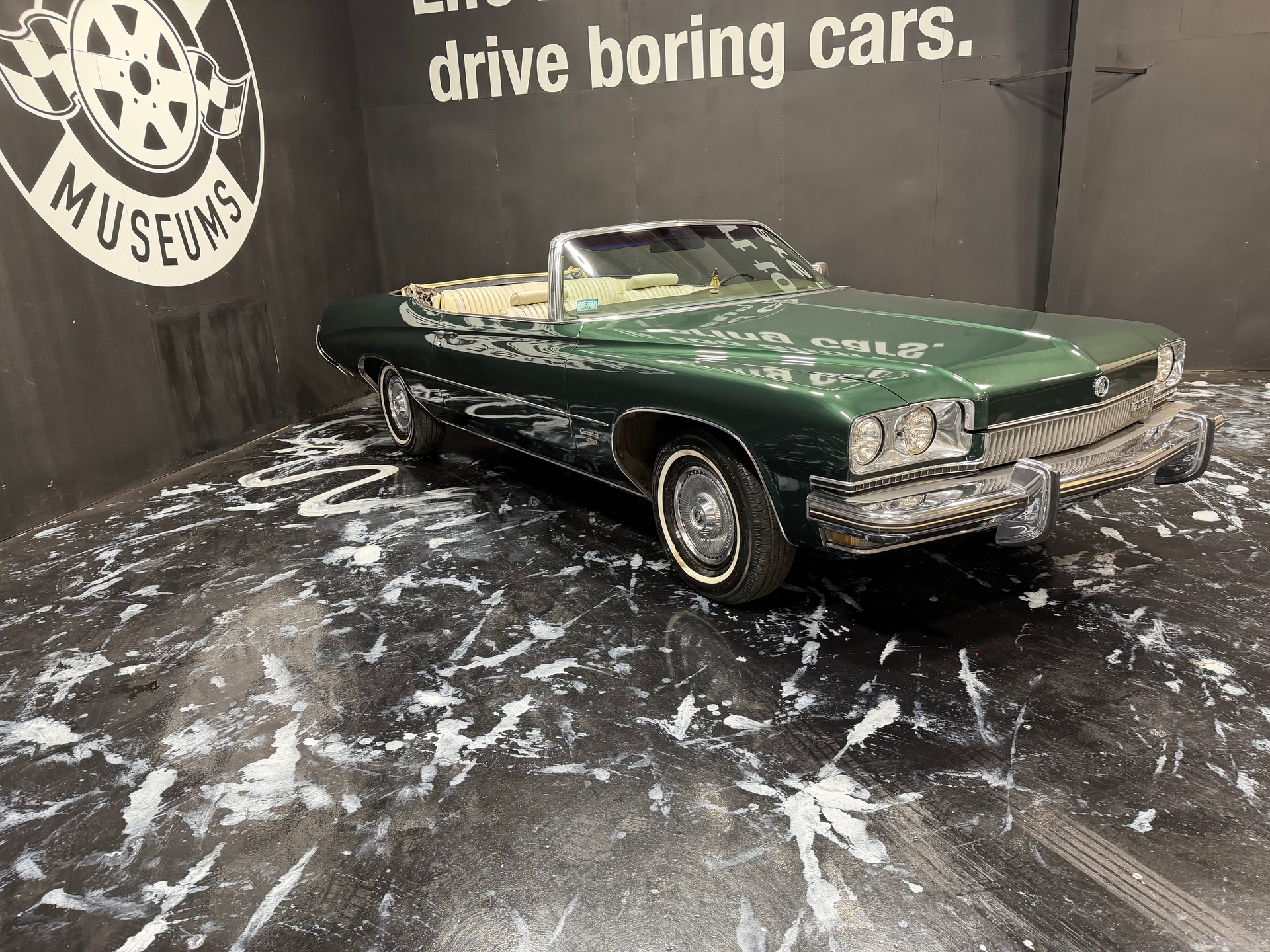 $23,995 · 16% above typical
Expand
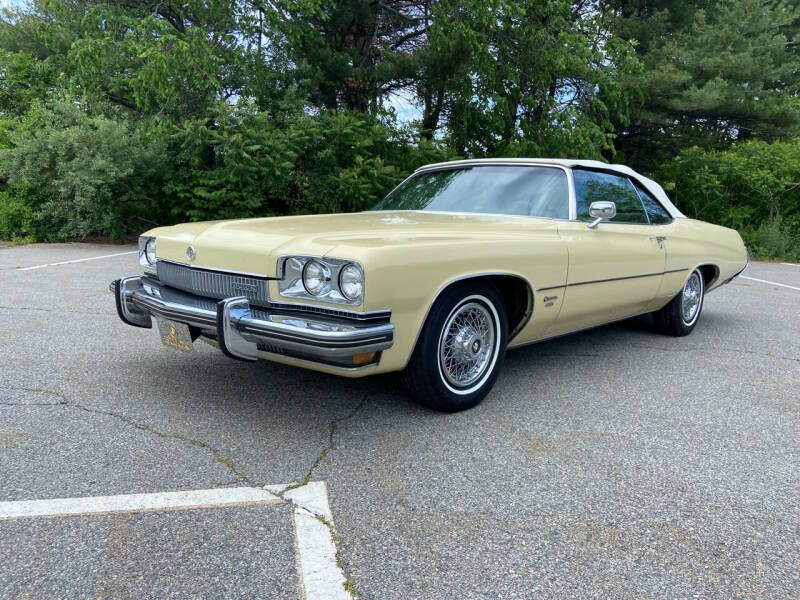 $23,900 · 15% above typical
Expand
 $17,900 · 14% below typical
Expand
 $24,900 · 20% above typical
Expand
 $12,000 · 42% below typical
Expand
What they sell for: Centurion sale prices.